Authentic Old Beijing Zhajiangmian (Fried Sauce Noodles)
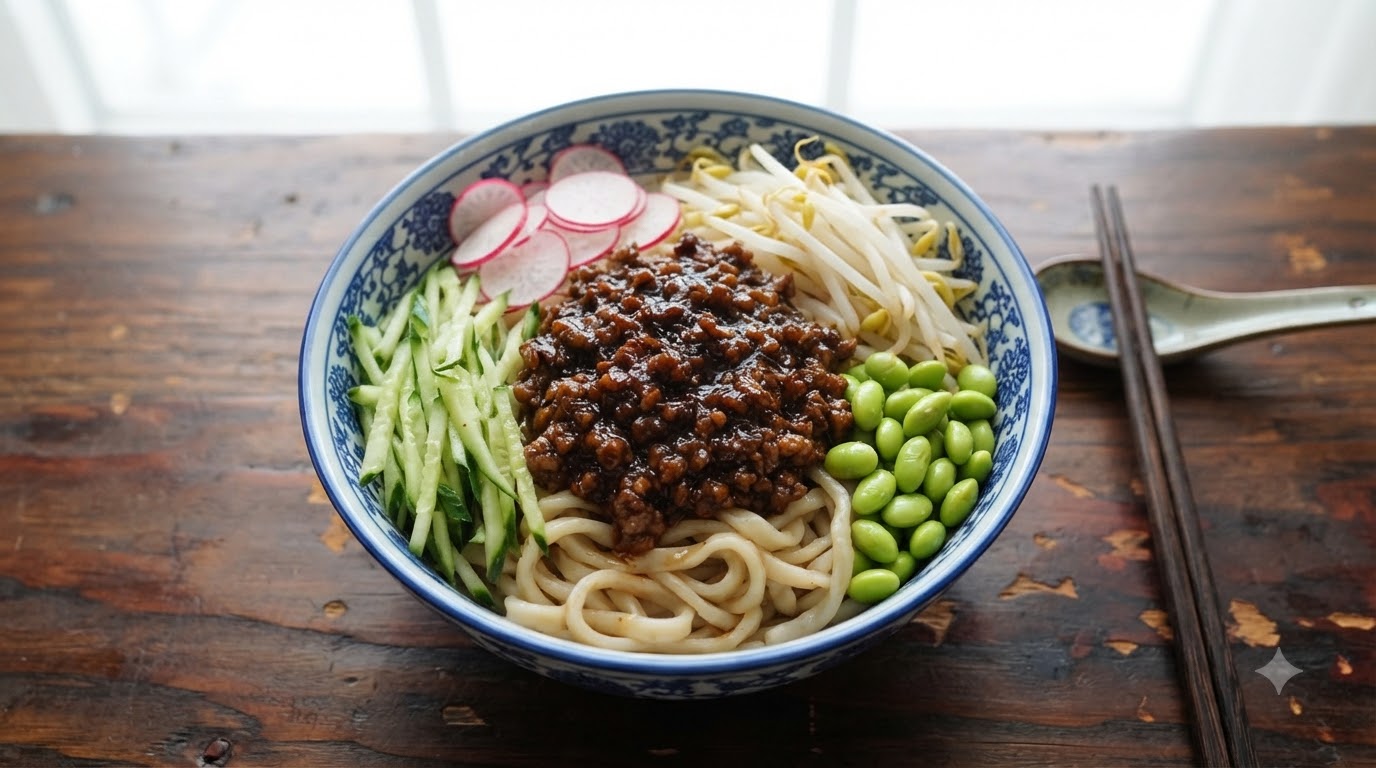
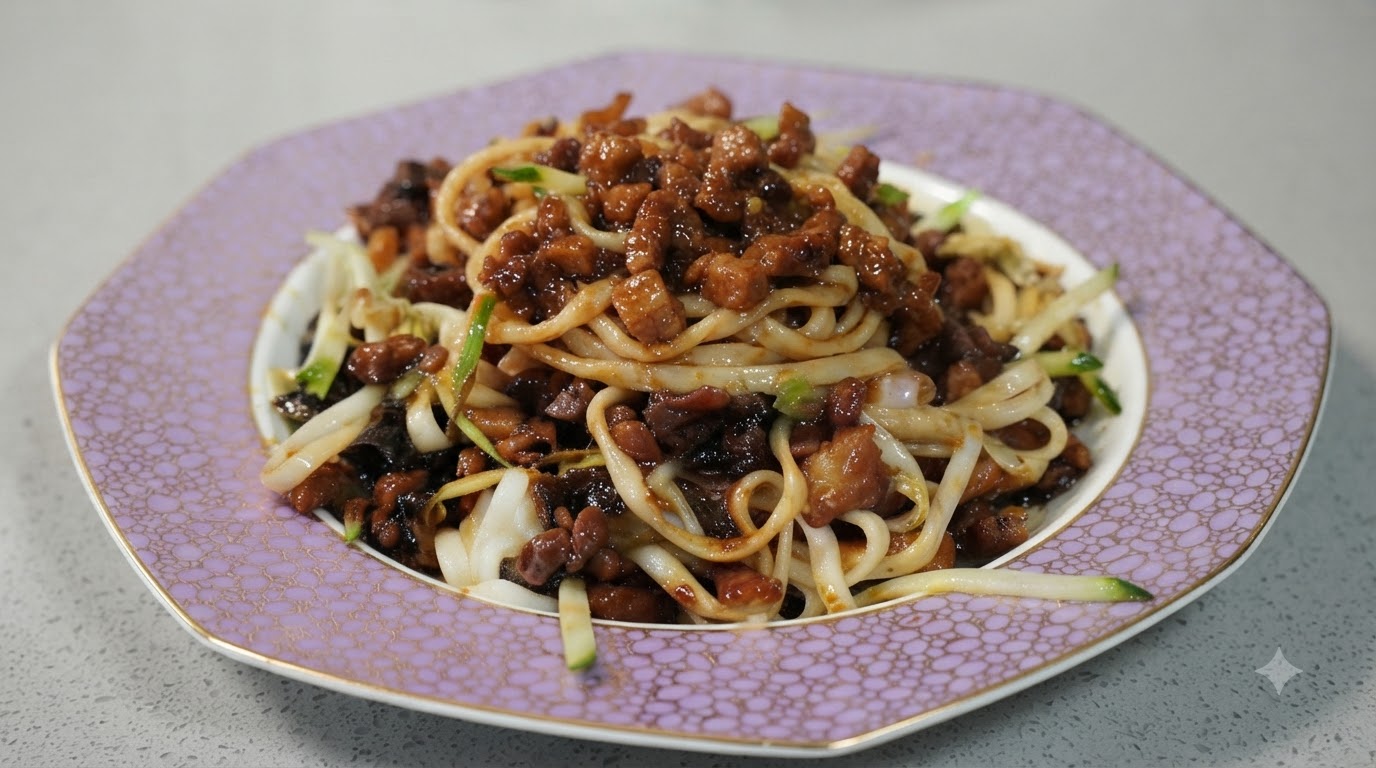
Master traditional Beijing Zhajiangmian with this rich, deeply savory pork belly and soybean paste sauce, served over fresh thick noodles and crisp vegetables.
Zhajiangmian is a cornerstone of Beijings culinary heritage, cherished for its intensely savory, slow-simmered meat sauce. Every household has its own preferred ratio of sweet bean paste to yellow soybean paste, but the key technique remains the same—patience. Allowing the pork fat to render completely and the sauce to slowly separate from the oil creates a profoundly fragrant finish that defines this classic dish.
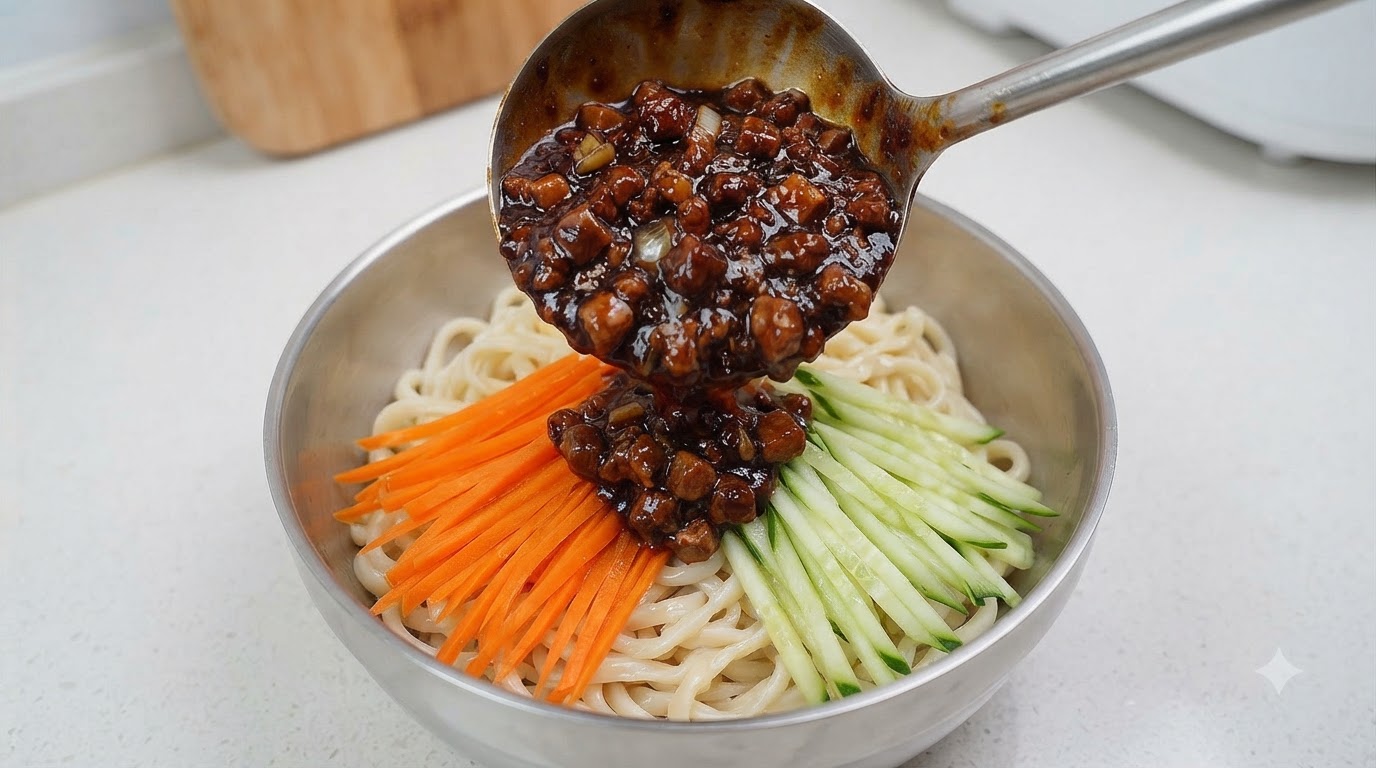
Ingredients
- 250 g pork belly (fatty and lean portions separated)
- 1 bag dry yellow soybean paste
- 250 g dark sweet bean paste (tianmianjiang)
- 1 tbsp yellow soybean paste
- 2 tbsp yellow wine (Shaoxing)
- 1 bowl clear water
- 3 tbsp cooking oil
- 2 whole star anise
- 3 slices fresh ginger
- 1 bunch scallions
- 500 g fresh thick handmade noodles
- 1 medium cucumber
- 1 medium carrot
- to taste raw garlic cloves (optional)
Instructions
- 1Dice the fatty pork belly
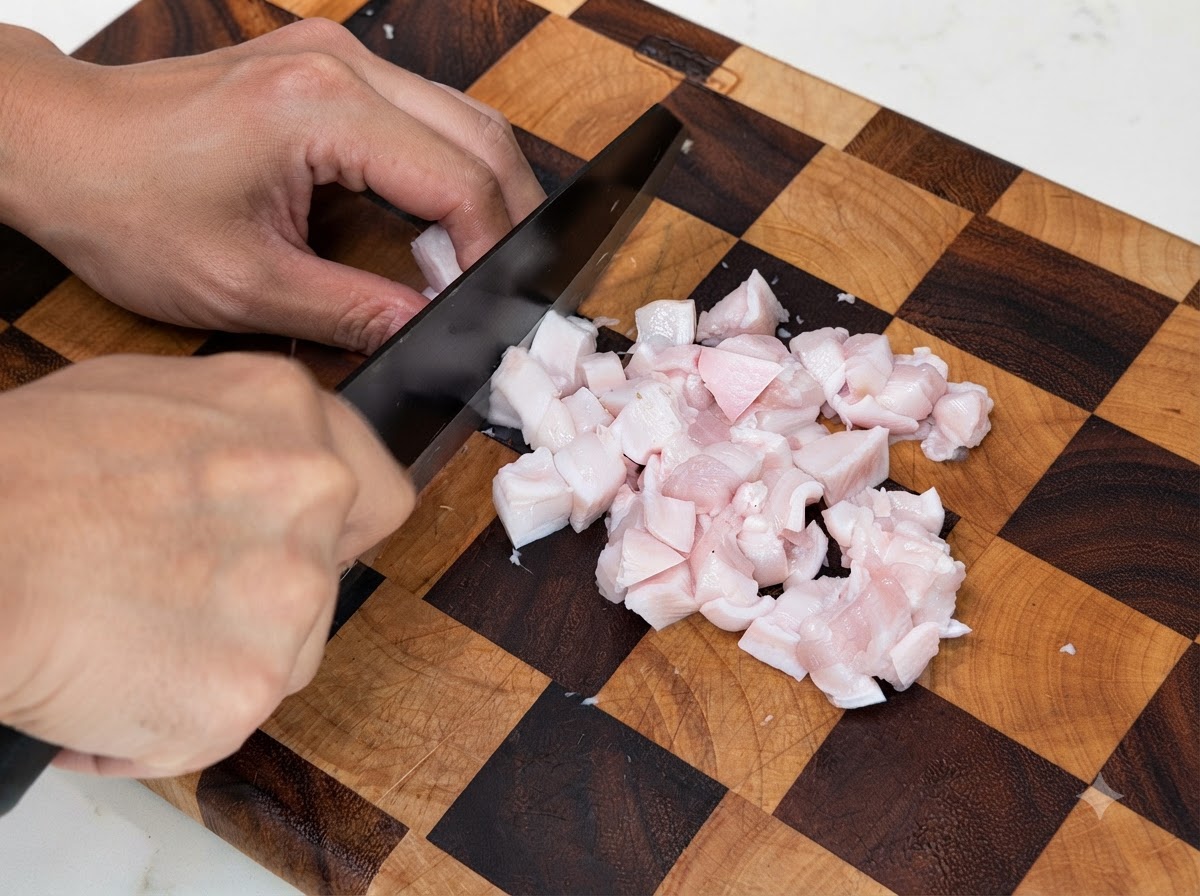
Place the pork belly on a checkered cutting board and separate the fatty portion from the lean meat. Cut the fatty part into small, uniform cubes using a sharp chefs knife.
Tip: Cutting the fat into small, even cubes ensures it renders out evenly and quickly during frying. - 2Dice the lean pork meat
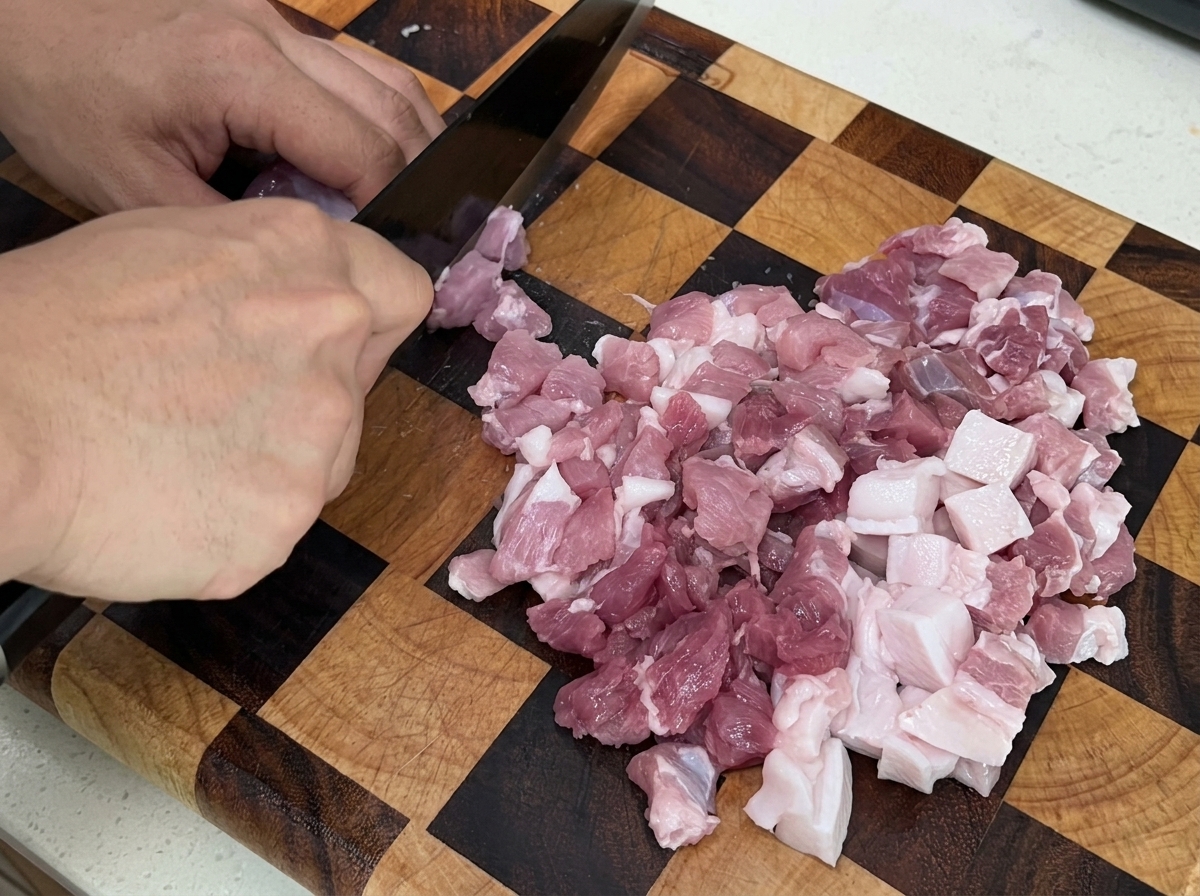
Continue processing the pork belly by dicing the lean portion into small cubes of a similar size to the previously cut fat pieces.
Tip: Keep the cube size consistent so that both the fat and lean meat cook uniformly in the wok. - 3Chop fresh scallions
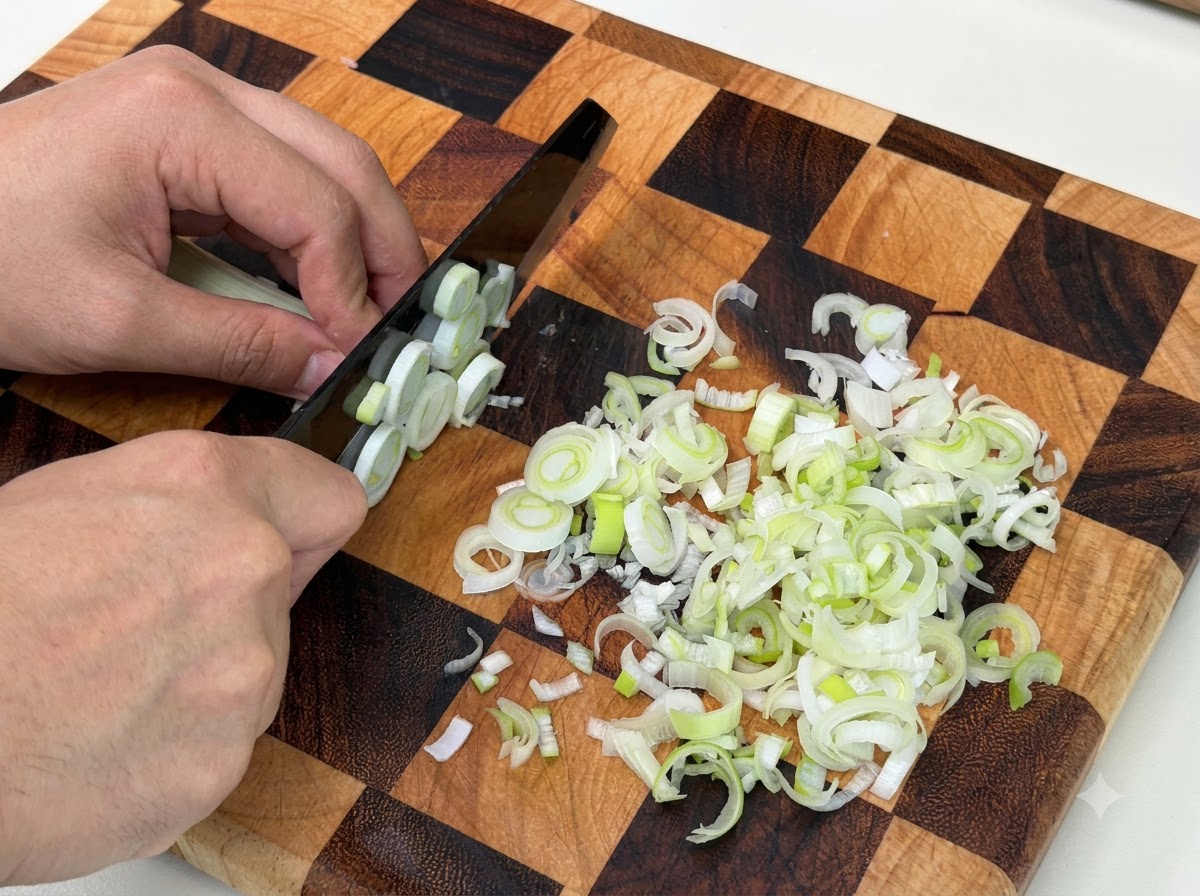
Take fresh scallions and chop them finely into small rounds using a knife on the cutting board, preparing them for the sauce mix and final aroma release.
Tip: Divide the chopped scallions into two portions so they can be added at different stages of cooking. - 4Combine the bean pastes
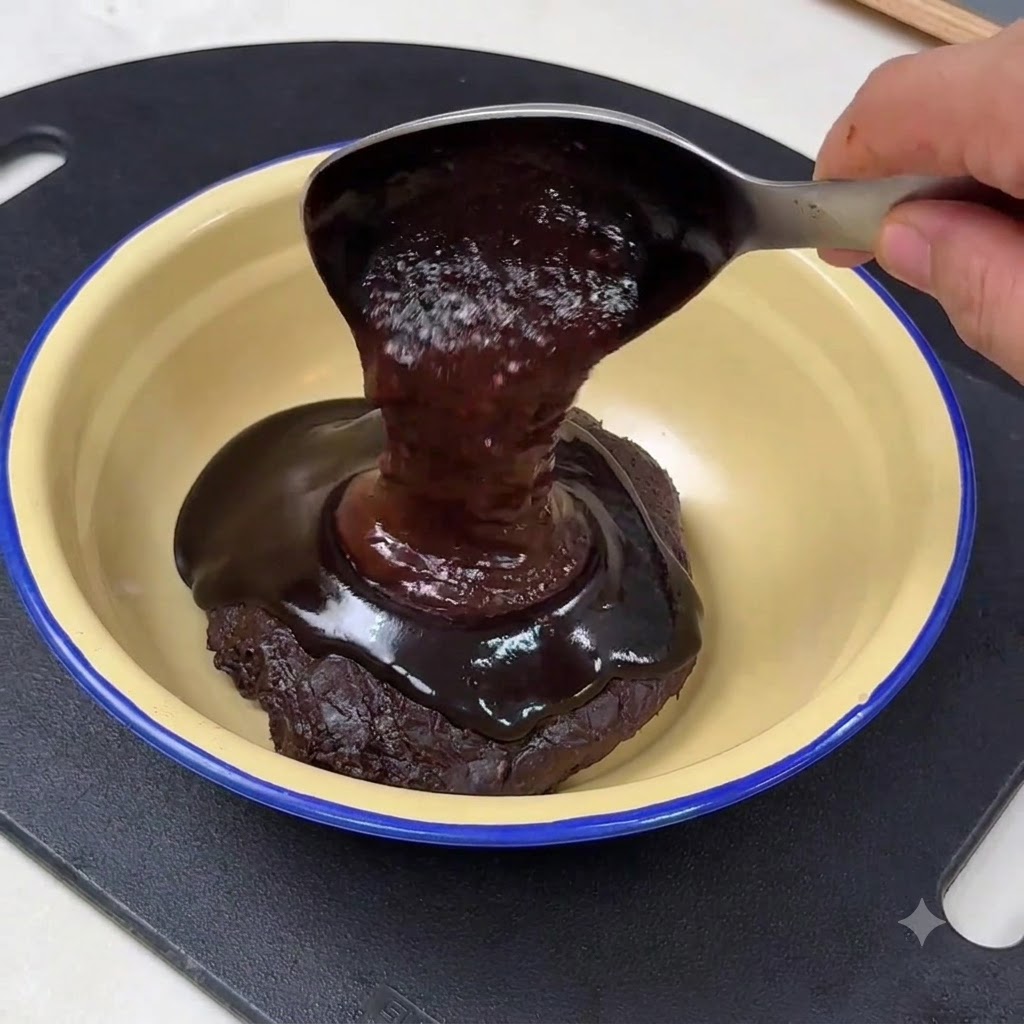
Add dark sweet bean paste using a spoon into a yellow mixing bowl that already contains dry yellow soybean paste as part of the sauce base.
Tip: Combining sweet bean paste and yellow soybean paste creates the signature sweet-and-savory balance for authentic fried sauce. - 5Dilute the soybean paste mixture
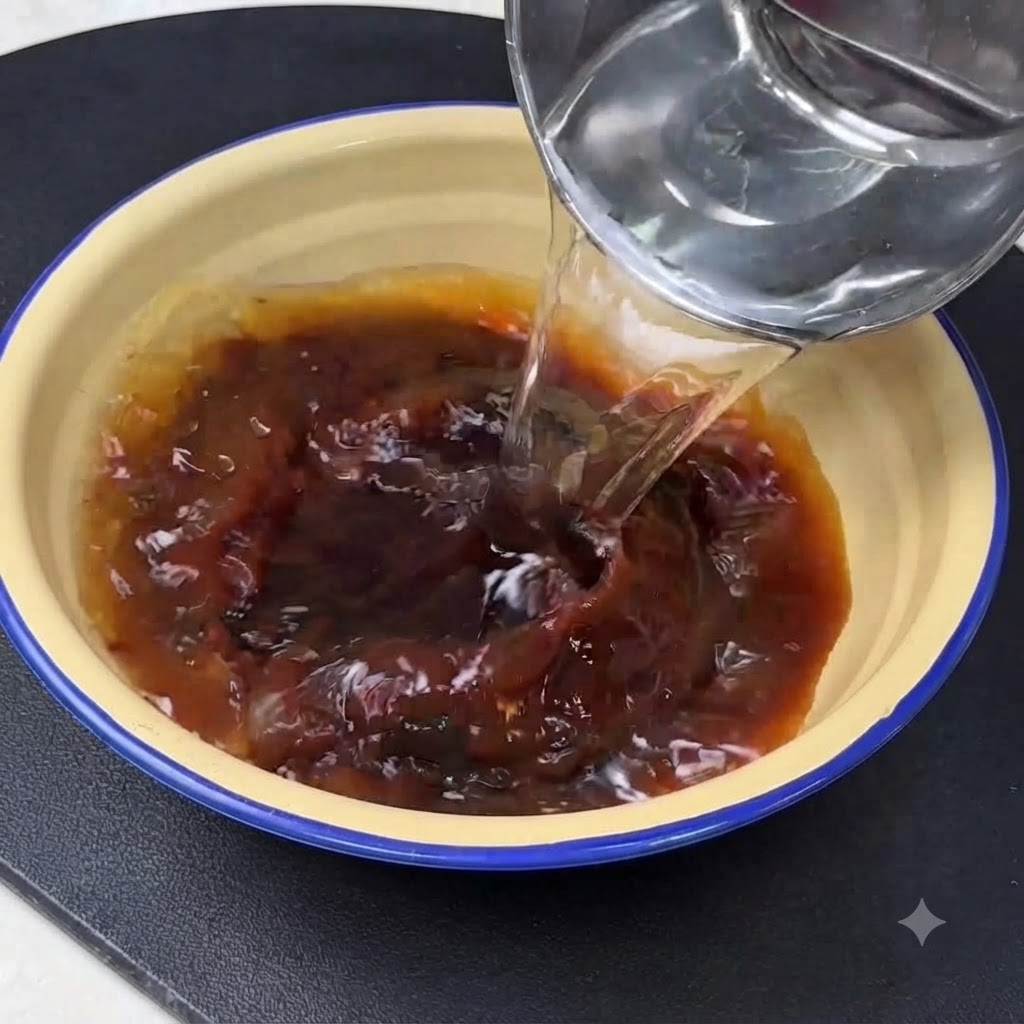
Pour a bowl of clear water into the mixed soybean and sweet bean pastes, stirring or blending them together until the mixture reaches a smooth consistency.
Tip: Adding water helps dilute the thick paste so it simmers evenly in the wok without burning instantly. - 6Render the pork fat
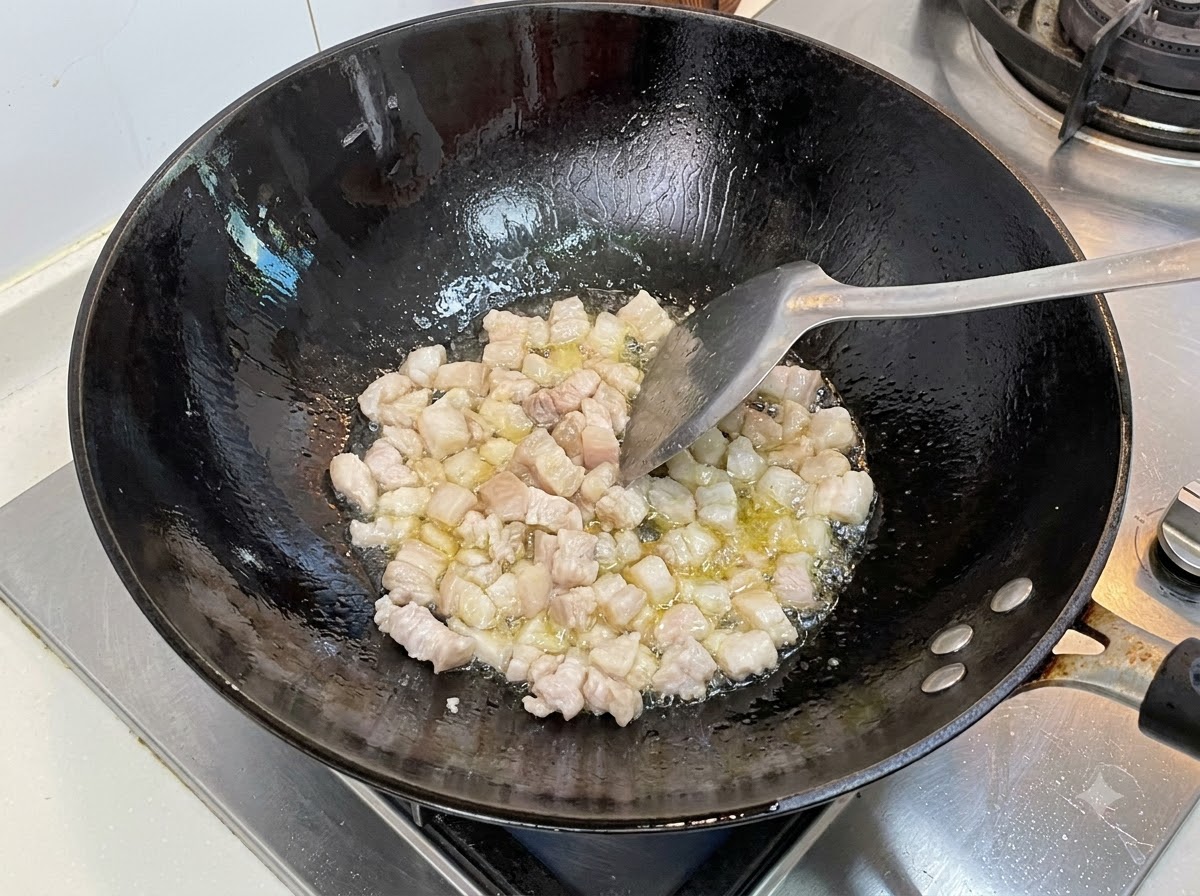
Heat oil in a black wok and add the diced fatty pork. Stir-fry the fat over heat to render out the excess oil, creating a rich base for the sauce.
Tip: Ensure the oil is adequately heated and stir continuously to render the fat until it turns slightly golden. - 7Add and stir-fry the lean pork
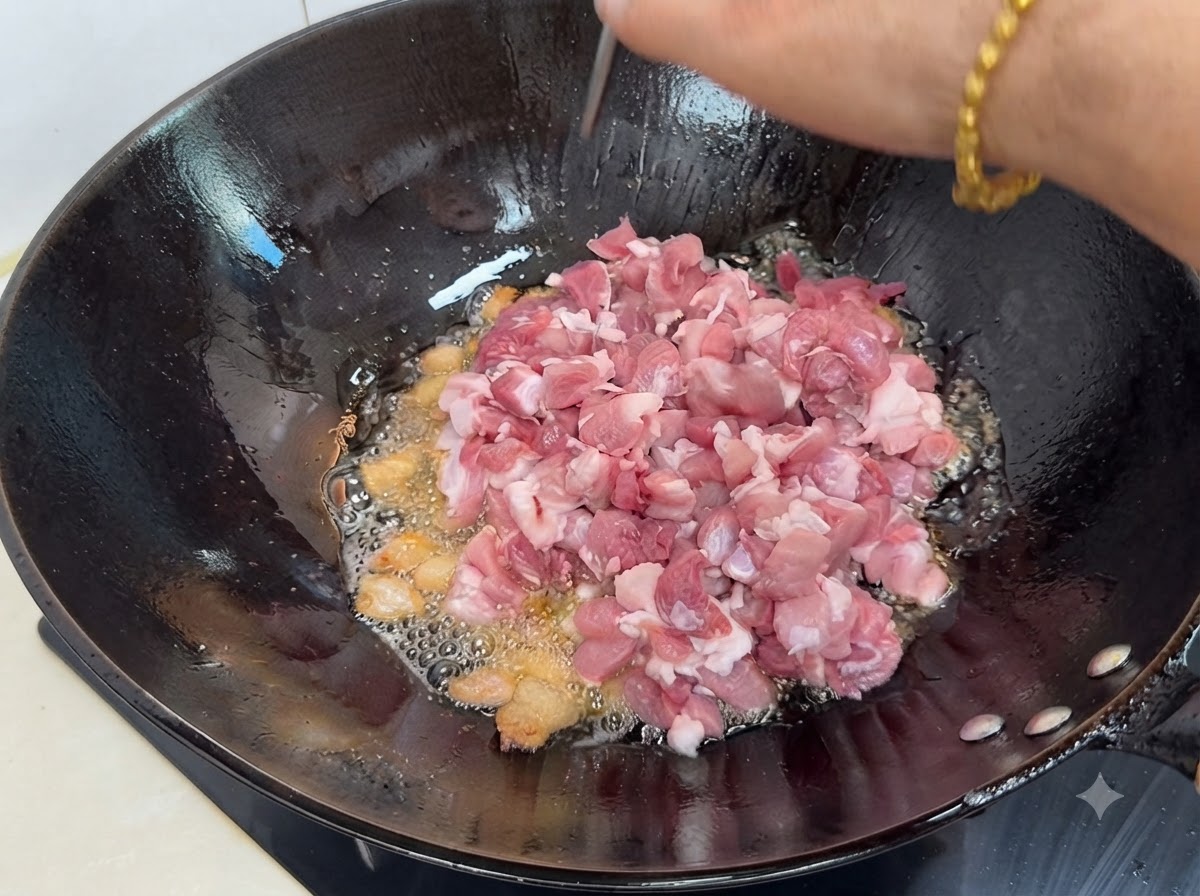
Add the diced lean pork into the wok containing the rendered fat, star anise, and ginger. Stir-fry the meat thoroughly until it changes color and blends well with the aromatic oils.
Tip: Make sure to distribute the lean meat evenly so it browns consistently in the rendered fat. - 8Mix in half of the scallions
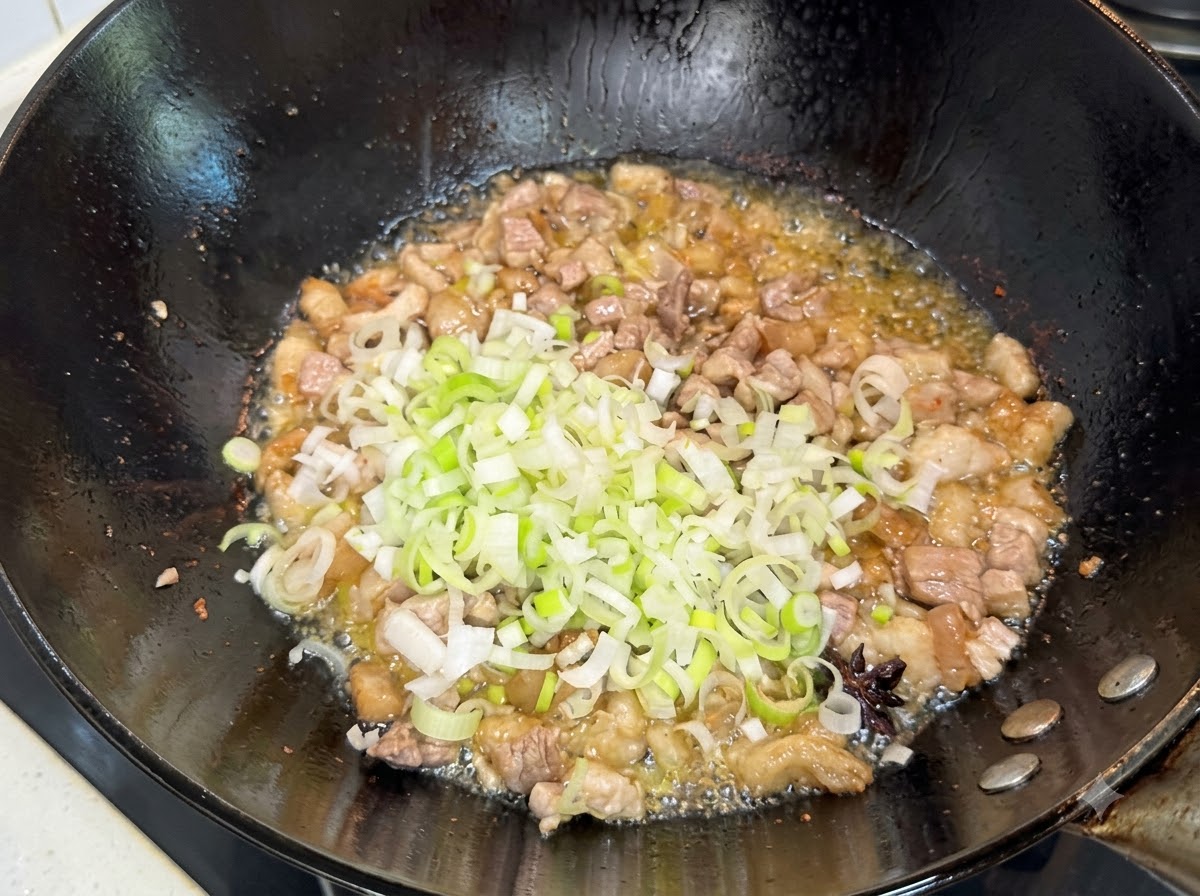
Add half of the freshly chopped scallions directly into the wok with the browned pork pieces. Stir them in continuously to release their aroma into the meat mixture.
Tip: Adding half the scallions now builds a flavorful base, while the rest are added later for a fresh aroma. - 9Pour in the sauce mixture
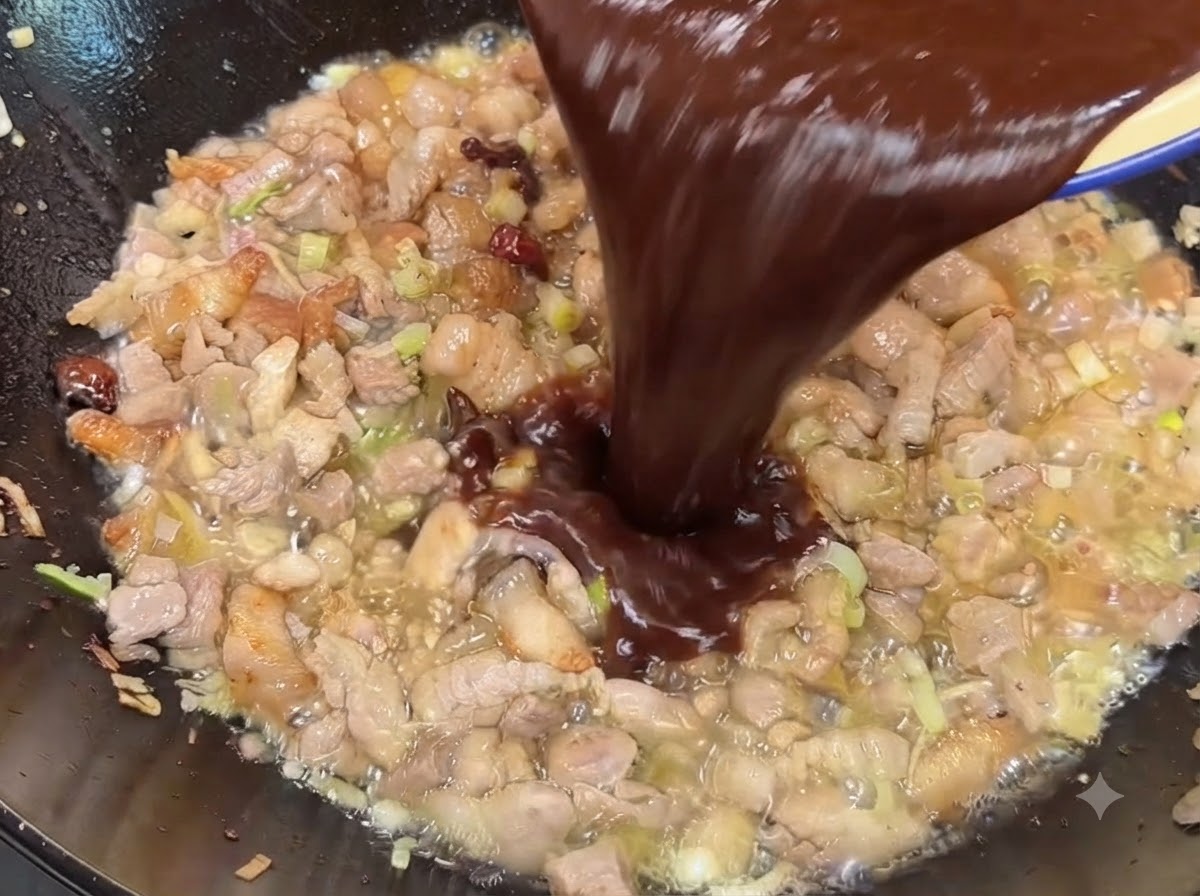
Pour the prepared dark sauce mixture evenly over the cooked pork and aromatics in the wok. Ensure all the ingredients are thoroughly coated with the rich bean paste liquid.
Tip: Pour in a steady stream while stirring gently to prevent splashing and ensure even coverage. - 10Simmer and reduce the sauce
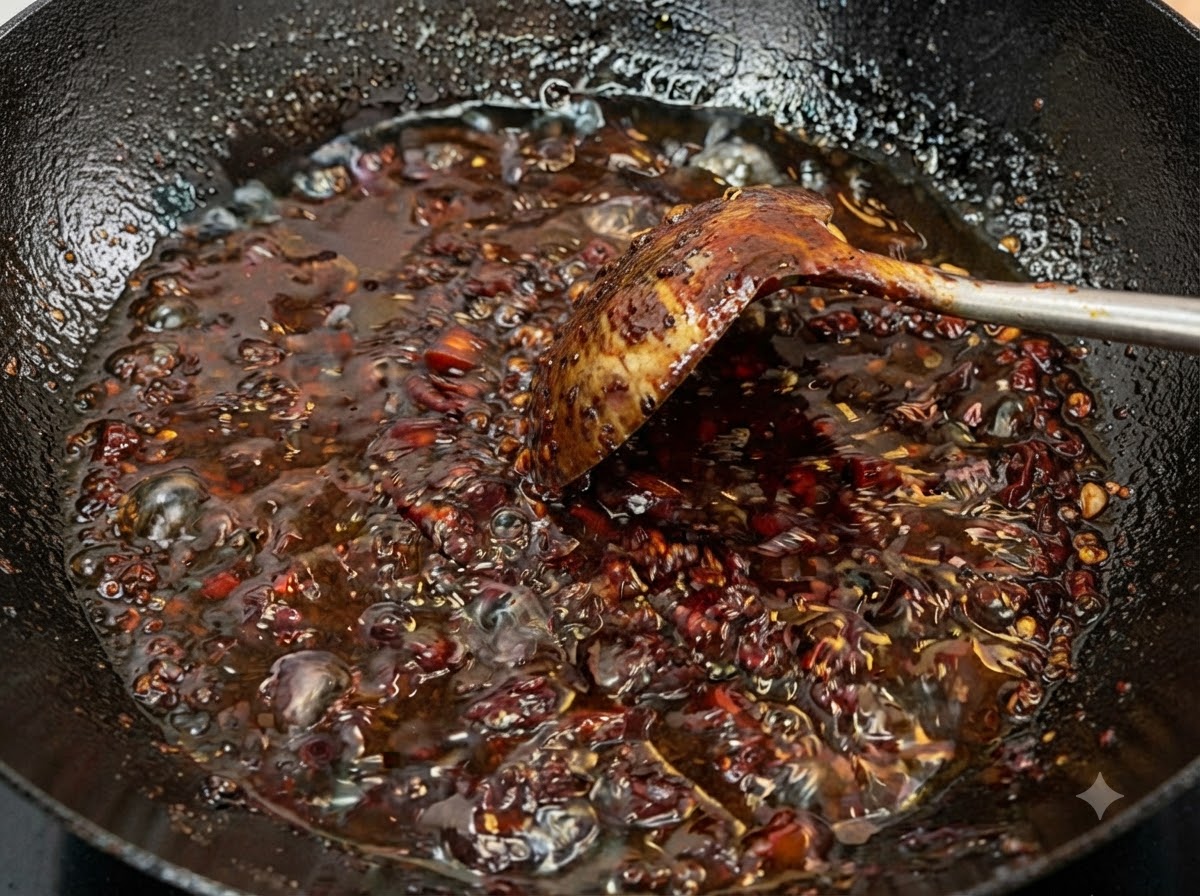
Reduce the heat to low and continuously stir the dark meat sauce. Maintain patience and simmer for about 20 minutes until the liquid reduces, the color deepens, and the rendered oil clearly separates from the thick paste.
Tip: Low heat and constant stirring are crucial here to prevent the thick sauce from burning at the bottom. - 11Stir in remaining scallions
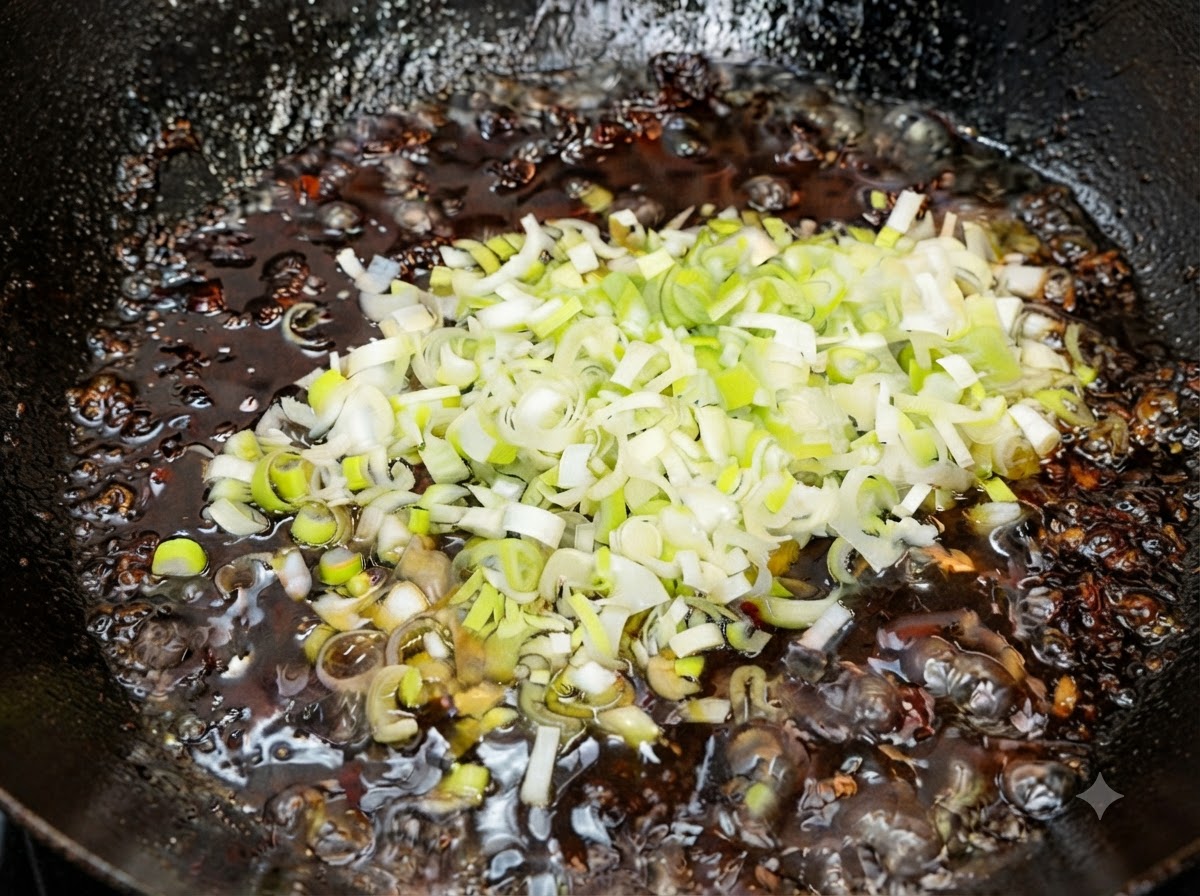
Turn off the heat and stir the remaining chopped scallions into the finished hot sauce. Use the residual heat of the wok to gently release the fresh scallion aroma into the sauce.
Tip: Do not cook the final batch of scallions over active heat; the residual warmth is enough to infuse their fragrance. - 12Boil the handmade noodles
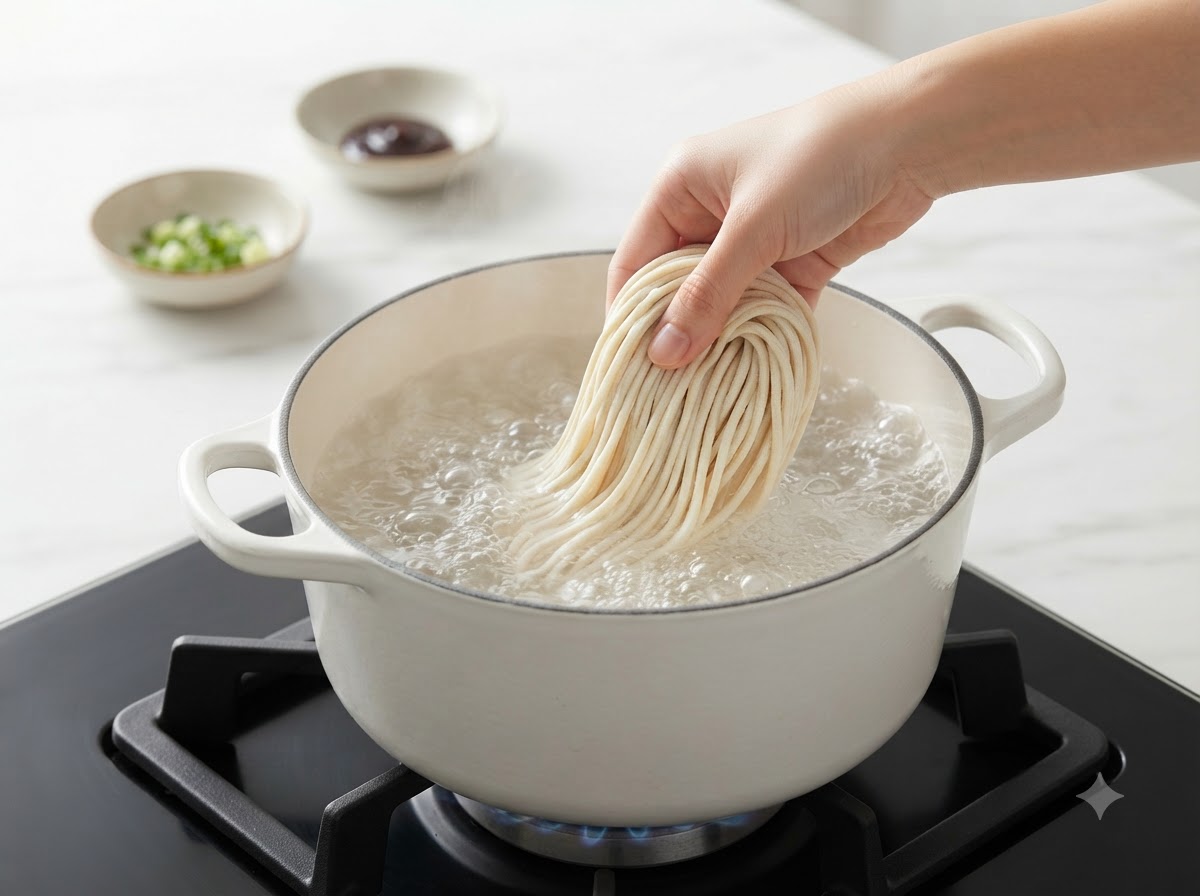
Drop fresh, thick handmade noodles into a large pot of rolling boiling water. Cook them until tender, then remove and transfer them into a serving bowl.
Tip: Stir the noodles gently right after dropping them into the water to prevent them from sticking together.