Easy Korean Boiled Pork Belly (Bossam)
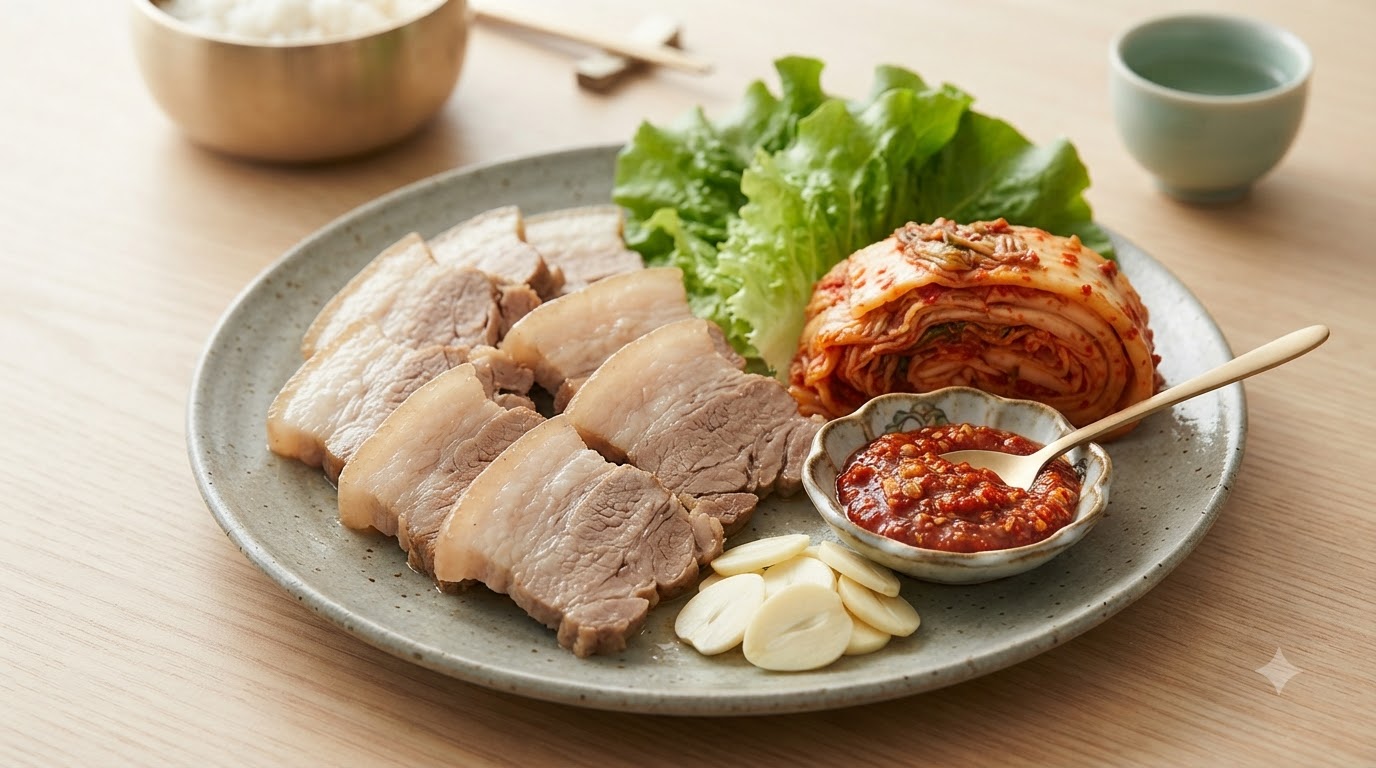
Make authentic Korean-style boiled pork belly at home effortlessly using a rice cooker, served with fresh lettuce, garlic, kimchi, and a vibrant chili dipping sauce.
Bossam is a beloved Korean dish featuring tender, succulent pork belly boiled with aromatic vegetables and spices. By utilizing a rice cooker, this traditional recipe becomes completely hands-free and accessible for home cooks. Paired with crisp lettuce wraps, spicy kimchi, and a savory soybean-chili dipping sauce, it offers a harmonious balance of rich and refreshing flavors.
Ingredients
- 1 kg pork belly
- 0.5 onion
- 0.5 apple
- 4 cloves garlic
- 2 stalks green onion
- 1 tsp peppercorns
- 1 bay leaf
- 1 tbsp Korean soybean paste
- 1 tsp salt
- 1 tsp white sugar
- 2 tbsp minced garlic
- 1 tbsp white sesame seeds
- 1 tbsp Korean chili paste
- 1 tbsp Korean soybean paste
- 1 tsp sesame oil
- to taste water
- to taste kimchi
- to taste fresh lettuce
Instructions
- 1Prepare the aromatics
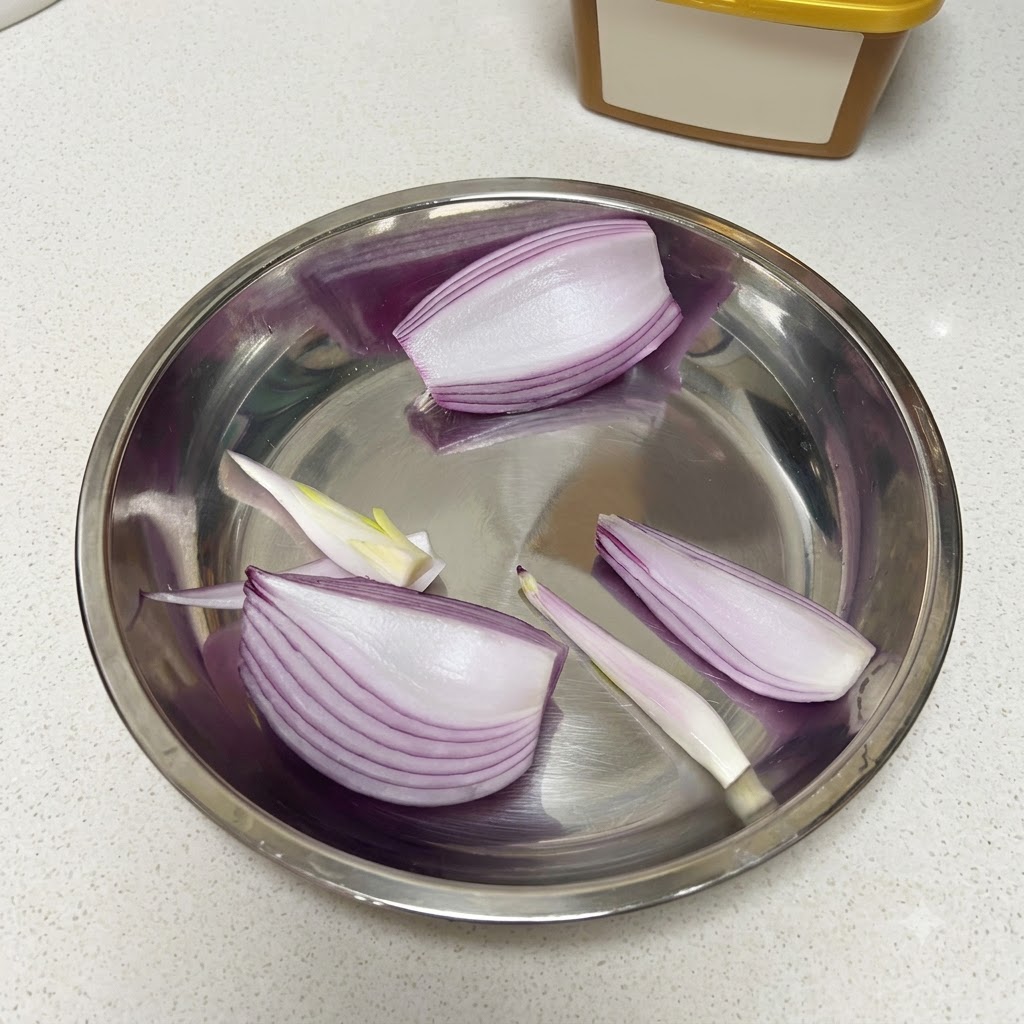
Place cut red onion pieces, half an apple, and peeled raw garlic cloves into a metal bowl to serve as flavor enhancers for the pork belly.
Tip: Using apples adds a natural sweetness that balances the savory spices. - 2Add green onions and spices
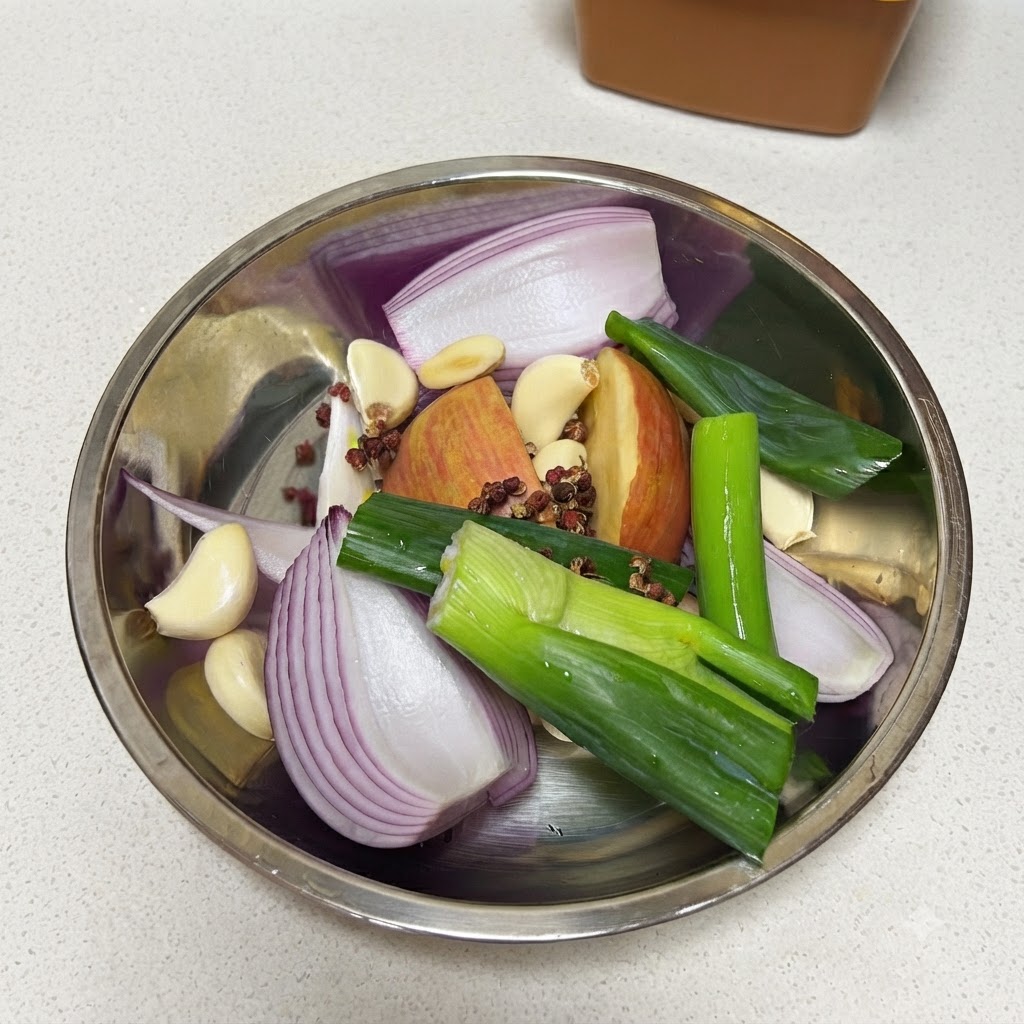
Cut fresh green onion directly with scissors into the metal bowl containing the red onion, apple, garlic, peppercorns, and a bay leaf.
Tip: Scissors offer a quick and convenient way to snip green onions without dirtying a cutting board. - 3Add pork belly to the rice cooker
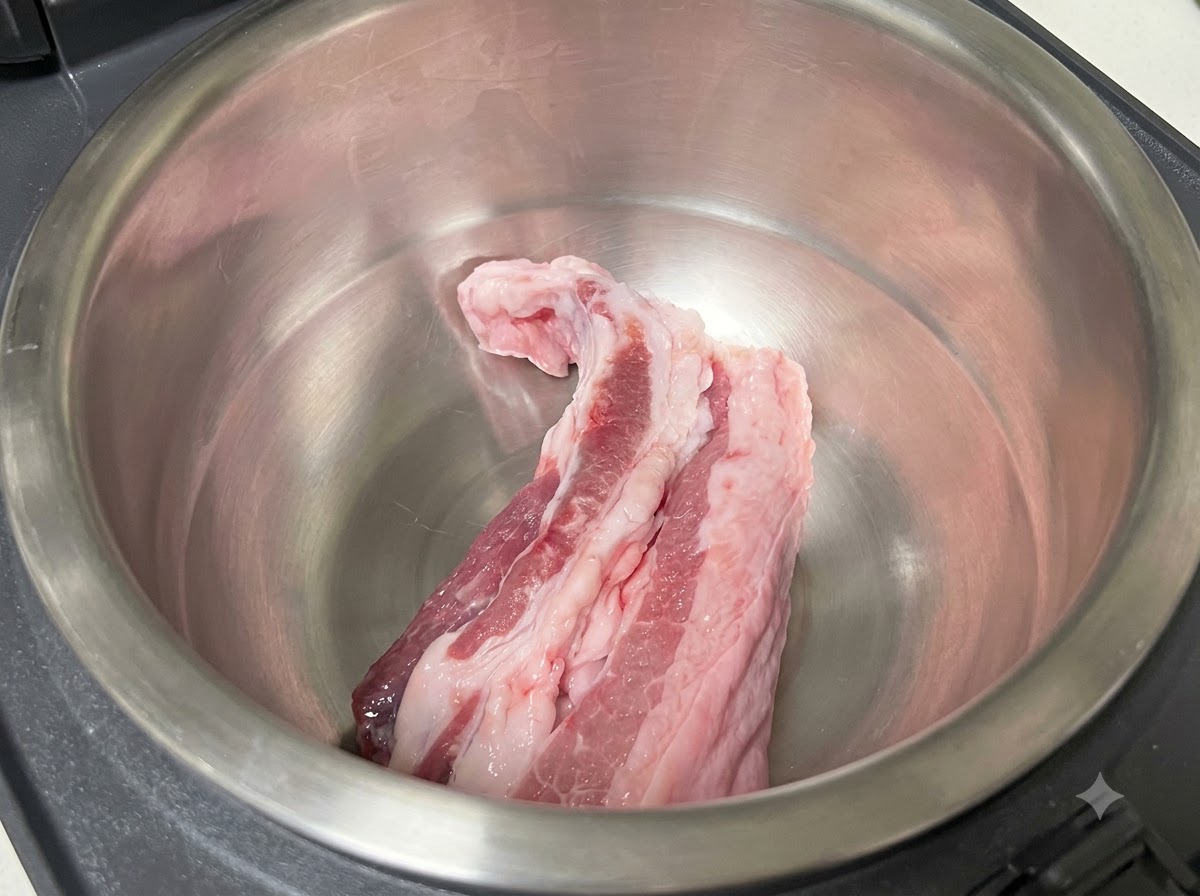
Place raw pork belly strips directly into the stainless steel inner pot of a rice cooker without turning on the heat yet.
Tip: Using a rice cooker makes cooking tender boiled pork effortless and hands-free. - 4Combine aromatics with the meat
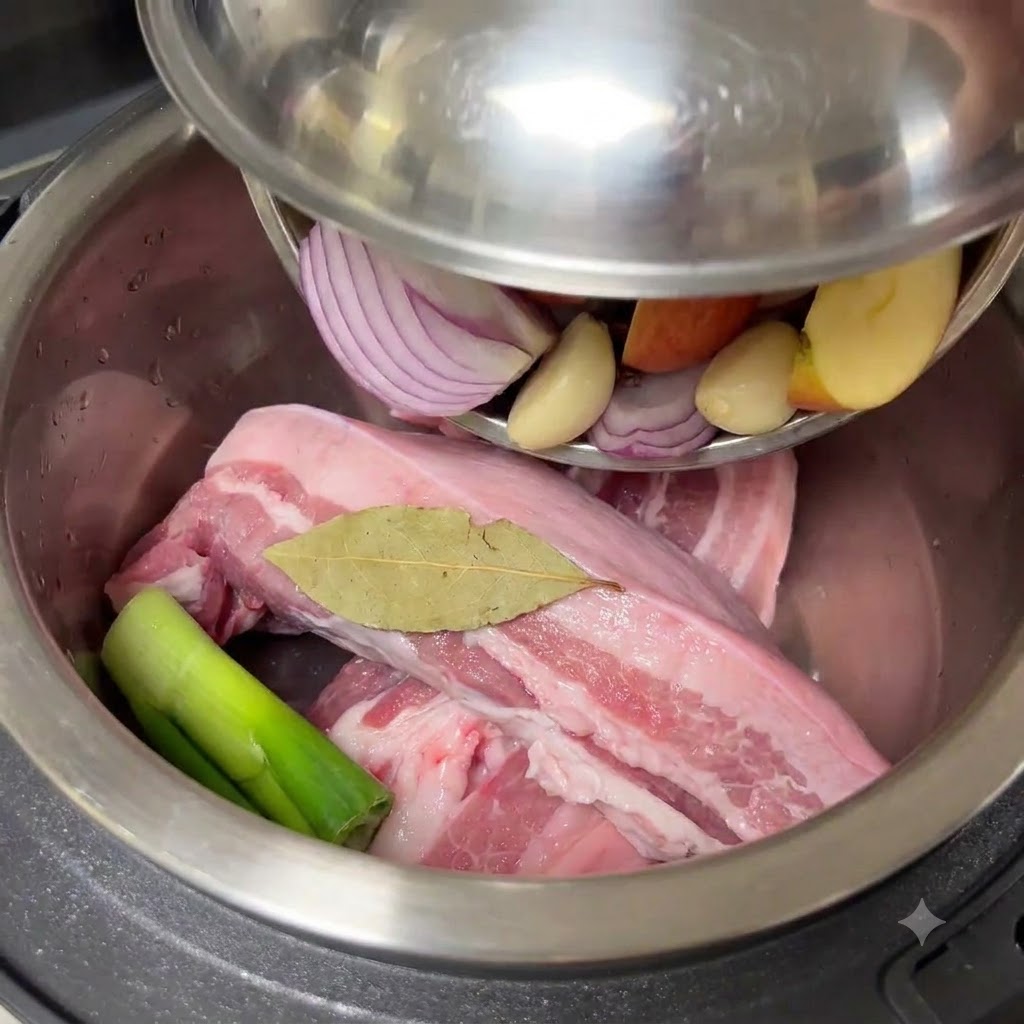
Pour the prepared bowl of aromatics, including red onion, apple, garlic, green onion, and a bay leaf, directly over the raw pork belly in the rice cooker.
Tip: Layering the aromatics around and on top of the meat ensures the flavors infuse deeply during cooking. - 5Add Korean soybean paste
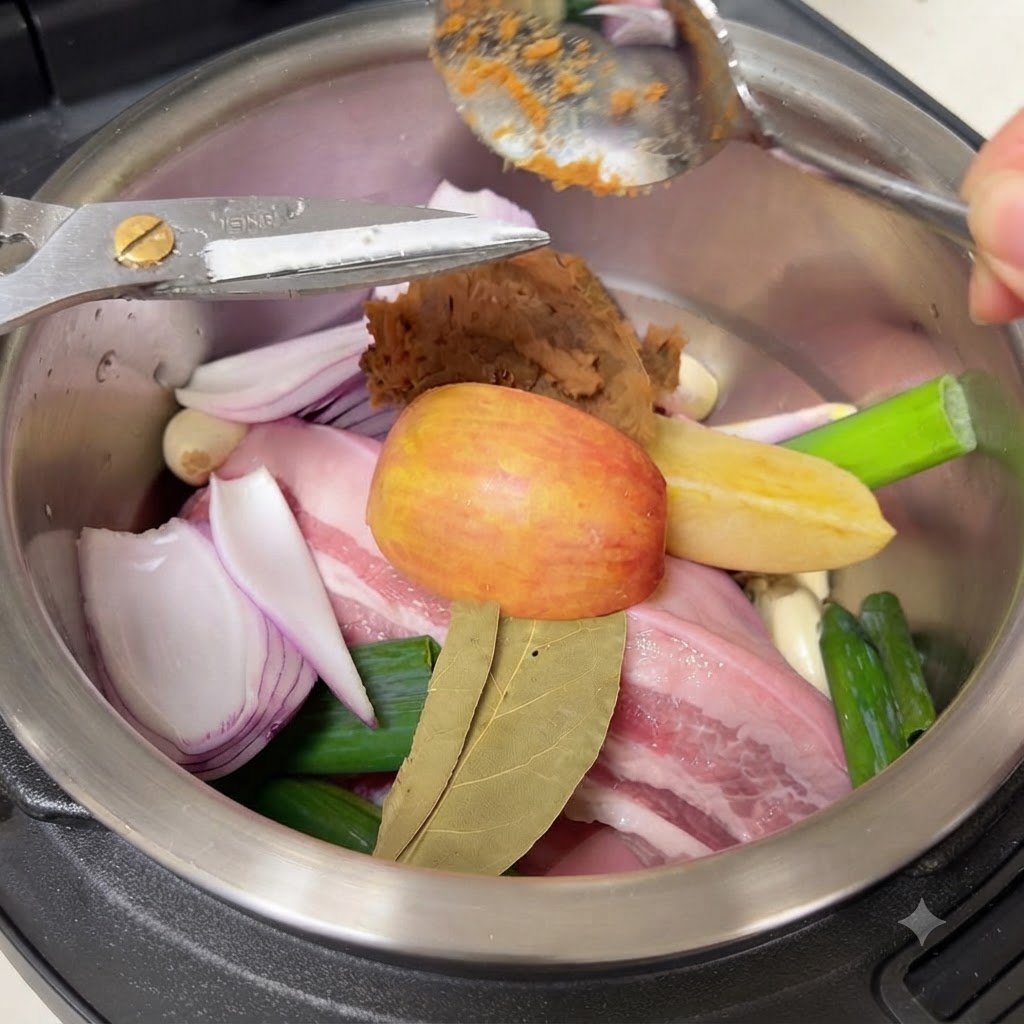
Add a spoonful of brown Korean soybean paste onto the ingredients and pork belly inside the pot to impart a rich, savory depth.
Tip: Korean soybean paste (doenjang) is essential for eliminating gamey odors and giving authentic depth to boiled pork. - 6Season with salt
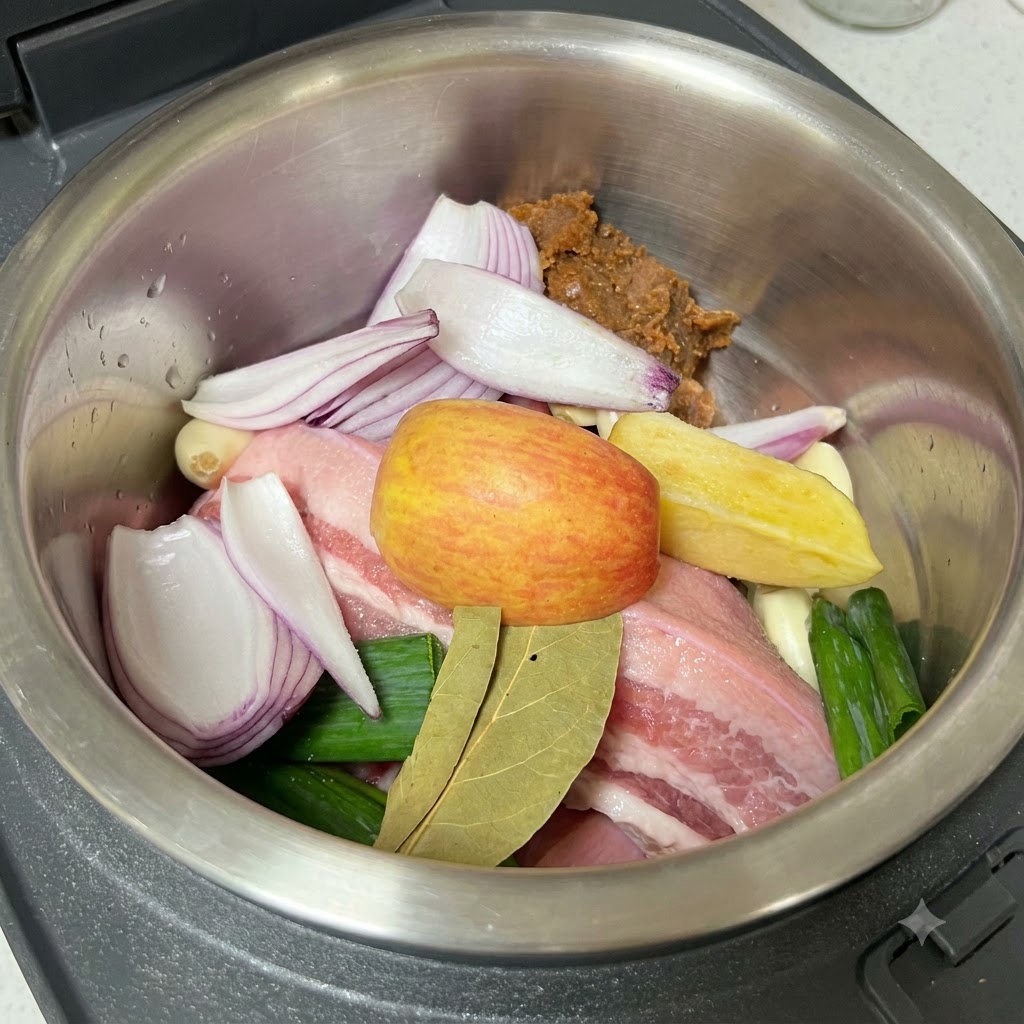
Grind salt over the meat, aromatics, and soybean paste in the pot to enhance all the savory flavors.
Tip: Adjust the amount of salt carefully since the soybean paste also contributes sodium. - 7Add water to the pot
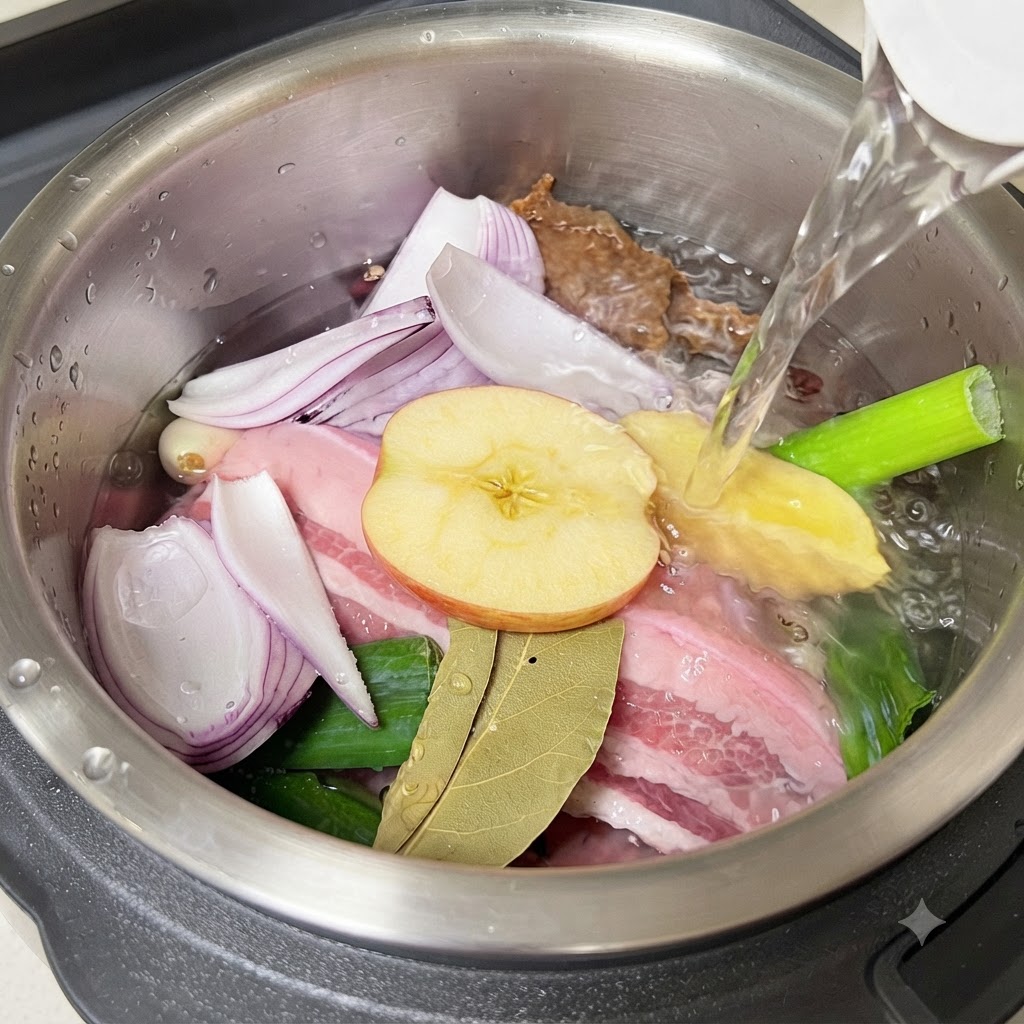
Pour clear water into the rice cooker pot until the liquid level matches the ingredients inside.
Tip: Do not add too much water; it only needs to be level with the meat. - 8Start the rice cooker

Press the button on the digital rice cooker panel to begin the cooking cycle for 45 minutes.
Tip: Ensure the lid is securely closed before starting the cooker. - 9Prepare the sauce base
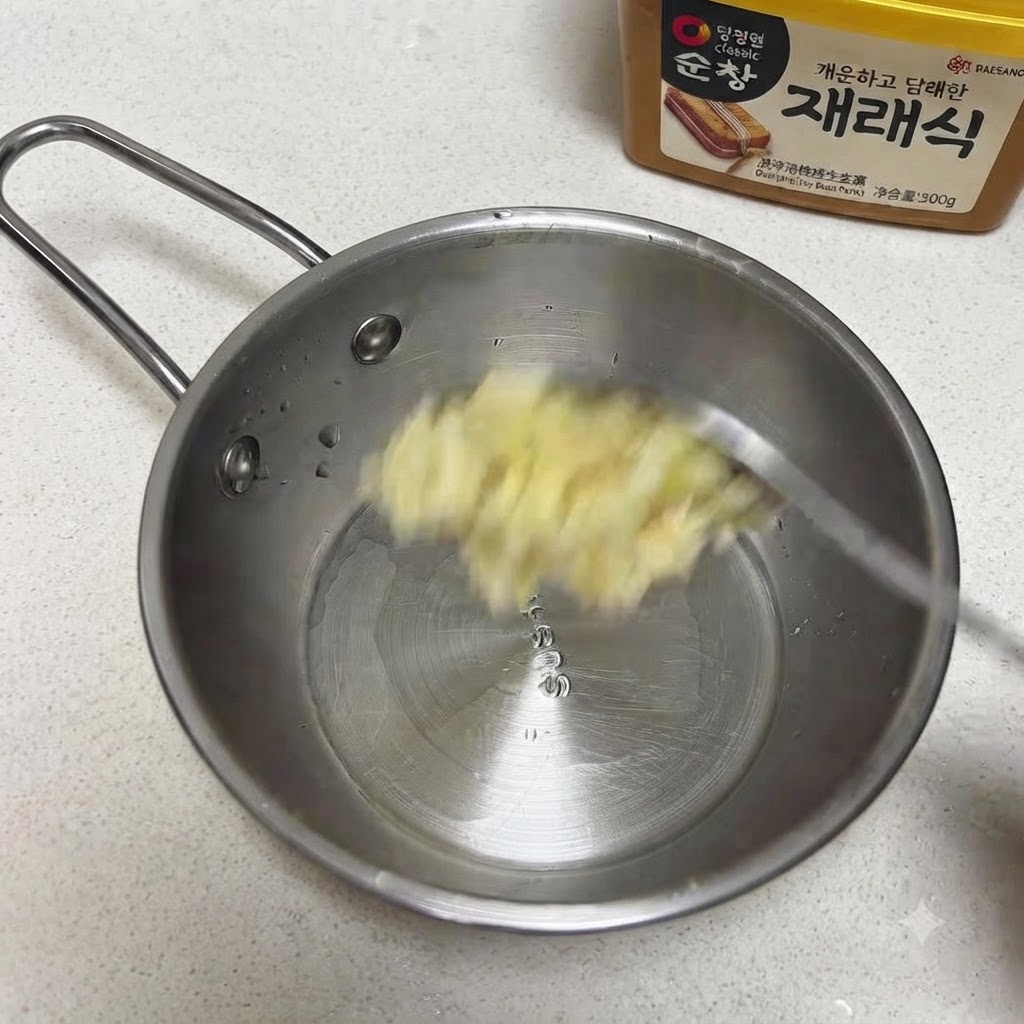
Place minced garlic, chopped green onions, and white sesame seeds into a small metal pan to build the dipping sauce.
Tip: Freshly minced garlic provides the best flavor for the sauce. - 10Add Korean pastes
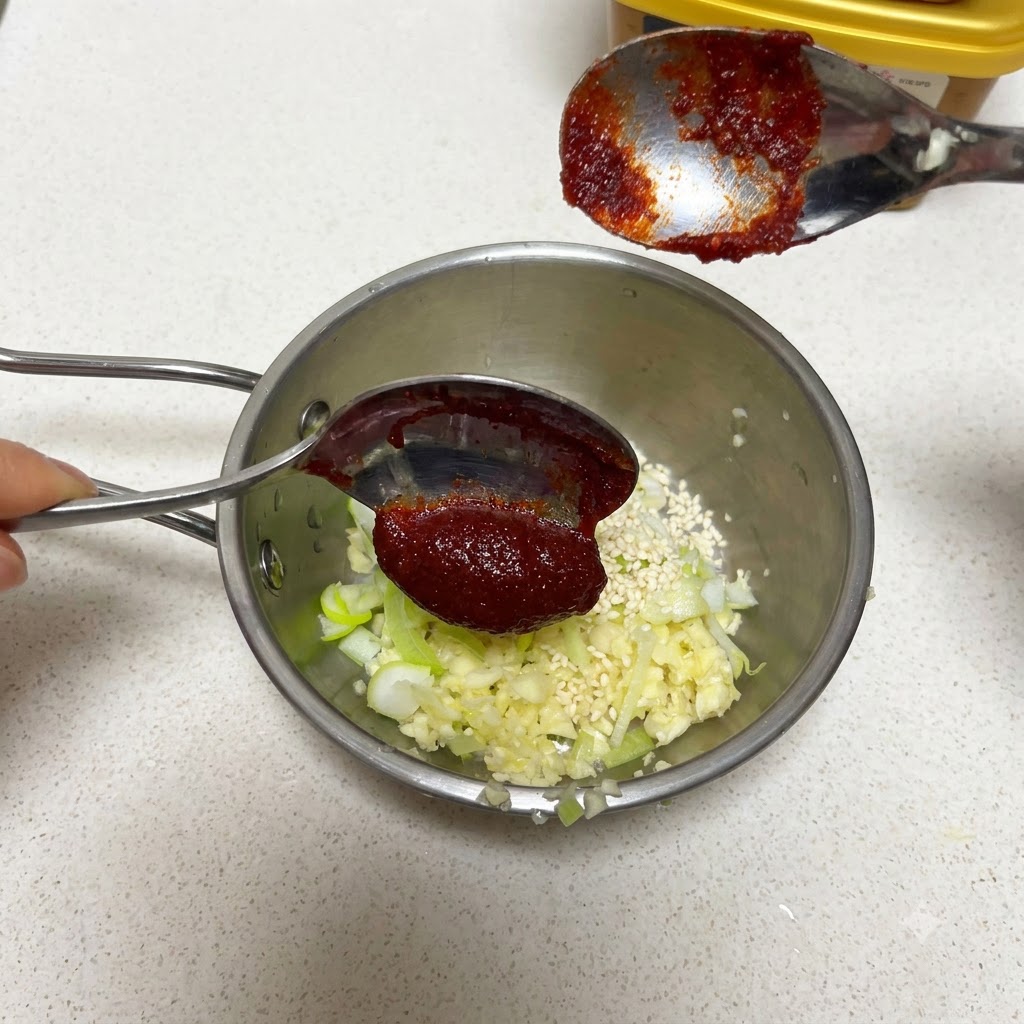
Add a spoonful of dark red Korean chili paste and brown soybean paste into the metal pan containing the garlic and sesame seeds.
Tip: These pastes form the rich, authentic flavor profile of the dipping sauce. - 11Pour water into the sauce
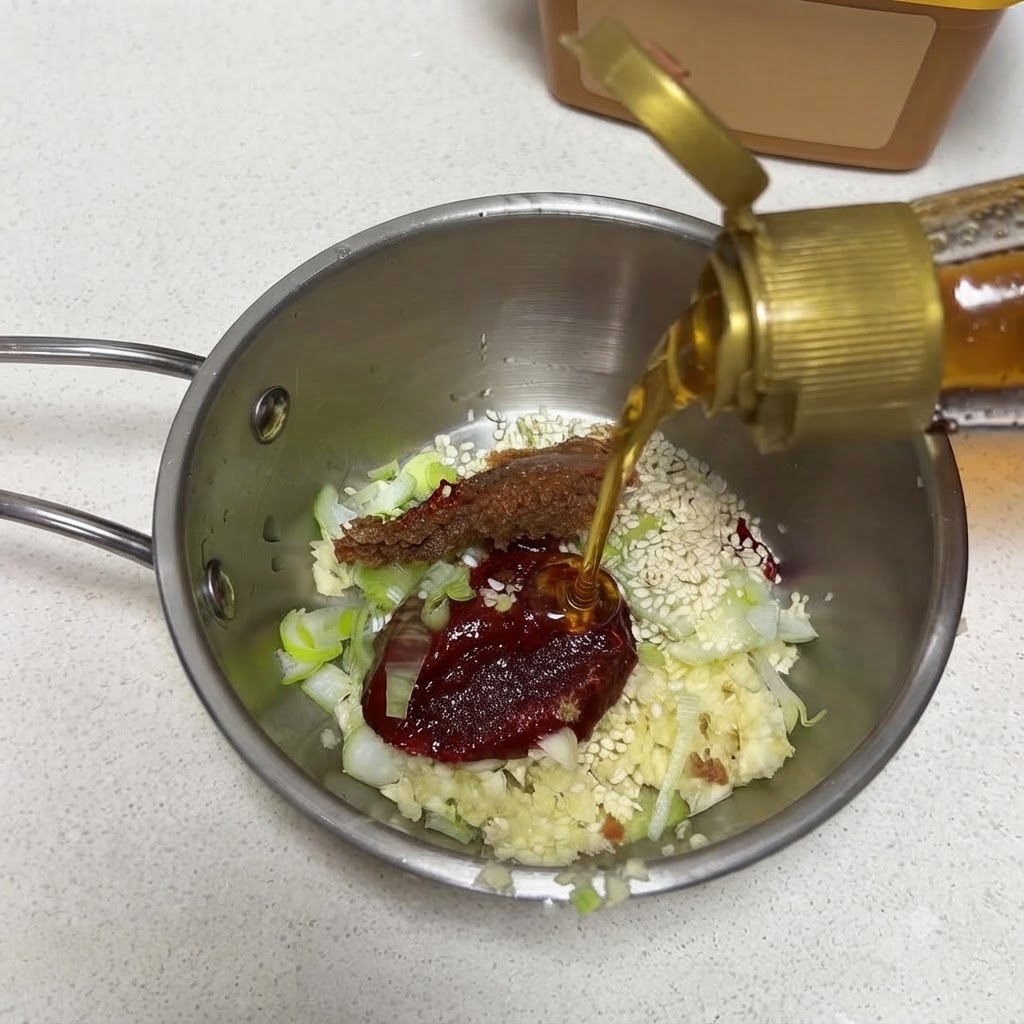
Pour a small amount of liquid or sesame oil and water into the sauce ingredients to help thin and blend the mixture.
Tip: Mix well so the pastes dissolve evenly into a smooth consistency. - 12Mix the dipping sauce
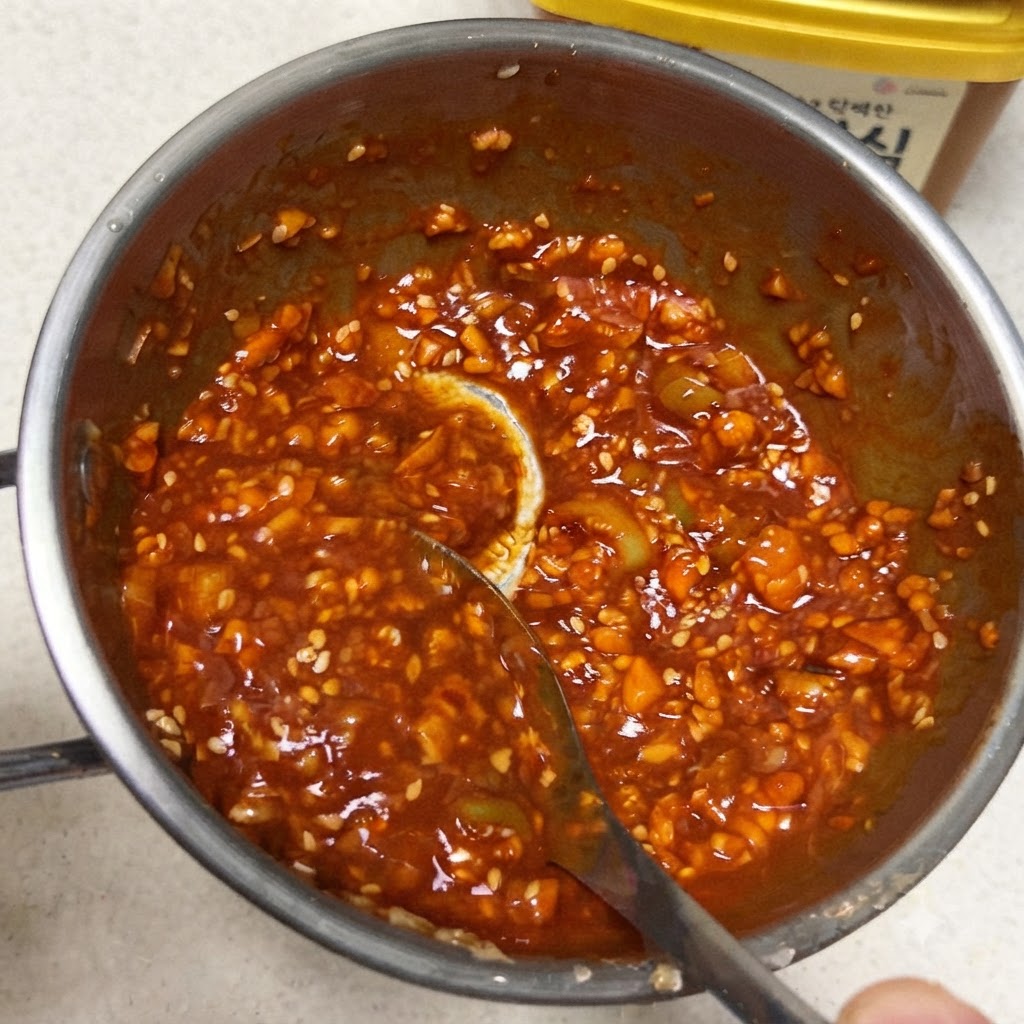
Stir the vibrant red dipping sauce thoroughly with a spoon until completely smooth and well-combined.
Tip: This sauce cuts through the richness of the pork belly perfectly. - 13Remove the cooked pork belly
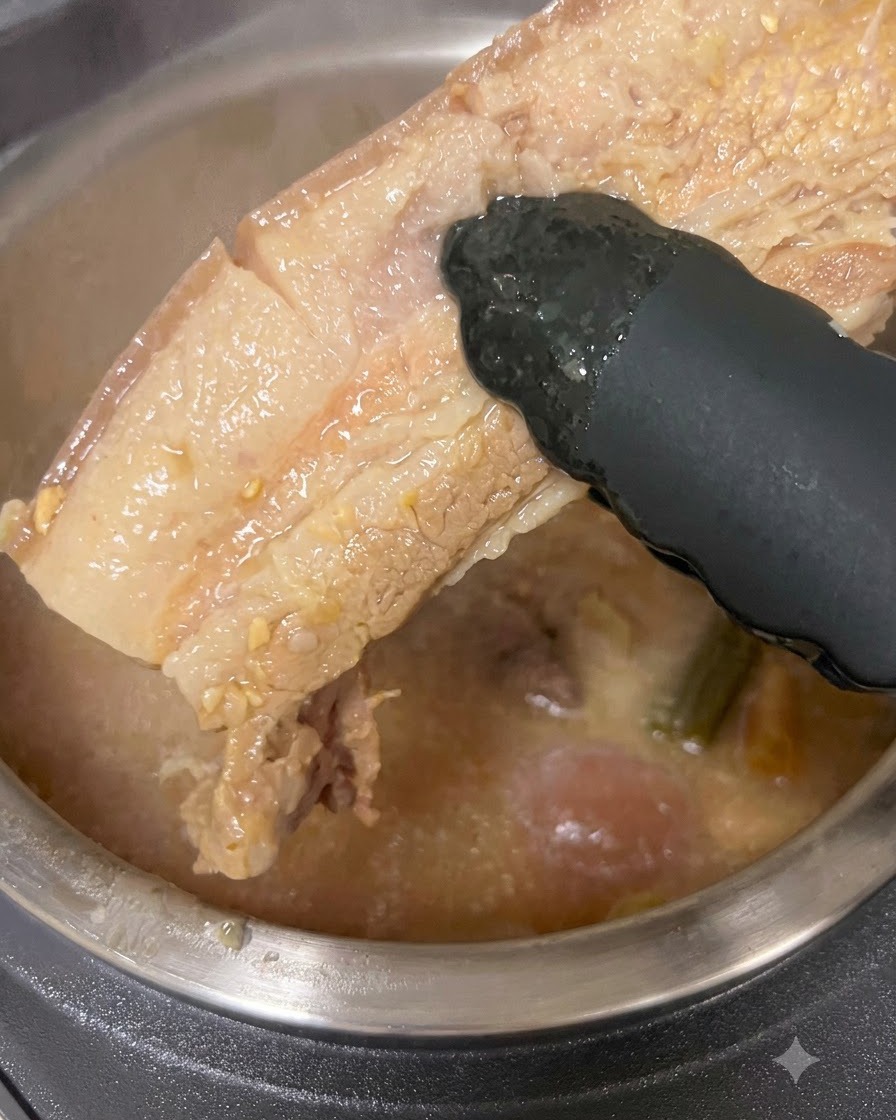
Carefully lift the tender, cooked pork belly out of the savory soy bean broth using black silicone tongs.
Tip: Make sure to let the excess broth drip back into the pot before transferring the meat. - 14Slice the pork belly
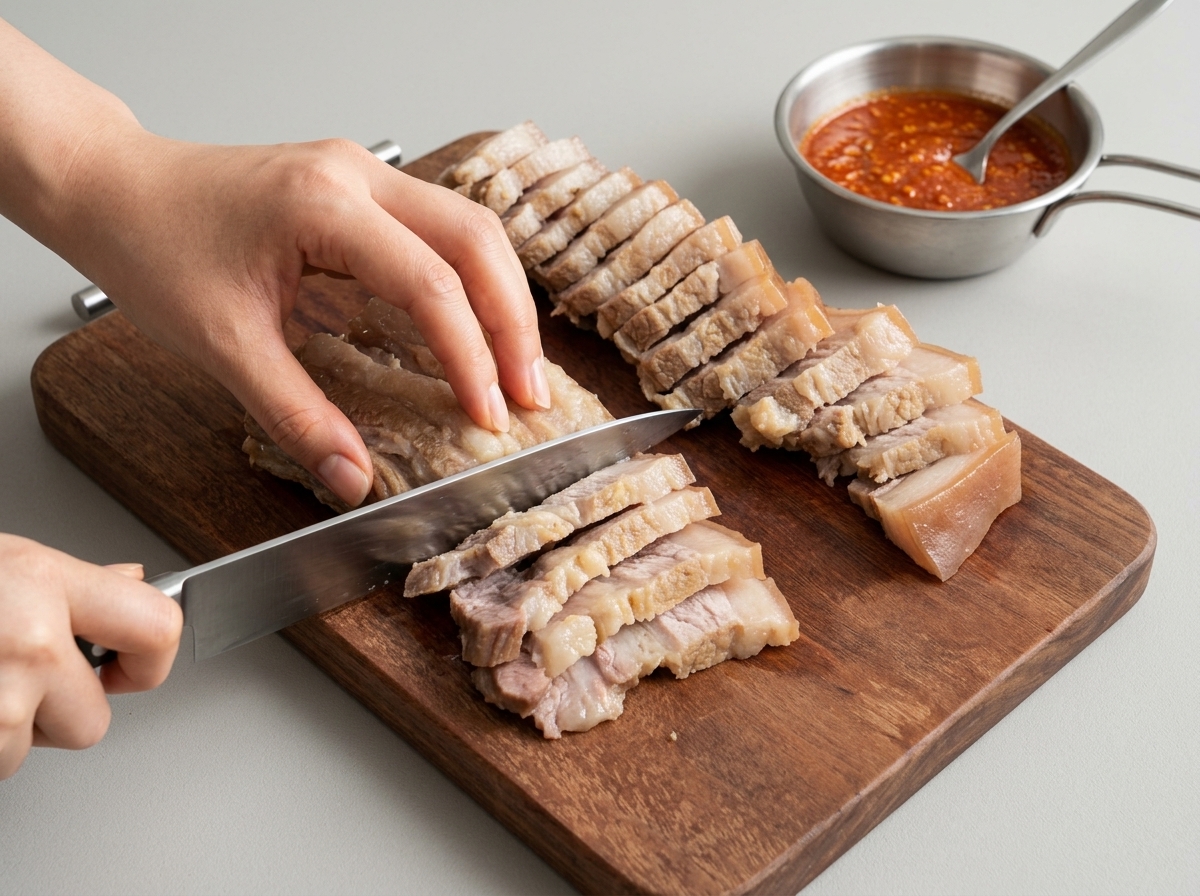
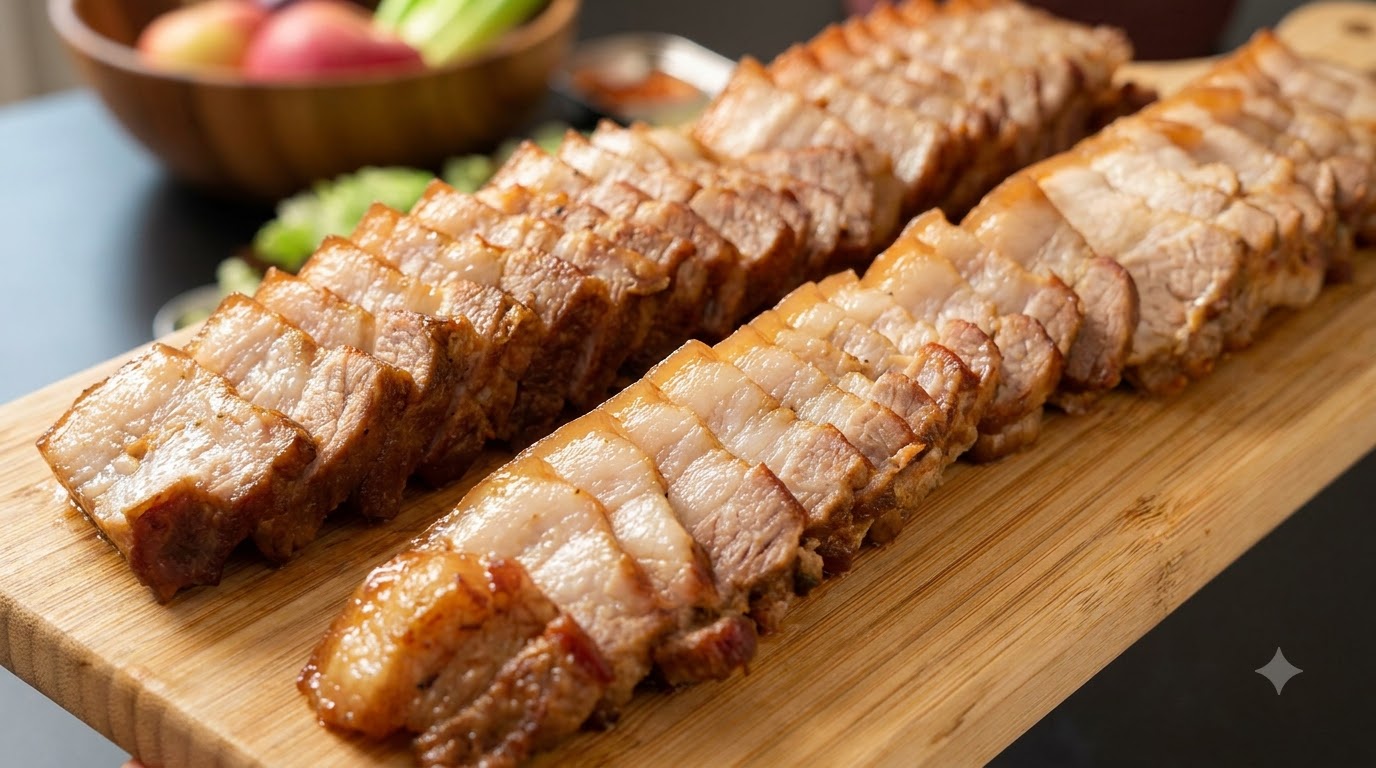
Place the cooled pork belly on a wooden cutting board and use a large knife to slice it into even, thick pieces.
Tip: Letting the meat cool down before slicing helps keep the pieces intact and prevents them from falling apart. - 15Plate the sliced pork
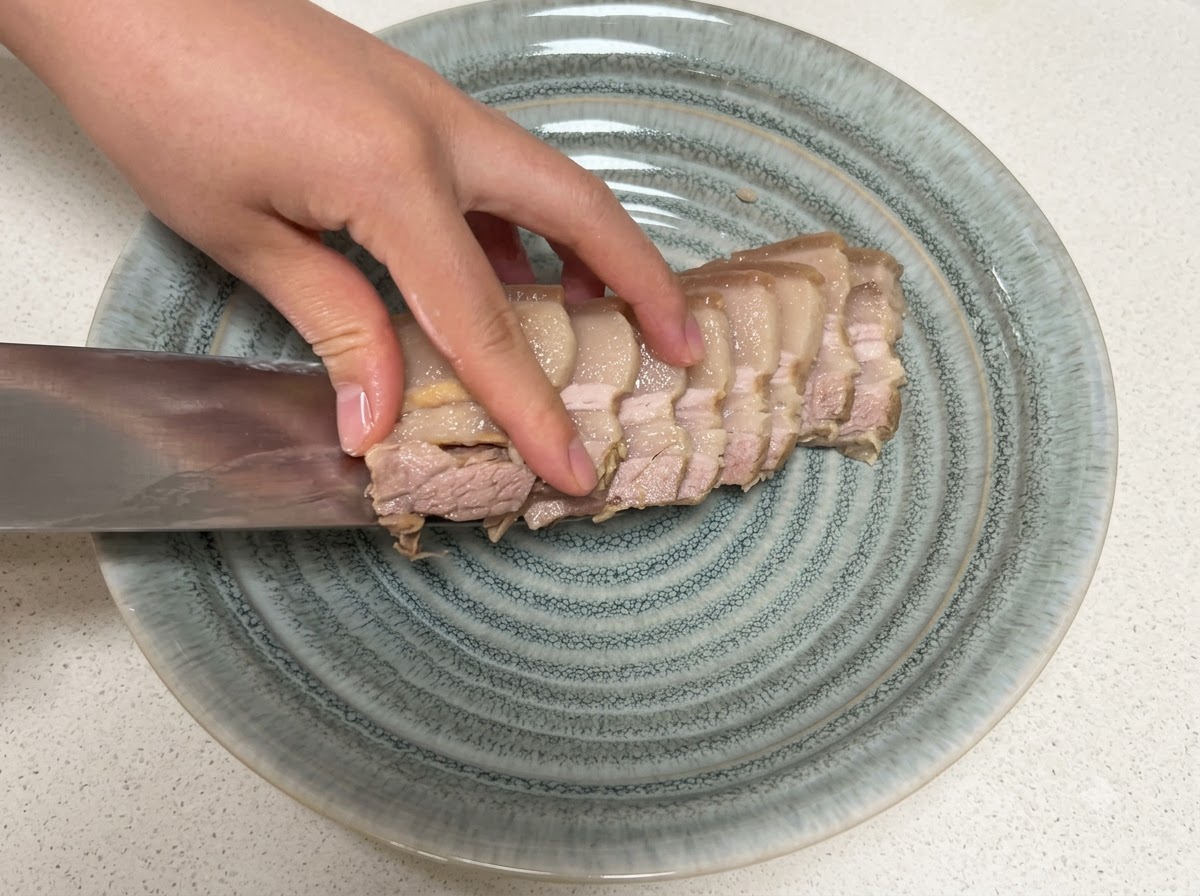
Carefully transfer the freshly sliced pork belly pieces using the blade of the knife and arrange them neatly onto a textured grey plate.
Tip: Overlap the slices slightly for an appealing presentation.