Spicy Korean Stir-Fried Pork Belly (Jeyuk Bokkeum)
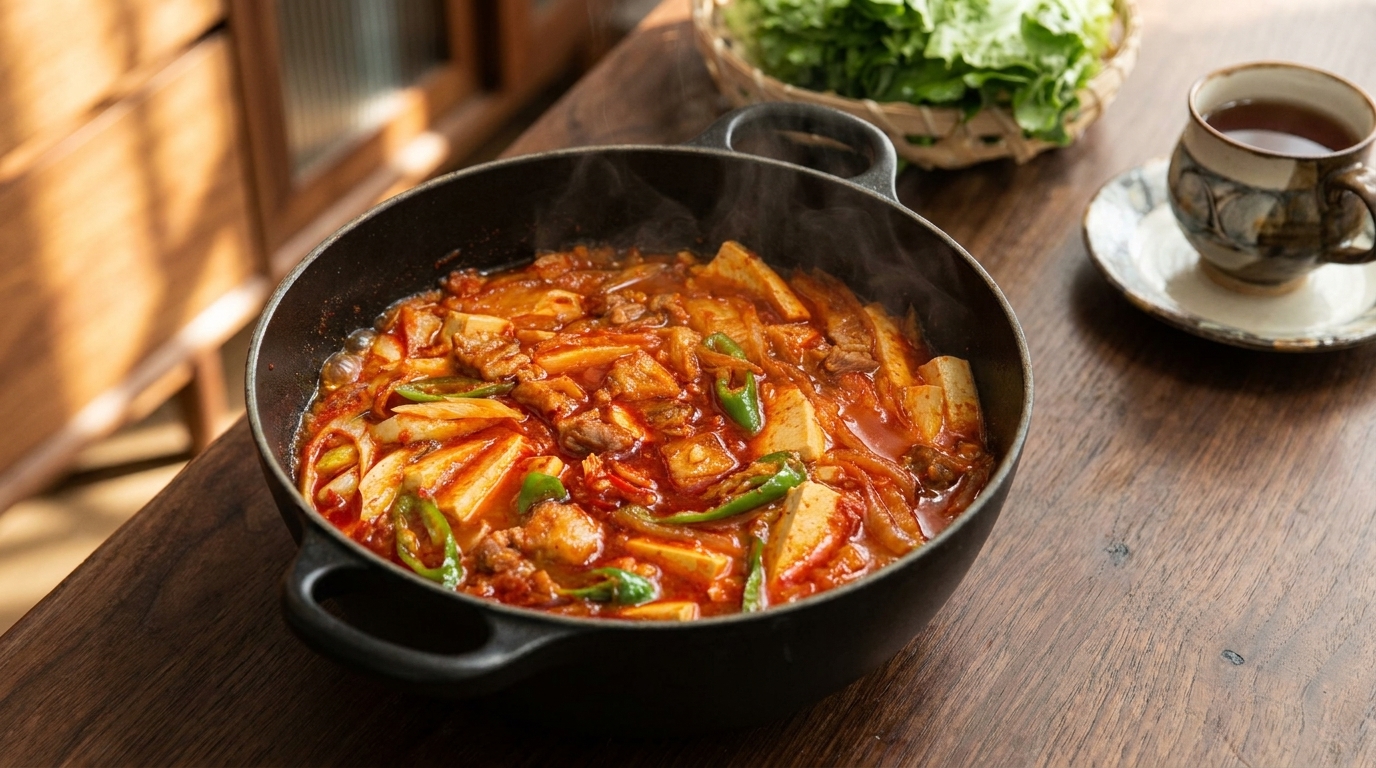
Experience the bold flavors of Korean comfort food with this spicy stir-fried pork belly, featuring perfectly caramelized meat coated in a glossy, sweet-and-spicy sauce.
Jeyuk bokkeum is a beloved Korean staple that highlights the harmony between rich, rendered pork fat and a punchy, fermented chili paste. This dish is designed to be eaten wrap-style, using fresh lettuce leaves to balance the intense heat and savory depth of the caramelized sauce. It is the perfect balance of texture and spice, bringing the authentic taste of a Korean barbecue house straight to your home kitchen.
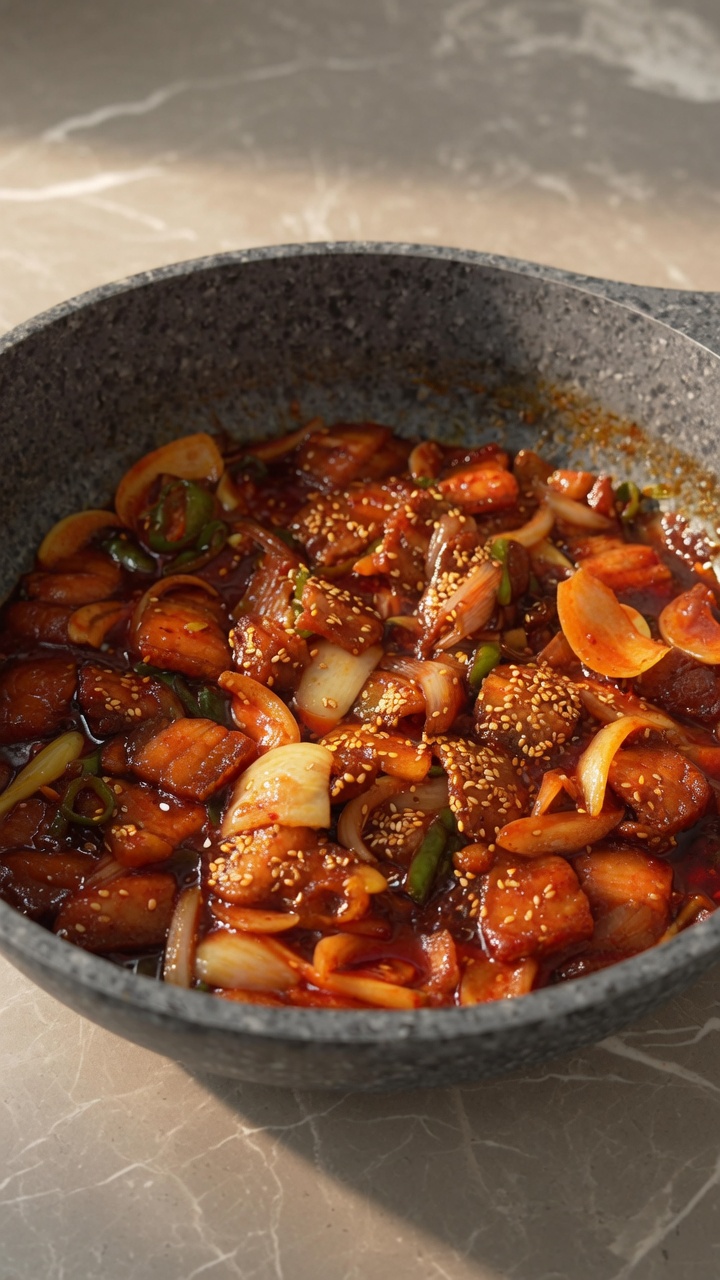
Ingredients
- 500 g skin-on pork belly
- 2 tbsp soy sauce
- 2 tbsp Korean chili paste (gochujang)
- 2 tbsp sugar
- 1 tbsp corn syrup
- 1 tbsp green plum juice
- 1 tsp beef powder
- 0.5 tsp MSG
- 1 tsp black pepper powder
- 1 white onion
- 2 green chilies
- 3 cloves garlic
- 1 stalk green onion
- 1 tbsp toasted white sesame seeds
- to taste lettuce leaves for serving
Instructions
- 1Slice the pork belly
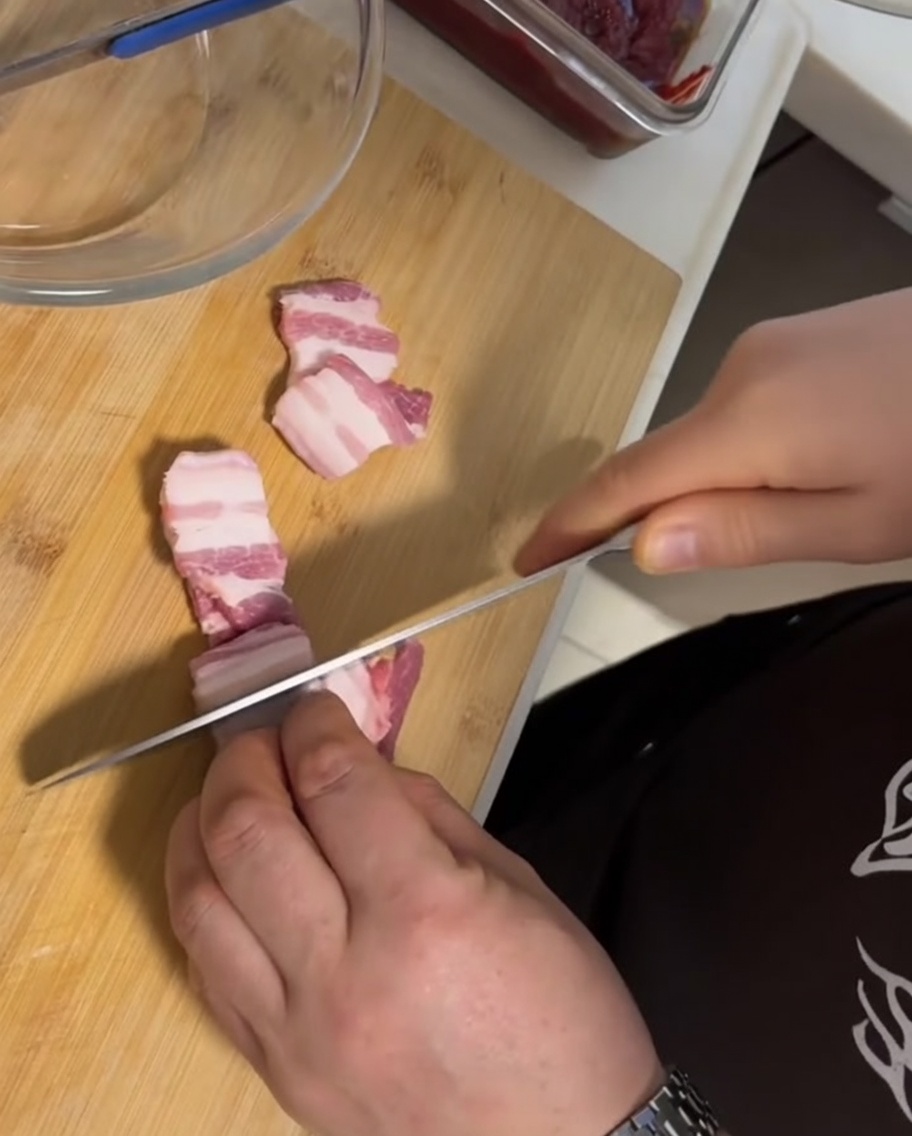
Place the skin-on pork belly on a cutting board and use a sharp cleaver to slice it into thick, uniform pieces. Aim for a thickness of about 1 centimeter, which is ideal for achieving a perfect texture when pan-fried.
Tip: Uniform thickness ensures that all pieces cook evenly at the same rate. - 2Prepare the spicy sauce
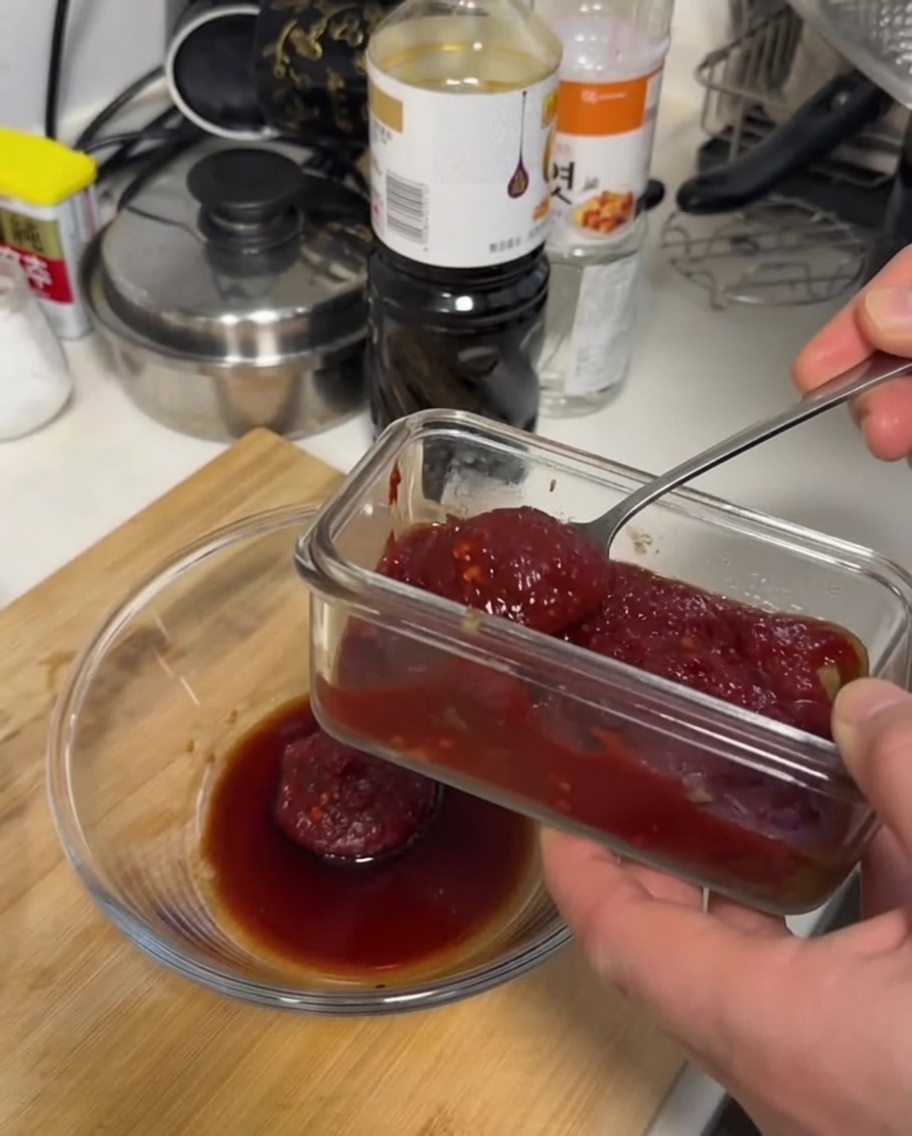
In a clear glass bowl, combine two spoons of soy sauce, two spoons of chili paste, some corn syrup, a splash of green plum juice, a pinch of MSG, two spoons of sugar, a little beef powder, and a dash of pure black pepper powder. Mix thoroughly until the seasonings are well incorporated into a smooth, dark red sauce.
Tip: Using Korean black pepper powder adds a distinct and authentic flavor to the sauce. - 3Sear the pork belly
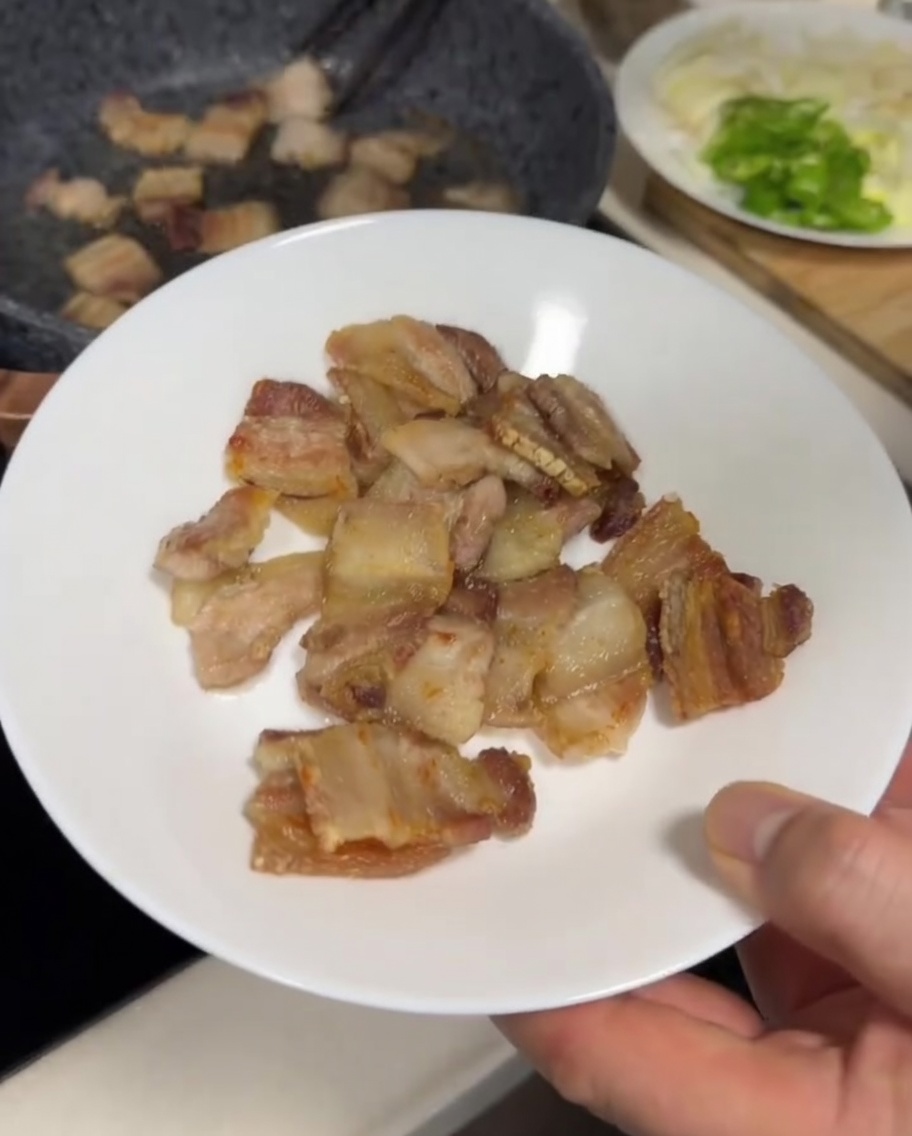
Place the pork belly slices into a hot pan and fry them over medium heat. Cook until the surfaces are browned, slightly scorched, and golden. Frying the meat until it is slightly crispy and transparent helps render out the fat, resulting in a better taste and texture.
Tip: Ensure the pork is fully cooked through; undercooked pork belly can feel overly greasy. - 4Remove and set aside the meat
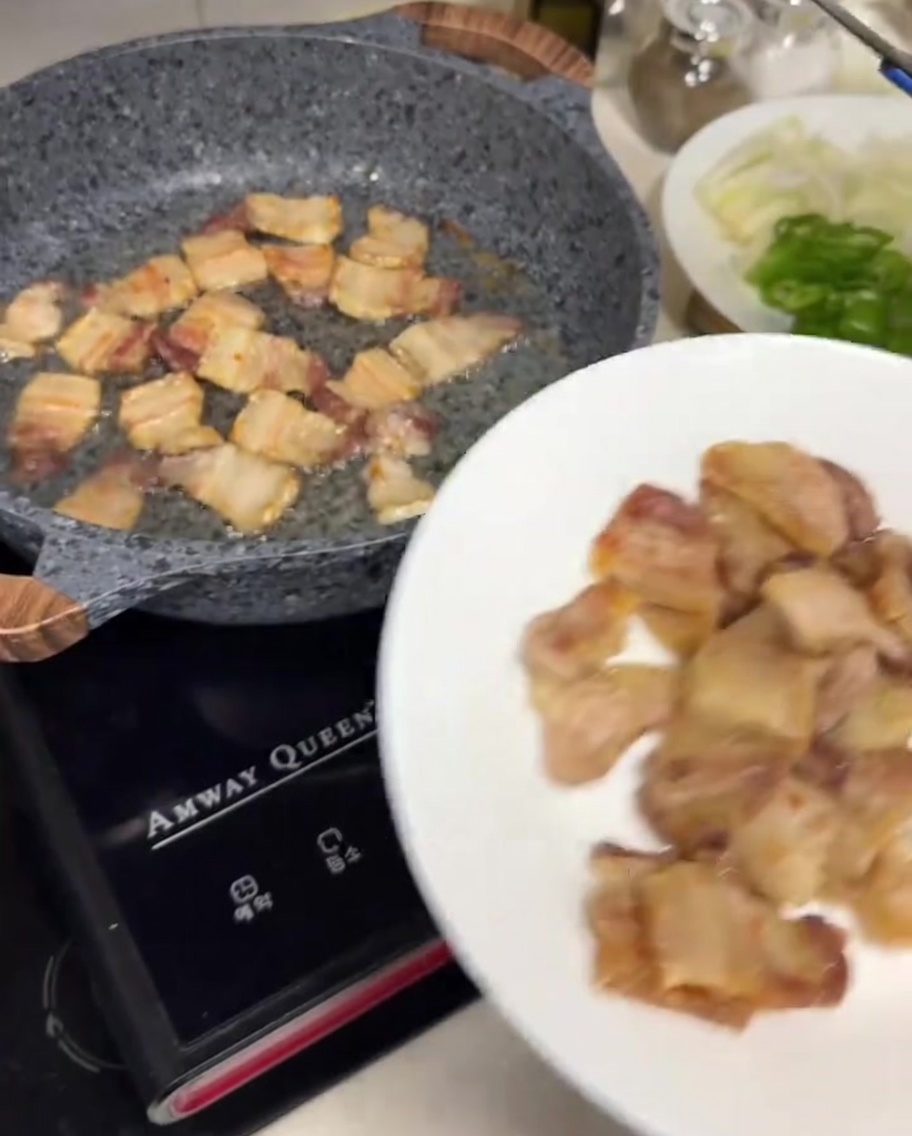
Once the pork belly slices have reached a slightly scorched and golden consistency, use metal tongs to carefully remove them from the pan. Place the cooked meat onto a clean white plate and set it aside, leaving the rendered fat in the pan for the next step.
Tip: Do not wipe the pan clean; the rendered pork fat adds significant flavor to the vegetables. - 5Sauté the vegetables
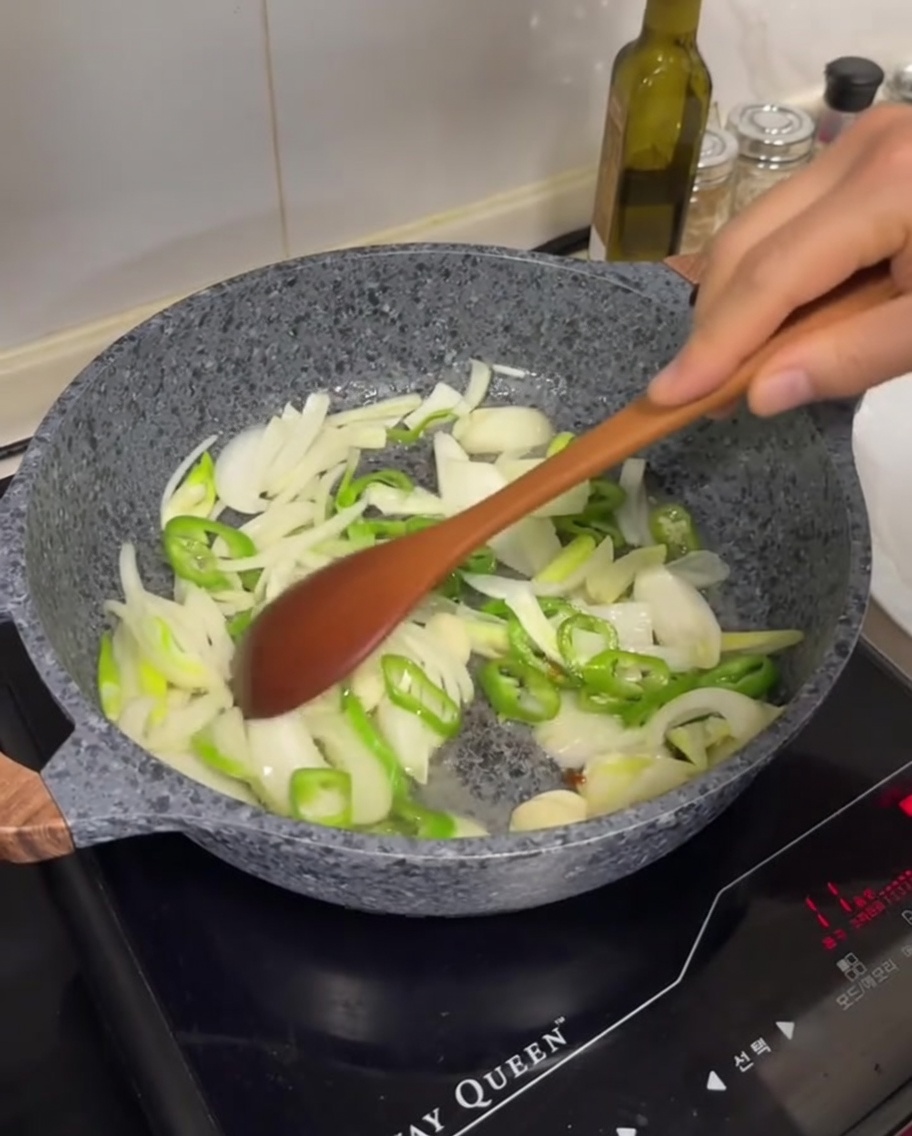
Using the rendered pork fat left in the pan, add the chopped green onions, sliced white onions, garlic slices, and green chilies. Stir-fry the mixture constantly with a wooden spatula for about 30 seconds until the vegetables are fragrant and softened.
Tip: Keep the heat steady to sauté the aromatics without burning the garlic. - 6Combine sauce and vegetables
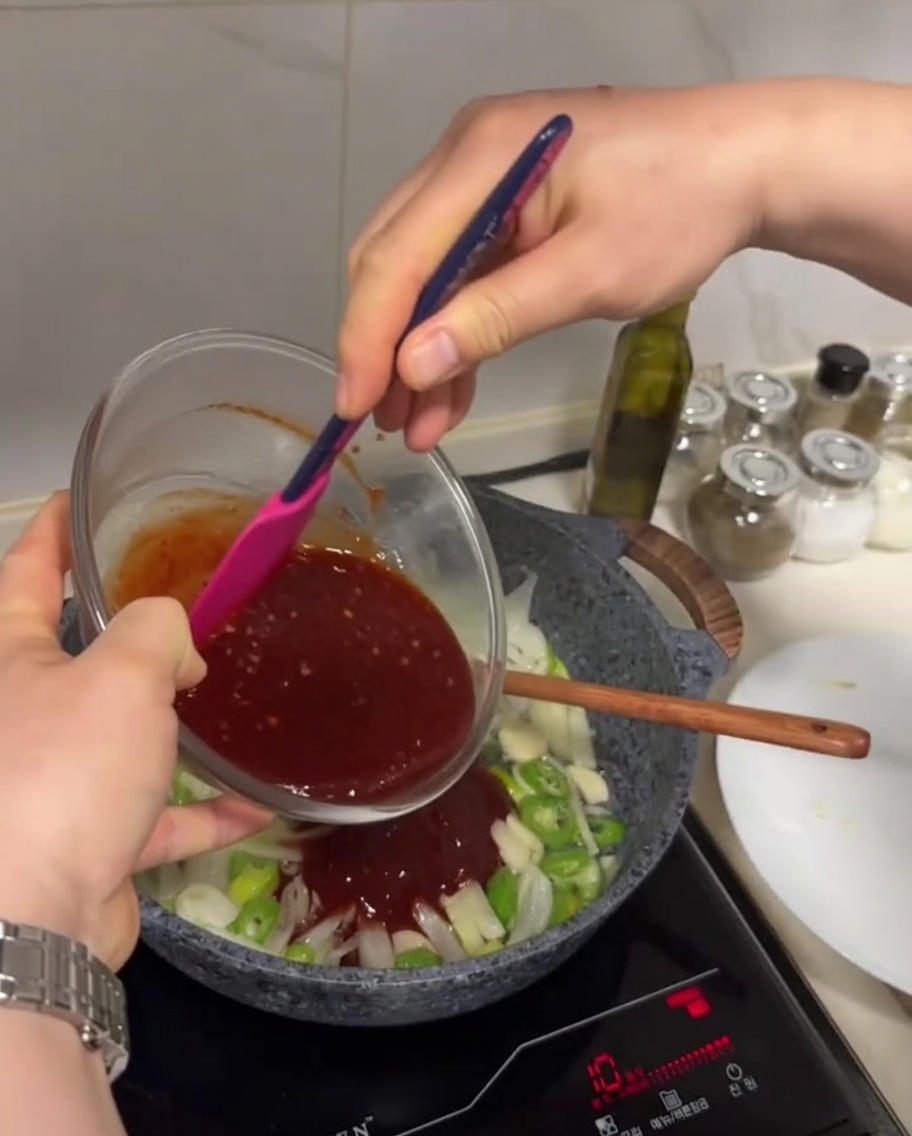
Pour the previously prepared dark red chili sauce mixture directly into the pan over the sautéed vegetables. Stir to coat the vegetables evenly and allow the sauce to heat through and begin to bubble before adding the cooked pork back in.
Tip: The sauce should caramelize slightly with the vegetables to create a rich, intense flavor. - 7Combine pork and sauce
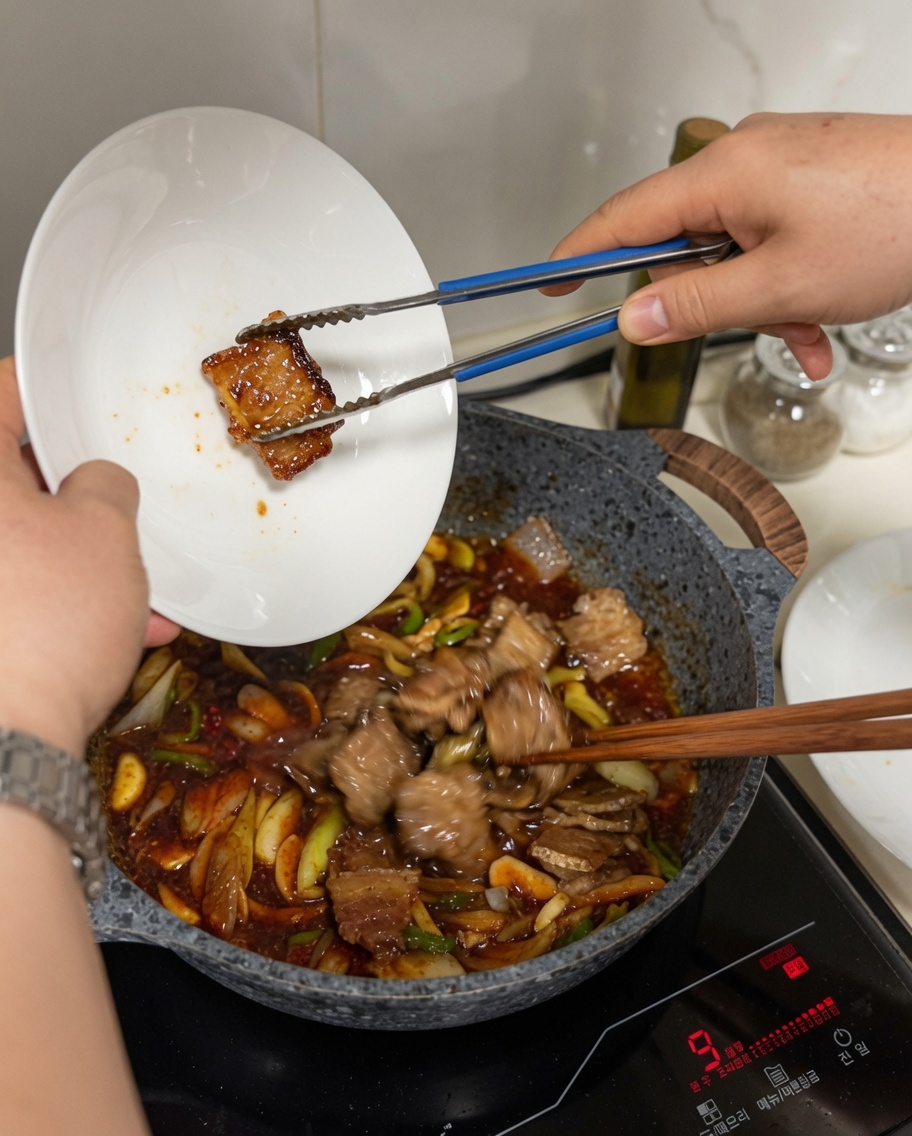
Add the pre-fried pork belly slices back into the pan with the aromatic vegetables and simmering red sauce. Stir everything together over medium-high heat to ensure each piece of pork is thoroughly coated in the flavorful mixture.
Tip: Make sure the pan is hot when you add the pork back in to get a nice, quick caramelization of the sauce. - 8Stir-fry to coat
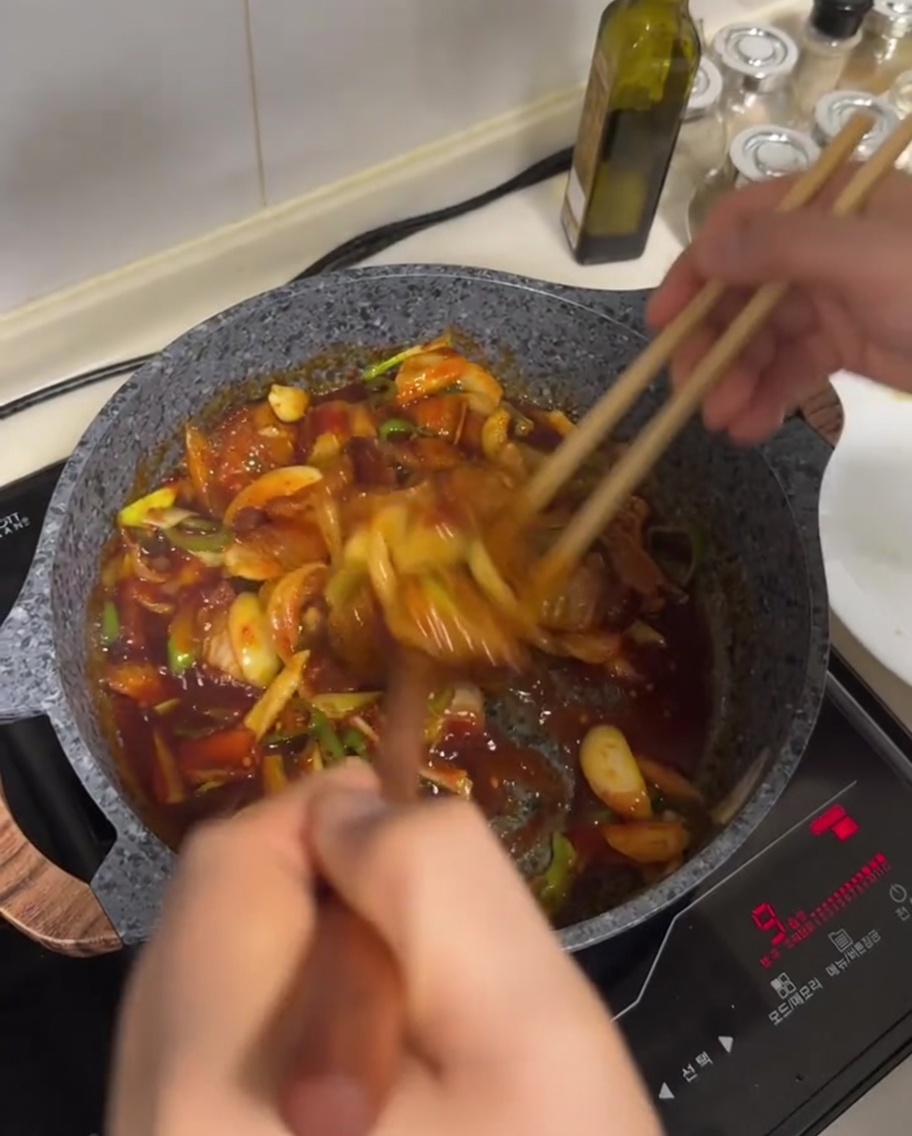
Continue to toss and stir the pork belly and vegetables in the pan, allowing the sauce to reduce slightly and coat the ingredients evenly. This step helps infuse the sweet and spicy flavor into the pork and creates that signature scorched, caramelized finish.
Tip: Keep the heat consistent and stir constantly to prevent the sugary sauce from burning. - 9Garnish and serve
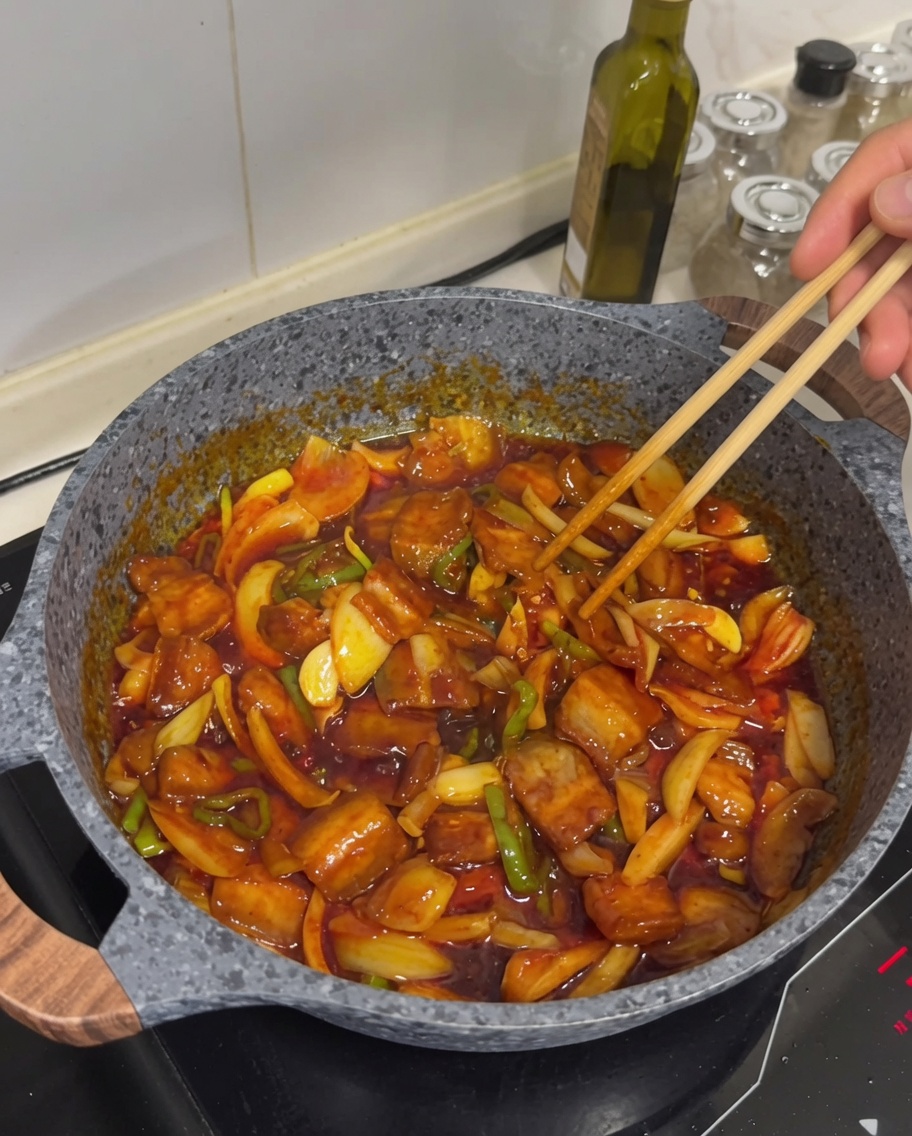
Once the sauce has reduced and the pork is well-coated, finish the dish by sprinkling a generous amount of toasted white sesame seeds over the top. The stir-fry is now ready to be served hot.
Tip: Toasted sesame seeds add a pleasant nutty aroma and texture that complements the spicy pork perfectly.