Spicy Korean Pork Belly
Kimchi Tofu Stew
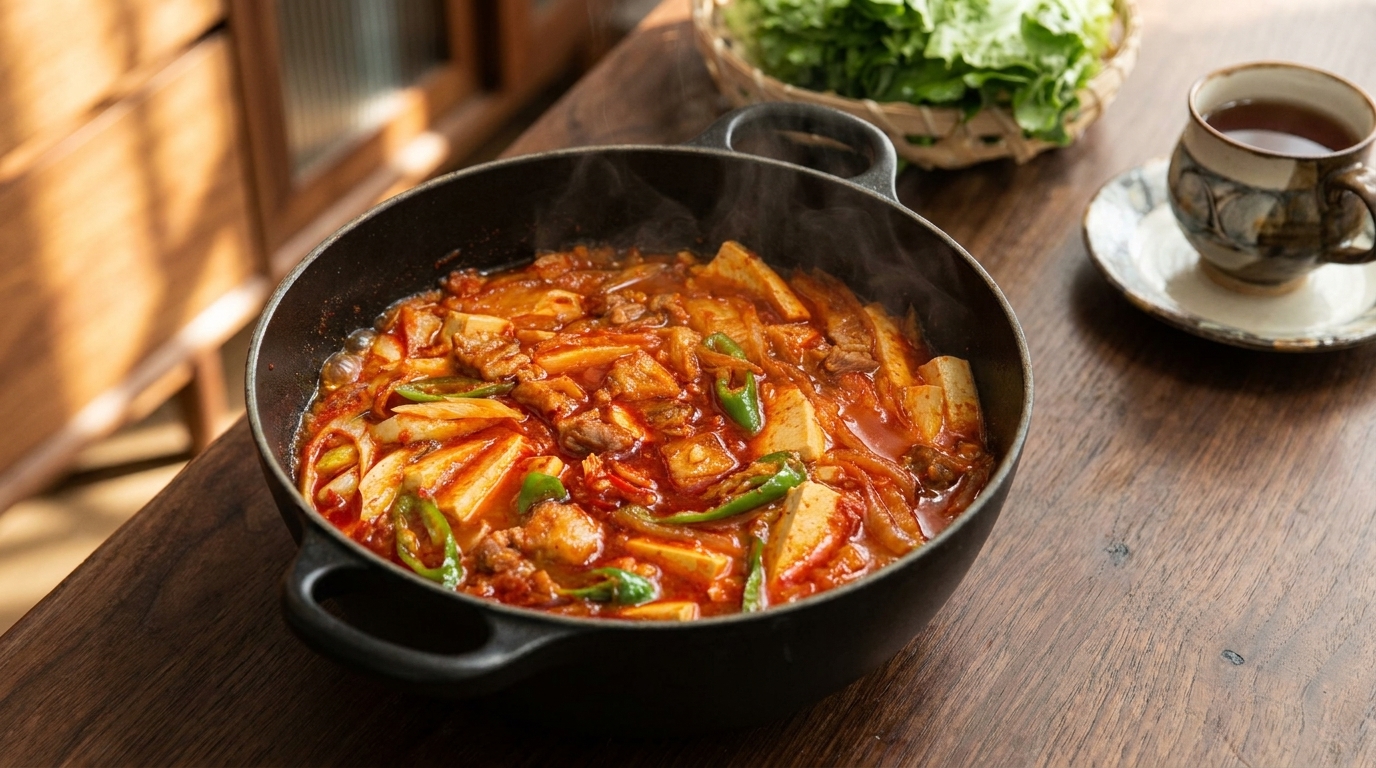
A warming, hearty Korean stew featuring tender pork belly, silky soft tofu, and tangy kimchi simmered in a rich, savory broth. Perfect for chilly days.
Kimchi-jjigae, or Korean kimchi stew, is a staple comfort dish that showcases the incredible depth of flavor achieved by simmering fermented kimchi with savory aromatics. The combination of rendered pork fat and the pungent, spicy notes of the kimchi creates a broth that is both deeply satisfying and restorative. It is traditionally served piping hot, making it the ultimate meal for cold weather.
Ingredients
- 250 g skinless pork belly
- 300 g soft tofu
- 150 g Korean kimchi
- 1 white onion
- 2 green peppers
- 1 large leek
- 50 g Korean chili paste
- 1 tbsp chili powder
- 3 tbsp light soy sauce
- 1 tbsp oyster sauce
- 0.5 tsp sugar
- to taste minced garlic
- to taste chopped green onion
Instructions
- 1Slice the pork belly
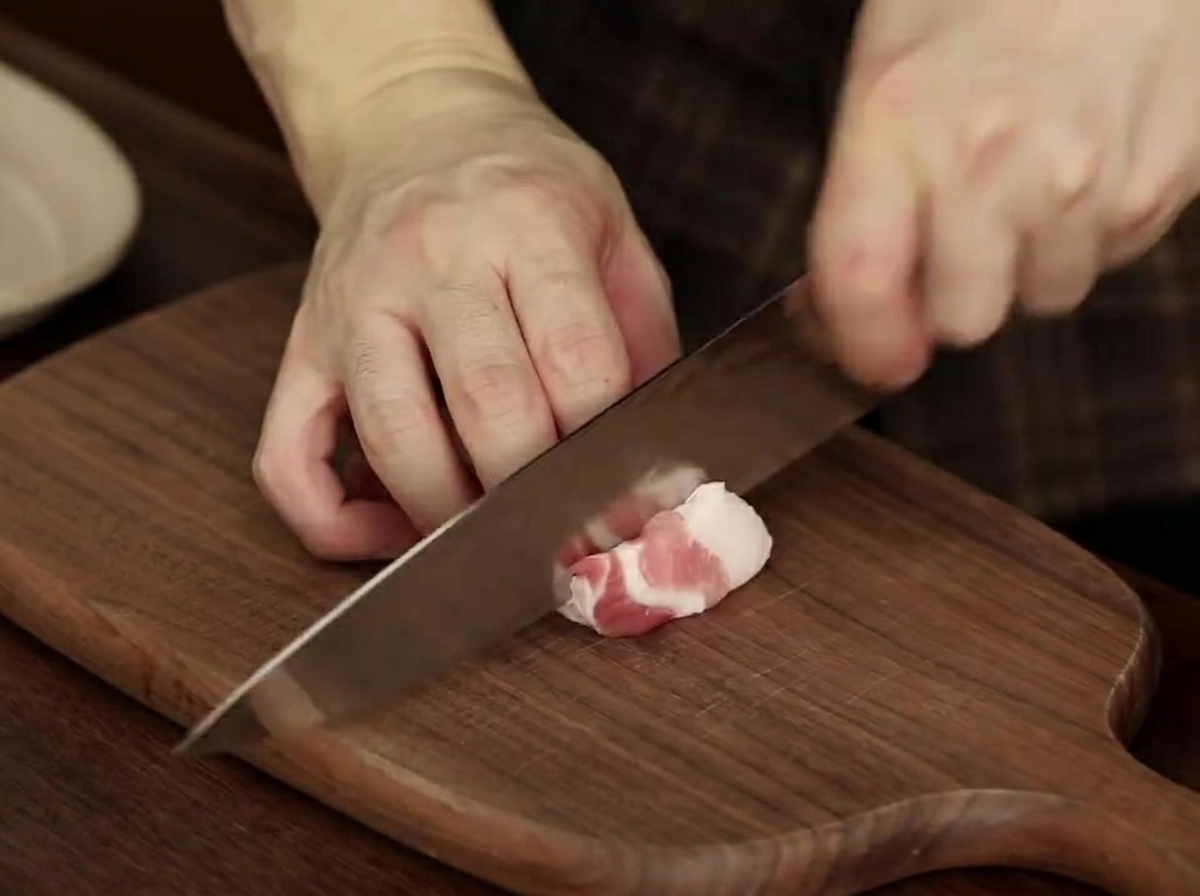
Take 250 grams of skinless pork belly and carefully slice it into pieces about 5 millimeters thick. Place the sliced pork on a clean plate to keep ready for cooking.
Tip: Chilling the pork belly for 15-20 minutes before slicing can help achieve cleaner, more uniform slices. - 2Prepare the soft tofu
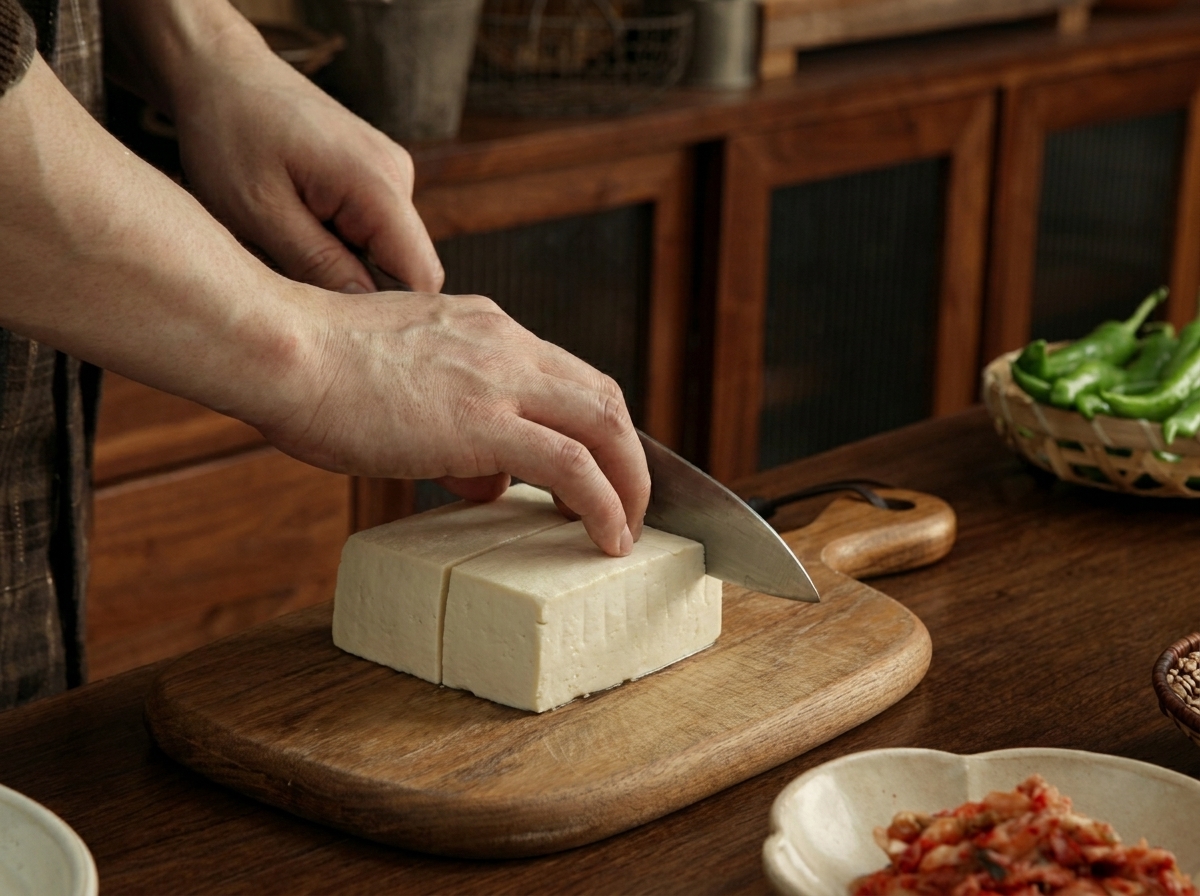
Take 300 grams of soft tofu and cut it in half, then slice it into thick, even pieces. Handle the tofu gently to ensure it maintains its shape during the simmering process.
Tip: Soft tofu is very delicate; using a sharp knife and minimal pressure will help prevent it from crumbling. - 3Slice the onion
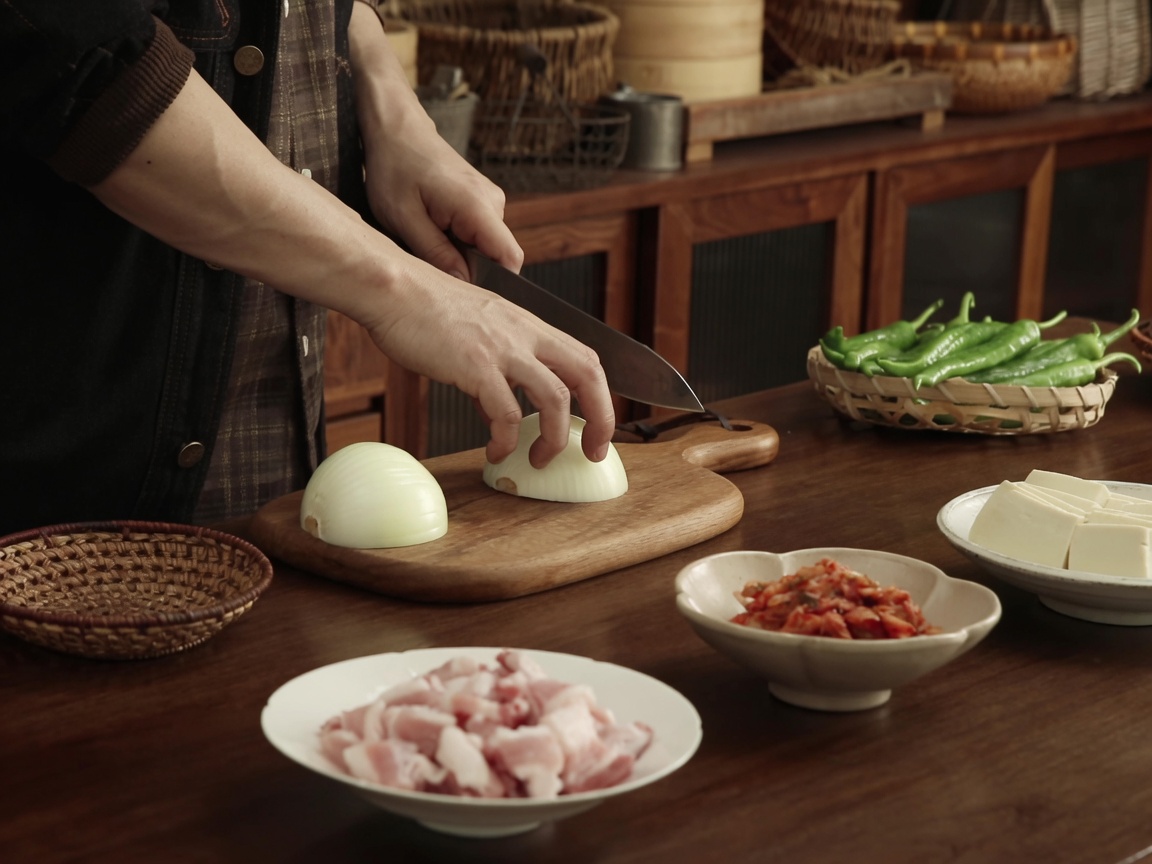
Take one white onion, cut it in half, and then thinly slice the onion. These slices will add sweetness and body to the stew base.
Tip: To minimize eye irritation while slicing, ensure your knife is very sharp and the onion is cold. - 4Slice the green peppers
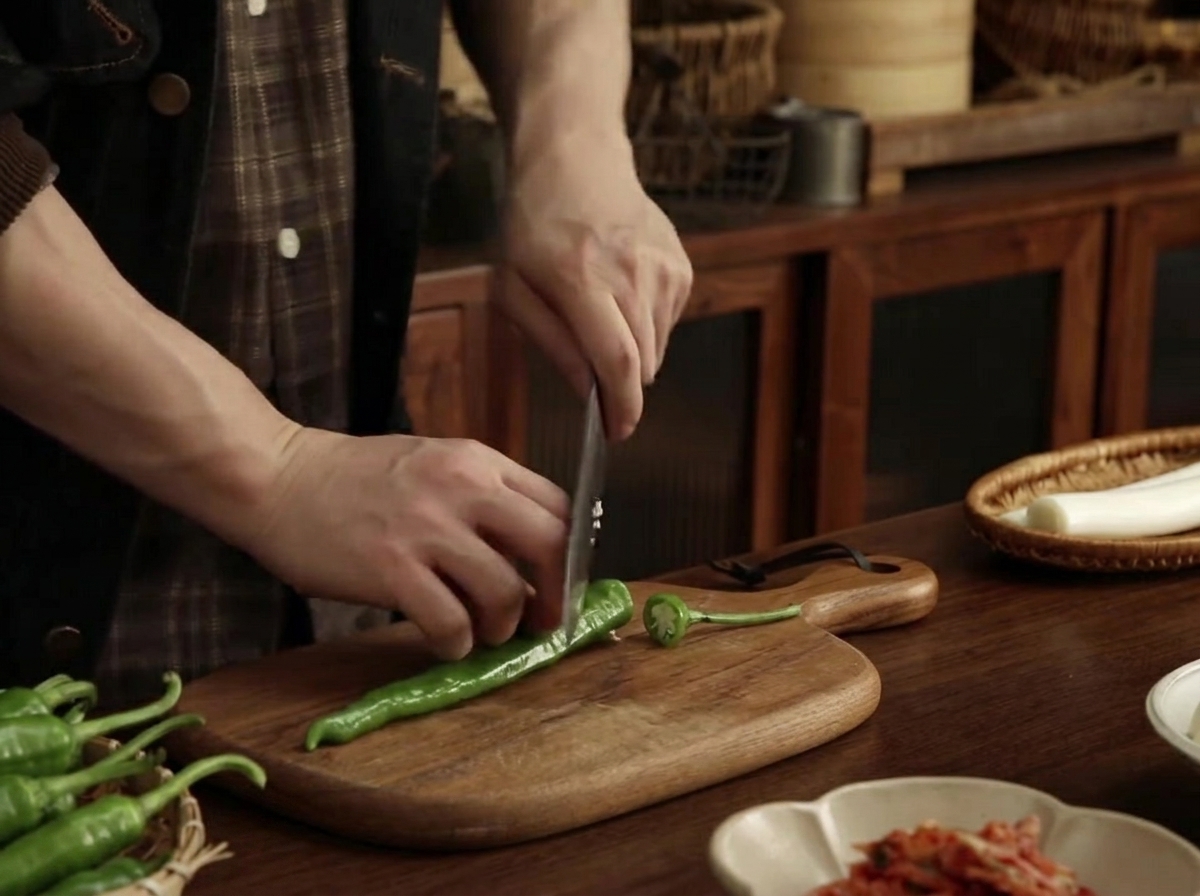
Take two fresh green peppers and slice them diagonally. This cutting technique increases the surface area, allowing the peppers to release more flavor into the stew.
Tip: You can adjust the heat level by removing the seeds and inner membrane of the peppers before slicing. - 5Slice the leek
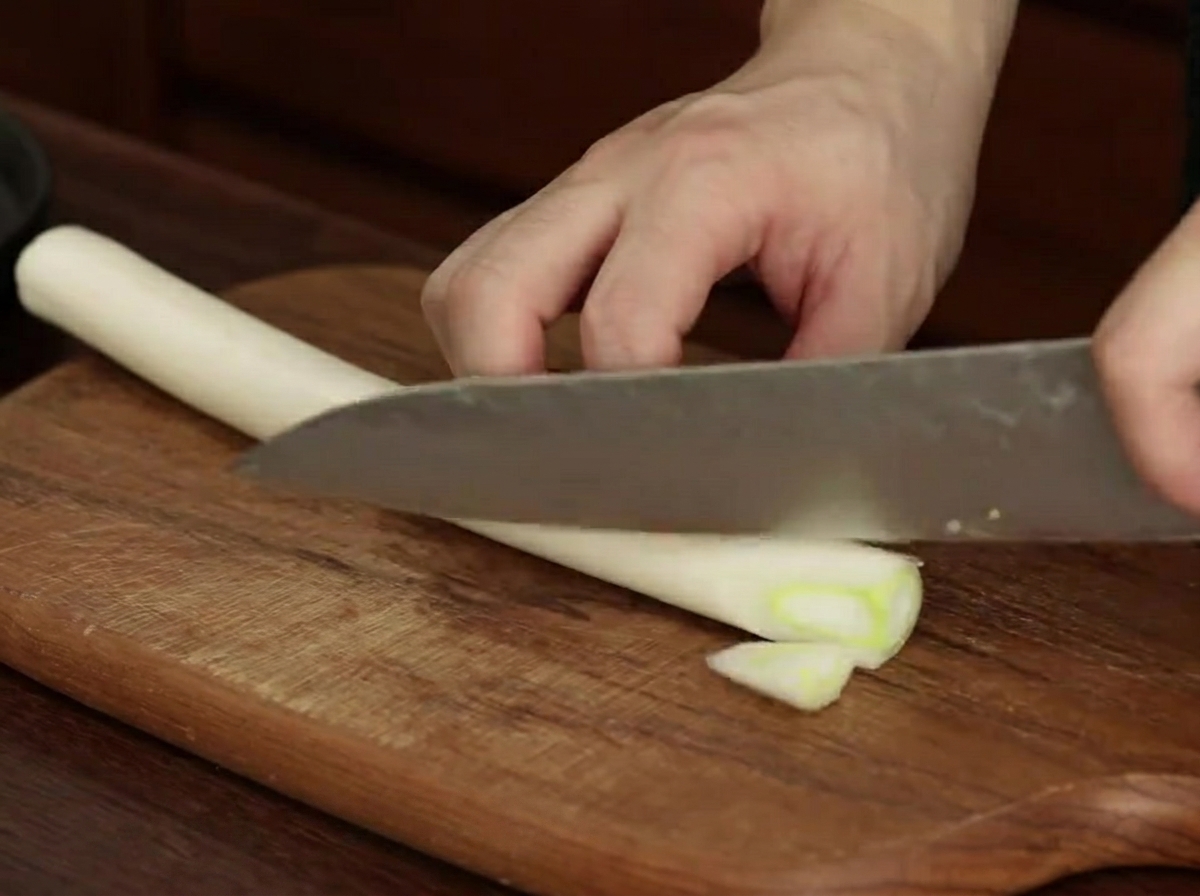
Take a large leek and slice it diagonally into consistent pieces. Use about two-thirds of the leek for the initial stir-fry and save the rest for the final garnish.
Tip: Make sure to wash the leek thoroughly, especially between the layers where dirt often hides. - 6Sear the pork belly
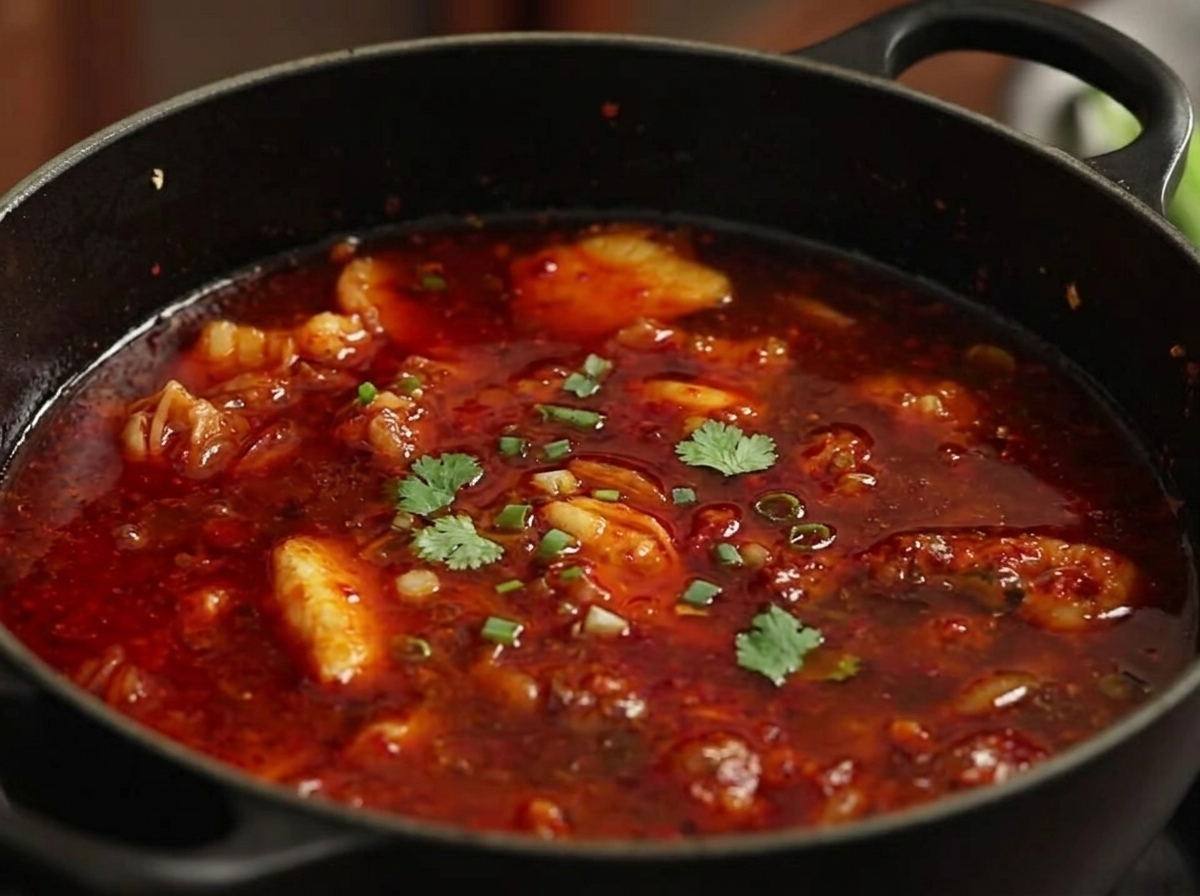
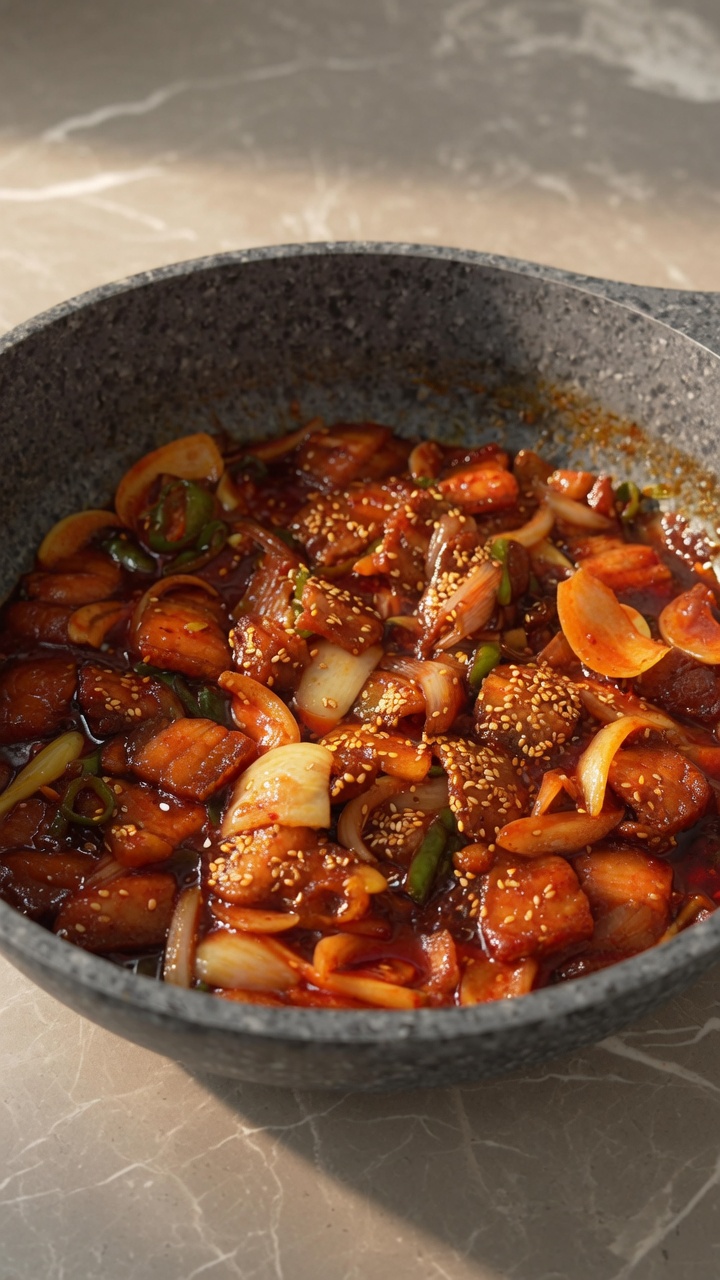
Heat a heavy pot or Dutch oven and add the sliced pork belly. Stir-fry over medium heat until the fat begins to render and the edges of the pork start to brown.
Tip: Rendering the fat properly is the key to creating a rich and flavorful soup base. - 7Sauté the aromatics
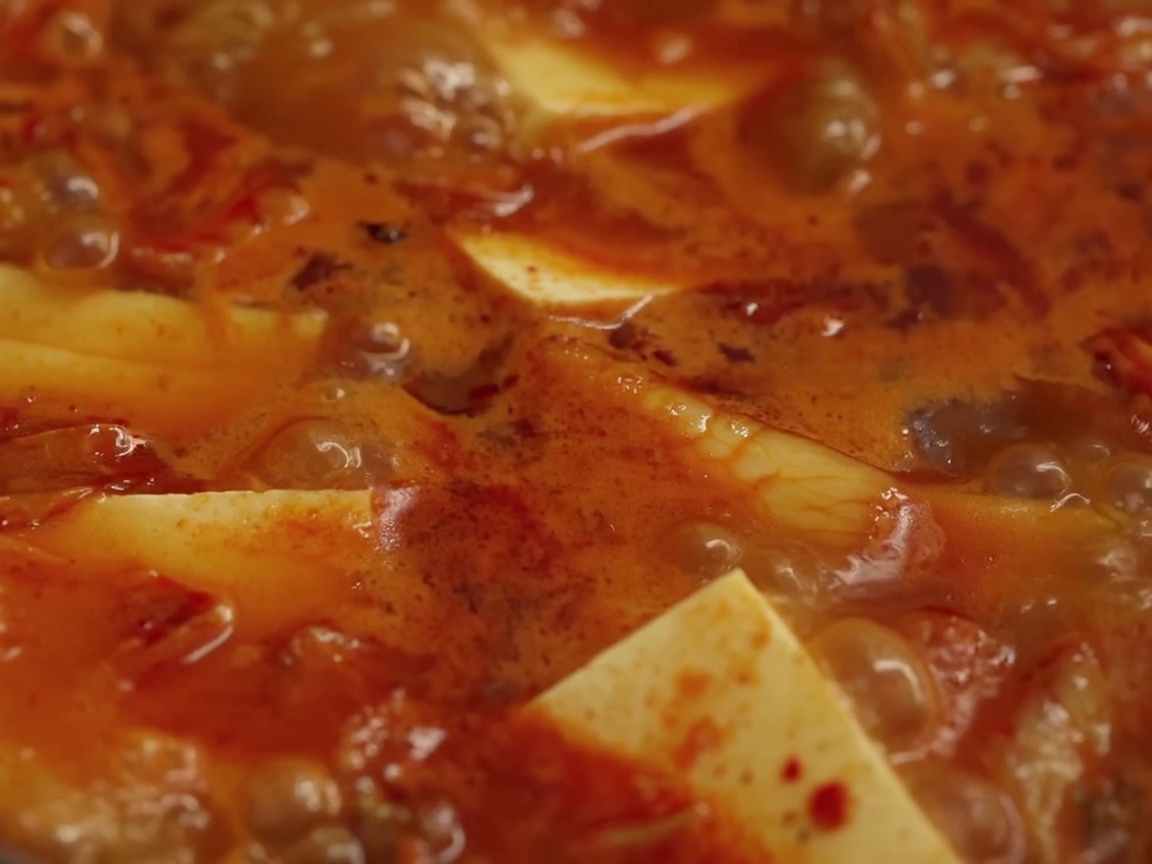
Add the minced garlic, sliced white onion, and two-thirds of the sliced leek into the pot with the browned pork belly. Stir-fry the mixture until it becomes fragrant and the aromatics soften, infusing the pork fat with flavor.
Tip: Be careful not to burn the minced garlic; stir continuously until just fragrant. - 8Add kimchi and seasonings
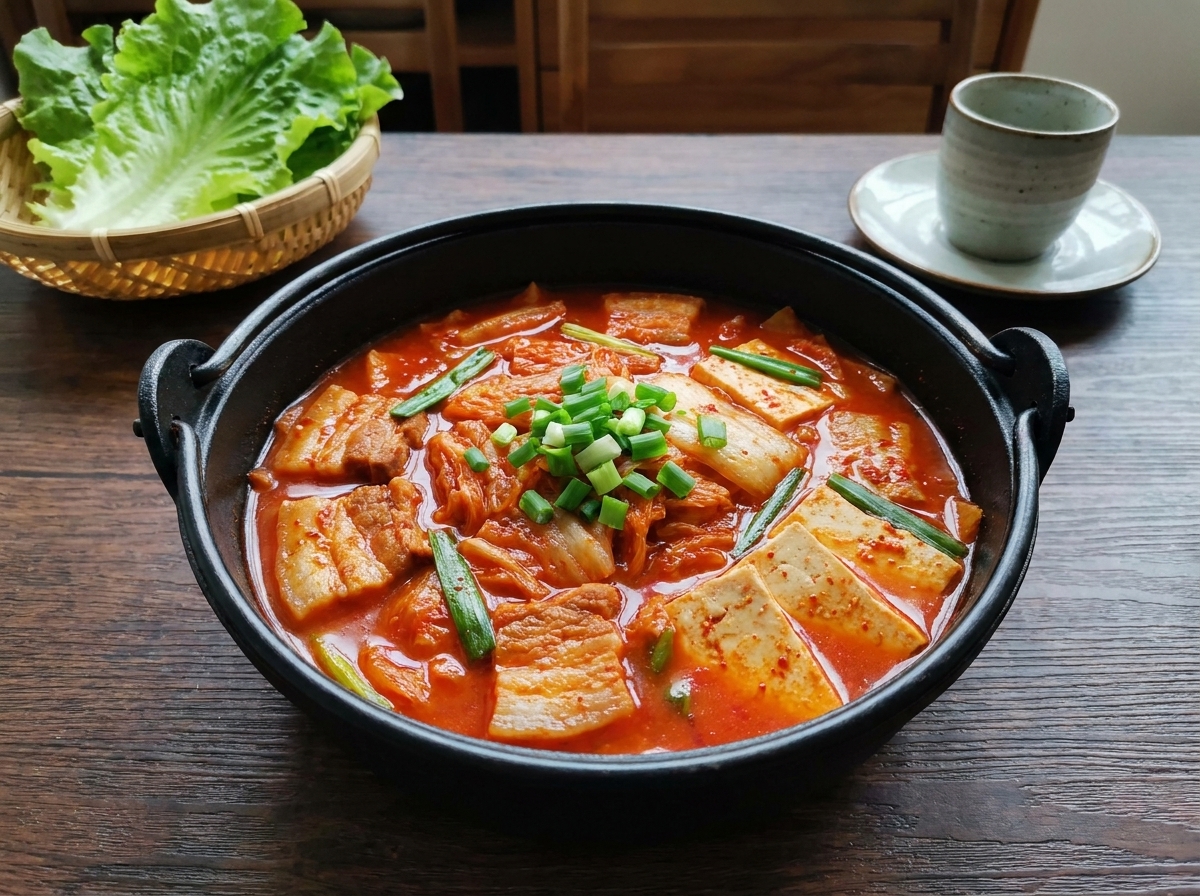
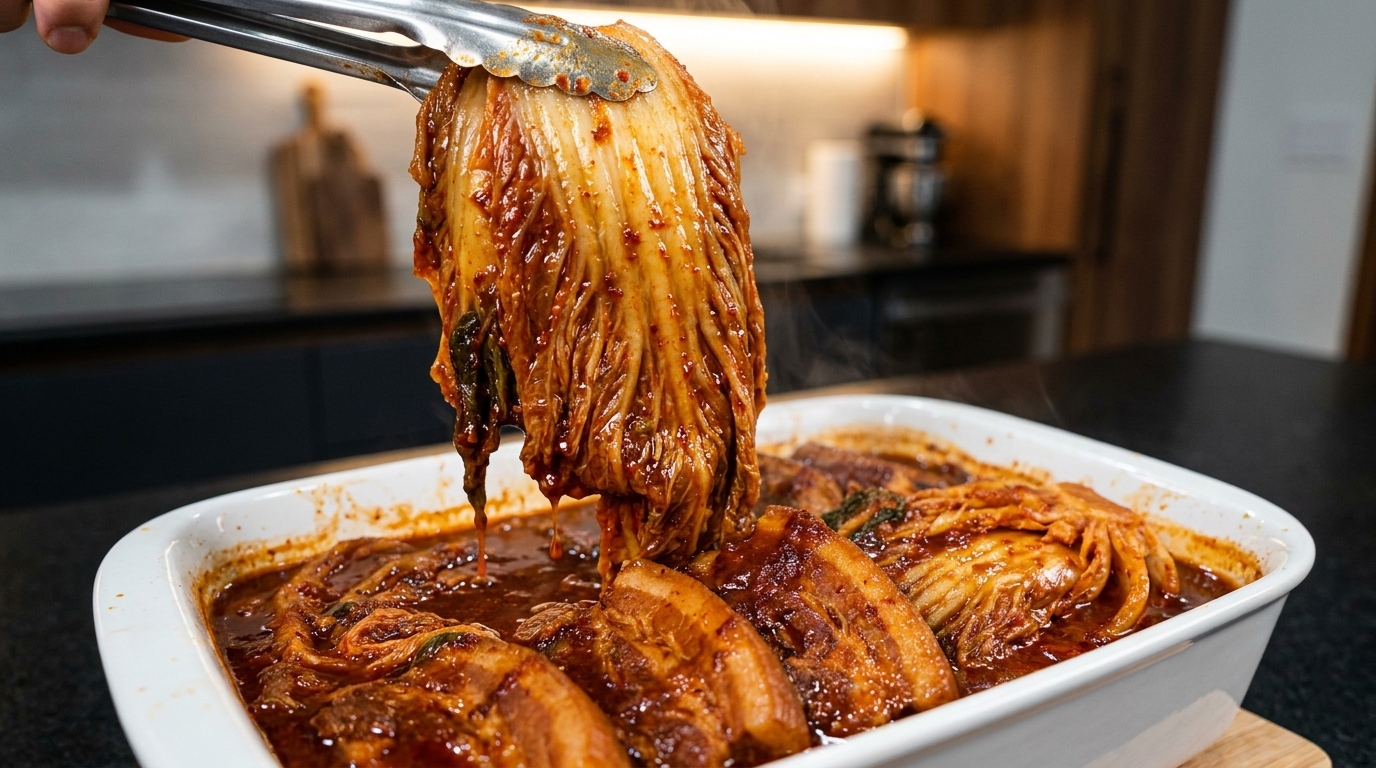
Add 150 grams of Korean kimchi, 50 grams of Korean chili paste, and a spoonful of chili powder into the pot with the pork and aromatics. Stir-fry these ingredients together to build the base flavor of the stew.
Tip: Stir-frying the kimchi and chili paste helps deepen the flavor profile before adding the water. - 9Combine and stir-fry
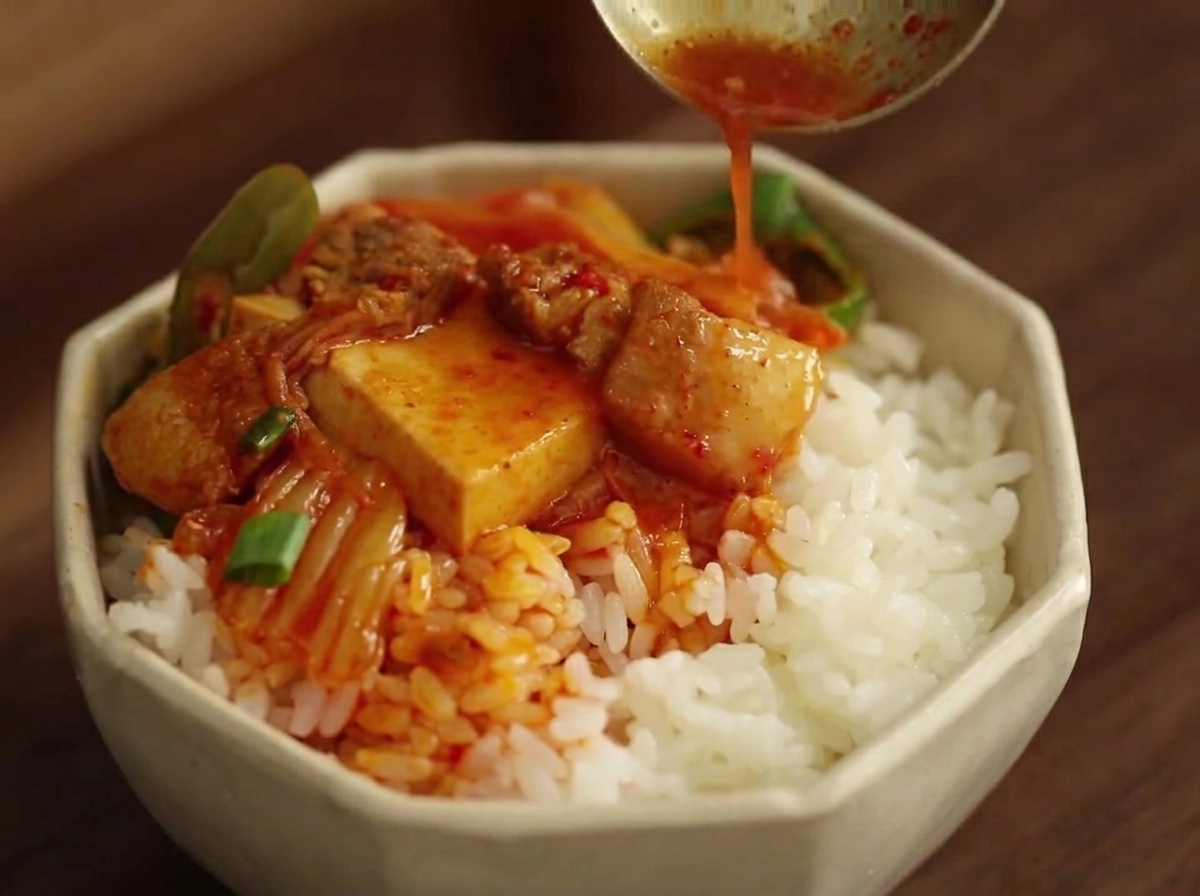
Continue to stir-fry the pork belly, vegetables, kimchi, and chili paste together until everything is well combined and coated with the spicy seasoning.
Tip: Ensure the ingredients are evenly mixed to allow the flavors to meld thoroughly. - 10Add warm water
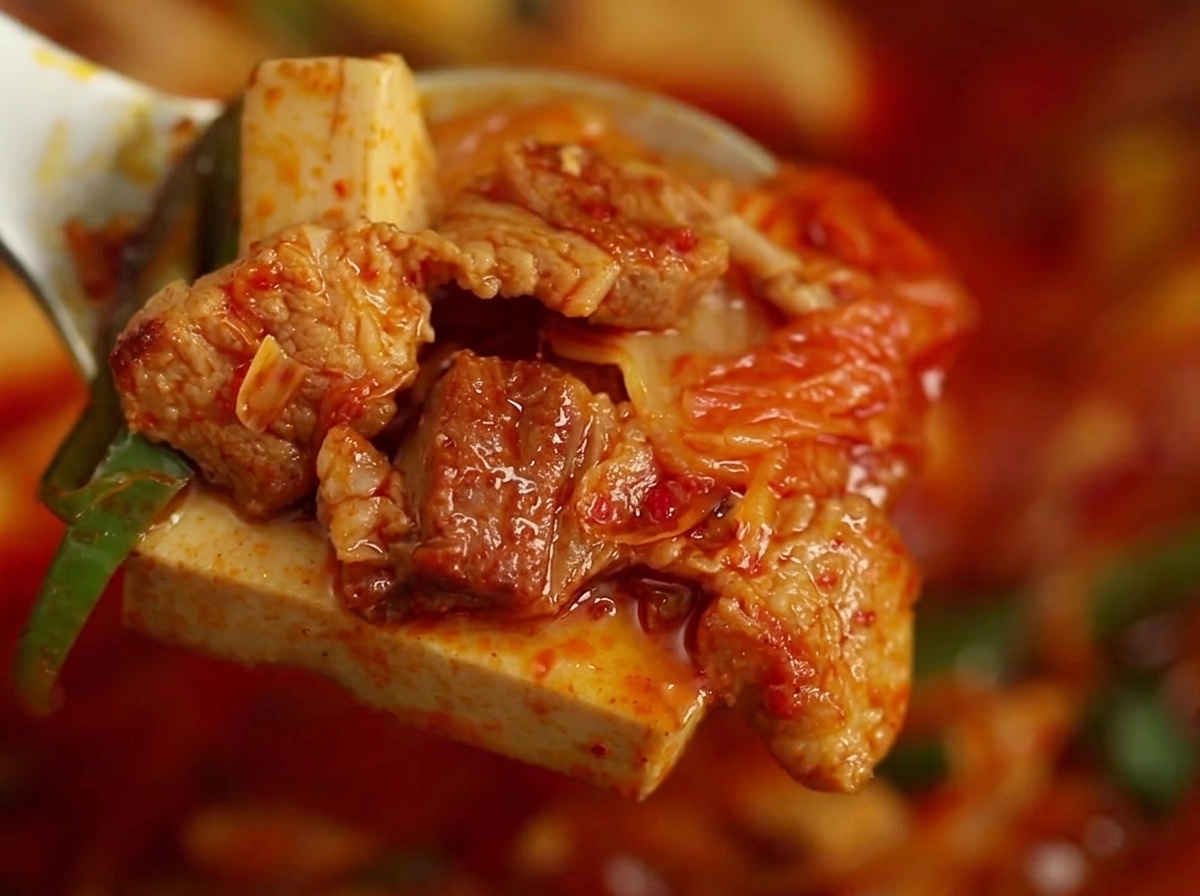
Pour enough warm water into the pot to completely cover all the ingredients. Bring the broth to a boil to start simmering the stew.
Tip: Using warm water instead of cold water helps maintain the cooking temperature and speeds up the boiling process. - 11Add final vegetables
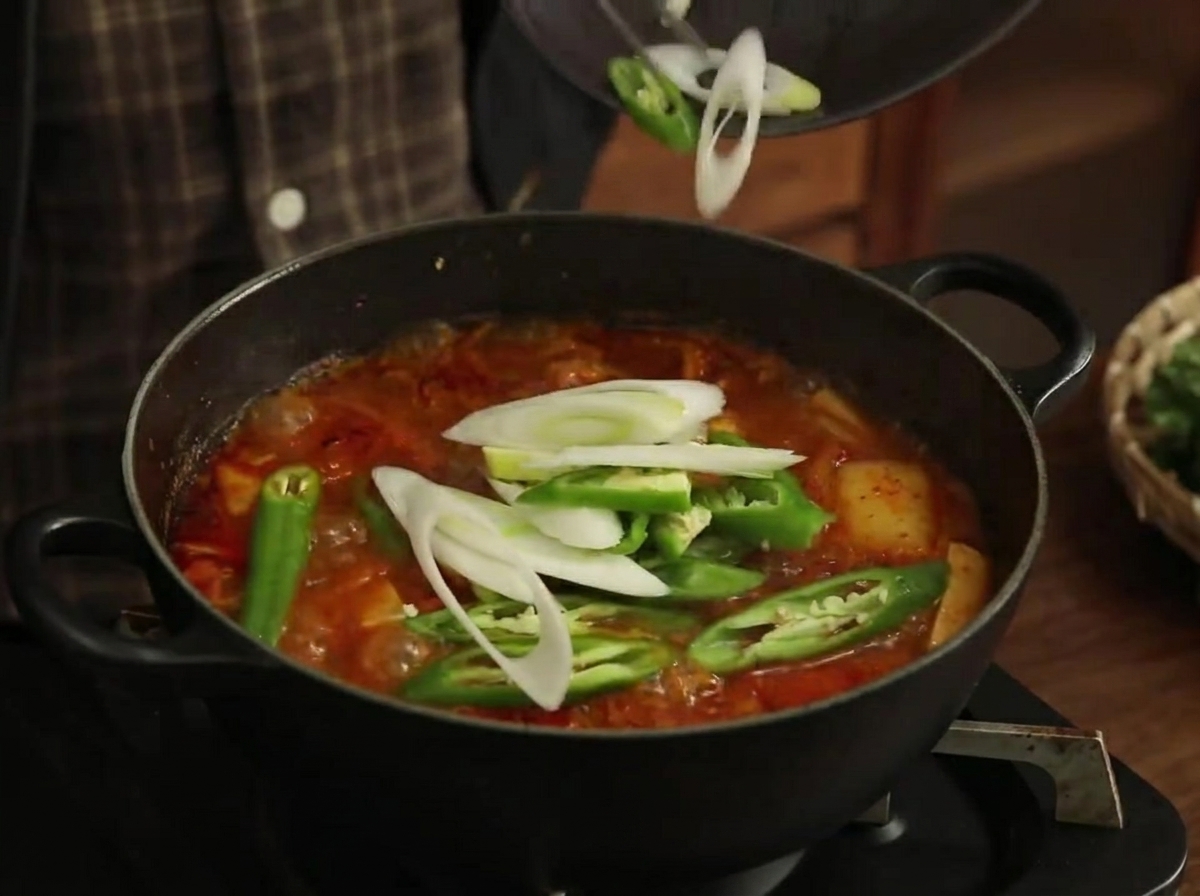
Once the stew is simmering, add the remaining sliced leeks and green pepper slices to the pot. Mix gently to incorporate them into the flavorful broth.
Tip: Adding these at the end helps maintain their texture and fresh flavor. - 12Garnish and serve
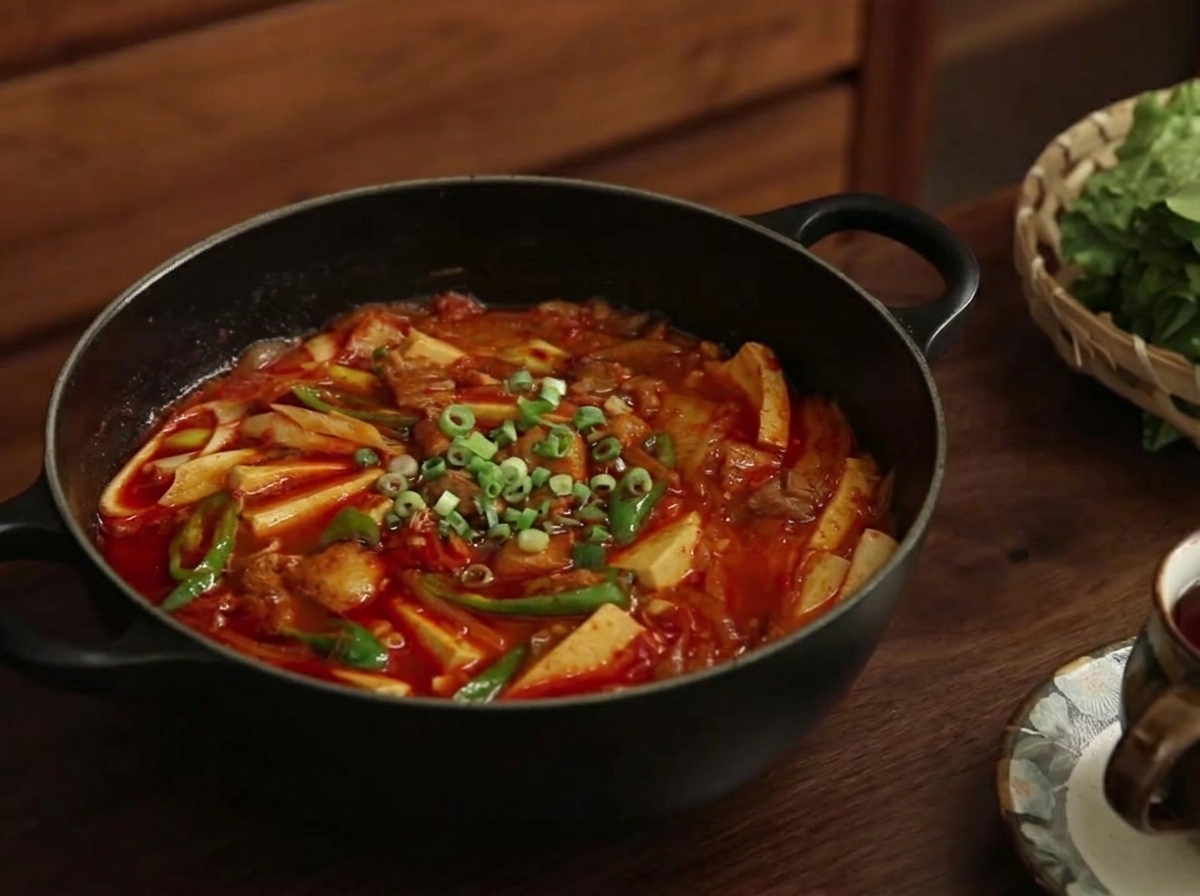
Finally, sprinkle some chopped green onions over the cooked stew in the pot as a fresh garnish before serving hot.
Tip: Use fresh green onions for the best color and flavor contrast.