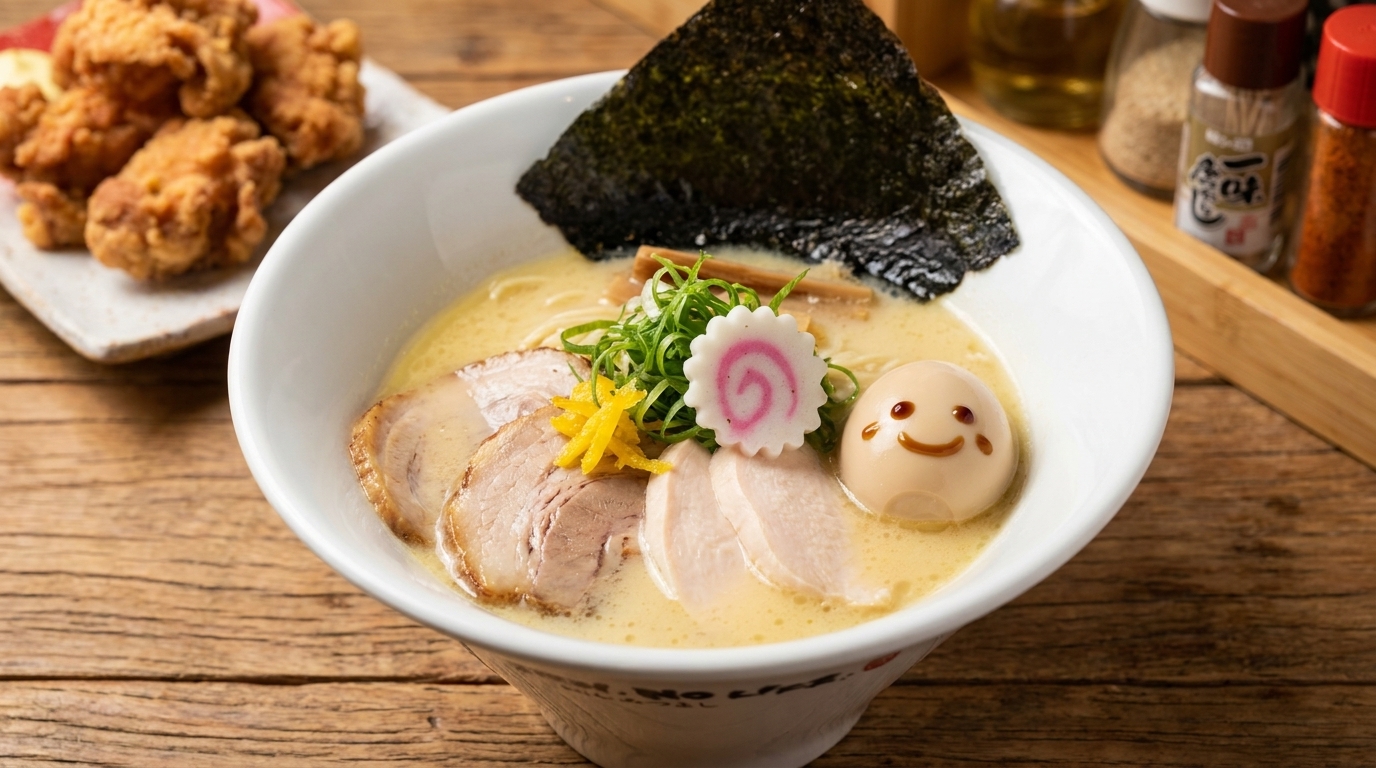
Authentic Japanese Chicken Paitan Ramen (Tori Paitan)
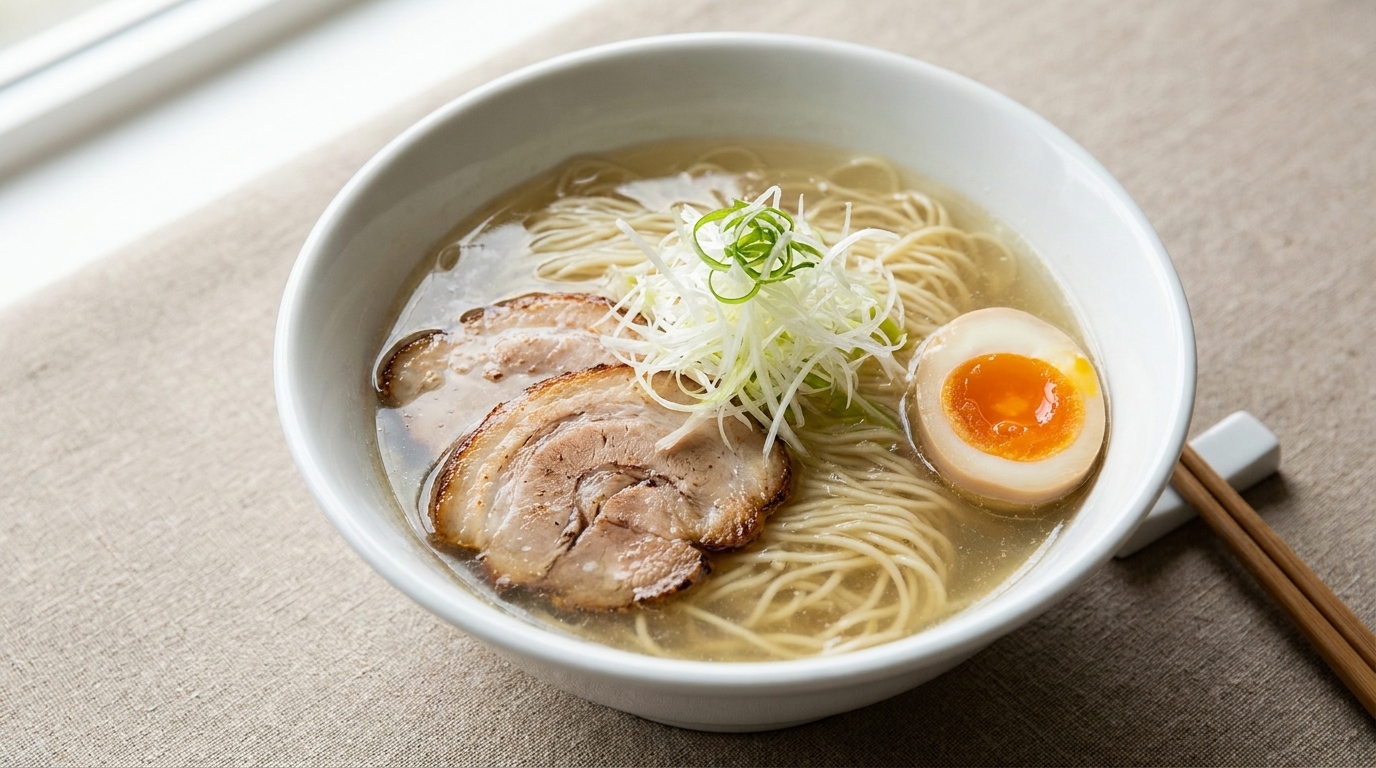
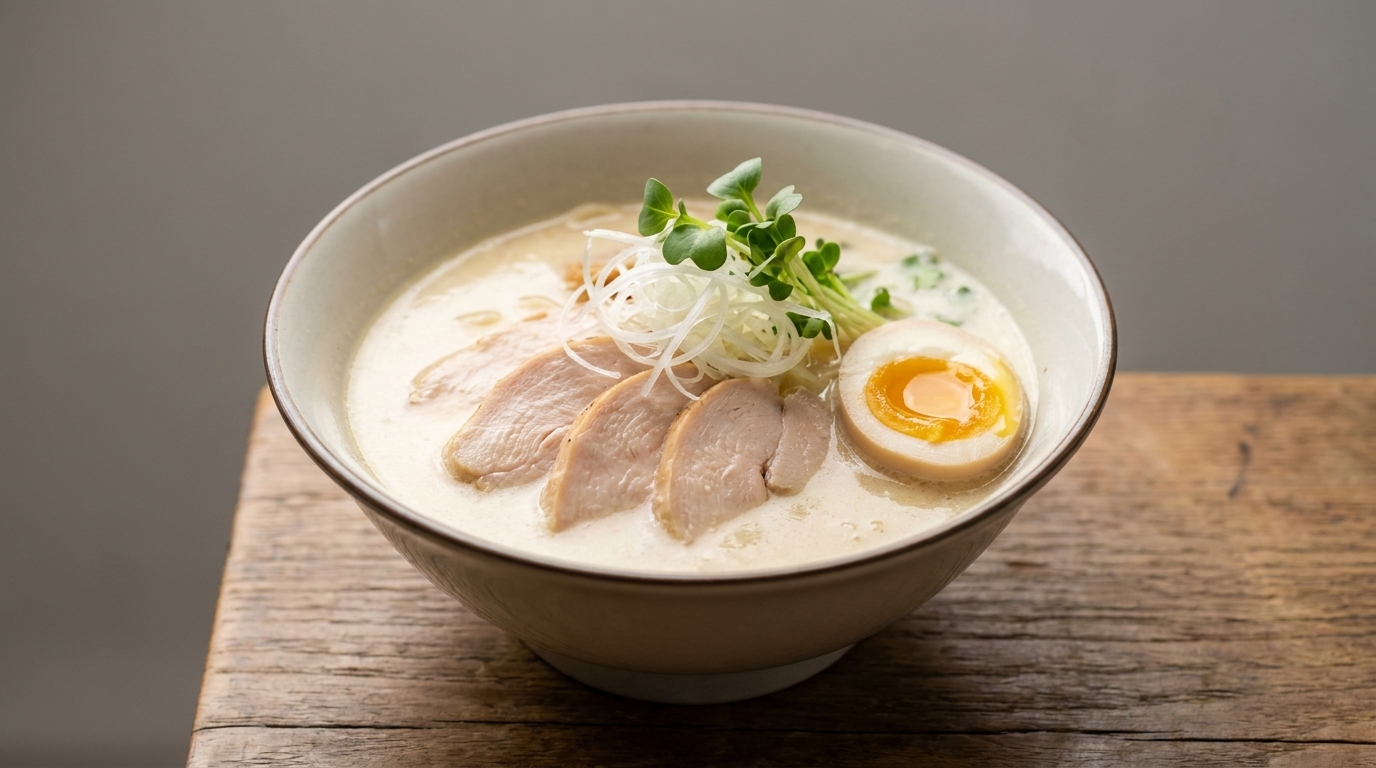
Experience ultimate comfort in a bowl with this Japanese Chicken Paitan Ramen. A rich, milky chicken broth slowly boiled for eight hours pairs perfectly with handmade chewy noodles and tender chicken chashu.
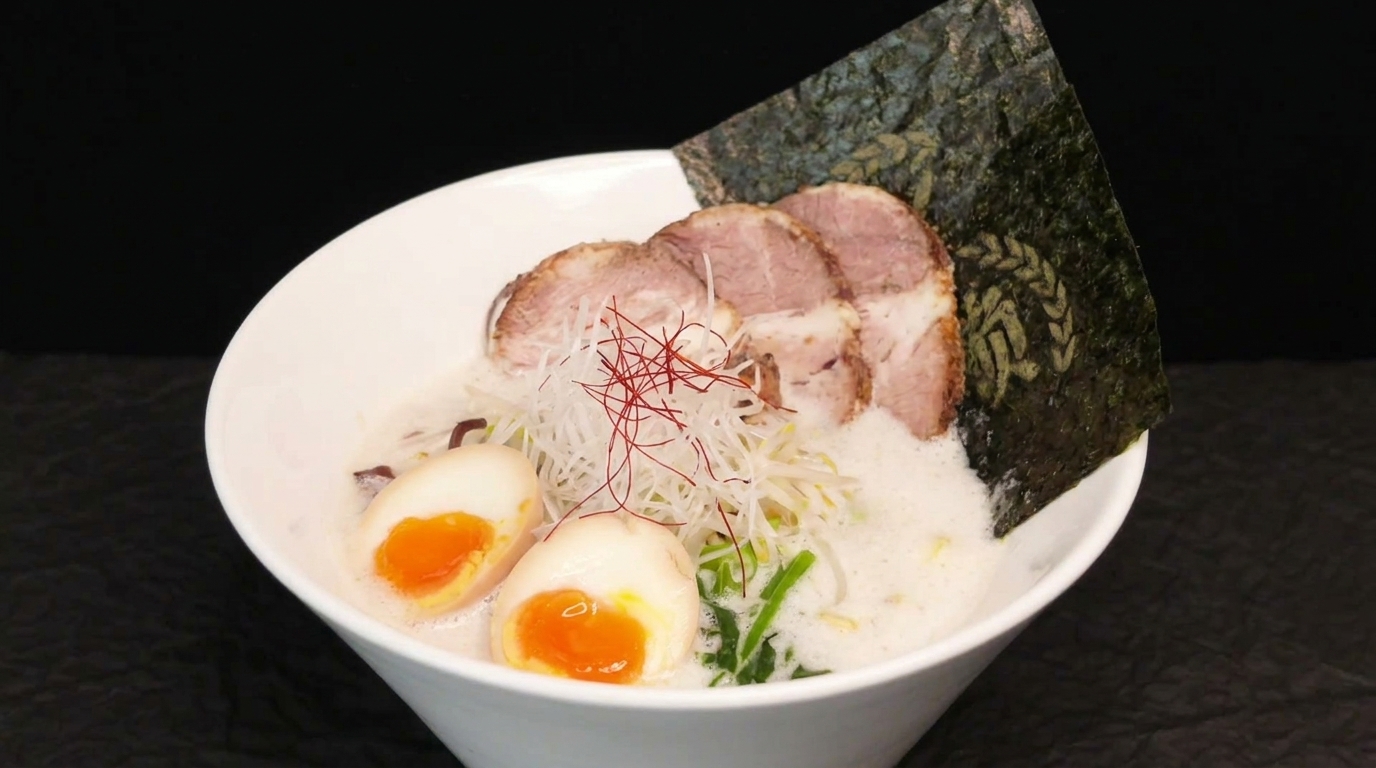
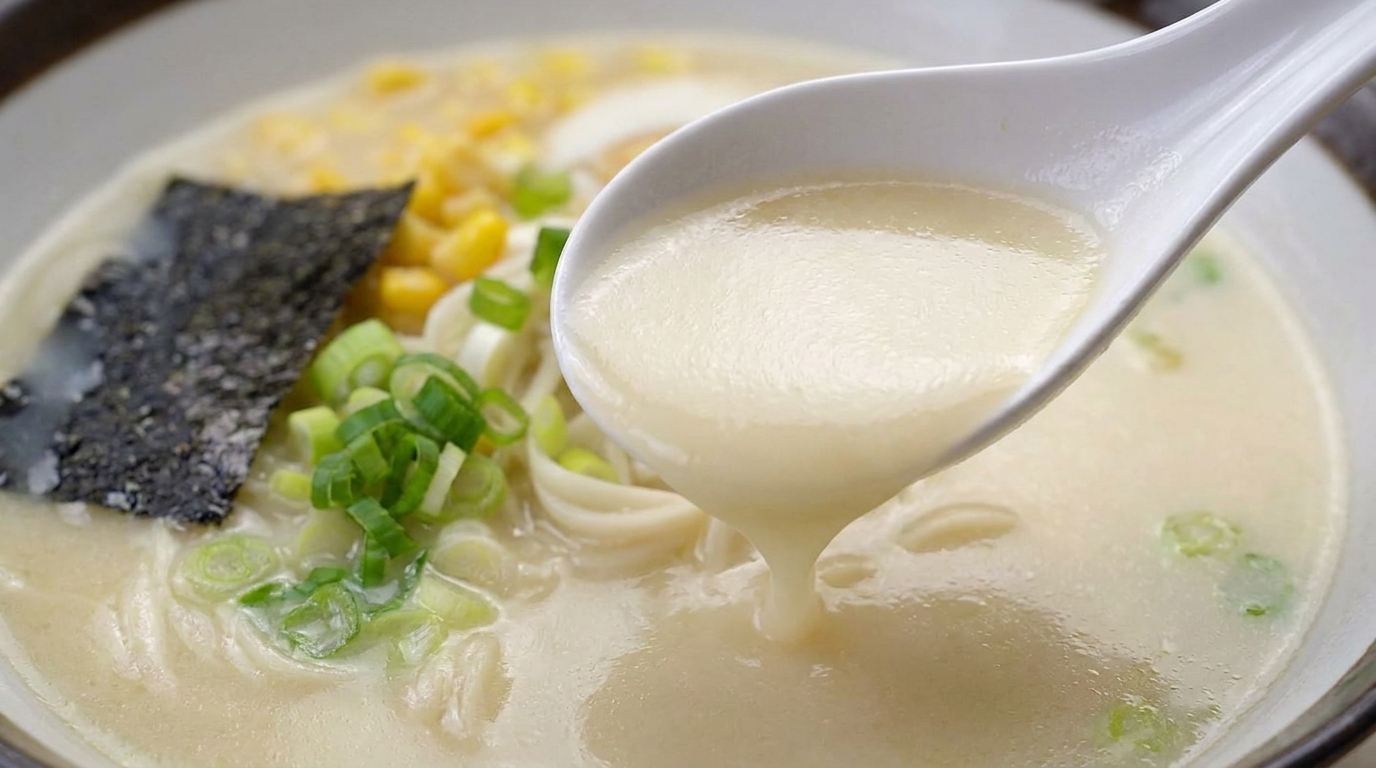
Tori Paitan, often described as the chicken equivalent to pork tonkotsu, is renowned for its luxuriously creamy texture and opaque white color. This signature consistency is achieved through a meticulous, eight-hour rolling boil that emulsifies the fat and collagen from the chicken. Accompanied by fresh, handmade alkaline noodles and savory rendered chicken oil, this dish delivers an incredibly deep, savory flavor that coats the palate with every bite.
Ingredients
- 1 whole fresh chicken (yields meat, skin, and bones for broth)
- to taste chicken skin (for rendering oil)
- 3 cups high-gluten flour
- 1 cup alkaline water (kansui mixture)
- to taste salt-based ramen seasoning (shio tare)
- 1 whole soft-boiled egg
- 1/4 cup white onion (finely sliced into strings)
- 1 handful microgreens
Instructions
- 1Prepare the chicken
Using a sharp knife, cut the fresh whole chicken into uniform pieces on a clean cutting board. This ensures consistent cooking and maximum flavor extraction for the broth.
Tip: Ensure your knife is sharp to make clean cuts through the chicken meat without shredding it. - 2Boil the chicken
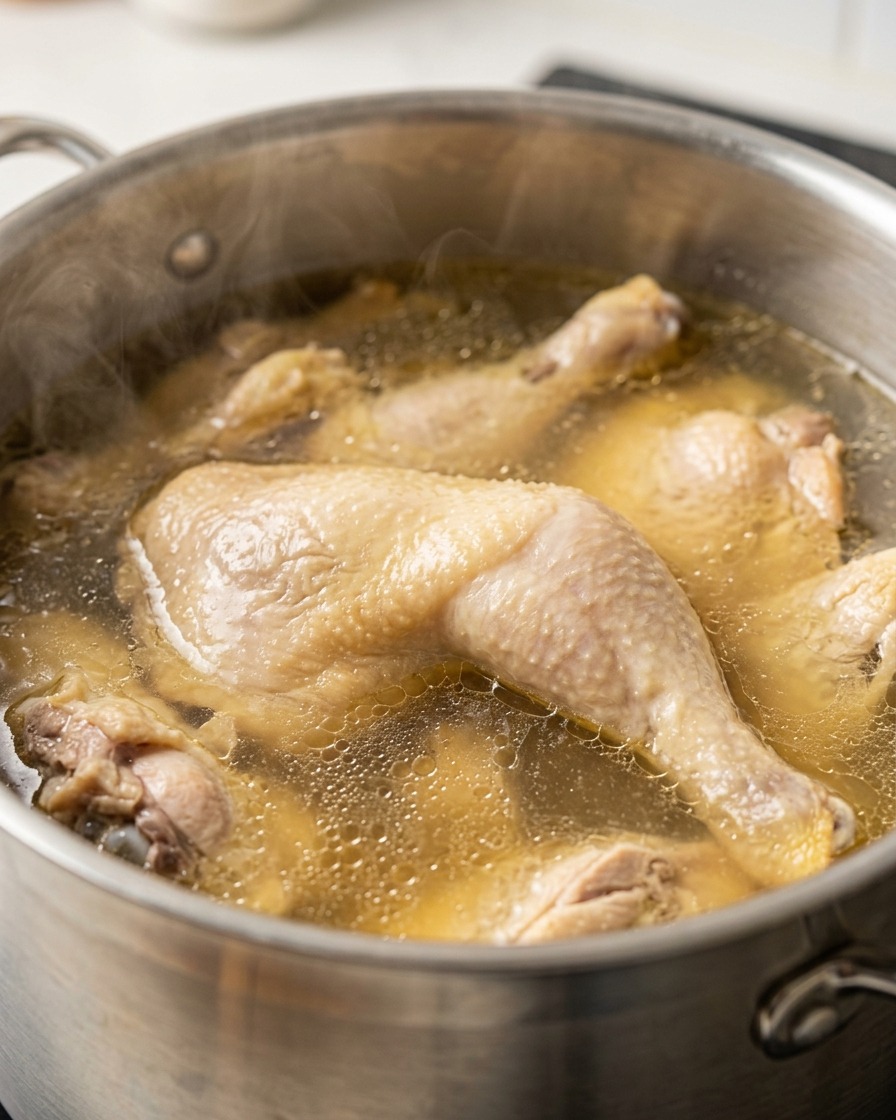
Place the prepared chicken pieces into a large pot filled with water. Bring it to a boil and maintain a vigorous, rolling boil for eight hours to break down the collagen and emulsify the fat into a rich broth.
Tip: Keep the heat low after reaching a boil to ensure a steady simmer for the full eight hours. - 3Render the chicken oil
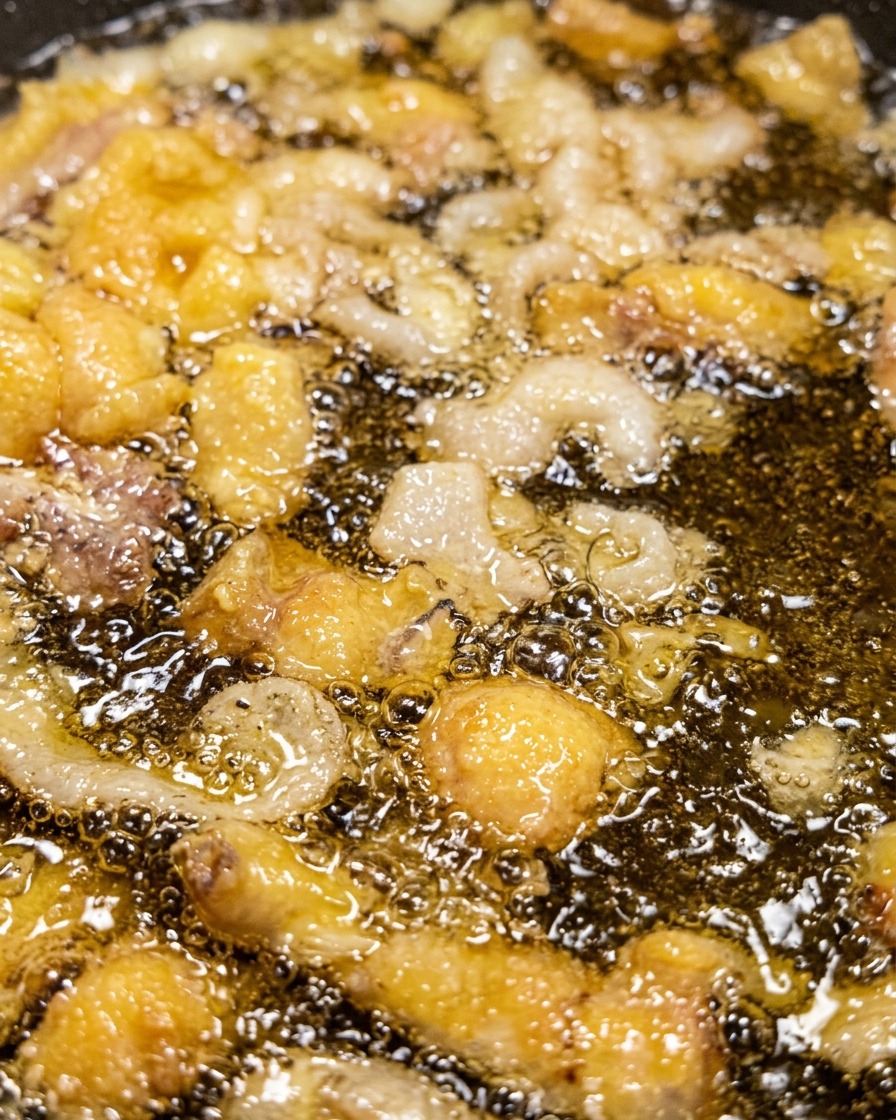
Cook the chicken skins in a pan over low heat, slowly rendering the fat into a flavorful, golden chicken oil. Filter out the crispy skins to reserve the pure oil for seasoning.
Tip: Fry on low heat to avoid burning the skins while extracting maximum fat. - 4Mix noodle dough
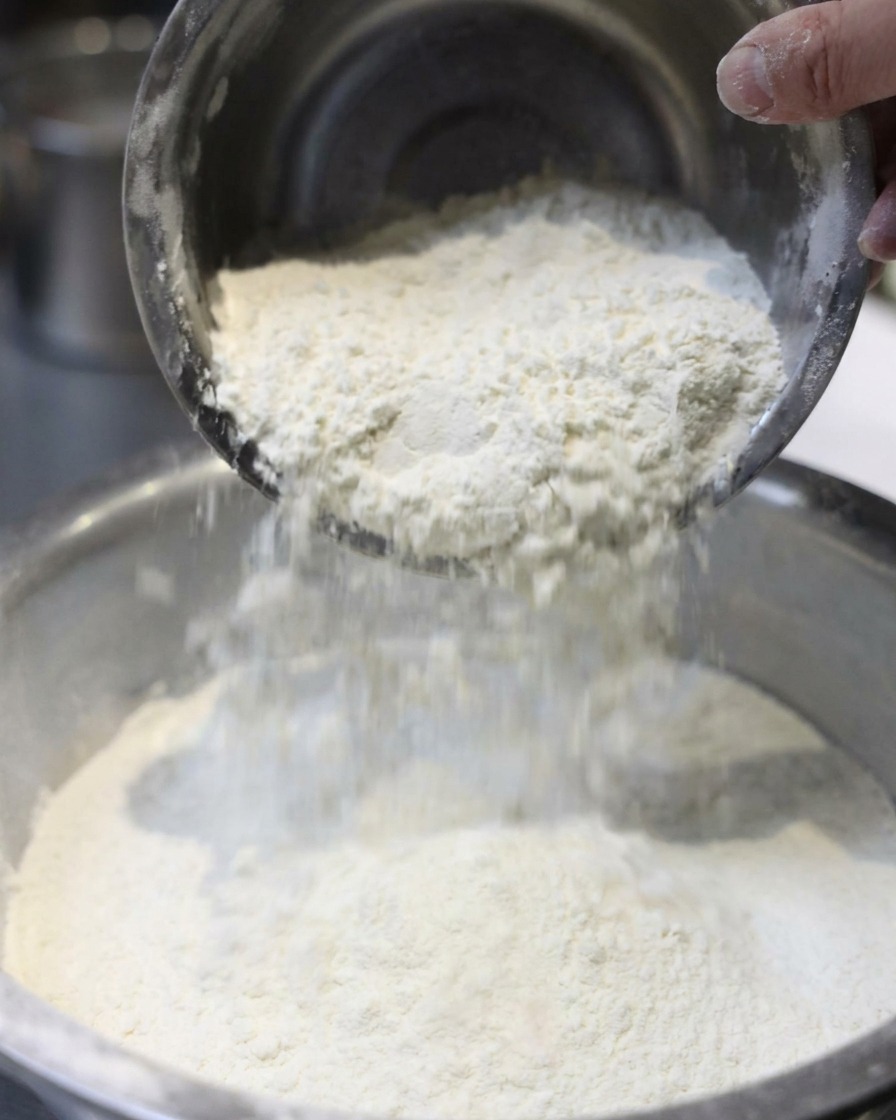
Combine high-gluten flour and alkaline water in a mechanical dough mixer. Mixing these ingredients thoroughly creates a dough with the necessary elasticity for chewy ramen noodles.
Tip: The alkaline water is essential for the characteristic texture and yellow hue of ramen noodles. - 5Press and cut noodles
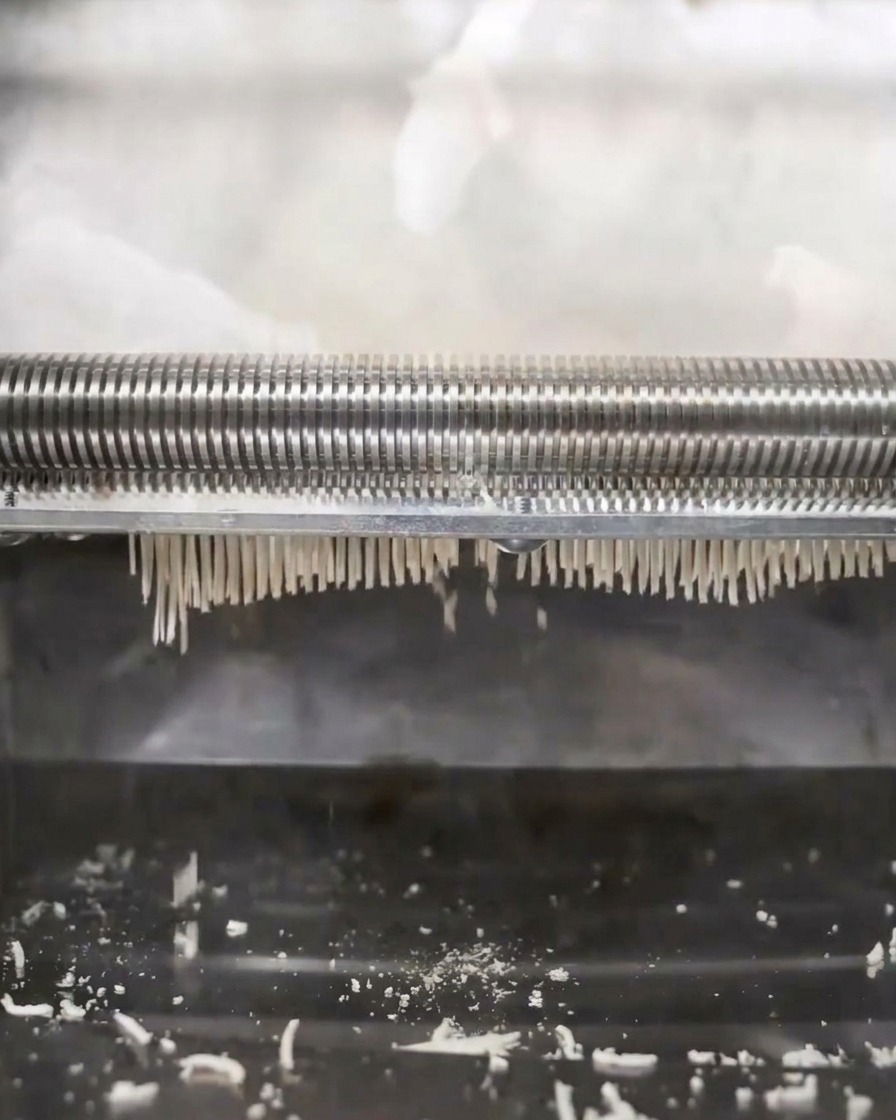
Feed the prepared dough into a noodle machine to press it into sheets and cut it into thin strands. Once cut, fluff the noodles to ensure they are separated and ready for boiling.
Tip: Fluffing the noodles immediately after cutting prevents them from sticking together. - 6Create the creamy broth
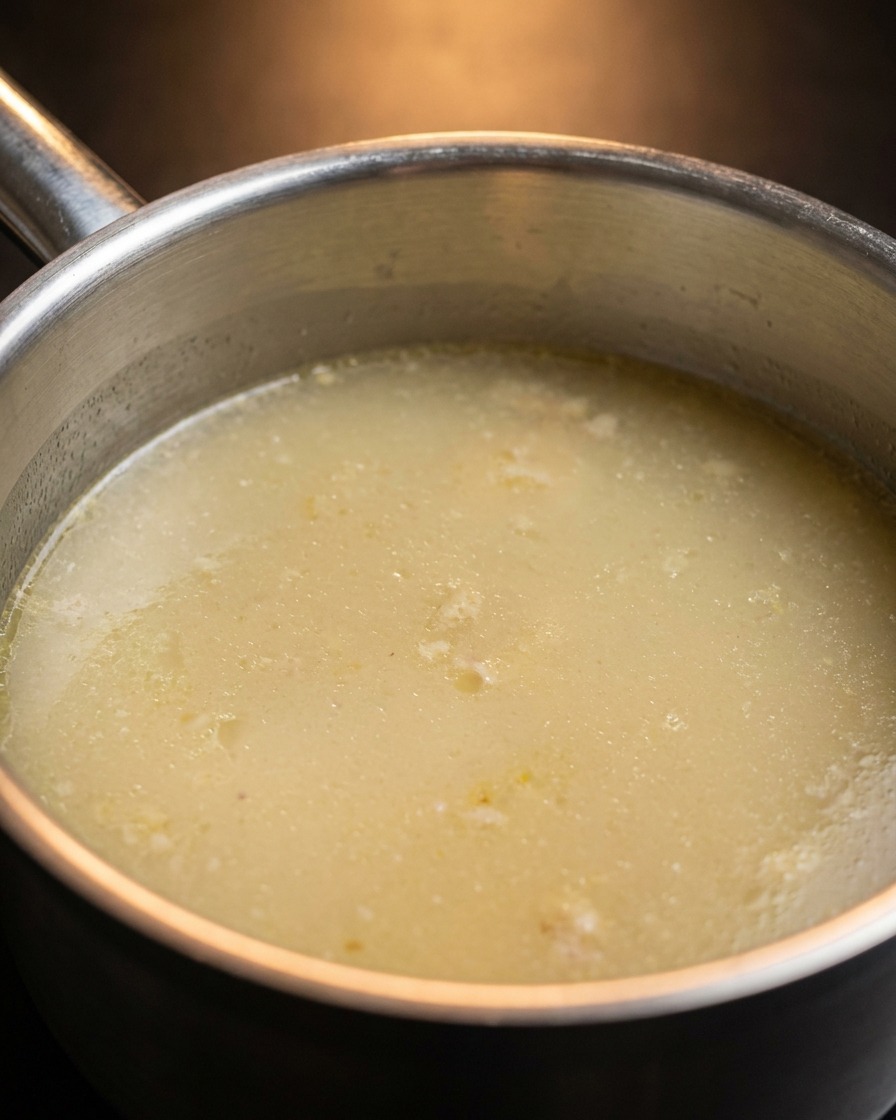
Incorporate the pureed chicken meat into the hot chicken broth. Stir vigorously until the soup base thickens and achieves its signature milky white, intensely savory consistency.
Tip: Straining the broth after adding the puree ensures a silky, luxurious mouthfeel. - 7Filter the broth
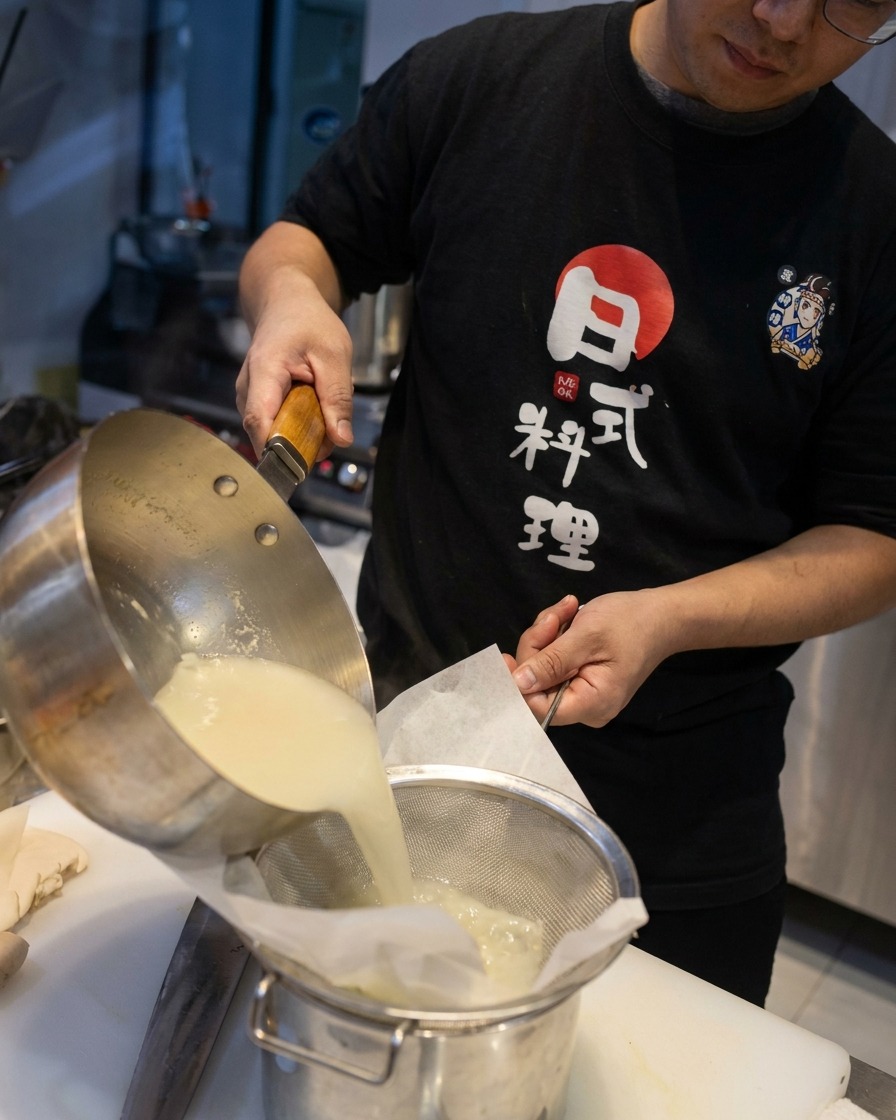
Pour the prepared chicken broth through a fine-mesh strainer lined with a paper filter into a clean pot. This step ensures the soup has a smooth, creamy, and refined texture.
Tip: Pour slowly to ensure all impurities are caught by the paper filter. - 8Slice the chicken chashu
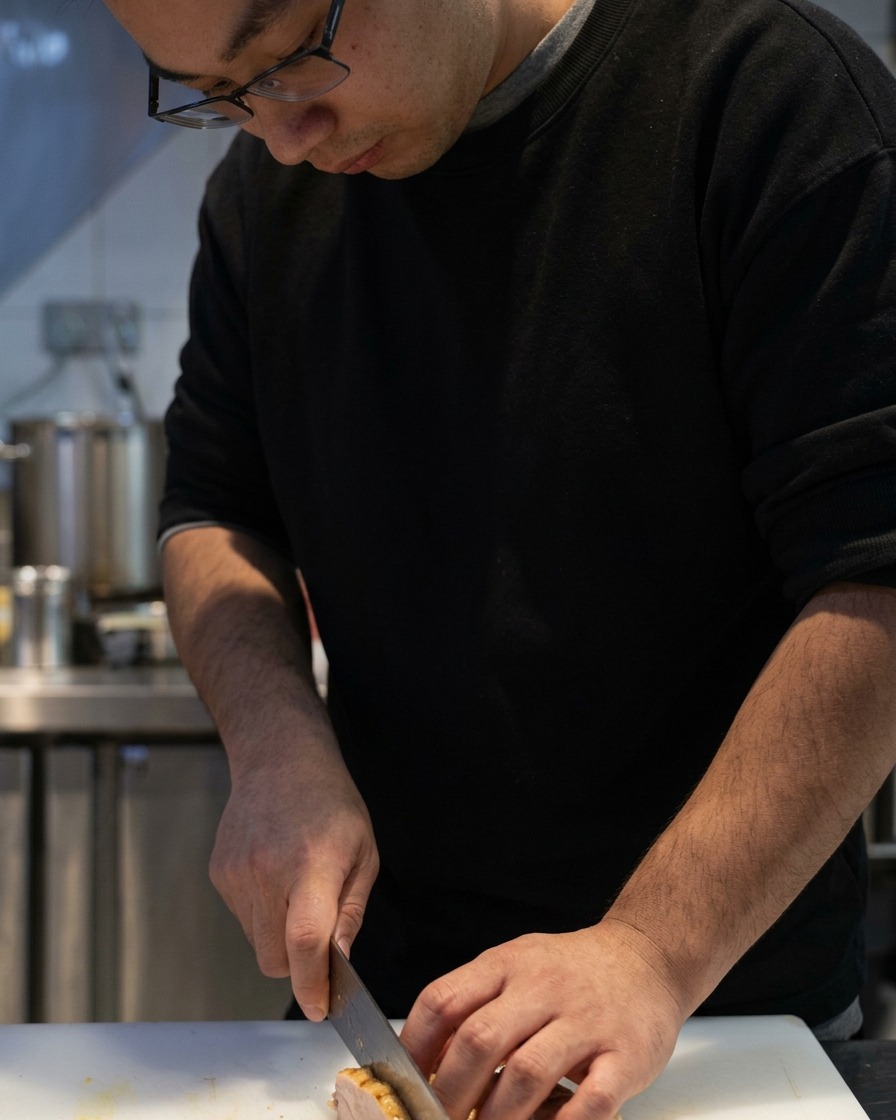
Take the cooked chicken chashu and use a sharp knife to carefully slice it into uniform pieces. Ensuring the slices are even will make for an appealing presentation on the ramen.
Tip: Let the chicken rest for a moment before slicing to keep the meat intact. - 9Assemble the ramen
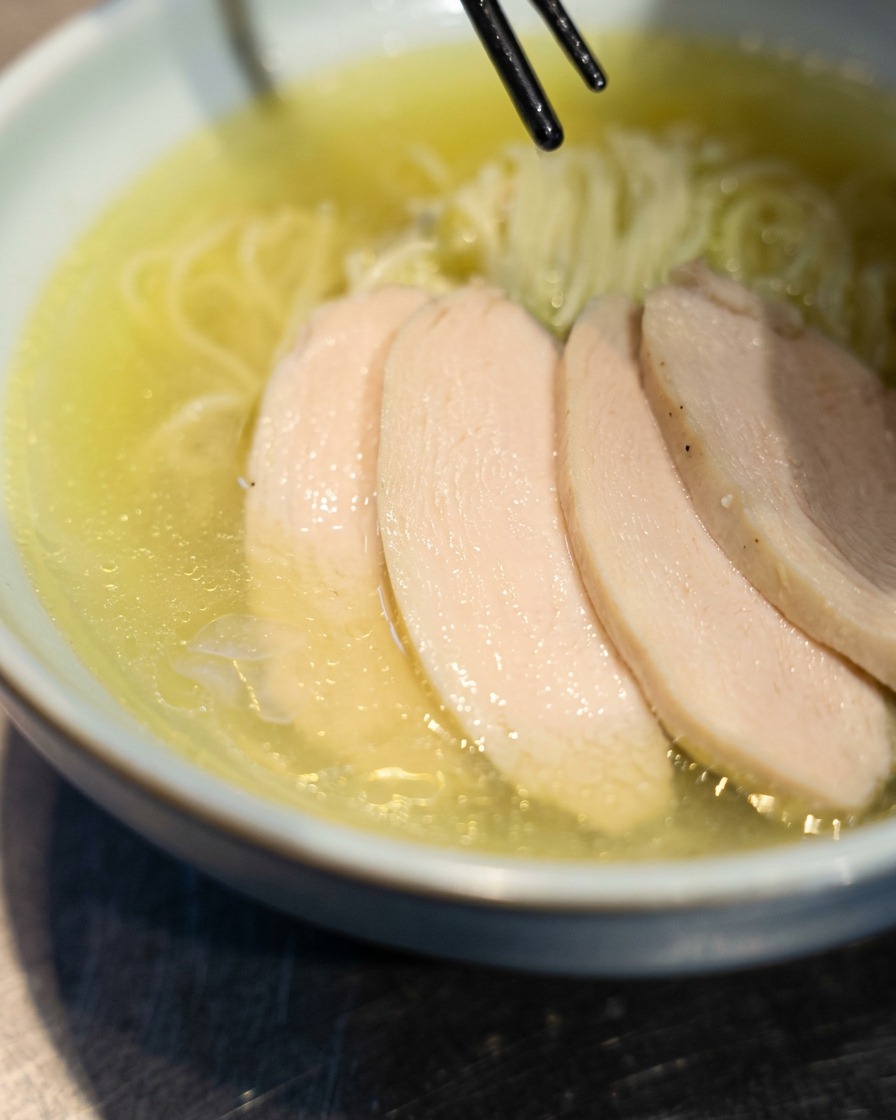
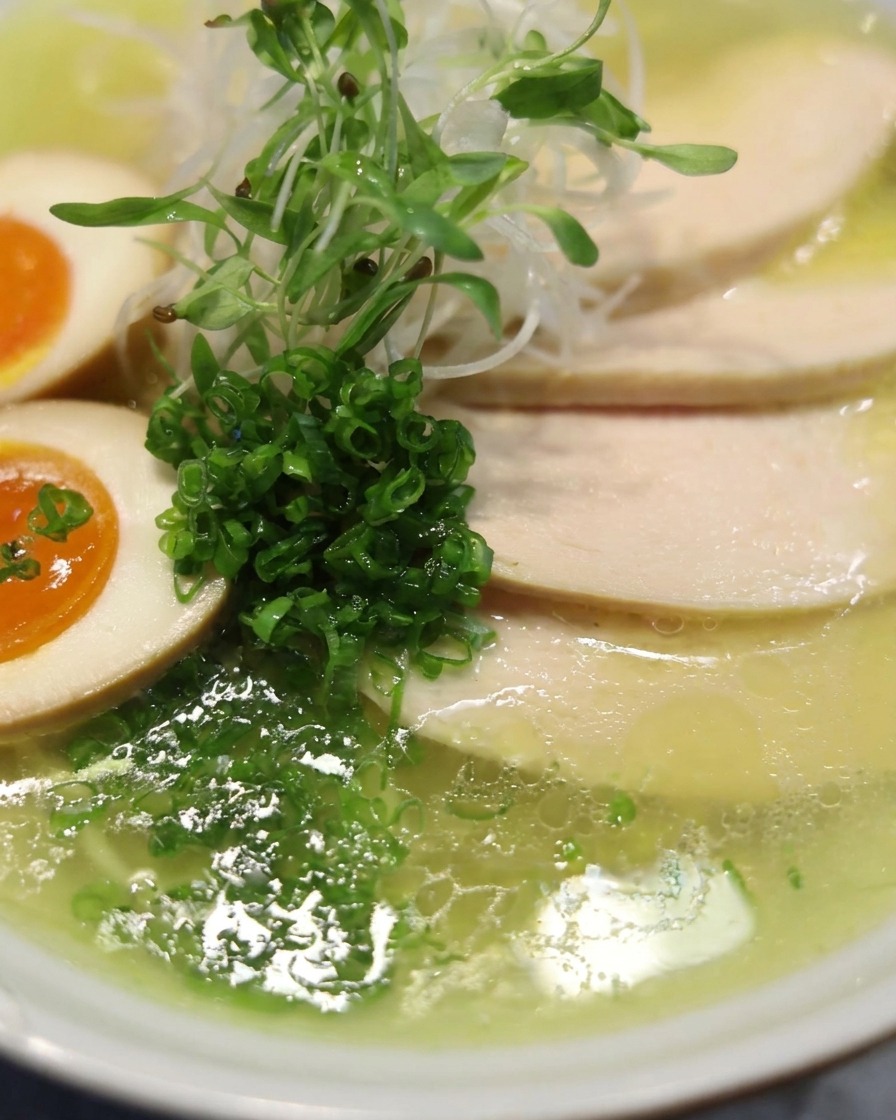
Using chopsticks, carefully arrange the sliced chicken chashu over the freshly boiled noodles and hot broth. Complete the bowl with white onion strings, fresh microgreens, and a soft-boiled egg.
Tip: Place the slices slightly overlapping to create a professional look.