Authentic Salt
Alkaline Pulled Noodles (Shanxi Style)
Master the traditional technique for springy, ultra-fine pulled noodles. This Shanxi-style recipe uses alkaline powder for the perfect chew.
The secret to the legendary chew of Shanxi-style pulled noodles lies in the interaction between edible alkaline powder and the gluten structure of the dough. Unlike standard pasta, this technique requires persistent kneading and a specific stretching motion that builds internal elasticity. When executed correctly, the resulting noodles possess a signature springiness and silkiness that simply cannot be replicated by store-bought varieties.
Ingredients
- 500 g flour
- 3 g edible salt
- 2 g edible alkaline powder
- 300 g cold water
Instructions
- 1Measure the ingredients
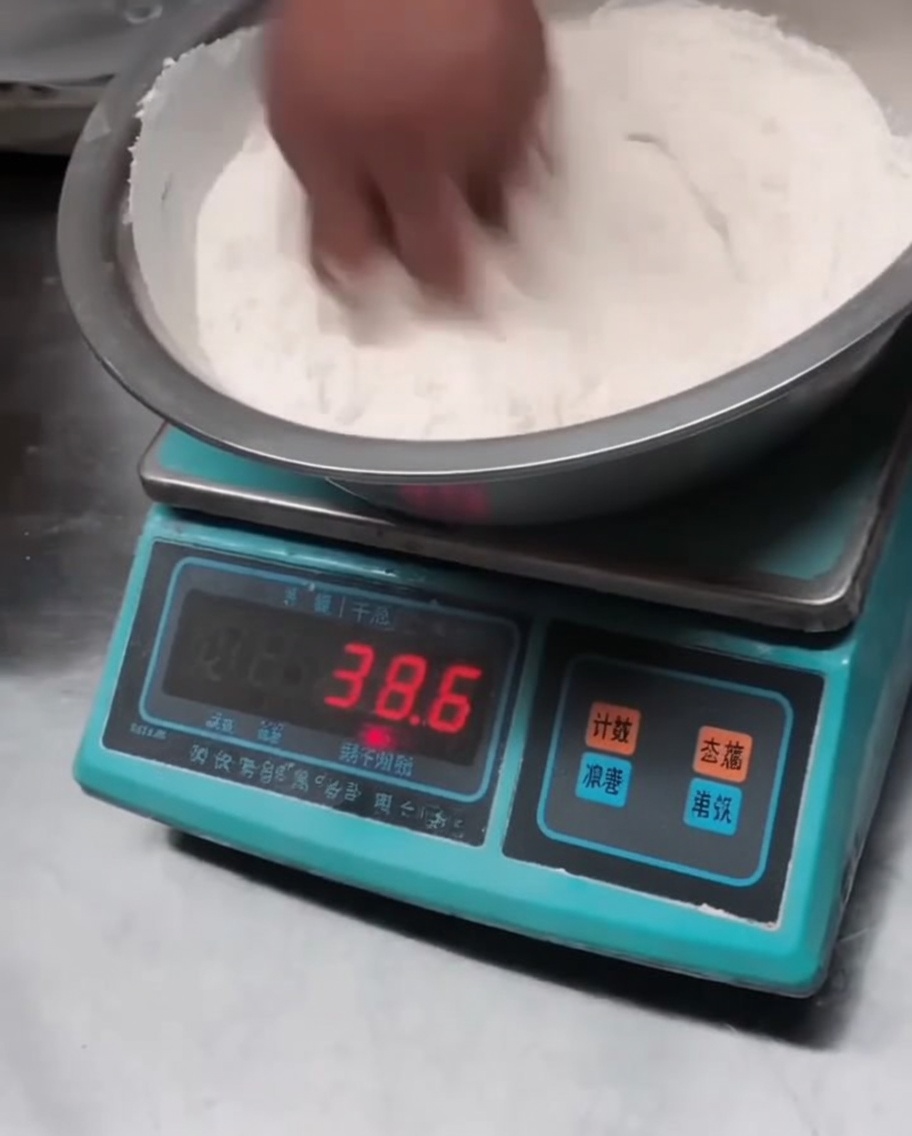
Place a large metal bowl on a digital scale. Add 500 grams of flour, 3 grams of salt, and 2 grams of edible alkaline powder. Mixing these together properly is the foundation for successful pulled noodles.
Tip: Ensure your scale is set to grams for precision, as small amounts like 2 grams of alkaline powder are critical for the noodle texture. - 2Mix dry ingredients
In a large mixing bowl, combine the flour, edible salt, and alkaline powder. Use your hand to thoroughly incorporate the salt and alkaline powder into the flour, ensuring an even distribution before adding any liquid.
Tip: Using the correct amount of alkaline powder is crucial for achieving the signature texture of pulled noodles. - 3Add water to flour
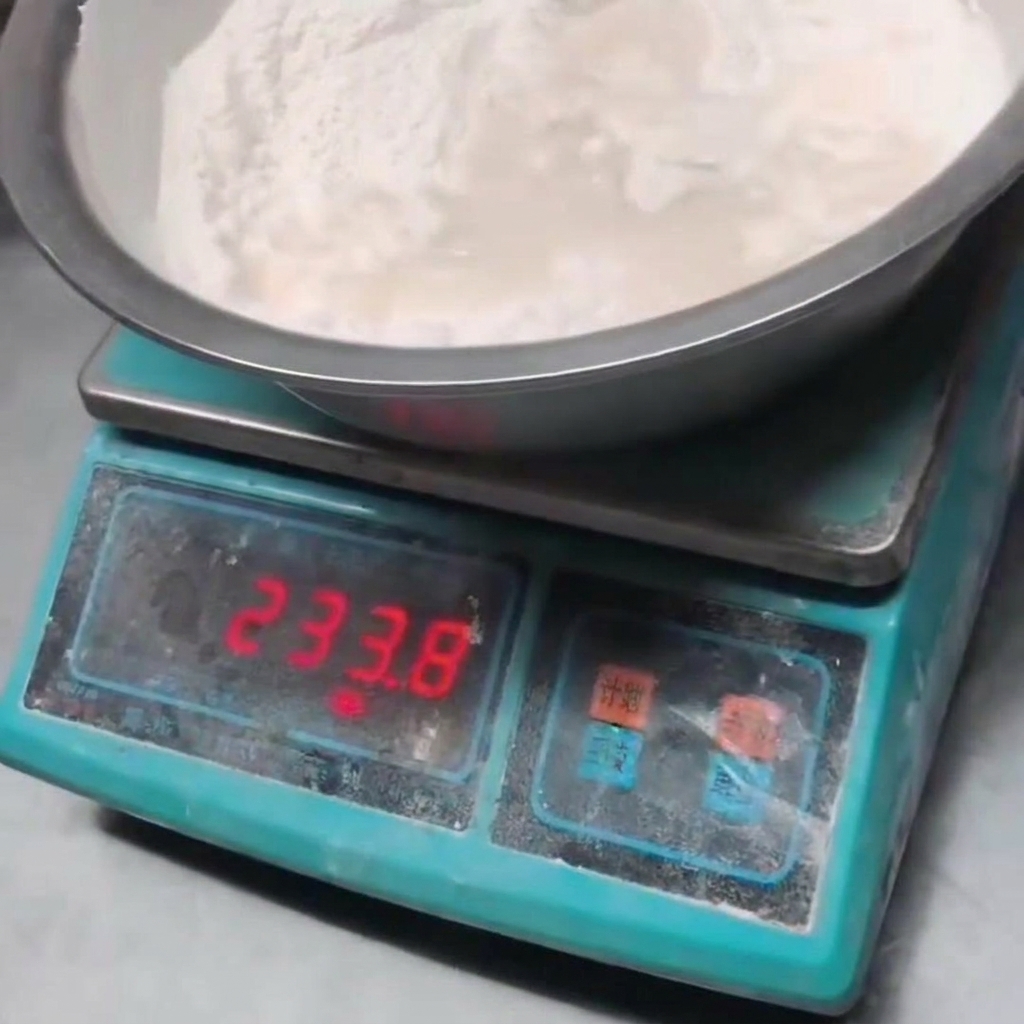
Pour 300 grams of cold water into the flour mixture. Using cold water is important to create a softer dough consistency necessary for proper noodle pulling.
Tip: Add the water gradually while mixing to control the doughs consistency. - 4Form dough flakes
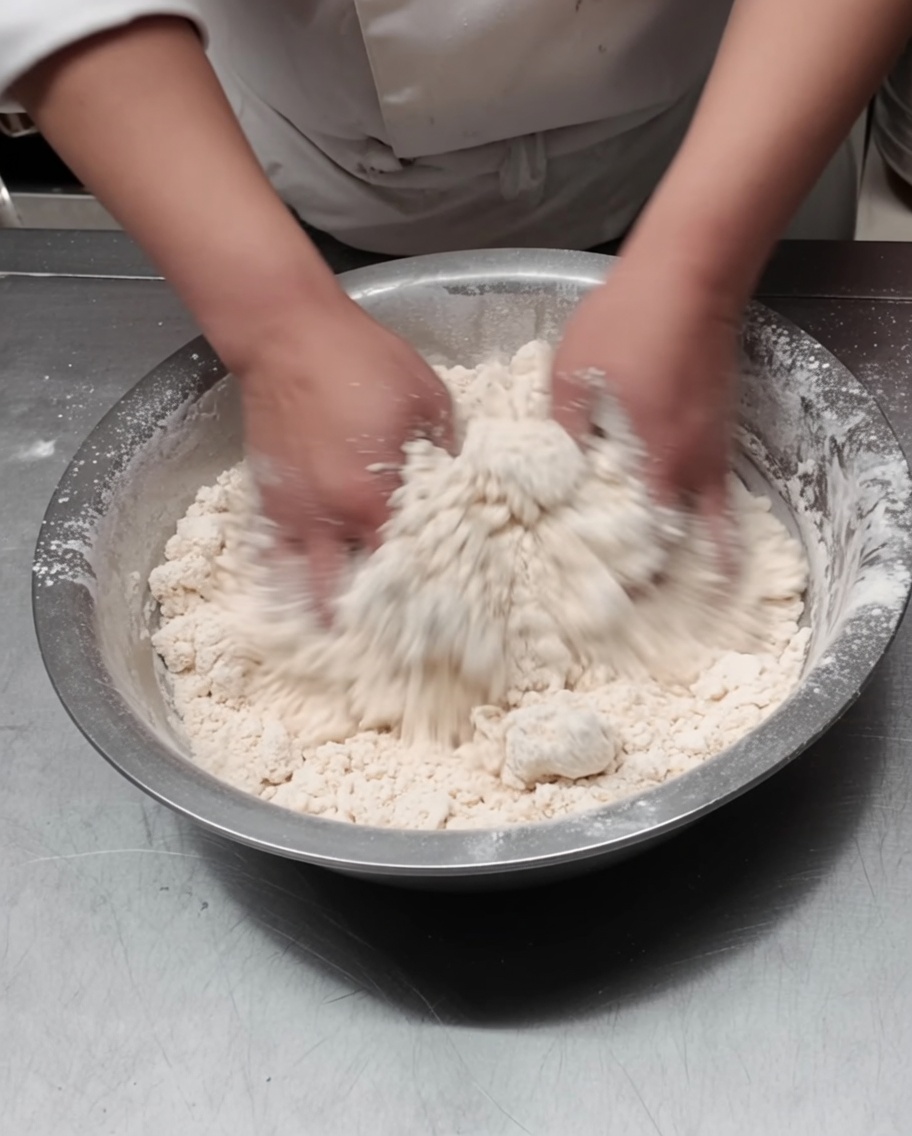
With your fingers spread open like a fork, mix the flour and water using a stirring motion—up, down, left, and right. Continue until there is no dry flour remaining and the mixture resembles small, cotton-like flakes.
Tip: Forming flakes first is essential to ensure the dough hydrates evenly before kneading. - 5Form a cohesive dough
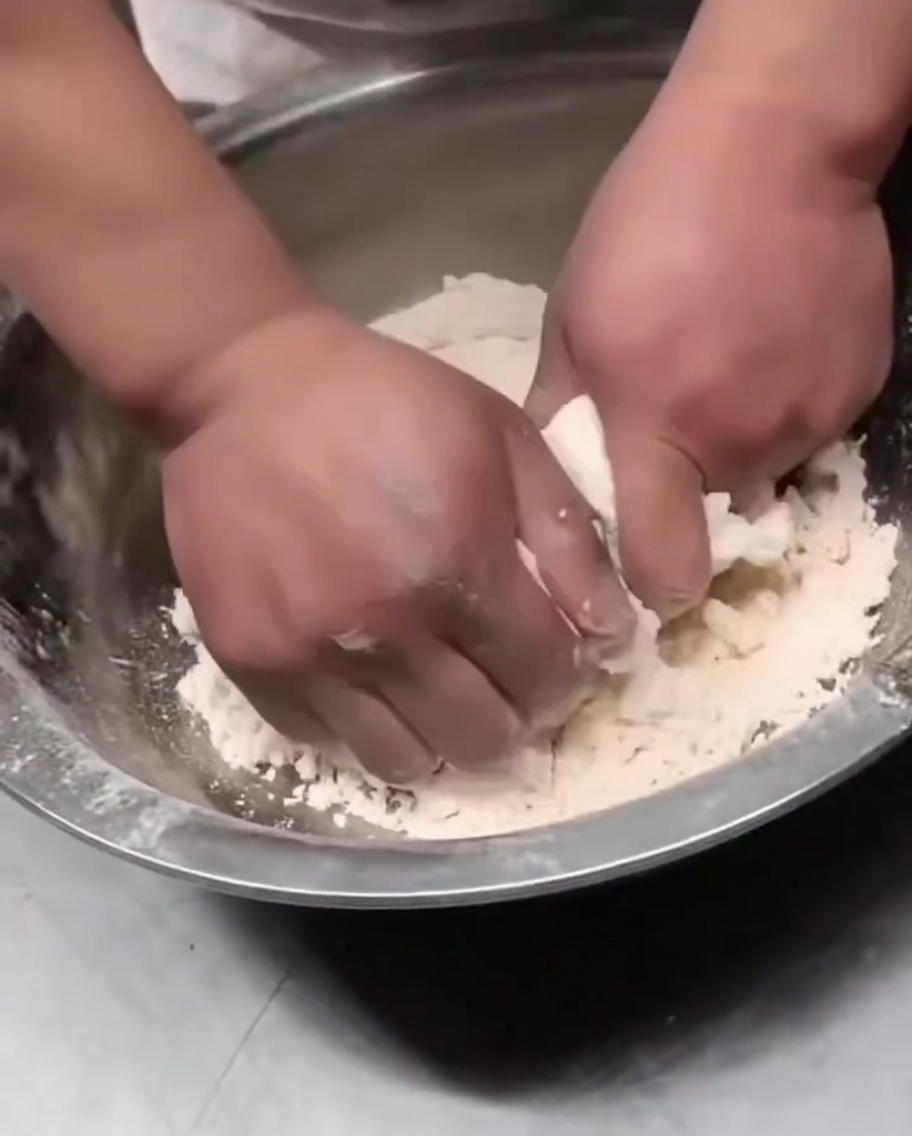
Once the mixture has formed into uniform flakes, gather them together and knead firmly until a single, solid, and smooth dough ball is created.
Tip: Ensure all the flakes are integrated into the dough ball for a consistent texture. - 6Build elasticity
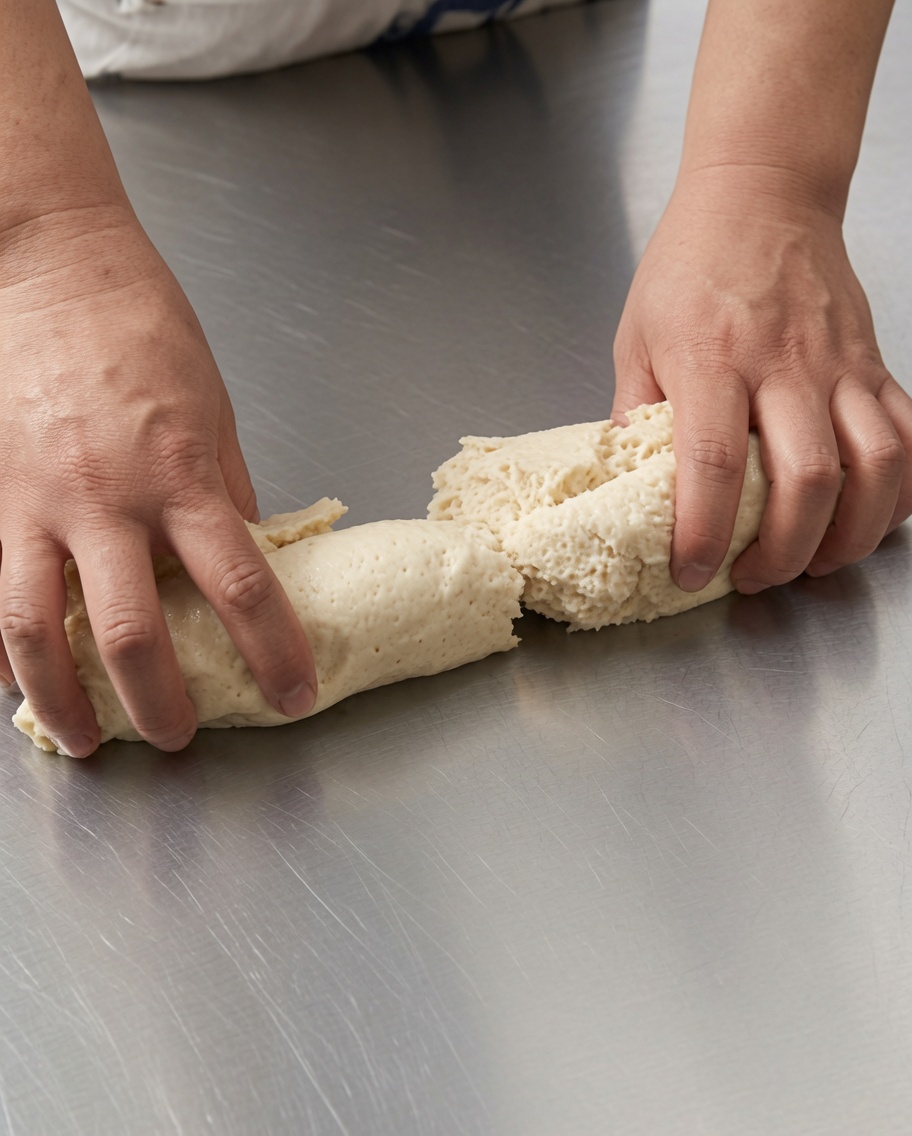
Place the rested dough on a work surface. Knead it thoroughly by stretching it long along the edge of the board, folding it over, and slamming it down. Repeat this rigorous process seven to eight times to develop the necessary gluten for pulling.
Tip: If the dough breaks during kneading, dont worry; persist and continue working it until it becomes smooth and pliable. - 7Stretch and knead
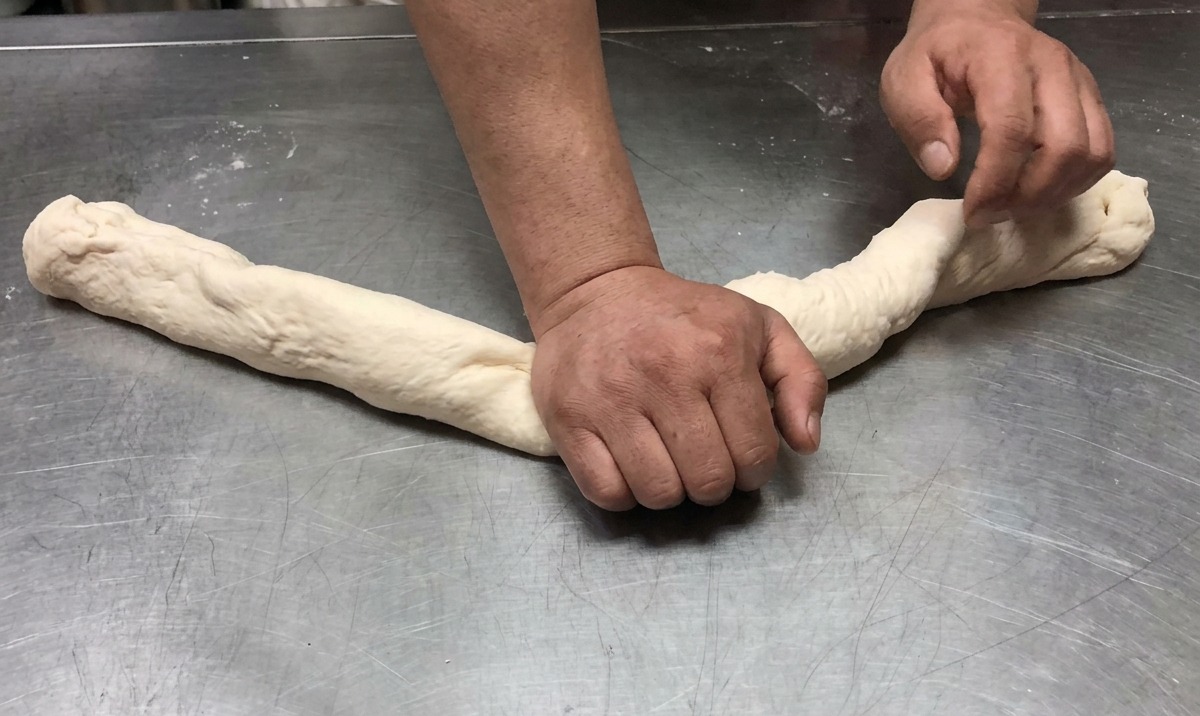
To develop the gluten, knead the dough along the edge of the board by stretching it out long. Avoid rolling it into a round ball like steamed buns; instead, repeatedly stretch, slam, and fold the dough to build elasticity.
Tip: If the dough breaks during the stretching process, do not worry. This is normal—just keep kneading and persisting until the texture improves. - 8Fold and strengthen
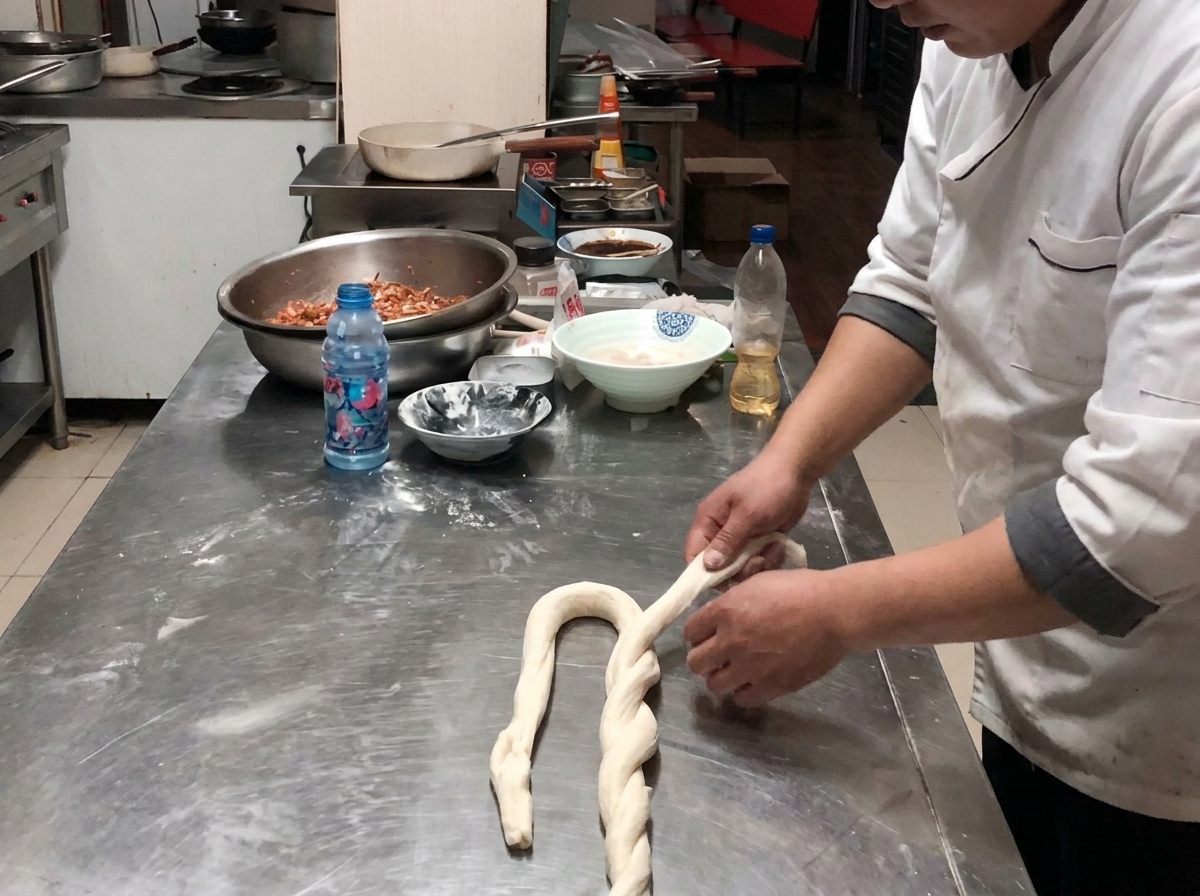
After stretching the dough long, fold it over itself and press down firmly. Repeating this folding and stretching process seven or eight times will significantly improve the doughs quality and elasticity for pulling.
Tip: Focus on keeping the thickness of the rope uniform; if the ends become thin, fold them back and re-knead the thicker sections. - 9Relax the gluten
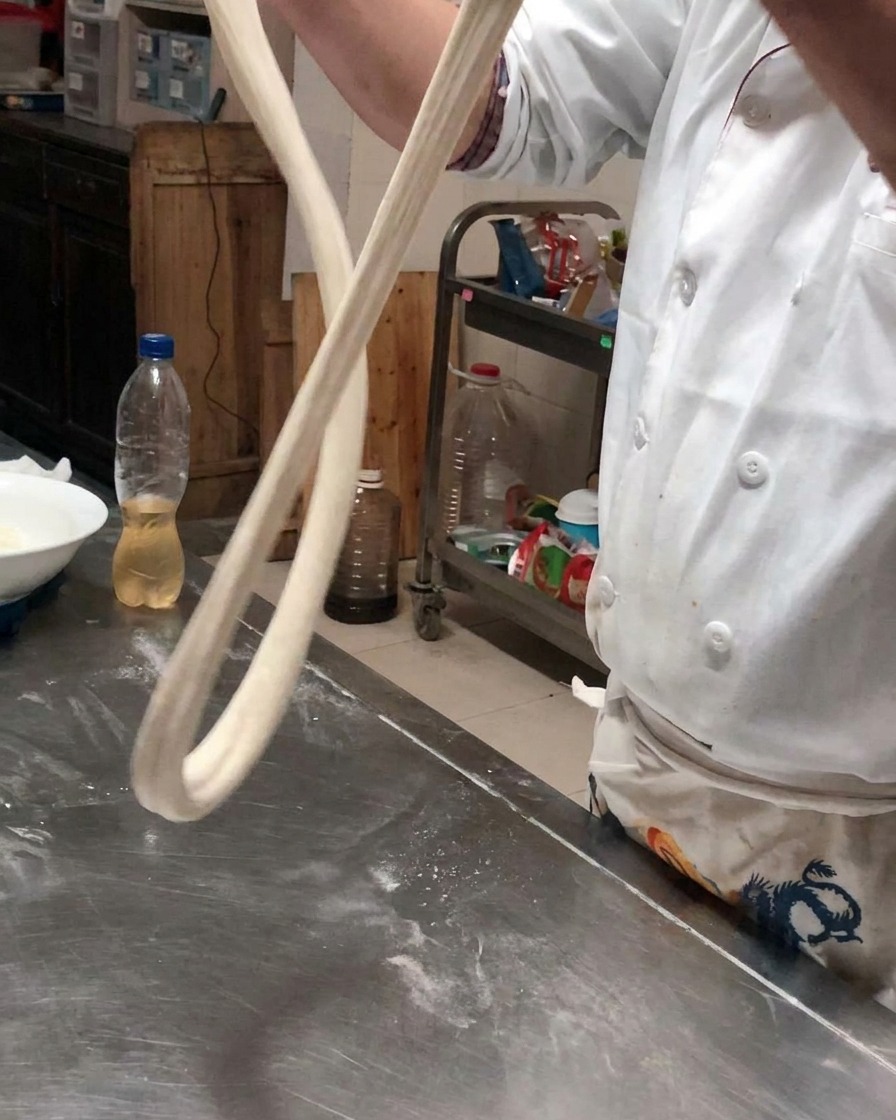
Since the dough is firm, let it hang or rest after working. This relaxation phase is crucial; if you try to pull the noodles while the gluten is too tight, the strands will snap instead of stretching.
Tip: Observe the dough—if it feels too resistant, let it rest longer rather than forcing the pull. - 10Ensure uniform thickness
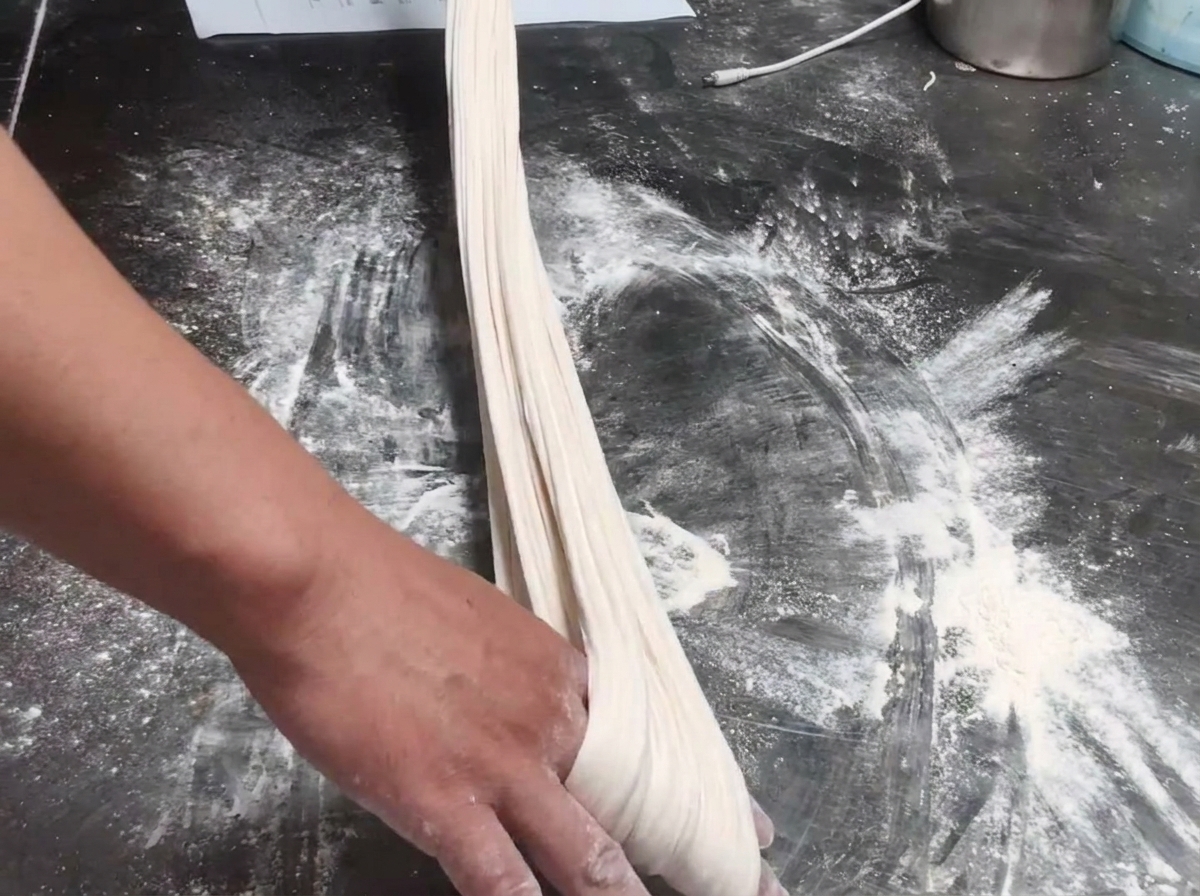
Continue to work the dough on the table, focusing on consistency. If you notice uneven thickness, knead the thicker parts again, loosen the dough, and stretch it out until it is uniform throughout.
Tip: A uniform dough rope is the secret to pulling even-sized noodle strands. - 11Pull the noodles
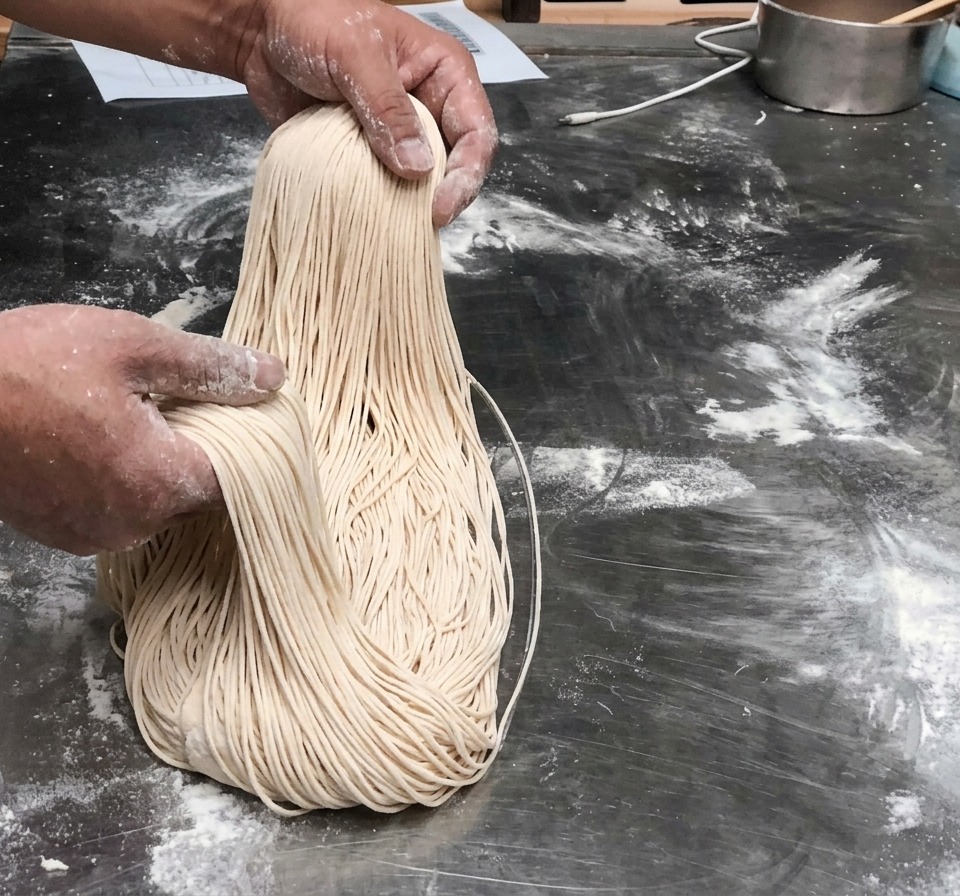
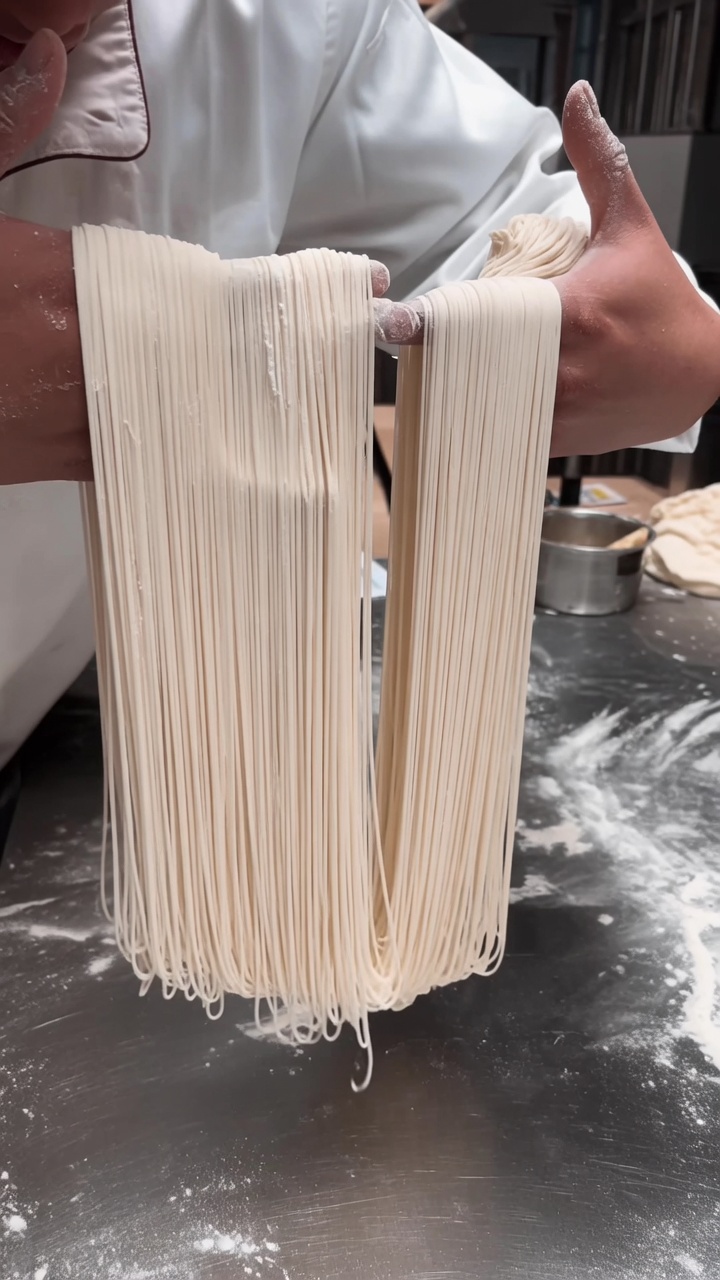
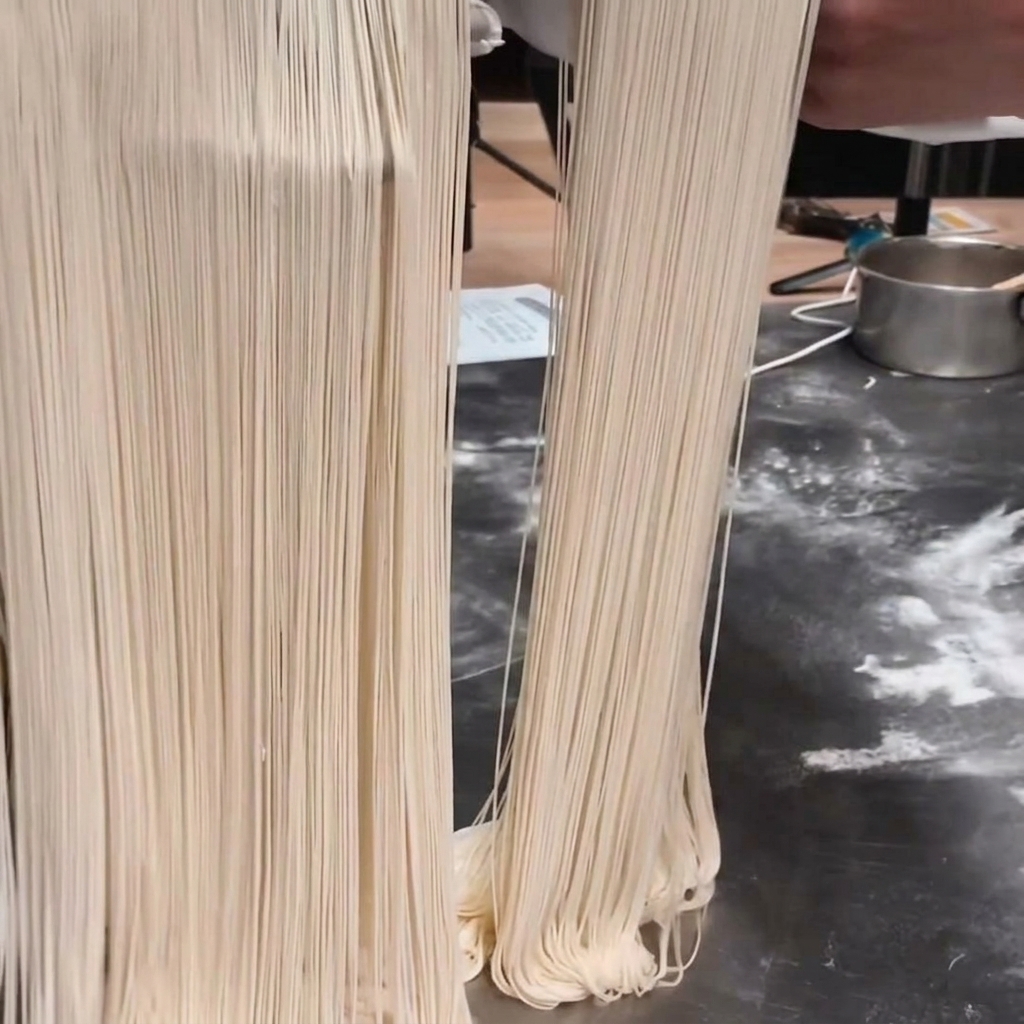
With the dough properly kneaded and relaxed, hold the ends and pull firmly. Fold the strands back over and repeat the pulling motion to achieve the desired thinness of the Shanxi-style noodles.
Tip: Use a smooth, steady motion. If the gluten is properly relaxed, the dough will stretch into thin, long strands without breaking.