Authentic Wencheng-Style Ramen
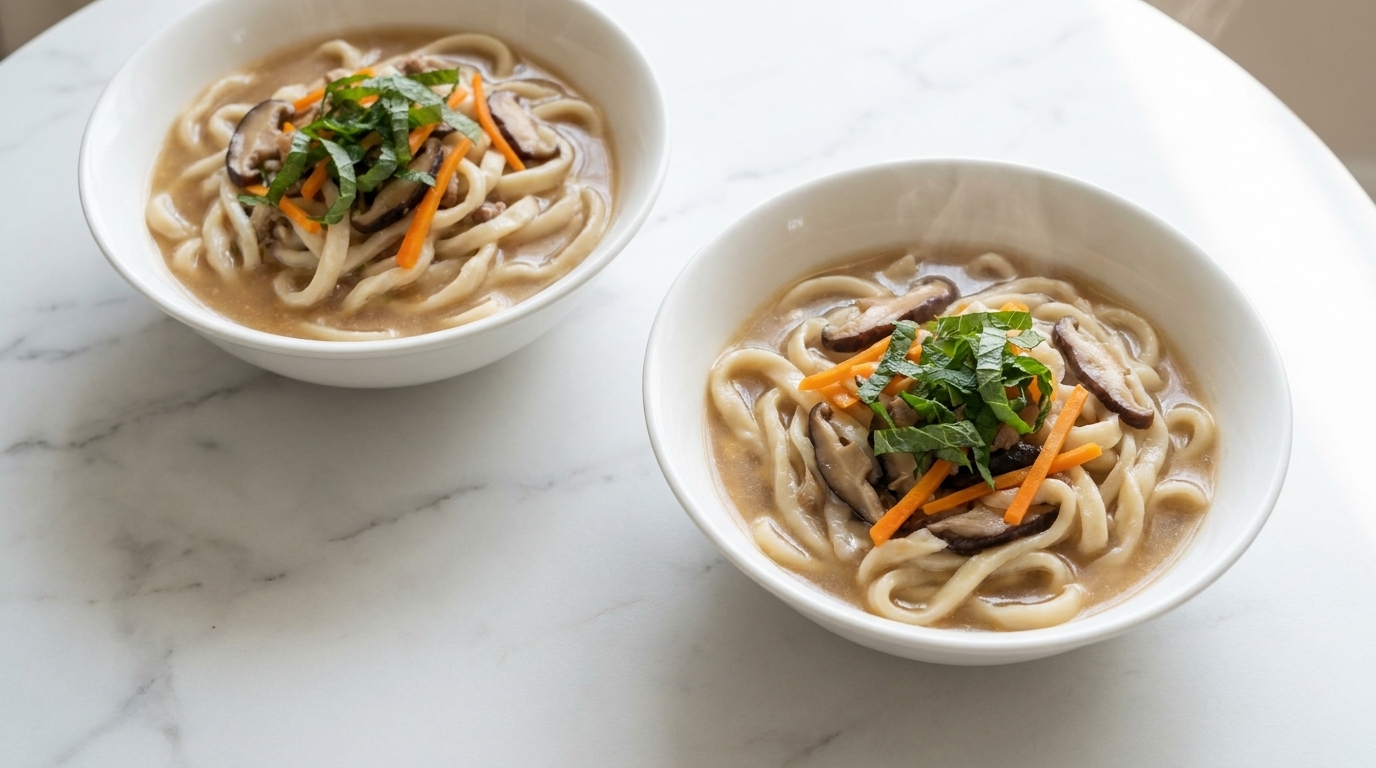
Experience the rustic, soul-warming comfort of Wencheng-style ramen. Featuring chewy, hand-pulled noodles in a savory, umami-rich broth seasoned with fragrant perilla.
Wencheng ramen is a beloved local specialty known for its humble yet deeply satisfying flavor profile, often compared to the famous Lanzhou ramen. This rustic dish centers on the delightful texture of freshly pulled dough and an aromatic broth base, elevated by the signature inclusion of fresh perilla leaves. It is a true testament to the idea that the best meals are often those made with heart, simple ingredients, and cherished family techniques.
Ingredients
- 500 g all-purpose flour
- 250 ml water
- 3 g salt
- 100 g pork belly
- 50 g dried shiitake mushrooms
- 50 g dried octopus
- 50 g pickled greens or dried cabbage
- 1 bunch fresh perilla leaves
- to taste cornstarch
- to taste salt
- to taste MSG
Instructions
- 1Soak the dried ingredients
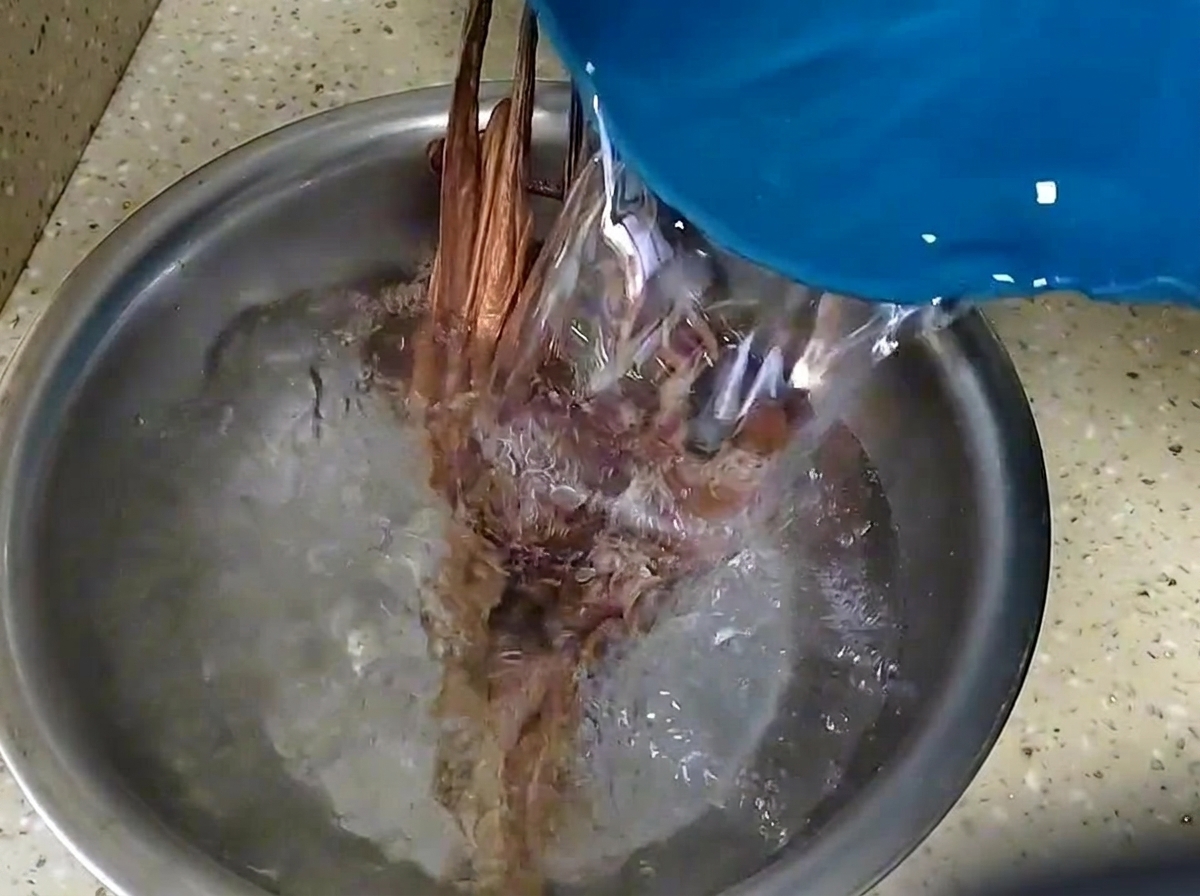
Place the dried octopus head and dried shiitake mushrooms into a metal bowl. Pour in plenty of water and let them soak in advance until completely softened. This essential prep step makes them easier to chop and helps release their deep, savory flavors later.
Tip: Dried octopus can be quite tough, so ensure it is given ample time to rehydrate properly before you start cooking. - 2Mix the flour and salt
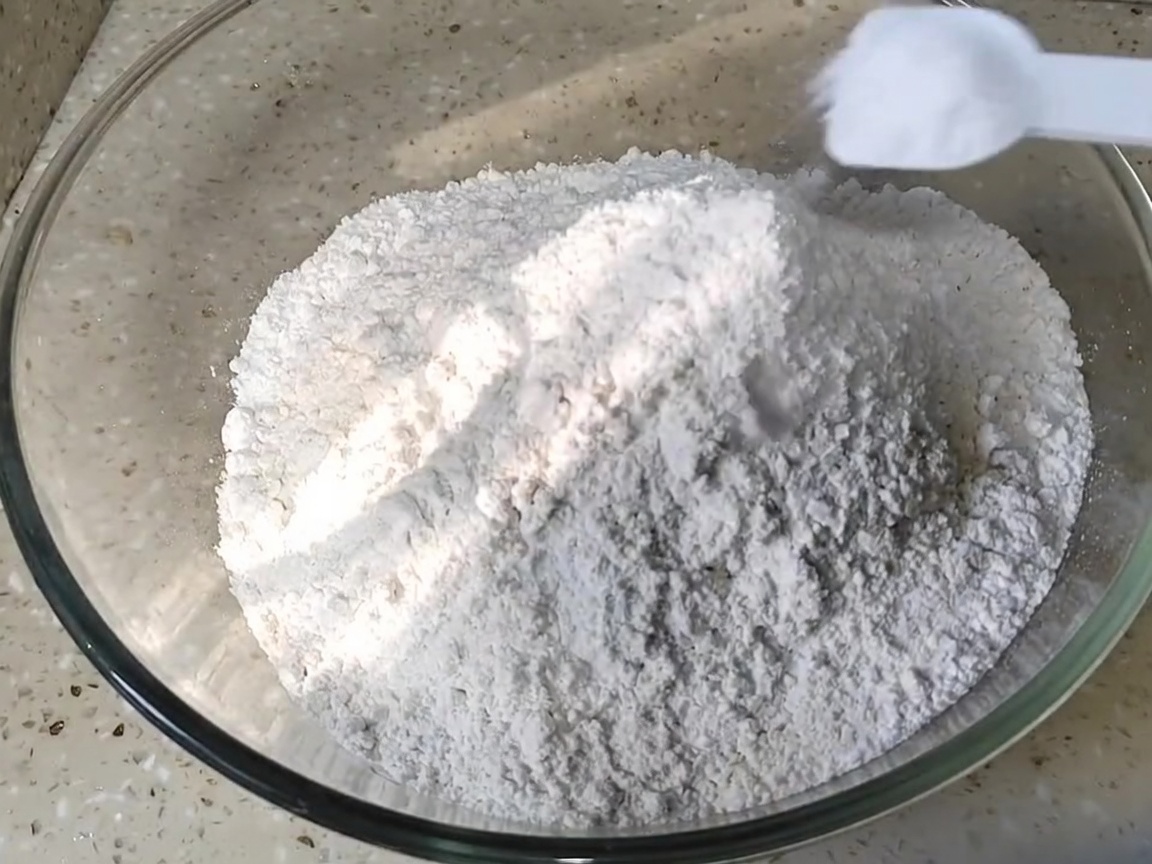
Pour the flour into a large glass mixing bowl and add a little salt. For every catty of flour, you will need about half a catty of water and 3 grams of salt. Gradually add the water while stirring the mixture to begin forming your dough.
Tip: Adding a small amount of salt to the flour strengthens the gluten, making the finished ramen noodles much more elastic and chewy. - 3Knead and rest the dough
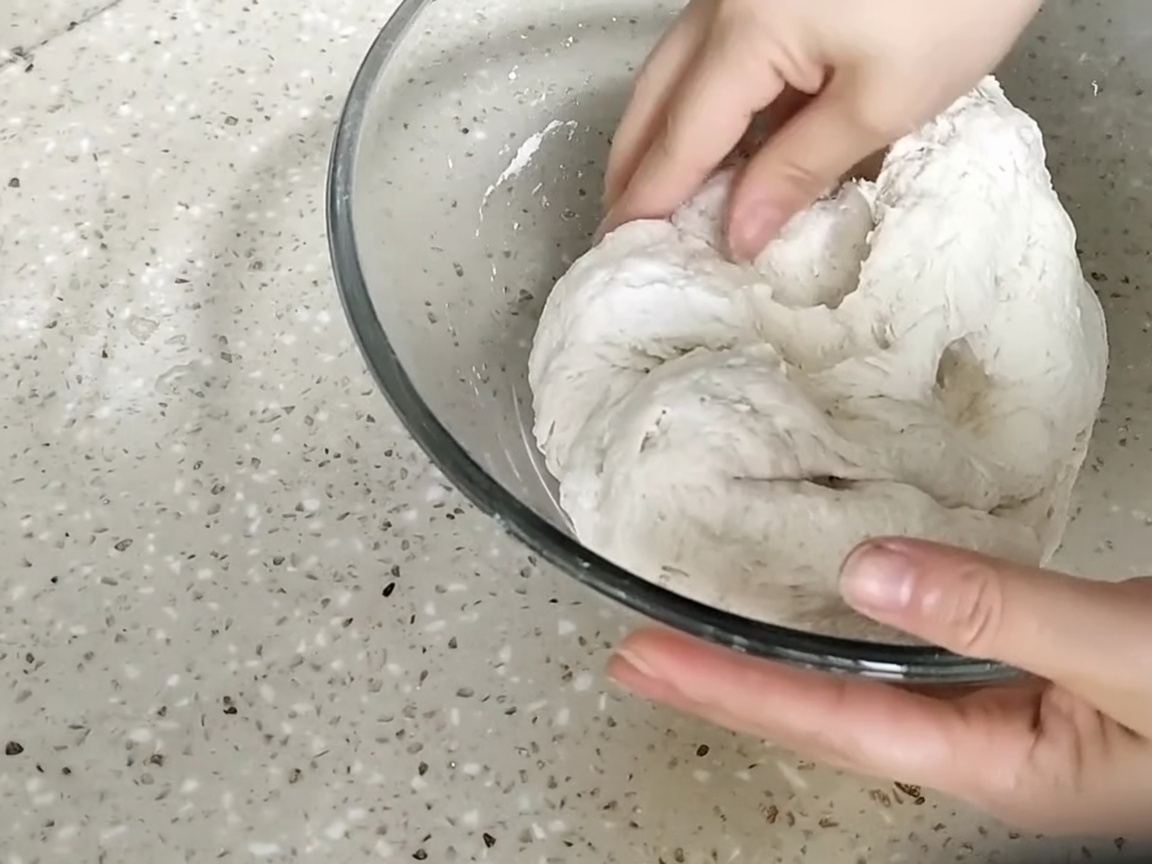
Roughly knead the flour and water mixture into a shaggy dough, then let it rest for 20 minutes. After resting, the dough becomes much more extensible. Continue kneading it until it forms a smoother dough ball, then cover and let it rest for another half an hour.
Tip: Dont worry if the dough looks rough at first. The resting periods allow the gluten to relax and the flour to fully hydrate, making it much easier to knead smooth. - 4Roll out the dough
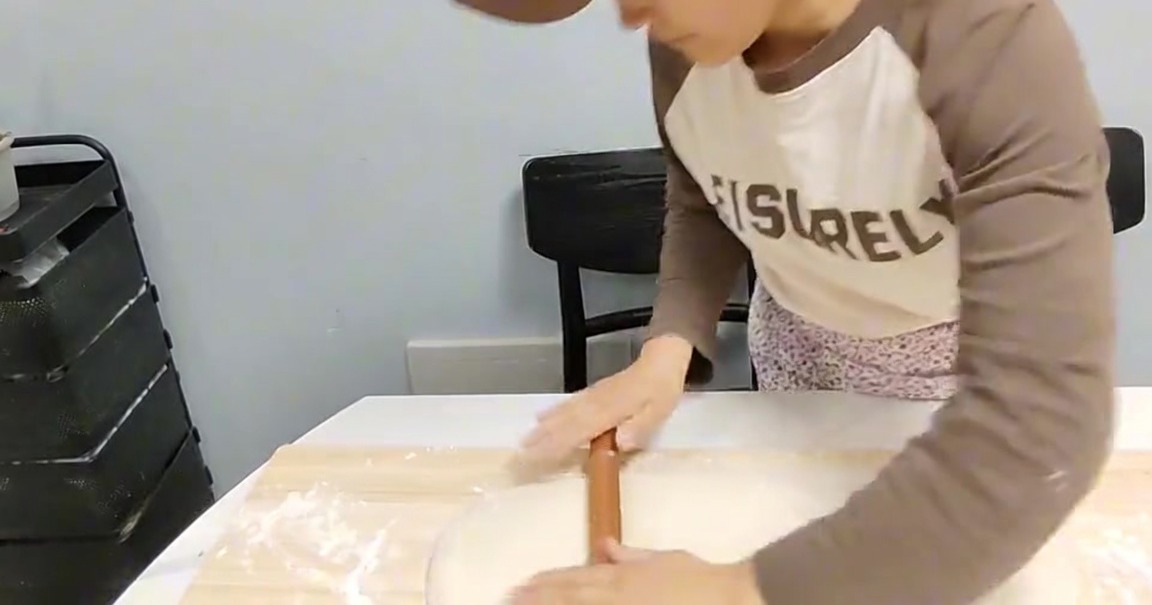
Sprinkle some cornstarch on a wooden board to prevent sticking. Shape the rested dough into a thick block and place it on the board. Use a wooden rolling pin to roll it back and forth, flattening it to about one centimeter thick. Flip it over, sprinkle a little more cornstarch, and continue to flatten it.
Tip: Using cornstarch instead of regular flour for dusting prevents the noodles from sticking together without making the dough overly dense. - 5Chop the aromatics
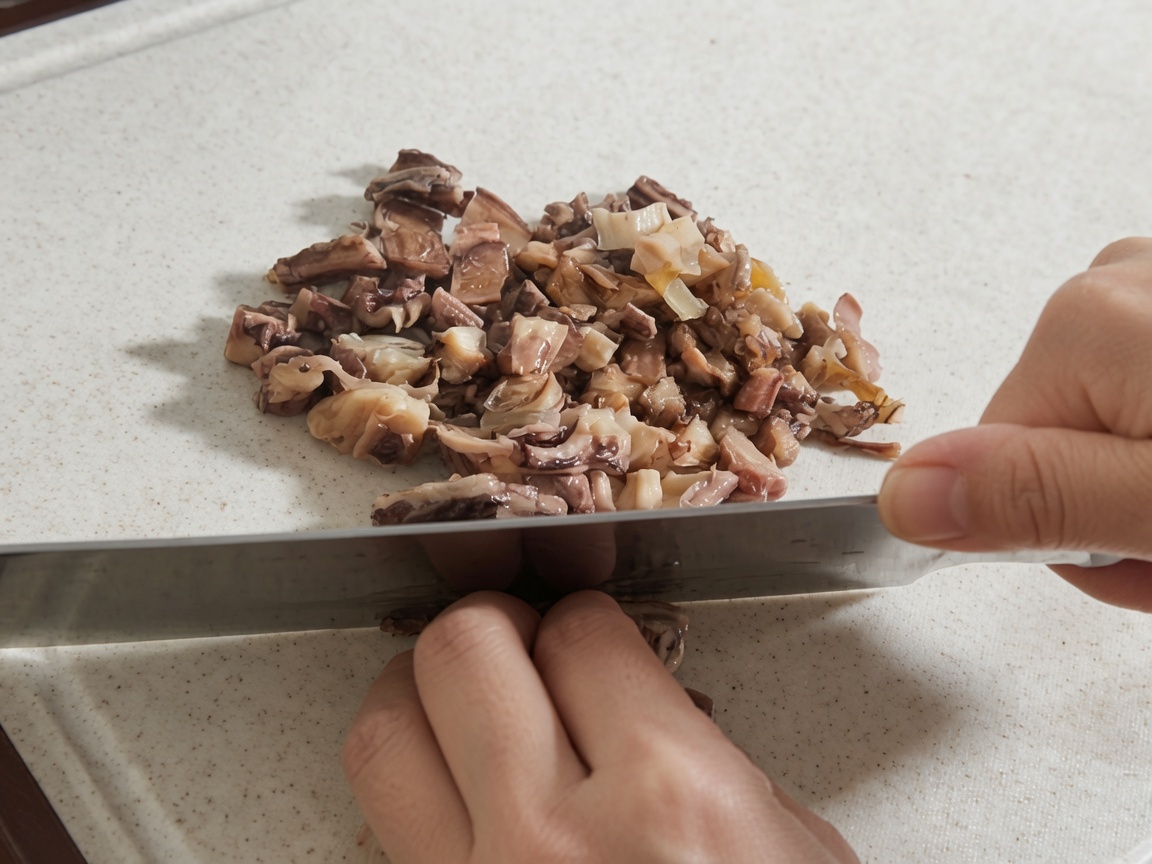
Once the dried shiitake mushrooms and octopus head are fully soaked and softened, remove them from the water. Place them on a white cutting board and carefully chop them into small pieces. These will form the savory, umami-rich base for the ramen broth.
Tip: Squeeze any excess water from the shiitake mushrooms before chopping so they can absorb the oil and seasonings better when stir-fried. - 6Prepare the pickled greens
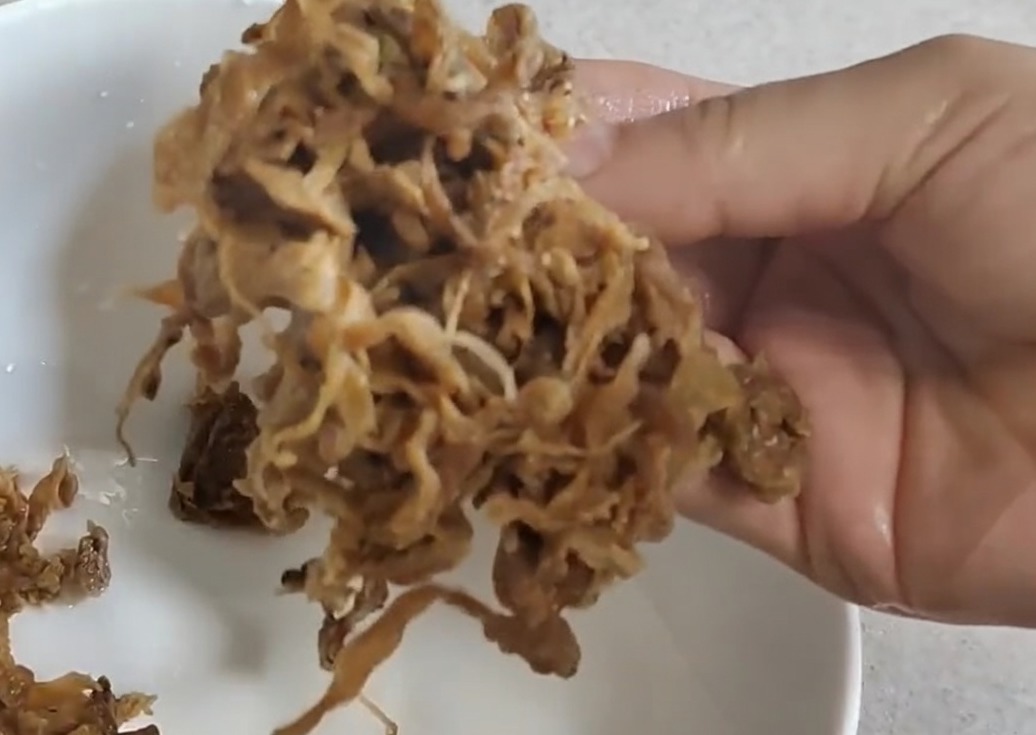
Take the pickled dried cabbage and carefully chop it into small, uniform pieces. These greens add a signature savory and slightly tangy depth to the ramen broth.
Tip: If the pickled greens are too salty, give them a quick rinse and squeeze dry before chopping. - 7Render the pork fat
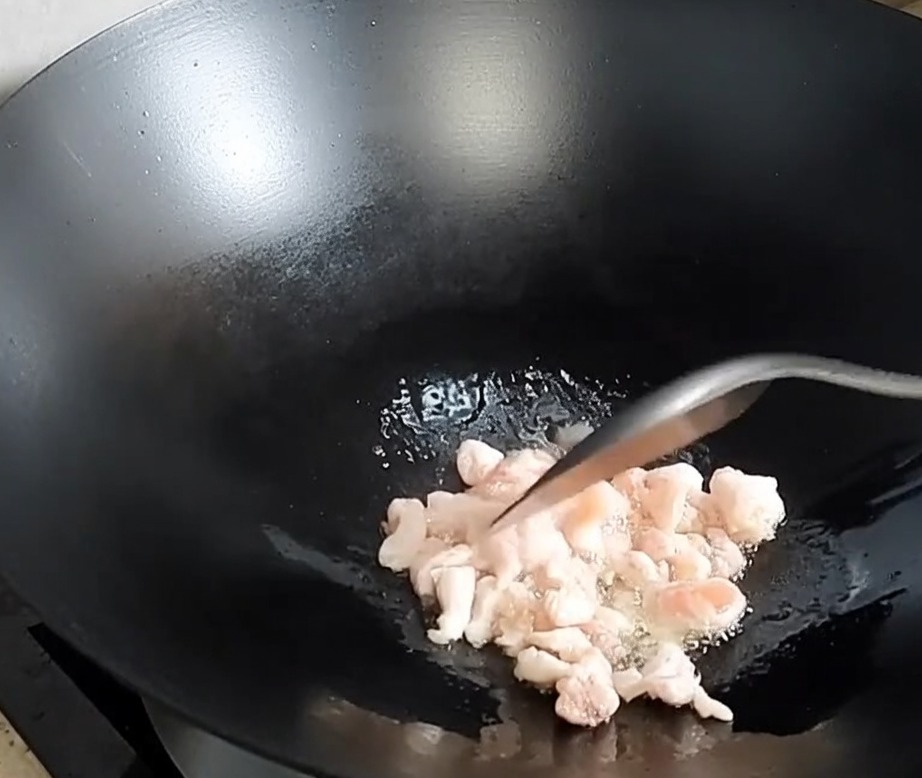
Heat your wok over medium-high heat and add the diced pork belly. Stir-fry steadily until the fat is fully rendered and the meat begins to turn golden brown and crispy.
Tip: Render the fat slowly to ensure the pork bits become nice and crispy without burning. - 8Sauté the aromatics and mushrooms
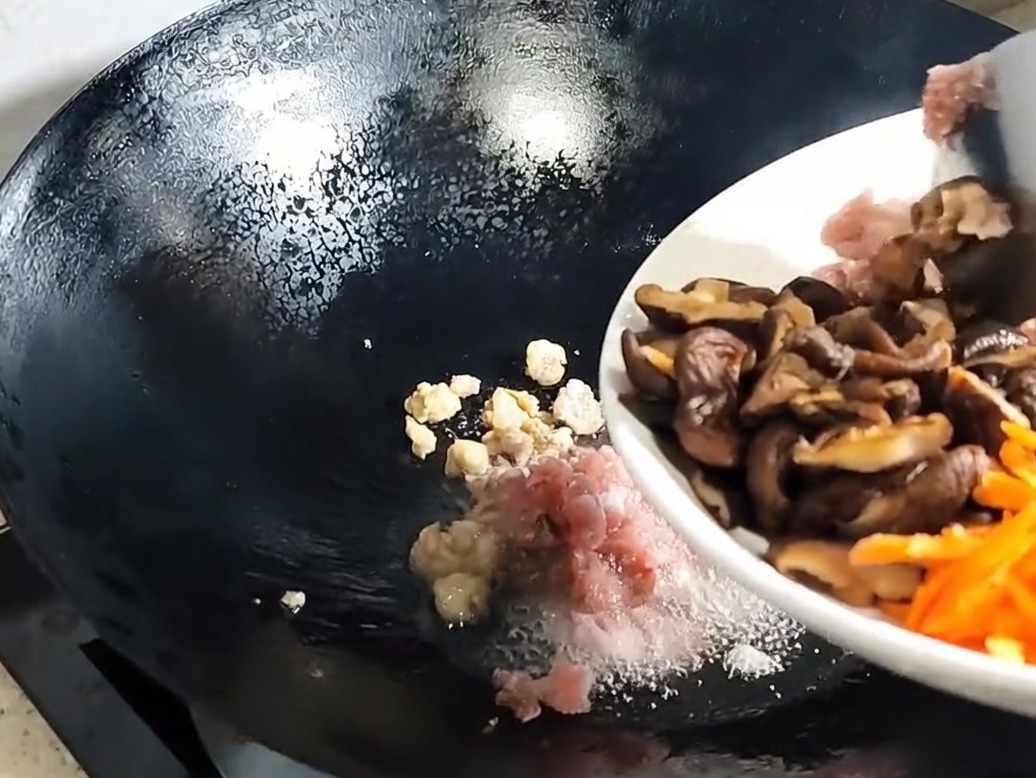
Add the prepared sliced shiitake mushrooms to the wok with the rendered pork. Continue to stir-fry until the mushrooms are fragrant and lightly browned, ensuring they absorb the savory pork fat.
Tip: Fry the mushrooms well to unlock their full umami potential before adding liquid. - 9Create the soup base
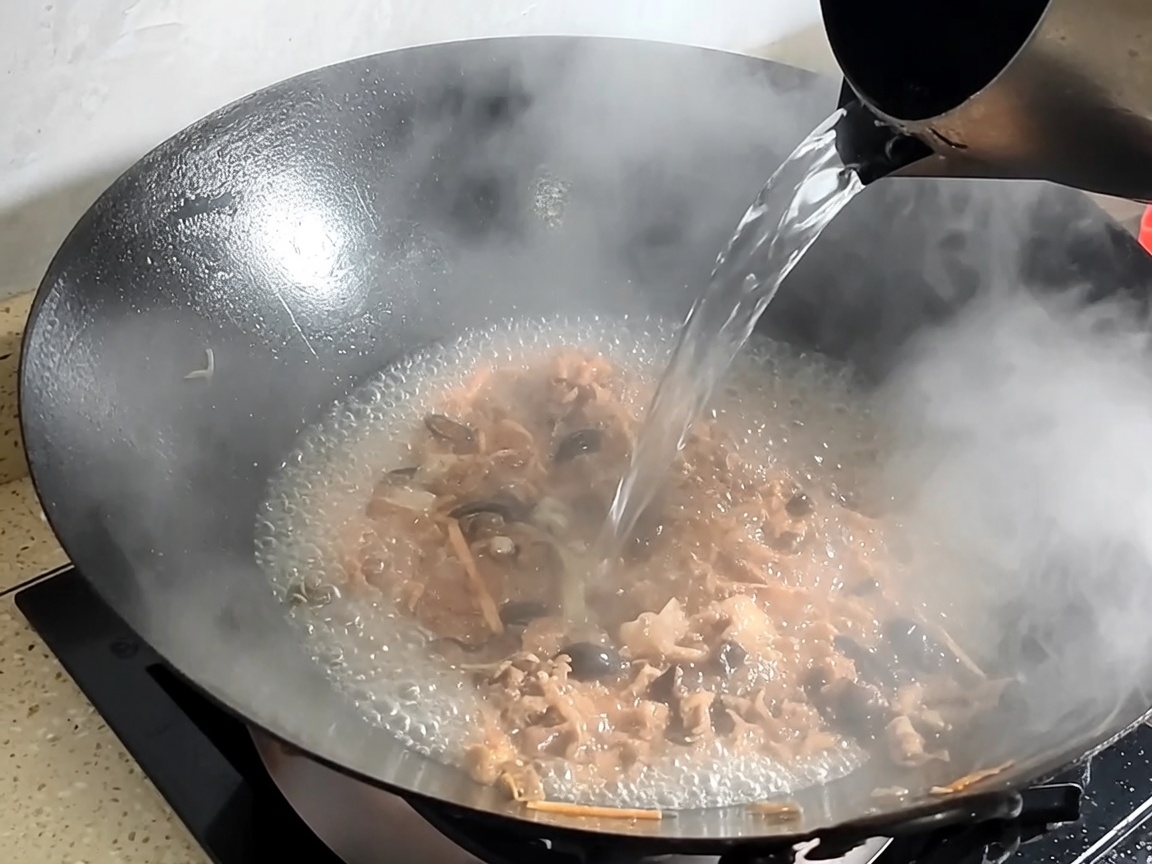
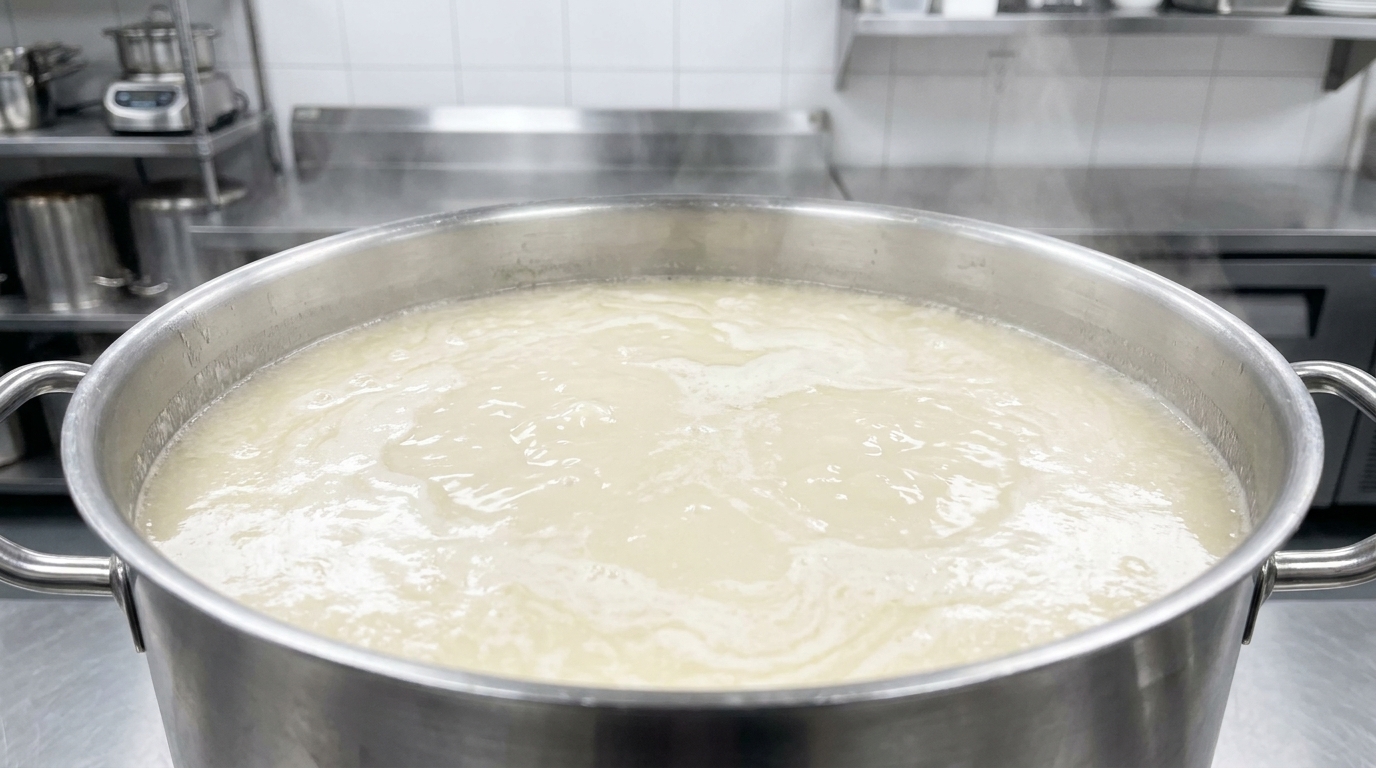
Once the pork and mushrooms are nicely sautéed, pour in enough water to create your broth. Bring the mixture to a boil and let it simmer to develop a rich, flavorful foundation for the ramen.
Tip: Using hot water from a kettle helps the broth return to a boil faster. - 10Cut the dough into strips
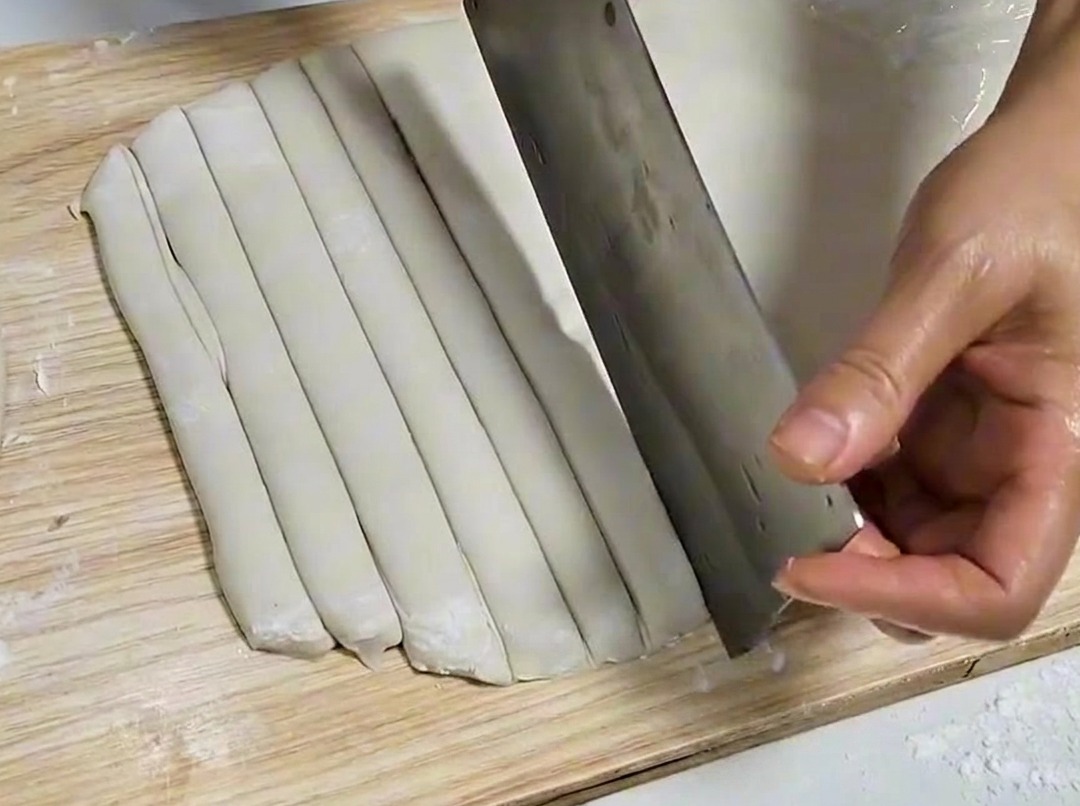
Take your rested, flattened dough sheet and use a cleaver or knife to slice it into uniform strips, each roughly the width of a finger, preparing them for the final stretching process.
Tip: Ensure your knife is sharp for a clean cut so the strips stretch evenly without tearing. - 11Pull and boil the noodles
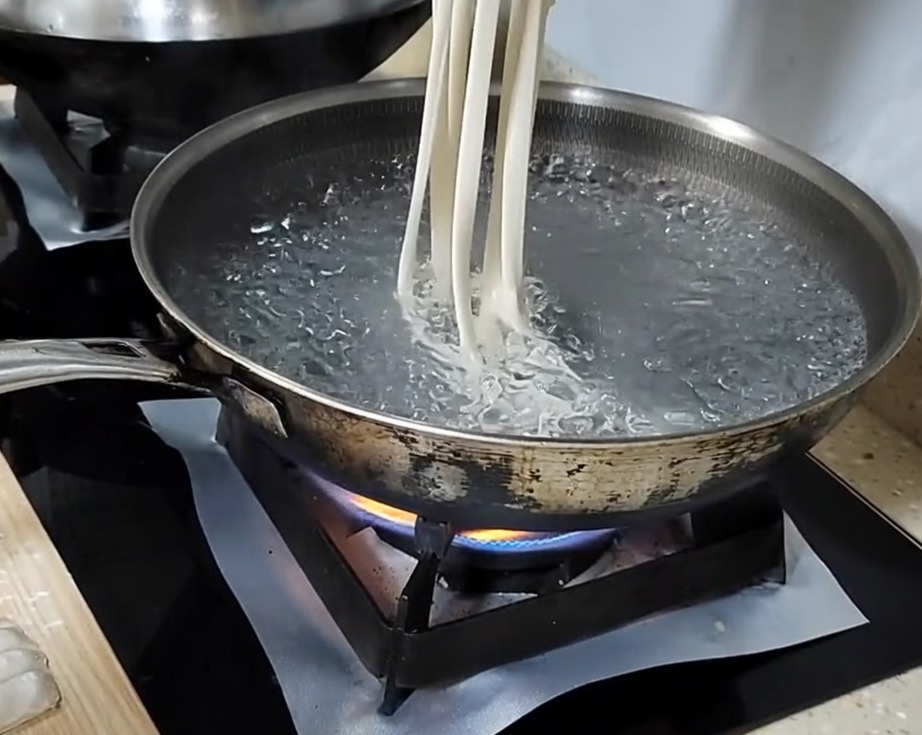
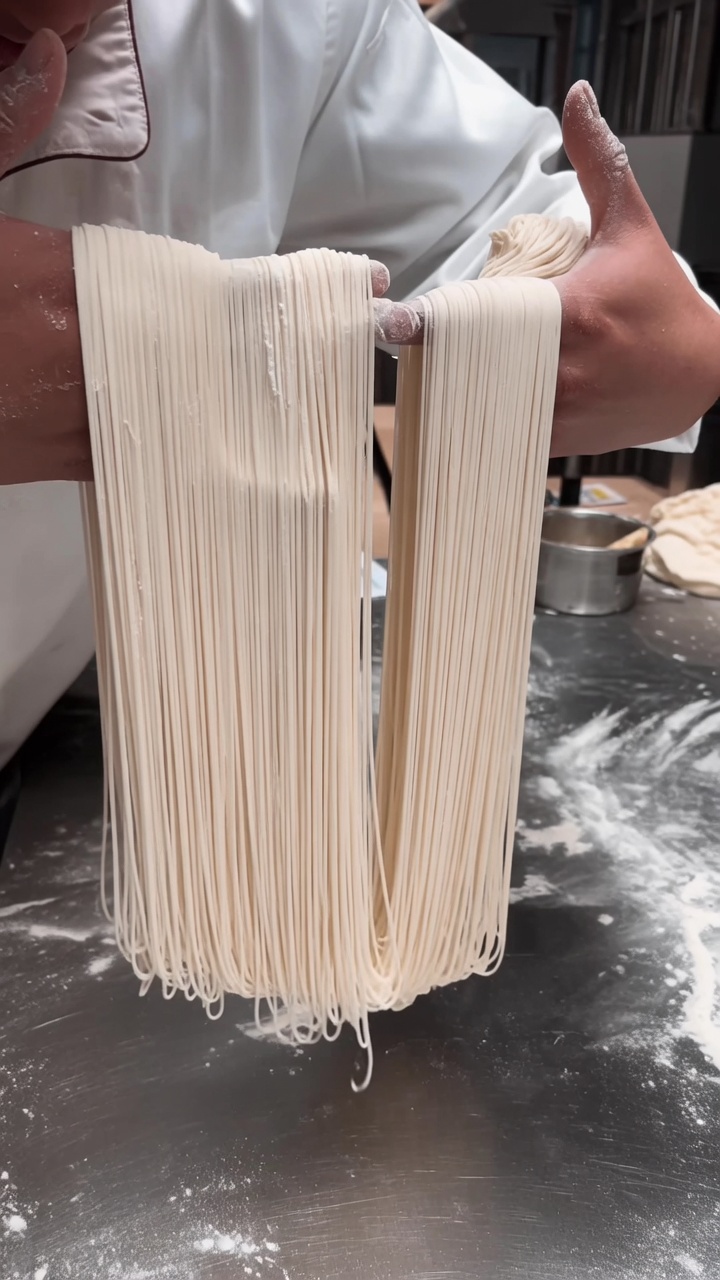
Gently hold both ends of a dough strip and pull carefully to stretch it to your desired length. Immediately drop the freshly pulled noodle into a pot of boiling water and cook until tender.
Tip: Dont rush the pull; steady, even pressure is the key to perfectly stretched ramen noodles. - 12Transfer the noodles
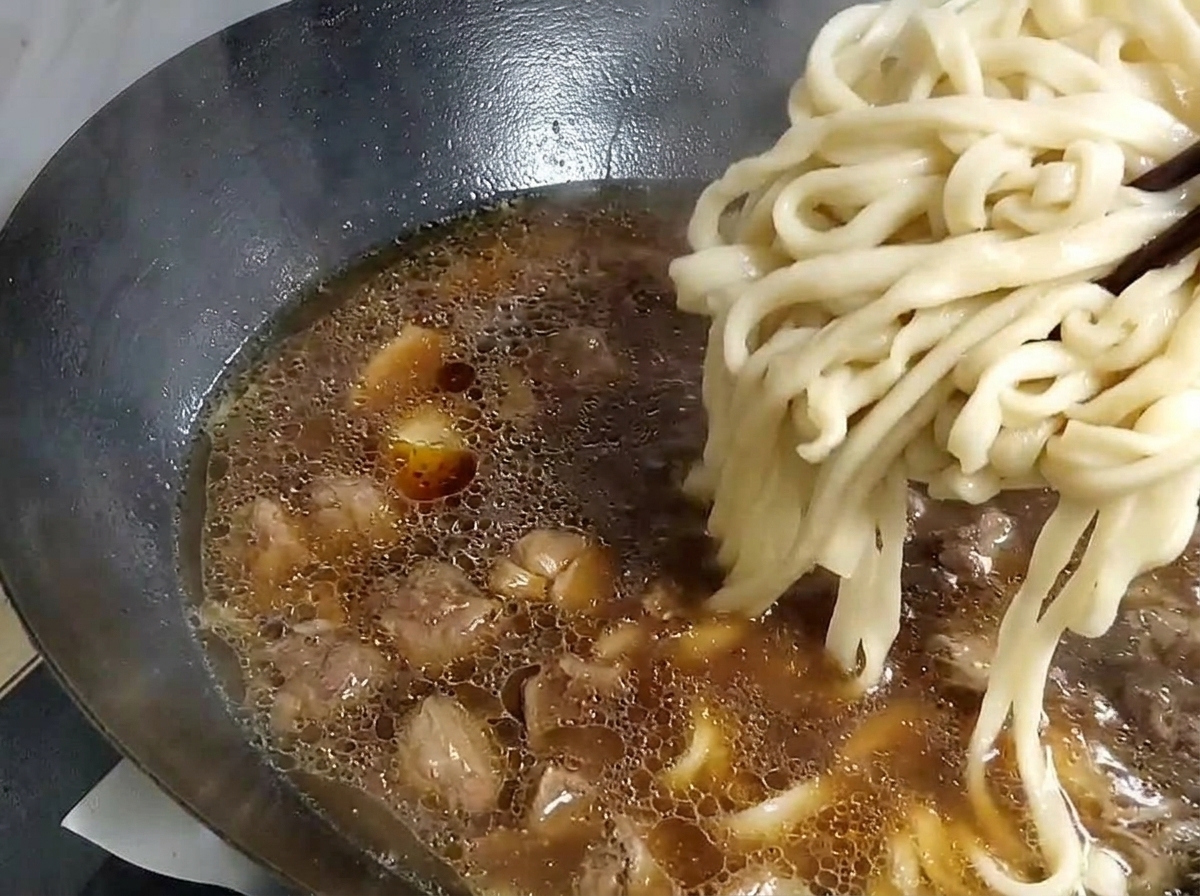
Once the noodles in the clear broth pot are cooked, carefully scoop them out and transfer them directly into the wok containing the prepared soup base and stir-fried ingredients. This ensures the noodles absorb the rich flavors of the broth.
Tip: Be sure to stir the noodles occasionally in the broth pot to prevent them from sticking to the bottom during the boiling process. - 13Add perilla leaves
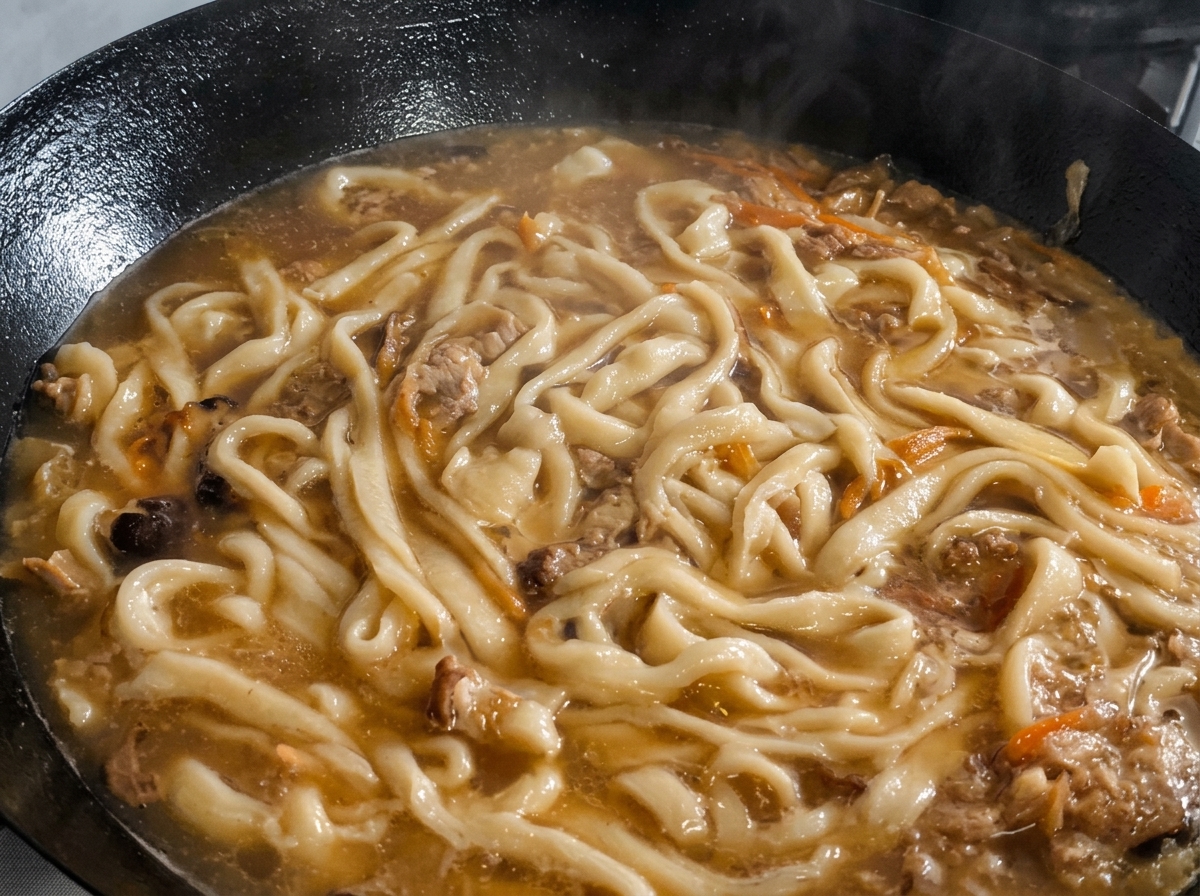
Finally, add the chopped green perilla leaves into the wok with the simmering noodles and soup base. Perilla is the essential soulmate ingredient that gives authentic Wencheng ramen its distinct, fragrant flavor.
Tip: Add the perilla leaves at the very end of cooking to maintain their vibrant color and fresh aroma.