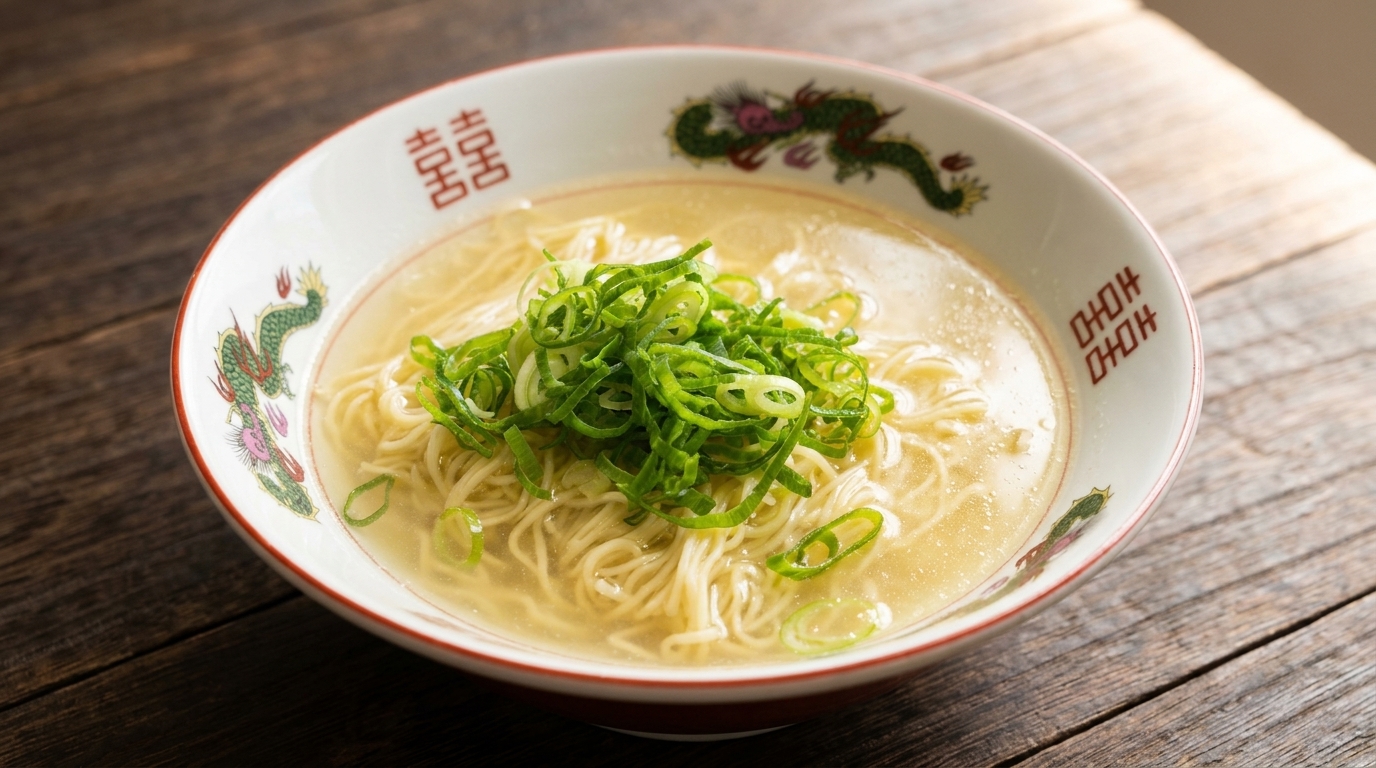
Classic Chicken Shio Ramen (Clear Salt-Based Broth)
A delicate, golden-hued ramen featuring a crystal-clear chicken broth, springy thin noodles, and tender low-temperature chicken chashu for a light yet deeply savory experience.
Shio ramen is the oldest and most fundamental of ramen styles, celebrated for its purity and clarity. Unlike heavier tonkotsu or miso varieties, this version relies on a clean chicken and vegetable simmer paired with a precise salt based seasoning sauce to let the ingredient quality shine. It is the ultimate choice for those who appreciate a refined aromatic broth that warms the soul without being heavy.
Ingredients
- 1.2 kg chicken bones and parts
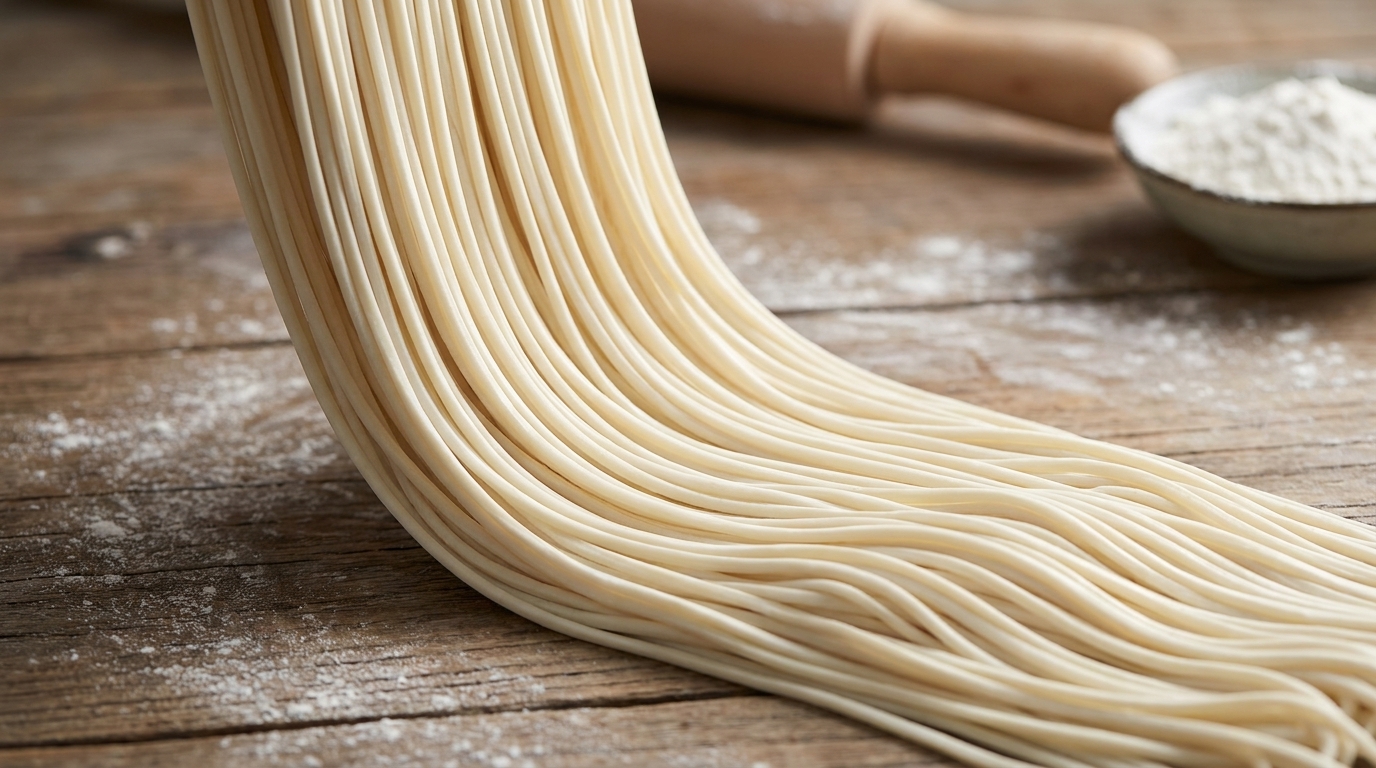
- 200 g fresh thin ramen noodles
- 150 g chicken breast
- 2 tbsp salt-based seasoning sauce (Shio tare)
- 1 whole carrot
- 1 count soft-boiled egg
- 1 tbsp finely chopped green scallions
- to taste cracked black pepper
Instructions
- 1Boil the noodles
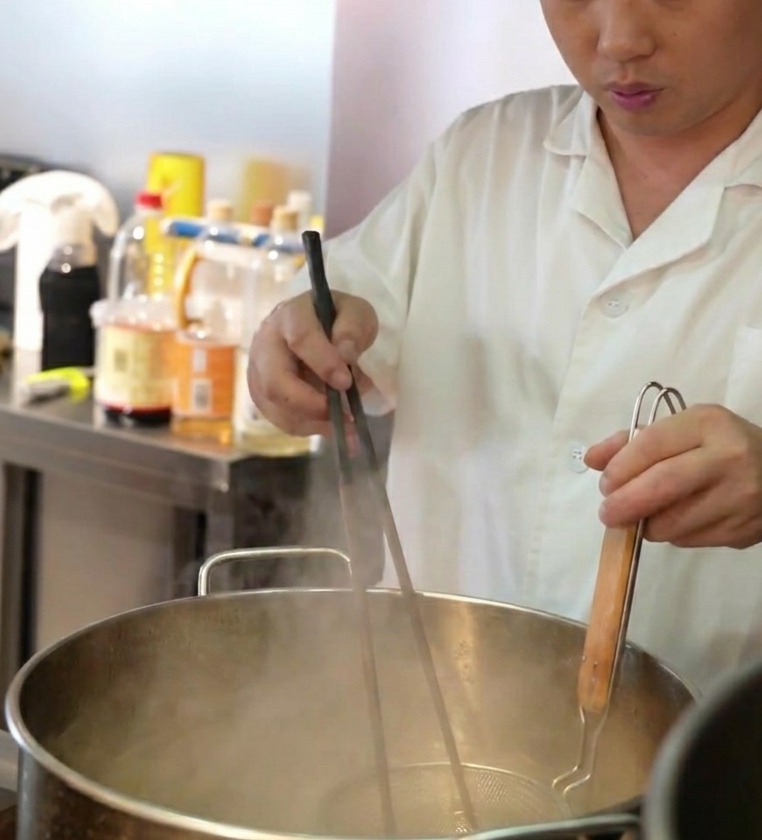
Place the prepared ramen noodles into a large pot of boiling water using a cylindrical mesh strainer. Using a strainer allows for easy removal and prevents the noodles from getting lost in the large pot. Ensure the water is at a rolling boil before adding the noodles to ensure they cook evenly and maintain a springy texture.
Tip: Make sure there is plenty of water in the pot; a higher volume helps maintain the temperature when the cold noodles are added. - 2Stir to prevent clumping
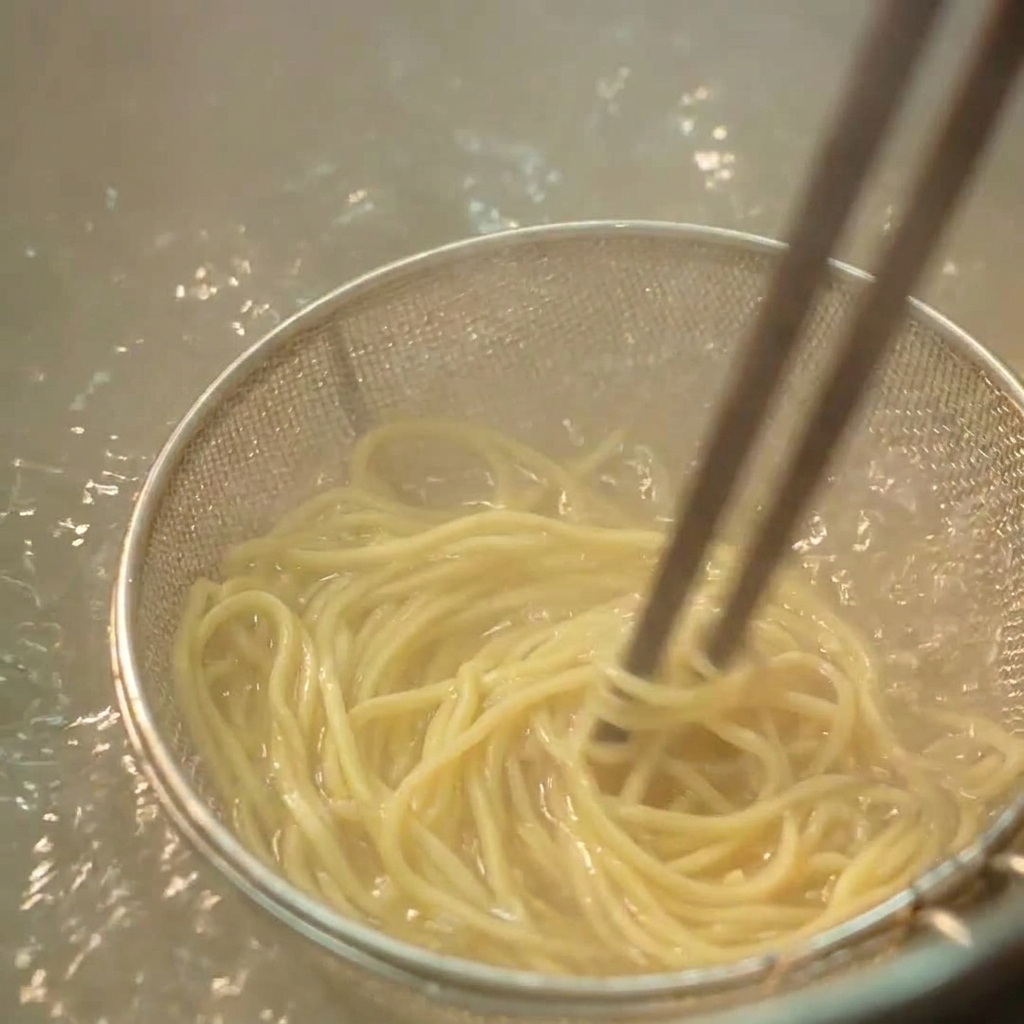
As soon as the noodles are in the water, use long wooden chopsticks to stir them gently inside the mesh strainer. This action separates the strands and prevents them from sticking to each other or to the bottom of the strainer. Continue stirring occasionally throughout the cooking process until the white core of the noodles disappears.
Tip: Keep the heat high so the water continues to bubble, which helps naturally move the noodles around. - 3Simmer the aromatic broth
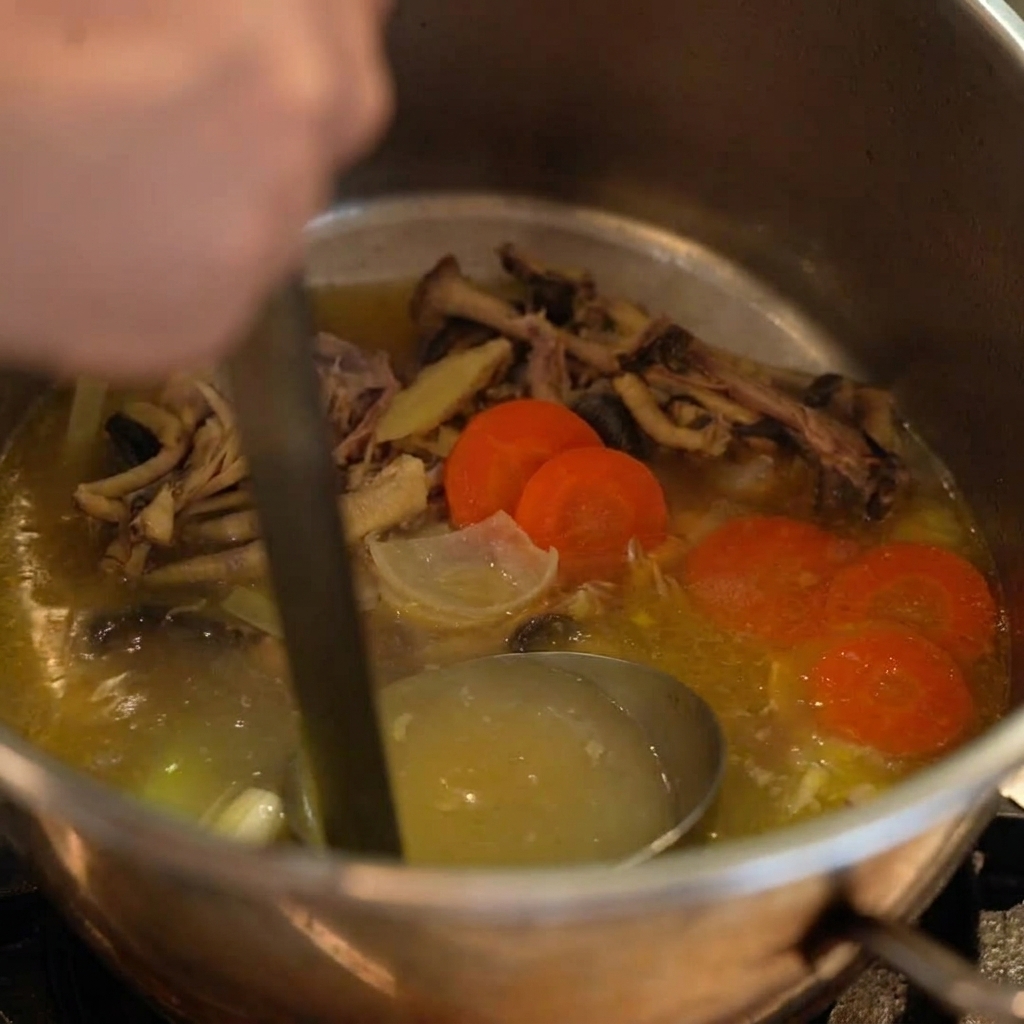
Stir the simmering broth in the large stockpot. The broth is prepared by slow-cooking chicken parts and vegetables like carrots to create a clear, savory, and aromatic base. Regular stirring ensures the flavors are well-distributed and allows you to monitor the clarity and depth of the amber liquid.
Tip: Do not let the broth reach a violent boil; a gentle simmer is key to keeping the liquid clear rather than cloudy. - 4Portion the broth
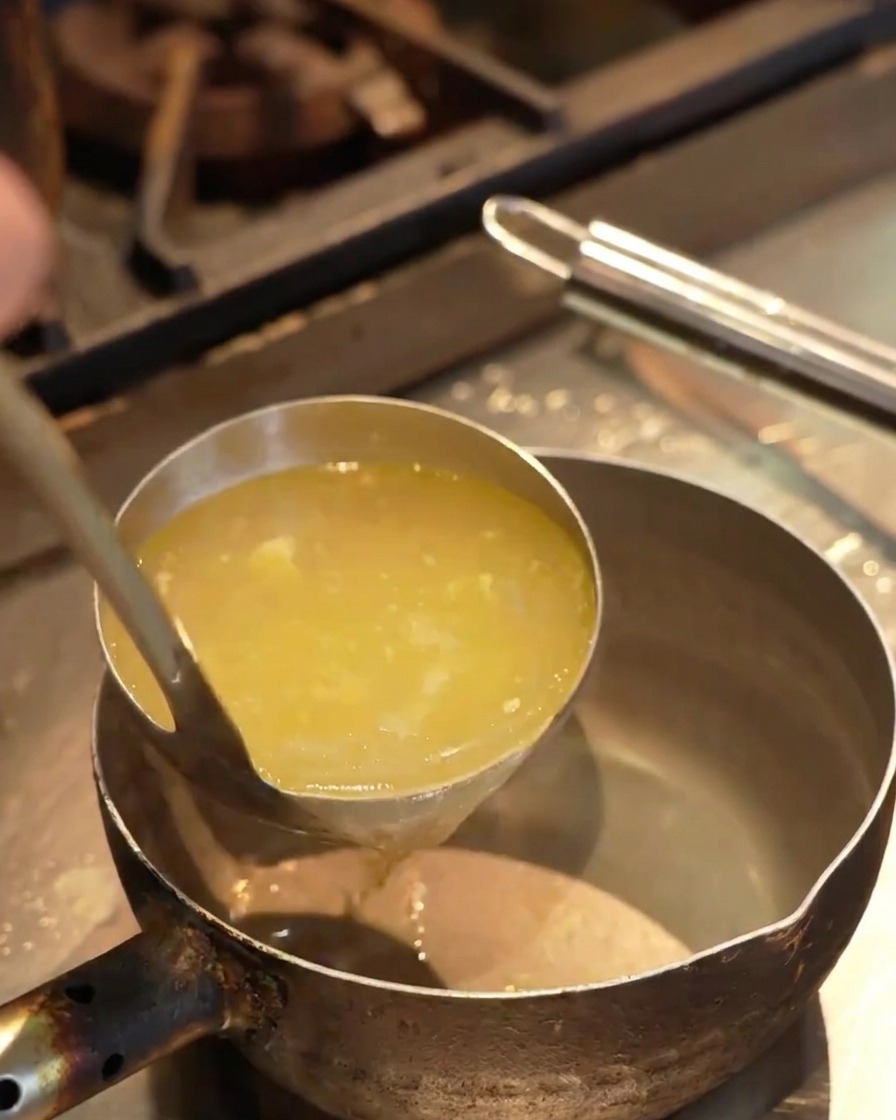
Use a large metal ladle to transfer a portion of the clear yellow broth from the main stockpot into a smaller metal pot. This allows for individual portions to be heated quickly to the perfect serving temperature without overcooking the entire batch of broth in the large pot.
Tip: Portioning out only what you need for the immediate serving helps preserve the delicate aromatics of the Shio broth. - 5Heat the broth to a boil
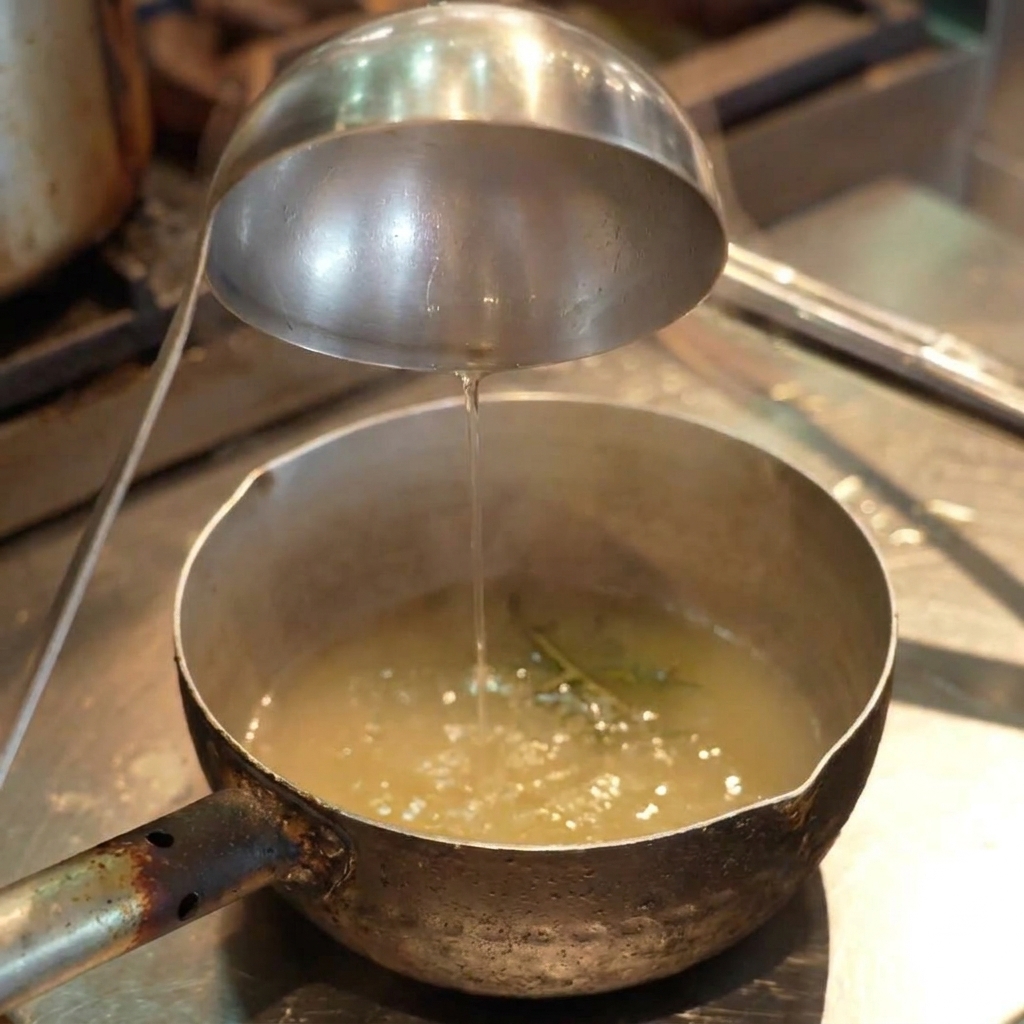
Place the small metal pot containing the portioned broth over a high gas flame. Heat it until the liquid is rapidly bubbling. It is crucial that the broth is piping hot when it is poured into the bowl to ensure the final dish stays warm while being eaten.
Tip: Wait for a full boil rather than just simmering to ensure the temperature is high enough to blend with the room-temperature sauce. - 6Prepare the bowl with salt tare
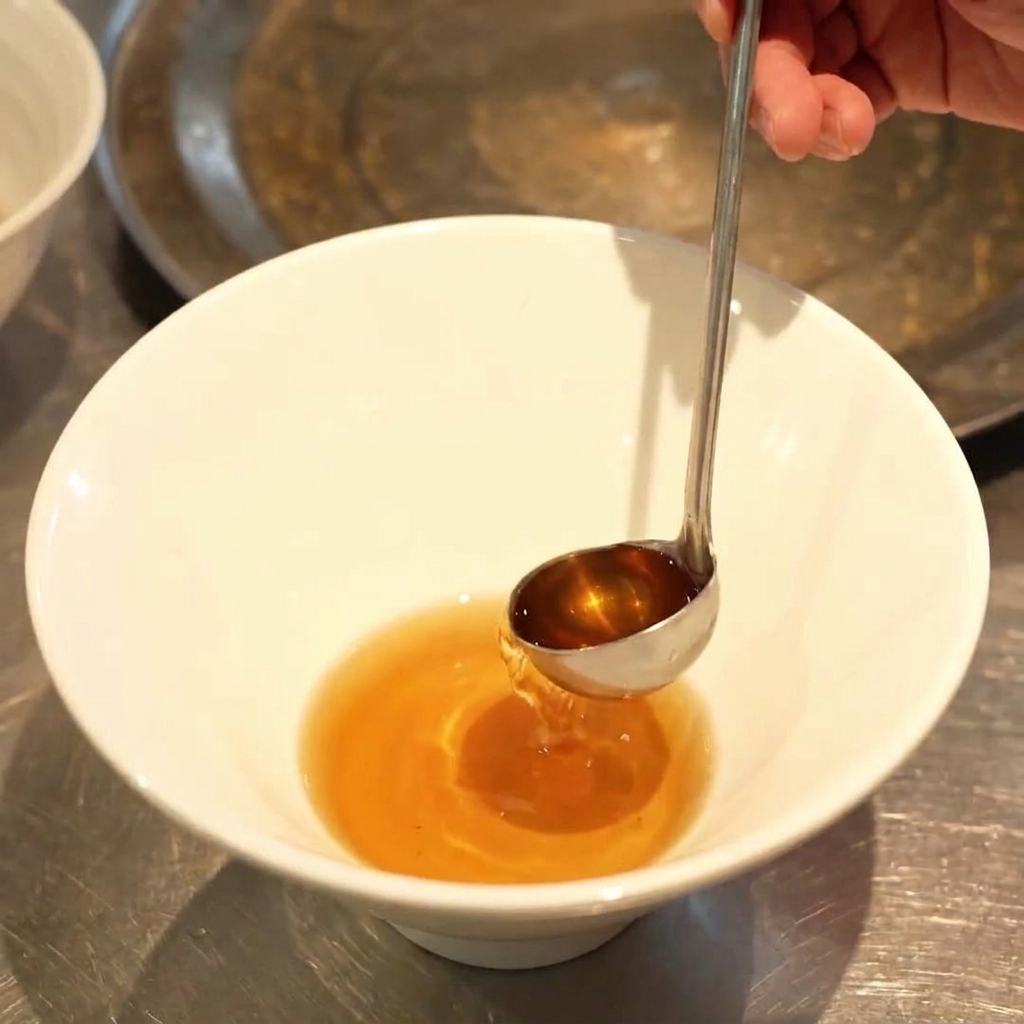
Begin the assembly by pouring two scoops of the amber-colored salt-based seasoning sauce, known as tare, into the bottom of a clean white serving bowl. This tare is the soul of the dish, providing the essential salinity and umami that defines the Shio Ramen flavor profile.
Tip: Pre-warming the serving bowl with hot water before adding the tare will help keep the finished ramen hot for longer. - 7Combine the broth and tare
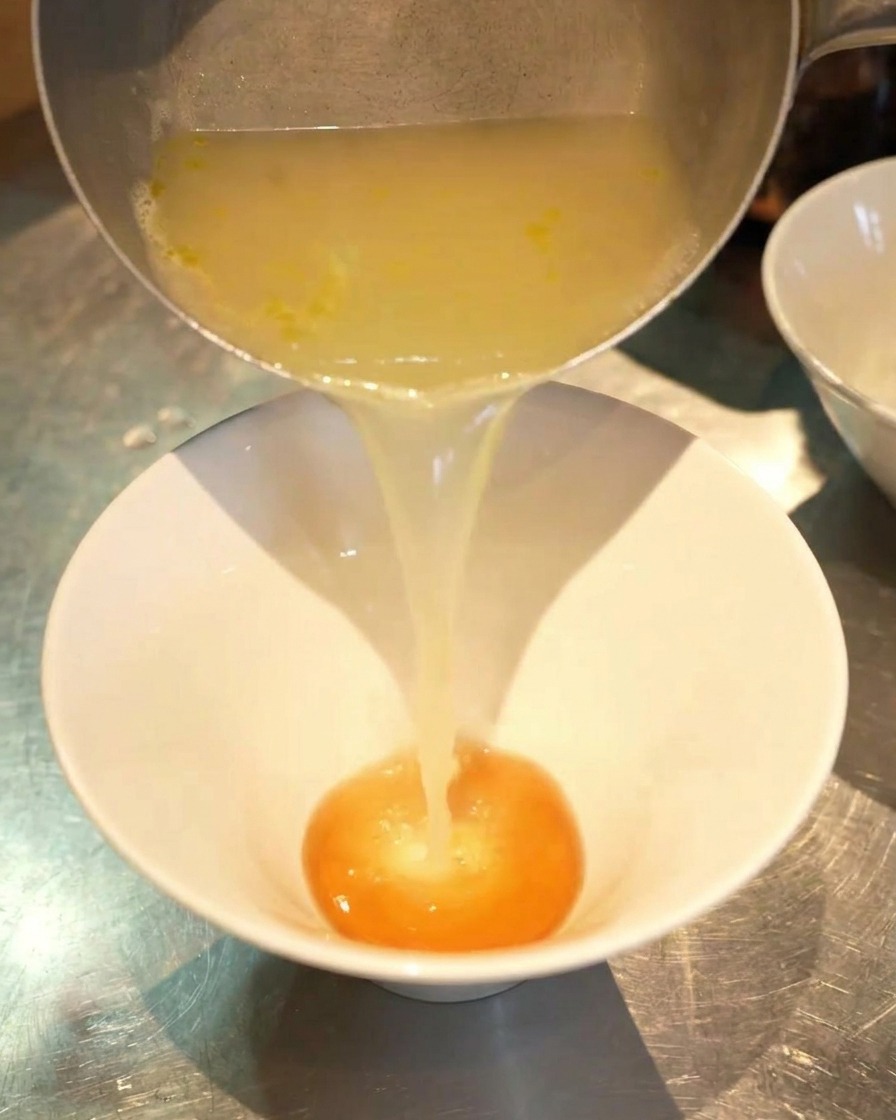
Carefully pour the steaming hot chicken broth from the small pot into your pre-warmed serving bowl. As the clear liquid merges with the salt-based seasoning sauce (tare) at the bottom, it creates a balanced, savory base for the ramen with a beautiful amber clarity.
Tip: Pouring from a slight height helps the broth and tare mix naturally, but move slowly to avoid creating too many bubbles on the surface. - 8Drain the noodles
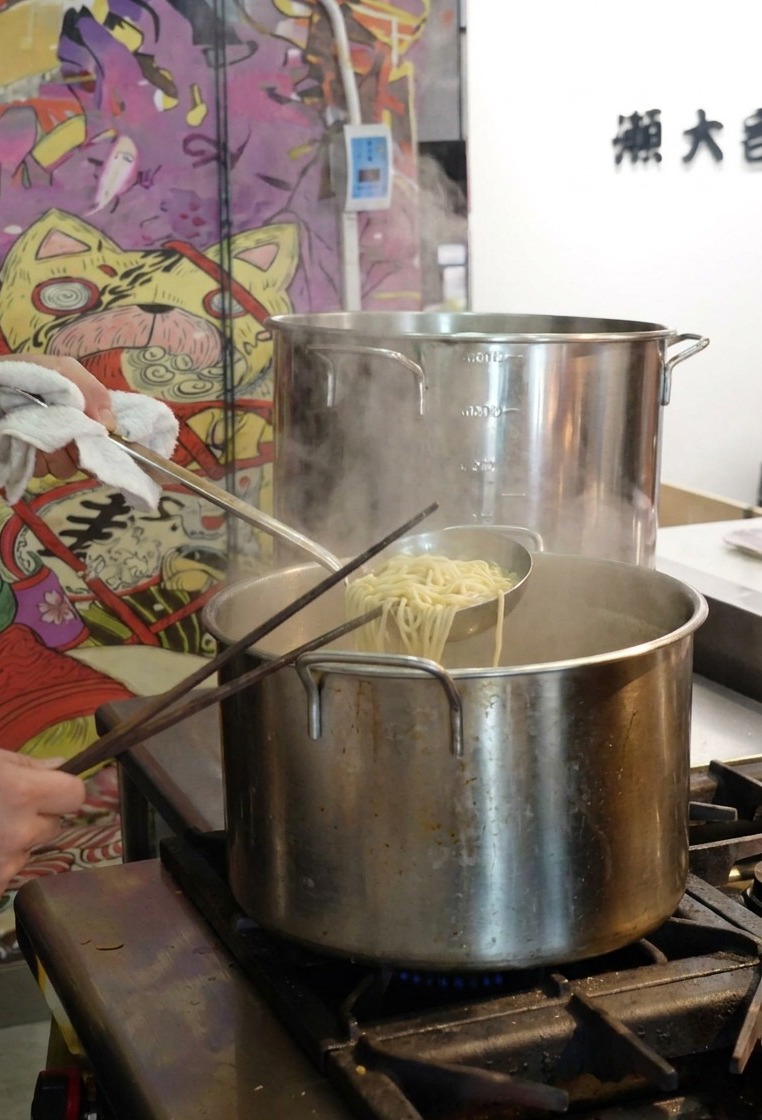
Once the noodles are cooked and the white core has disappeared, lift them out of the boiling water using a strainer. It is crucial to shake off all excess cooking water, as any remaining starch water will dilute the delicate flavor of the Shio broth.
Tip: A firm, snapping motion with the strainer ensures the water trapped between the noodle strands is completely removed. - 9Add noodles to the bowl
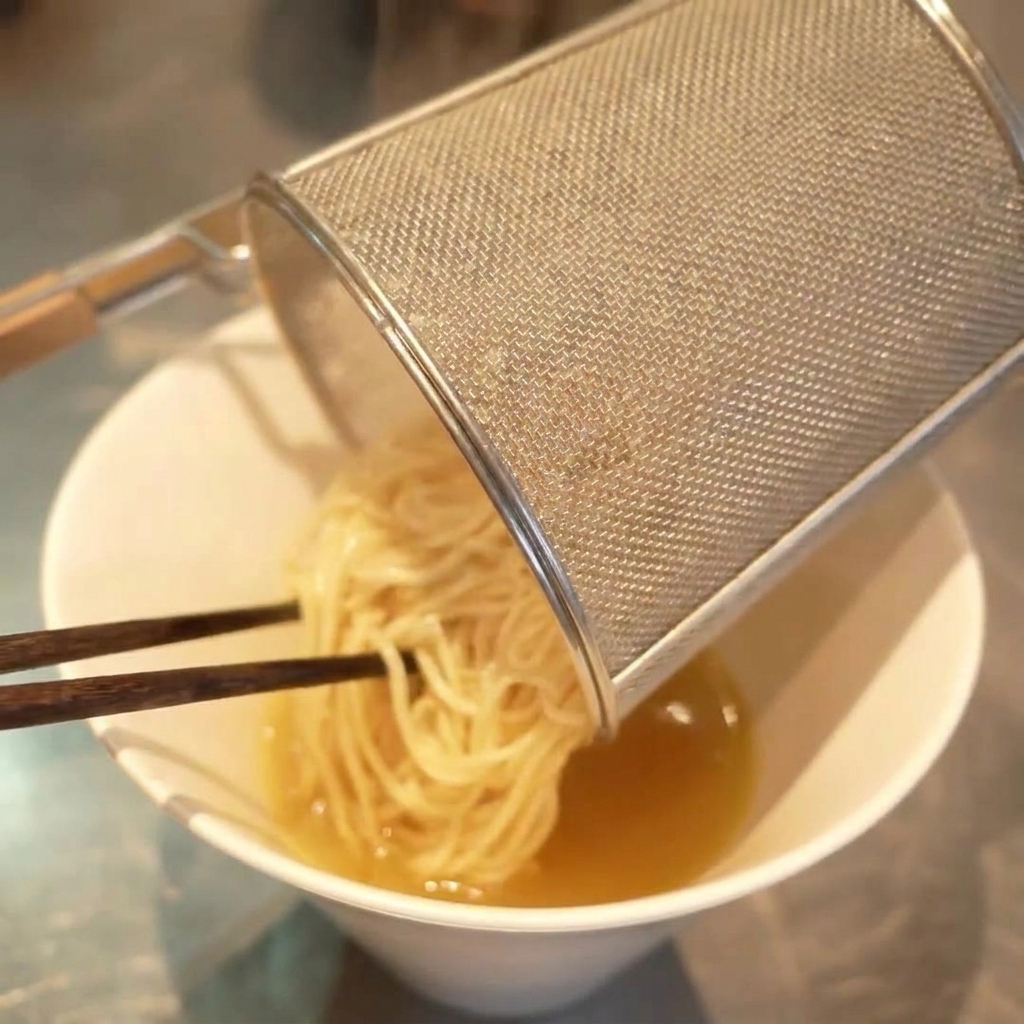
Gently drop the well-drained ramen noodles into the bowl of hot broth. Placing them in one smooth motion helps maintain their texture and prevents the broth from splashing against the sides of the bowl.
Tip: Work quickly at this stage to ensure the noodles and broth are served as hot as possible. - 10Align and fold the noodles
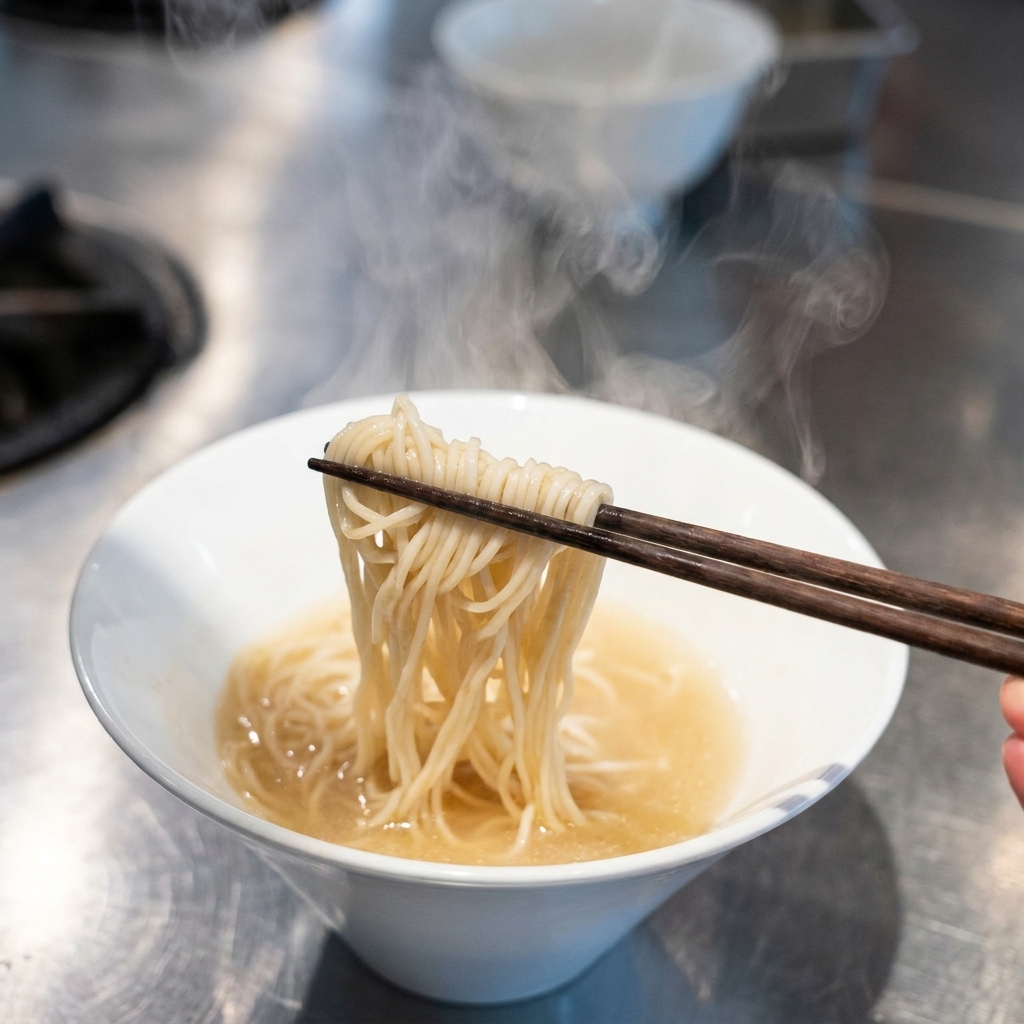
Use chopsticks to lift a bundle of noodles and fold them over themselves within the broth. This technique creates a neat professional presentation that ensures the noodles are evenly distributed and easier for the diner to pick up.
Tip: Lifting the noodles slightly out of the broth before folding helps align the strands into a beautiful parallel arrangement. - 11Slice the chicken chashu
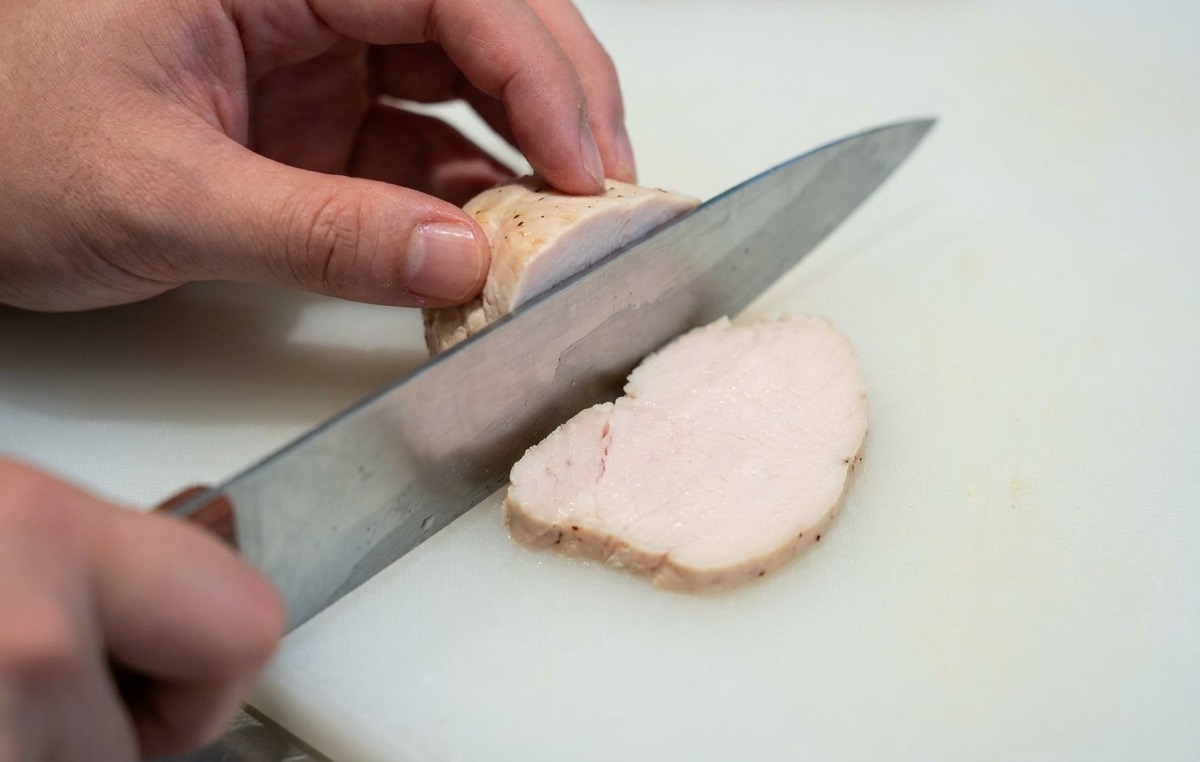
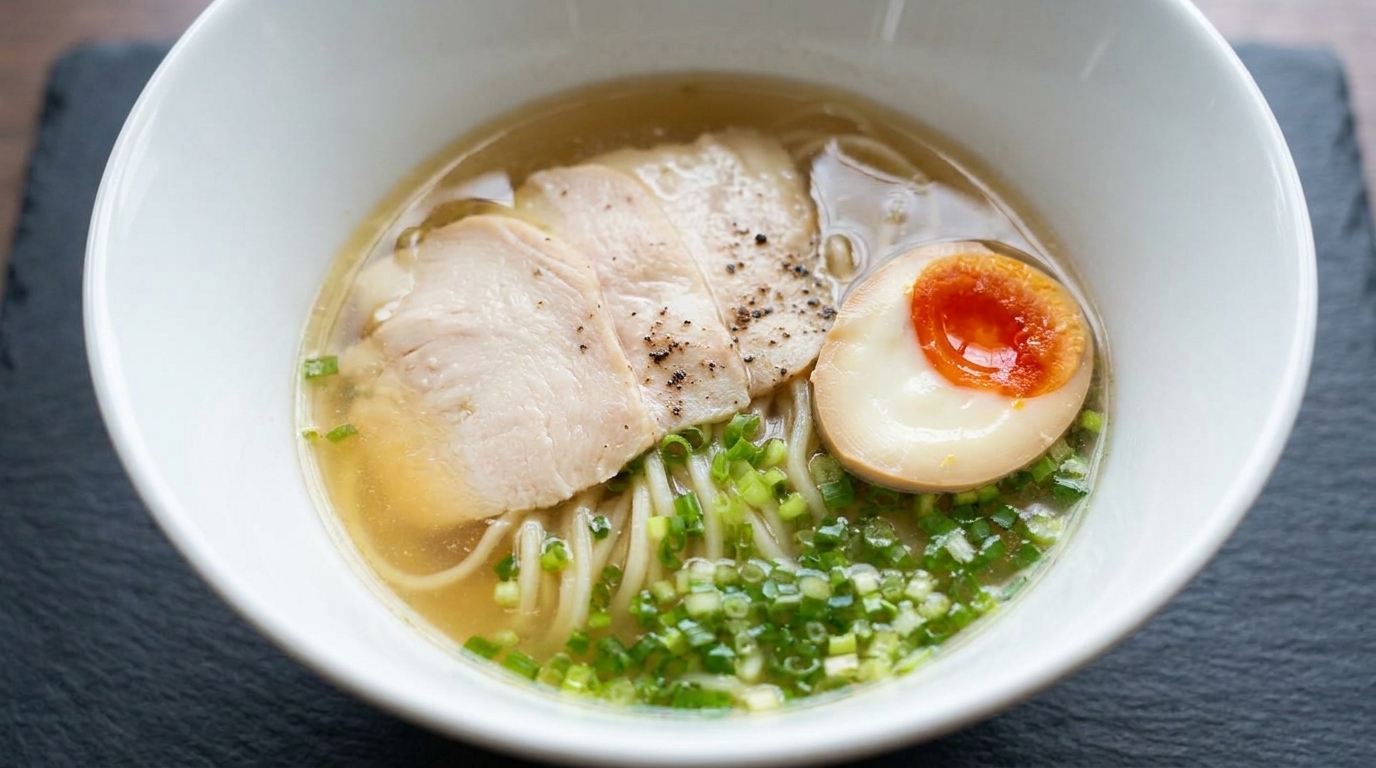
Place the low temperature cooked chicken breast on a cutting board and slice it into thin even pieces. This cooking method preserves the moisture in the meat, resulting in a tender and silky texture that complements the light Shio broth.
Tip: Ensure your knife is very sharp to get clean thin slices without tearing the delicate meat. - 12Arrange the chicken chashu
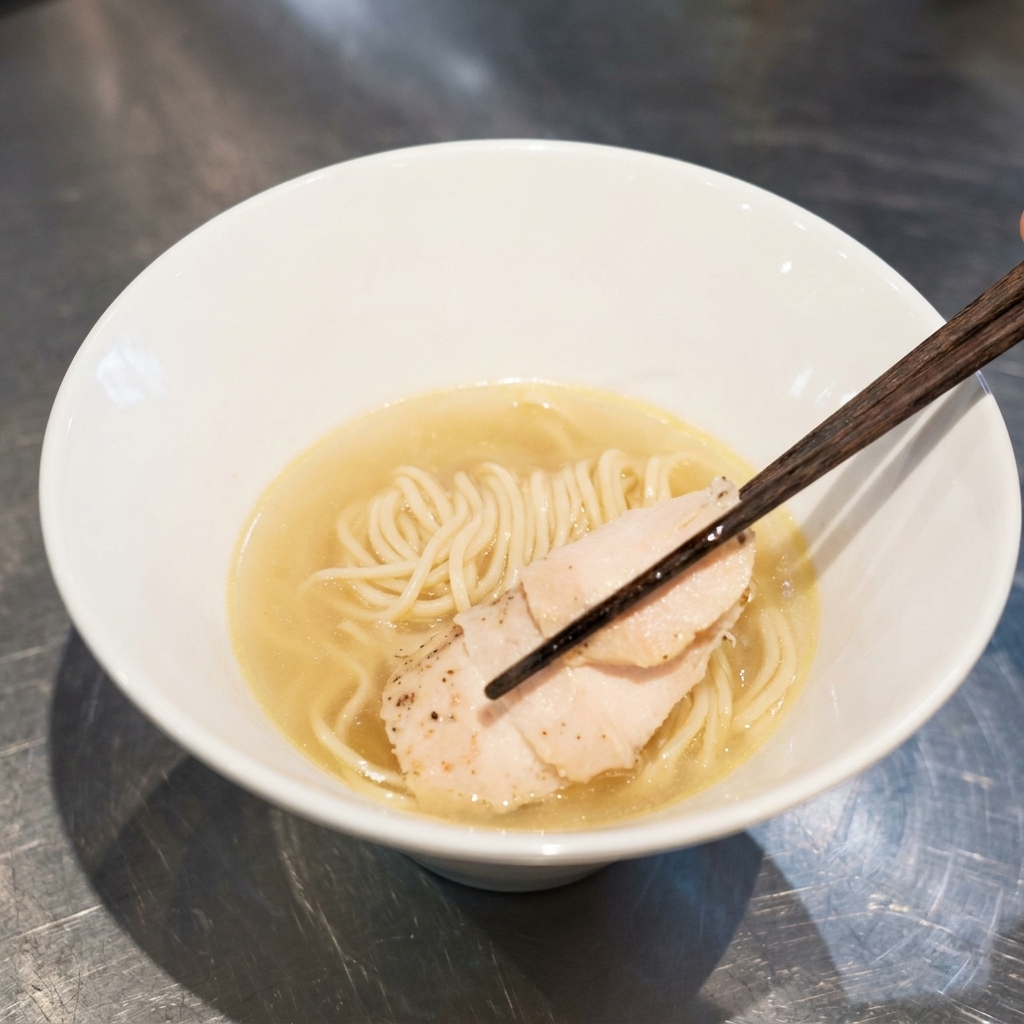
Carefully arrange the slices of chicken chashu on top of the folded noodles. Fanning them out slightly creates a visually appealing topping that stays partially above the broth, highlighting the quality and texture of the meat.
Tip: Place the chicken slices so they overlap slightly, creating a focused center for the presentation. - 13Garnish with green scallions
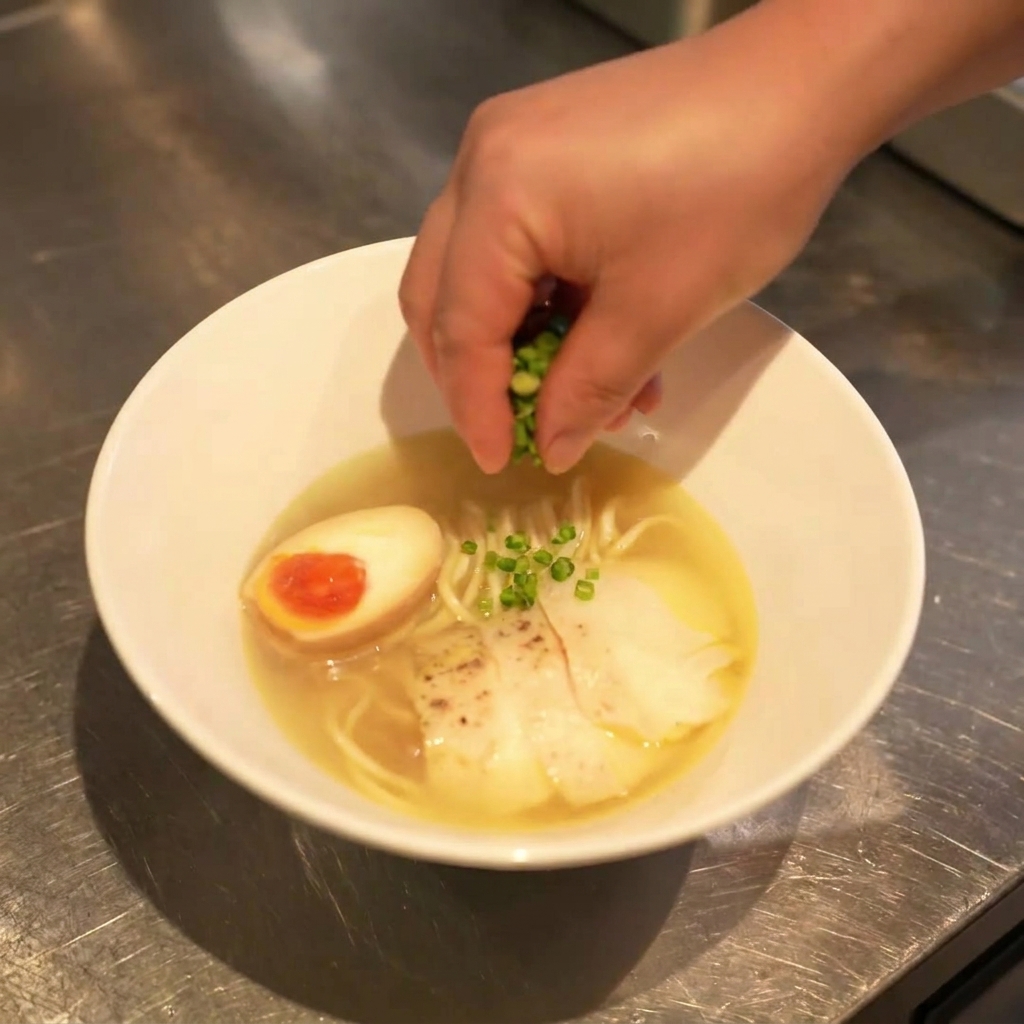
Finish the dish by sprinkling a generous handful of finely chopped green scallions over the center. The fresh fragrance and vibrant green color provide the perfect aromatic contrast to the golden chicken broth.
Tip: For the best texture and appearance, use only the green parts of the scallion and slice them into very thin, uniform rounds.