Authentic Japanese Shoyu Ramen
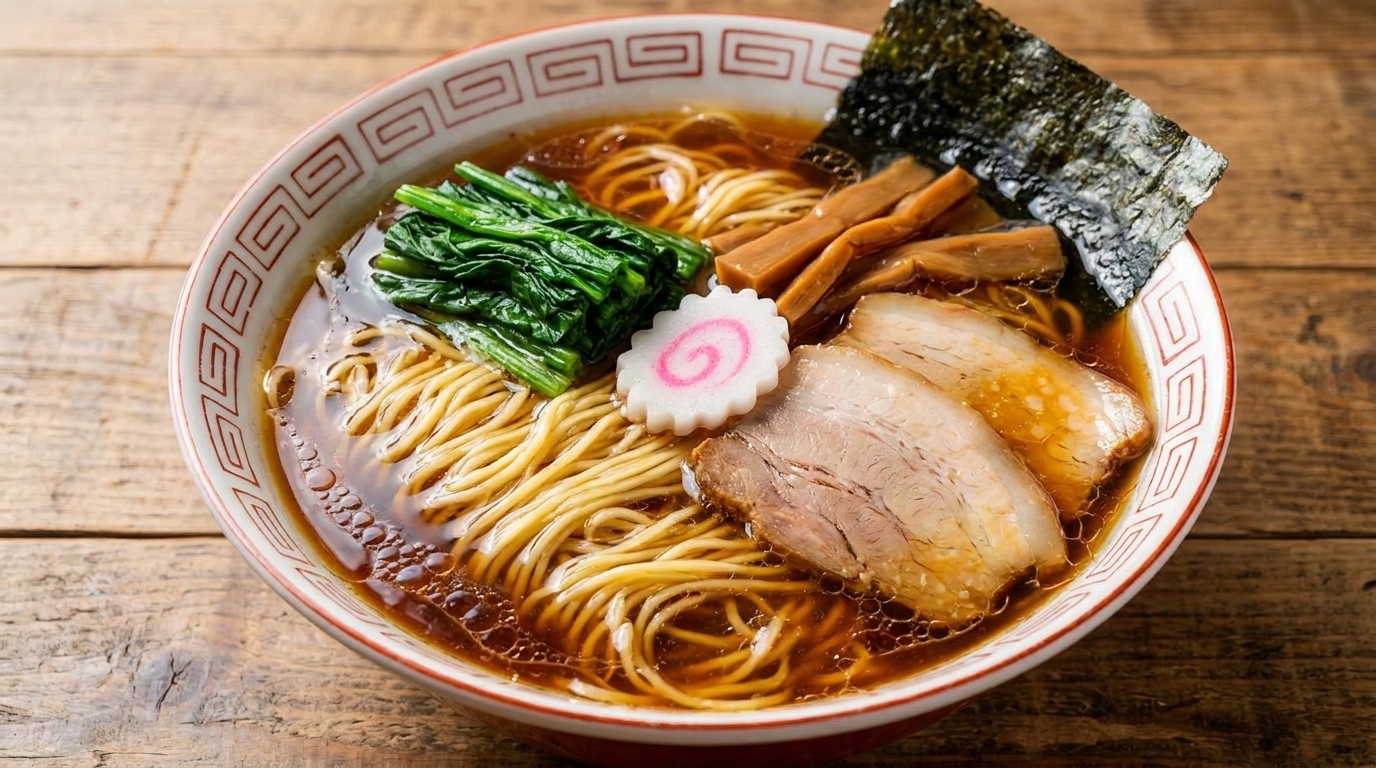
Master the art of the Tokyo-style Shoyu Ramen — a clear, amber-colored chicken broth balanced with an umami-rich soy sauce tare and tender pork chashu.
Shoyu ramen is the most traditional style of ramen found in Tokyo, defined by its clear, brown broth and soy sauce seasoning. This recipe emphasizes the balance between a delicate, slow-simmered chicken stock and a complex seasoning base known as tare. It is a soul-warming dish that showcases the elegance of simple, high-quality ingredients working in harmony.
Ingredients
- 300 g fresh thin ramen noodles
- 500 ml clear chicken broth
- 3 tbsp soy sauce ramen tare
- 2 slices pork chashu
- 1 tbsp finely chopped green onions
- 30 g blanched spinach
- 20 g seasoned bamboo shoots
- 1 slice narutomaki fish cake
- 1 sheet nori seaweed
- to taste salt
Instructions
- 1Add the ramen tare
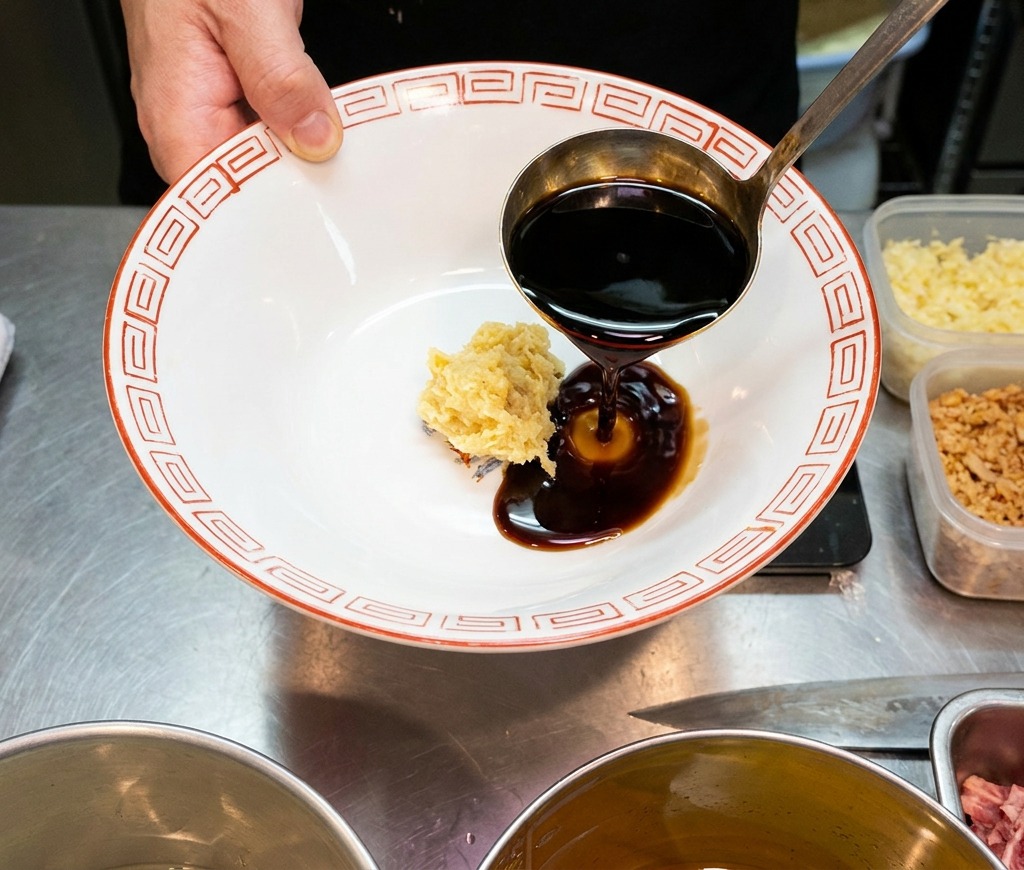
Pour a ladle of the dark soy-based tare sauce into the bowl over the prepared aromatics. This concentrated seasoning blend provides the primary saltiness and deep umami profile that defines the core flavor of a Shoyu ramen soup base.
Tip: Pour the tare directly onto the grated aromatics to help release their oils and fragrances through the heat of the sauce. - 2Season the ramen base
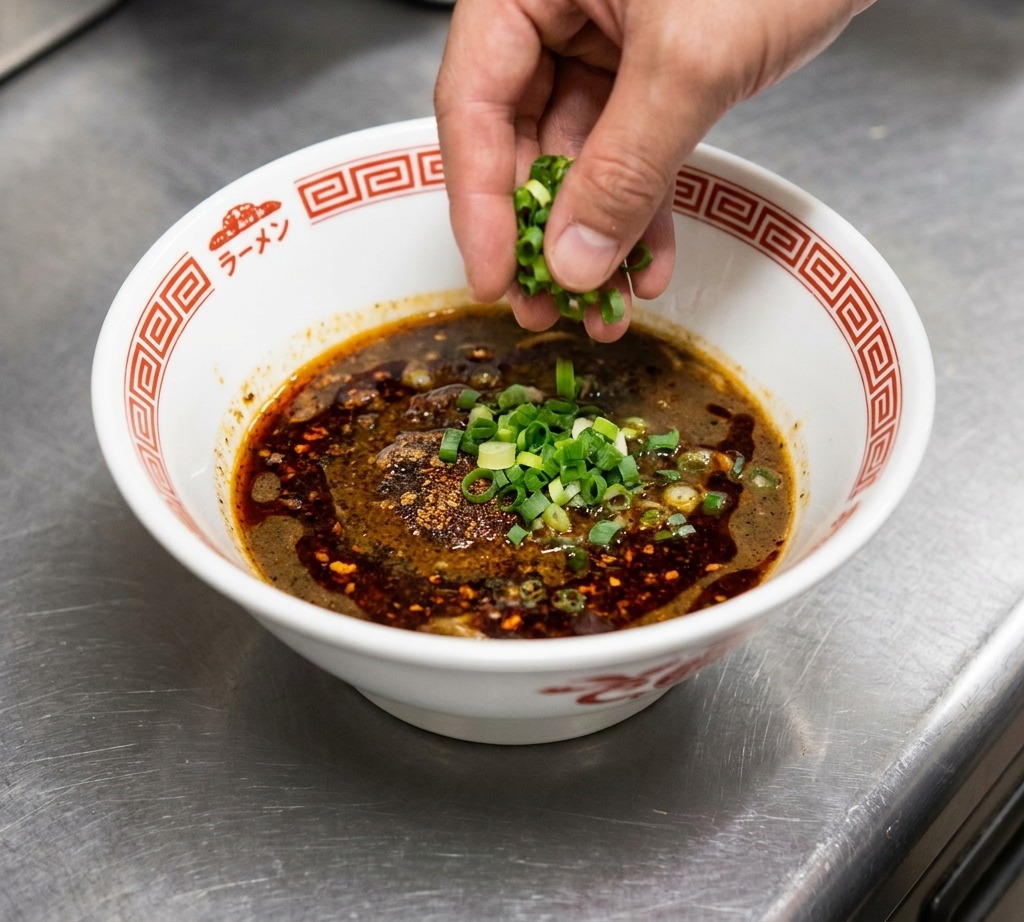
Add the finely chopped green onions and a pinch of salt to the tare in the bowl. These fresh aromatics will infuse the base and release their fragrance once the hot broth is added.
Tip: Maintain the broth just below boiling point to ensure it is hot enough to melt the tare without scorching the delicate aromatics. - 3Pour in the hot broth
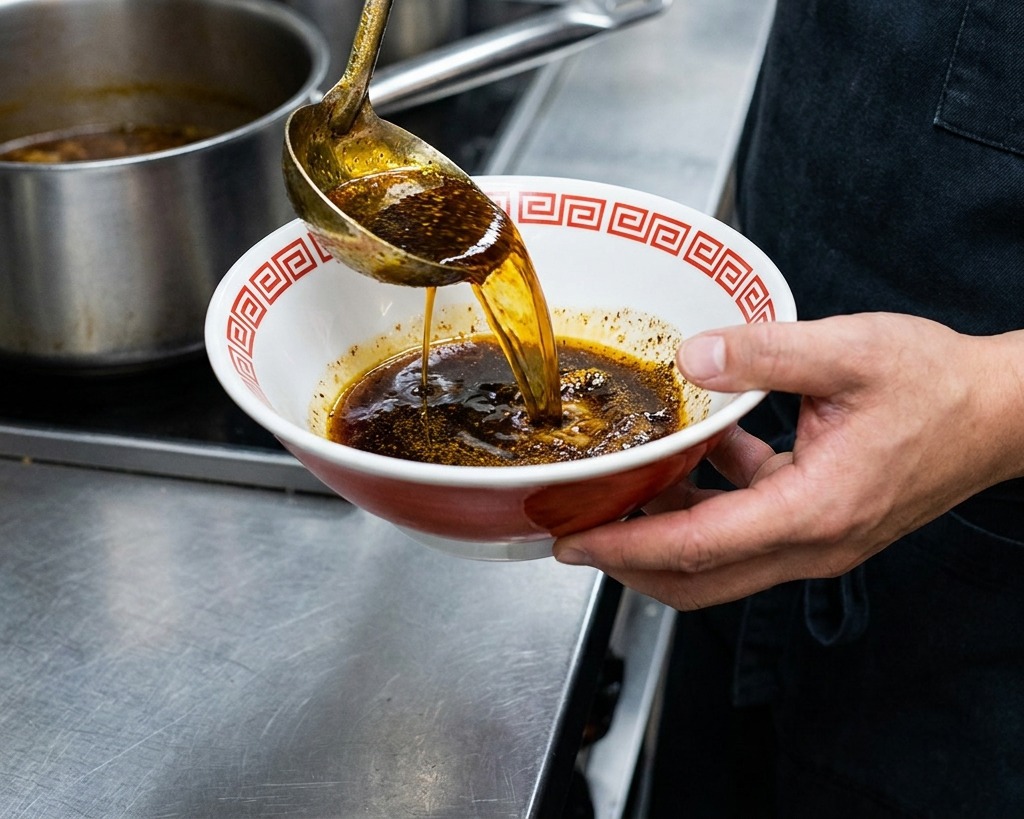
Ladle the piping hot clear chicken broth into the seasoned bowl. The heat of the broth will instantly emulsify the tare and aromatics creating a harmonious and savory soup base.
Tip: Use the green parts of the scallions for a milder fresher aroma that will not overwhelm the subtle notes of the chicken broth. - 4Boil the ramen noodles
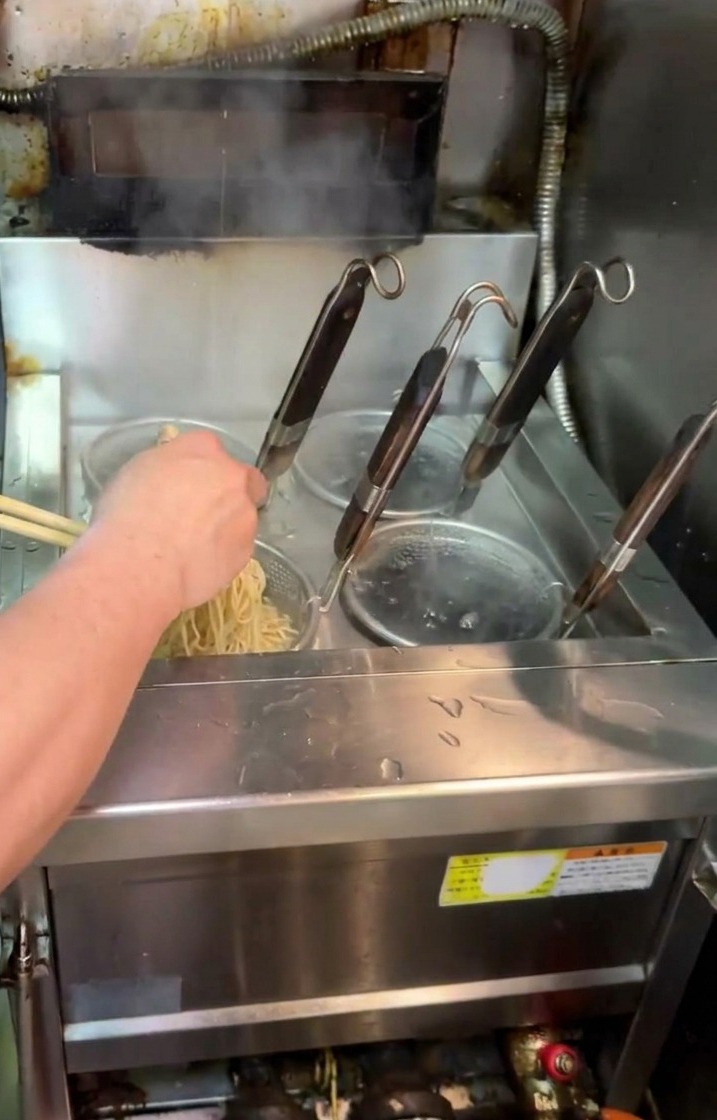
Submerge the thin ramen noodles in a pot of boiling water. Use chopsticks to gently stir and separate the strands, ensuring they cook evenly and maintain a chewy texture.
Tip: Use a firm, snapping motion with your wrist to flick the water out of the mesh effectively before transferring the noodles to the bowl. - 5Drain the noodles thoroughly
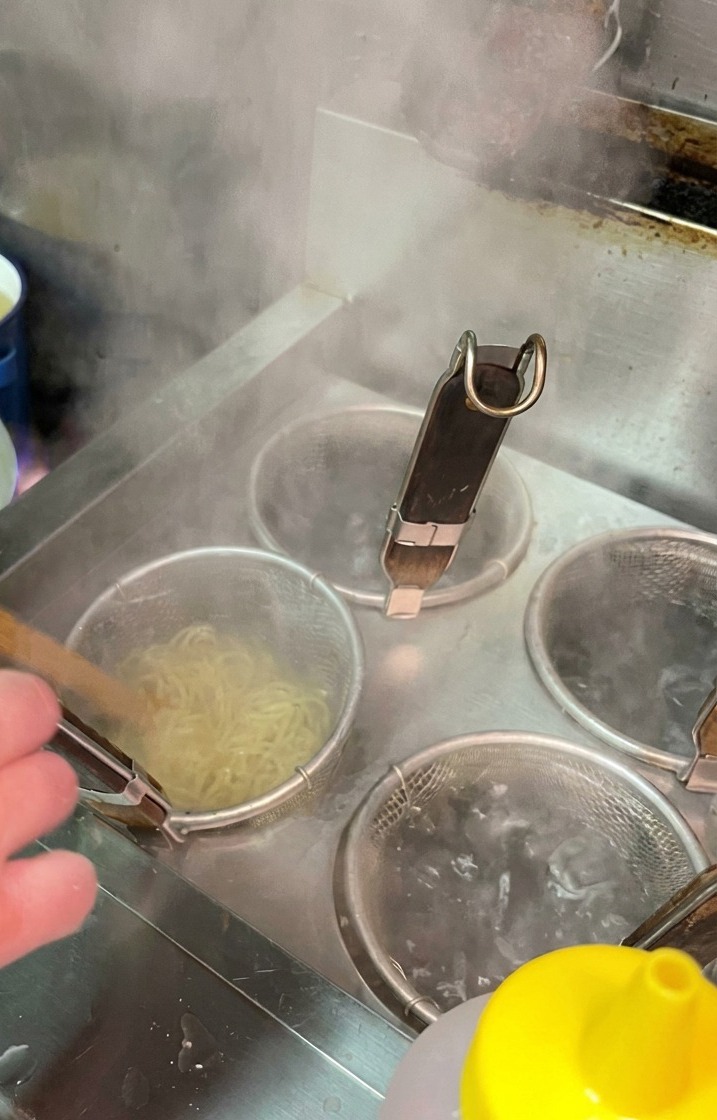
Lift the mesh strainer from the boiling water and shake it vigorously with a firm snapping motion. Removing all excess water is critical to ensure the soup base remains concentrated and flavorful.
Tip: Watch the timer closely; thin ramen noodles cook very quickly and should be removed while they still have a slight al dente bite. - 6Transfer noodles to the broth
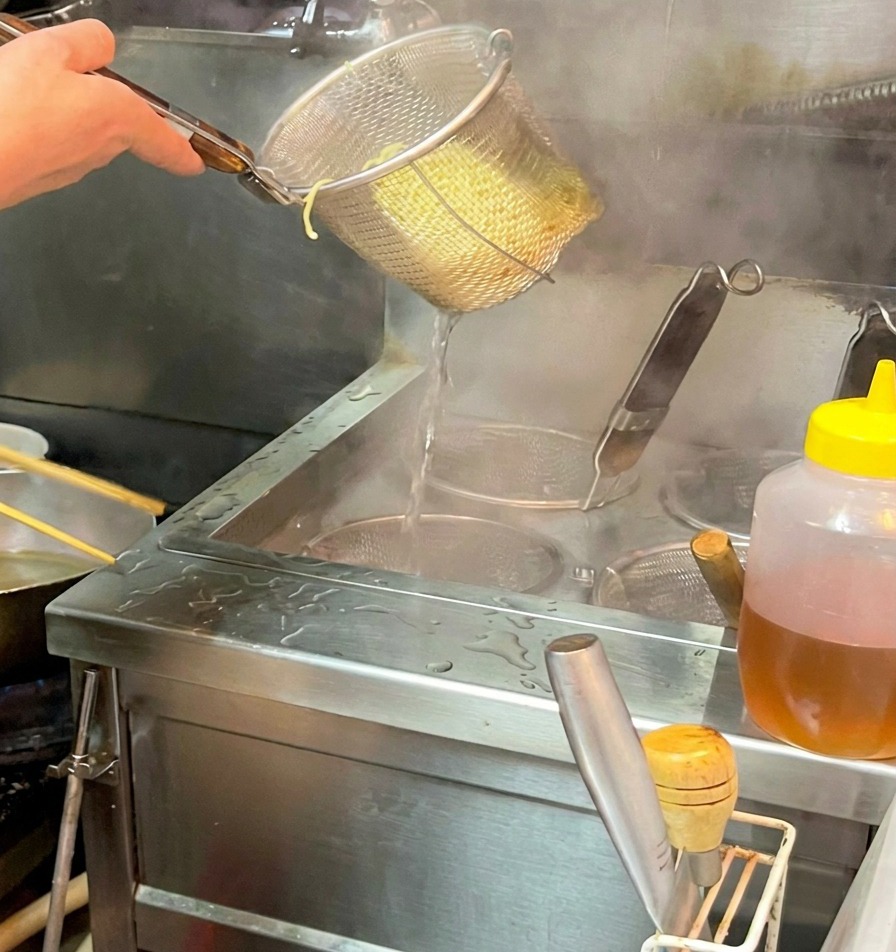
Once the ramen noodles have reached the desired texture, lift the wire strainer from the boiling water and shake it firmly to remove all excess moisture. Carefully release the cooked noodles into the center of the bowl containing the prepared shoyu broth. Ensuring the noodles are well-drained prevents the soup from becoming diluted and preserves the integrity of the seasoned base.
Tip: Give the strainer a few vigorous shakes; any residual cooking water clinging to the noodles can make the final broth taste starchy. - 7Add chashu to the bowl
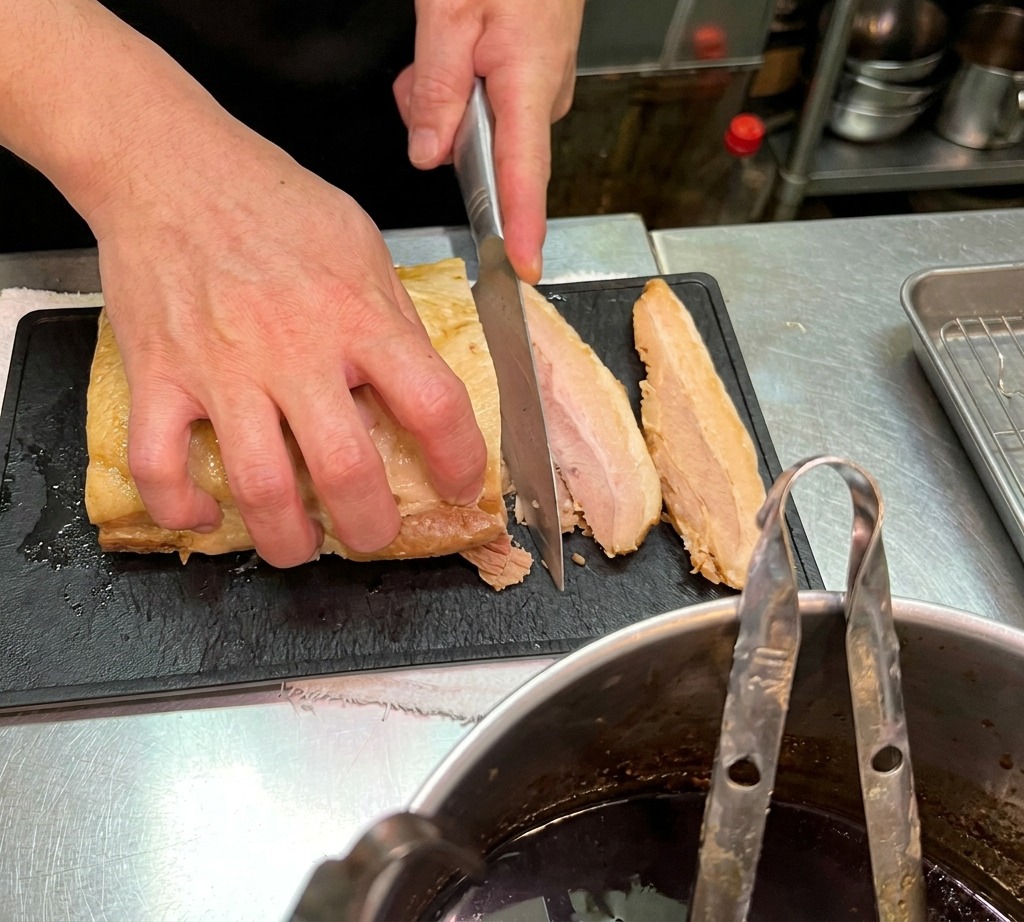
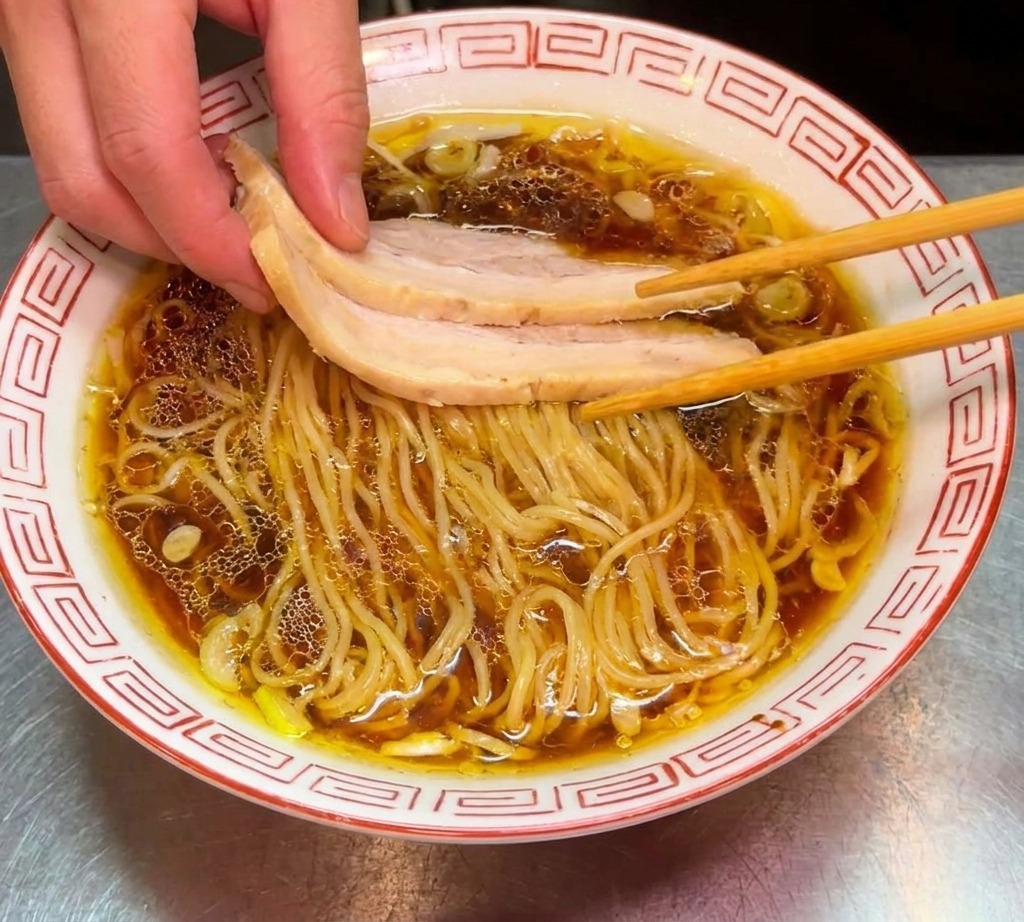
Using chopsticks, carefully place two succulent slices of pork chashu onto the surface of the noodles. Position them slightly to one side to leave room for the remaining garnishes.
Tip: For the cleanest slices, use a long, smooth drawing motion with your knife rather than a sawing motion. - 8Garnish with blanched spinach
Add a small neat bundle of blanched green spinach to the bowl next to the pork. Ensure the spinach is well drained so it does not release extra moisture into the seasoned broth.
Tip: If the spinach bundle is too large use your chopsticks to gently tuck the edges under the surface of the noodles for a tidier look. - 9Add bamboo and narutomaki
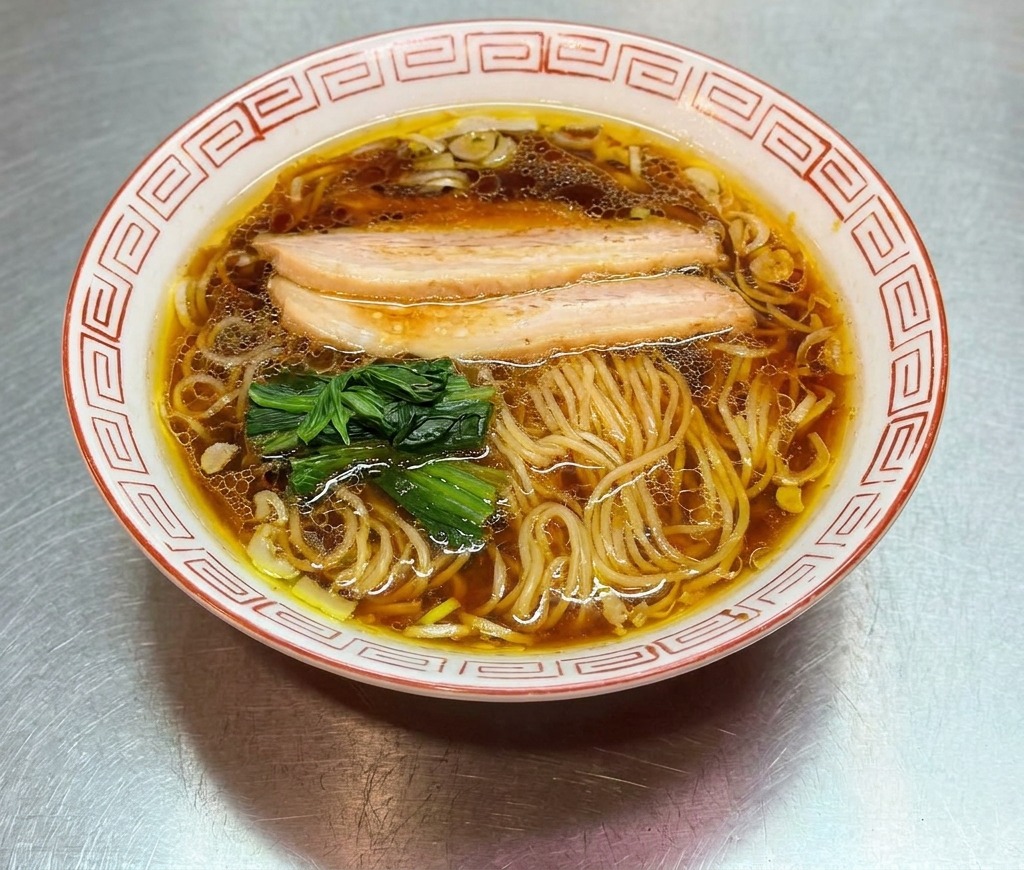
Arrange seasoned bamboo shoots and a decorative slice of pink swirled narutomaki fish cake on the surface. These traditional toppings provide contrasting textures and visual interest.
Tip: Seasoned bamboo shoots can be quite salty so place them in a single cluster to allow the diner to mix them into the broth as they please. - 10Finish with nori seaweed
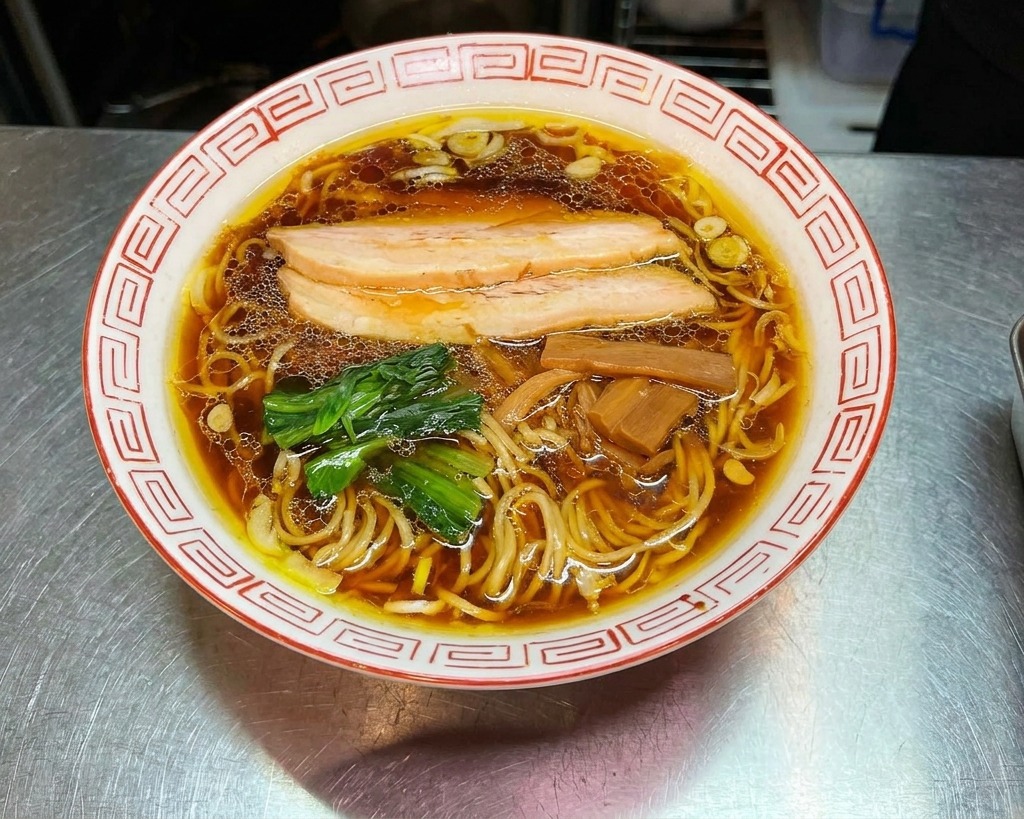
Tuck a rectangular sheet of dried nori seaweed into the side of the bowl. The nori adds a subtle oceanic aroma and completes the classic presentation of a Japanese Shoyu ramen.
Tip: Add the nori sheet just before serving to ensure it retains its crisp texture and toasted aroma.