Dry-Tossed Wonton Noodles
Sesame Chili Sauce
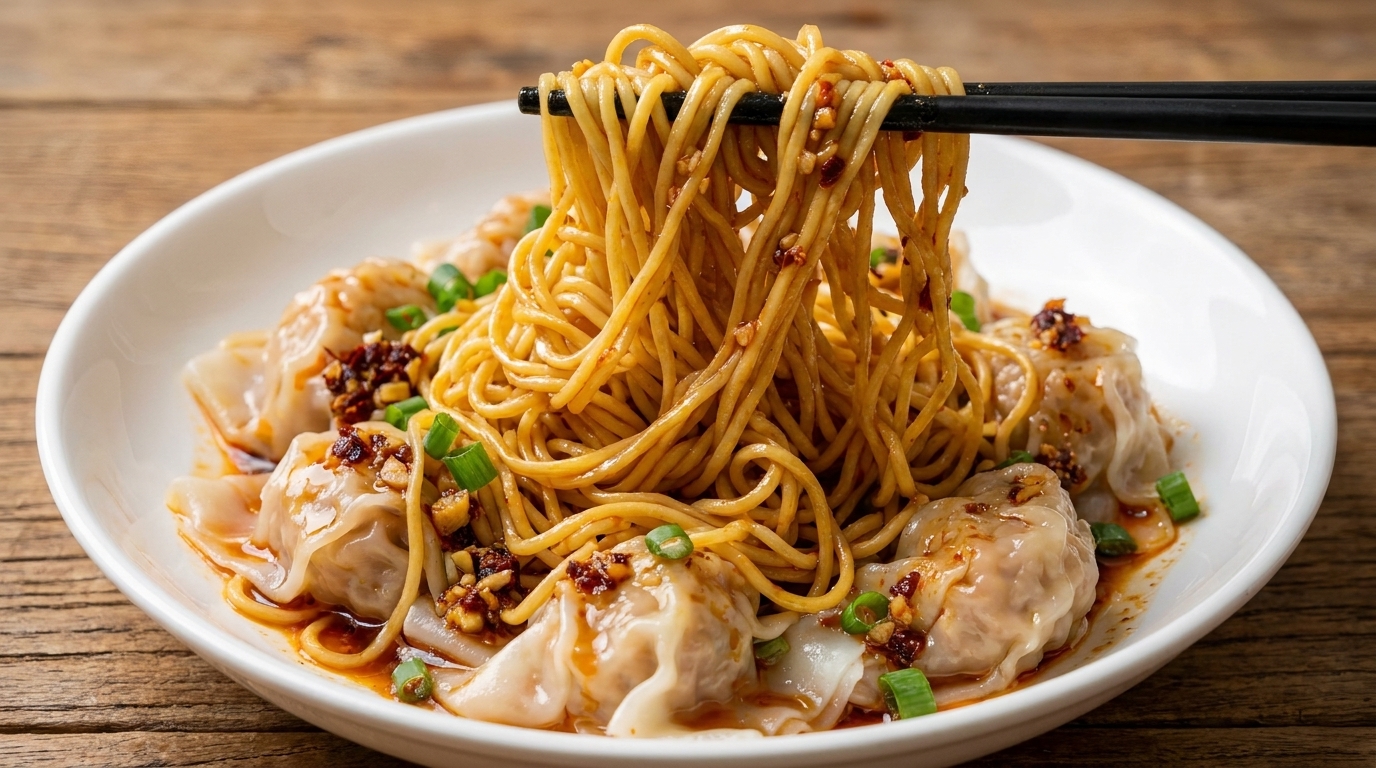
Tender pork and shrimp wontons and springy bamboo-pressed egg noodles tossed in a rich, nutty sesame-peanut chili sauce. A comforting, highly flavorful bowl made completely from scratch.
These dry-tossed wonton noodles are the ultimate comfort food, perfectly balancing the delicate texture of handmade dumplings with the chew of bamboo-pressed egg noodles. Skipping the cold water rinse leaves the noodles perfectly textured to cling to the rich, nutty sesame and chili sauce, making every bite incredibly flavorful.
Ingredients
- 300 g minced pork
- 150 g shrimp paste
- 1 pack square wonton wrappers
- 2 portions dry bamboo-pressed egg noodles
- 2 tbsp light soy sauce
- 1 tbsp oyster sauce
- 2 tbsp sesame oil
- 3 tbsp scallion and ginger water
- 2 tbsp minced aromatics (garlic and scallions)
- 1 tbsp dry spices and chili flakes
- 3 tbsp hot cooking oil
- 1 tsp sugar
- 2 tbsp sesame-peanut paste
- to taste salt, chicken bouillon, MSG, and white pepper
Instructions
- 1Season the pork filling
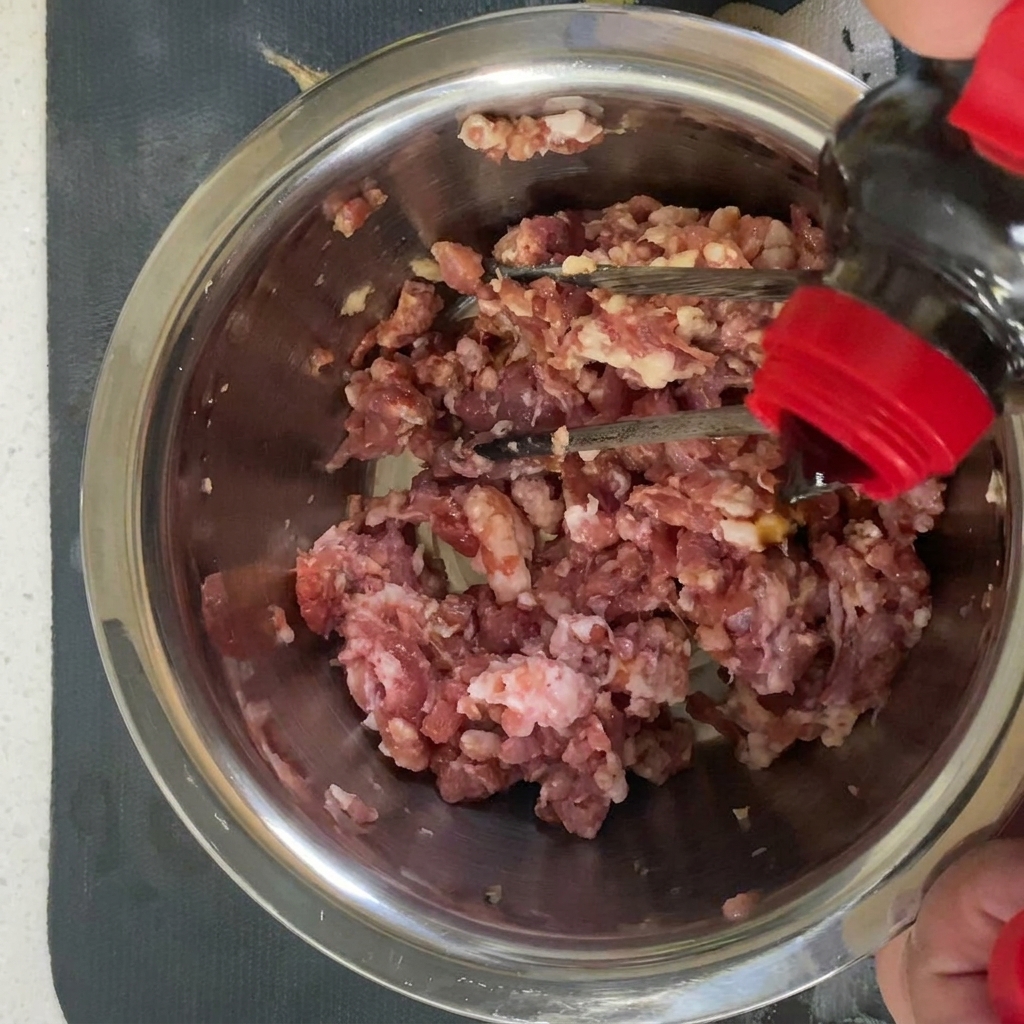
Add light soy sauce, oyster sauce, salt, chicken bouillon, MSG, white pepper, and sesame oil to the finely minced pork. These seasonings create the savory base for the wonton filling.
Tip: For the best texture, keep the meat very cold while mixing. - 2Mix the wonton filling
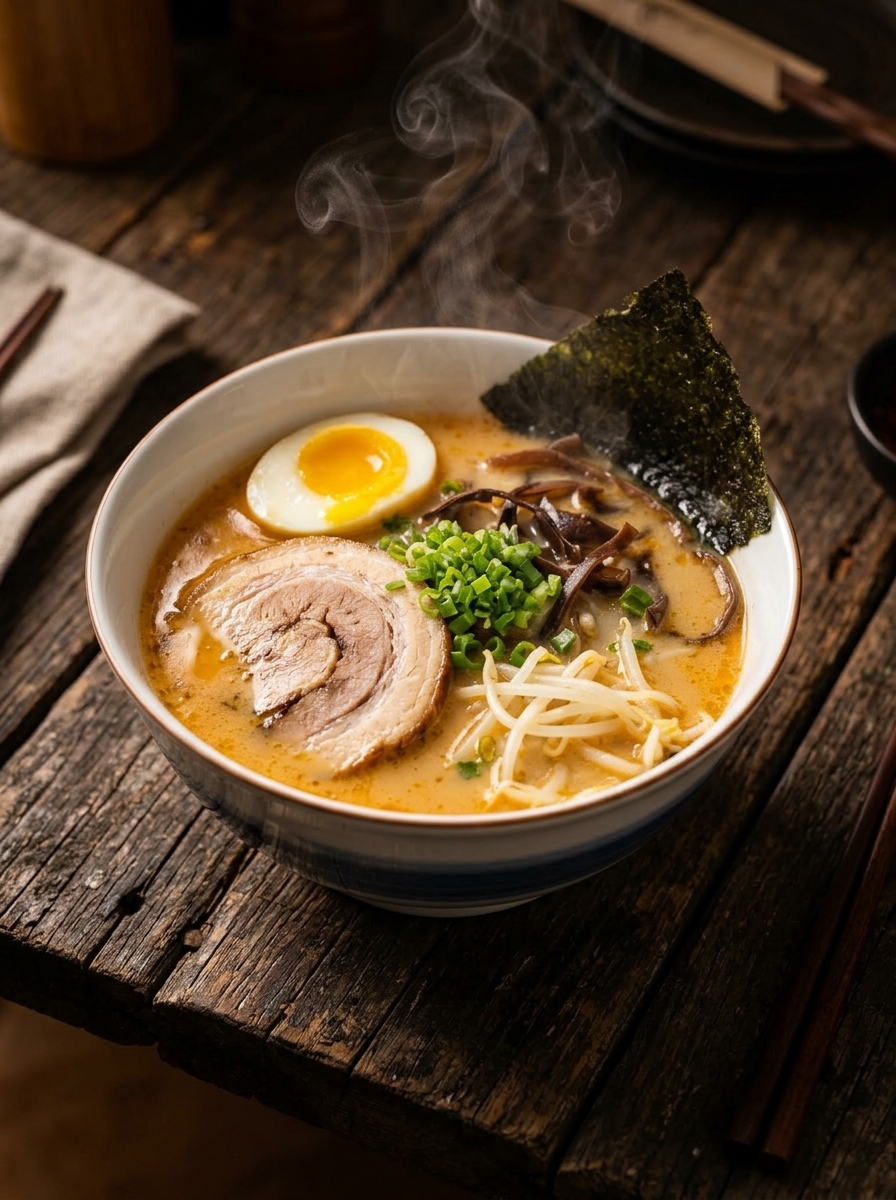
Using chopsticks, stir the pork and seasonings constantly. Gradually add scallion and ginger water in batches to ensure the meat absorbs the liquid, resulting in a juicy filling.
Tip: Stir in one direction to help the proteins bind and develop a springy texture. - 3Prepare the wontons
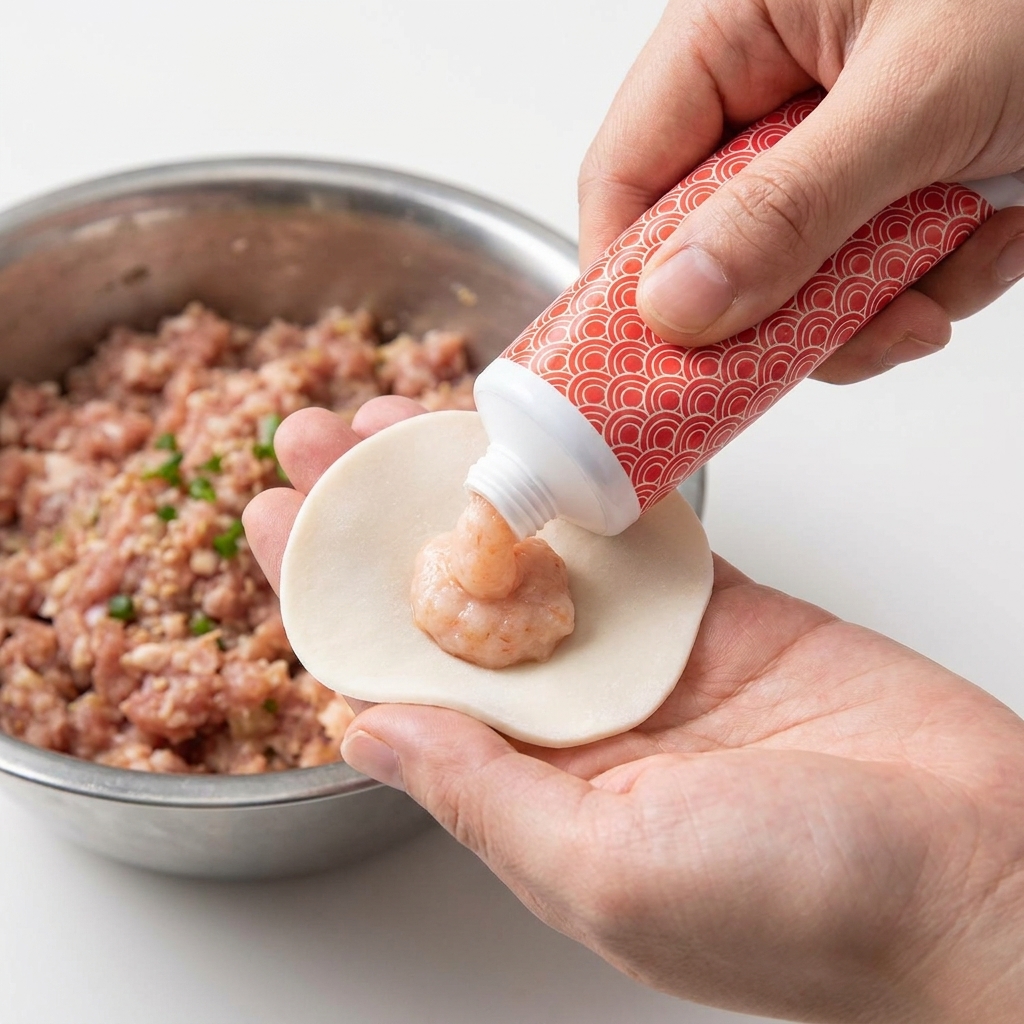
Hold a wonton wrapper in your palm and place a portion of the seasoned pork and a dollop of store-bought shrimp paste in the center.
Tip: Dont overfill the wontons so they remain easy to seal. - 4Seal the wontons
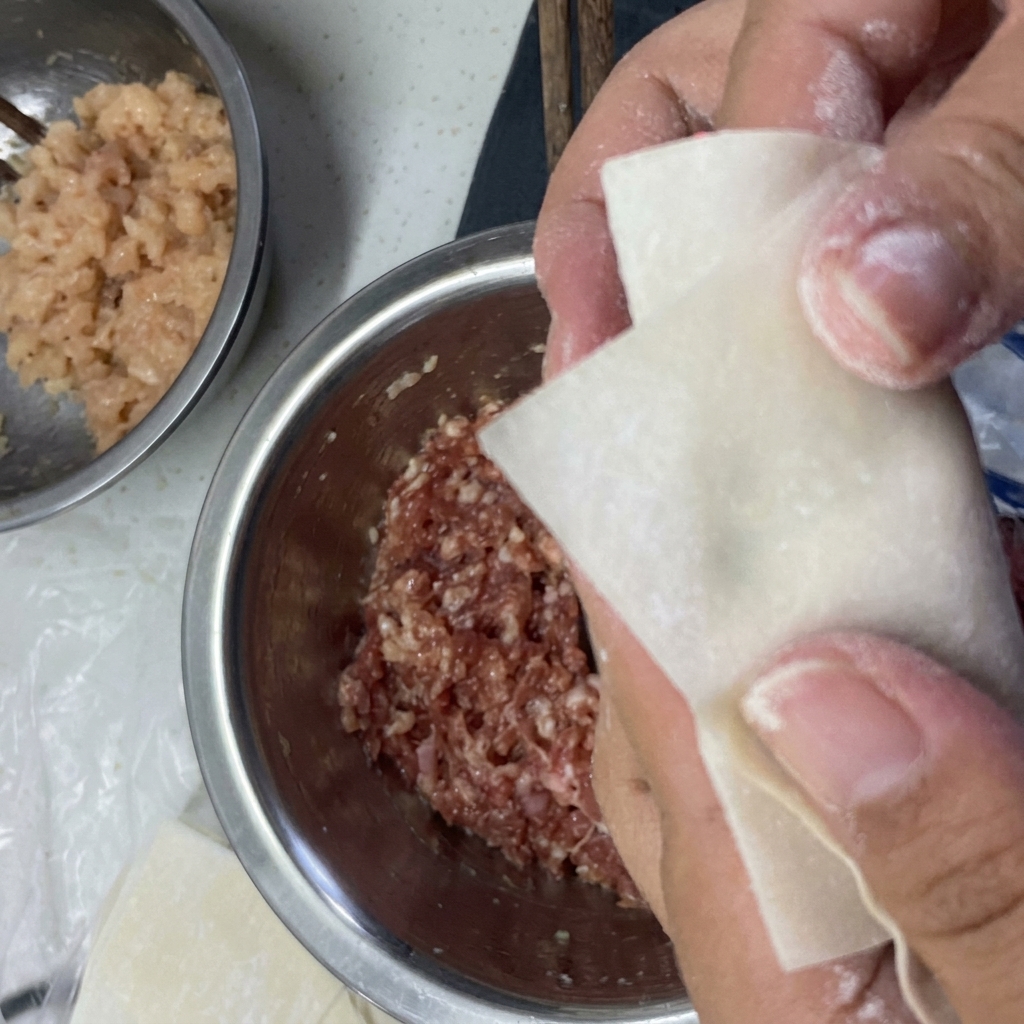
Lightly moisten the edges of the wonton wrapper with water, then pinch and fold to securely seal the pork and shrimp filling inside.
Tip: Ensure there is no air trapped inside the wonton to prevent it from bursting during boiling. - 5Prepare the chili oil
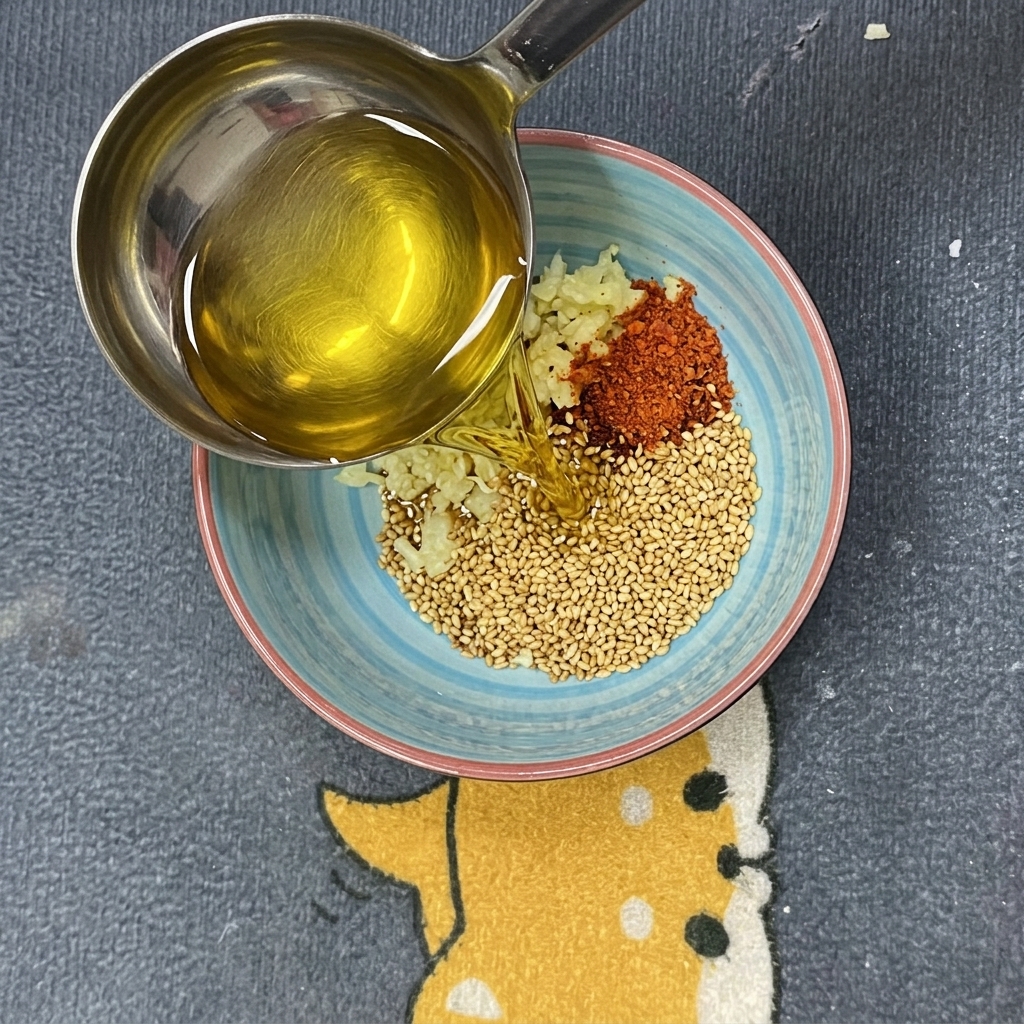
Place minced aromatics and dry spices in a heat-proof bowl. Pour hot oil carefully over the mixture to release the fragrance and create a flavorful chili oil base.
Tip: Be careful when pouring hot oil to avoid splattering. - 6Finish the sauce
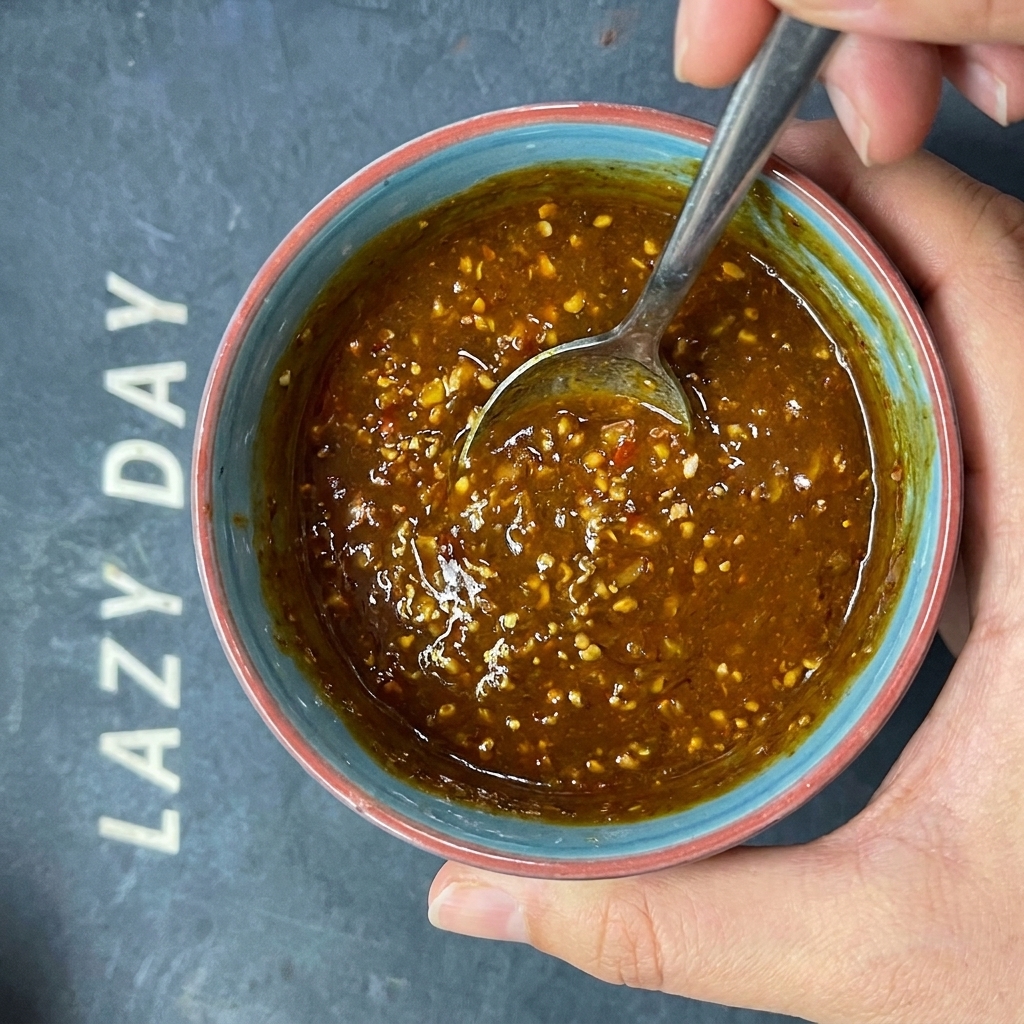
Stir a generous spoonful of rich sesame-peanut paste into the chili oil mixture. Combine thoroughly to create a creamy, nutty, and savory sauce for the noodles.
Tip: Whisk until the paste is completely incorporated into the oil for a smooth sauce consistency. - 7Boil the wontons
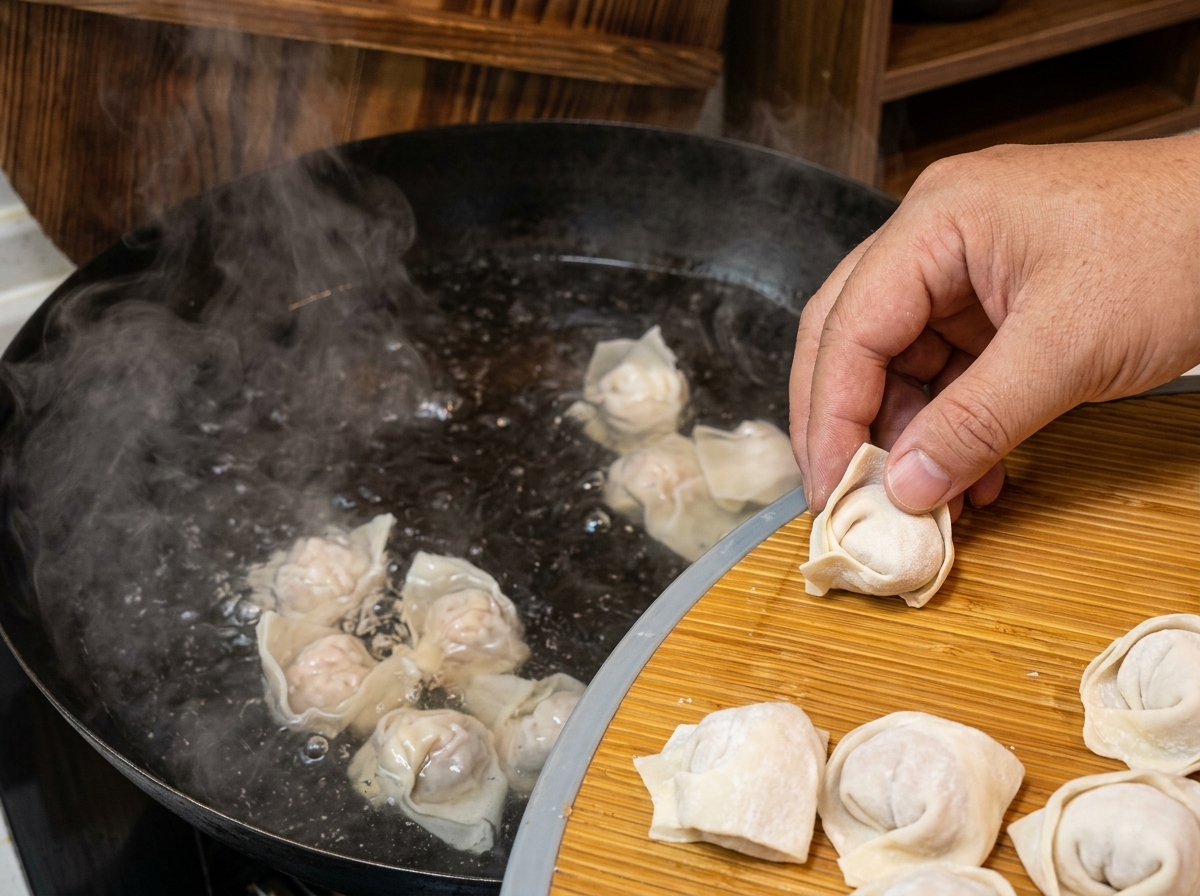
Carefully drop the freshly wrapped pork and shrimp wontons into a large wok or pot of vigorously boiling water. Allow them to cook undisturbed for a moment before gently stirring to prevent sticking.
Tip: Make sure the water is at a rolling boil before adding the wontons so the wrappers seal quickly and dont become soggy. - 8Add the egg noodles
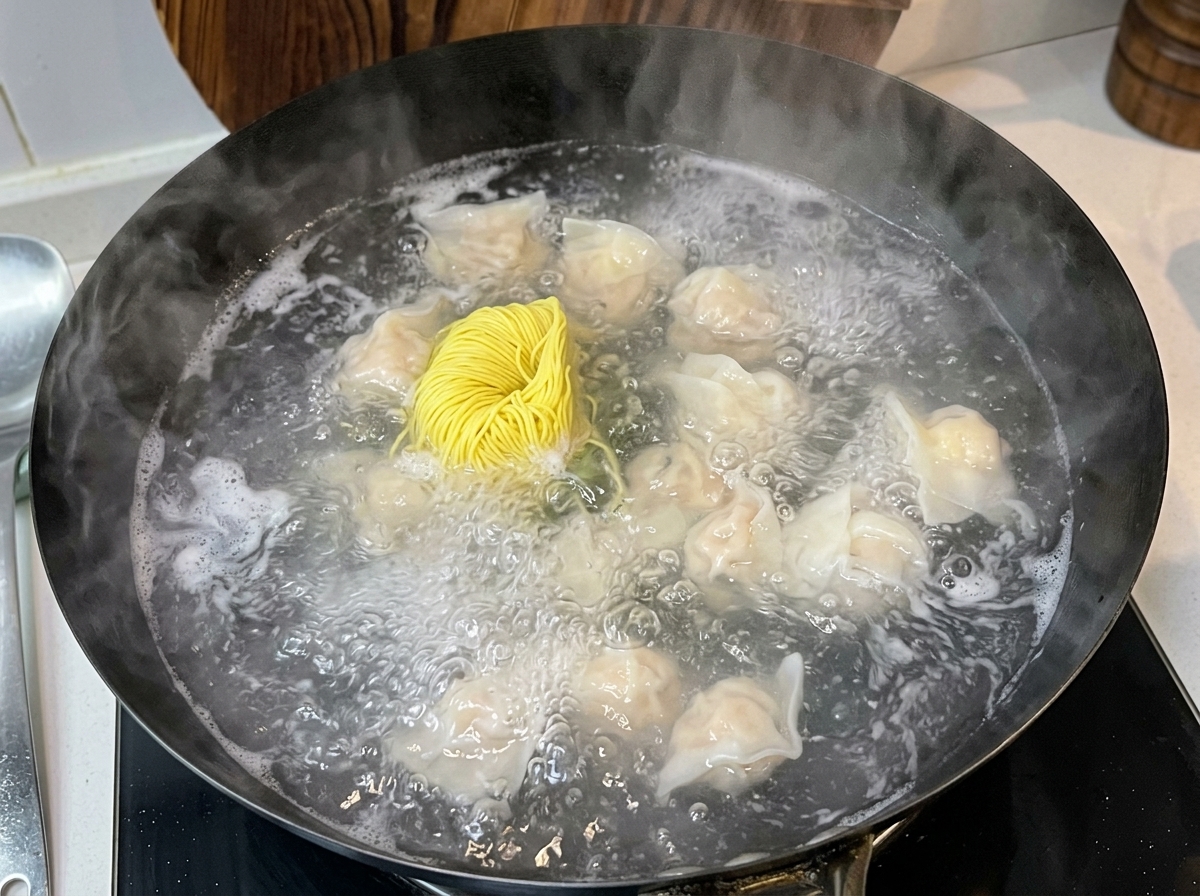
While the wontons are boiling, add a bundle of dry yellow bamboo-pressed egg noodles directly into the same pot. Cook them together just until the noodles begin to loosen up.
Tip: Cooking the noodles in the same water as the wontons saves time and infuses them with extra flavor from the wrappers. - 9Remove the cooked wontons
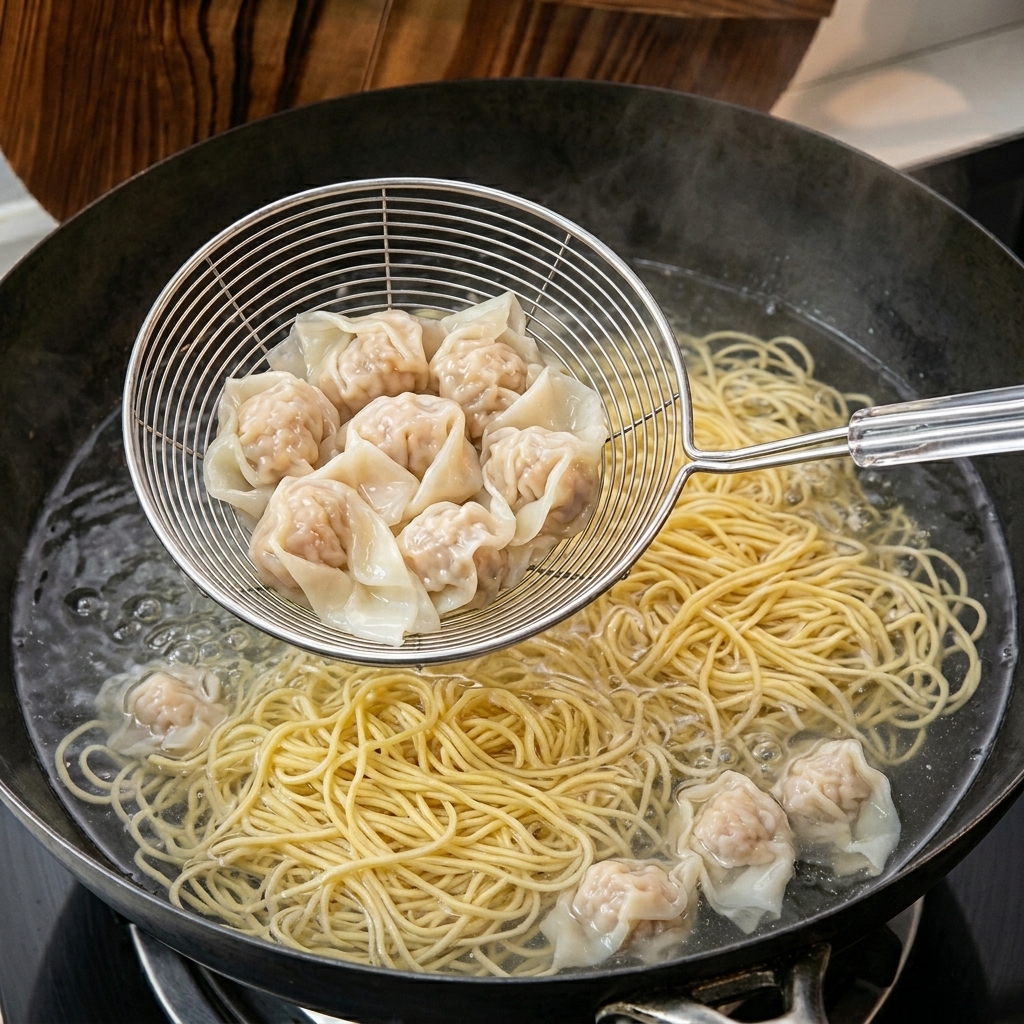
Once the wontons float to the surface and the wrappers look slightly translucent, use a wire skimmer to carefully lift them out of the hot water.
Tip: A wire skimmer is the ideal tool for this, as it quickly drains the boiling water without tearing the delicate wonton skins. - 10Drain the noodles
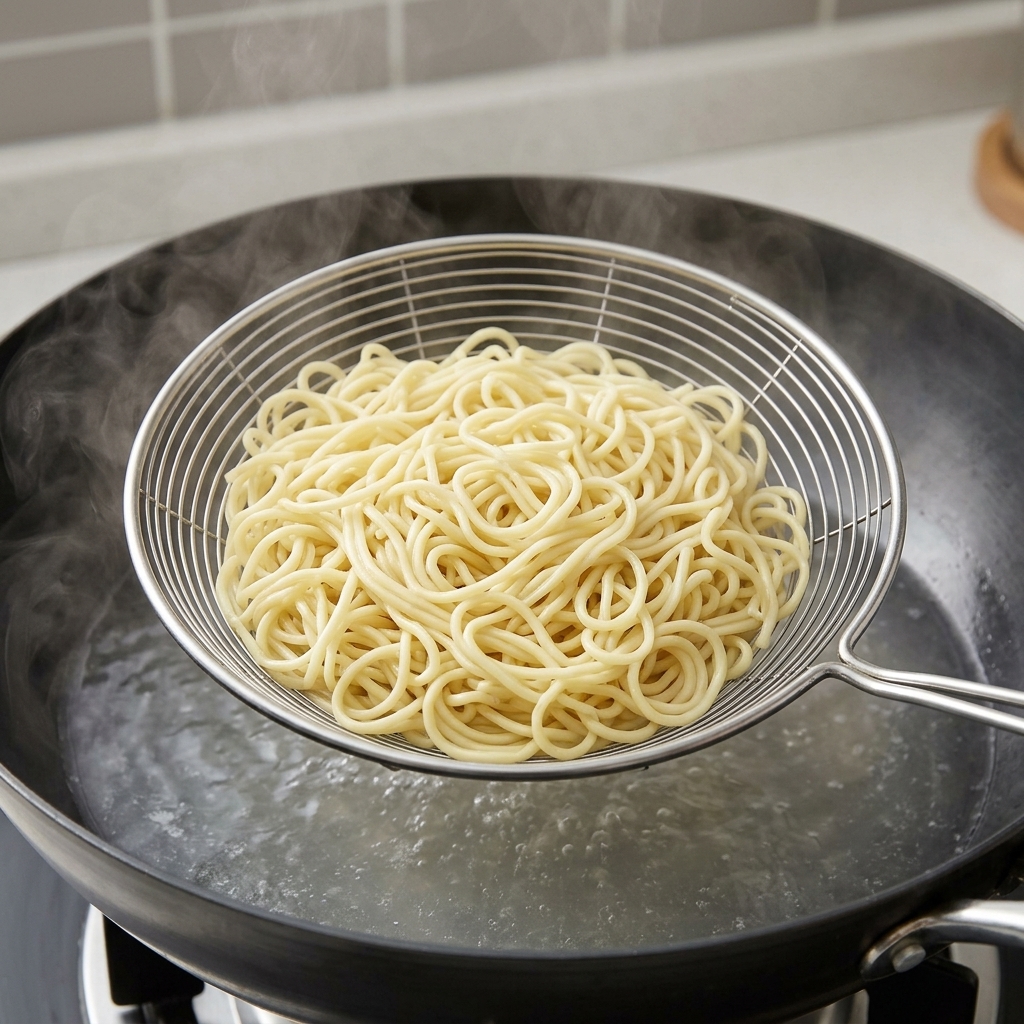
Use the skimmer to scoop out the cooked yellow egg noodles. To achieve a slightly sticky texture that holds the sauce perfectly, do not rinse the noodles in cold water after draining.
Tip: Skipping the cold water rinse leaves residual starch on the noodles, helping the rich sesame chili sauce cling to every strand. - 11Assemble and sauce the noodles
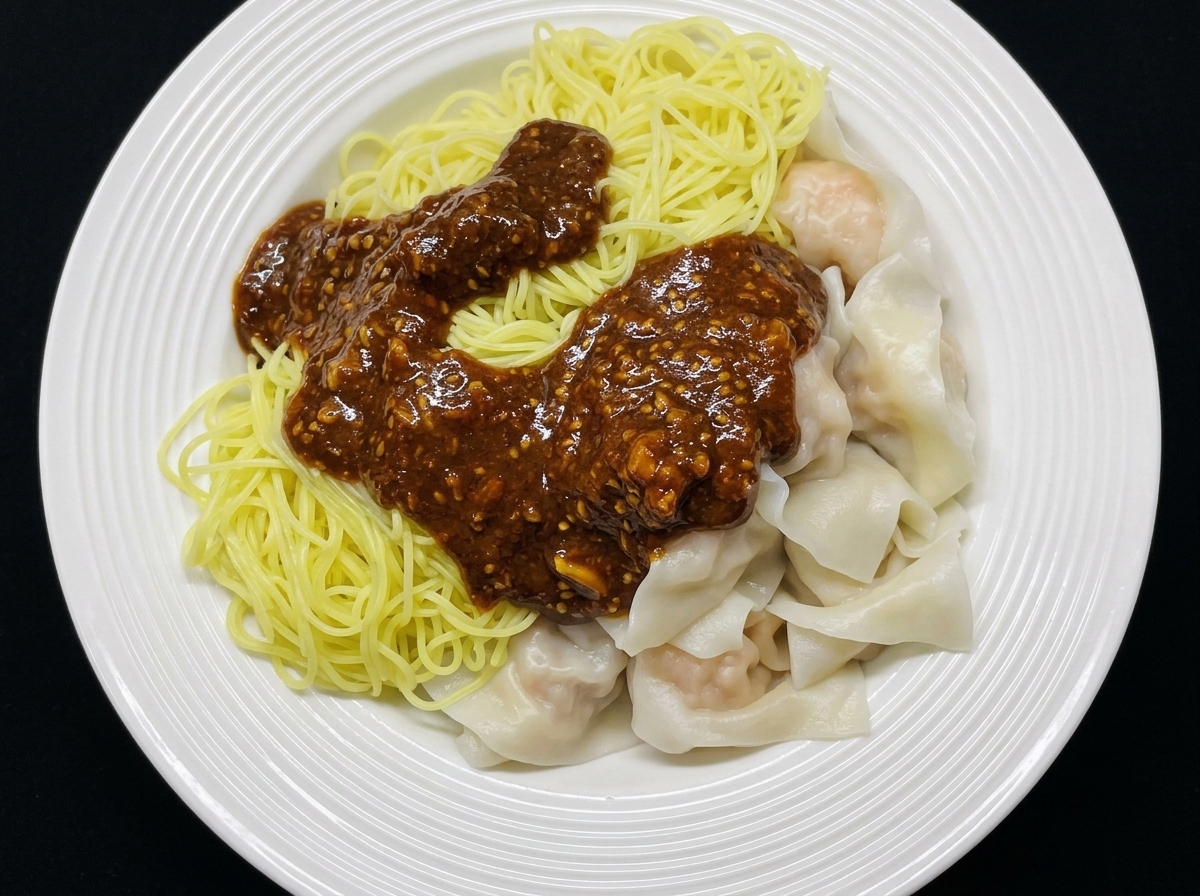
Plate the cooked bamboo-pressed egg noodles and translucent wontons. Spoon the rich, prepared sesame chili sauce generously over the top of the dish. Toss everything thoroughly to ensure the noodles and wontons are evenly coated with the savory, nutty, and slightly spicy sauce.
Tip: Toss the noodles and wontons immediately while they are still piping hot so the thick sesame chili sauce thins out slightly and coats everything evenly.