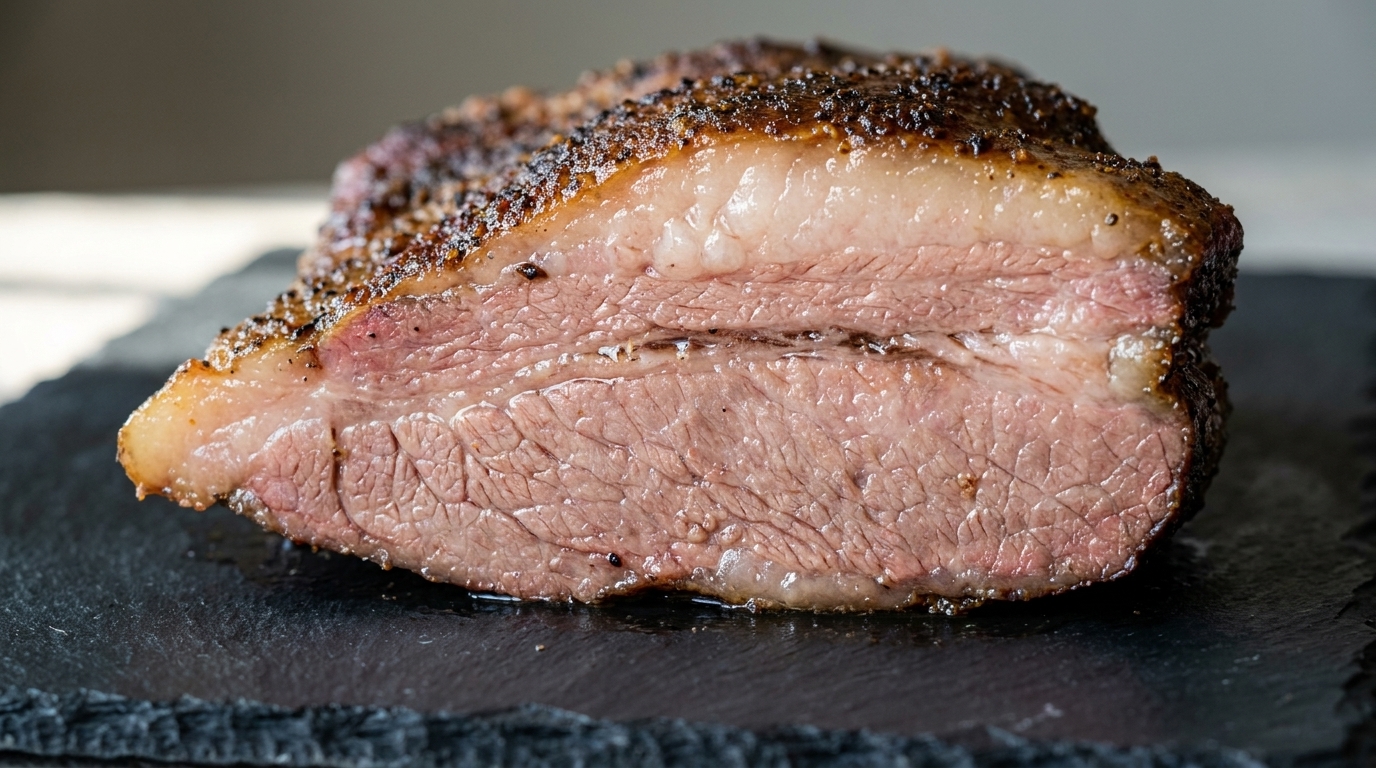
Texas-Style Smoked Beef Brisket
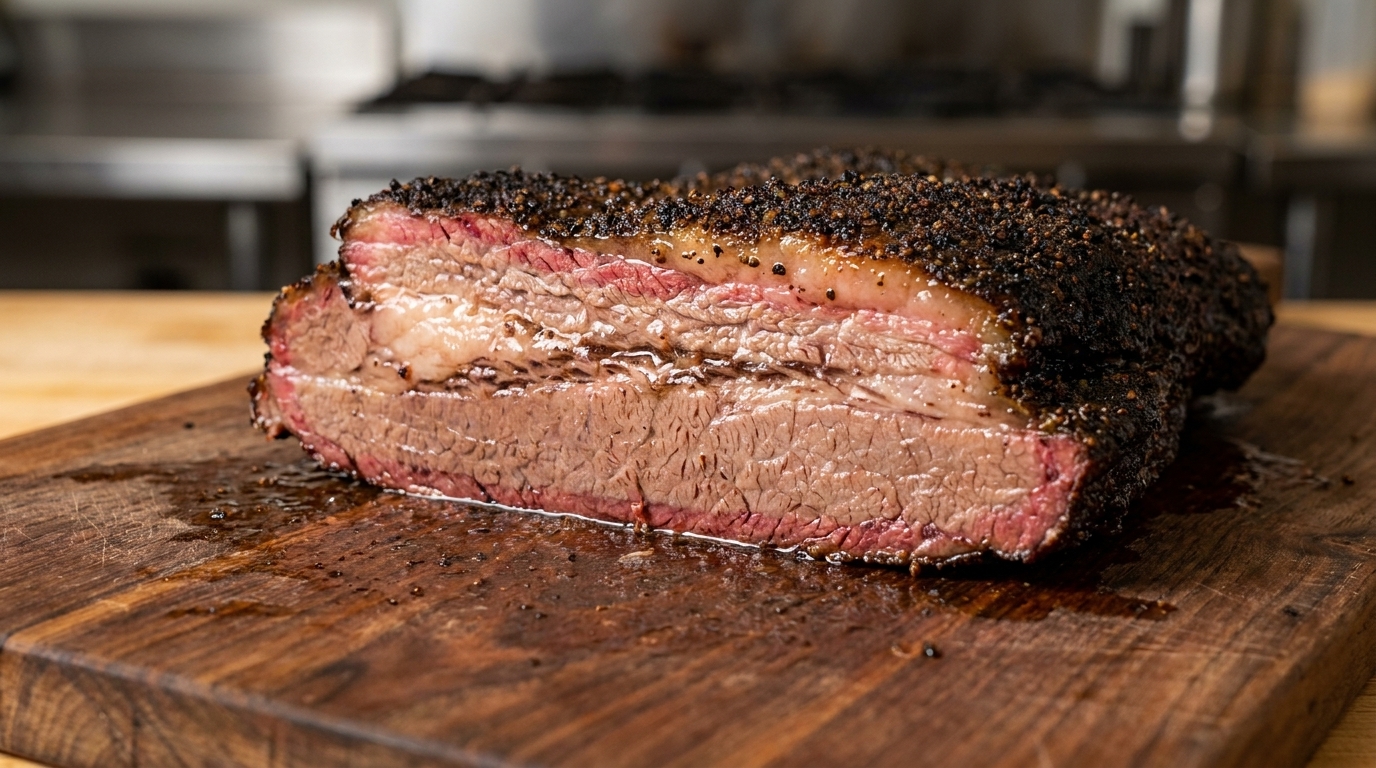
Master the art of authentic smoked beef brisket featuring a thick, peppery black bark, a stunning pink smoke ring, and exceptionally juicy layers of tender, render-to-perfection meat.
Smoked beef brisket is the ultimate testament to low-and-slow cooking philosophy. Originating from the rich barbecue traditions of Texas, a successful brisket relies on meticulous trimming to account for its unique anatomy, followed by intense wood smoking that dissolves tough connective tissues into pure culinary bliss.
Ingredients
- 5 kg whole packer beef brisket (flat and point)
- 4 tbsp coarse black pepper
- 3 tbsp kosher salt
- 1 tbsp garlic powder
Instructions
- 1Pat the brisket dry
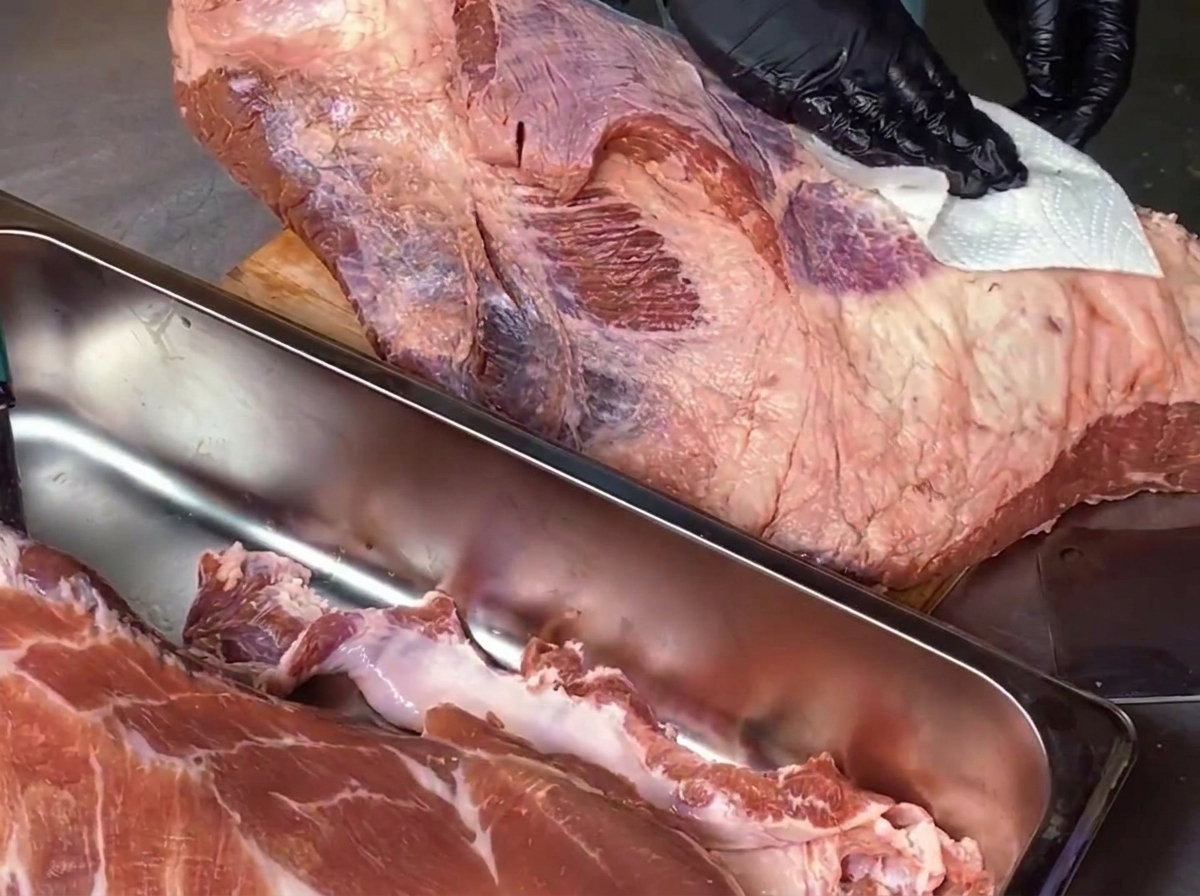
Place the raw beef brisket flat on a wooden cutting board. Use a clean paper towel to thoroughly pat dry the entire surface of the meat to remove any excess moisture. This prep step ensures the meat is easy to handle, prevents the knife from slipping during the trimming process, and helps the marinade adhere better.
Tip: Drying the surface of the meat is essential for creating a good bark during smoking, as excess moisture can cause the meat to steam rather than smoke. - 2Separate the point and flat meat
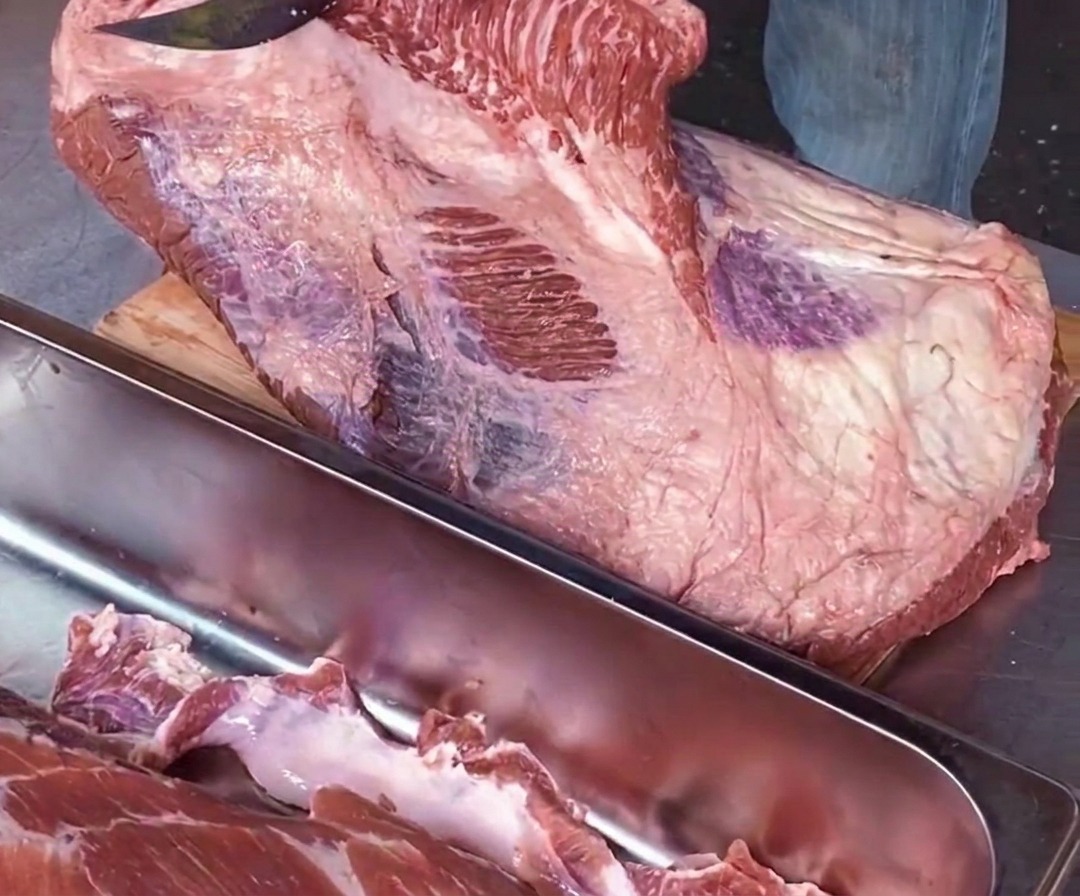
Lay the raw beef brisket flat on the cutting board. Holding a sharp boning knife parallel to the board, carefully slice along the fat seam to separate the point meat from the flat meat, following the natural division between the two muscles.
Tip: Keep steady tension on the meat with your non-dominant hand to clearly see the fat line as you slice. - 3Trim excess fat from the seam
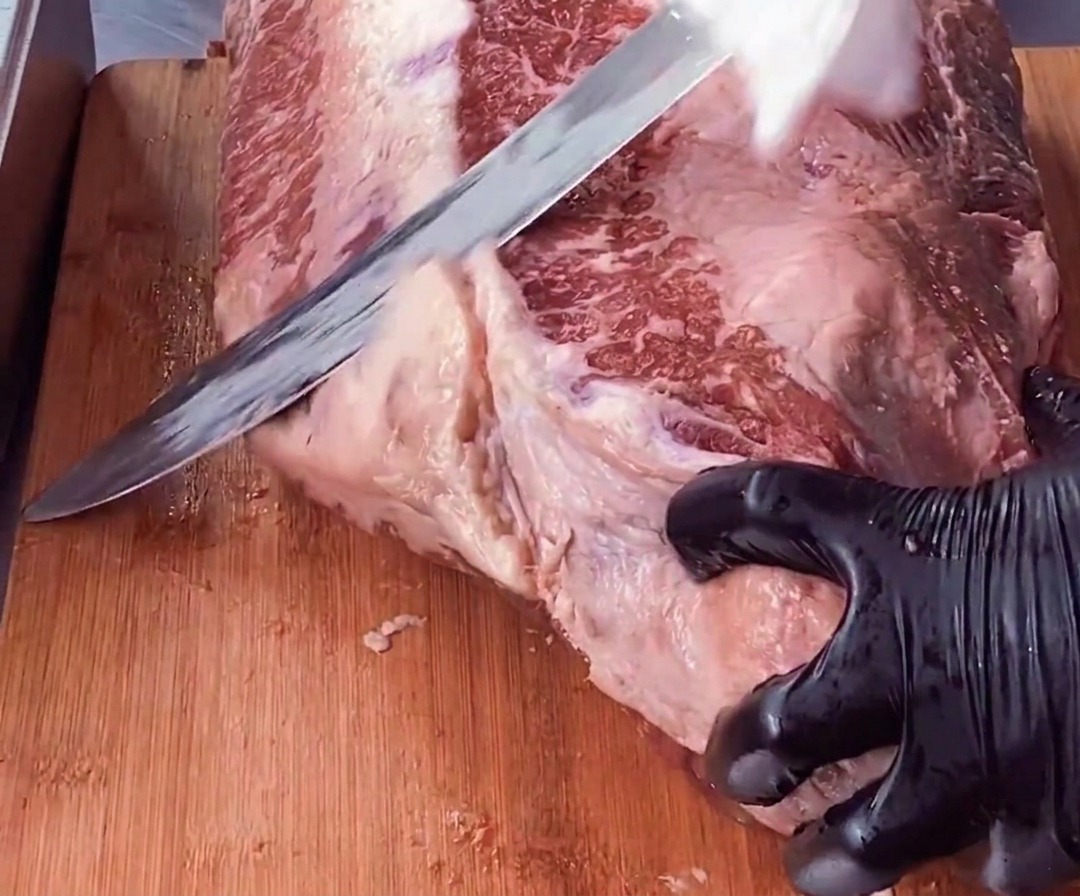
With the point meat separated, use the knife to trim away the thick, dense layer of hard fat remaining on the seam where the two parts connected. Ensure a clean surface while keeping a reasonable fat cap for flavor.
Tip: Cold fat is much easier to trim cleanly than room-temperature fat, so keep the brisket chilled until ready to prep. - 4Season the brisket generously
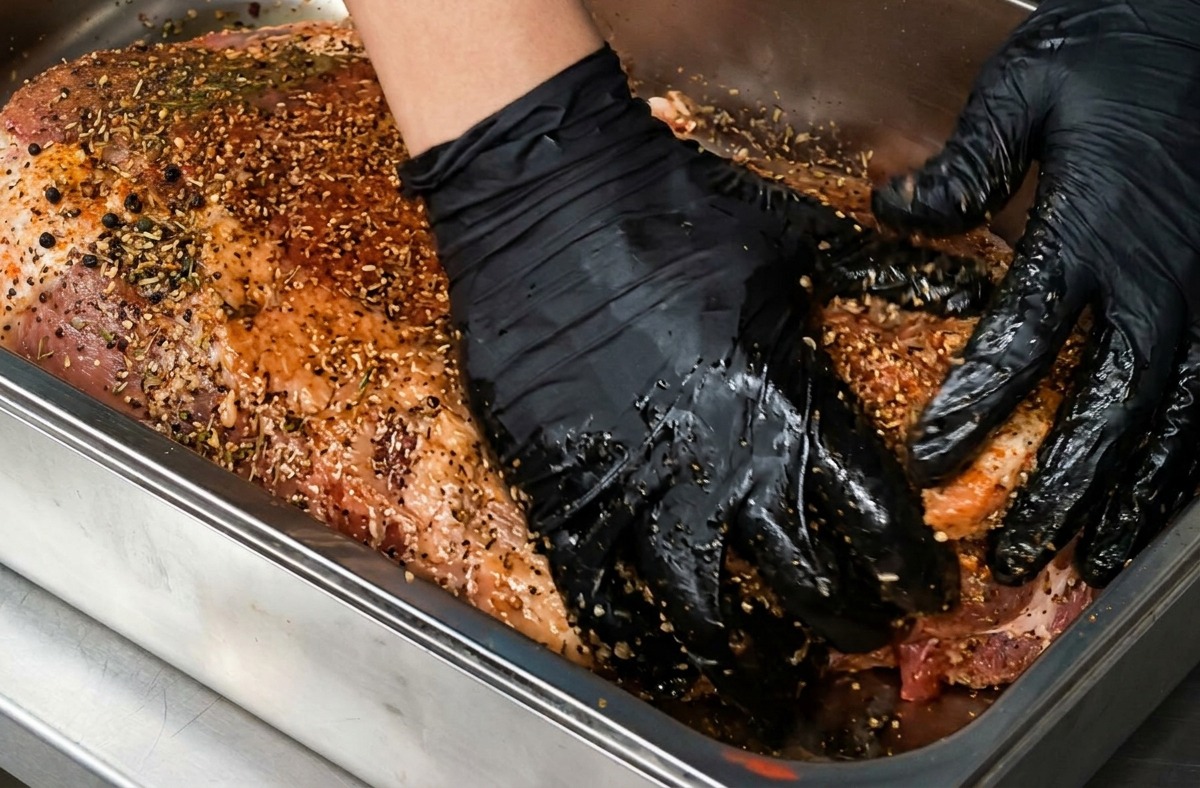
Place the trimmed beef brisket into a large container or tray. Coat the entire surface generously with a coarse black pepper rub and spice blend, pressing and patting it down firmly with your gloved hands to ensure full adherence.
Tip: Make sure to coat the edges and sides of the brisket thoroughly so a consistent bark forms during smoking. - 5Slice the smoked brisket
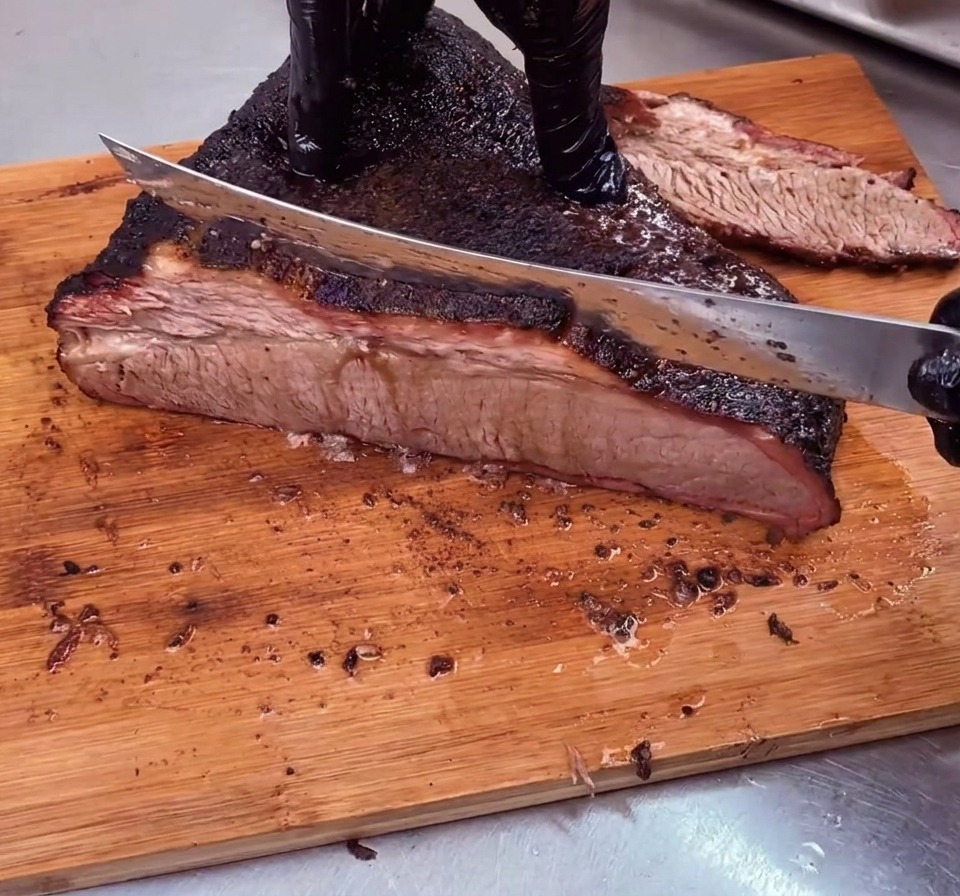
Place the smoked brisket on a wooden board. Using a long, sharp carving knife, carve the meat smoothly against the grain into uniform slices approximately 0.6 centimeters thick to ensure an optimal texture and bite.
Tip: Always slice against the grain; cutting with the grain will result in tough, chewy pieces instead of tender slices.