Low-Calorie Korean Style Spicy Tofu Soup
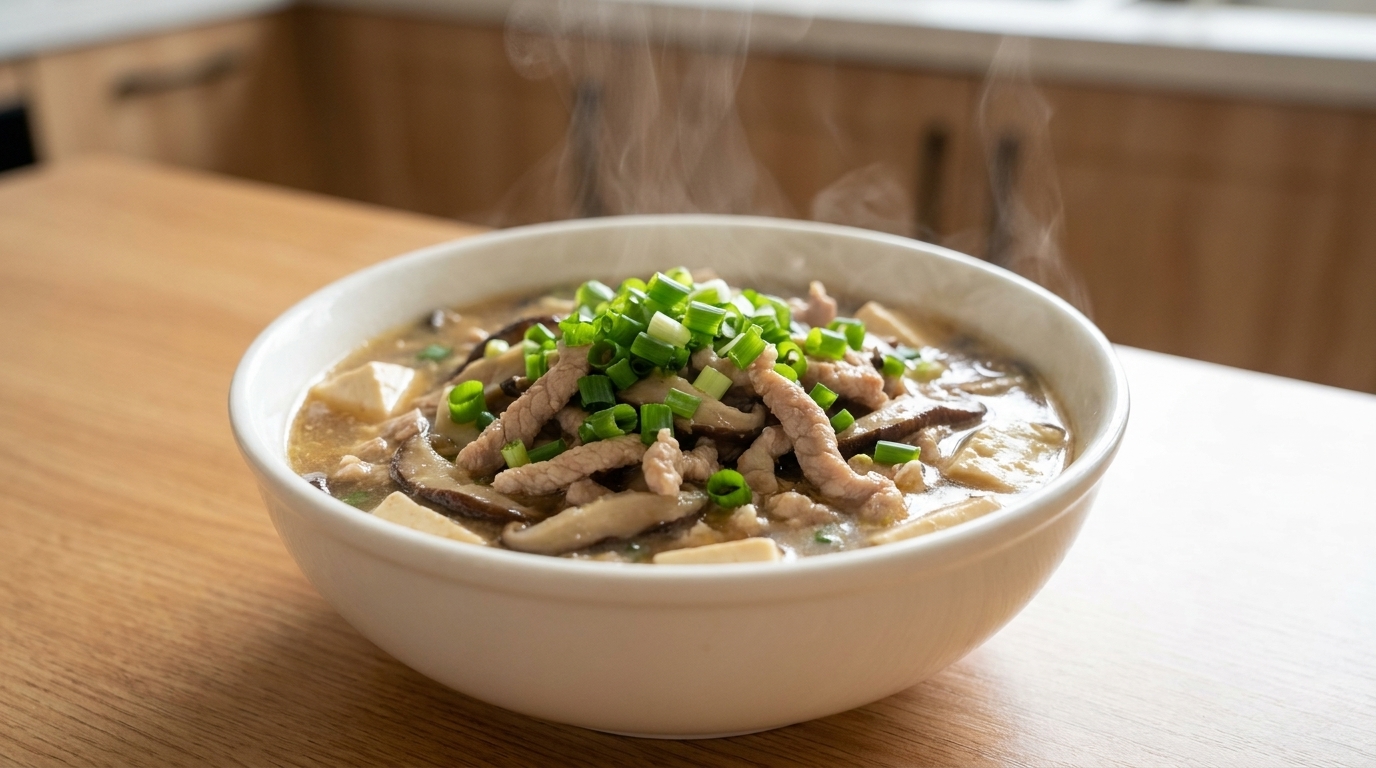
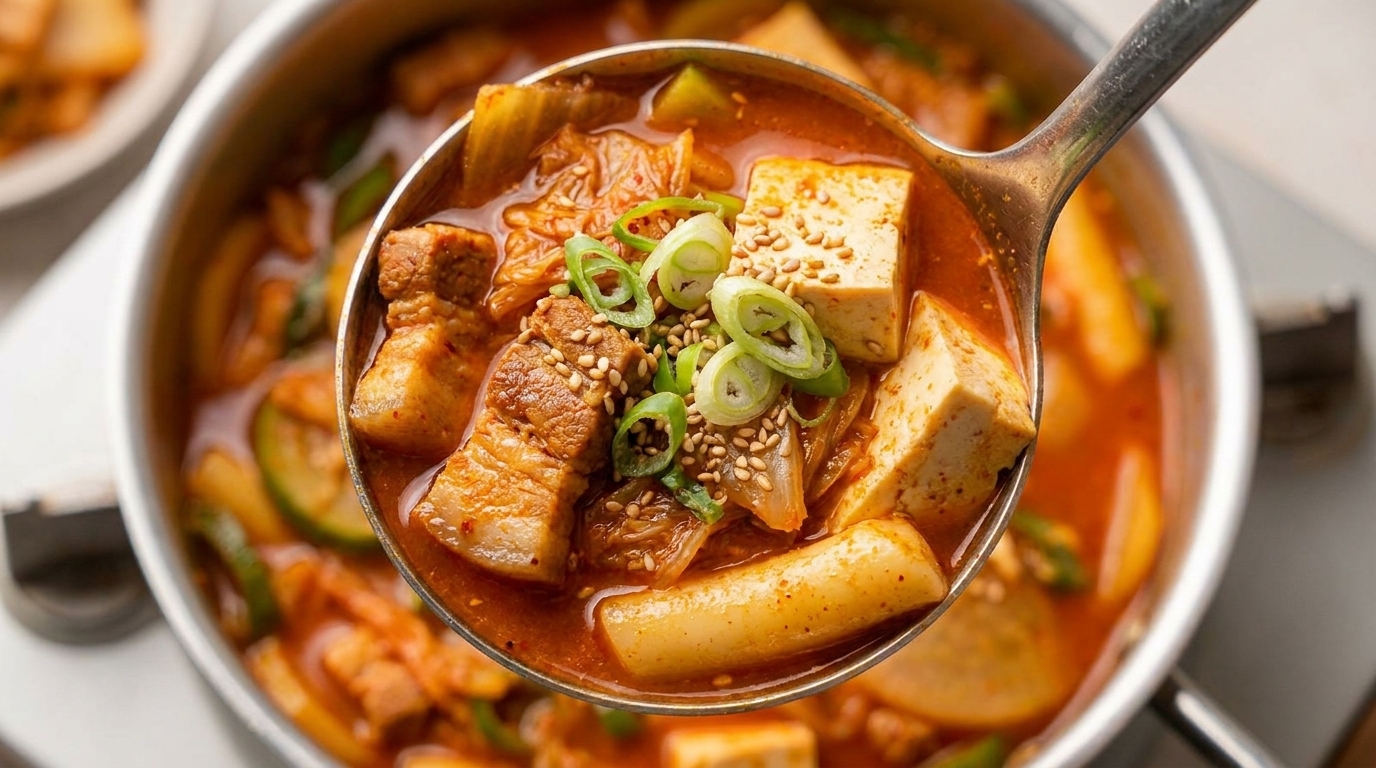
Satisfy your Korean drama cravings with this protein-packed, low-calorie spicy tofu soup. Ready in just 10 minutes for a quick and healthy meal.
This spicy tofu soup is a perfect balance of comfort and nutrition, designed to be enjoyed without the weight-gain worry. Combining the delicate texture of silken tofu with savory beef and punchy kimchi, it delivers the authentic Korean flavor profile in a fraction of the time. It is a simple, satisfying one-pot meal that makes healthy eating incredibly easy and delicious.
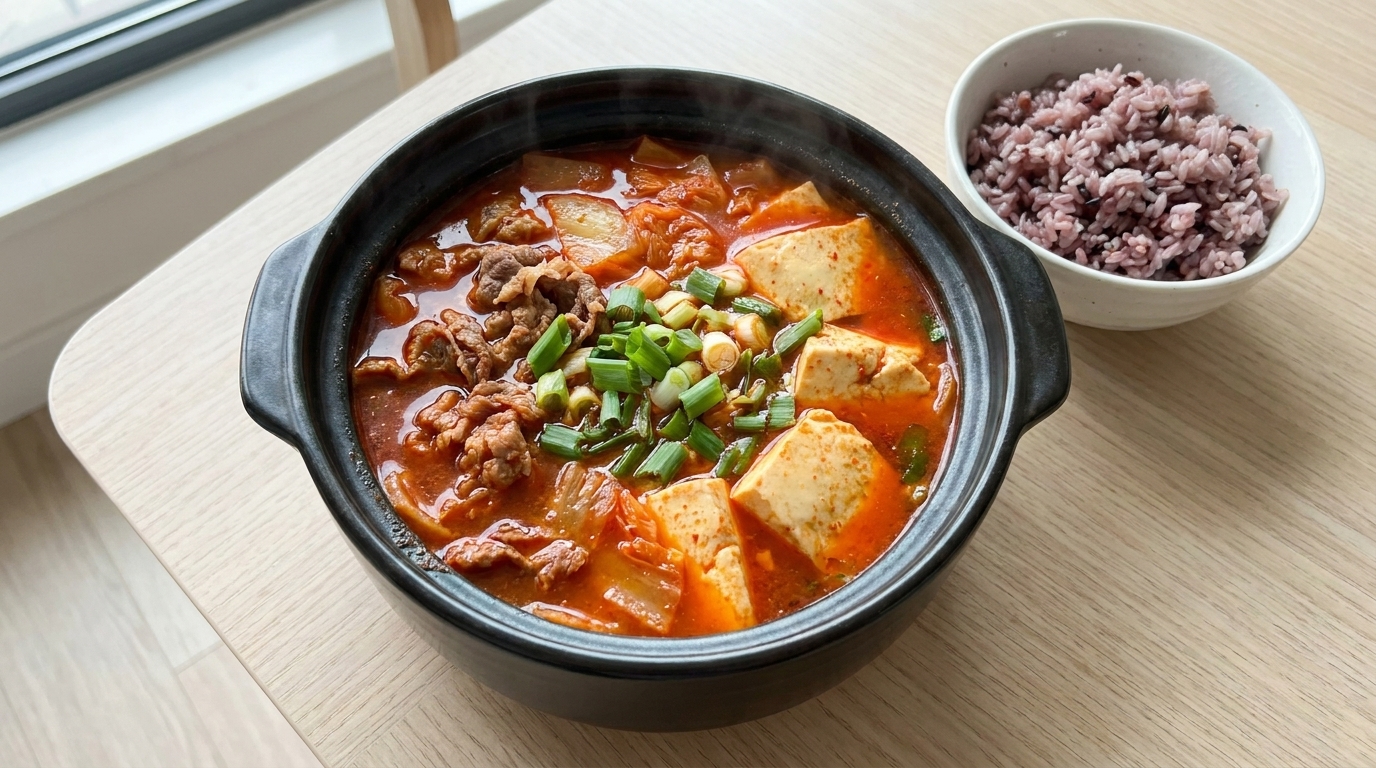
Ingredients
- 300 g silken tofu
- 100 g beef
- 100 g kimchi
- 1 unit zucchini
- 0.5 unit red onion
- 2 units raw eggs
- 2 cloves garlic
- 1 tbsp Korean chili paste (gochujang)
- 1 tbsp chili powder
- 1 tbsp soy sauce
- 1 tbsp cooking oil
- 1 tsp sesame oil
- to taste green onions
- to taste chili pepper rings
Instructions
- 1Prepare the zucchini

Take fresh zucchini and cut it into small, uniform pieces on a cutting board. These pieces will add a refreshing texture and absorb the flavors of the spicy broth during cooking.
Tip: Cut the zucchini into consistent sizes to ensure they cook evenly and maintain a nice bite. - 2Chop the red onion

Carefully chop the red onion into small, even pieces on your cutting board. The red onion provides a mild sweetness and depth to the base of your spicy tofu soup.
Tip: Use a sharp knife to chop the onion smoothly, which helps keep its shape and minimizes tearing. - 3Heat the oils

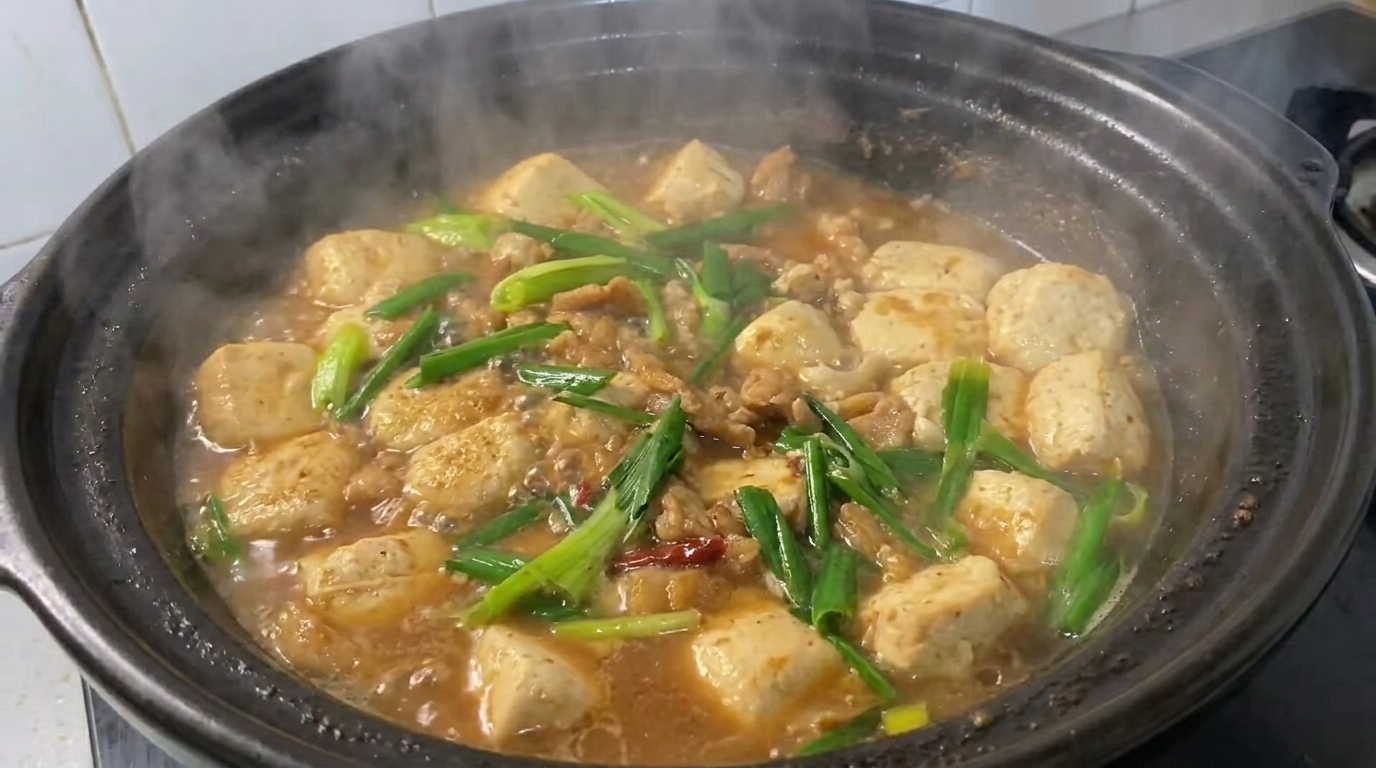
Add a blend of cooking oil and fragrant sesame oil into your clay pot over medium heat. This mixture forms the flavorful aromatic base for the soup.
Tip: Keep the heat moderate to ensure the sesame oil remains fragrant and does not burn. - 4Brown the pork belly
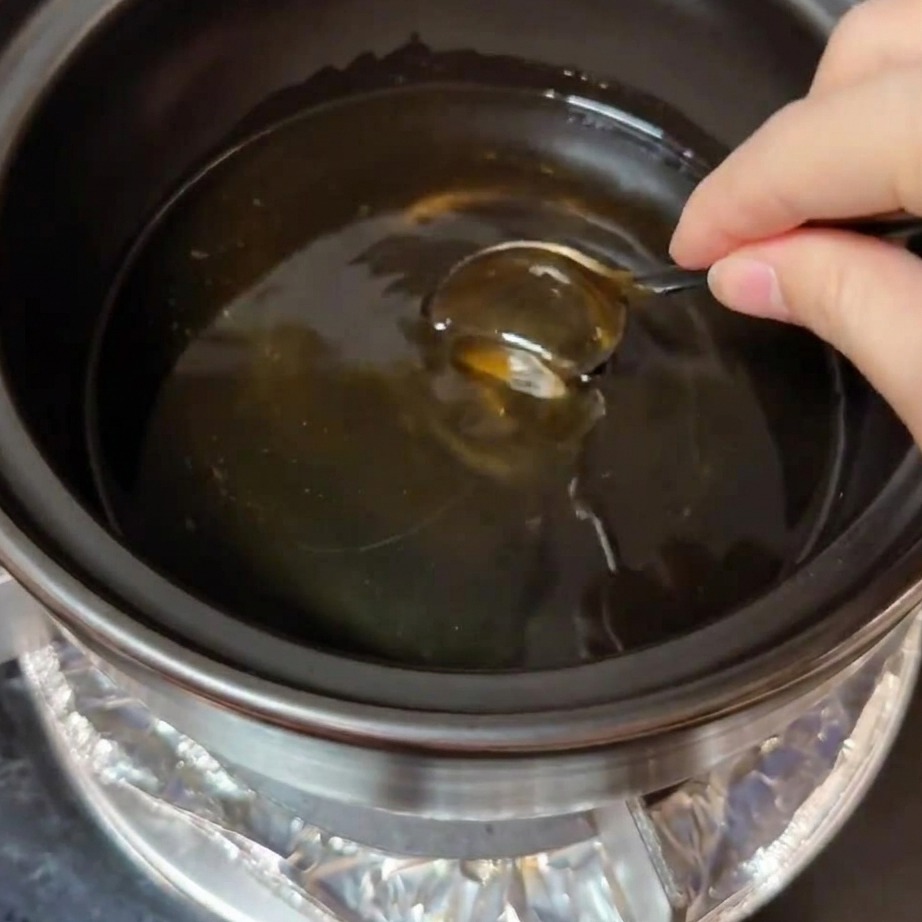
Place the thinly sliced pork belly into the hot oil in the clay pot. Stir-fry the meat until it is lightly browned and its fat has rendered, creating a rich savory foundation.
Tip: Stirring constantly prevents the pork from sticking to the bottom of the pot. - 5Add the aromatics
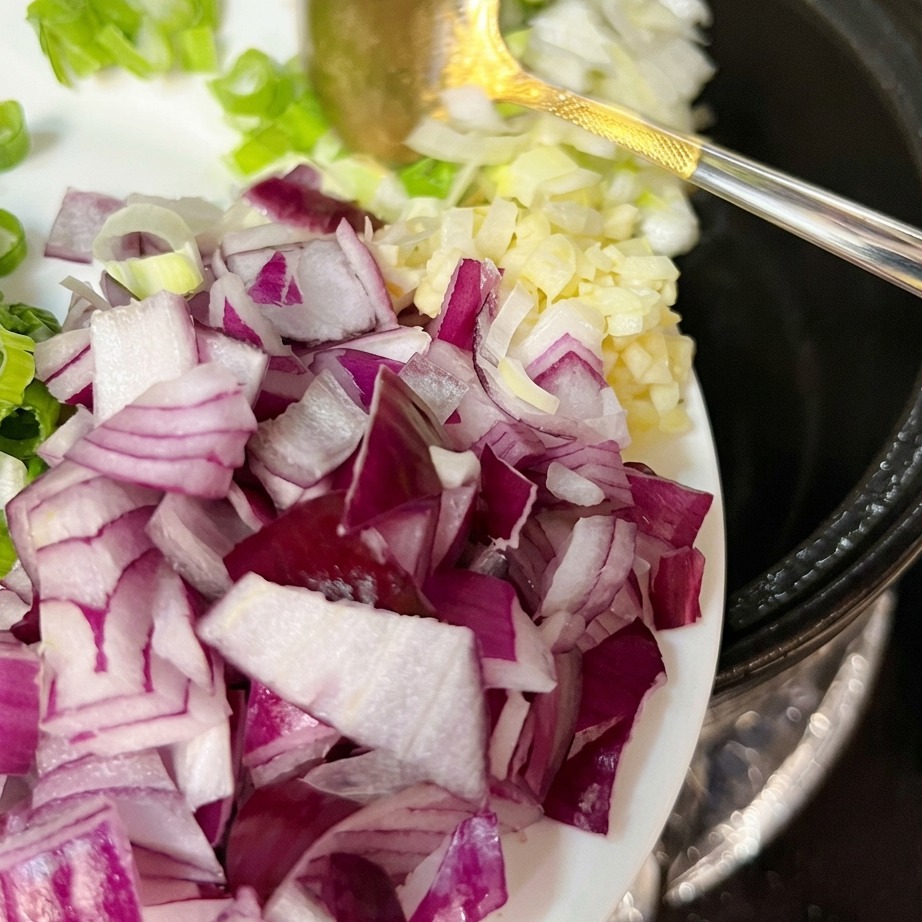
Add the chopped green onions, minced garlic, and diced red onion into the pot with the browned pork. Sauté until the vegetables are fragrant and softened, infusing the pork with flavor.
Tip: Adding the aromatics after the pork ensures they release their oils without burning. - 6Season with chili
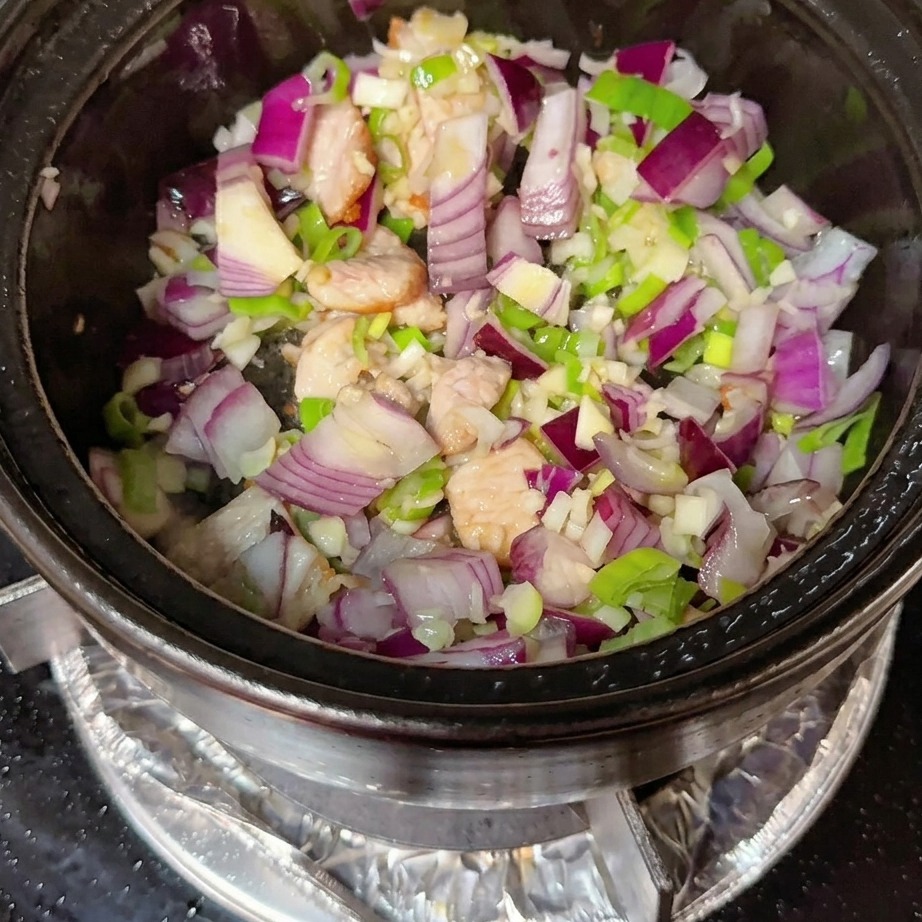
Stir in a spoonful of Korean chili paste (gochujang) and a spoonful of chili powder to the aromatics. This combination provides the essential spicy kick and deep red color characteristic of Korean-style soups.
Tip: Adjust the amount of chili paste and powder based on your personal preference for heat. - 7Season the base
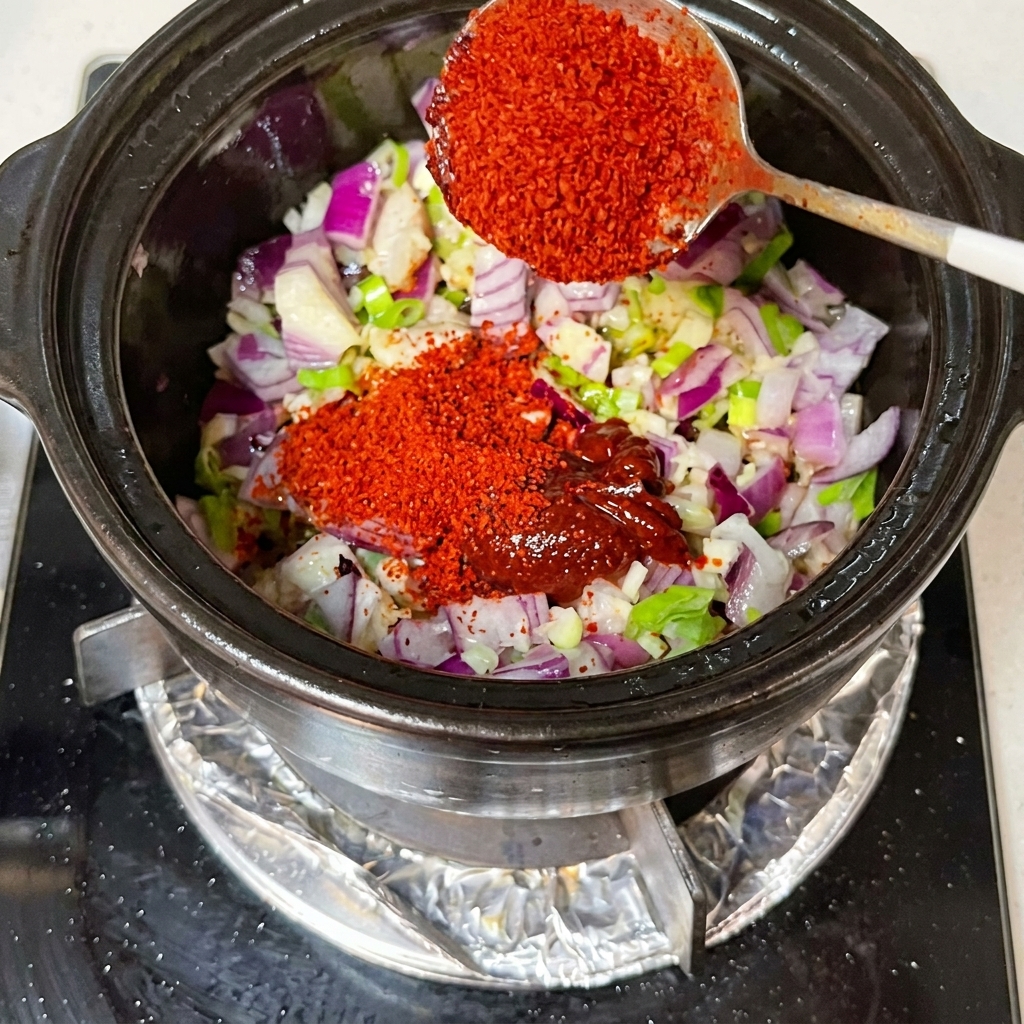
Add the soy sauce and prepared kimchi into the pot with the aromatics. Stir well to ensure the flavors are evenly distributed, creating a deep and savory foundation for the soup.
Tip: Make sure to stir thoroughly so the sauces coat the onions and aromatics evenly before adding liquid. - 8Add water
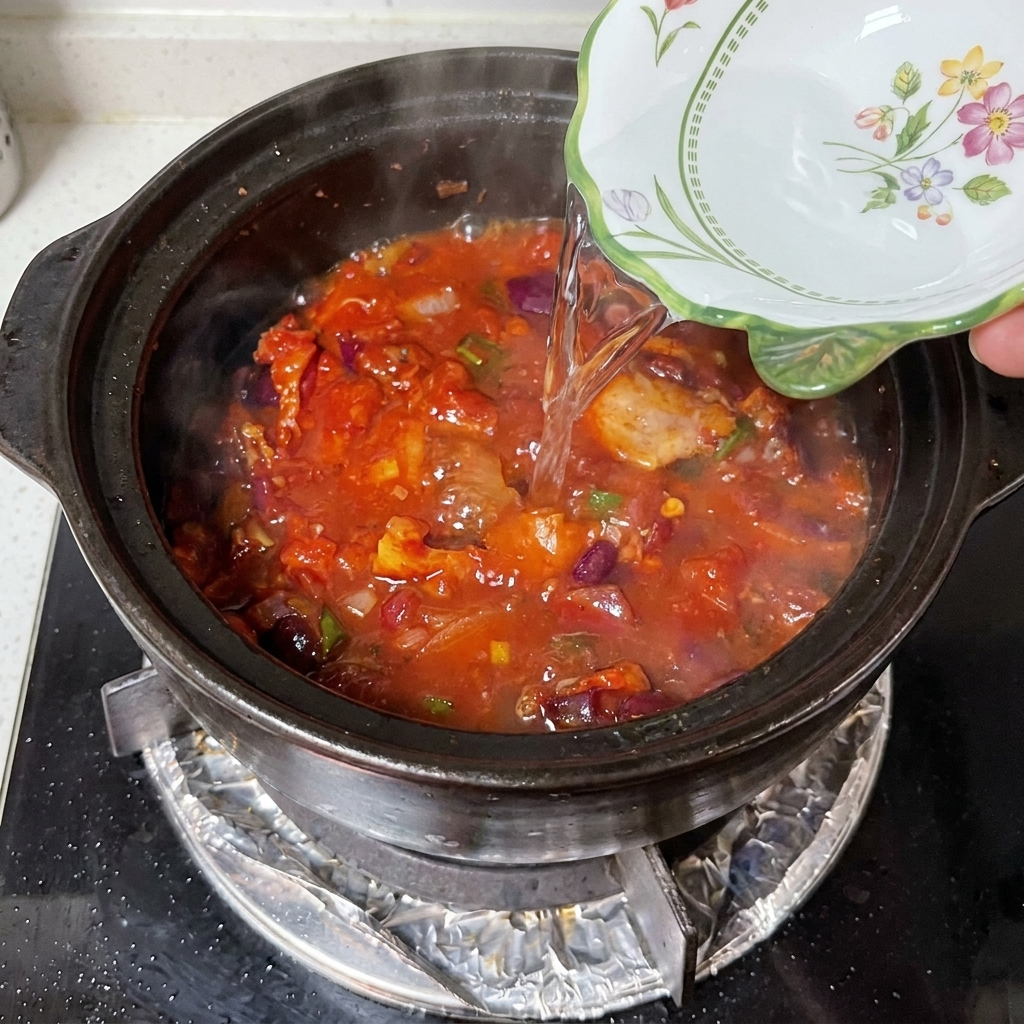
Pour a large bowl of clear water into the clay pot containing the seasoned base. Bring the liquid to a gentle simmer to begin building the body of the soup.
Tip: Using a clay pot helps retain heat, making the simmering process more efficient. - 9Add vegetables and tofu
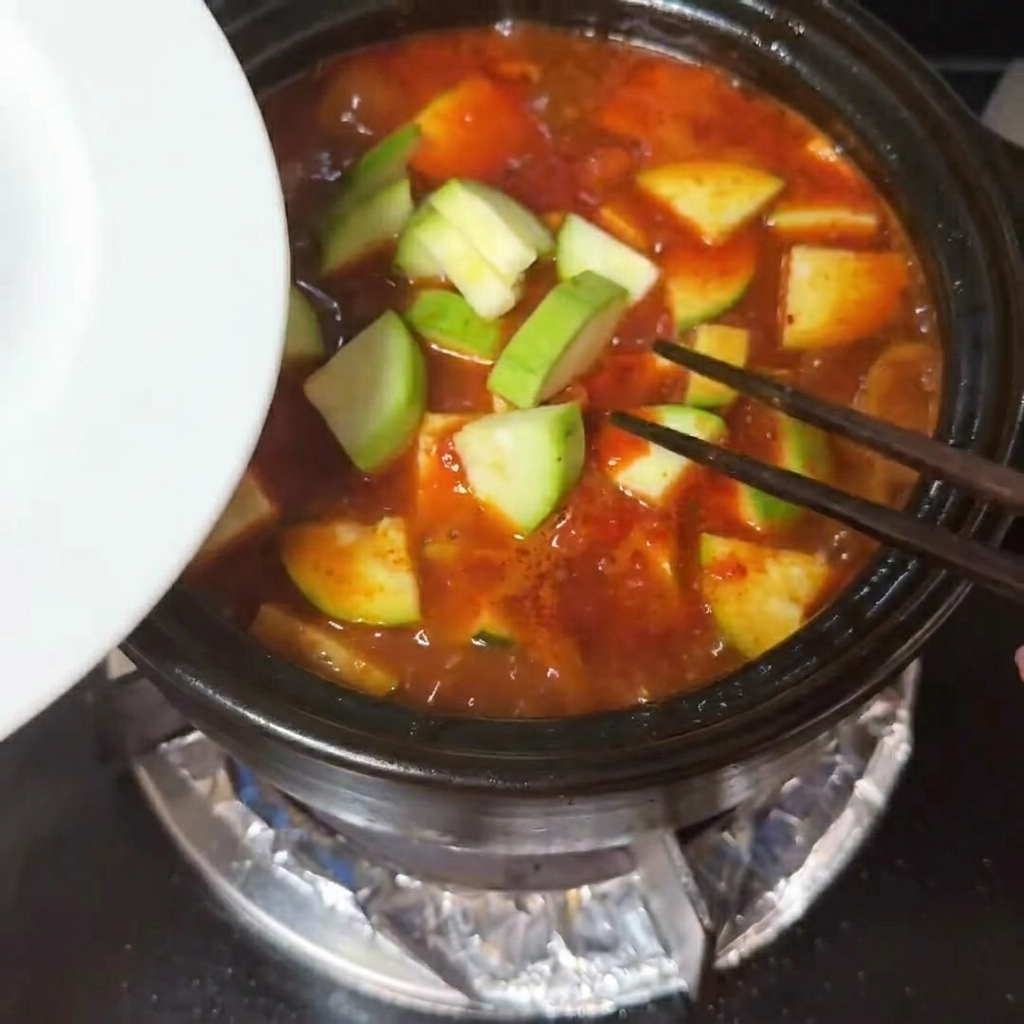
Gently add the sliced zucchini and large chunks of silken tofu into the simmering broth. Be careful when adding the tofu to keep the pieces intact.
Tip: Silken tofu is very delicate; handle it gently to avoid breaking it into small pieces in the soup. - 10Add beef and eggs
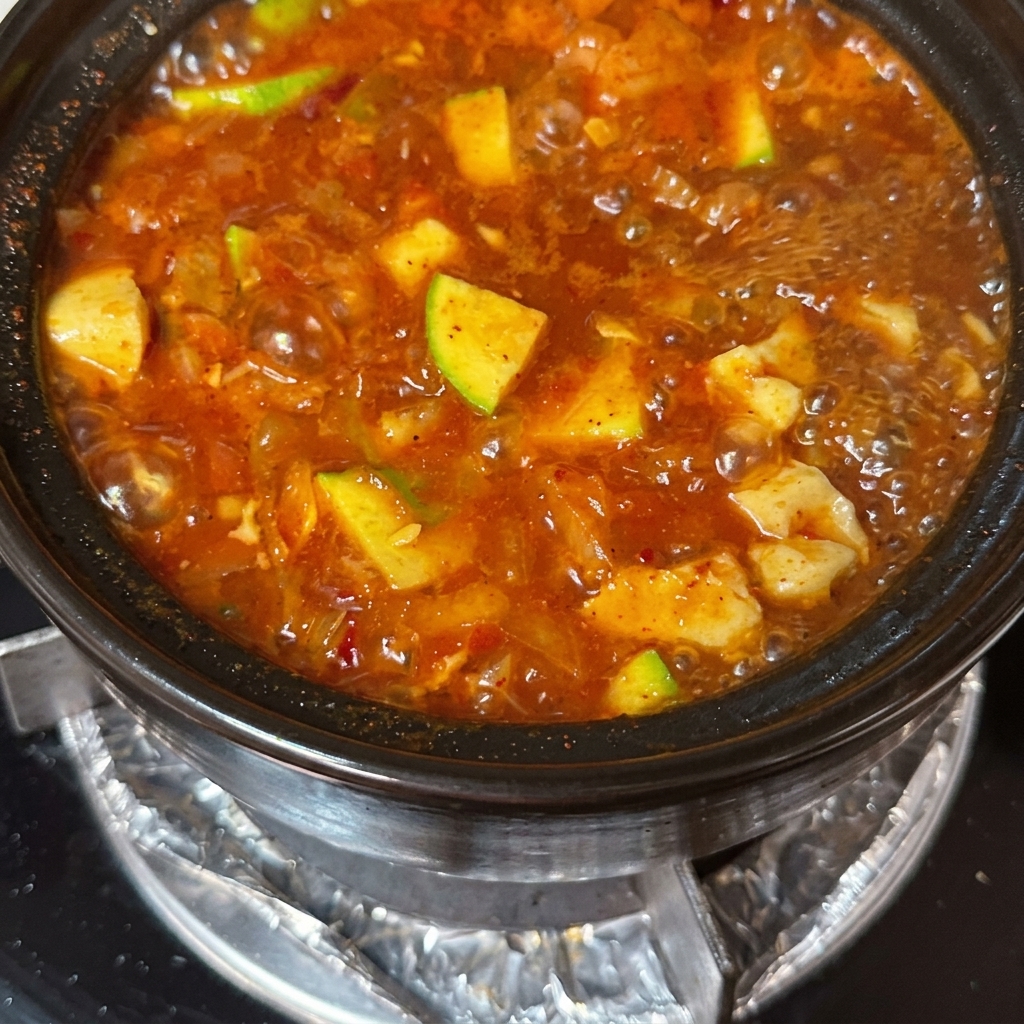
Add the thin slices of beef to the pot, then carefully crack the two raw eggs directly into the simmering soup. Allow them to cook in the broth until they reach your desired consistency.
Tip: If you prefer softer eggs, crack them in towards the very end of the cooking process. - 11Garnish and serve
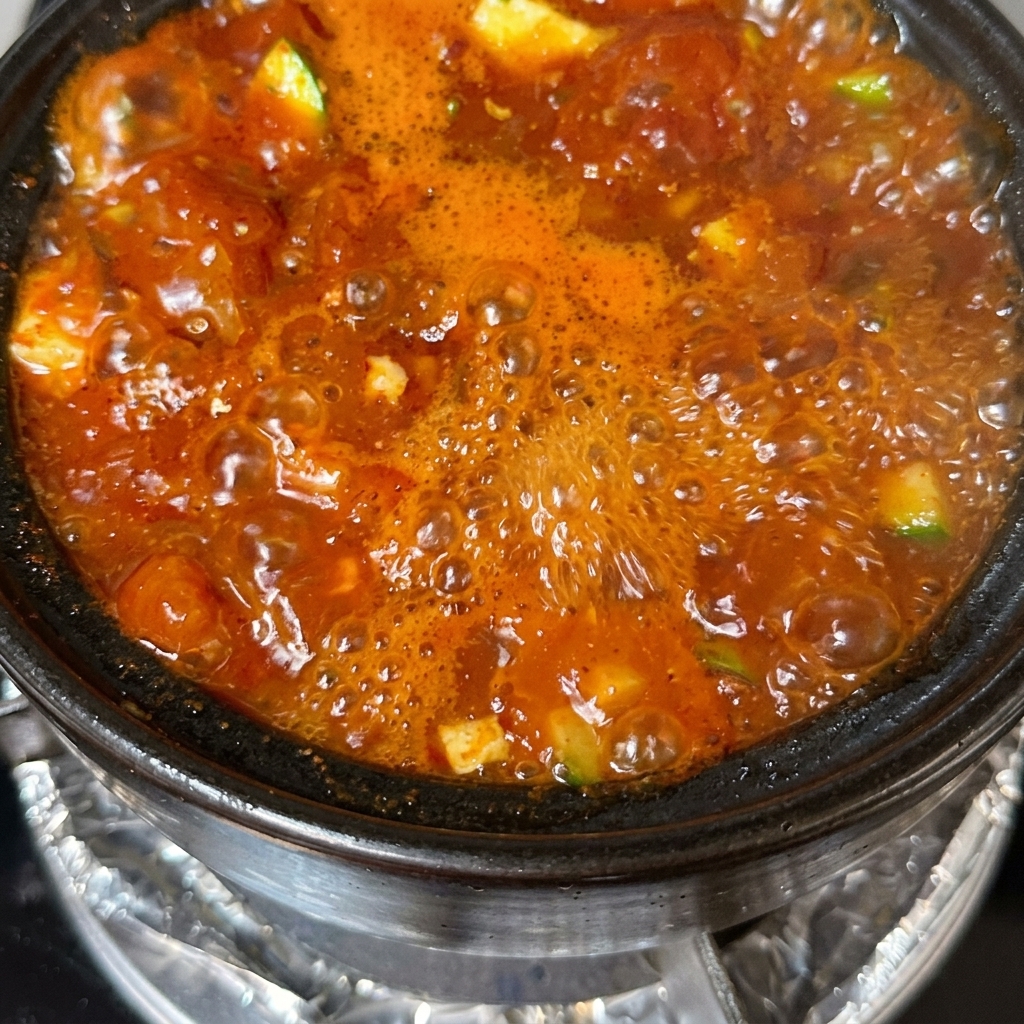
Finish the dish by sprinkling fresh green onion slices and chili pepper rings over the top of the hot soup. Serve immediately while bubbling.
Tip: Adding the green onions at the very end keeps them vibrant and fresh for better presentation.