Spicy Pork Belly, Rice Cake,
Tofu Stew
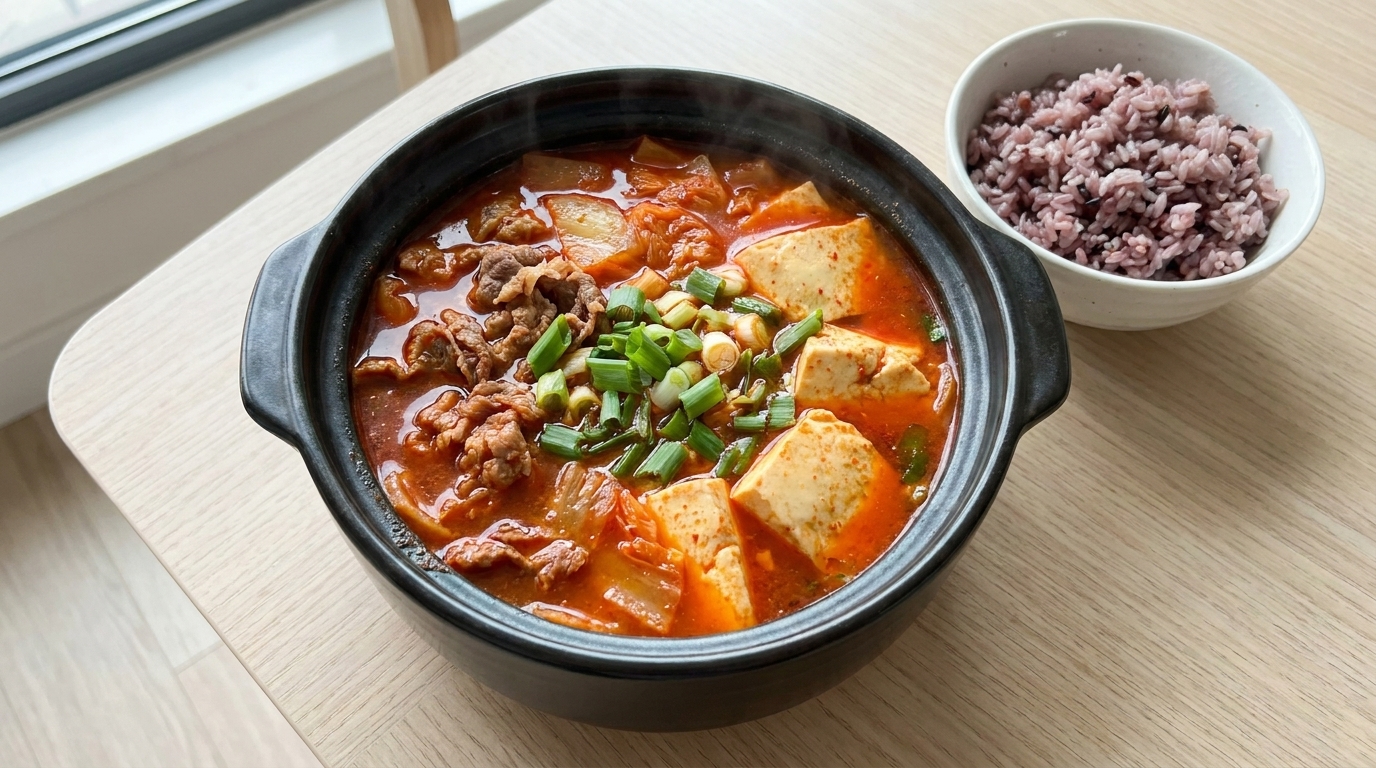
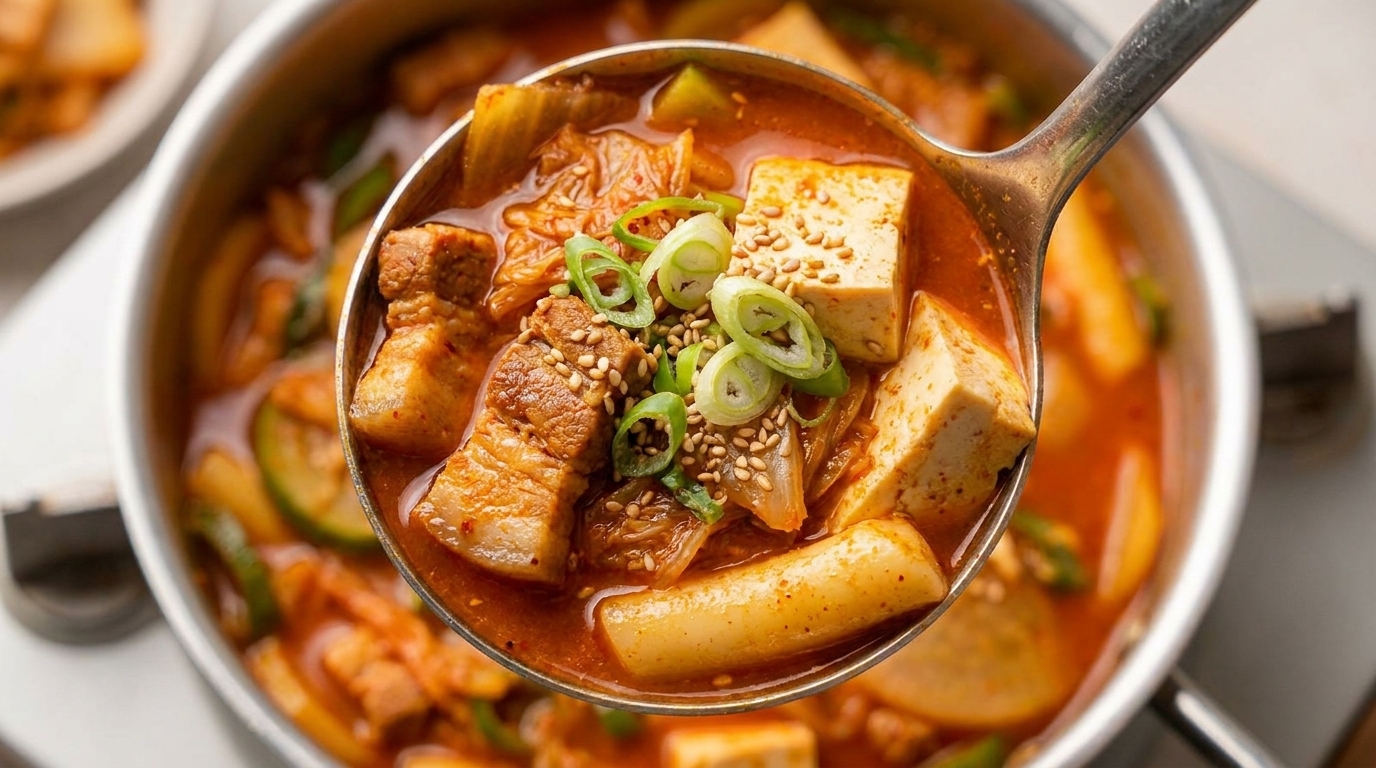
A hearty Korean-style stew combining tender pork belly, chewy rice cakes, and silken tofu in a bold, spicy kimchi-based broth.
This spicy stew, often known as a variation of kimchi-jjigae, is a comforting staple of Korean home cooking. The combination of fermented kimchi, savory pork belly, and texture-rich additions like rice cakes and tofu creates a deeply satisfying, balanced meal that warms from the inside out.
Ingredients
- 300 g pork belly
- 1 cup spicy kimchi
- 150 g firm tofu
- 150 g rice cakes
- 1 onion
- 2 potatoes
- 1 carrot
- 1 tbsp gochujang
- 2 scallions
- 1 tsp ginger
- 1 tbsp garlic
- to taste salt
- to taste fresh chili peppers
- to taste toasted sesame seeds
Instructions
- 1Sear the pork belly
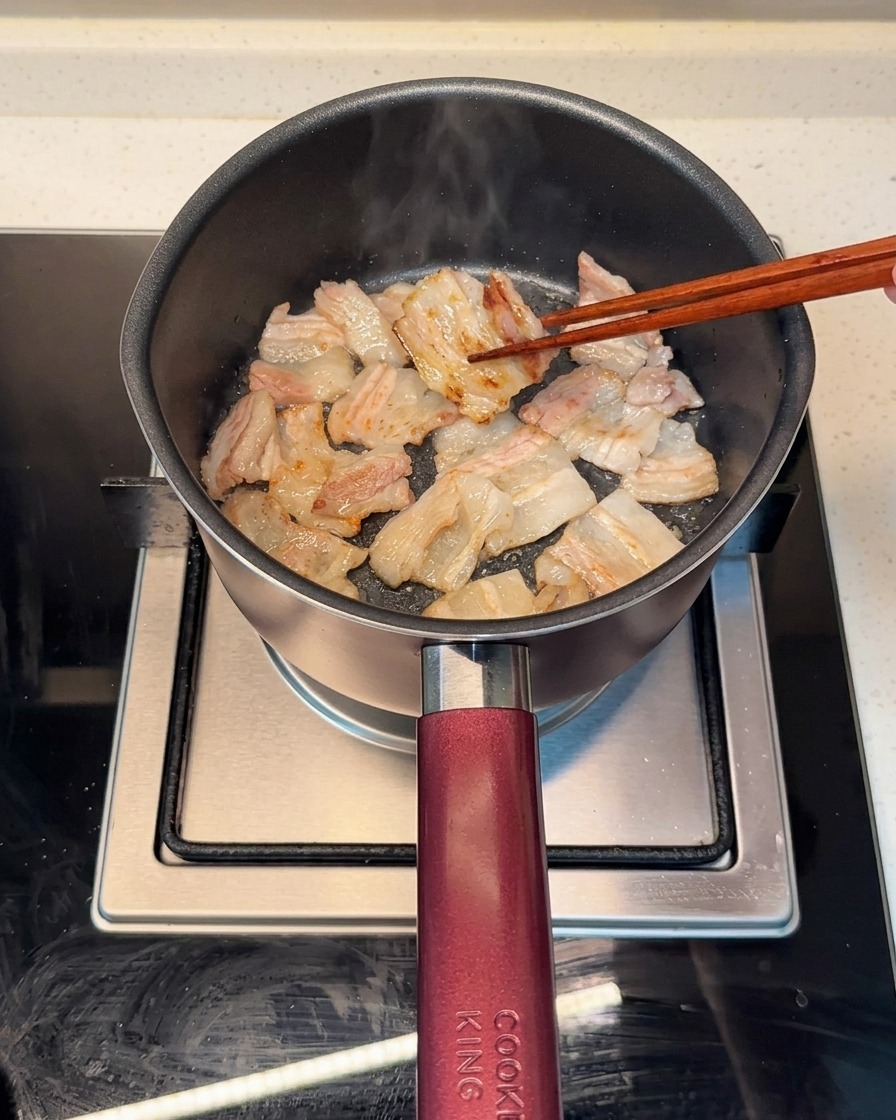
Place the pork belly slices into the pot and sear them over medium heat until both sides are golden brown. Once browned, pour out any excess oil rendered from the fat to keep the stew from being too greasy.
Tip: Rendering the fat properly develops a deep, savory base flavor for the entire stew. - 2Sauté the aromatics
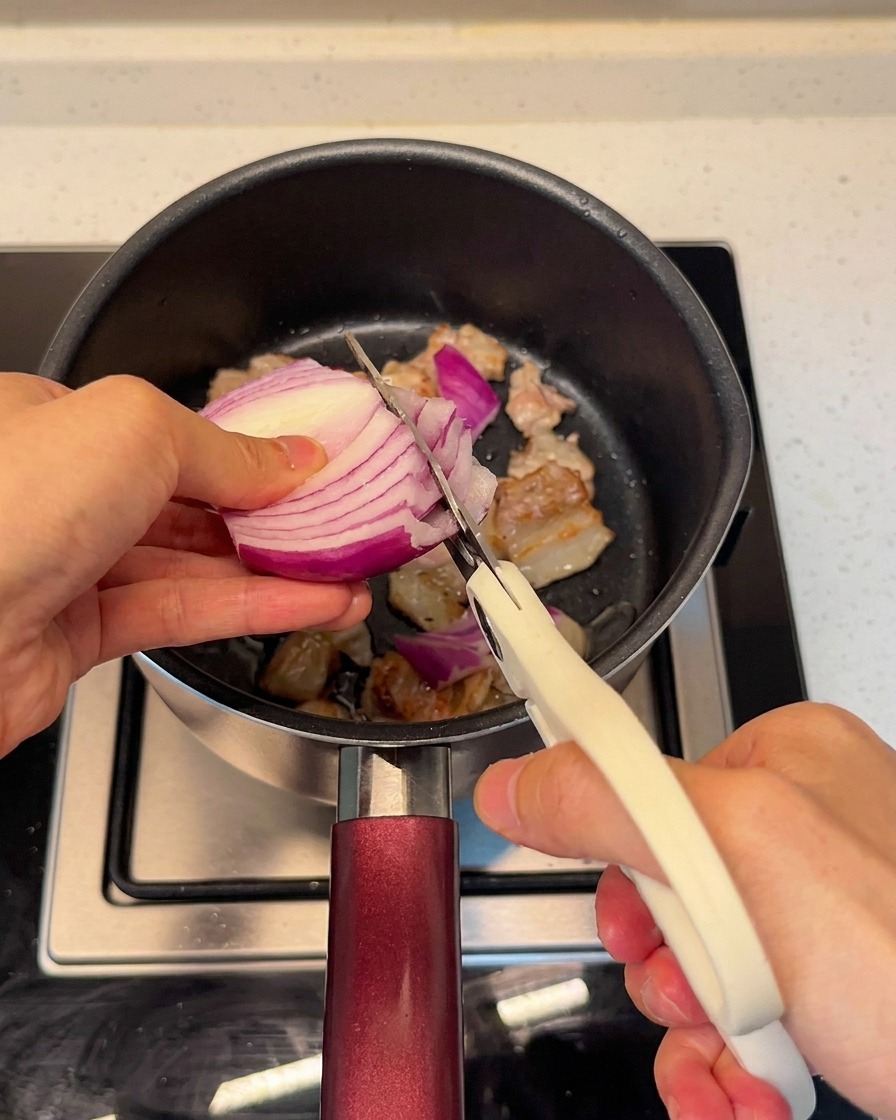
Add the sliced onion, scallions, ginger, and garlic into the pot with the seared pork. Stir-fry for a minute or two until the aromatics are fragrant and slightly softened.
Tip: Using scissors to quickly cut fresh aromatics directly into the pot saves preparation time and reduces cleanup. - 3Add kimchi
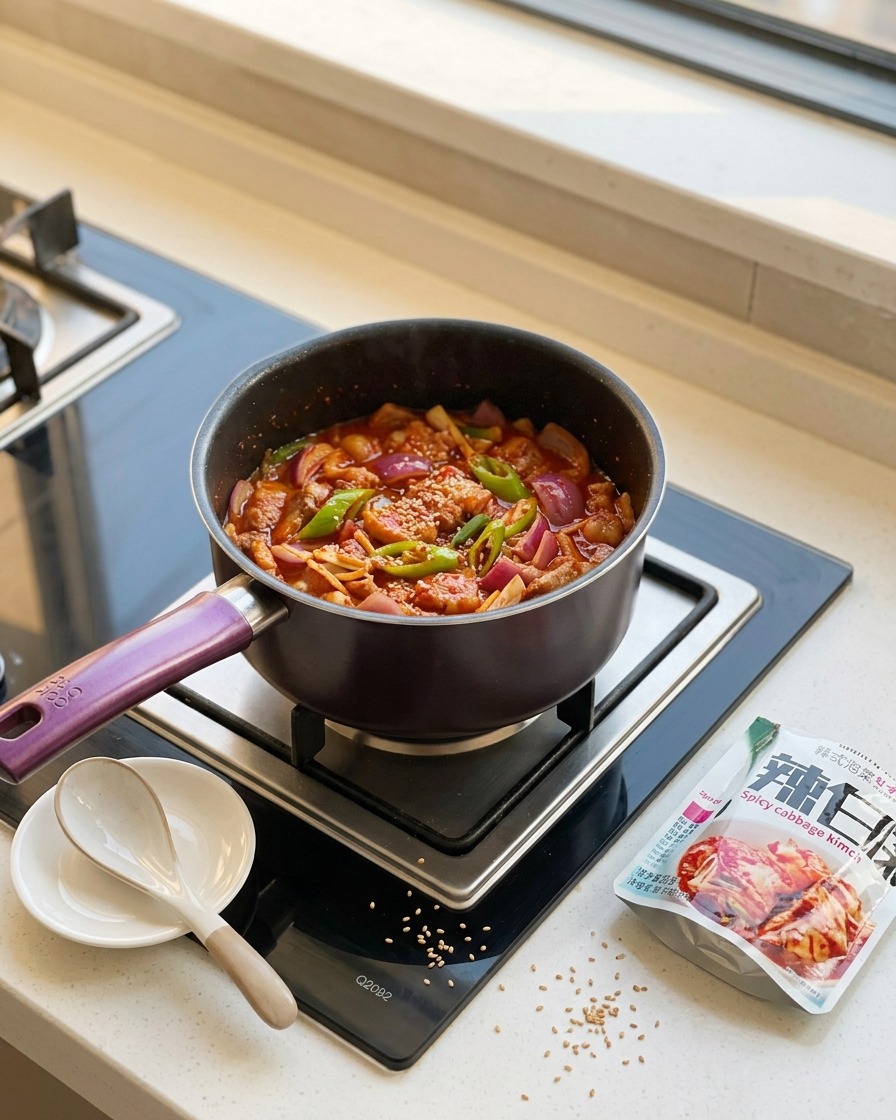
Add the spicy kimchi to the pot and mix it thoroughly with the pork and aromatics. Cooking the kimchi briefly allows it to release its tangy, spicy flavor into the base.
Tip: Use well-fermented, sour kimchi for the best depth of flavor in this stew. - 4Incorporate vegetables
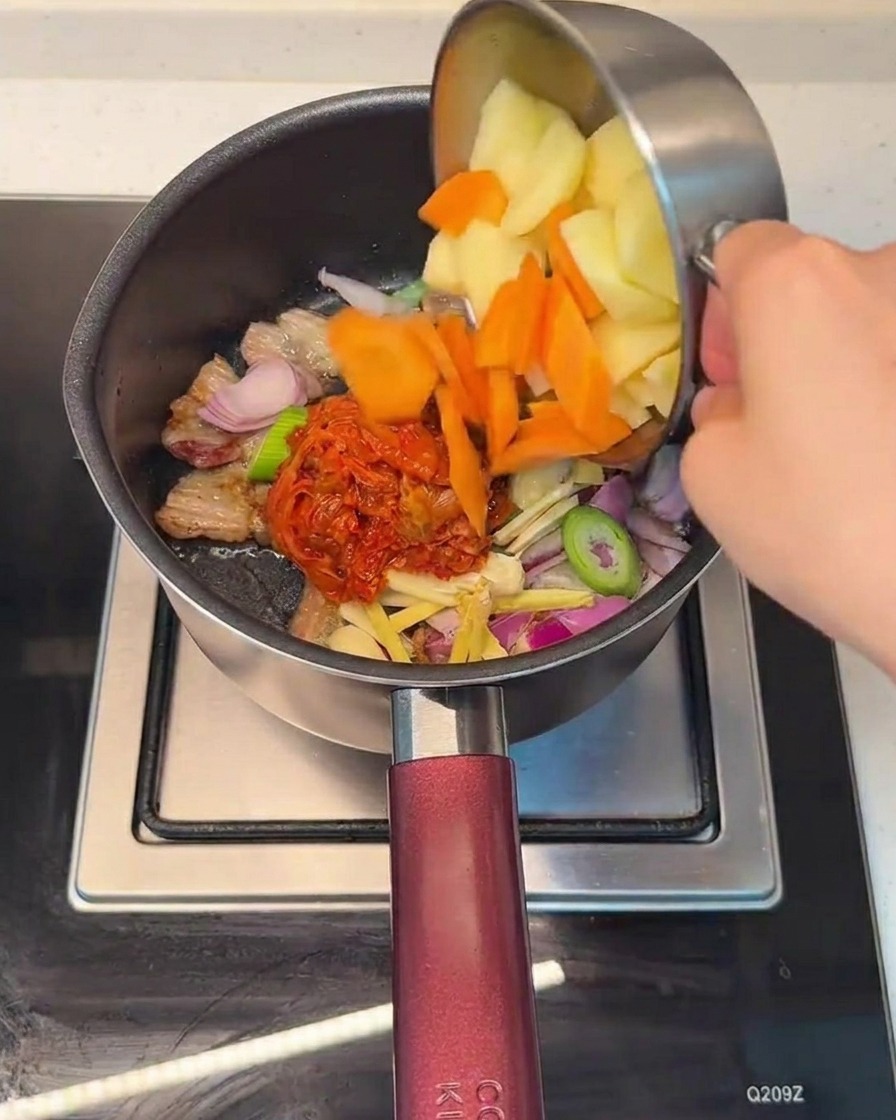
Add the sliced carrots and potatoes to the pot. Stir them well so they are evenly coated with the flavors already in the pan.
Tip: Slice the potatoes and carrots into uniform pieces to ensure they cook at the same rate. - 5Add gochujang
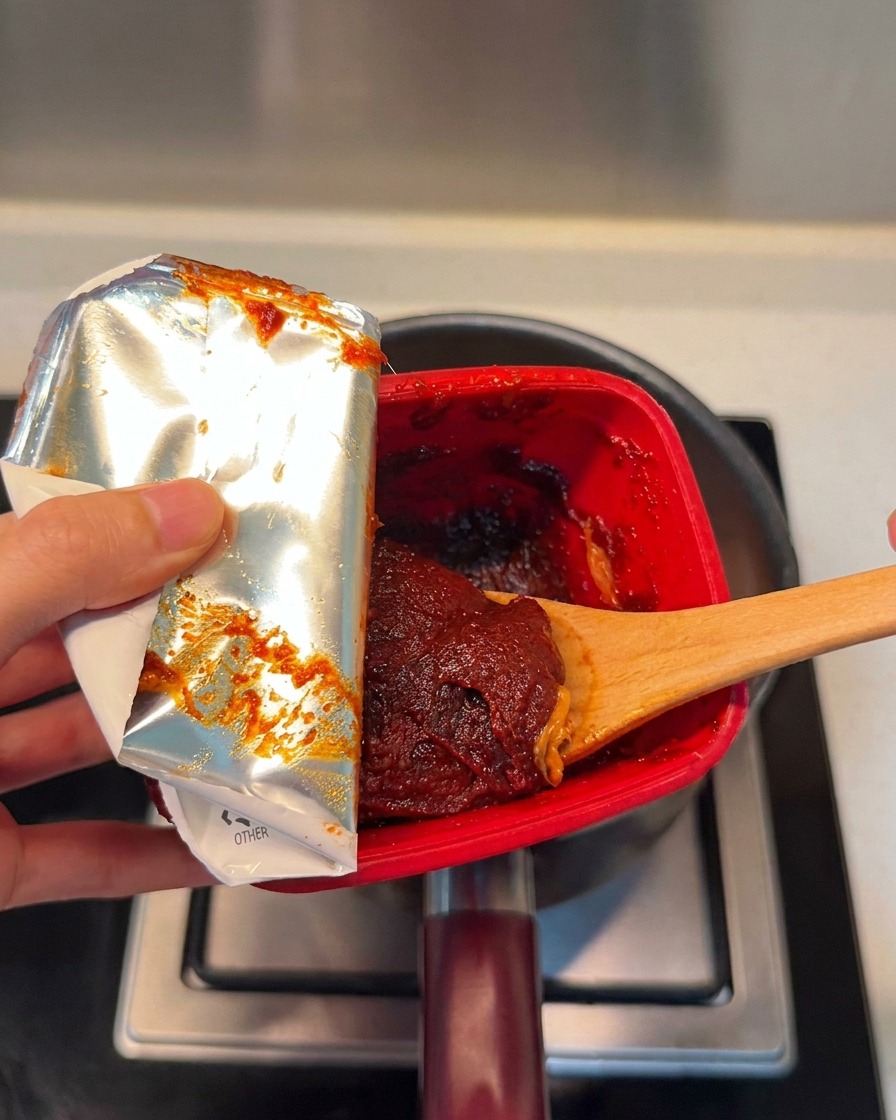
Add a generous spoonful of Korean chili paste (gochujang) to the pot. Mix well until the paste is fully incorporated into the ingredients.
Tip: Gochujang adds both heat and a slight sweetness; adjust the amount based on your preference for spiciness. - 6Simmer the stew
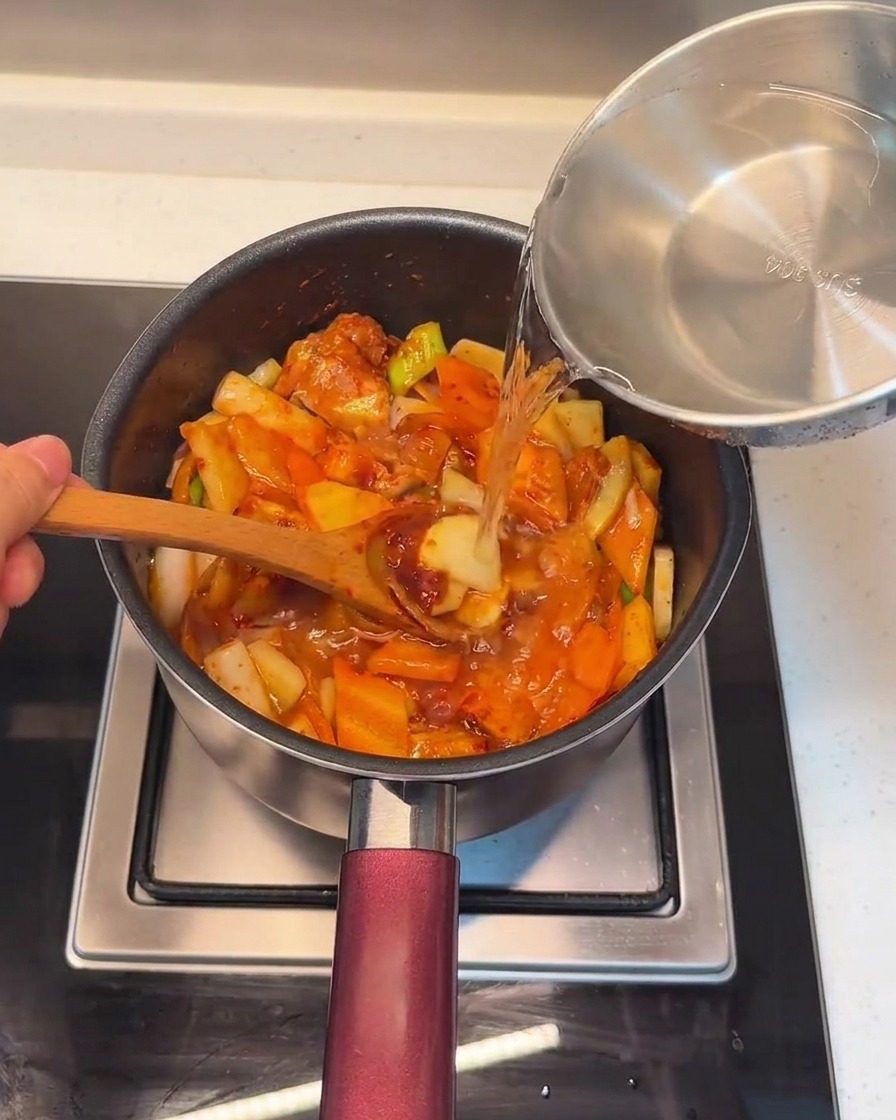
Pour enough water into the pot to fully cover the ingredients. Bring the mixture to a boil, then add a pinch of salt to taste.
Tip: Using a flavorful stock instead of plain water can elevate the final taste even further. - 7Add tofu to the stew
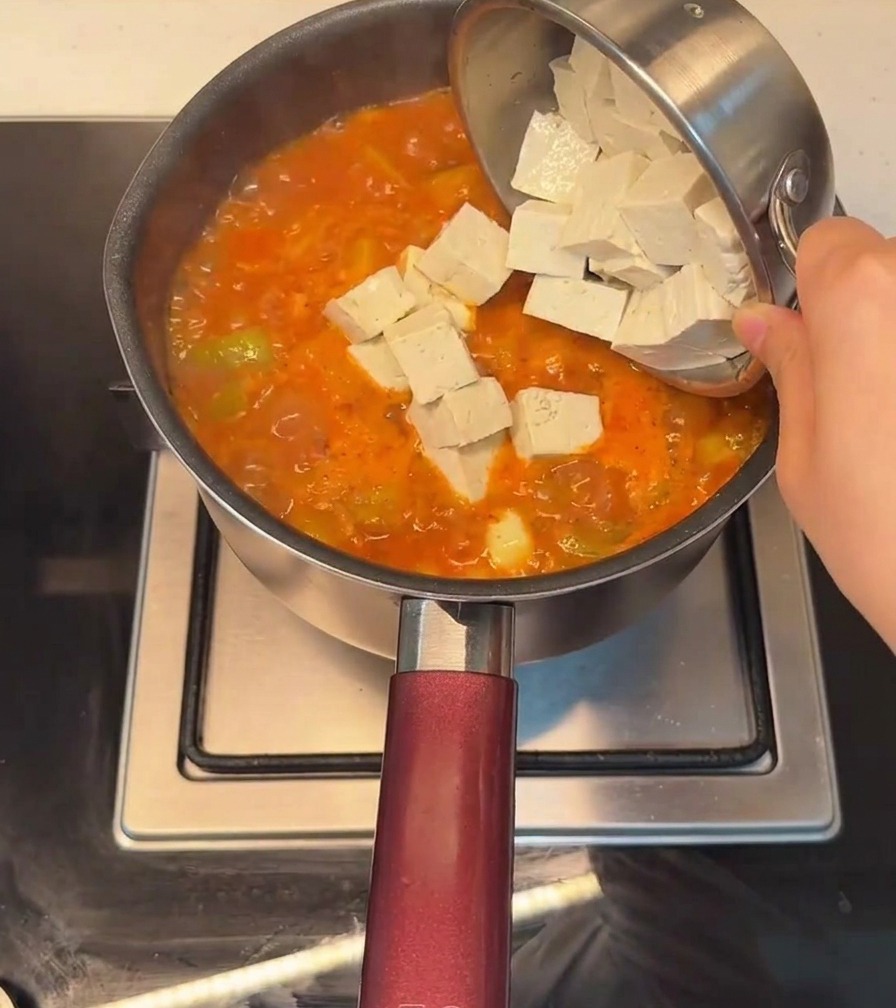
Gently place the cubed tofu into the pot with the boiling stew. The tofu will absorb the rich flavors of the spicy kimchi broth.
Tip: Handle the tofu gently to prevent it from breaking apart in the stew. - 8Garnish with chili and onions
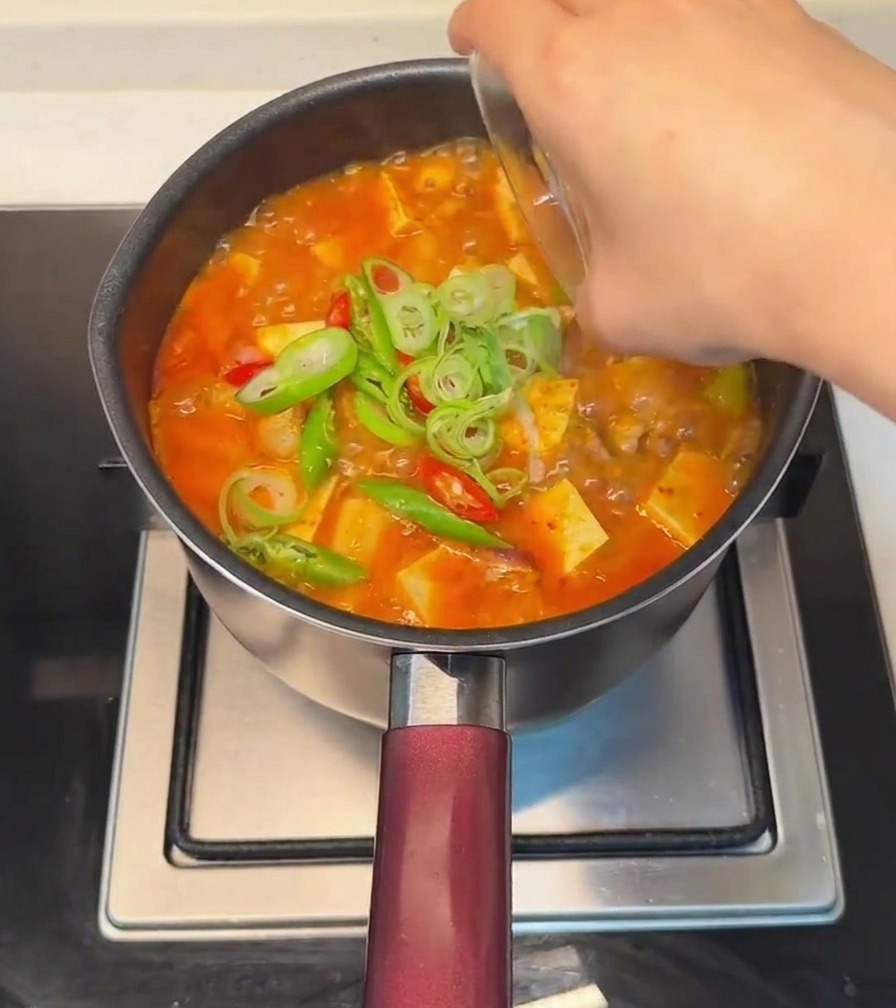
Add fresh sliced red and green chili peppers and green onions on top of the stew. These fresh ingredients add vibrant color and a final punch of flavor.
Tip: Adding the garnishes right at the end keeps them fresh and slightly crunchy.