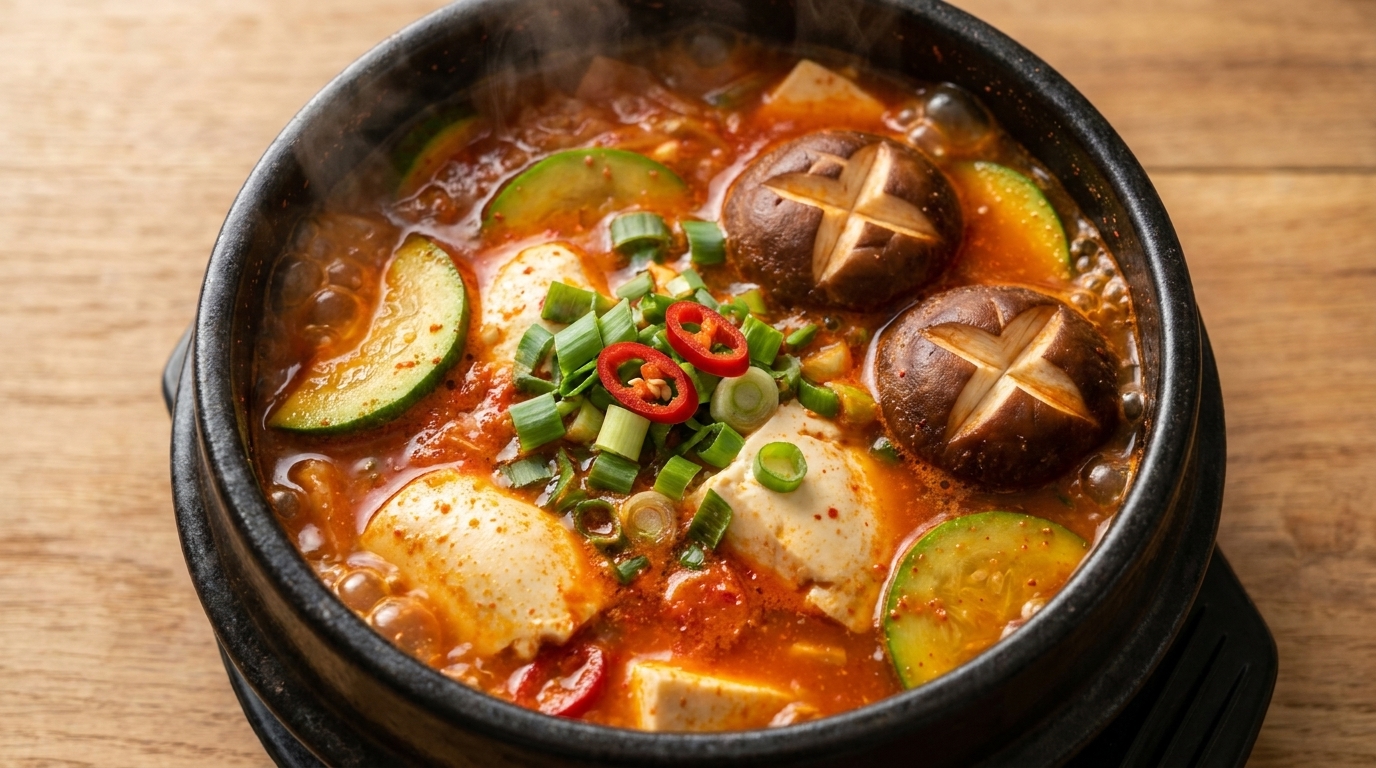
Quick Sour Kimchi Jjigae
Cherry Tomatoes
A clever quick fix hack for Korean kimchi stew that uses cherry tomatoes to create a perfectly tangy refreshing broth even when your kimchi is not fully fermented.
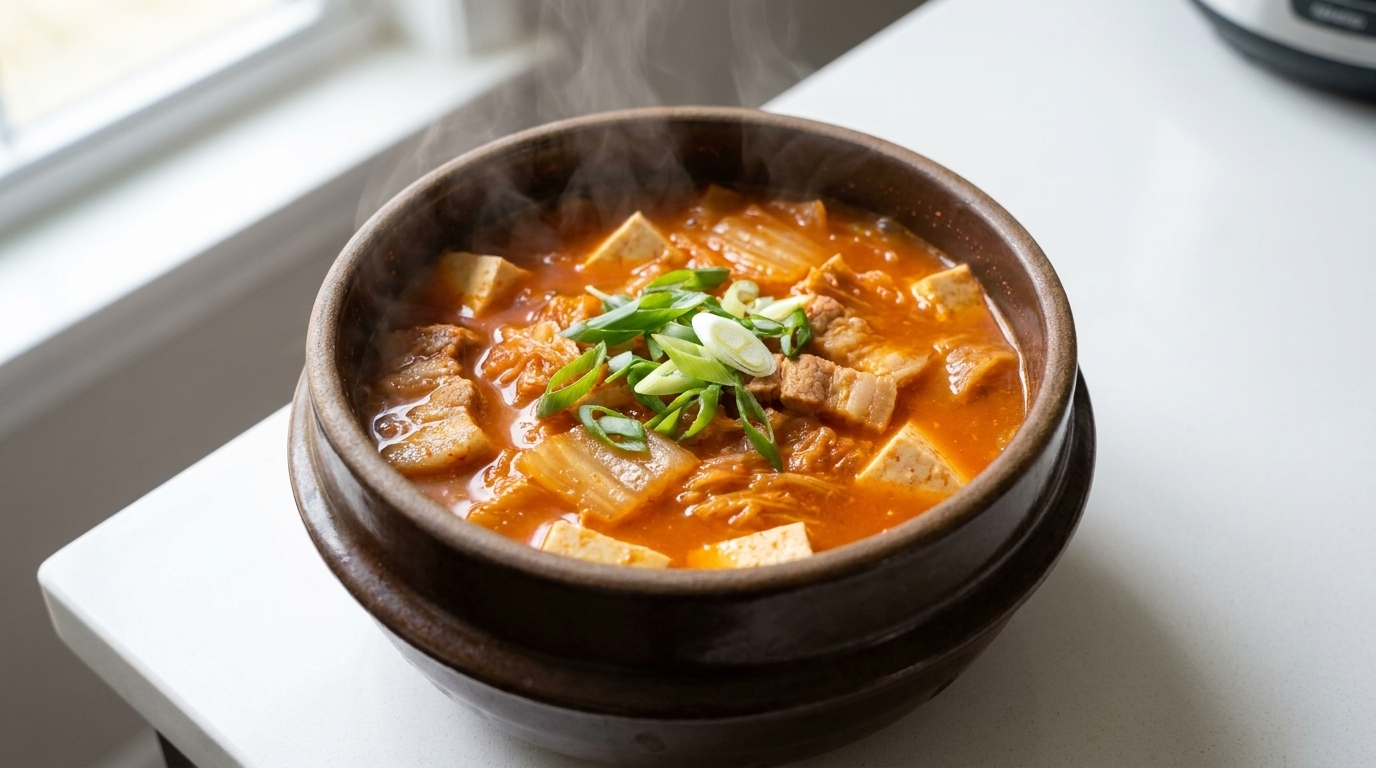
Kimchi Jjigae is a staple of Korean home cooking, traditionally relying on the sharp acidity of aged kimchi. This version introduces a modern shortcut using tomatoes and Tabasco to mimic that deep fermentation, resulting in a vibrant and savory soup that takes a fraction of the time to develop.
Ingredients
- 200 g fermented kimchi
- 150 g pork belly
- 10 cherry tomatoes
- 1 block firm tofu
- 0.5 leek
- 1 tbsp fish sauce
- 1 tbsp minced garlic
- 1 tbsp Korean chili powder (Gochugaru)
- 1 tbsp light soy sauce
- to taste Tabasco sauce
- optional green chilies
Instructions
- 1Slice the cherry tomatoes

Begin by preparing the cherry tomatoes, which will provide the essential acidity for the soup. Take about 10 cherry tomatoes and use a sharp knife to slice each one into segments or halves on a clean wooden cutting board.
Tip: Using cherry tomatoes is a great quick fix hack to add a fresh tart flavor when your kimchi has not fermented enough. - 2Prepare the pork belly
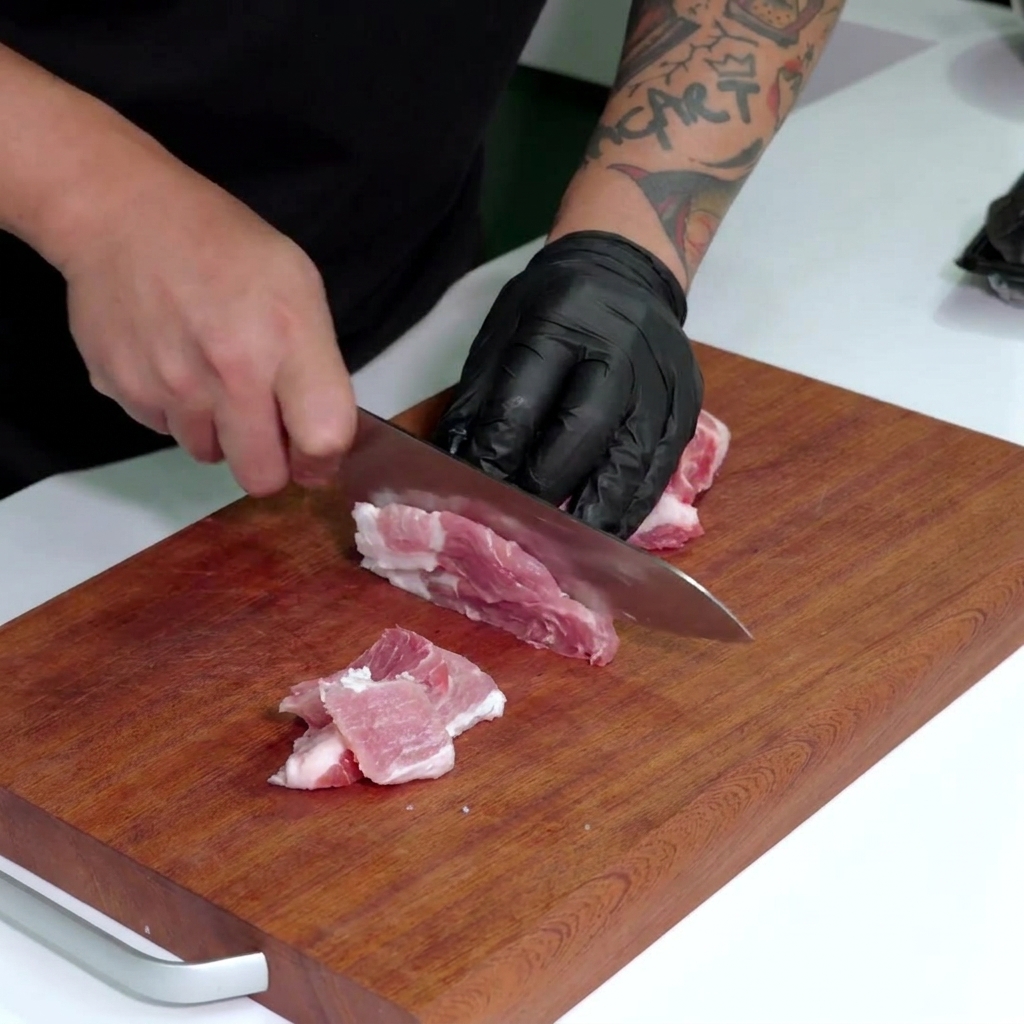
Take a portion of pork belly, approximately 150g, and cut it into bite-sized slices. The fat from the pork belly will render down during cooking, adding richness and depth to the spicy broth.
Tip: Chilling the pork belly in the freezer for 15-20 minutes before slicing makes it much easier to get clean, uniform cuts. - 3Slice the leeks
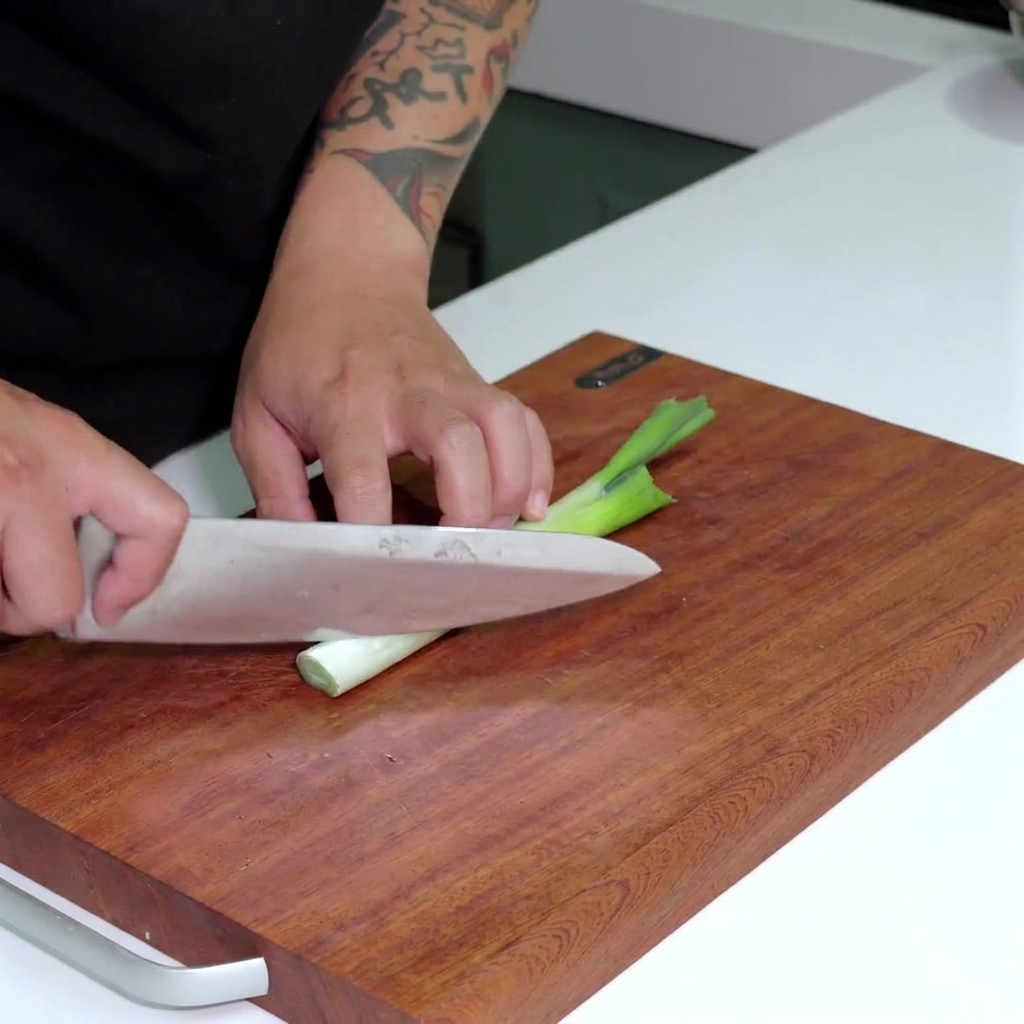
Clean a leek and use only the white and light green parts. Slice half of the leek into thin rounds. These will be added later to provide a mild, sweet onion flavor to the soup.
- 4Cube the tofu
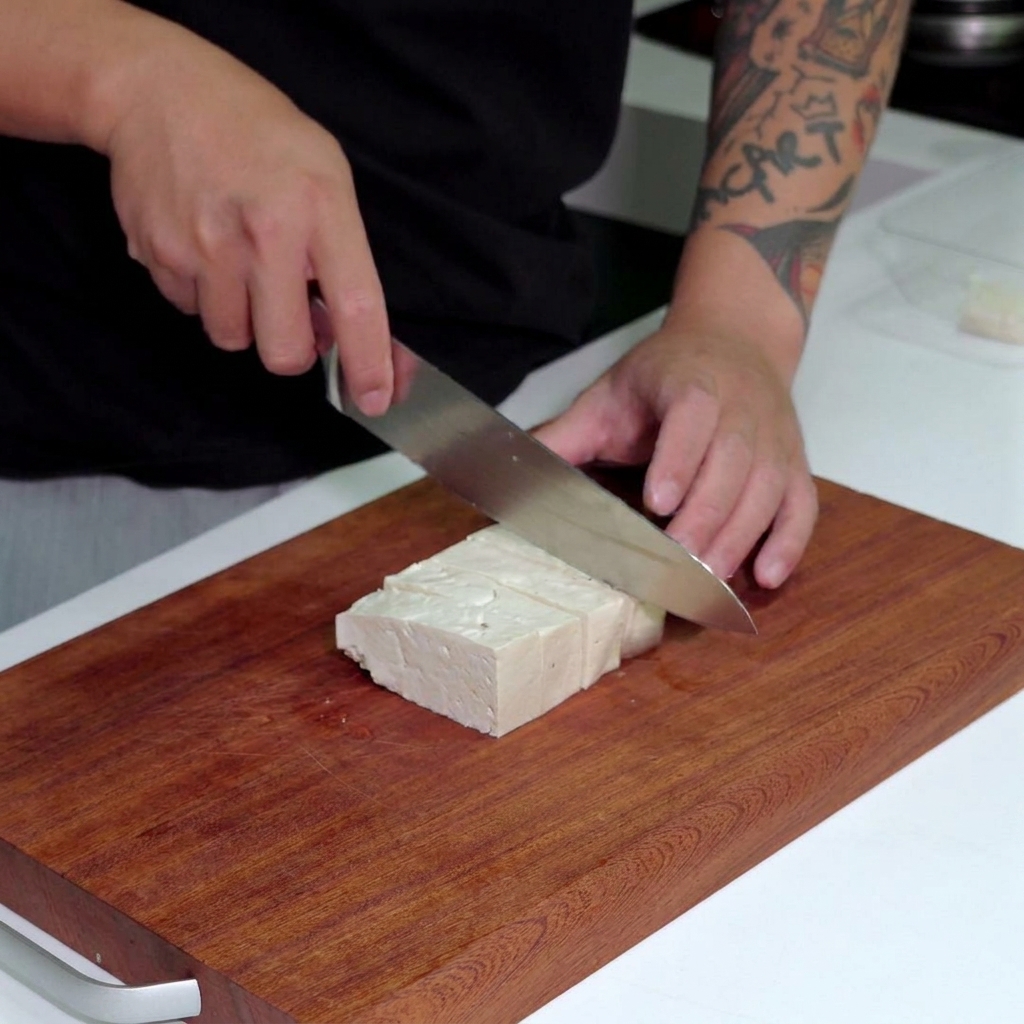
Take a block of firm tofu and slice it evenly into uniform cubes. The tofu will act as a soft, protein-rich component that absorbs the spicy and sour flavors of the kimchi broth.
Tip: Handle the tofu gently after cubing to prevent the pieces from breaking before they are added to the pot. - 5Prepare the kimchi base
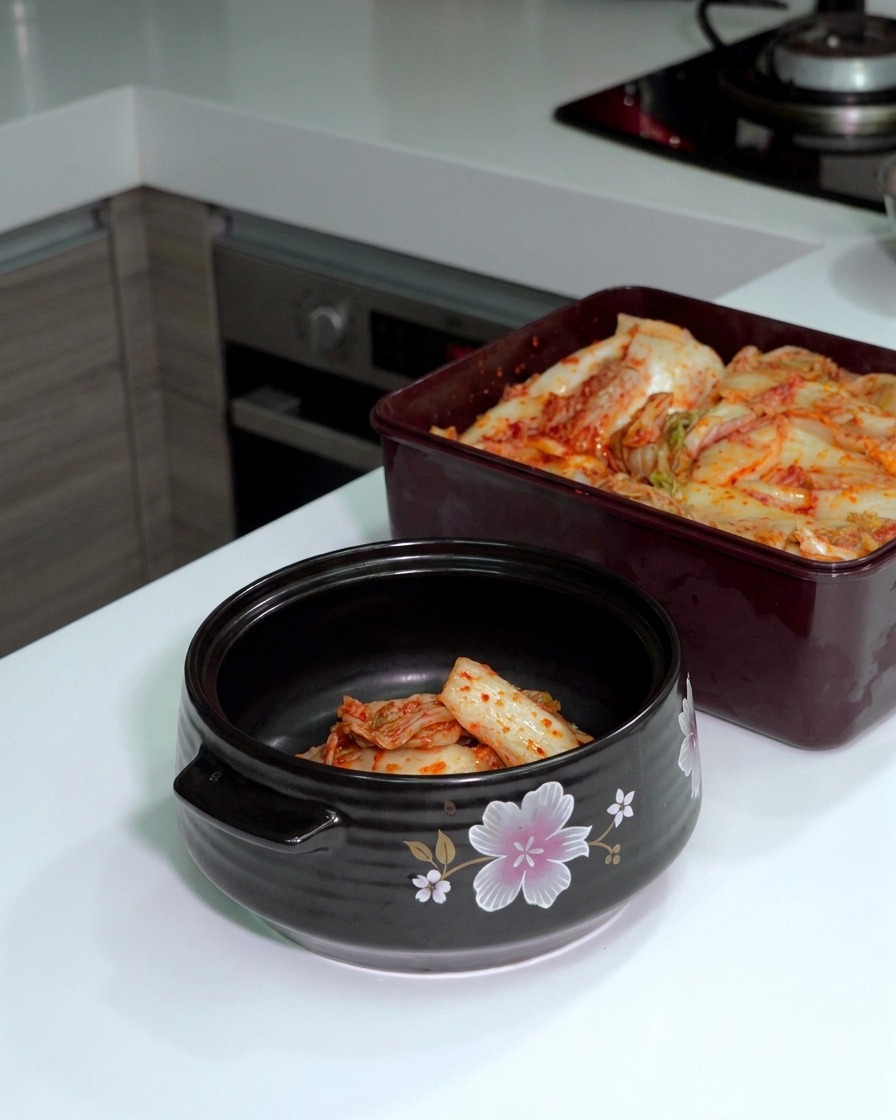
Place your fermented kimchi into a black ceramic pot. Using kitchen scissors, snip the cabbage directly into the pot into manageable pieces. In this quick fix version, there is no need to stir-fry the kimchi first.
Tip: Cutting the kimchi directly in the pot with scissors saves time and keeps your cutting board clean from kimchi juice stains. - 6Add tomatoes for acidity
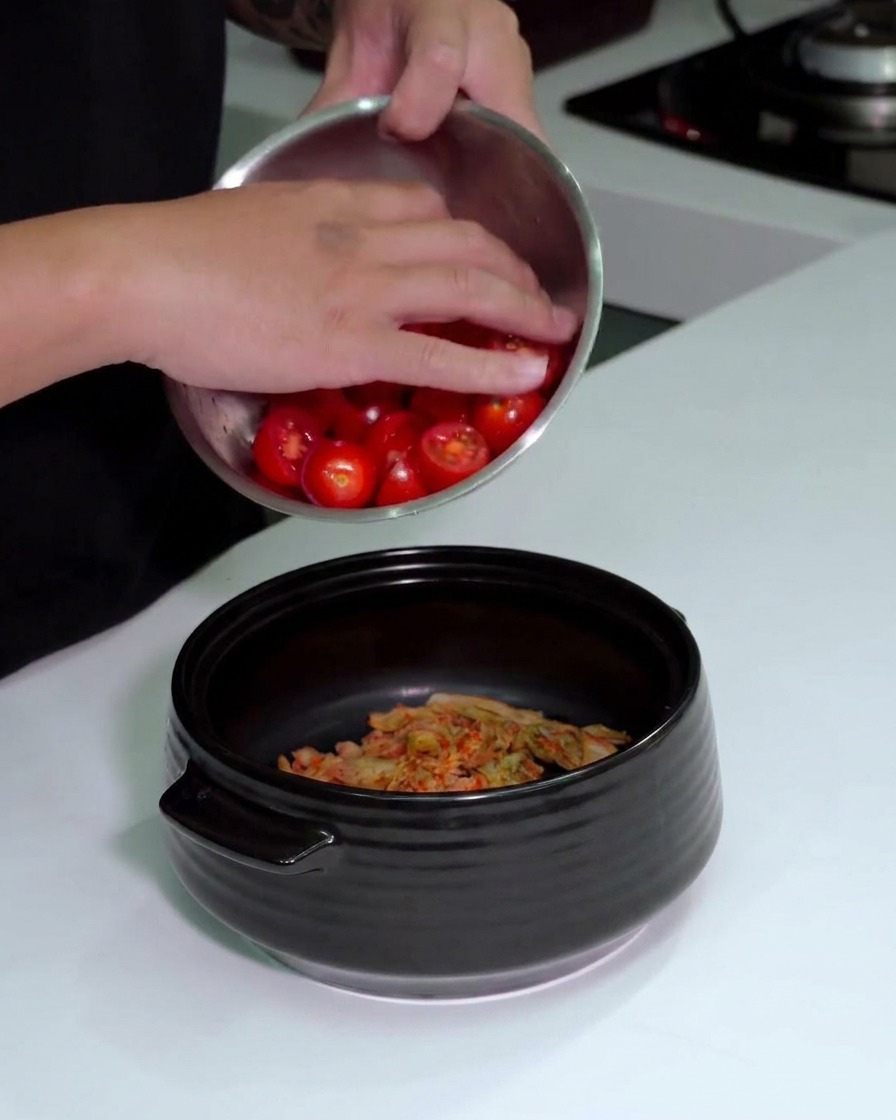
Add the sliced cherry tomatoes directly into the pot on top of the snipped kimchi. The natural acids in the tomatoes will supplement the kimchi, creating that perfect sour profile even if your kimchi isnt fully aged.
- 7Add the pork belly
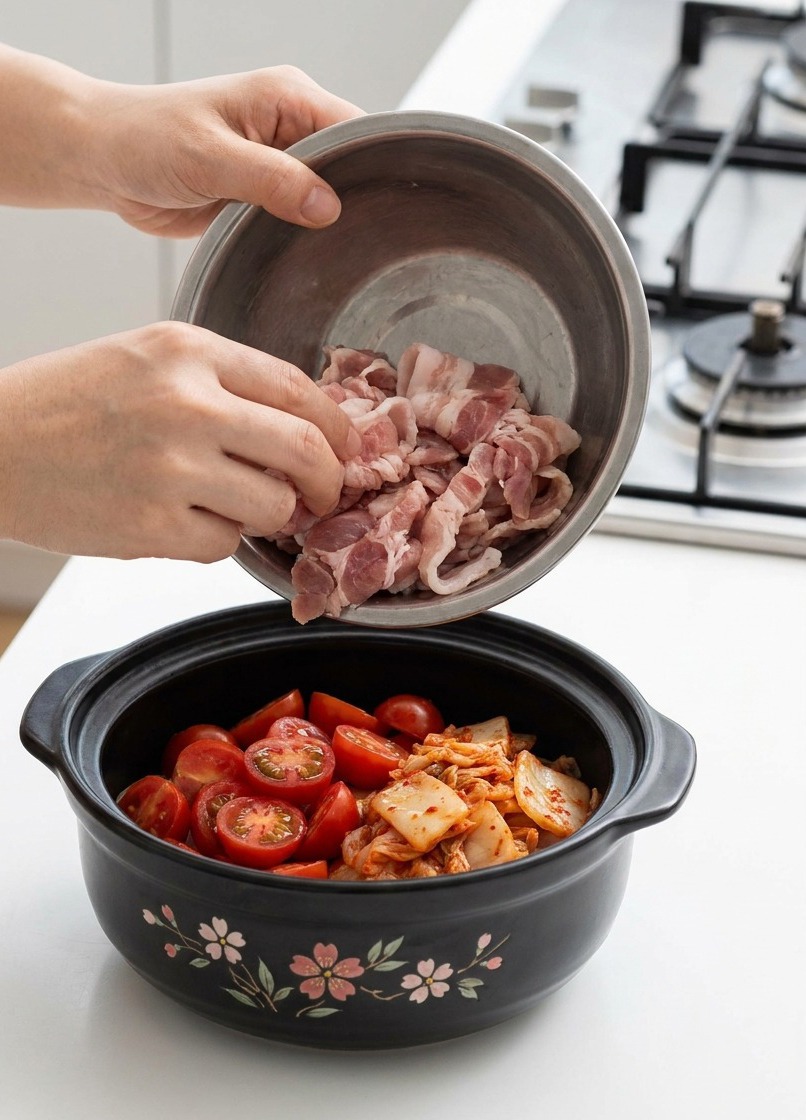
Add about 150g of sliced raw pork belly directly into the pot with the chopped tomatoes and kimchi. For this quick fix version, there is no need to pre fry the meat or vegetables.
Tip: Slicing the pork belly into bite-sized pieces ensures it cooks quickly and renders its flavor evenly into the broth. - 8Season with fish sauce
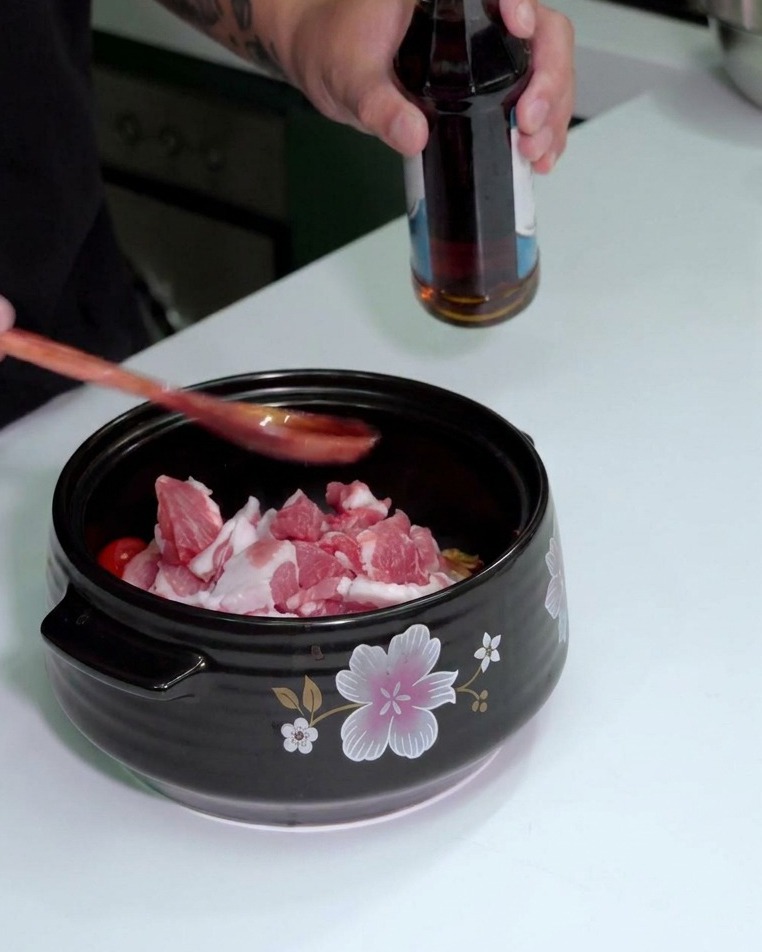
Begin seasoning the soup base by adding one spoonful of fish sauce directly over the raw ingredients in the pot. This provides a deep, savory umami flavor.
Tip: Using fish sauce in kimchi soup enhances the overall savory depth without overpowering the dish. - 9Add minced garlic
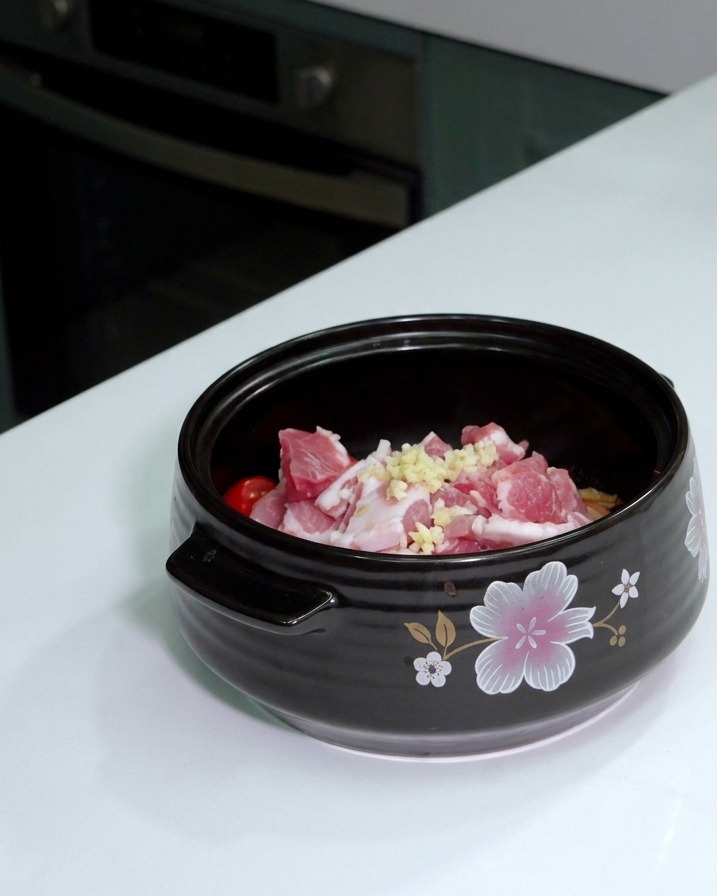
Spoon one tablespoon of minced garlic directly onto the meat and vegetables. Garlic is essential for building the aromatic foundation of the soup.
Tip: Freshly minced garlic will provide a much brighter flavor than pre-minced jarred garlic. - 10Sprinkle chili powder
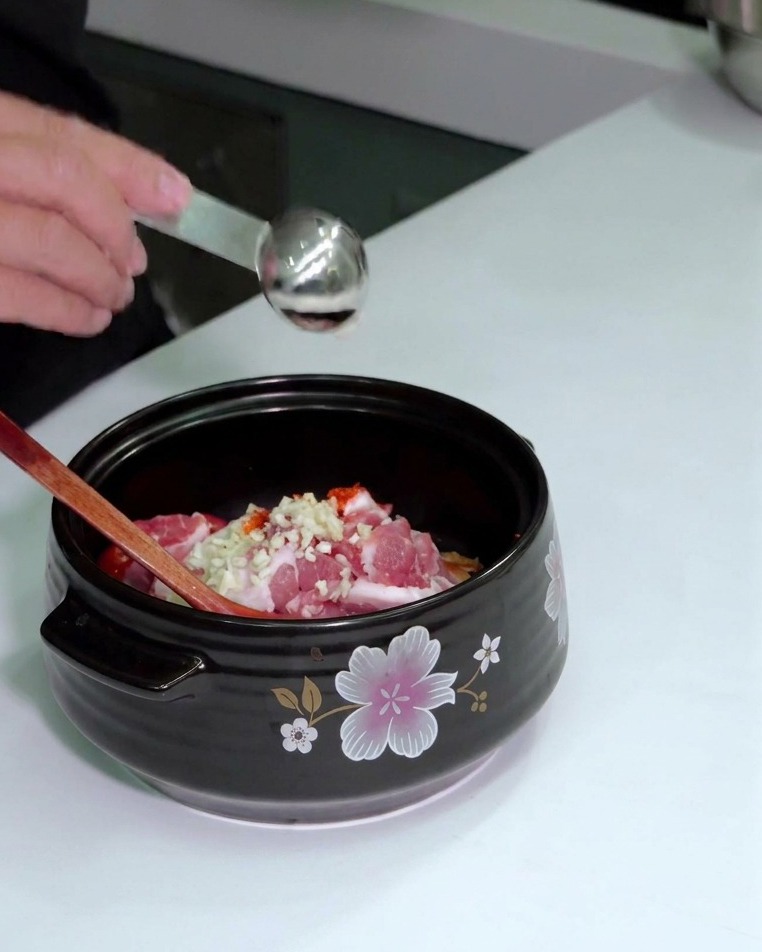
Add one spoonful of red chili powder over the ingredients. This will give the soup its signature vibrant red color and a pleasant kick of heat.
Tip: Adjust the amount of chili powder based on your desired spice level. - 11Pour in light soy sauce
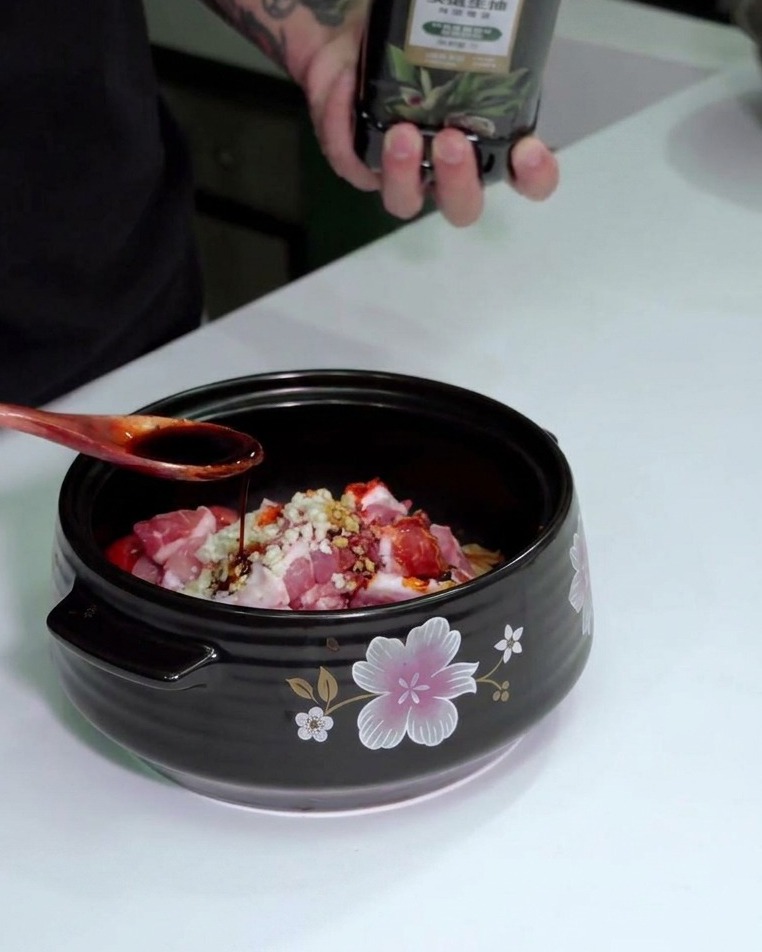
Add one spoonful of light soy sauce into the pot. This balances the sourness of the tomatoes and kimchi while contributing a salty depth to the soup base.
Tip: Light soy sauce is preferred here, as dark soy sauce would alter the vibrant red color of the soup. - 12Add water
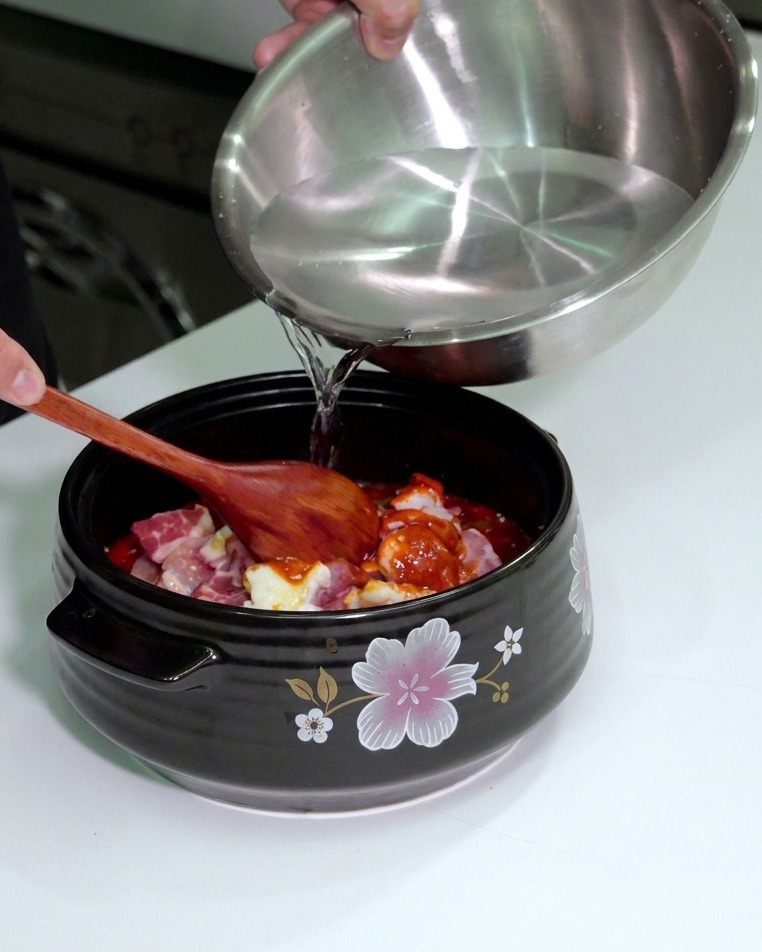
Pour enough water into the pot to just submerge all of the ingredients. A heavy stock isnt necessary, as the pork, tomatoes, and kimchi will naturally create a rich and flavorful broth as they boil.
Tip: Do not overfill the pot with water; keeping the liquid level just at the ingredients ensures a concentrated, robust flavor. - 13Add the tofu and leeks
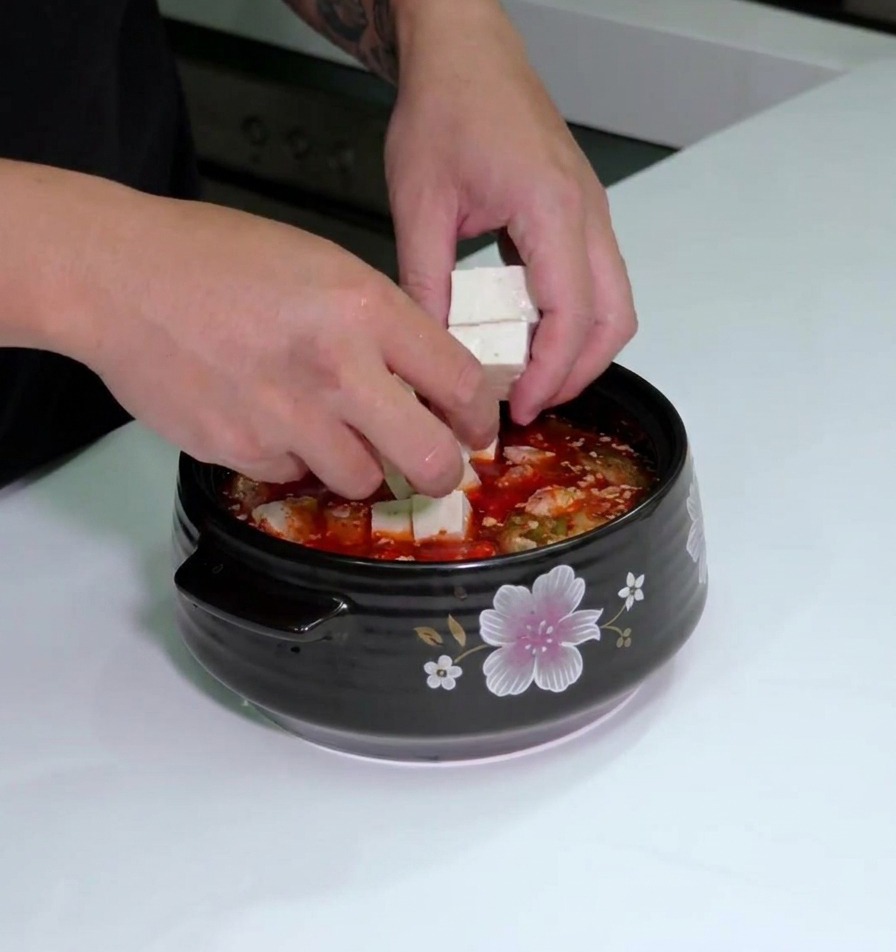
Place the cubed tofu and sliced leeks directly on top of the other ingredients in the pot. These do not need to be fried or stirred in immediately; they will cook gently on top and absorb the flavors of the spicy broth as the soup begins to boil.
Tip: Using soft or silken tofu will give the soup a delicate, smooth texture, while firm tofu will hold its shape better during the boiling process. - 14Garnish with green chilies
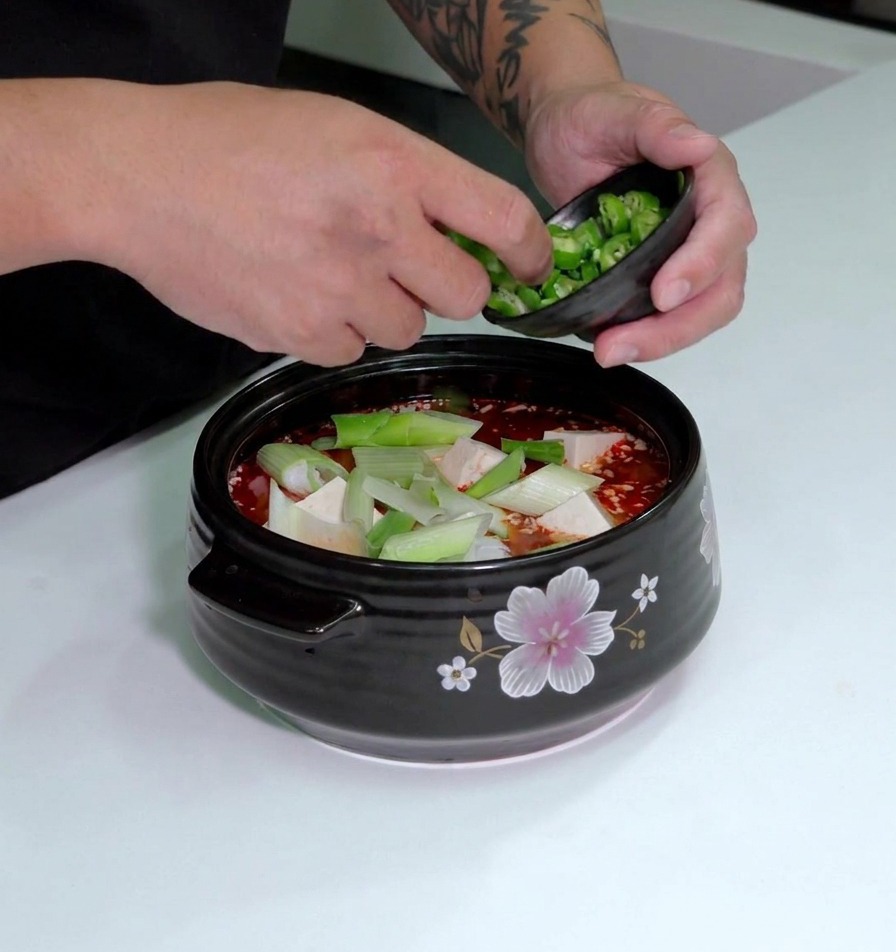
Add the freshly chopped green chilies over the tofu and leeks. This adds a layer of fresh, sharp heat to the dish, complementing the sourness of the tomatoes and the richness of the pork belly.
Tip: Adjust the amount of chili based on your spice tolerance, or remove the seeds for a milder version of the soup. - 15Finish with the secret touch
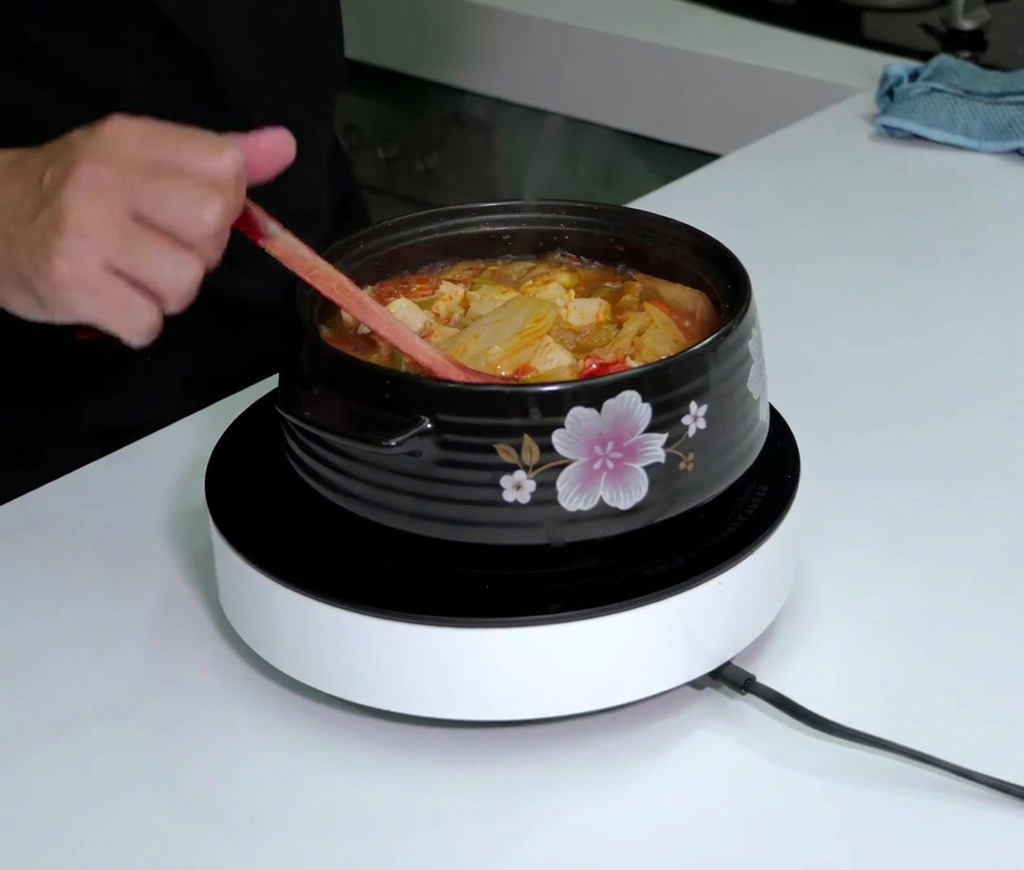
Once the soup has boiled and the kimchi has become translucent, drizzle a circle of Tabasco sauce over the top. This final addition provides a unique, vinegary acidity that enhances the refreshing qualities of the broth.
Tip: Give the soup a final taste after adding the Tabasco and adjust the saltiness as needed before serving.