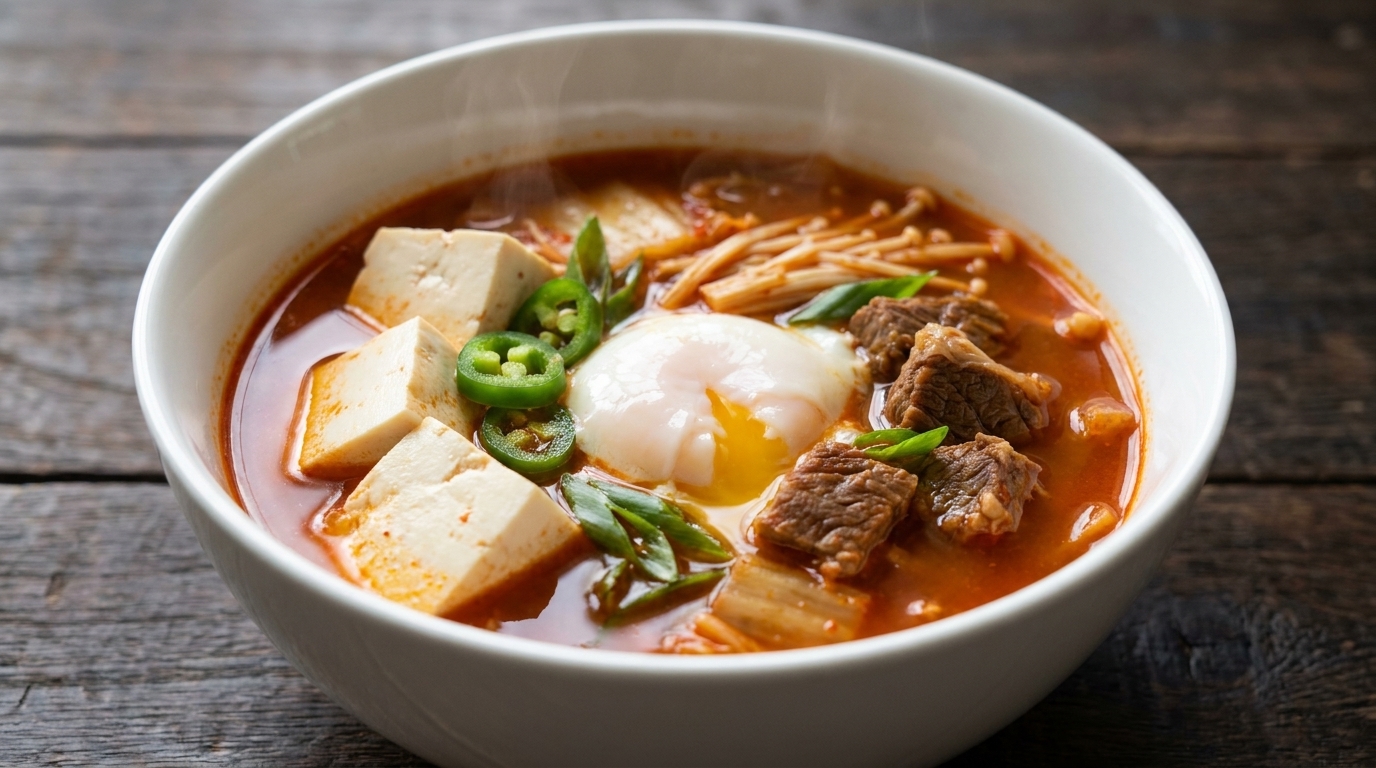
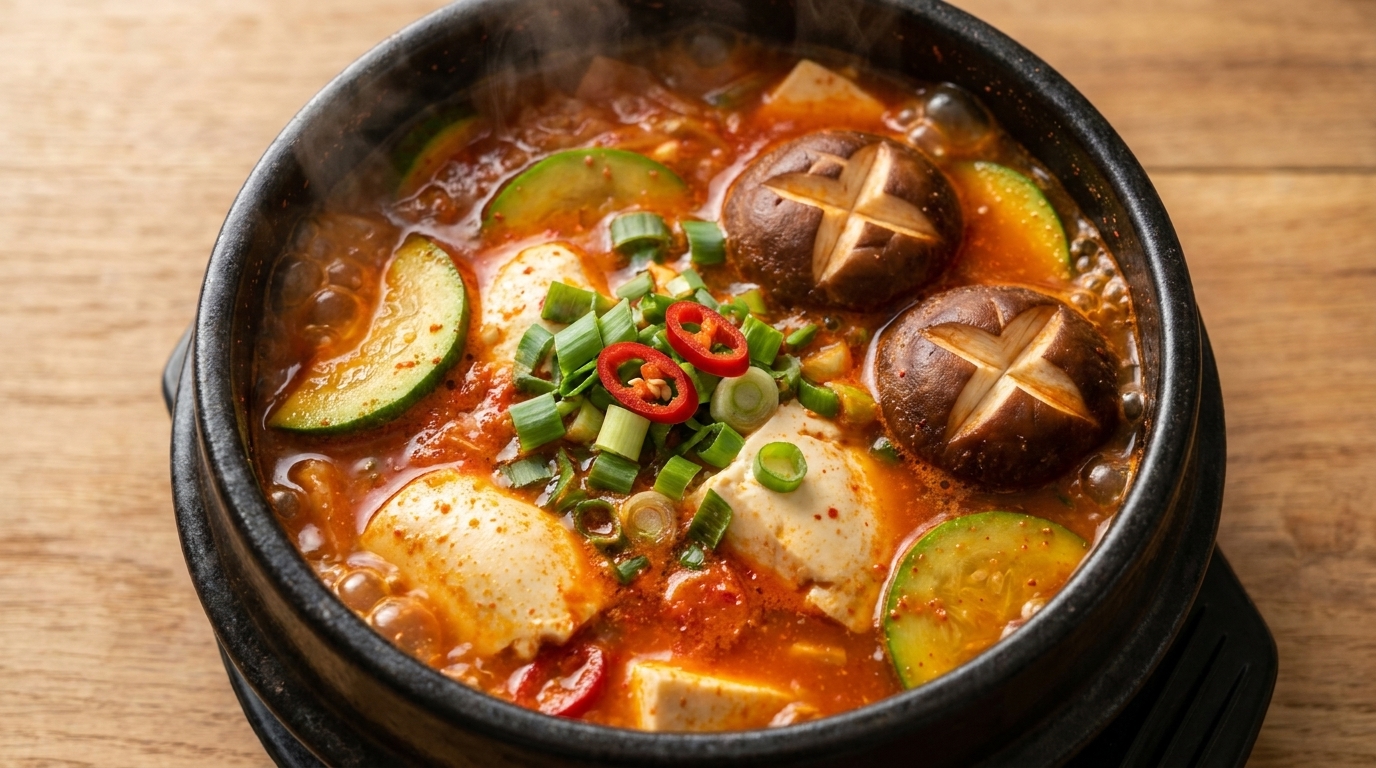
Spicy Korean Kimchi Tofu Soup (Kimchi-jjigae)
A soul-warming Korean classic featuring deeply fermented kimchi, silky soft tofu, and savory pork belly in a vibrant, spicy broth enriched with fresh shrimp.
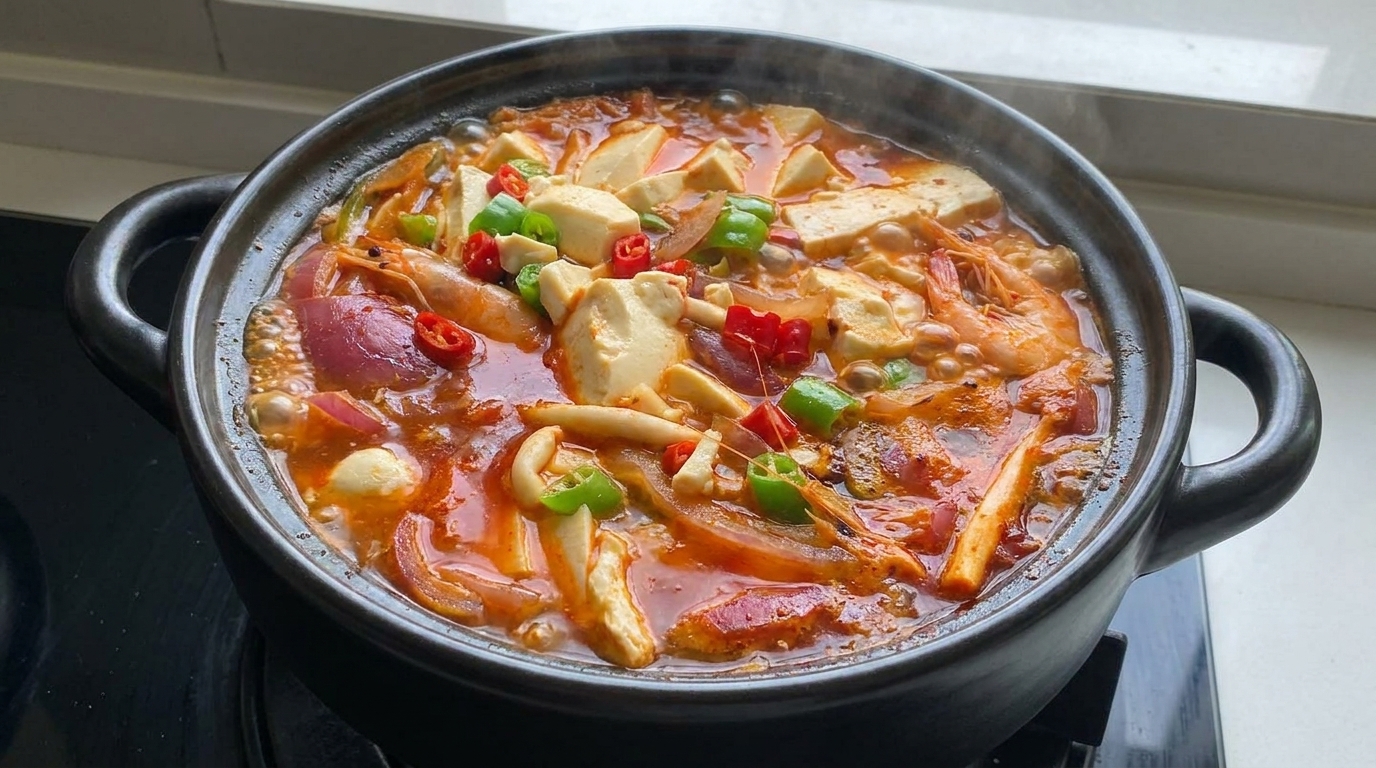
Kimchi-jjigae is the ultimate Korean comfort food, cherished for its complex balance of spicy, sour, and umami flavors. While traditionally made with pork and aged kimchi, this version adds fresh shrimp and mushrooms for a layered seafood depth that makes it particularly satisfying during the winter months.
Ingredients
- 200 g kimchi (well-fermented)
- 150 g pork belly, sliced
- 1 pack soft or silken tofu
- 4-5 pcs fresh shrimp
- 100 g seafood mushrooms (shimeji)
- 12 pc red onion, sliced
- 2 tbsp Korean chili powder (Gochugaru)
- 2 tbsp light soy sauce
- 1 tbsp cooking oil
- to taste salt
- 2 pcs green chili peppers
- 2 pcs red millet chilies
- optional water or anchovy broth
Instructions
- 1Heat the cooking oil
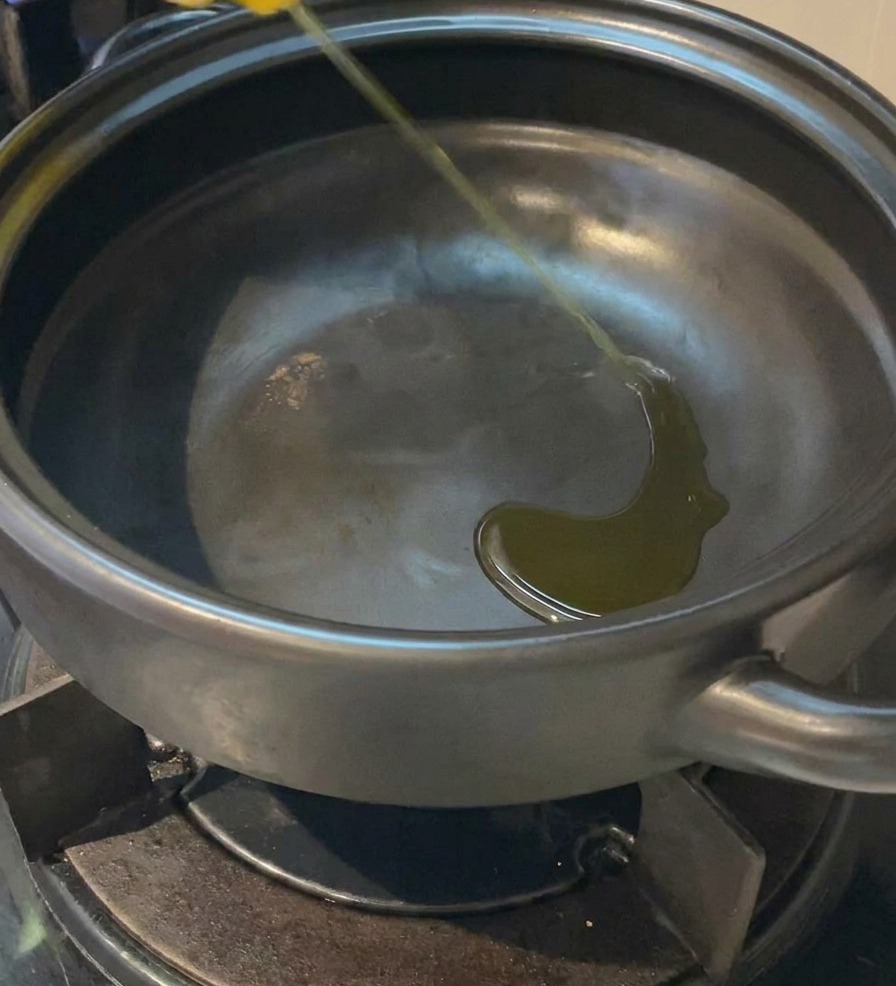
Place a black clay pot on the stove over medium heat and pour in a small amount of cooking oil. Let the oil heat up for a moment until it shimmers, providing a non-stick base for the pork and aromatics.
Tip: Clay pots retain heat very well, so start on medium heat to prevent the oil from smoking too quickly. - 2Sauté the pork belly
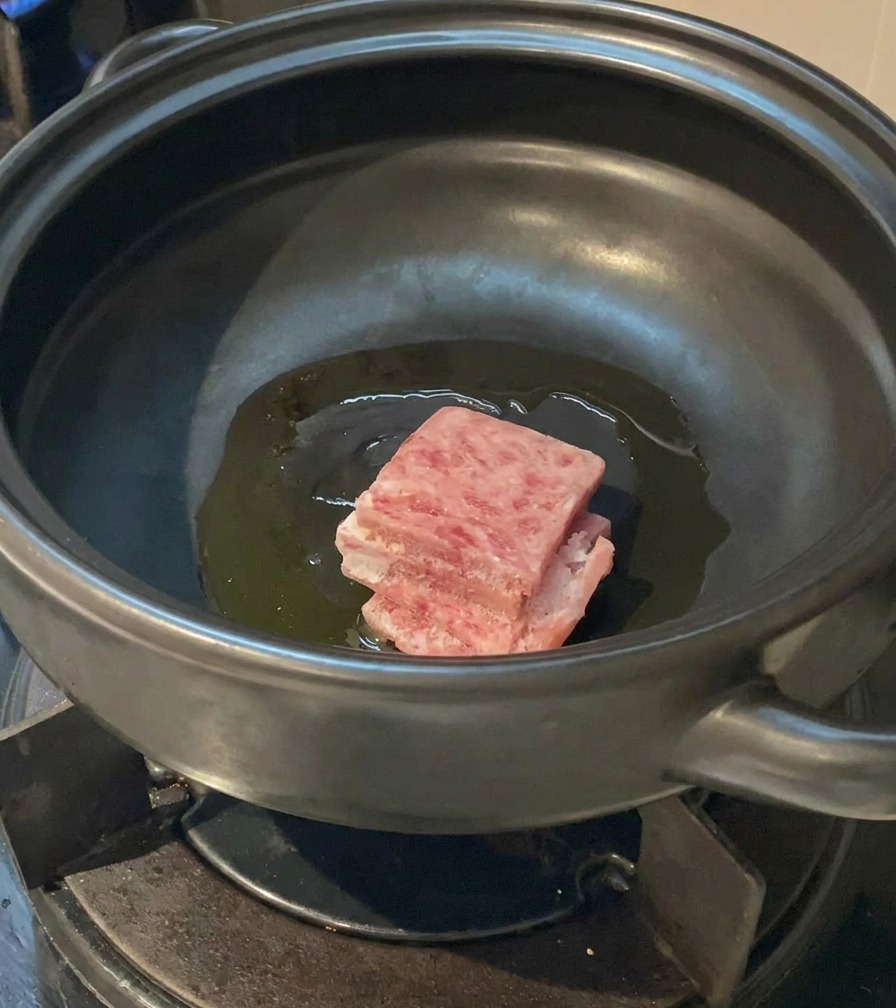
Carefully add the sliced pork belly into the heated oil. Allow the pork to sit for a few seconds to sear and release its natural fats, which will add a rich flavor to the soup base.
- 3Add the kimchi
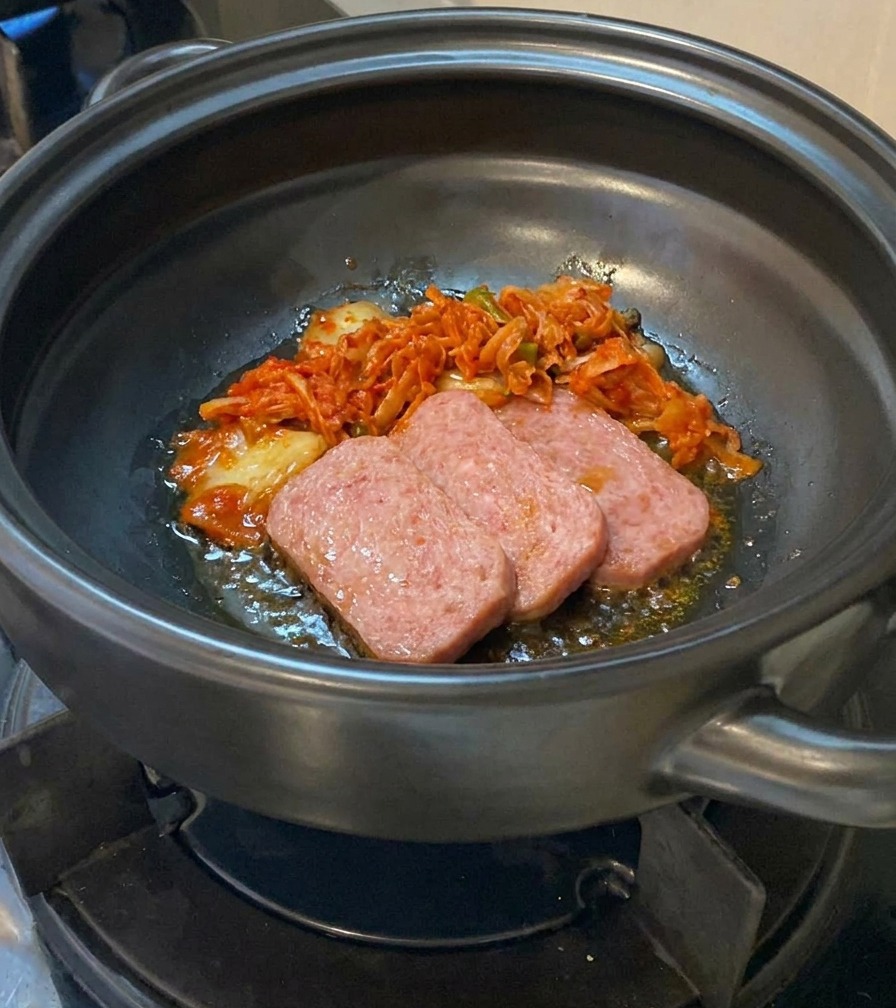
Add a generous portion of fermented kimchi to the pot. Stir it together with the pork belly to allow the acidity and spice of the kimchi to mingle with the rendered pork fat.
Tip: For the best flavor, use well-fermented (sour) kimchi rather than fresh kimchi. - 4Sauté with red onions
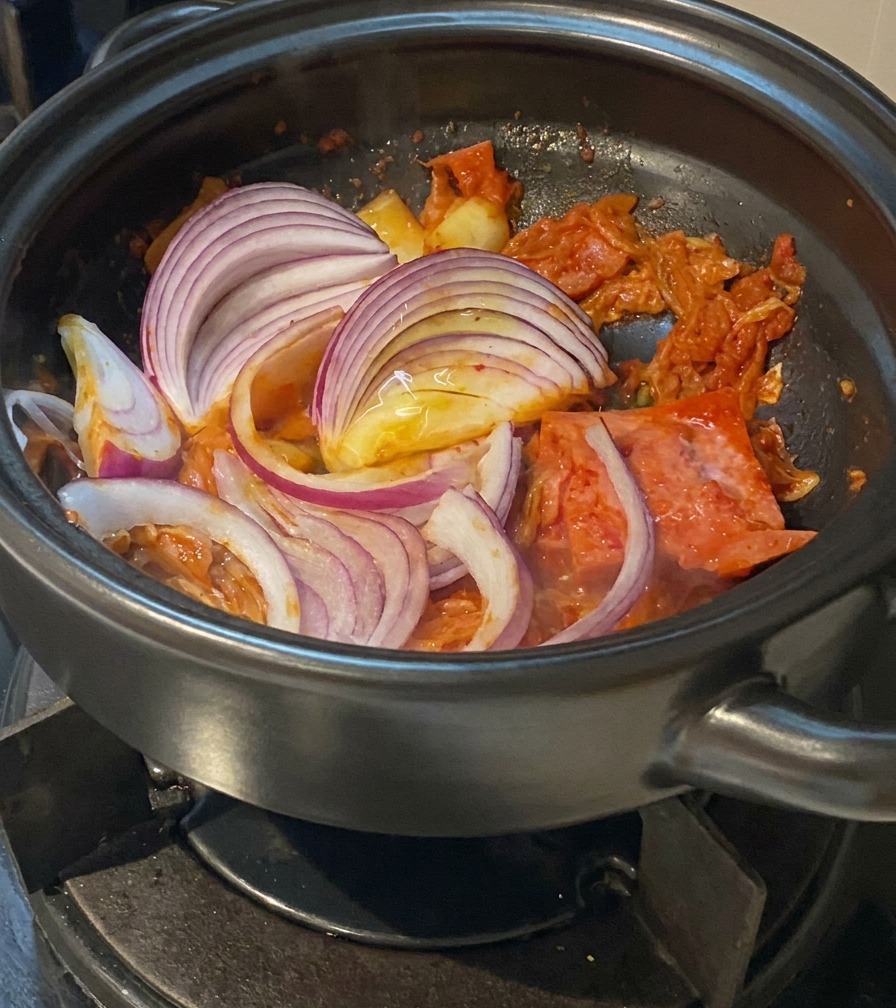
Toss in the sliced red onions and stir fry them with the kimchi and pork. The onions will soften and release a natural sweetness that balances the heat of the dish.
Tip: Do not overcook the onions at this stage as they only need to be slightly softened before adding the liquids. - 5Introduce fresh shrimp
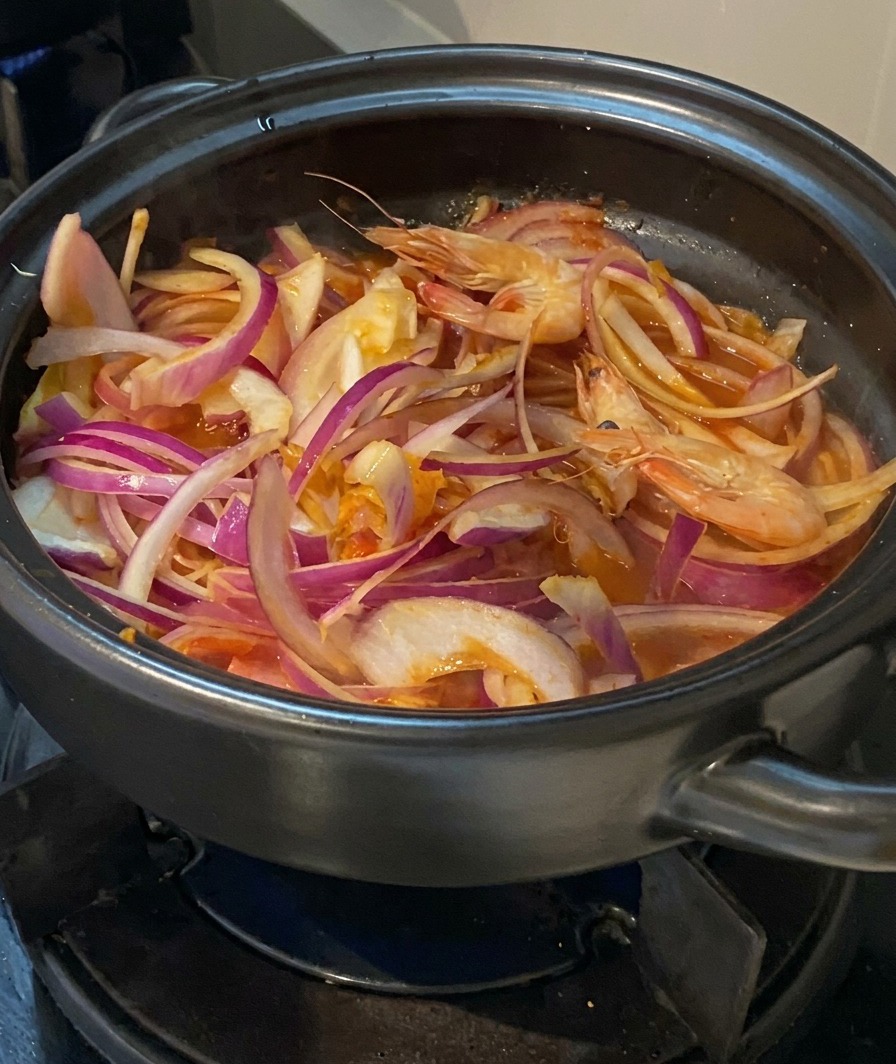
Place whole raw shrimp into the pot. The shrimp will cook quickly in the heat and add a savory, seafood depth to the spicy broth.
Tip: You can use frozen shrimp if fresh isnt available, but ensure they are fully thawed and drained first. - 6Add water for the soup base
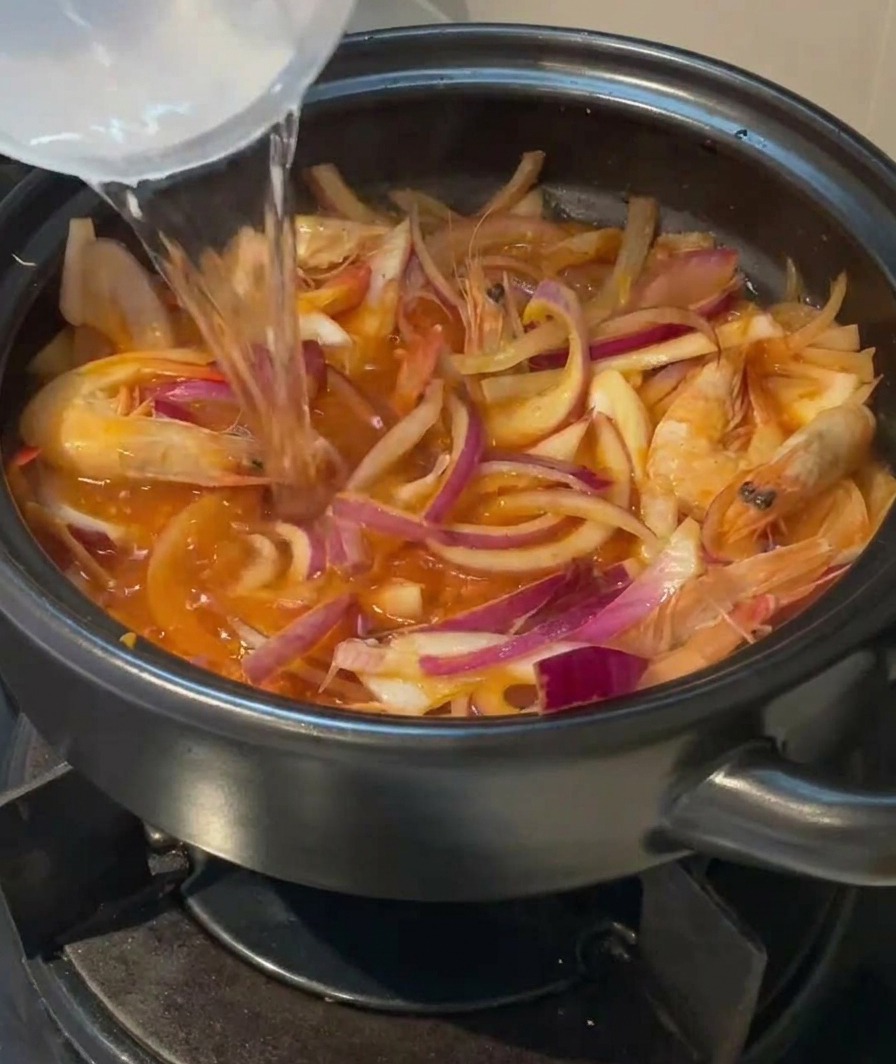
Pour clear water into the pot until all the ingredients are submerged. This creates the base of your Kimchi Tofu soup and will soon be seasoned with spices.
Tip: If you have anchovy broth or kelp stock, using that instead of plain water will make the soup even more flavorful. - 7Season the soup base

Add a pinch of salt and the light soy sauce to the simmering pot. These seasonings are essential for building the savory depth of the broth and balancing the natural tanginess of the kimchi.
Tip: Taste the soup before adding salt because some kimchi brands are saltier than others. - 8Season the broth
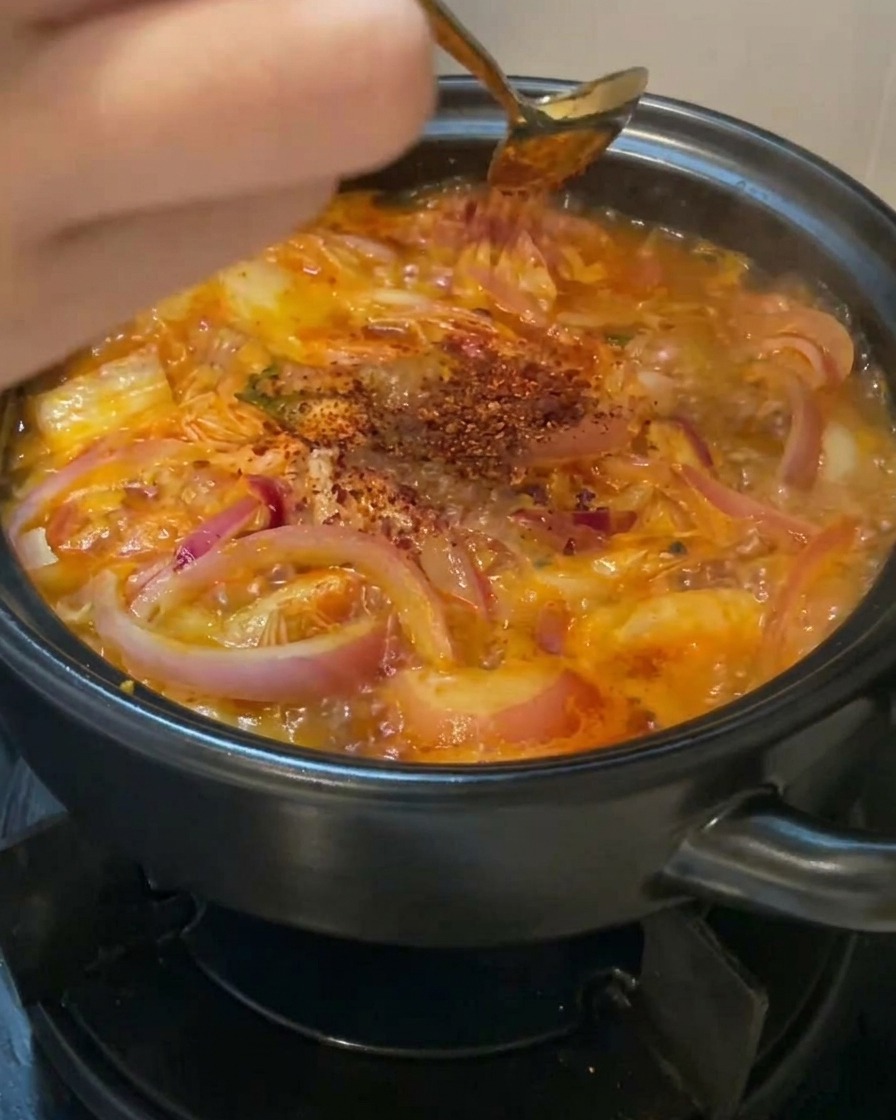
Add two spoonfuls of chili powder to the pot. The chili powder gives the soup its characteristic vibrant red color and spicy kick while providing a necessary heat to the base.
Tip: Adjust the amount of chili powder based on your spice tolerance because two spoonfuls will provide a medium heat level. - 9Add the seafood mushrooms
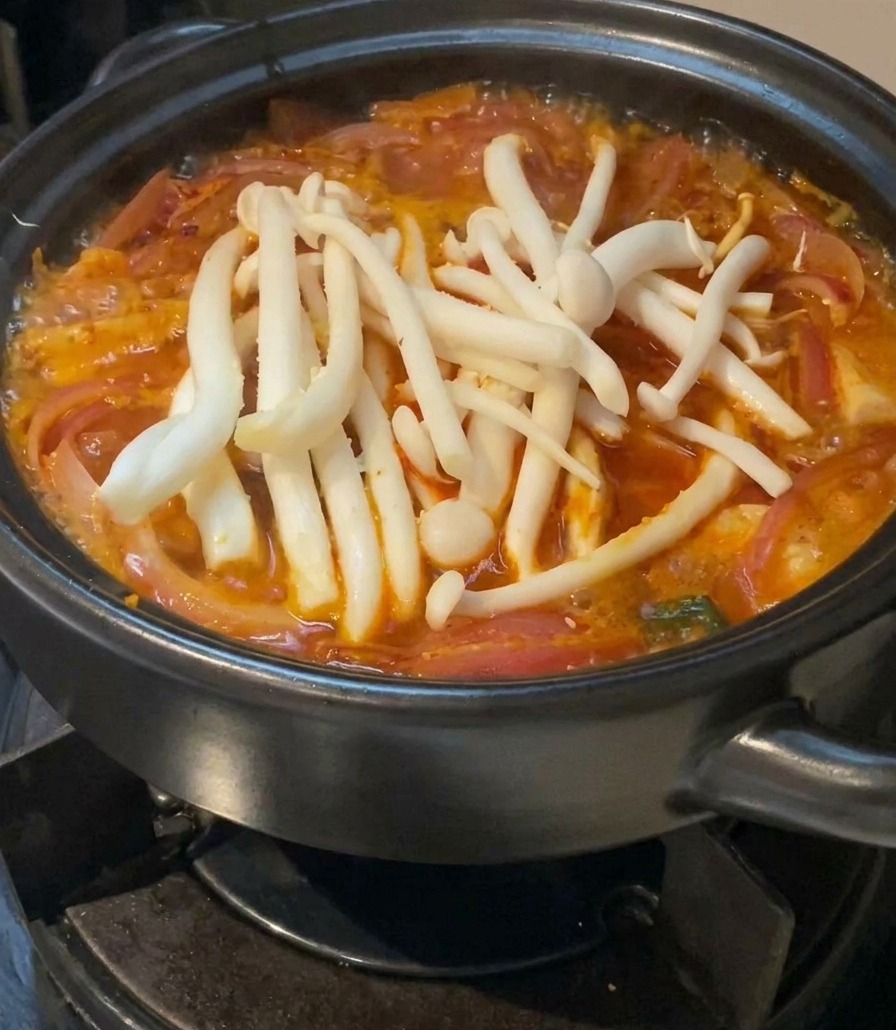
Place a bunch of fresh white seafood mushrooms (shimeji) directly onto the surface of the broth. These mushrooms will wilt into the soup as they cook, adding a delicate texture and absorbing the spicy flavors.
Tip: Be sure to trim the root end of the mushroom cluster and separate the stems slightly for even cooking. - 10Add tofu and green chilies
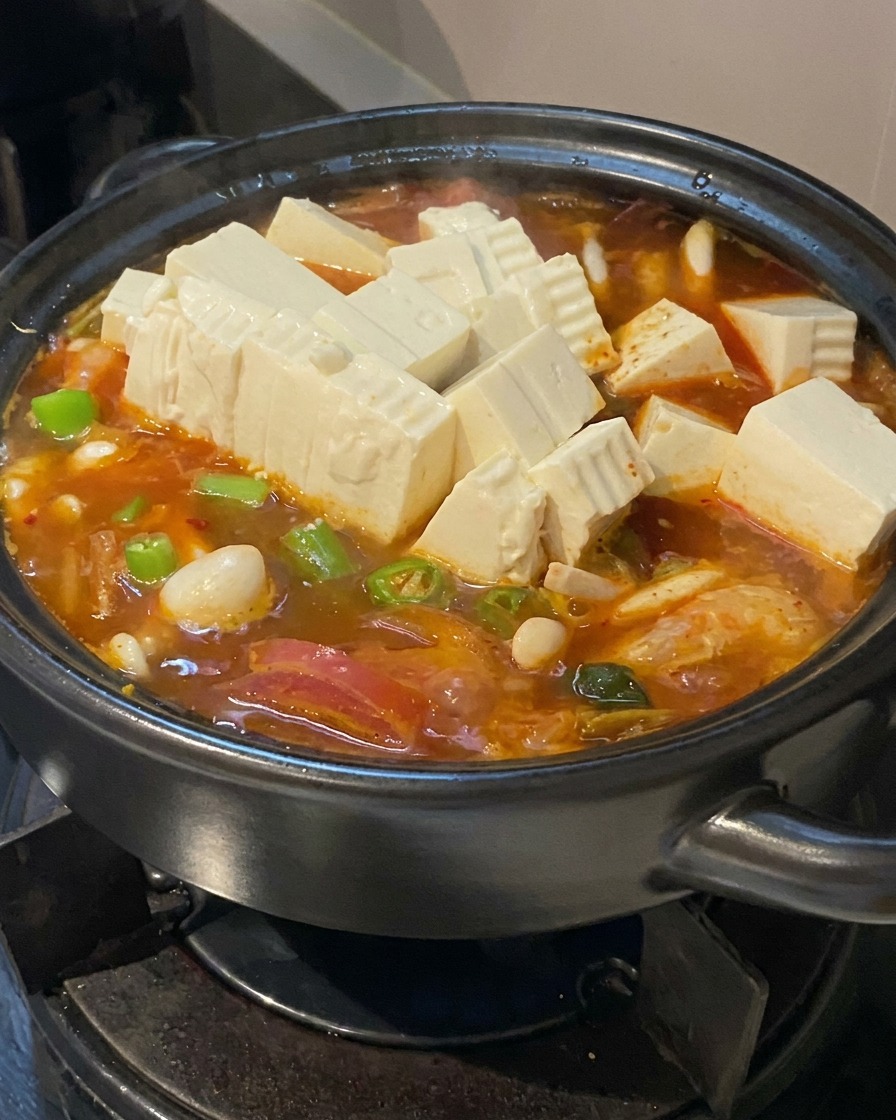
Carefully place cubes of soft white tofu into the simmering broth. Add sliced green chili peppers as well which act as the heart of the dish by providing a fresh sharp heat that cuts through the richness of the pork and kimchi.
Tip: Handle the tofu gently to keep the cubes intact since soft or silken tofu works best for this traditional soup texture. - 11Final garnish and simmer
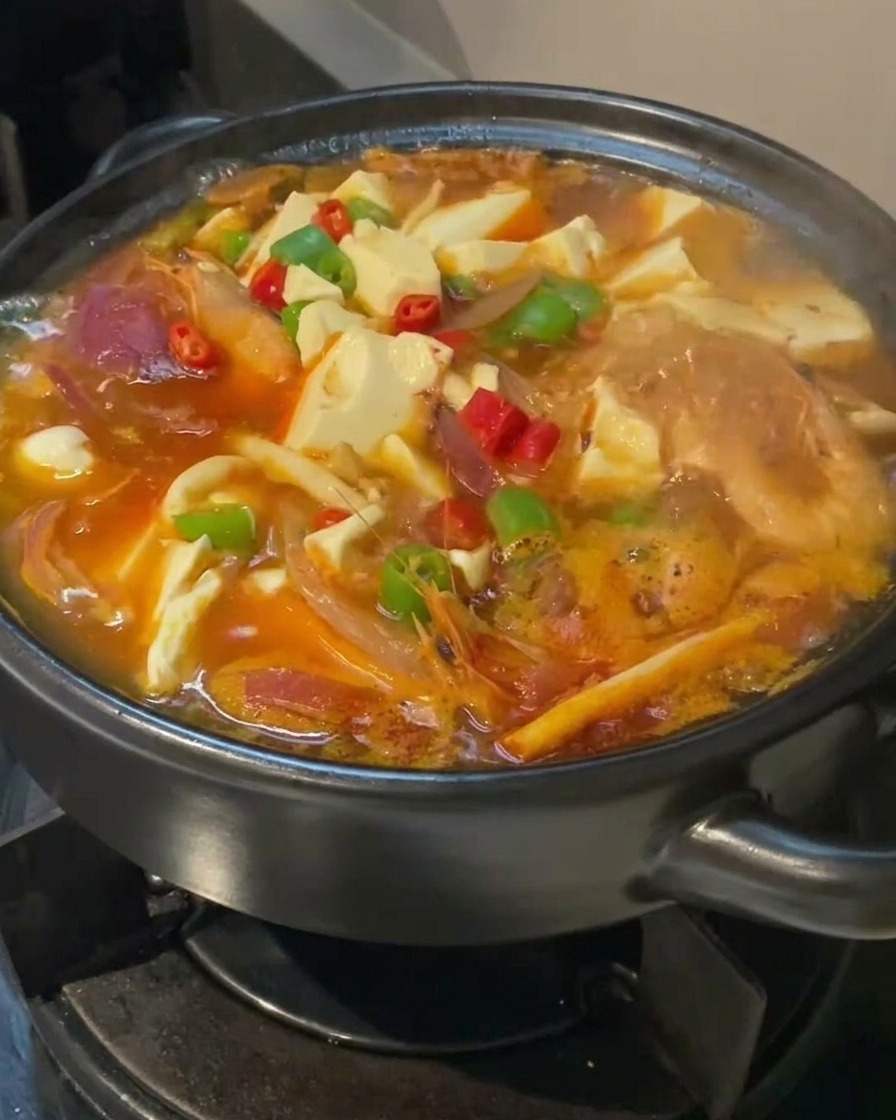
Add a handful of sliced red millet chilies for extra heat and visual appeal. Let the soup simmer slowly over low heat to allow all the flavors from the kimchi, pork, and seafood to meld together perfectly.
Tip: Simmering on low heat ensures the tofu absorbs the flavors of the broth without breaking apart from a heavy boil.