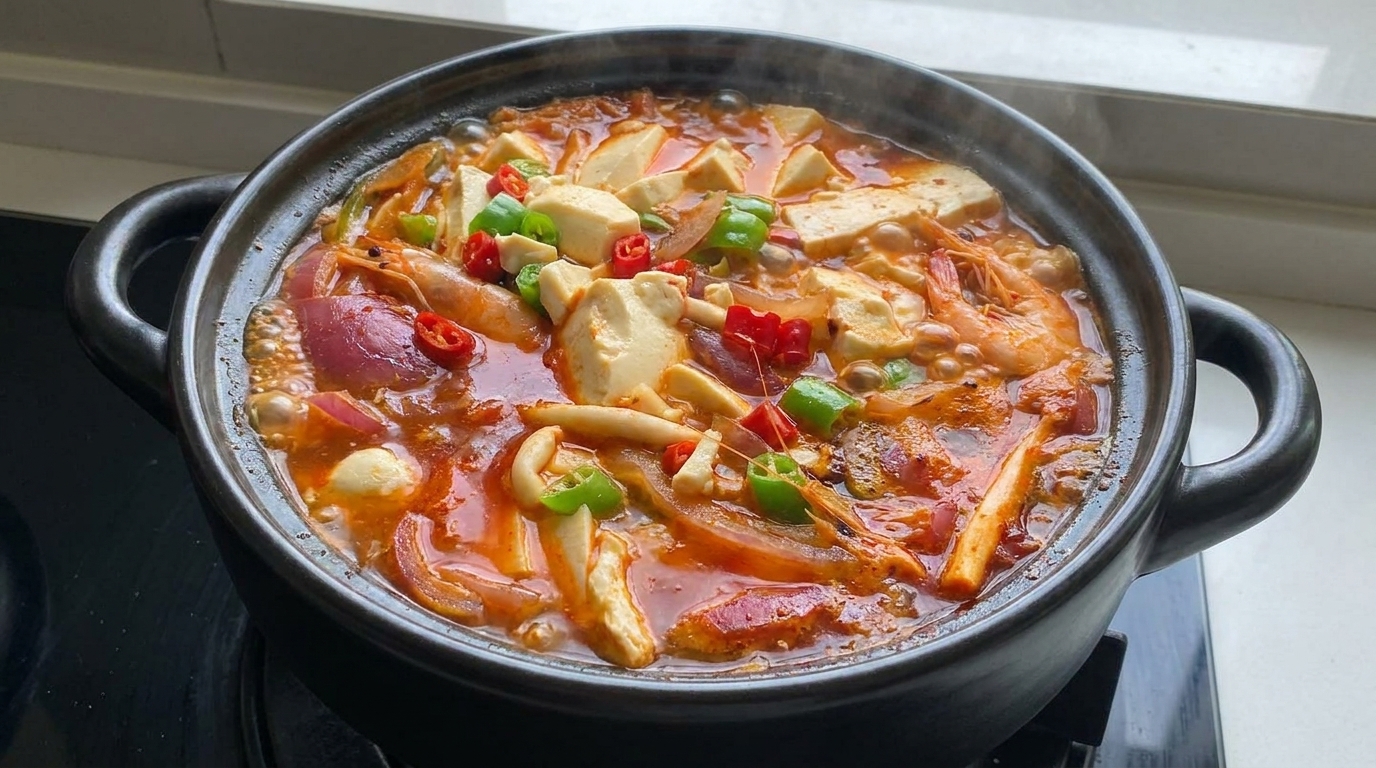
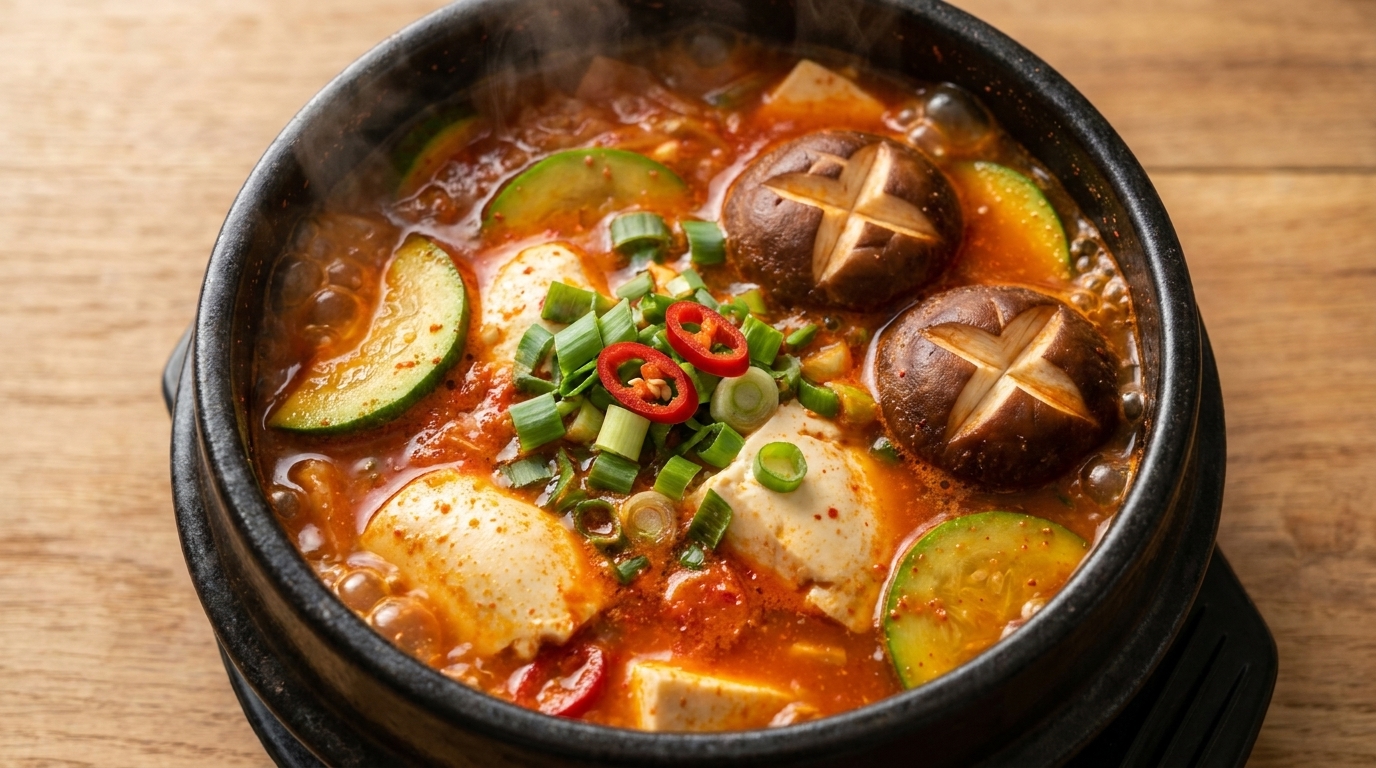
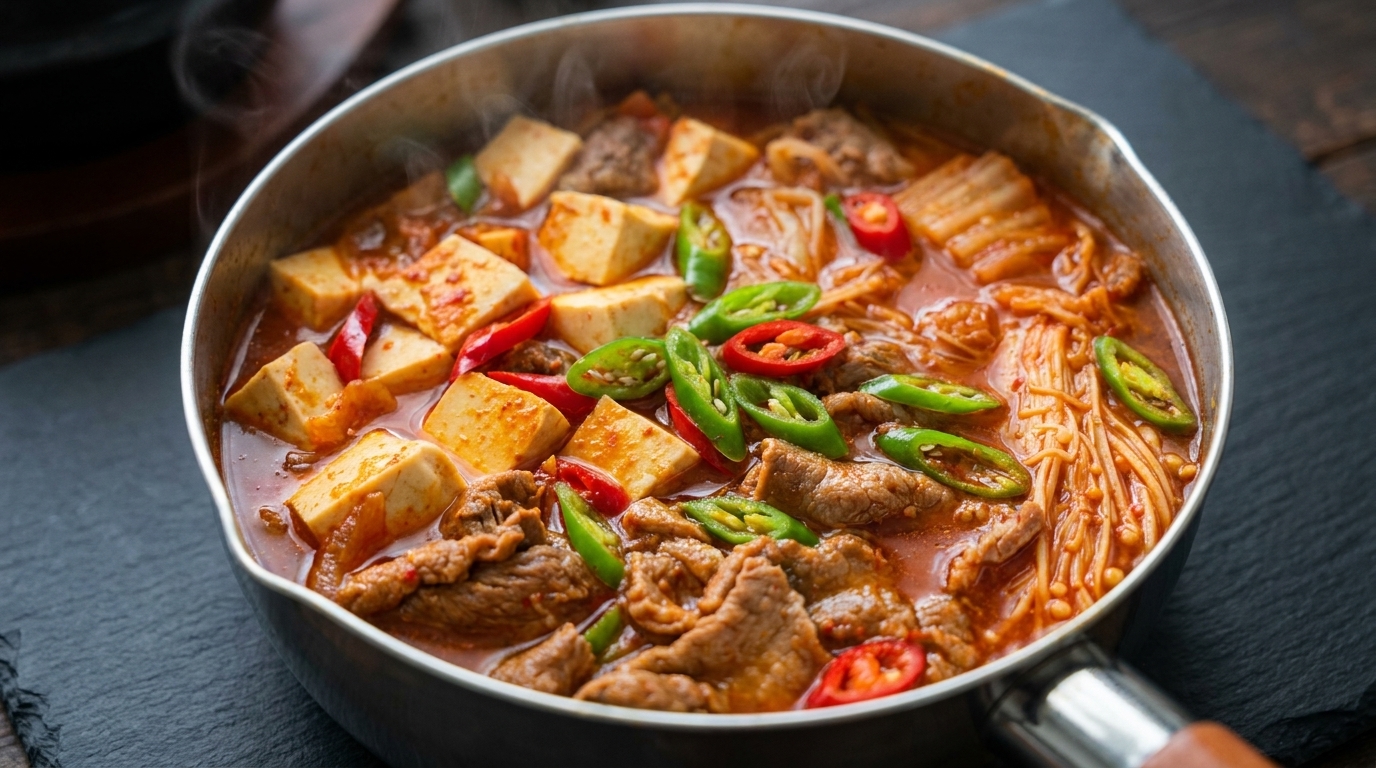
Low-Calorie Kimchi Beef Tofu Soup (Kimchi-jjigae)
A comforting 250-calorie Korean stew featuring tender marinated beef ribs and silken tofu in a spicy kimchi broth, ready in just 20 minutes.
Kimchi-jjigae is a soul-warming staple of Korean cuisine, particularly cherished during the cold winter months for its hot and sour profile. This streamlined version utilizes tender beef ribs and exceptionally smooth silken tofu to create a satisfying, high-protein meal that comes together in a single pot. The result is a vibrant, spicy broth that perfectly balances the sharp tang of fermented kimchi with the delicate, custard-like texture of the tofu.
Ingredients
- 100 g beef ribs
- 1 tbsp dark soy sauce
- 1 tbsp light soy sauce
- 1 tbsp oyster sauce
- 1 tsp cornstarch
- 1 tbsp cooking oil
- 1 bunch enoki mushrooms
- 1 pack silken tofu
- 0.5 purple onion
- 500 ml water
- 1 tbsp Korean chili paste (Gochujang)
- 1 tsp Korean chili powder (Gochugaru)
- 1 green pepper
- 1 red pepper
- 150 g kimchi
- optional egg
- to taste green onions
Instructions
- 1Prepare the beef ribs
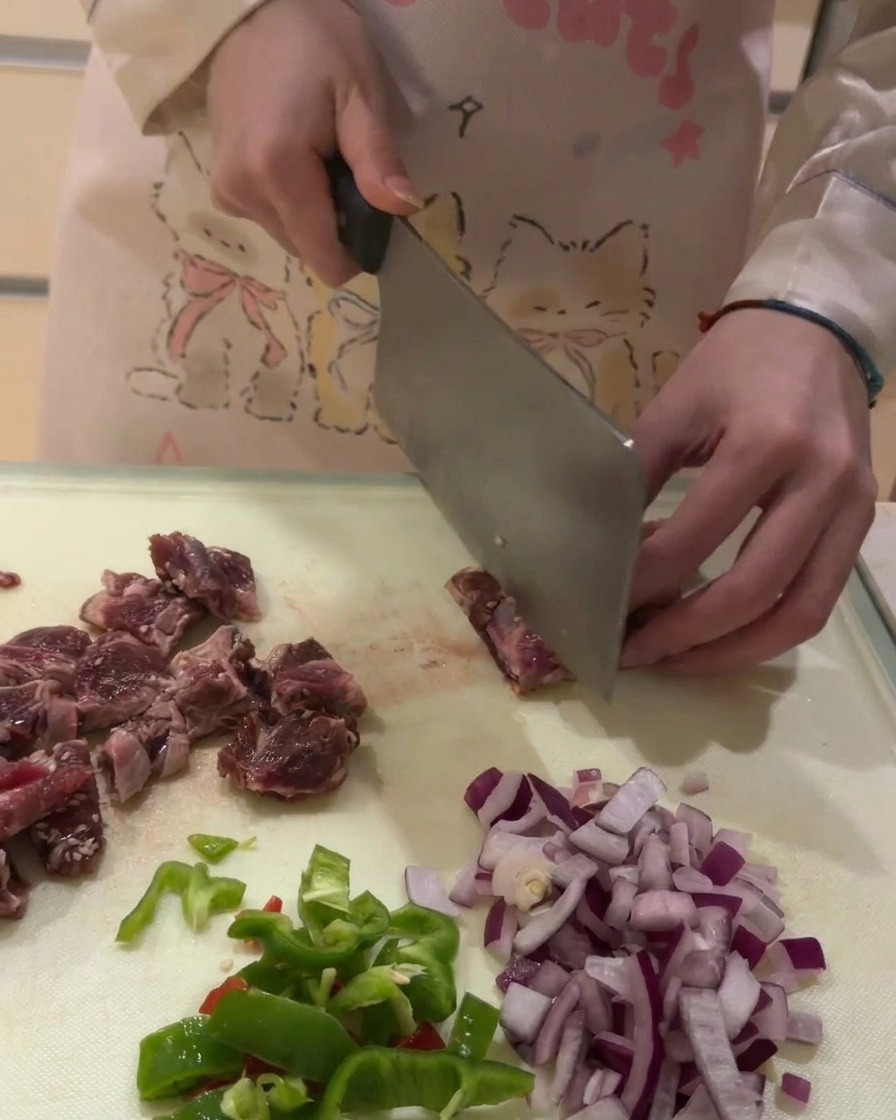
Take the fresh beef ribs and place them on a clean cutting board. Use a sharp chefs knife to carefully cut the meat into small, uniform bite-sized cubes. Consistency in size will ensure that the beef cooks evenly and stays tender in the soup.
Tip: If the meat is too slippery, place it in the freezer for about 15-20 minutes before cutting to firm it up. - 2Add liquid seasonings
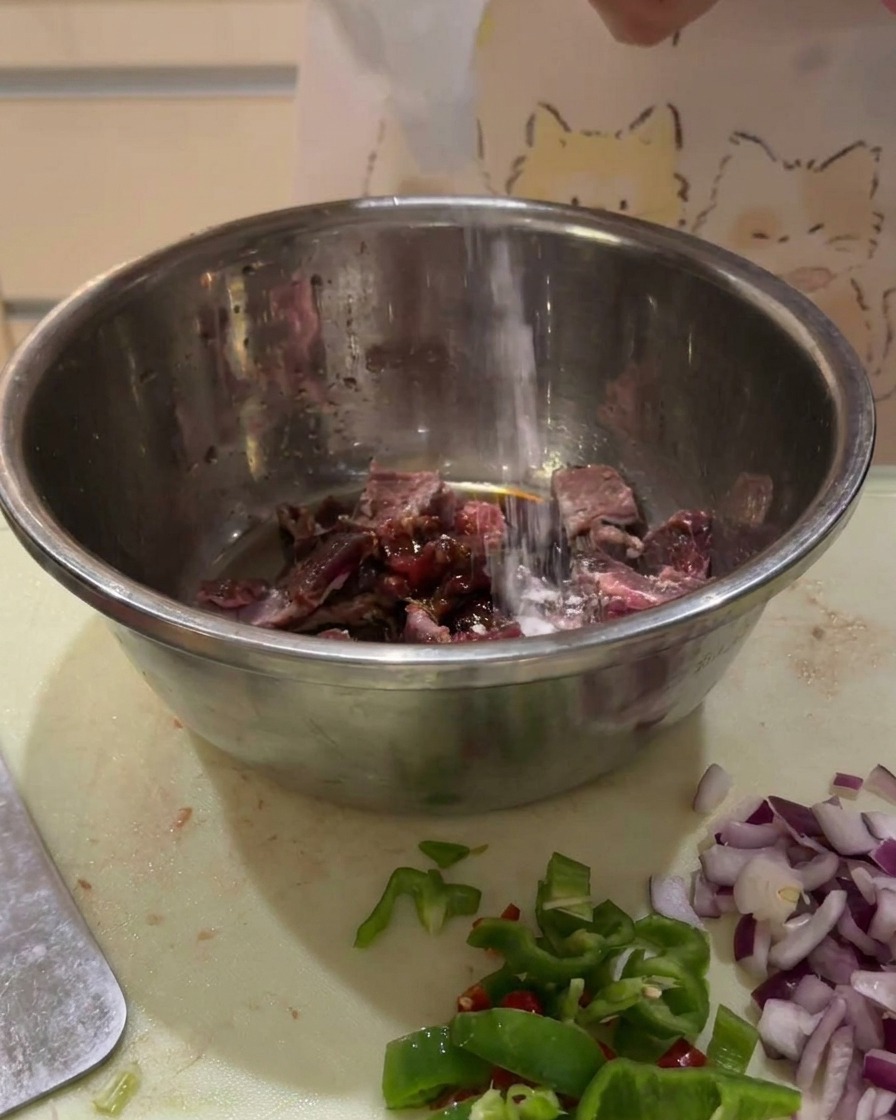
Place the cubed beef ribs into a stainless steel mixing bowl. Add the liquid seasonings by pouring in a splash of dark soy sauce for color, light soy sauce for saltiness, and a generous spoonful of oyster sauce to enhance the savory umami flavor.
- 3Marinate the beef
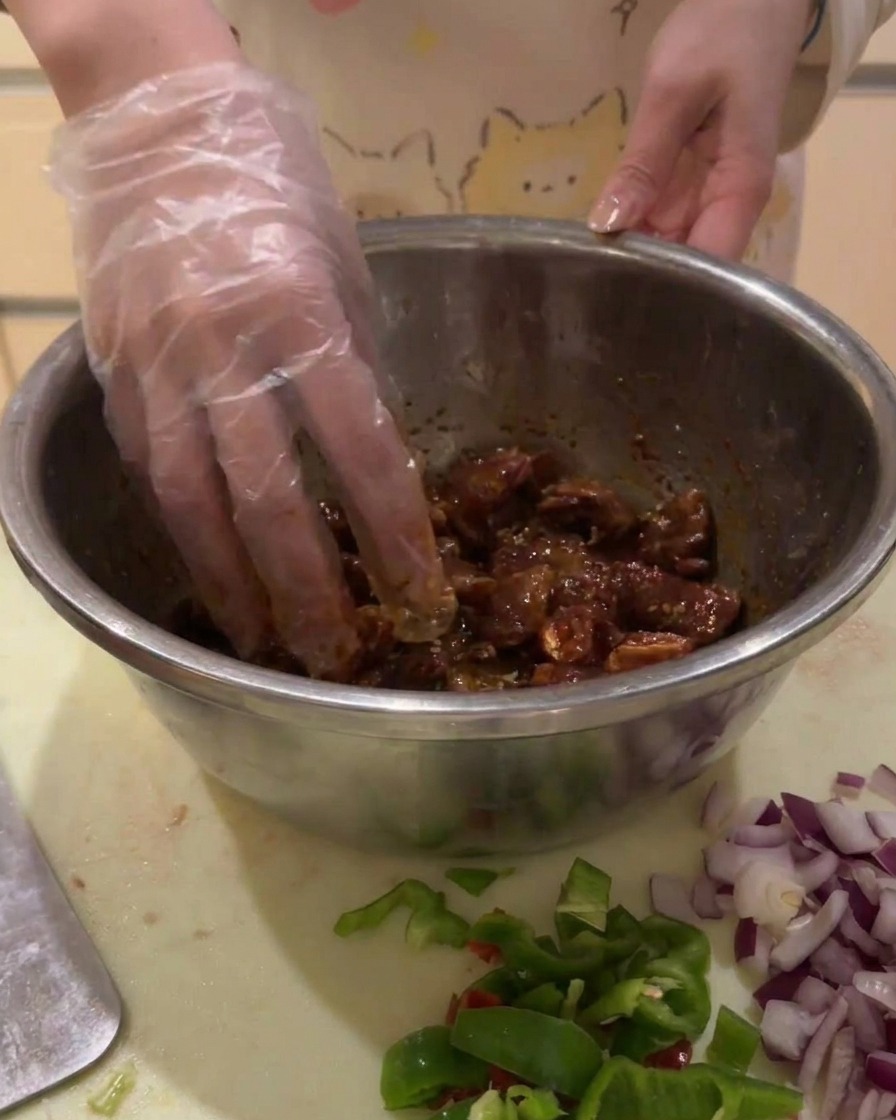
Add a bit of starch and a drizzle of oil to the bowl with the beef and sauces. Put on a food-safe plastic glove and mix the ingredients thoroughly by hand, ensuring every piece of beef is well-coated. Let it sit to marinate while you prepare the other ingredients.
Tip: Adding starch helps lock in the juices, making the beef extra tender after blanching. - 4Prep the enoki mushrooms
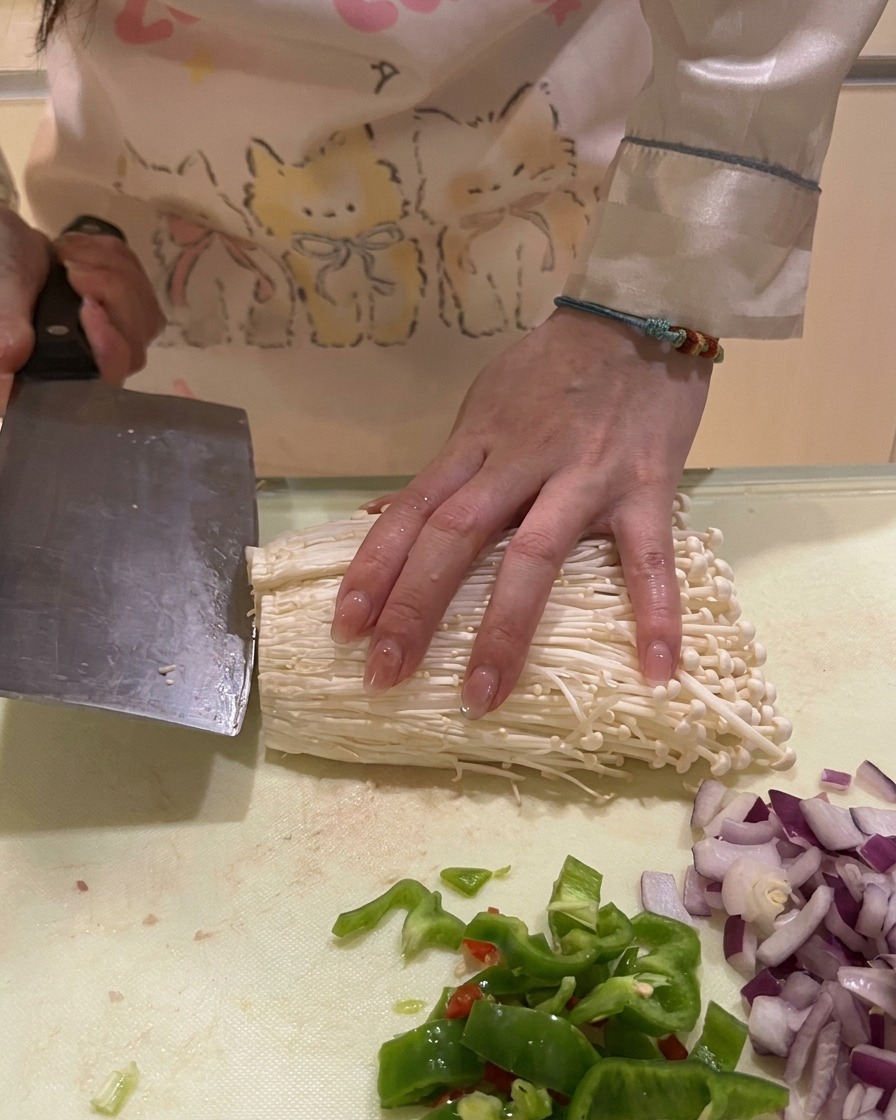
Lay the enoki mushrooms on the cutting board. Use your knife to trim off the tough, woody root ends of the bunch. Afterward, you can gently pull the mushrooms apart into smaller clusters so they distribute evenly in the soup.
Tip: Avoid washing enoki mushrooms until just before use, as they can become slimy when wet. - 5Unmold the silken tofu
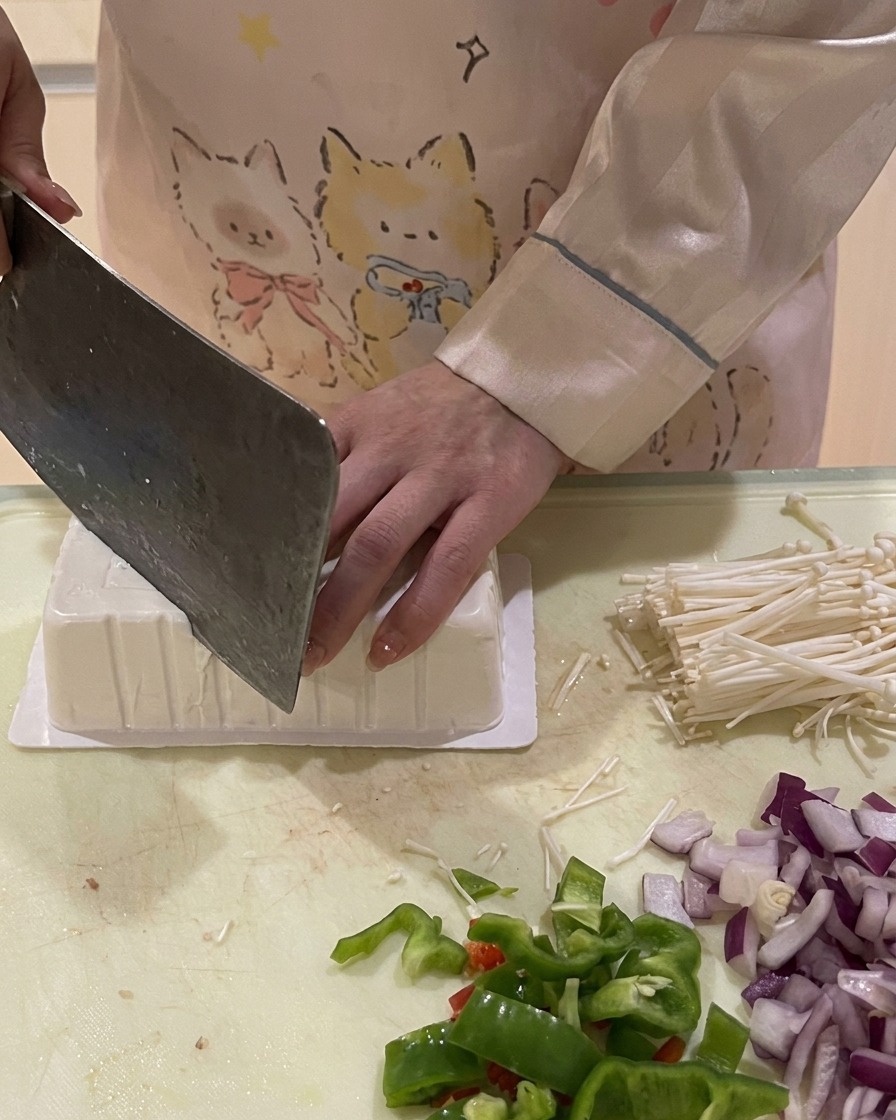
To remove the silken tofu from its packaging without breaking it, flip the container over and use a knife to carefully snip off the four corners of the plastic bottom. This breaks the vacuum seal, allowing the block of tofu to slide out perfectly onto your board.
Tip: Silken tofu is very fragile; handle it gently to keep the block intact before slicing. - 6Cube the tofu
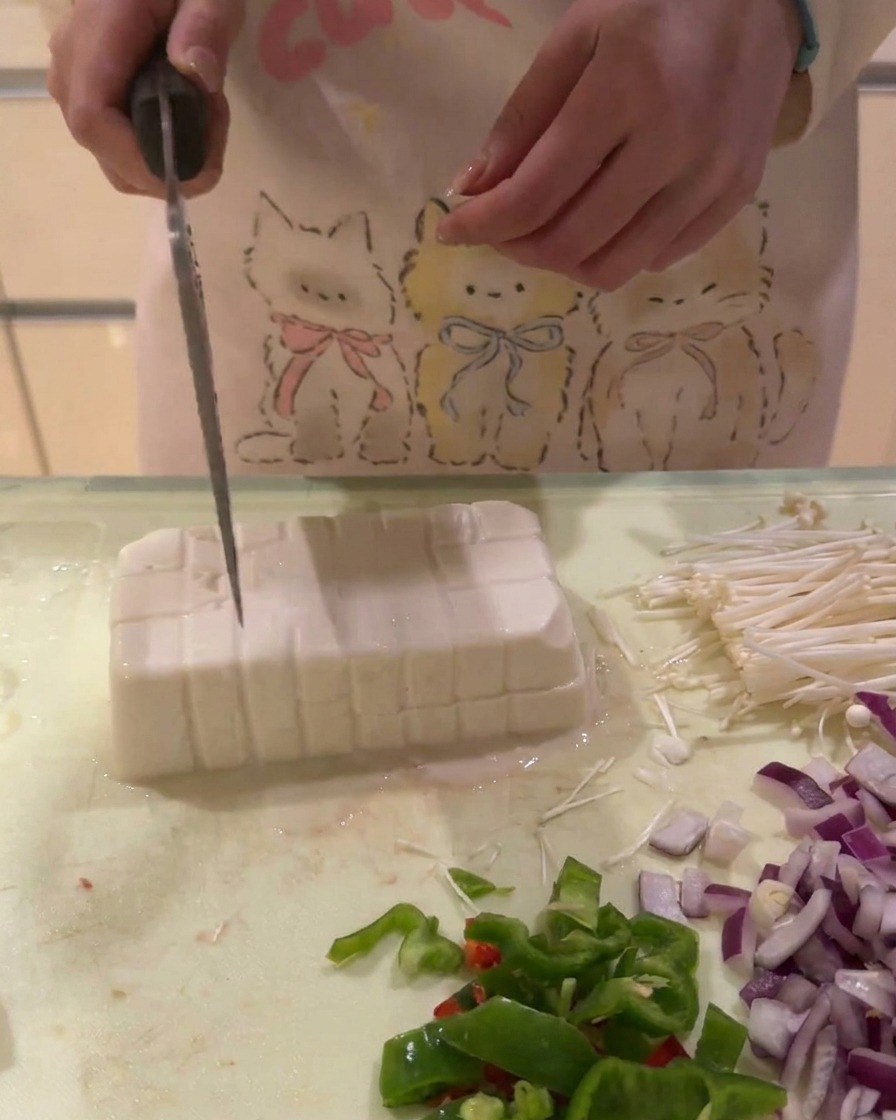
Once the silken tofu is out of the package, use a sharp knife to slice the block into uniform small cubes. These smooth, delicate pieces will absorb the flavors of the spicy kimchi broth during the cooking process.
- 7Sauté the onions
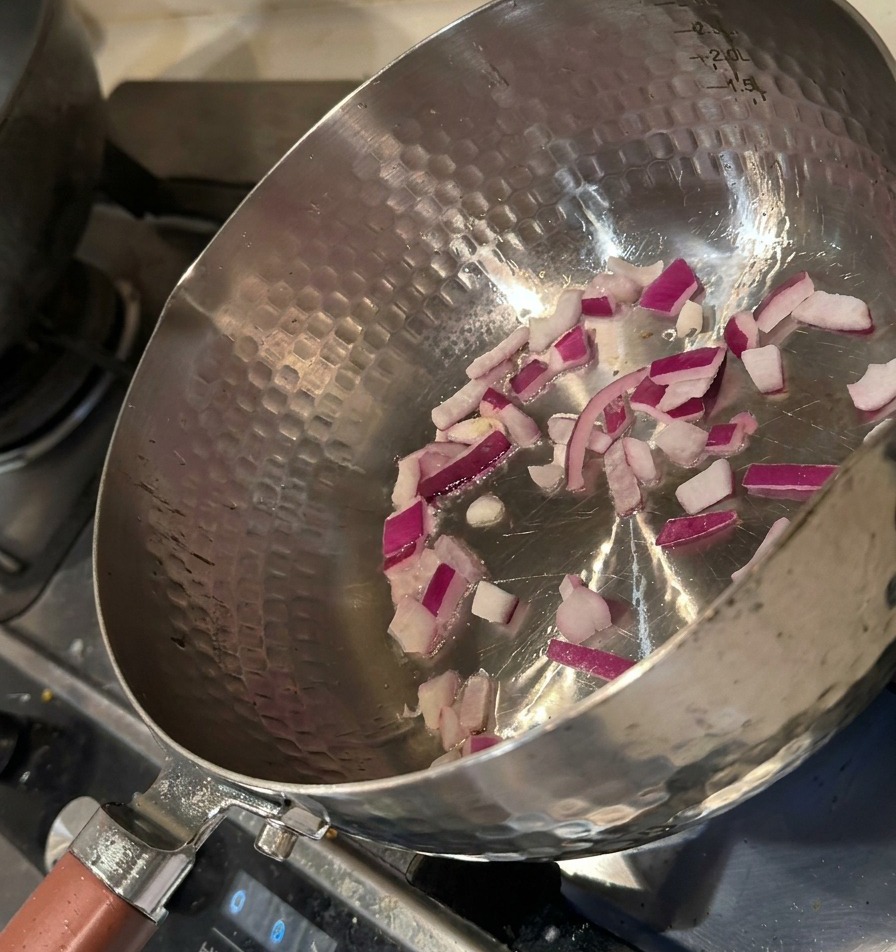
Heat a small amount of oil in a pot and add the chopped purple onions. Sauté them over medium heat until they become fragrant and slightly translucent. This step builds a flavorful and aromatic base for your soup.
Tip: Be careful not to burn the onions; you want them soft and fragrant rather than browned, which can make the broth taste bitter. - 8Add water to the aromatics
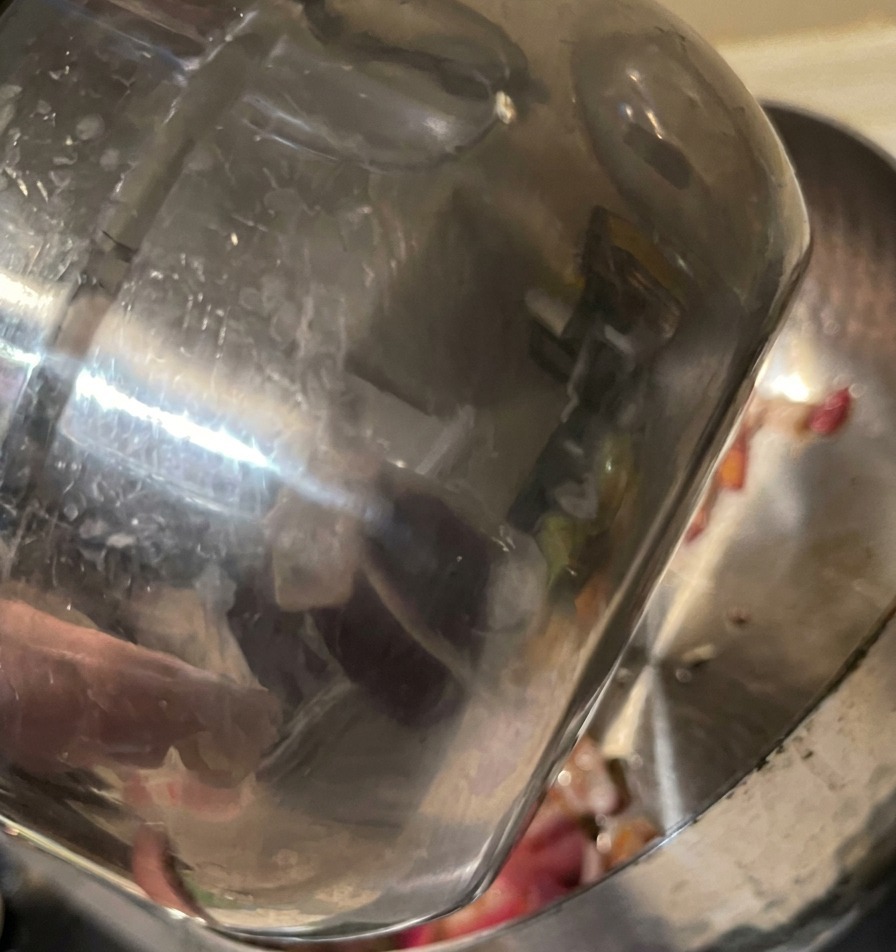
Pour fresh water into the pot containing the sautéed onions. This creates the base for your soup, allowing the flavors of the softened onions to infuse into the liquid as it begins to heat up.
Tip: For the best flavor, use filtered water to ensure the natural taste of the kimchi and beef remains the star of the dish. - 9Add Korean chili paste
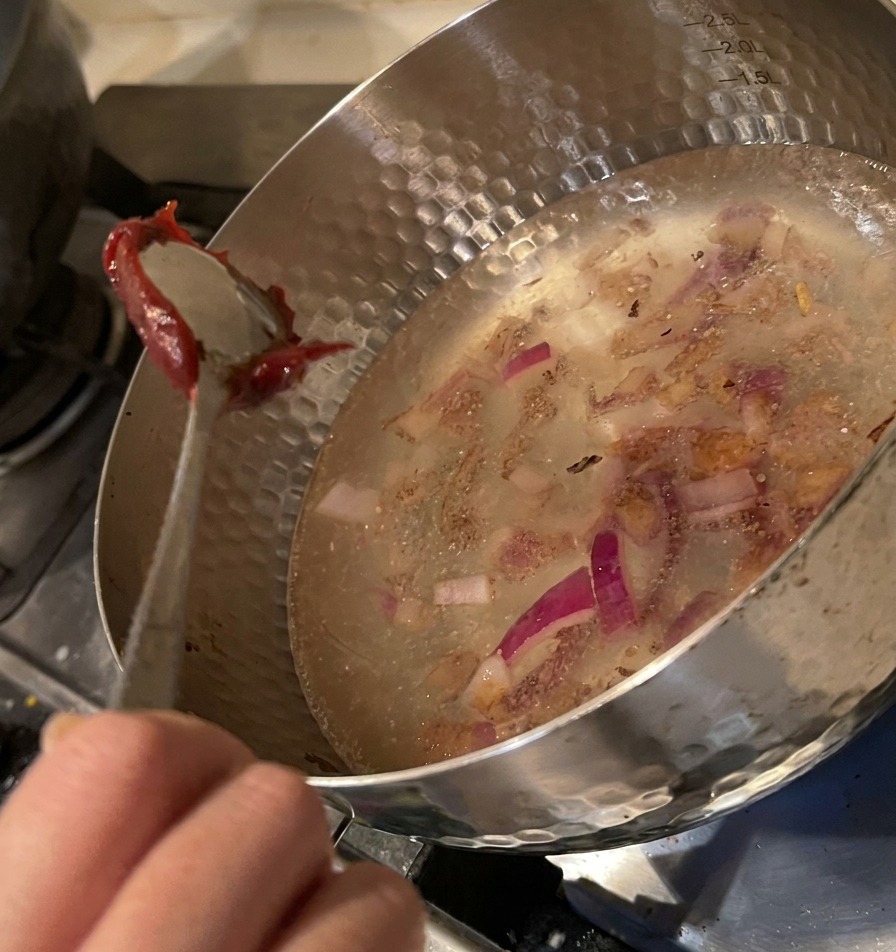
Once the water is in the pot, add a spoonful of Korean chili paste (Gochujang). This thick, vibrant paste is essential for providing the signature deep red color and a perfect balance of sweet, savory, and spicy flavors to the broth.
Tip: A single spoonful is about 20 calories and provides enough flavor for the entire pot. Stir it well to ensure it dissolves completely. - 10Season with chili powder

Sprinkle some dry red chili powder into the simmering soup base. This addition helps to intensify the heat and deepens the vibrant orange-red hue of the broth.
Tip: If you prefer a milder soup, you can reduce the amount of chili powder or omit it entirely, as the chili paste already provides a base level of heat. - 11Incorporate tofu and mushrooms
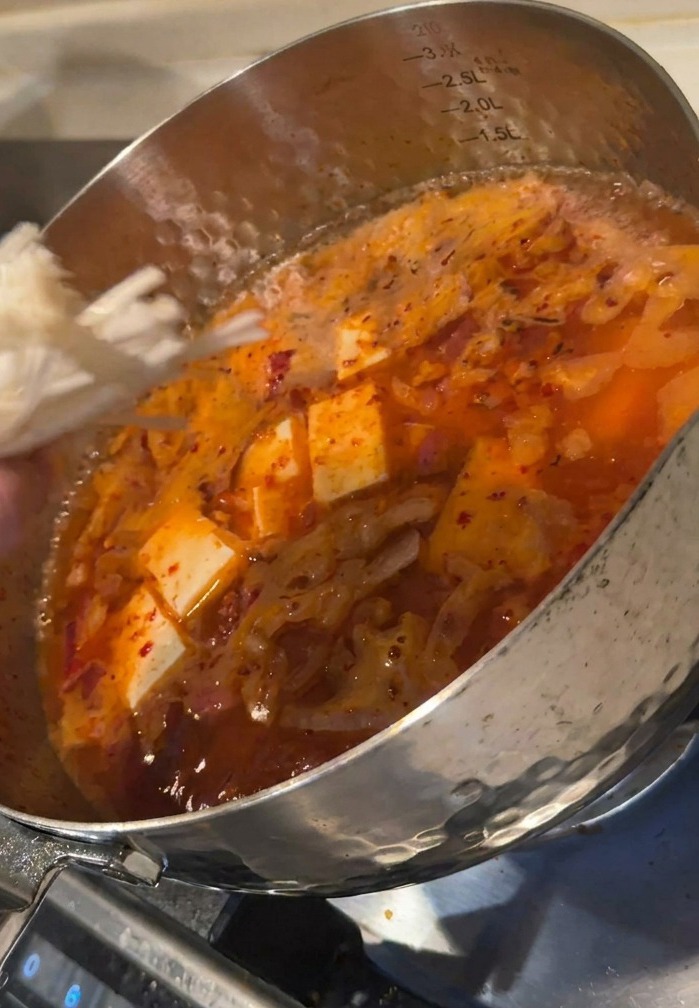
Carefully add the silken tofu cubes and enoki mushrooms into the simmering red soup base. Silken tofu is extremely delicate, so place the pieces gently to keep them intact while they soak up the spicy broth.
Tip: Handle the tofu with care to keep the shapes consistent while they simmer in the broth. - 12Incorporate kimchi and peppers
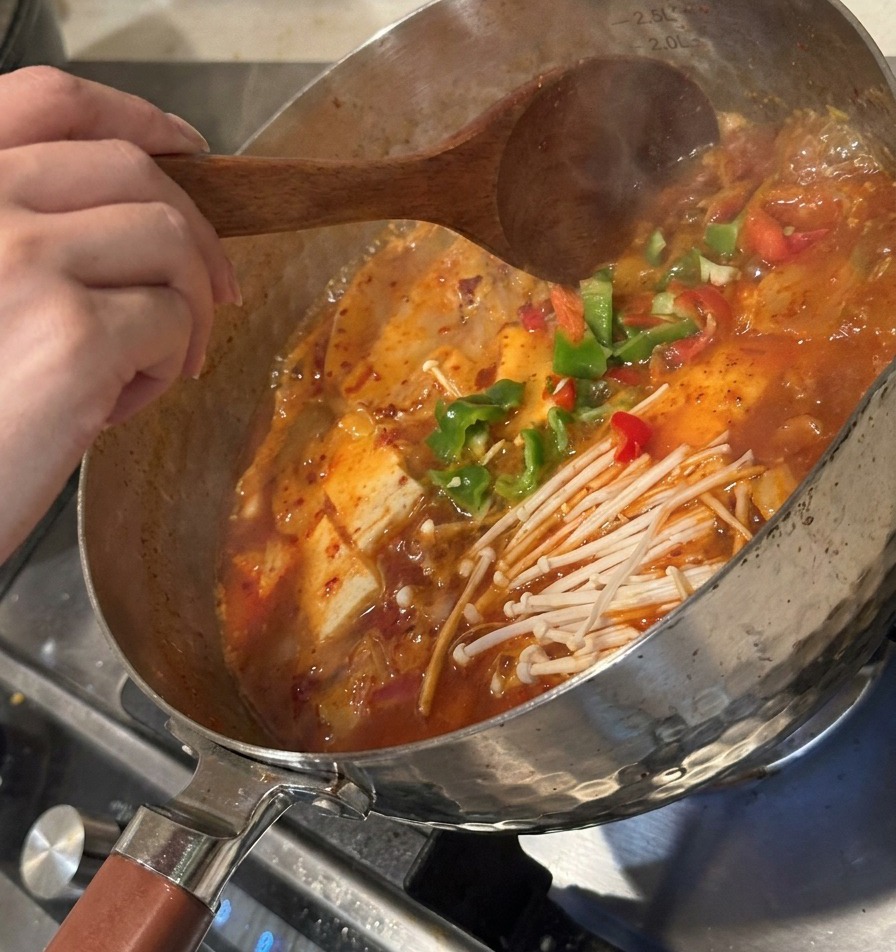
Add the sliced green and red peppers along with a package of fermented kimchi into the pot. Use a spoon to stir everything together, allowing the fermented flavors of the kimchi to meld with the spicy broth.
Tip: Using older, well-fermented kimchi will result in a much deeper and more sour flavor profile, which is characteristic of a good kimchi soup. - 13Add the marinated beef
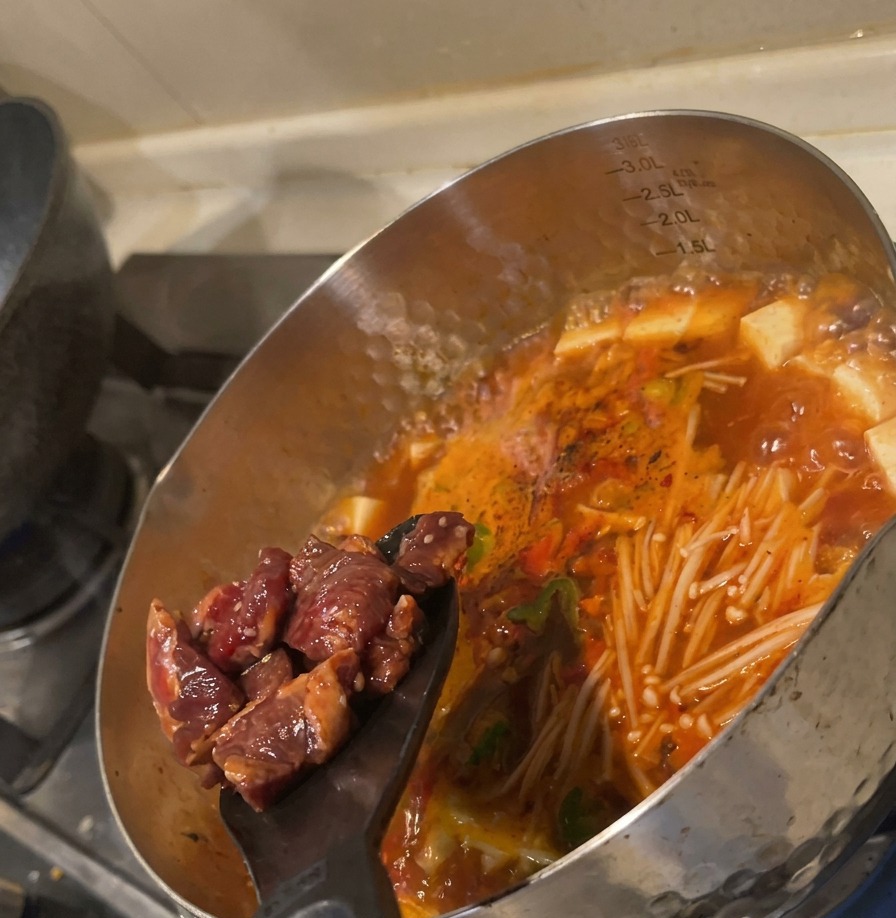
When the soup reaches a rolling boil, use a spatula to slide the marinated beef rib pieces into the pot. Adding the beef at high heat helps lock in the marinade and ensures the meat stays tender.
Tip: Wait for a full boil before adding the beef; if the water is too cool, the starch in the marinade might make the broth cloudy. - 14Simmer until fully cooked
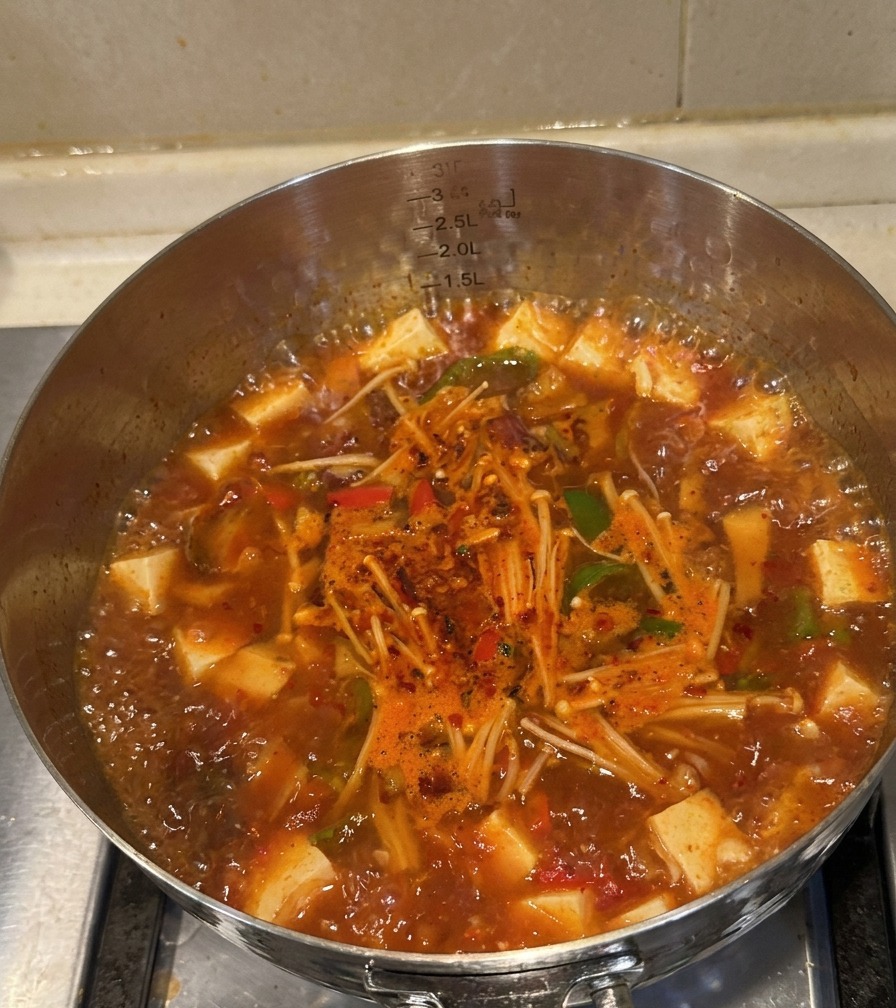
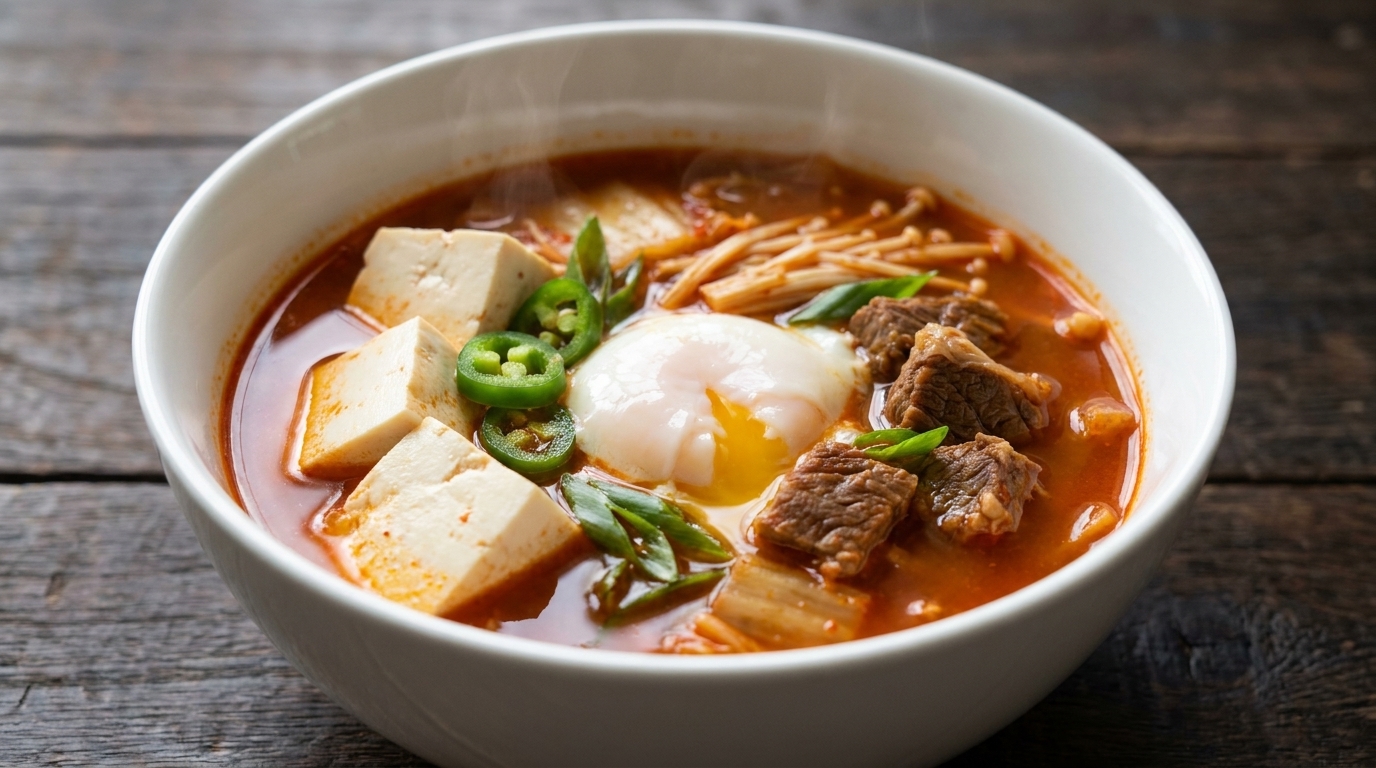
Allow the beef and vegetables to simmer in the bubbling broth for about three to five minutes. The beef is ready when the pieces have turned completely brown and opaque, indicating they are cooked through and tender.
Tip: If you like a richer soup, crack a fresh egg into the center during the last minute of simmering.