Spicy Korean Soft Tofu Stew (Sundubu-jjigae)
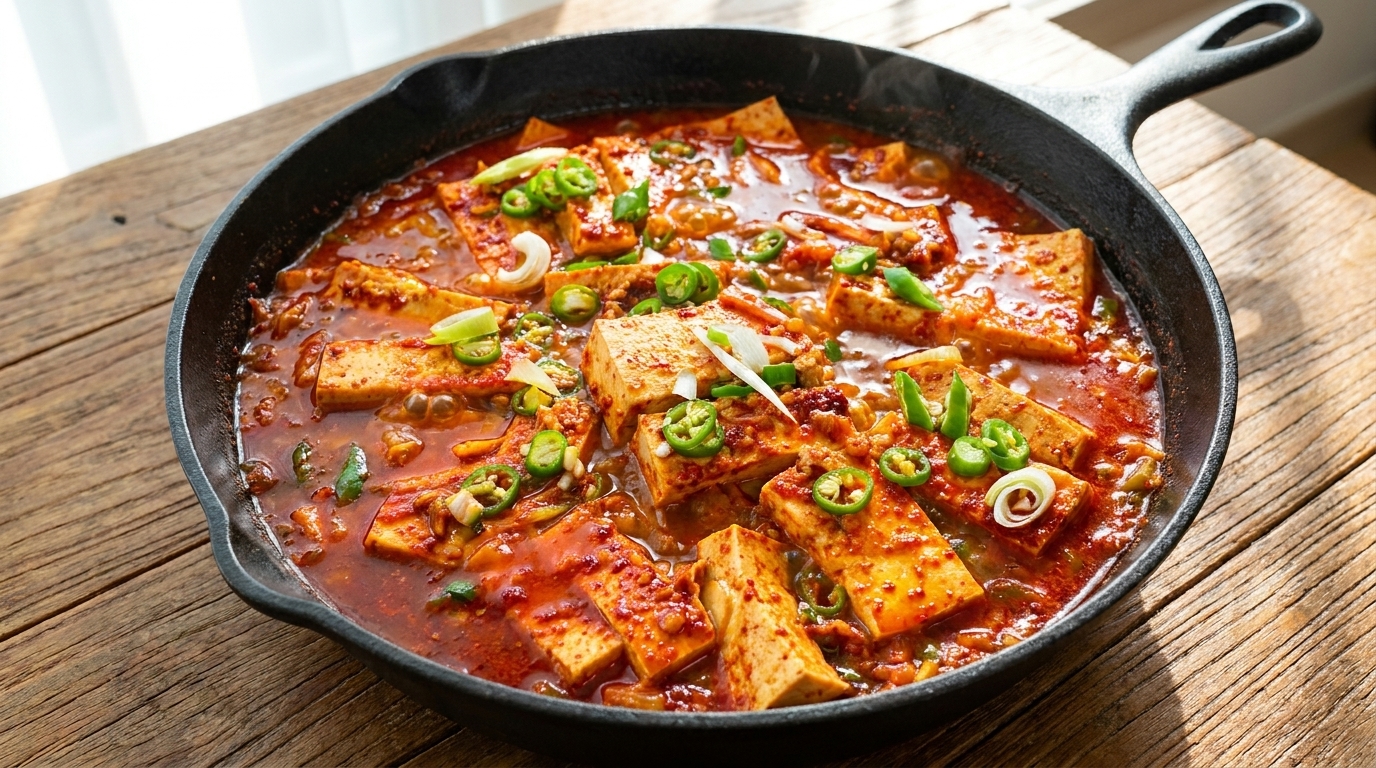
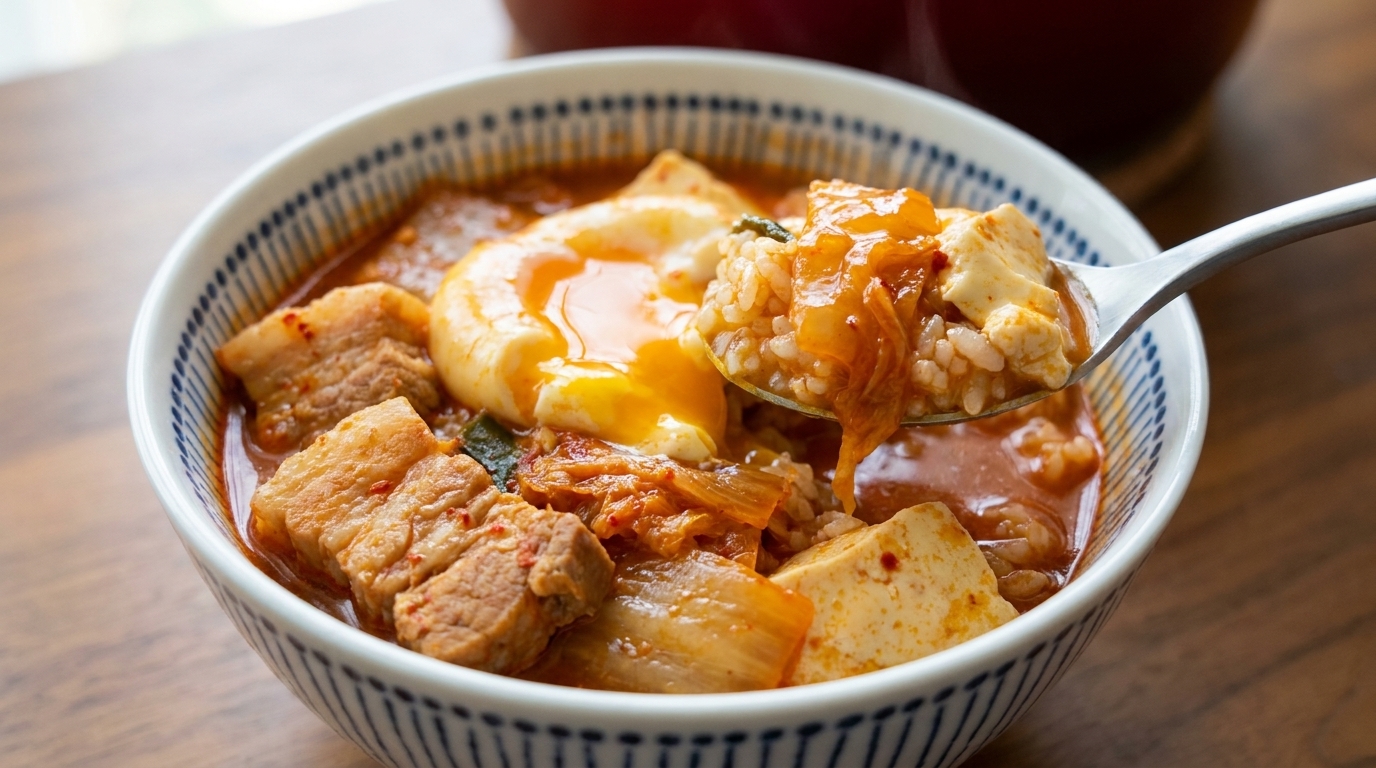
A fiery and comforting Korean classic, featuring silky soft tofu, tender pork, and a deeply aromatic chili-infused broth topped with a delicate egg.
Sundubu-jjigae is a beloved staple of Korean home cooking, prized for its ability to warm the soul and satisfy the palate. The magic lies in the contrast between the velvety texture of the freshly curdled soft tofu and the spicy, savory depth of the broth, which is enhanced by a base of stir-fried chili powder and aromatics. Often served bubbling hot, it is a perfect example of the comfort and bold flavors that define the Korean table.
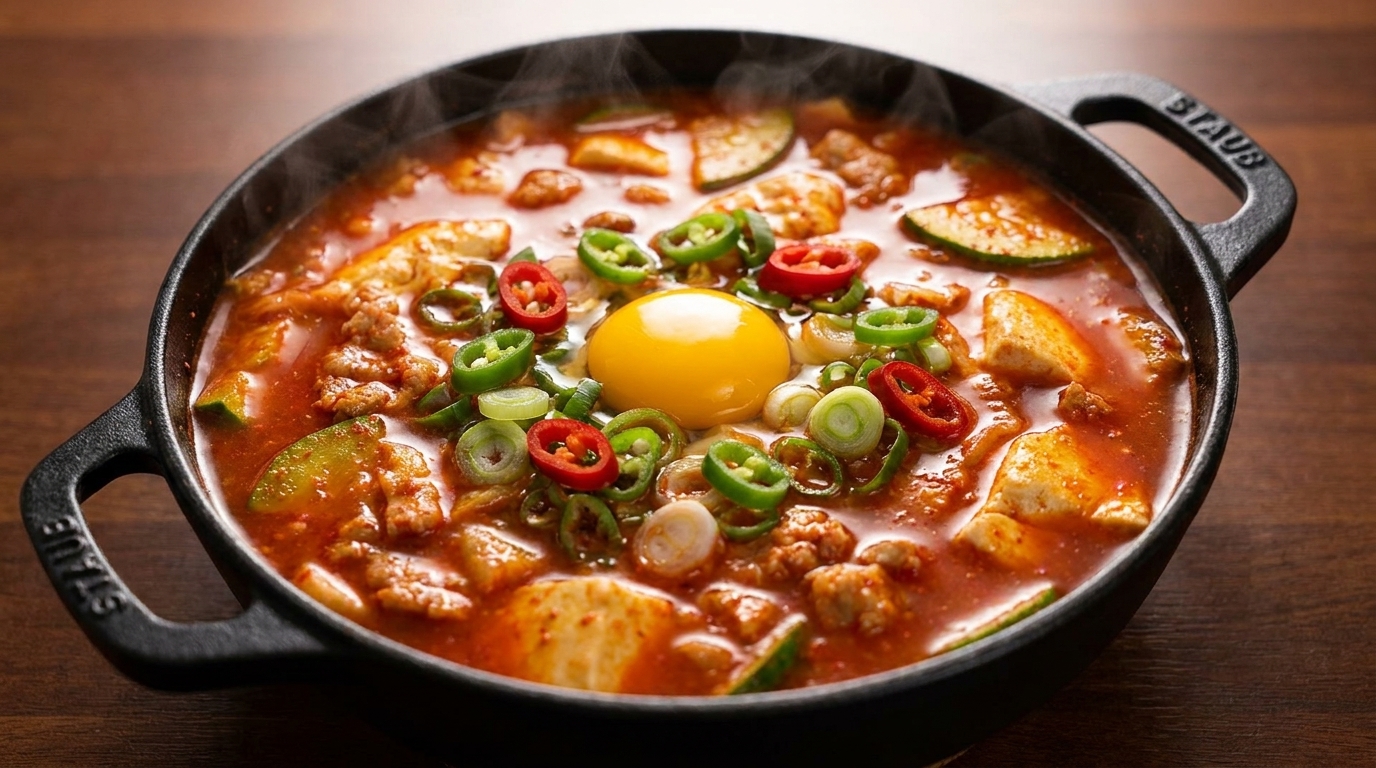
Ingredients
- 200 g pork neck or pork shoulder
- 1 soft tofu
- 0.5 onion
- 1 stalk green onion
- 1/3 zucchini
- 2 green chilies
- 1 red chili
- 1 egg
- 600 ml dried anchovy broth
- 2 tbsp cooking oil
- 1 tbsp sesame oil
- 1 tbsp chili paste
- 2.5 tbsp chili powder
- 1 tbsp minced garlic
- 1 tbsp cooking wine
- 1 tbsp soy sauce
- 2 tbsp shrimp sauce
- pinch pepper powder
Instructions
- 1Prepare the pork
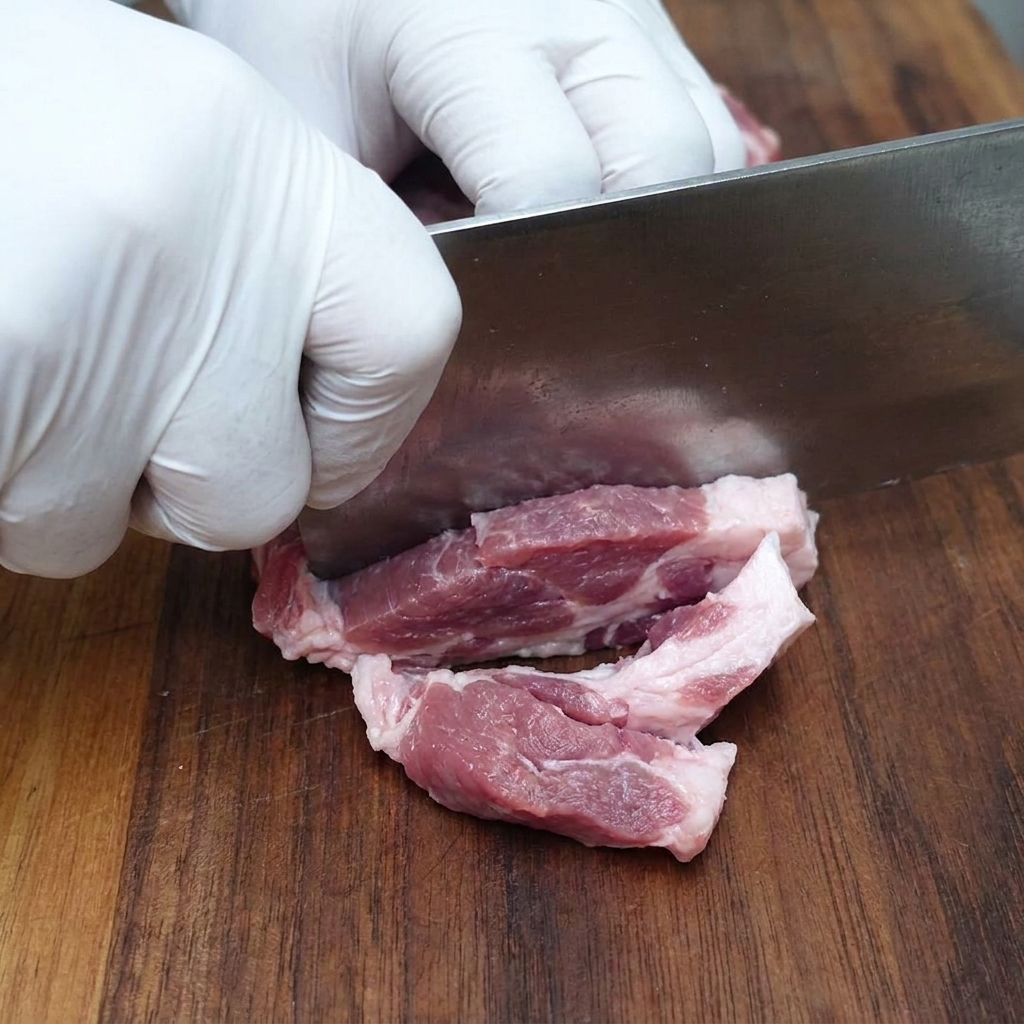
Take 200g of pork neck or pork shoulder and carefully chop it into small, uniform pieces on a wooden cutting board.
Tip: Using pork neck or shoulder ensures a good balance of fat and lean meat, which keeps the stew tender. - 2Chop the vegetables
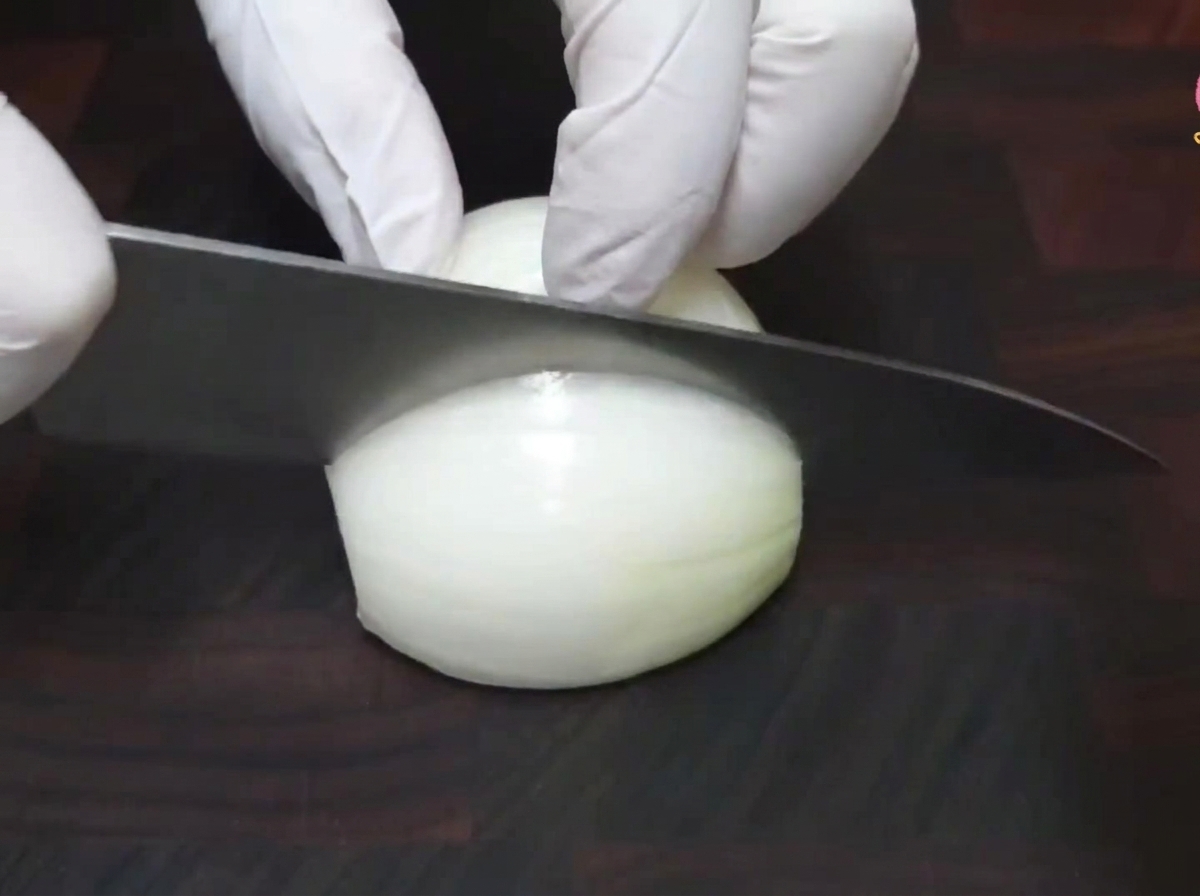
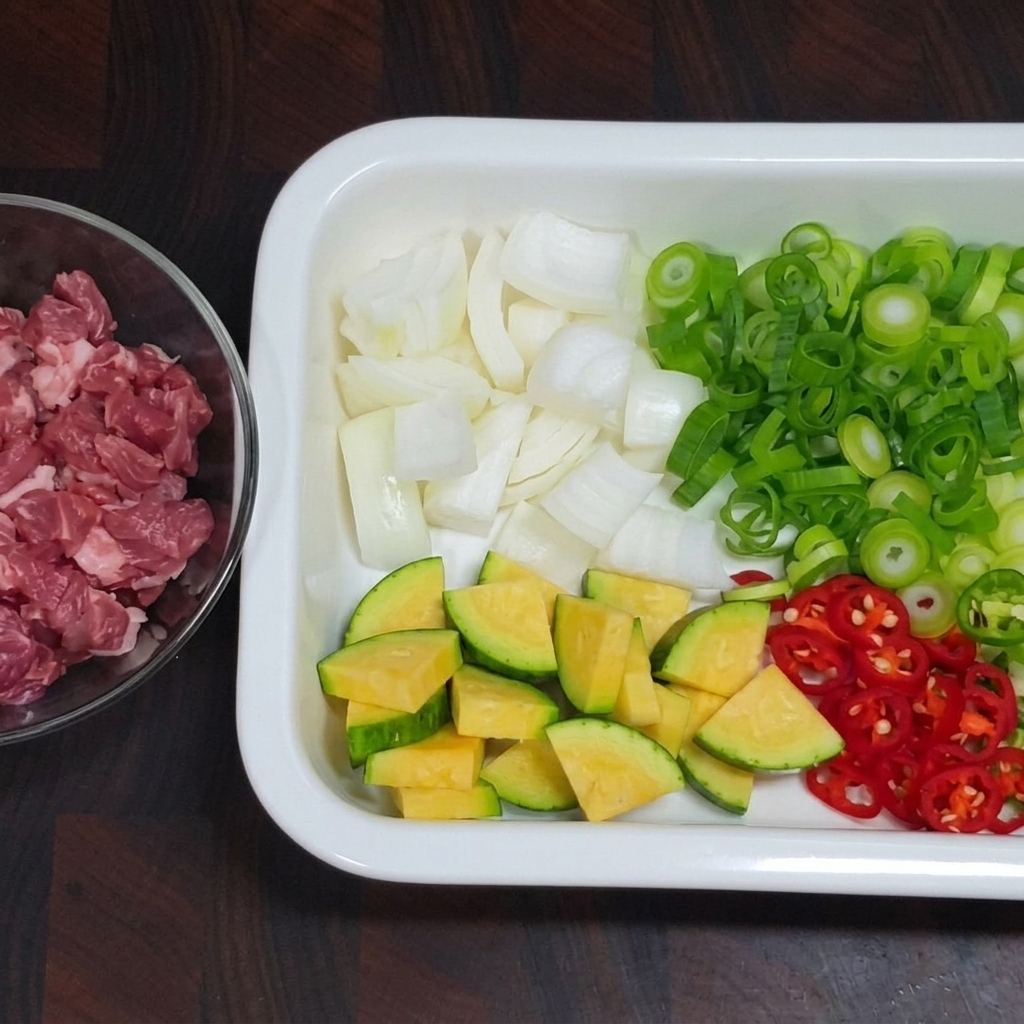
Dice half an onion, chop green onion, cut one-third of a zucchini into small pieces, and thinly slice two green chilies and one red chili.
Tip: Keep the zucchini pieces similar in size so they cook evenly throughout the stew. - 3Make the chili oil base
Heat a pan, add two tablespoons of cooking oil and one tablespoon of sesame oil. Stir in one tablespoon of chili paste and two and a half tablespoons of chili powder over low heat to create a fragrant chili oil.
Tip: Stir-fry over low heat to prevent the chili powder from burning and turning bitter. - 4Sauté the pork
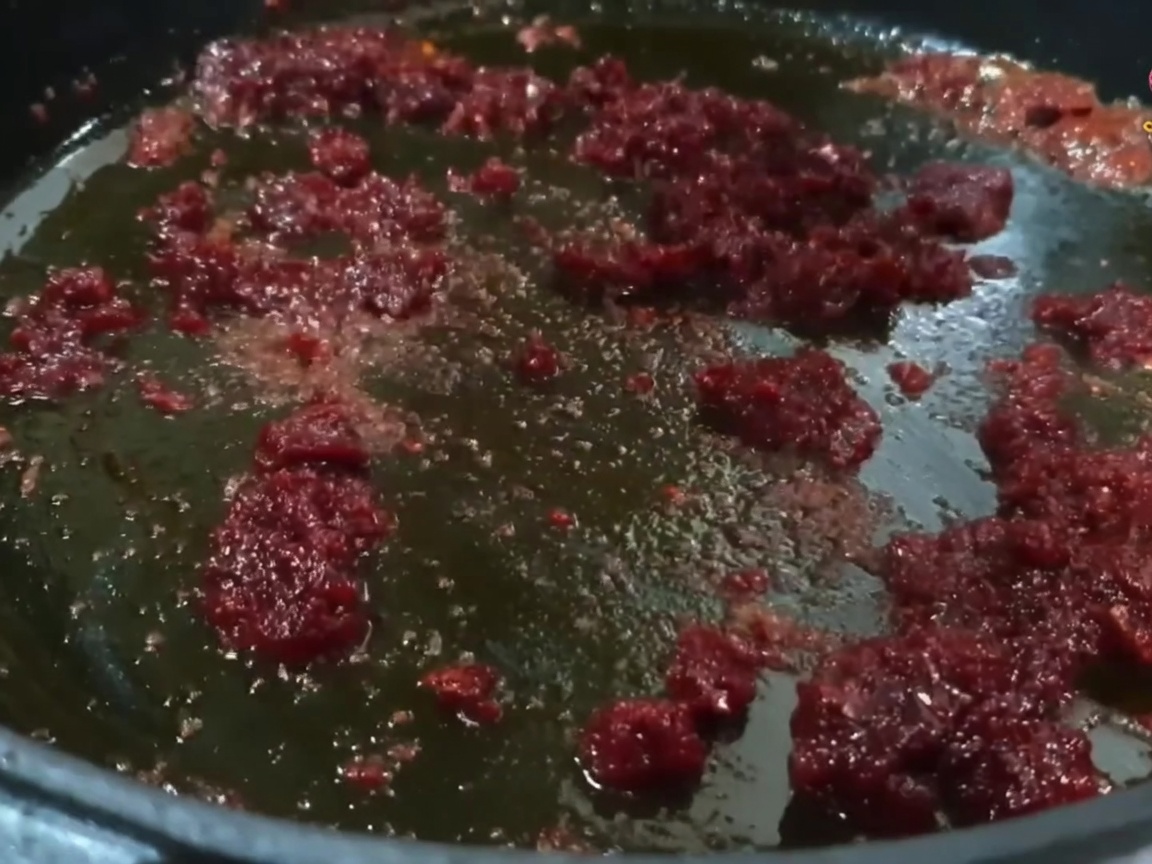
Add the chopped pork pieces into the pan with the prepared chili oil. Stir-fry together until the meat is well-coated and starting to cook through.
Tip: Ensuring the pork is well-coated in the chili oil at this stage builds a deep, spicy flavor foundation for the stew. - 5Add aromatics and season
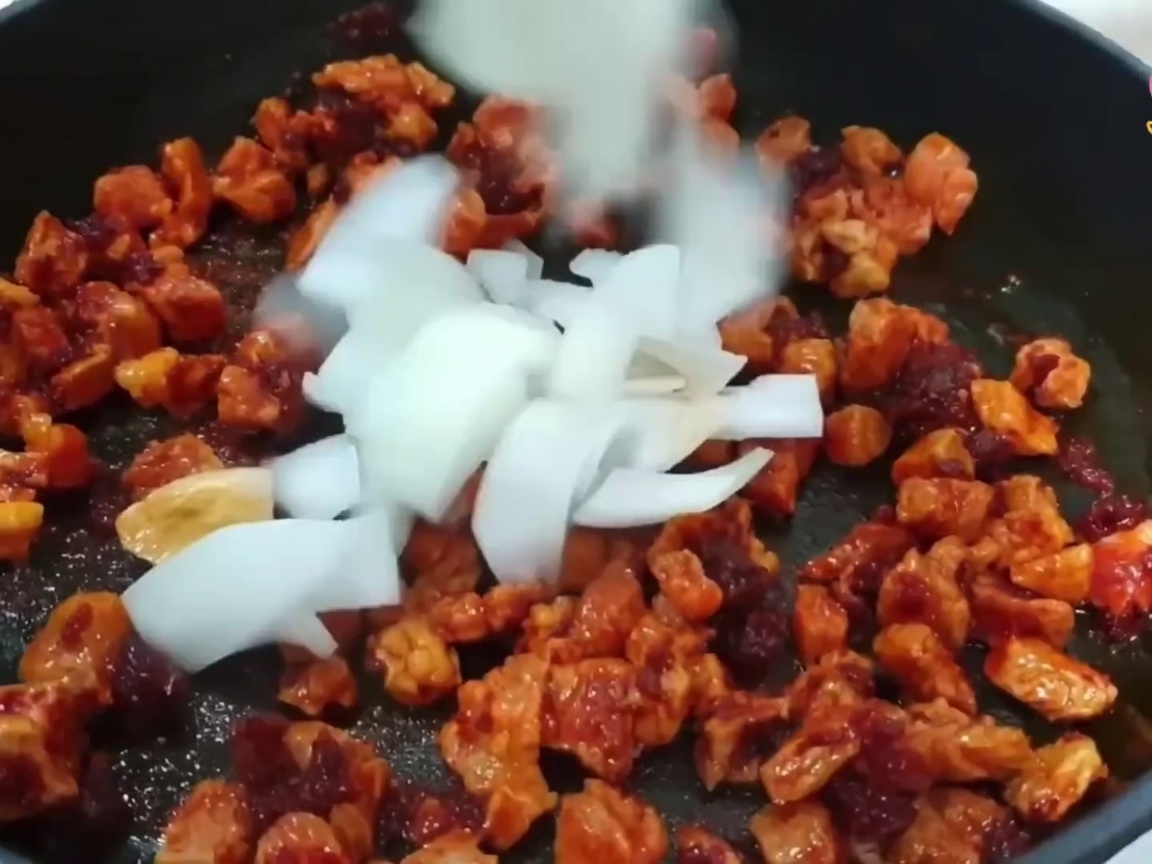
Add the diced onion, chopped green onion, and one tablespoon of minced garlic to the pork. Season with a pinch of pepper powder and one tablespoon of cooking wine, then continue to stir-fry.
Tip: Cooking wine helps remove any potential gamey odor from the pork. - 6Simmer the base
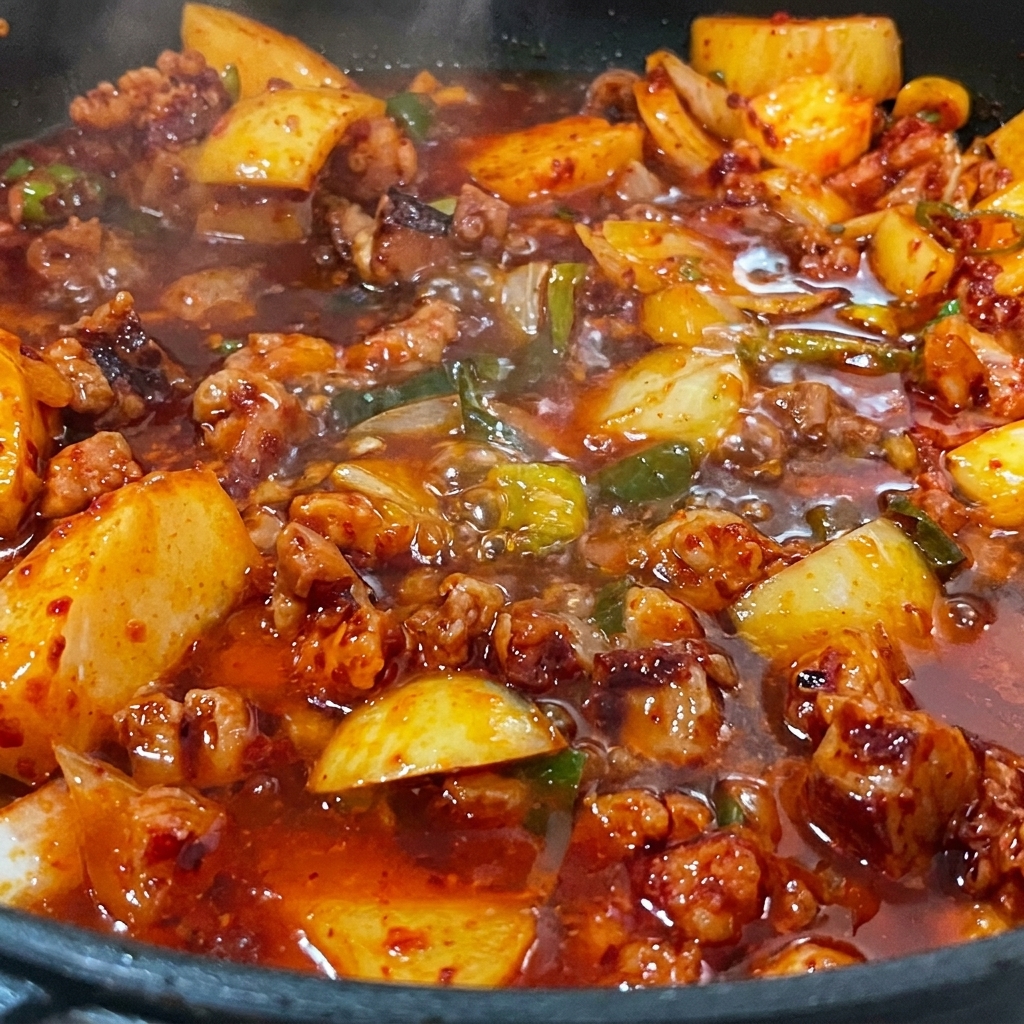
Pour 600ml of dried anchovy broth into the pan and add one tablespoon of soy sauce. Cover with a lid and simmer for 10 minutes over medium heat.
Tip: Using anchovy broth adds a savory, umami-rich depth that pairs perfectly with the spicy profile of the stew.