Authentic Japanese Chashu (Rolled Pork Belly)
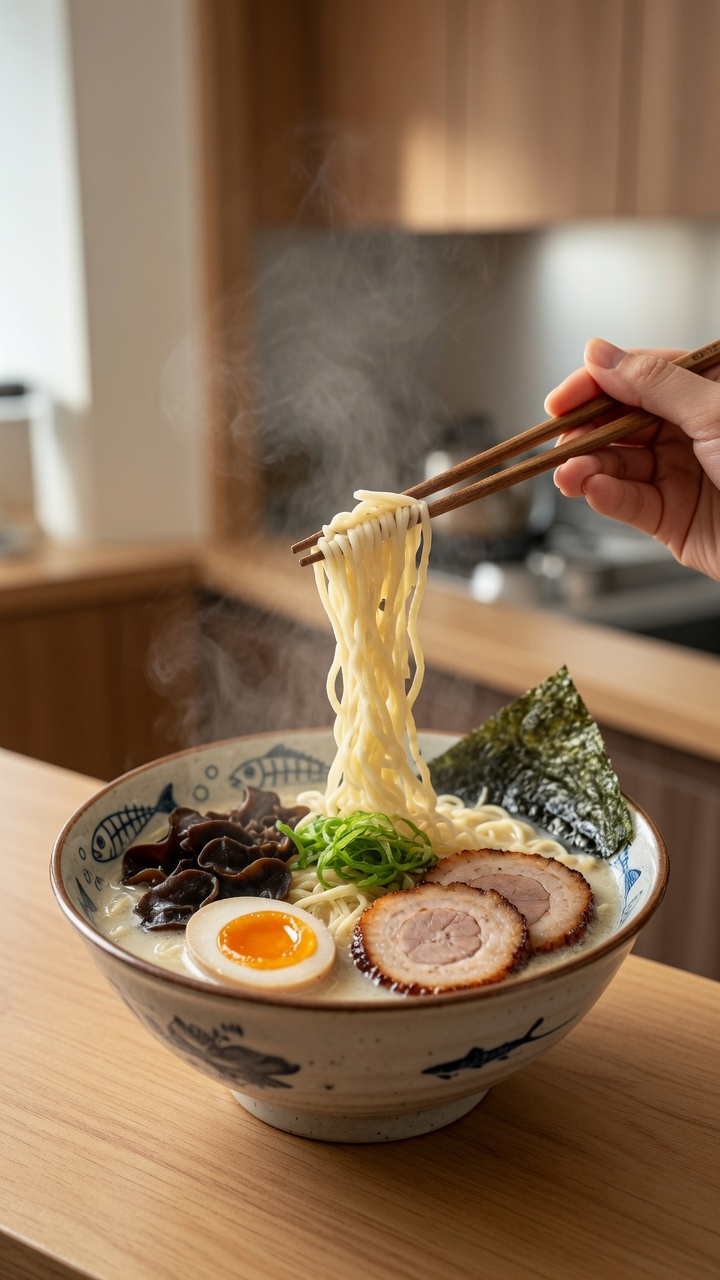
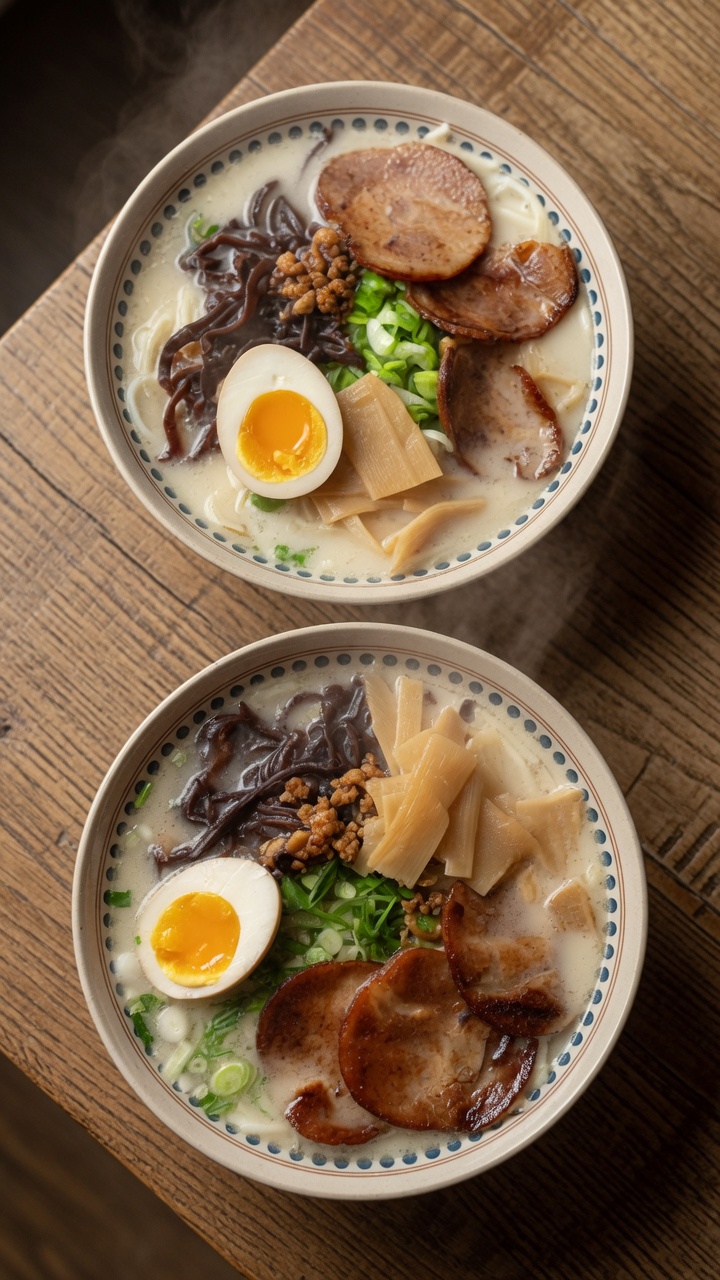
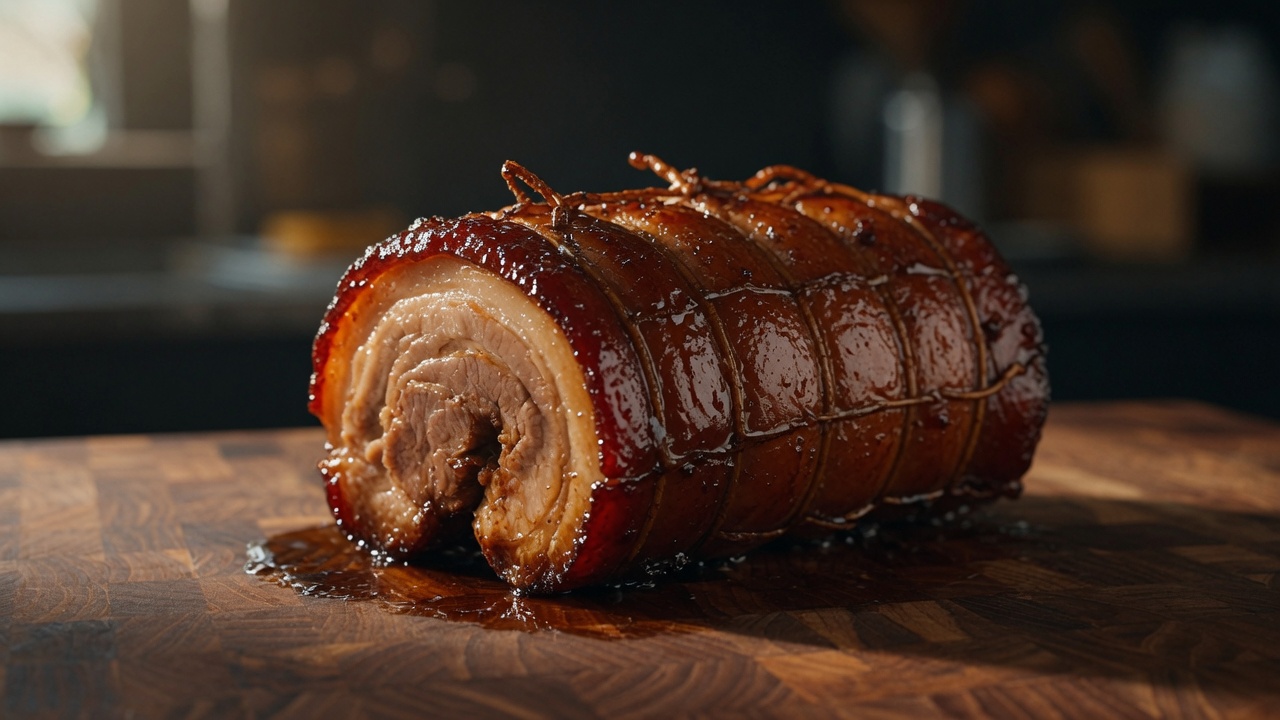
Master the art of Japanese chashu at home with this melt-in-your-mouth rolled pork belly. Slowly braised in soy sauce, mirin, and sake, it is the ultimate ramen topping.
Chashu is the crown jewel of a great bowl of ramen, known for its incredible tenderness and rich, savory-sweet flavor profile. This Japanese adaptation involves rolling pork belly and slowly braising it in soy sauce, mirin, and sake until perfectly tender. Resting the meat overnight in its braising liquid is the secret to achieving that deep, uniform color and flavor.
Ingredients
- 1 kg pork belly (or pork shoulder)
- 1 carrot
- 1 onion
- 1 stalk celery
- 1.5 L pure water, divided
- 1 splash XO brandy or cognac
- to taste table salt
- to taste black pepper
- 1 tbsp cooking oil
- 400 ml soy sauce
- 200 ml mirin
- 200 ml sake
- 1 piece kombu (kelp)
- 1 stalk green onion
- 1 piece ginger
- 30 g white sugar
- 1 pinch white pepper
- 1-2 whole star anise
- 1 piece licorice root
Instructions
- 1Tie the pork belly
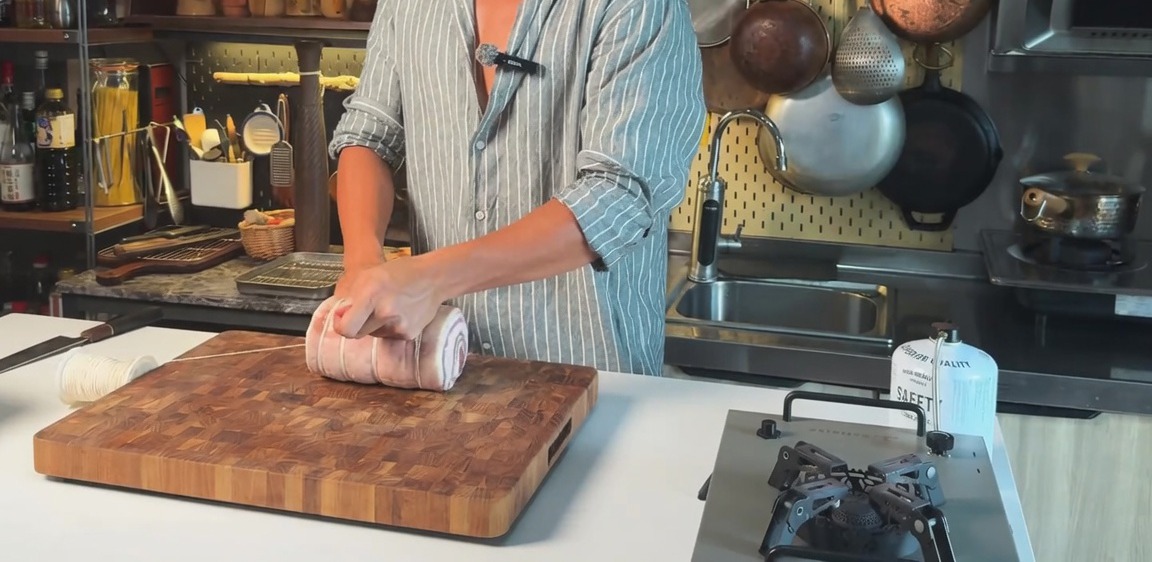
Roll the pork belly tightly into a cylinder and use kitchen twine to tie it horizontally in several places. This helps the meat hold its shape during the cooking process. If the pork belly is too fatty for your preference, you can substitute it with pork shoulder.
Tip: Make sure the knots are secure, but do not tie them too tightly, as the meat will expand slightly when cooked. - 2Prepare the vegetable marinade
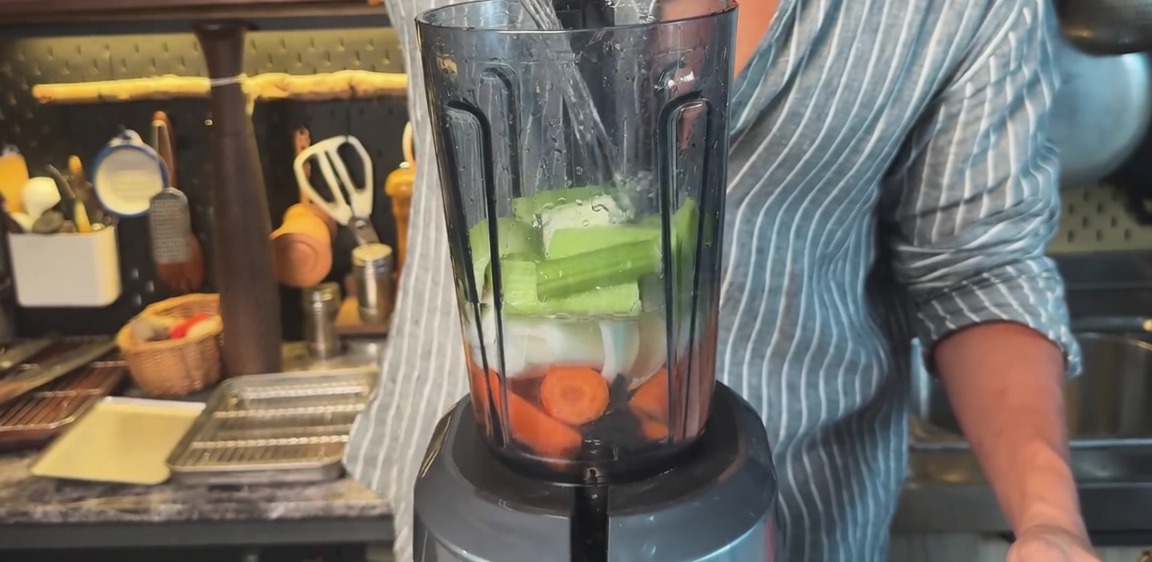
Place roughly chopped carrots, onions, and celery into a blender. Add about 500 milliliters of pure water and blend everything into a smooth vegetable juice. This mixture serves as a flavorful marinade base that will help remove any unwanted meat odors.
Tip: Blend the mixture until it is very smooth so the flavors can easily penetrate the meat during marination. - 3Marinate the pork
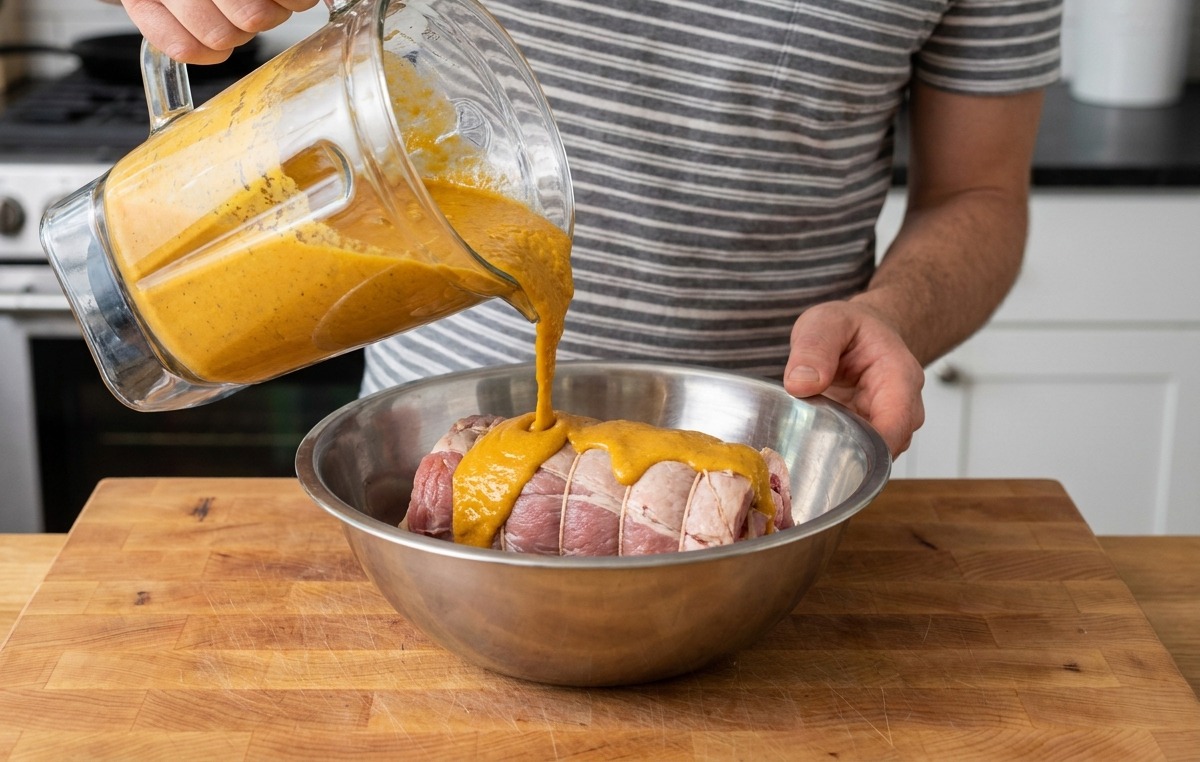
Place the tied pork belly into a large mixing bowl and pour the freshly blended vegetable juice over it. Add a splash of domestic XO brandy or cognac; the alcohol will further eliminate odors and infuse the meat with a rich fragrance.
Tip: If you have time, cover the bowl and let it marinate in the refrigerator overnight for a much deeper flavor. - 4Season the meat

Generously season the pork belly by grinding fresh black pepper and sprinkling table salt directly into the marinade. Massage the seasonings into the meat, ensuring it is well-coated, and let it sit for at least an hour to absorb the flavors.
Tip: Using freshly ground black pepper provides a much more robust and complex aroma compared to pre-ground pepper. - 5Dry the pork belly
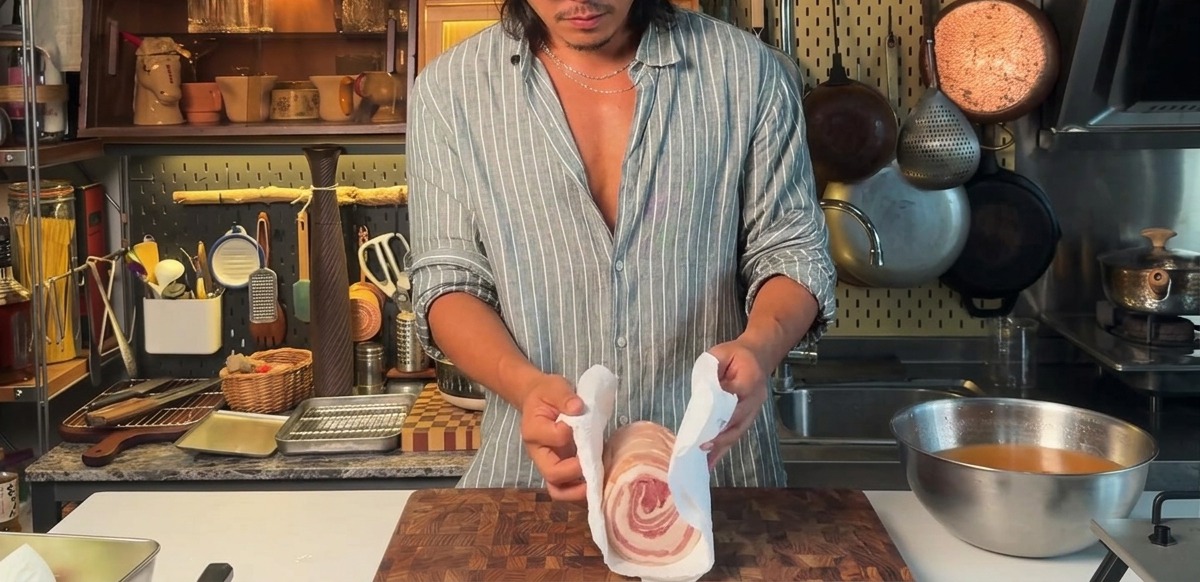
After marinating, remove the pork belly from the bowl and use kitchen paper towels to thoroughly wipe off any excess moisture and vegetable pulp. Drying the surface of the meat is a crucial step to ensure it sears properly later on.
Tip: Do not skip this step! Any leftover moisture on the surface will create steam, preventing the meat from browning properly. - 6Sear the ends
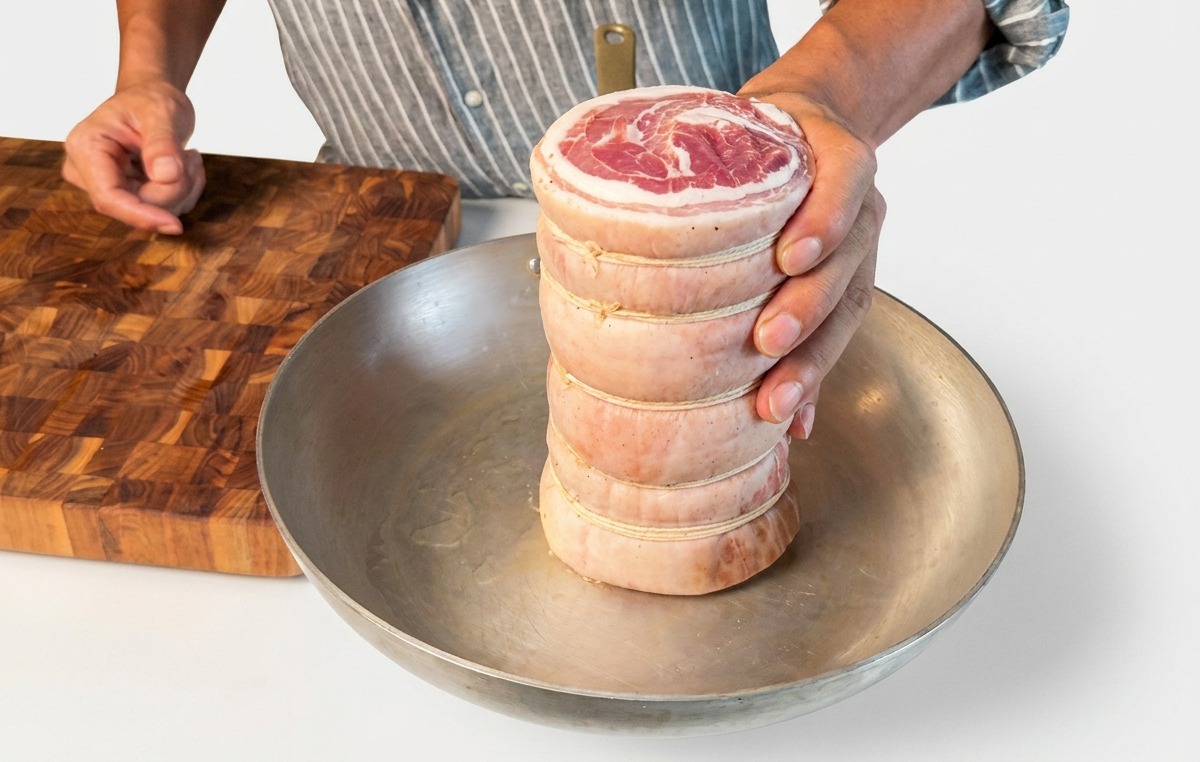
Heat a little oil in a large flat-bottomed pan. Place the rolled pork belly into the pan, starting with the meat side or ends. Sear it over medium-low heat to render out the fat and develop a beautiful golden-brown crust. Sear each side for about three minutes.
Tip: Keep the heat on medium-low to avoid burning the outside before the fat has a chance to render completely. - 7Brown the sides

Using tongs, sear each side of the rolled pork belly in a large flat-bottomed pan with a little oil. Use medium-low heat to render out the fat and ensure each side is deeply browned, including the pork skin. Take care to avoid burning the meat.
Tip: Keep the heat at medium-low consistently to allow the fat to render properly without burning the exterior. - 8Prepare the braising liquid

Place the seared pork belly into a pot and add the braising liquid ingredients: soy sauce, mirin, sake, and pure water. The ratio for one kilogram of meat is 400ml soy sauce, 200ml mirin, 200ml sake, and 1000ml water.
Tip: Ensure the liquid covers the meat adequately for even cooking. - 9Add aromatics and spices

Add green onion, ginger, white sugar, white pepper, star anise, licorice, and a piece of kombu to the braising pot. Bring the liquid to a boil over high heat, then skim off any foam before reducing to the lowest heat to simmer.
Tip: Remove the kombu after 40 minutes of simmering to prevent it from losing its flavor and affecting the broth.