Authentic Hakata Tonkotsu Ramen
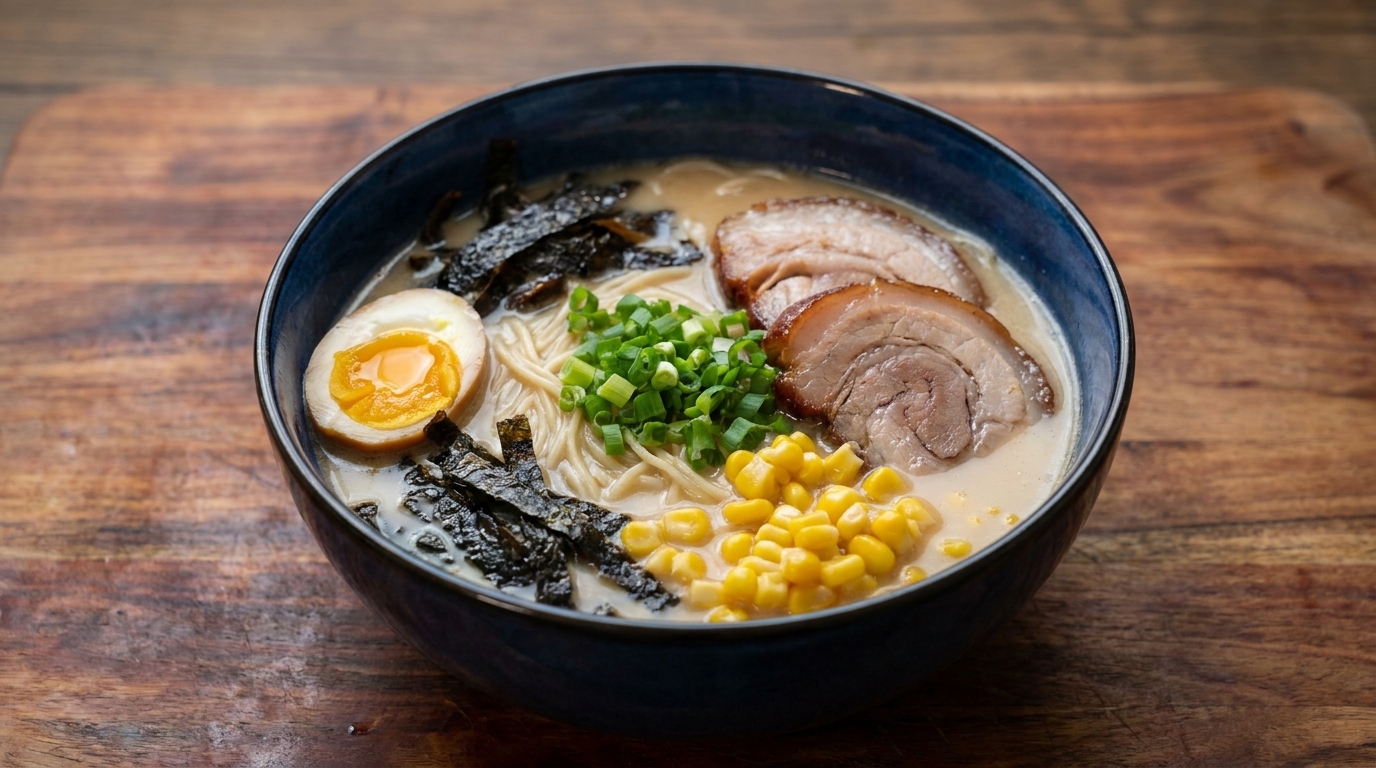
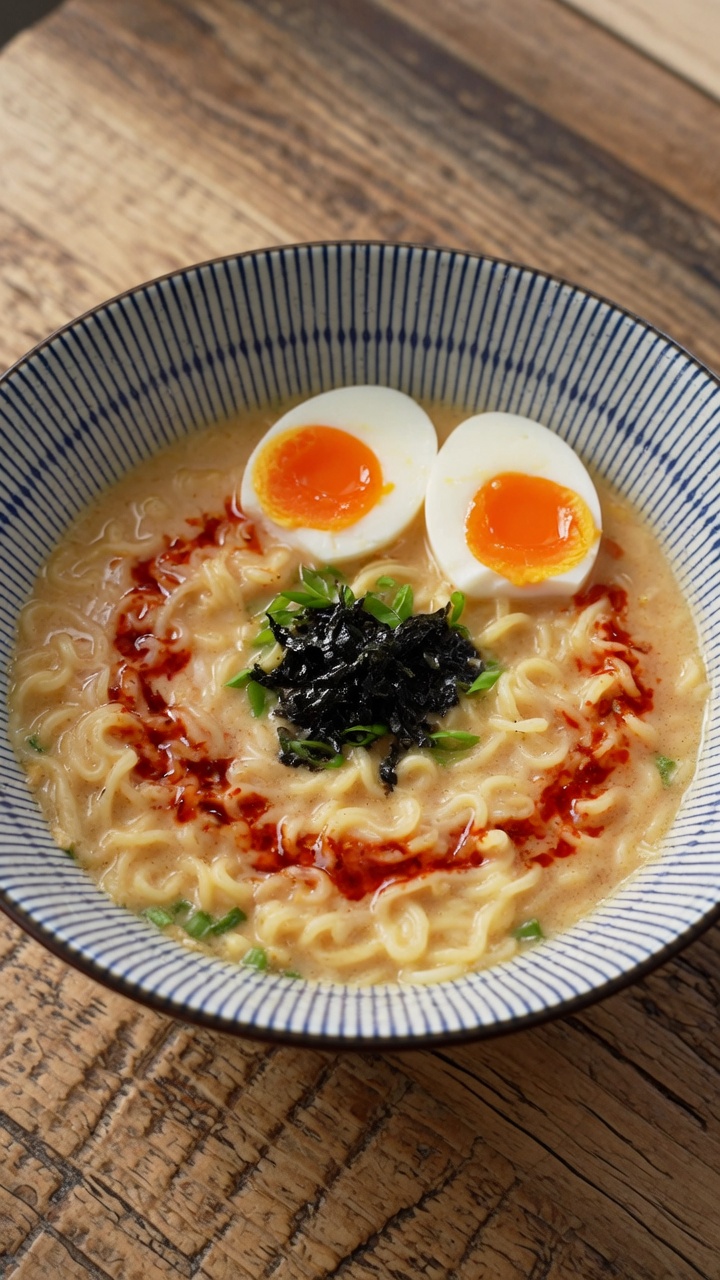
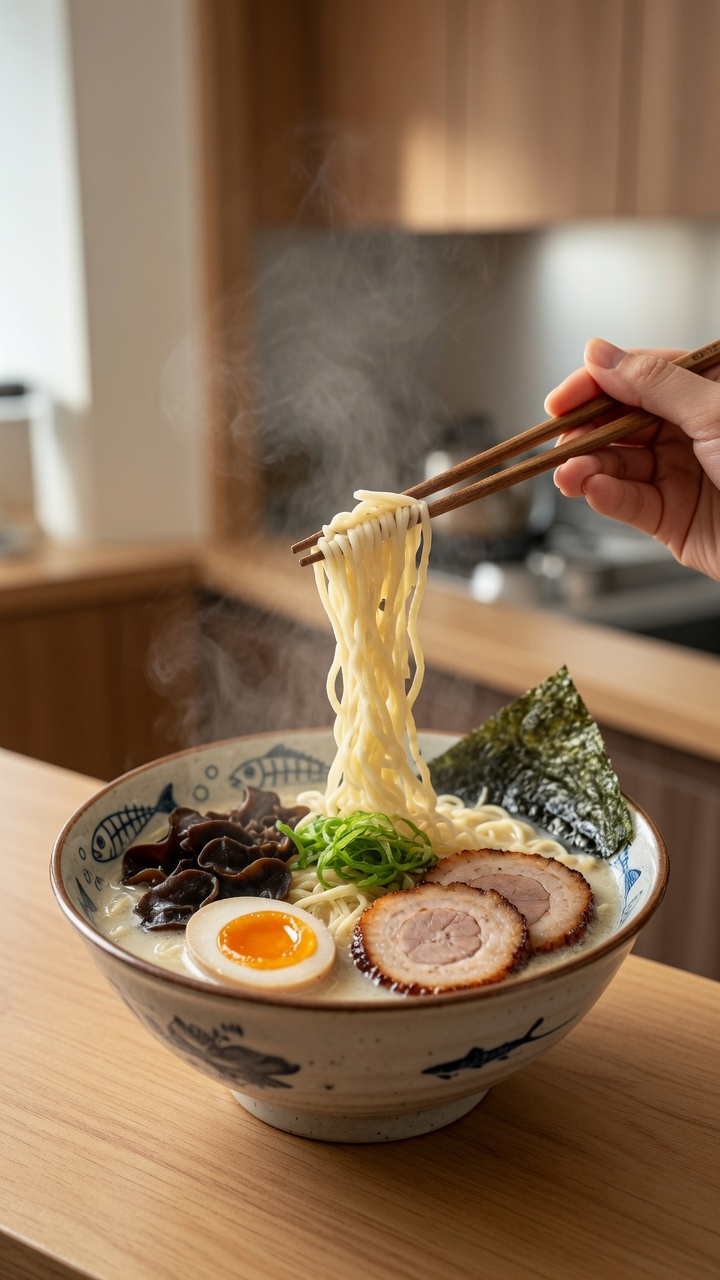
Experience the rich, creamy depth of Hakata Tonkotsu ramen. A robust pork bone broth paired with seared char siu, jammy soft-boiled eggs, and firm noodles.
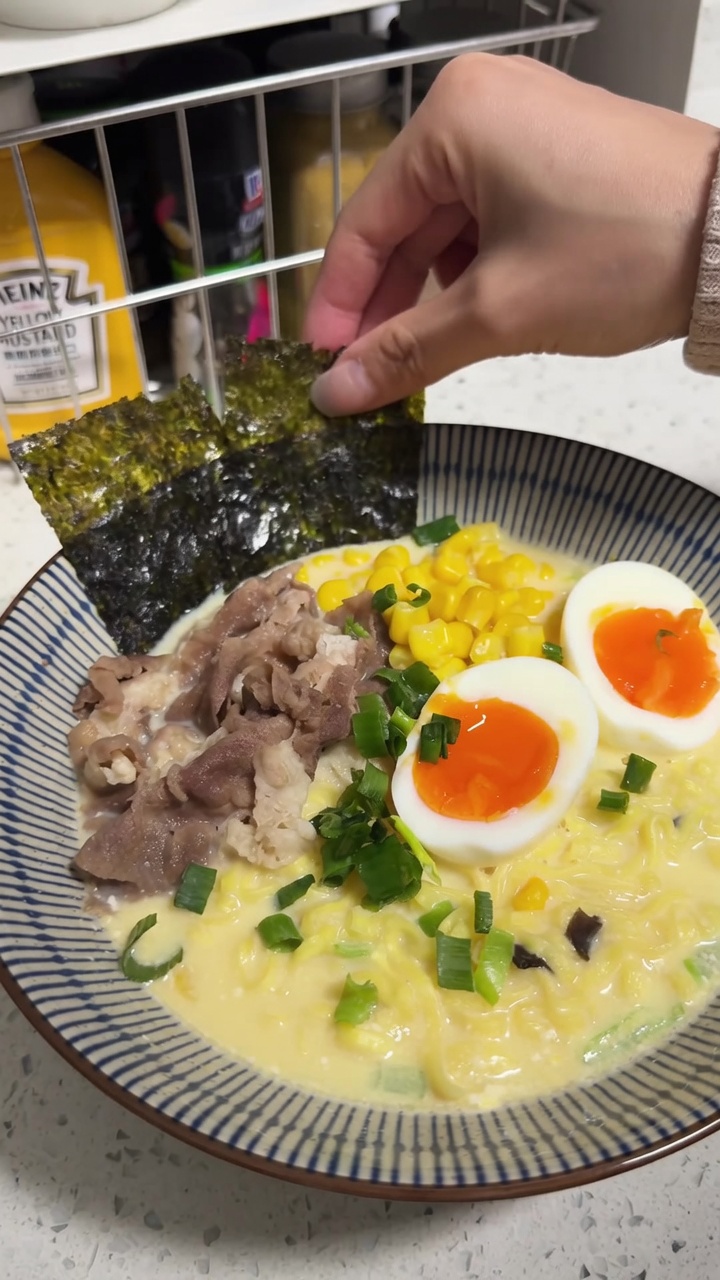
Hakata-style Tonkotsu ramen originates from Fukuoka, Japan, and is celebrated for its incredibly rich, opaque pork bone broth. The secret lies in a vigorous, rolling boil that emulsifies the fat and collagen from pig trotters, creating a creamy texture without the need for dairy. Paired with thin, firm noodles and classic toppings like rolled char siu, wood ear mushrooms, and nori, it is a masterclass in flavor, texture, and comfort.
Ingredients
- 1.5 kg pig trotters
- 3 liters water
- 500 g pork belly
- to taste salt
- 1 tbsp cooking oil
- 2 portions fresh ramen noodles
- 1/4 cup wood ear mushrooms (rehydrated and sliced)
- 1 whole soft-boiled egg
- to taste scallions (thinly sliced)
- 2 sheets nori seaweed
Instructions
- 1Blanch and boil pig trotters
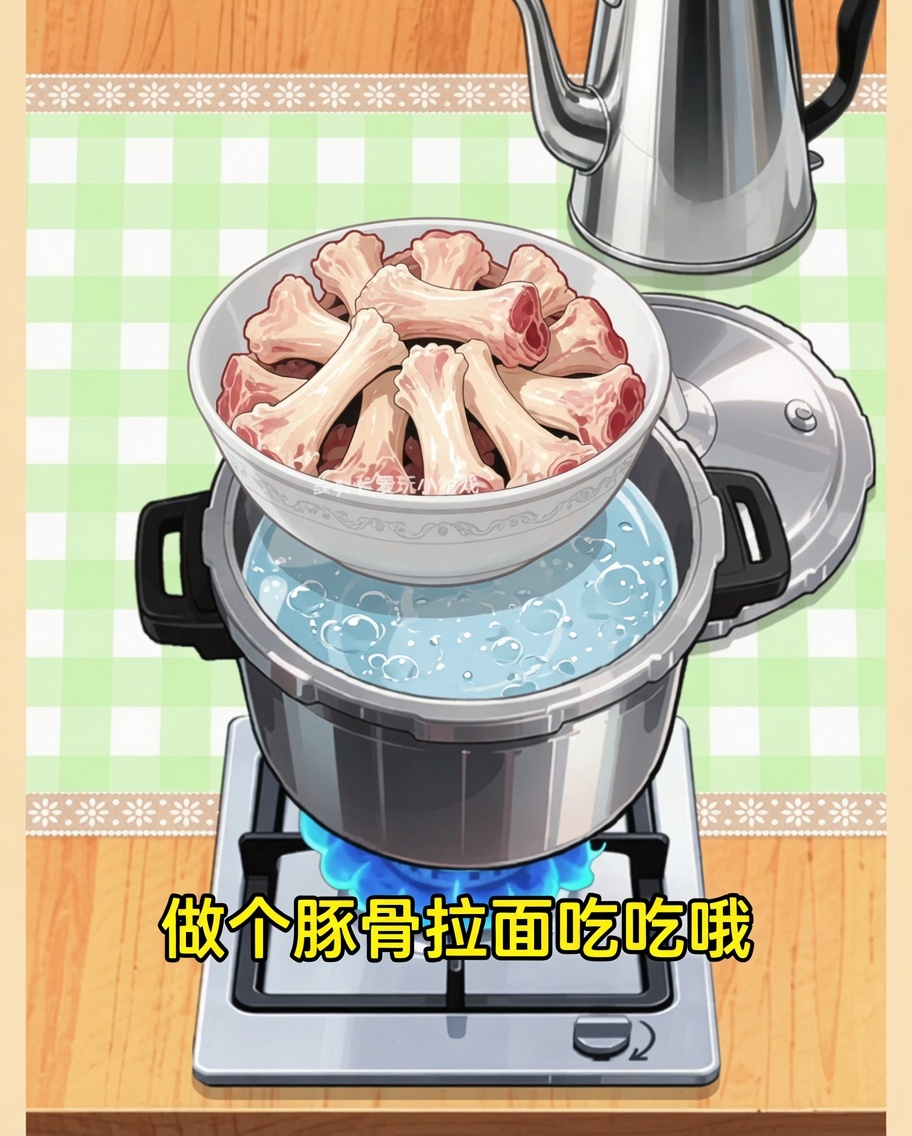
Place the pig trotters into a pressure cooker filled with water. Boil the bones thoroughly at a high, steady heat to create a rich, emulsified, and flavorful base for the Tonkotsu broth. Once the marrow has been extracted and the broth is opaque, remove the bones and set them aside.
Tip: Using a pressure cooker significantly reduces the time required to extract marrow and collagen from the bones, resulting in a creamier broth. - 2Season the pork belly
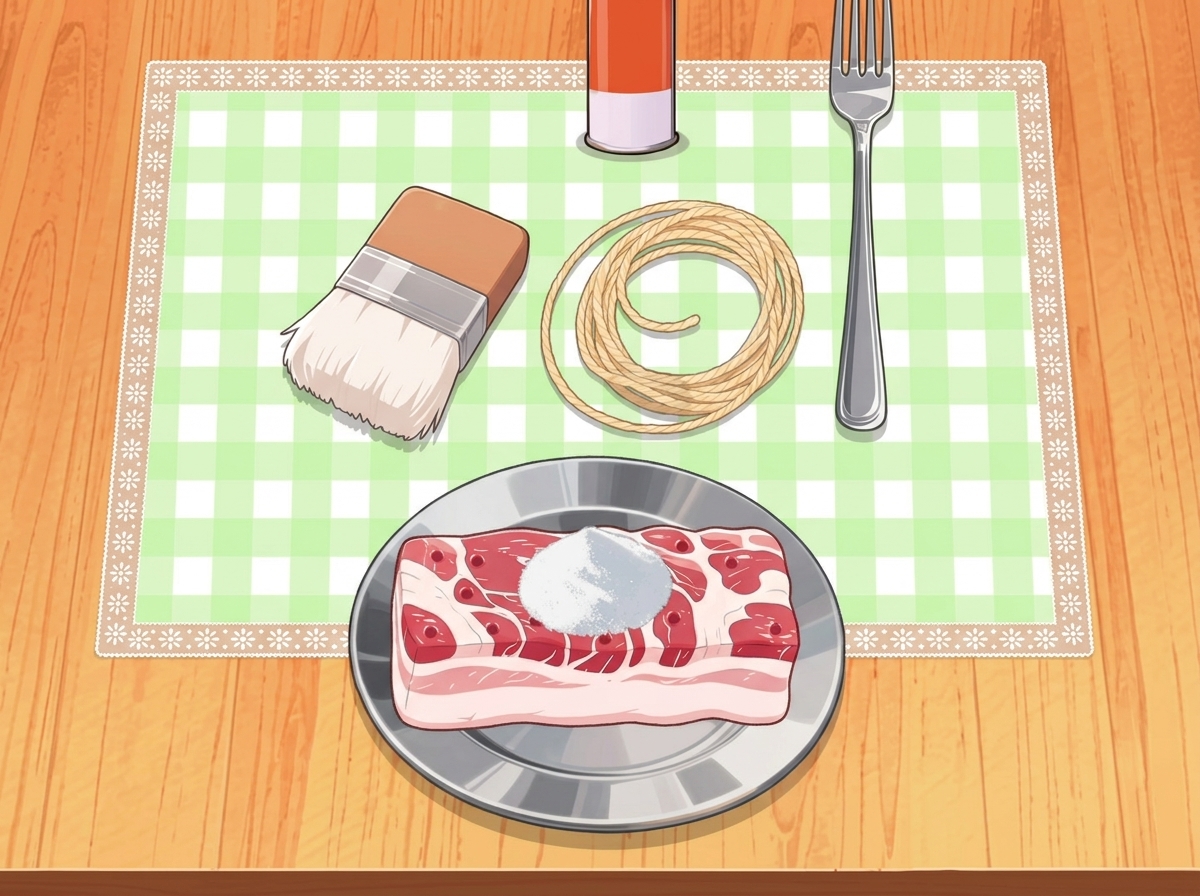
Place the pork belly onto a plate and season it generously with salt. Use your hands to massage the salt into the meat, ensuring even coverage across the surface. This process helps to cure the meat slightly and enhance the flavor before moving on to searing and braising for the char siu.
Tip: Massage the meat thoroughly to allow the salt to penetrate the deeper layers of the pork belly. - 3Sear the pork skin
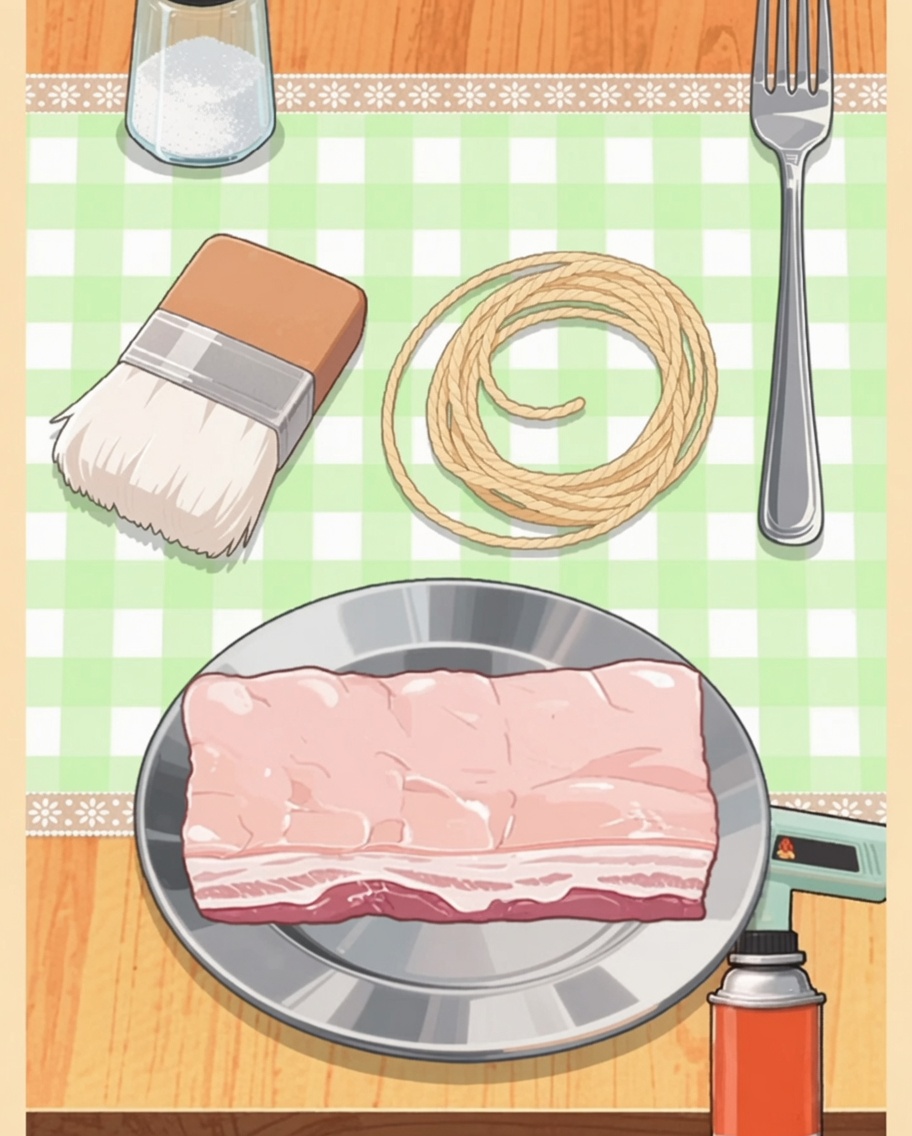
Use a culinary blowtorch to carefully sear the skin side of the seasoned pork belly. Apply the flame evenly across the surface until the skin is golden-brown and slightly charred. This step is essential to render out excess fat and add a deep, smoky aroma to the char siu.
Tip: Keep the torch moving constantly in smooth strokes to prevent burning any single spot on the skin. - 4Roll and tie the pork belly
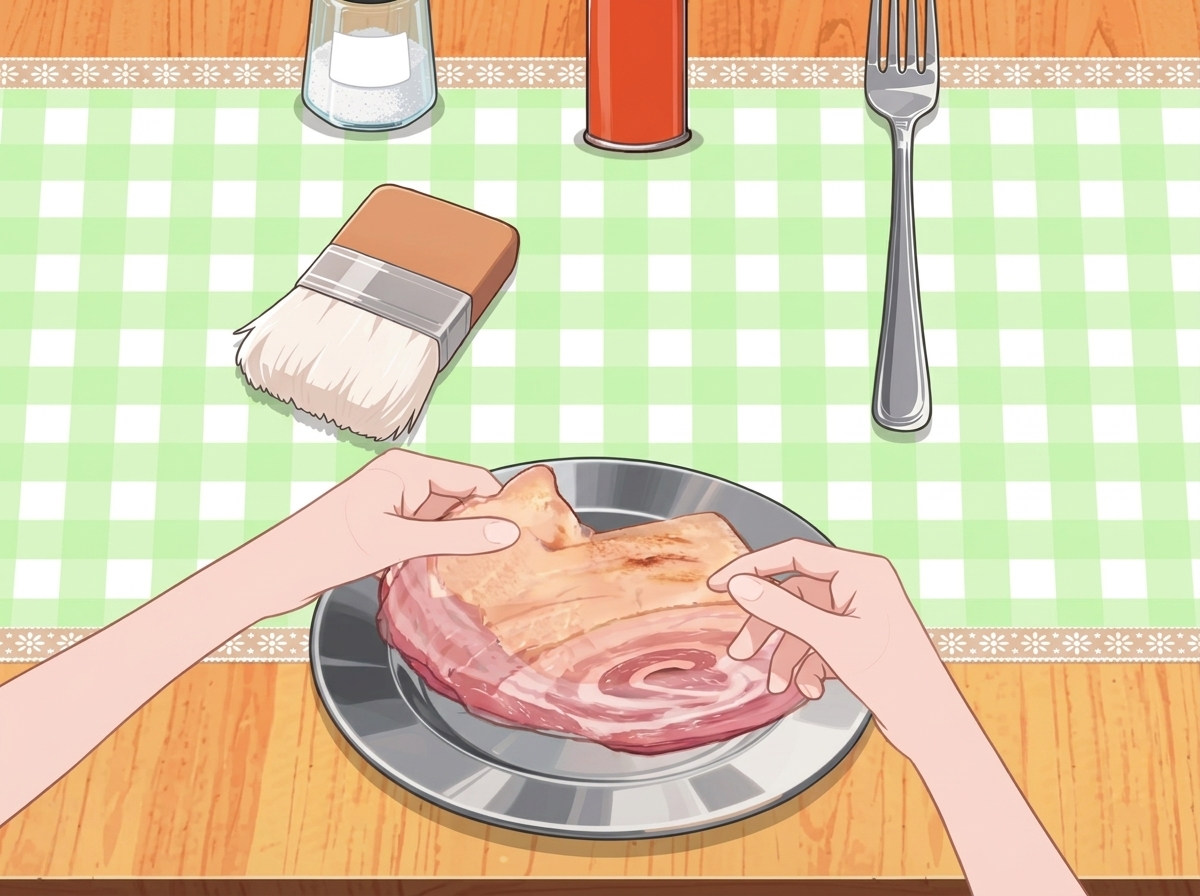
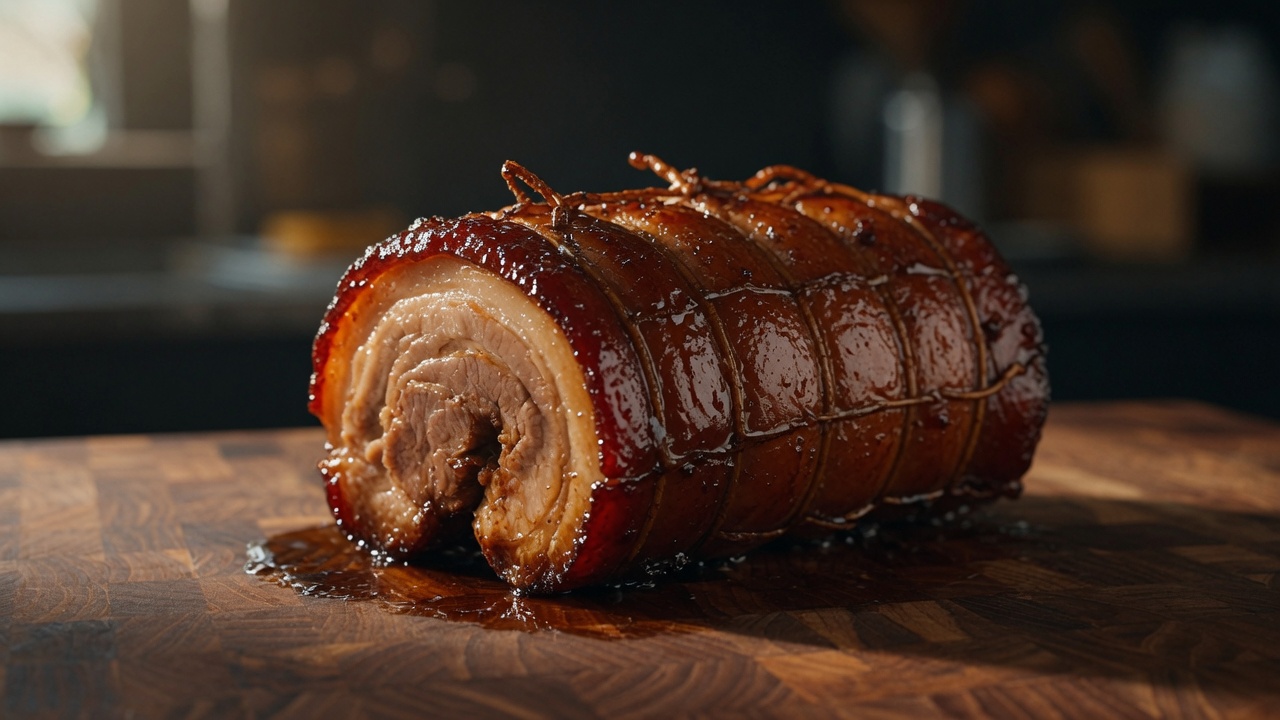
Carefully roll the seared pork belly into a tight cylindrical shape. Secure it firmly with kitchen twine spaced evenly along the roll. This ensures the char siu maintains its classic round shape during cooking and slicing.
Tip: Tie the twine securely but not too tight, as the meat will expand slightly when it cooks. - 5Pan-fry the char siu
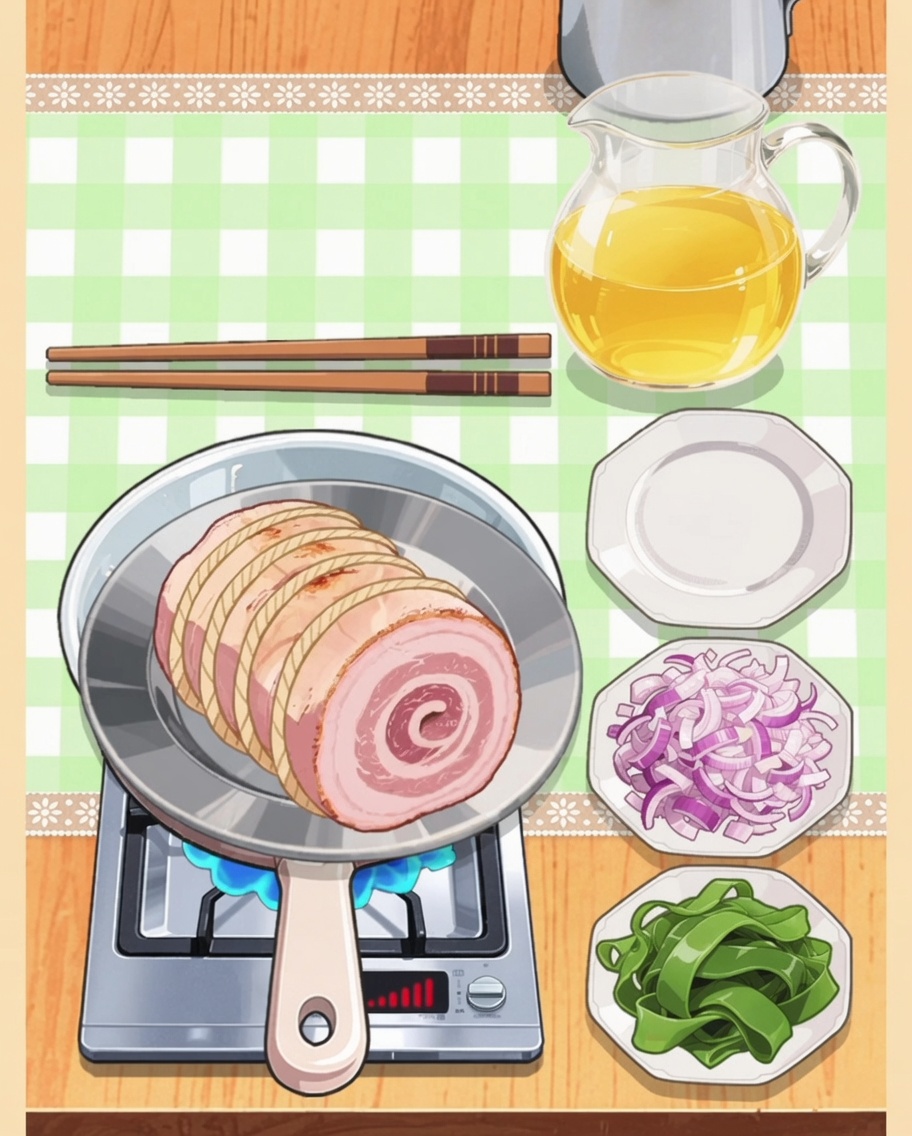
Heat a little oil in a skillet or pan over medium-high heat. Add the tied pork belly roll and pan-fry it, turning occasionally, until the outside is deeply browned and cooked through. Once finished, remove it from the heat.
Tip: Get a good sear on all sides of the roll to lock in the juices and build flavor. - 6Boil noodles and garnishes
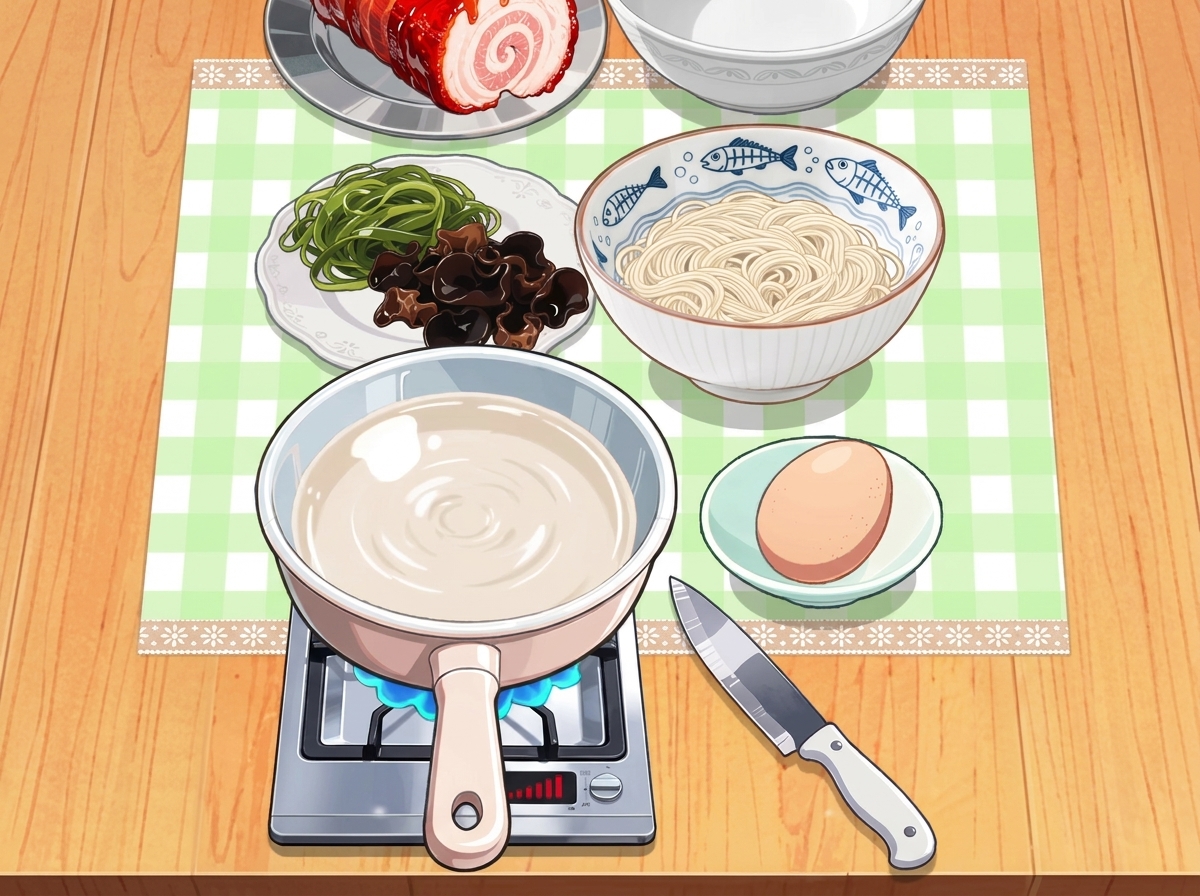
Bring a pot of savory broth to a rolling boil on the stove. Add your raw noodles, wood ear mushrooms, and fresh greens into the hot broth. Cook them until the noodles reach your desired tenderness and the vegetables are slightly softened before transferring to a serving bowl.
Tip: Cook the noodles just until al dente, as they will continue to soften slightly in the hot broth once plated.