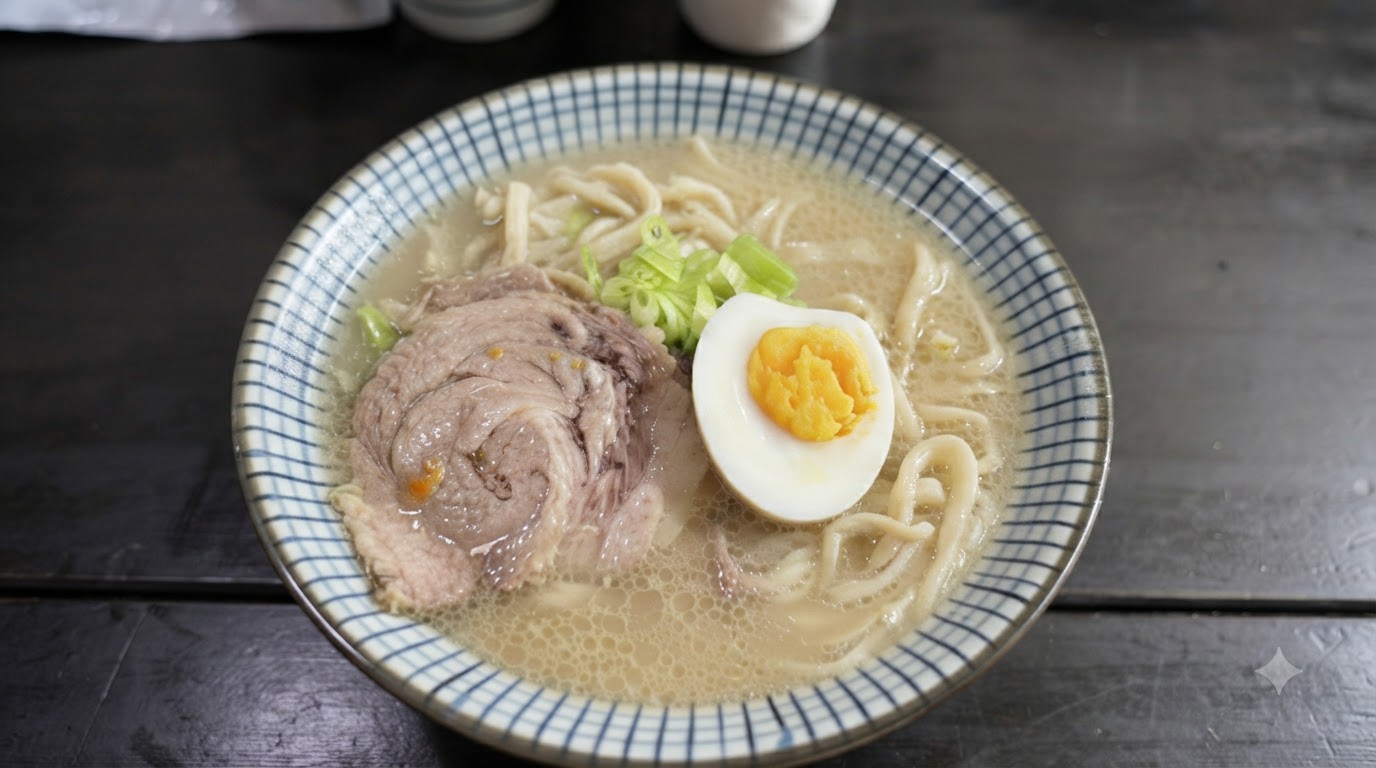
Coconut Curry Japanese Tonkotsu Ramen
Transform instant noodles into a rich Japanese tonkotsu ramen with a creamy coconut curry broth, charred chashu, and traditional toppings.
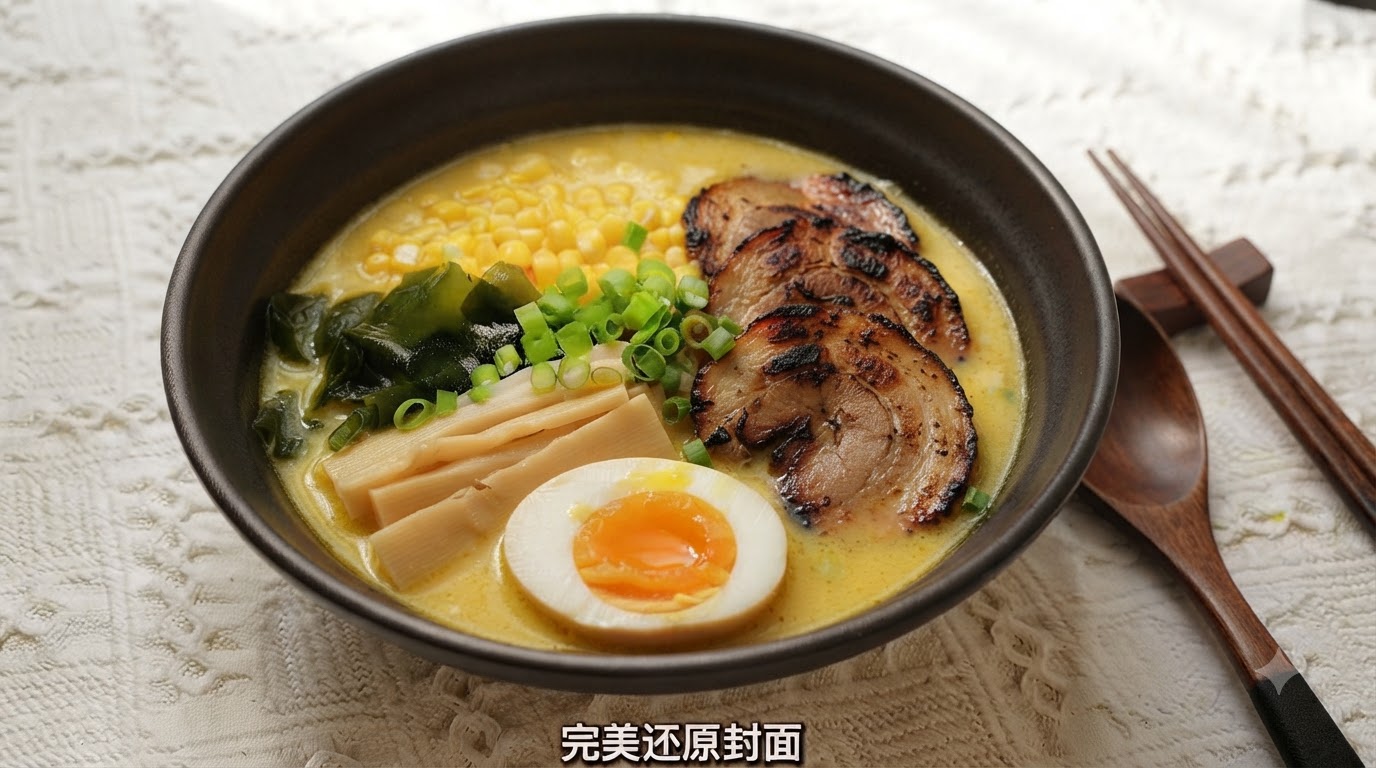
Elevating humble instant noodles into a restaurant-worthy bowl is a culinary art of flavor layering. By swapping half the cooking water for creamy coconut milk and infusing it with a touch of Japanese curry, you create a rich, aromatic broth that brilliantly mimics traditional pork bone ramen. Paired with charred chashu, corn, and a jammy soft-boiled egg, this quick creation delivers deep comfort in minutes.
Ingredients
- 1 packet instant ramen noodles with seasoning packets
- 1 cup water
- 1 cup coconut milk
- 1 small cube Japanese curry paste or cube
- 3 slices firm char siu pork
- 2 tbsp sweet corn kernels
- 1 portion rehydrated seaweed
- 2-3 slices bamboo shoots
- 1 soft-boiled egg
- to taste chopped green onions
Instructions
- 1Pour water and coconut milk into the pot
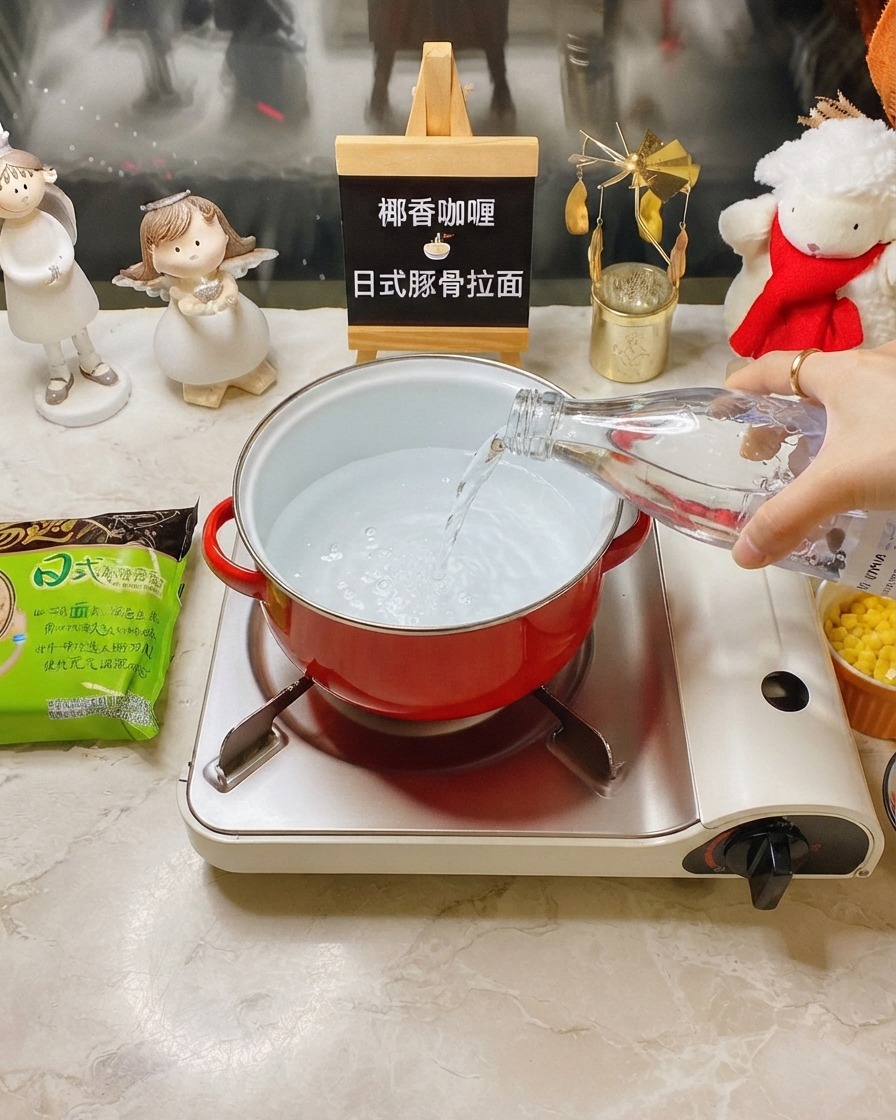
Pour water from a bottle into a red pot placed on a portable stove, followed by adding coconut milk to create the rich and refreshing soup base.
Tip: Use a ratio of half water and half coconut milk for the best balance of creaminess and flavor. - 2Add the instant noodles
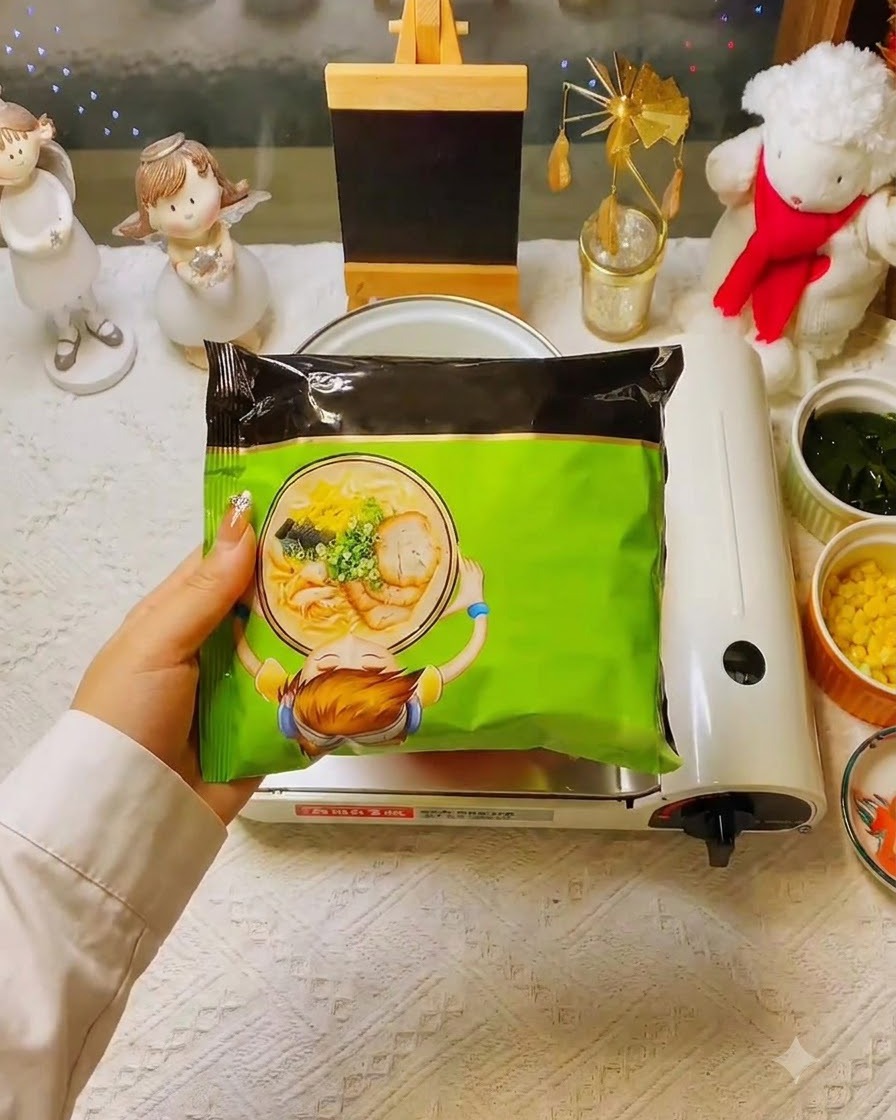
Take the instant noodle block and place it directly into the boiling mixture of water and coconut milk.
Tip: Cook the noodles for about 1.5 minutes before adding the rest of the ingredients. - 3Stir the boiling noodles
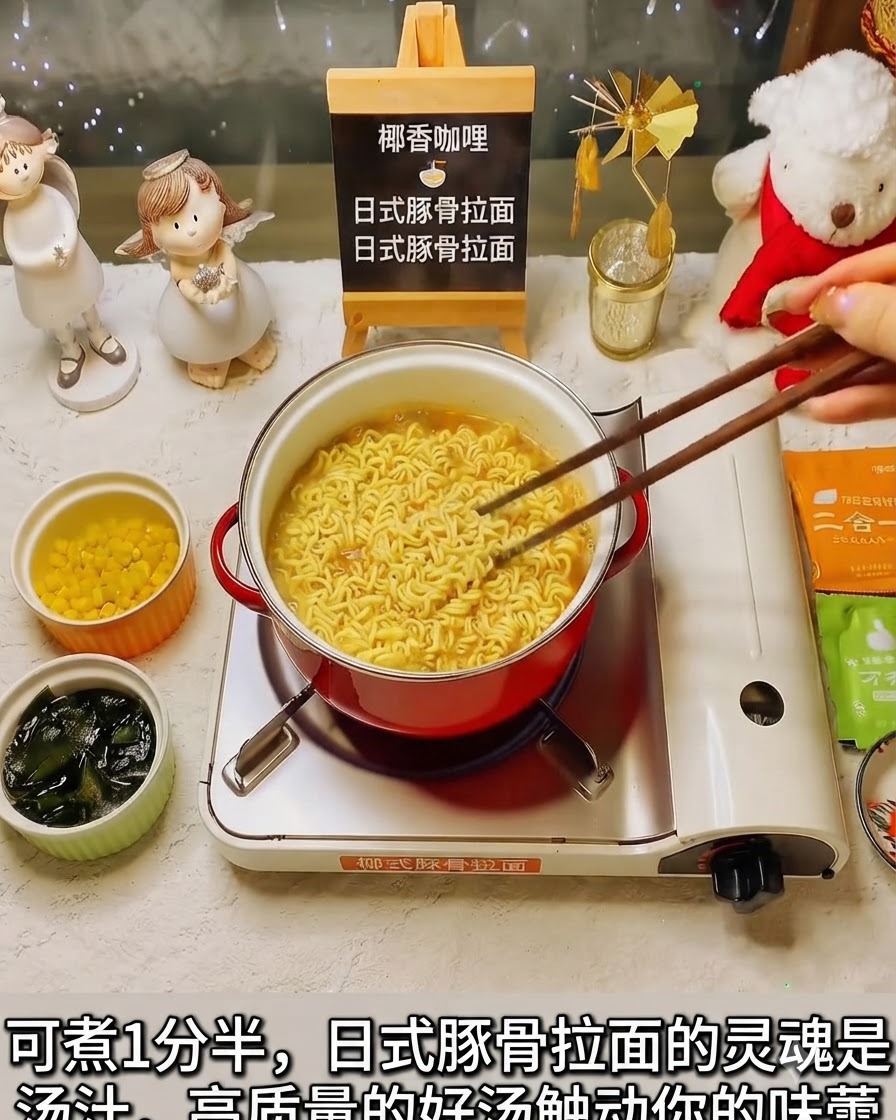
Use a pair of wooden chopsticks to gently stir the noodles as they cook in the pot, ensuring they soften evenly.
Tip: Stirring helps separate the noodles and allows them to absorb the coconut broth evenly. - 4Add vegetables and curry
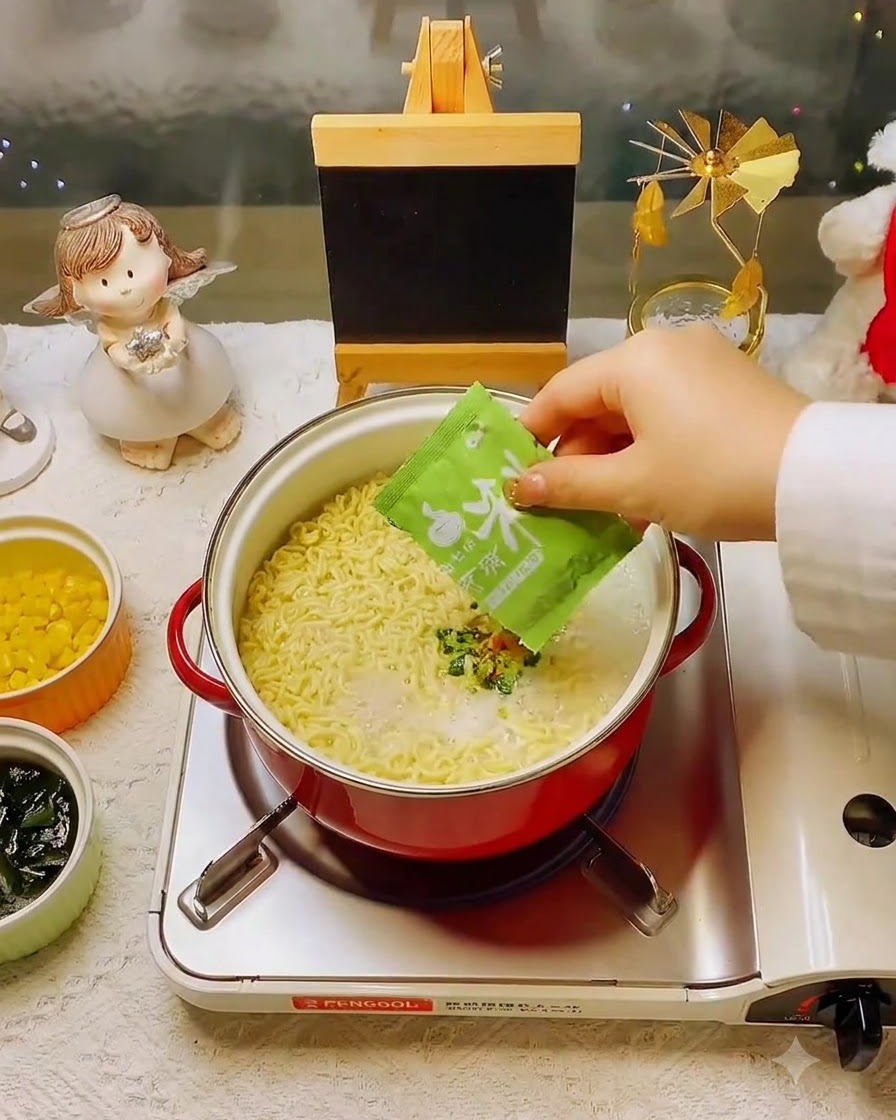
Open the green vegetable packet and toss the contents into the pot along with a small cube of curry to enhance the pork bone ramen flavor.
Tip: Let everything simmer together for an additional 2 minutes after adding the curry cube. - 5Pour in the soup packet and finish
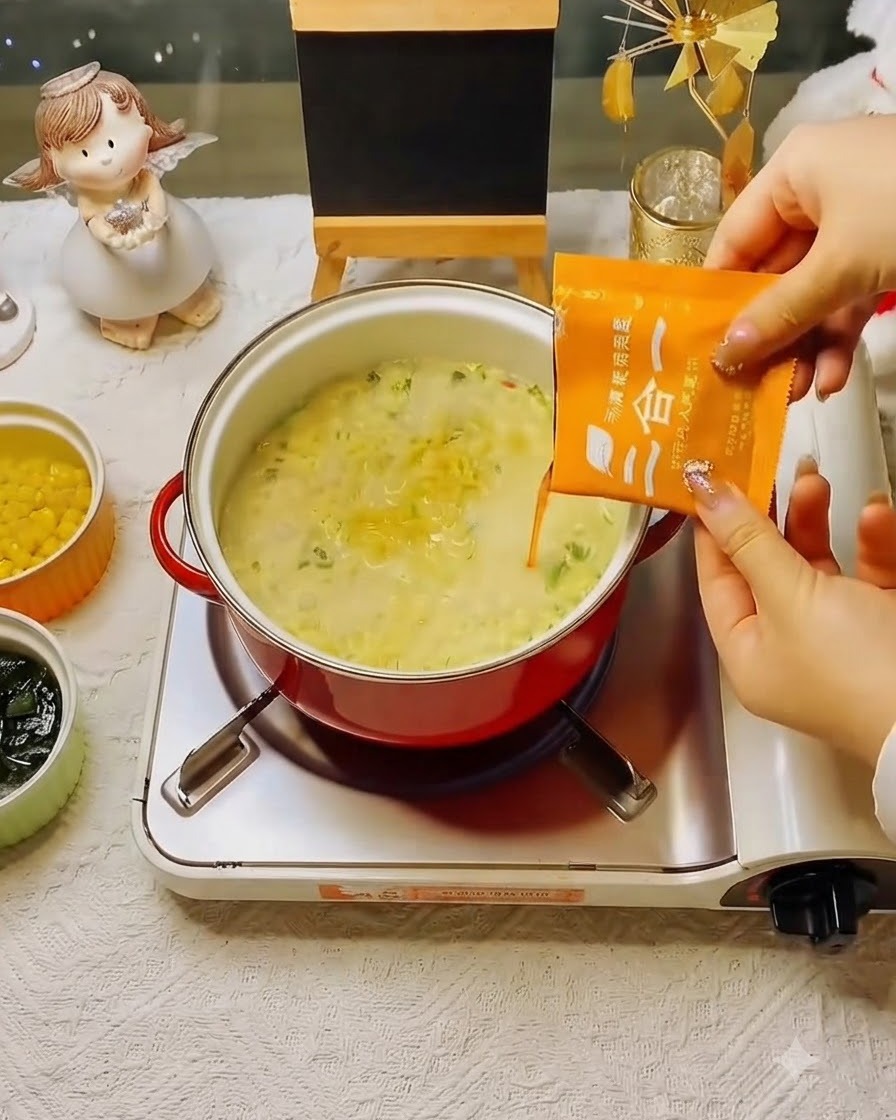
Pour the final soup packet into the pot as the soul of the dish, stir well with chopsticks, and turn off the heat.
Tip: Adding the soup packet at the very end preserves its rich and savory aroma. - 6Transfer noodles to a serving bowl

Lift the cooked noodles out of the pot using chopsticks and transfer them neatly into a dark serving bowl.
Tip: Prepare your bowl ahead of time so you can assemble the toppings immediately while the noodles are hot. - 7Pour the Rich Broth
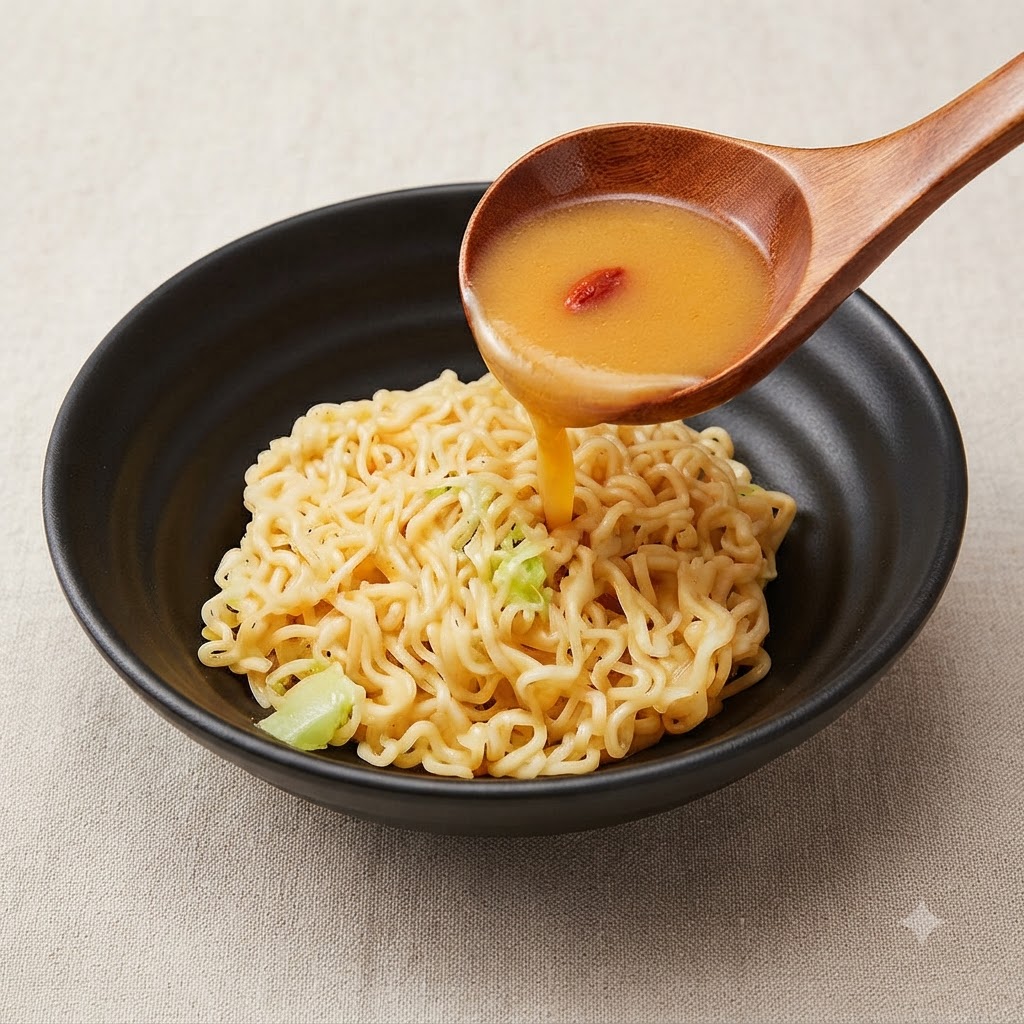
Carefully ladle the hot, flavorful soup broth from the pot and pour it evenly over the cooked instant noodles in the serving bowl. Ensure the noodles are thoroughly submerged to absorb the rich liquid.
Tip: Pour gently around the edges of the bowl to avoid splashing and to keep the noodles neatly arranged. - 8Torch the Chashu Pork
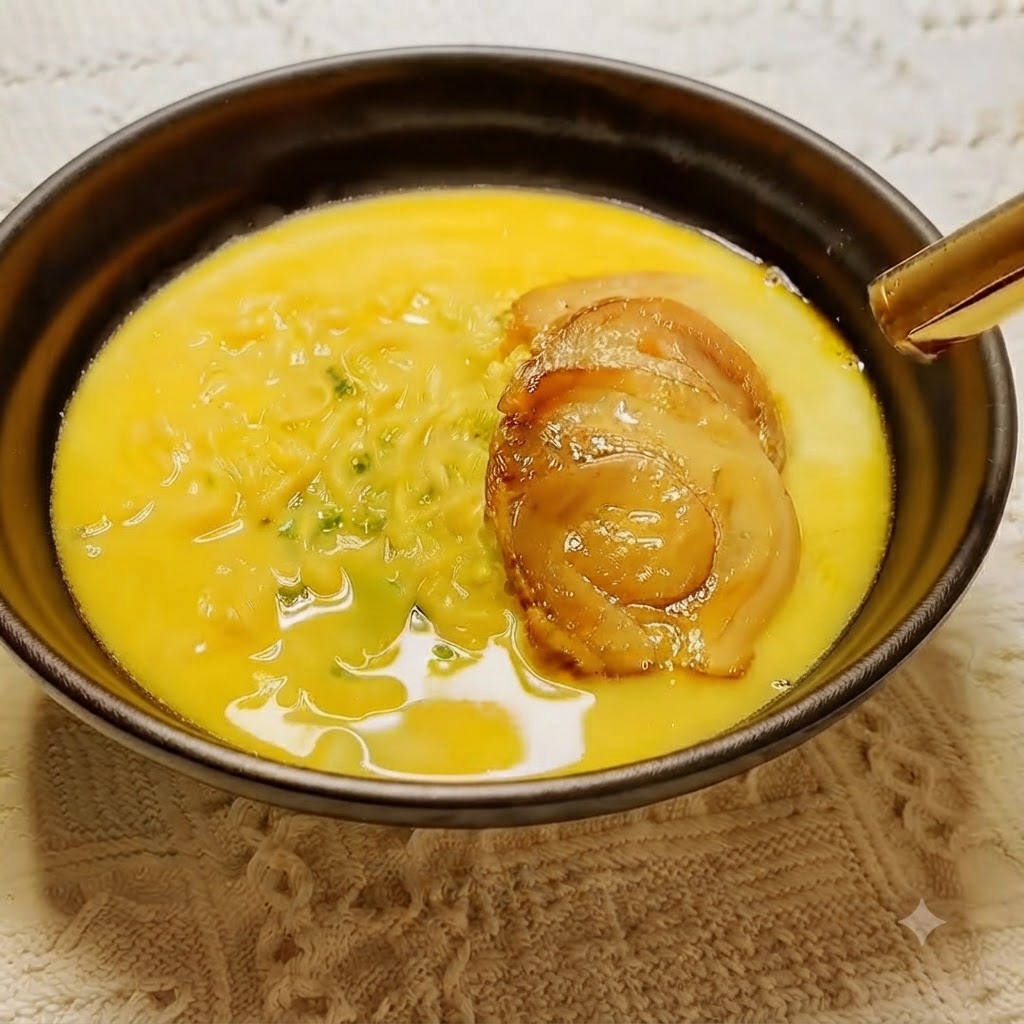
Using a kitchen blowtorch, carefully sear the slices of firm char siu pork arranged inside the bowl. Torch them until the edges become slightly charred and smoky, enhancing their savory flavor.
Tip: Keep the torch moving continuously to achieve an even char without burning the pork. - 9Add Sweet Corn
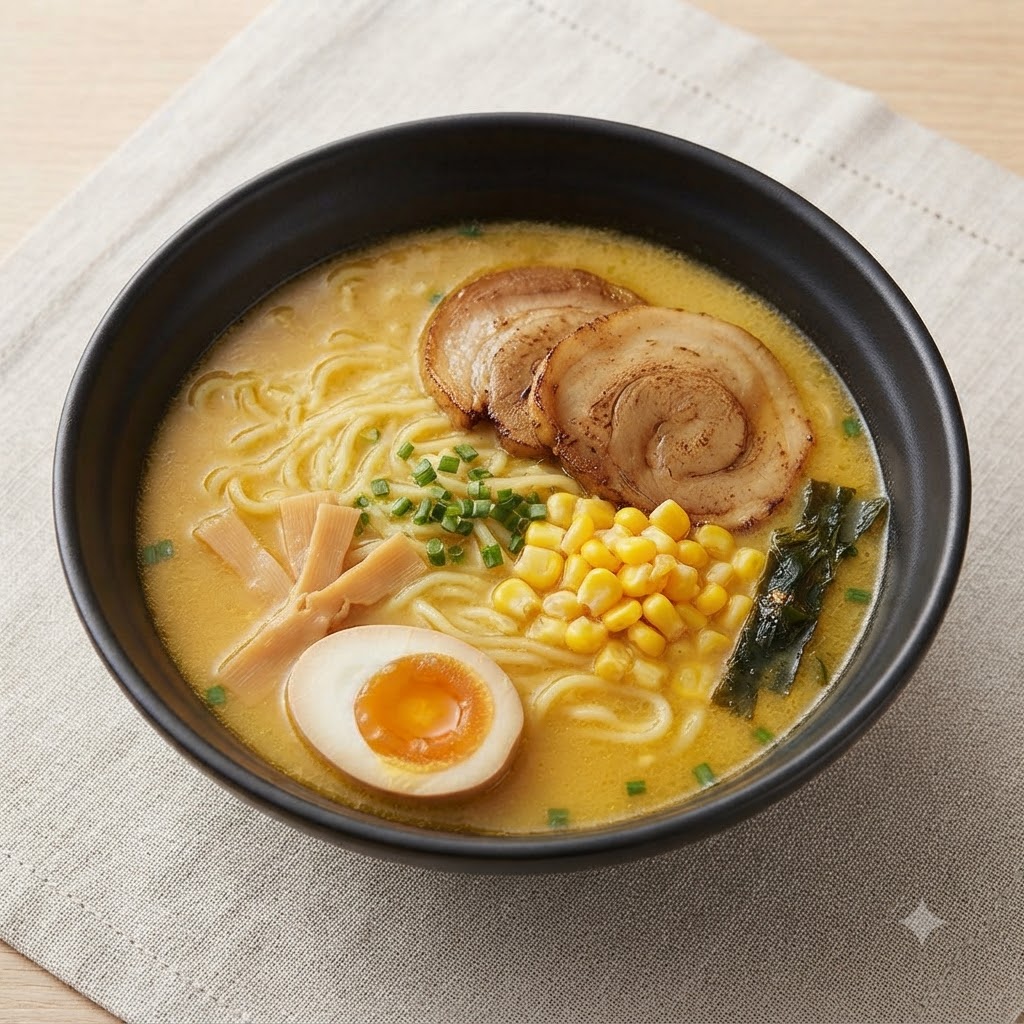
Scoop a portion of sweet corn kernels using a wooden spoon and add them into the bowl alongside the other toppings. The corn adds a pleasant sweetness that balances the rich savory broth.
Tip: Drain excess water from the corn before adding it to keep the soups flavor concentrated. - 10Garnish with Seaweed
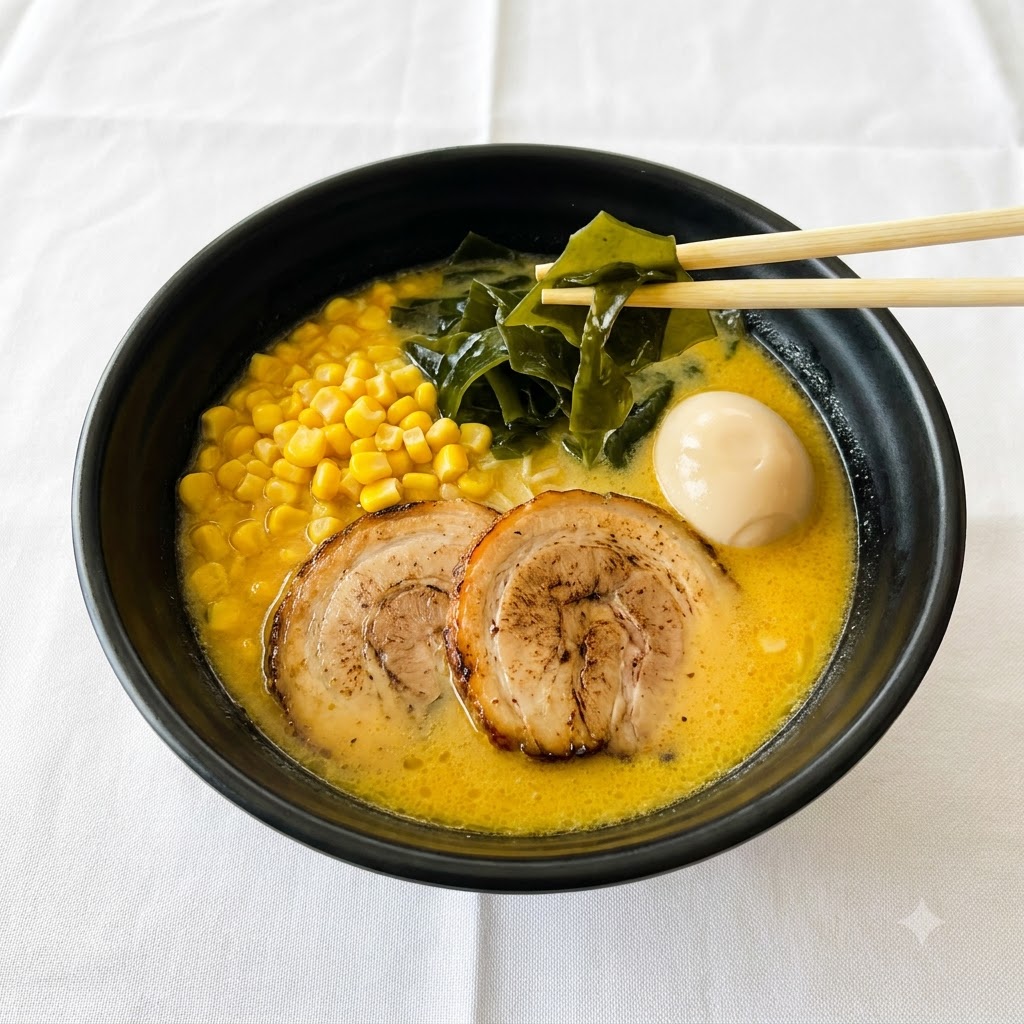
Pick up pieces of seaweed using chopsticks and arrange them neatly into the bowl of ramen. The seaweed contributes an authentic ocean-like depth and traditional presentation.
Tip: Place the seaweed so it partially rests in the broth to soften slightly while eating. - 11Add Bamboo Shoots
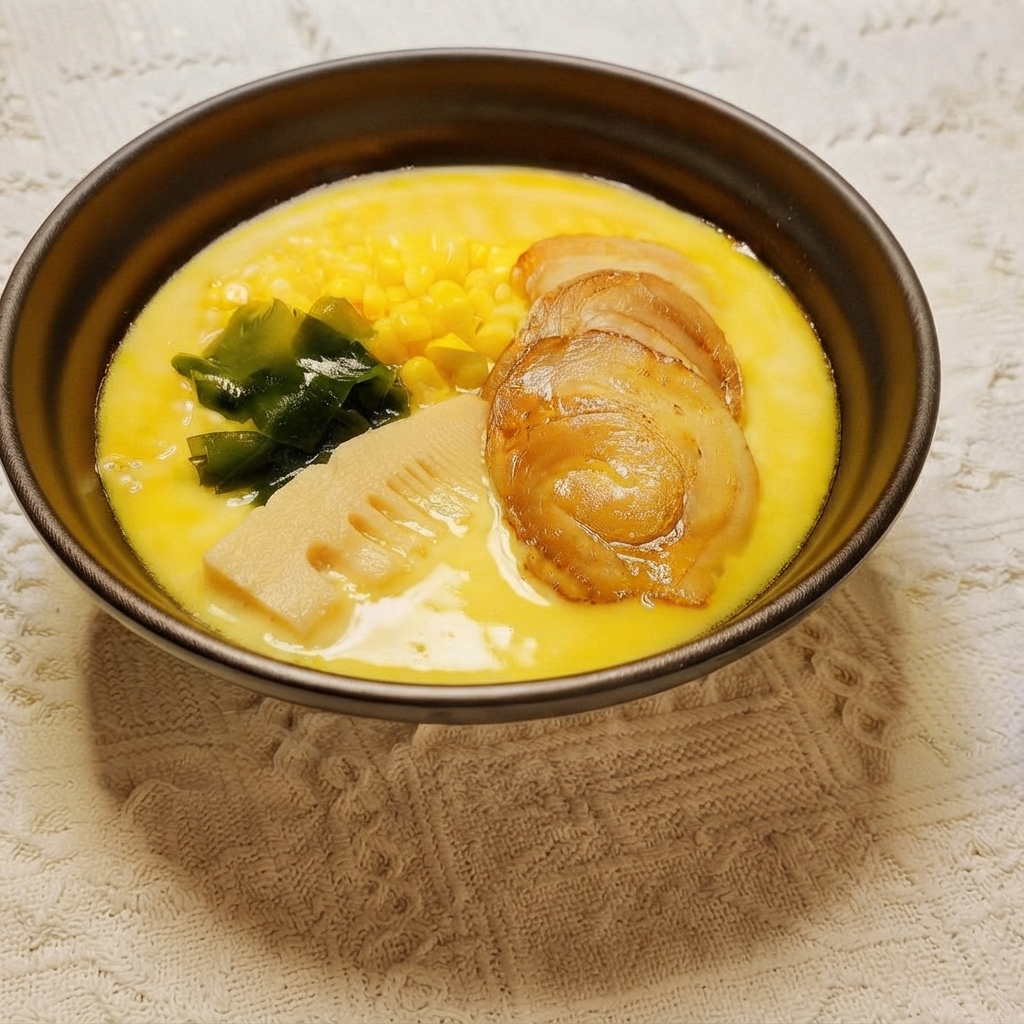
Carefully place a slice of tender bamboo shoot into the bowl among the existing toppings. This completes the classic ramen topping arrangement for texture and authentic flavor.
Tip: Arrange the bamboo shoots vertically or leaning against the ingredients for a professional look. - 12Top with a Soft-Boiled Egg
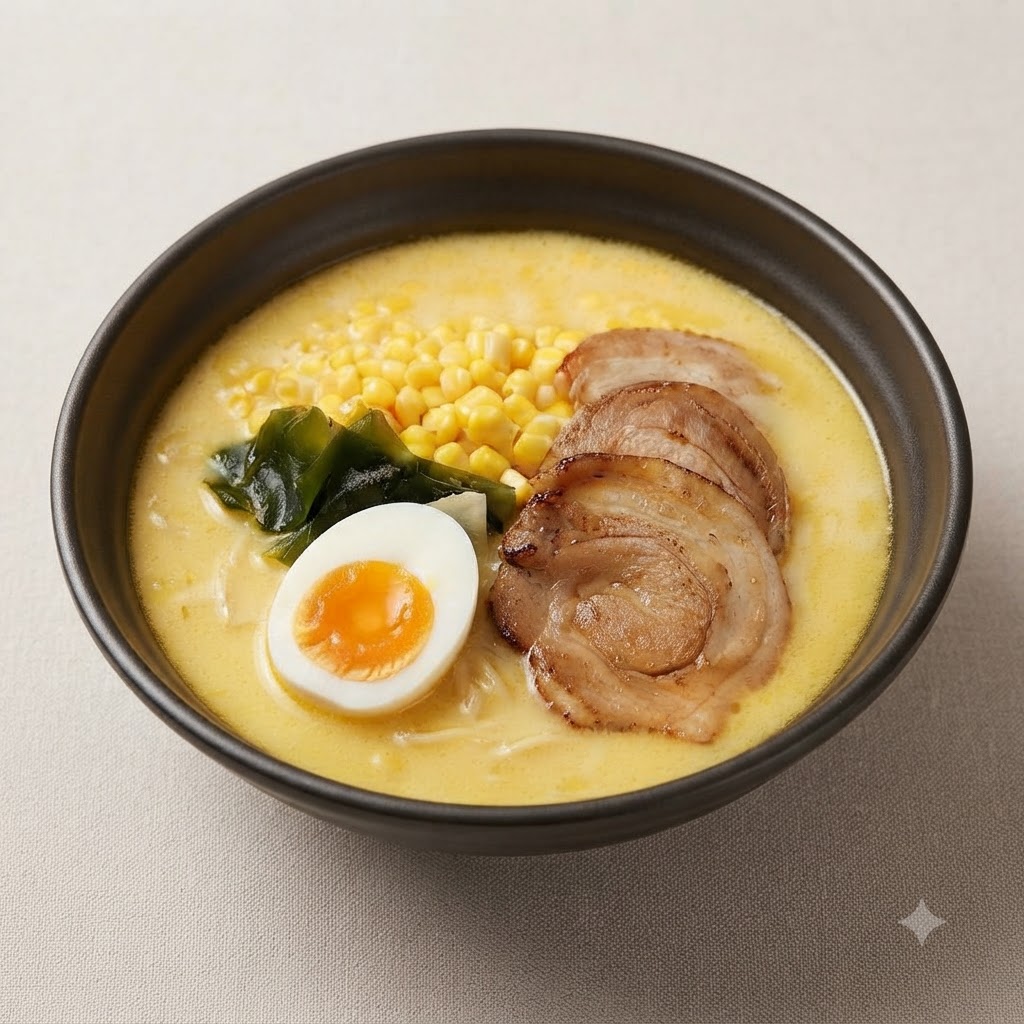
Gently place a halved soft-boiled egg, featuring a rich and jammy yolk, onto the ramen bowl. This provides a creamy texture and is an essential element of traditional Japanese ramen.
Tip: Slice the egg cleanly with a sharp knife or a piece of thread to keep the yolk intact.