Nagoya Mazesoba (Japanese Dry Noodles)
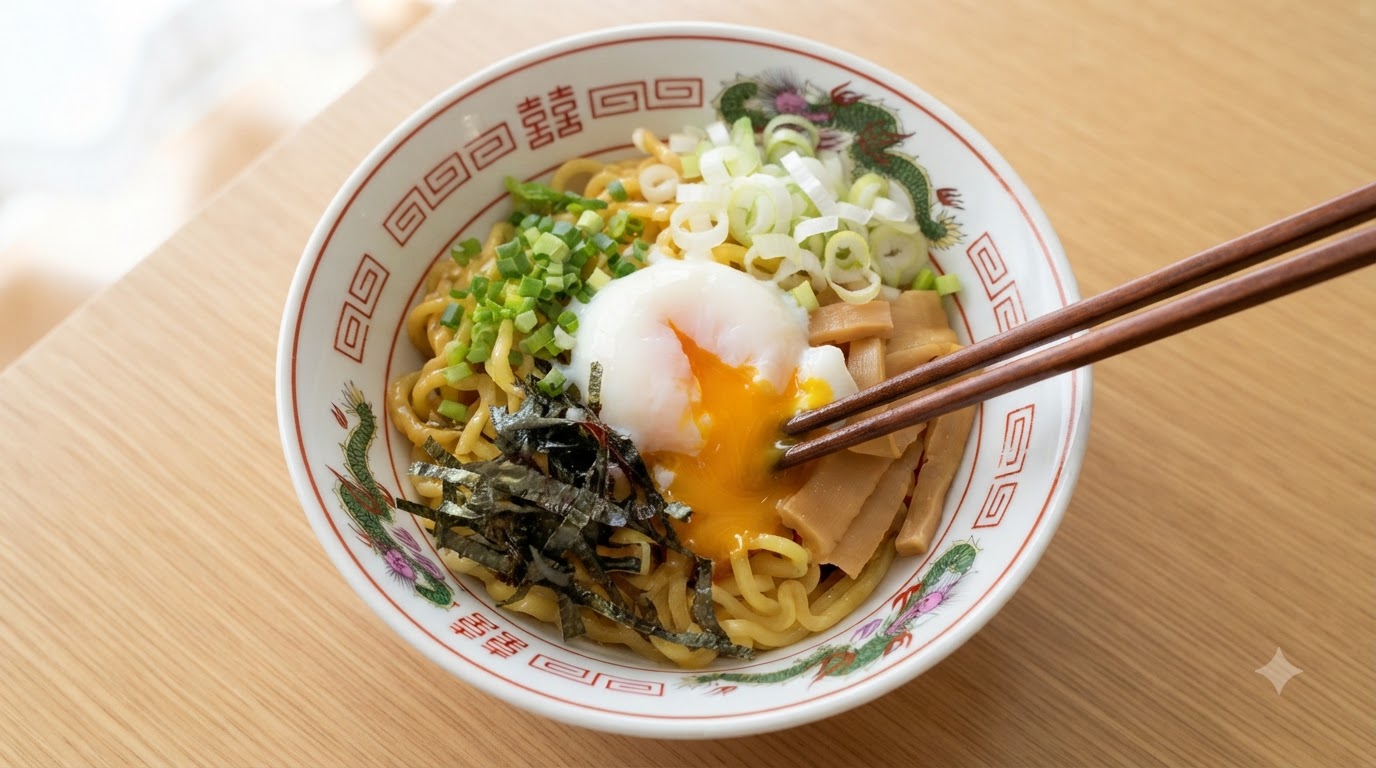
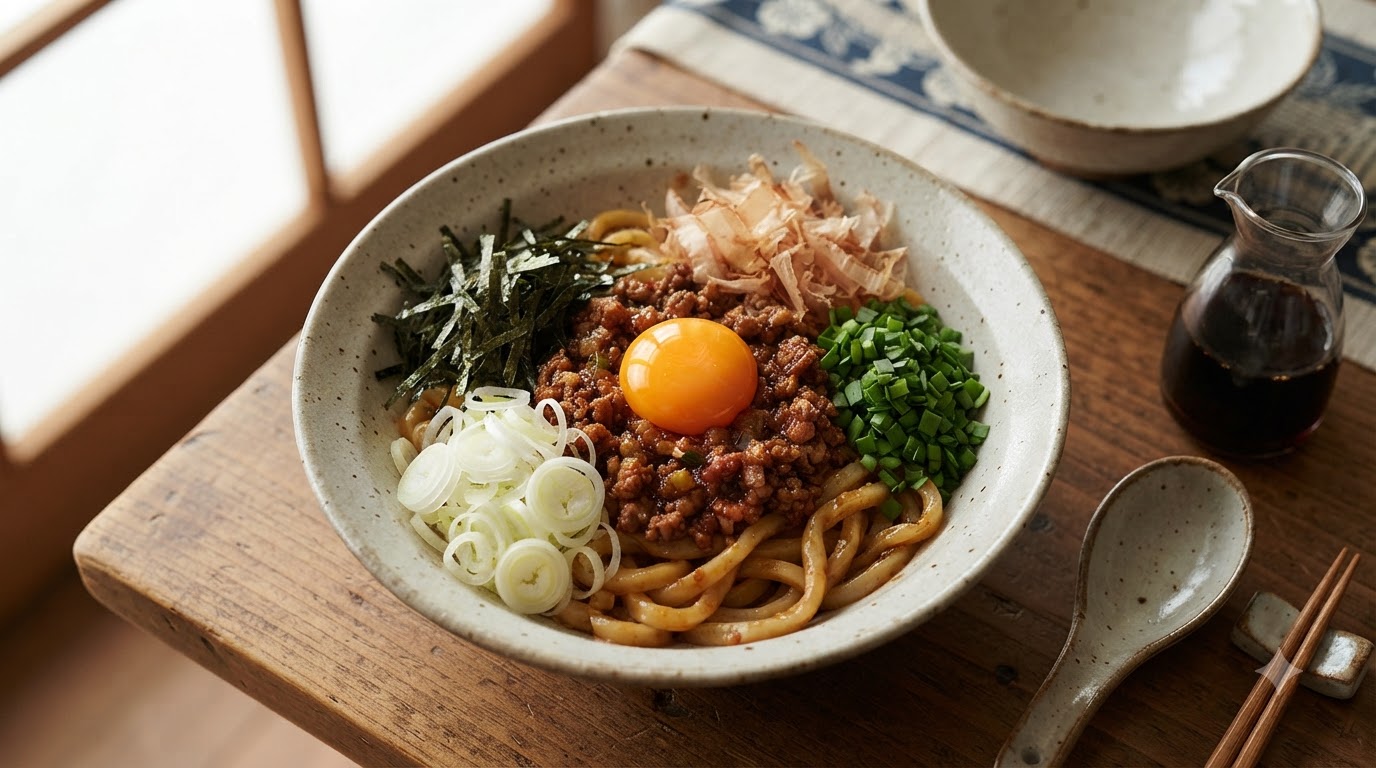
Discover Nagoya mazesoba, an immensely popular dry noodle dish featuring chewy noodles, a velvety raw egg yolk, savory minced pork sauce, and crisp garnishes.
Originating from Nagoya, Japan, mazesoba is a brothless ramen phenomenon that relies on an intensely flavorful minced meat sauce and a silky egg yolk to coat every single strand of noodle. Unlike traditional ramen served in soup, mazesoba invites you to thoroughly mix all the vibrant toppings together before eating, creating a rich, savory, and deeply satisfying bowl.
Ingredients
- 200 g minced pork
- 80 g Chinese chives
- 20 g scallions
- 1/4 white onion
- 2 cloves garlic
- 2 servings Chinese noodles or thick ramen noodles
- 0.5 tbsp salt
- 2 tbsp sake
- 1 tbsp mirin
- 2 tbsp soy sauce
- 1 tbsp white sugar
- 1 tbsp miso paste
- 1 tbsp starch
- half bowl water
- to taste sesame oil
- 2 pasteurized egg yolks
- to taste shredded nori
- to taste bonito flakes
- to taste black sesame seeds
Instructions
- 1Cut Chives and Scallions
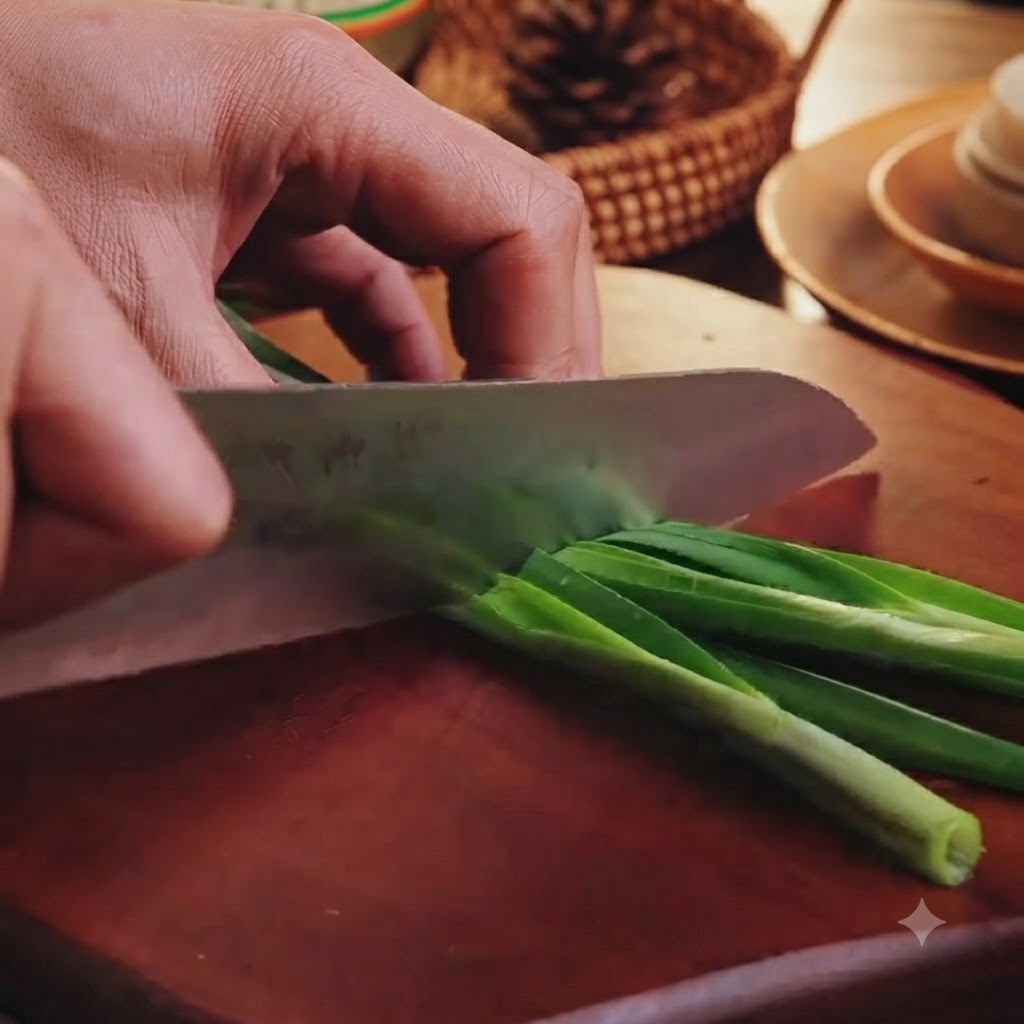
Separate the chives and scallions into stems and leaves, then use a sharp knife to cut them into small pieces on a wooden cutting board.
Tip: Keep your fingers curled inward to safely guide the knife blade while chopping greens. - 2Chop White Onion
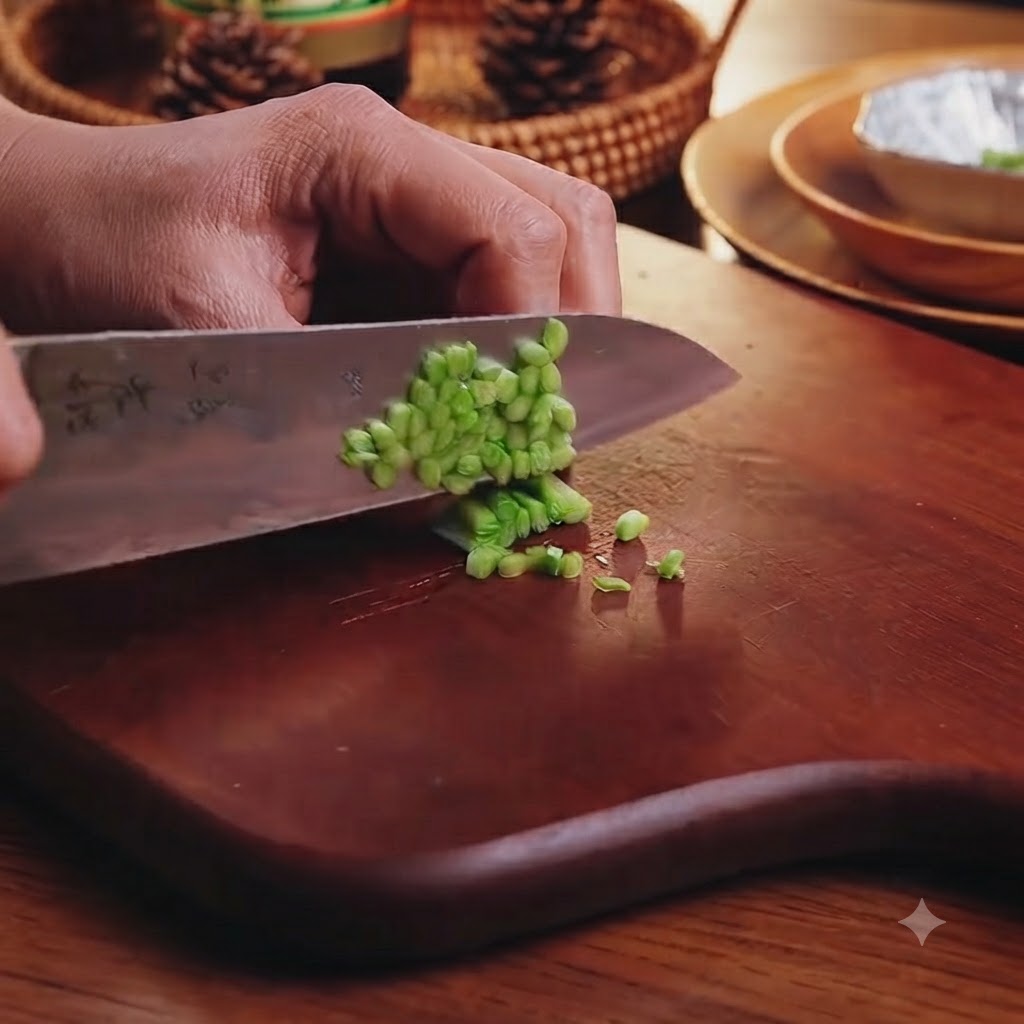
Take the diced white onion pieces and further chop them into small pieces on the cutting board to prepare for the stir-fry mix.
Tip: Dice the onion finely so it blends evenly into the minced pork sauce later. - 3Slice Scallions and Mince Garlic
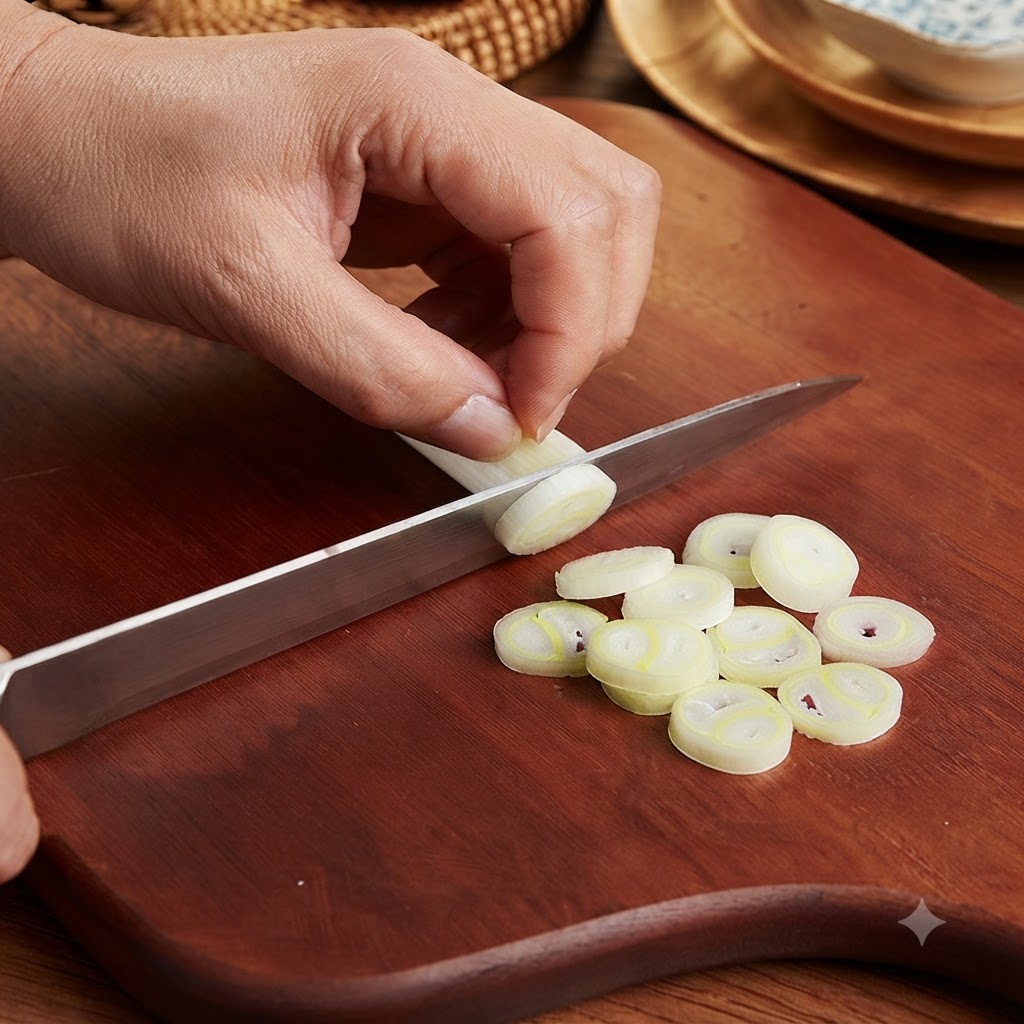
Slice the white part of the scallions thinly into round pieces, and finely mince the garlic cloves on the wooden cutting board.
Tip: Mince the garlic uniformly so it releases its aroma quickly in the hot oil without burning. - 4Add Garlic to Pan
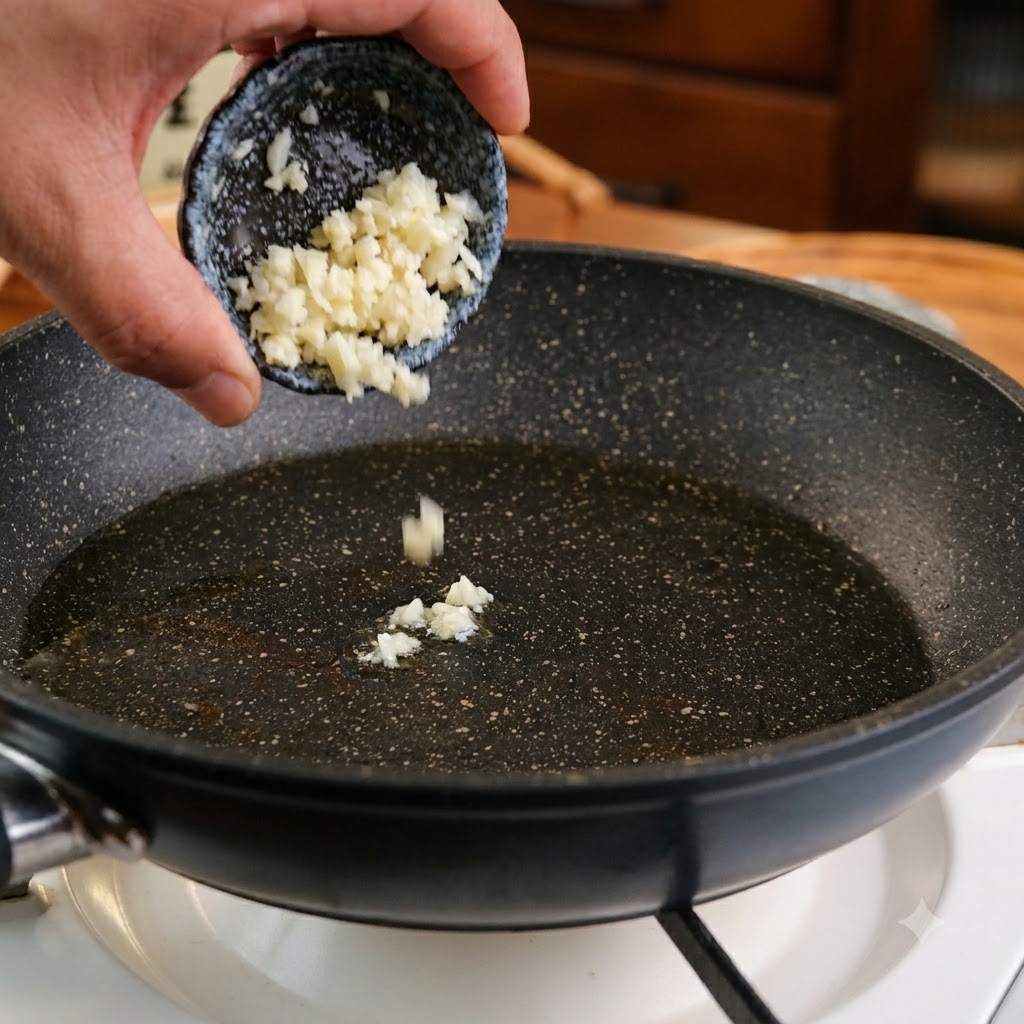
Add a little oil to a frying pan over medium-low heat, then transfer the minced garlic and minced pork into the pan.
Tip: Start the garlic in cold or warm oil over medium-low heat to prevent it from scorching. - 5Stir-Fry Minced Pork and Garlic
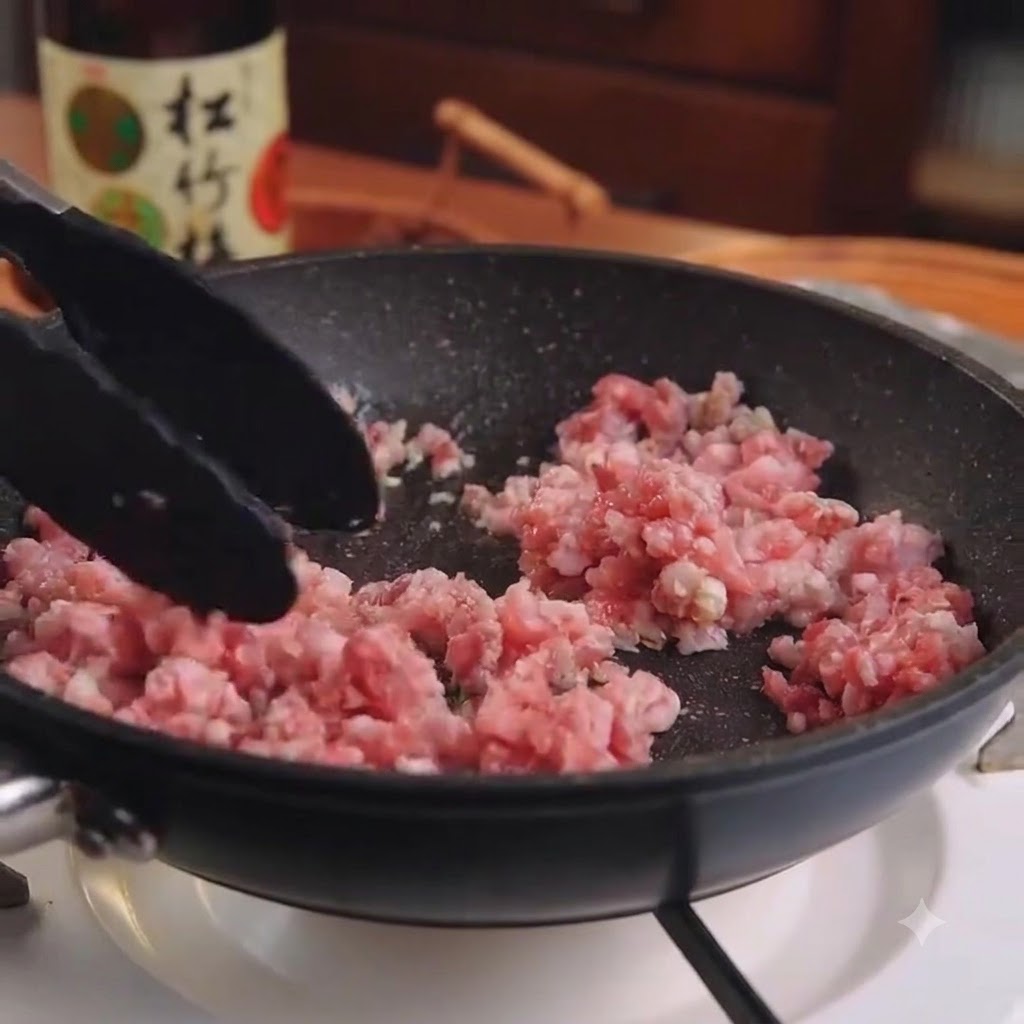
Use cooking tongs or a spatula to stir-fry the minced pork and garlic in the pan over medium-low heat until the pork changes color and releases its natural oils.
Tip: Break up any large clumps of pork with your spatula so the meat browns evenly. - 6Add Diced Onion
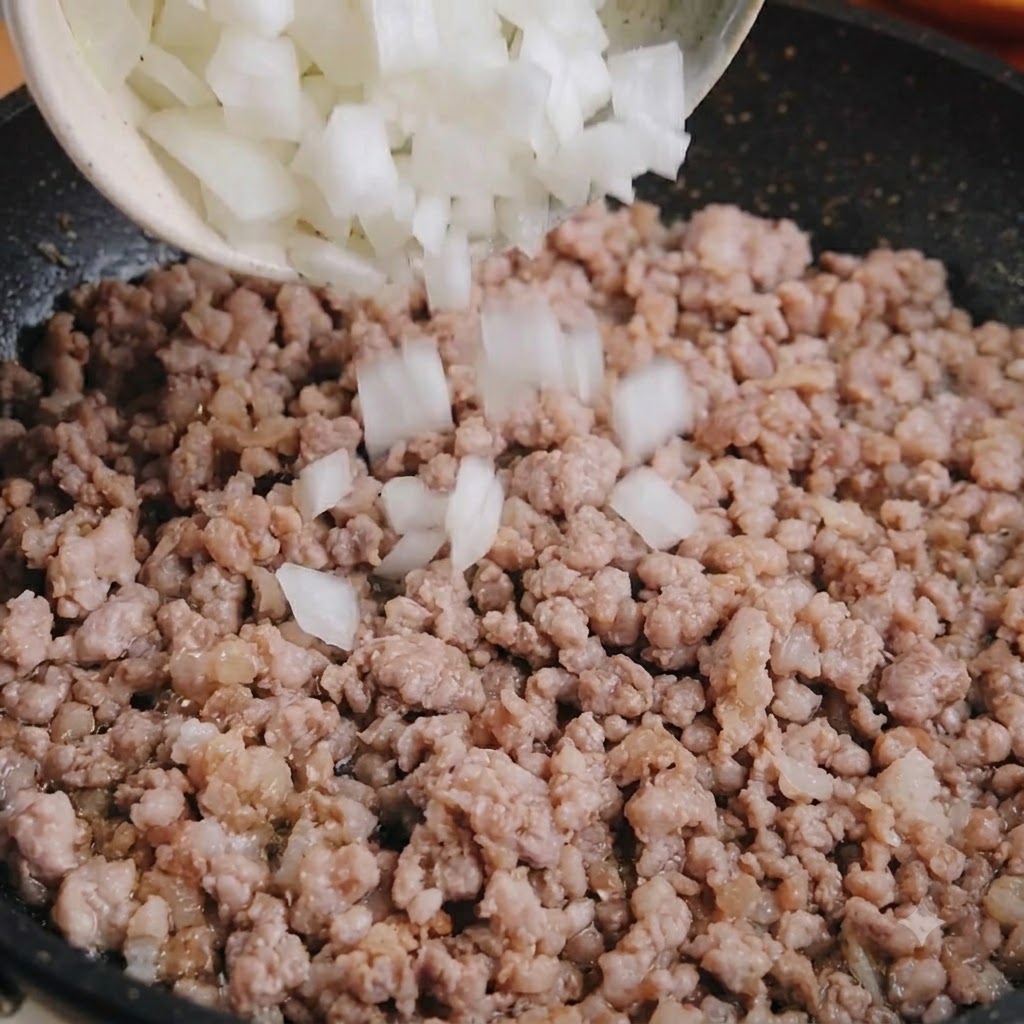
Add the previously diced white onion into the pan containing the cooked minced pork and stir well to release its moisture.
Tip: Cook the onions briefly with the pork until they start to soften and turn translucent. - 7Season the Minced Pork Mixture
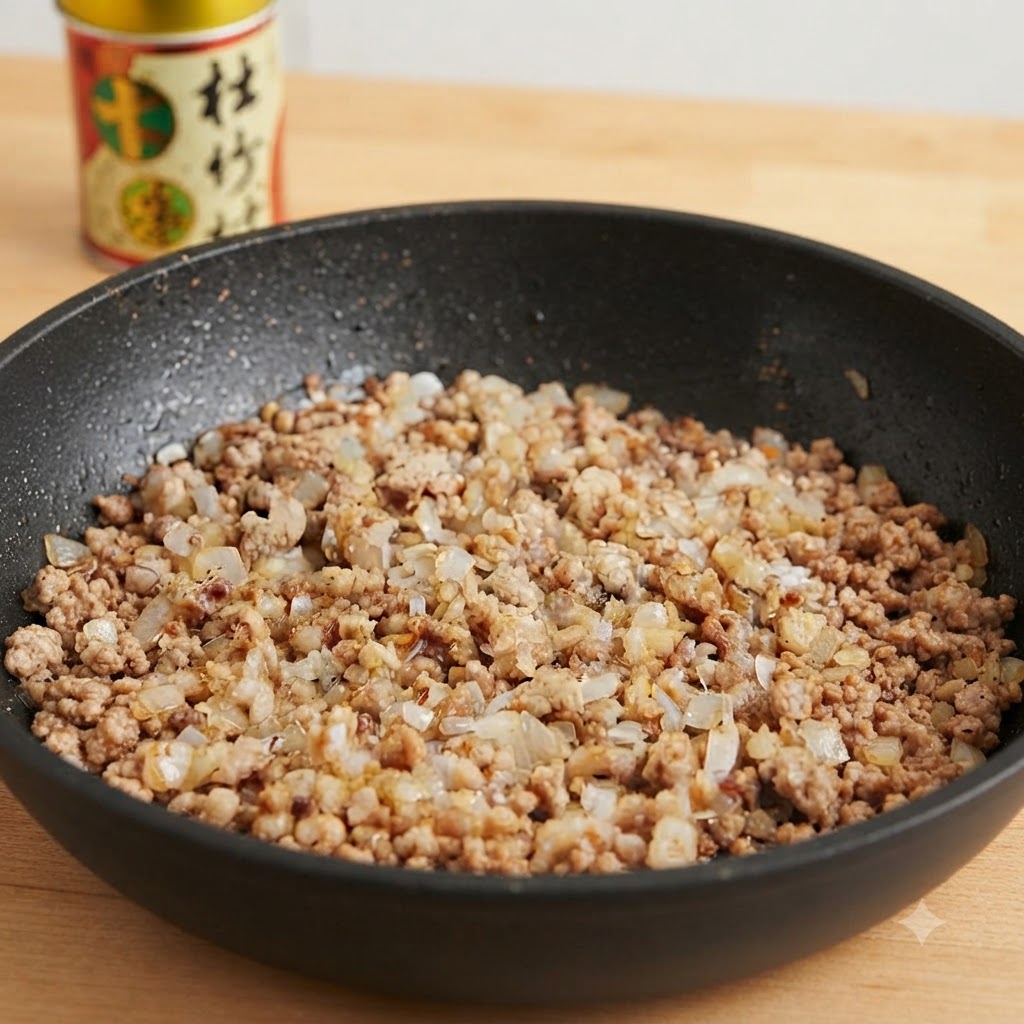
Add salt, sake, mirin, soy sauce, white sugar, and miso paste directly into the skillet containing the browned minced pork and sautéed onions. Stir continuously over low heat to ensure the seasonings are evenly distributed and absorbed by the meat.
Tip: Make sure to dissolve the miso paste thoroughly into the mixture so there are no concentrated salty clumps. - 8Add Chive and Scallion Stems
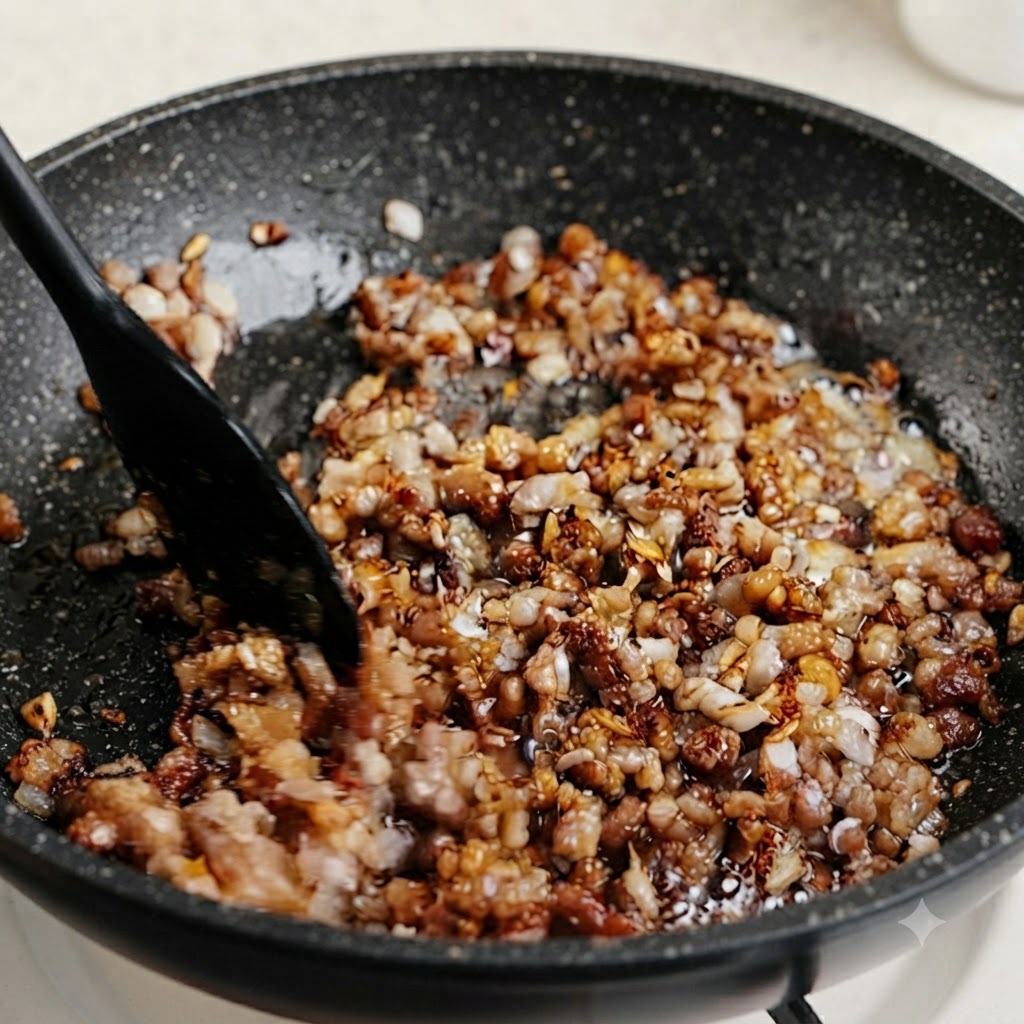
Toss the freshly chopped chive stems and scallion stems into the simmering meat sauce. Stir well to incorporate the crisp stems into the rich savory mixture, allowing them to release their aromatic flavor.
Tip: Adding the stems at this stage ensures they retain a pleasant crunch while blending their flavor into the sauce. - 9Thicken the Meat Sauce
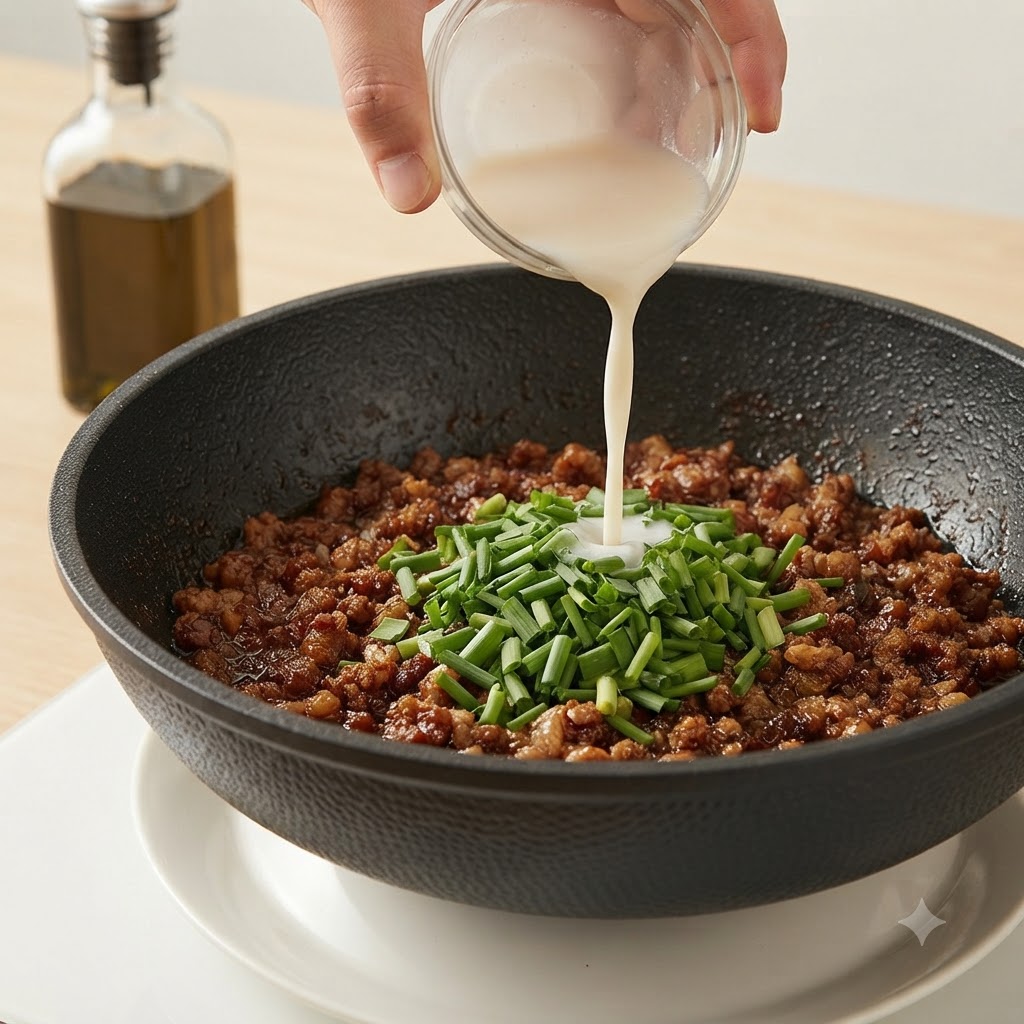
Pour a starch slurry—made by mixing water with starch—into the pan while leaving a small amount of liquid aside for the topping. Stir constantly over the heat until the sauce thickens to a glossy, rich consistency that will coat the noodles perfectly.
Tip: Pour the starch slurry slowly while stirring to prevent lumps from forming in the sauce. - 10Toss Noodles with Sesame Oil
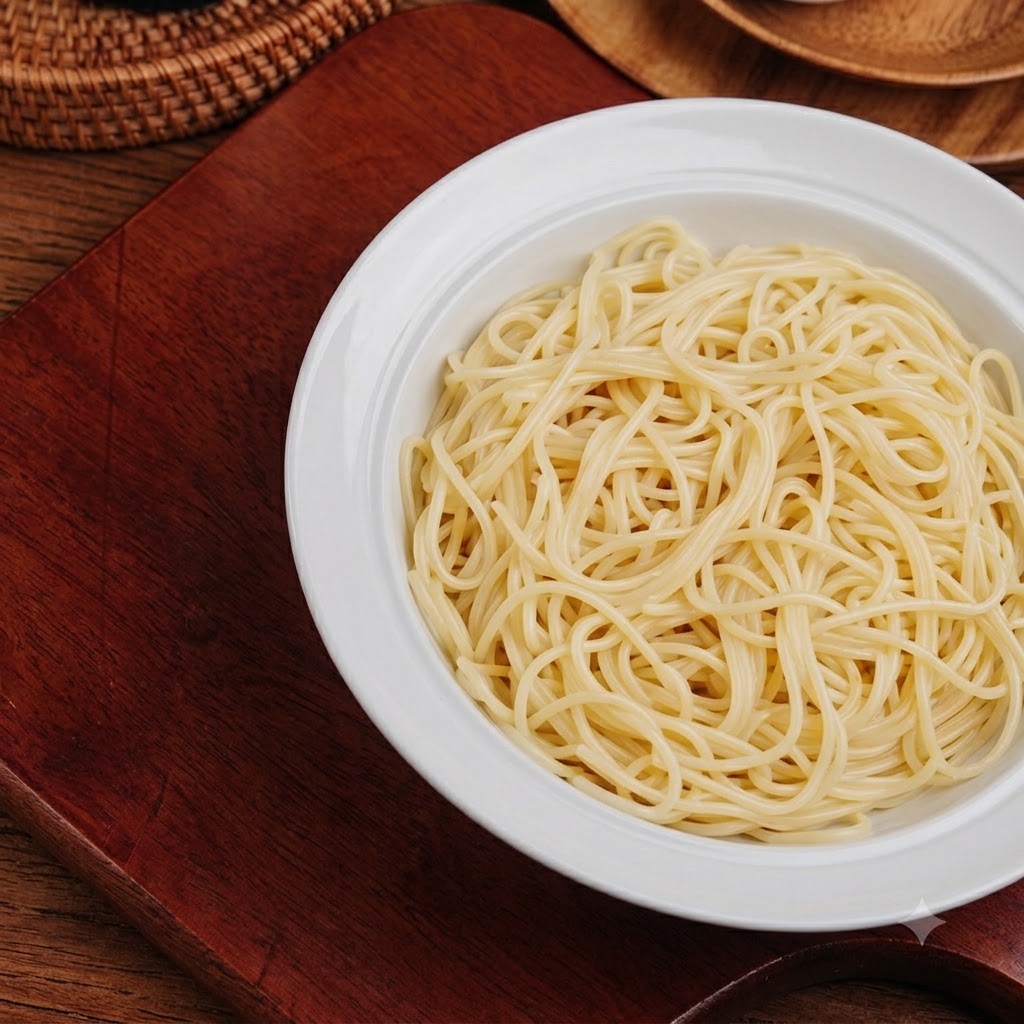
Take the freshly cooked noodles placed in a clean white bowl and toss them thoroughly with aromatic sesame oil. This prevents the noodles from sticking together and adds a fragrant nutty base flavor.
Tip: Toss the noodles while they are still warm so they absorb the sesame oil evenly. - 11Layer the Meat Sauce over Noodles
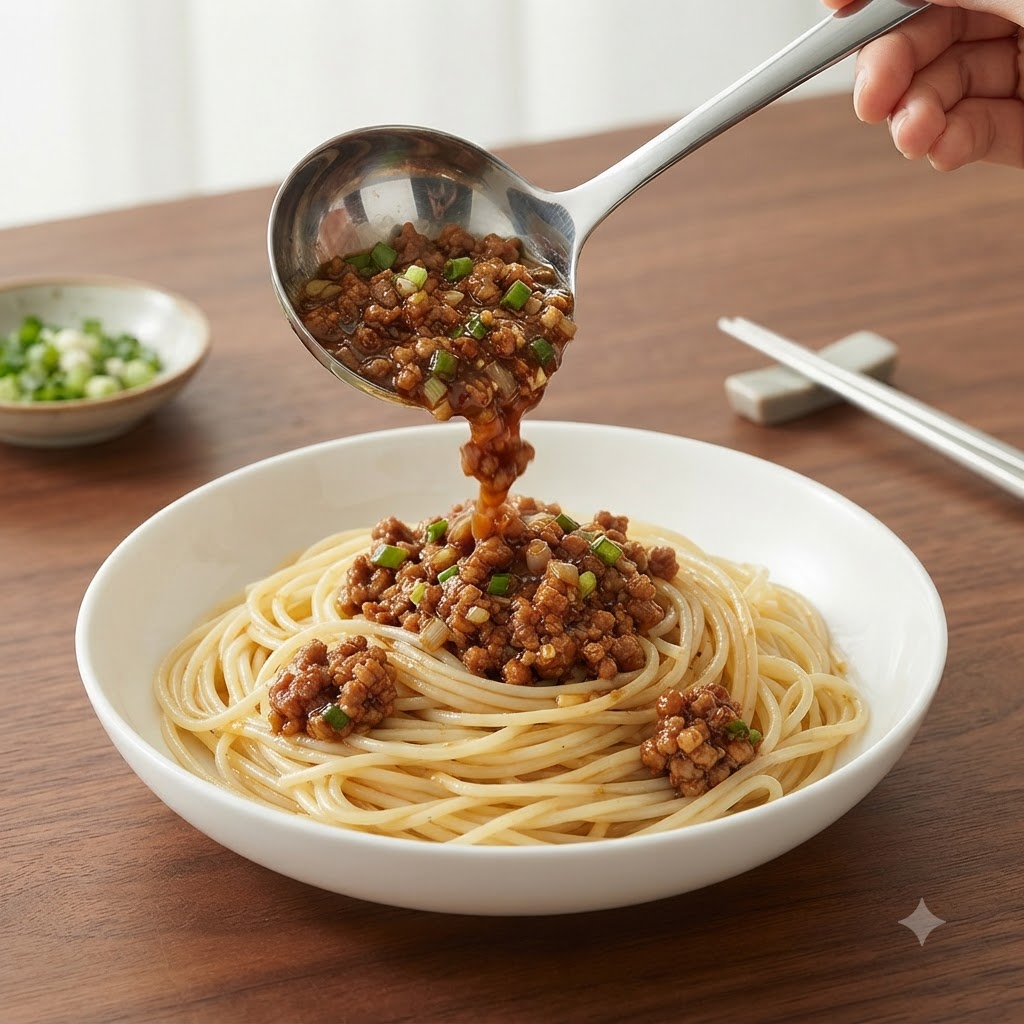
Using a ladle, pour a generous portion of the rich, thick minced meat sauce directly over the center of the sesame-tossed noodles. Ensure the savory sauce covers the top nicely as the foundation for the garnishes.
Tip: Ladle the sauce evenly over the noodles so every bite will have a balanced amount of meat. - 12Garnish the Mazesoba
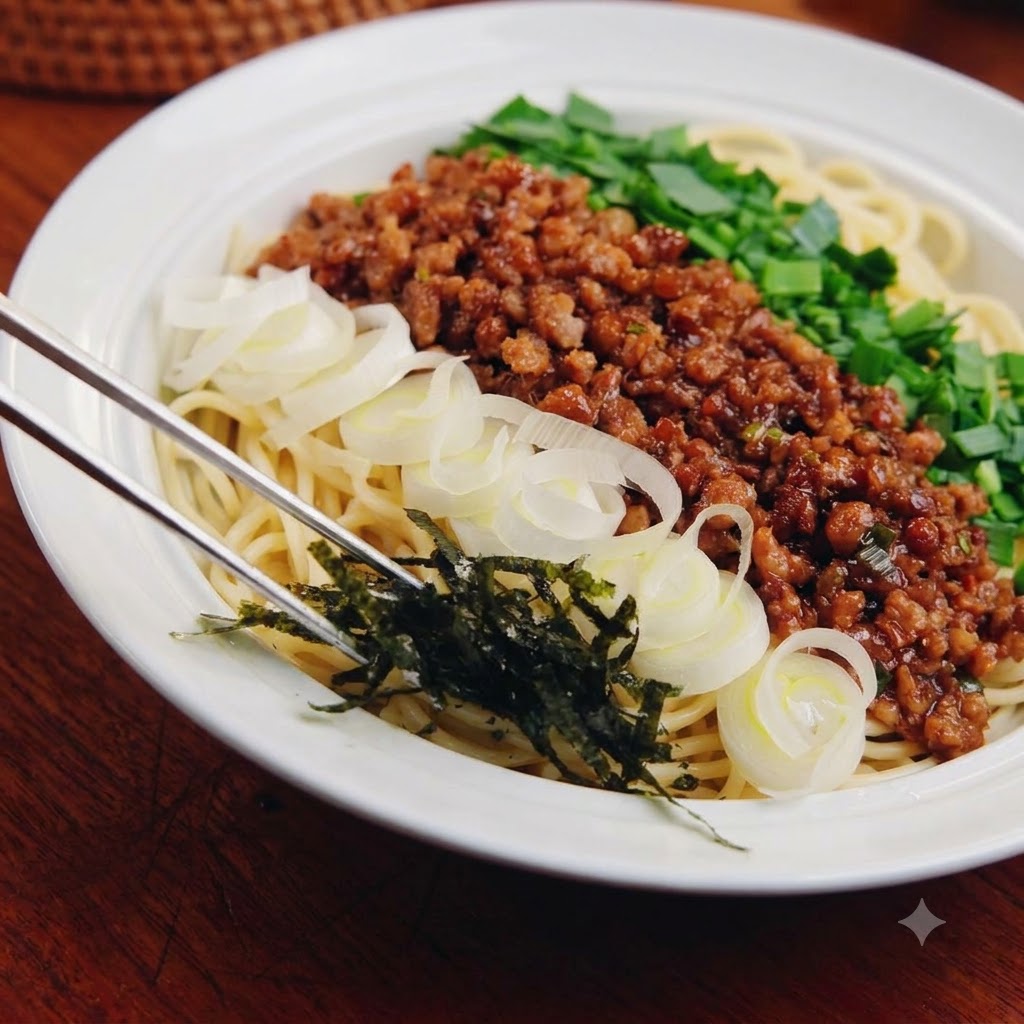
Artfully arrange rows of sliced white scallions, chopped chive leaves, shredded nori, and bonito flakes over the meat sauce and noodles. These toppings provide vibrant color, texture, and the signature umami complexity of mazesoba.
Tip: Arrange the toppings in neat, separate sections for an authentic and visually appealing presentation before mixing.