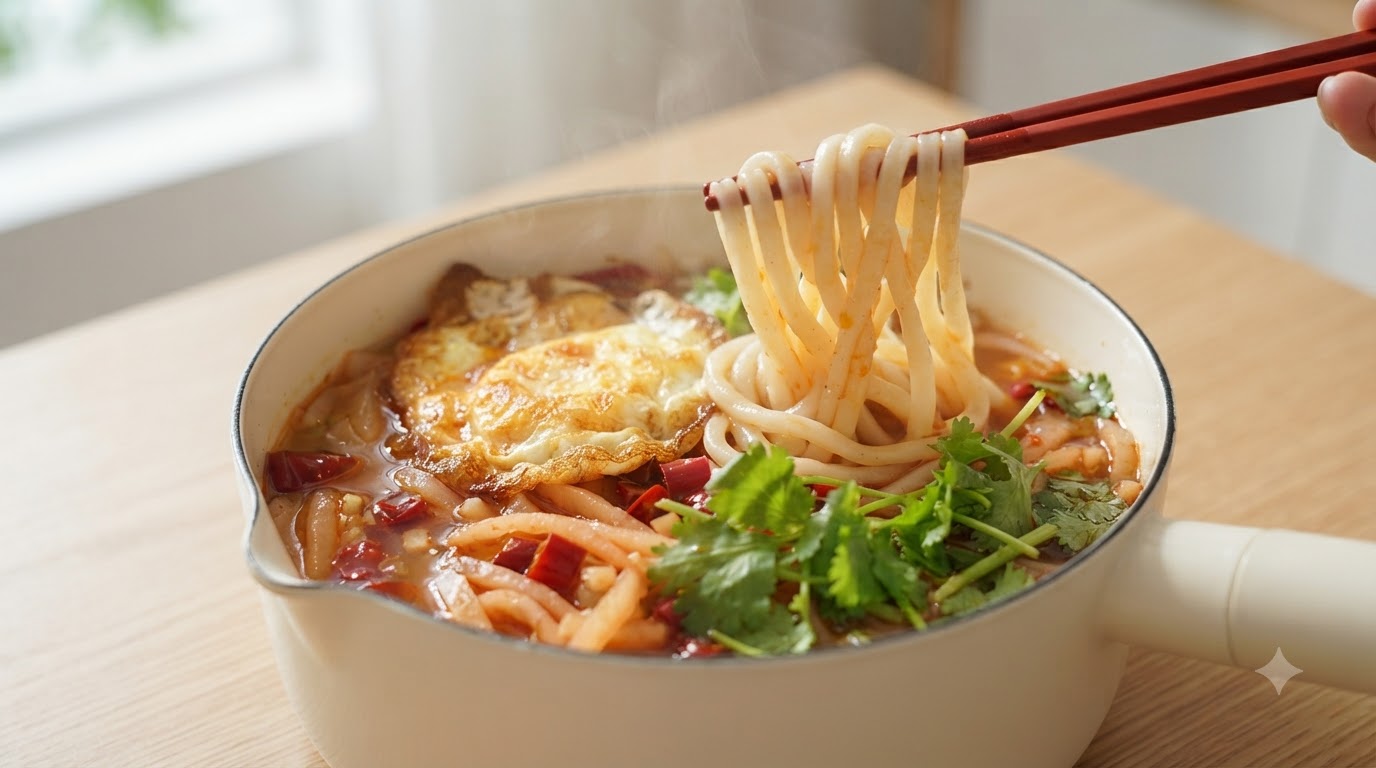
Spicy Chinese Cabbage Mixed Noodles (Laanxi Style)
A bold, savory noodle dish featuring thick wheat noodles tossed with spicy wok-fried Chinese cabbage, rendered pork fat, and vibrant chili aromatics.
Inspired by regional Laanxi stir-fried noodle traditions, this dish elevates simple cabbage into a rich, deeply satisfying main course. By rendering pork fat with dried and fresh chili peppers, then finishing the cabbage with a splash of hot wok edge vinegar, it achieves an incredible balance of spicy, savory, and smoky flavors that easily rivals any meat dish.
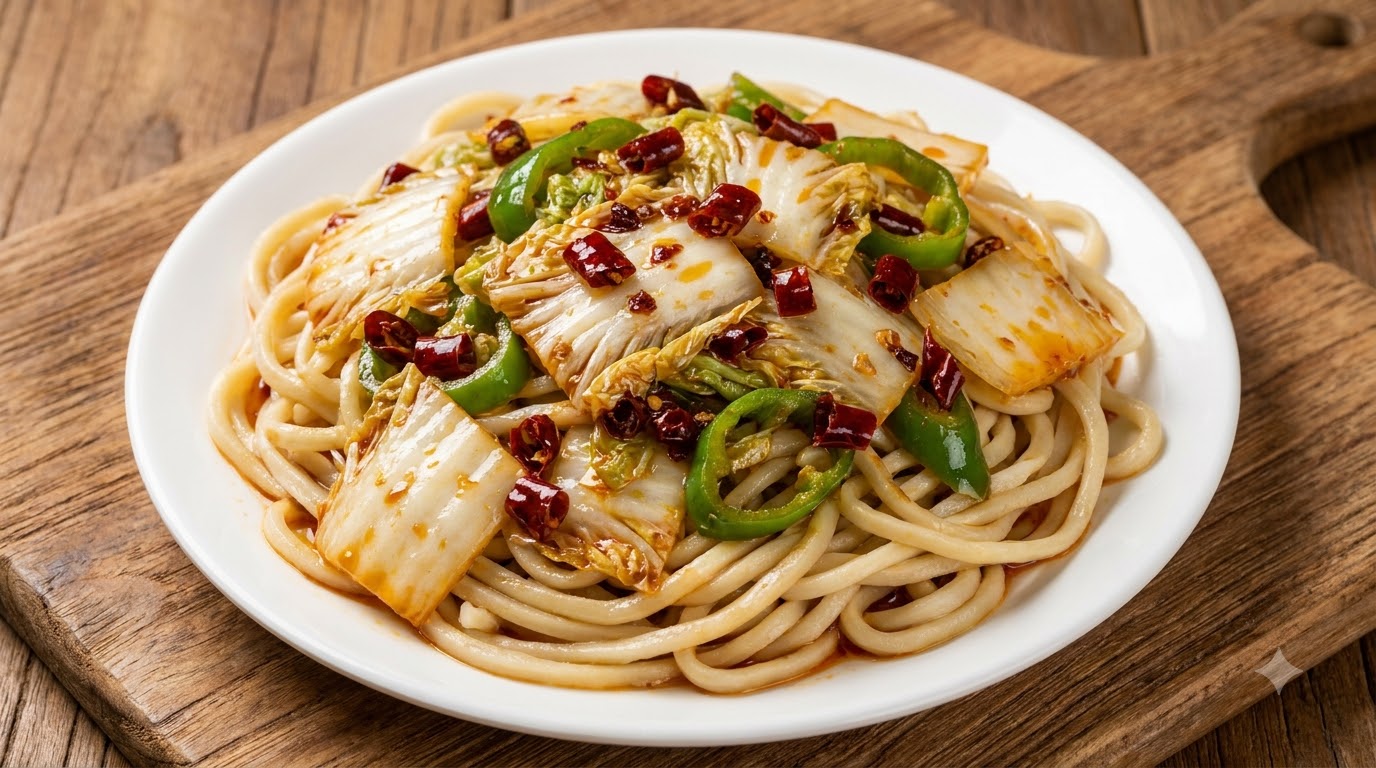
Ingredients
- 300 g thick Chinese wheat noodles
- 300 g Chinese cabbage
- 50 g raw pork fat
- 3 pieces dried red chili peppers
- 2 pieces green chili peppers
- 2 cloves garlic
- 1 stalk scallions
- 1 tbsp red chili powder
- 1 tbsp cooking oil
- 1 tsp salt
- 1/2 tsp chicken bouillon
- 1 tbsp vinegar
Instructions
- 1Add pork fat to the wok
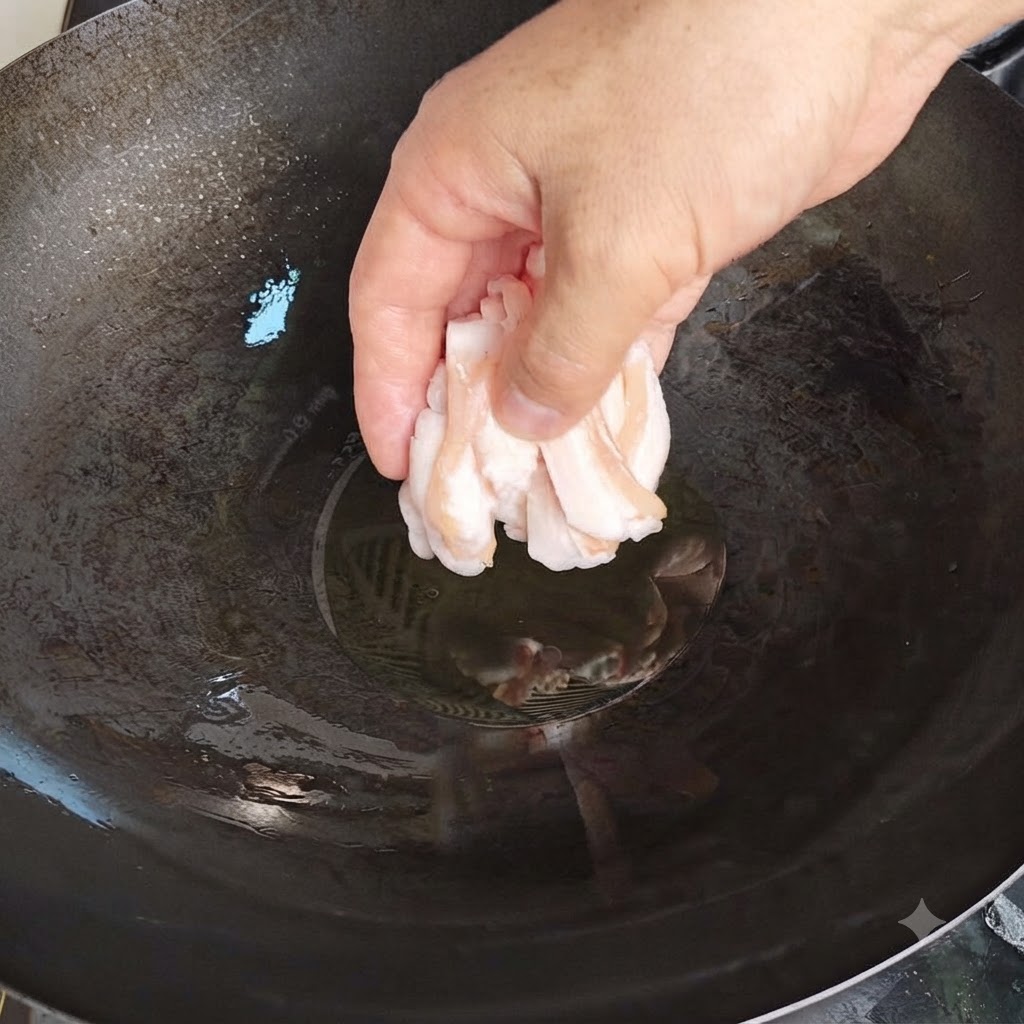
Begin by heating a wok with a small amount of cooking oil over medium heat. Carefully place the thin slices of raw pork fat into the warm oil to start rendering them down, which creates a rich and savory base for the noodles.
Tip: Ensure the oil isnt smoking hot when adding the pork fat to prevent the edges from burning before the fat fully renders. - 2Stir-fry the pork fat
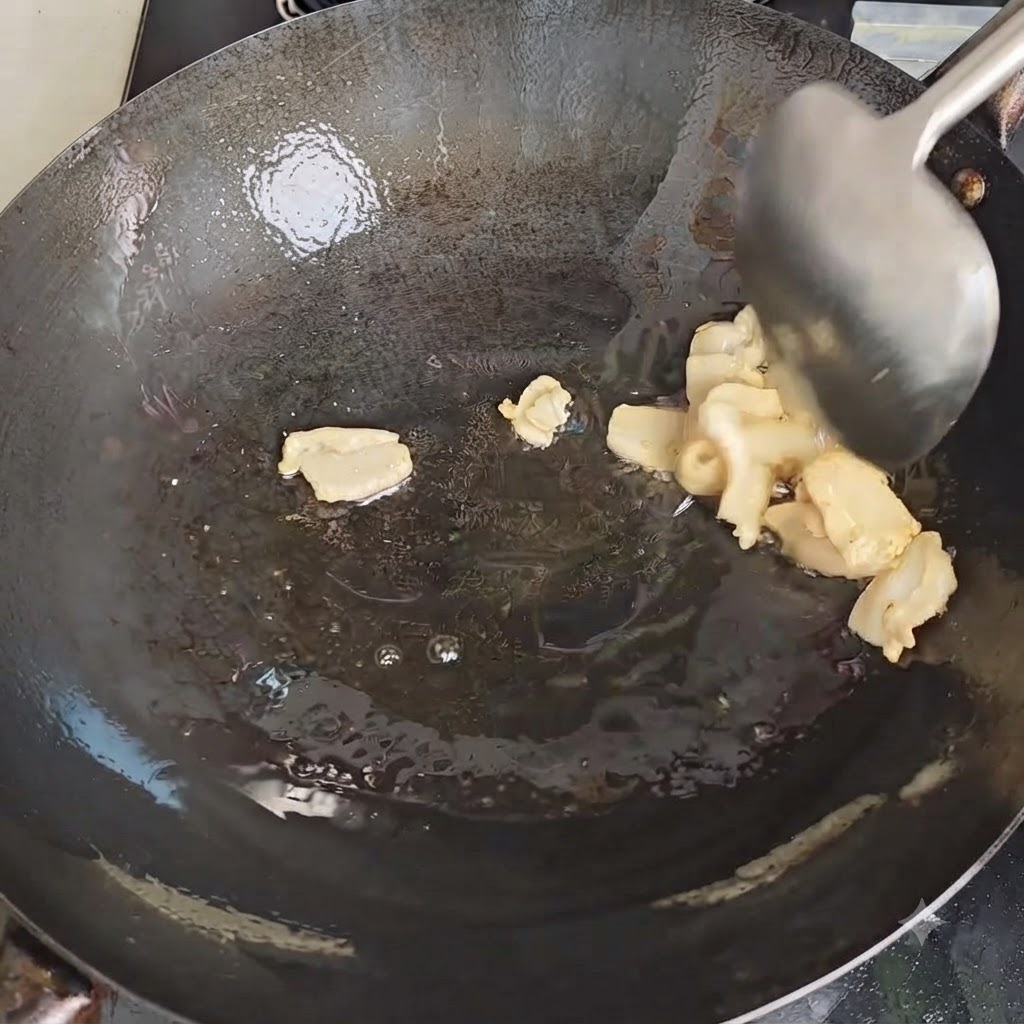
Stir-fry the pork fat pieces continuously in the wok. Allow the fat to render completely until the pieces become slightly golden and crispy, releasing maximum flavor and cooking oil into the pan.
Tip: Maintain moderate heat so the fat renders out slowly without scorching the exterior of the pork pieces. - 3Add dried chili peppers
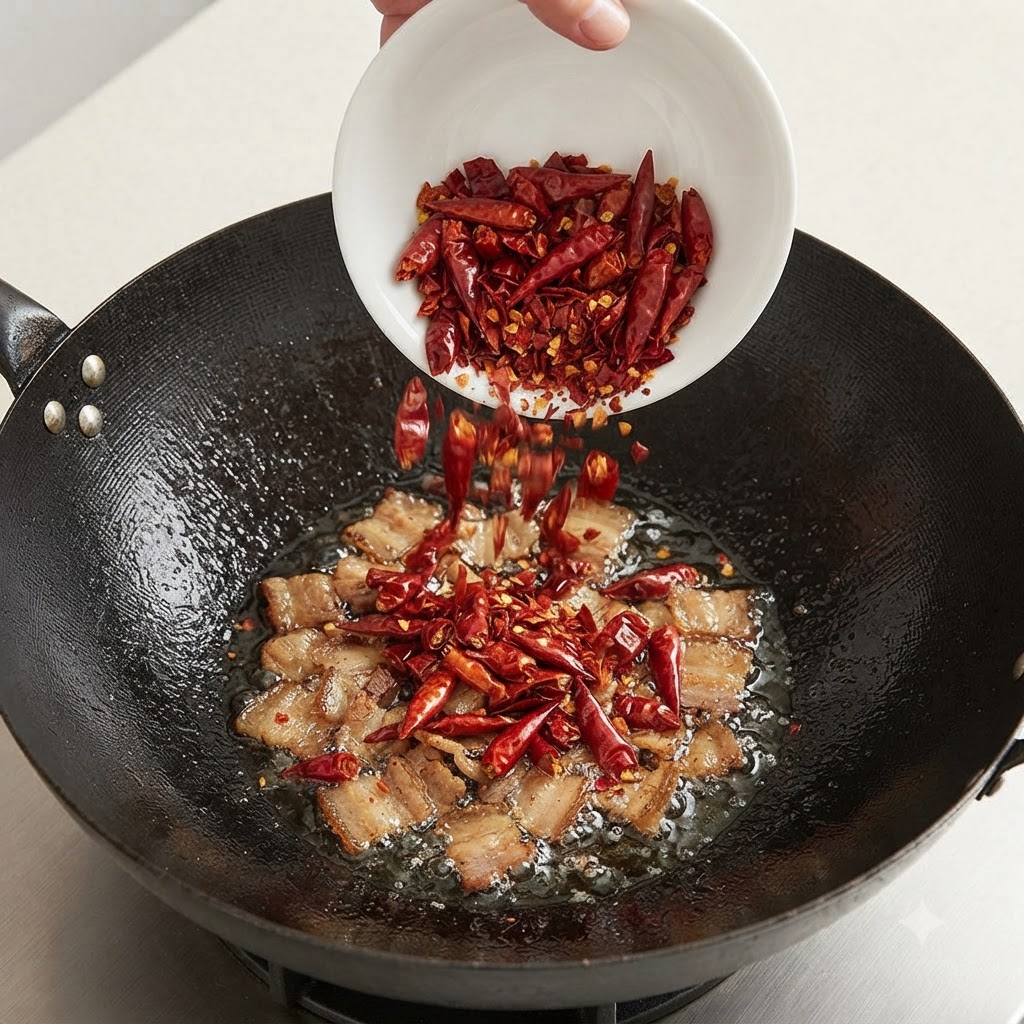
Once the pork fat is rendered and golden, pour in the chopped dried red chili peppers. Toast them briefly in the hot fat to release their intense, smoky heat and fragrance into the oil.
Tip: Stir quickly after adding the dried chilies, as they can burn very easily in hot oil and turn bitter. - 4Incorporate fresh aromatics
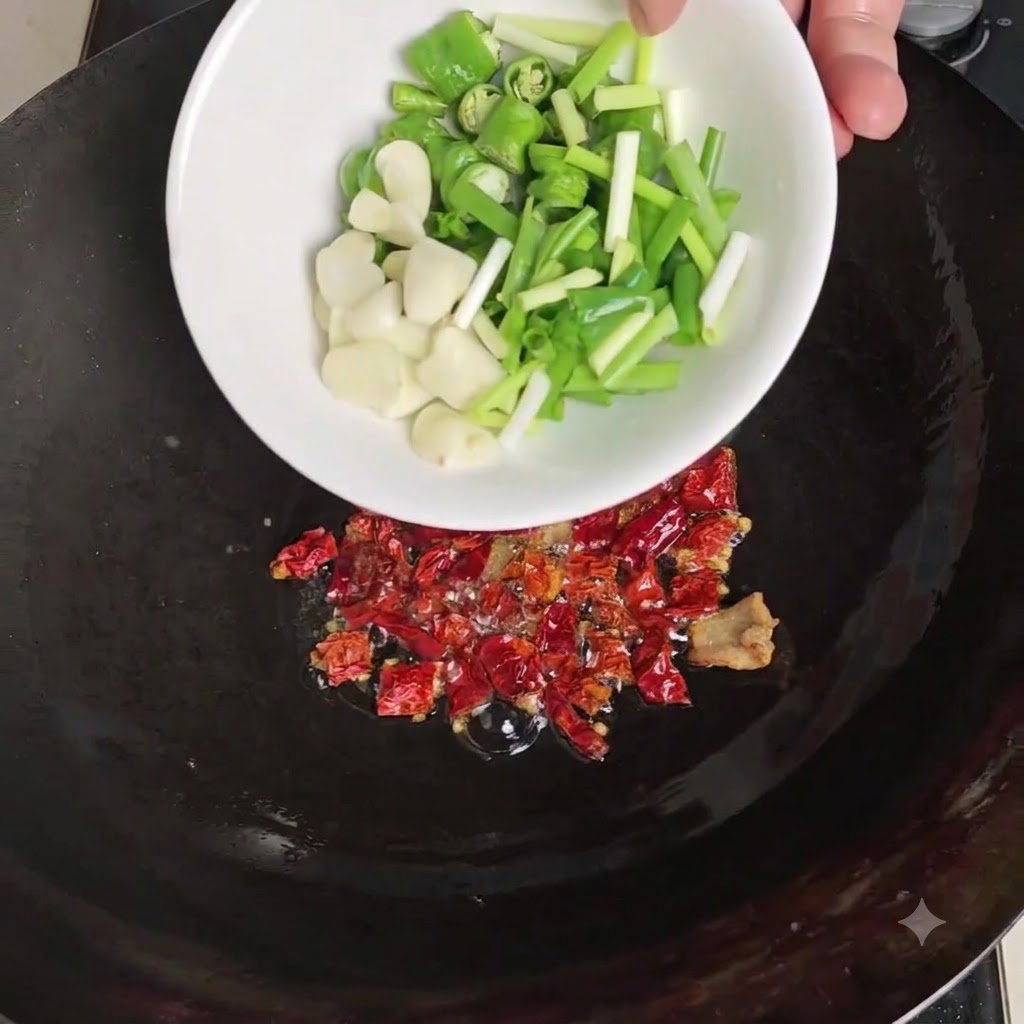
Next, add the sliced green chili peppers, peeled garlic cloves, and chopped scallions into the wok. The moisture from these fresh aromatics will lower the oil temperature slightly while building vibrant layers of savory and spicy flavors.
Tip: Cut the green chilies into even slices so they cook at the same rate and distribute their fresh heat uniformly throughout the dish. - 5Add Red Chili Powder
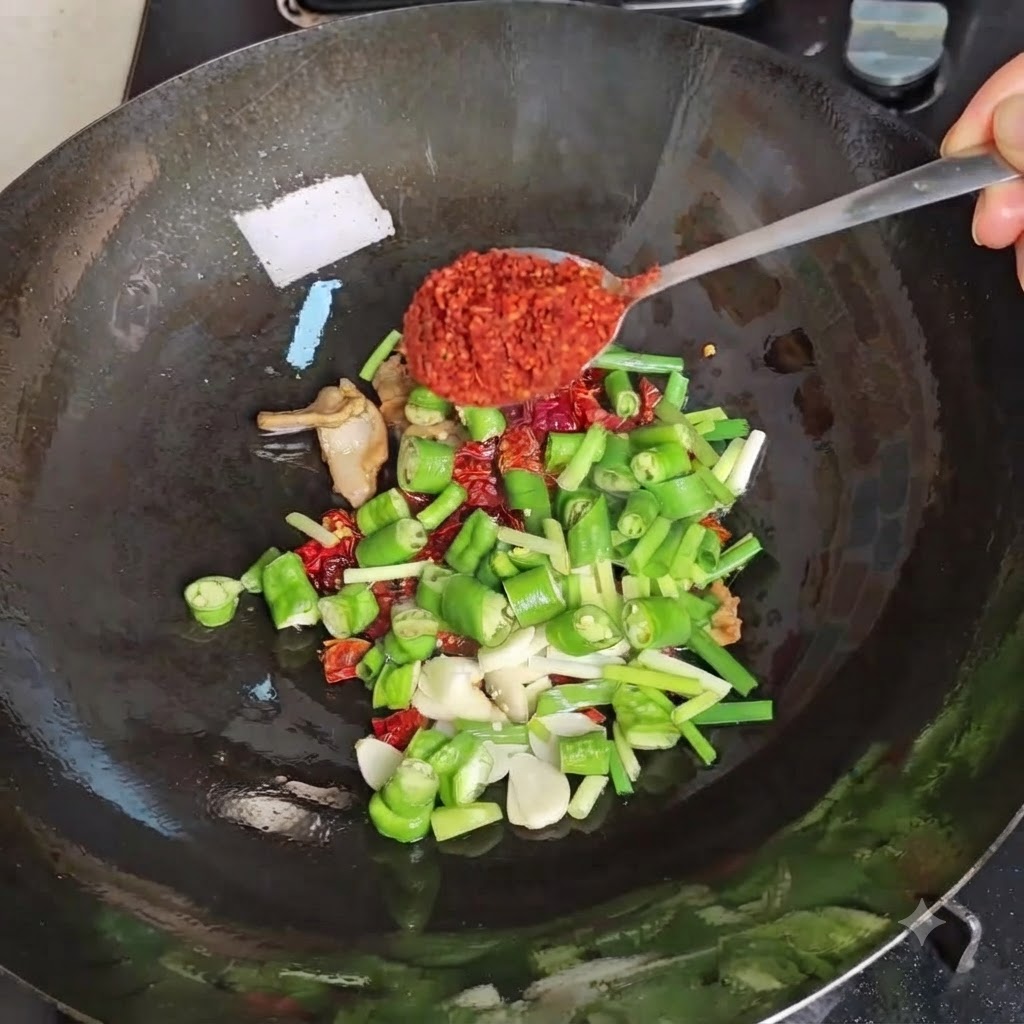
Scoop a spoonful of vibrant red chili powder and add it directly into the wok with the rendered pork fat, dried chili peppers, green chili peppers, and other aromatics.
Tip: Stir-fry the chili powder quickly over high heat to release its rich aroma without burning it. - 6Stir-fry over high heat
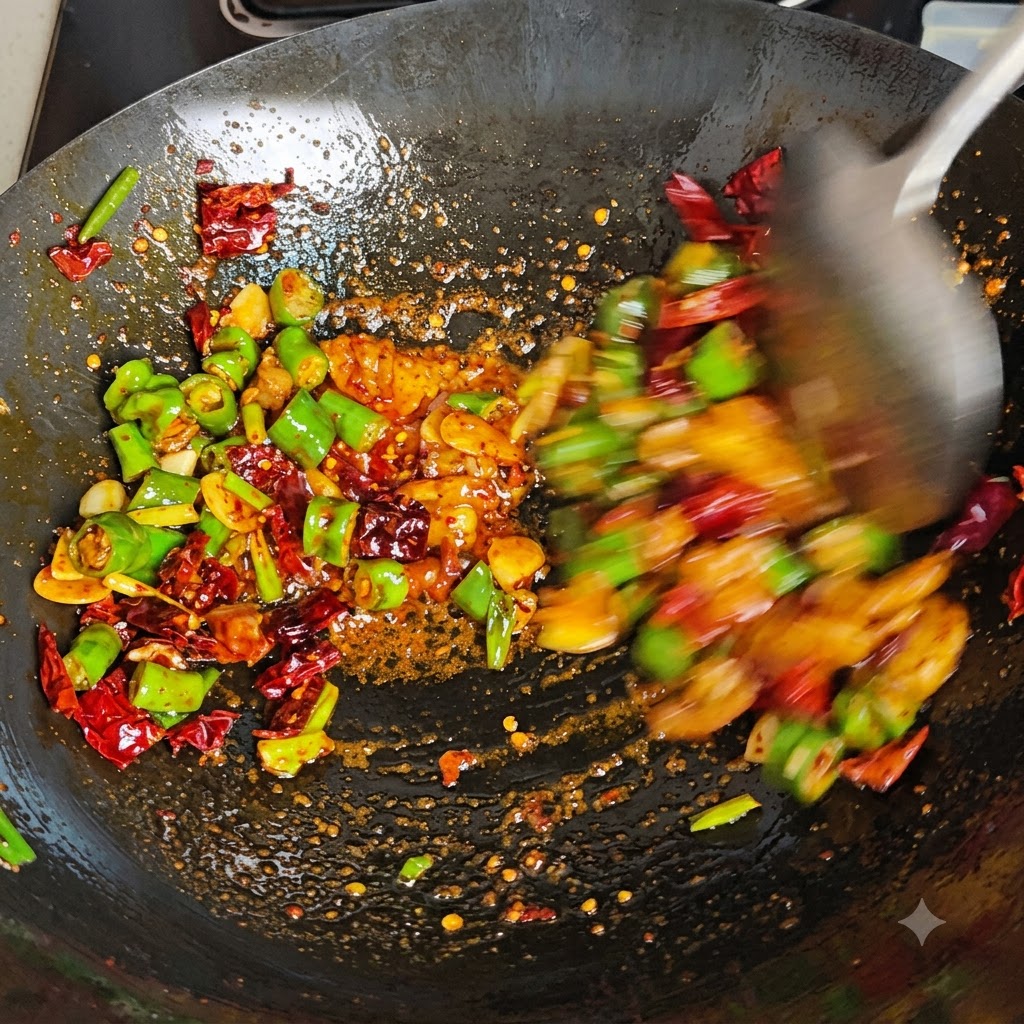
Toss all the aromatics, chilies, and pork fat vigorously in the wok over high heat. Keep everything moving constantly to prevent sticking and to fully extract the essential oils and spicy fragrance from the ingredients.
Tip: A fast, vigorous tossing motion ensures that the pungent garlic and chilies cook evenly without scorching on the hot wok surface. - 7Add Chinese Cabbage
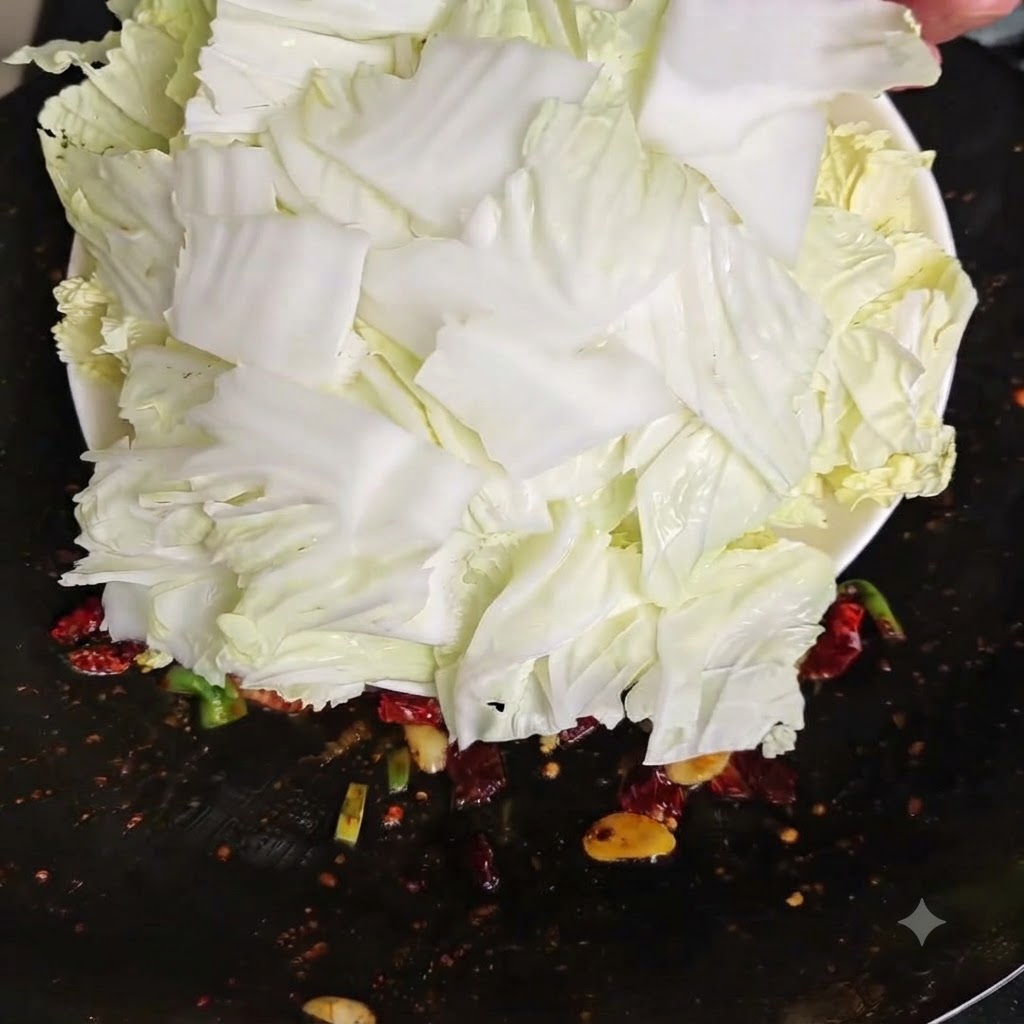
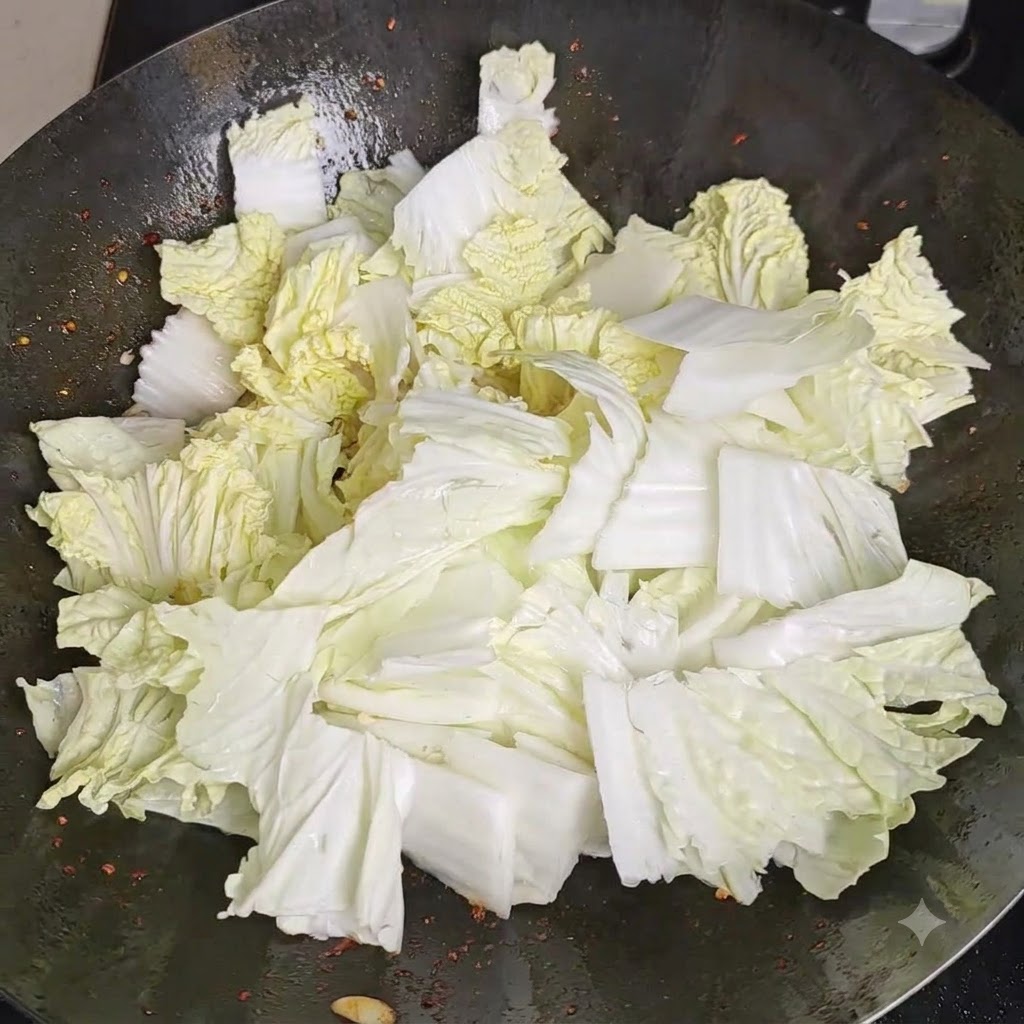
Take a plate of fresh, crisp raw Chinese cabbage pieces and tip them entirely into the hot wok over the seasoned oil and aromatics.
Tip: Ensure the cabbage is well-washed and drained before adding to prevent excessive water splattering. - 8Season with Salt
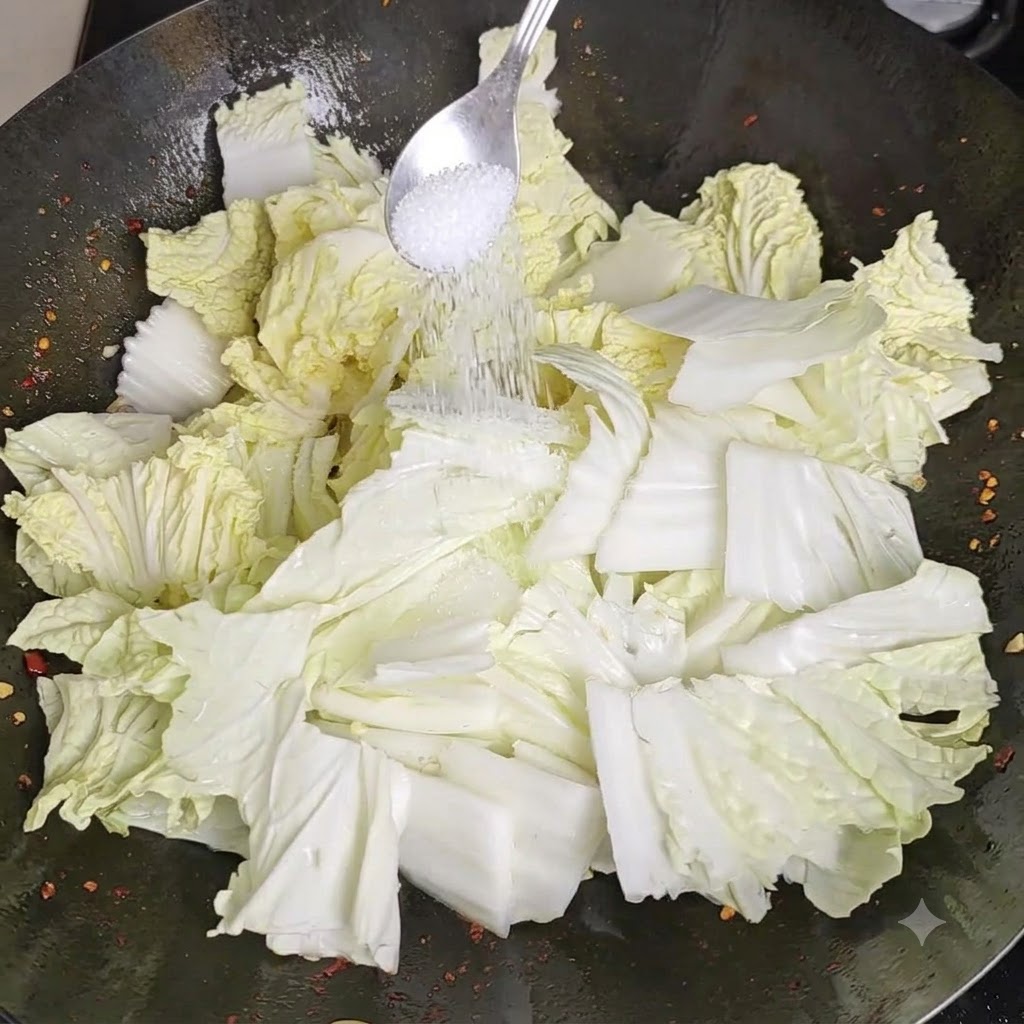
Sprinkle an even layer of salt directly over the freshly added Chinese cabbage inside the hot wok to begin drawing out its natural moisture.
Tip: Adding salt early helps the cabbage soften and absorb flavors faster during high-heat stir-frying. - 9Add Chicken Bouillon
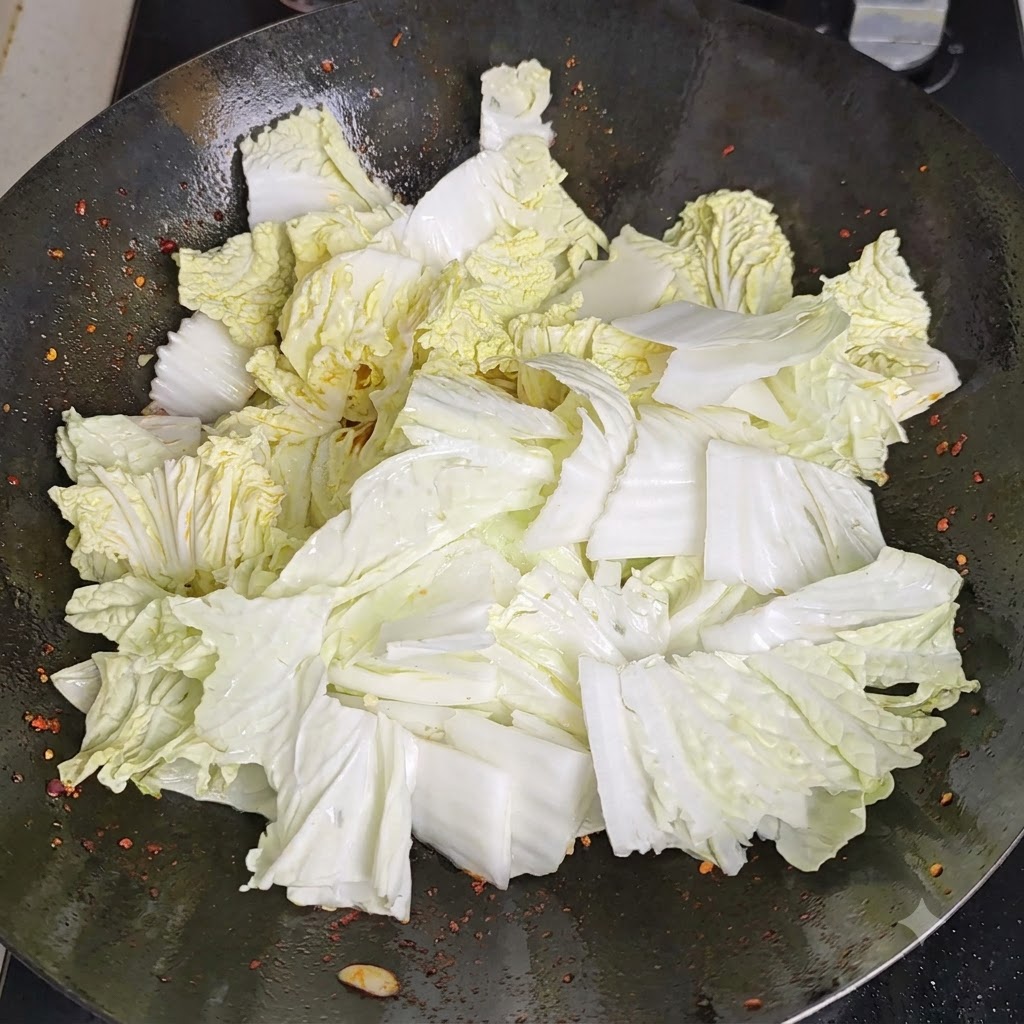
Sprinkle chicken bouillon powder evenly over the cabbage and seasonings in the wok to enhance the savory depth of the dish.
Tip: Distribute the bouillon evenly so the savory flavor blends uniformly with the cabbage. - 10Add Vinegar Along the Wok Edge
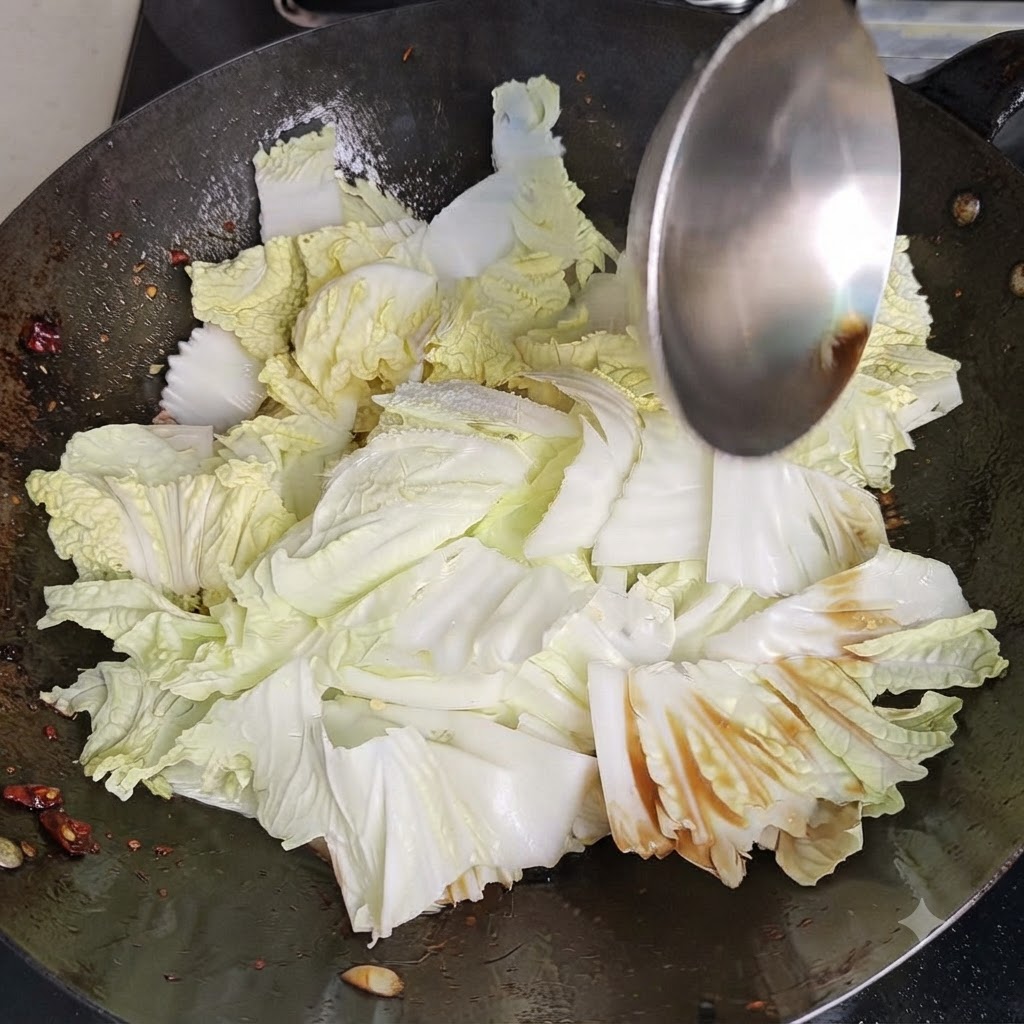
Pour vinegar carefully along the scorching hot inner rim of the wok so that it vaporizes and infuses the ingredients with a rich, smoky aroma.
Tip: Pouring vinegar along the edge of a hot wok creates a fragrant steam effect known as wok edge vinegar. - 11Stir-Fry and Toss Vigorously
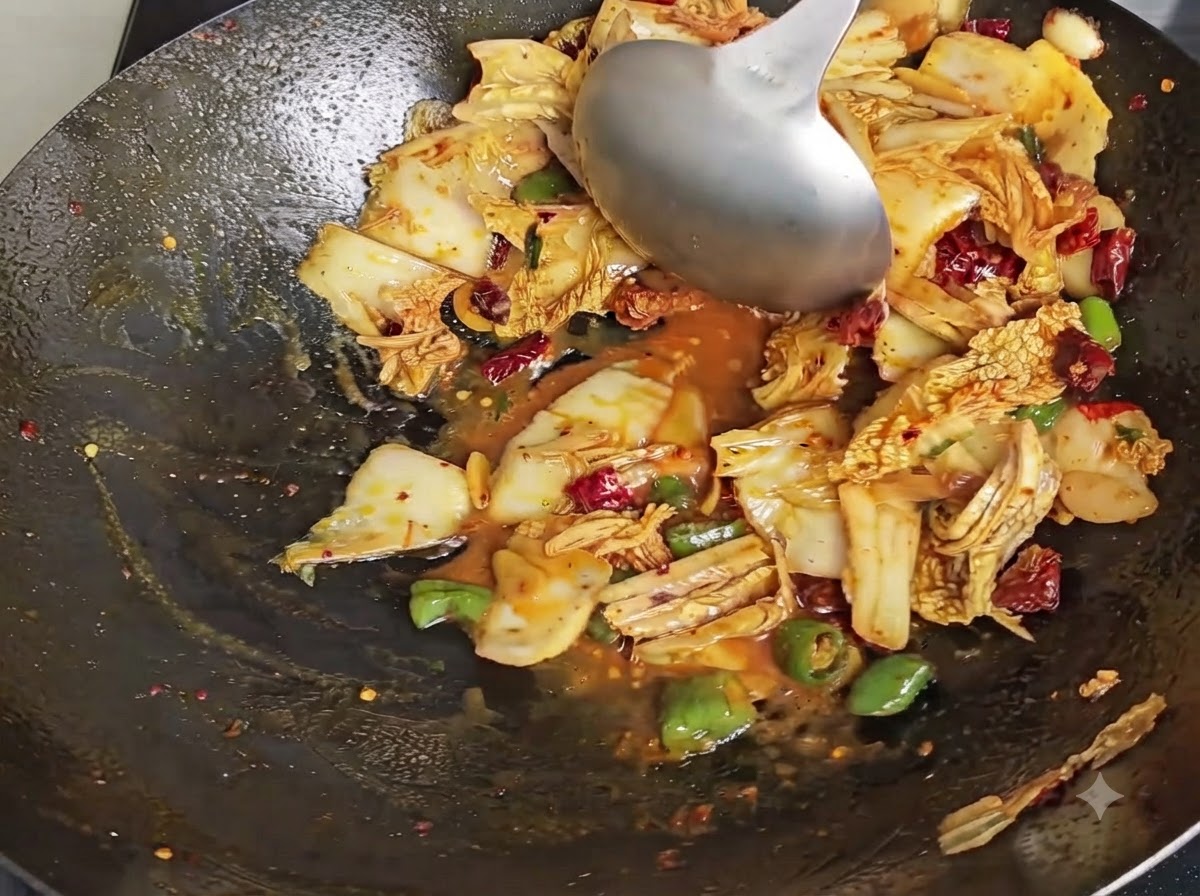
Use a wok spatula to vigorously toss and stir-fry the cabbage and seasonings together on high heat until the juices are fully released and everything is well combined.
Tip: Keep the heat high and toss continuously to ensure quick, even cooking and a tender-crisp texture. - 12Stir-Fry the Spicy Cabbage
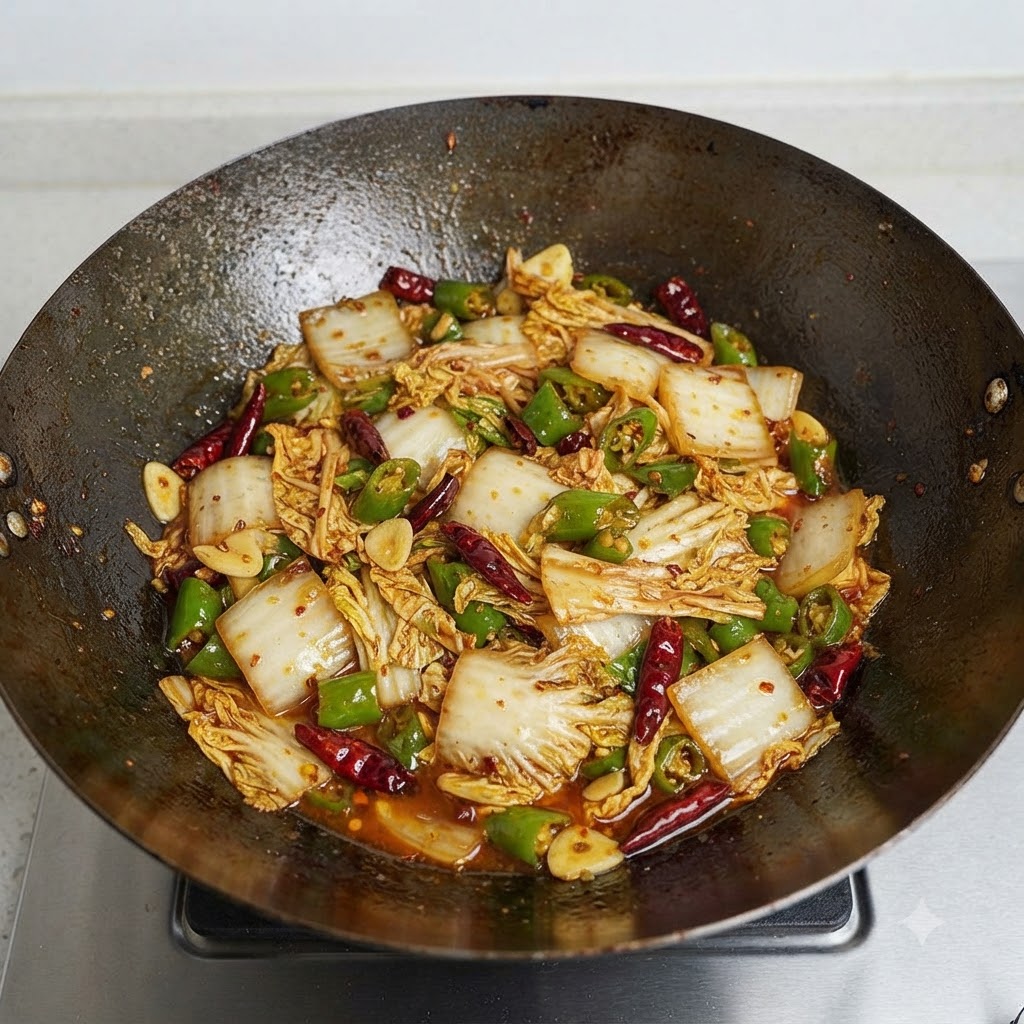
Continue tossing and stir-frying the mixture on high heat until the Chinese cabbage is tender-crisp and releases its natural juices into the pan.
Tip: High heat is essential here to develop that distinct wok hei flavor. - 13Transfer the Cooked Noodles
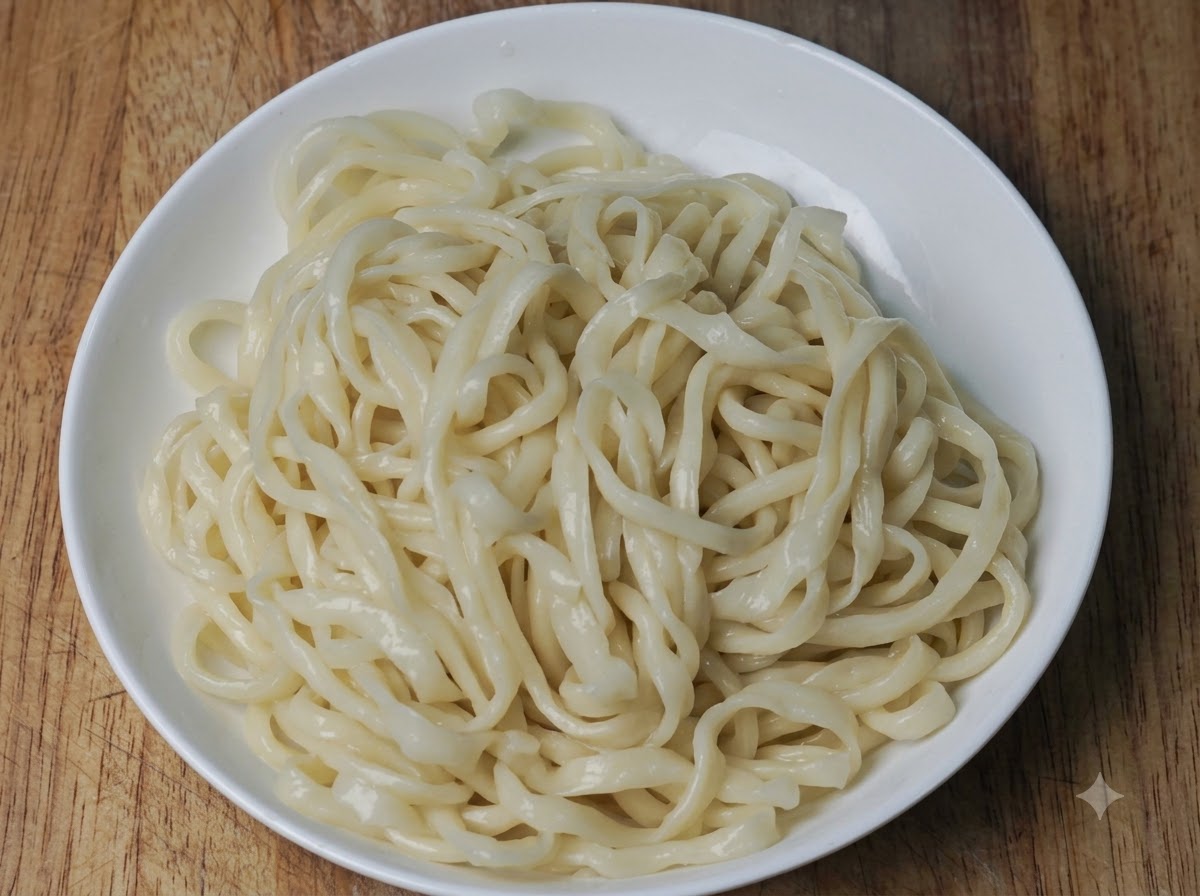
Carefully scoop the cooked thick noodles out of the pot and transfer them directly onto a clean white serving plate, preparing them for the topping.
Tip: Make sure to drain excess water so the noodles dont become soggy. - 14Assemble and Serve
Scoop the freshly cooked spicy Chinese cabbage topping and place it generously over the bed of thick noodles. Toss or mix together before eating.
Tip: Open your mouth wide and take a big bite to enjoy all the vibrant flavors at once.