Authentic Korean Army Base Stew (Budae Jjigae)
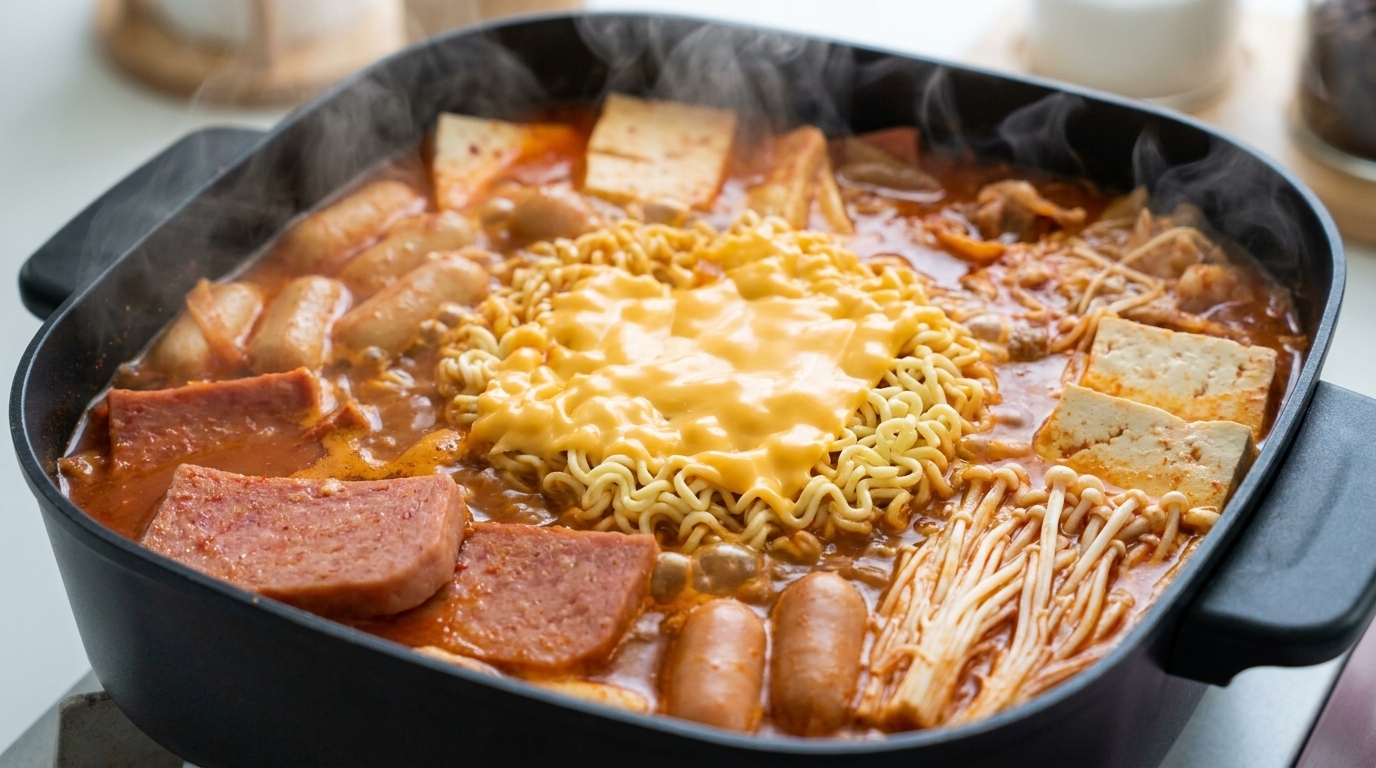
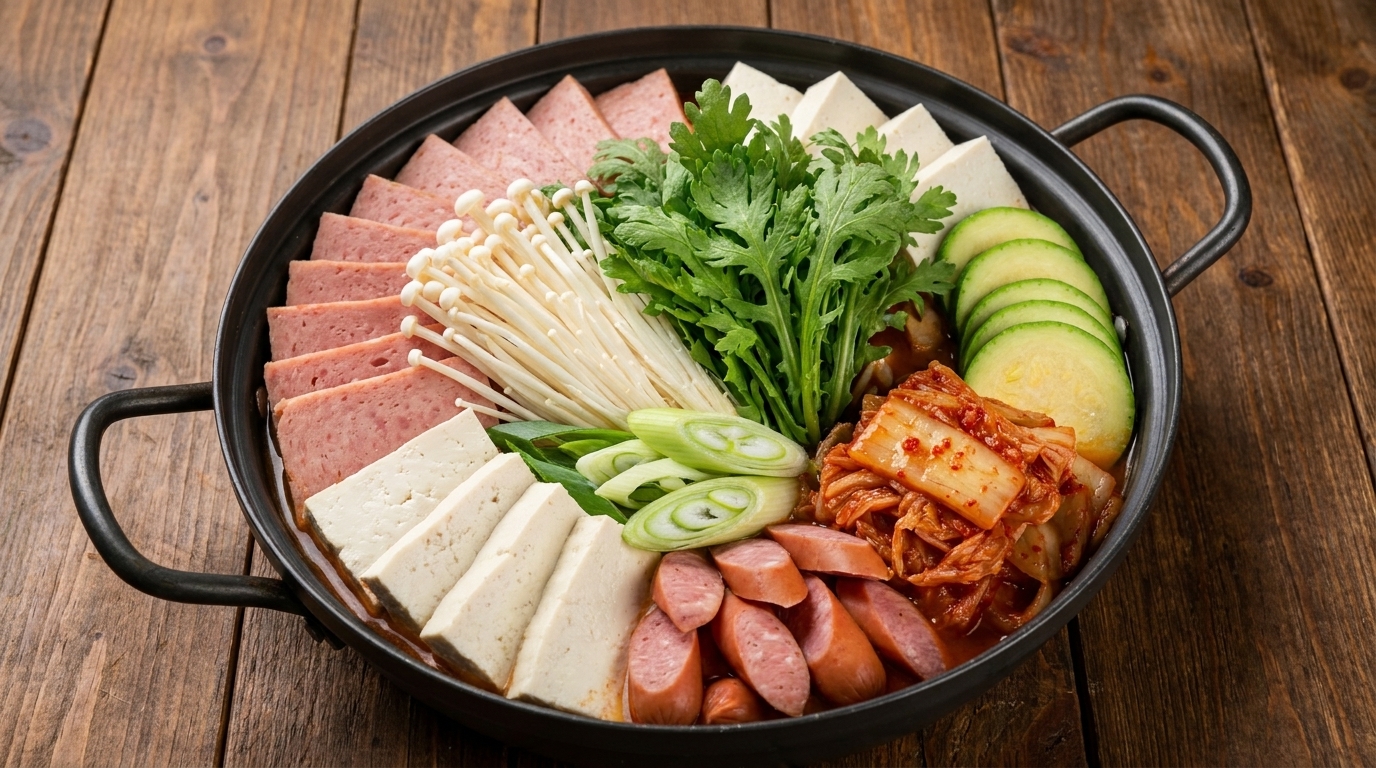
A legendary Korean fusion stew with spam, sausages, and sour kimchi in a spicy broth, topped with melted cheese and chewy ramen noodles.
Budae Jjigae, or Army Base Stew, originated after the Korean War when surplus ingredients from U.S. military bases were combined with traditional Korean flavors. This hearty, communal dish has since become a beloved comfort food, celebrated for its unique blend of processed meats and spicy, tangy fermented kimchi.

Ingredients
- 300 g sour kimchi
- 300 g spam
- 300 g sausages
- 200 g ground pork
- 1 white onion
- 4 tbsp baked beans
- 2 red chili peppers
- 2 green chili peppers
- 12 stalk leek
- 1 handful enoki mushrooms
- 1 liter anchovy and kelp broth
- 3 tbsp Korean chili powder
- 2 tbsp Korean chili paste
- 2 tbsp soy sauce
- 1 tbsp garlic
- 1 tbsp rice wine
- 1 tbsp sugar
- 12 tsp black pepper
- 1 pack ramen noodles
- 1 slice American cheese
Instructions
- 1Add the sour kimchi base
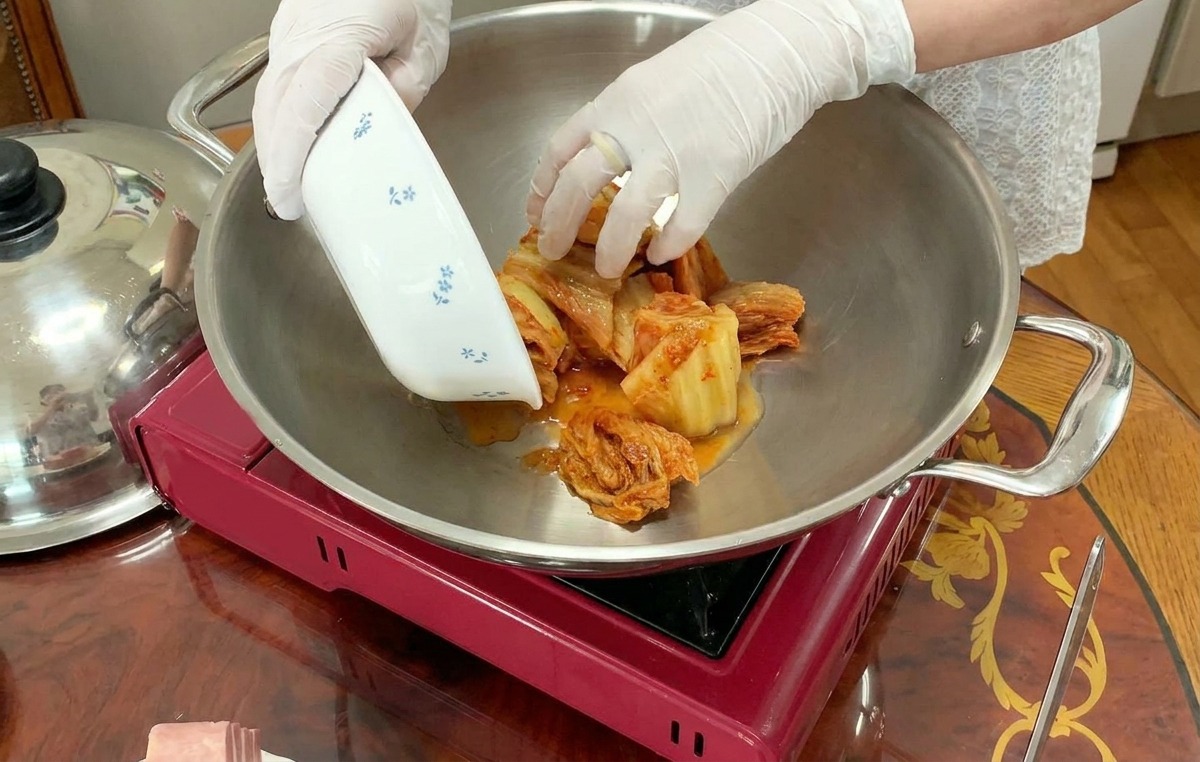
Begin by placing approximately 250 to 300 grams of sliced sour kimchi into the center of a large, empty stainless steel pot. Using well aged kimchi is crucial as it provides the deep tangy foundation for the stew flavor profile.
Tip: If your kimchi is not sour enough you can add a teaspoon of vinegar to mimic the fermented taste. - 2Layer the spam
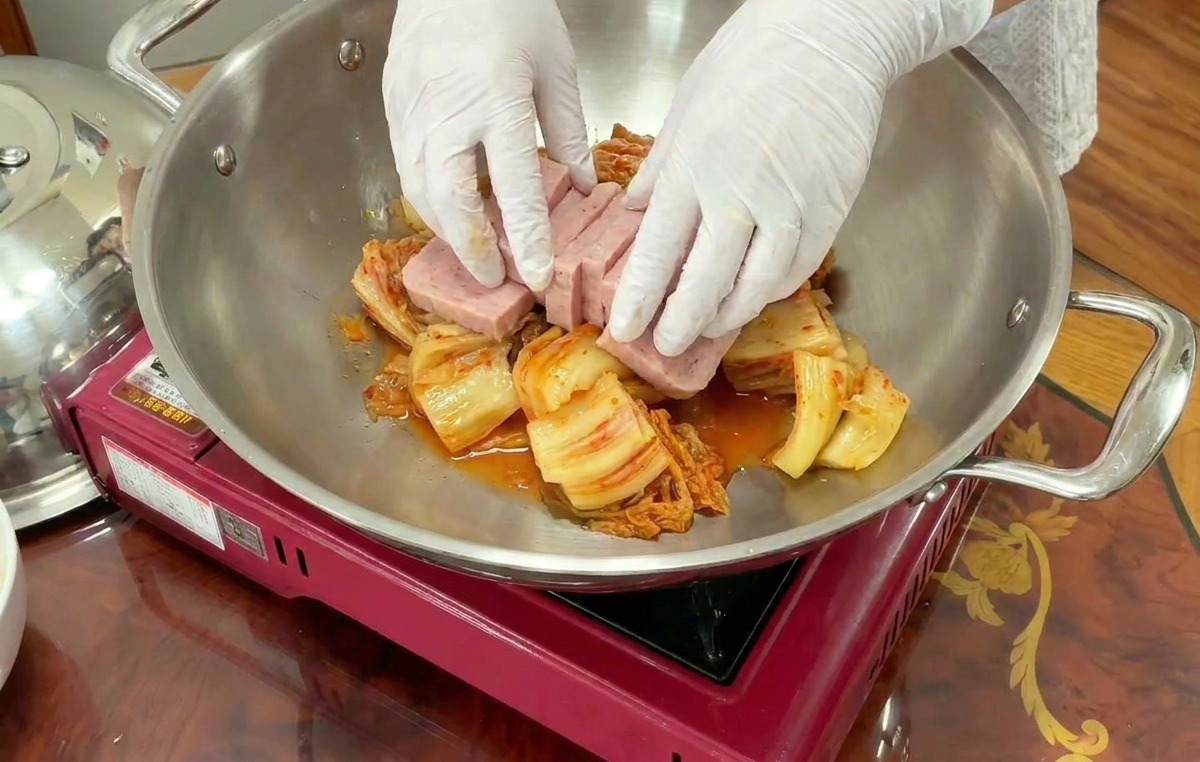
Add 300 grams of spam, cut into uniform rectangular slices, to the pot. Arrange them neatly around the central mound of kimchi to ensure every serving gets a portion of this savory, salty staple ingredient.
Tip: Briefly soaking the spam in hot water before slicing can help remove excess salt and oil if you prefer a lighter taste. - 3Incorporate white onions
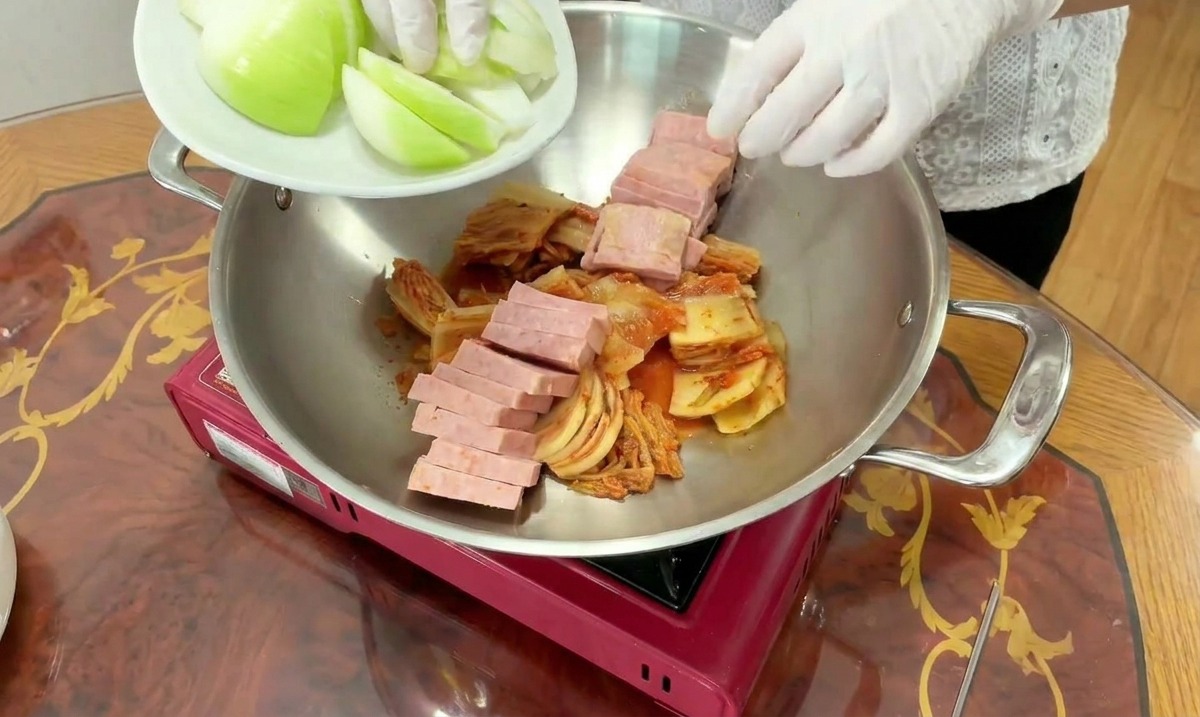
Place thick slices of raw white onion into the pot alongside the spam and kimchi. As the onions cook, they will release natural sweetness that balances the heat and saltiness of the other ingredients.
Tip: Thickly sliced onions are better for stews as they maintain some texture even after simmering. - 4Add the sliced sausages
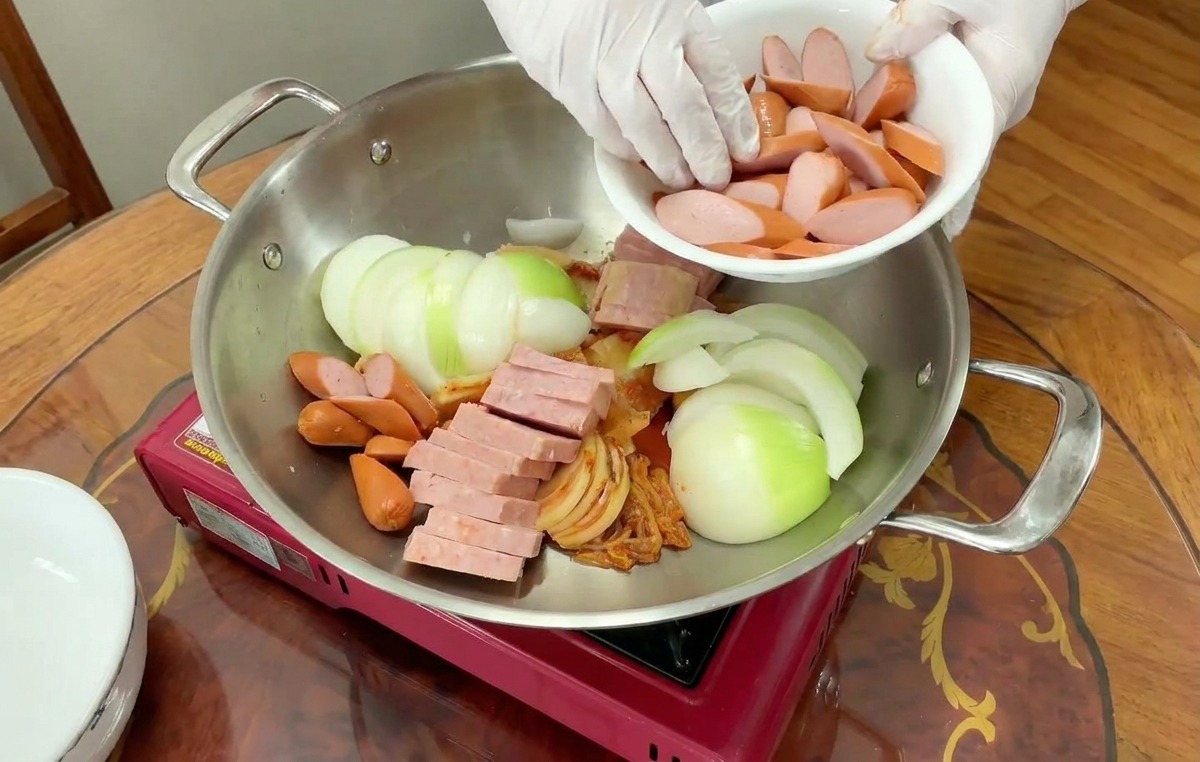
Fill the remaining spaces in the pot with sliced sausages. Using a variety of sausages adds different textures and smoky notes, which are characteristic of a traditional Army Base Stew.
Tip: Slicing sausages on a diagonal increases their surface area, allowing them to soak up more of the spicy broth. - 5Add seasoned ground pork
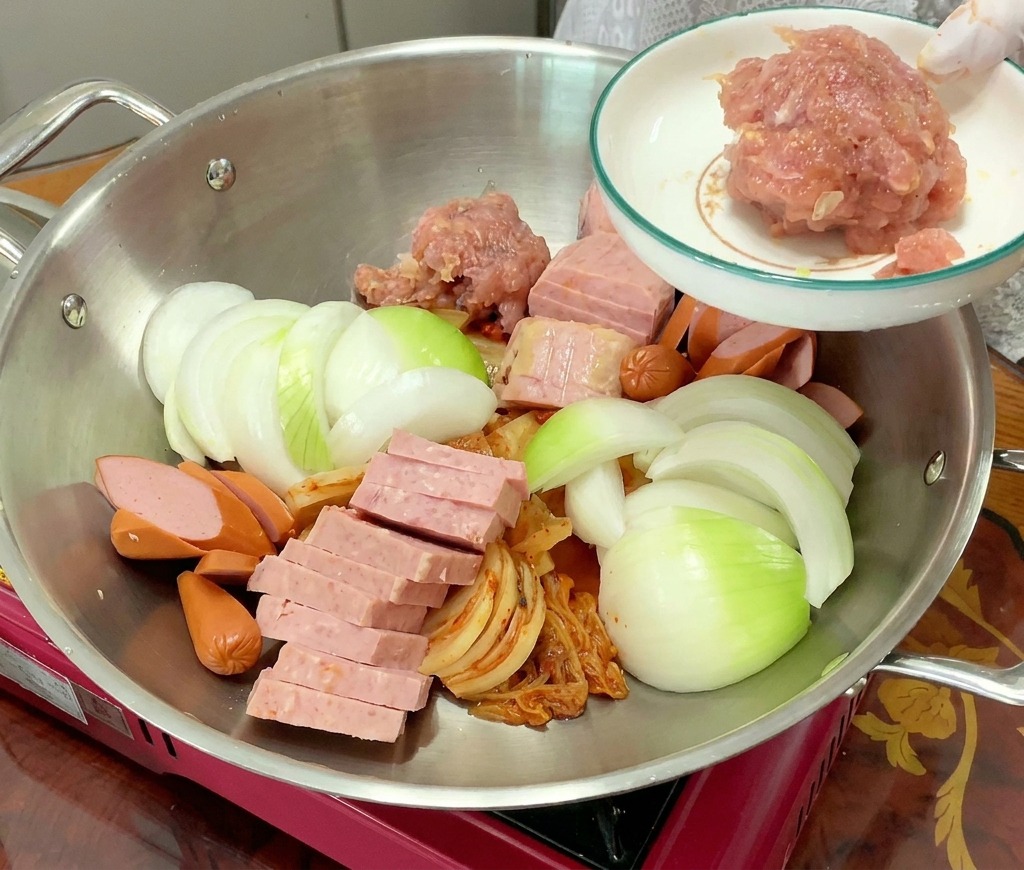
Place a mound of seasoned ground pork (about 200 grams) into the pot. This meat has been pre-mixed with rice wine, minced garlic, salt, and pepper to provide a rich, savory protein boost to the dish.
Tip: Ensure the ground pork is broken up slightly during cooking so it distributes evenly throughout the stew. - 6Pour in the anchovy broth
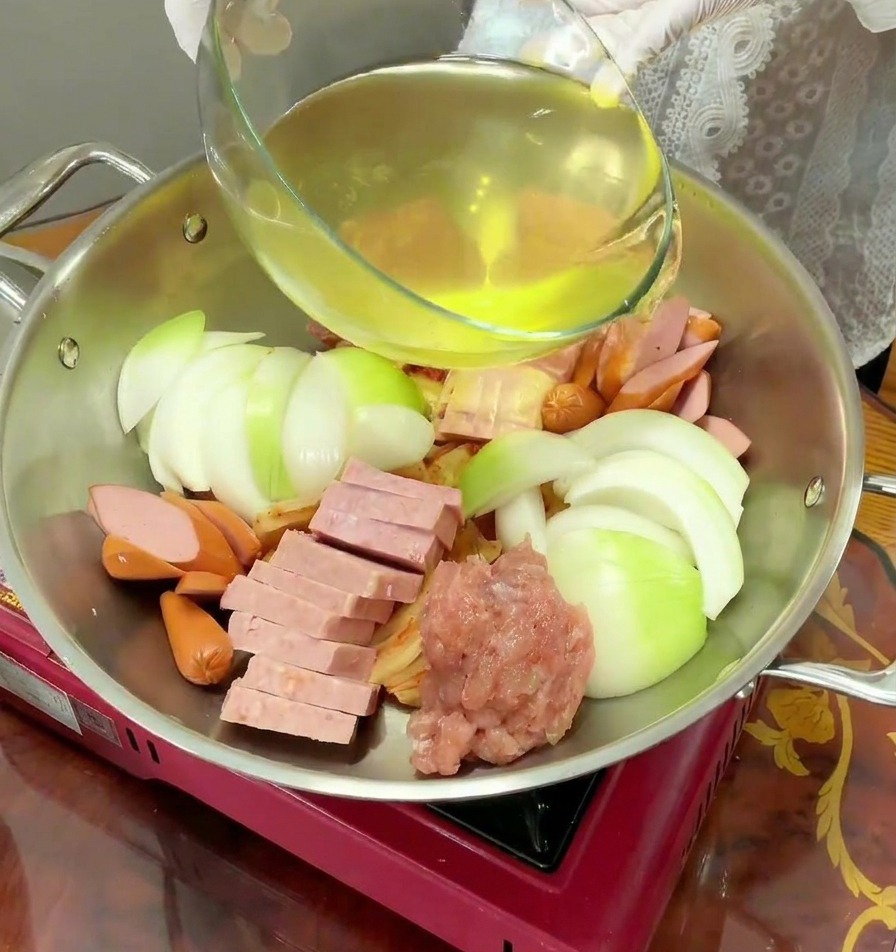
Carefully pour the clear yellow broth, made from dried anchovies and kelp, over the arranged ingredients. The broth should almost cover the components, providing the liquid base for the stew to simmer in.
Tip: If you do not have anchovy broth you can use plain water or a light chicken stock as a quick alternative. - 7Add the spicy seasoning sauce
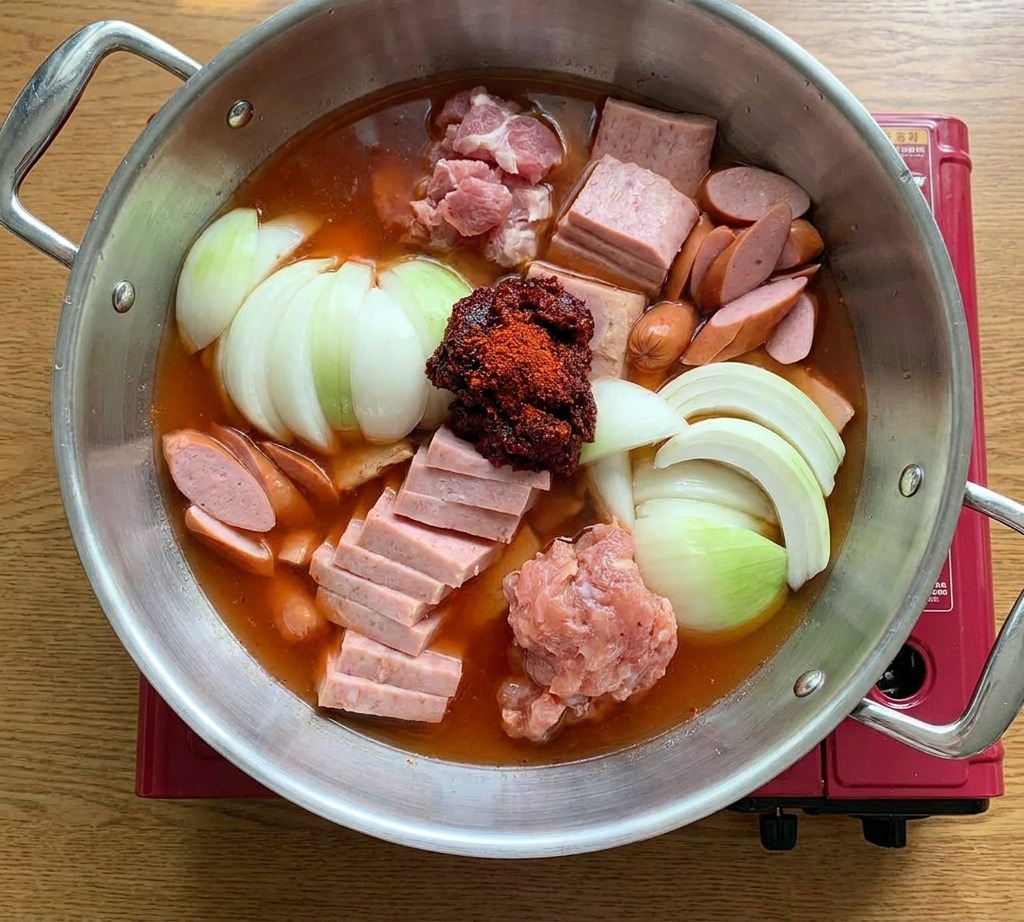
Add a large spoonful of the spicy seasoning sauce—a robust blend of chili powder, chili paste, Korean soy sauce, garlic, rice wine, sugar, and pepper—directly into the center of the pot.
Tip: If you do not have prepared anchovy broth plain water is an acceptable substitute as the meats and sauce provide deep flavor. - 8Add peppers and beans
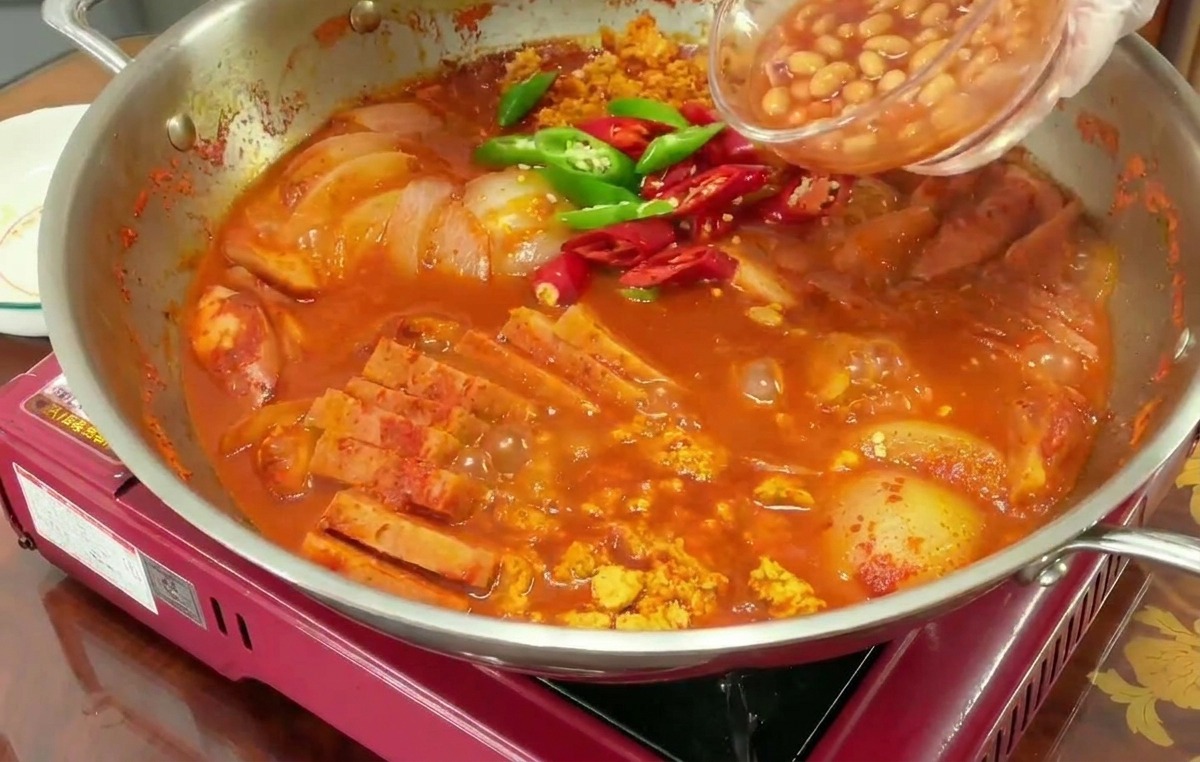
Once the stew reaches a vigorous boil, add the sliced red and green chili peppers along with four spoonfuls of baked beans. The beans are a traditional Army Base Stew ingredient that adds a subtle sweetness and thickens the spicy broth.
Tip: Adjust the number of chili peppers based on your spice tolerance to control the heat level of the soup. - 9Add leeks and mushrooms
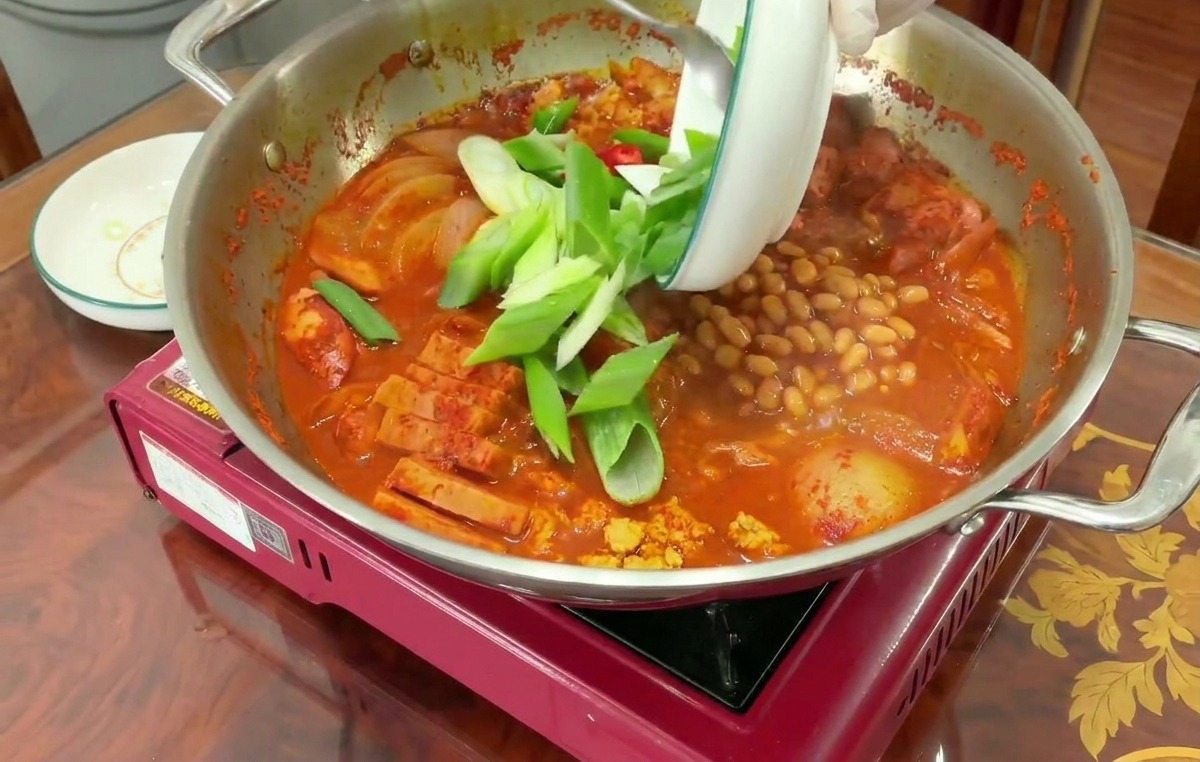
Top the boiling stew with half a stalk of sliced leeks and a handful of fresh white enoki mushrooms. These vegetables add a fresh aroma and a pleasant textural contrast to the rich, savory components of the dish.
Tip: Add the enoki mushrooms toward the very end so they soften in the heat without becoming overcooked and rubbery. - 10Stir and simmer
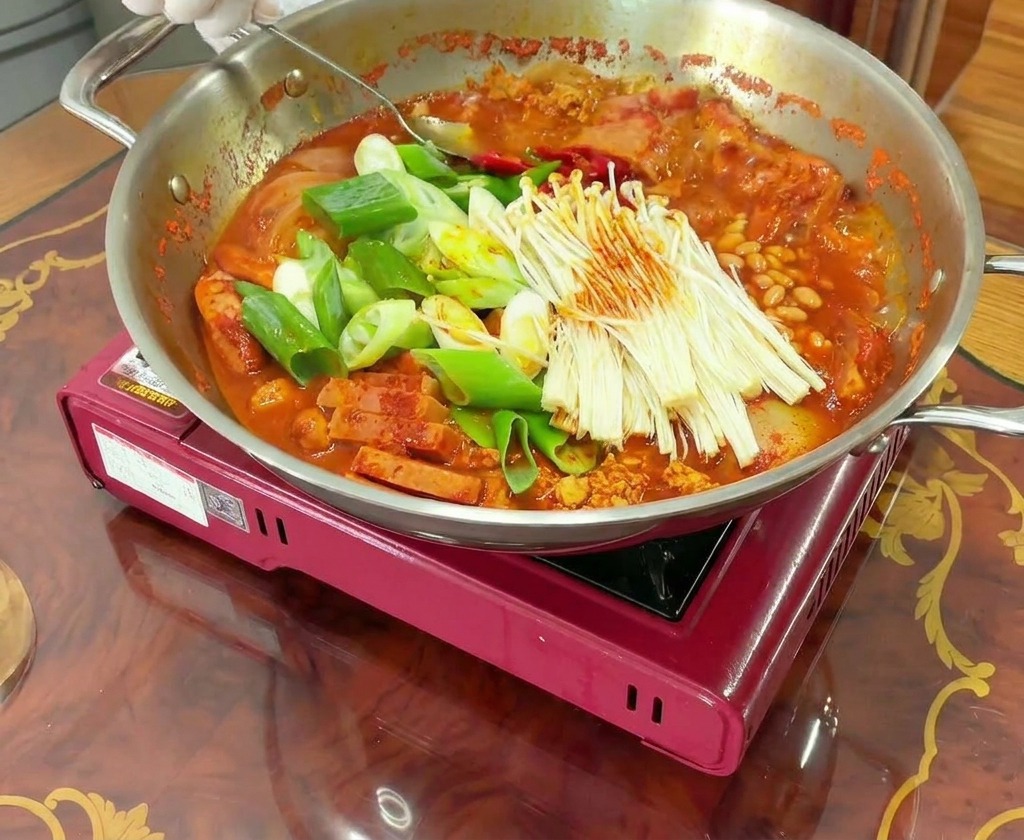
Gently stir the ingredients to fully incorporate the seasoning paste into the broth. Once the stew is simmering, add the ramen noodles and top with a slice of American cheese. Continue to simmer for a few more minutes until the noodles are tender and the cheese has melted.
Tip: For the best result, add a slice of American cheese and ramen noodles right before serving to create a creamy and filling meal.