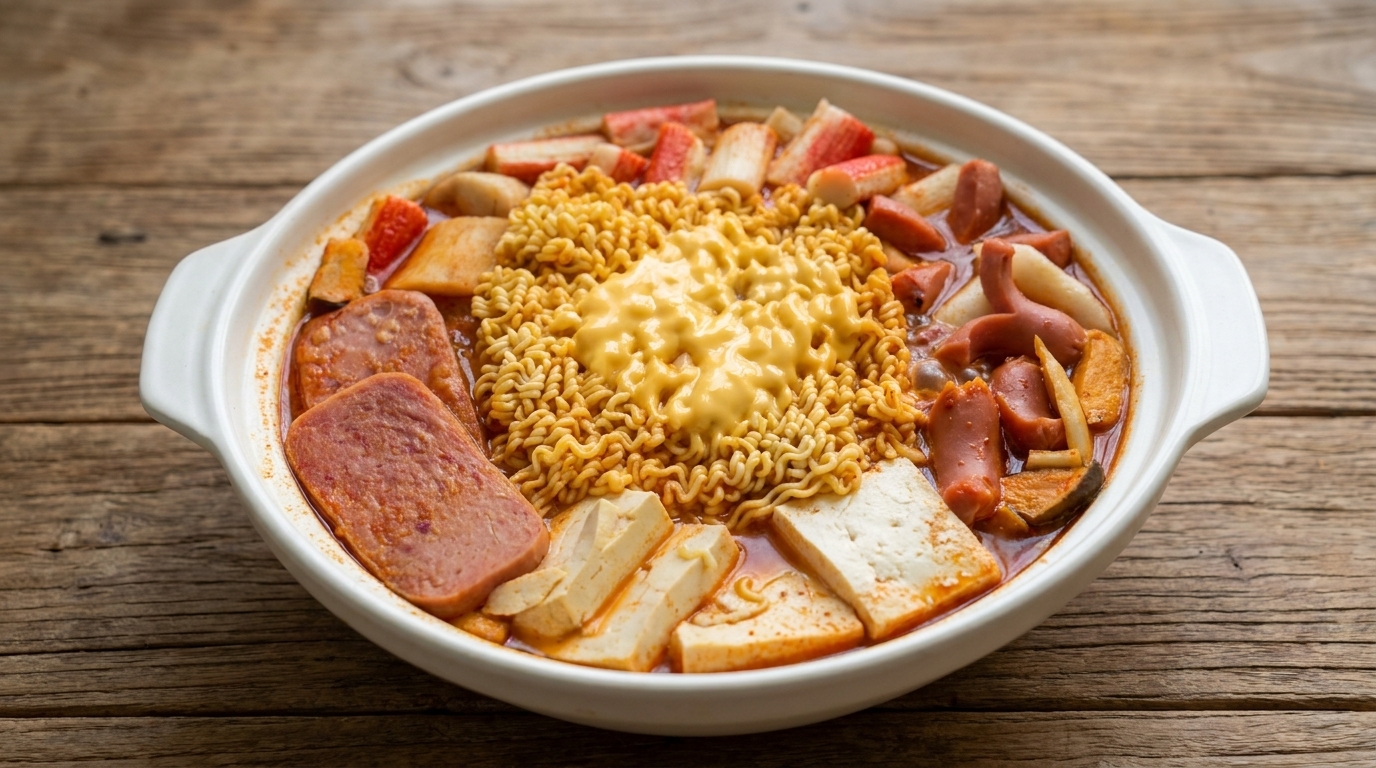
Authentic Korean Army Stew (Budae Jjigae)
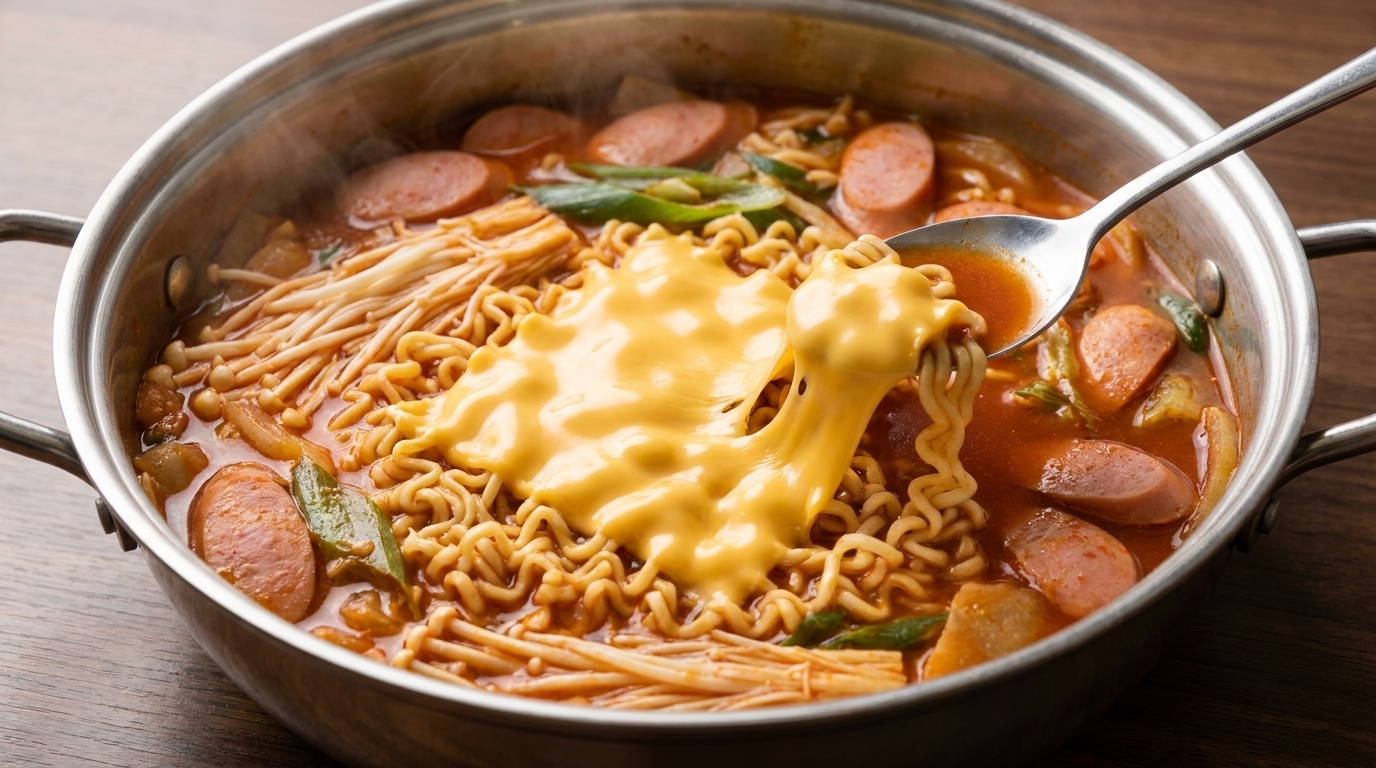
A soul-warming Korean classic featuring a savory, spicy gochujang broth packed with spam, sausages, ramen noodles, and melted cheese for the ultimate fusion meal.
Budae Jjigae, or Army Stew, originated in the aftermath of the Korean War when surplus American processed foods were combined with traditional Korean ingredients. Today, it is a beloved communal hot pot dish cherished for its bold, spicy flavor and satisfying variety. This recipe captures that authentic, comforting street-food spirit in one pot.
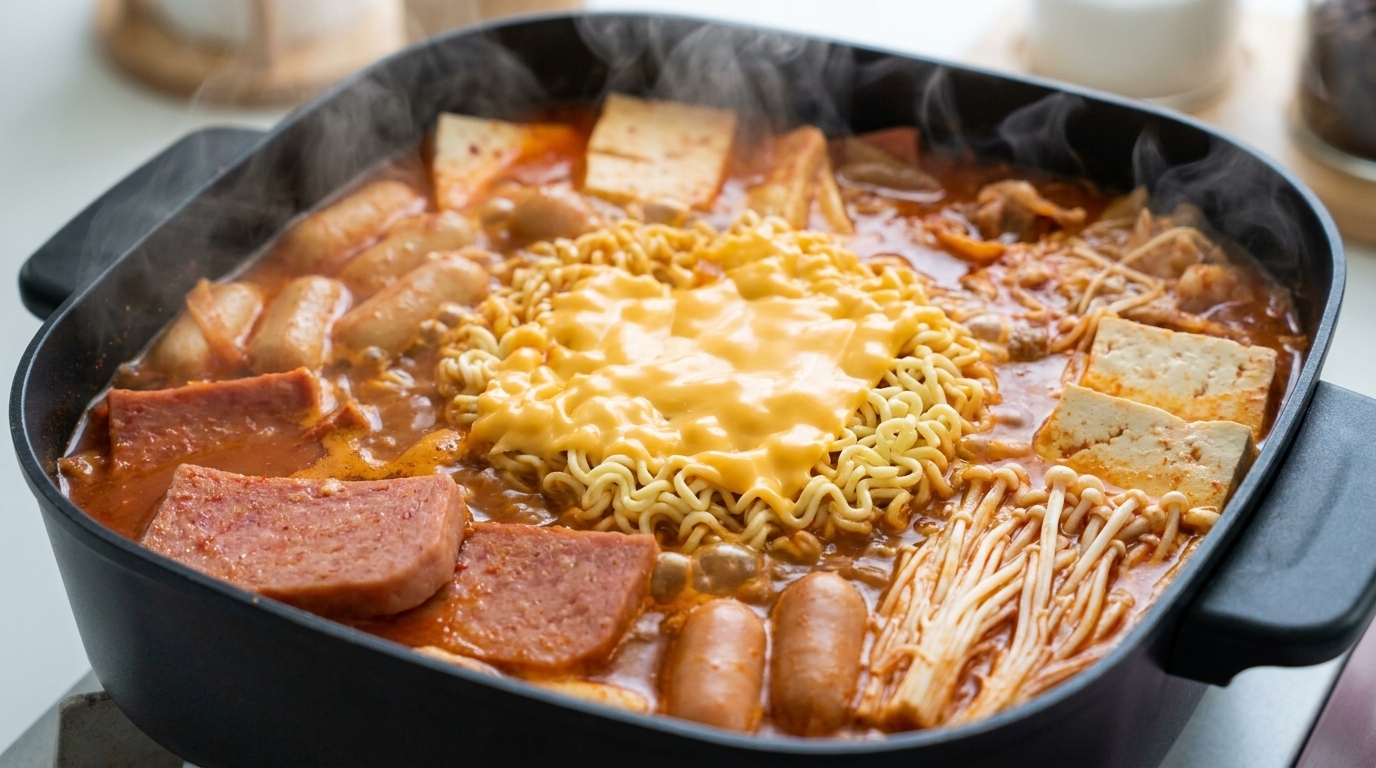
Ingredients
- 2 fresh shiitake mushrooms
- 12 cucumber
- 1 block tofu
- 2 tbsp red chili powder
- 1 tbsp sugar
- 1 tbsp sesame oil
- 1 tbsp oyster sauce
- 1 tbsp minced garlic
- 2 tbsp gochujang
- 12 white onion
- 100 g Napa cabbage
- 100 g enoki mushrooms
- 1 can spam
- 50 g rice cakes
- 6 cocktail sausages
- 100 g sliced beef
- 100 g kimchi
- 1 pack instant noodles
- 1 slice cheddar cheese
- to taste water or broth
Instructions
- 1Score the shiitake mushrooms
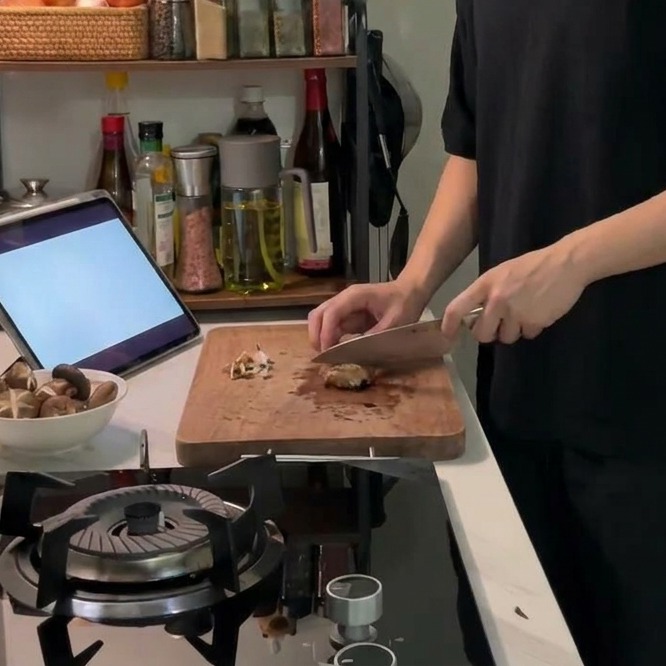
Prep the shiitake mushrooms by using a sharp knife to score a shallow cross pattern into the center of each cap. This decorative technique helps the mushrooms absorb the savory flavors of the broth while adding a professional visual touch to the final presentation.
Tip: Be careful not to cut too deep into the flesh; a shallow score is enough to allow the pattern to open up beautifully as the mushrooms cook. - 2Slice the cucumber
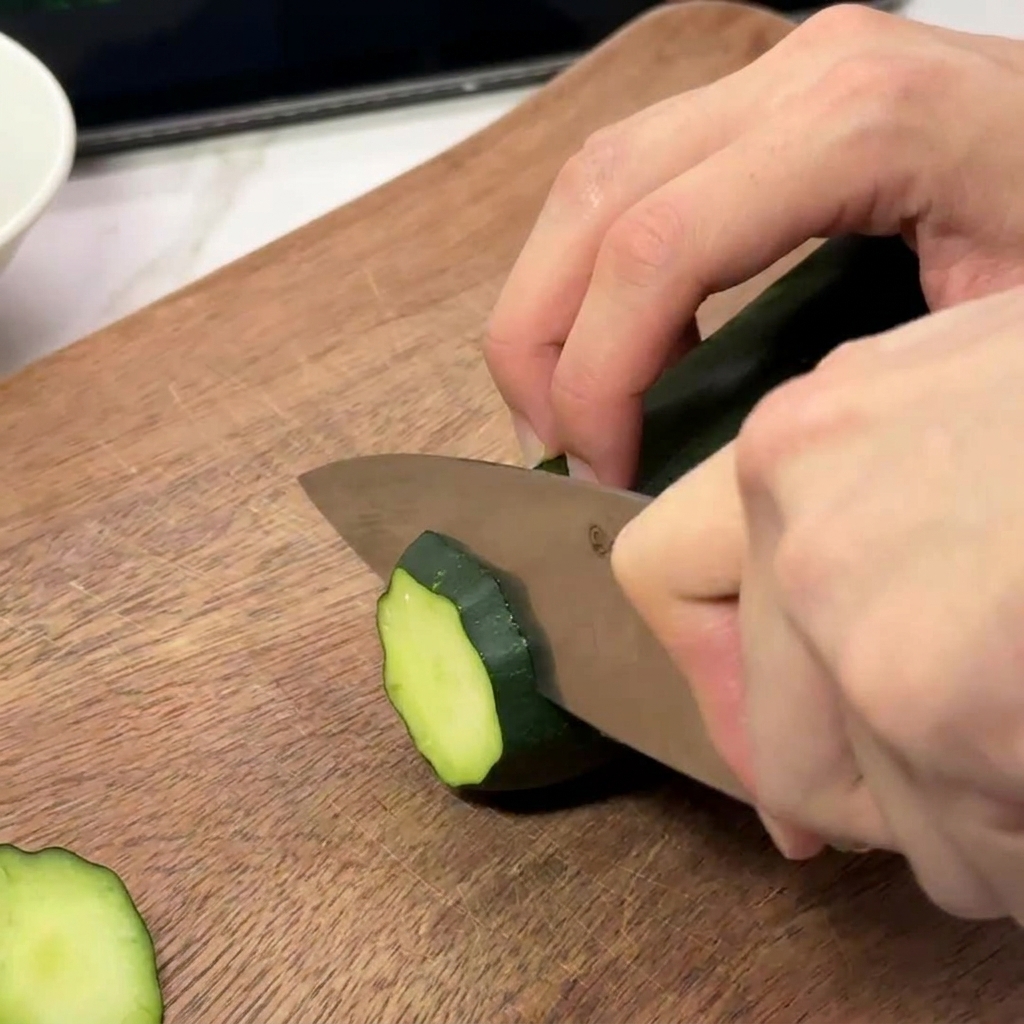
Place the fresh green cucumber on a wooden cutting board and use a sharp knife to slice it into thin, even rounds. These cucumber slices will be layered into the pot later, providing a refreshing contrast to the spicy and savory elements of the army stew.
Tip: Keep the slices uniform in thickness to ensure they soften at the same rate during the cooking process. - 3Prepare the tofu
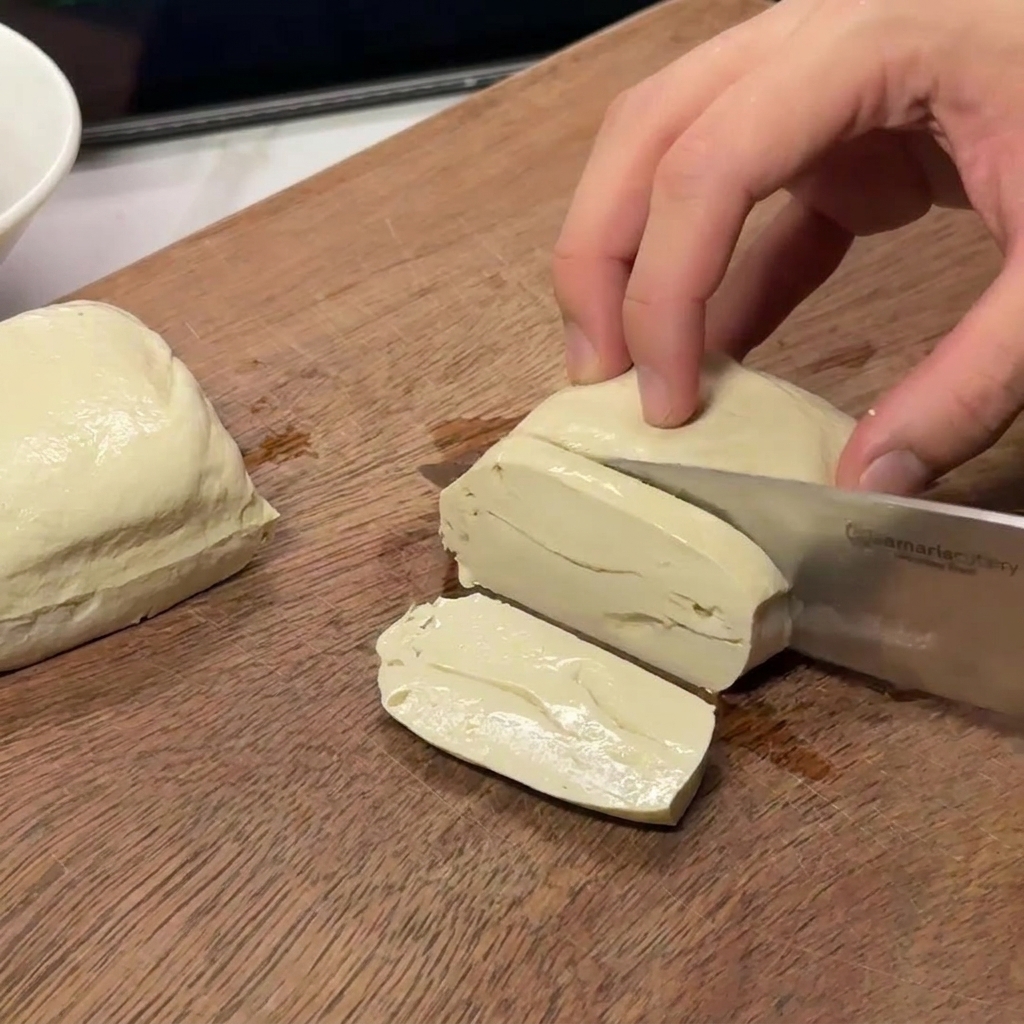
Take a block of fresh white tofu and carefully cut it into thick, uniform rectangular slices. Tofu is a key ingredient in Budae Jjigae as it absorbs the rich flavors of the broth while providing a soft, silky texture to the dish.
Tip: If using soft tofu, handle the slices very gently to keep them intact before adding them to the hot pot. - 4Start the sauce base
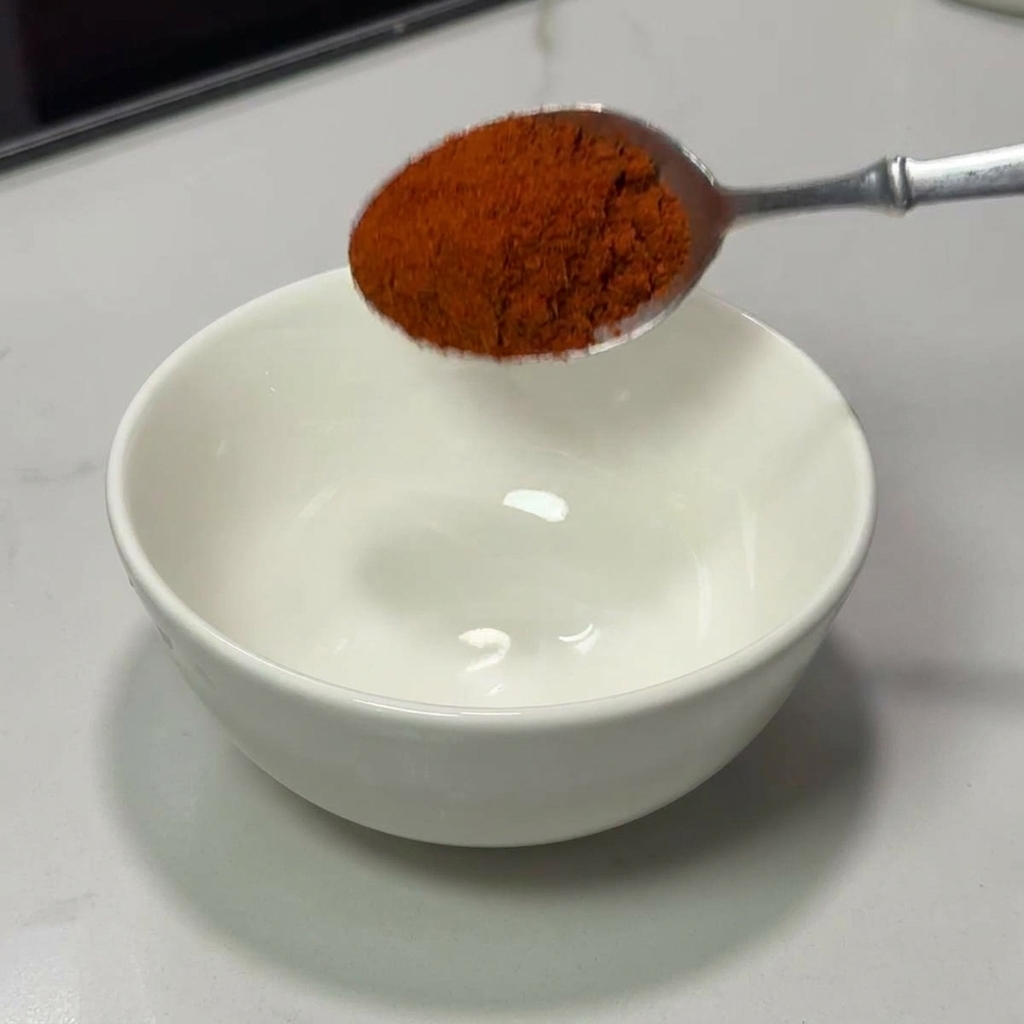
Begin preparing the signature spicy sauce by adding two tablespoons of vibrant red chili powder into a small white mixing bowl. This serves as the primary heat source and gives the stew its iconic deep red color.
Tip: Use Korean coarse chili powder (Gochugaru) for the most authentic flavor and texture in your sauce. - 5Add the gochujang
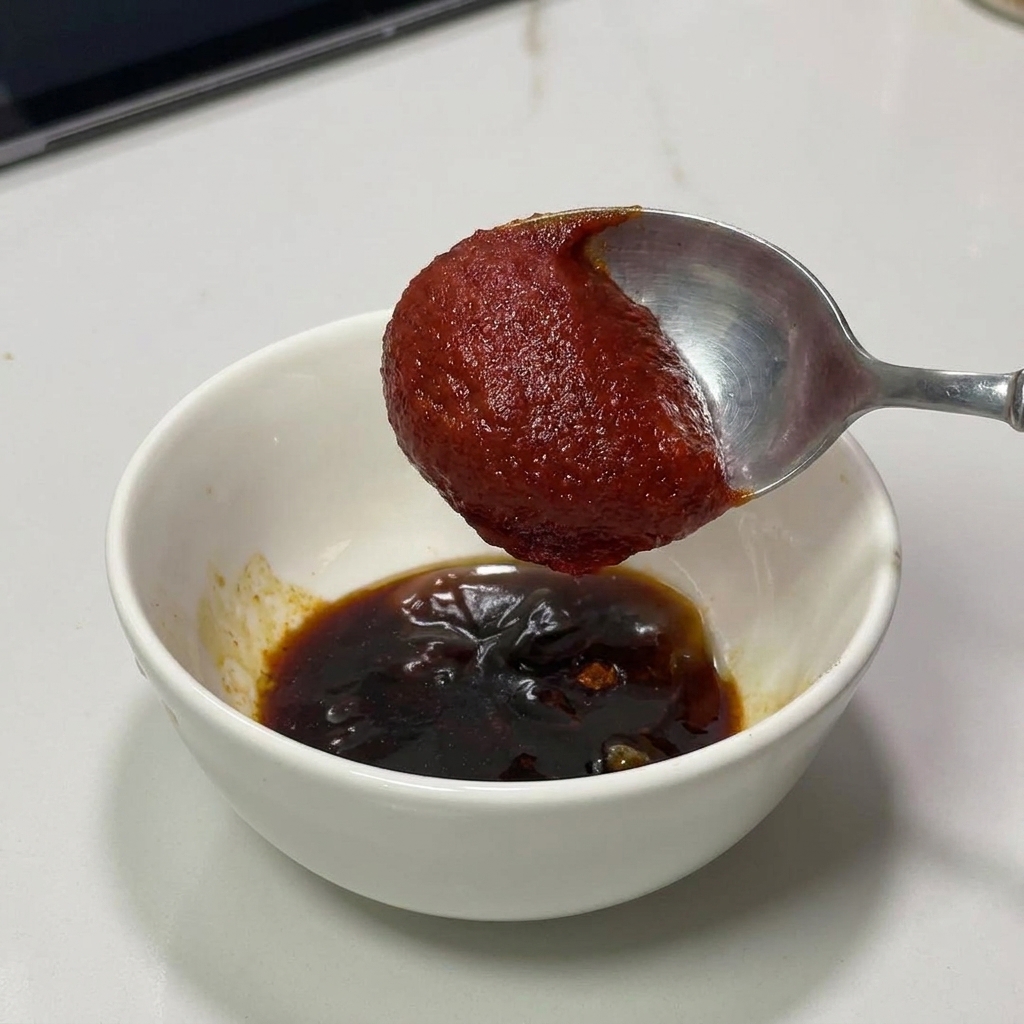
Incorporate a large, generous scoop of gochujang (Korean red chili paste) into the mixing bowl with the other liquid seasonings. This fermented paste adds a complex layer of umami, sweetness, and thick body to the army stew sauce.
Tip: Gochujang is quite sticky; you can use a second spoon or a small spatula to help scrape it off the measuring spoon into the bowl. - 6Mix the sauce thoroughly
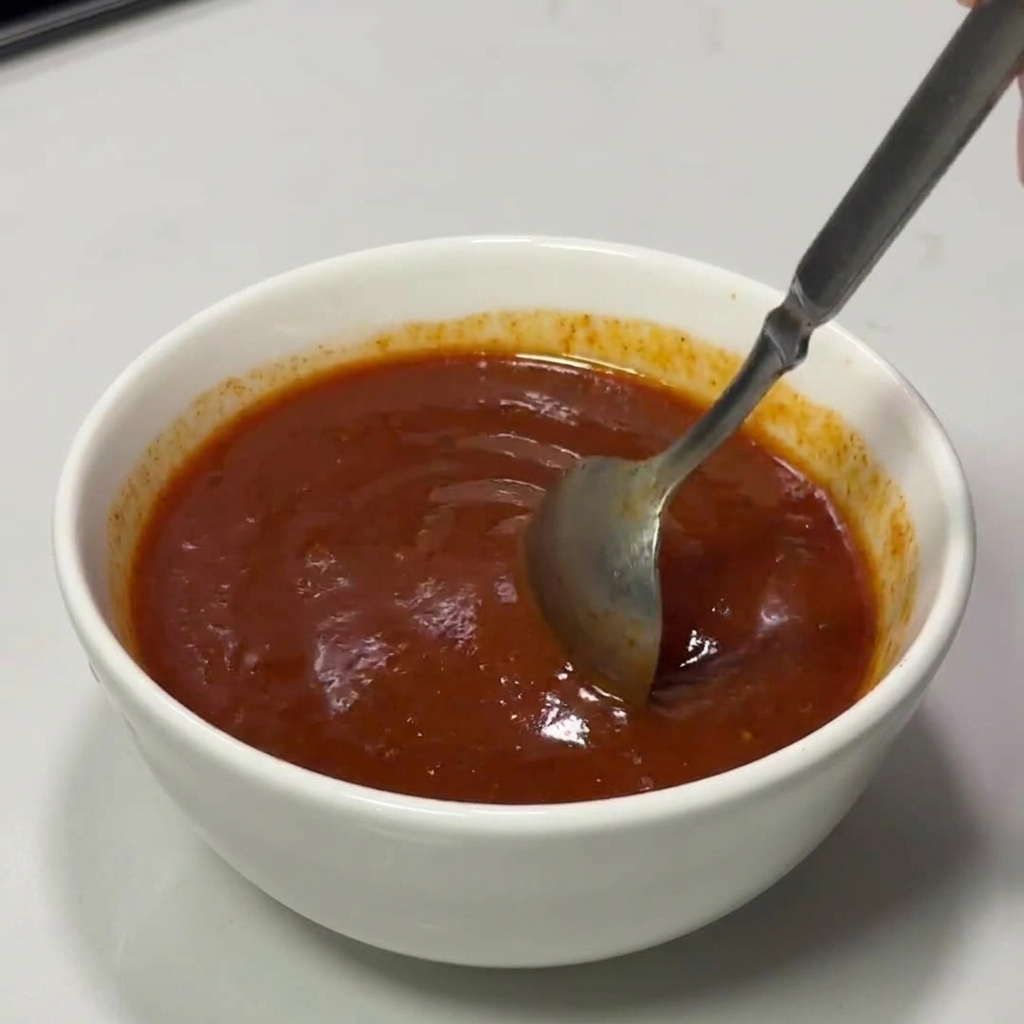
Using a spoon, stir the mixture of chili powder, gochujang, sugar, and other seasonings until they are fully combined. Continue mixing until the sauce reaches a smooth, glossy consistency with no visible lumps of paste.
Tip: If the sauce feels too thick to stir easily, you can add a small splash of water to help the ingredients emulsify. - 7Layer the onion base
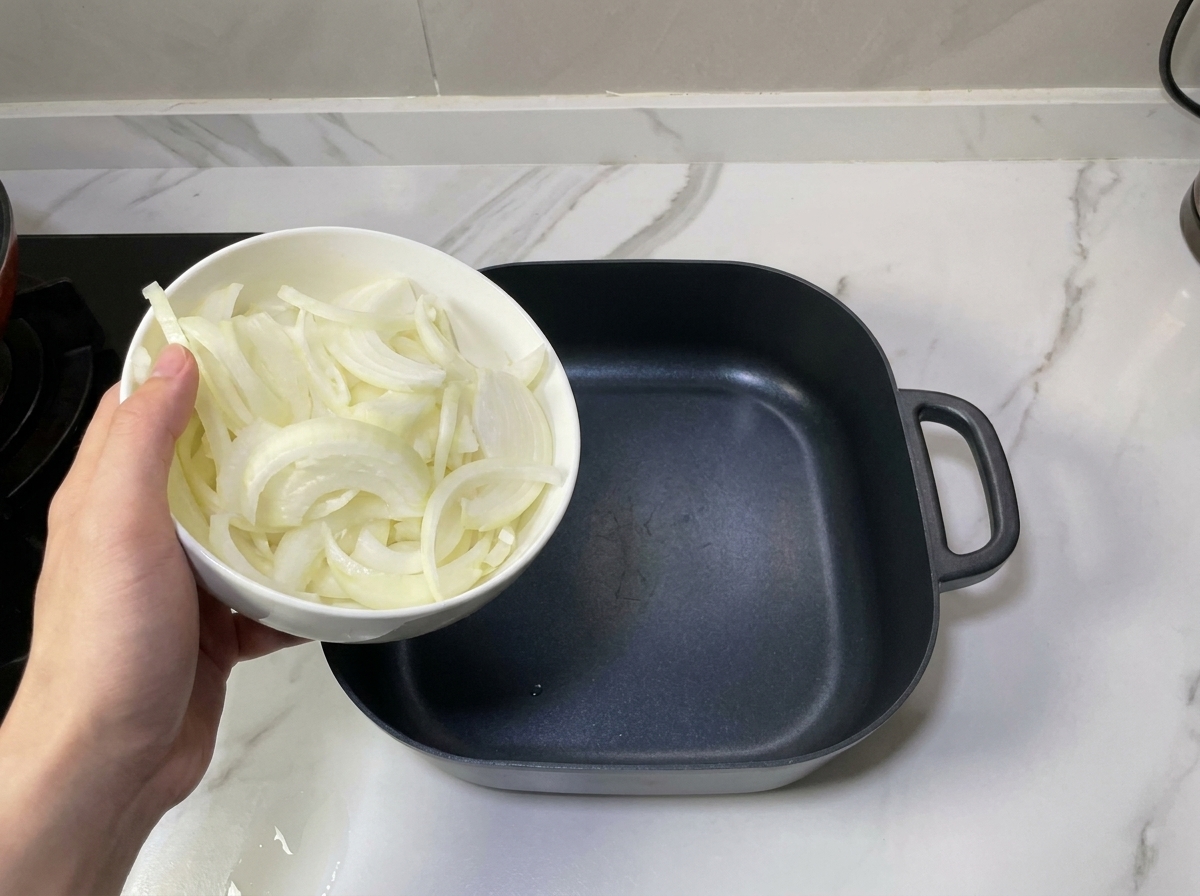
Begin by placing a generous layer of thinly sliced white onions at the bottom of your pot. These onions will soften as the stew cooks, providing a subtle sweetness and aromatic depth to the broth.
Tip: Slicing the onions thinly helps them cook faster and integrate more seamlessly into the final soup. - 8Add cabbage, enoki, and spam
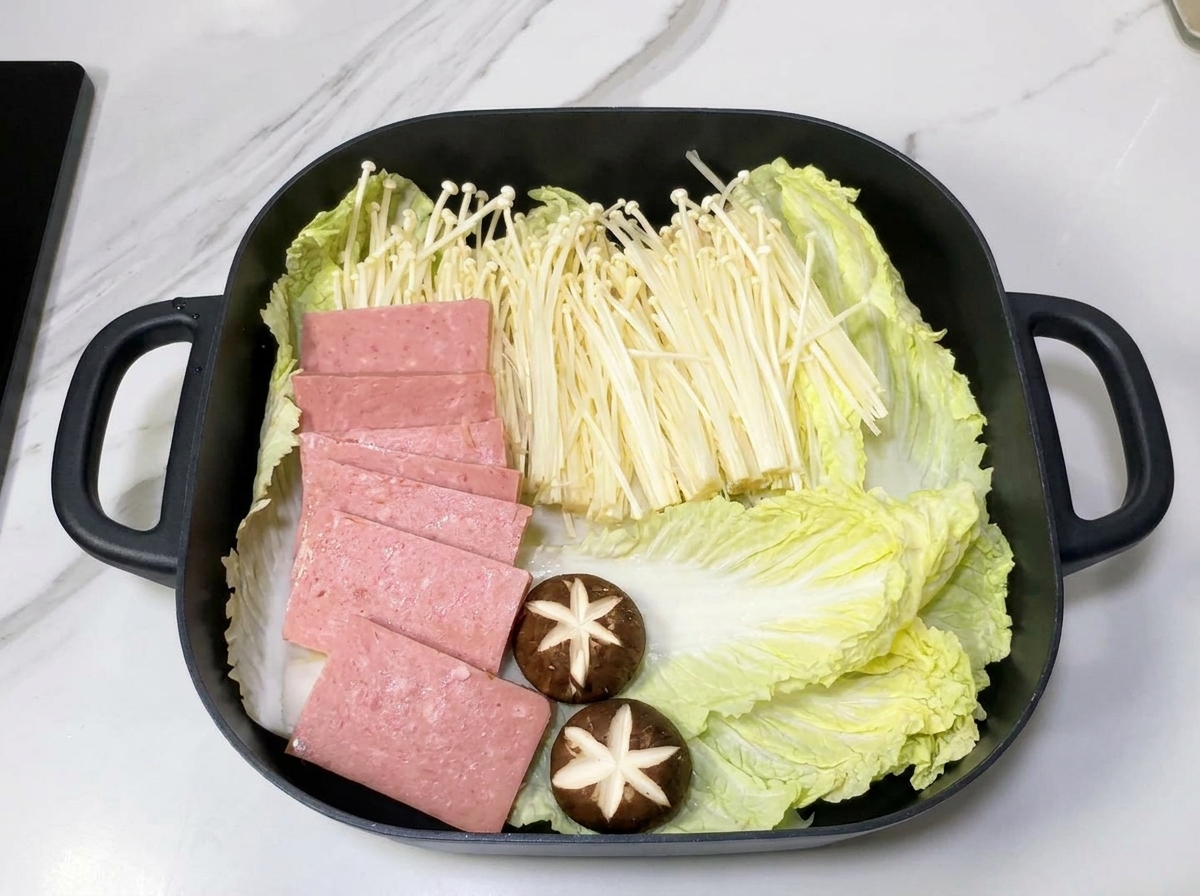
Layer fresh Napa cabbage leaves and enoki mushrooms over the onions, then add thick slices of spam. Grouping the ingredients in distinct sections makes the pot look beautiful and ensures even cooking.
Tip: Try to keep the spam slices a similar thickness so they all heat through at the same rate. - 9Complete the pot assembly
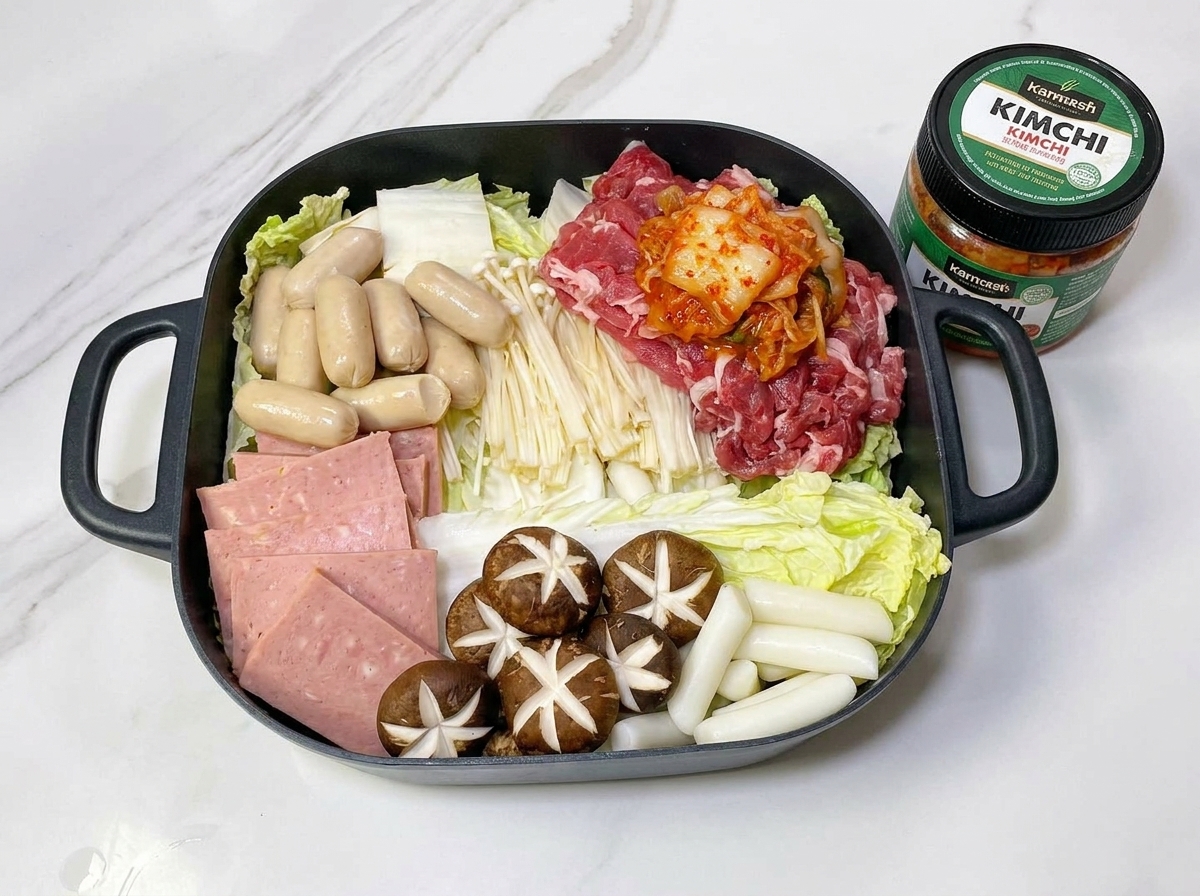
Continue filling the pot with rice cakes, cocktail sausages, sliced beef, and cucumber slices. Place a generous portion of kimchi in the center to provide the essential fermented tang and spice that defines this stew.
Tip: Using well-fermented kimchi is the secret to a deeply flavorful army stew; fresh kimchi wont have the same impact. - 10Add the spicy seasoning sauce
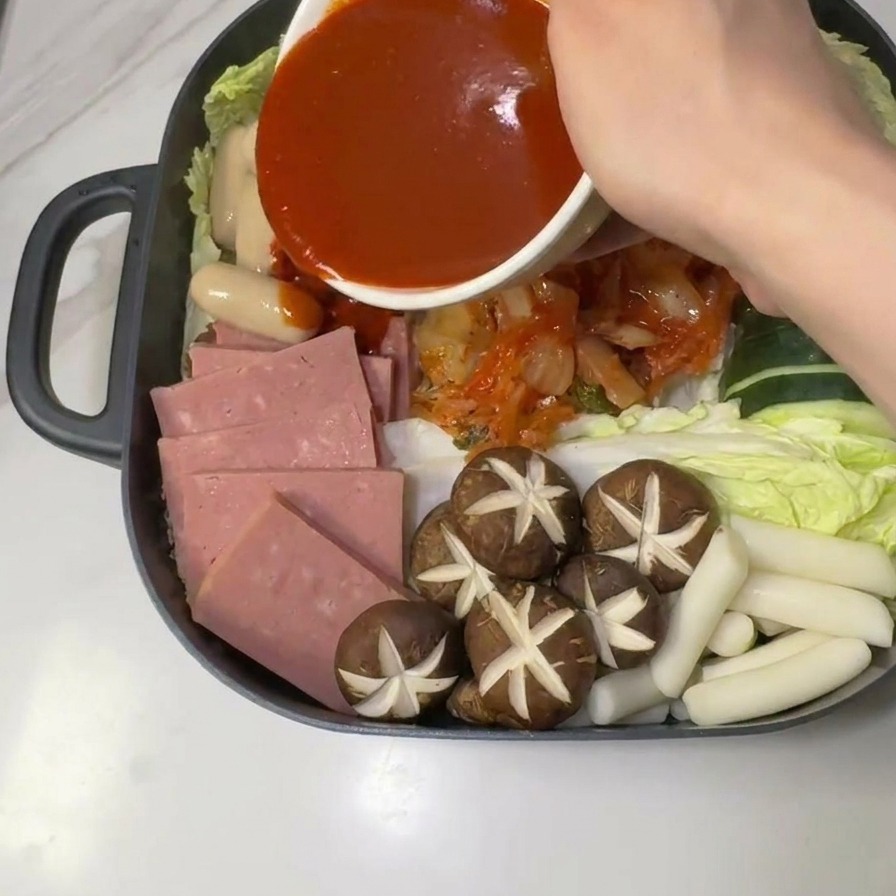
Pour your prepared red sauce—made with gochujang, chili powder, and garlic—directly over the center of the ingredients. This concentrated seasoning will dissolve into the broth as it boils.
Tip: You can adjust the spiciness of the dish by increasing or decreasing the amount of chili powder in your sauce mix. - 11Add water to the pot
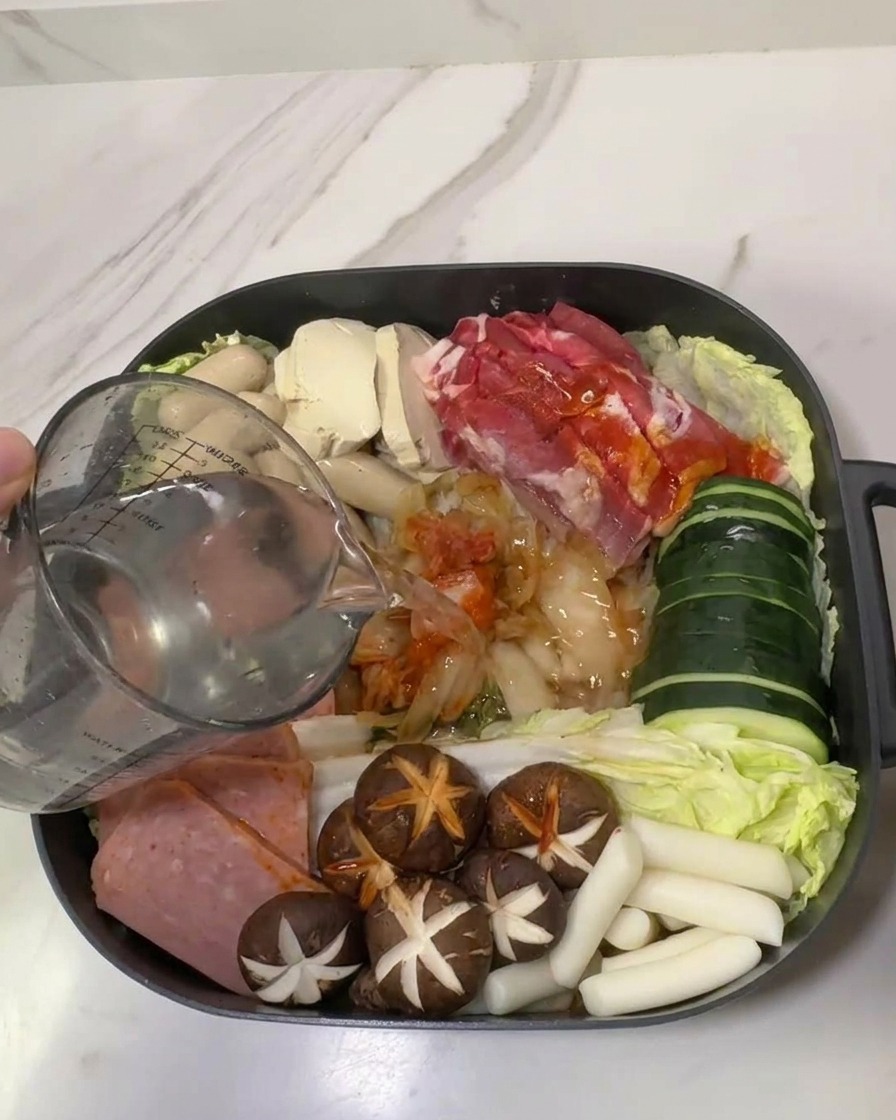
After layering the base ingredients and pouring the prepared sauce over them, add enough water to the pot to reach the level of the ingredients. Bring the liquid to a boil to ensure all ingredients cook evenly and the flavors meld together.
Tip: You can use room temperature or warm water to help the pot reach a boiling point even faster. - 12Finish with noodles and cheese
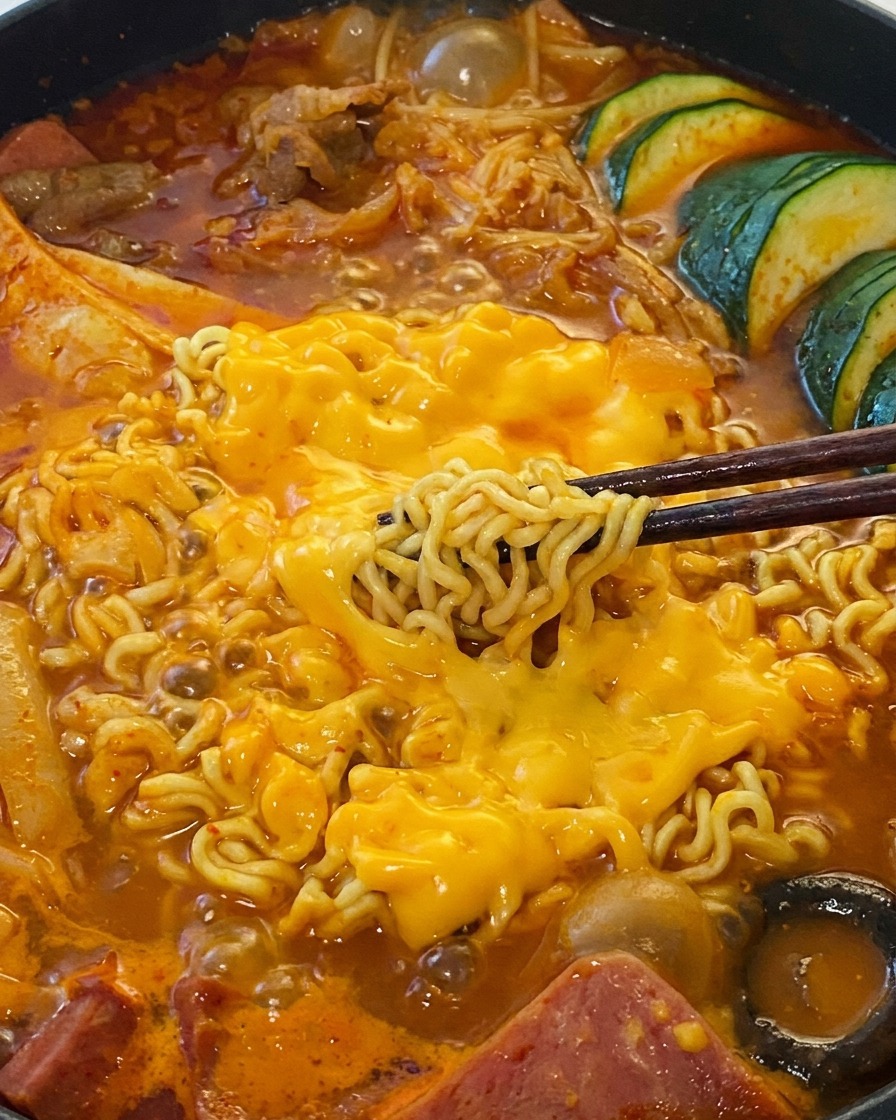
For the final touch, add instant noodles to the bubbling stew and top them with a slice of cheese. Once the cheese has melted, use chopsticks to lift a serving of the creamy, spicy noodles directly from the pot for a satisfying finish.
Tip: The cheese adds a rich, creamy texture that perfectly balances the heat of the spicy gochujang sauce.