Classic Korean Army Stew (Budae Jjigae)
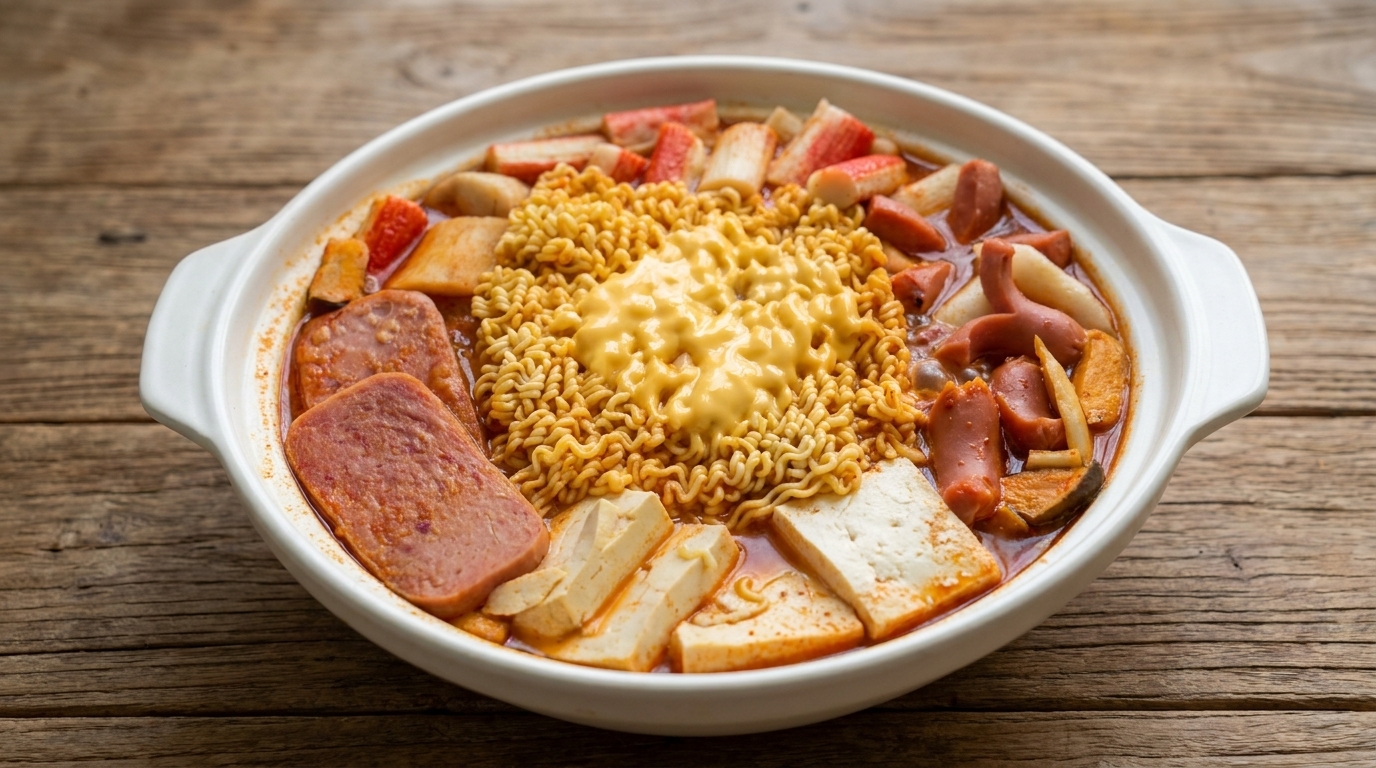
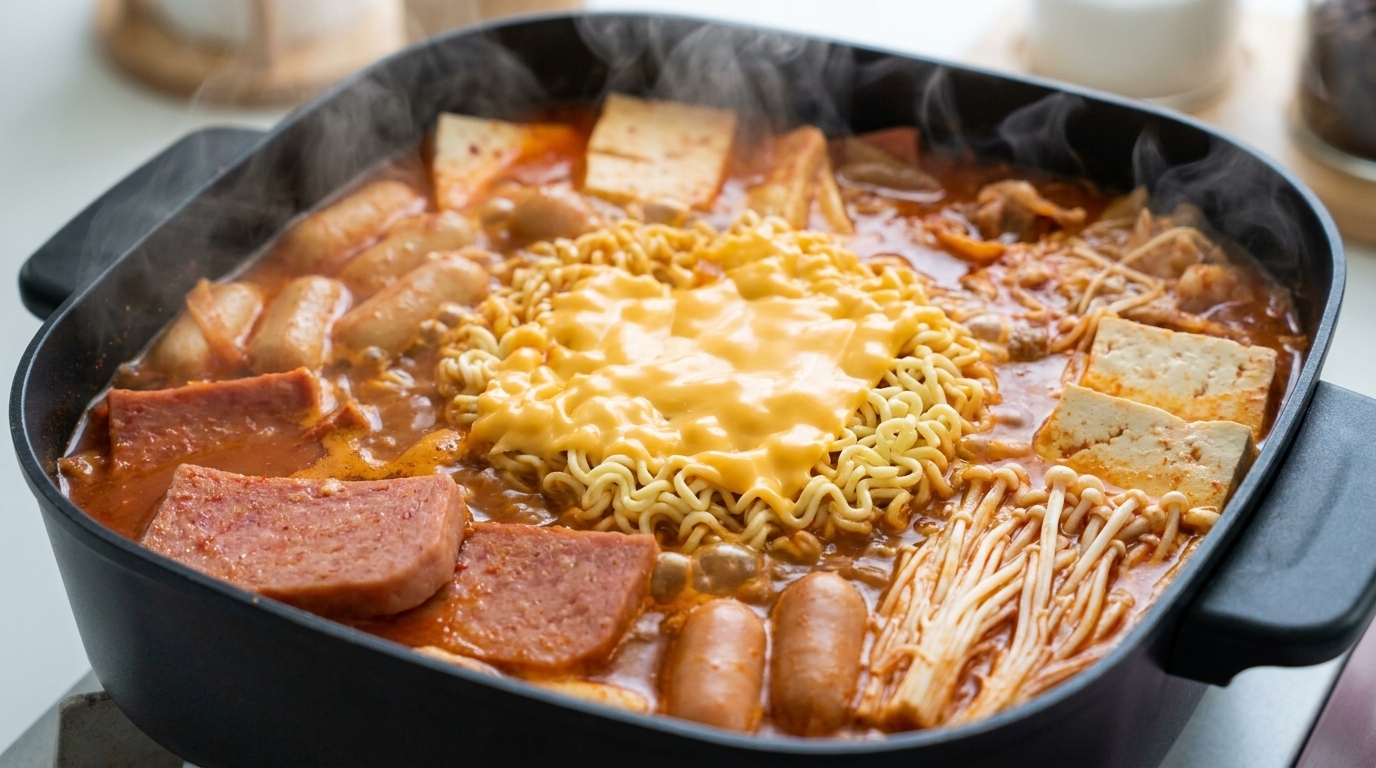
A comforting Korean fusion hot pot featuring a spicy gochujang broth packed with spam, tofu, ramen, and melted cheese for the ultimate savory-sweet balance.
Budae Jjigae, or Army Stew, originated in the aftermath of the Korean War when surplus food from U.S. military bases was combined with traditional Korean ingredients. This dish has evolved into a beloved symbol of modern Korean comfort food, celebrated for its rich, spicy broth and eclectic mix of ingredients. It is best enjoyed bubbling away on a portable stove in the center of a shared table.

Ingredients
- 2 tbsp Korean chili paste (Gochujang)
- 1 tbsp light soy sauce
- 1 tbsp white sugar
- 1 tbsp chili powder
- 1 pack Shin Ramyun seasoning powder
- 12 bowl water (for sauce)
- 1 block firm tofu
- 1 can spam
- 1 zucchini
- 1 Napa cabbage
- 1 pack crab sticks
- 200 g octopus
- 5 shiitake mushrooms
- 1 cup rice cakes
- 1 cup fermented kimchi
- 1 block instant noodles
- 2 slices American cheese
- to taste minced garlic
- to taste red onion
Instructions
- 1Mix the sauce base
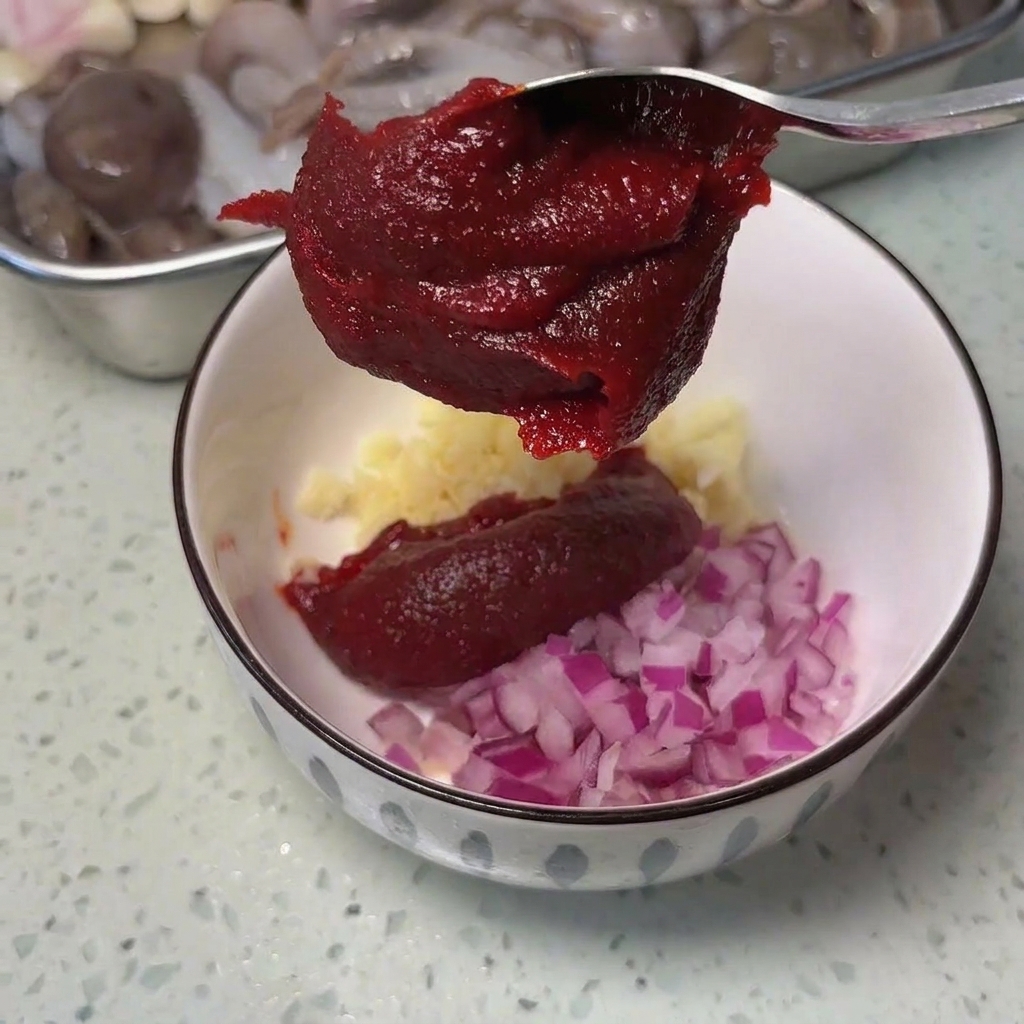
In a small mixing bowl, combine the minced garlic and diced red onions with two generous spoons of Korean chili paste (Gochujang). This mixture forms the concentrated spicy foundation of your stew broth.
Tip: If you prefer a milder stew, you can slightly reduce the amount of chili paste, but keep the garlic and onions for essential aromatics. - 2Season and emulsify the sauce
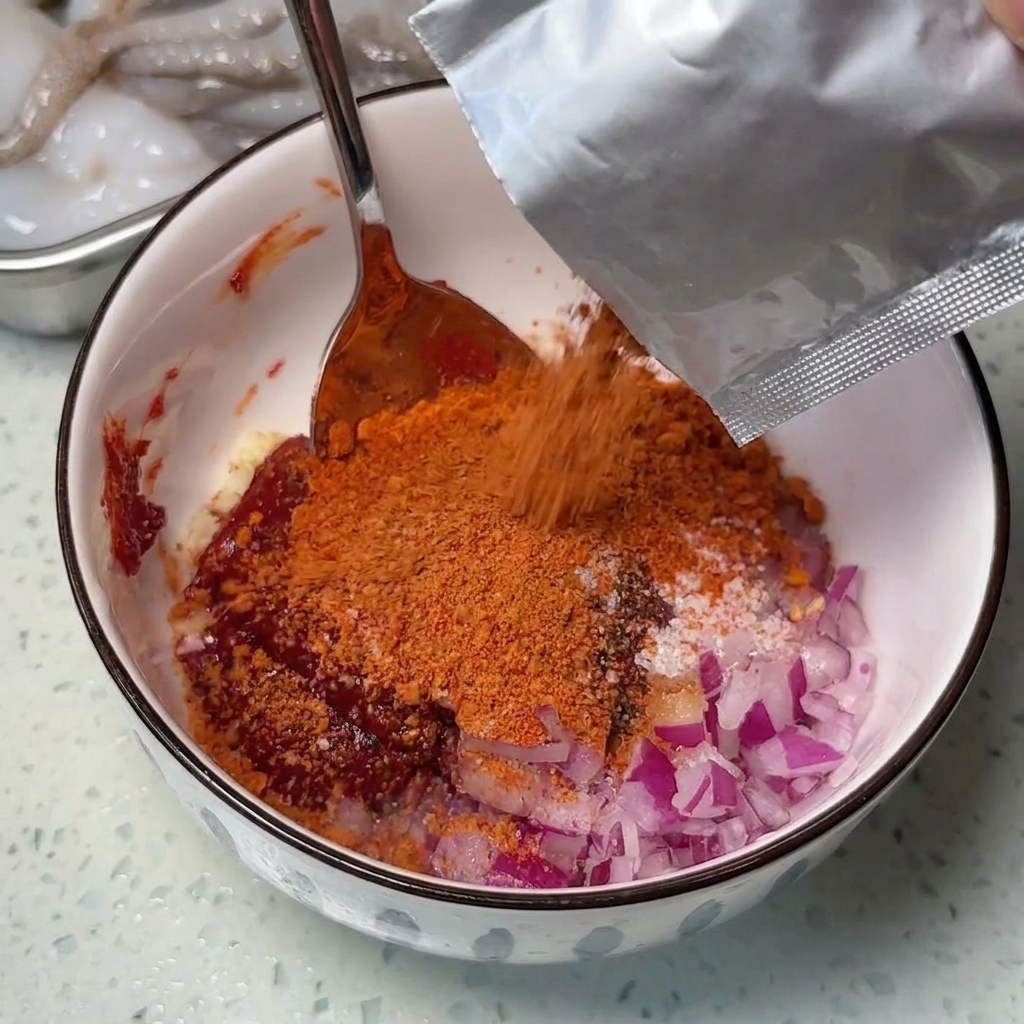
Add one pack of Shin Ramyun seasoning powder to the bowl along with soy sauce, sugar, and chili powder. Pour in half a bowl of water and stir thoroughly until the paste is smooth and all the seasonings are well incorporated.
Tip: The instant noodle seasoning packet is a key shortcut for achieving the complex, umami-rich flavor found in authentic Korean Army Stew. - 3Prep the tofu and spam
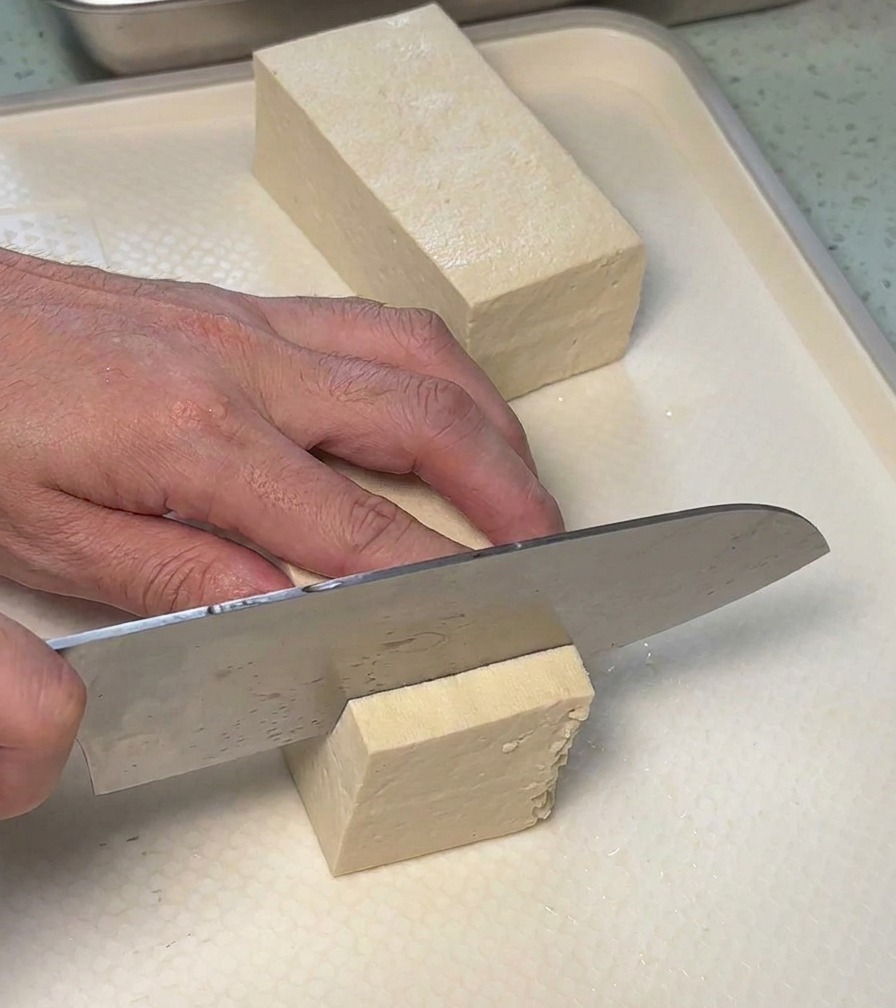
Using a sharp knife, slice the firm tofu and canned spam into uniform, thick rectangular pieces on a cutting board. These protein-rich ingredients are classic staples of Army Stew and will absorb the spicy soup flavor perfectly.
Tip: Try to keep the slices consistent in thickness so they cook evenly and look organized when arranged in the pot later. - 4Slice the vegetables
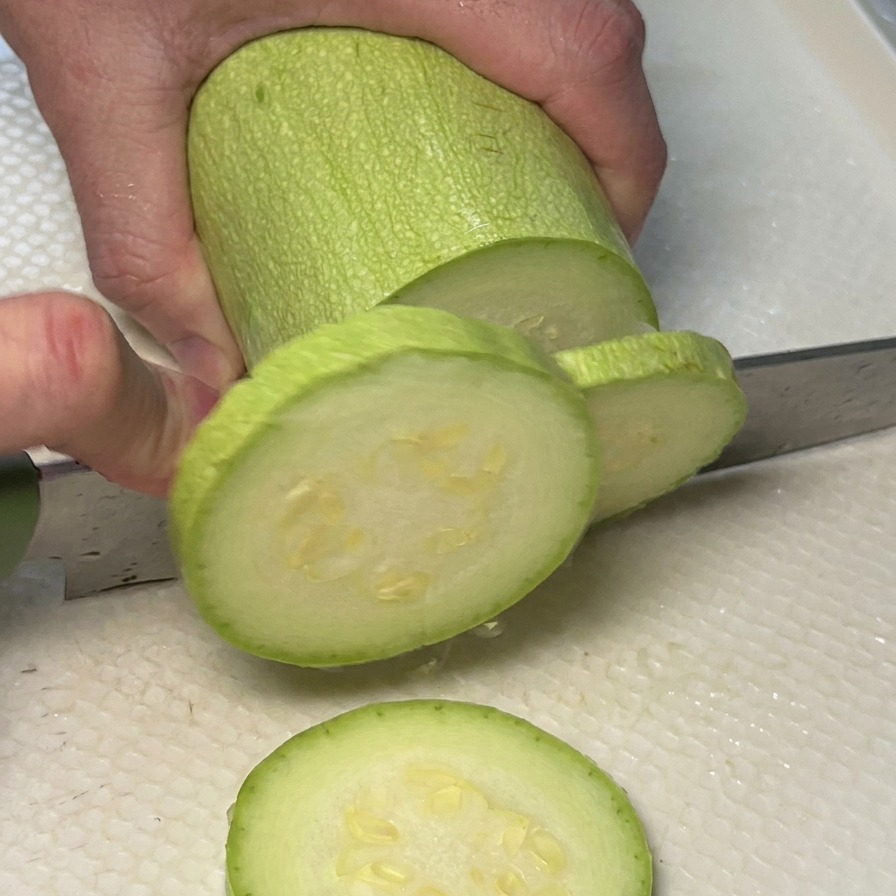
Slice the light green zucchini into even, thin rounds. Then, chop the Napa cabbage into large sections. These vegetables provide a fresh, slightly sweet balance to the savory meats and salty sauce base.
Tip: You can use the round slices of zucchini to create a decorative overlapping pattern in the pot for a better presentation. - 5Base the pot with cabbage
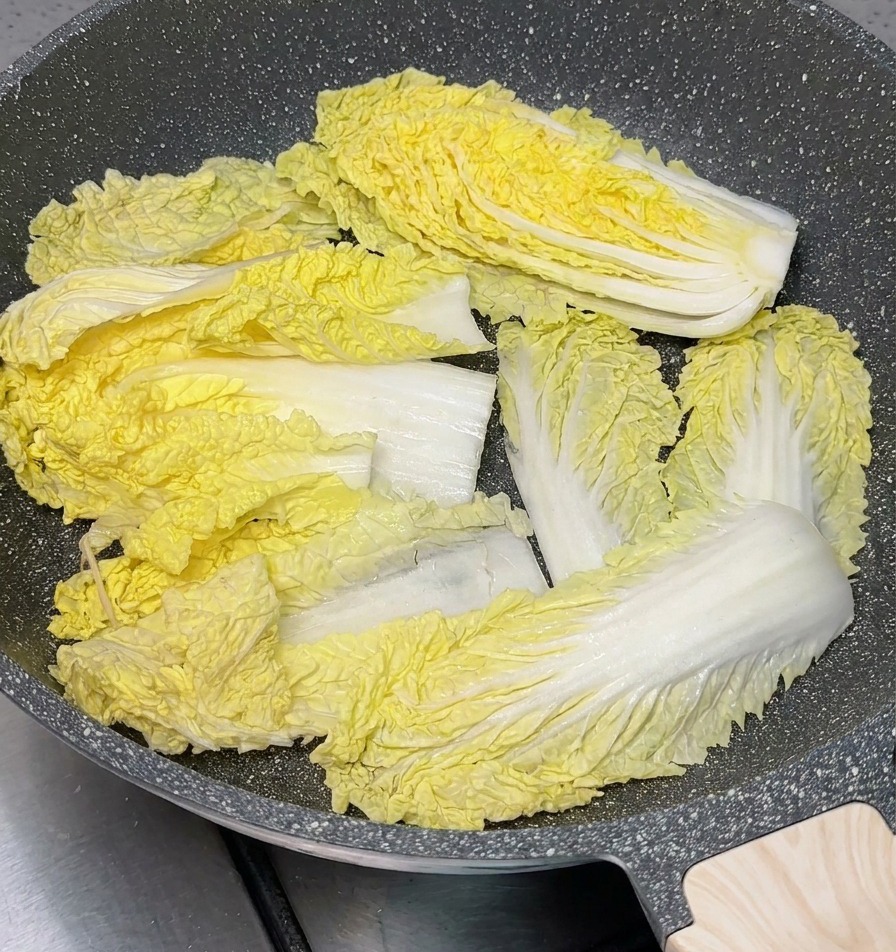
Place the chopped Napa cabbage leaves at the bottom of a wide, shallow cooking pot. This cabbage layer serves as a protective bed to prevent other ingredients from burning while releasing natural juices into the broth.
Tip: Make sure the white, crunchier parts of the cabbage are at the very bottom as they take longer to soften than the yellow leaves. - 6Assemble the pot ingredients
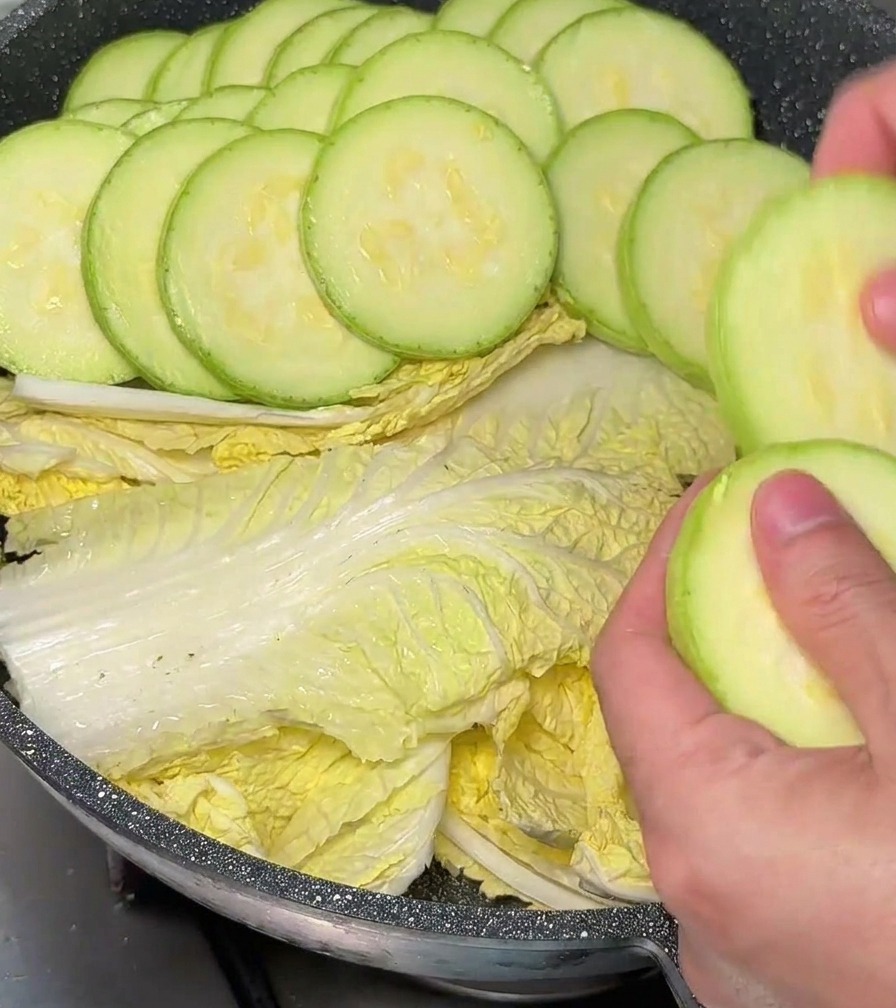
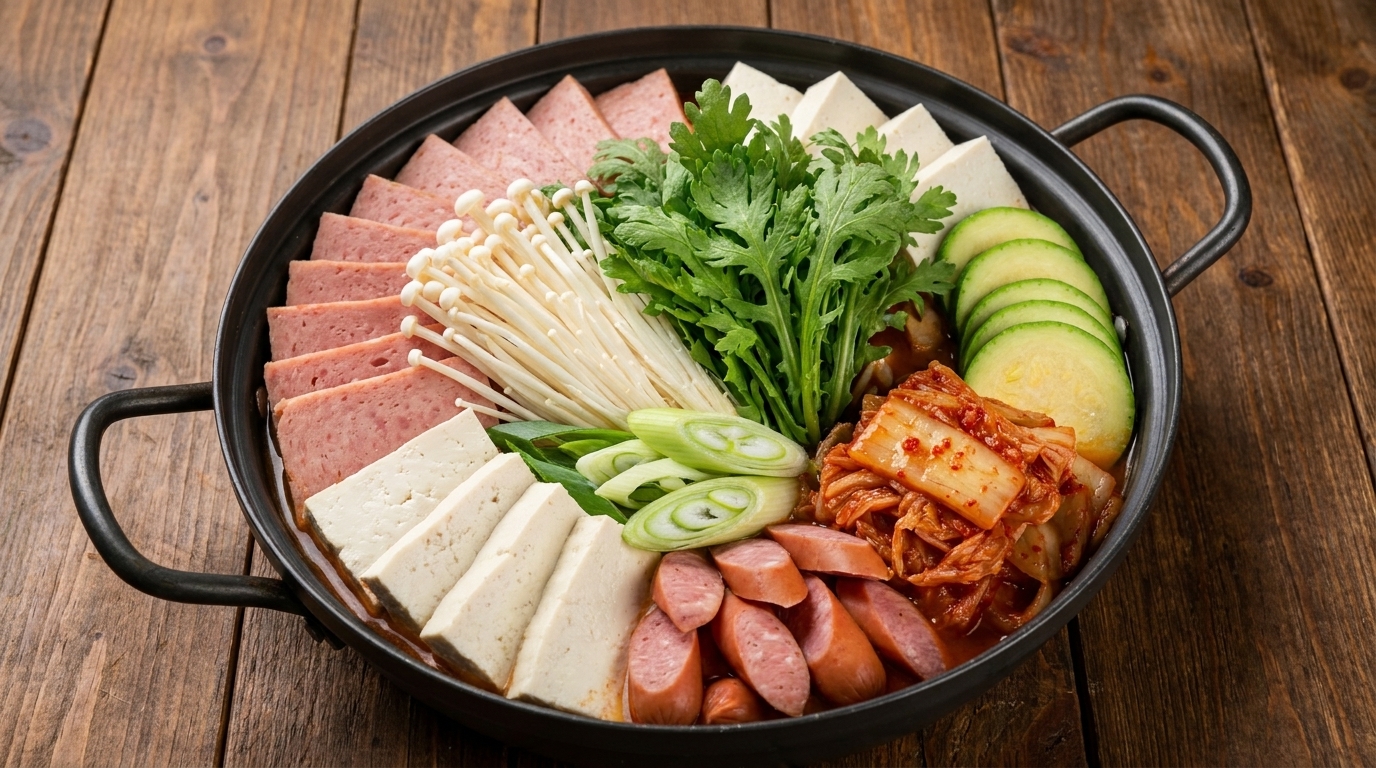
Carefully layer the prepared zucchini rounds, spam slices, and tofu blocks around the edges of the pot on top of the cabbage. Arrange them in tight, alternating sections to create a visually appealing crazily layered look before adding the rest of the ingredients.
Tip: Work in a circular motion from the outside in to ensure everything is tightly packed and stable. - 7Arrange proteins and seafood
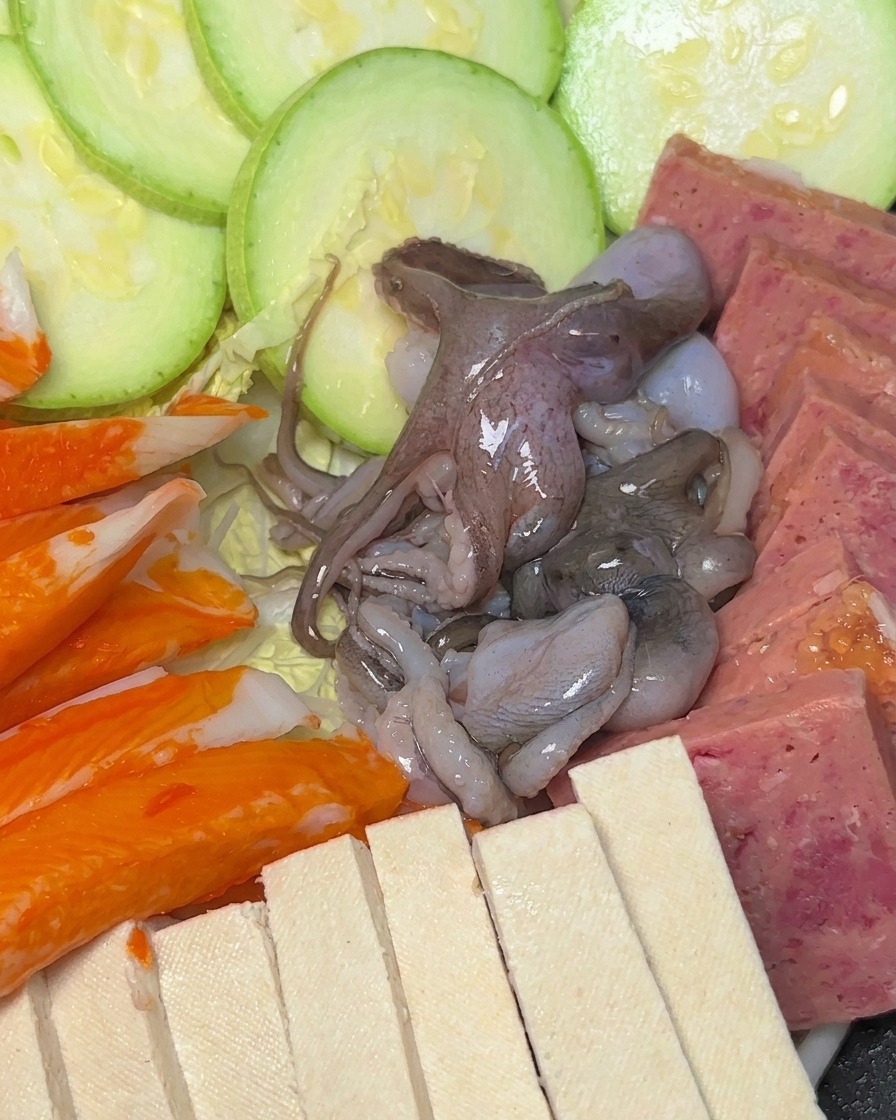
Layer the prepared crab sticks, raw octopus, and decorative shiitake mushrooms over the bed of cabbage and spam. Packing the ingredients tightly helps maintain the beautiful circular arrangement once the broth begins to boil.
Tip: Place the hardiest vegetables like cabbage at the bottom to prevent the other ingredients from sticking or burning as the pot heats up. - 8Pour in the sauce and water
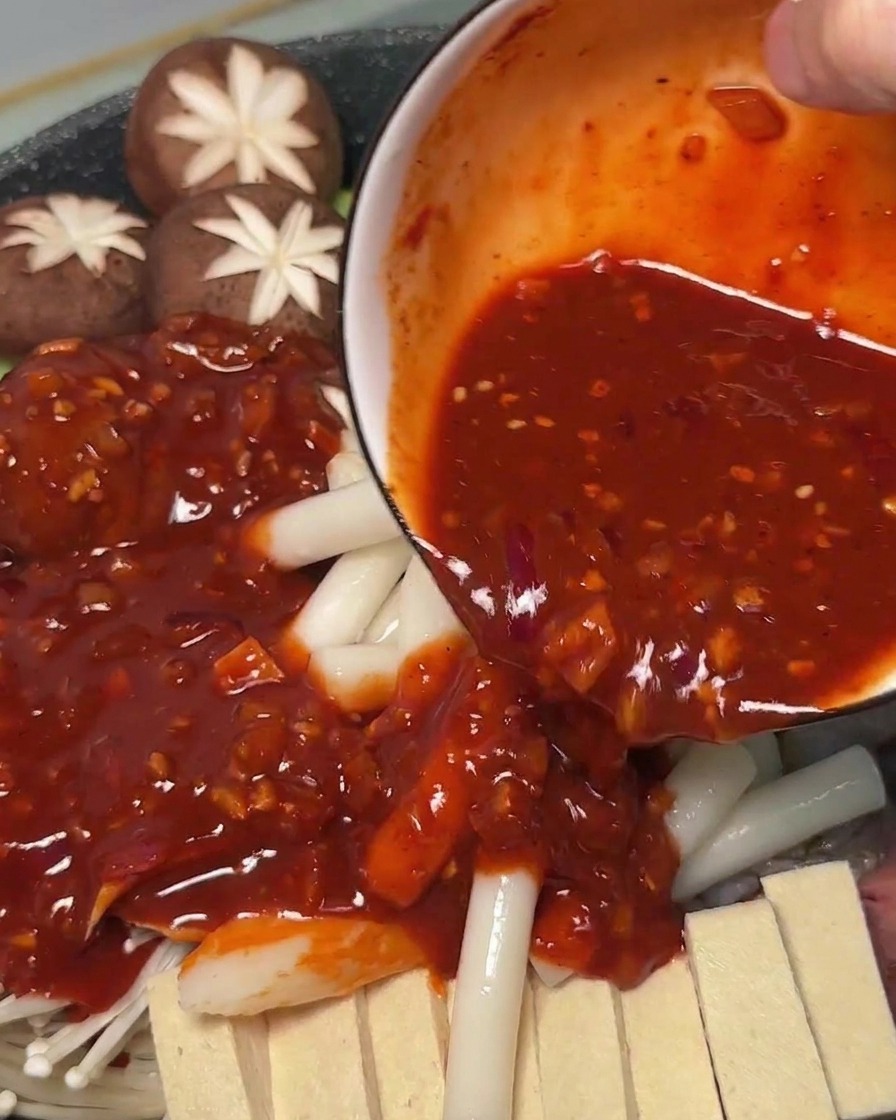
Drizzle the prepared spicy soup base—made from Korean chili paste, soy sauce, sugar, and ramen seasoning—directly over the assembled ingredients. Add a proper amount of clear water to the pot, filling it until the ingredients are partially submerged and ready to boil.
Tip: If you prefer a richer broth, you can substitute the clear water with a simple anchovy or kelp stock. - 9Simmer with kimchi
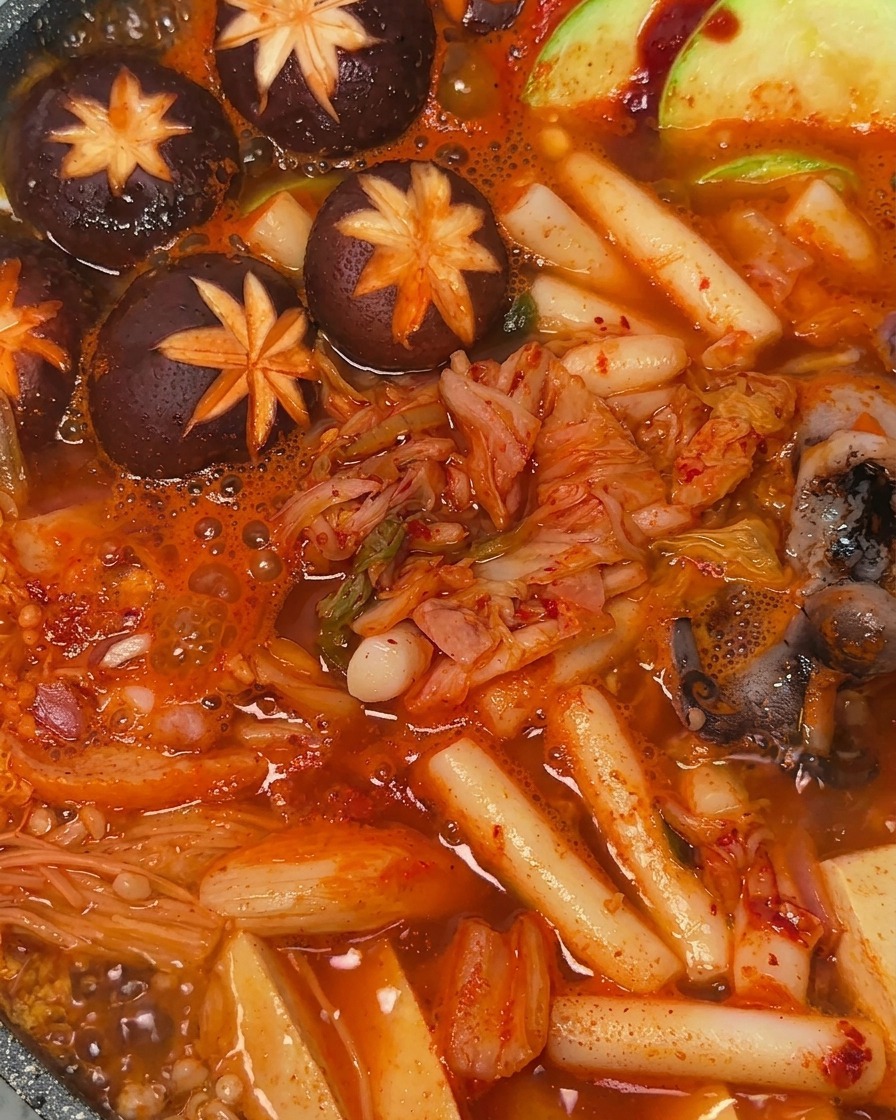
Once the soup base reaches a boil, add a portion of fermented kimchi to the center of the pot. Cover the pot with a lid and let it simmer for five minutes to allow the cabbage to soften and the flavors of the seafood and meat to infuse the broth.
Tip: Always use sour, well-aged kimchi for Army Stew to get that authentic tangy depth in the soup. - 10Add the instant noodles
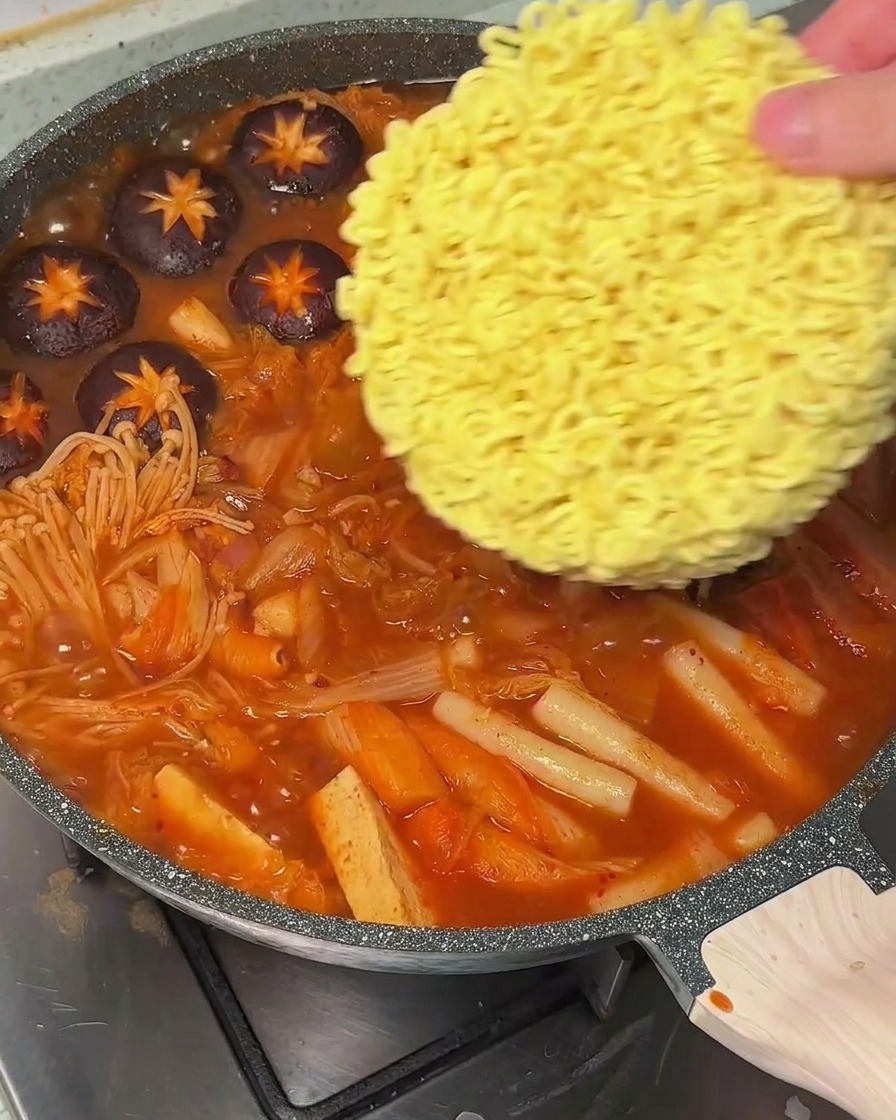
Place a block of dry instant noodles into the center of the bubbling stew. Use your chopsticks or a spoon to gently press the noodles down into the liquid so they can absorb the spicy flavors and cook evenly.
Tip: Dont overcook the noodles; they should be slightly firm when you start eating, as they will continue to soften in the hot broth. - 11The cheese highlight
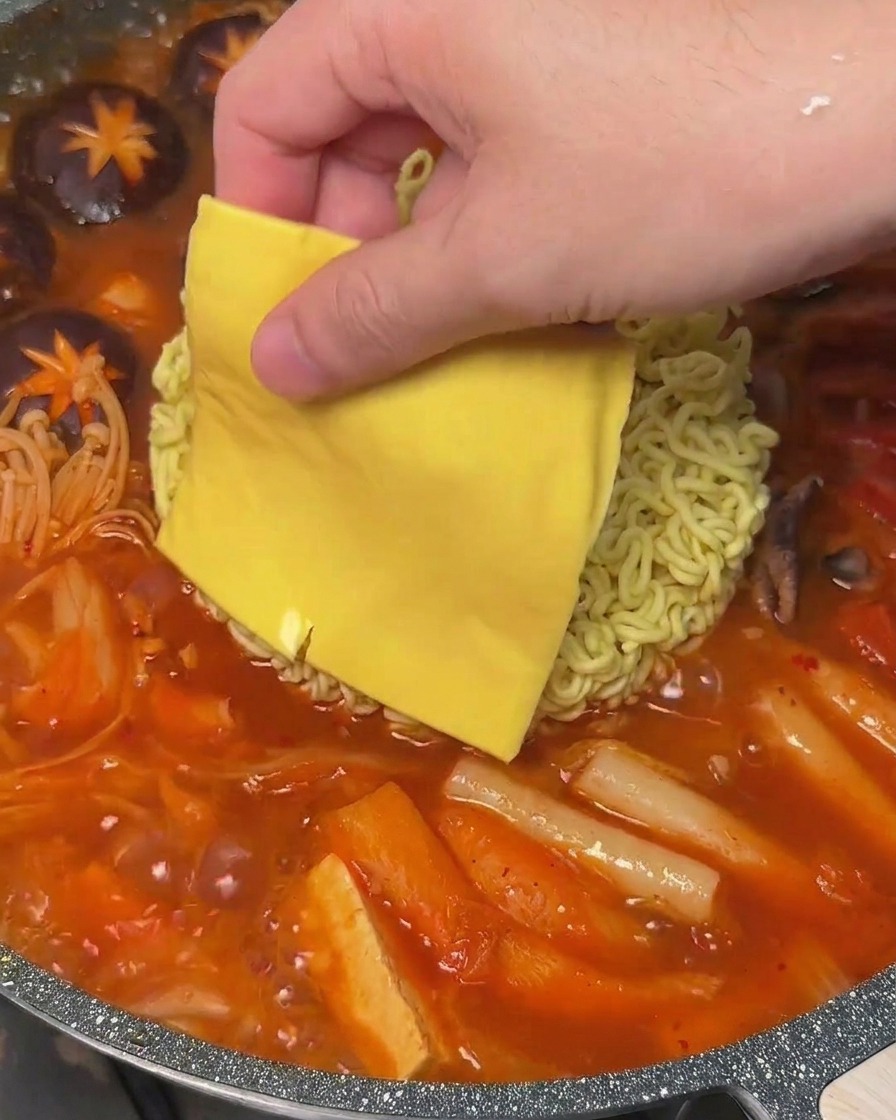
Top the noodles with two slices of yellow American cheese. The heat from the boiling soup will quickly melt the cheese into the noodles, creating a silky, creamy texture that perfectly balances the spicy broth.
Tip: The cheese is the secret to a silky broth; let it melt completely and mix it with the noodles for the best experience.