Authentic Korean Army Stew (Budae Jjigae)
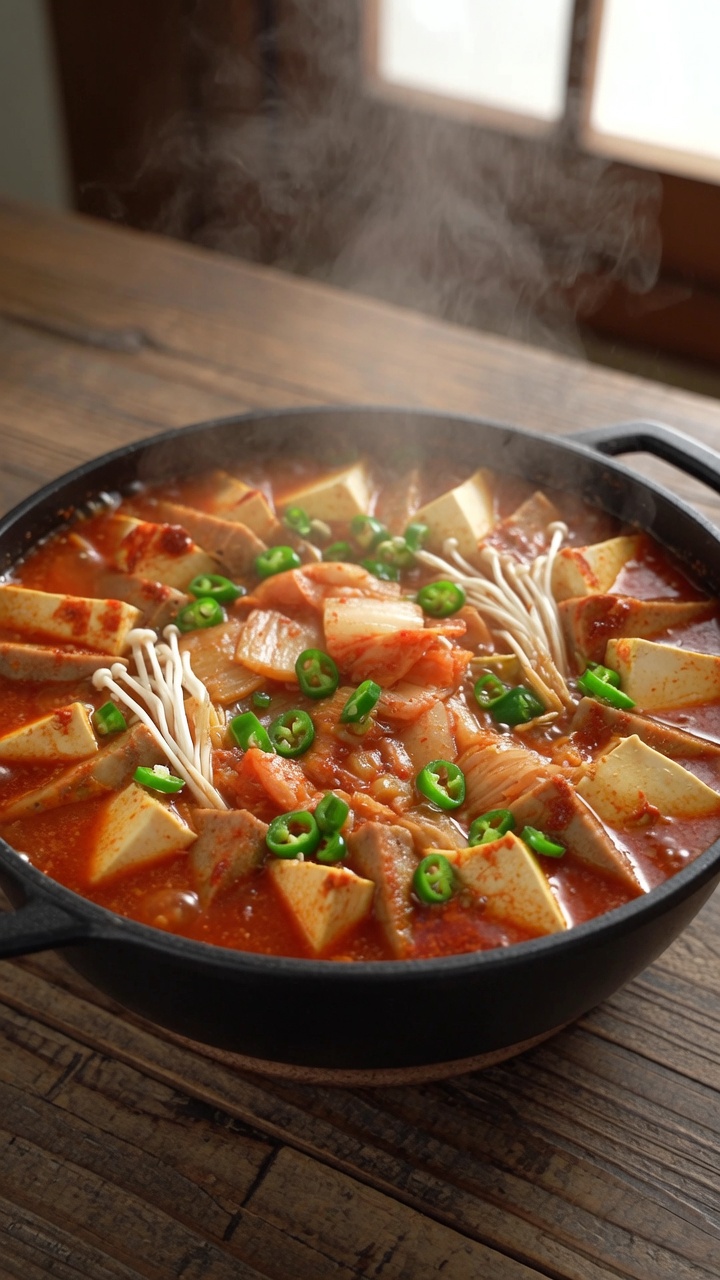
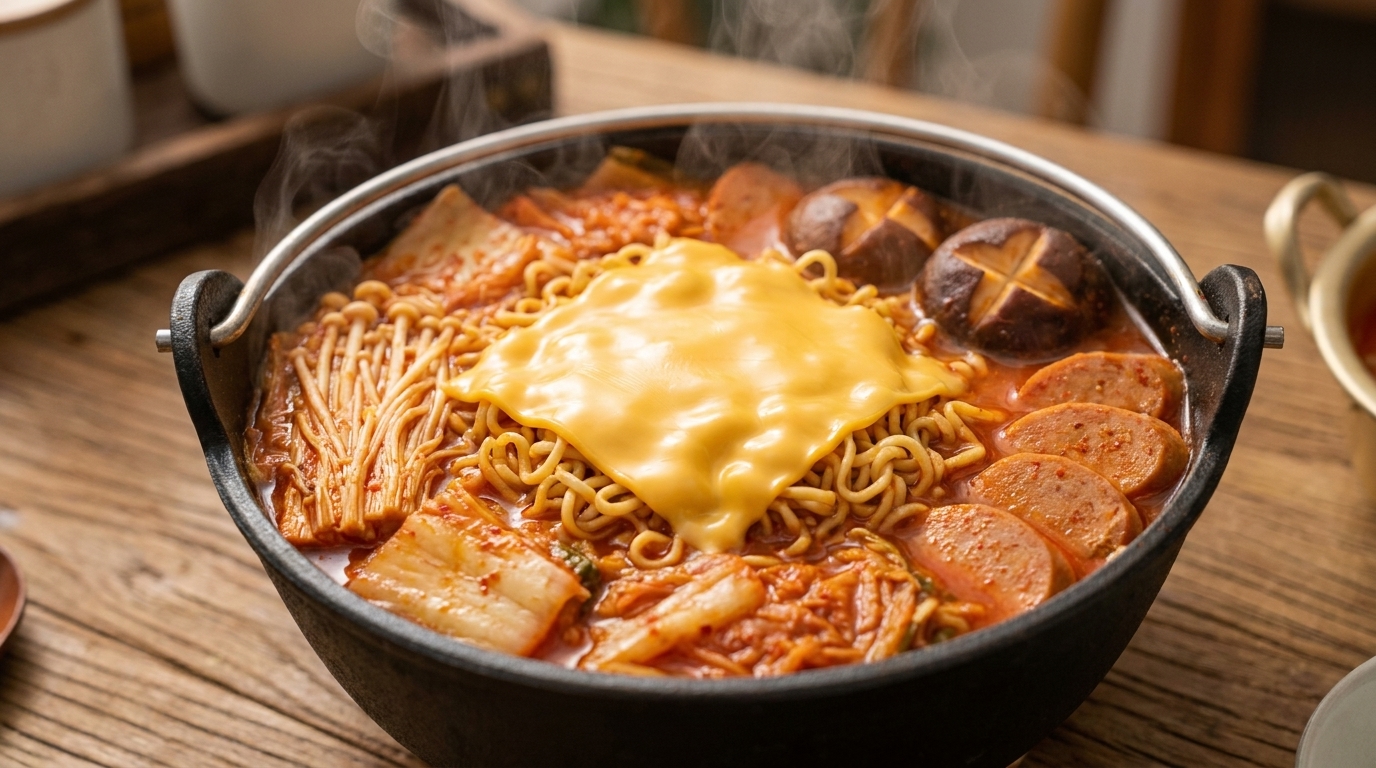
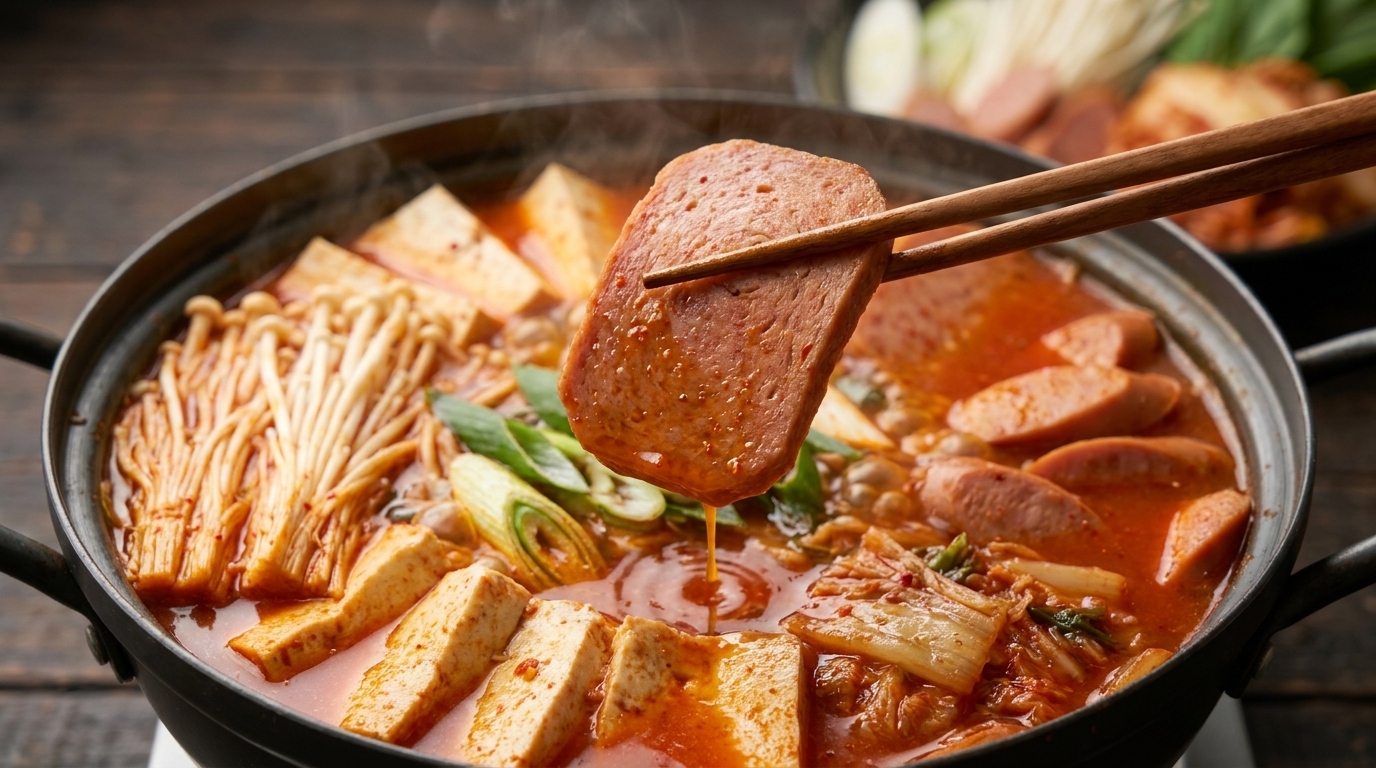
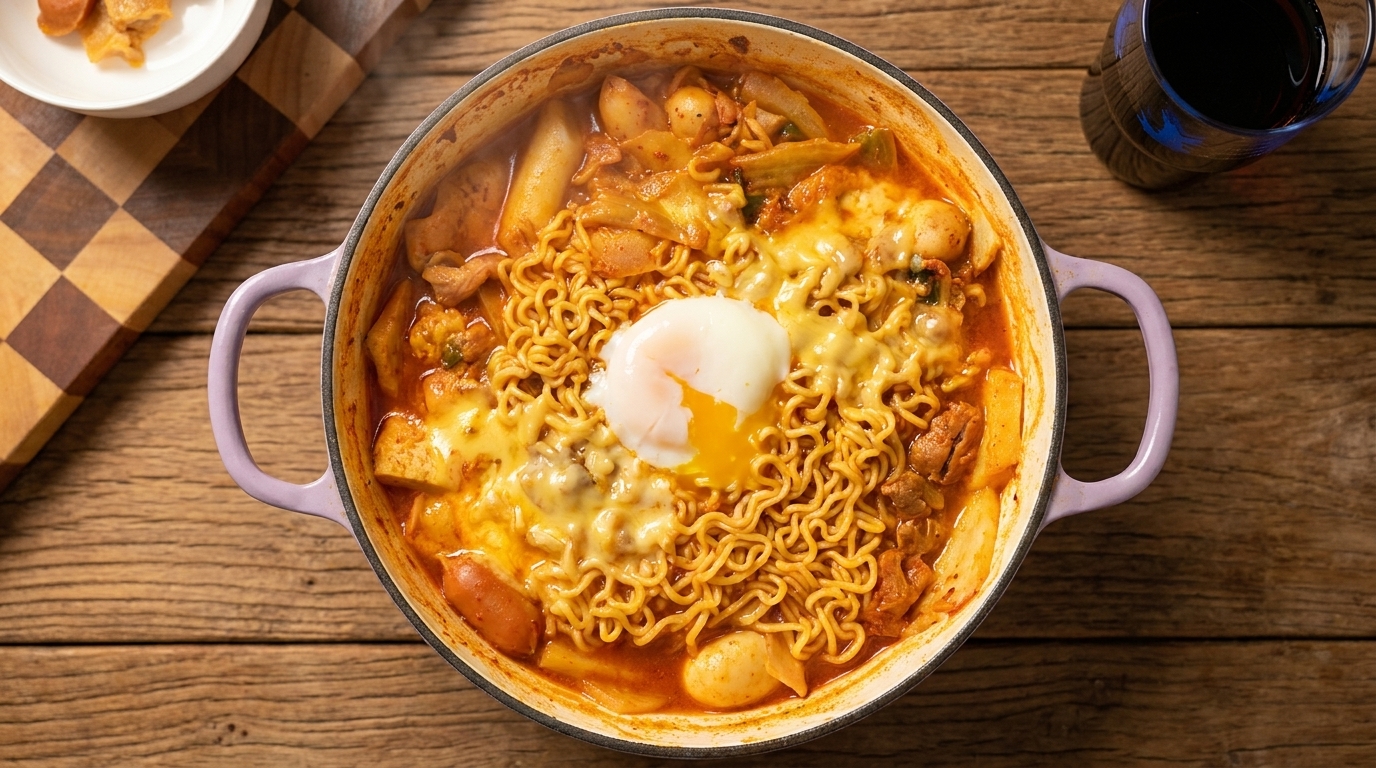
Experience the ultimate comfort food with this Budae Jjigae. A rich, spicy broth loaded with ramen, luncheon meat, fresh vegetables, and melted cheese in one bubbling pot.
Born out of necessity after the Korean War, Budae Jjigae (Army Stew) is a beautiful fusion of traditional Korean ingredients and American surplus goods. Spicy kimchi and gochujang meet luncheon meat and processed cheese, creating a deeply savory, complex, and incredibly comforting shared meal that has become a beloved staple in modern Korean cuisine.
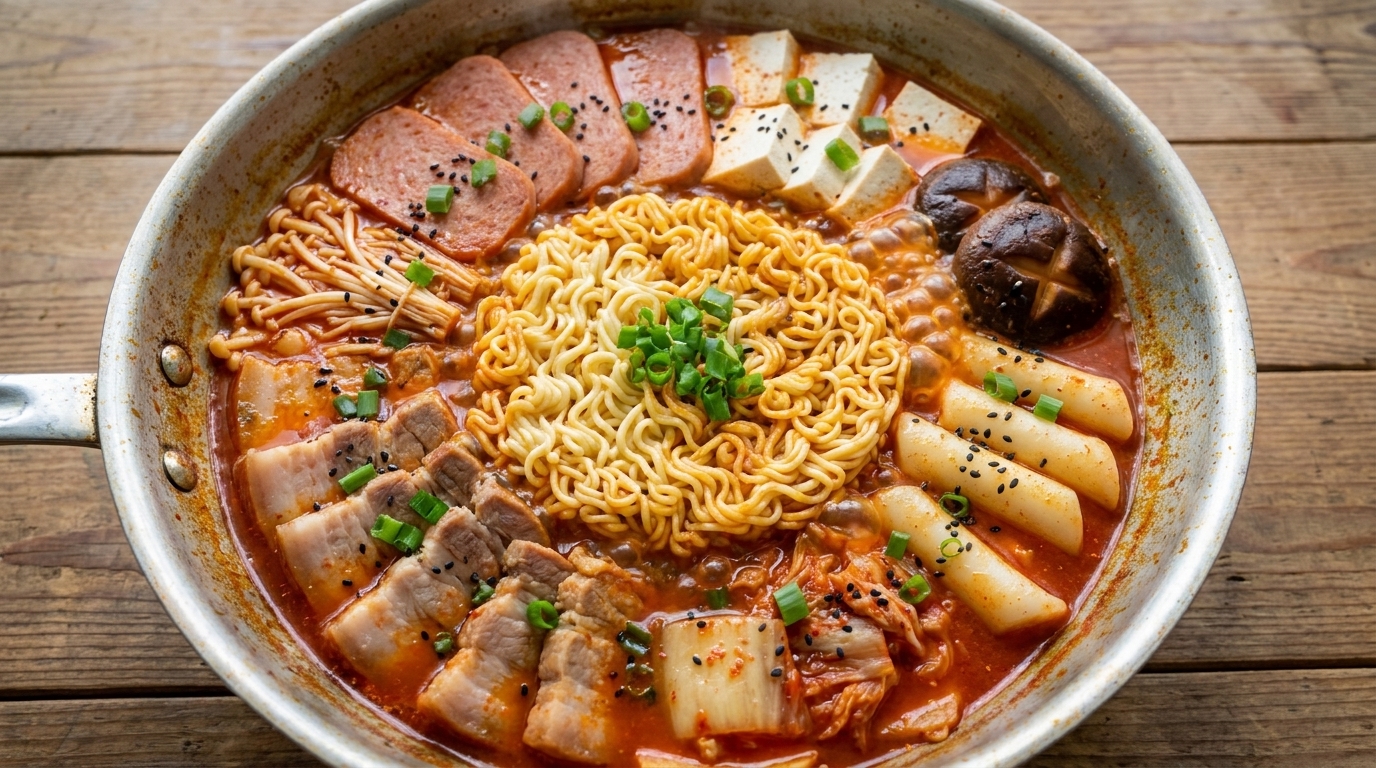
Ingredients
- 1 whole onion
- 2 cups napa cabbage
- 1 can luncheon meat
- 150 g sliced pork belly
- 1 package enoki mushrooms
- 150 g shiitake mushrooms
- 1 block firm white tofu
- 1 cup Korean rice cakes (tteokbokki)
- 1 cup aged kimchi
- 1 block instant ramen noodles
- 1 slice American cheese
- 1 tbsp Korean chili powder (gochugaru)
- 1 tsp white sugar
- 1 tbsp light soy sauce
- 1 tbsp sesame oil
- 1 tbsp oyster sauce
- 1 tbsp Korean hot pepper paste (gochujang)
- 2.5 cups water (divided)
- 1 tbsp cooking oil
- optional chopped green onions and black sesame seeds (for garnish)
Instructions
- 1Prepare the ingredients
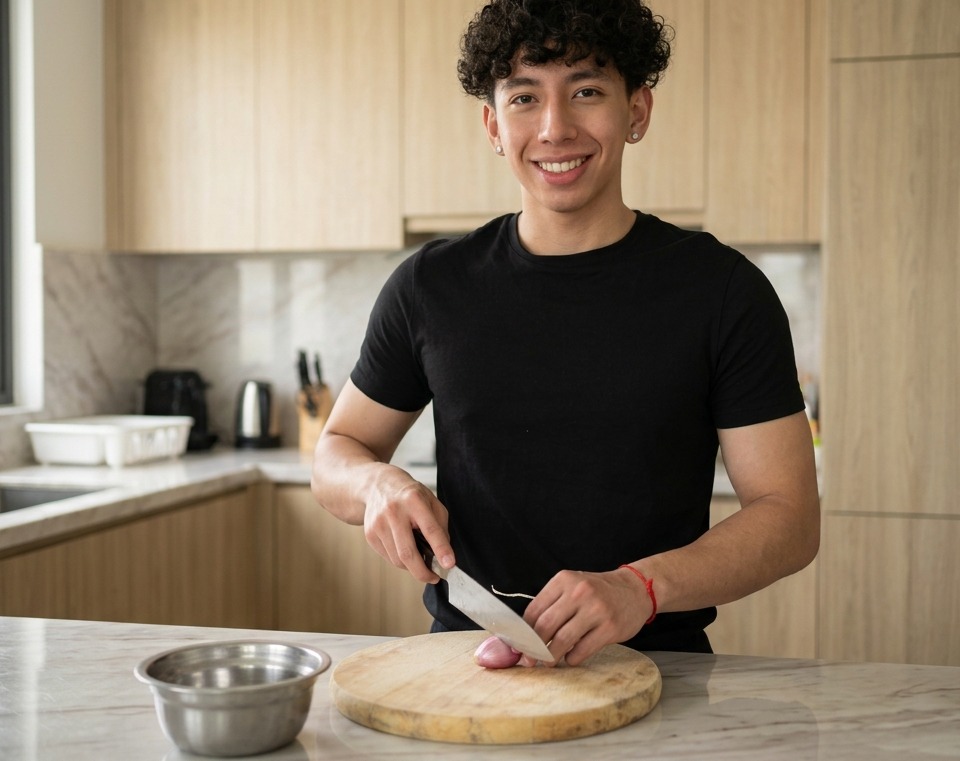
Begin by peeling and cutting the onions into chunks. Prepare all other vegetables and proteins, including the napa cabbage, luncheon meat, tofu, and enoki mushrooms, ensuring everything is prepped and ready for assembly.
Tip: Having all your ingredients chopped and portioned before you start the stove makes the cooking process much more relaxed. - 2Cut the tofu
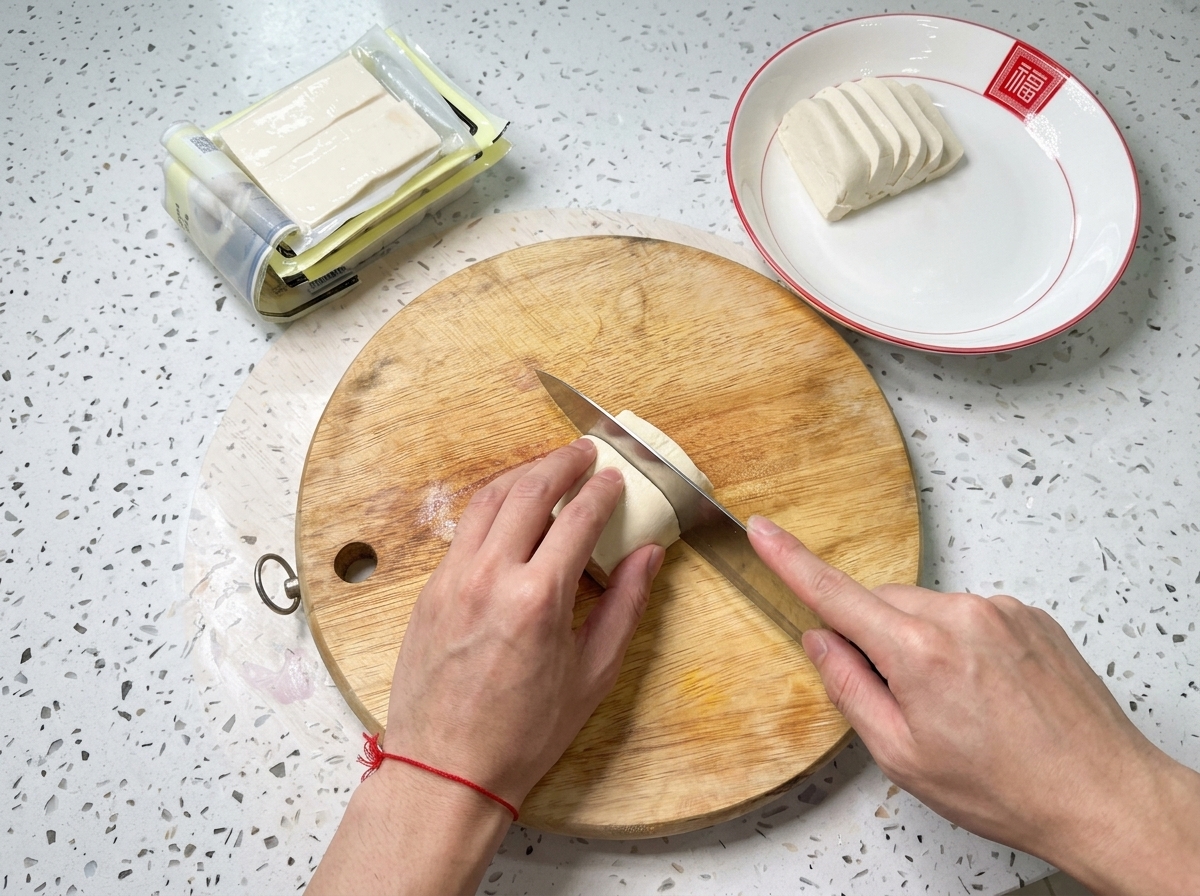
Place blocks of white tofu on a wooden cutting board and slice them evenly into portions. Carefully transfer the sliced tofu onto a white decorative plate to keep your workspace organized.
Tip: Use a sharp knife and gentle pressure to avoid crumbling the soft tofu blocks. - 3Slice the luncheon meat
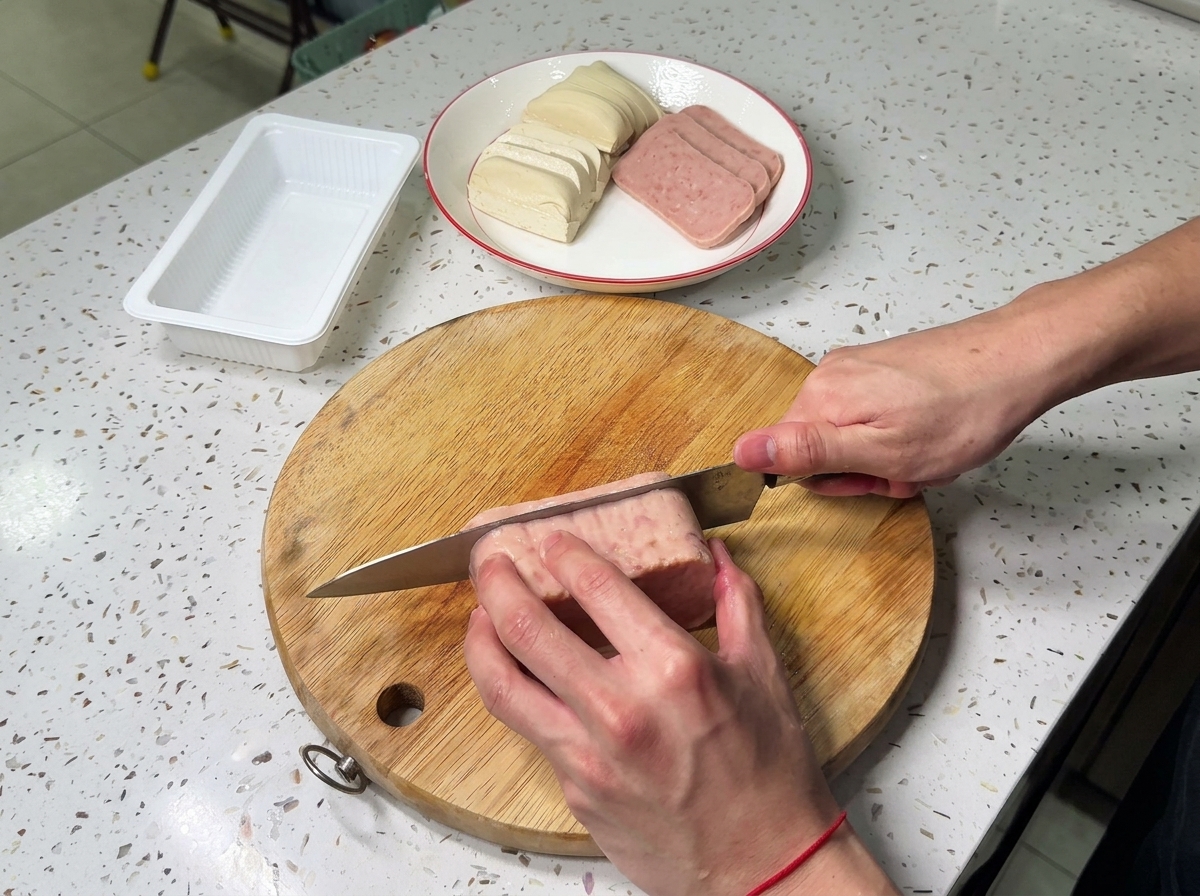
Take the canned luncheon meat out of its packaging and place it onto the wooden cutting board. Slice the meat into uniform, bite-sized rectangular pieces that will cook evenly in the stew.
Tip: Keep the slices consistent in thickness so they absorb the broth flavors at the same rate. - 4Unpack the enoki mushrooms
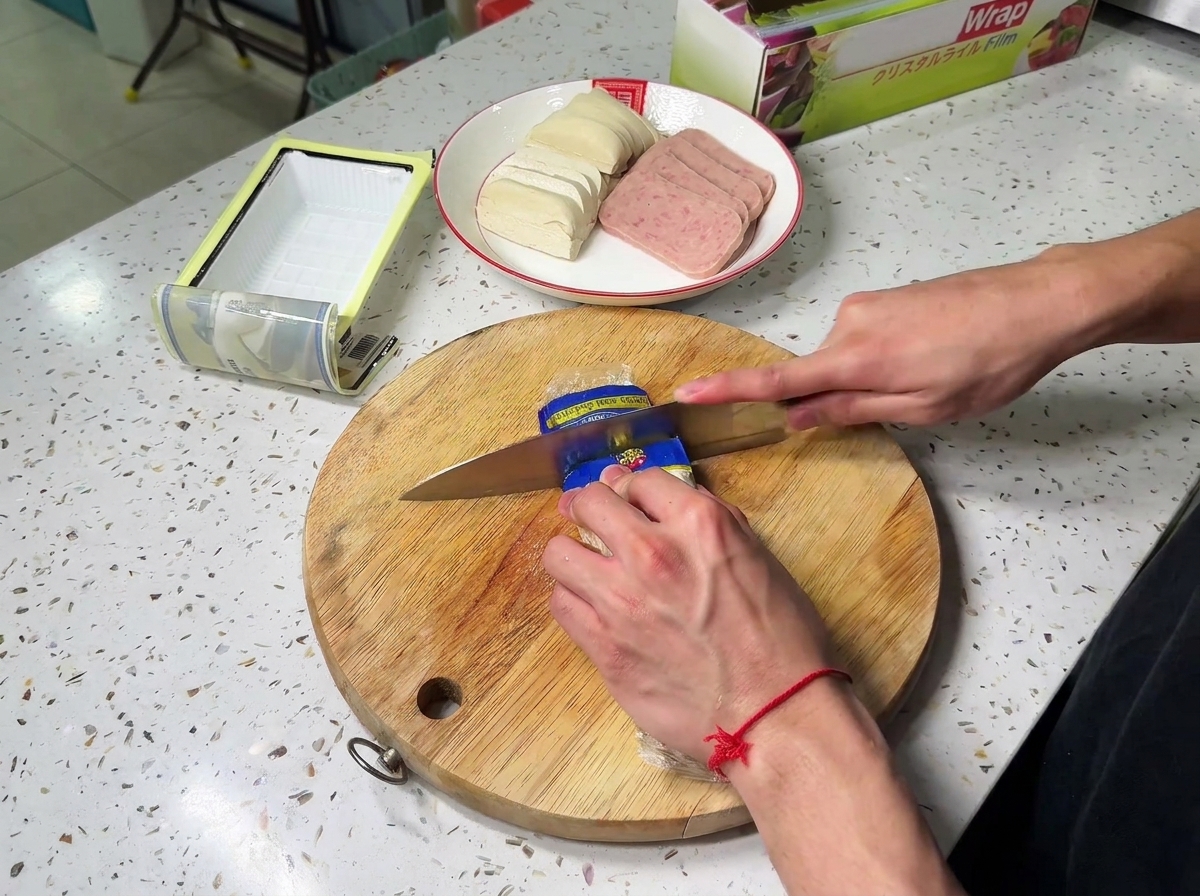
Take a package of fresh enoki mushrooms and carefully unwrap the plastic packaging on the wooden cutting board. Prepare them for washing and trimming before adding them into the cooking pot.
Tip: Keep the root base intact while washing to make trimming the cluster off much easier. - 5Add chili powder and sugar
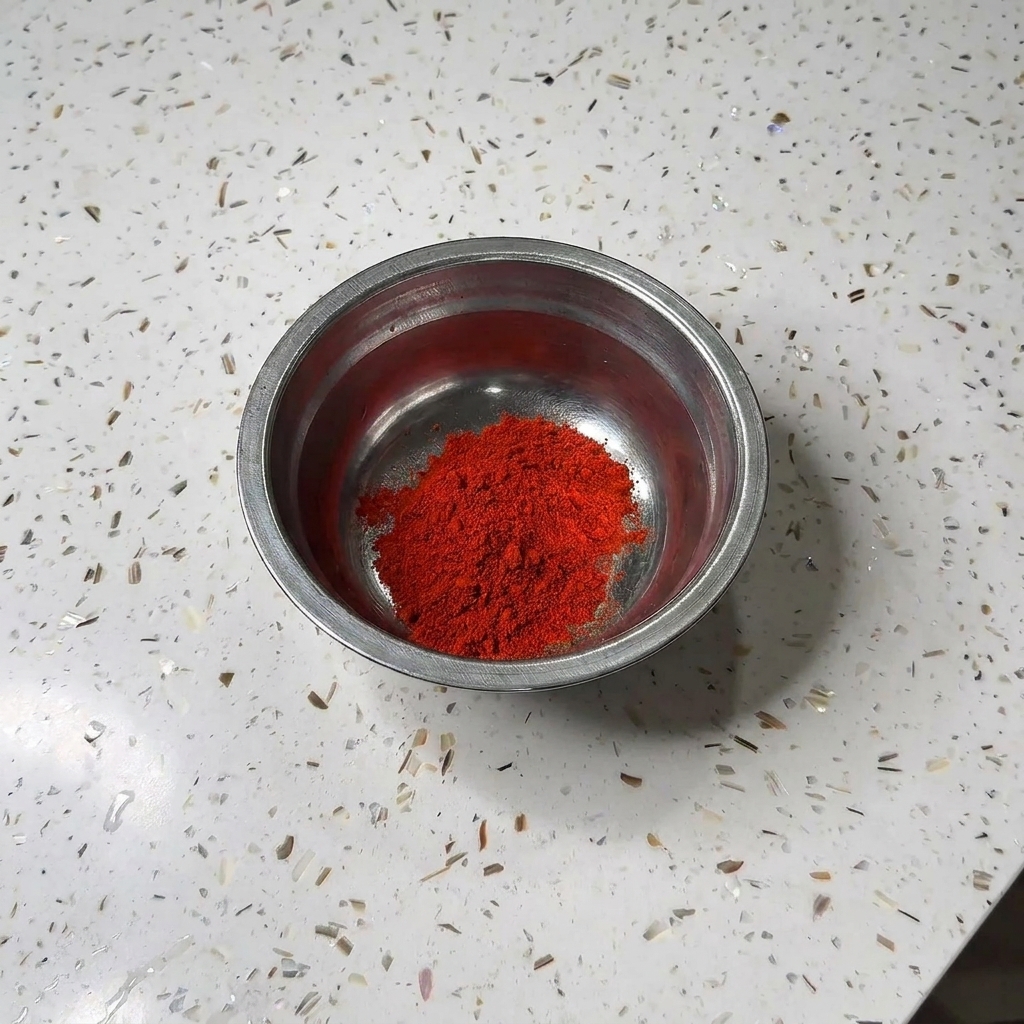
Prepare a small metal mixing bowl for the sauce base. Use a spoon to add measured amounts of vibrant red chili powder and white sugar to create the sweet and spicy foundation.
Tip: Adjust the amount of chili powder depending on your personal heat preference. - 6Pour in liquid seasonings
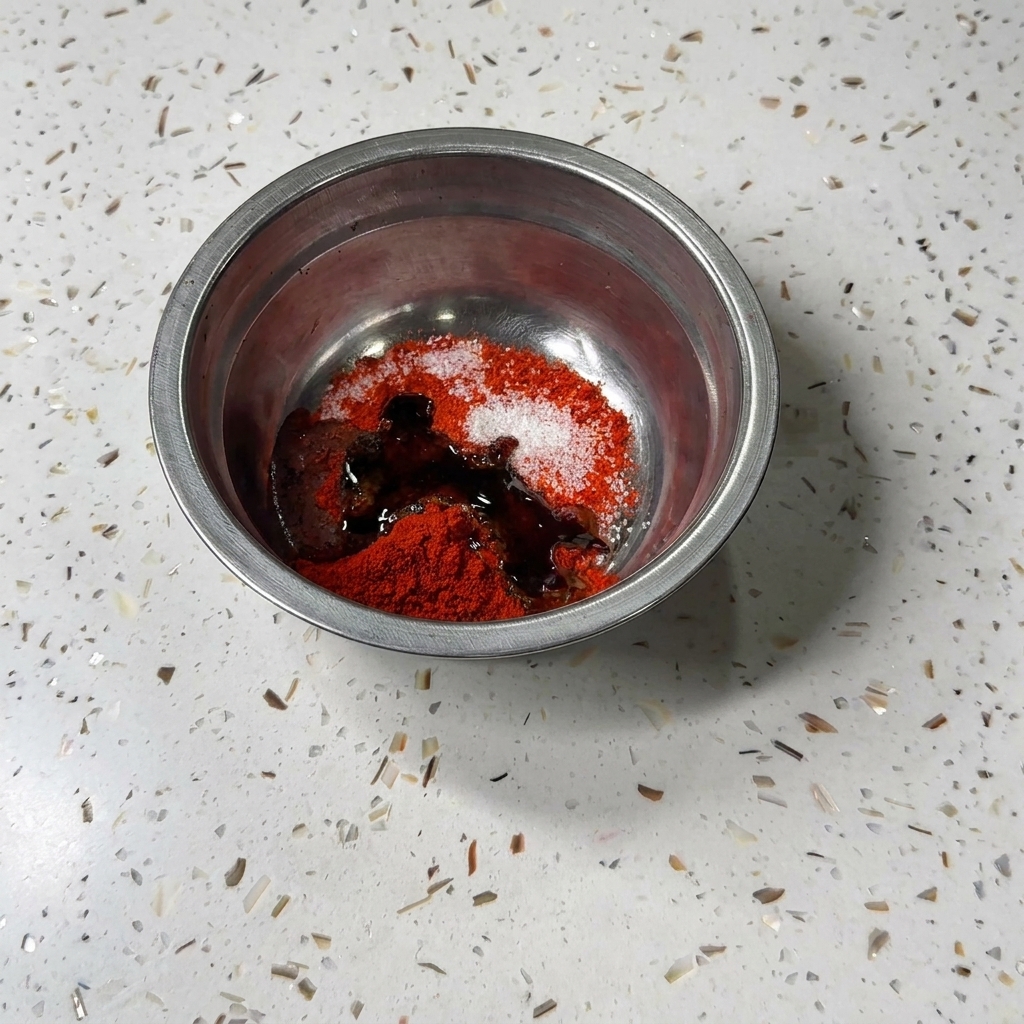
Measure and pour light soy sauce and rich oyster sauce directly into the seasoning bowl over the chili powder and sugar mixture. These savory elements will build depth and umami in the sauce.
Tip: Pour slowly down the side of the bowl to prevent splashing the dry powder ingredients. - 7Mix the Sauce Ingredients
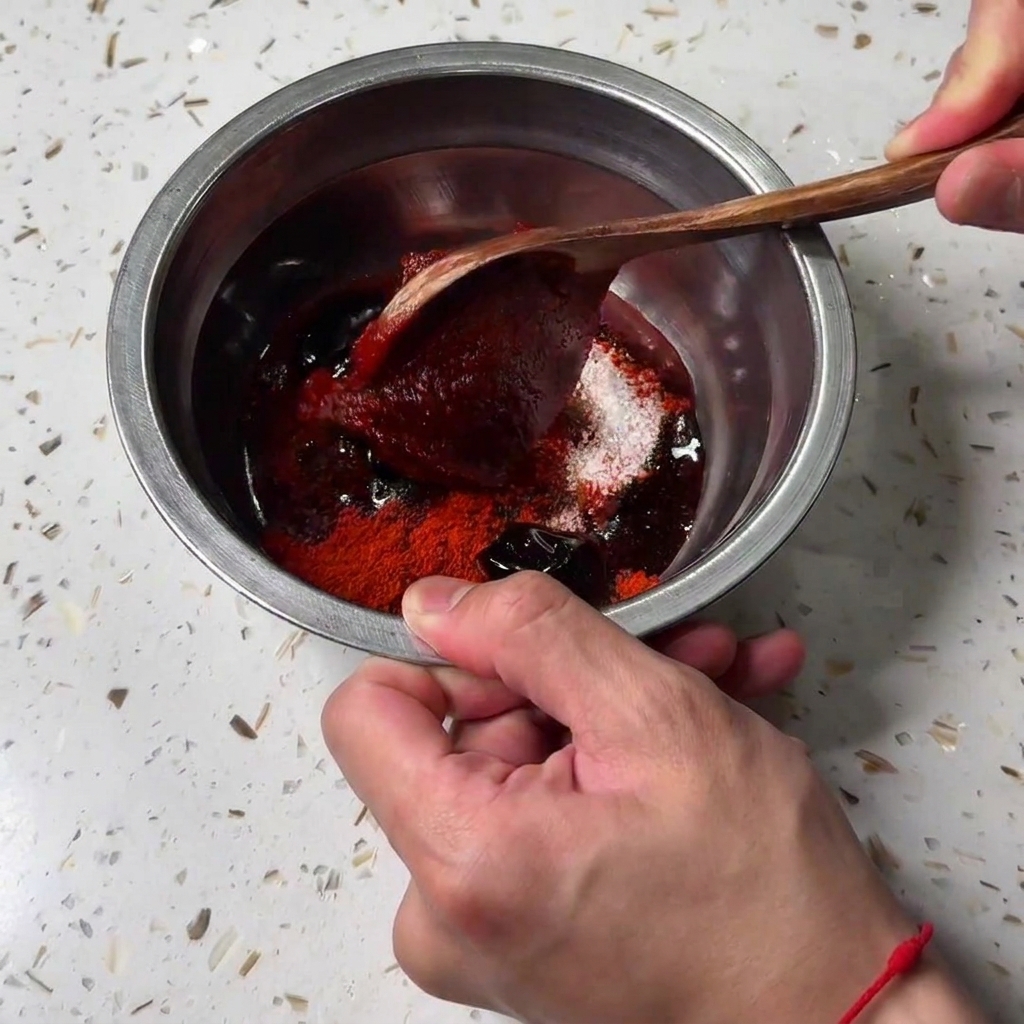
Add a generous spoonful of Korean hot pepper paste into the seasoning mixture inside the metal bowl.
Tip: Make sure to measure the paste accurately for the best balance of sweet and spicy flavors. - 8Pour Water and Stir Sauce
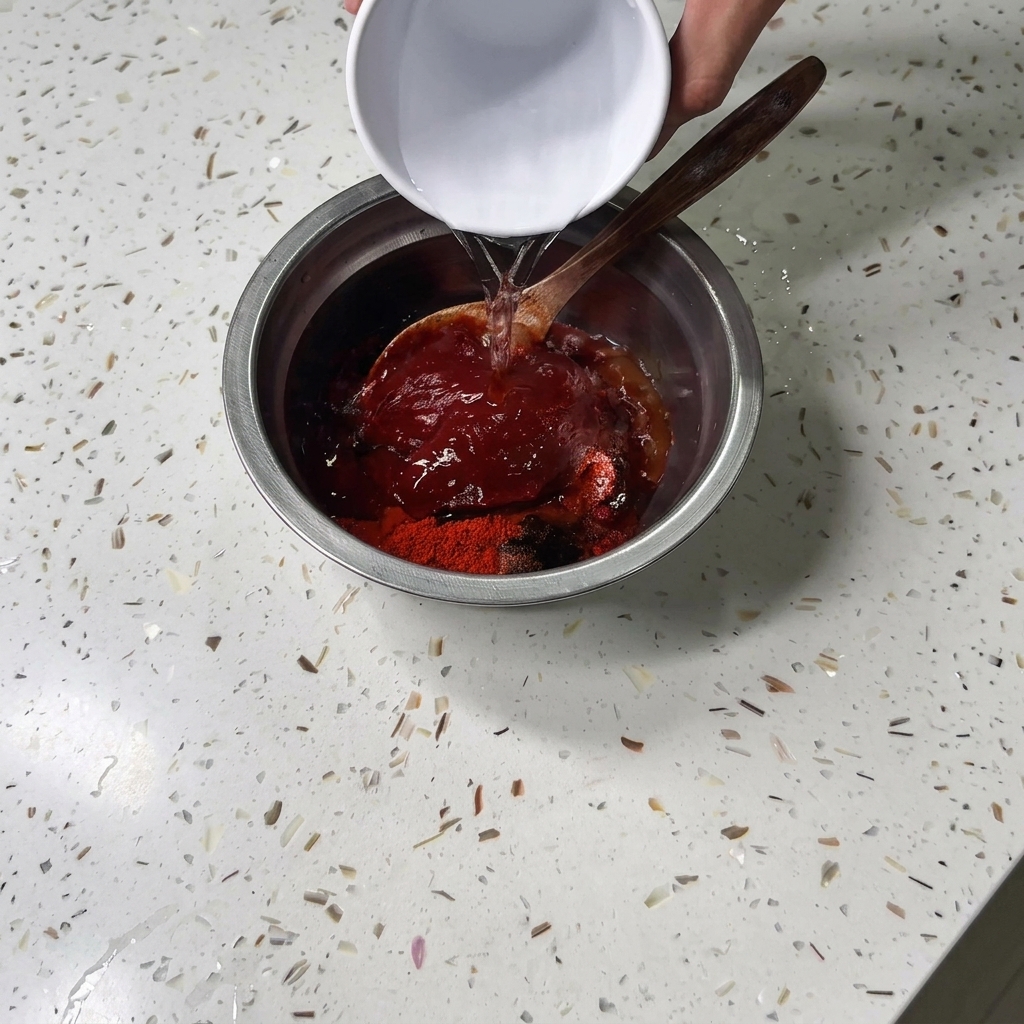
Pour half a cup of water into the seasoning bowl and use a wooden spoon to thoroughly stir all the ingredients together.
Tip: Mix until all the sugar and pepper paste are completely dissolved in the water. - 9Heat Oil and Add Onions
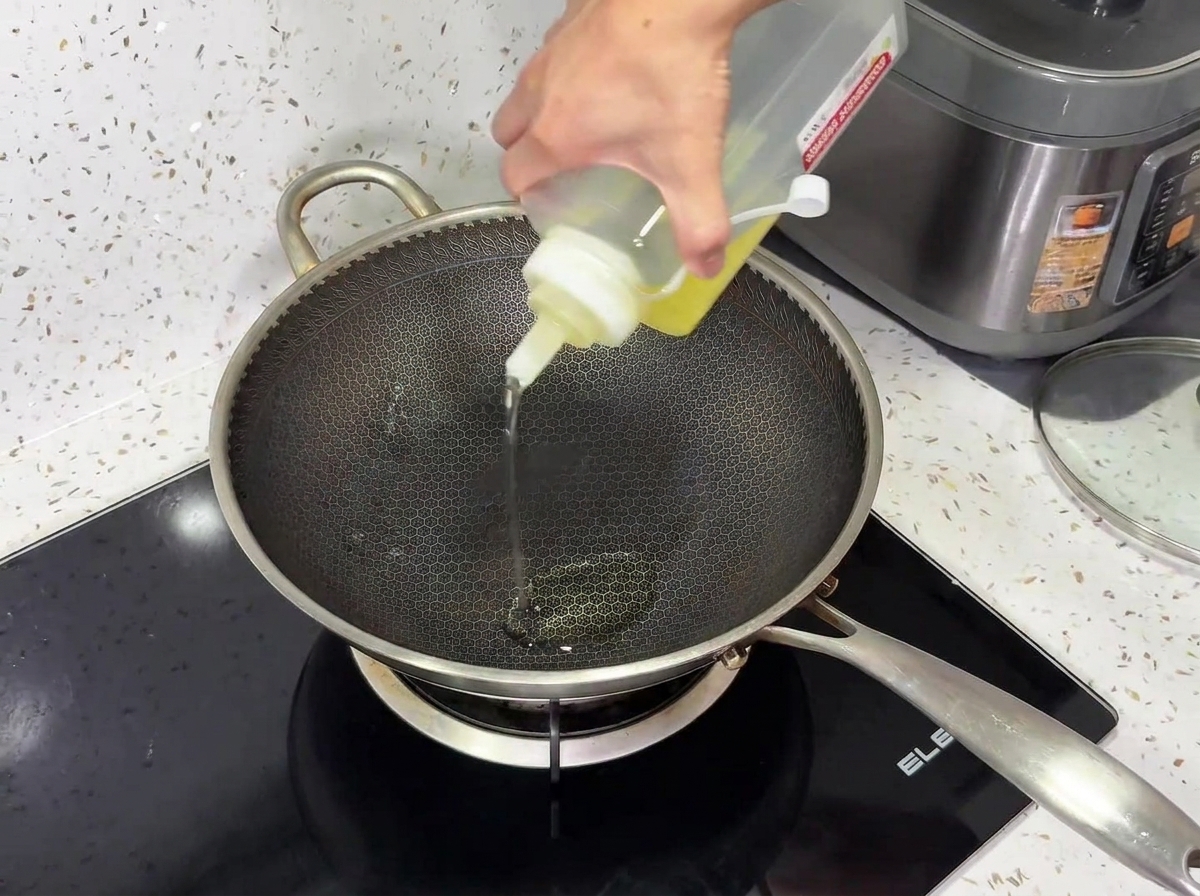
Pour cooking oil into a metal wok placed on an induction stove, then add chopped onions to start aromatics.
Tip: Heat the oil over medium heat before adding the onions to release their fragrance effectively. - 10Add Napa Cabbage
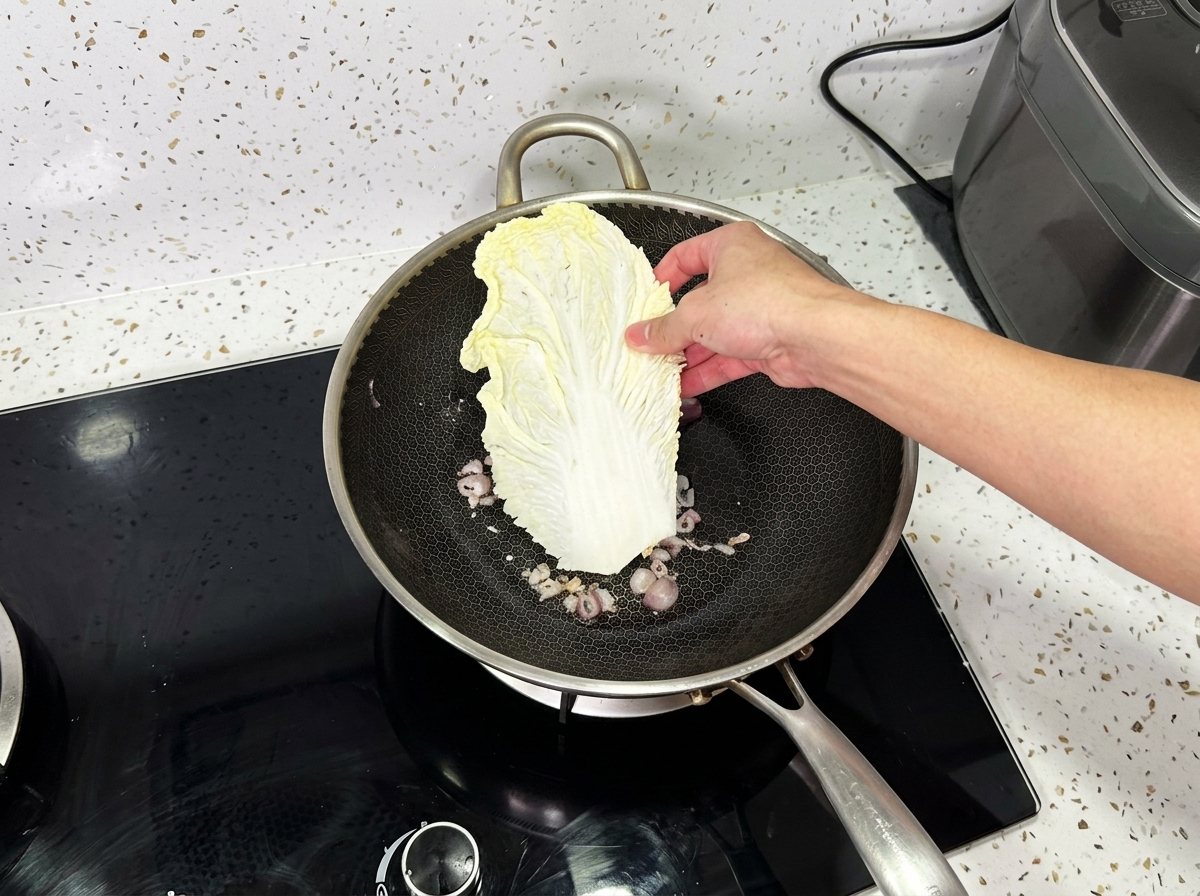
Carefully arrange fresh leaves of napa cabbage along with enoki mushrooms into the wok over the cooked onions.
Tip: Layer the cabbage neatly to ensure even cooking and presentation. - 11Arrange Meats and Mushrooms
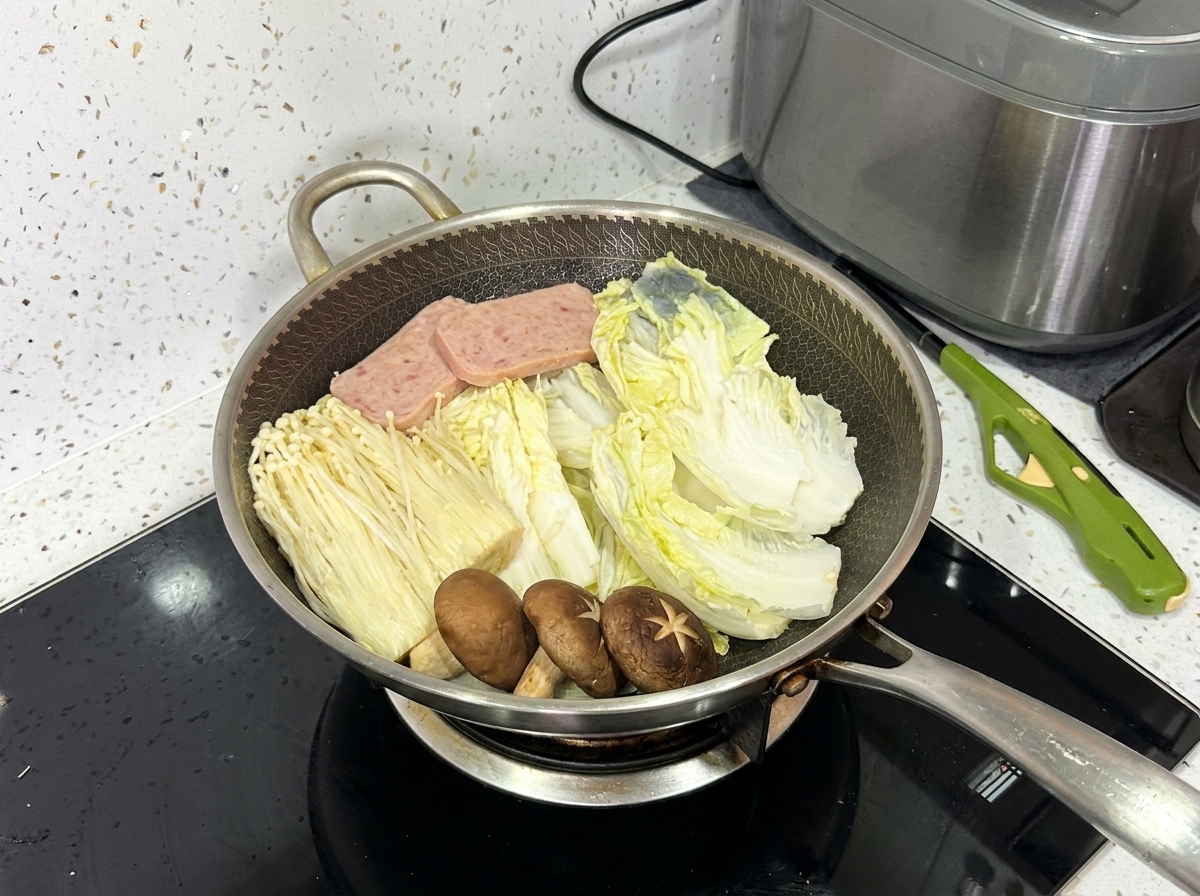
Place sliced luncheon meat, fresh mushrooms, and sliced pork neatly around the ingredients inside the wok.
Tip: Distribute the meats evenly around the edges for an authentic Korean Army Stew layout. - 12Add rice cakes and kimchi
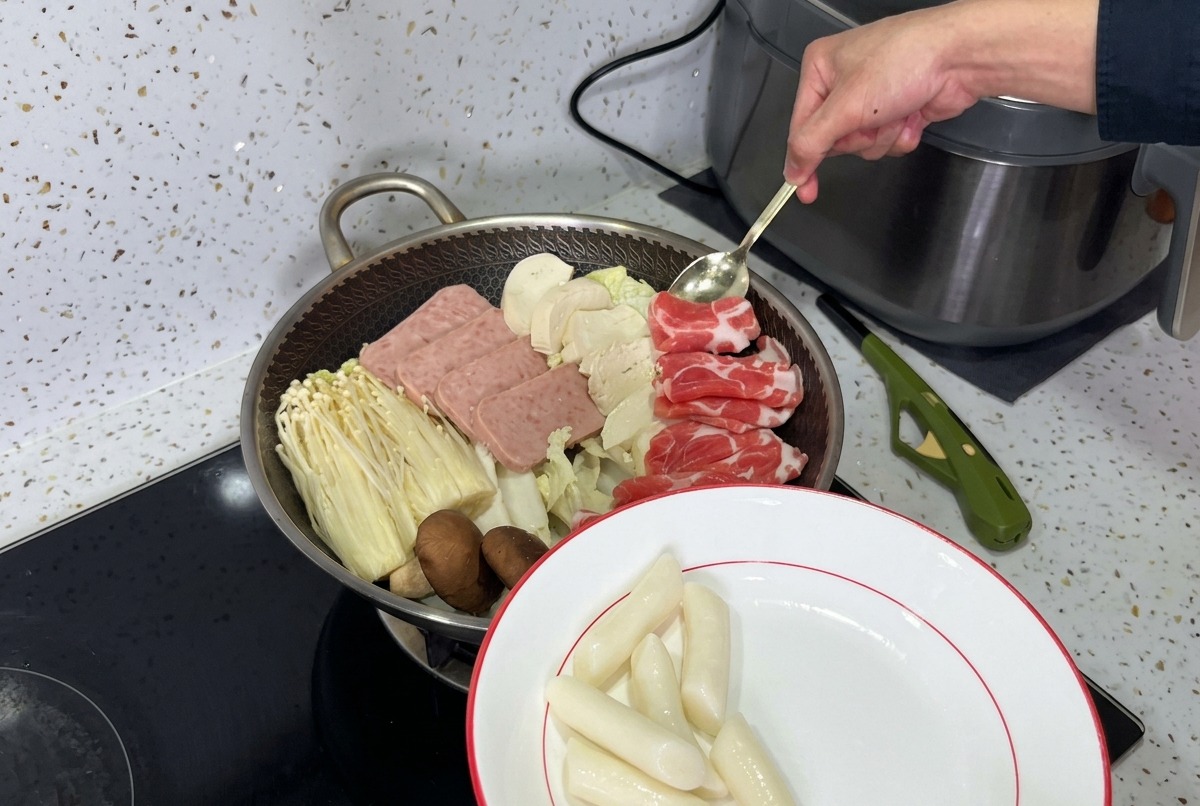
Complete the arrangement by placing the cylindrical rice cakes and aged kimchi into the wok alongside the previously added ingredients. Keeping the items grouped in sections ensures an authentic Budae Jjigae presentation.
Tip: Place the faster-cooking items towards the top or edges, while heartier ingredients like luncheon meat and tofu sit on the bottom. - 13Add the sauce
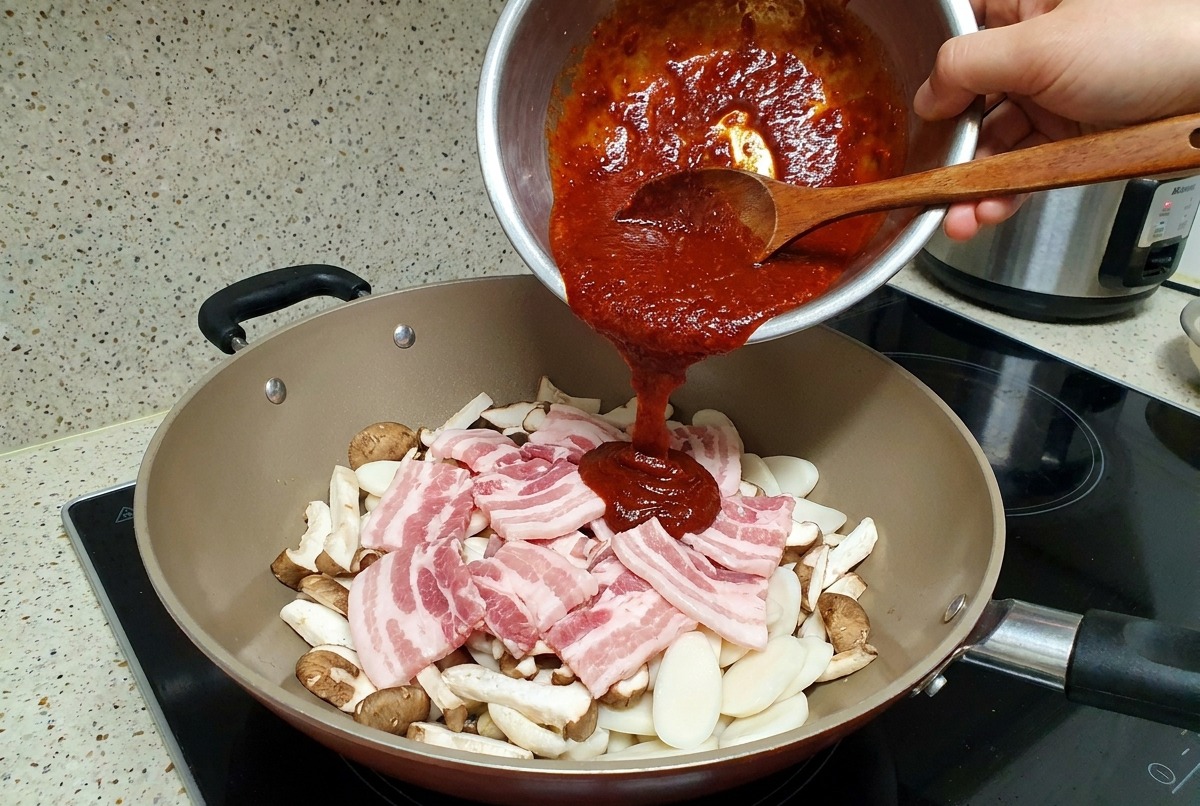
Pour the prepared sauce mixture—made from chili powder, sugar, light soy sauce, sesame oil, oyster sauce, Korean hot pepper paste, and water—directly over the layered ingredients in the pot. This sauce provides the rich, spicy flavor base for the stew.
Tip: Make sure to whisk the sauce thoroughly until the hot pepper paste is completely dissolved for a uniform flavor. - 14Add water and simmer
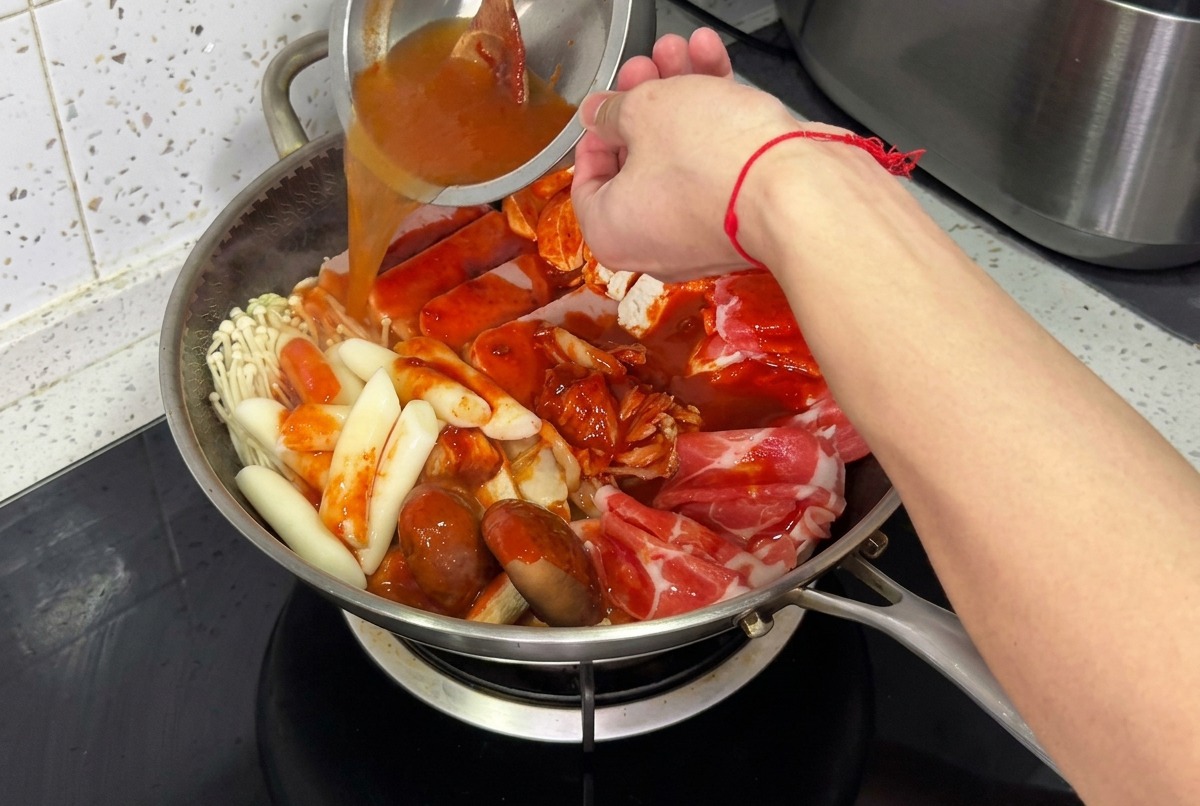
Add two bowls of clean water to the pot. Cover the pot with a lid and bring it to a boil, then reduce the heat to simmer until all the ingredients are cooked through and the flavors have melded.
Tip: If the stew reduces too much, you can always add a little more water to maintain your desired consistency. - 15Cook the ramen
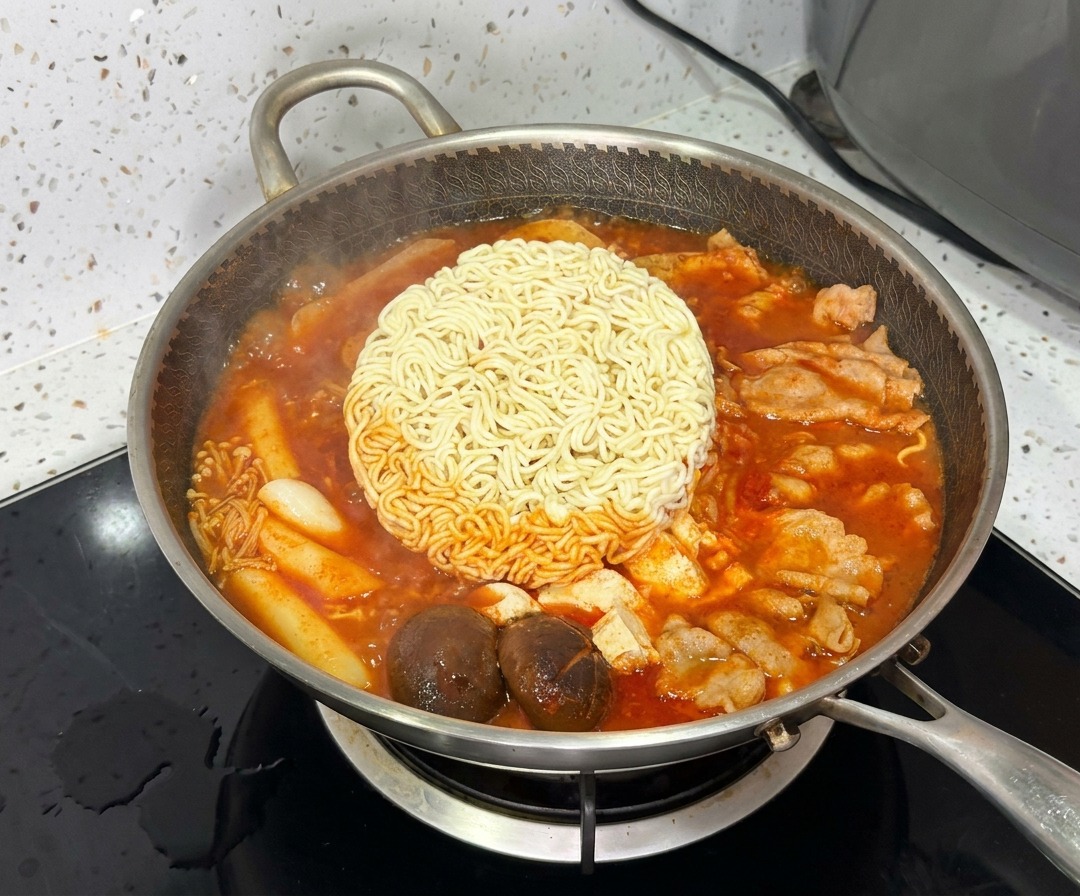
Once the stew is bubbling, lift the lid and carefully place a block of ramen noodles into the center. Let them cook directly in the savory broth until they are tender and have absorbed some of the spicy flavors.
Tip: Dont overcook the noodles; they should still have a slightly chewy texture. - 16Add the final touch
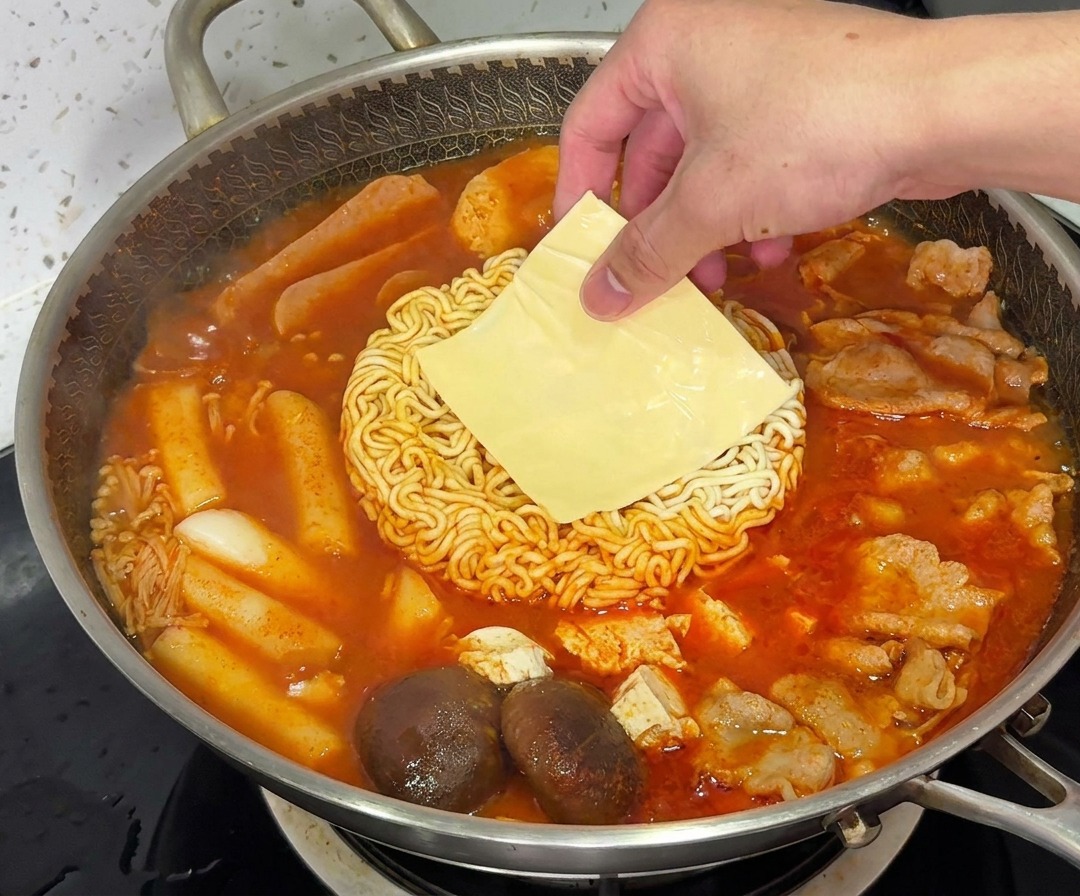
Finally, place a single slice of cheese directly on top of the cooked ramen noodles. The residual heat from the stew will melt the cheese, adding a creamy richness that perfectly complements the spicy broth.
Tip: Add the cheese right before serving so it stays warm and gooey.