Korean Army Base Stew (Budae Jjigae)
A smoky, spicy, and deeply savory fusion pot featuring layers of spam, sausages, and kimchi, finished with melty American cheese and chewy ramen noodles.
Budae Jjigae, or Army Base Stew, is a beloved Korean fusion dish that originated after the Korean War. By combining surplus processed foods like spam and sausages with traditional staples like kimchi and gochujang, it created a unique soul food that remains a popular social meal today.

Ingredients
- 200 g spam (luncheon meat)
- 150 g mini sausages
- 2 stalks scallions
- 1 medium leek
- 200 g cabbage kimchi
- 1 tbsp gochujang (Korean chili paste)
- 1 packet ramen seasoning powder
- 2 large king oyster mushrooms
- 200 g silken tofu
- 4 pieces crab sticks
- 50 g enoki mushrooms
- 800 ml hot water
- 1 tbsp dark soy sauce
- 3 tbsp kimchi liquid
- 1 brick instant ramen
- 1 slice American cheese
Instructions
- 1Sear the luncheon meat

Place slices of pink luncheon meat into a flat pan. Sear them over medium heat until the surfaces are lightly browned and slightly crispy. This caramelization enhances the savory flavor and provides a better texture for the stew.
Tip: You dont need much oil for this step, as the luncheon meat will release its own fats as it heats up. - 2Fry the octopus sausages

Add mini sausages with cross-cut ends to the pan. Fry them until the cut sections curl outward, transforming them into cute octopus shapes. This traditional Budae Jjigae garnish adds a fun visual element to the dish.
Tip: Cutting the sausages deeper will result in longer octopus legs when they fry and expand. - 3Stir-fry the aromatics
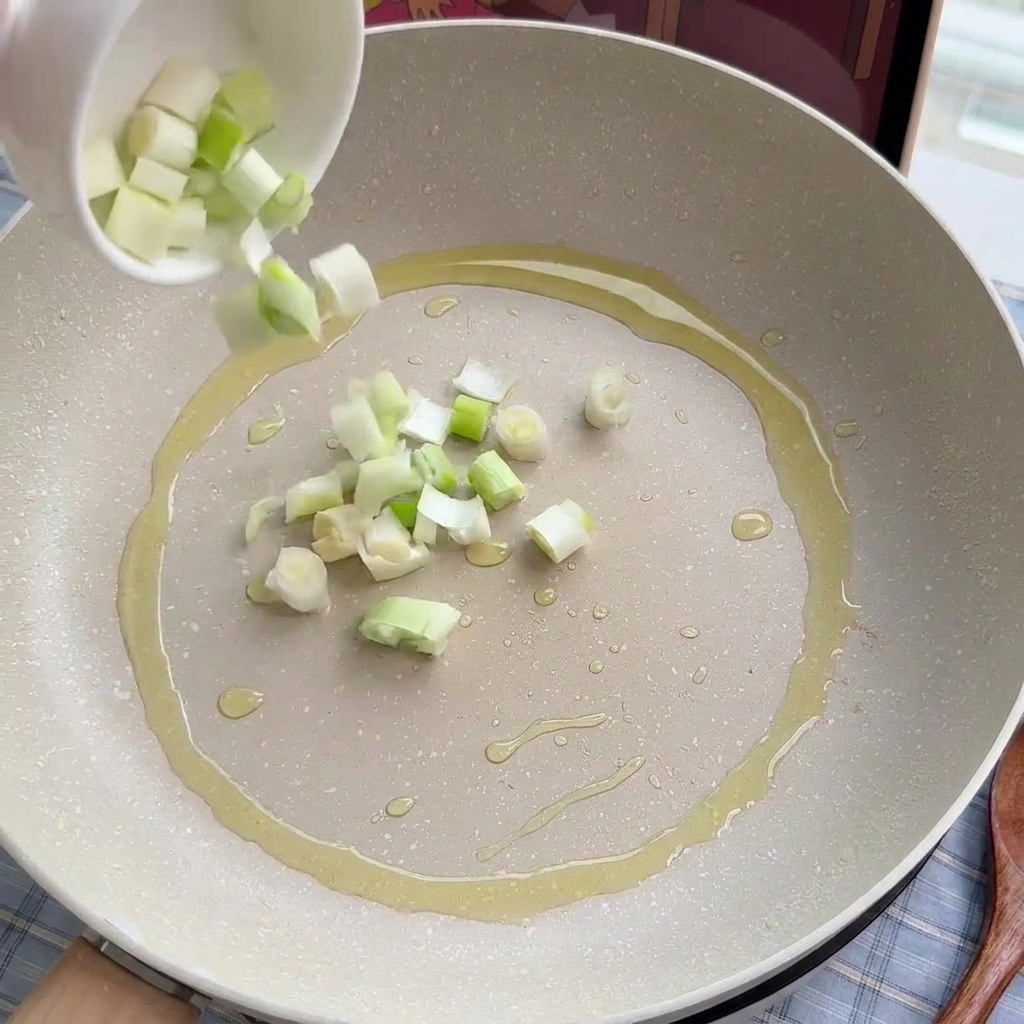
Add the chopped green scallions and white leeks into a pan with heated oil. Stir-fry them gently in the center of the pan to release their fresh fragrance and create a flavorful base for the stew.
Tip: Frying the scallions first is a great technique to build a deep, aromatic flavor profile right from the start. - 4Sauté the kimchi
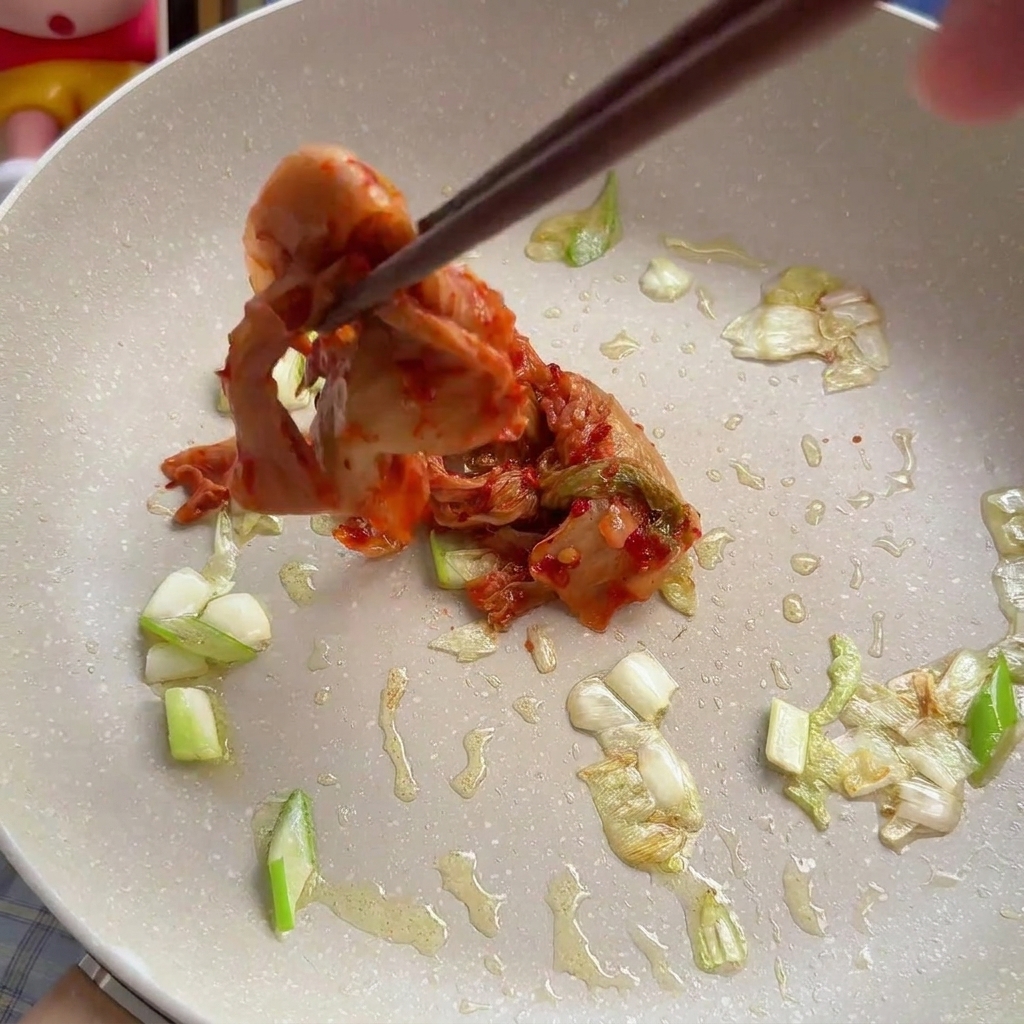
Add a portion of chopped cabbage kimchi to the pan along with the sautéed scallions. Stir-fry them together to allow the kimchi to soften and release its fermented tanginess into the base aromatics.
Tip: Using well-fermented, older kimchi will provide a much deeper and sourer flavor profile for the stew broth. - 5Add Korean chili paste
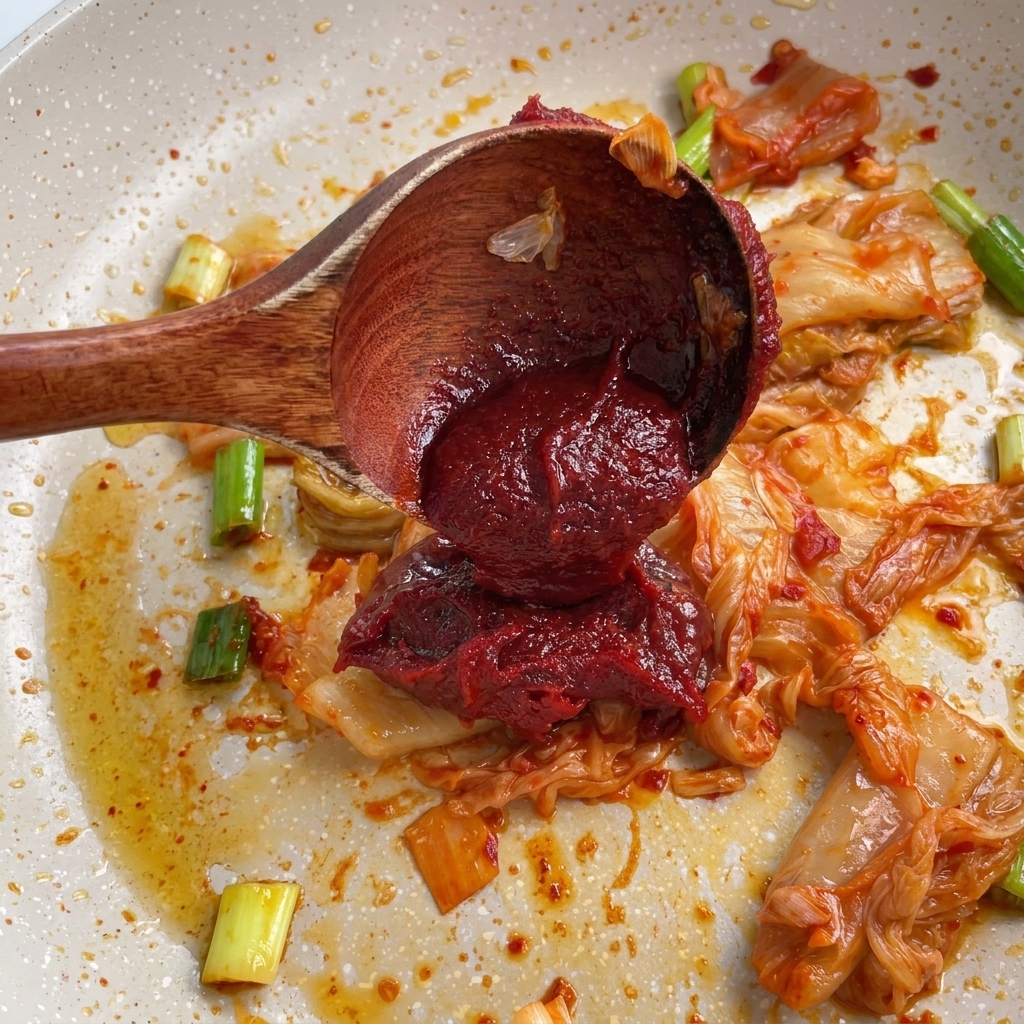
Incorporate a large spoonful of thick, red Korean gochujang (chili paste) into the pan. Stir it into the kimchi and aromatics to create a rich, spicy, and slightly sweet foundation for the Budae Jjigae broth.
Tip: Gochujang can burn easily, so keep the heat at medium and stir constantly until it is well combined with the other ingredients. - 6Add ramen seasoning
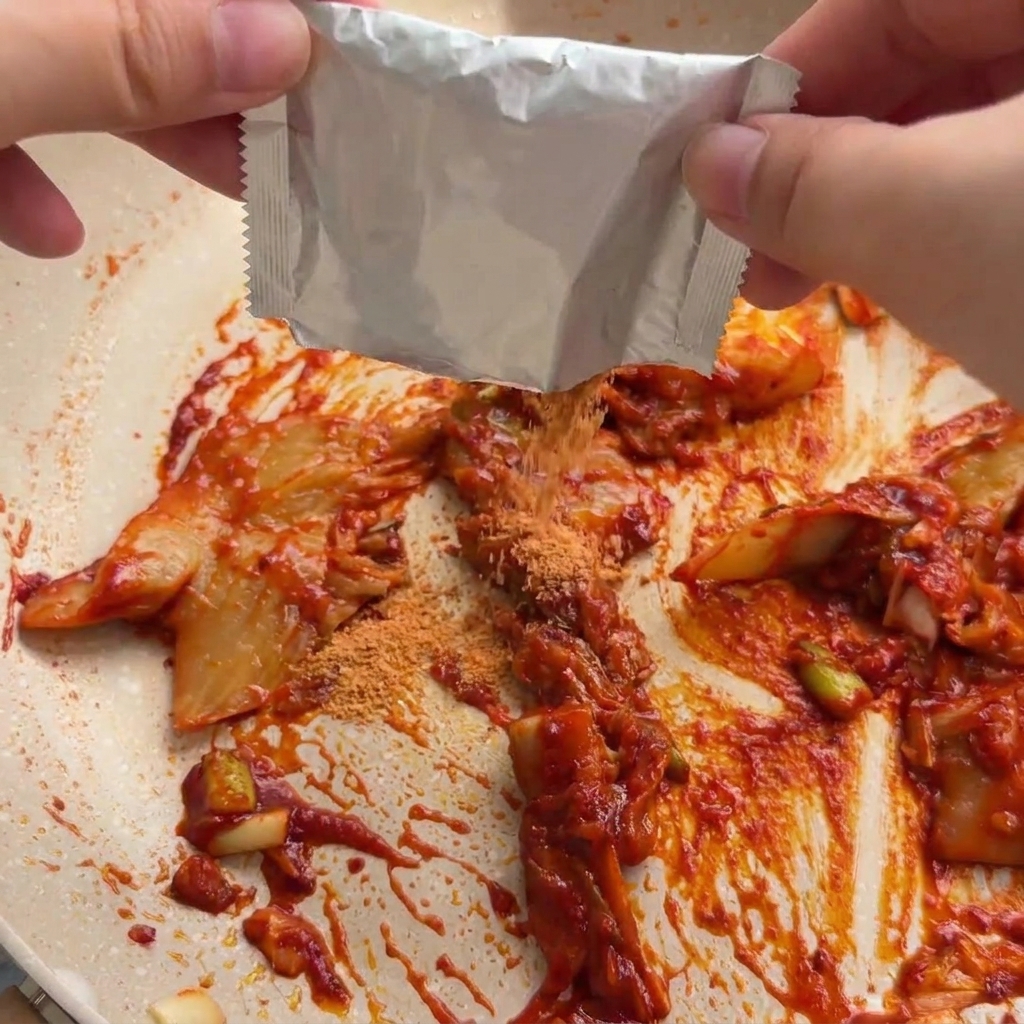
Open the instant ramen seasoning packet and sprinkle the powder directly over the kimchi and aromatics in the pan. This provides a quick, savory shortcut to achieve that classic spiced broth.
Tip: If you prefer a less salty broth, start with half of the seasoning packet and adjust to taste later. - 7Add the mushrooms
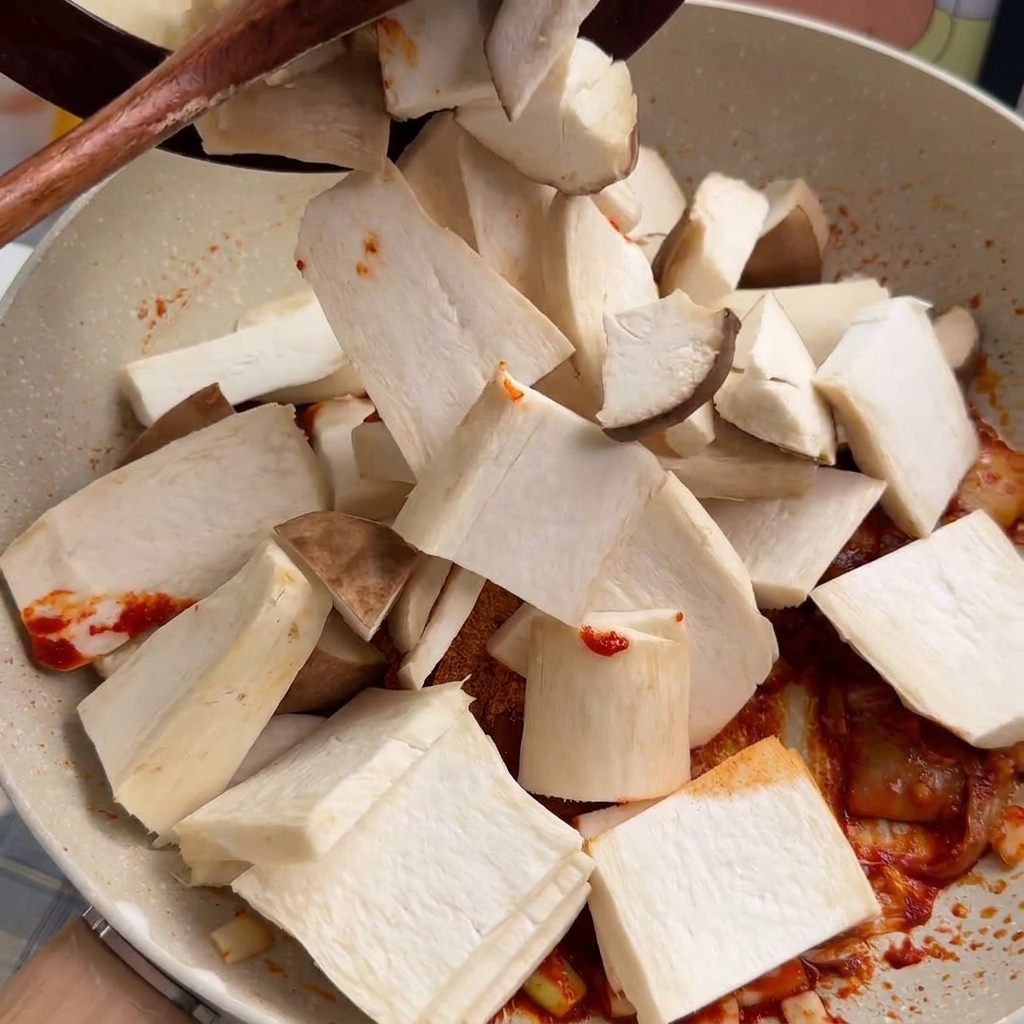
Drop the thick slices of king oyster mushrooms into the pan. Toss them thoroughly with the spicy base mixture so they are well coated and begin to absorb the rich flavors.
Tip: King oyster mushrooms offer a fantastic meaty texture that holds up perfectly during the simmering process. - 8Arrange the ingredients
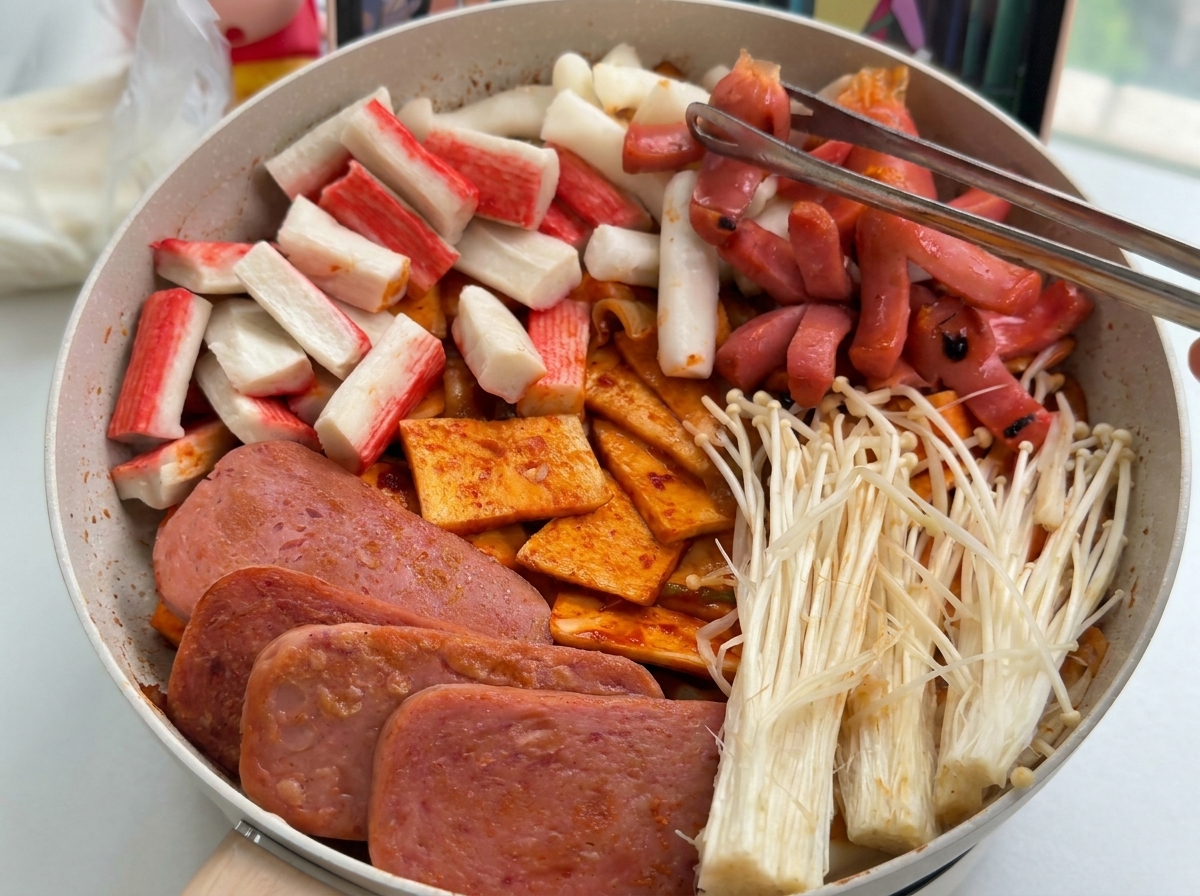
Carefully arrange the luncheon meat, crab sticks, enoki mushrooms, and little octopus sausages in distinct, neat sections around the pan. Keeping everything grouped makes the dish visually stunning and ensures even cooking.
Tip: Pack the ingredients snugly together so they maintain their beautiful arrangement when the liquid is added. - 9Pour in hot water

Gently pour hot water into the pot over your beautifully arranged ingredients. Using hot water instead of cold speeds up the cooking process and brings the stew to a boil much faster.
Tip: Pour the water slowly near the edge of the pot to avoid disturbing your carefully placed ingredients. - 10Season the broth

Drizzle a splash of dark soy sauce and kimchi liquid into the bubbling pot. This combination enhances the savory umami profile while adding the signature spicy-sour kick that defines a traditional Budae Jjigae.
Tip: If you do not have extra kimchi liquid you can substitute it with a small amount of rice vinegar and a pinch of sugar to mimic the fermented tang. - 11Add the ramen noodles
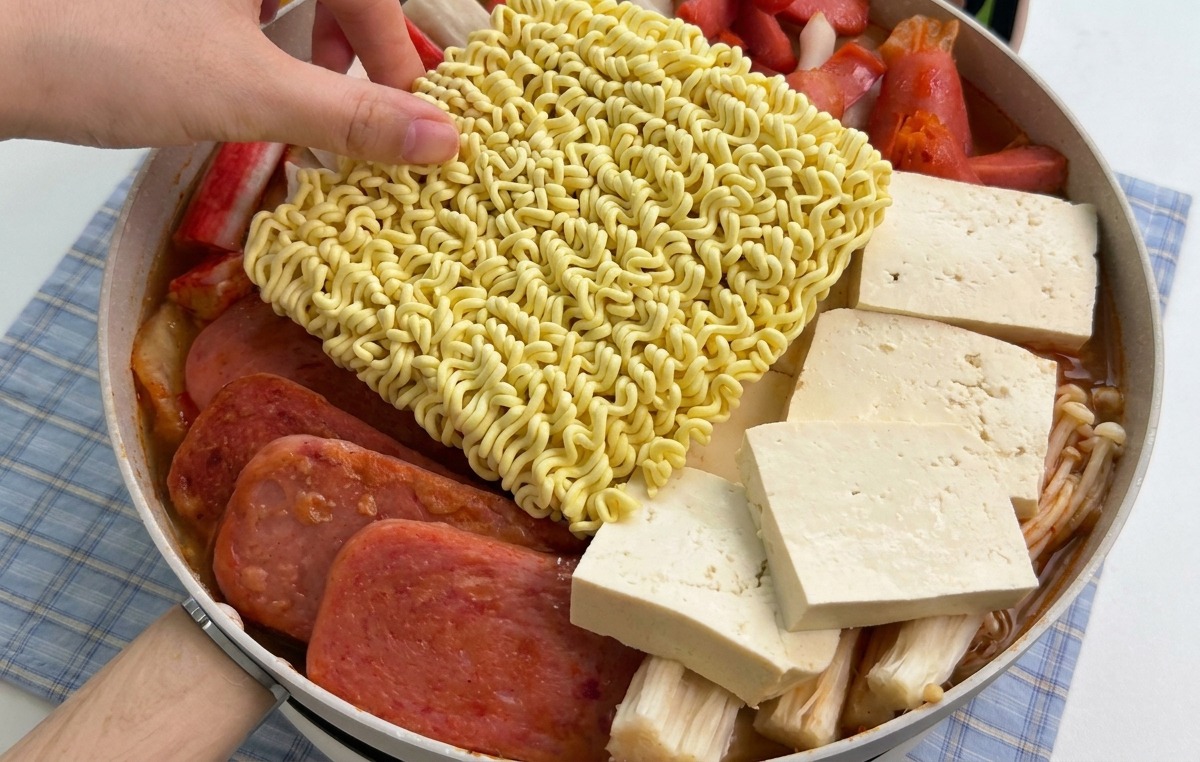
Place a whole brick of dry instant ramen noodles into the center of the pot, resting it on top of the other ingredients. The noodles will slowly soften as they absorb the hot, flavorful stew liquid.
Tip: Avoid breaking the ramen brick if you prefer long, chewy strands that are easier to twirl with chopsticks. - 12Finish with cheese

Once the noodles have softened slightly, place a single square slice of yellow cheese on top. The heat from the boiling stew will melt the cheese into the noodles, creating a creamy, velvety texture that balances the heat of the chili paste.
Tip: Processed American cheese is traditional for this recipe because it melts smoothly into the broth, but a mild cheddar can also be used.