Low-Calorie Korean Army Stew (Budae Jjigae)
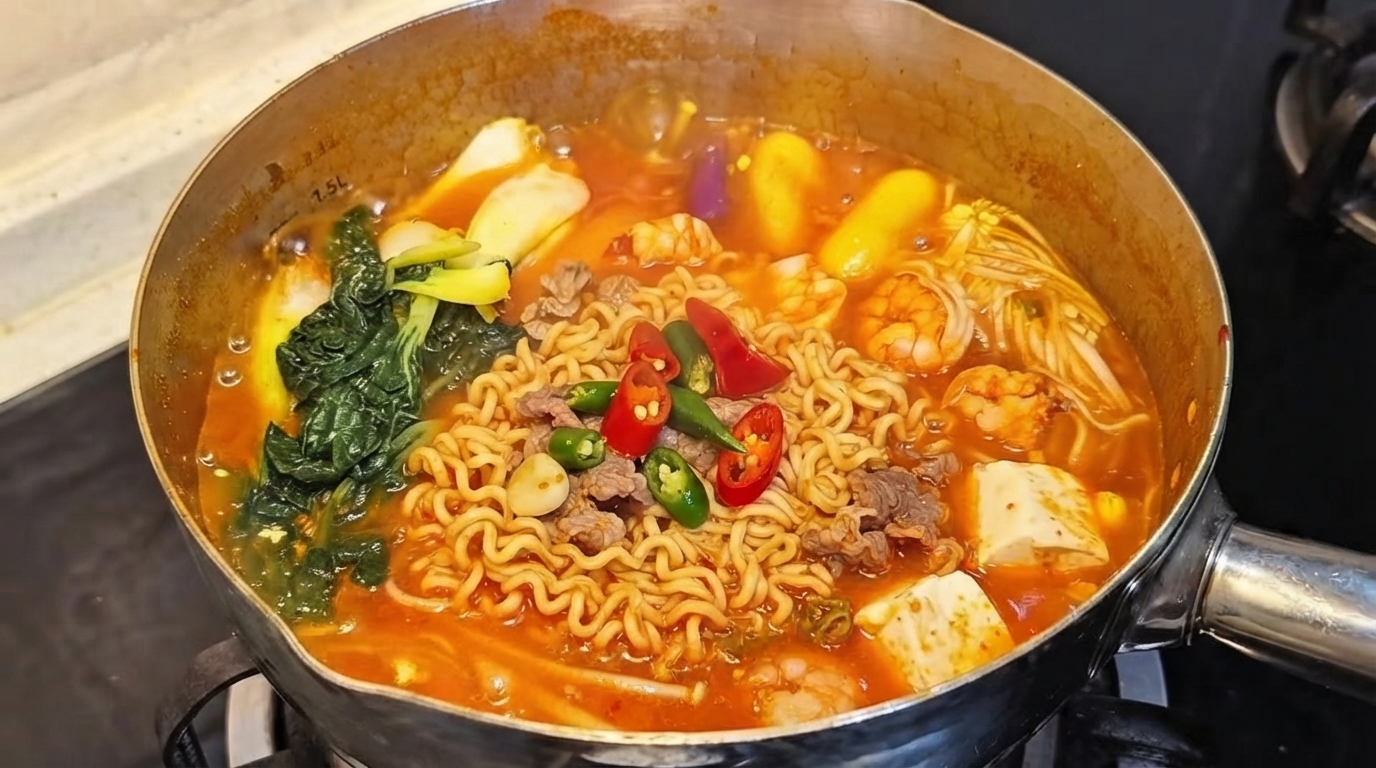
A light, guilt-free single-serving Korean army stew featuring fresh vegetables, silken tofu, kimchi, shrimp, and instant noodles in a spicy, savory broth.
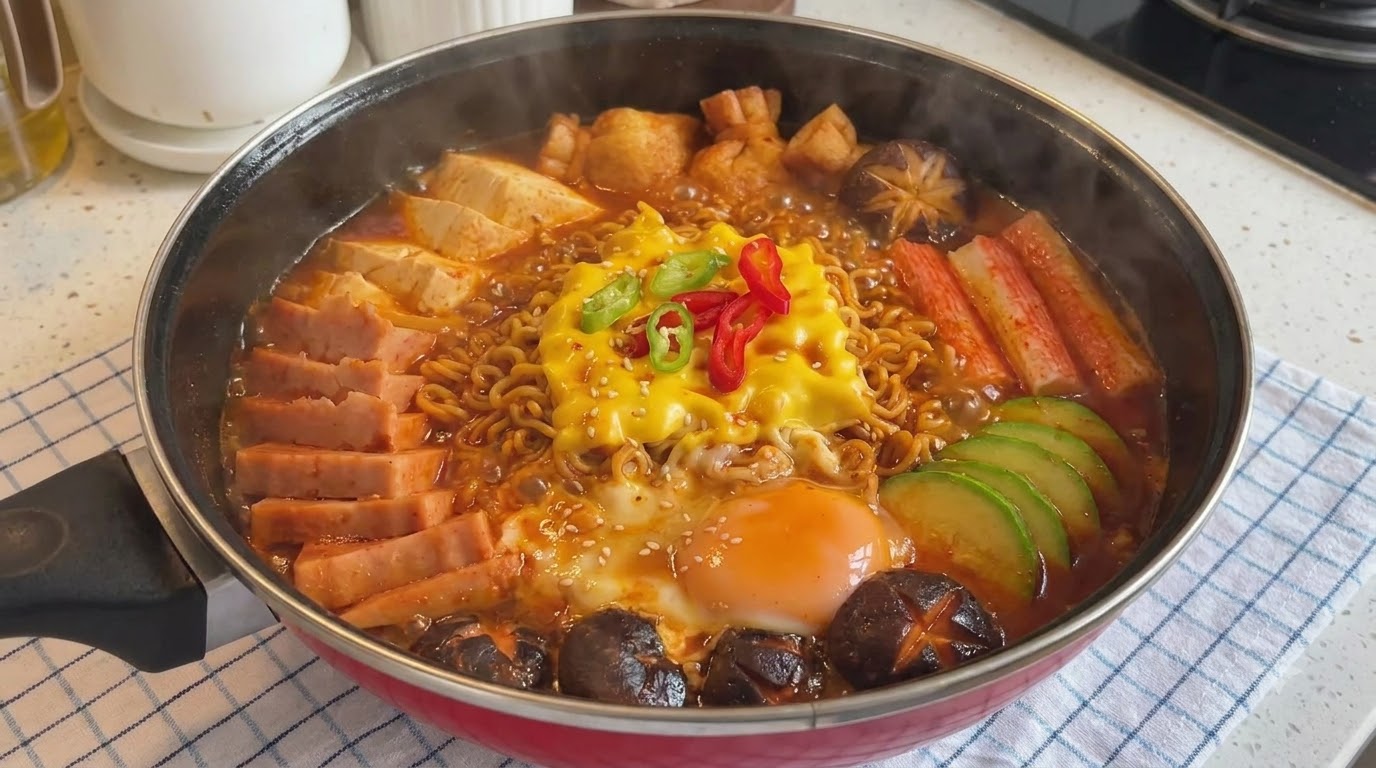
Budae jjigae, or Korean army stew, is a beloved comfort food born out of resourcefulness, traditionally packed with processed meats. This lighter, low-calorie version adapts the vibrant, spicy, and sour profile of the classic hot pot by replacing heavy ingredients with fresh vegetables, fiber-rich enoki mushrooms, silken tofu, and protein-packed shrimp. Ready in minutes, it delivers all the cozy satisfaction of the original dish in a wholesome, single-serving portion.
Ingredients
- 1 handful bean sprouts
- 1 bundle enoki mushrooms
- 150 g silken tofu
- 50 g fermented kimchi
- 1 tbsp Korean chili paste
- 2 slices fresh red tomato
- 4–5 raw shrimp
- 1 block dried instant noodles
- 50 g thinly sliced beef
- 1 handful leafy green vegetables
- 1 red and green chili peppers
Instructions
- 1Add bean sprouts
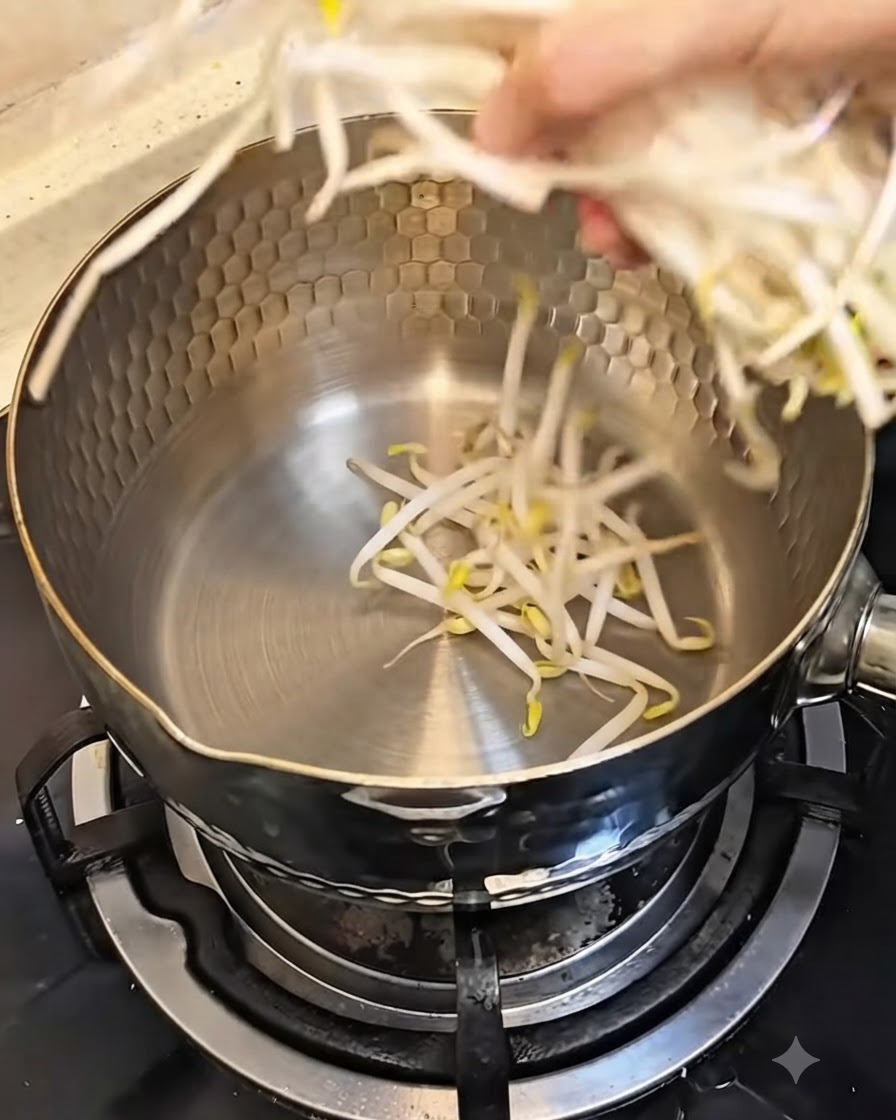
Place a handful of fresh bean sprouts into the bottom of an empty metal pot as the base layer of the stew.
Tip: Bean sprouts add a crisp texture and naturally sweet flavor to the broth as they boil. - 2Add enoki mushrooms
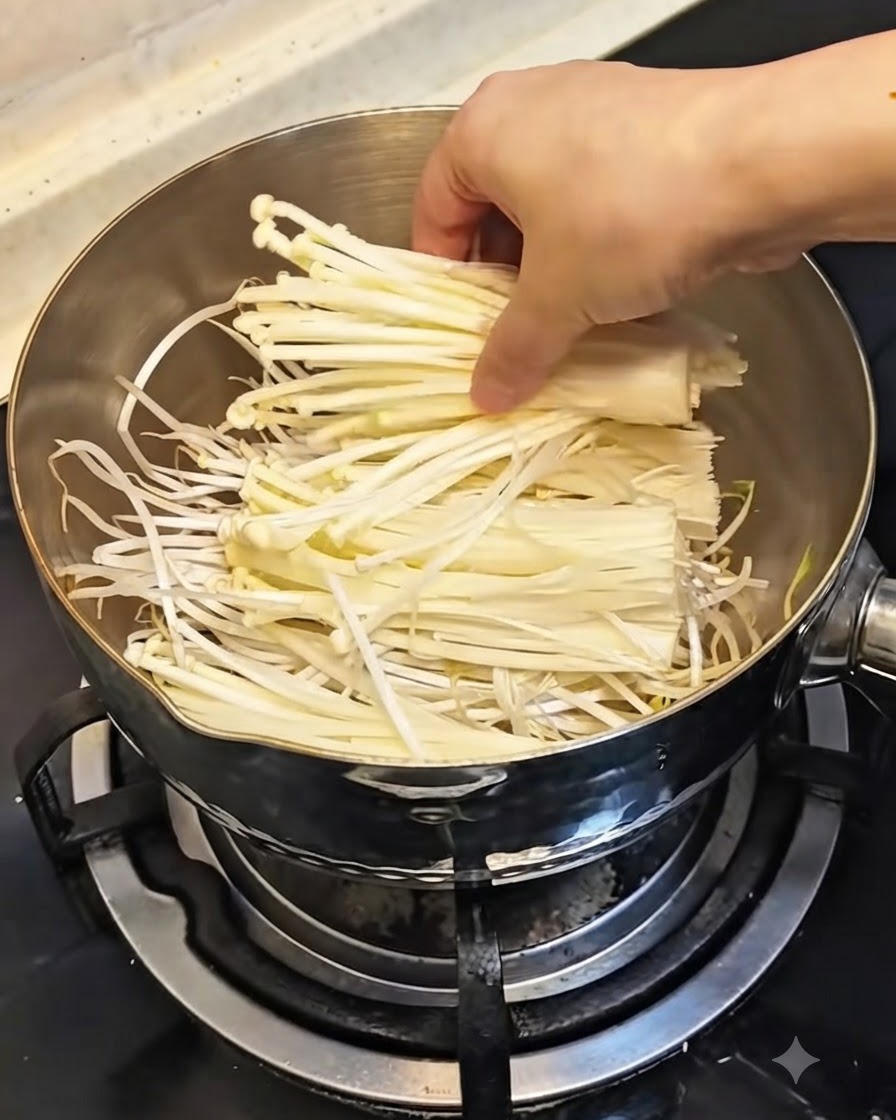
Layer a bundle of trimmed fresh enoki mushrooms directly on top of the bean sprouts in the pot.
Tip: Make sure to trim the root ends of the enoki mushrooms before adding them to the pot. - 3Add silken tofu
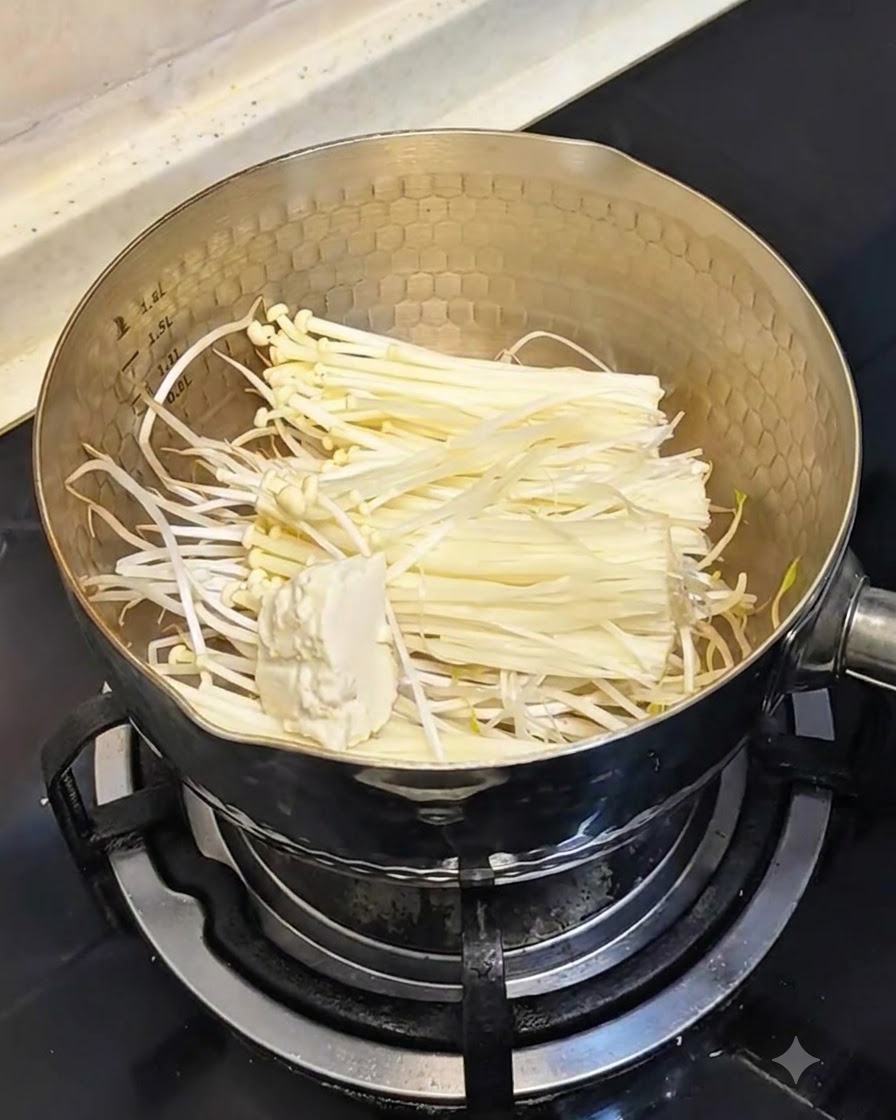
Use a spoon to scoop large, soft chunks of silken tofu and place them into the pot alongside the mushrooms and sprouts.
Tip: Handle the silken tofu gently so it maintains its shape while cooking in the broth. - 4Add kimchi
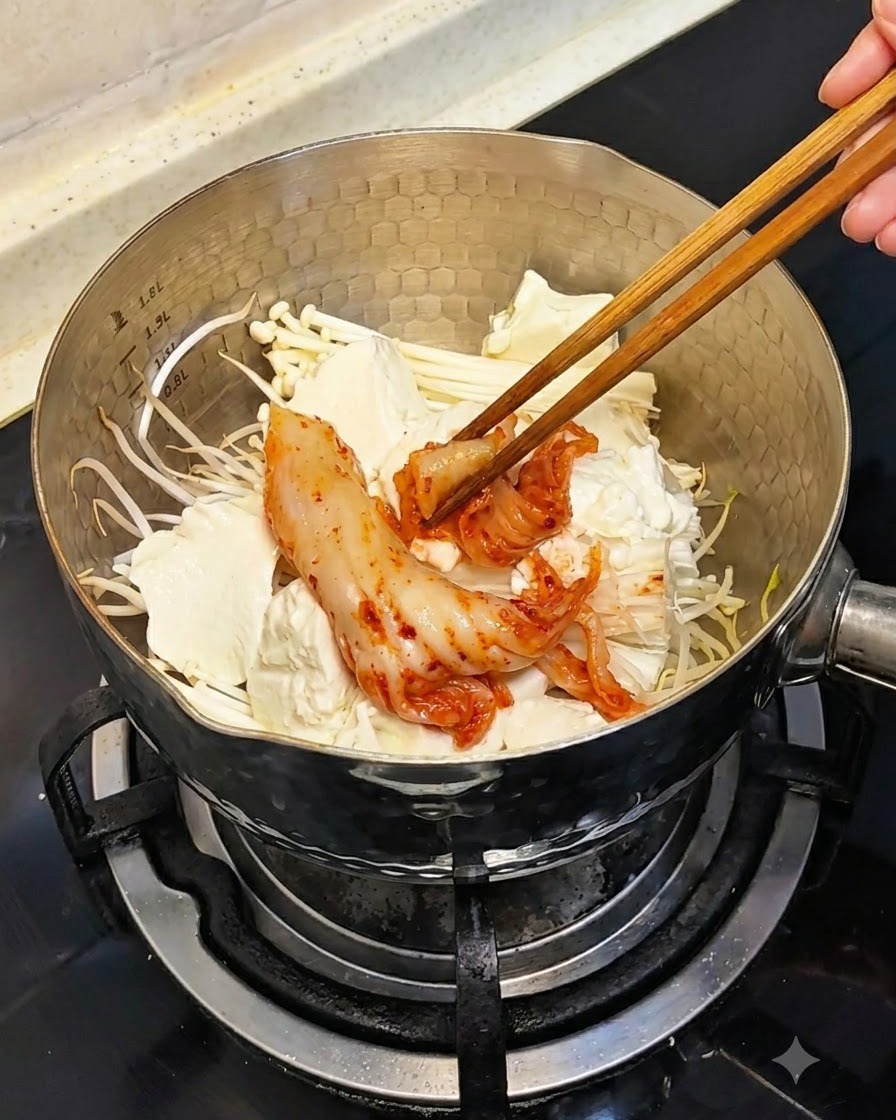
Use chopsticks to place pieces of fermented red kimchi over the tofu, mushrooms, and bean sprouts in the pot.
Tip: Adding well-fermented kimchi provides the essential sour and savory base for the stews flavor profile. - 5Add Korean chili paste
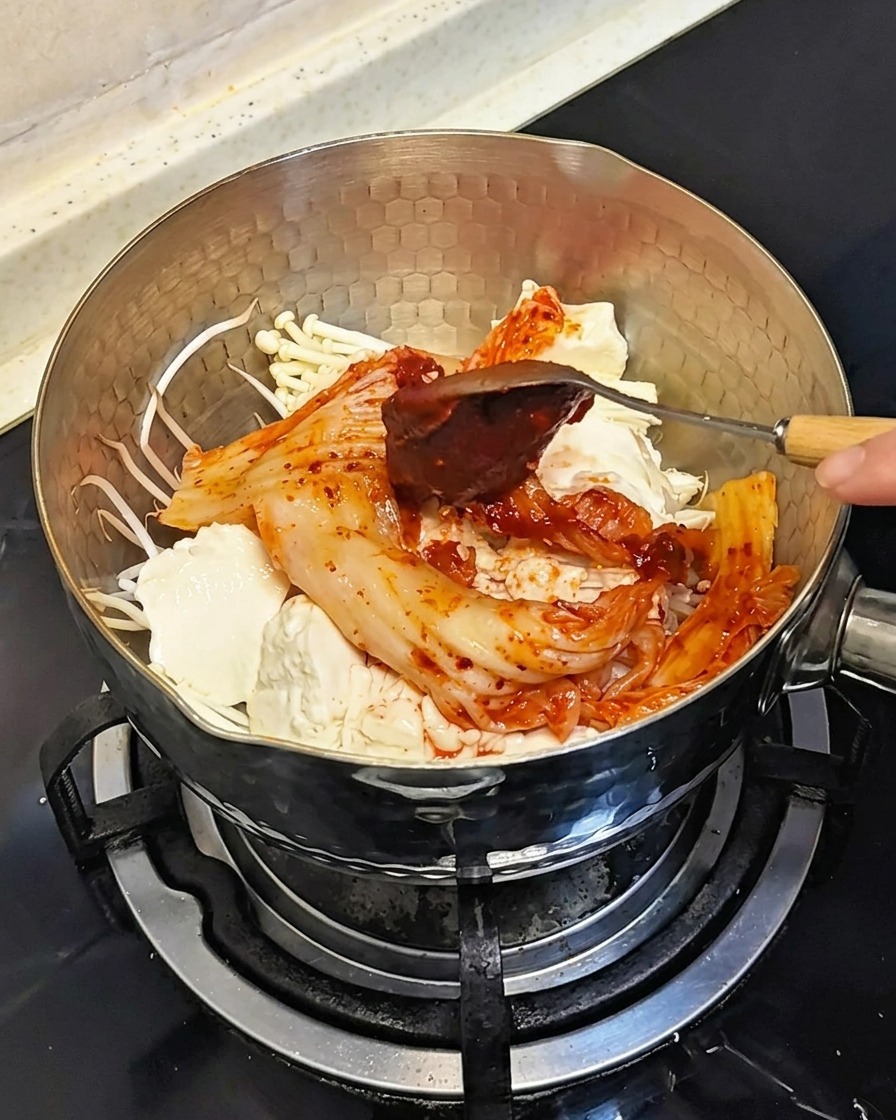
Add a spoonful of thick red Korean chili paste (gochujang) directly onto the ingredients inside the pot.
Tip: Adjust the amount of chili paste based on your personal preference for heat and spiciness. - 6Pour water for the broth
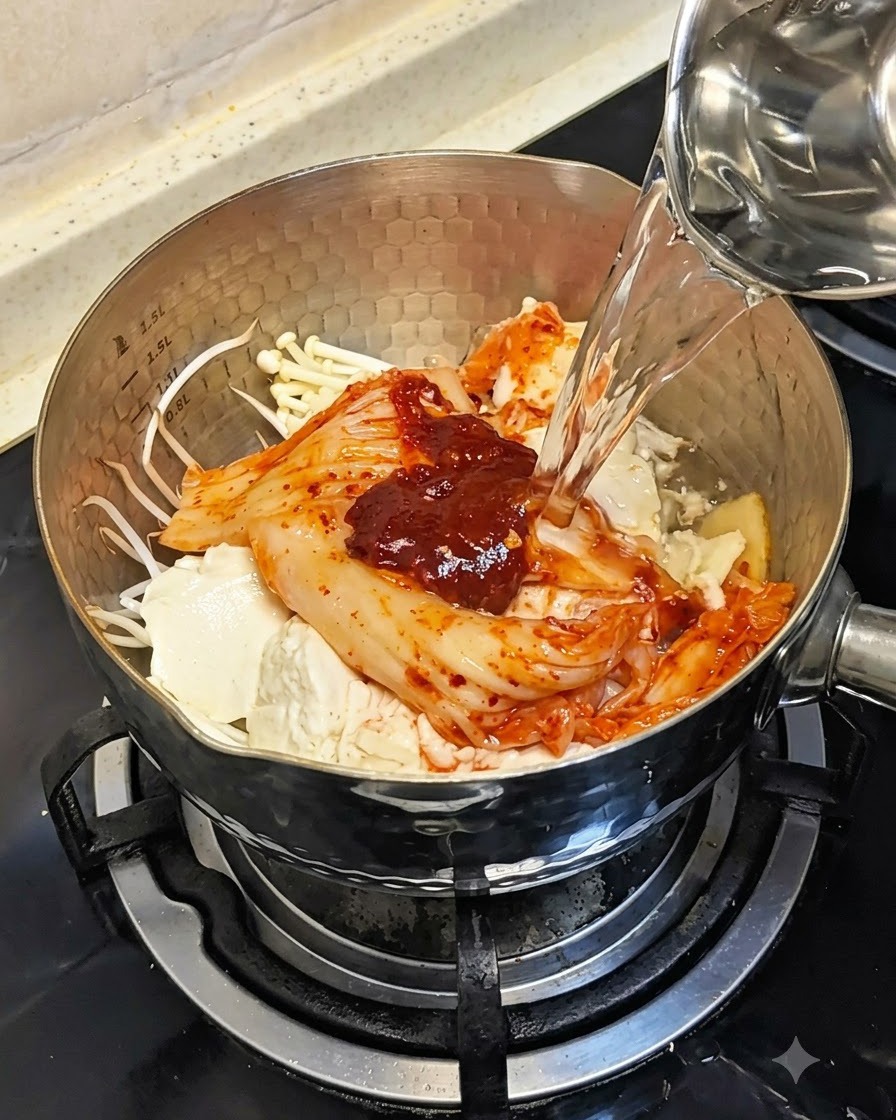
Pour clear water from a glass measuring cup into the pot over the layered ingredients to create the cooking broth.
Tip: Pour the water gently around the sides of the pot to avoid disturbing the arranged ingredients and paste. - 7Add Fresh Tomatoes
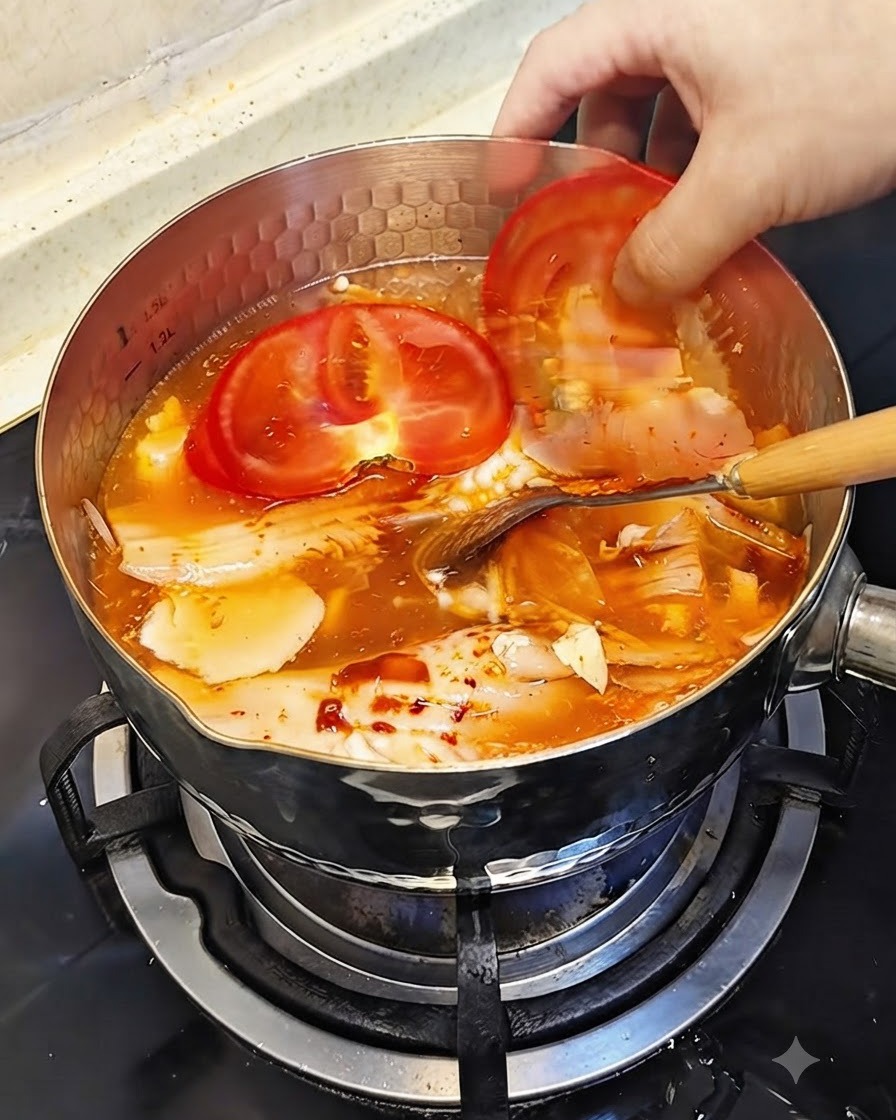
Place two thick slices of fresh red tomato directly into the simmering red broth. The tomatoes add a bright, natural tanginess and depth of flavor to the spicy base.
Tip: Fresh tomatoes help naturally balance the heat and acidity of the Korean chili paste. - 8Add Raw Shrimp
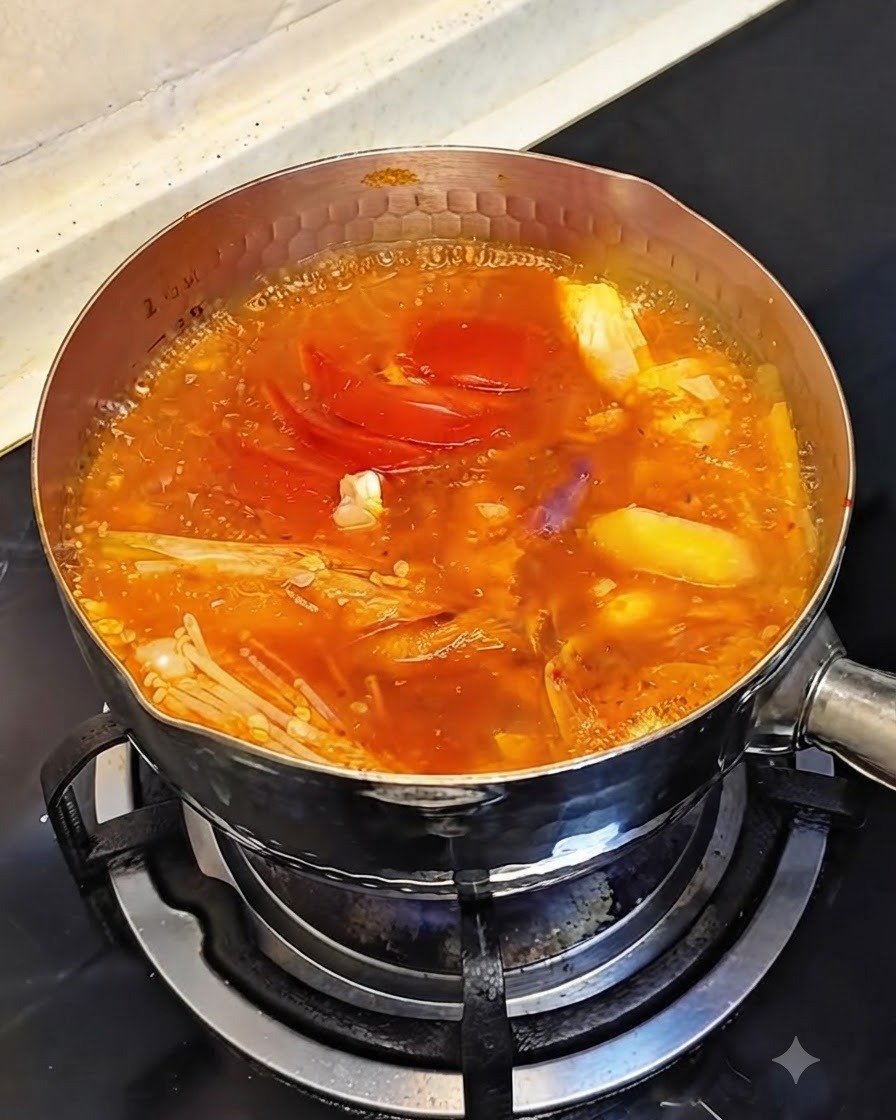
Drop whole raw shrimp into the bubbling stew. As they cook, the shrimp infuse the broth with rich seafood sweetness and flavor.
Tip: Cook the shrimp just until they turn opaque and pink to keep them tender and juicy. - 9Add Instant Noodles
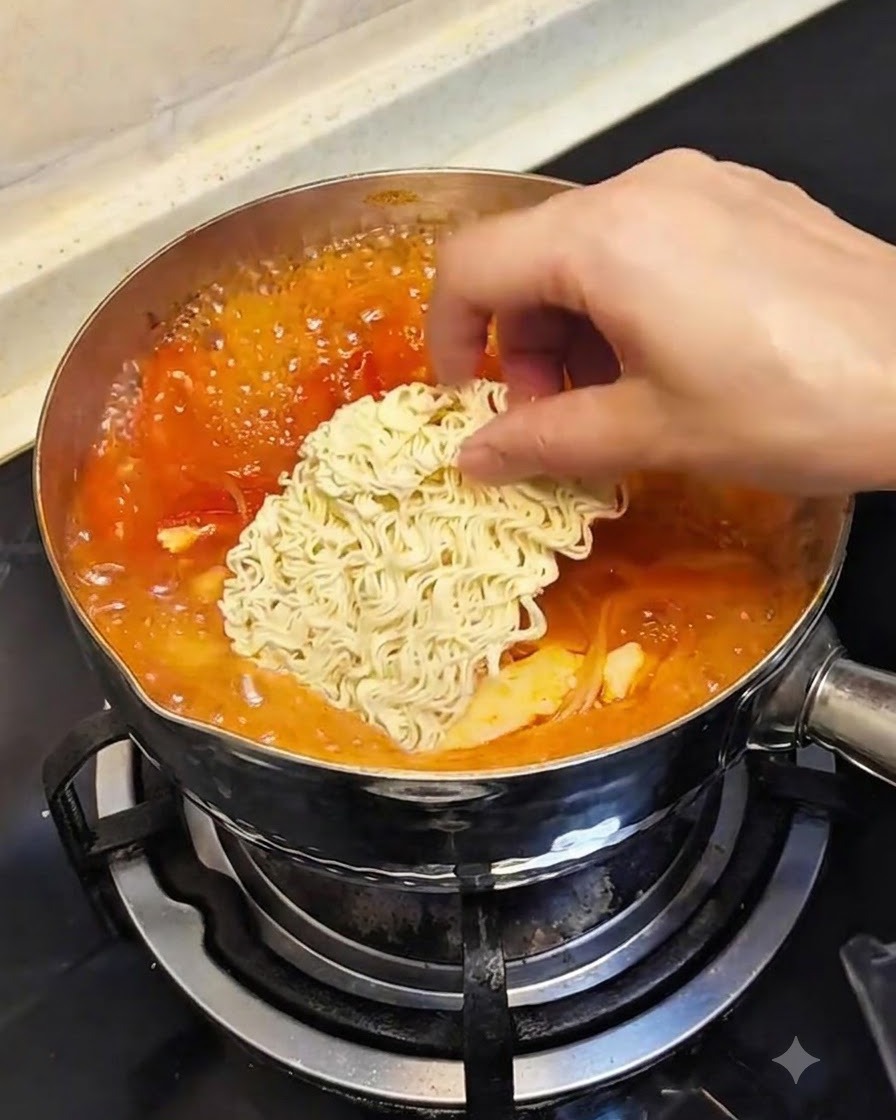
Place a square block of dried instant noodles directly into the center of the pot. Allow the noodles to soften and absorb the savory broth.
Tip: Push the noodles down into the liquid so they cook evenly throughout. - 10Add Thinly Sliced Meat
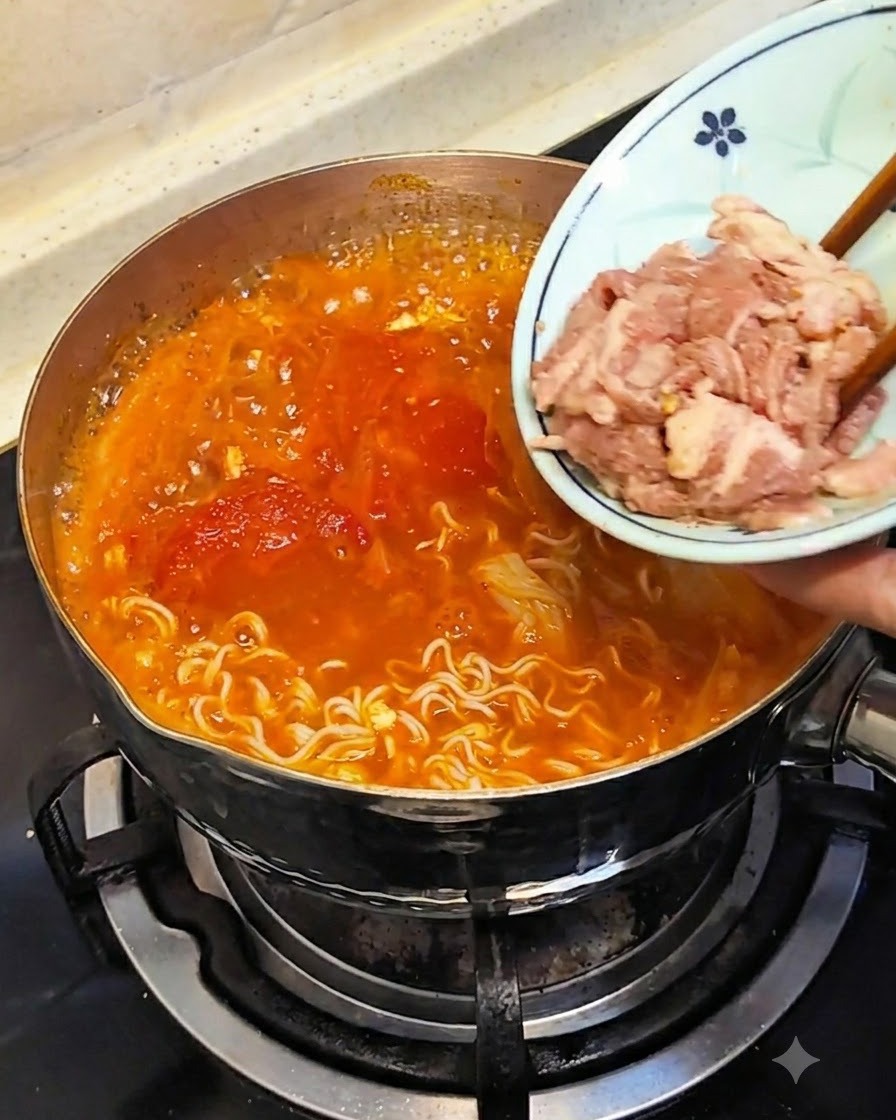
Use chopsticks to submerge raw, thinly sliced meat into the hot broth. The meat cooks rapidly in the boiling liquid.
Tip: Stir the thin slices apart immediately to prevent them from clumping together. - 11Add Leafy Greens
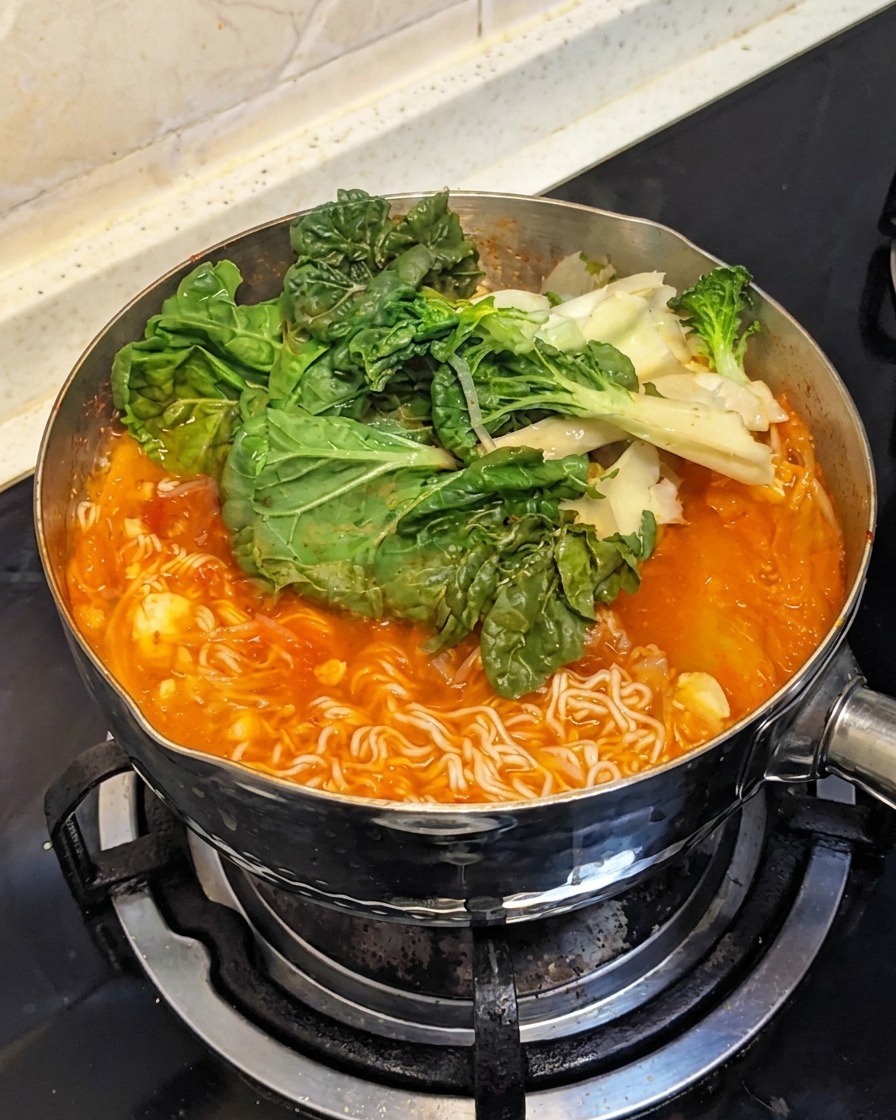
Add fresh leafy green vegetables into the boiling pot. They will wilt quickly in the hot liquid while adding a fresh, crisp texture.
Tip: Do not overcook the greens so they retain their vibrant green color and slight crunch. - 12Garnish with Chili Peppers
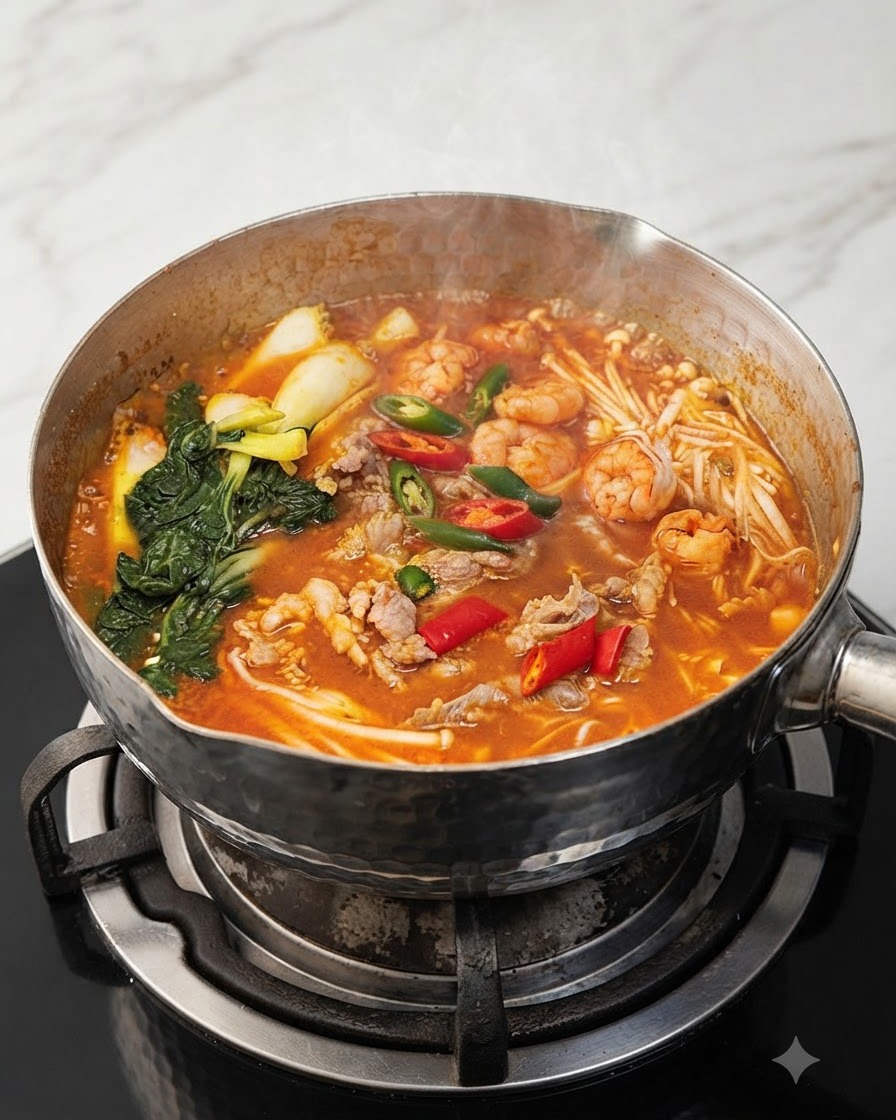
Sprinkle freshly sliced red and green chili pepper rings over the cooking stew for an extra kick of heat and a vibrant finish.
Tip: Adjust the amount of chili peppers according to your personal spice preference.