Classic Korean Army Stew (Budae Jjigae)
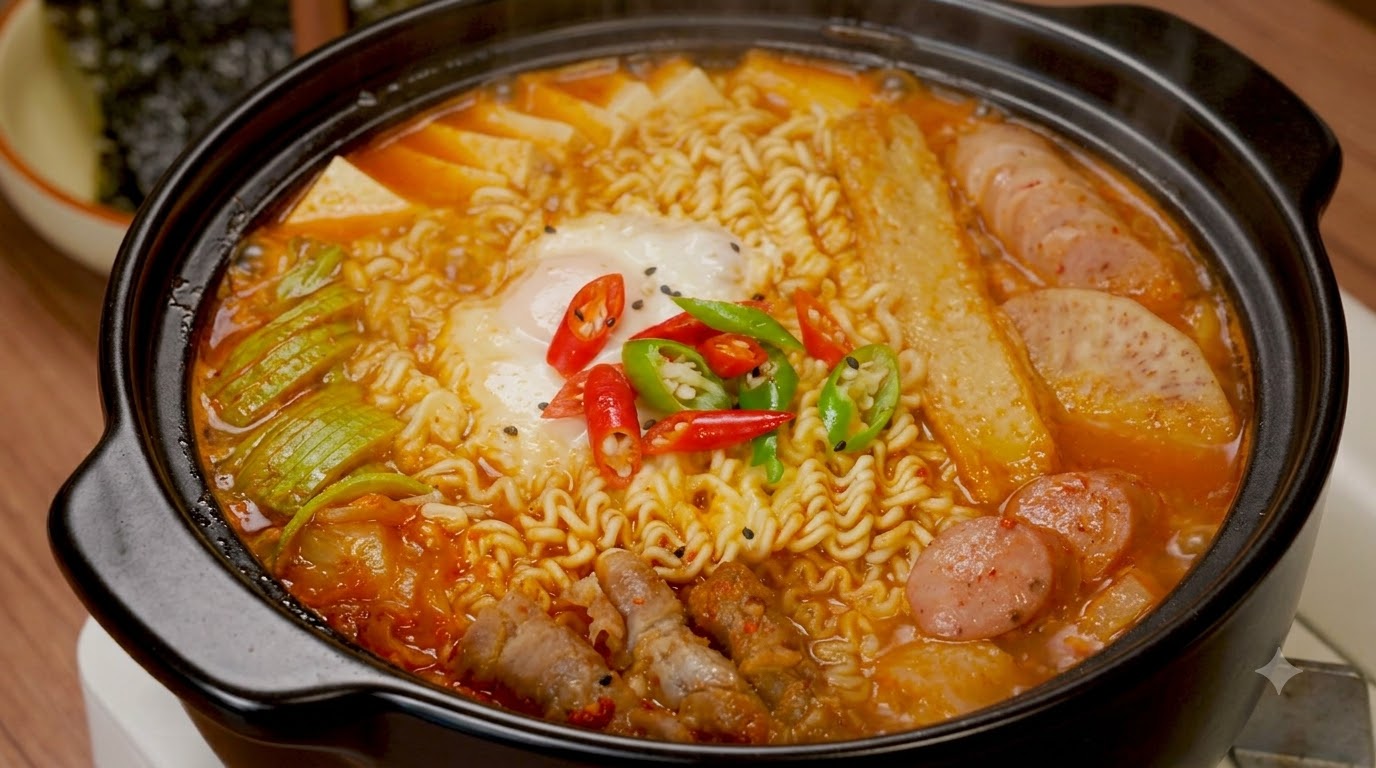
A rich and comforting Korean Army Stew featuring savory luncheon meat, tofu, kimchi, and instant ramen noodles simmered in a spicy, flavorful broth.
Budae jjigae, or Korean army stew, is a beloved fusion dish born out of the post-Korean War era when surplus ingredients from US military bases like spam and hot dogs were incorporated into traditional Korean soups. Today, it has evolved into an immensely popular, customizable comfort food celebrated for its bubbling spicy broth and hearty mix of ingredients.
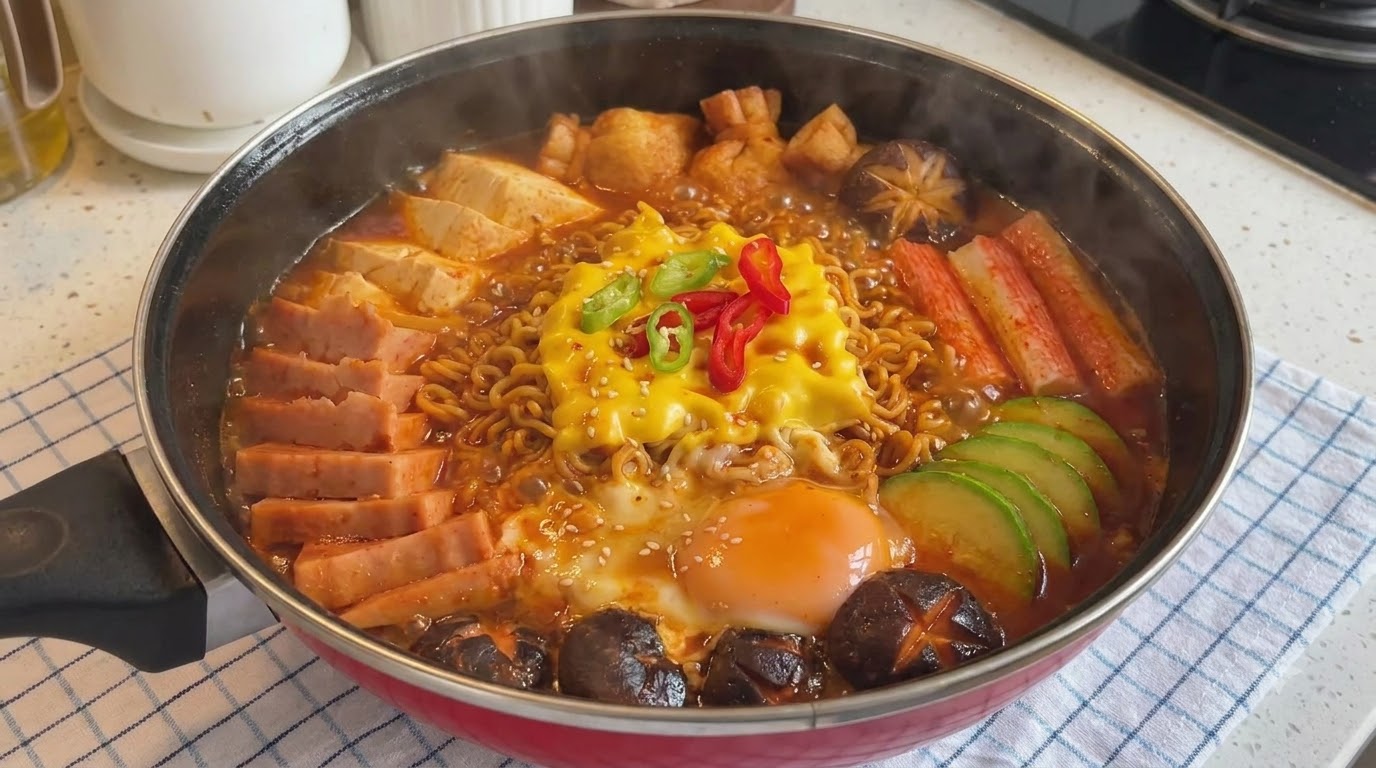
Ingredients
- 1/2 green zucchini
- 1/2 red onion
- 1 block white tofu
- 1 block canned luncheon meat
- 4 fresh shiitake mushrooms
- 3 tbsp light soy sauce
- 1 tbsp chili oil
- 2 tbsp Korean chili paste
- 1 packet spicy ramen seasoning
- 1 splash Sprite
- 1 cup water
- 1 cup chopped kimchi
- 4-5 leaves napa cabbage
- 1 bunch enoki mushrooms
- 4 fried tofu skin knots
- 3 crab sticks
- 1 block instant ramen noodles
- 1 slice yellow cheese
- 1 raw egg
- to taste sliced green and red chilies
Instructions
- 1Slice the zucchini
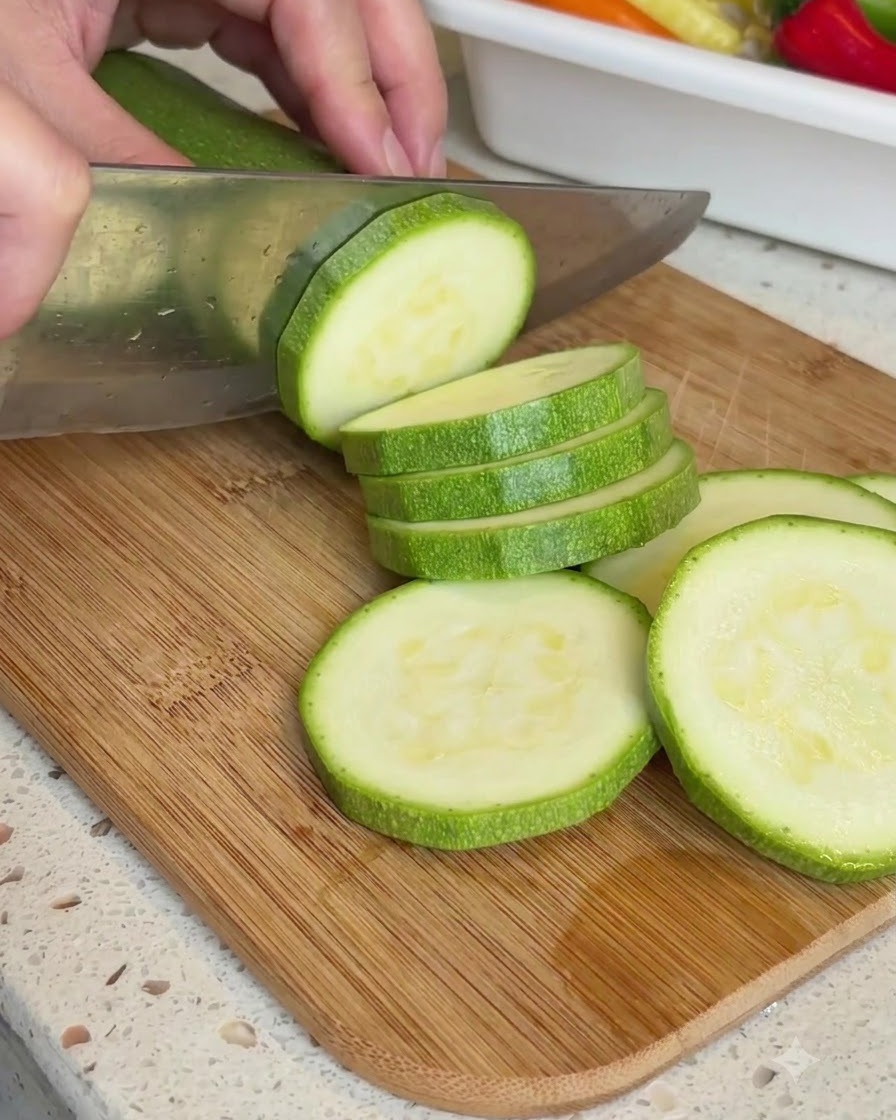
Place a green zucchini on a wooden cutting board and use a sharp knife to slice it into slightly thick rounds.
Tip: Cut the slices evenly so they cook at a consistent rate in the stew. - 2Cut the red onion
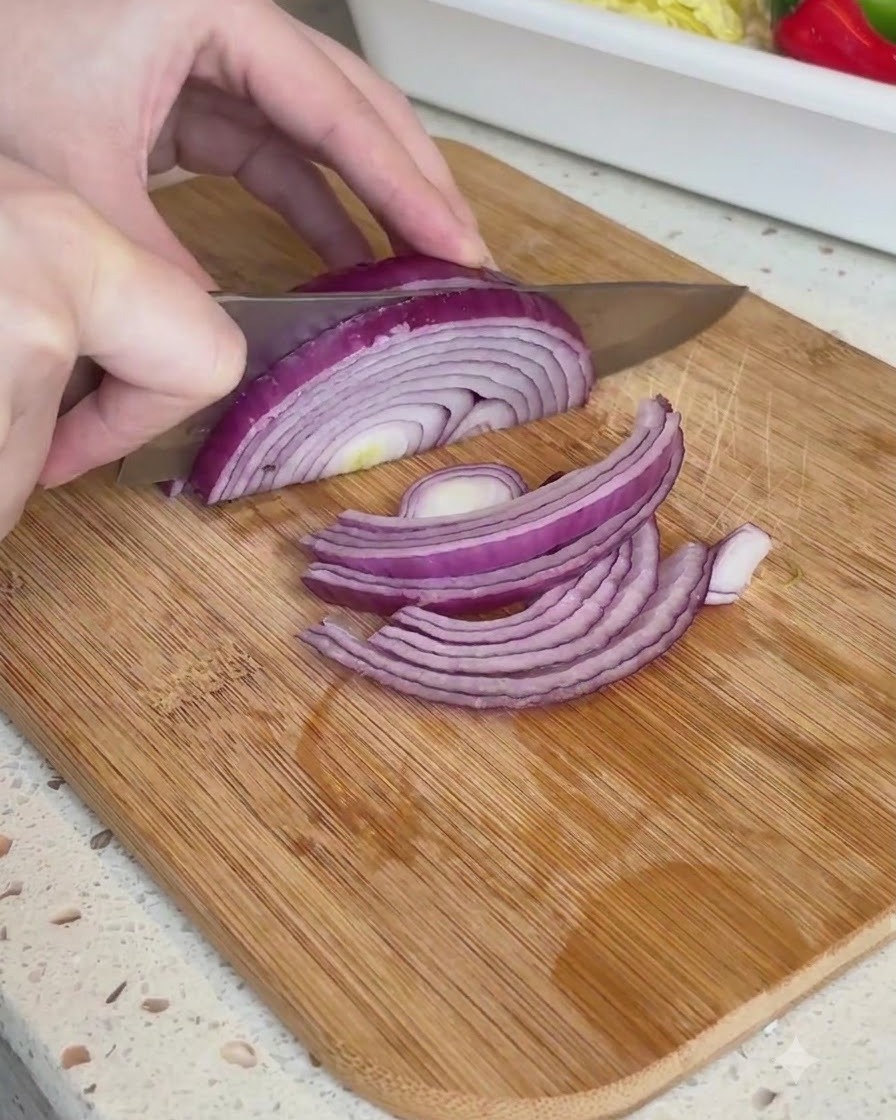
Take half of a red onion and slice it into strips on a wooden cutting board using a knife.
Tip: Slicing the onions into strips helps them release their natural sweetness quickly when stir-fried. - 3Cube the tofu
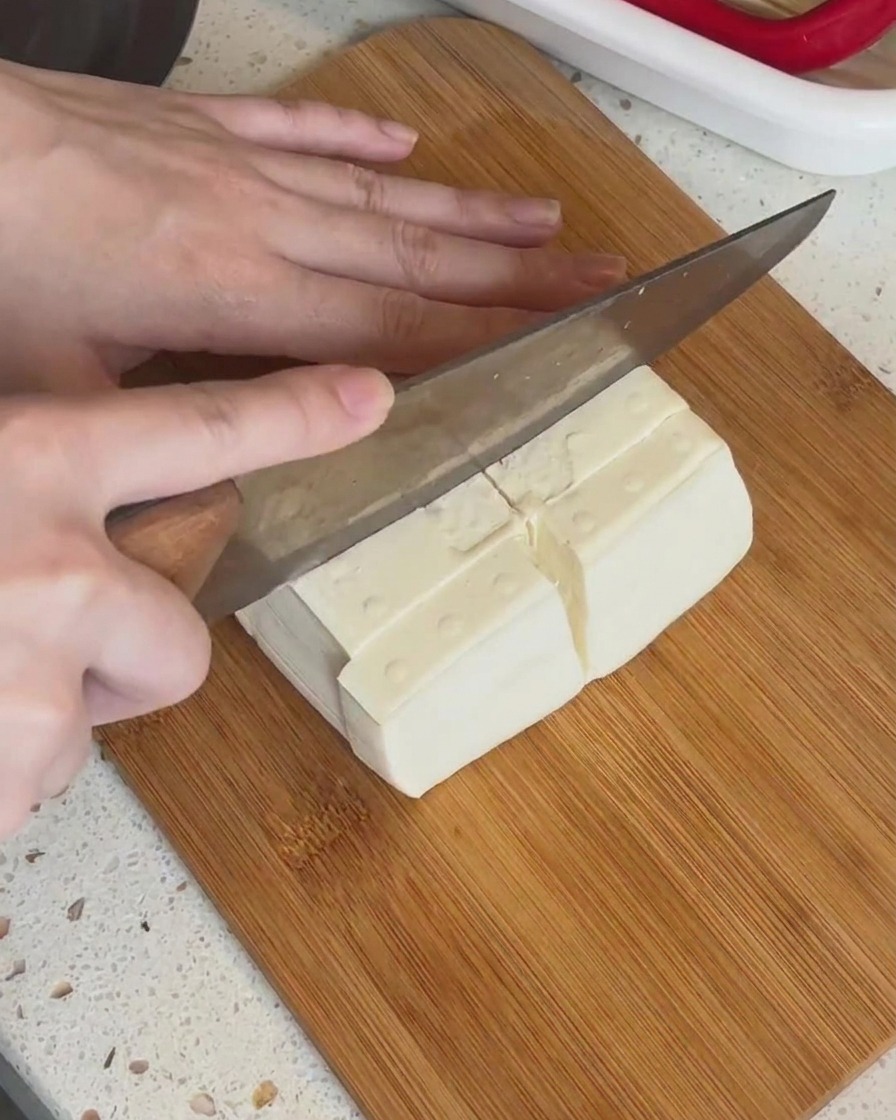
Cut a square block of white tofu into smaller rectangular pieces on the wooden cutting board.
Tip: Handle the soft tofu gently to keep the pieces intact before adding them to the stew. - 4Slice the luncheon meat
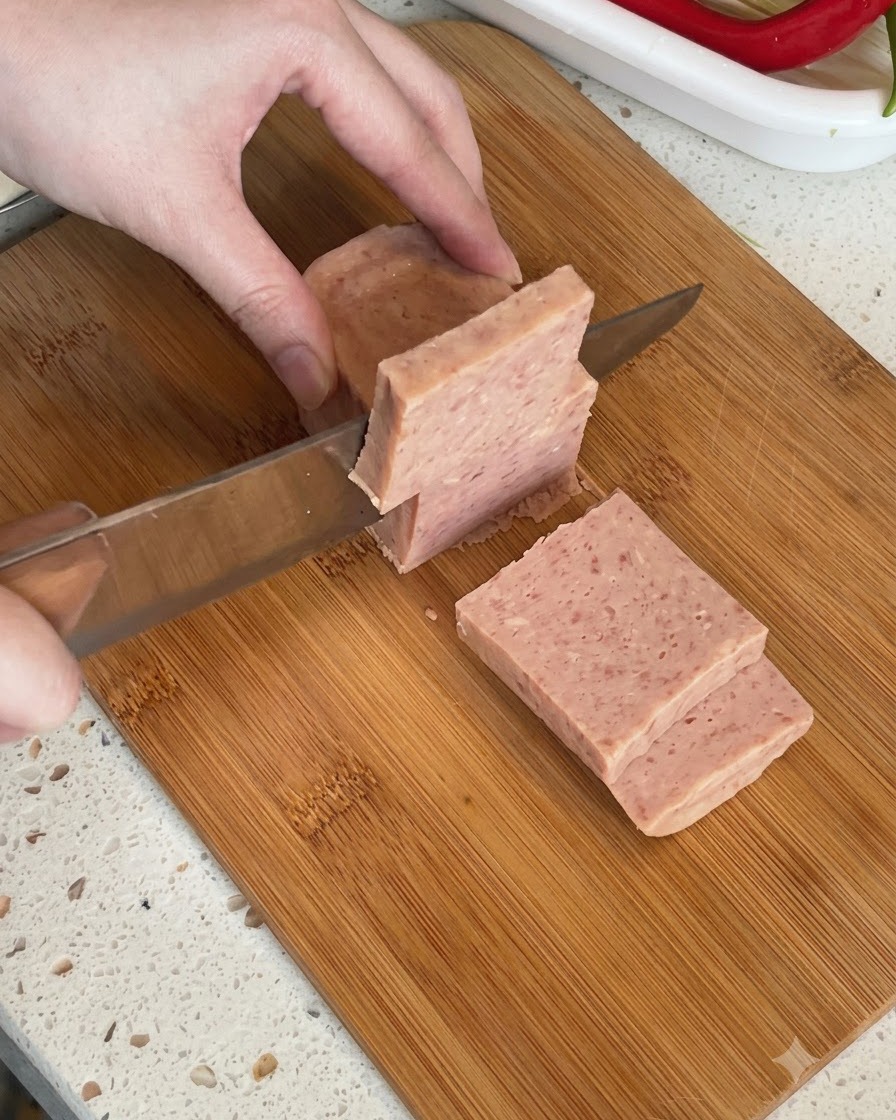
Cut a block of canned luncheon meat into thick slices using a kitchen knife.
Tip: Thick slices hold their shape better and absorb the rich flavors of the stew during simmering. - 5Score the shiitake mushrooms
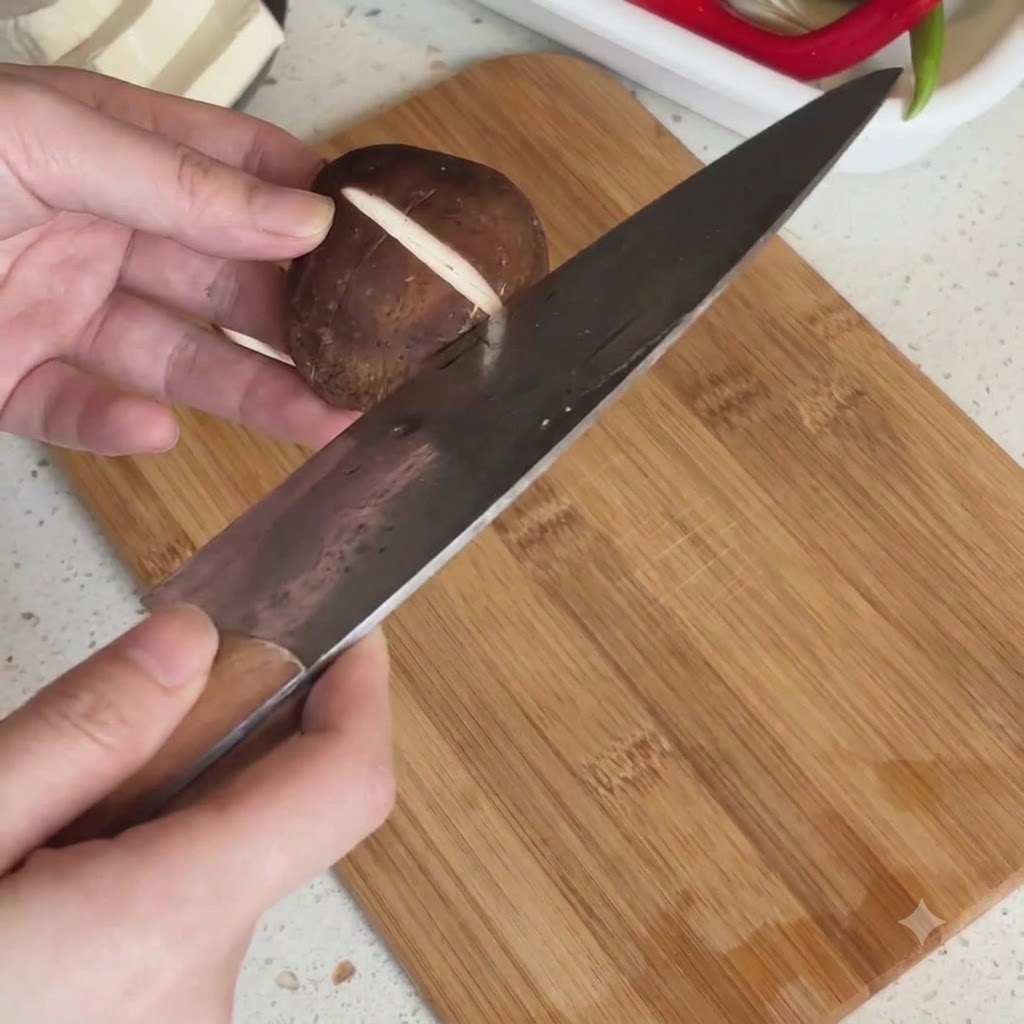
Use a knife to carefully score a decorative cross pattern into the top cap of a fresh shiitake mushroom.
Tip: Scoring not only adds a classic presentation touch but also allows the savory broth to seep inside. - 6Prepare the sauce mixture
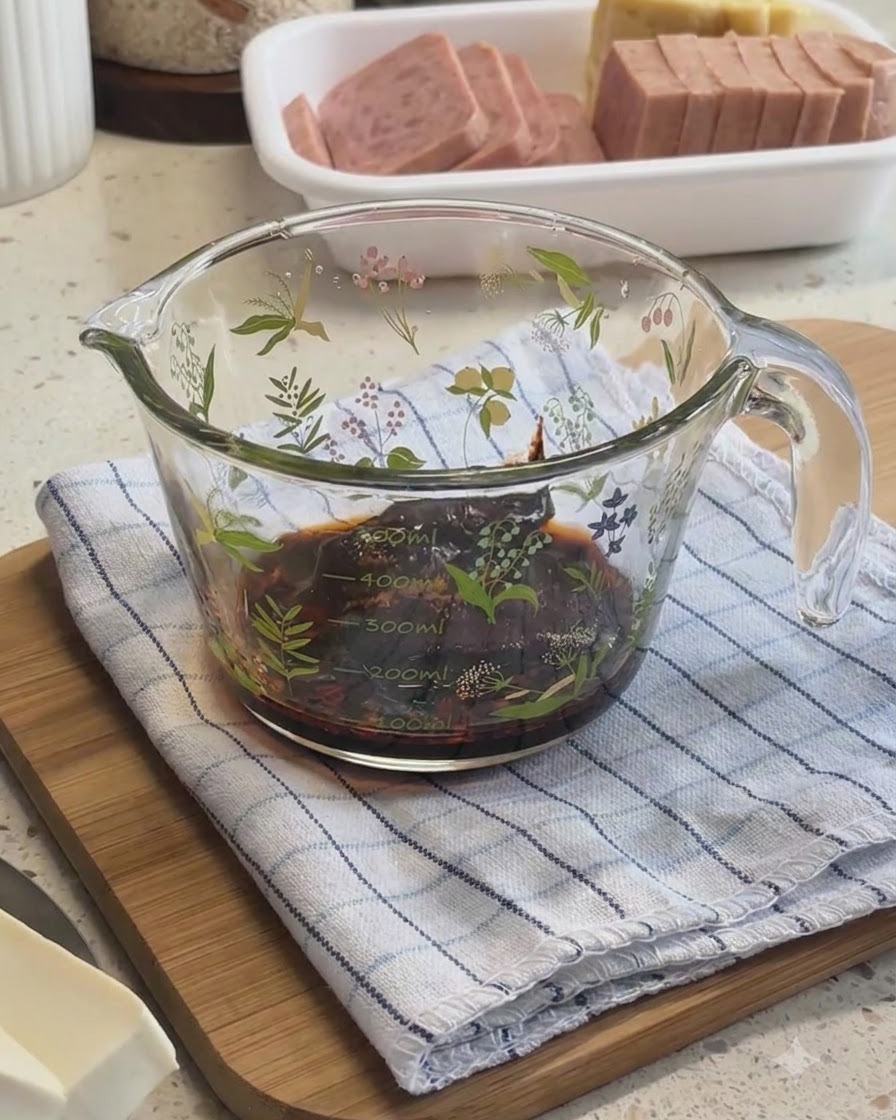
Combine light soy sauce, chili oil, Korean chili paste, spicy ramen seasoning packet, a splash of Sprite, and a little water inside a glass measuring cup, then mix well to create the stew base.
Tip: Adding a splash of Sprite gives the sauce a subtle, pleasant sweetness that balances the spicy chili paste. - 7Stir-Fry Red Onions
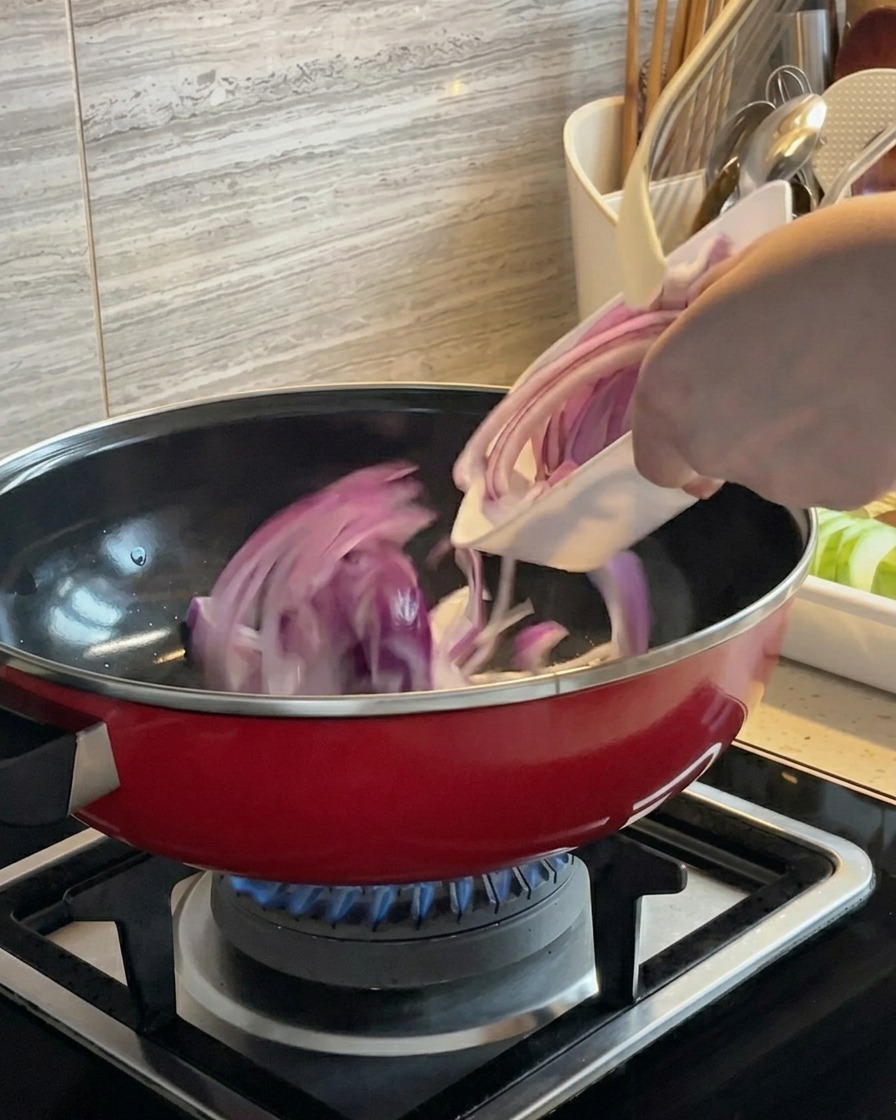
Place the sliced red onions into a heated red pot and stir-fry them continuously until they become soft and translucent, releasing their natural sweetness into the base.
Tip: Keep the heat at medium so the onions soften thoroughly without burning. - 8Add the kimchi
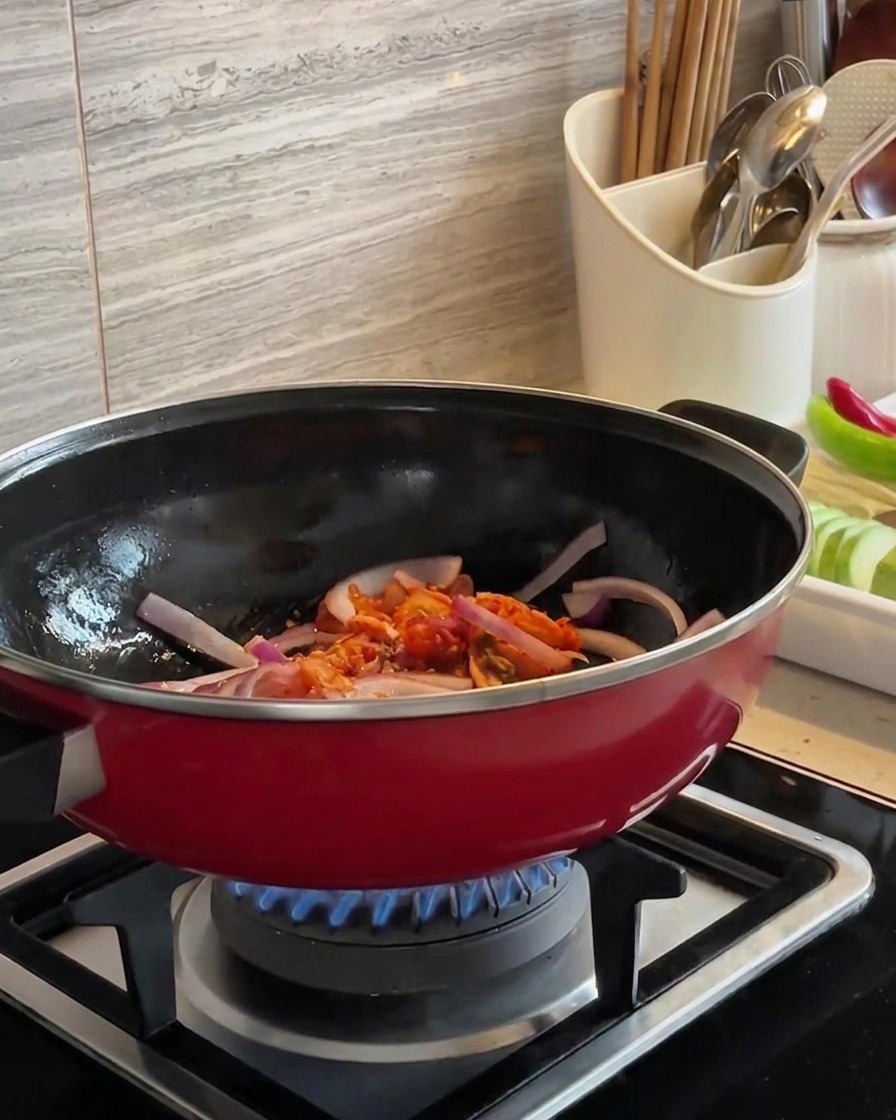
Once the red onions have softened, add the chopped kimchi directly into the pot. Stir-fry the onions and kimchi together for a couple of minutes to let the tangy and spicy flavors mingle, deepening the overall taste of the dish.
Tip: Using well-fermented, sour kimchi will yield the most authentic and robust flavor for your army stew. - 9Layer the cabbage base
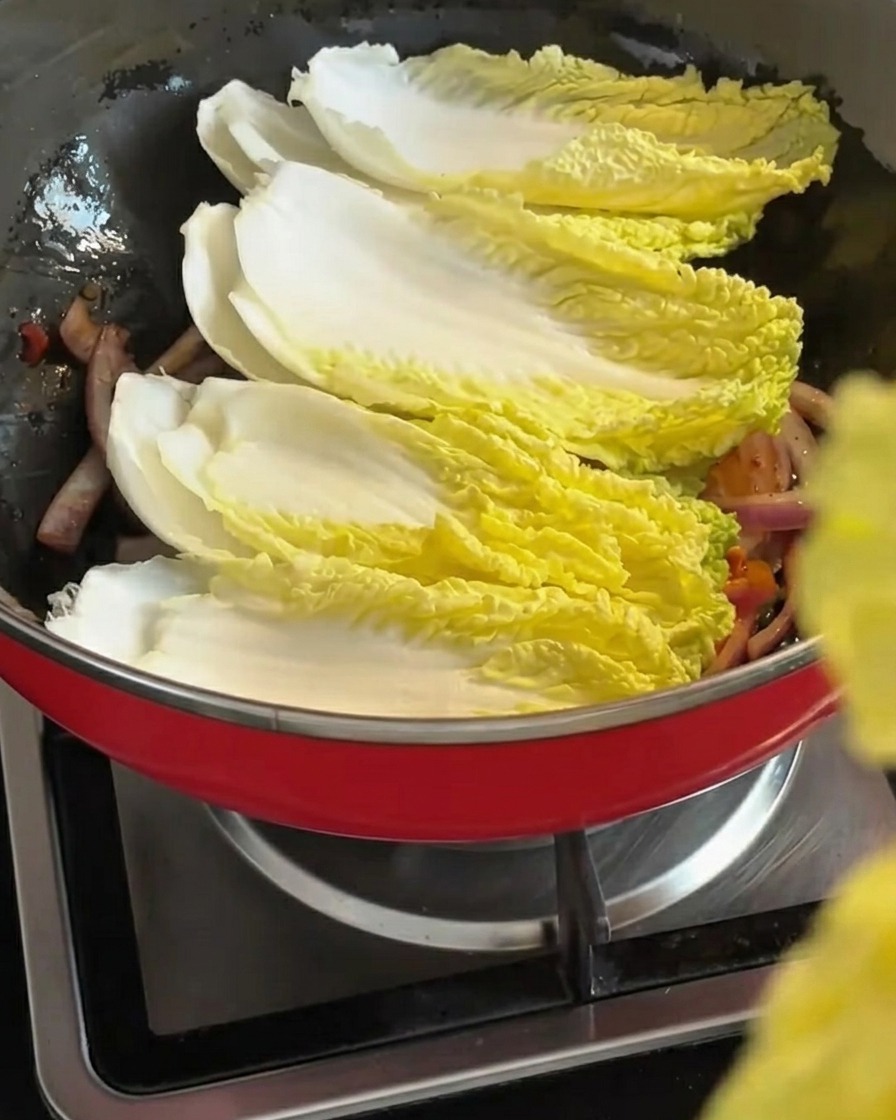
Carefully arrange the fresh napa cabbage leaves evenly over the stir-fried onion and kimchi mixture. This creates a protective bottom layer that prevents the remaining ingredients from sticking and burning.
Tip: The cabbage will release moisture as it cooks, adding natural sweetness to the stews broth. - 10Arrange the ingredients
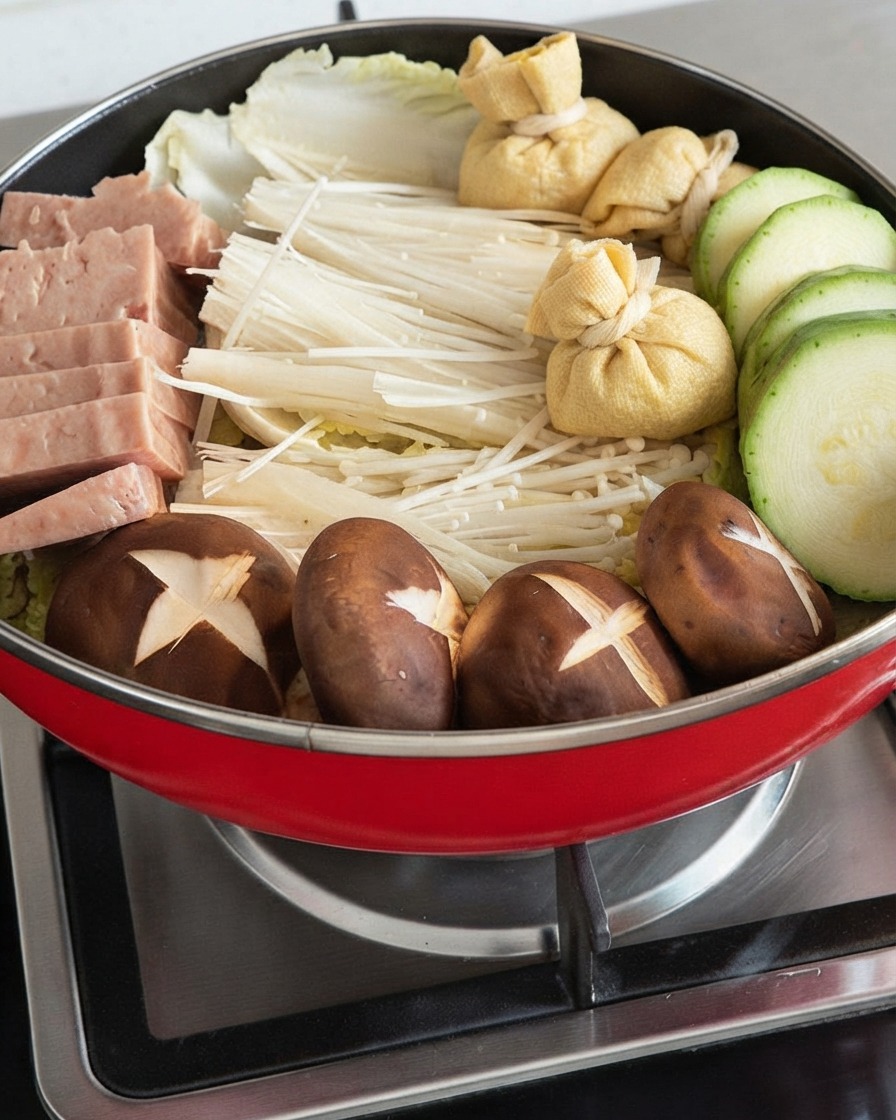
Neatly arrange your prepared ingredients over the cabbage leaves. Place the enoki mushrooms, scored shiitake mushrooms, sliced zucchini, luncheon meat, and fried tofu skin knots in a circular pattern around the pot.
Tip: Grouping identical ingredients together makes the stew look neat and allows diners to easily pick what they want as it cooks. - 11Pour the sauce
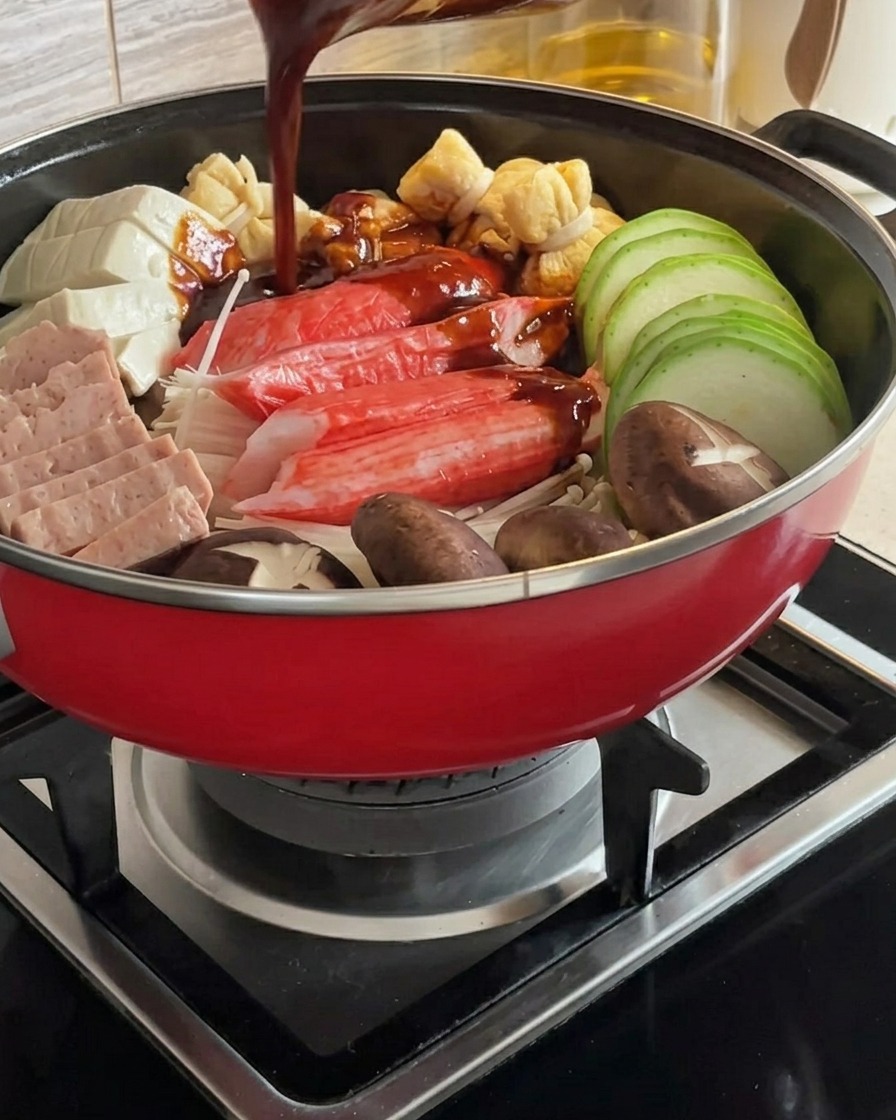
Add any remaining ingredients like crab sticks and sliced tofu to the pot. Then, pour the prepared spicy red sauce mixture evenly over everything.
Tip: Make sure to mix your sauce thoroughly before pouring so the chili paste and seasonings are fully dissolved. - 12Add the ramen noodles
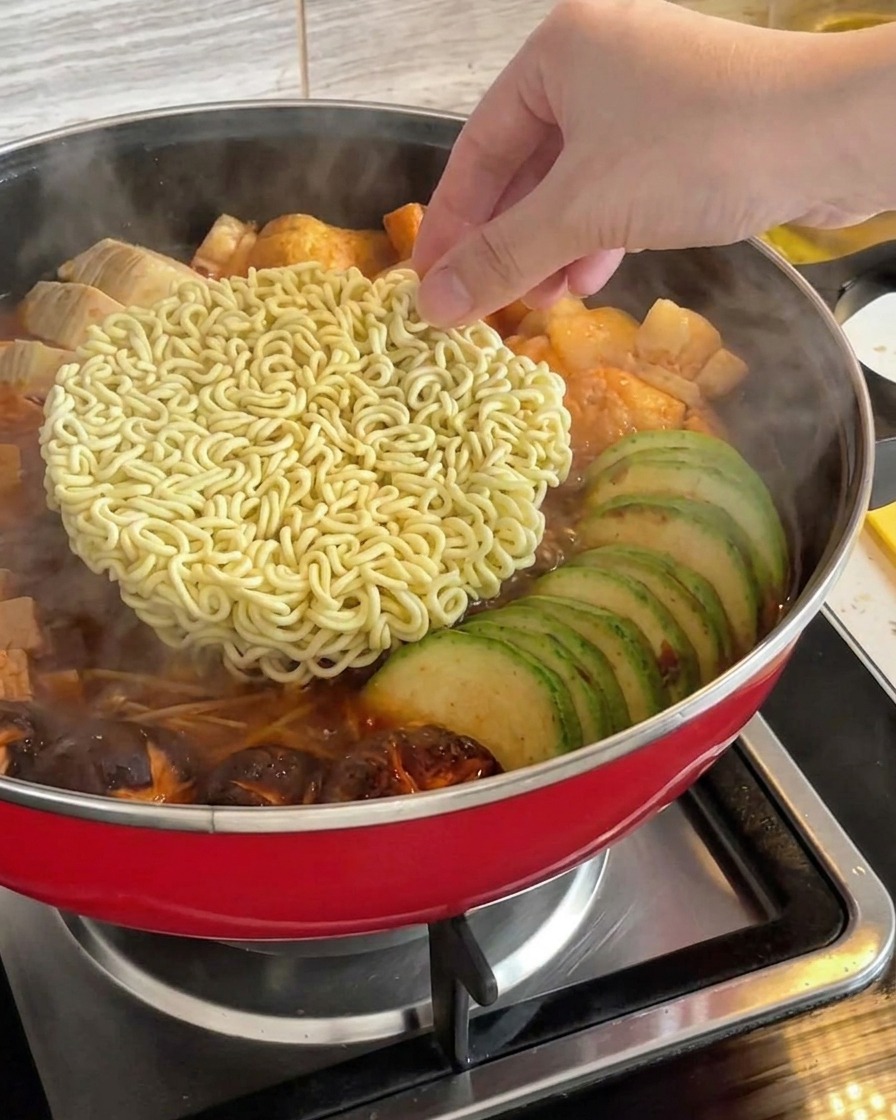
Once the broth is simmering and the ingredients are cooking, place a block of dry instant ramen noodles right into the center of the pot.
Tip: Wait until the broth is actively bubbling before adding the noodles to ensure they cook evenly and retain a springy texture. - 13Add Cheese Slice
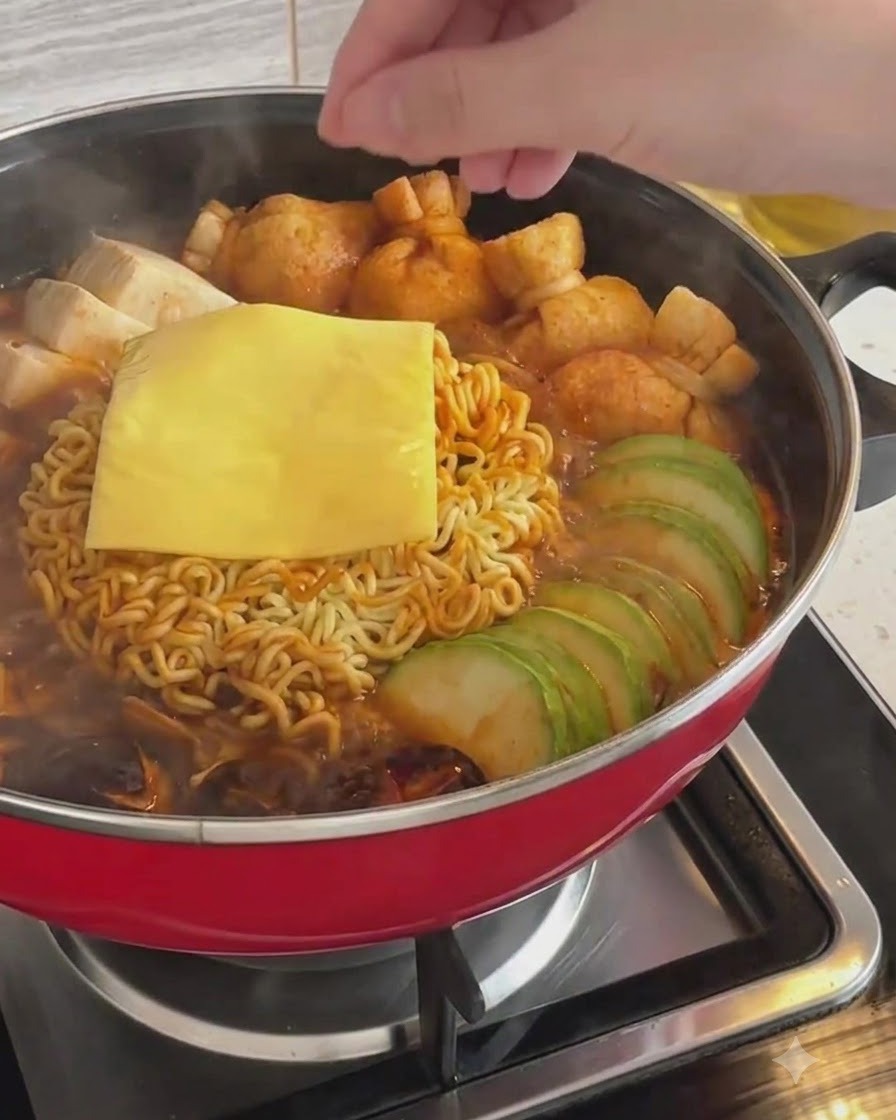
Lay a square slice of yellow cheese directly on top of the cooking ramen noodles and surrounding ingredients to add a rich, creamy texture to the broth as it melts.
Tip: Place the cheese right in the center so it melts evenly into the simmering broth and noodles. - 14Crack an Egg
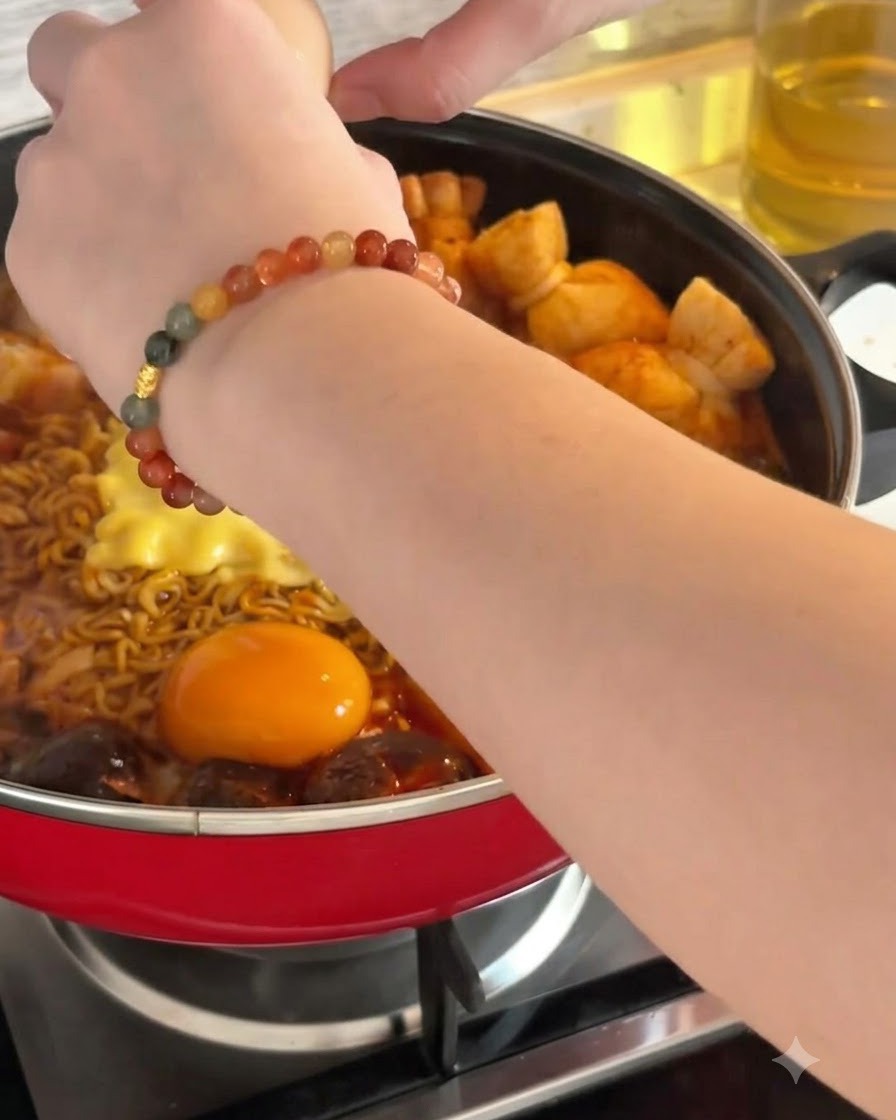
Carefully crack a raw egg directly into the hot, bubbling broth right next to the noodles and cheese, allowing it to poach gently in the flavorful soup.
Tip: Do not stir the egg immediately if you want a soft, intact poached egg yolk in your finished stew.