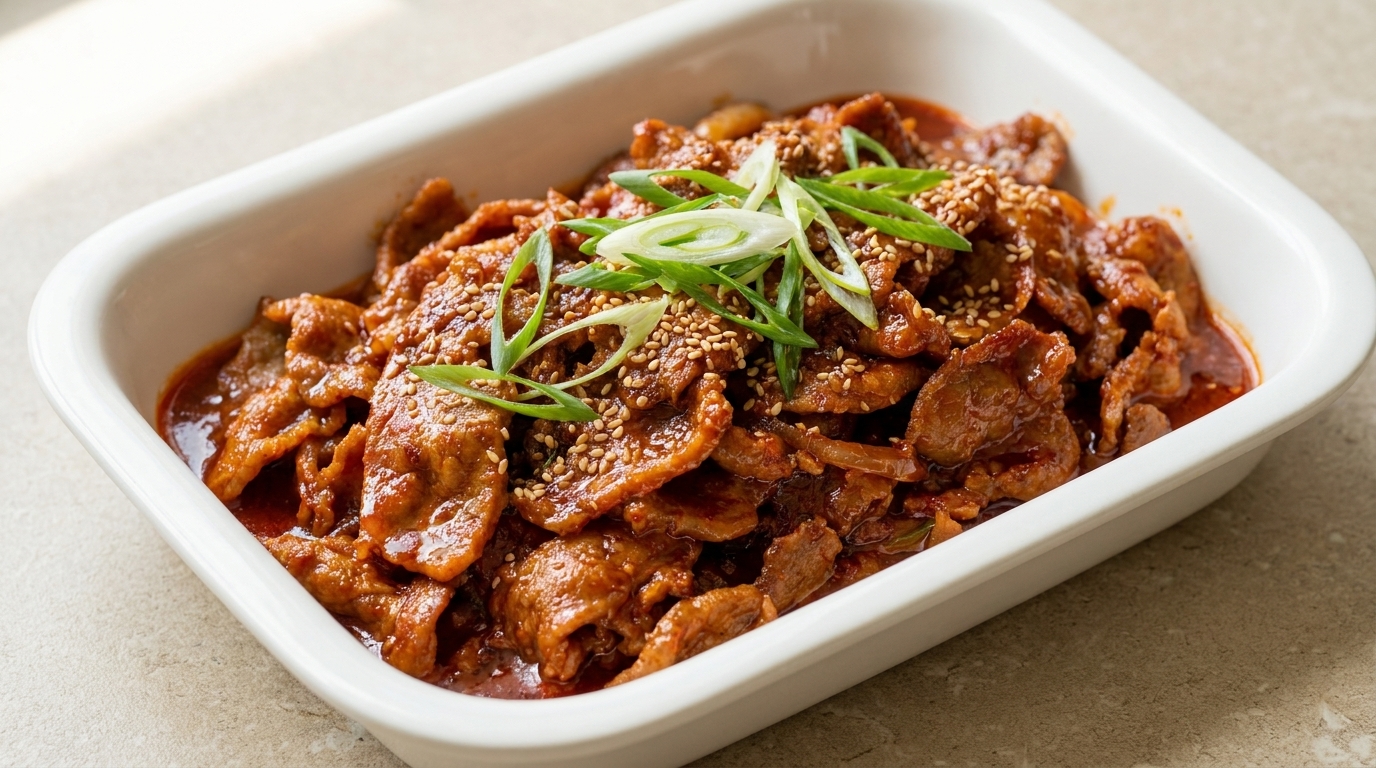
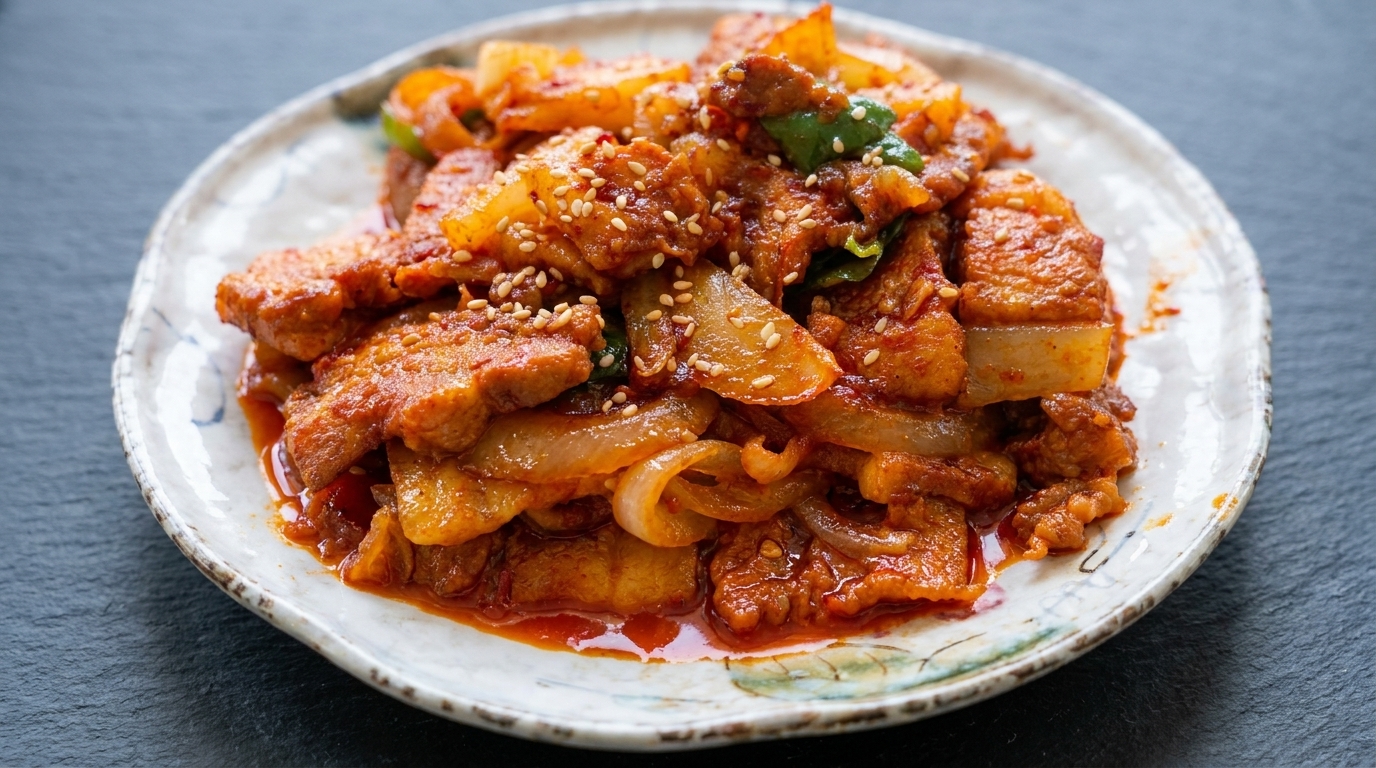
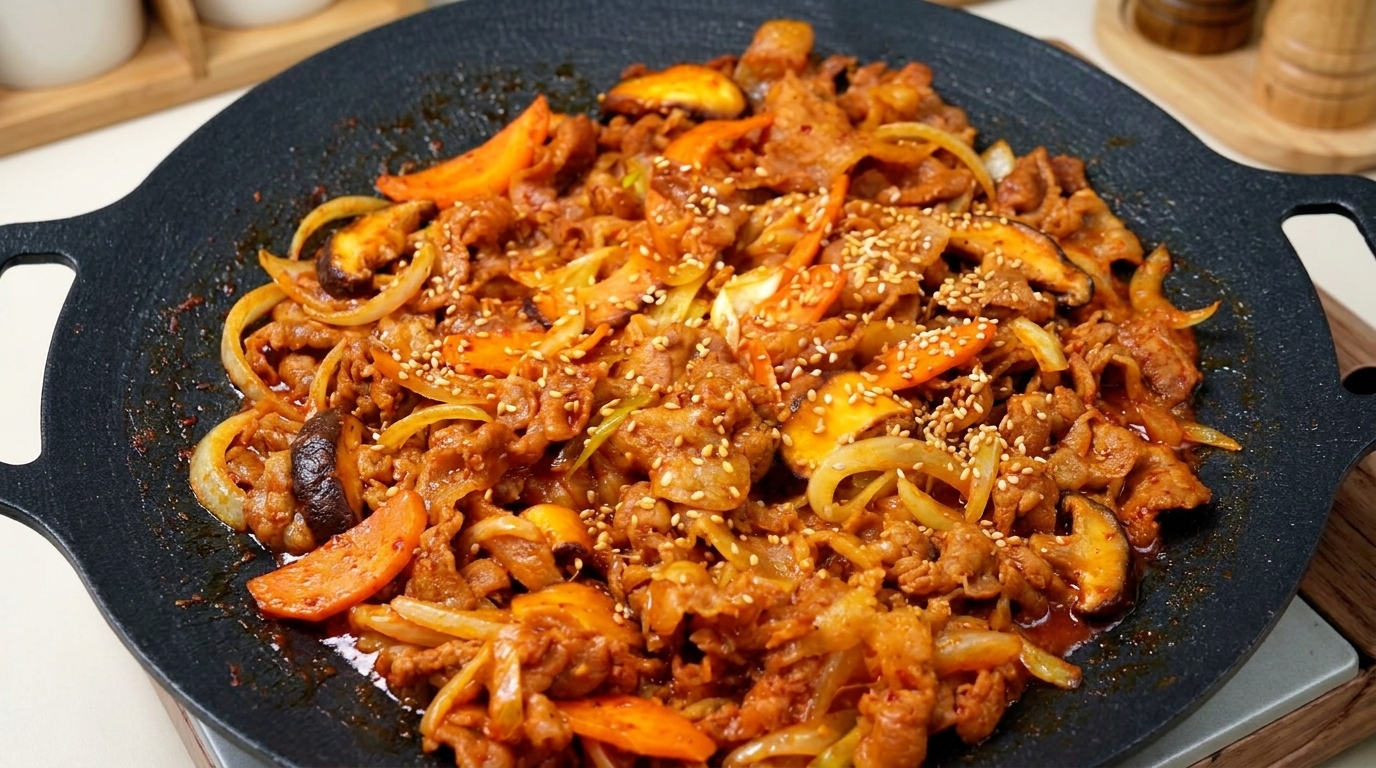
Authentic Seoul-Style Spicy Stir-Fried Pork Belly (Jeyuk Bokkeum)
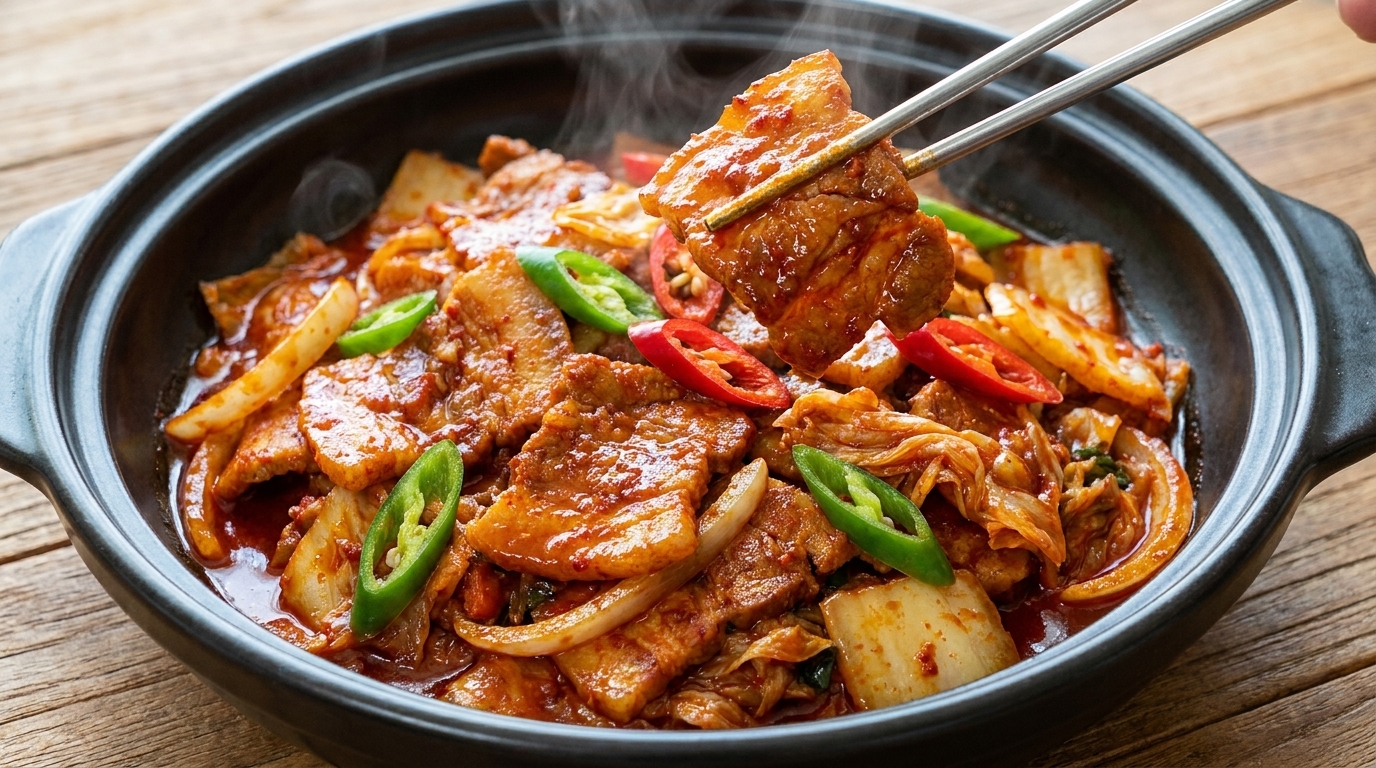
A classic Seoul delicacy featuring firm, bouncy pork belly and tangy kimchi glazed in a sweet and savory gochujang sauce.
Jeyuk Bokkeum is a beloved staple of Korean home cooking and Seouls vibrant street food scene. This version pairs the rich fattiness of pork belly with well-fermented kimchi, creating a harmonious balance of heat, acidity, and umami. It is traditionally enjoyed with a steaming bowl of white rice to temper the bold, spicy glaze.
Ingredients
- 500 g pork belly, thinly sliced
- 200 g Korean kimchi, chopped
- 12 white onion, sliced
- 3 tbsp Korean chili paste (gochujang)
- 1 tbsp garlic, minced
- 2 stems green onions
- 1 green chili pepper
- 1 red chili pepper
- 1 tsp sesame oil
- to taste water
Instructions
- 1Prepare the base paste

Begin by squeezing Korean chili paste (gochujang) into a small mixing bowl. This thick, fermented condiment provides the characteristic heat and deep red color essential for the stir-fry sauce.
Tip: Choose a high-quality gochujang for the best balance of spiciness and savory umami flavor. - 2Mix the versatile Korean sauce
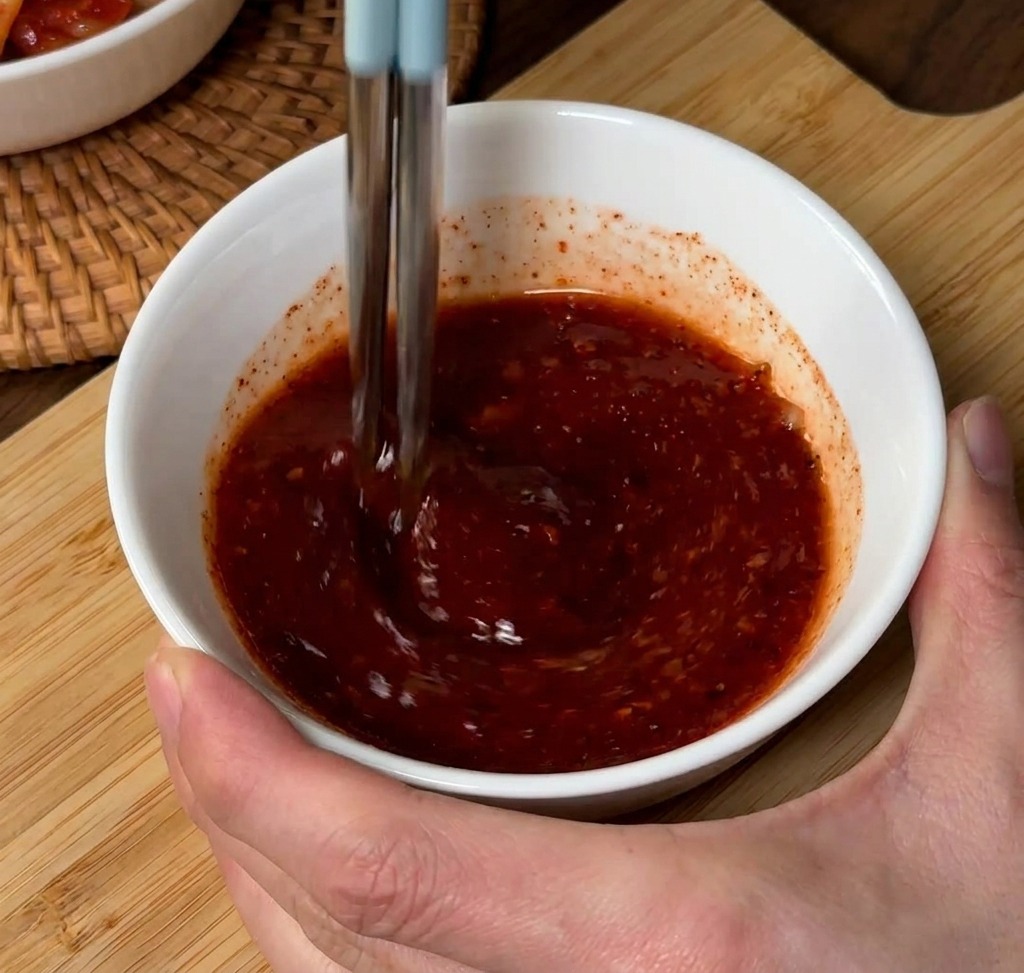
Combine the chili paste with the other seasonings to create a well-balanced sauce. Use a pair of chopsticks to stir everything thoroughly until the mixture is smooth and uniform in color.
Tip: Preparing this sauce in advance allows the flavors to meld together more effectively before cooking. - 3Start the pork belly
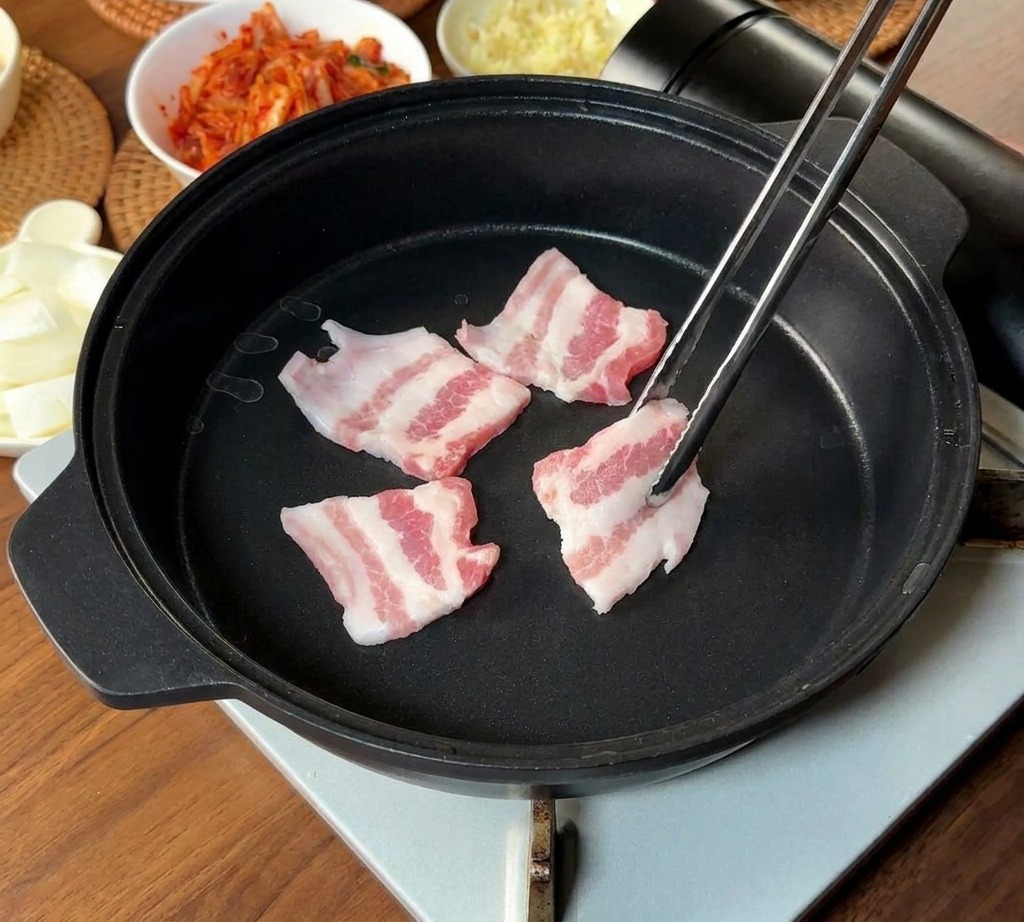
Heat a flat pan without adding any oil, as the pork belly will release its own fat. Place the thinly sliced pork belly pieces into the dry pan, spreading them out evenly to ensure consistent cooking.
Tip: If you prefer a leaner dish, you can substitute the pork belly with pork neck or hind leg slices. - 4Render the fat
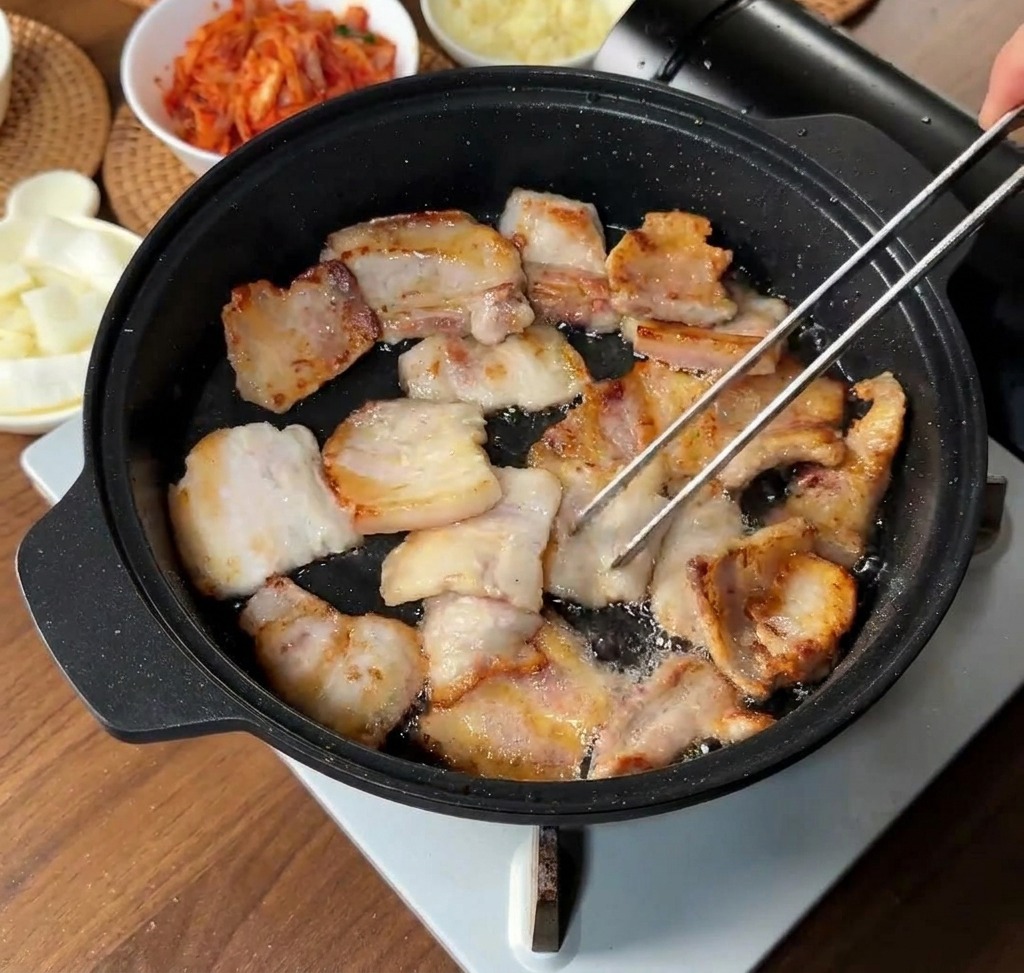
Fry the pork belly slices with patience until the fat renders out and the meat begins to brown beautifully. Use tongs to flip the slices occasionally, ensuring both sides develop a crisp texture.
Tip: Dont rush this step; properly rendered fat provides the best flavor and prevents the meat from being too greasy. - 5Sauté the aromatics
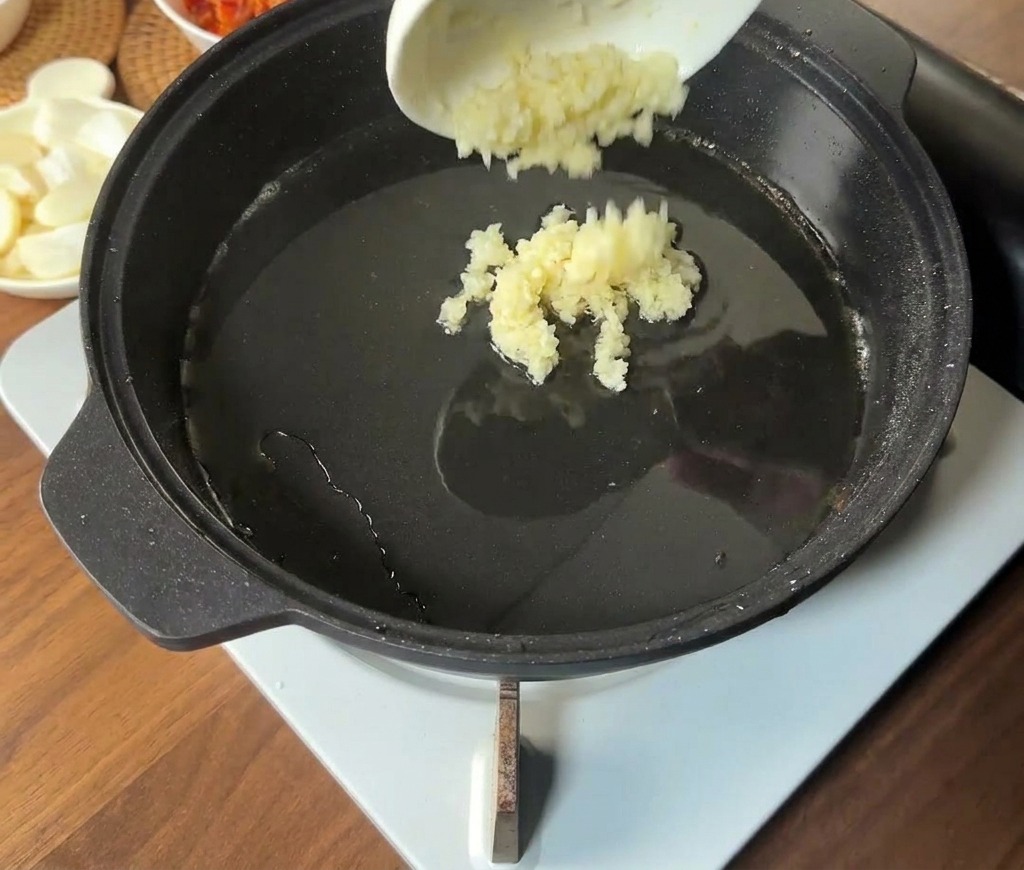
Keep the rendered oil in the pan and add minced garlic and sliced green scallion whites. Sauté them over medium heat until they release their fragrant aroma and become slightly golden.
Tip: Be careful not to burn the garlic; a light golden color is sufficient for maximum flavor without bitterness. - 6Add kimchi and onions
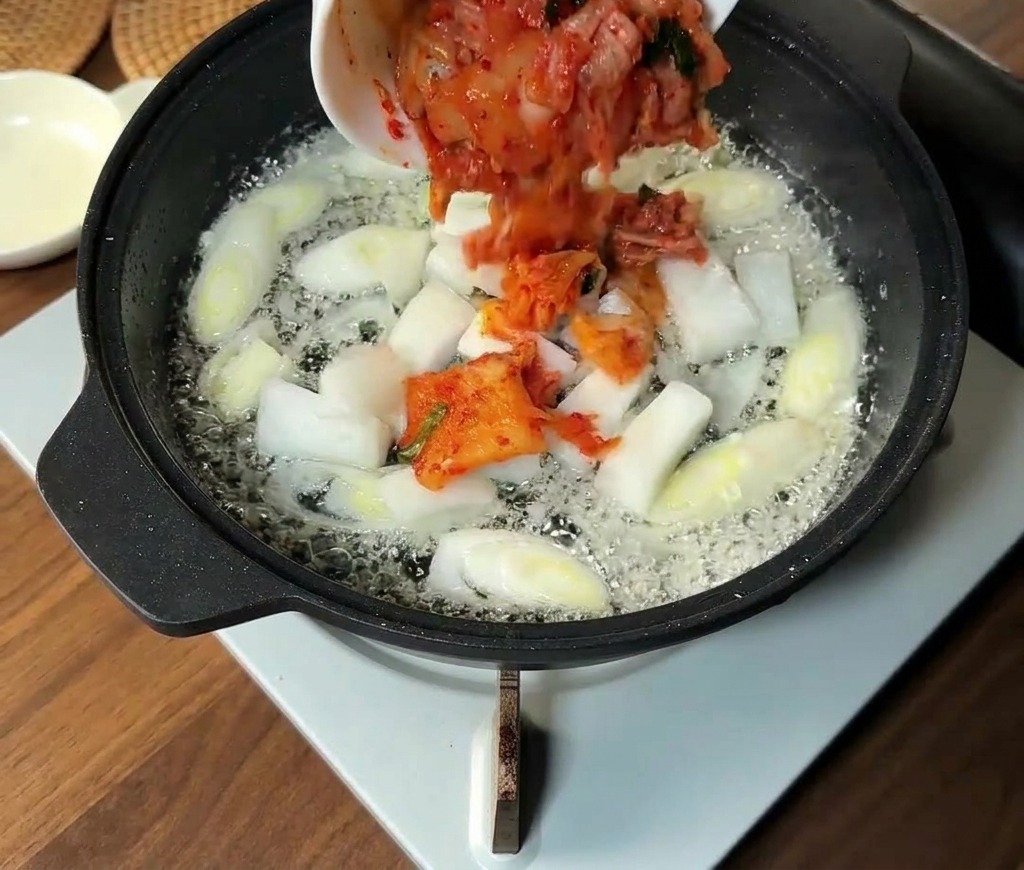
Introduce the white onion slices and chopped Korean kimchi into the pan with the sautéed aromatics. Stir-fry the mixture together until the onions become tender and the kimchi begins to soften.
Tip: Using well-fermented, sour kimchi will add a deeper, more complex tanginess to the final dish. - 7Return the pork to the pan
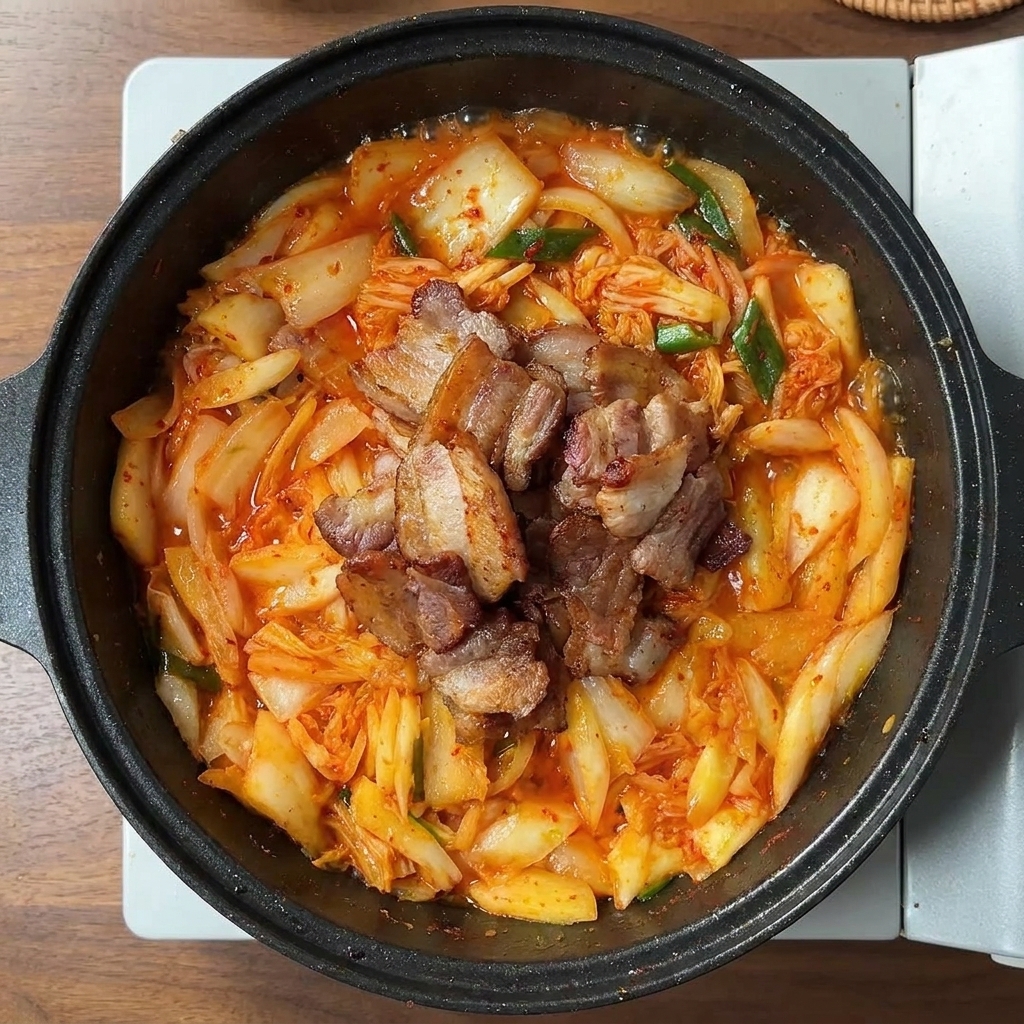
Add the fried pork belly slices back into the pan with the sautéed onions and kimchi. Stir them briefly to combine the flavors before adding the seasoning. This allows the meat to absorb the juices from the vegetables.
Tip: Keeping the rendered pork fat in the pan while sautéing the vegetables adds an extra layer of savory depth to the entire dish. - 8Season with the spicy Korean sauce
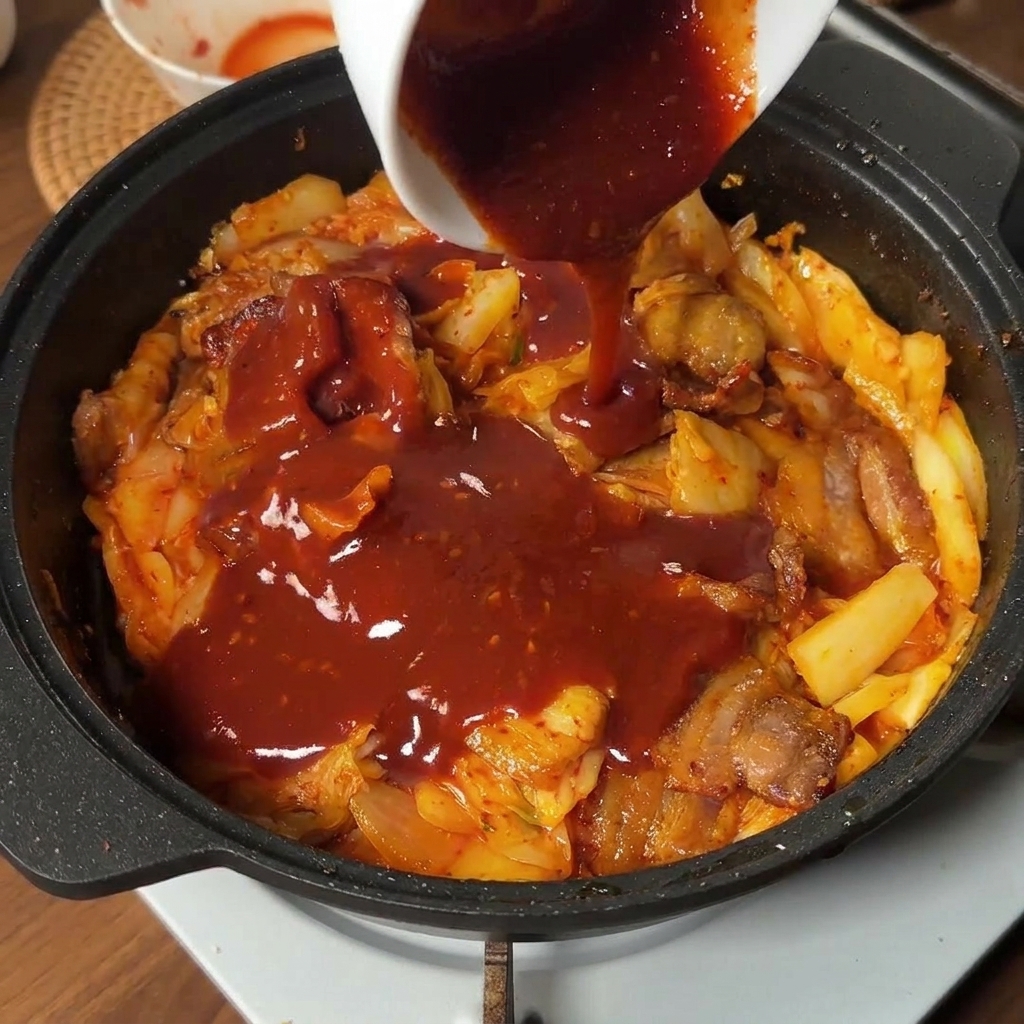
Pour the prepared Korean sauce over the pork and vegetable mixture. If the mixture appears too dry as you begin to stir, you can add a small splash of water to help the sauce coat everything evenly.
Tip: Adjust the heat level by adding a touch more water or a pinch of sugar to the pan if the sauce thickens too quickly. - 9Add fresh chilies
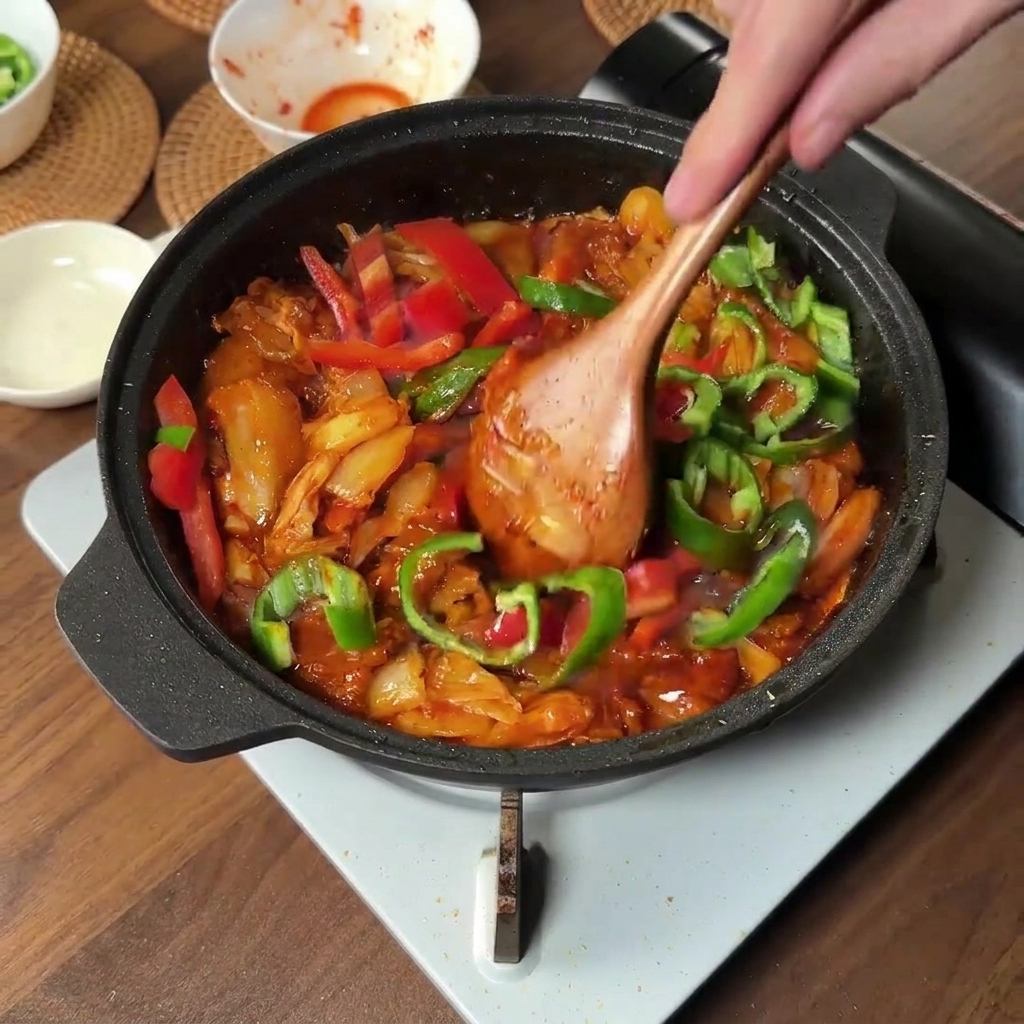
Toss in the sliced green and red chili pepper strips. For a professional touch and a boost of aroma, you can also drizzle in a little bit of sesame oil at this stage.
Tip: Adding the chilies toward the end keeps them bright and slightly crisp, providing a fresh contrast to the fermented kimchi. - 10Final high-heat stir-fry
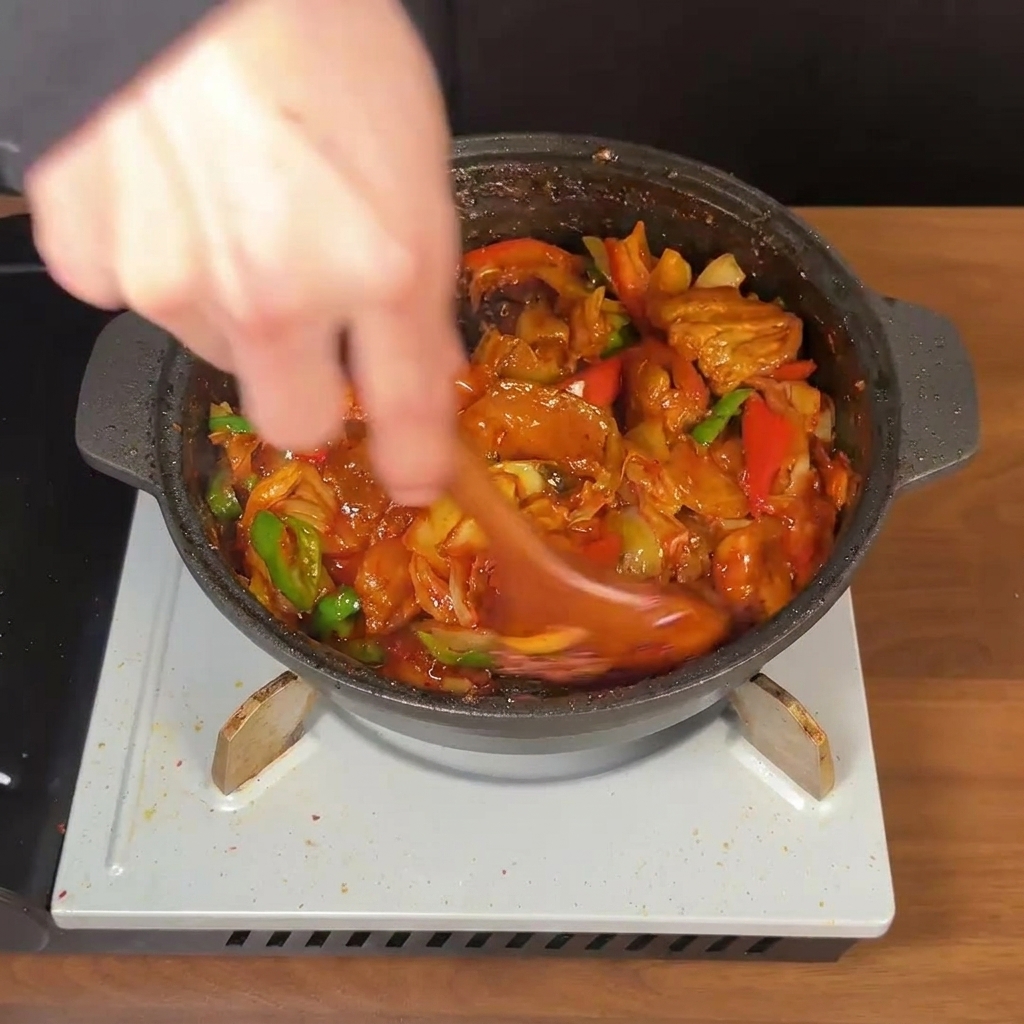
Turn the heat up to high and stir-fry everything vigorously for about one minute. Ensure every piece of meat and vegetable is thoroughly coated in the glossy red sauce before removing from the heat to serve.
Tip: A quick stir-fry on high heat at the end helps caramelize the sauce slightly, giving the dish its classic Seoul-style finish.