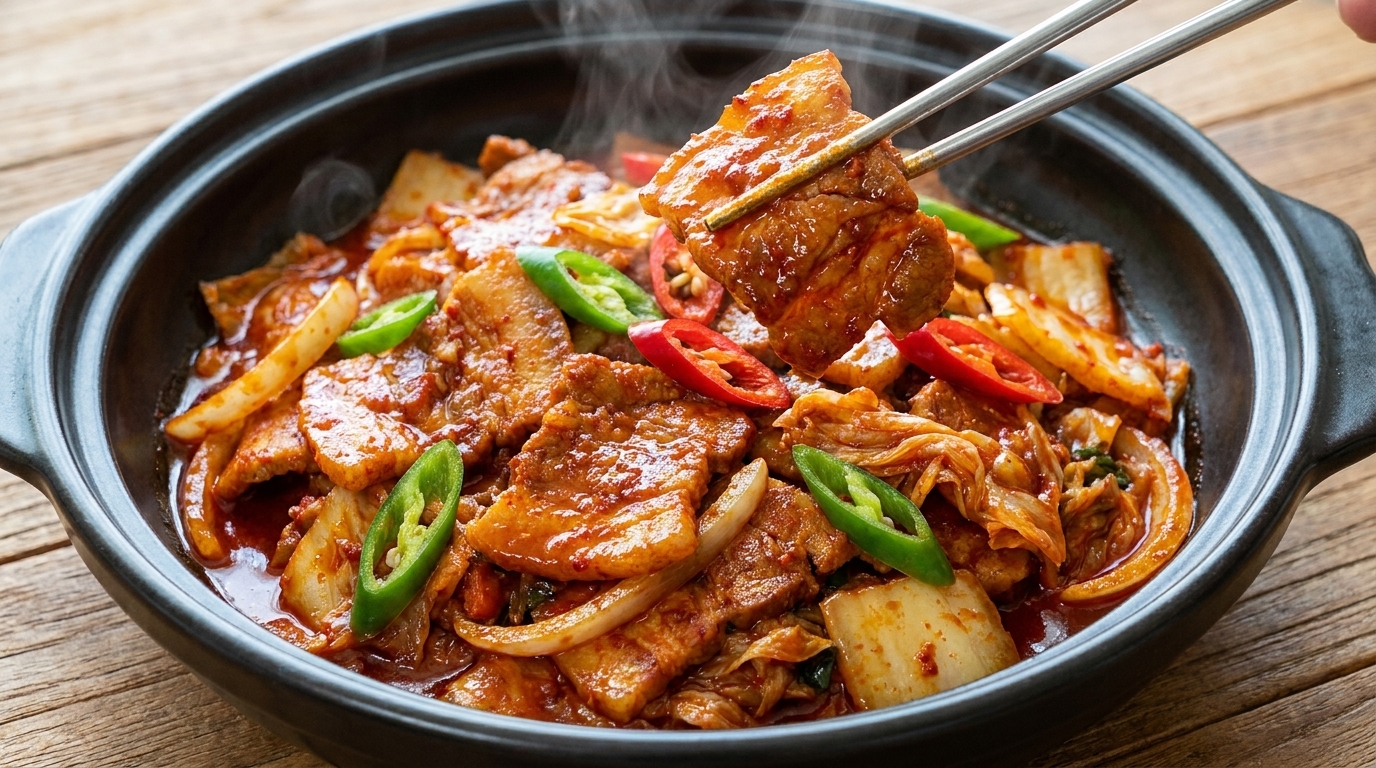
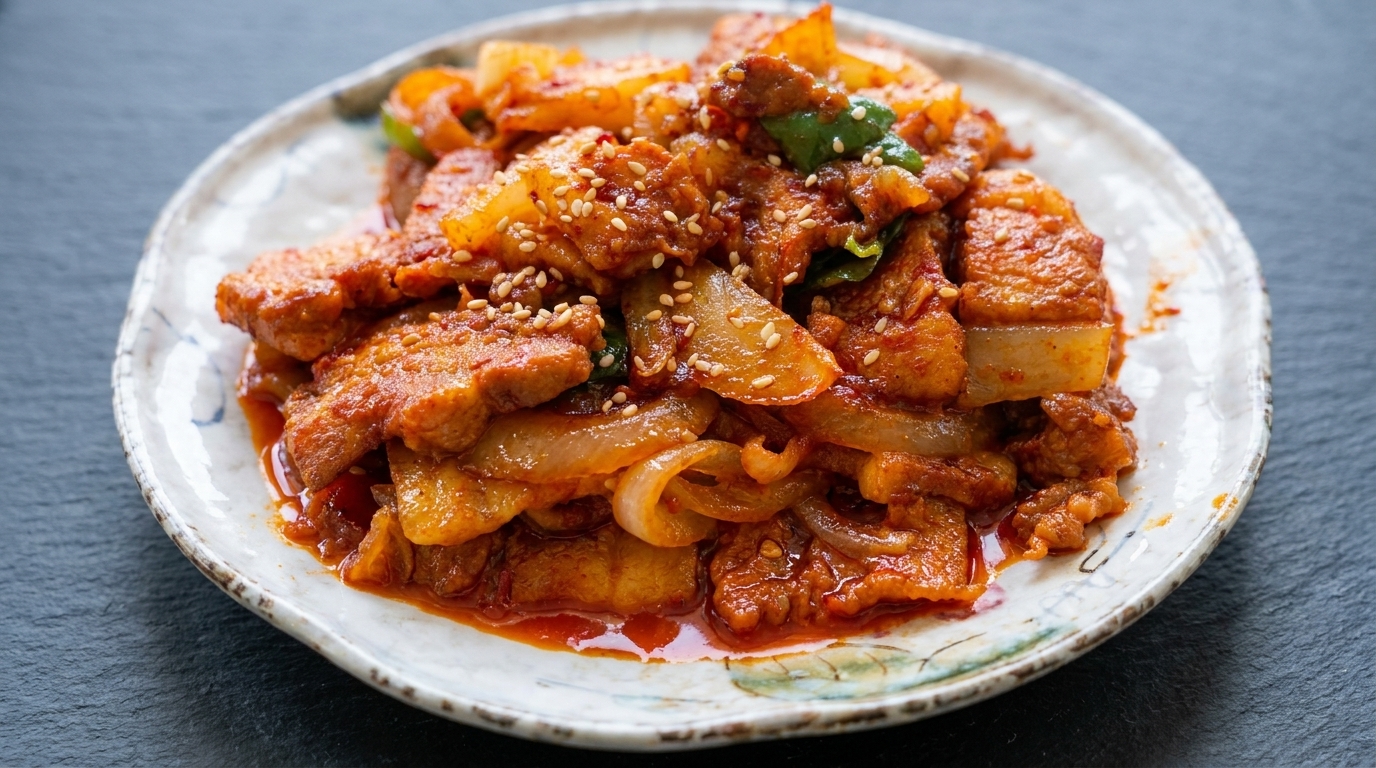
Spicy Korean Stir-Fried Pork (Jeyuk-bokkeum)
A quintessential Korean soul food featuring tender pork marinated in a bold savory gochujang sauce and stir fried over high heat for a perfect smoky sweet finish
Jeyuk bokkeum is a staple of Korean home cooking and popular diners across the country. The dish relies on the harmonious balance of spicy red pepper savory soybean paste and the intense fire flavor achieved through rapid high heat stir frying
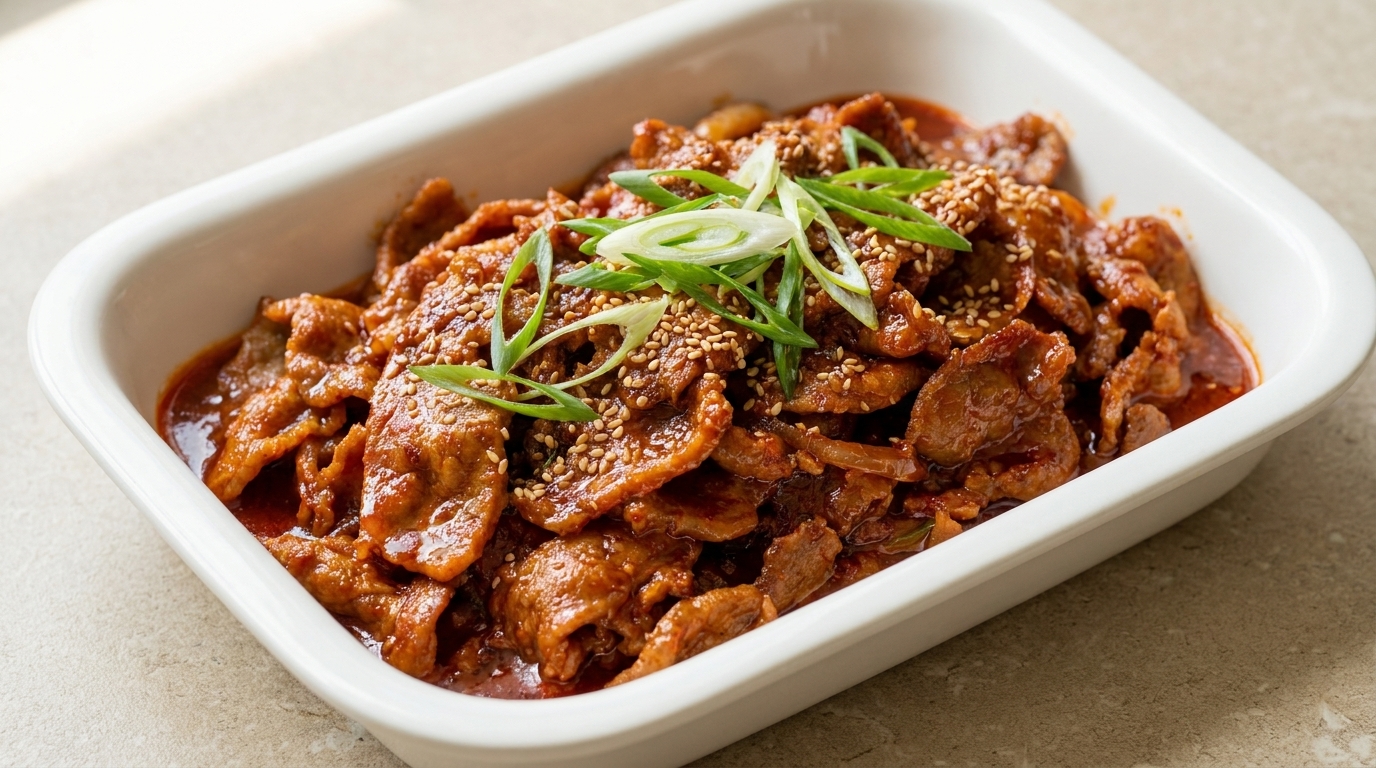
Ingredients
- 600 g pork front leg meat
- 1 tbsp sugar
- 2 tbsp soy sauce
- 2 tbsp cooking wine
- 2 tbsp gochujang
- 1 tbsp minced garlic
- 2 tbsp red pepper powder
- 1 tbsp corn syrup
- 1 tsp soybean paste
- 1 tbsp cooking oil
- 1 small onion
- 2 green chili peppers
- 2 green onions
- to taste sesame seeds
Instructions
- 1Season the pork
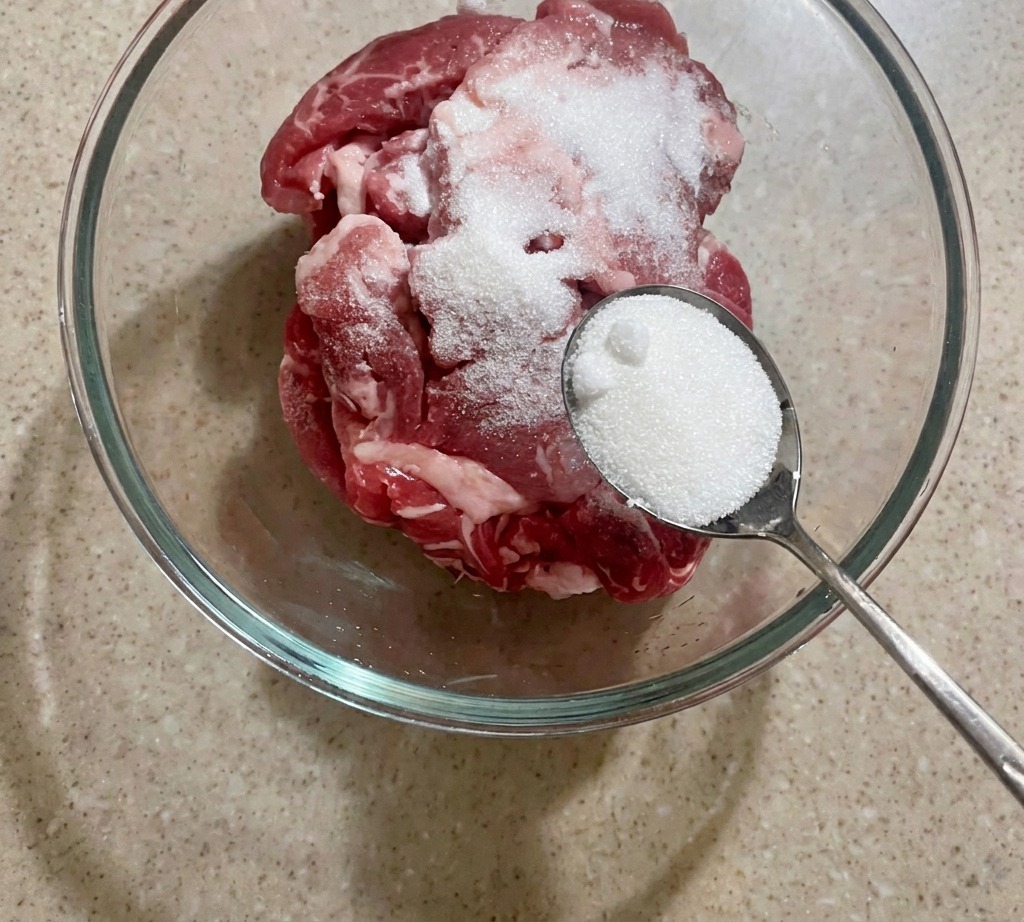
Place the sliced pork front leg meat into a mixing bowl and add the sugar, soy sauce, and cooking wine. These liquid seasonings help tenderize the meat and create an initial layer of savory flavor.
Tip: Adding sugar first helps to tenderize the pork fibers before the saltier liquid seasonings are added. - 2Massage and marinate
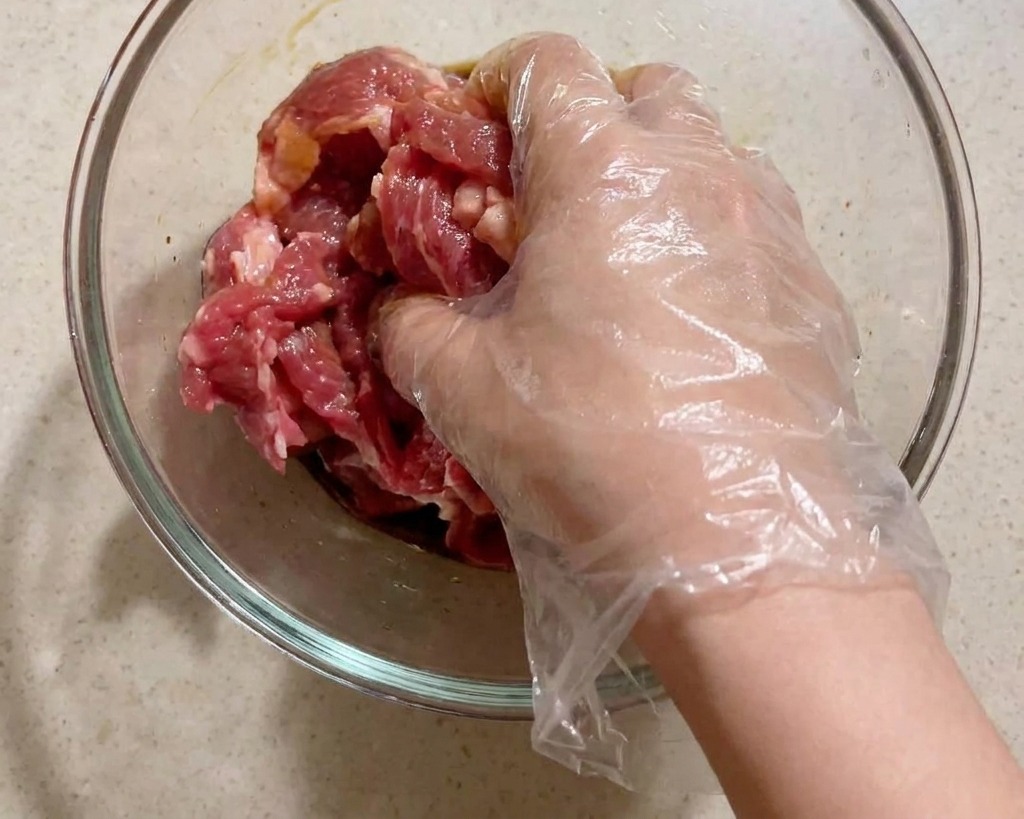
Using a gloved hand, thoroughly massage the seasonings into the meat until every slice is well-coated. Place the bowl in the refrigerator and let it marinate for 30 minutes.
Tip: Massaging the meat helps break down the fibers, allowing the liquid seasonings to penetrate more deeply for a tender result. - 3Prepare the spicy gochujang sauce

In a small separate bowl, combine the gochujang, minced garlic, red pepper powder, corn syrup, and a touch of soybean paste. Stir the mixture vigorously until it forms a thick, uniform, and vibrant red paste. This sauce will provide the signature spicy and savory punch to the stir-fry.
Tip: The small addition of soybean paste provides an extra layer of umami that balances the sweetness and heat of the other ingredients. - 4Sear the marinated pork
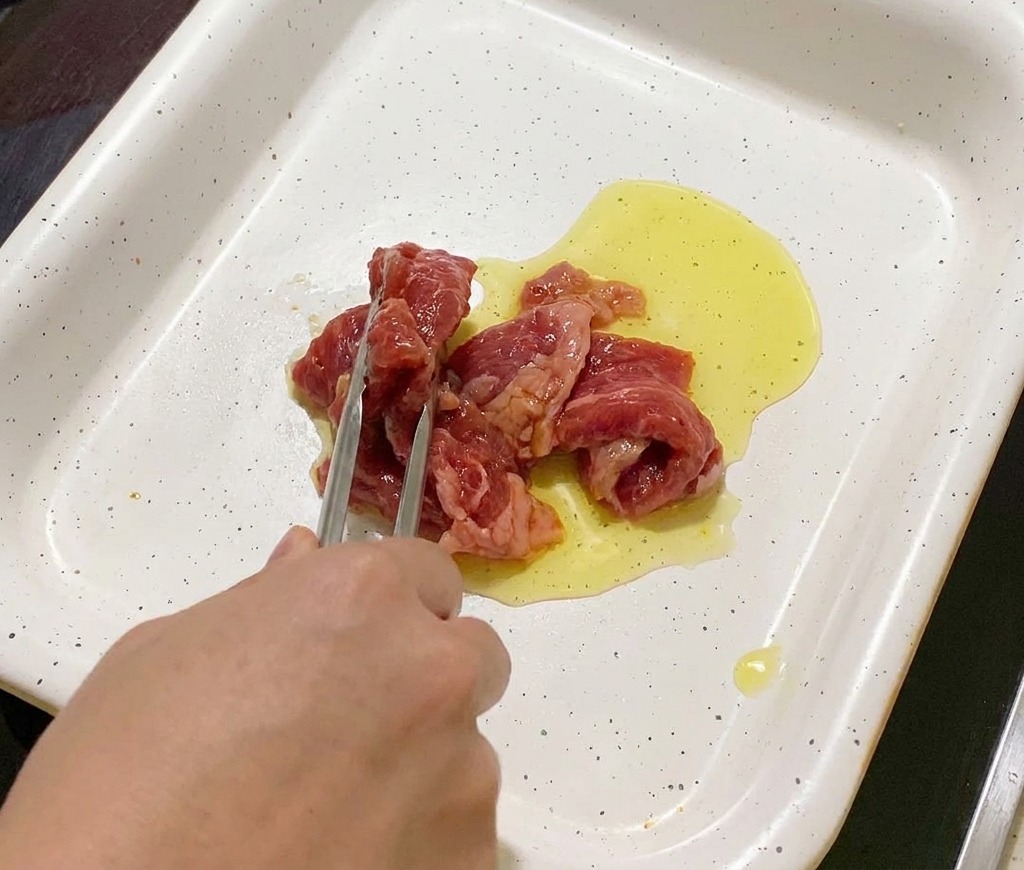
After marinating for 30 minutes, heat a small amount of oil in a pan over medium-high heat. Use tongs to place the pork slices into the pan, spreading them out to ensure each piece makes direct contact with the hot surface for a proper sear.
Tip: Make sure the pan is sufficiently hot before adding the meat to prevent it from stewing in its own juices. - 5Stir-fry until partially cooked
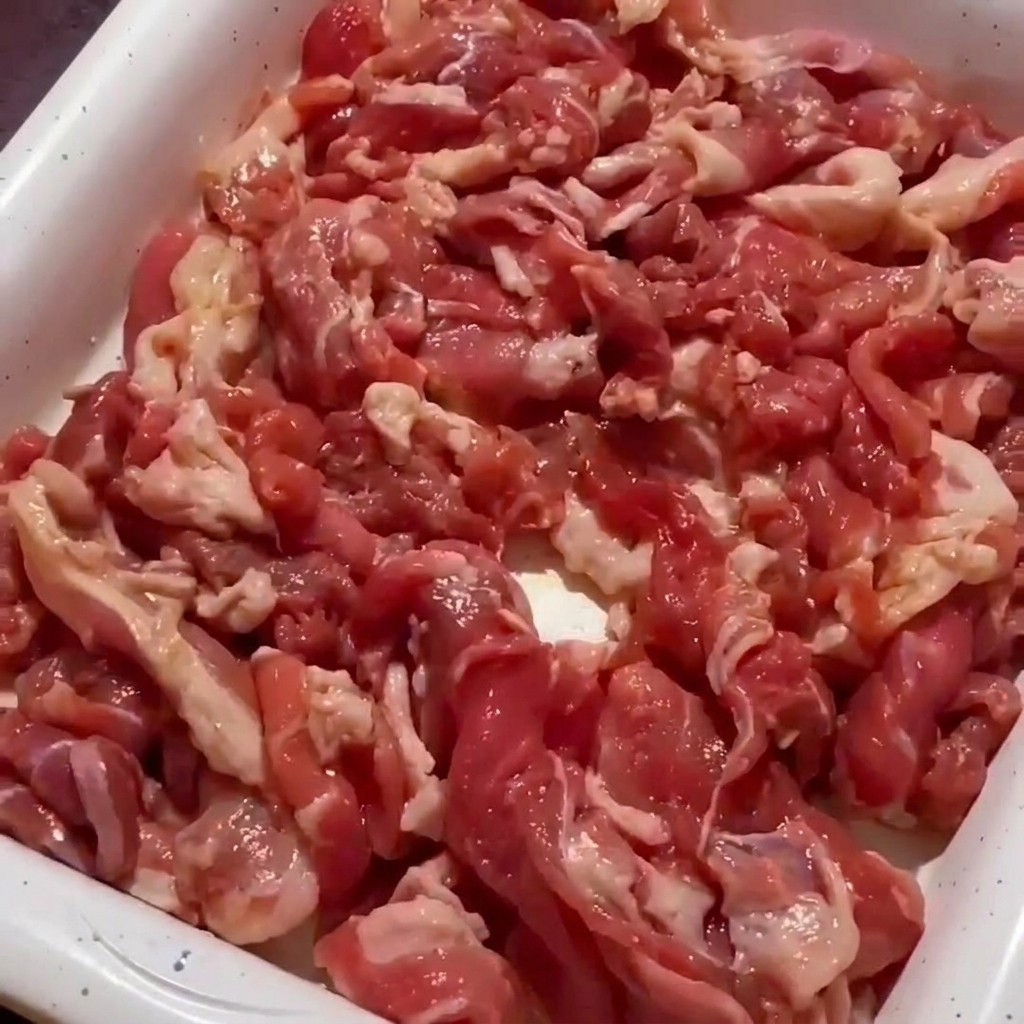
Continuously stir-fry the pork in the pan. Continue this process until the meat is approximately 80% cooked, indicated by the surface turning opaque and beginning to brown. This ensures the meat is ready for the final spicy sauce application.
Tip: Do not cook the meat 100% at this stage; leaving it slightly underdone ensures it stays juicy after the sauce is added later. - 6Add the sauce to the pork
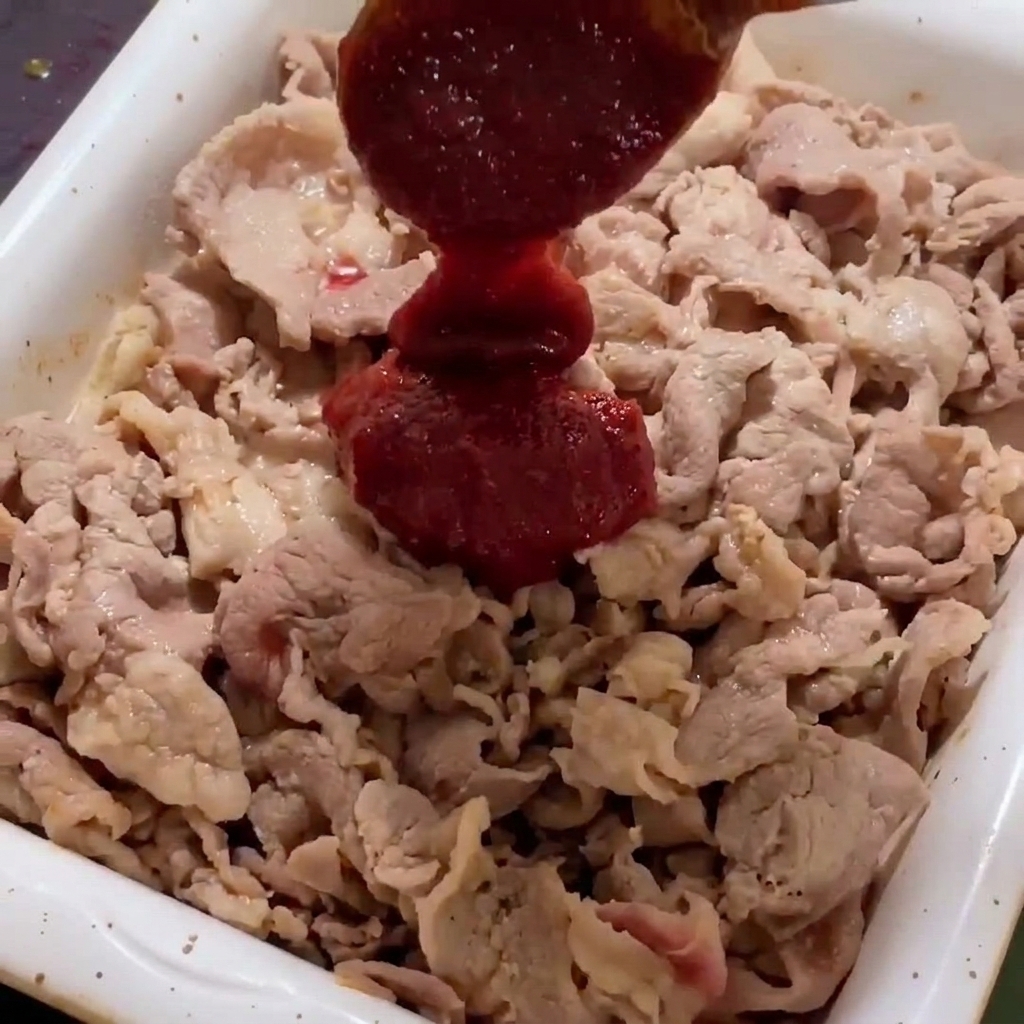
Once the pork is approximately 80% cooked and has begun to brown in the oiled pan, add the prepared red seasoning sauce. Stir-fry the meat quickly over high heat to ensure the sauce coats every piece evenly and begins to caramelize, creating a deep, smoky flavor profile.
Tip: Stir-frying on high heat at this stage is crucial; it allows the sugars in the sauce to sear against the pan for an authentic fire flavor. - 7Stir-fry with fresh vegetables
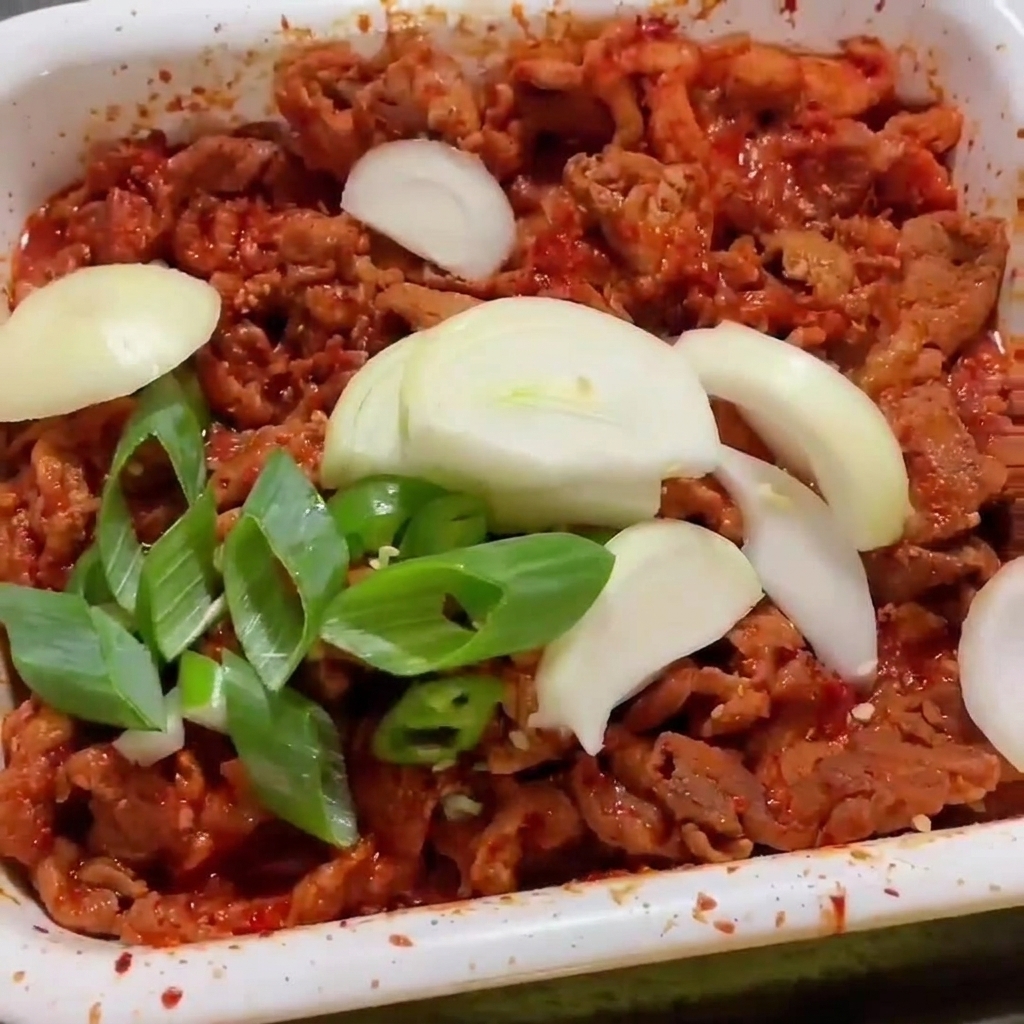
Add the sliced onions, green chili peppers, and scallions to the pan with the spicy pork. Stir-fry the mixture quickly over medium heat. This allows the vegetables to soften slightly and absorb the savory sauce while maintaining a fresh, crisp texture that complements the tender meat.
Tip: Do not overcook the vegetables at this stage; keeping them slightly crisp adds a better mouthfeel and visual appeal to the final dish.