Authentic Korean Doenjang Jjigae (Soybean Paste Stew)
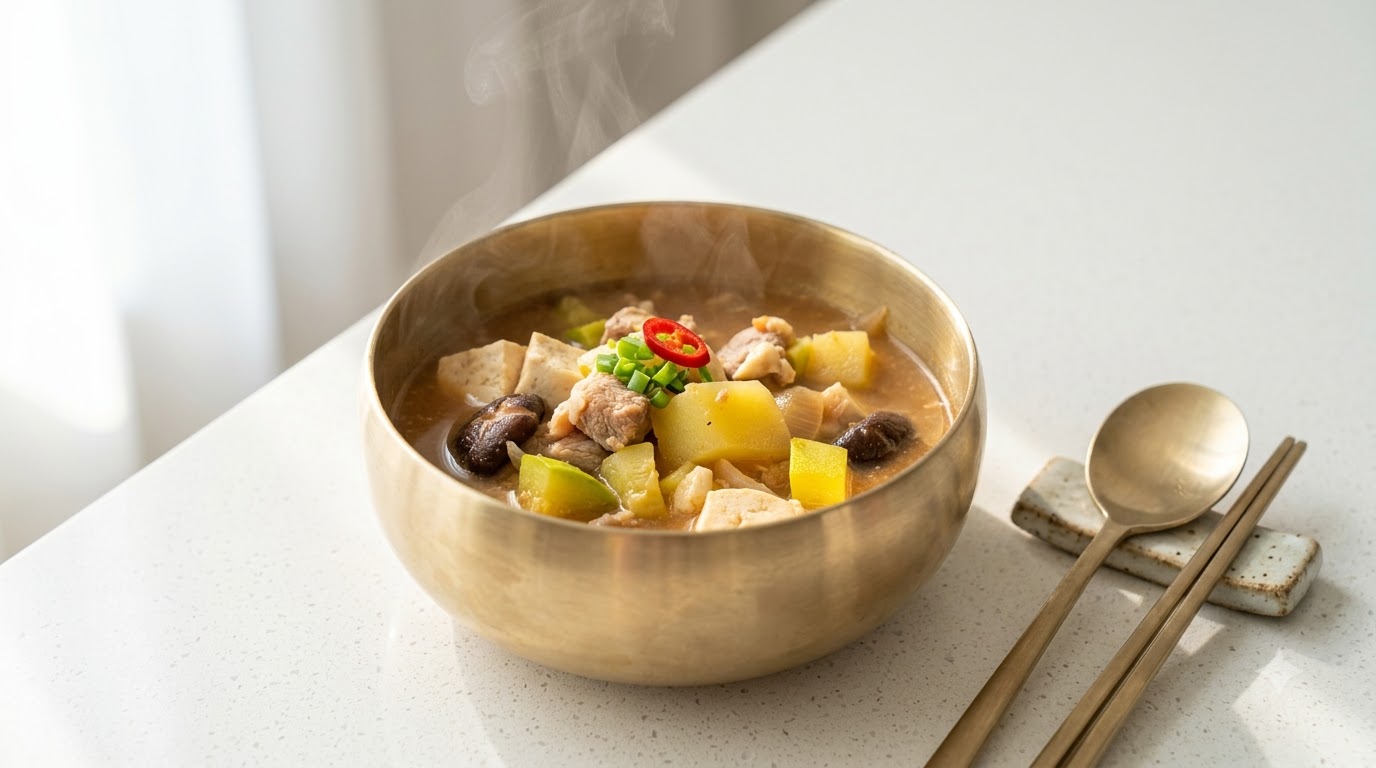
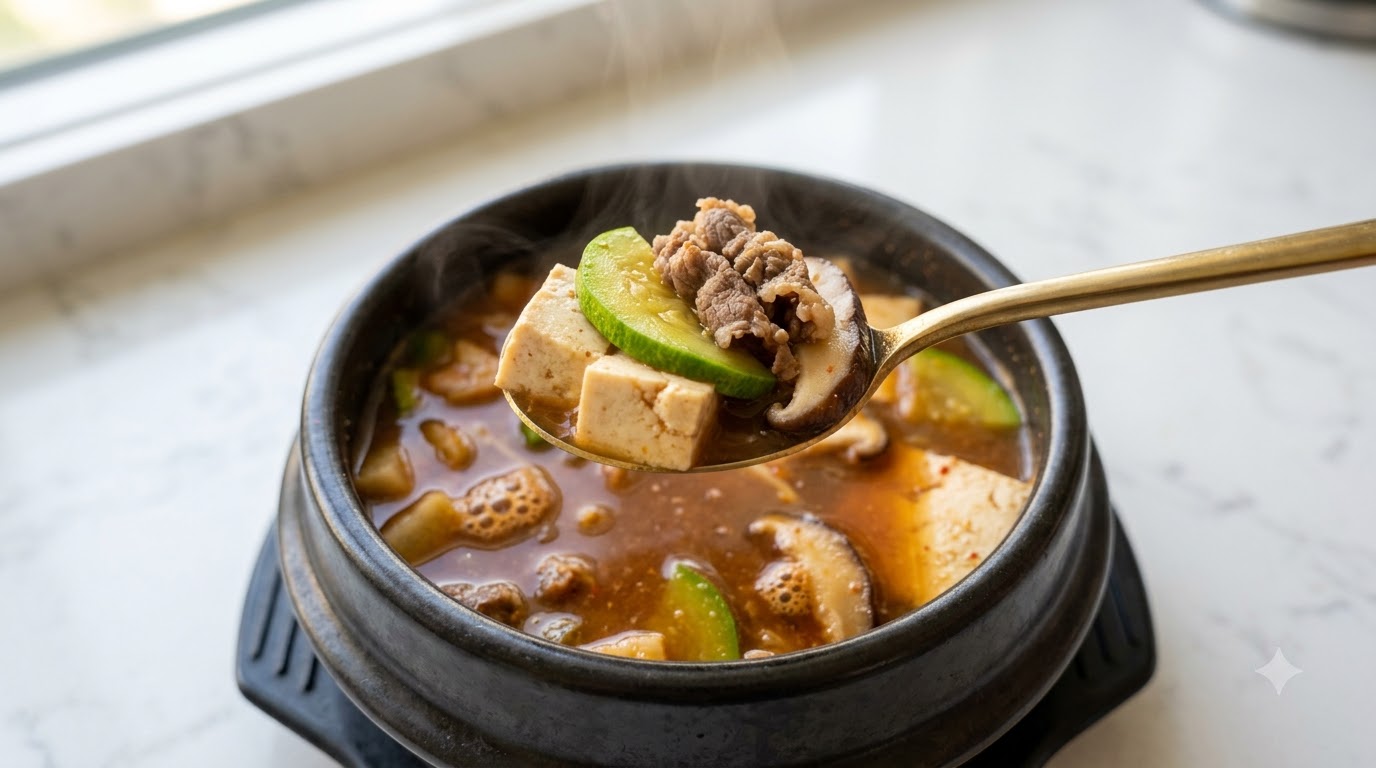
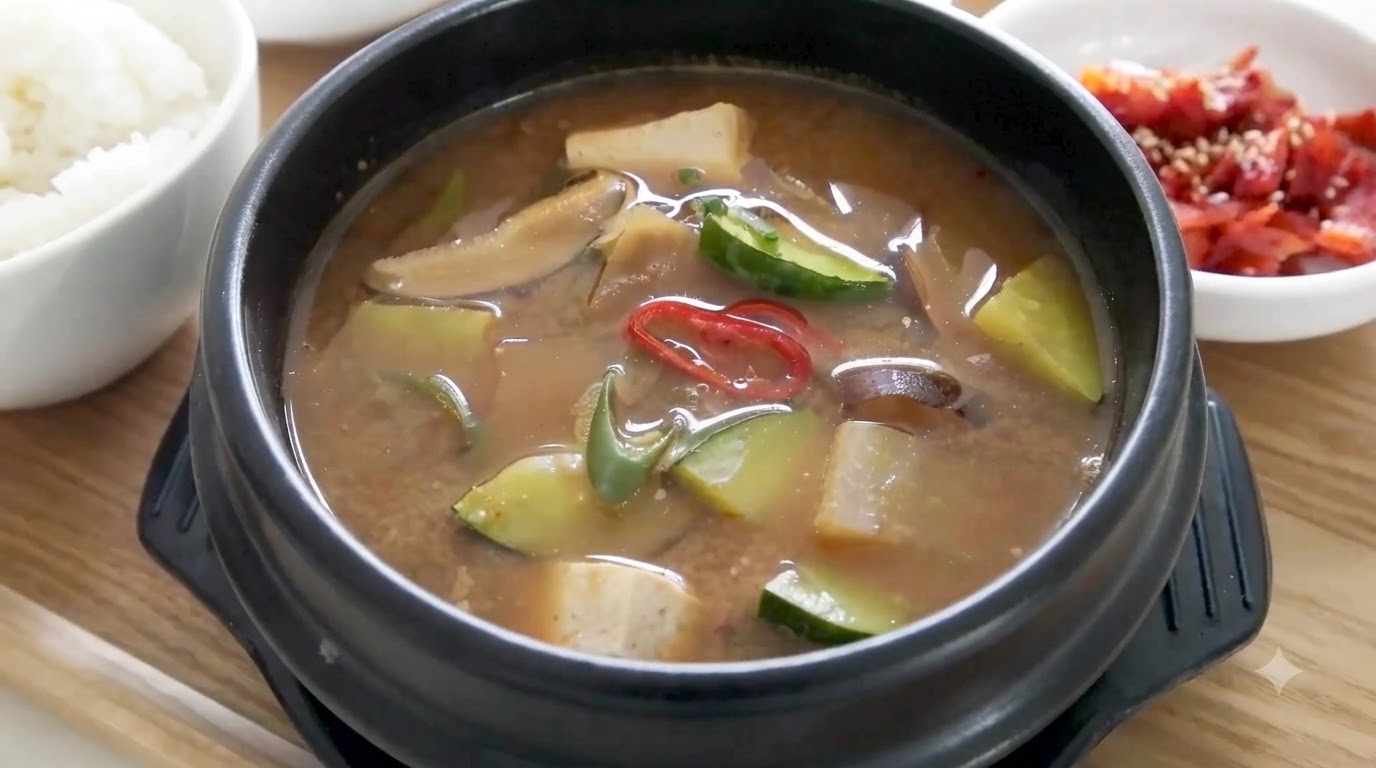
Experience the deep, comforting flavors of classic Korean Doenjang Jjigae. This hearty soybean paste stew is packed with tender tofu, fresh zucchini, shiitake mushrooms, and a satisfying spicy kick.
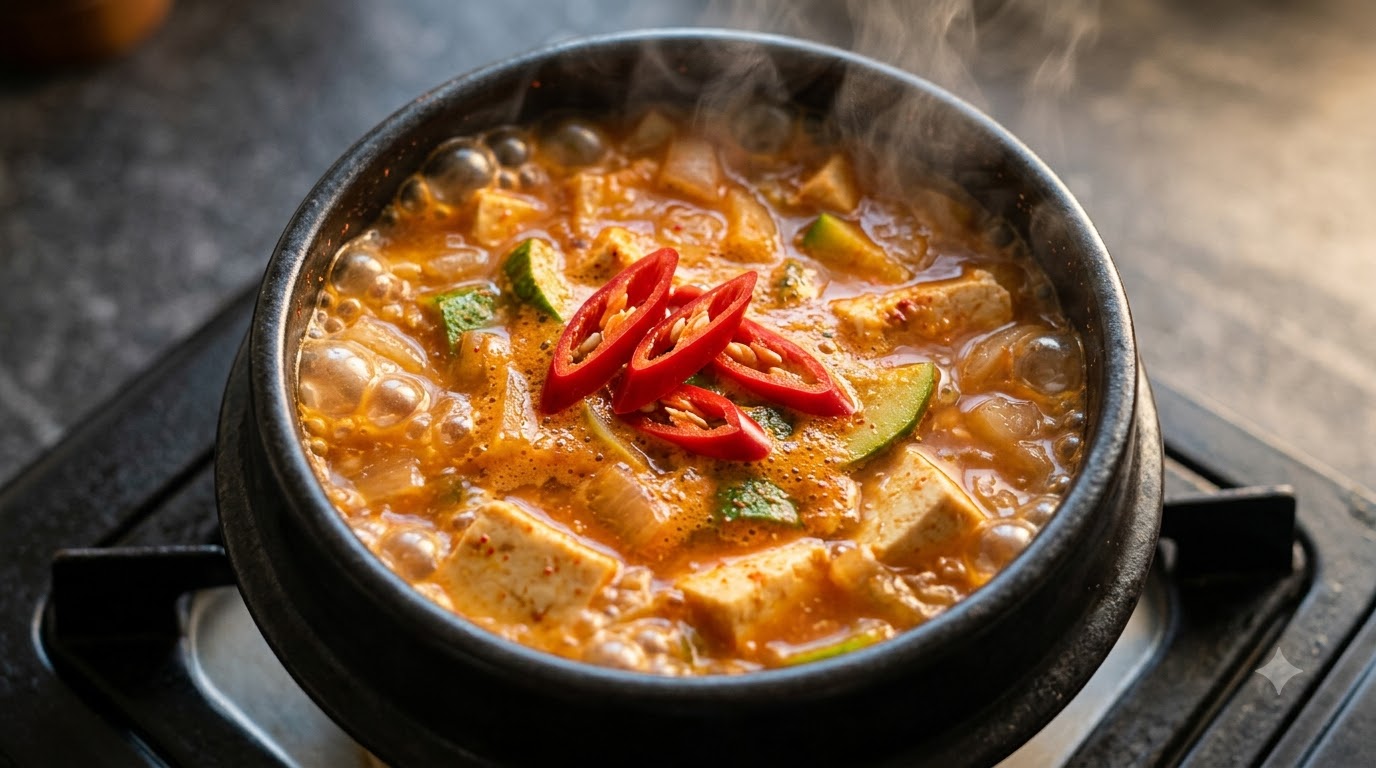
Doenjang Jjigae is the quintessential Korean soul food, deeply rooted in the daily lives of Korean families. The rich, earthy flavor of fermented soybean paste creates a savory umami base that perfectly complements fresh vegetables and tofu. Served bubbling hot in a traditional stone pot, it is a masterpiece when mixed simply with a bowl of warm rice.
Ingredients
- 700 ml water
- 1 tbsp Korean soybean paste (doenjang)
- 0.5 tbsp anchovy powder
- 0.5 cup white radish
- 1 cup shiitake mushrooms
- 0.5 block white tofu
- 1 cup green zucchini
- 0.5 tbsp minced garlic
- 1 red chili pepper
- 1 green chili pepper
- 2 stalks green onions
- 0.5 tbsp Korean chili powder (gochugaru)
Instructions
- 1Pour water into the pot
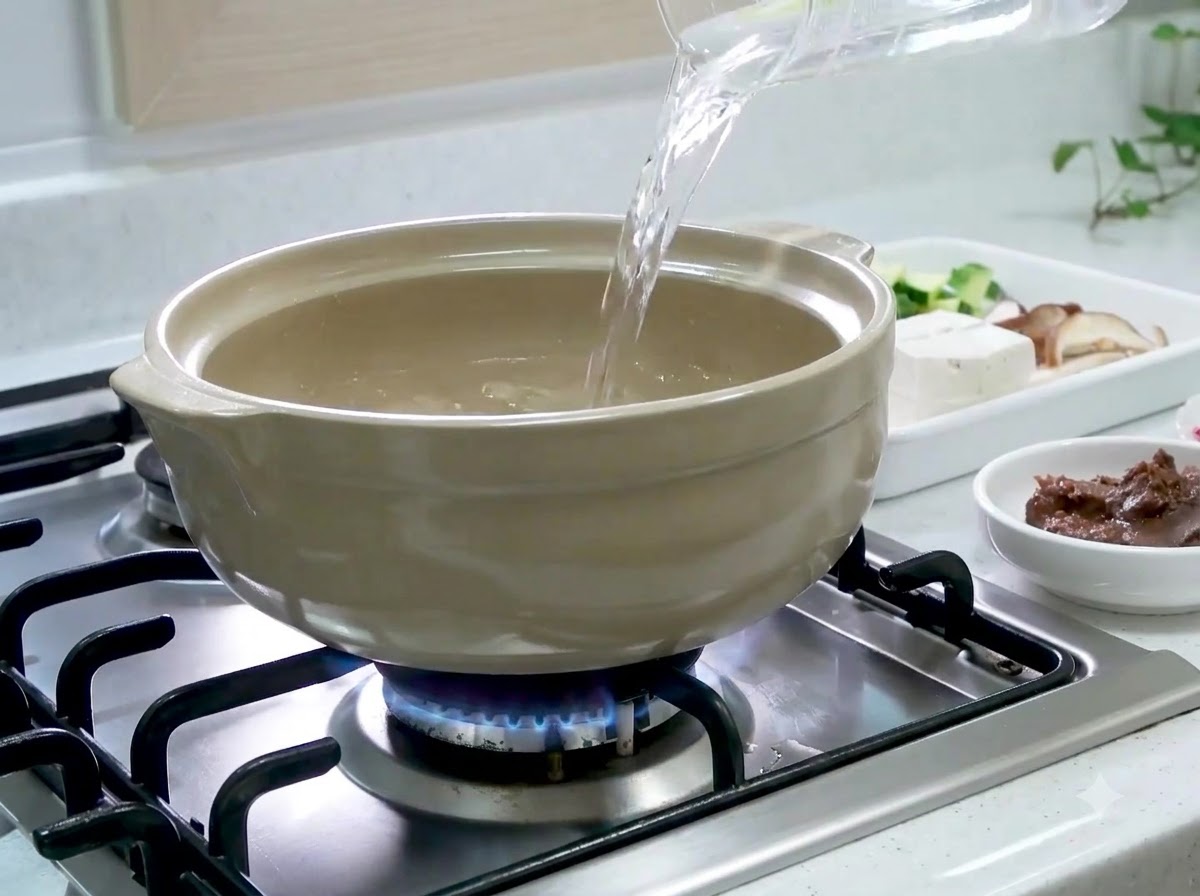
Pour 700ml of water from a measuring cup into an empty ceramic pot resting on a gas stove and turn on the heat.
Tip: Make sure to measure the exact amount of water to maintain the proper broth concentration. - 2Add Korean soybean paste
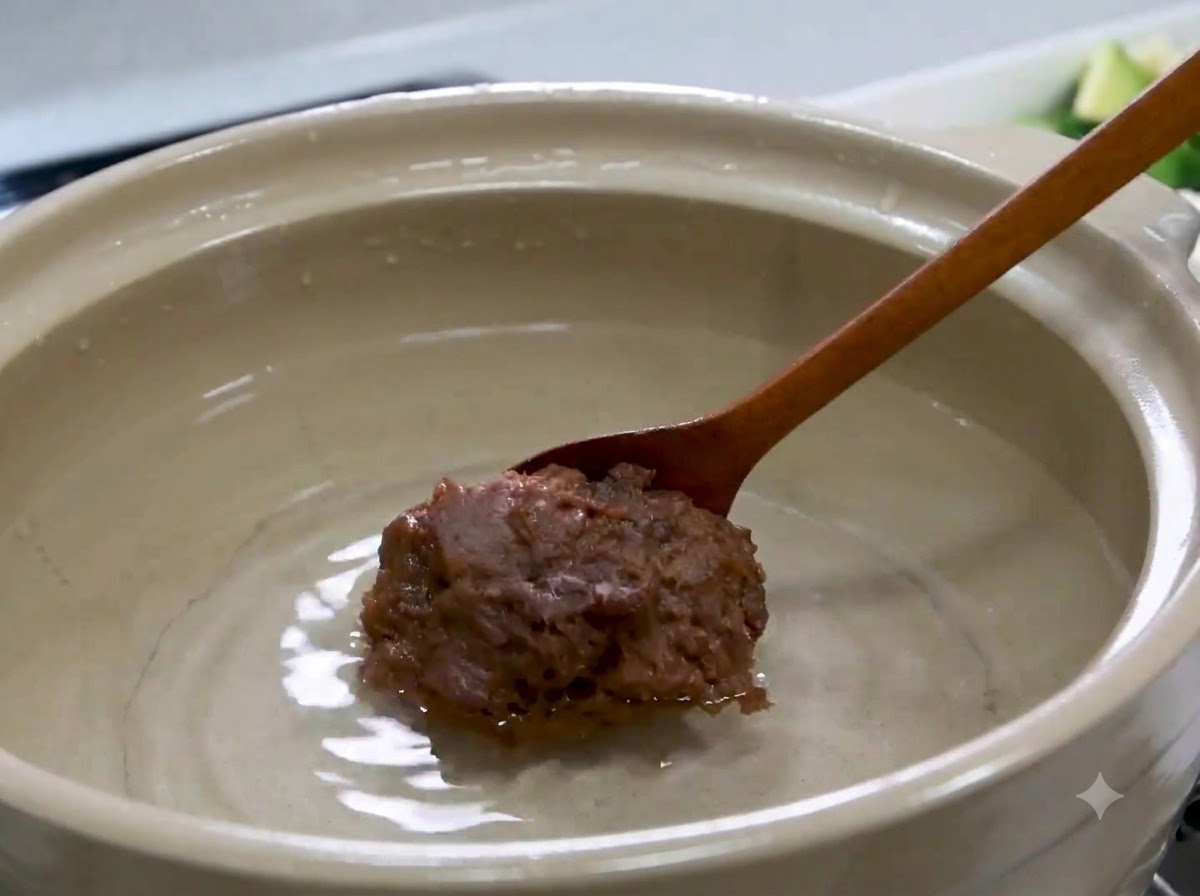
Add one tablespoon of thick brown Korean soybean paste into the water using a wooden spoon.
Tip: Do not dissolve it yet; just place it in the water first. - 3Dissolve the soybean paste
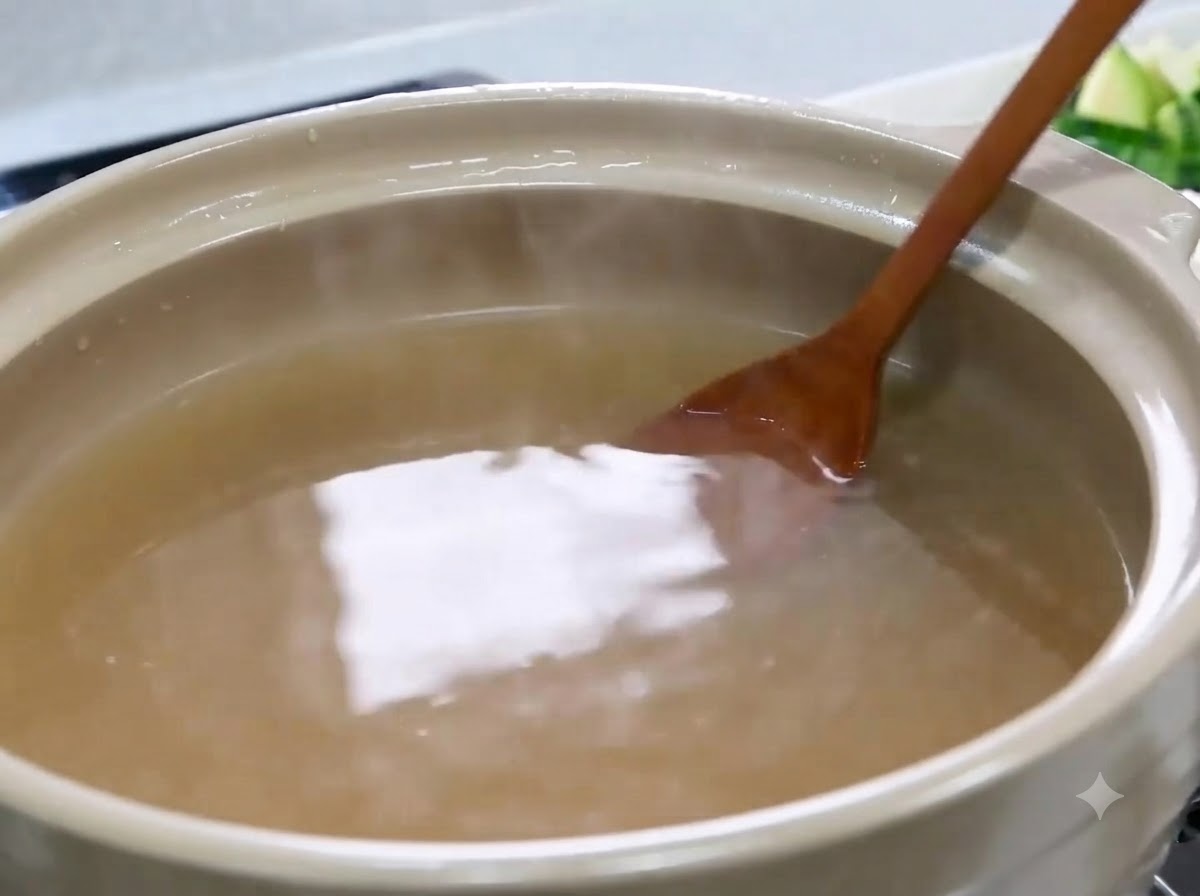
Stir the soybean paste into the water with a wooden spoon to dissolve it completely into the broth.
Tip: Stir thoroughly until no solid lumps of paste remain in the liquid. - 4Add anchovy powder
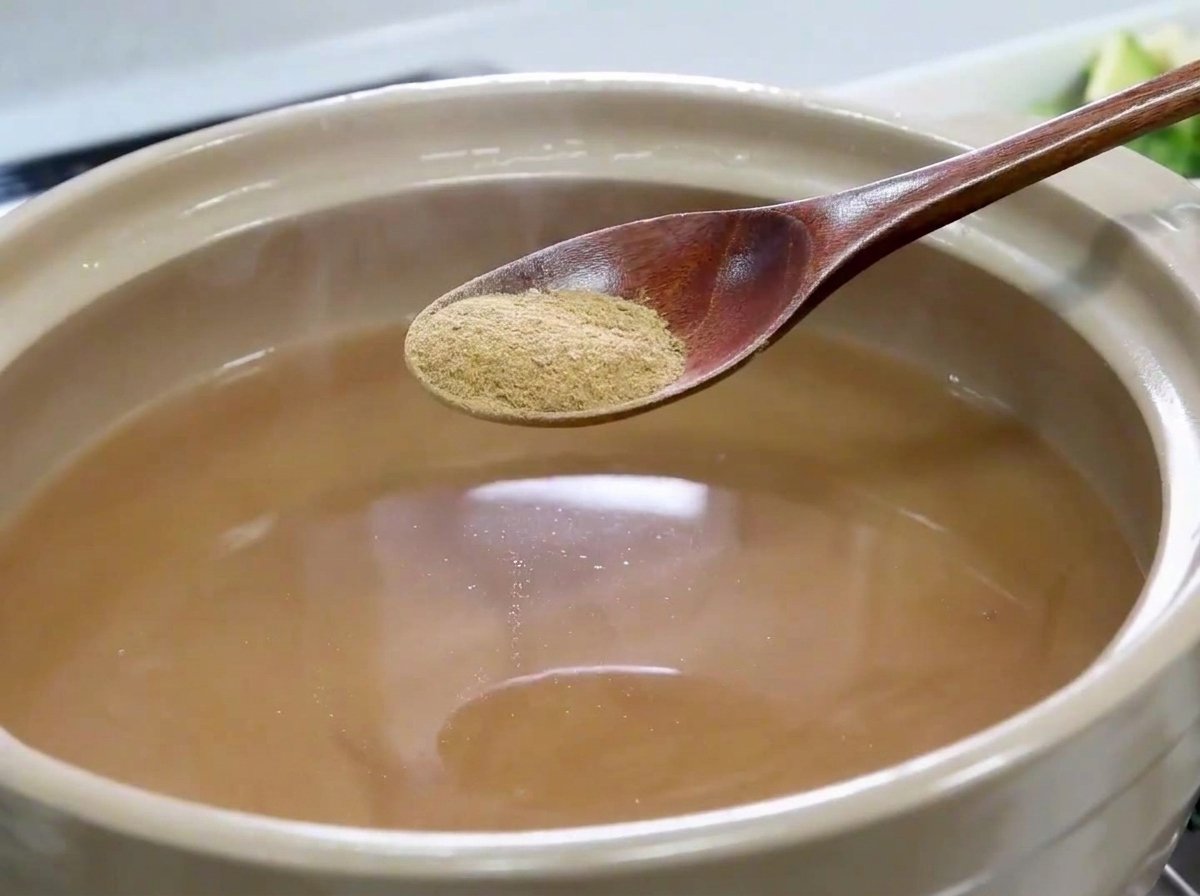
Add half a spoon of dry, fine anchovy powder into the light brown broth to increase the umami flavor of the stew.
Tip: Anchovy powder adds a rich seafood depth quickly without needing to boil a separate stock. - 5Add white radish
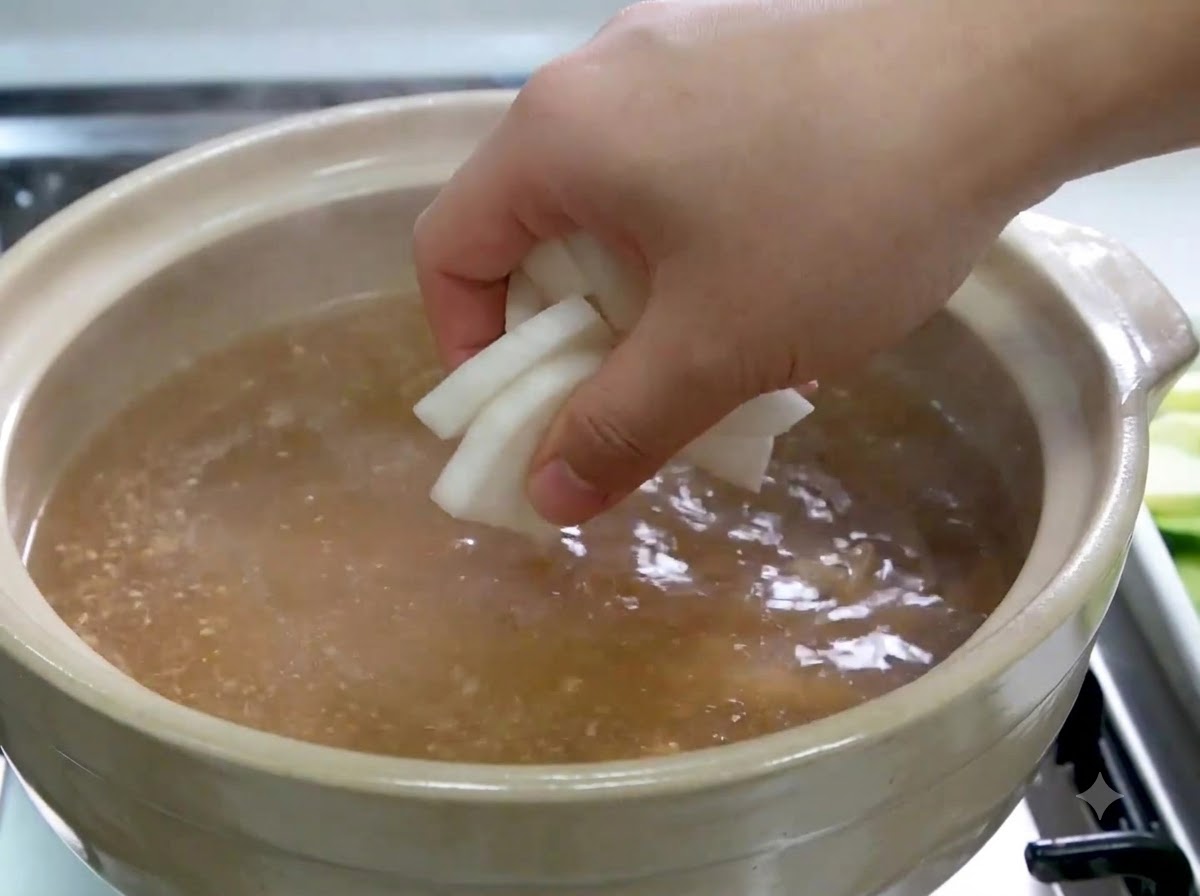
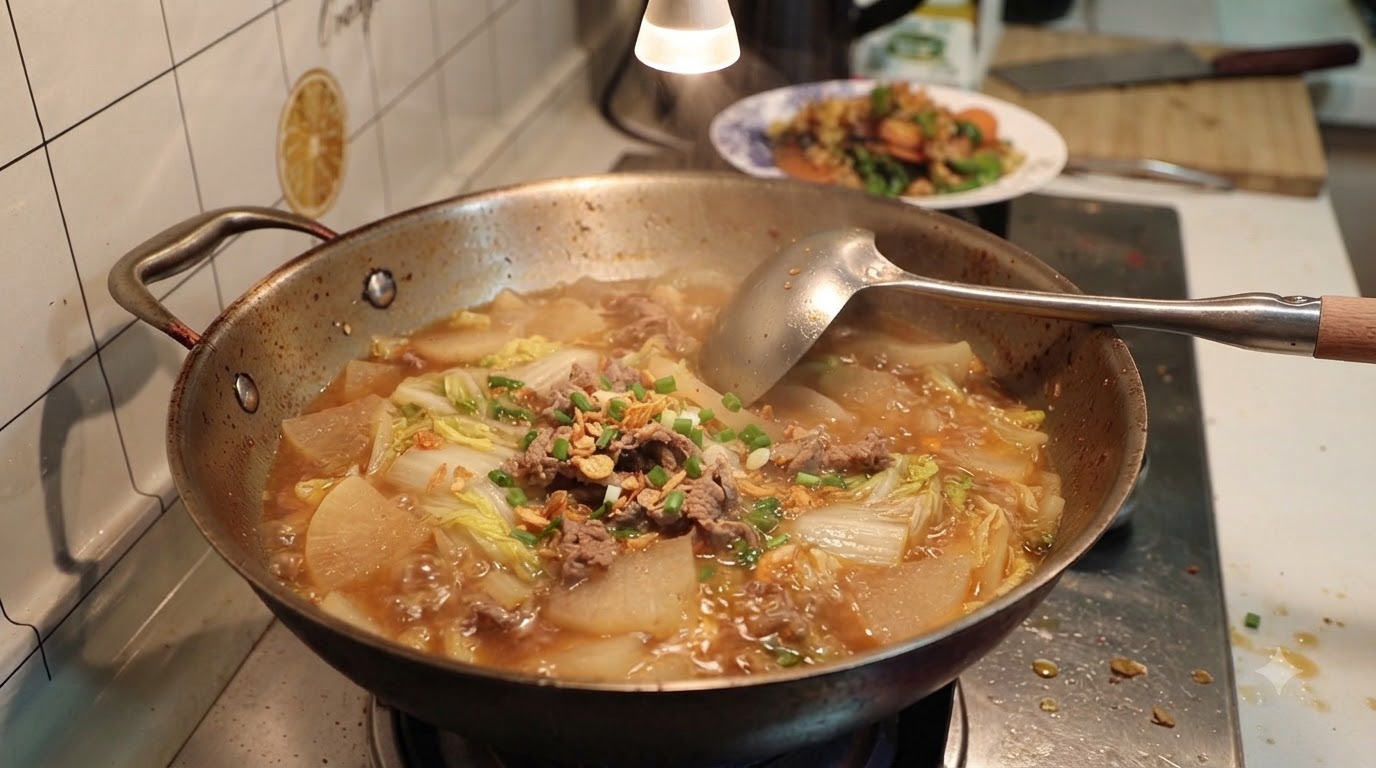
After the broth mixture completely dissolves, drop thick slices of raw white radish into the simmering broth.
Tip: Cut the radish into even slices so they cook uniformly alongside the other ingredients. - 6Add shiitake mushrooms
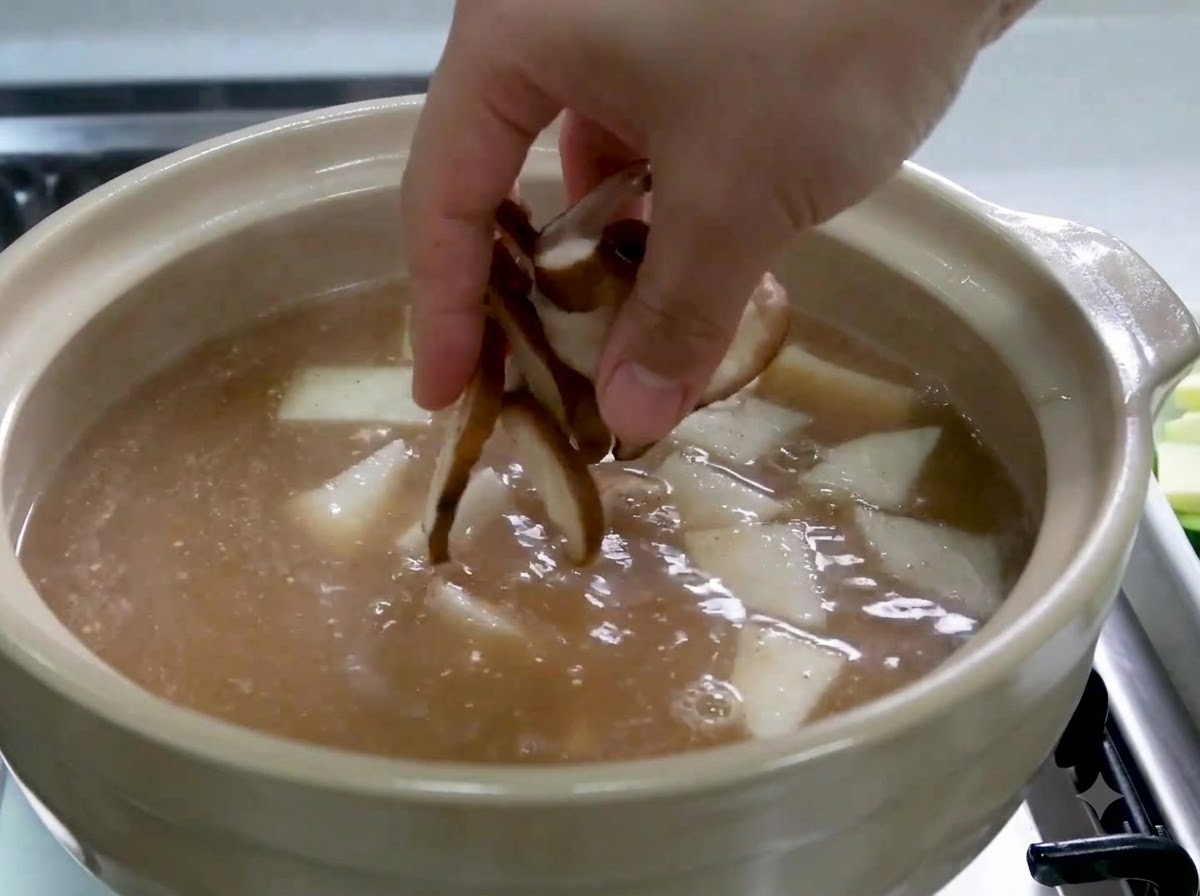
Add sliced shiitake mushrooms into the pot along with the radish and cook on medium heat for 15 minutes.
Tip: Ensure the mushrooms are evenly distributed to infuse their earthy flavor into the soup. - 7Cover and simmer
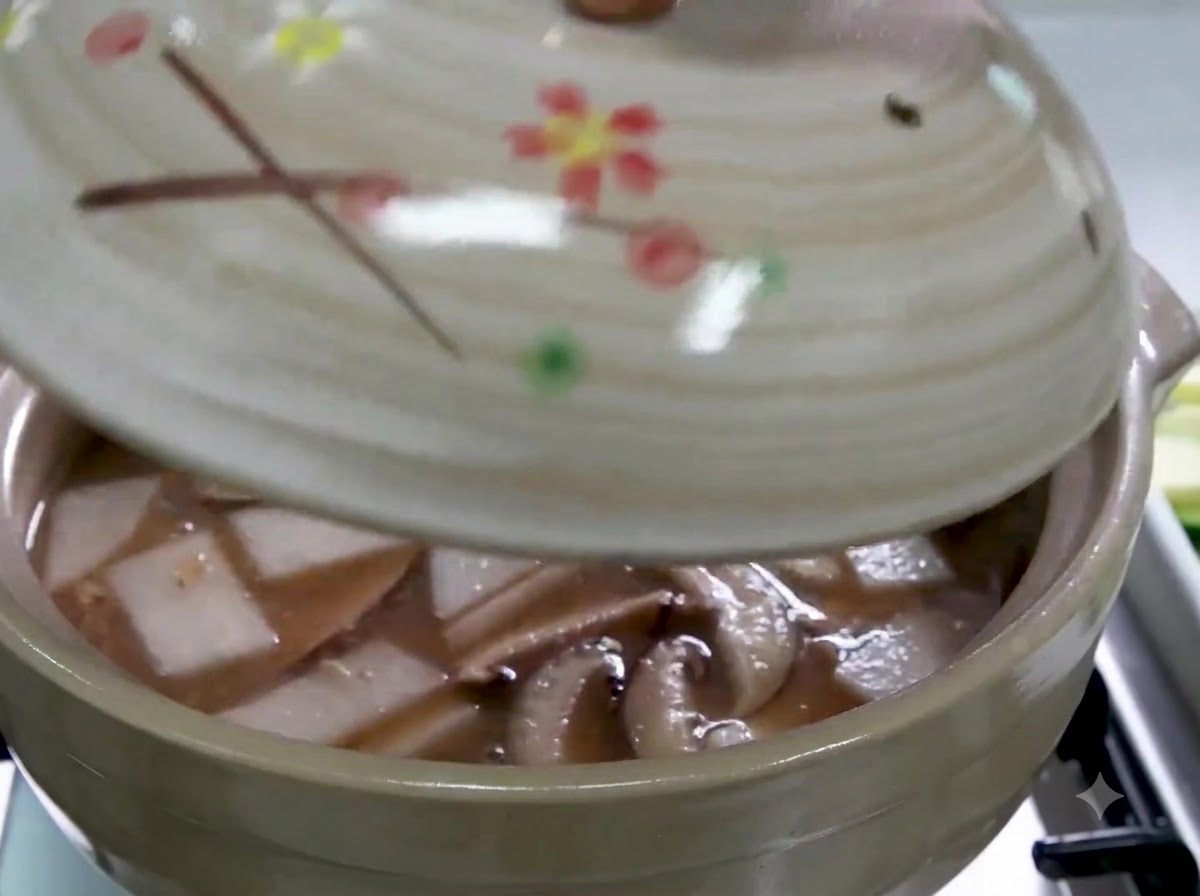
Place the lid on the ceramic pot to allow the ingredients to cook thoroughly. Simmer over medium heat for about 15 minutes, or until the white radish turns translucent and is completely cooked through.
Tip: Covering the pot helps trap the heat and steam, ensuring the radish and mushrooms cook evenly while blending the flavors into the broth. - 8Add the tofu
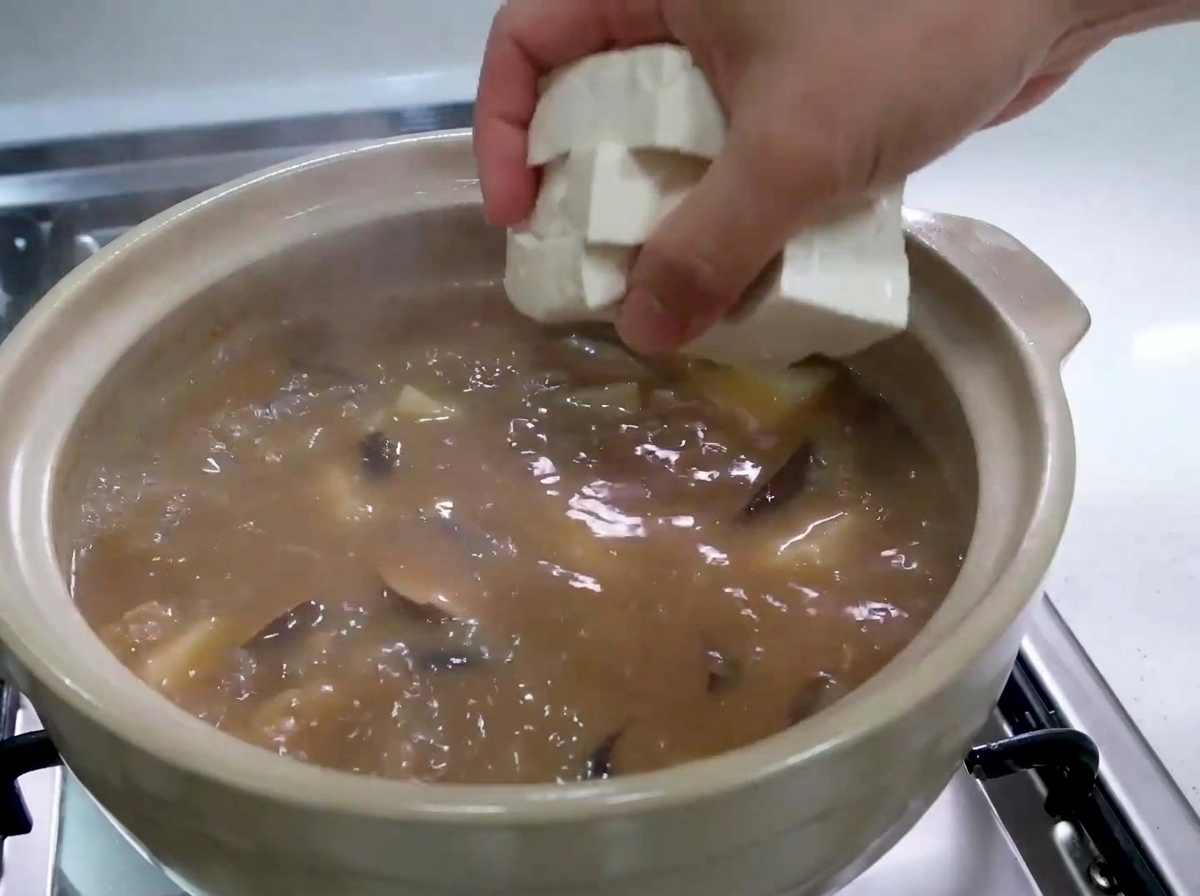
Wait until the white radish becomes translucent and is fully cooked through. Then, carefully drop the cubes of soft white tofu into the vigorously boiling stew.
Tip: Drop the tofu gently close to the surface of the boiling broth to prevent any hot liquid from splashing. - 9Add zucchini
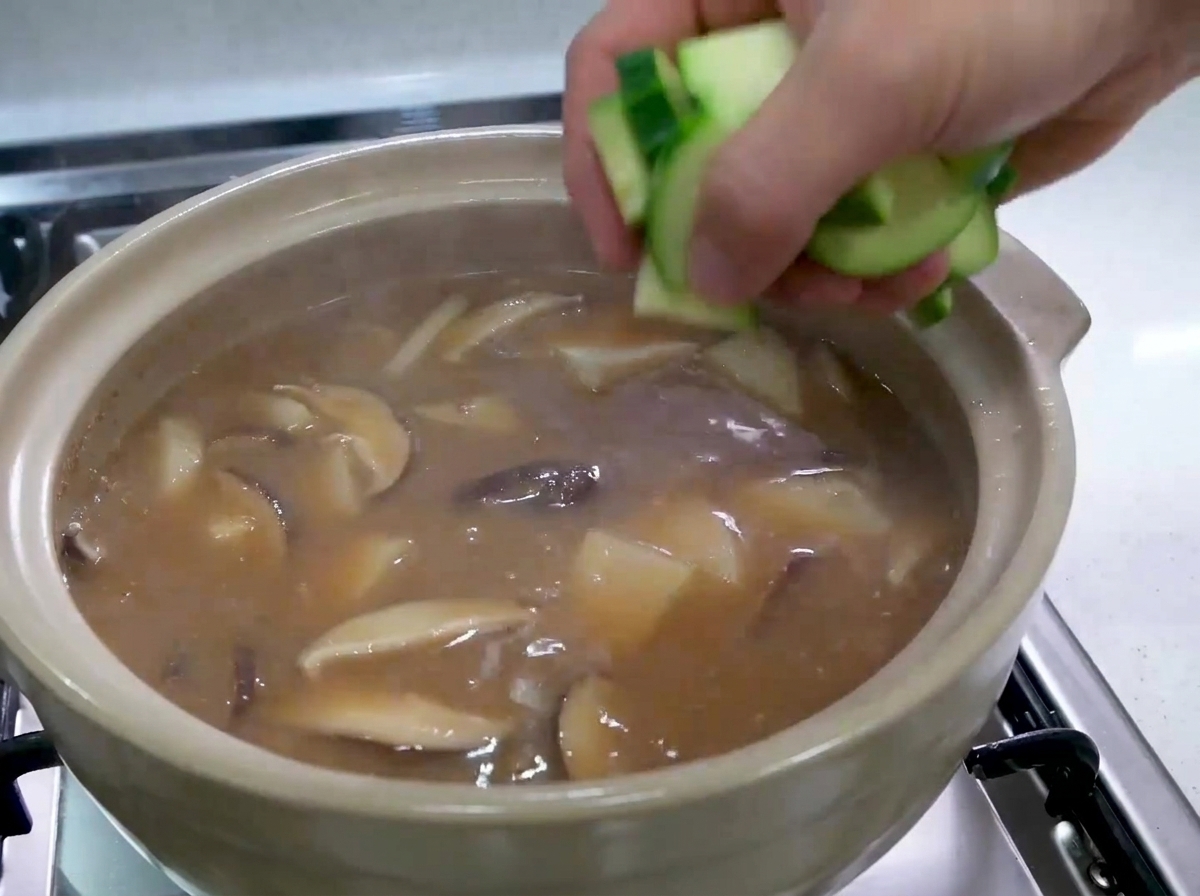
Carefully drop the chopped pieces of fresh green zucchini into the boiling stew. Along with the previously added tofu, continue to cook on medium-high heat for another 5 minutes to soften the zucchini.
Tip: Adding softer vegetables like zucchini later in the cooking process ensures they retain some texture and dont become overly mushy. - 10Stir in minced garlic
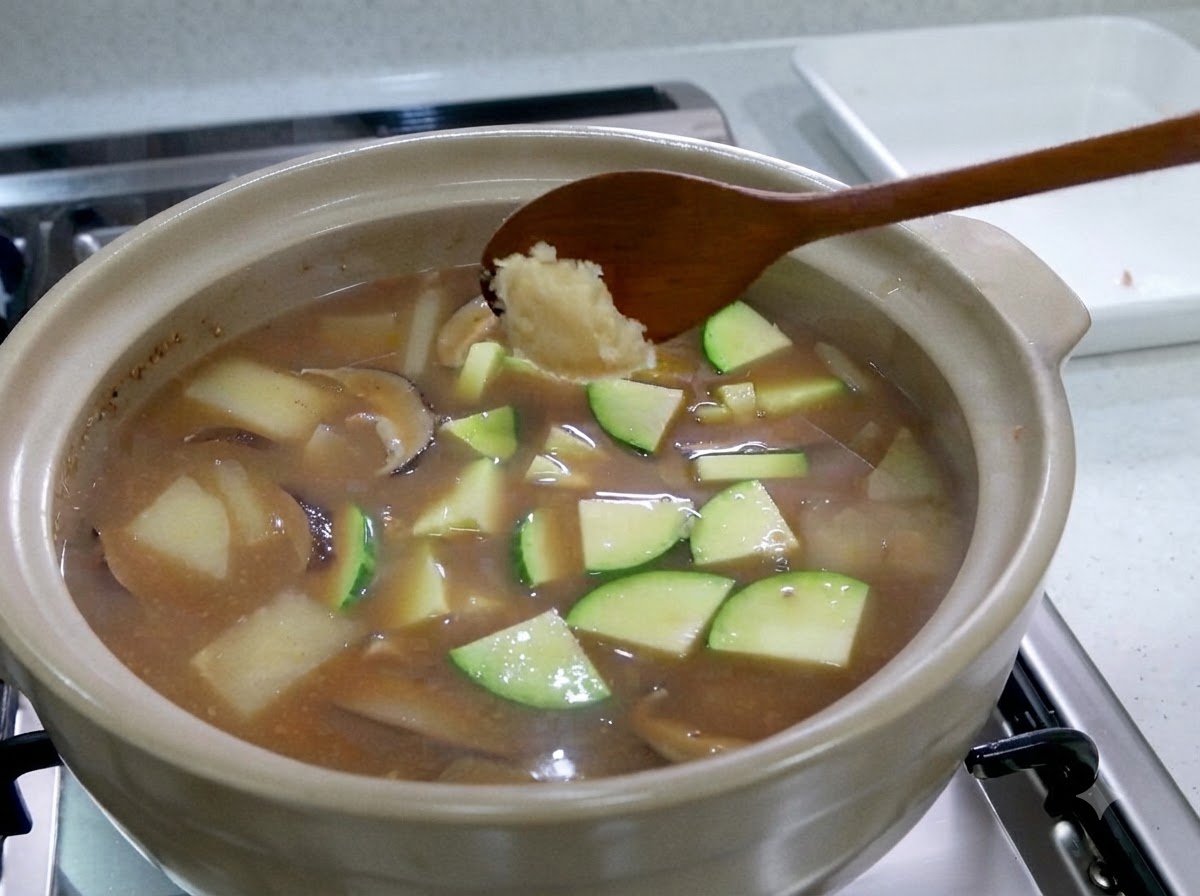
Once the zucchini and tofu are in, add half a spoonful of minced garlic into the pot. Turn the heat up to medium-high and let everything cook together for another 5 minutes.
Tip: Adding the garlic at this stage preserves its aromatic and pungent flavor, giving the stew a savory kick. - 11Add chilies and green onions
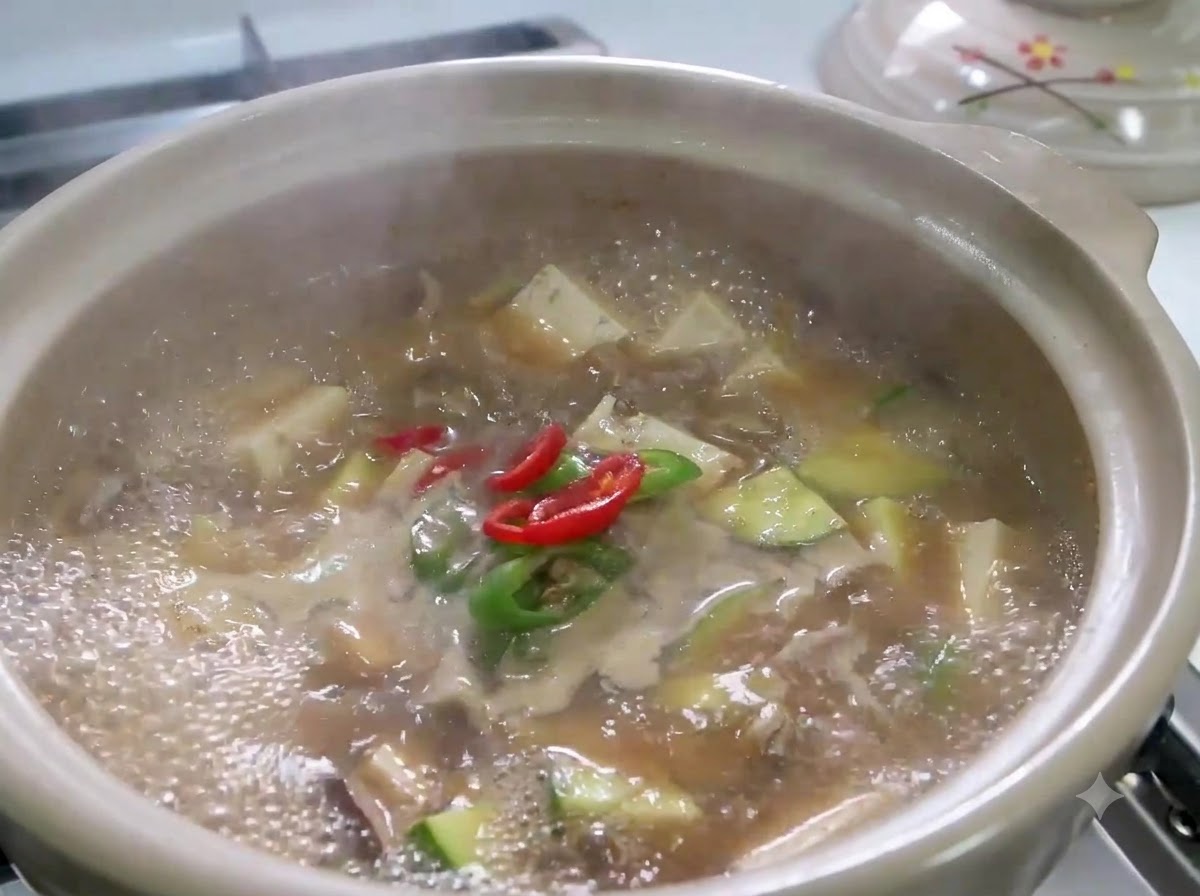
Once the stew has reduced by about half and thickened slightly, add the sliced red and green chili peppers along with the chopped green onions directly into the boiling broth.
Tip: Adding the fresh chilies near the end preserves their vibrant color and fresh heat without making the entire stew overwhelmingly spicy. - 12Stir in chili powder
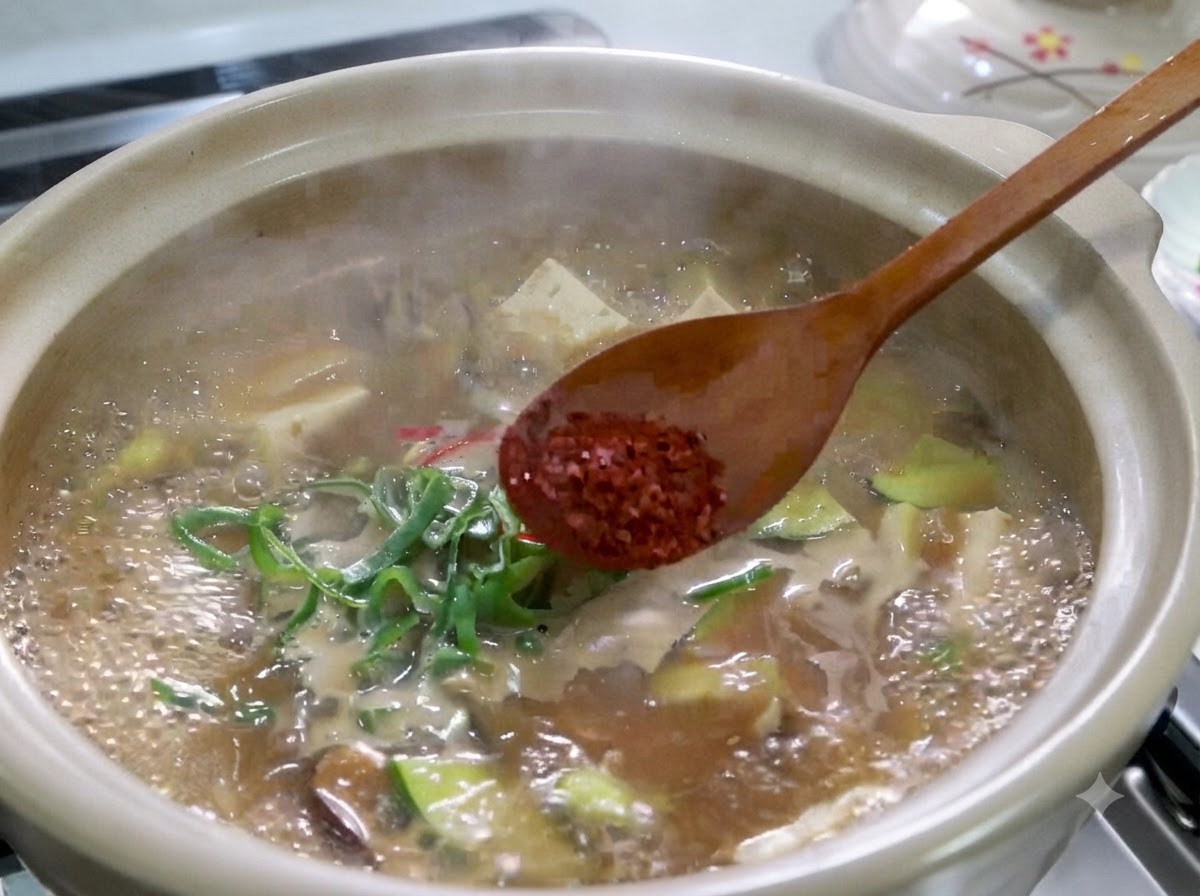
Add half a spoonful of red chili powder into the boiling stew. Stir it well and wait until the chili powder completely dissolves into the broth, providing a rich color and spice, then turn off the heat.
Tip: Korean chili powder (gochugaru) not only adds a pleasant kick of heat but also imparts a slightly smoky flavor and beautiful red hue to the final dish. - 13Serve and enjoy
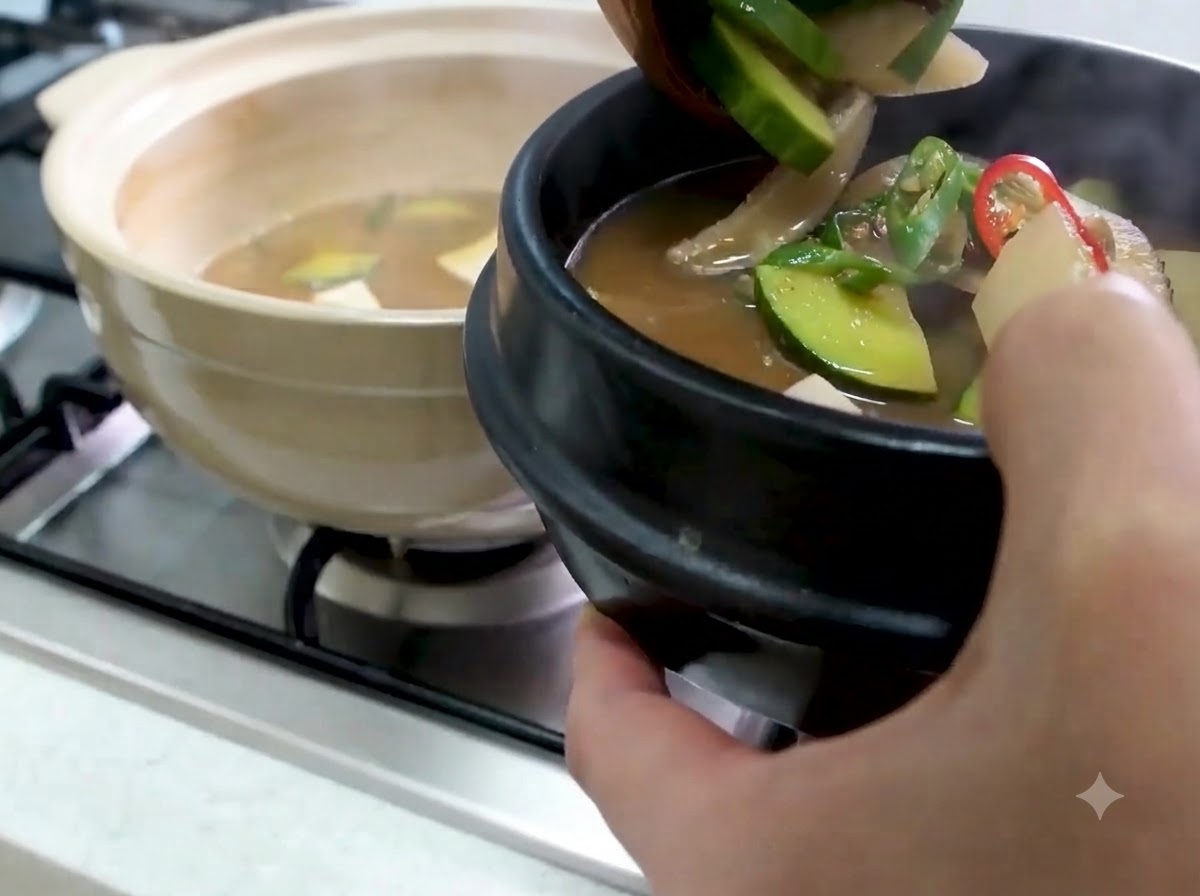
Ladle the hot, bubbling Doenjang Jjigae from the cooking pot into individual serving bowls, such as a traditional black stone bowl. The savory and umami-rich stew is now complete and pairs perfectly with a bowl of warm rice.
Tip: Serving the stew in a heated stone bowl helps keep it bubbling hot throughout the meal, elevating the comforting dining experience.