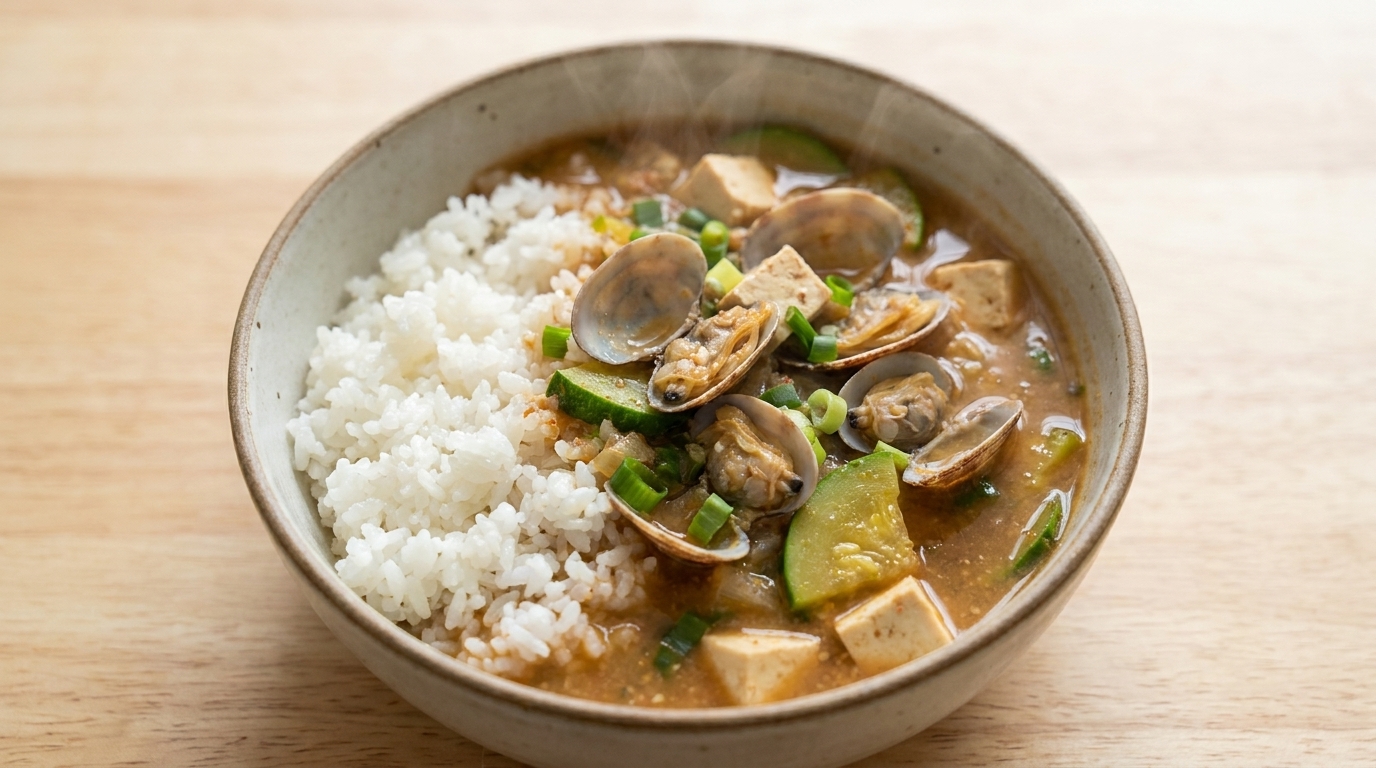
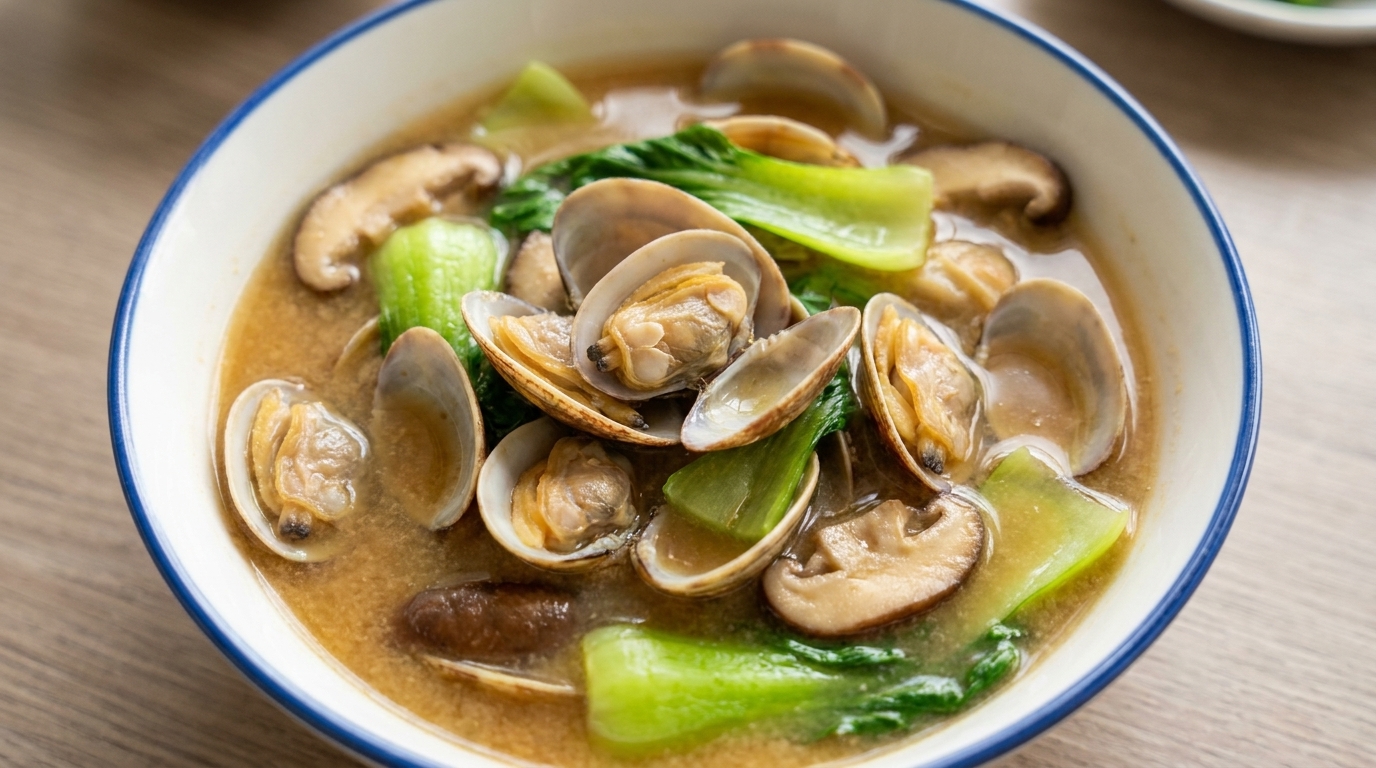
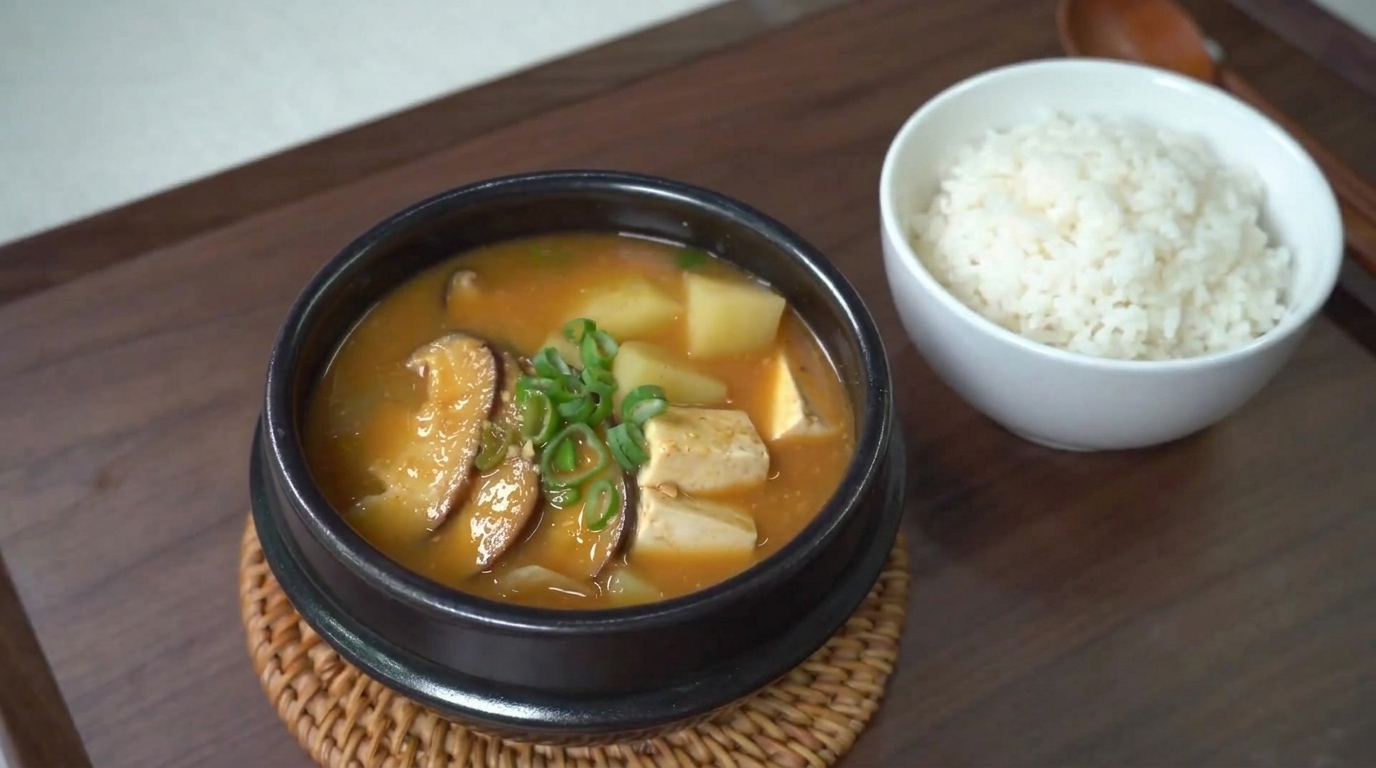
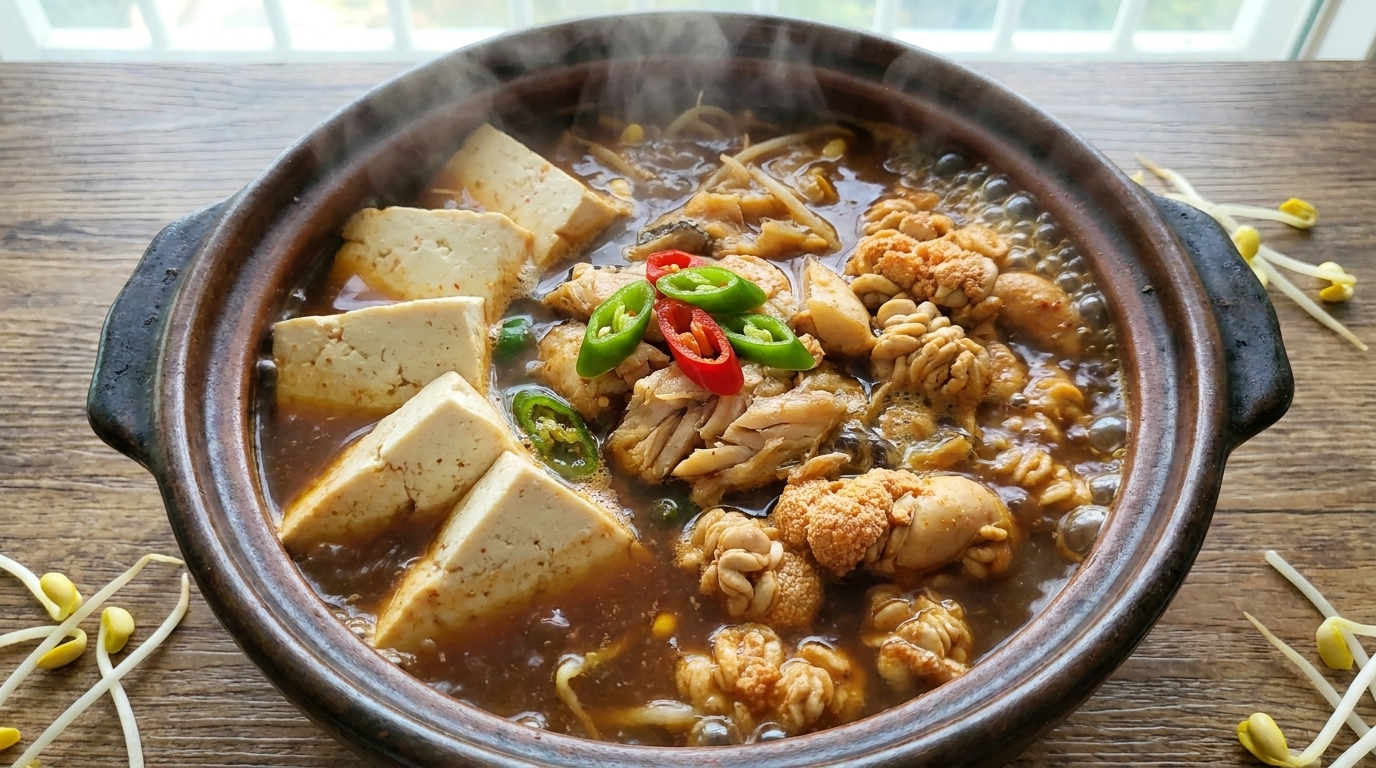
Authentic Korean Soybean Paste Stew (Doenjang Jjigae)
Create the ultimate comforting Korean soybean paste stew with a rich, savory broth made from scratch using dried kelp and silver fish. Packed with tofu, fresh vegetables, and an authentic deep umami flavor.
Doenjang Jjigae is a cornerstone of Korean home cooking, offering a deeply savory and comforting flavor that is instantly recognizable. The secret to a truly authentic, restaurant-quality stew lies in the broth. By taking the time to simmer dried silver fish and kelp, you build an incredibly rich umami base that perfectly complements the earthy notes of the soybean paste.
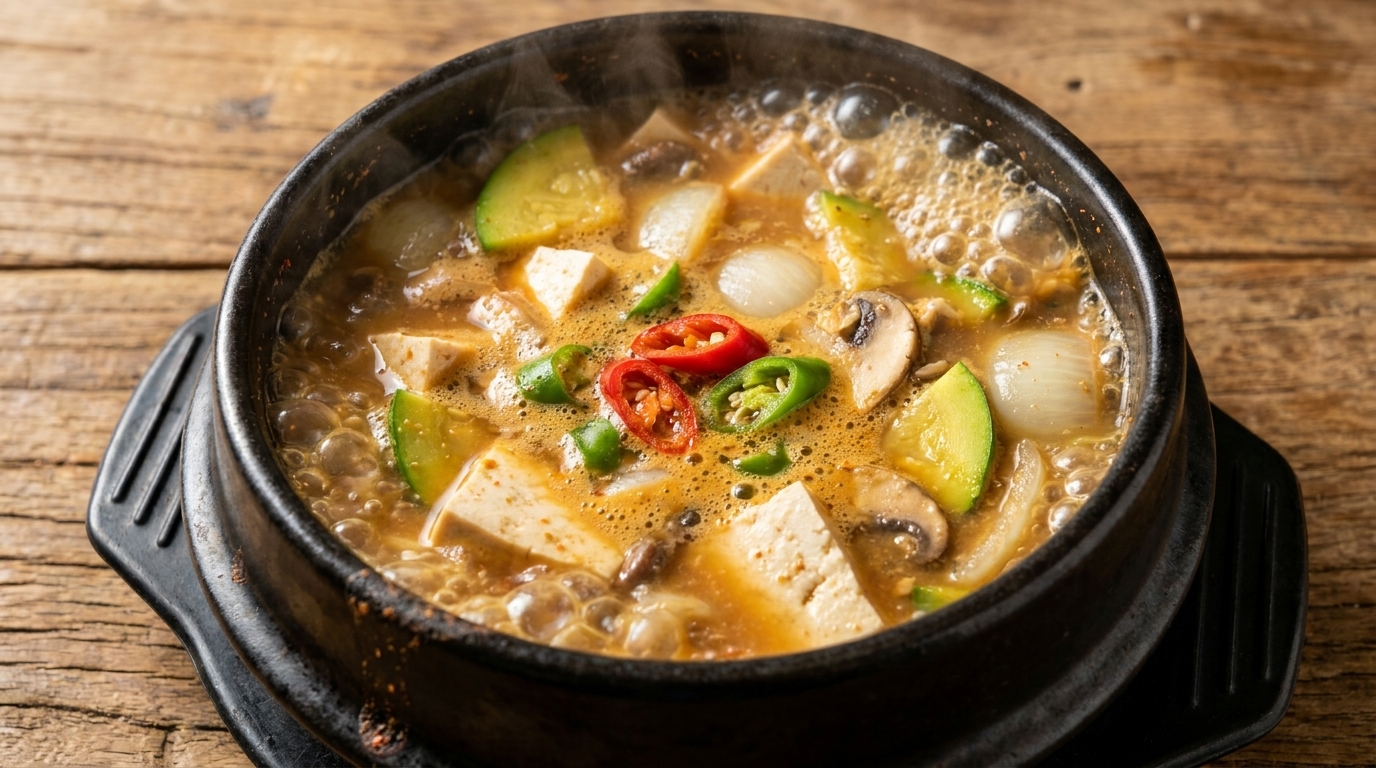
Ingredients
- 4 cups water
- 10-12 dried small silver fish (anchovies)
- 2 pieces dried kelp (dashima)
- 100 g raw shrimp meat
- 1/2 white onion
- 1 cup mushrooms
- 1/2 zucchini
- 2-3 tbsp thick dark soybean paste (doenjang)
- 1 tbsp minced garlic
- 2 tbsp minced green onion
- 1 block soft white tofu
- 1-2 chili peppers (red and green)
Instructions
- 1Prepare the seafood broth
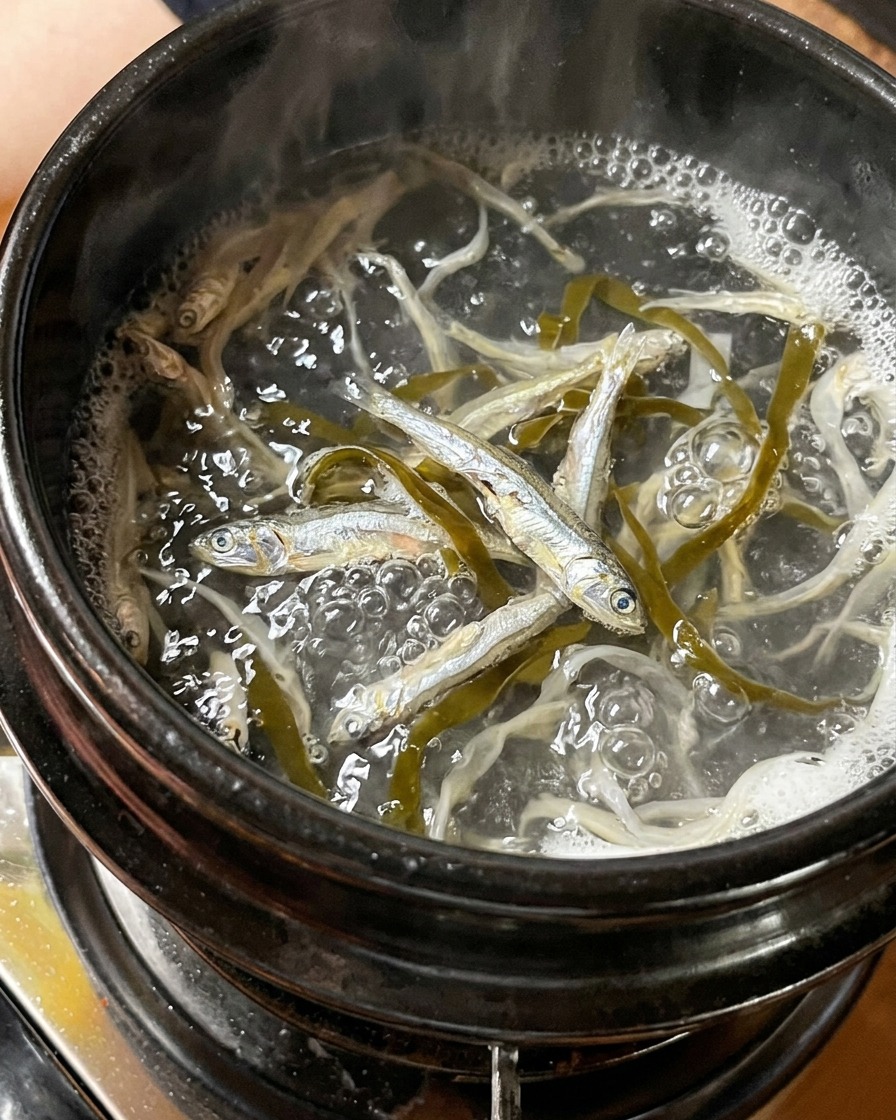
In a stone pot, combine water with dried small silver fish and pieces of dried kelp. Bring the mixture to a boil to extract the deep umami flavor, which serves as the essential base for the soybean paste stew.
Tip: Using small silver fish and kelp is the secret to a professional-tasting broth without needing extra MSG. - 2Add shrimp
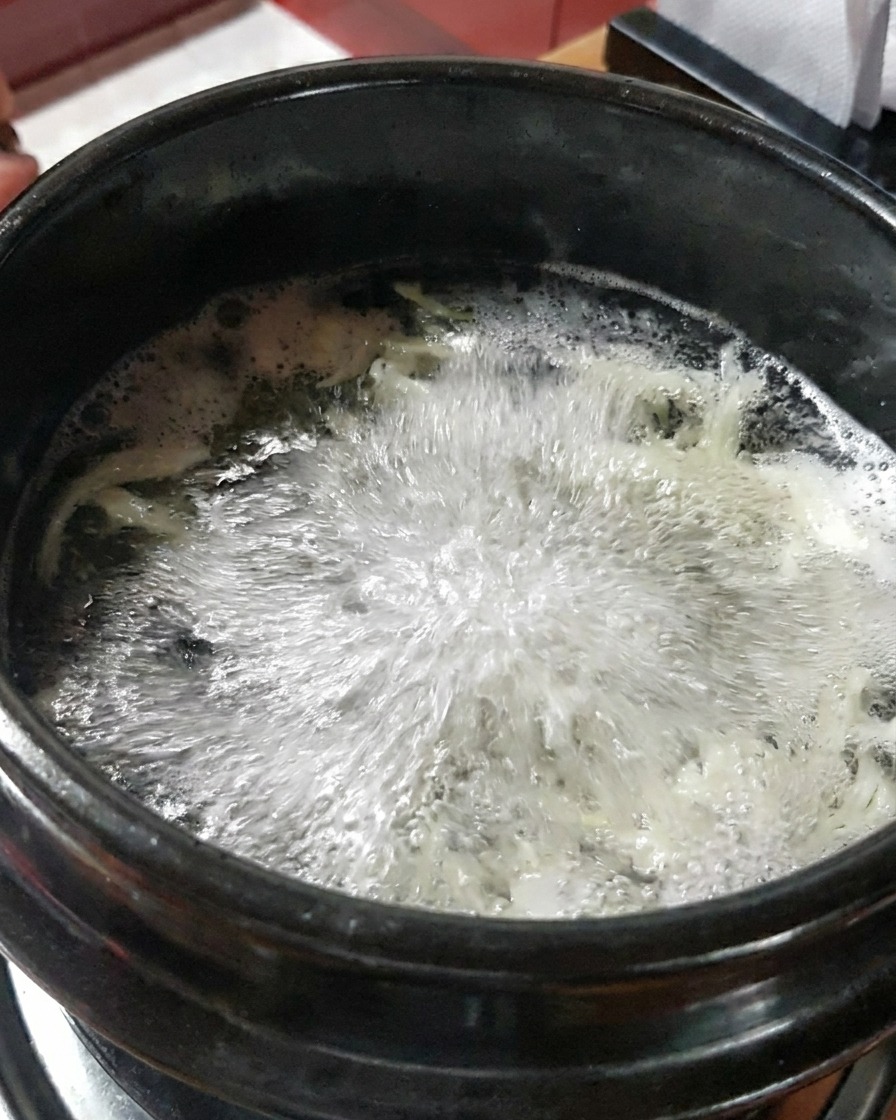
Once the broth is boiling well, pour the fresh, translucent shrimp meat into the pot. This will add a natural sweetness that complements the savory seafood base.
Tip: Add the shrimp while the broth is at a rolling boil to ensure they cook evenly and impart their flavor quickly. - 3Add vegetables
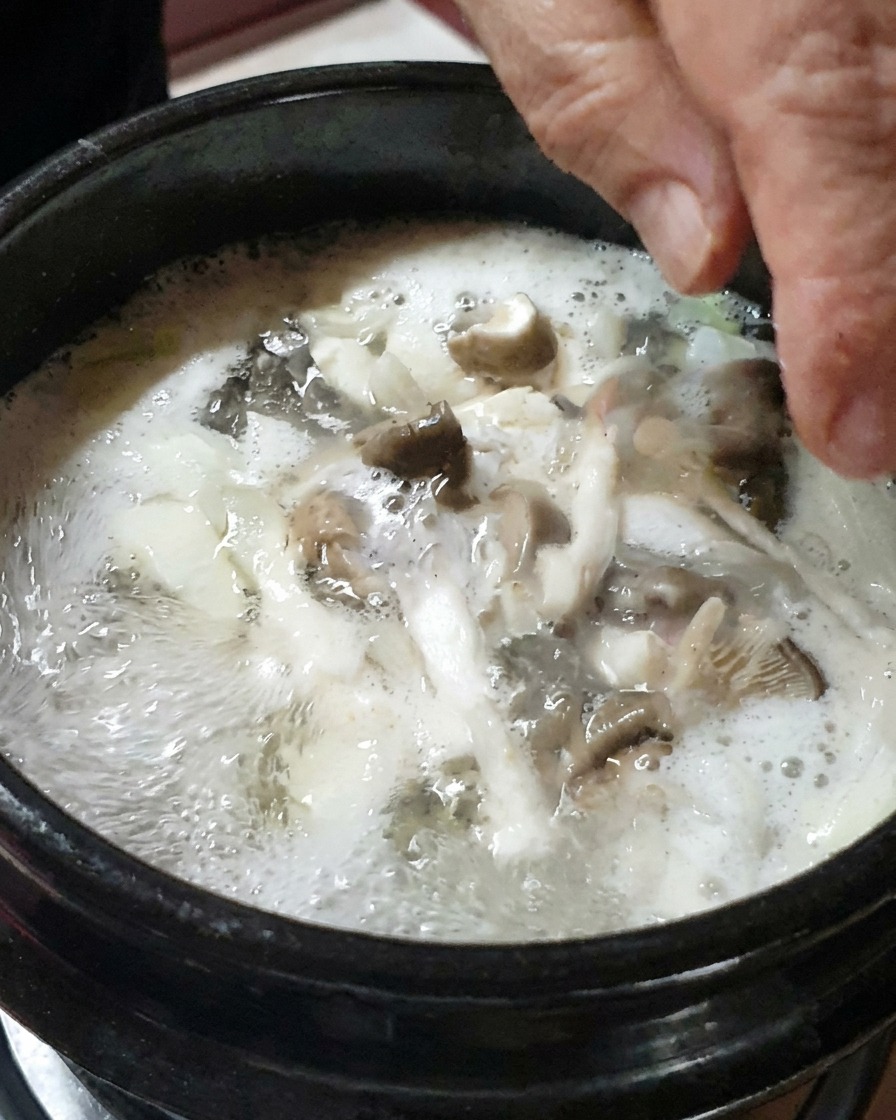
Incorporate the freshly chopped white onions and sliced mushrooms into the bubbling pot. These vegetables add texture and depth to the stew as they soften in the flavored broth.
Tip: You can customize this step by adding any vegetables you enjoy, such as zucchini, at this time. - 4Incorporate soybean paste
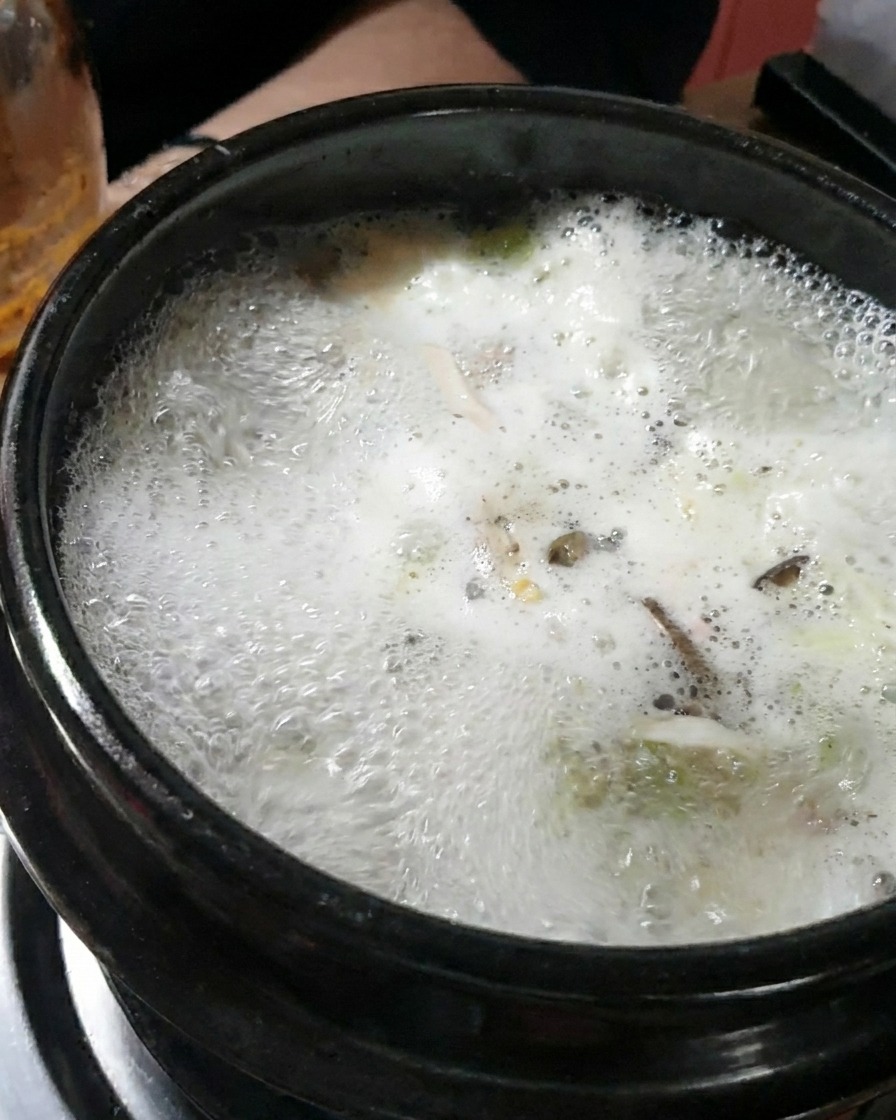
Add a large spoonful of thick, dark soybean paste to the pot. Stir thoroughly until the paste is completely dissolved and the broth takes on a rich, savory character.
Tip: Ensure the paste is fully dissolved to create a uniform and consistent flavor profile throughout the stew. - 5Add aromatics
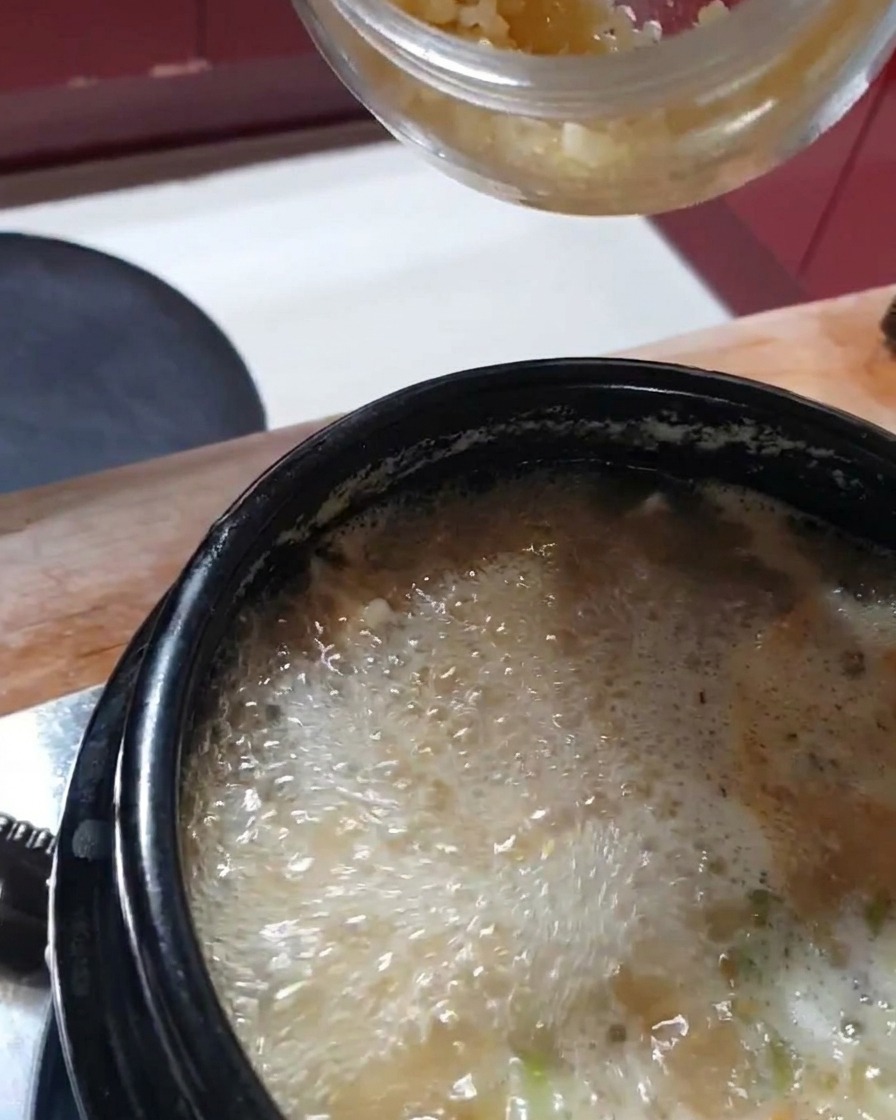
Stir in a spoonful of freshly minced garlic into the stew. This will enhance the savory depth of the dish and provide a bright, aromatic punch.
Tip: Freshly minced garlic is always preferred over jarred for the best aromatic results. - 6Add final ingredients and finish
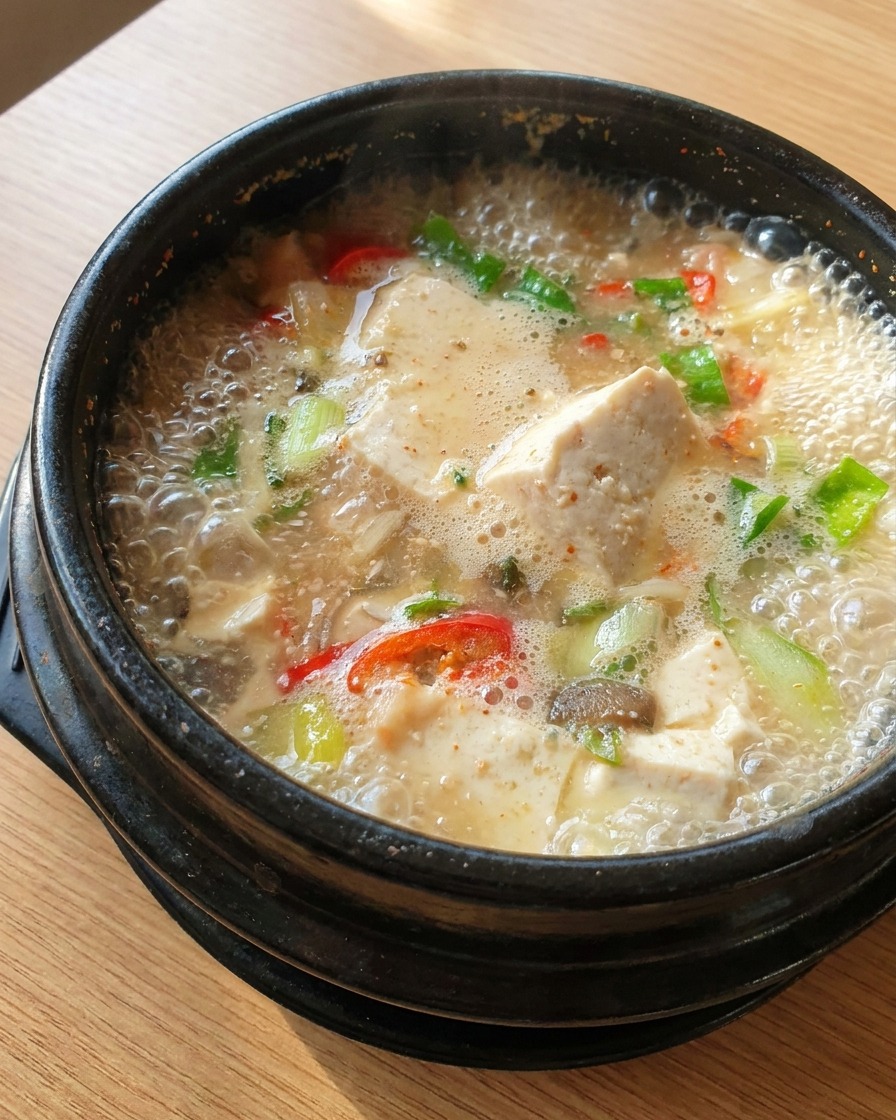
Gently place large cubes of soft white tofu and sliced chili peppers into the bubbling stew. Cook for a short time just before removing from the heat to ensure the tofu remains tender and the chili heat is well-integrated.
Tip: Adding the tofu right at the end prevents it from breaking apart and keeps it perfectly soft.