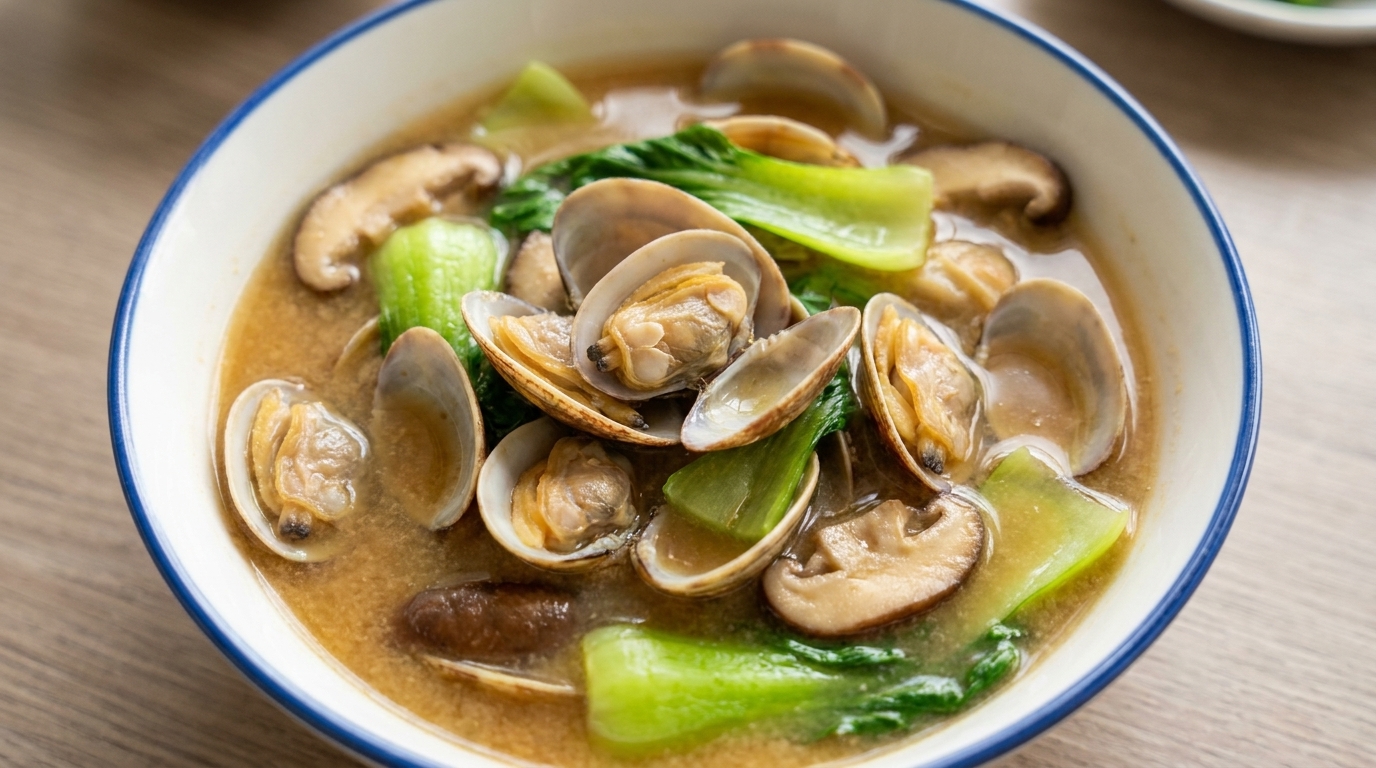
Korean Doenjang-jjigae (Soybean Paste Stew)
A hearty, soul-warming Korean soybean paste stew made with clams, tofu, and fresh vegetables. This rich, savory, and slightly spicy dish is the ultimate comfort food.
Doenjang-jjigae is a cornerstone of Korean home cooking, prized for its deep, earthy flavor and comforting warmth. Made with fermented soybean paste and a medley of fresh ingredients, it is a healthy and satisfying meal that perfectly balances savory depth with a light, briny sweetness from the clams.

Ingredients
- 500 ml rice water
- 2 tbsp doenjang (Korean soybean paste)
- 150 g clams, cleaned
- 1/2 zucchini, diced
- 50 g mushrooms, sliced
- 1/2 cup bean sprouts
- 1/4 onion, sliced
- 100 g firm tofu, cubed
- 1 tsp beef powder
- 1 tsp chili powder
- 1 green chili, sliced
- 1 red chili, sliced
- 1 stalk green onion, chopped
Instructions
- 1Prepare the broth base

Begin by pouring the rice water into a traditional stone pot. Using rice water instead of plain water adds a subtle starchiness that helps thicken the stew and mellow the strong flavor of the fermented soybean paste.
Tip: Rice water is the cloudy liquid from the second or third rinse of white rice; it is a classic Korean cooking hack for better-tasting stews. - 2Add the soybean paste
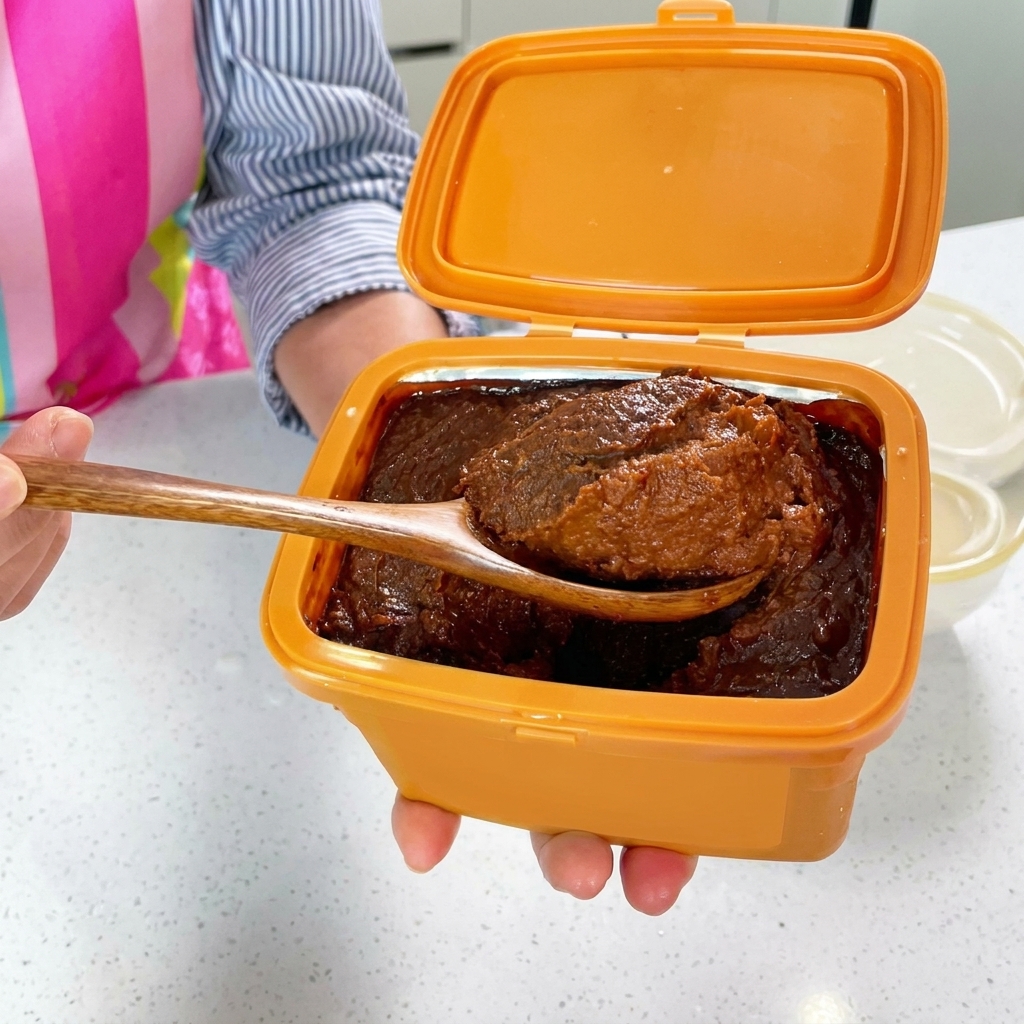
Take a generous spoonful of authentic Korean soybean paste (doenjang) and stir it directly into the rice water in the pot. Ensure it is fully dissolved to create a flavorful, savory foundation for the stew.
Tip: If the paste is thick, press it against the side of the pot with your spoon to help it dissolve into the liquid faster. - 3Add clams

Add a handful of fresh, cleaned clams to the soybean broth. The clams will release a briny sweetness as they cook, perfectly balancing the earthy and savory notes of the soybean paste.
Tip: Make sure the clams are purged of sand beforehand to keep the broth clean. - 4Add zucchini and mushrooms
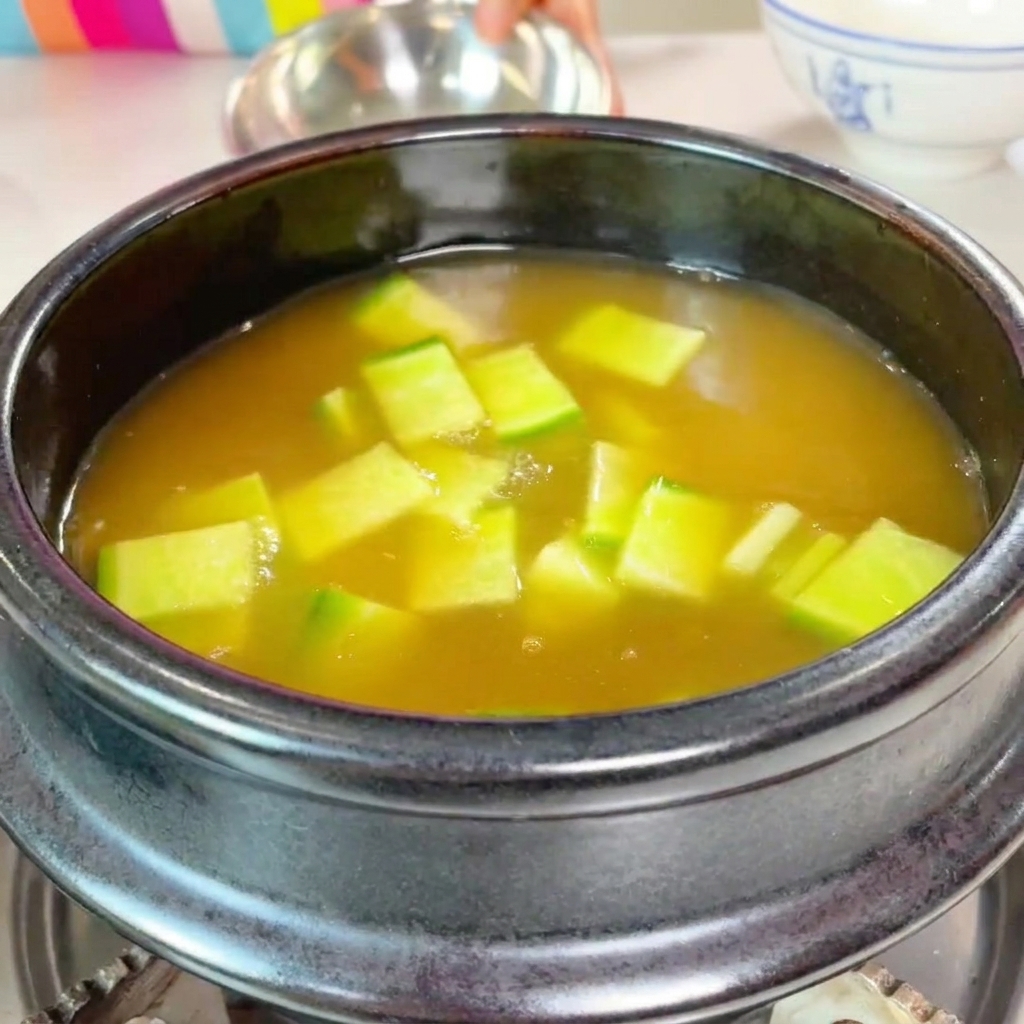
Incorporate the chopped zucchini and mushrooms into the simmering pot. These vegetables add texture and absorb the rich, savory flavors of the broth as they cook.
Tip: Cut the zucchini into bite-sized chunks so they cook evenly without falling apart. - 5Add bean sprouts, onions, and tofu
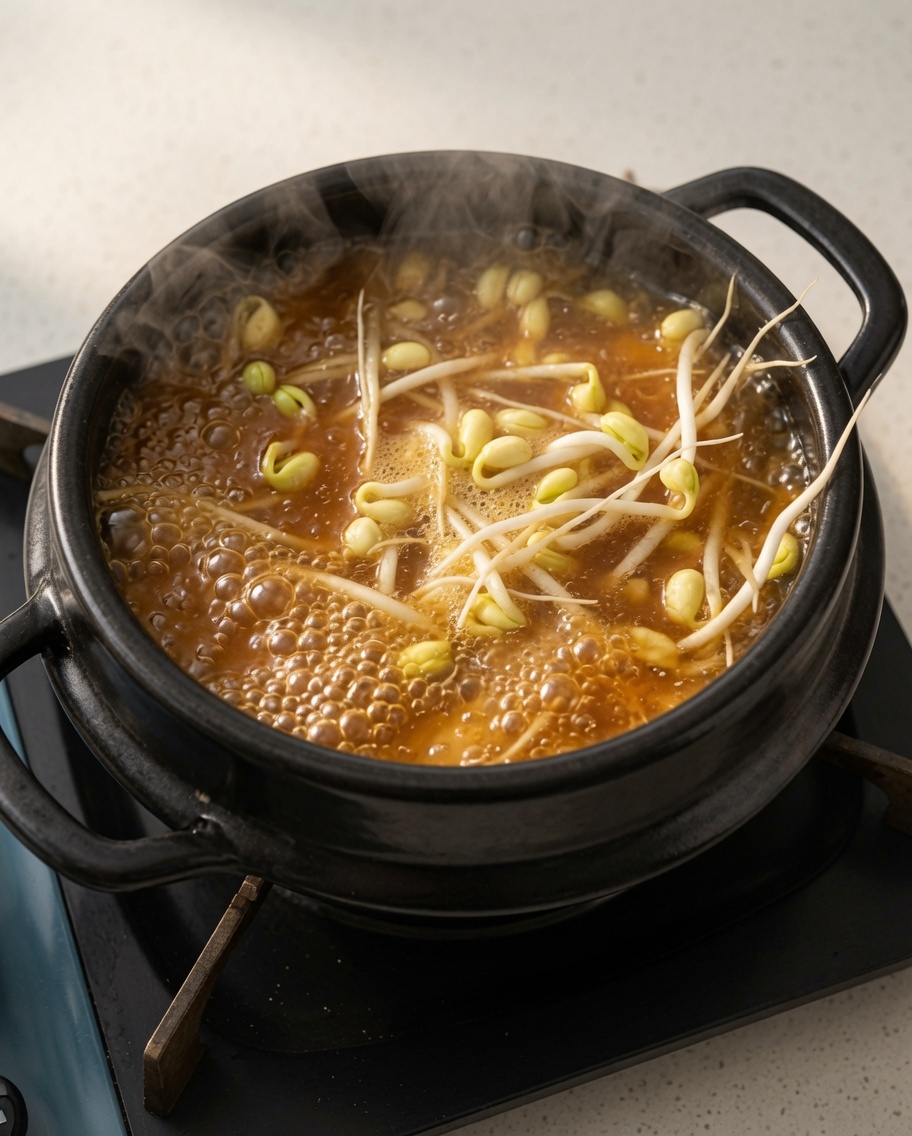
Gently add the bean sprouts, sliced onions, and cubed tofu to the boiling stew. These ingredients add freshness, sweetness, and a soft texture that complements the hearty broth.
Tip: Tofu should be added carefully to ensure the cubes stay intact. - 6Season the stew

Add a spoonful of beef powder and chili powder to the simmering stew to build depth. These seasonings balance the fermented soybean paste and create a rich savory flavor profile.
Tip: Adjust the amount of chili powder based on your personal heat preference.