Traditional Korean Soybean Paste Stew (Doenjang Jjigae)
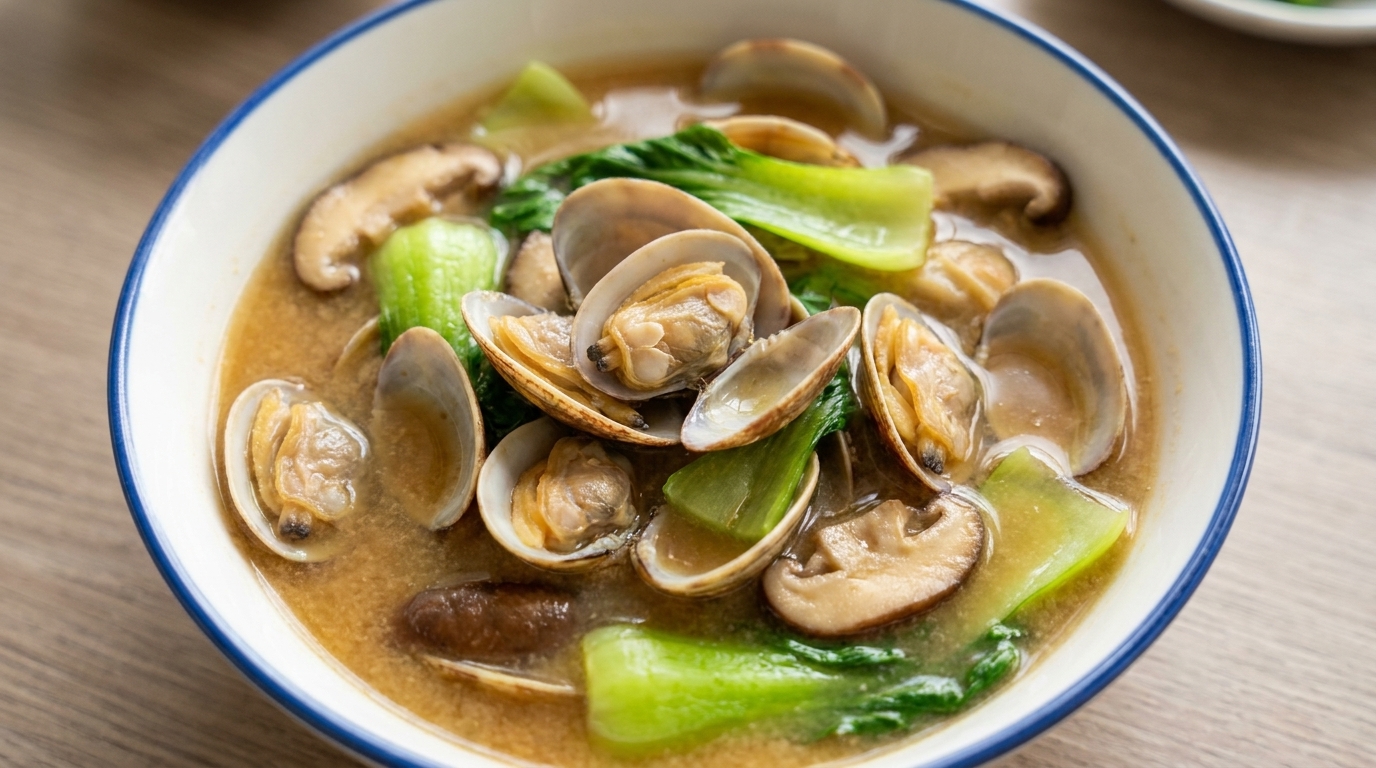
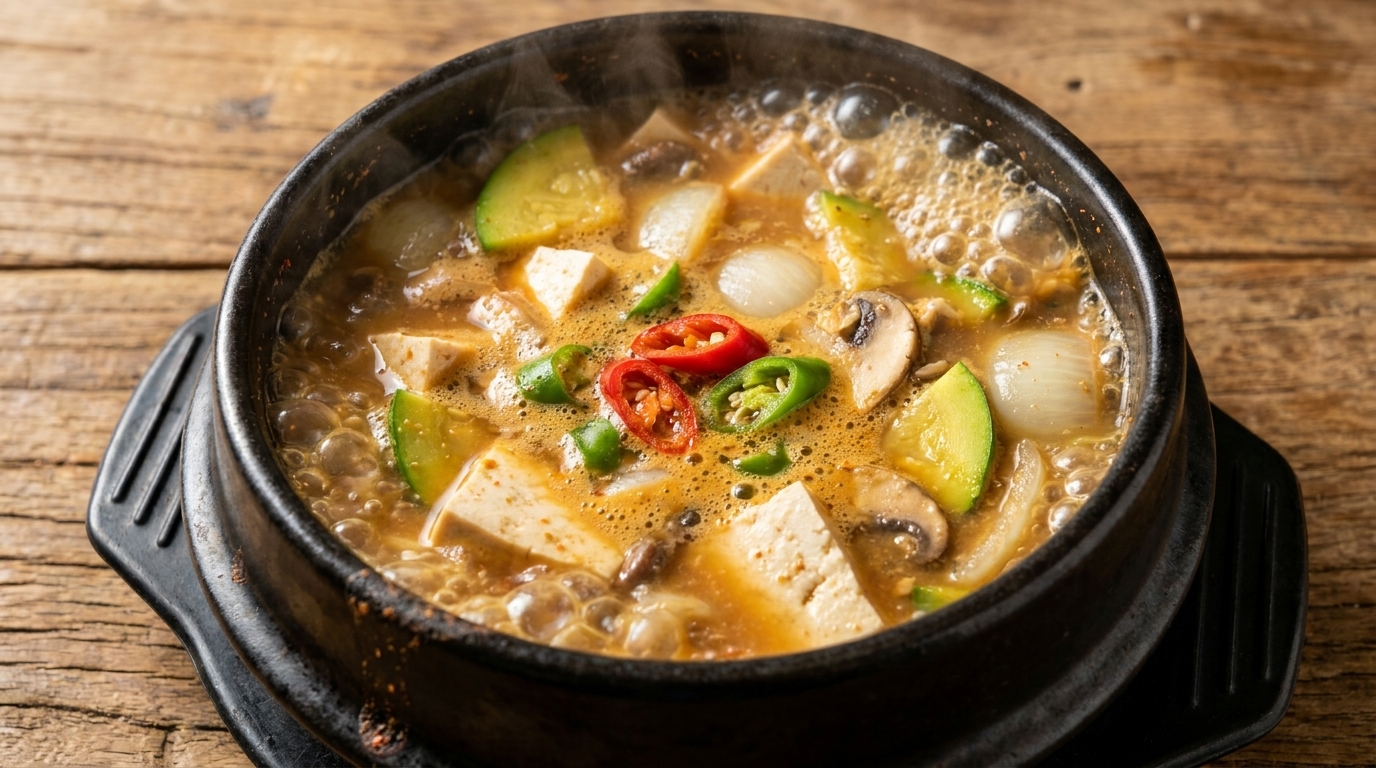
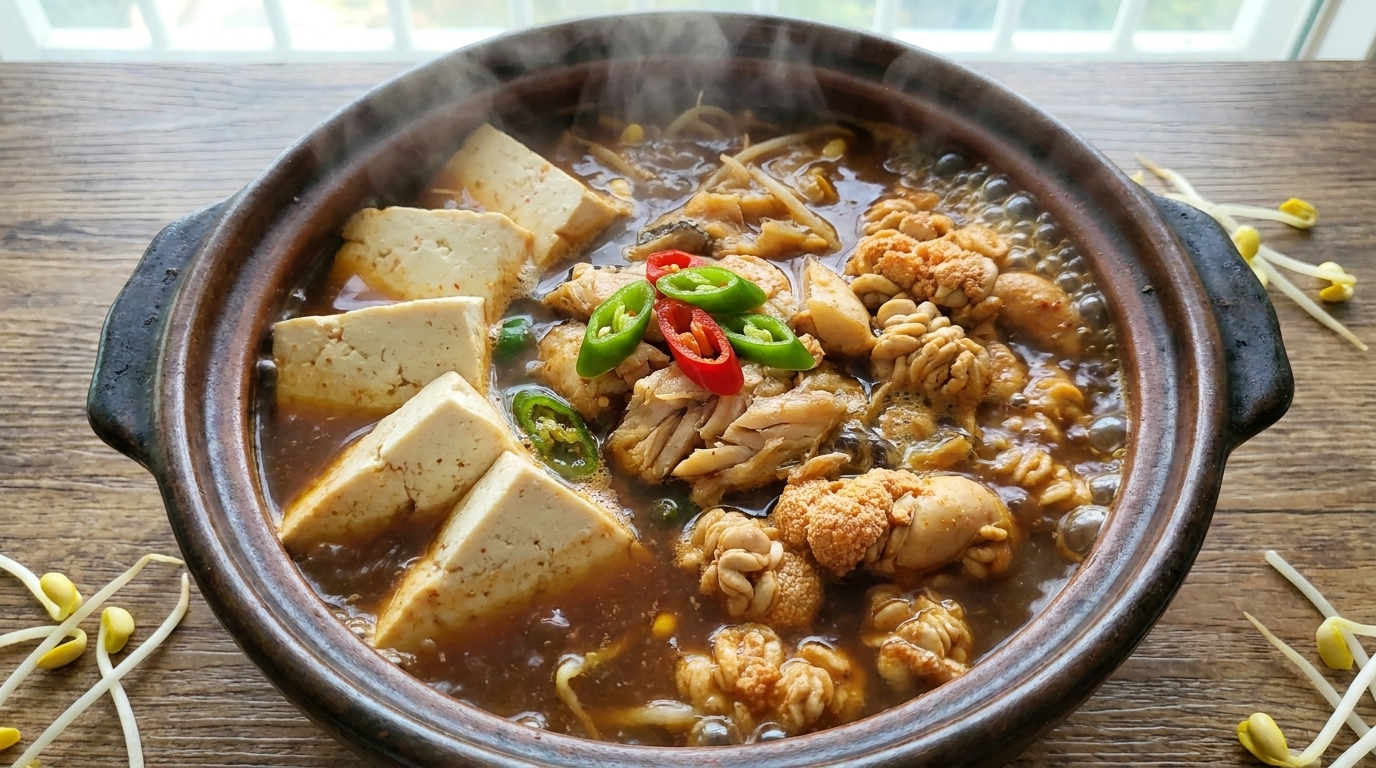
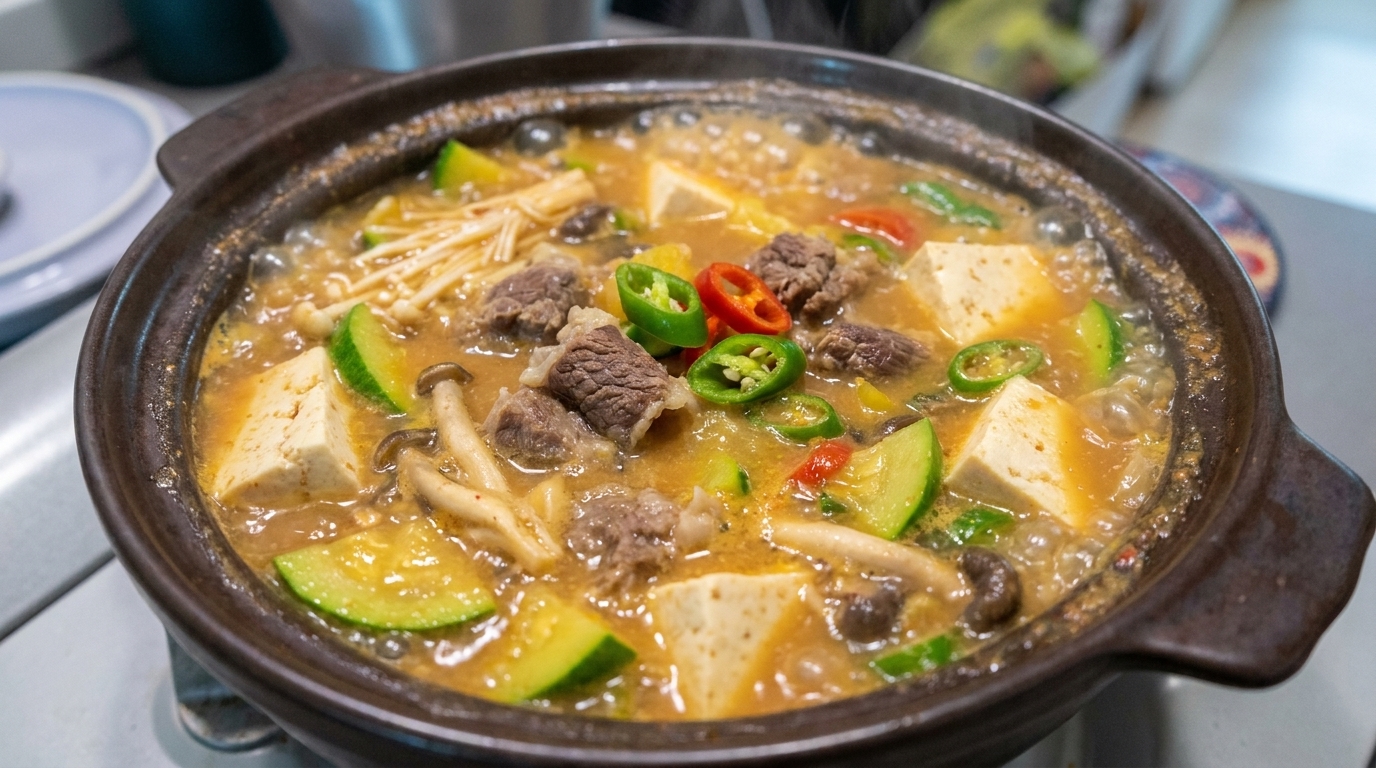
A soul-warming Korean staple, Doenjang Jjigae features a savory, umami-rich soybean paste broth packed with tofu, potatoes, and earthy shiitake mushrooms.
Doenjang Jjigae is the quintessential Korean home-cooked meal, celebrated for its deeply comforting, earthy flavor profile. The heart of the dish is doenjang, a pungent and probiotic-rich fermented soybean paste that creates a robust broth when simmered with anchovies and kelp. It is a humble yet essential stew that anchors a traditional Korean table, often served bubbling hot alongside a simple bowl of steamed white rice.
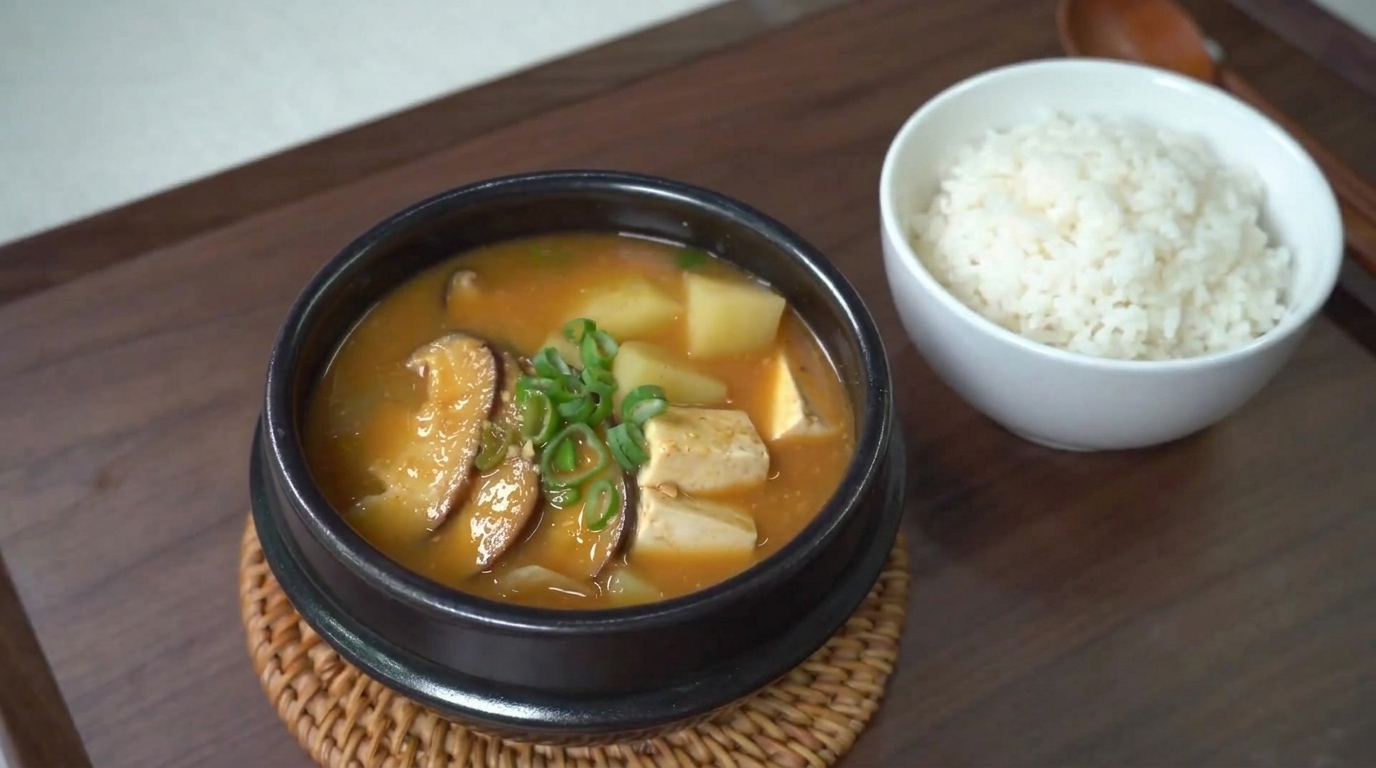
Ingredients
- 900 ml water
- 5 dried anchovies
- 1 piece dried kelp
- 2 tbsp doenjang (Korean soybean paste)
- 0.5 tbsp gochujang (Korean chili paste)
- 1 potato
- 1 white onion
- 2 shiitake mushrooms
- 200 g firm tofu
- 2 stalks green onion
- 1 green chili pepper
Instructions
- 1Cube the potato
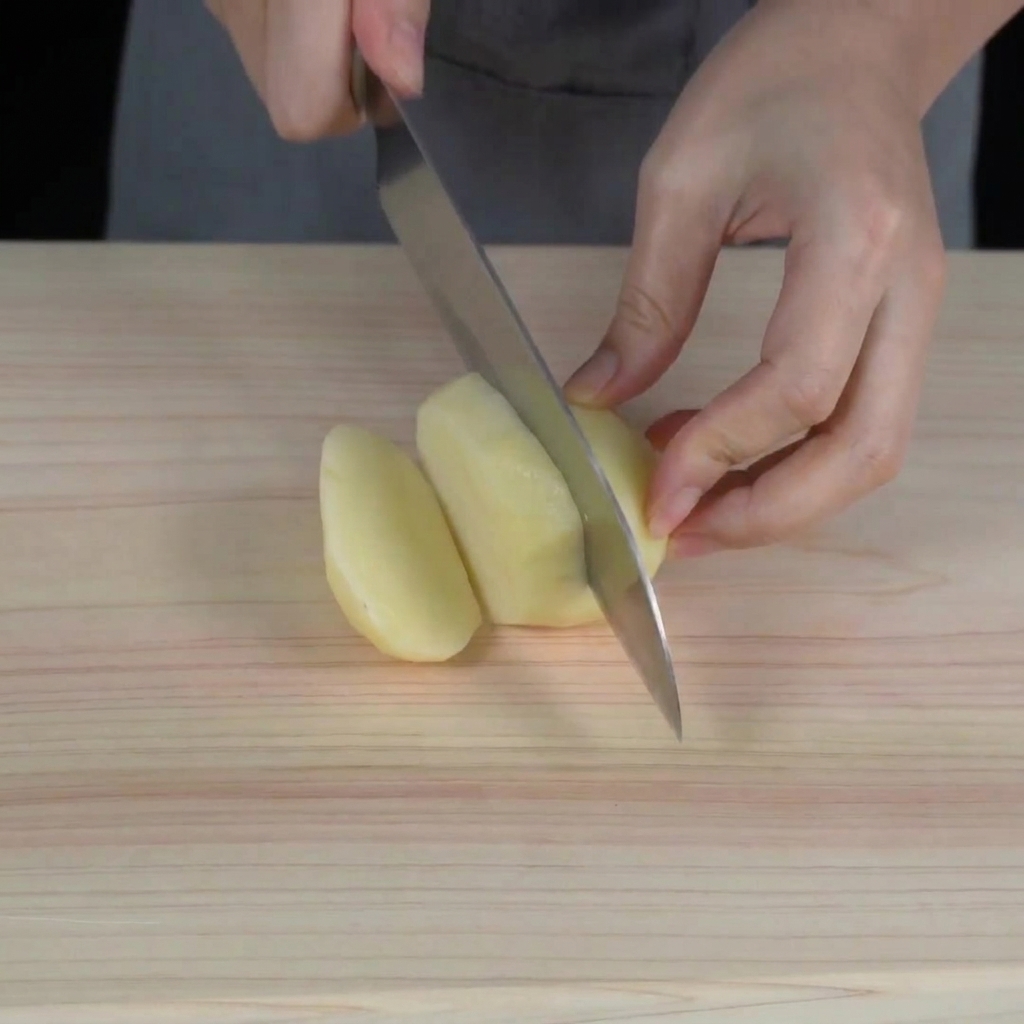
Start by cutting a peeled raw potato into small, bite-sized cubes. Cutting the potato into even pieces ensures they will cook through at the same rate in the stew.
Tip: Soaking the cubed potatoes in cold water for a few minutes can remove excess starch and prevent them from breaking down too much in the broth. - 2Chop the onion
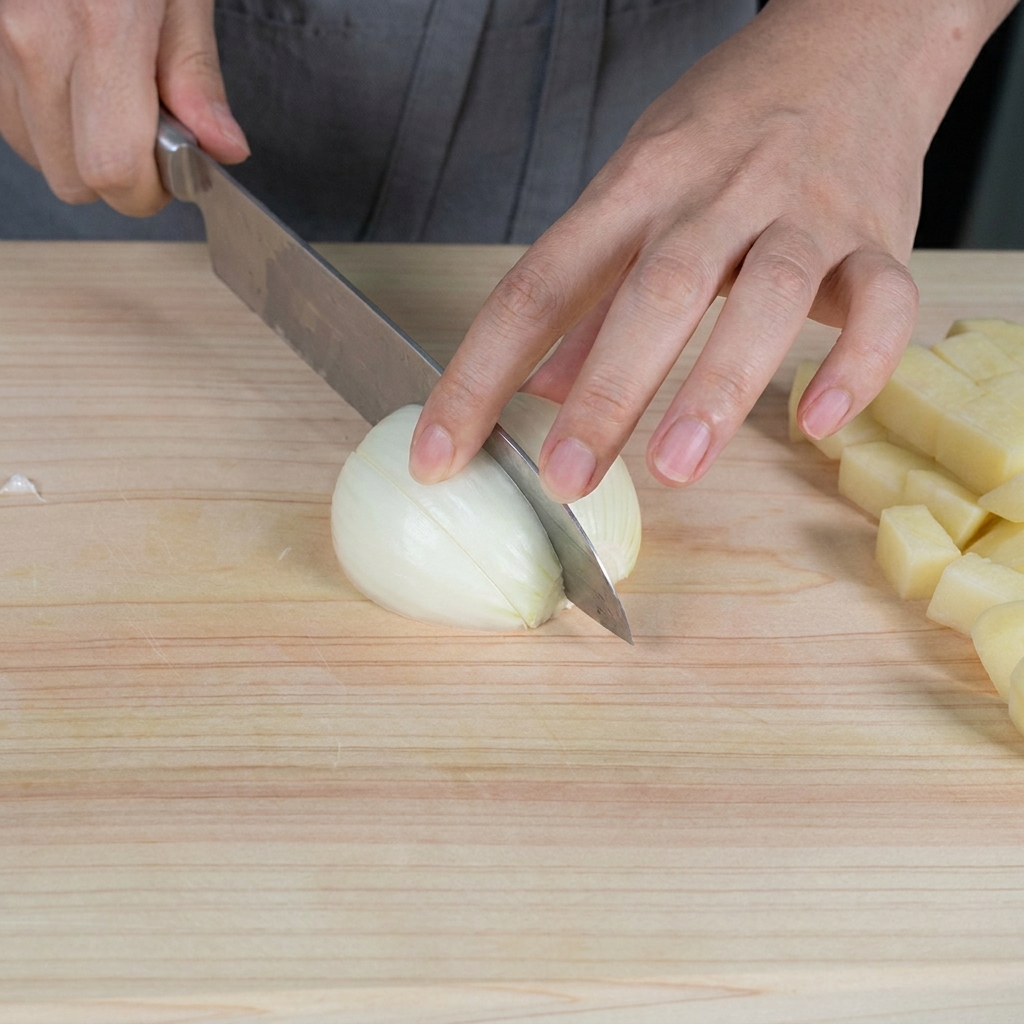
Take a raw white onion and chop it into pieces roughly the same size as the potato cubes. The onion will provide a foundational sweetness to balance the savory soybean paste.
Tip: Leaving the root end of the onion intact while making your vertical and horizontal cuts will hold the layers together and make chopping much easier. - 3Slice the green onions
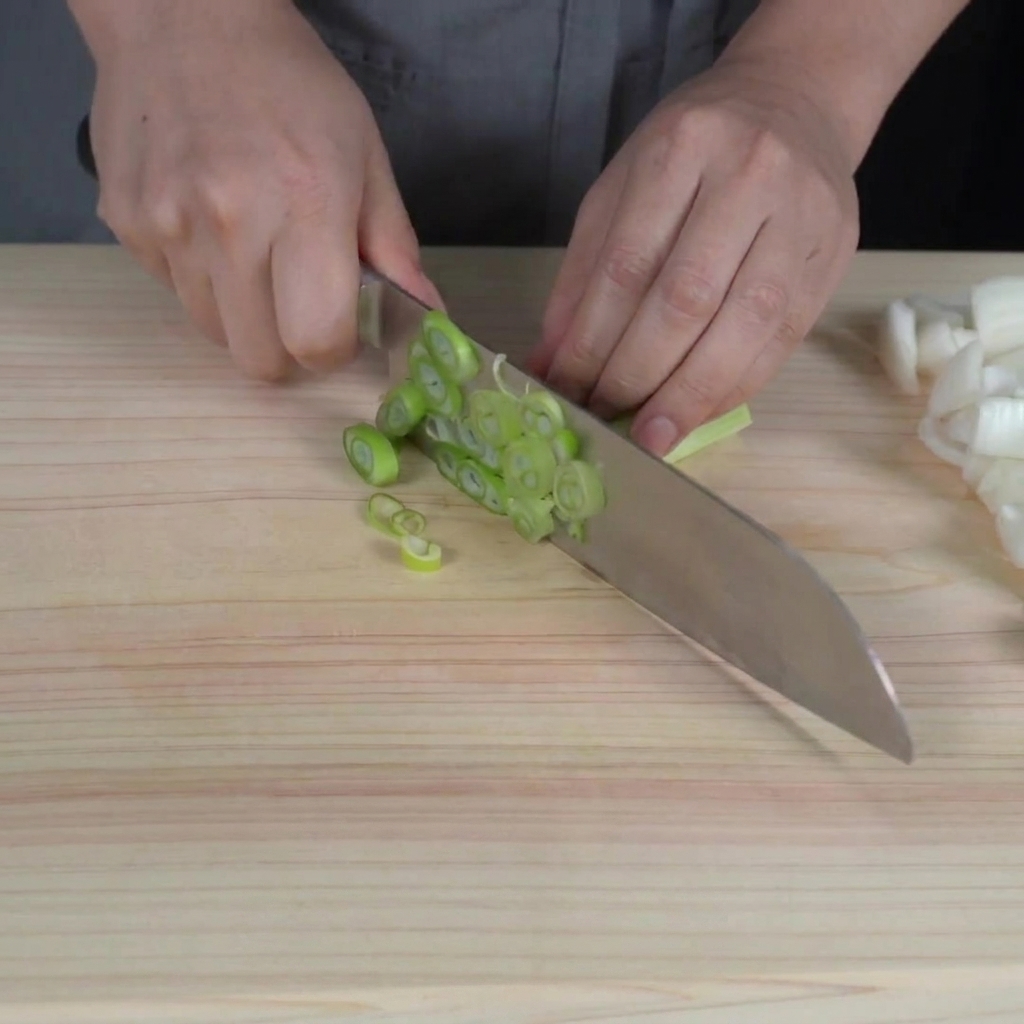
Thinly slice the fresh green onions into small rounds. These will be added toward the end of the cooking process to impart a fresh, mild onion flavor and vibrant color to the final dish.
Tip: Use both the white and green parts of the onion. The white part offers more flavor, while the green part is excellent for garnishing. - 4Slice the chili pepper
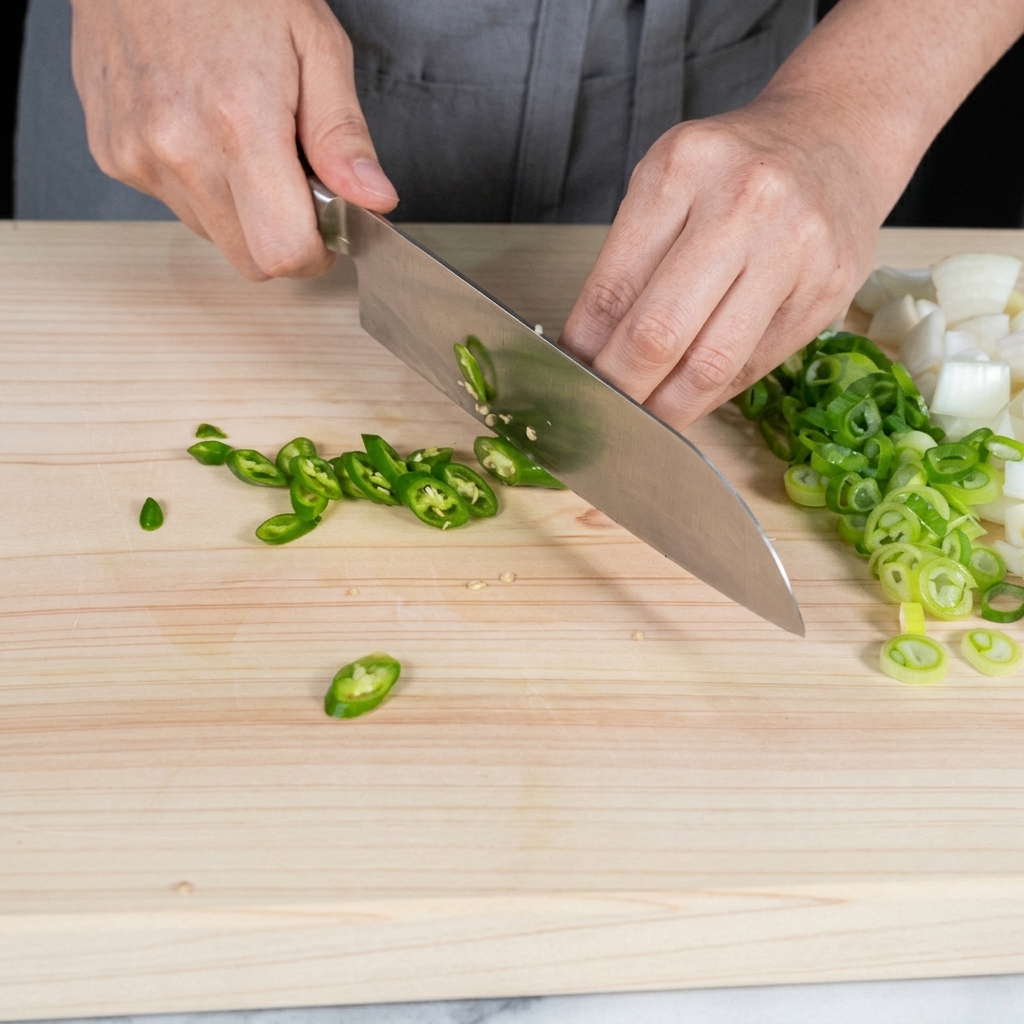
Cut the fresh green chili pepper diagonally into small pieces. The chili pepper adds a pleasant, refreshing kick that cuts right through the rich, earthy flavors of the stew.
Tip: If you prefer a milder stew, you can slice the chili in half lengthwise and scrape out the seeds and white ribs before chopping. - 5Slice the shiitake mushrooms
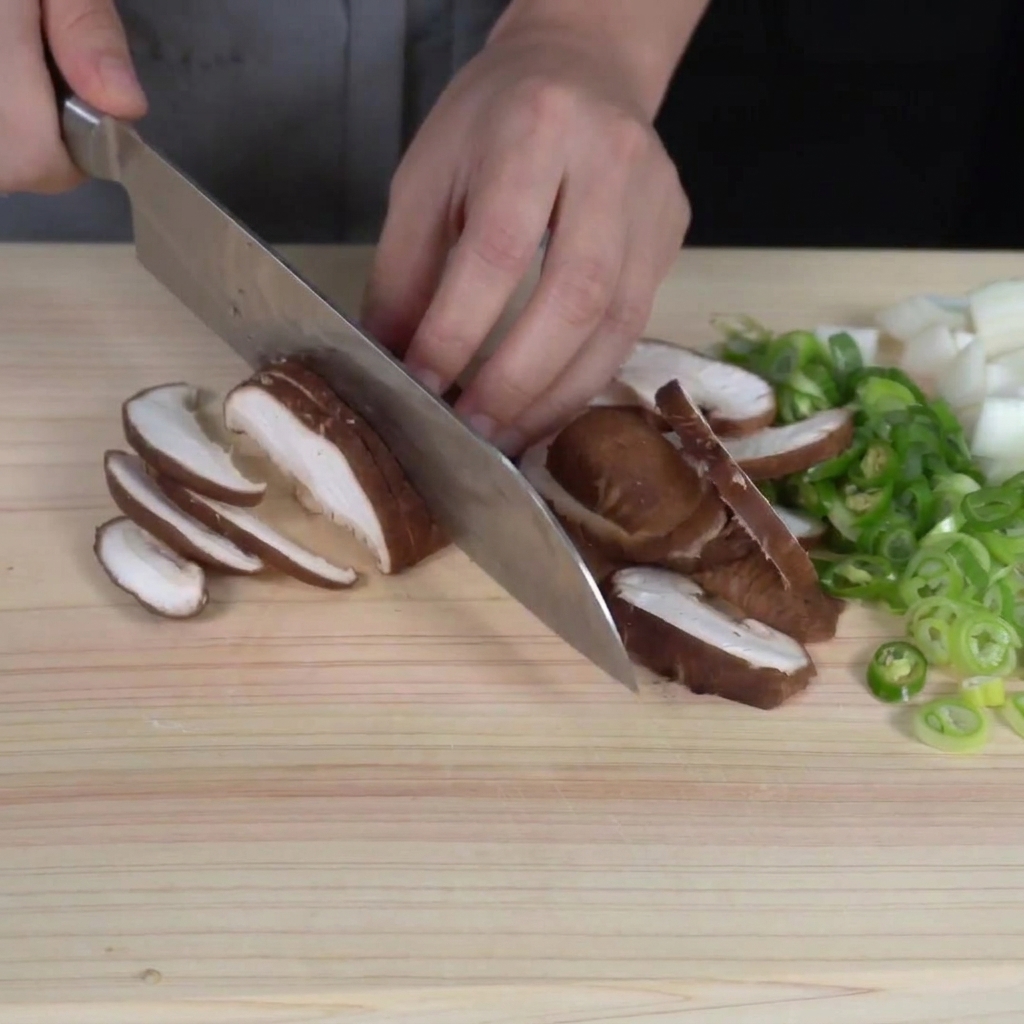
Thinly slice the fresh raw shiitake mushrooms. Make sure to carefully remove and save the mushroom stems before slicing the caps, as the stems will be used to flavor the broth.
Tip: Clean mushrooms by gently wiping them with a damp paper towel rather than washing them under running water, as they can absorb excess moisture like a sponge. - 6Cube the tofu
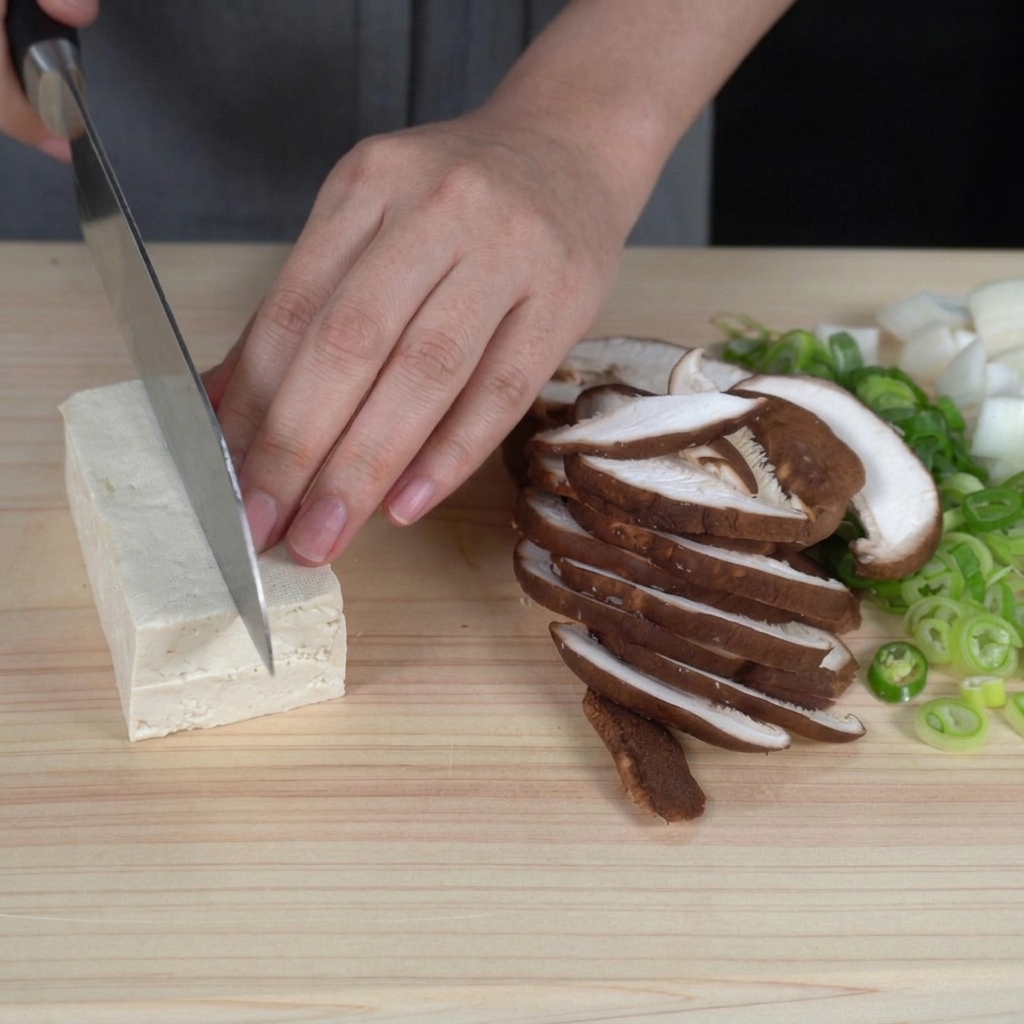
Carefully cut a block of firm white tofu into bite-sized cubes, matching the size of the potatoes and onions. Tofu acts as a sponge in the stew, absorbing all the delicious savory flavors.
Tip: Firm or extra-firm tofu works best for stews, as it holds its shape well when boiled and stirred among the other ingredients. - 7Prepare the broth base
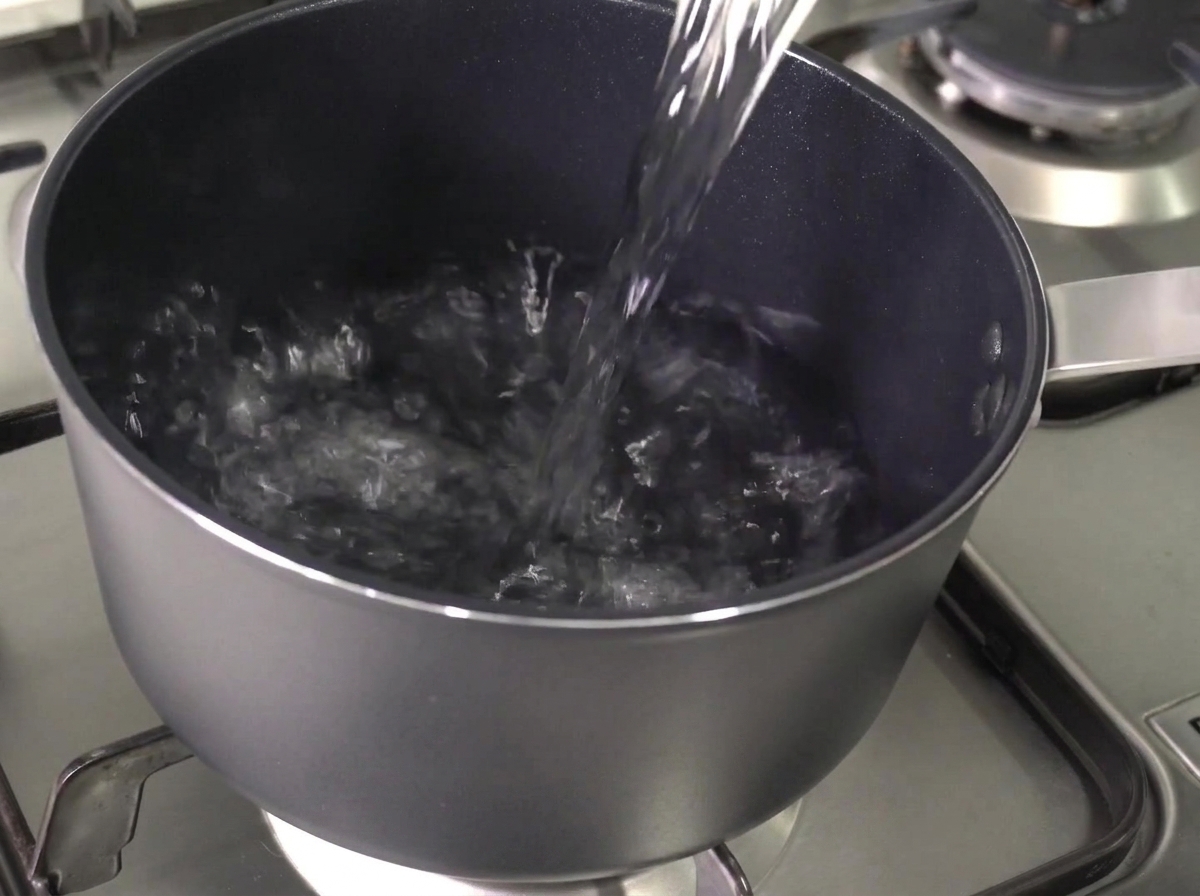
Pour 900 milliliters of water into a pot to serve as the foundation for your soybean paste stew.
Tip: Using a clean pot ensures no residual flavors interfere with the delicate broth. - 8Add aromatics for the broth
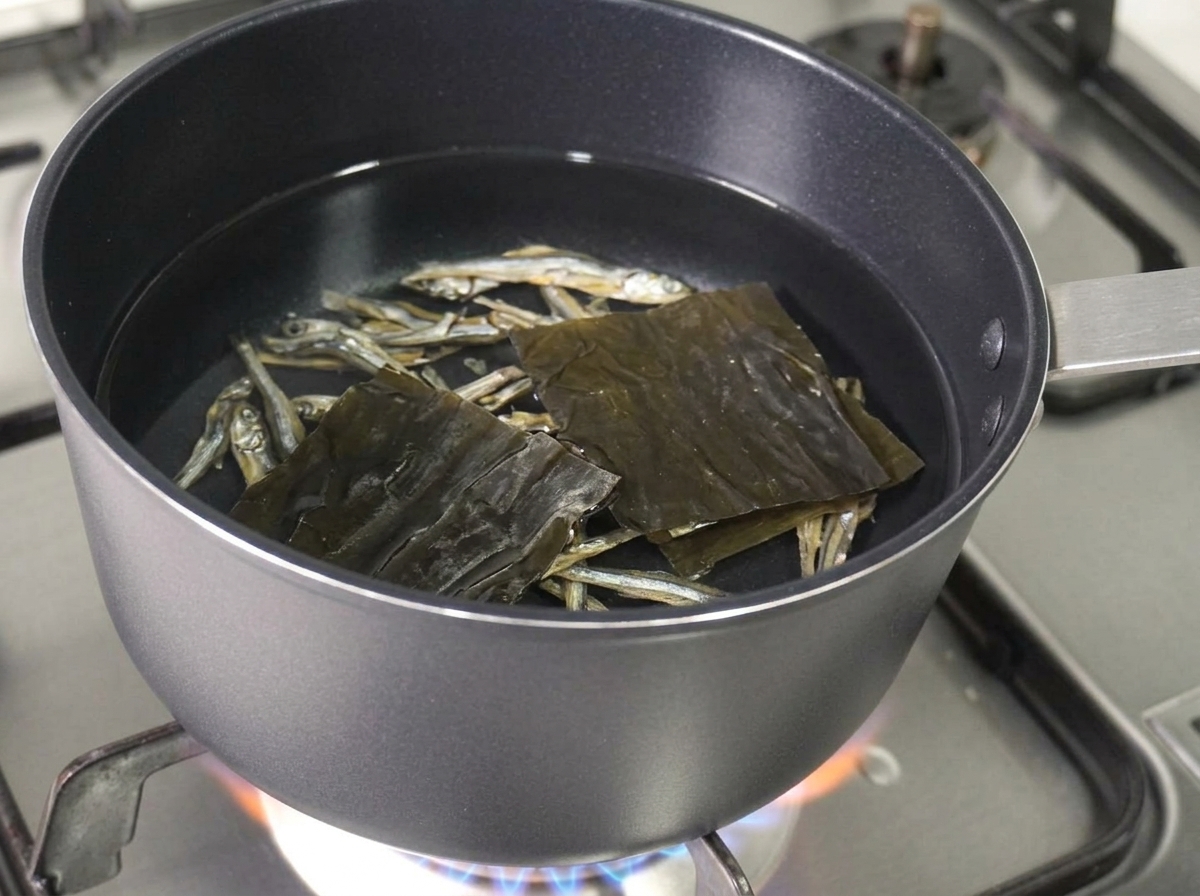
Add the dried anchovies, dried kelp, and the mushroom stems saved from earlier into the water. Cover with a lid and boil for about ten minutes to create a flavorful base.
Tip: Adding the mushroom stems adds extra depth of flavor to the broth. - 9Strain the broth
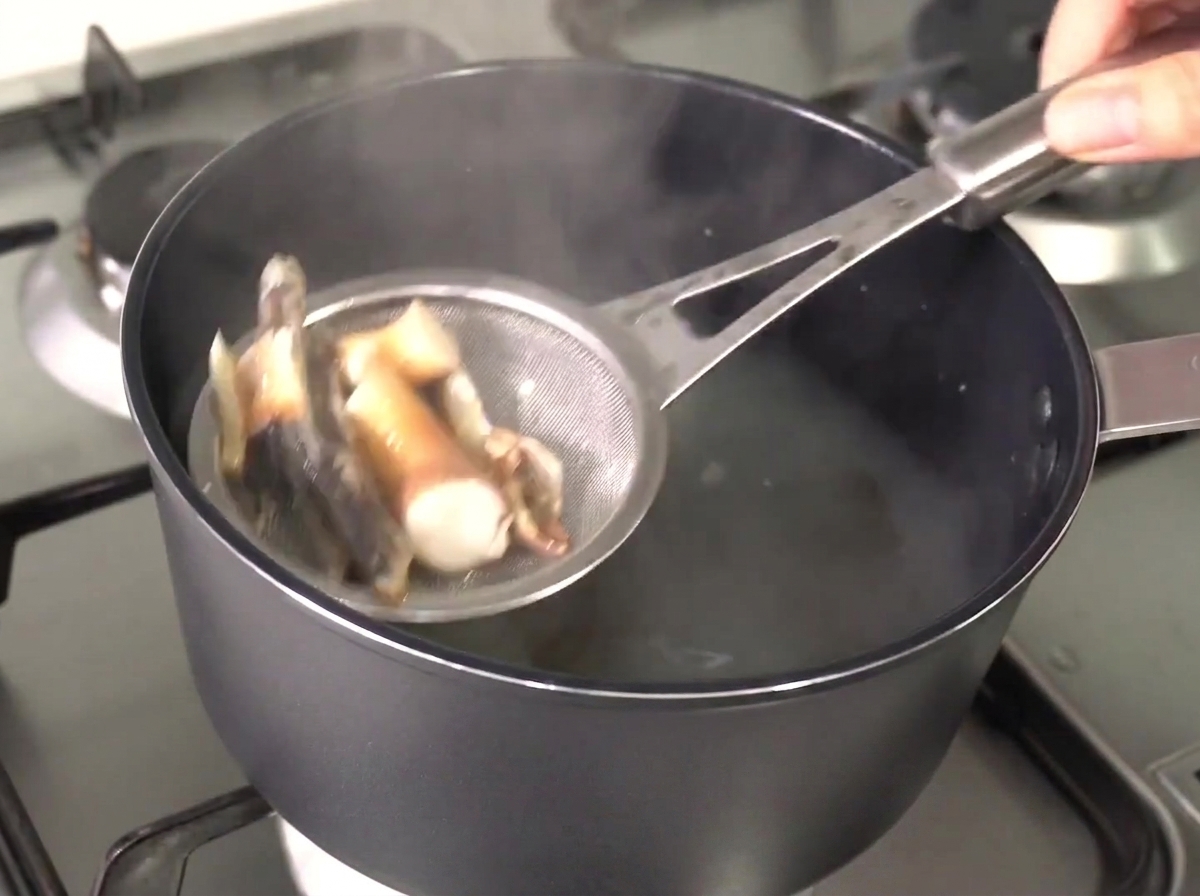
Once the broth has boiled sufficiently, use a metal strainer to scoop out and remove the solid anchovies and kelp.
Tip: Removing the solids prevents the broth from becoming overly bitter or cloudy. - 10Season with soybean paste
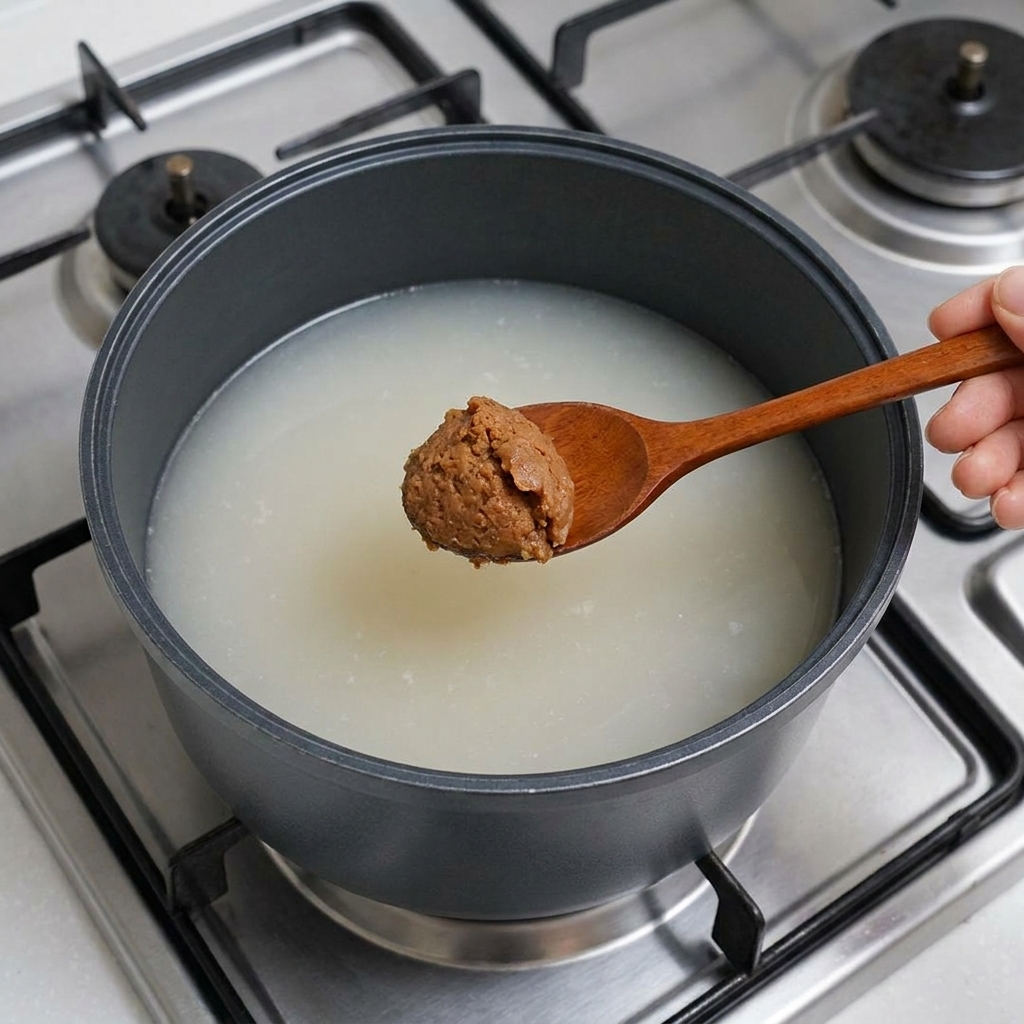
Add two large tablespoons of soybean paste into the hot broth.
Tip: Soybean paste provides the signature savory and umami flavor of this traditional stew. - 11Add chili paste
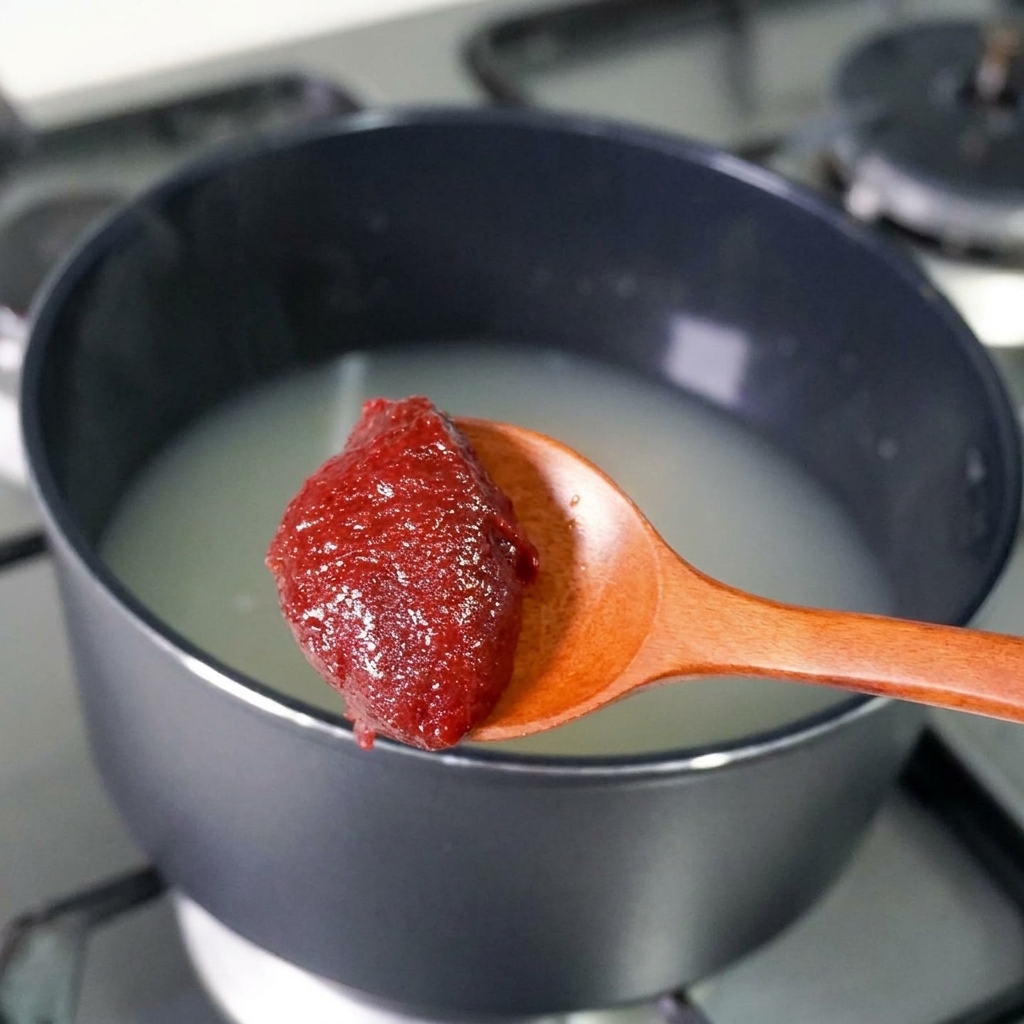
Add half a tablespoon of chili paste to the broth. This will provide a subtle heat and depth of color.
Tip: Adjust the amount of chili paste based on your preference for heat. - 12Dissolve the pastes
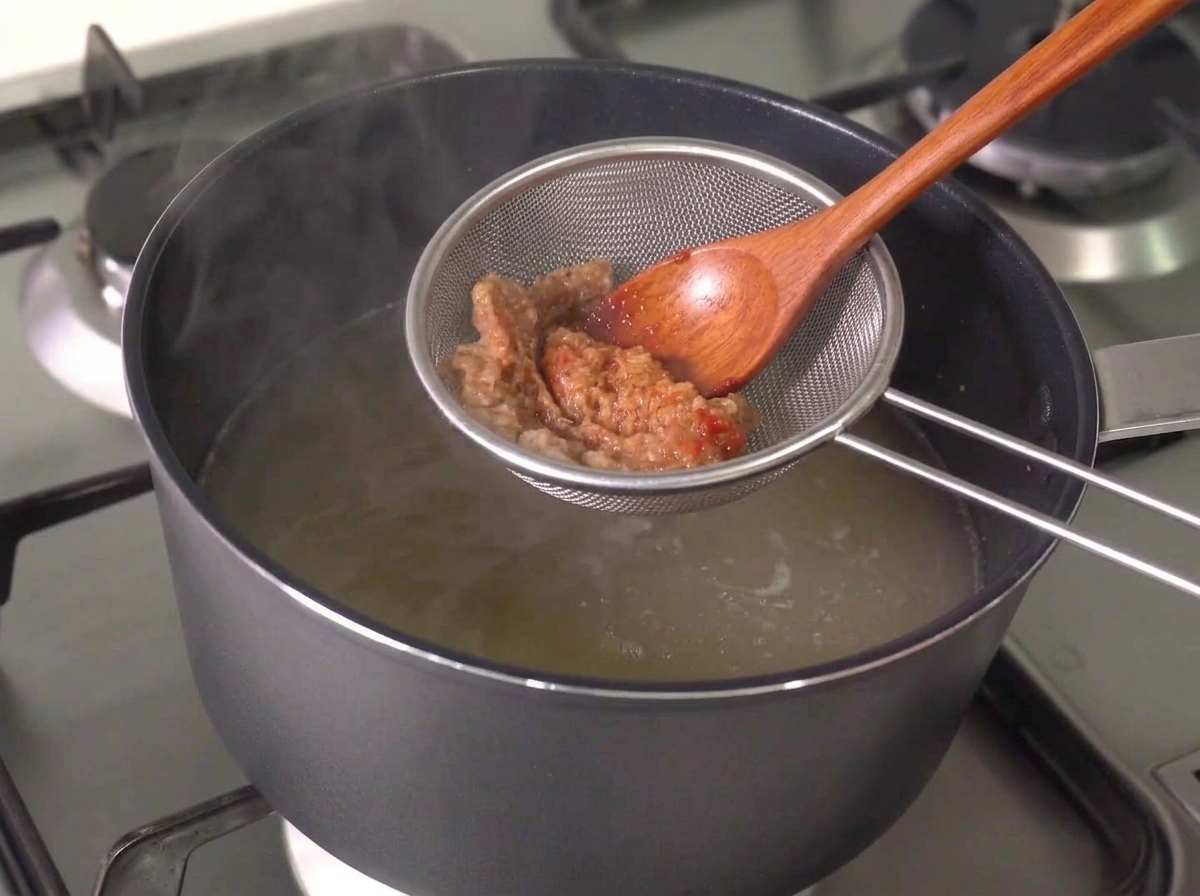
Use a wooden spoon to stir the broth thoroughly, ensuring the soybean and chili pastes dissolve completely into the liquid.
Tip: Stirring well ensures the flavors are evenly distributed throughout the soup. - 13Add the potatoes and onions
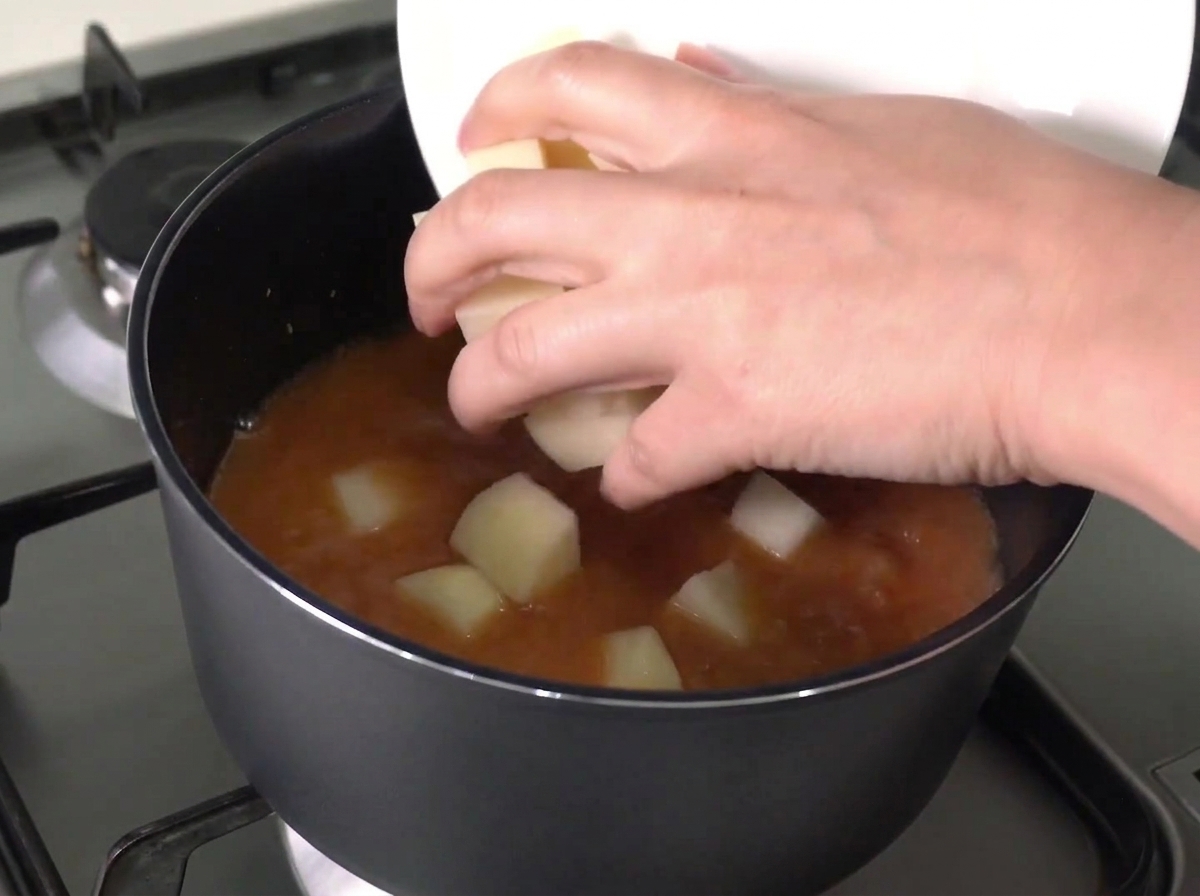
Carefully slide the chopped potatoes and onions into the boiling broth. These hard root vegetables need a bit more time to cook through, so they are added first to soften and absorb the flavors of the stew.
Tip: Cut your potatoes into even cubes so they cook uniformly and do not turn mushy. - 14Stir in the mushrooms
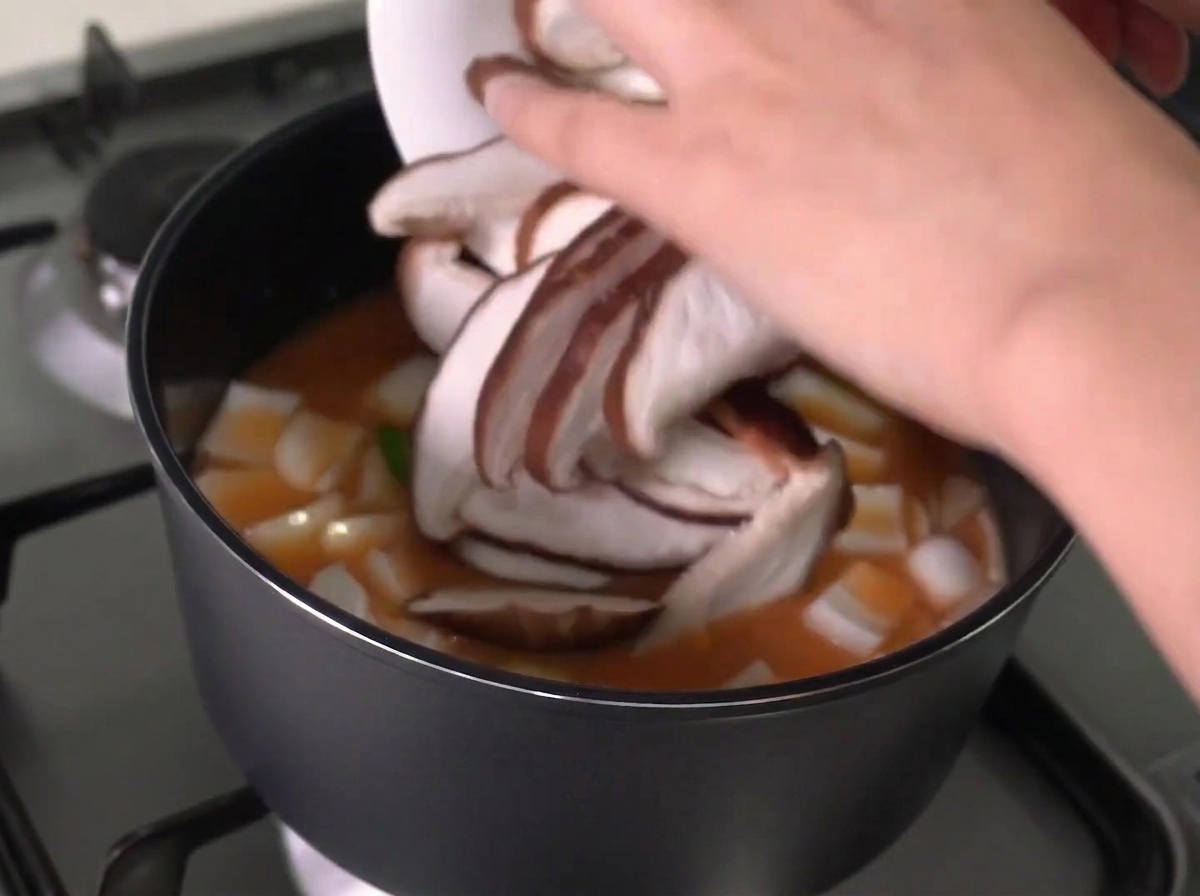
Add the sliced shiitake mushrooms directly into the bubbling stew pot. As the mushrooms simmer, they will release their natural juices, bringing a deep, earthy umami flavor to the broth.
Tip: Remember to use the mushroom stems for the initial broth base to maximize the rich flavor. - 15Add the aromatics
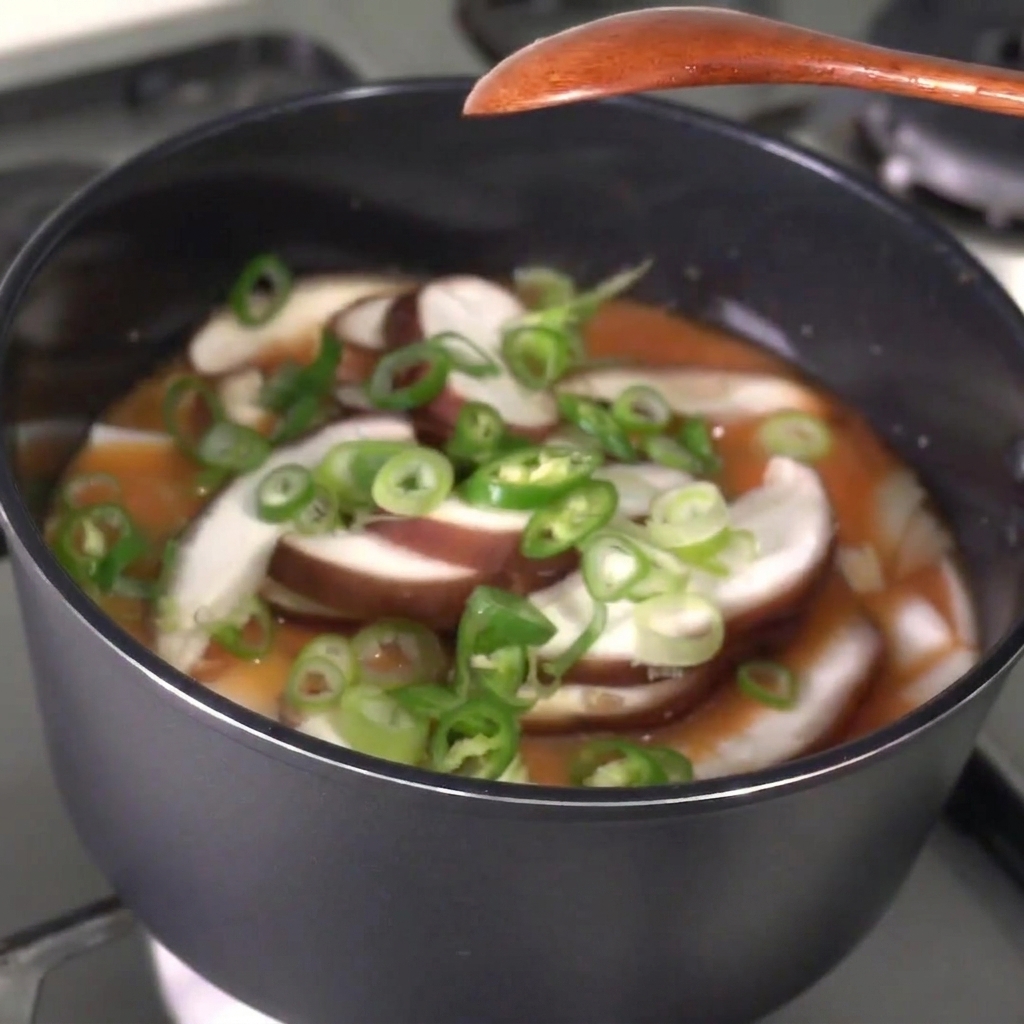
Sprinkle the sliced green chili peppers and green onions into the pot. Stir well to incorporate the chopped vegetables evenly, then cover the pot and let the stew cook until the potatoes become tender.
Tip: Adjust the amount of green chili depending on how much heat you prefer in your stew. - 16Check the potatoes
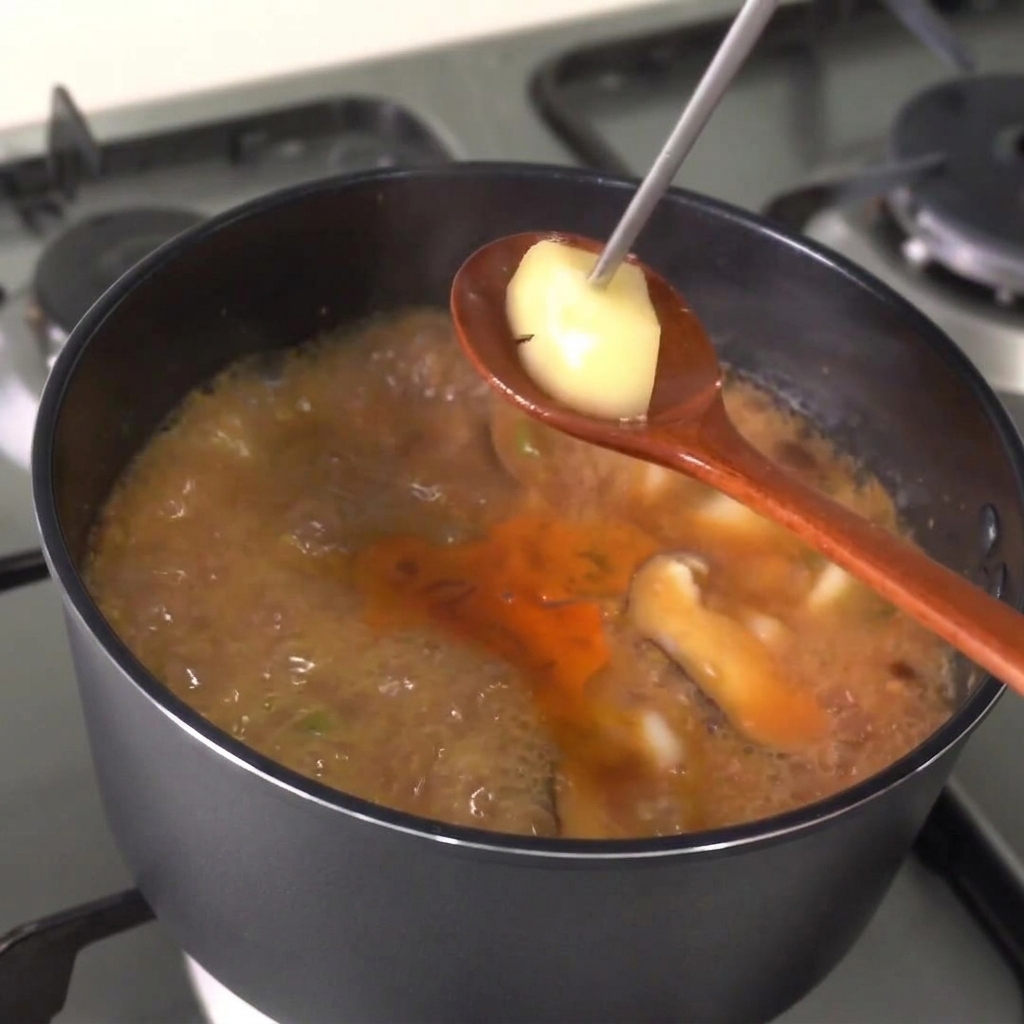
After simmering for several minutes, carefully lift a piece of potato out of the boiling broth with a wooden spoon. Poke it to ensure it is soft and fully cooked through before adding the final delicate ingredients.
Tip: If the potato still feels firm in the center, cover the pot and simmer for another two to three minutes. - 17Add the tofu
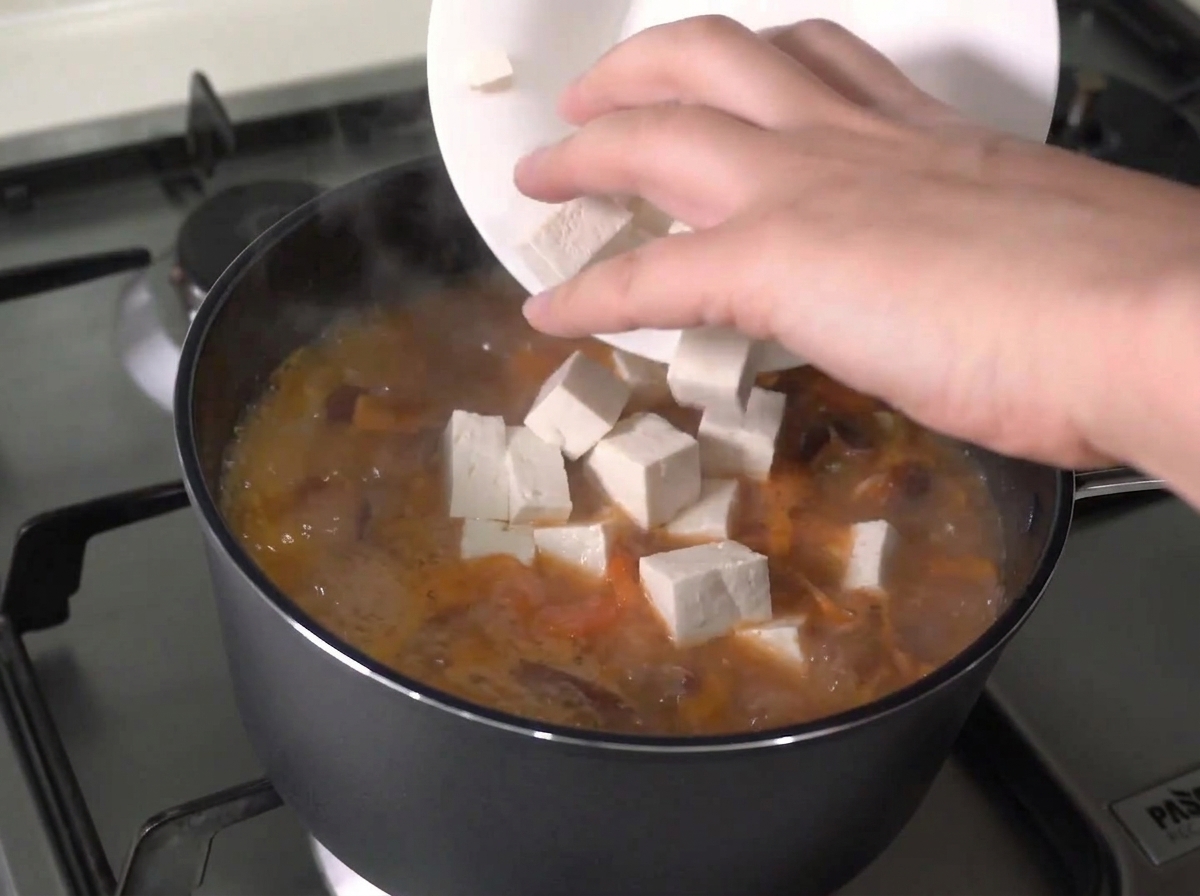
Once the potatoes are perfectly soft, gently slide the freshly cut tofu cubes into the actively boiling stew. Top with the remaining sliced green onions to maintain their bright color and fresh flavor.
Tip: Tofu is very delicate, so avoid stirring too vigorously once it is added to the pot to keep the cubes intact. - 18Skim off the foam
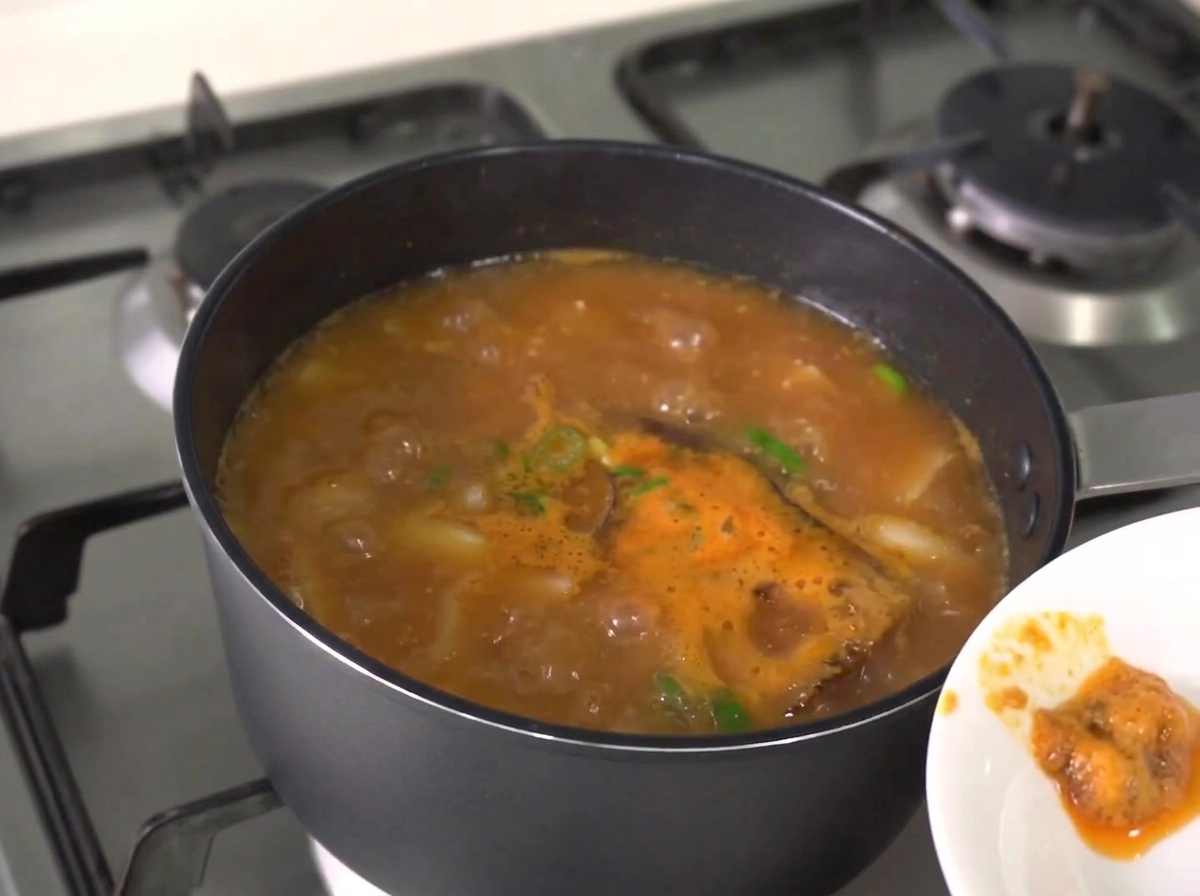
As the stew boils rapidly, use a wooden spoon to carefully skim off the foamy scum that rises to the surface. Boil the stew for one final minute, then serve it hot with a fresh bowl of white rice.
Tip: Keep a small empty plate or a bowl of water nearby to easily wipe and discard the foam from your spoon.