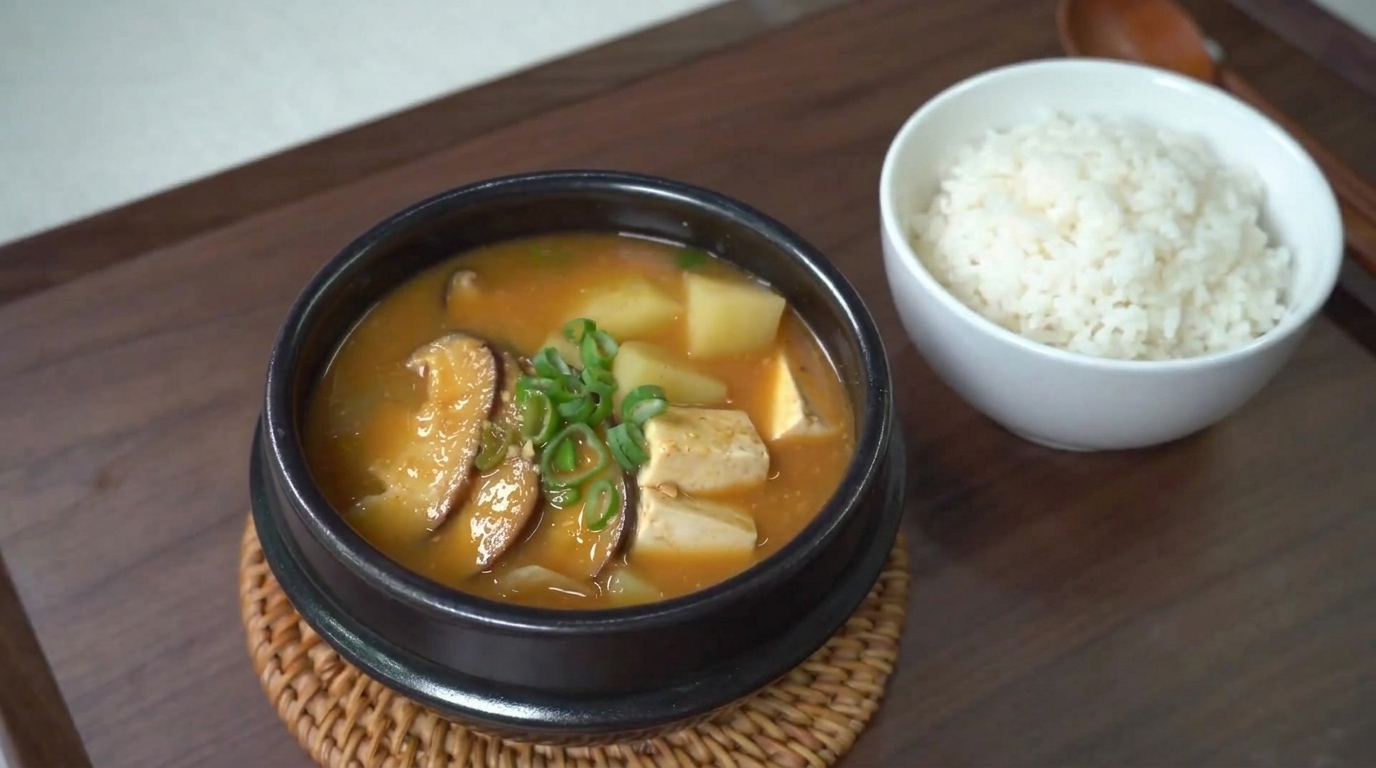
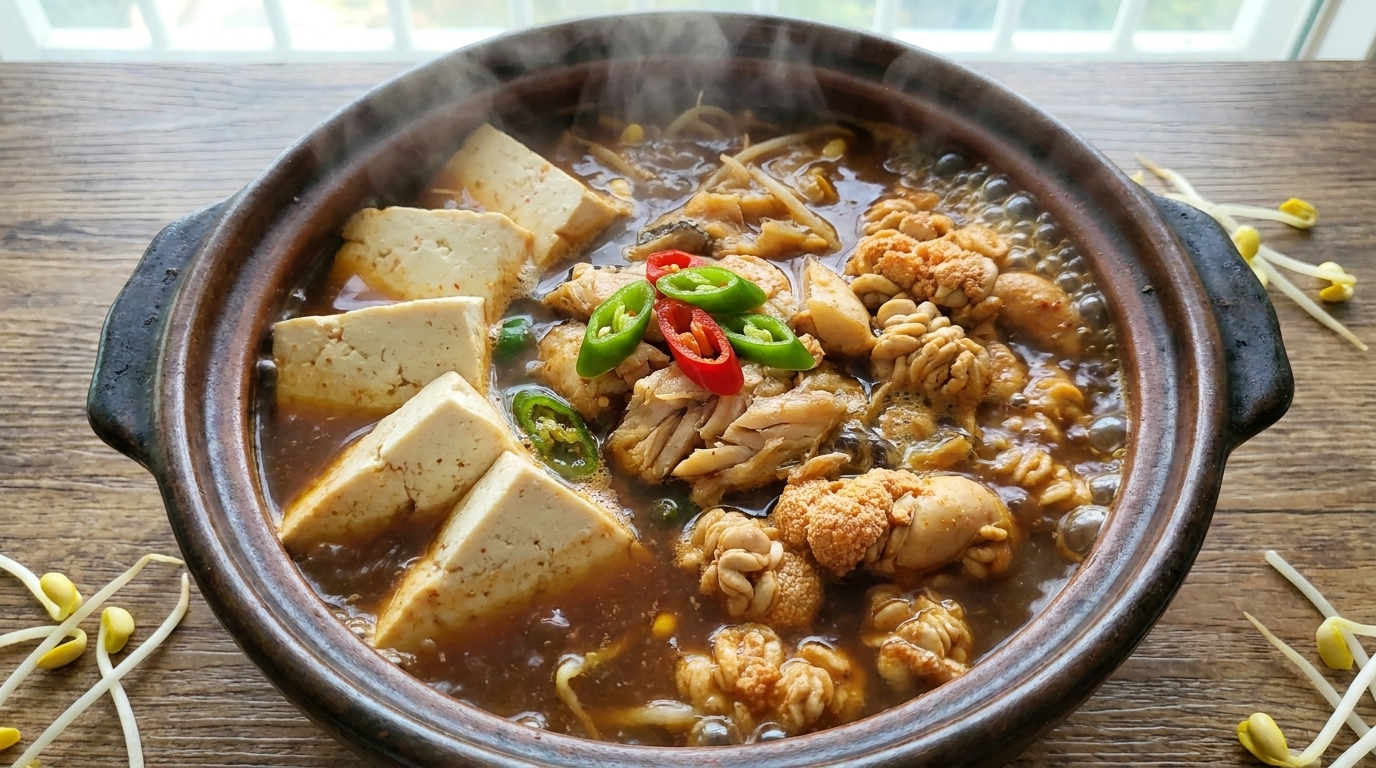
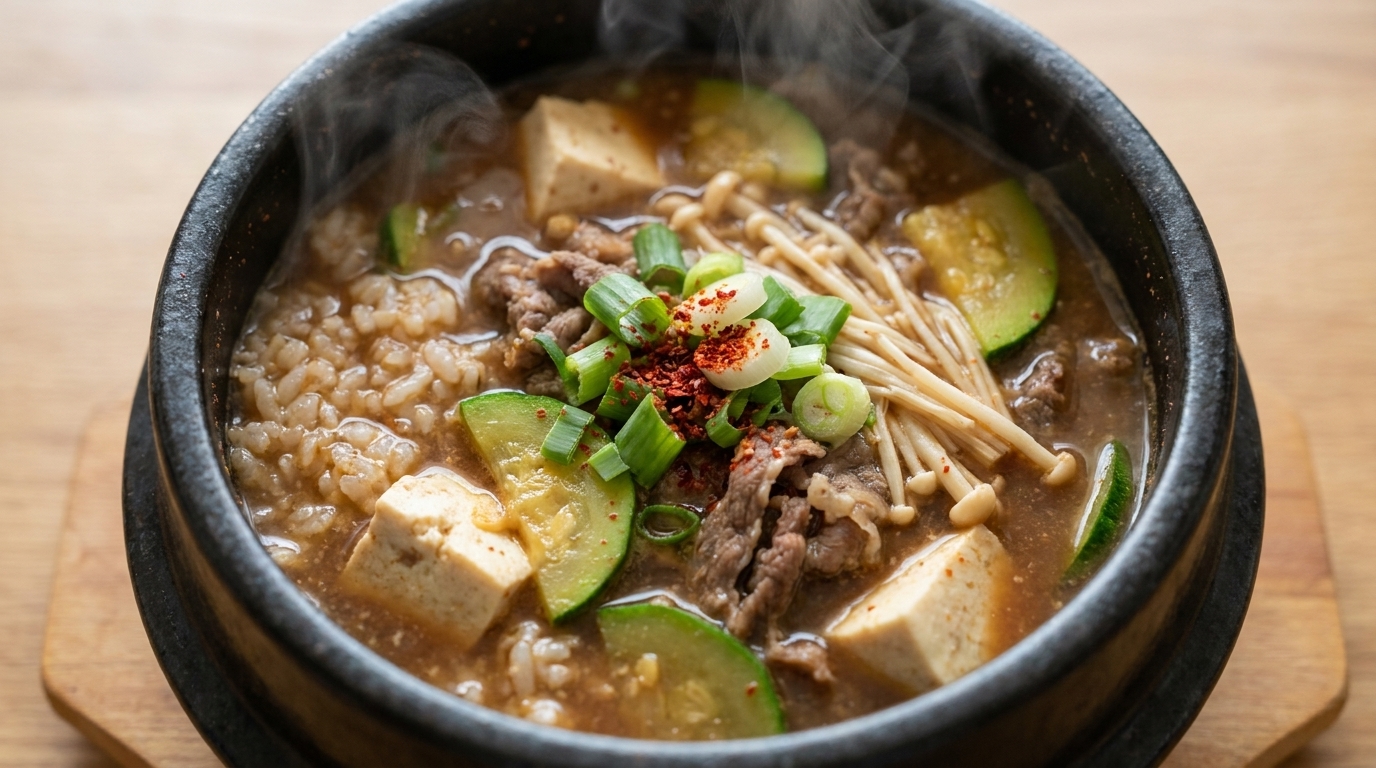
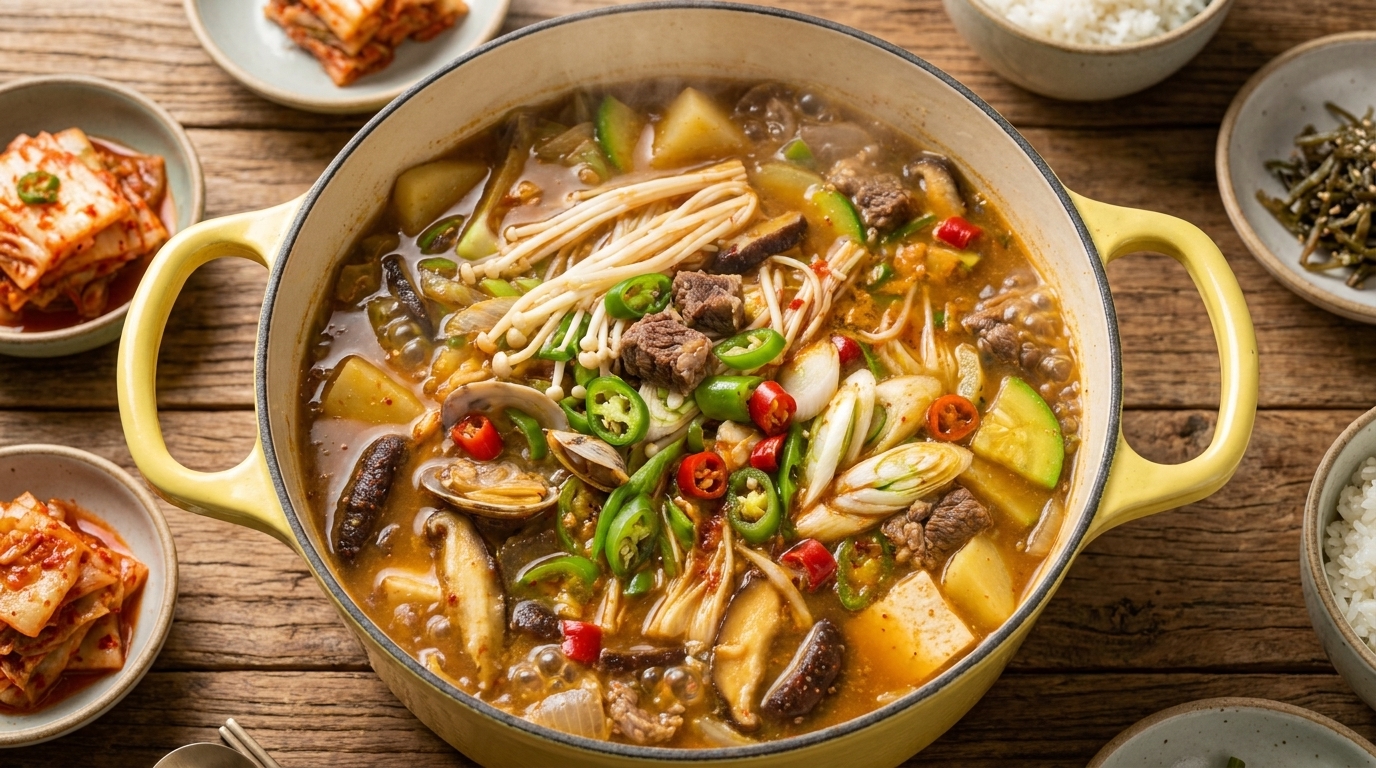
Authentic Beef Brisket Doenjang-jjigae (Korean Soybean Paste Stew)
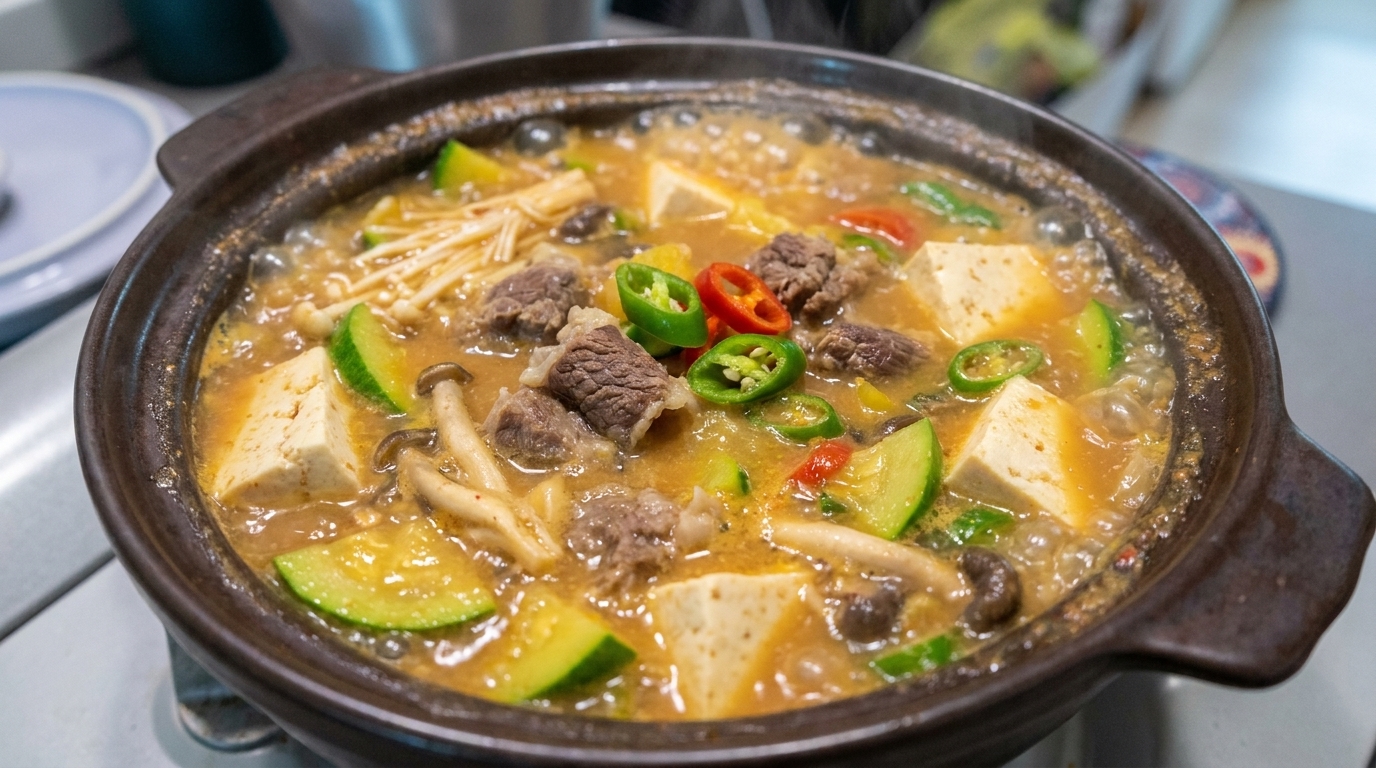
A comforting Korean classic featuring rich soybean paste, tender beef brisket, soft tofu, and fresh vegetables, all simmered together in a bubbling earthenware pot.
Doenjang-jjigae is a cornerstone of Korean home cooking, defined by its deeply savory and earthy soybean paste broth. The addition of fatty beef brisket enriches the stew, balancing the fermented depth of the doenjang with a luxurious, meaty sweetness that makes this soup incredibly satisfying.
Ingredients
- 4 cups water
- 1 seafood bouillon cube
- 200 g beef brisket slices
- 100 g mixed mushrooms
- 1/2 zucchini
- 1/2 onion
- 1 green onion
- 1 potato
- 1 tbsp red chili powder
- 3 tbsp doenjang (Korean soybean paste)
- 200 g soft or firm tofu
- 1 each red and green chili peppers
- 1 tbsp minced garlic
Instructions
- 1Prepare the base
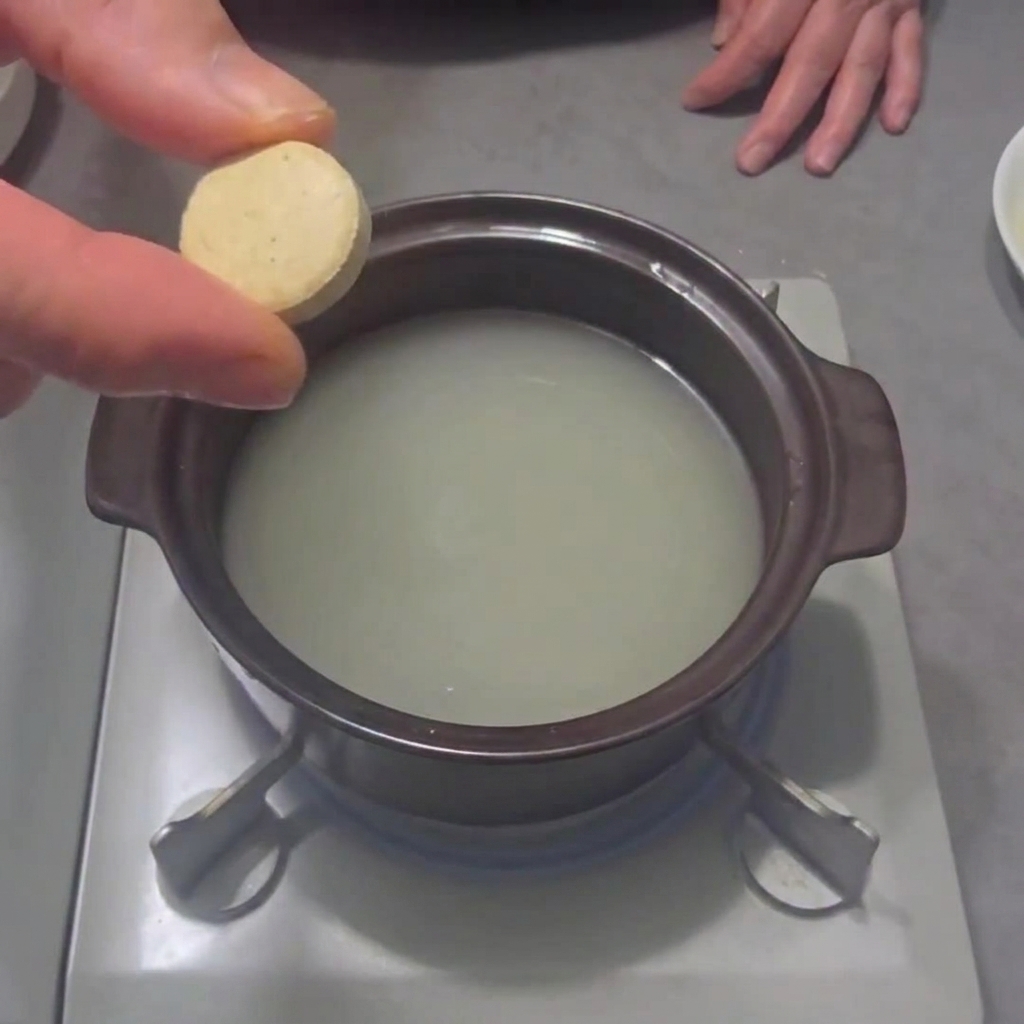
Add the seafood bouillon cube to a pot of water on the stove to create a flavorful base for the stew.
Tip: Ensure the water is heated sufficiently to help the bouillon cube dissolve quickly. - 2Add the beef brisket
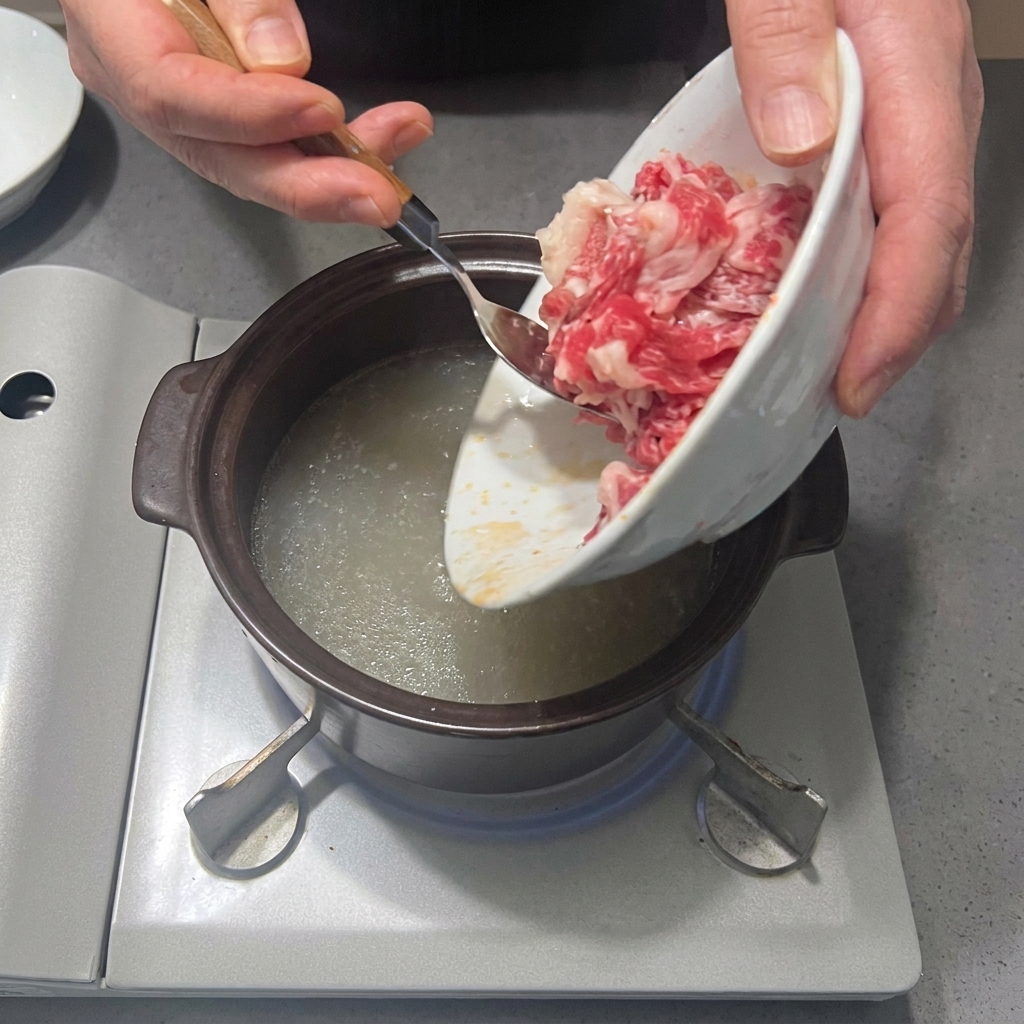
Carefully add the beef brisket slices into the pot with the bouillon broth.
Tip: Adding the meat early allows the flavor to infuse deeply into the broth as it simmers. - 3Add mushrooms and zucchini
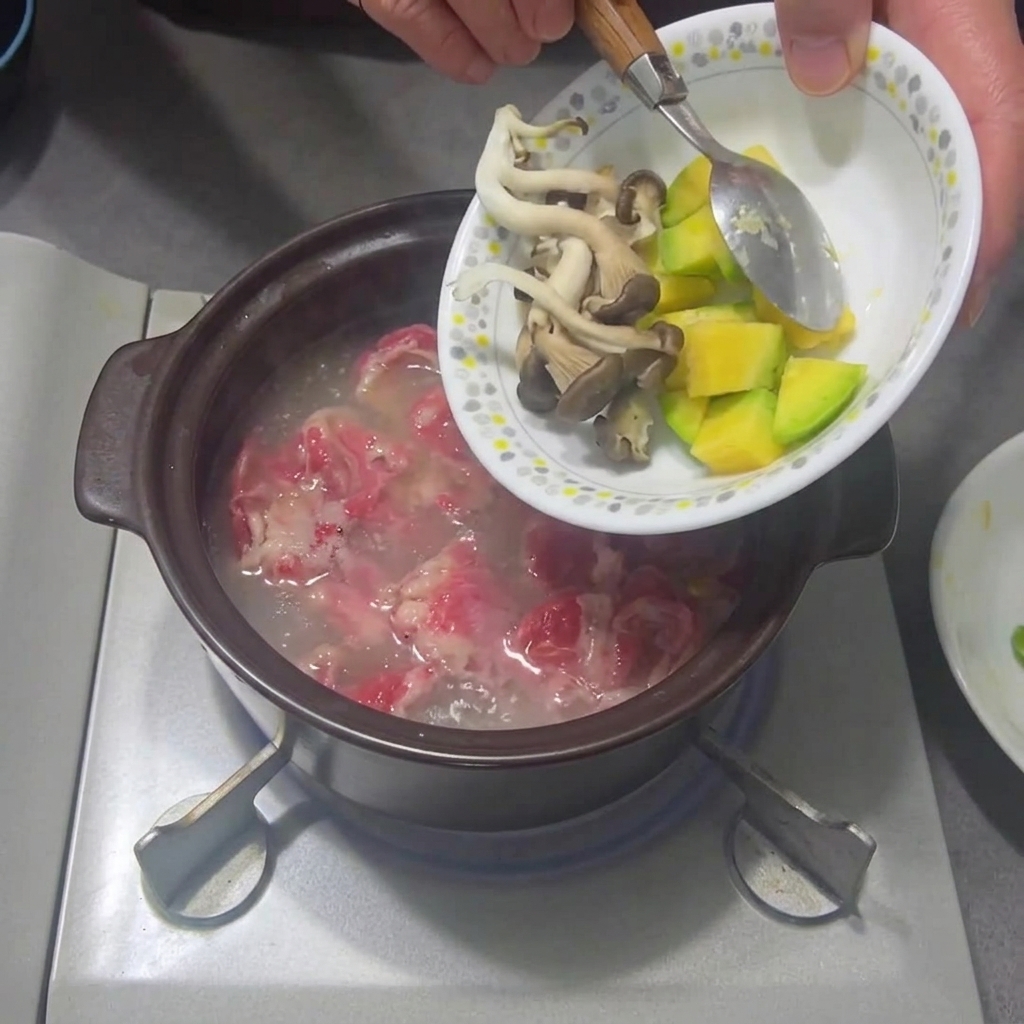
Add the sliced mushrooms and zucchini to the pot, providing texture and earthiness to the dish.
Tip: Keep the slices uniform in size to ensure they cook at the same rate. - 4Add onions
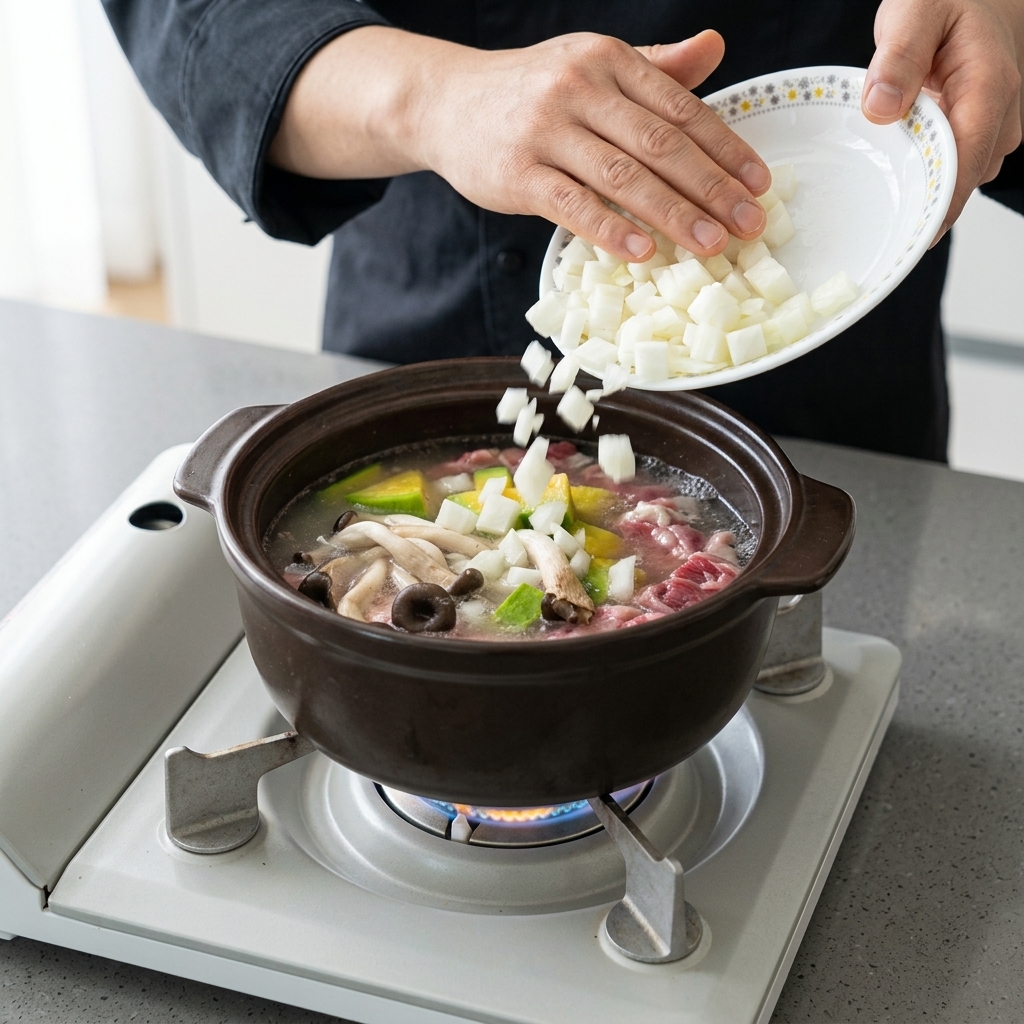
Incorporate the chopped onions into the stew to build the flavor profile.
Tip: Onions add a subtle sweetness that balances the savory Doenjang. - 5Add green onions
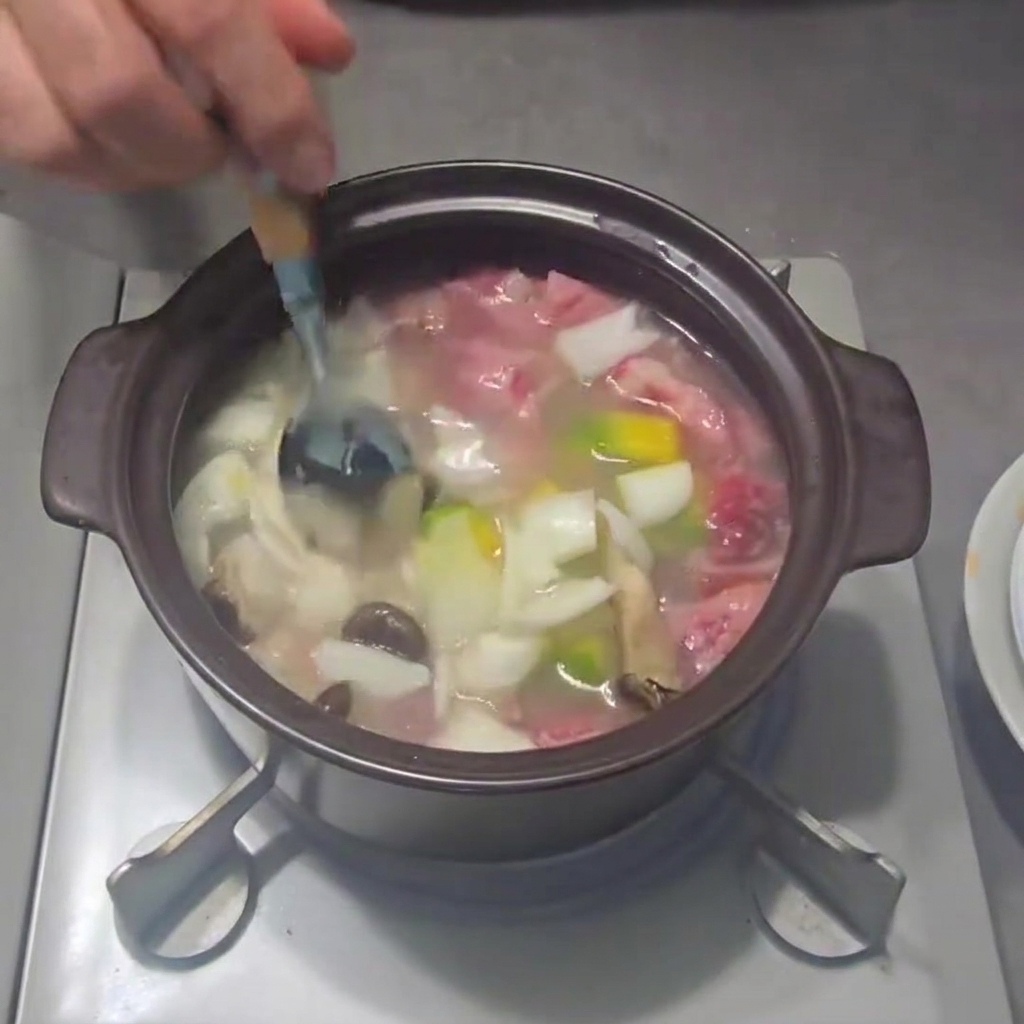
Stir in the chopped green onions, which provide a fresh, aromatic finish to the stew.
Tip: Add them towards the end if you prefer them with a bit more crunch. - 6Add potatoes
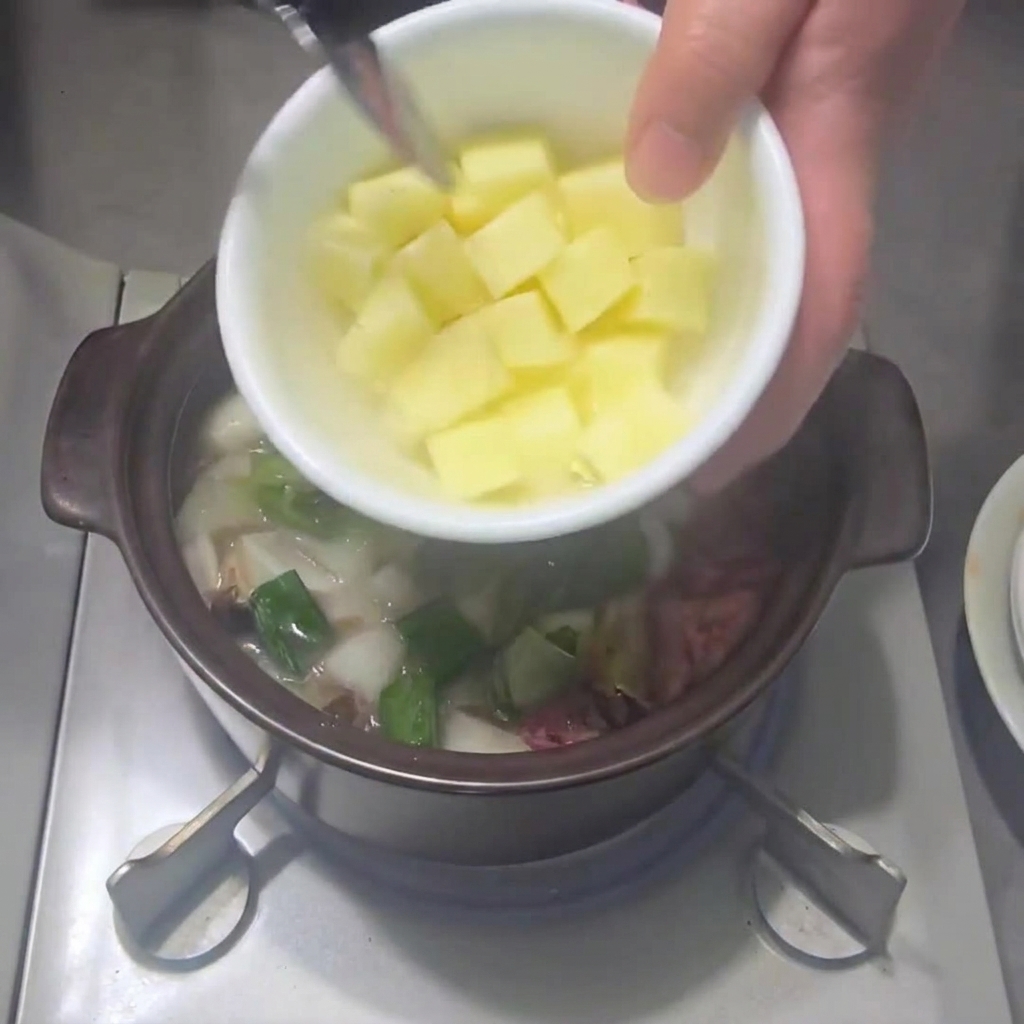
Add the diced potatoes, which have been pre-soaked to remove excess starch, to the pot.
Tip: Soaking the potatoes helps keep the broth clear by preventing extra starch from thickening it. - 7Add chili powder
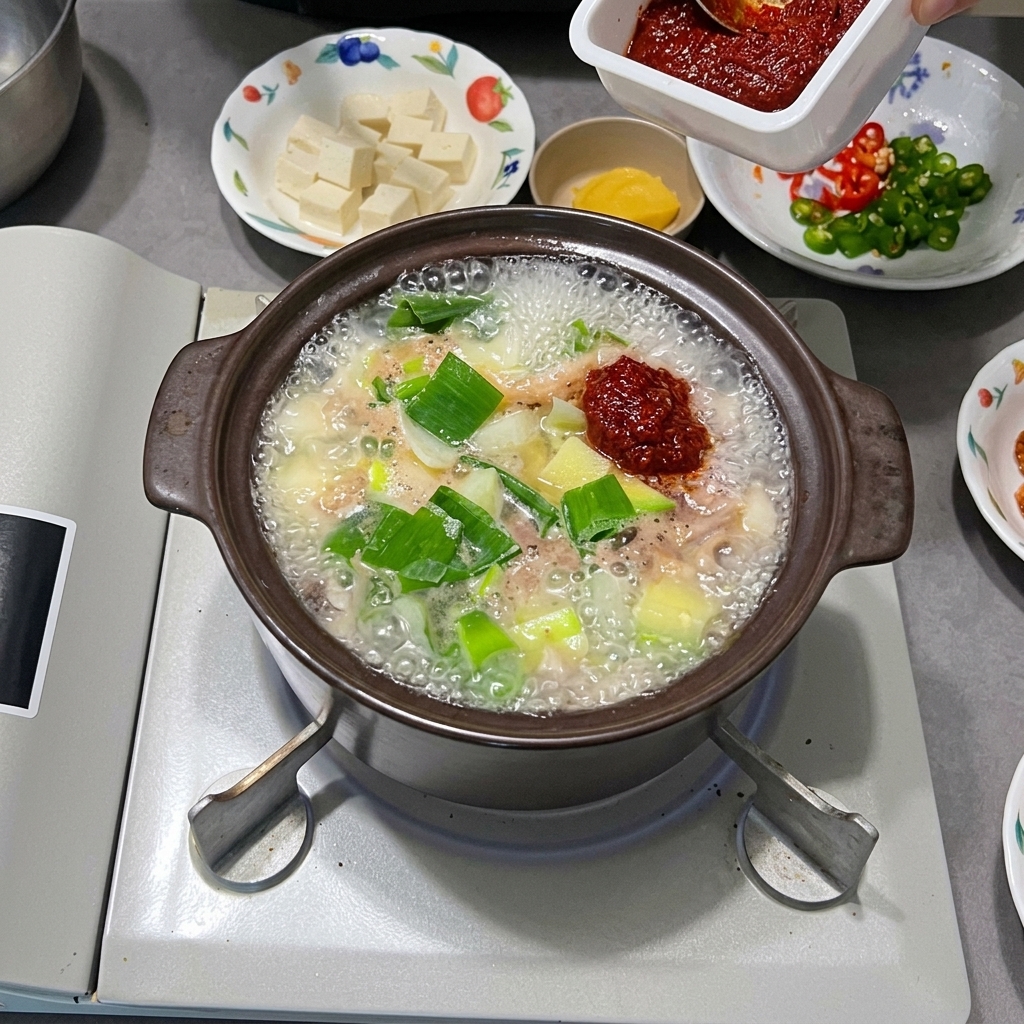
Add the red chili powder to the simmering pot to infuse the broth with a spicy, vibrant depth of flavor.
Tip: Adjust the amount of chili powder based on your heat preference. - 8Add Doenjang (soybean paste)
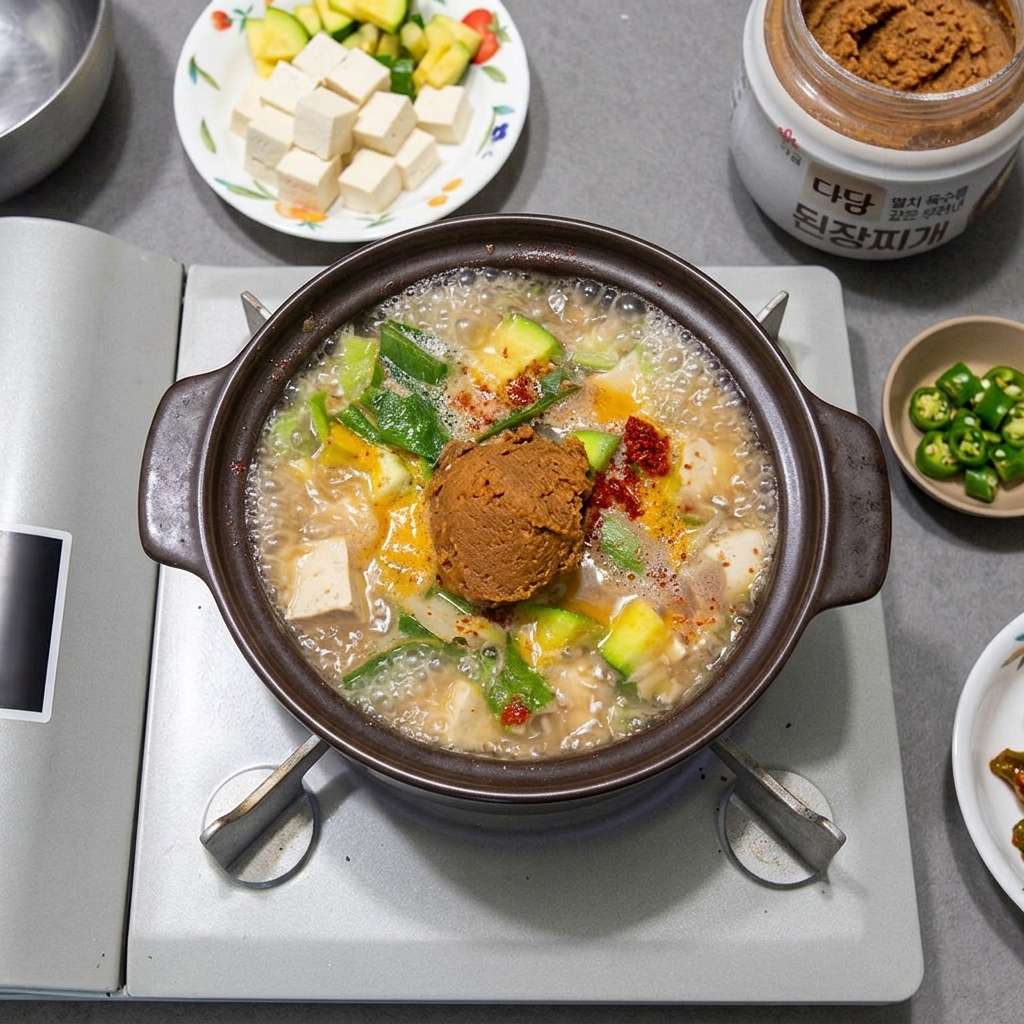
Add a large spoonful of Doenjang to the pot. Stir thoroughly until the soybean paste is fully dissolved and incorporated into the stew.
Tip: Doenjang can be salty, so start with the suggested amount and taste before adding more. - 9Add tofu cubes
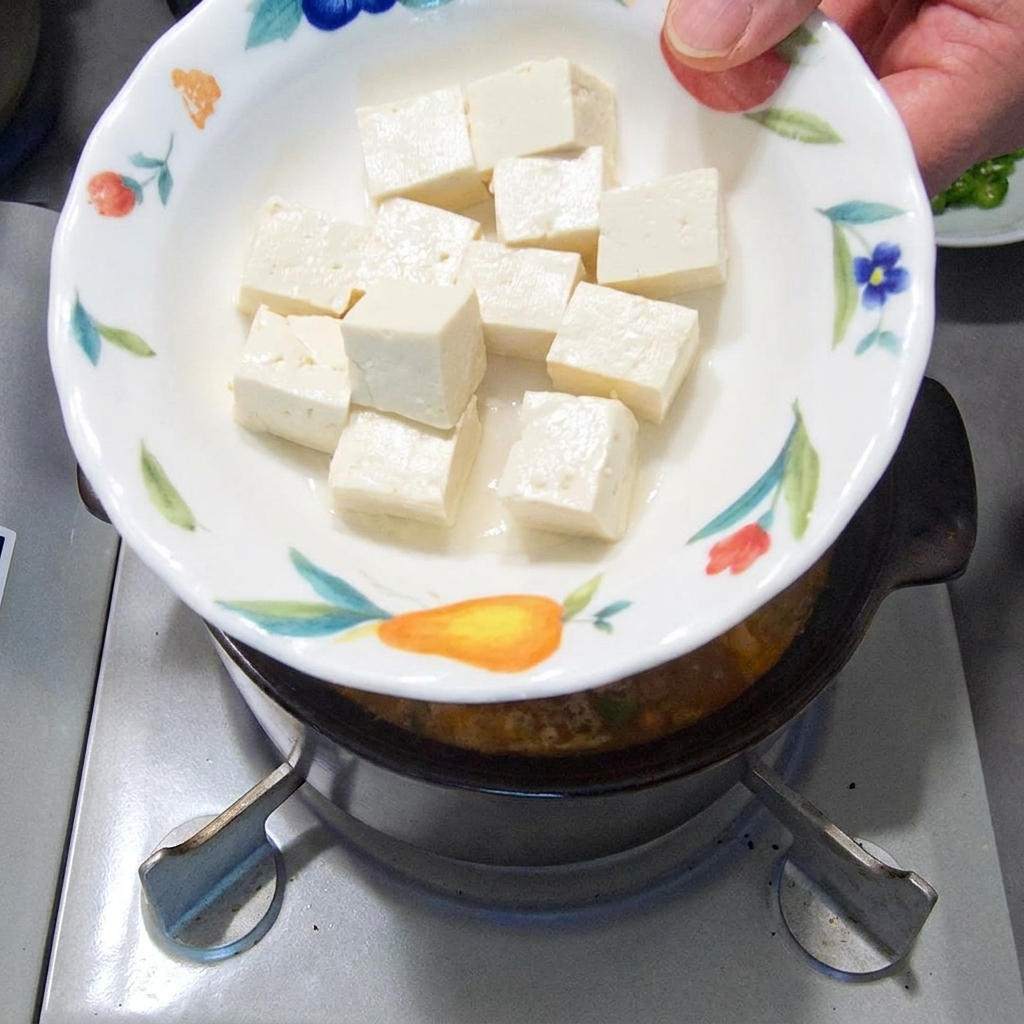
Gently add the cubed tofu into the pot. Let the stew simmer briefly so the tofu can absorb the savory flavors of the broth.
Tip: Be careful when stirring after adding the tofu to prevent the cubes from breaking apart. - 10Garnish with chili slices
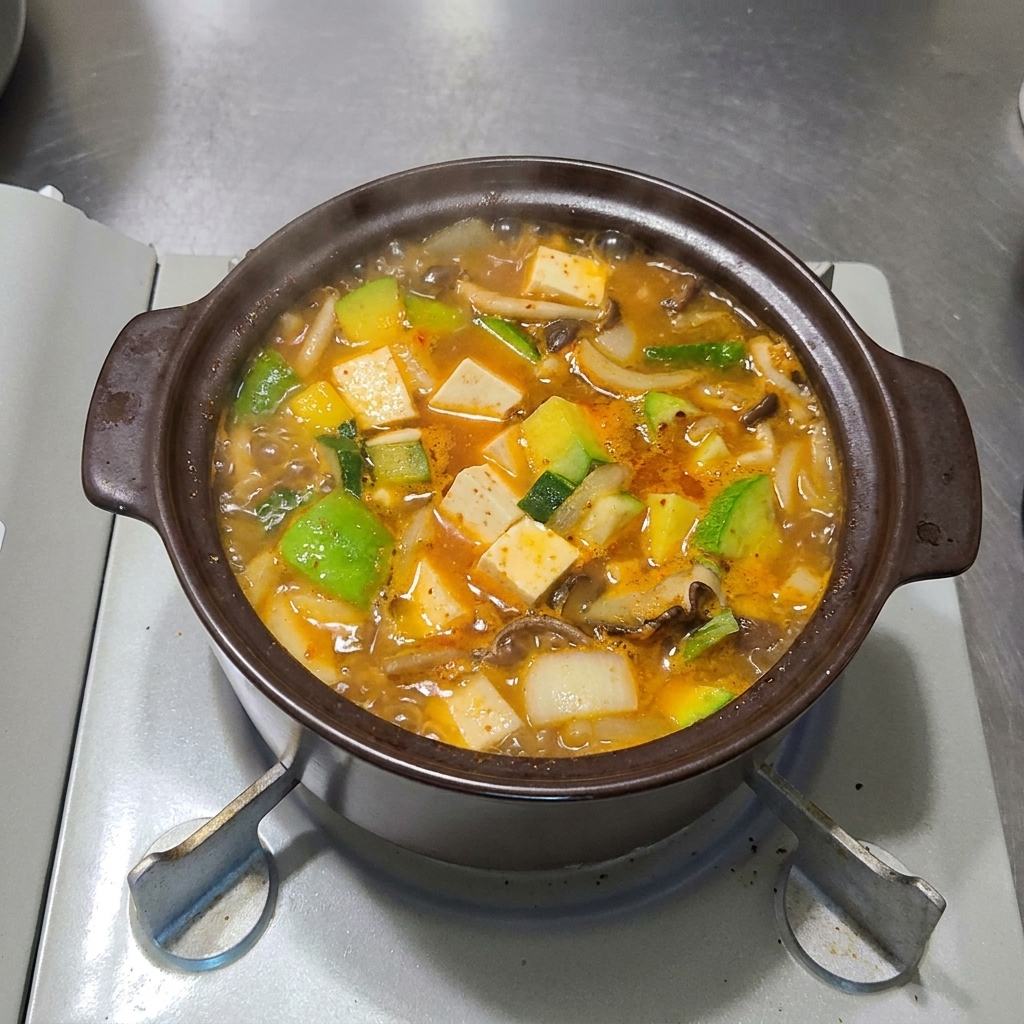
Finish the dish by adding fresh red and green chili slices over the top for both a pop of color and an extra kick of heat.
Tip: Add the chilies just before turning off the heat to keep them bright and fresh. - 11Add minced garlic
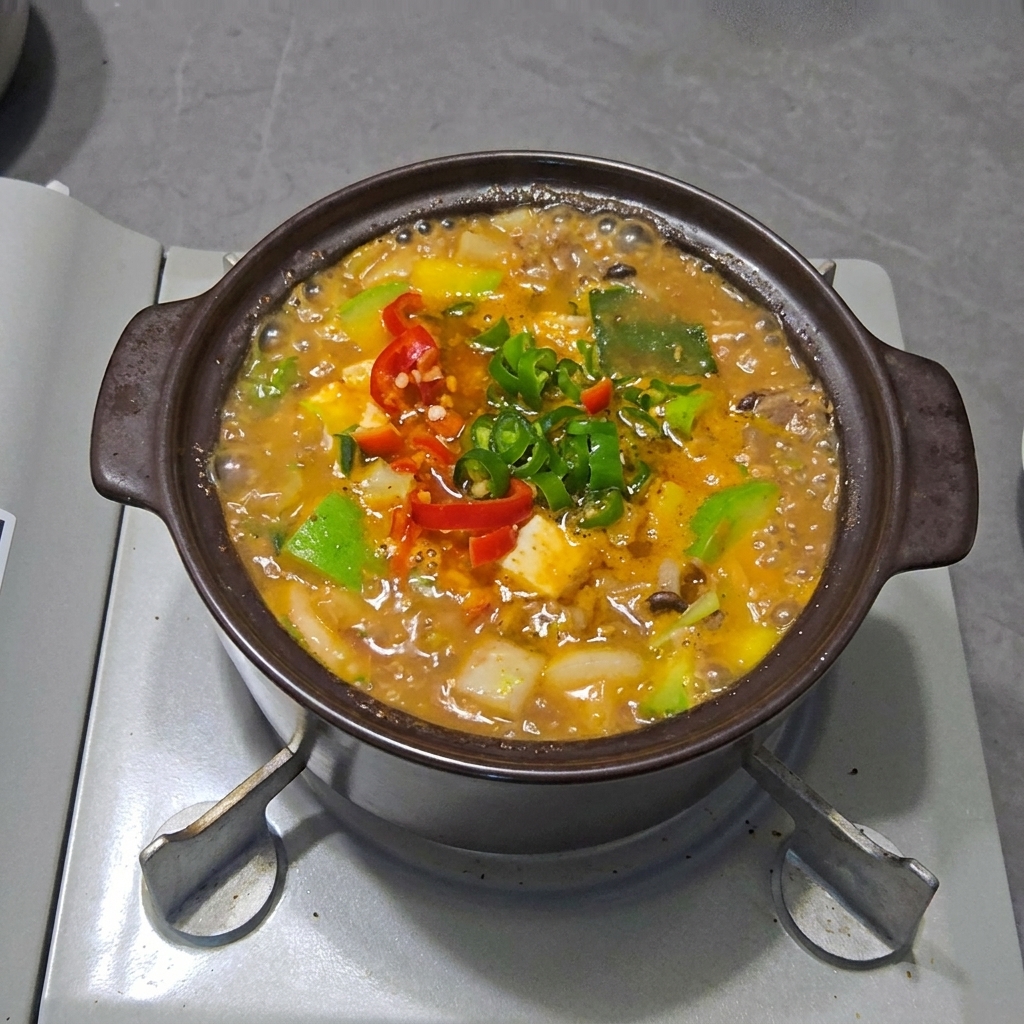
Add the minced garlic into the pot and stir to combine, allowing its aromatic flavor to meld with the stew. Taste the broth and adjust the seasoning with a splash of water if it has reduced and tastes too salty.
Tip: Garlic is best added toward the end to maintain its pungent, savory profile.