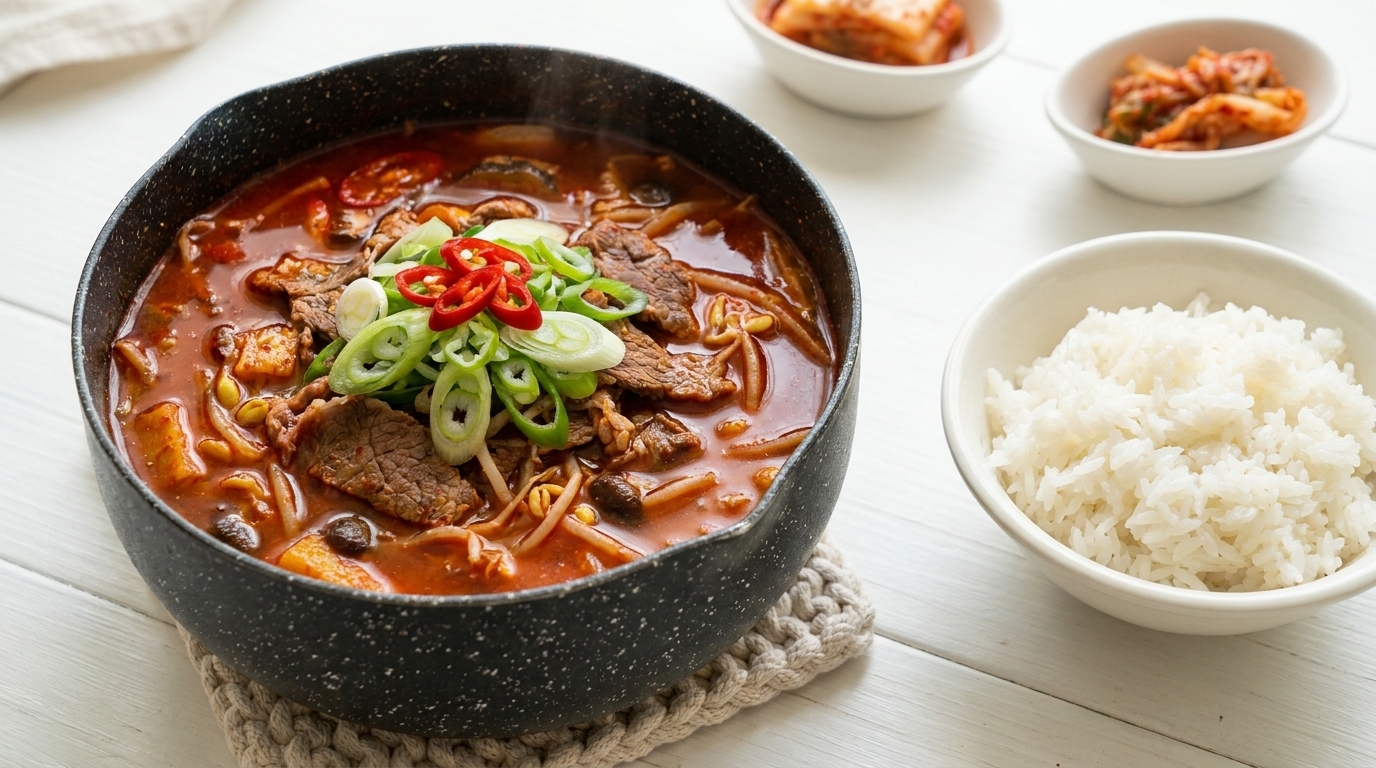
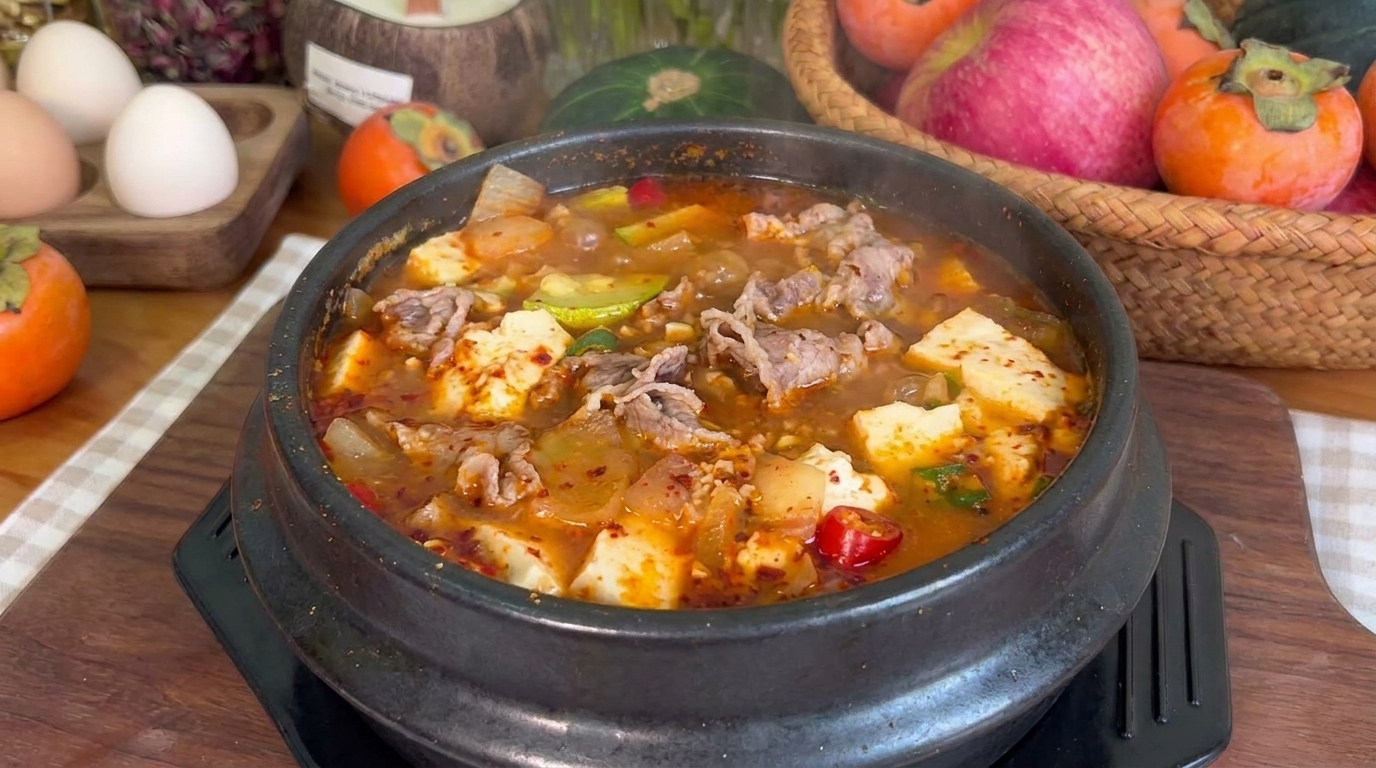
Hearty Korean Soybean Paste Soup (Doenjang-jjigae)
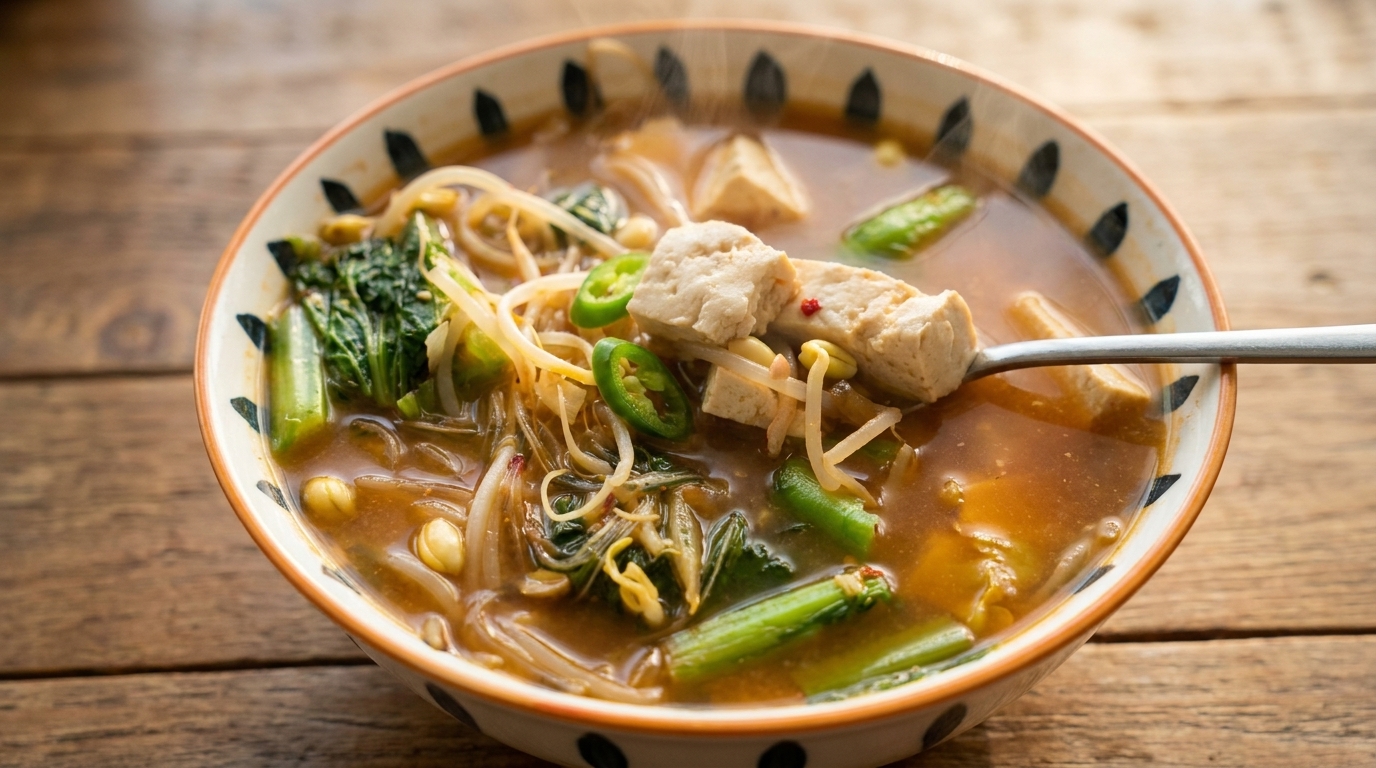
A soul-warming Korean staple featuring a rich umami-packed fermented soybean broth simmered with soft tofu, crystal noodles, and crisp bean sprouts.
Doenjang-jjigae is the quintessential comfort food of the Korean home, valued for its deep savory depth and nutritional balance. This version pairs the earthy umami of fermented paste with refreshing bean sprouts and silky tofu, creating a versatile soup that is both light and satisfying. Traditionally served alongside a bowl of steamed rice, it is the perfect remedy for a chilly day.
Ingredients
- 150 g yellow bean sprouts
- 1 medium white onion
- 2 green chili peppers
- 300 g firm tofu
- 1 tbsp cooking oil
- 2 tbsp Korean soybean paste (Doenjang)
- 800 ml water or rice water
- 1 tsp beef seasoning powder (Dashida)
- 0.5 tsp white sugar
- 50 g crystal noodles
- 1 tsp Korean red chili powder (Gochugaru)
- 2 heads bok choy
- 2 stalks green onion
- 2 cloves garlic
Instructions
- 1Wash the bean sprouts
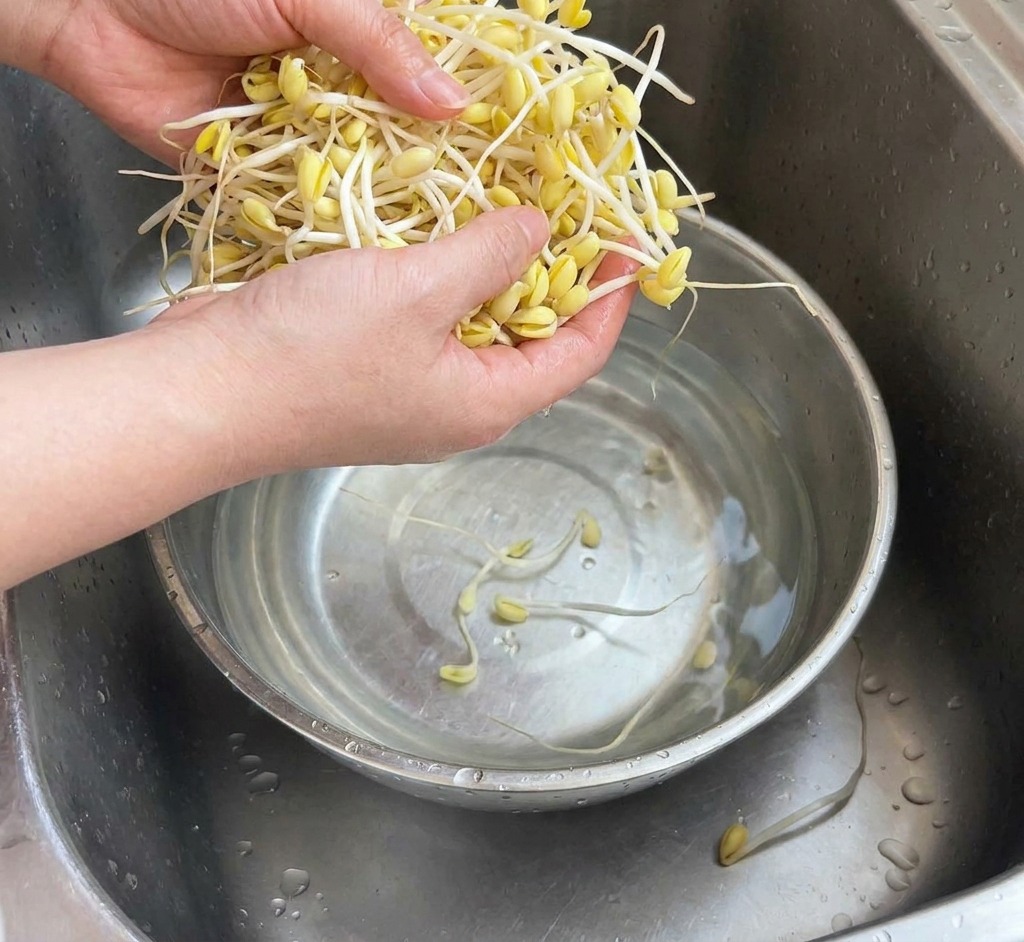
Start your preparation by thoroughly washing the fresh bean sprouts in a metal bowl under cold running water. Gently toss them to ensure all debris is rinsed away, then drain them well. This step ensures the sprouts provide a clean, refreshing crunch to your soup.
Tip: Check the sprouts for any browned or mushy ends and pinch them off for the best texture and presentation. - 2Prepare the onion
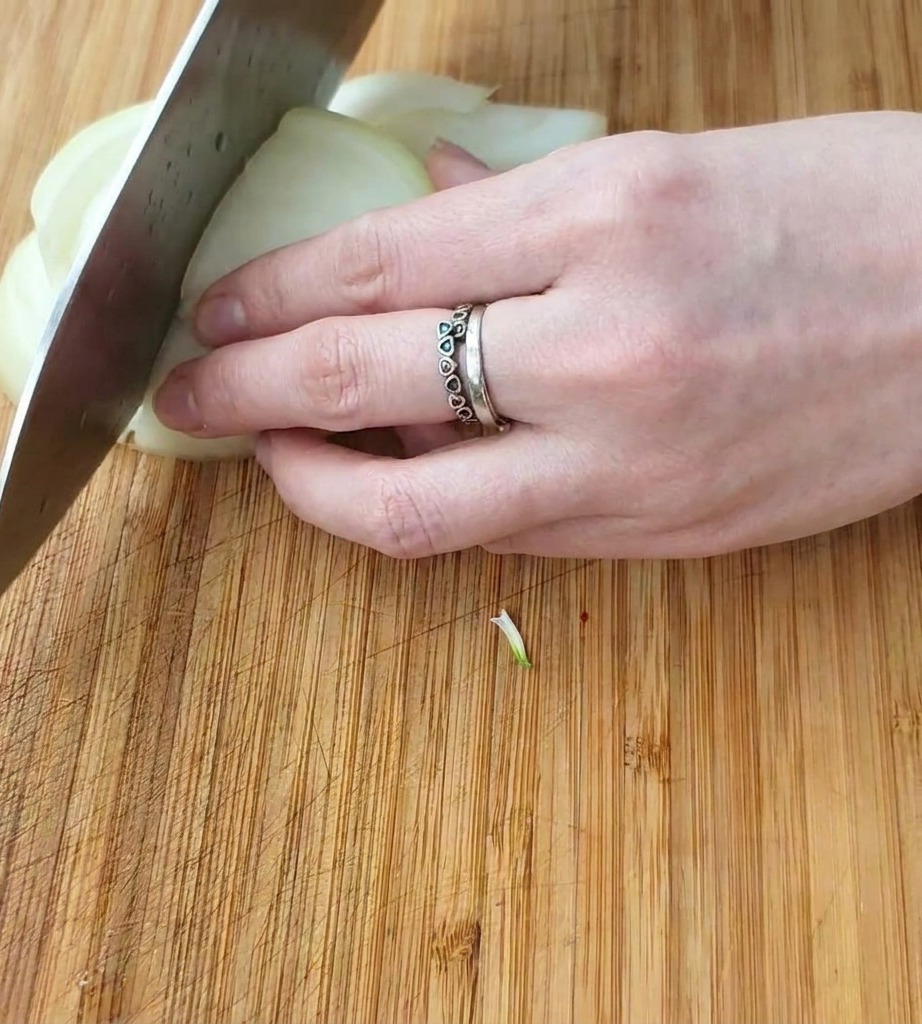
Begin by slicing a white onion into uniform chunks on a wooden cutting board. These pieces will form the aromatic base of the soup, releasing their sweetness as they sauté in the pan.
Tip: To keep the onion from sliding, cut a small slice off one side to create a flat, stable surface against the board. - 3Chop the green chilis
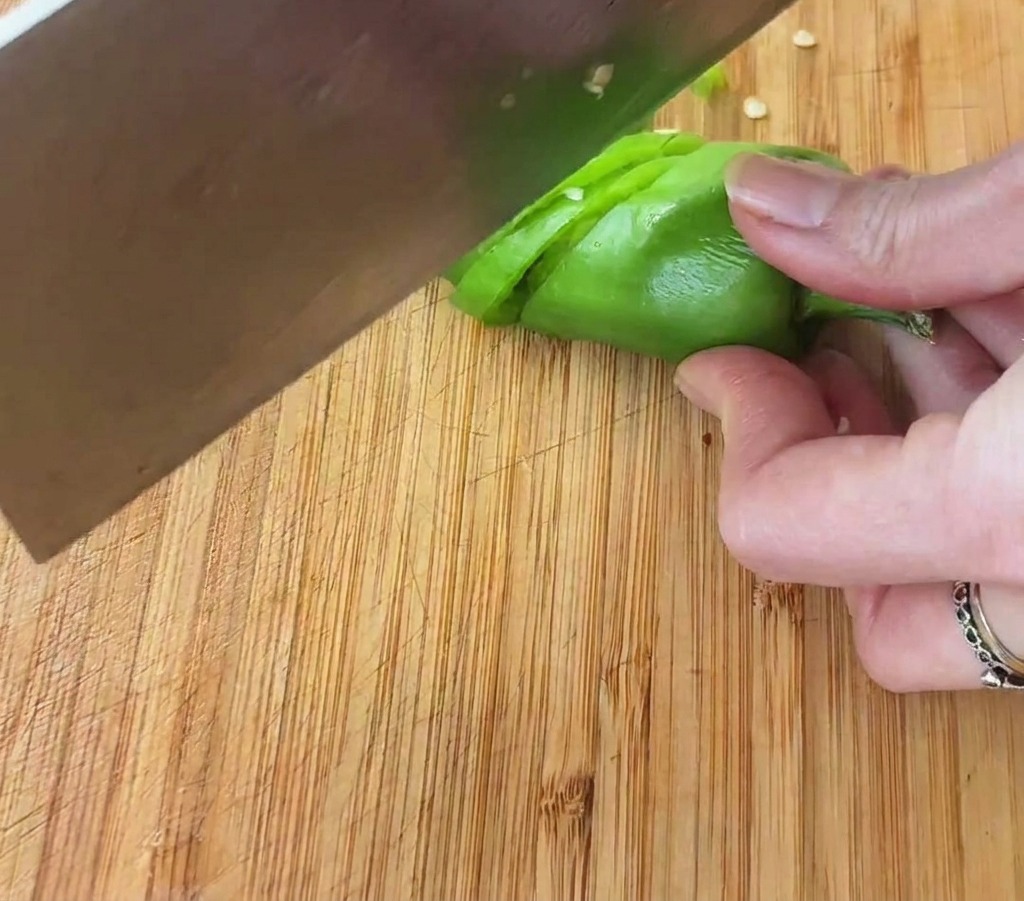
Place the green chili peppers on a wooden board and use a sharp cleaver to chop them into thin, uniform rings. These chilis will add a vibrant pop of color and a balanced kick of heat to the savory soybean broth.
Tip: If you prefer a milder soup, remove the seeds from the peppers before slicing them into rings. - 4Cube the tofu
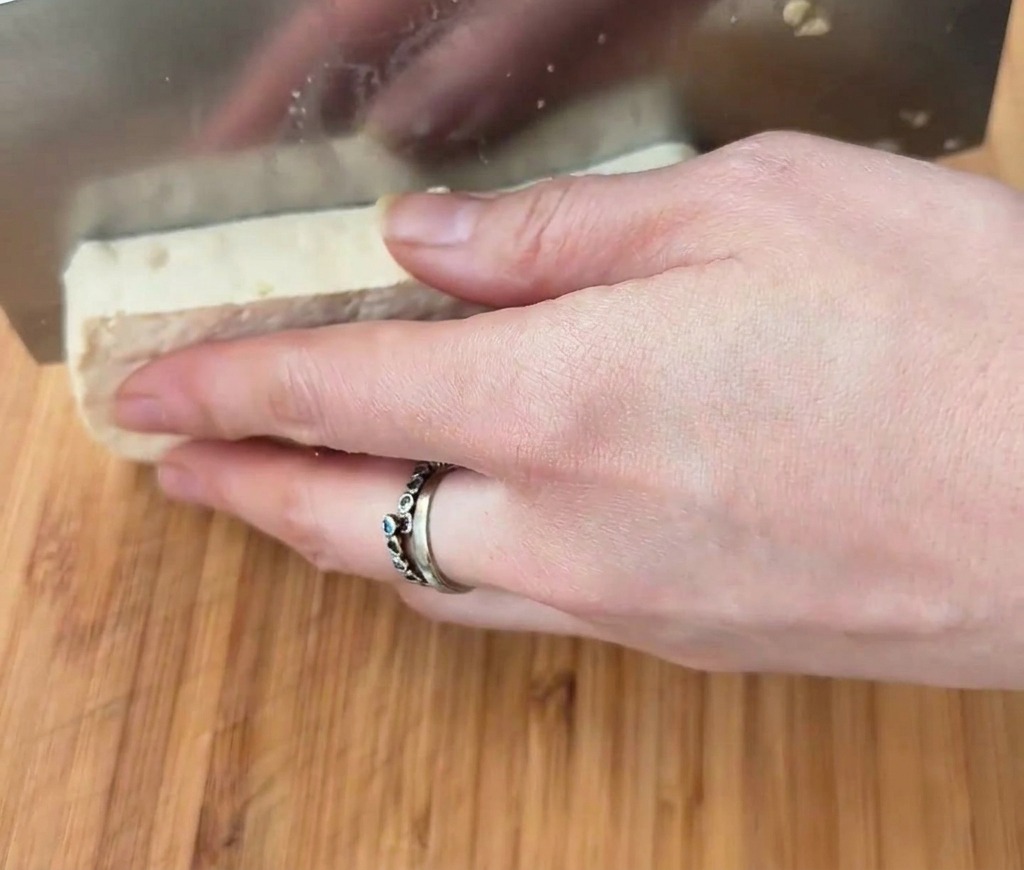
Take a block of firm tofu and carefully slice it into even, bite-sized cubes. Using uniform shapes ensures that each piece cooks through evenly and provides a consistent texture in every spoonful of soup.
Tip: Firm or extra-firm tofu is ideal for soups as it holds its shape well and wont crumble when stirred into the hot liquid. - 5Sauté the chopped onions
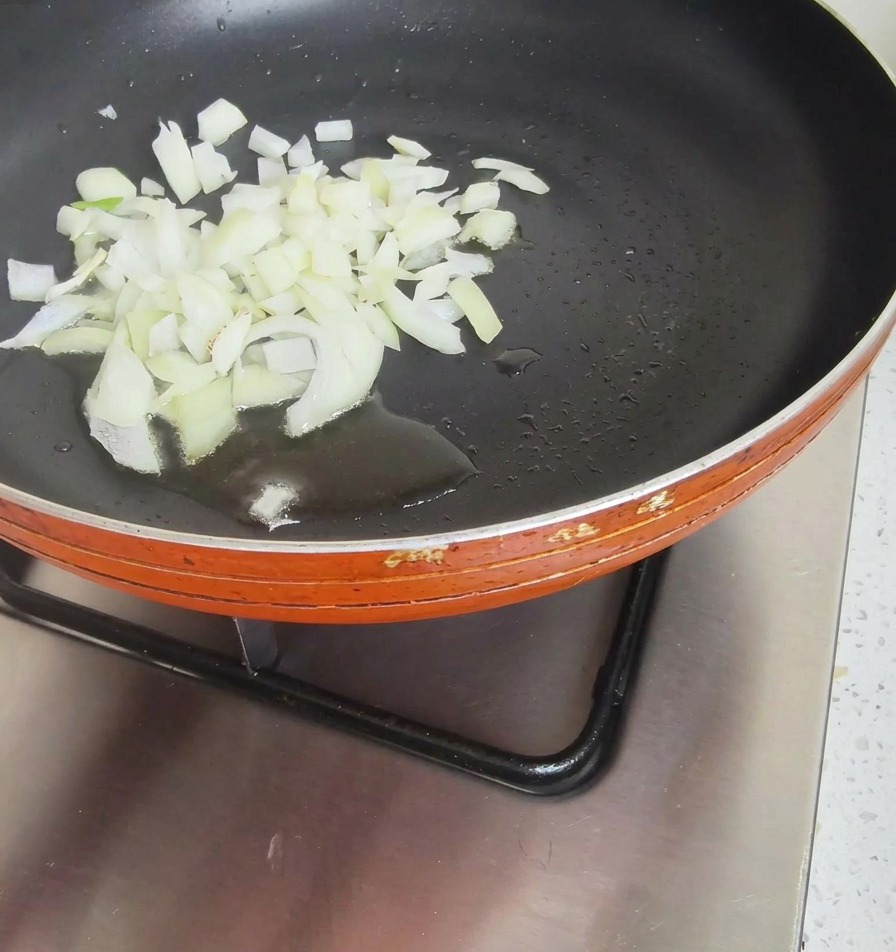
Heat a small amount of oil in a frying pan over medium heat and add the chopped onion chunks. Sauté them briefly until they begin to soften and release their sweet aroma, creating a flavorful foundation for the soup.
Tip: For a lighter version of the dish, you can sauté the onions in a splash of water instead of oil. - 6Add the soybean paste
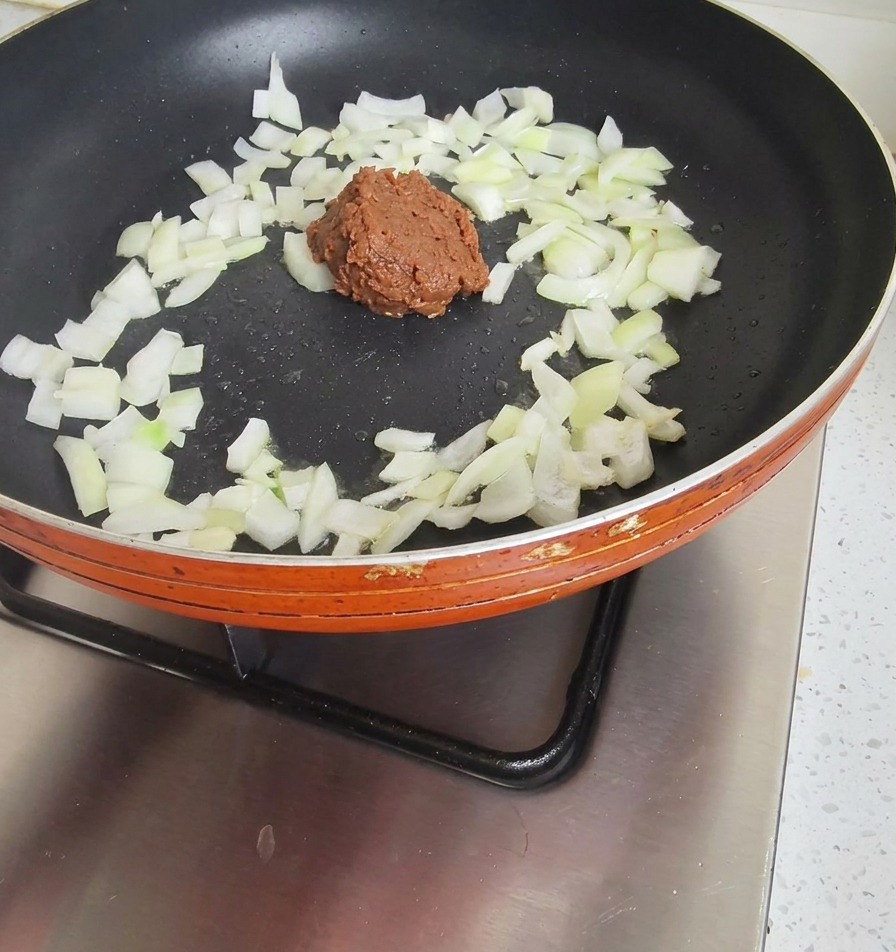
Place a large spoonful of dark brown soybean paste (Doenjang) into the pan with the onions. Stir-fry the paste for about a minute to toast the fermented beans, which deepens the umami flavor and removes any raw bitterness.
Tip: Dont skip the short stir-fry of the paste; its a traditional technique that significantly enhances the richness of the final broth. - 7Sauté the bean sprouts and base
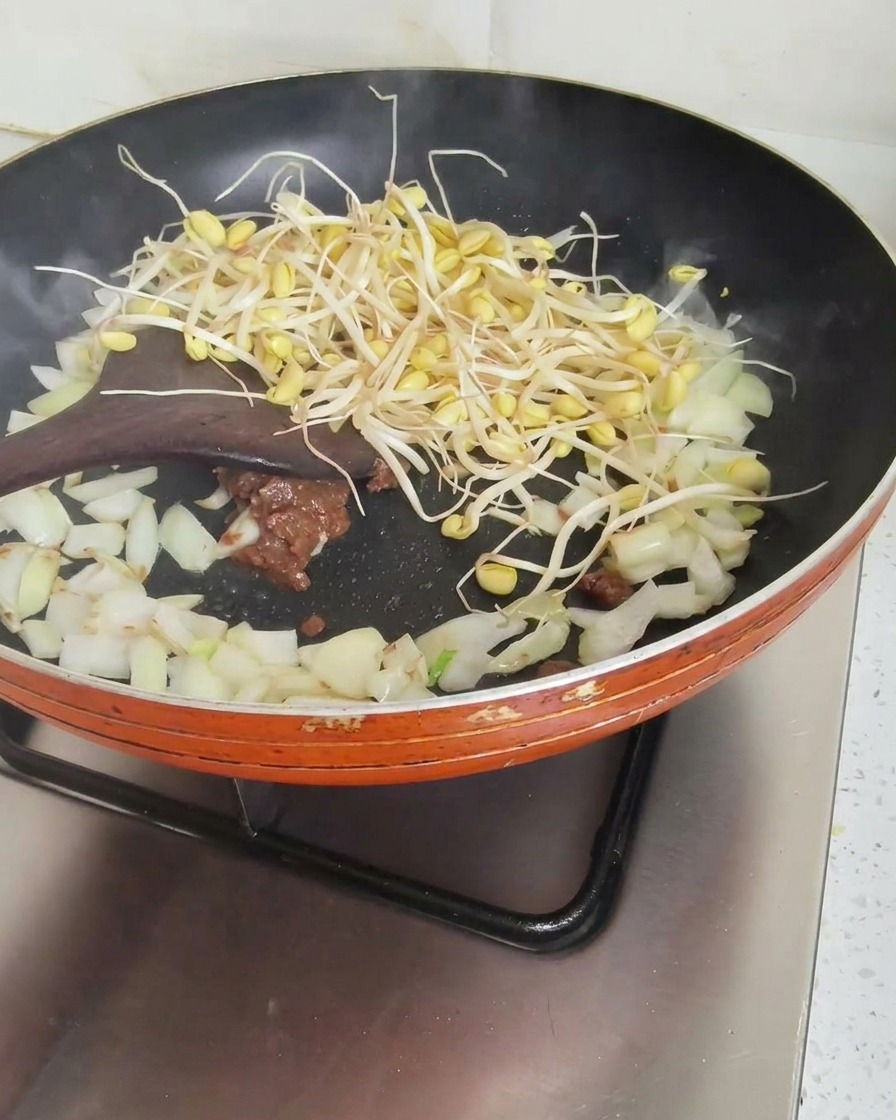
Incorporate the washed bean sprouts into the pan with the onions and soybean paste. Stir-fry briefly over medium heat to coat the sprouts evenly in the paste, which helps the flavors penetrate before the broth is added.
Tip: Do not overcook the sprouts at this stage; they just need to be coated in the paste before adding water to maintain some texture. - 8Pour in the water
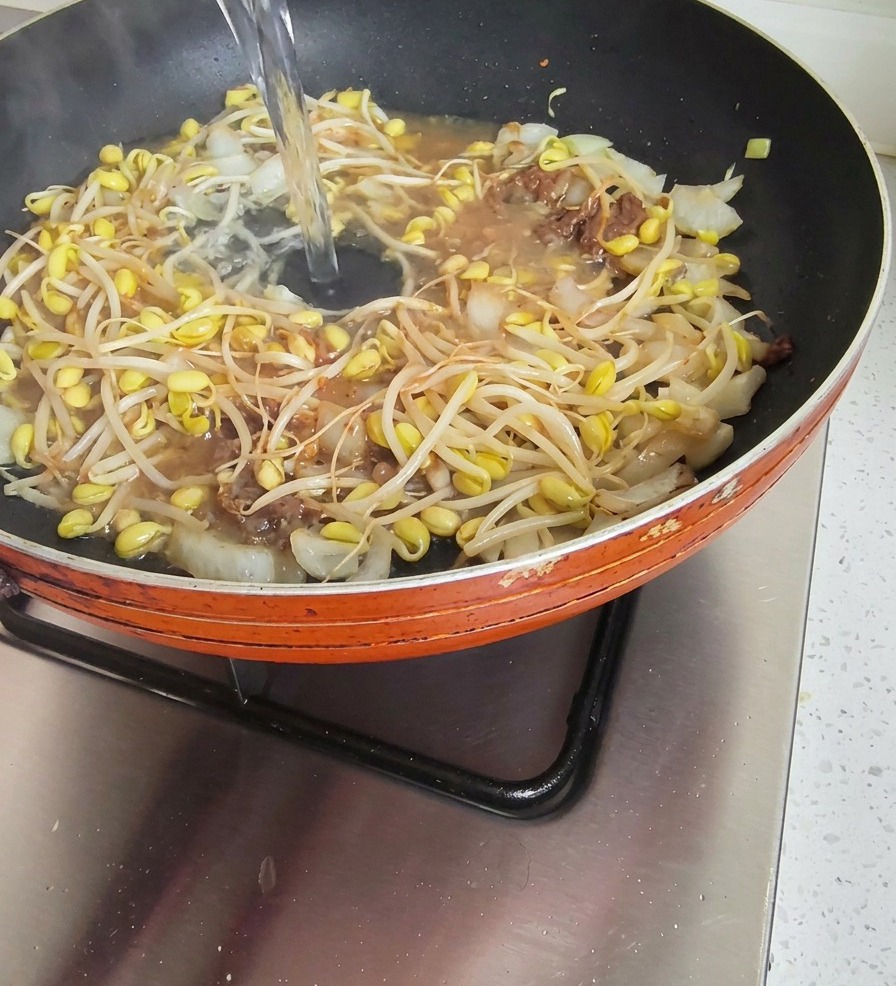
Add water to the pan containing the sautéed onions, bean sprouts, and soybean paste. This creates the flavorful broth that serves as the foundation for the soup. Ensure there is enough liquid to accommodate the noodles and tofu that will be added later.
Tip: You can use the water from washing rice (rice water) instead of plain water to give the broth a slightly thicker consistency and more depth. - 9Season the broth
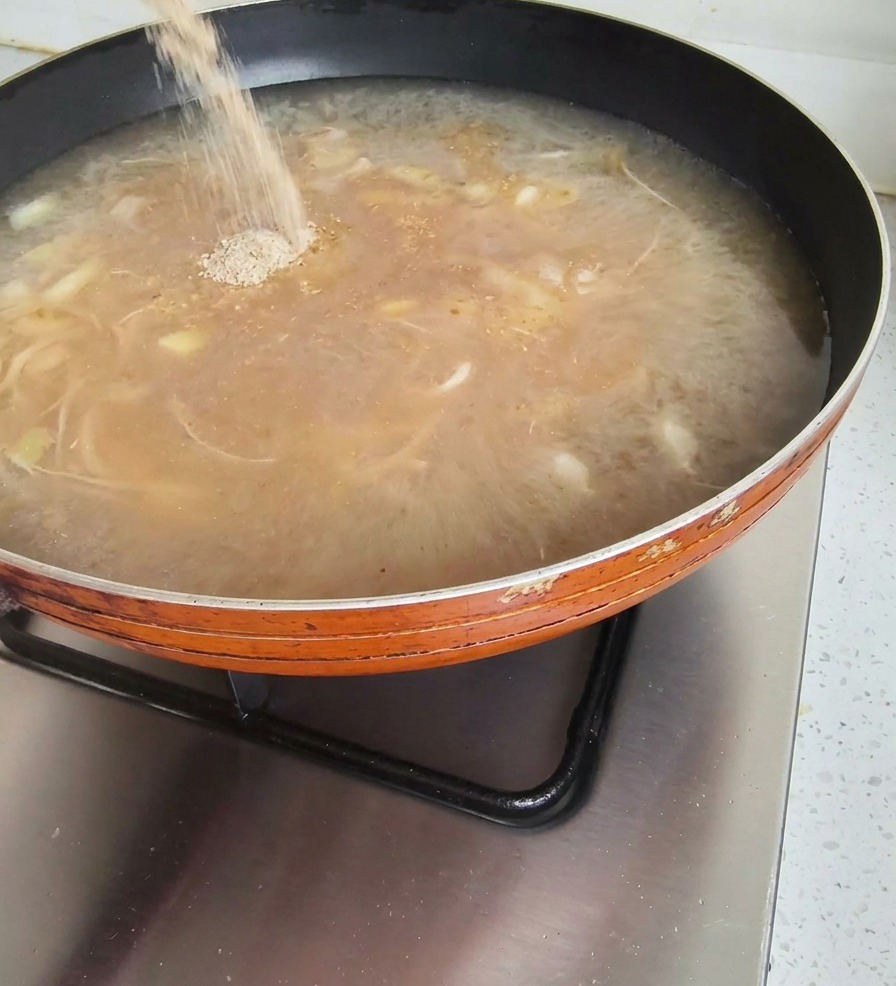
Sprinkle the beef seasoning powder and a small amount of white sugar into the simmering liquid. Stir the mixture well to help the seasonings dissolve, which balances the fermented flavor of the soybean paste and enhances the overall umami.
Tip: If you prefer a more natural seasoning, you can substitute the beef powder with a dash of fish sauce or salt to taste. - 10Add the crystal noodles
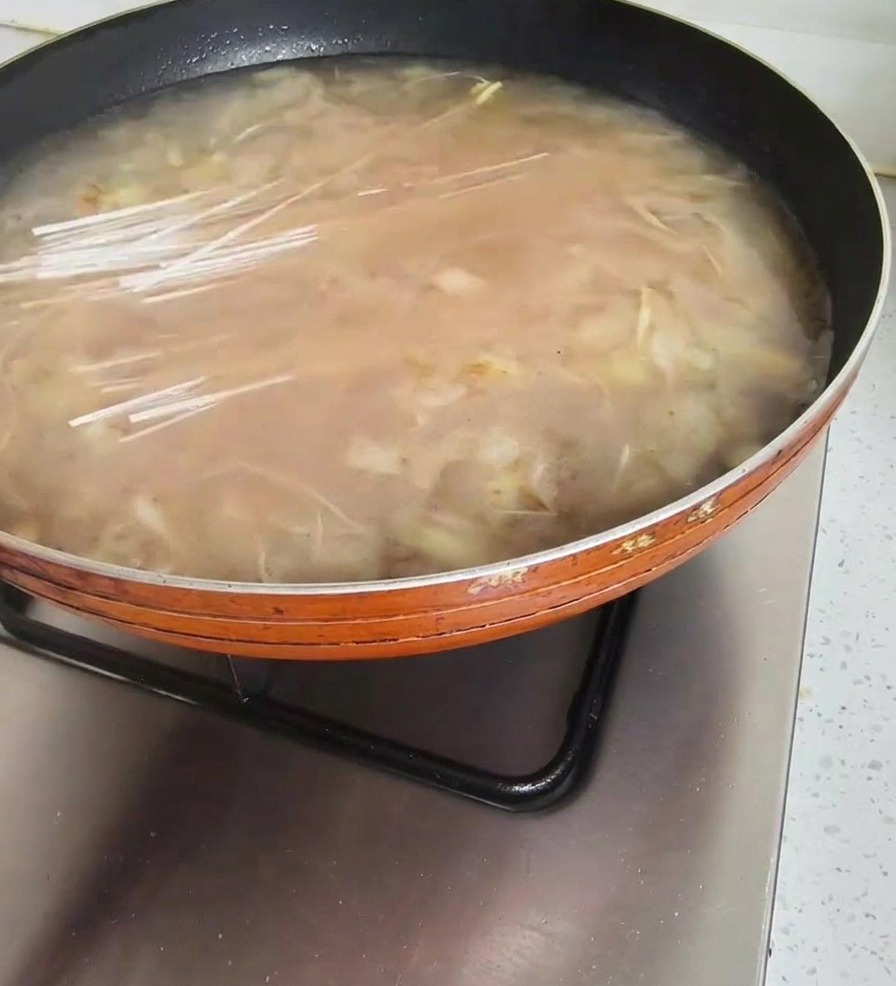
Add the crystal noodles to the boiling broth. These translucent noodles will soften quickly and soak up the savory, fermented flavors of the soup base.
Tip: Try not to overcook the noodles; they are best served while they still have a bit of a snap to them. - 11Add the tofu cubes
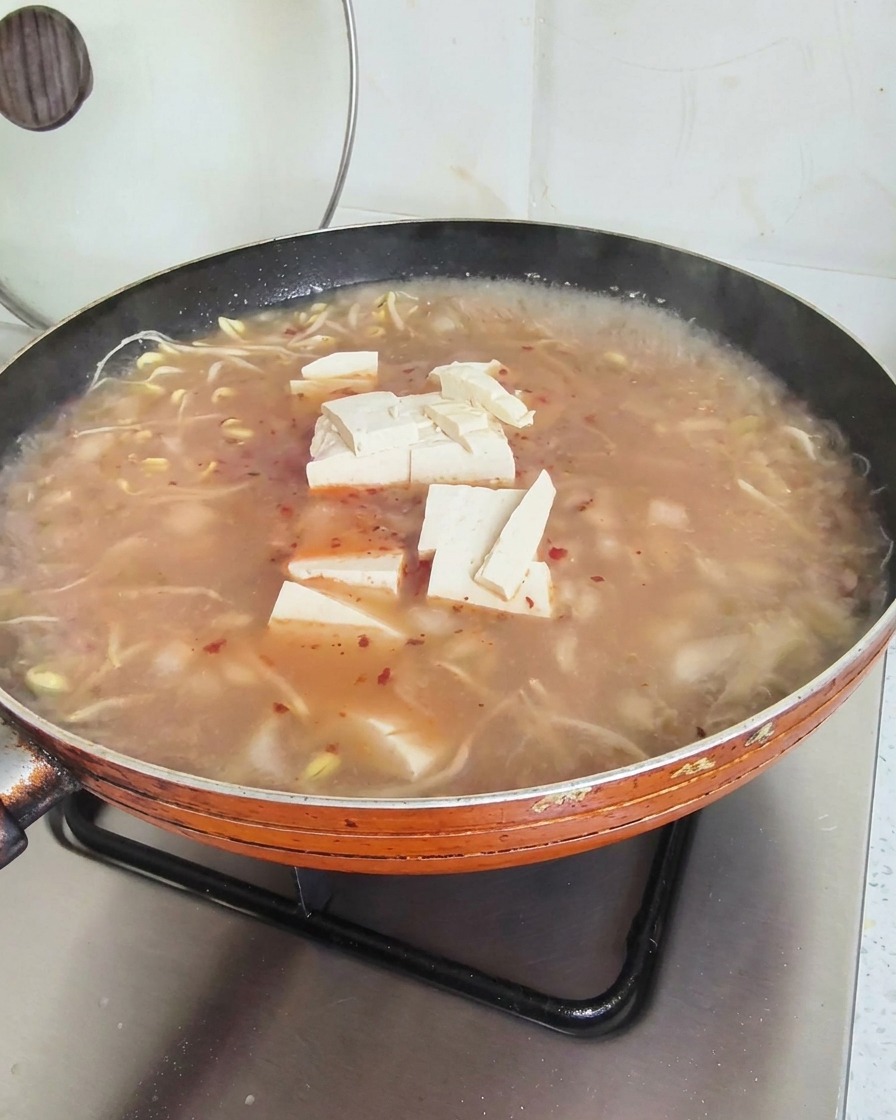
Once the soup base is boiling and the flavors have developed, carefully add the tofu cubes to the pan. Distribute them evenly so they can begin absorbing the savory, reddish-brown broth.
Tip: Slide the tofu in gently from a low height to prevent the hot soup from splashing. - 12Season with chili flakes
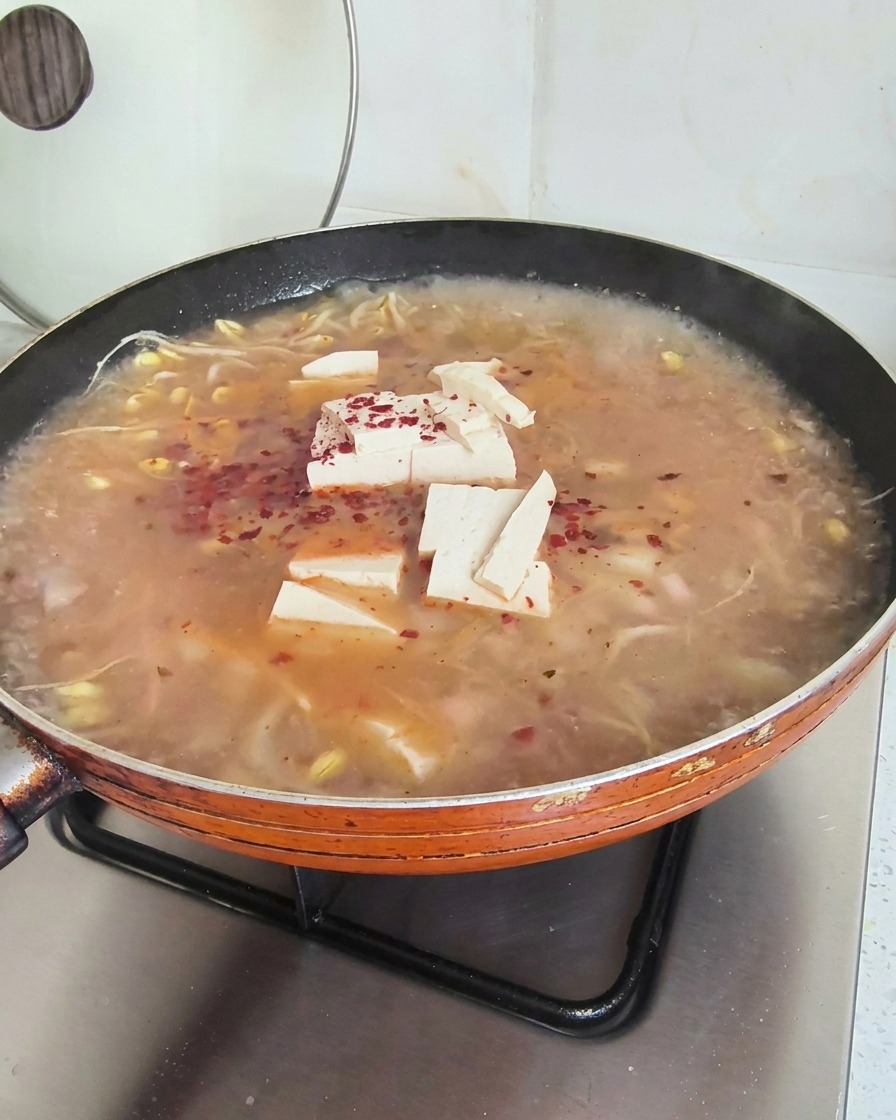
Sprinkle red chili flakes or Korean gochugaru over the top of the soup. This adds a layer of heat and a vibrant color that defines the character of a classic spicy soybean paste soup.
Tip: Start with a small amount and taste as you go; the spice level can intensify as the soup continues to simmer. - 13Add final greens and sprouts
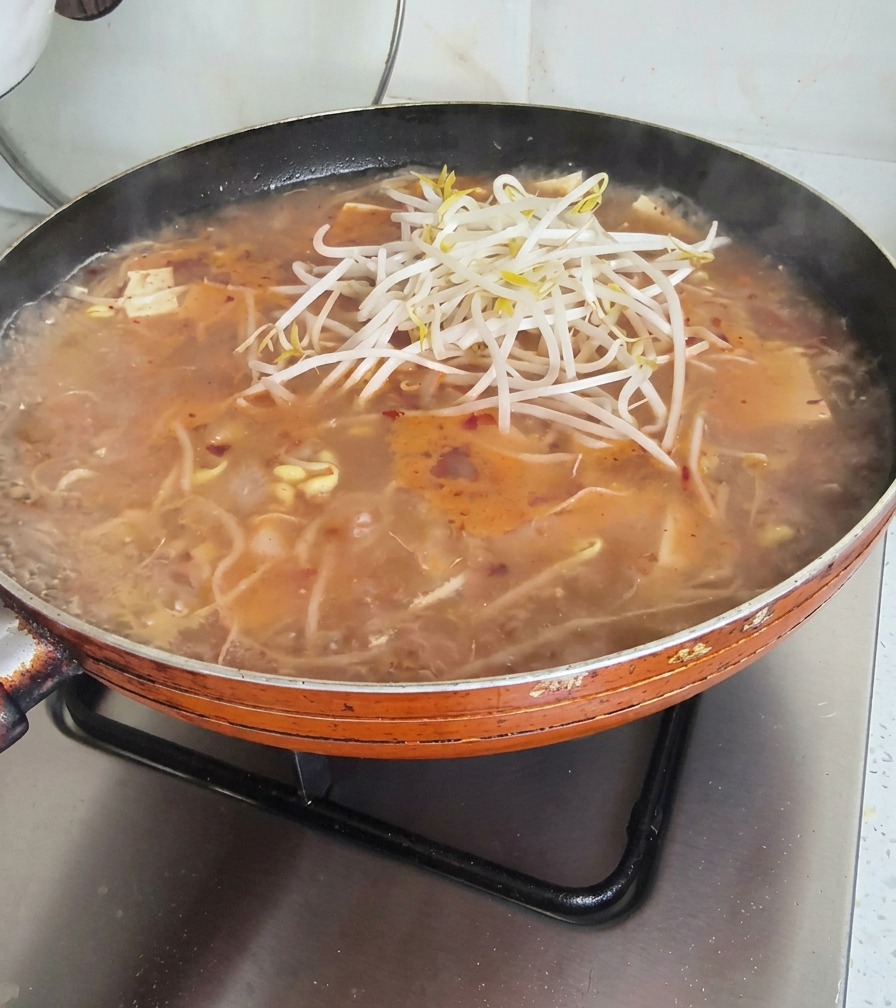
Toss in the remaining bean sprouts and fresh bok choy. Cover the pan and simmer for approximately three minutes to allow the greens to wilt slightly while maintaining their vibrant color and crisp texture.
Tip: Adding these greens last prevents them from overcooking and turning brown, keeping the dish visually appealing. - 14Add final aromatics
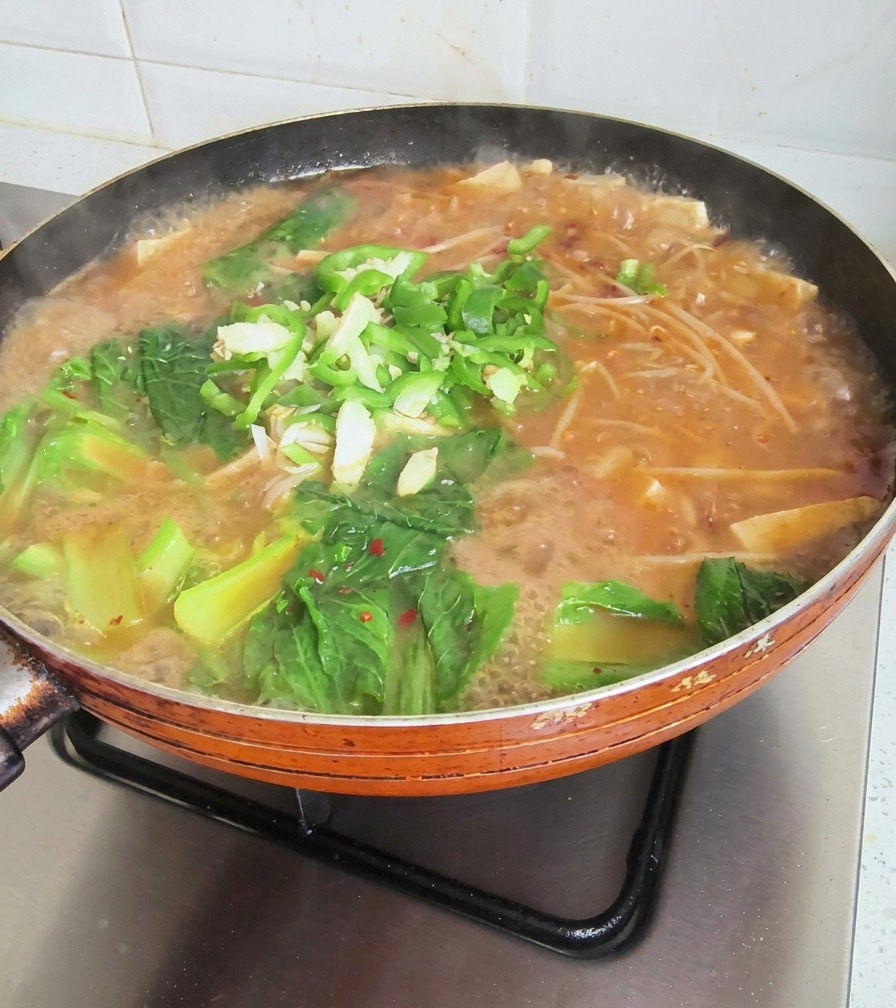
Once the soup has simmered and the vegetables are tender, stir in the minced green onions and garlic. These final aromatics provide a fresh, pungent lift to the deep, savory flavors of the soybean paste and beef broth. Give it one last stir and serve immediately.
Tip: Adding garlic and green onions at the very end preserves their bright flavor and prevents the garlic from becoming bitter through long boiling.