Spicy Korean Beef
Tofu Soup (Yukgaejang Style)
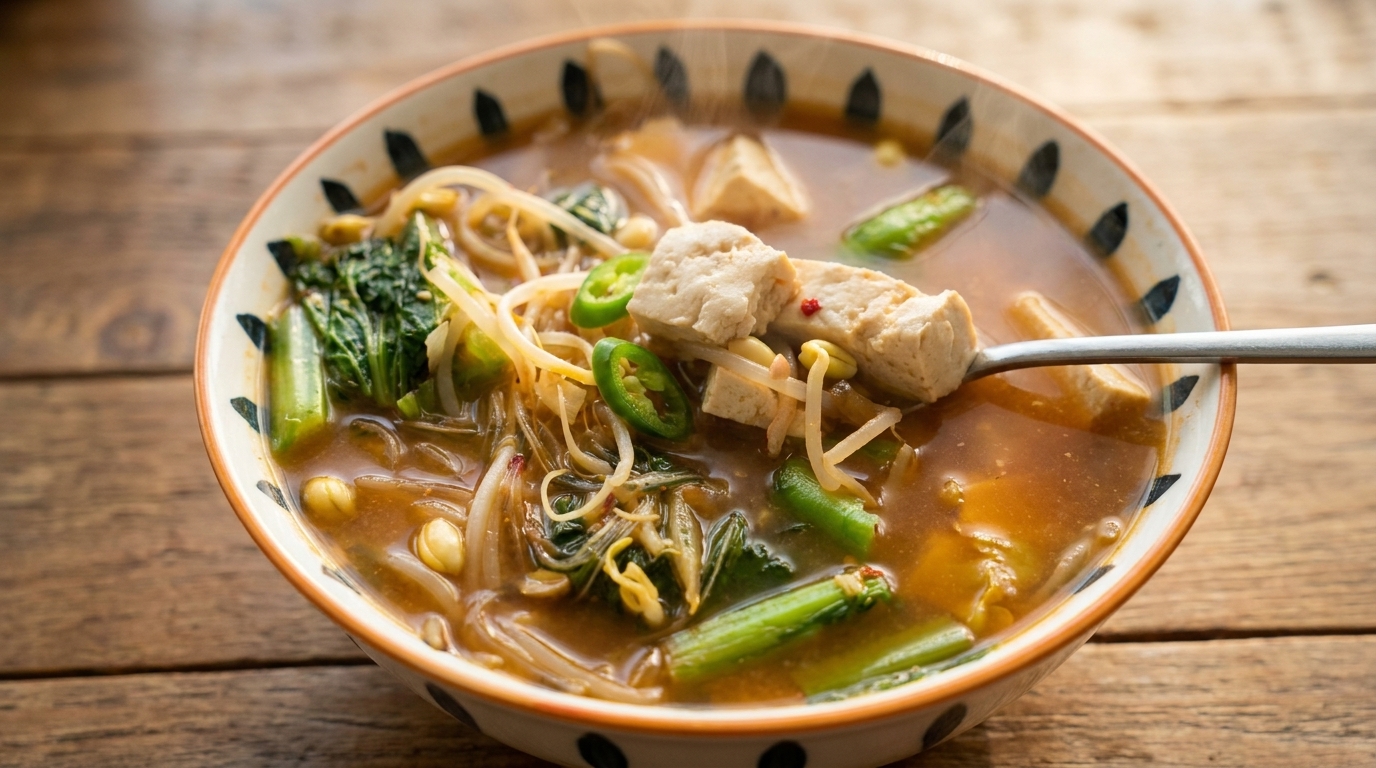
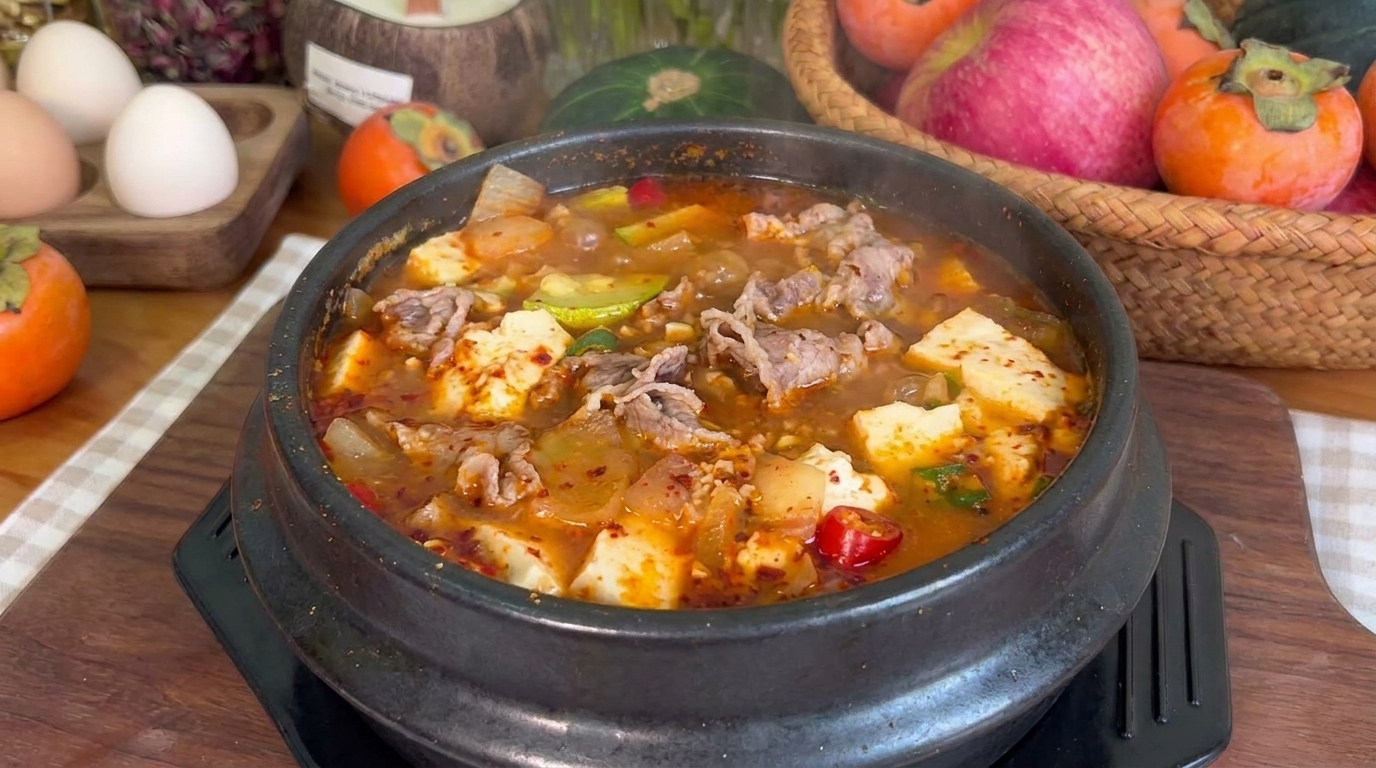
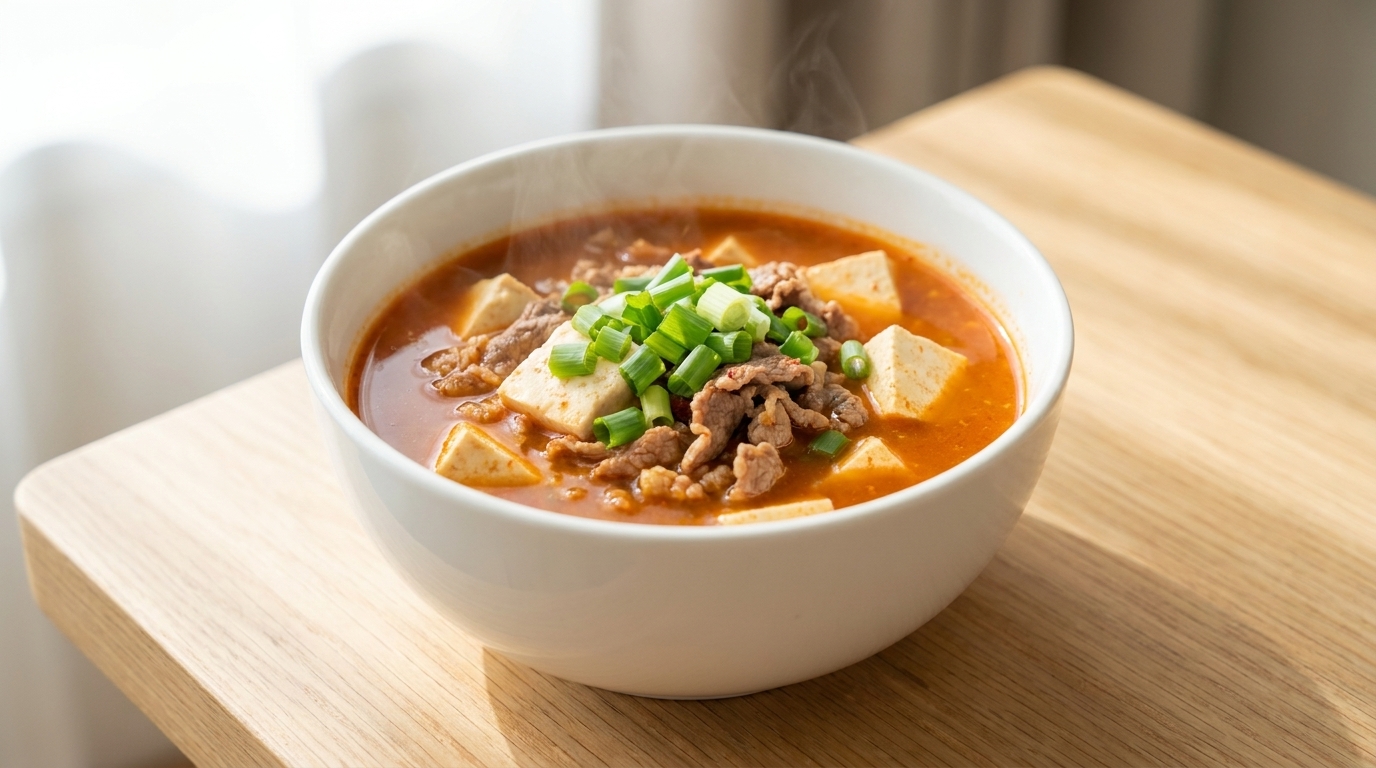
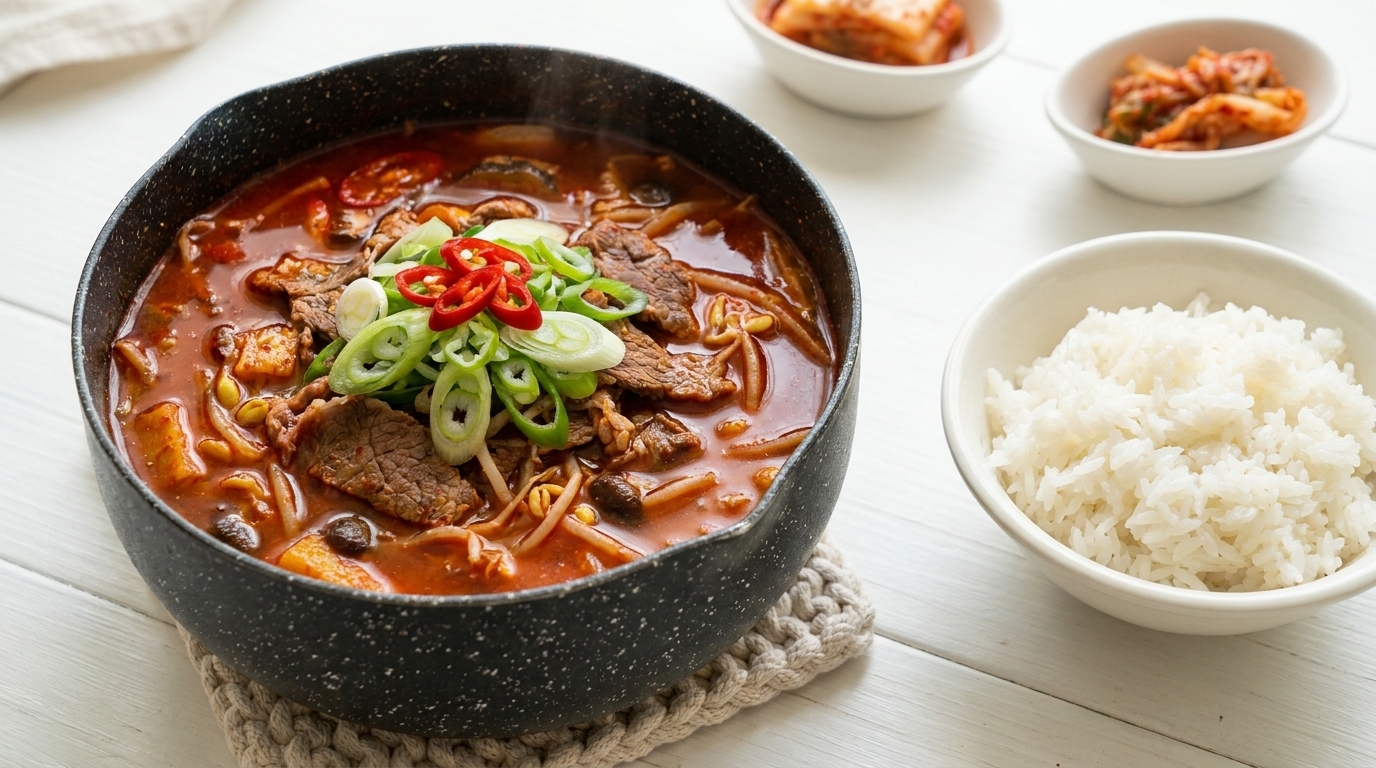
A comforting, spicy Korean-style beef soup featuring tender beef slices, hearty mushrooms, and soft tofu in a rich, umami-packed soybean paste broth.
Yukgaejang is a beloved Korean classic, traditionally known for its deep heat and hearty ingredients. This modern version uses thin beef slices and savory Doenjang to deliver soul-warming flavors in a fraction of the time. The addition of perilla seed powder provides a unique, nutty finish that perfectly balances the spicy broth.
Ingredients
- 150 g beef slices
- 100 g bean sprouts
- 1 pack enoki mushrooms
- 4 shiitake mushrooms
- 12 red onion
- 200 g soft tofu
- 1 tbsp minced garlic
- 1 tbsp beef seasoning powder
- 2 tbsp Korean chili powder
- 1 tbsp perilla seed powder
- 1 tbsp Korean soybean paste
- 2 tbsp cooking oil
- 500 ml boiling water
- 1 tsp sesame oil
- 1 green chili
- 2 stalks green onions
- optional extra perilla seed powder
Instructions
- 1Prepare the seasonings and aromatics
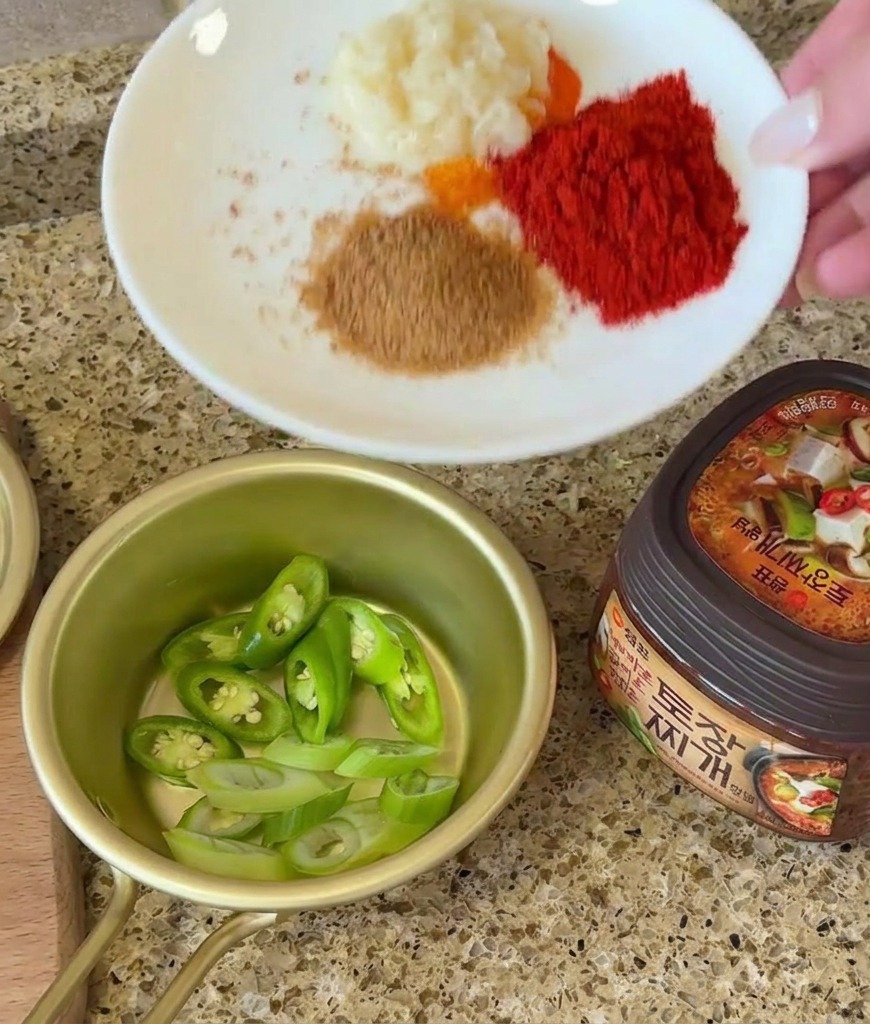
Gather the base seasonings for the soup: minced garlic, red chili powder, and beef seasoning powder. Having these ready alongside your fresh vegetables and a jar of Korean soybean paste ensures a smooth cooking process and a balanced flavor profile for the broth.
Tip: For the best flavor, use Korean coarse chili powder (Gochugaru) which provides a deep red color and a smoky, mild heat. - 2Fry the garlic and spices
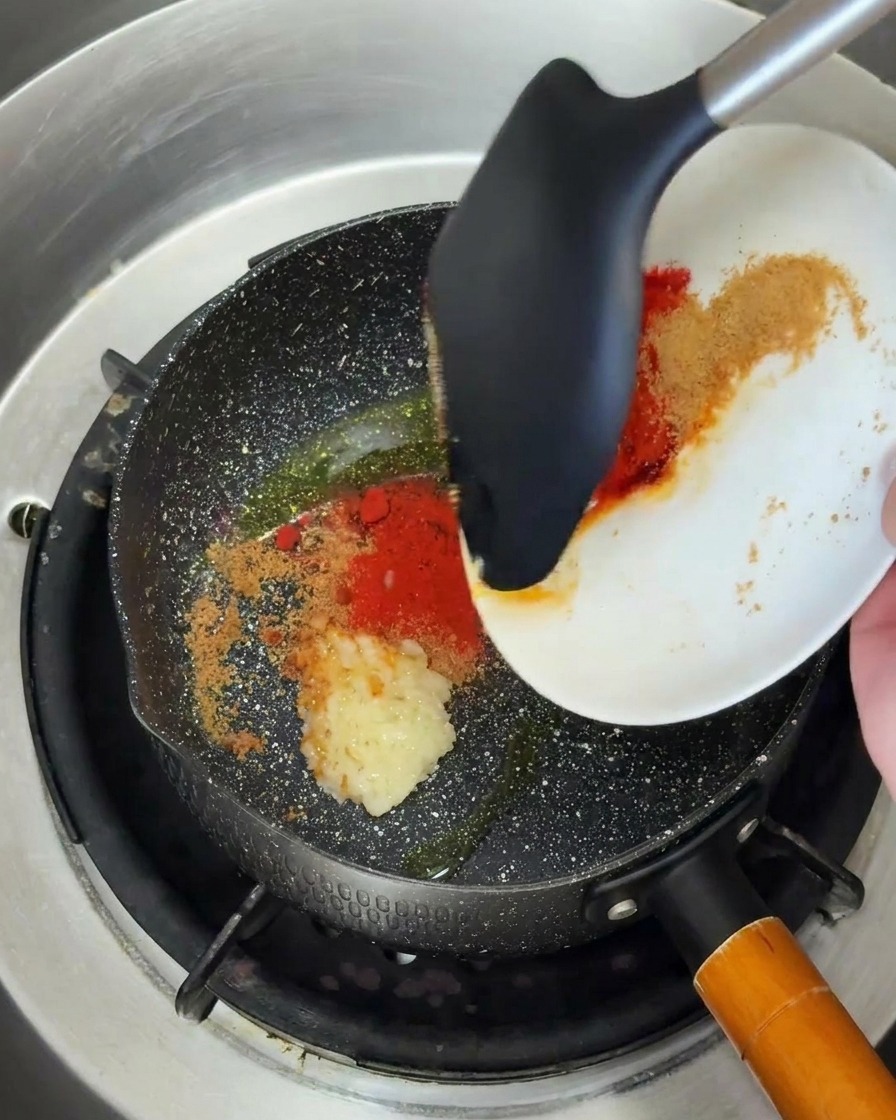
Heat a splash of oil in a pan over medium heat. Add the minced garlic, chili powder, and seasoning powders. Stir-fry them quickly for about 30 seconds until the oil turns red and the garlic becomes fragrant, creating a flavorful base for the soup.
Tip: Stir constantly to prevent the chili powder from burning, which can make the soup taste bitter. - 3Sauté the vegetables
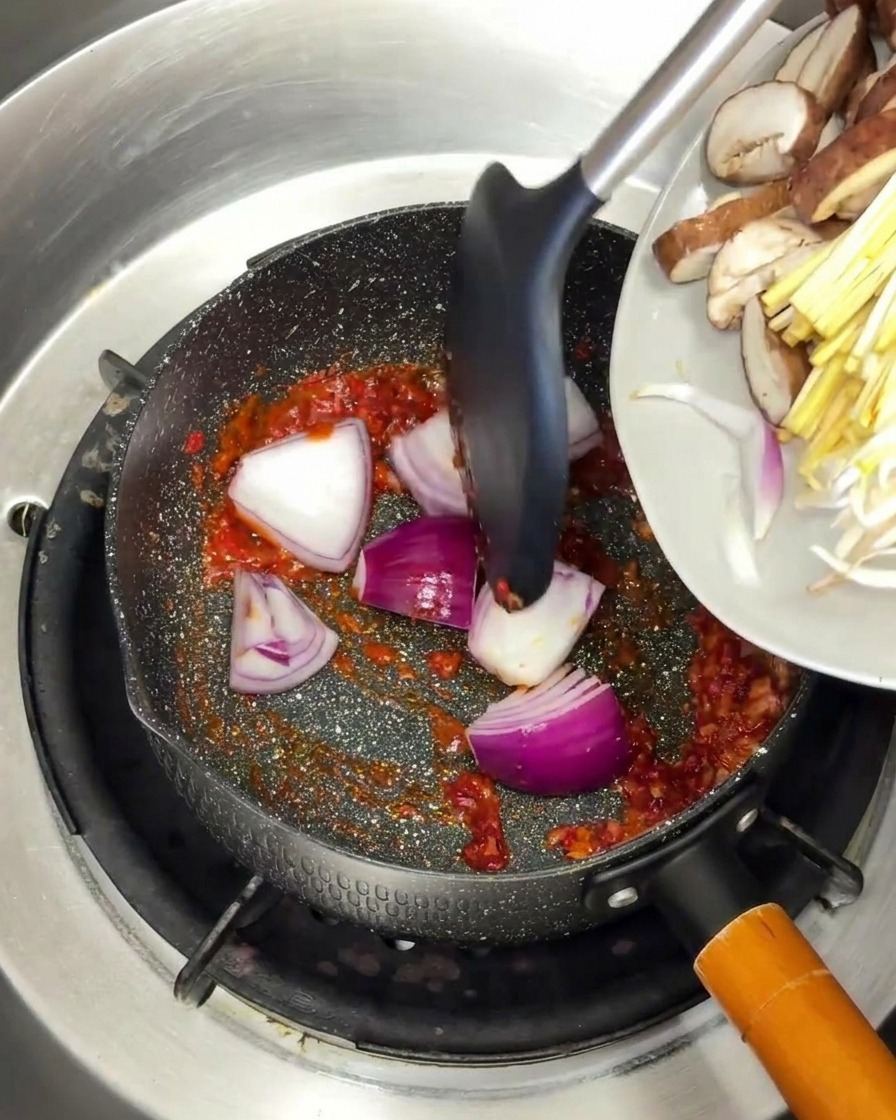
Add the sliced red onions, shiitake mushrooms, and bean sprouts to the pan. Toss them well with the fried garlic and spices to coat every piece. Sautéing the vegetables briefly helps them absorb the spicy oil and releases their natural sweetness.
Tip: If the pan feels too dry, add a tiny splash of water to help the spices coat the vegetables without sticking. - 4Add the soybean paste
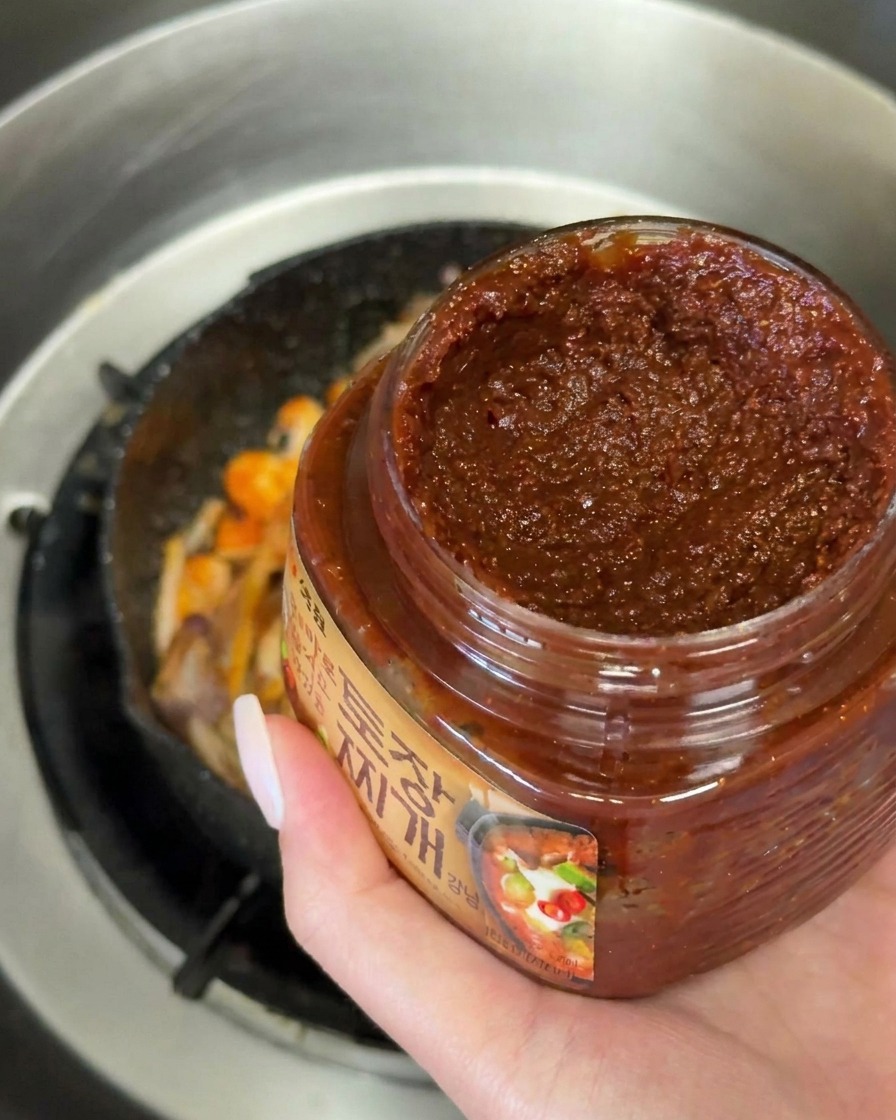
Add a large spoonful of dark Korean soybean paste to the pan with the stir fried vegetables. This fermented paste is the flavor powerhouse of the dish providing a deep savory and umami base. Briefly stir it in to coat the ingredients before adding liquid to enhance its aromatic complexity.
Tip: Authentic Korean soybean paste has a much deeper more pungent flavor than miso so do not be afraid of its strong aroma. - 5Simmer the soup base
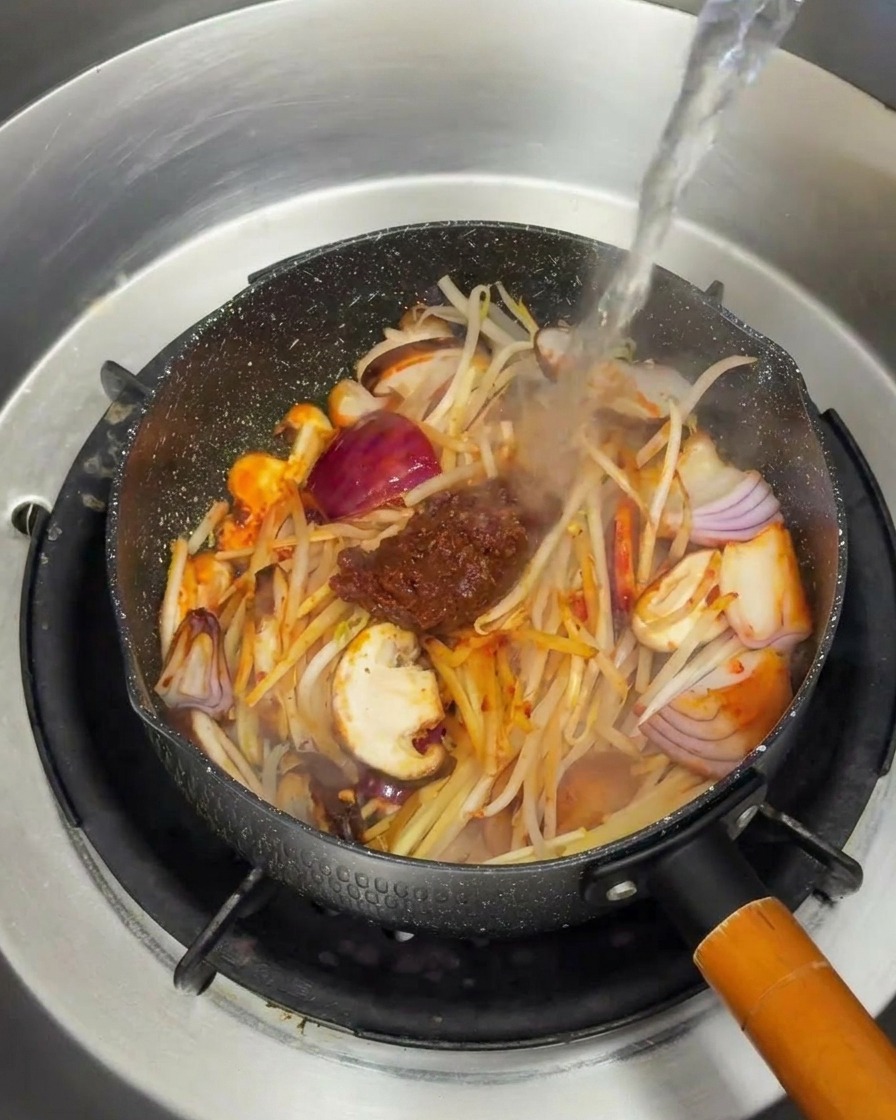
Pour boiling water into the pan until the seasoned vegetables and soybean paste are submerged. Stir gently to fully dissolve the paste and bring the mixture back to a boil to develop a rich, savory broth.
Tip: Using boiling water instead of cold water keeps the pan hot and prevents the vegetables from becoming mushy. - 6Add the beef slices
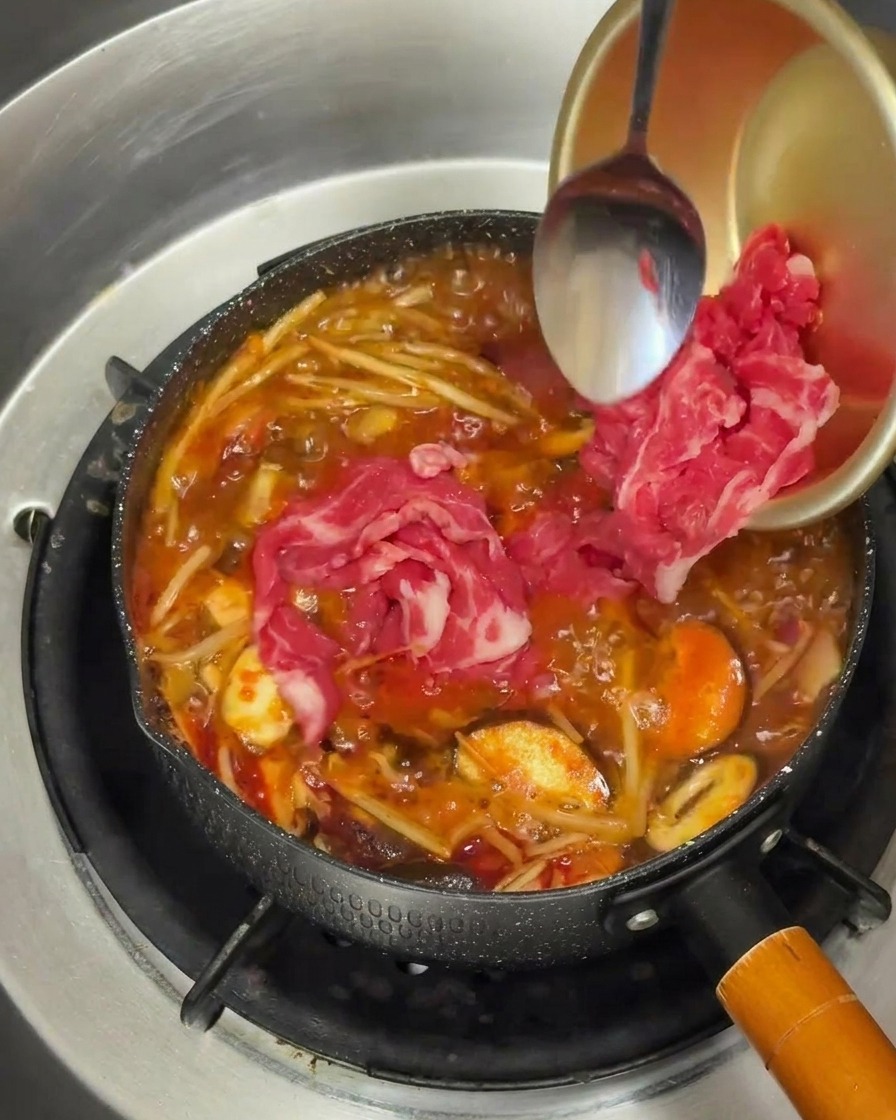
Carefully add the thin slices of raw beef into the boiling deep red broth. The high heat will cook the meat quickly allowing it to stay tender while absorbing the spicy and savory essence of the soup base.
Tip: Spread the beef slices out as you add them to ensure they cook evenly and do not clump together in the liquid. - 7Incorporate the soft tofu
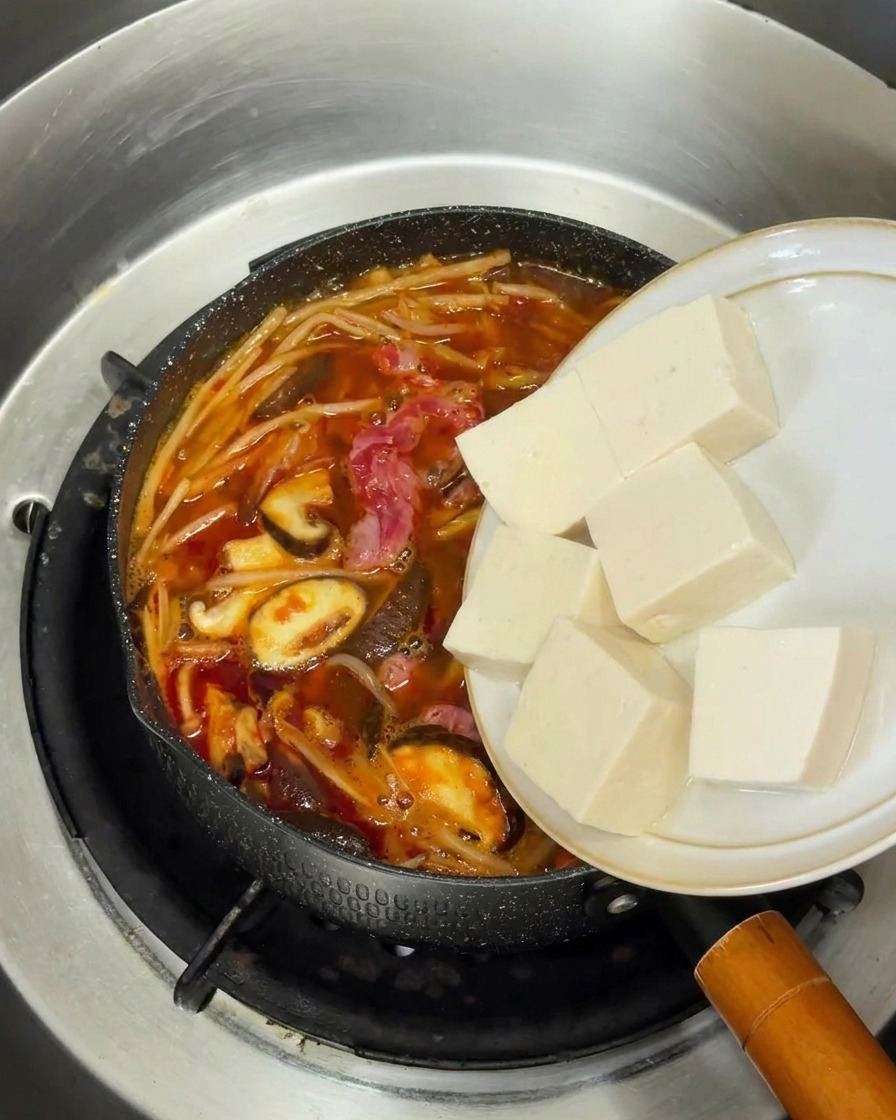
Gently place the cubes of soft white tofu into the boiling soup. Let the soup simmer on medium-high heat for about six minutes, allowing the tofu to heat through and the beef to fully cook while the flavors meld together.
Tip: Avoid over-stirring once the tofu is in the pot, as soft tofu is fragile and can easily break apart. - 8Season with sesame oil
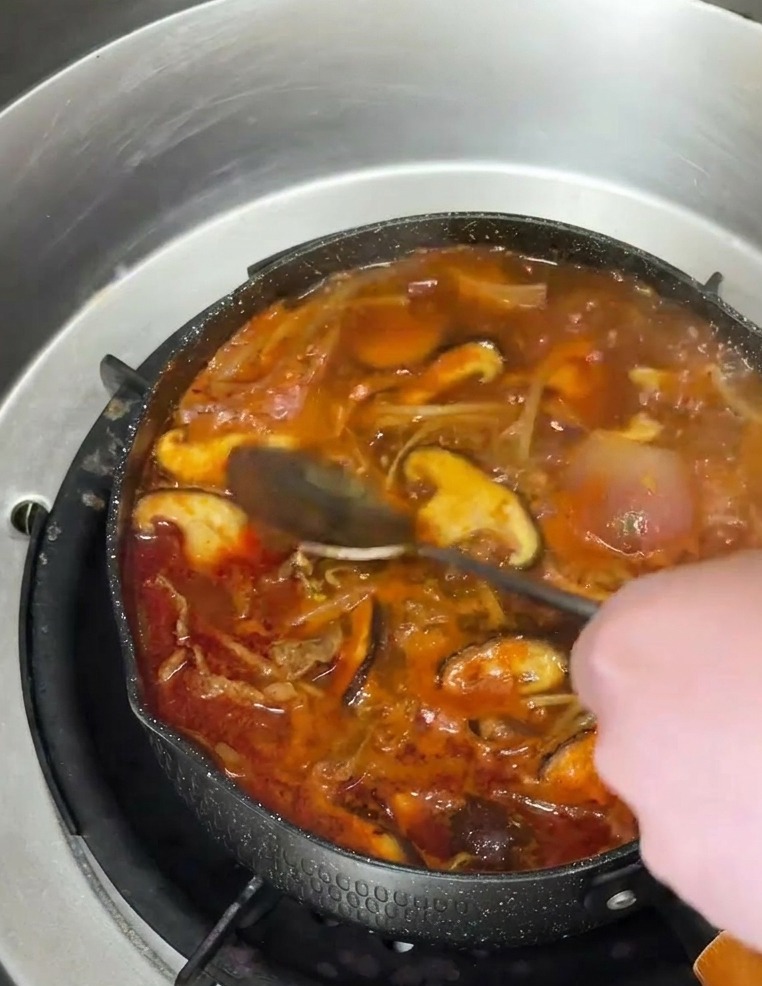
After the soup has simmered and the flavors have melded, drizzle a spoonful of toasted sesame oil over the surface. Stir it in gently to incorporate that signature nutty aroma and rich finish into the spicy broth.
Tip: Add sesame oil at the very end of cooking. Its delicate flavor can become bitter or dissipate if boiled for too long. - 9Garnish with fresh greens
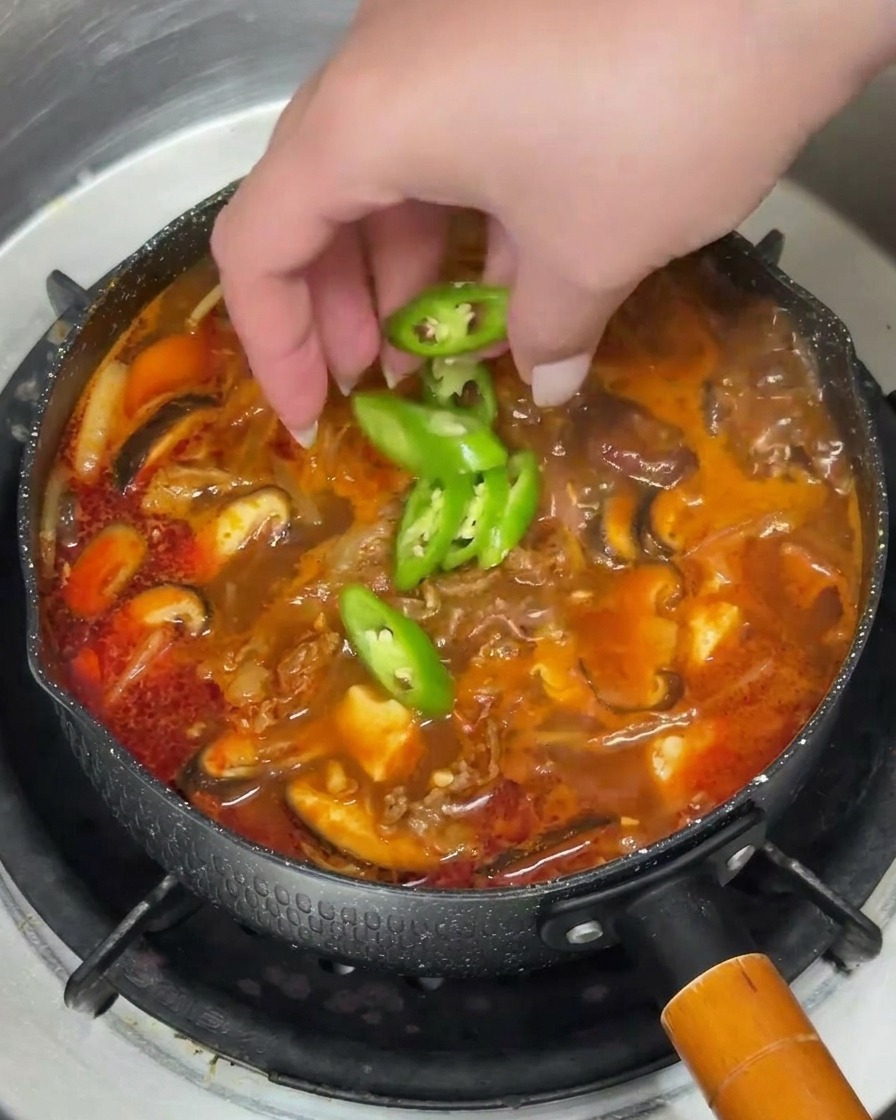
Turn off the heat and scatter the freshly sliced green chilies and green onions over the simmering soup. For the final touch, sprinkle on a bit more perilla seed powder to enhance the nutty aroma just before serving.
Tip: Adding these garnishes after turning off the heat ensures they retain their vibrant green color and fresh crunch.