Korean Soybean Paste Stew
Fatty Beef (Doenjang-jjigae)
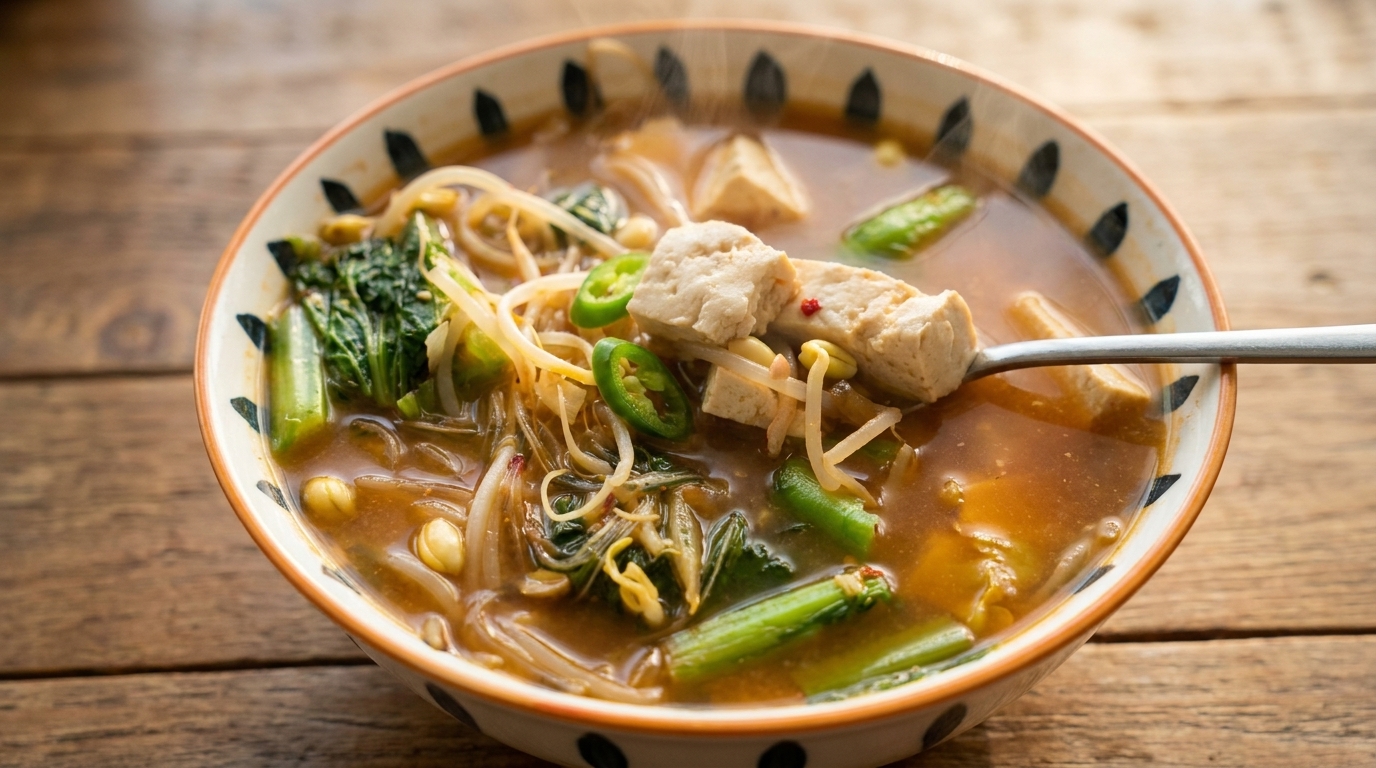
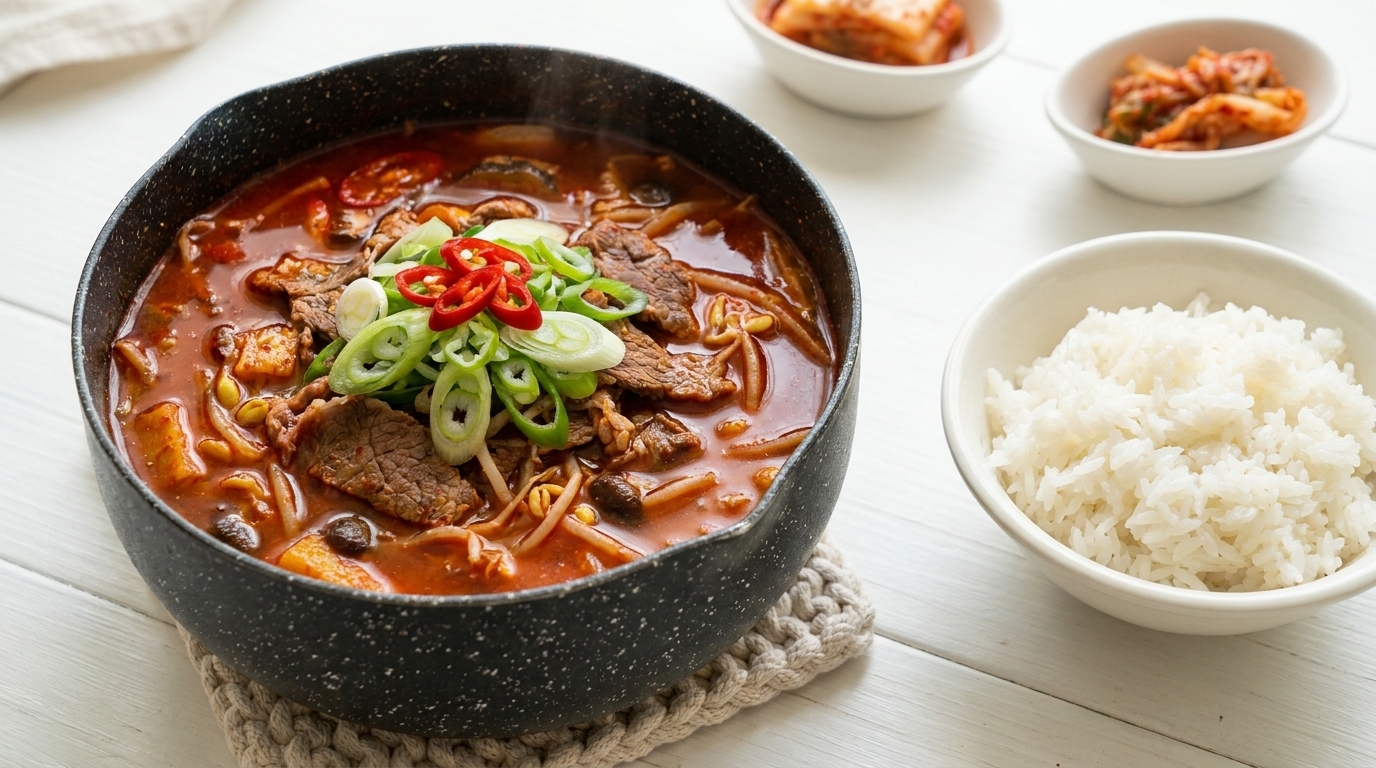
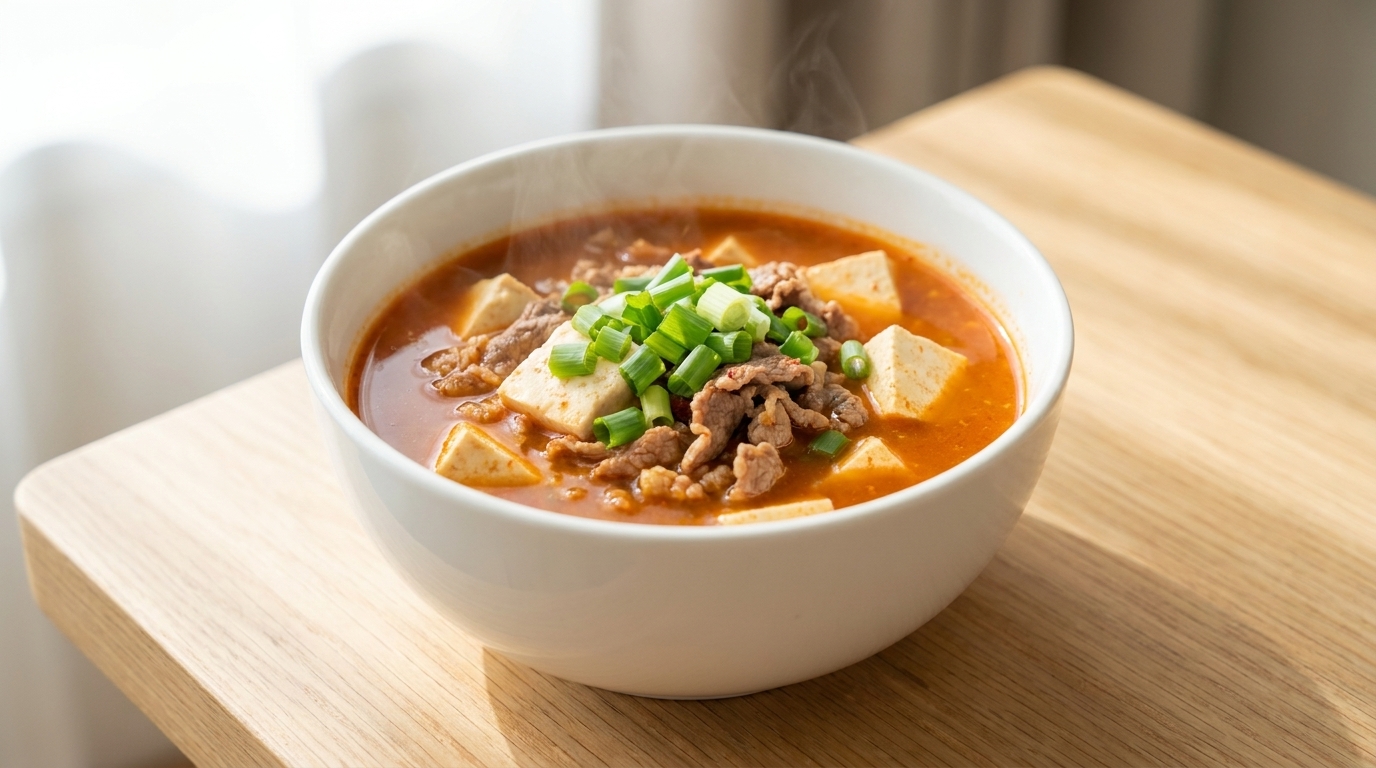
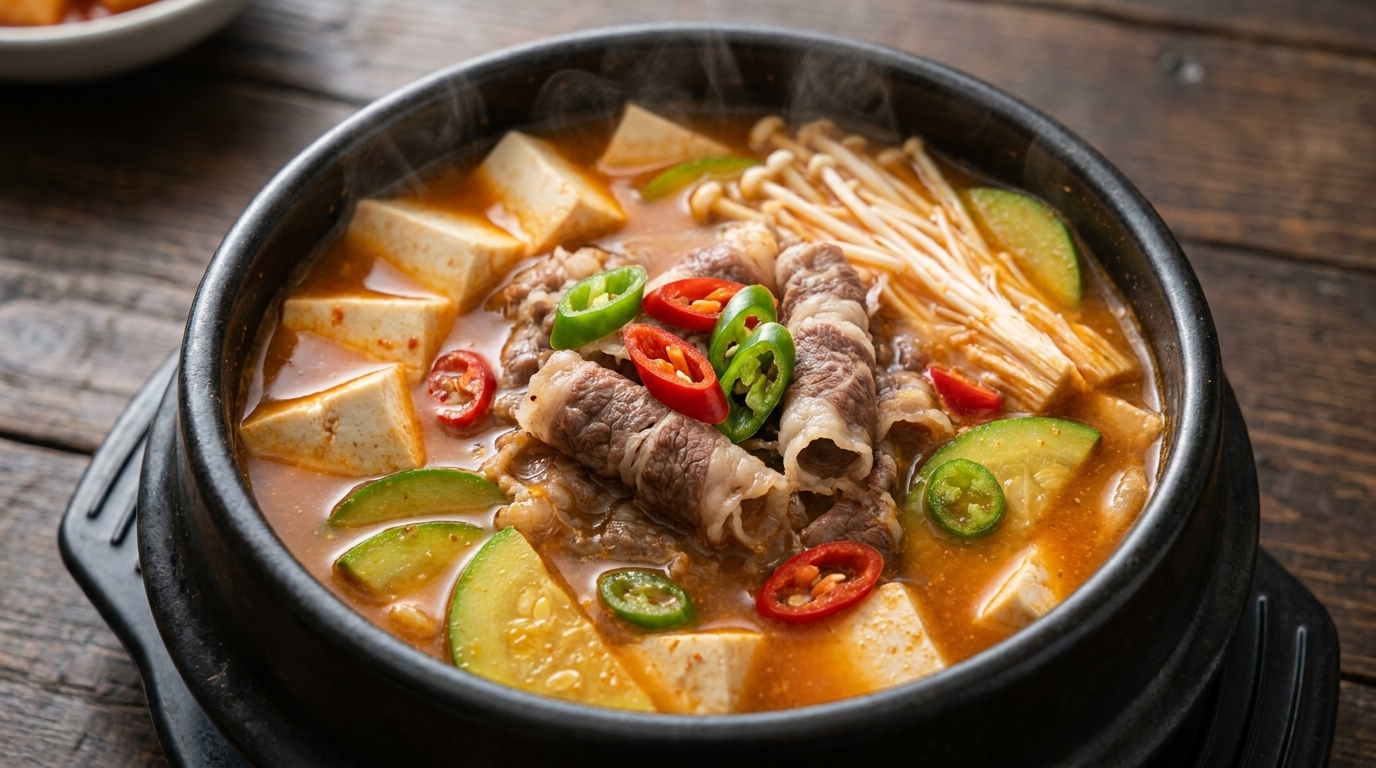
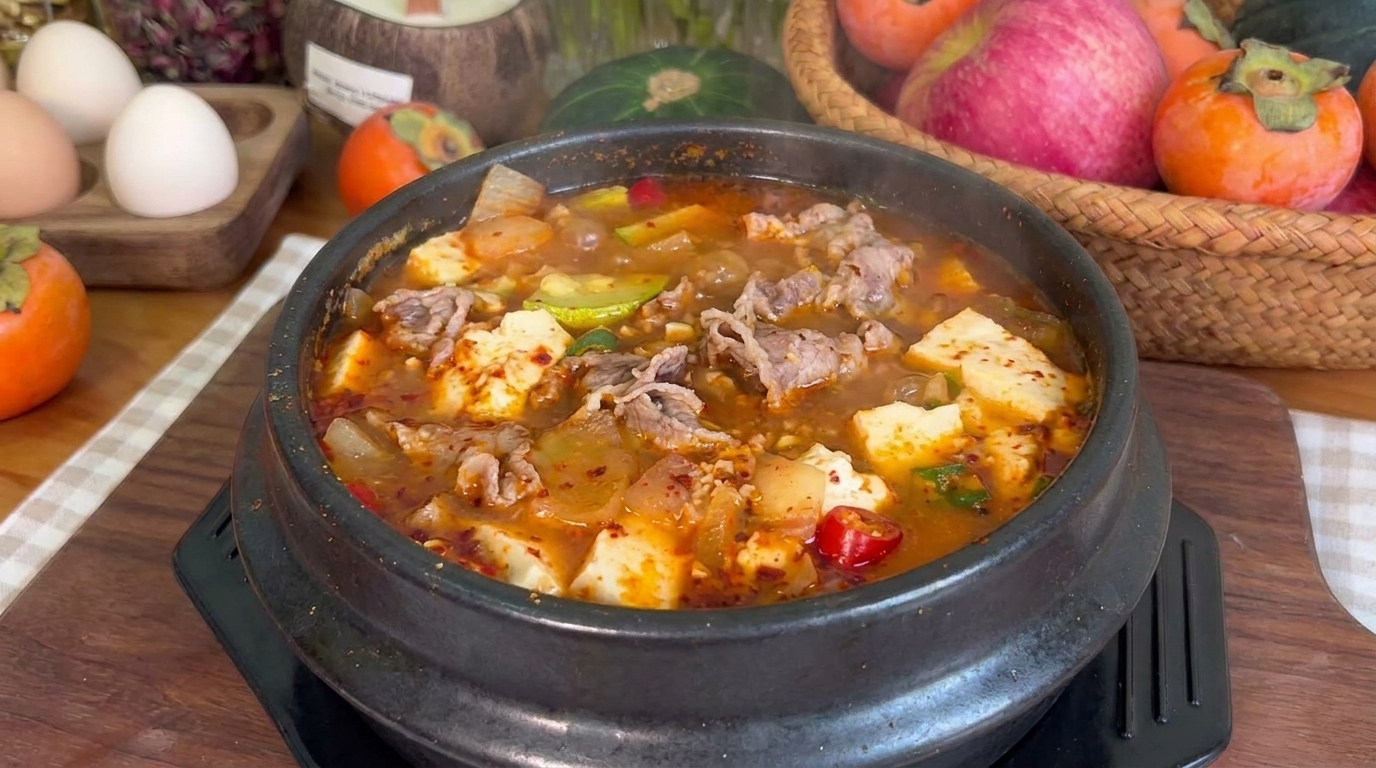
A rich and hearty Korean classic, this Doenjang-jjigae uses fatty beef and a double dose of chili powder for a savory, spicy, and deeply satisfying broth.
Doenjang-jjigae is a cornerstone of Korean home cooking, cherished for its earthy fermented soybean base. Adding thin slices of fatty beef transforms the humble stew into a luxurious meal where the richness of the meat fat perfectly balances the pungent, savory paste. It is the ultimate comfort food, best enjoyed bubbling hot with a bowl of steamed rice.
Ingredients
- 700 ml water
- 2 tbsp Korean soybean paste (doenjang)
- 2 tbsp coarse red chili powder (gochugaru)
- 6 slices fatty beef slices
- 0.5 block tofu
- 0.5 zucchini
- 0.33 white radish
- 0.5 onion
- 0.5 leek
- 4 small chili peppers
- 4 cloves garlic
Instructions
- 1Prepare the zucchini
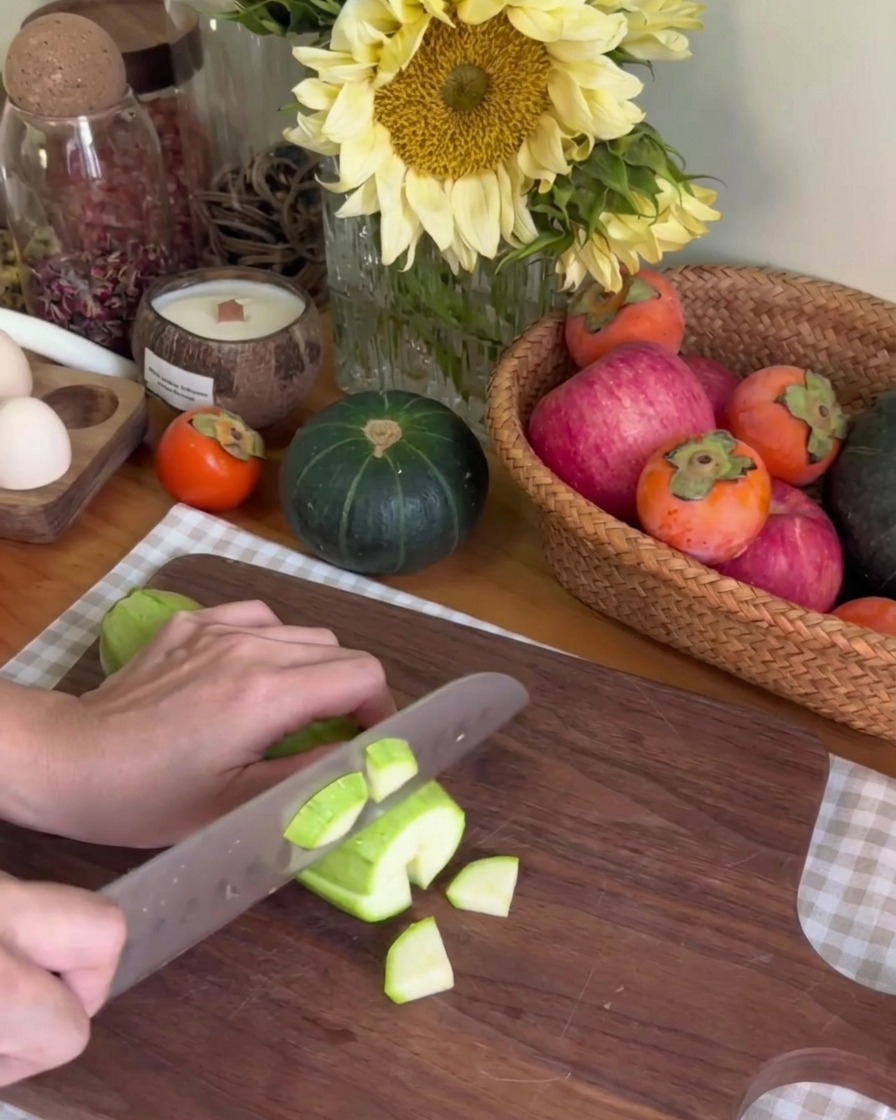
Take half of a fresh green zucchini and slice it into bite sized half moon pieces on a wooden cutting board. These pieces will add a soft texture and mild sweetness to the stew as they simmer.
Tip: Keep the slices relatively uniform in thickness so they cook evenly in the broth. - 2Slice the radish
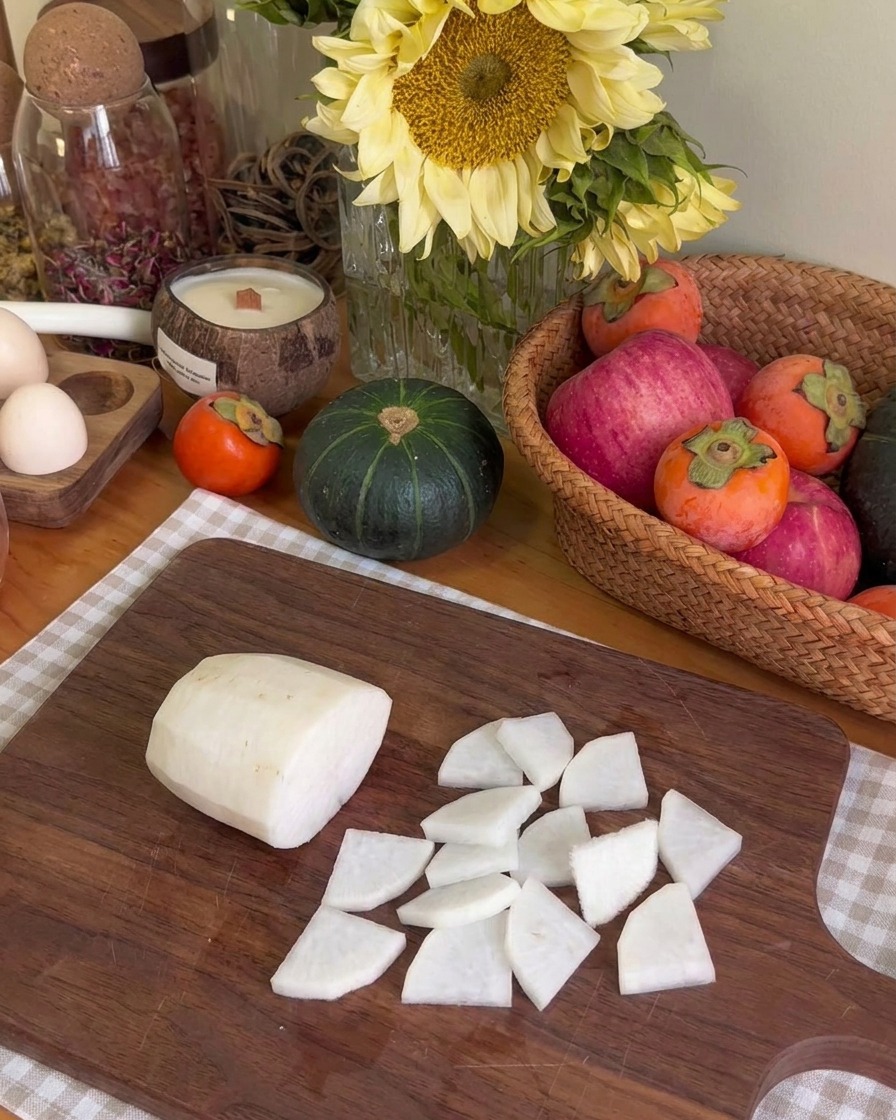
Peel and slice about one-third of a white radish into thin, square-shaped bite-sized pieces. Radish provides a clean, refreshing base for the soybean paste broth and becomes tender when boiled.
Tip: Slicing the radish thinly helps it cook faster and release its natural sweetness into the base water. - 3Chop the chili peppers
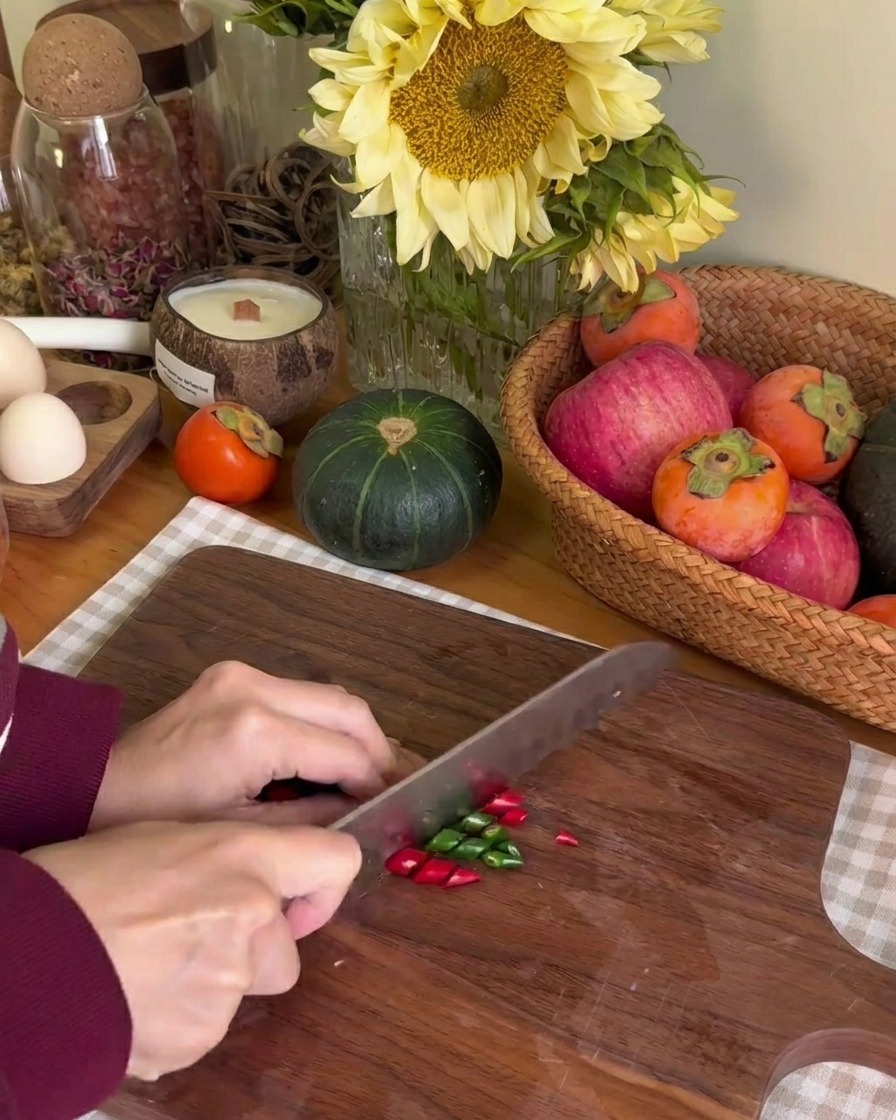
Finely slice four small red and green chili peppers into thin rings. These peppers will be added later to provide a sharp, spicy kick that balances the richness of the beef fat and fermented paste.
Tip: If you prefer a milder stew, you can remove some of the seeds before slicing. - 4Prep the garlic
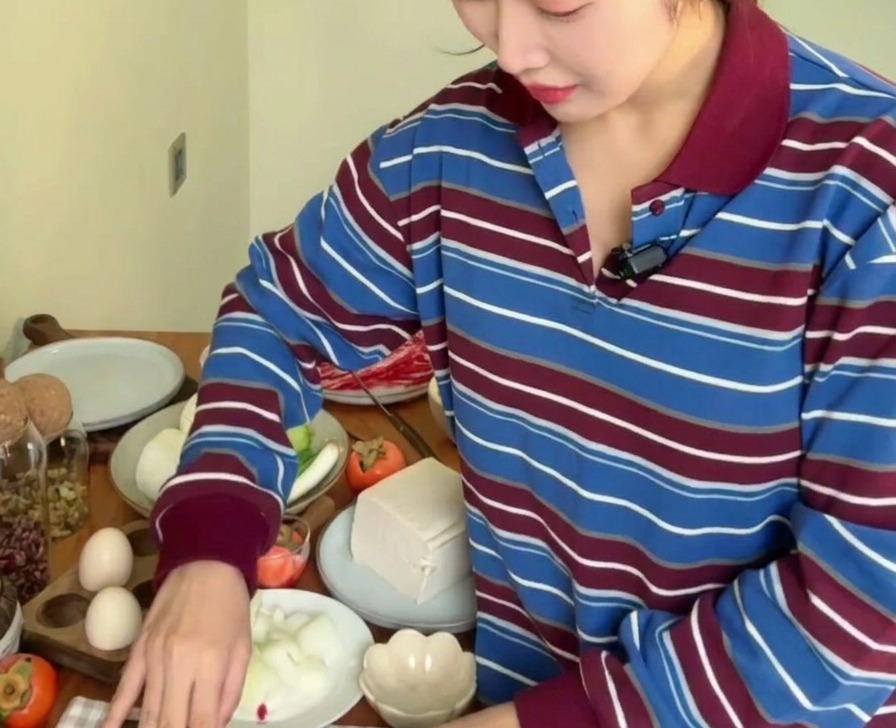
Take four cloves of fresh garlic and mince them into fine bits. This prep work is essential as the small pieces will distribute evenly throughout the stew, ensuring every spoonful has a hint of aromatic garlic flavor.
Tip: If you prefer a milder garlic taste, you can lightly smash the cloves instead of mincing them finely. - 5Prepare the broth base
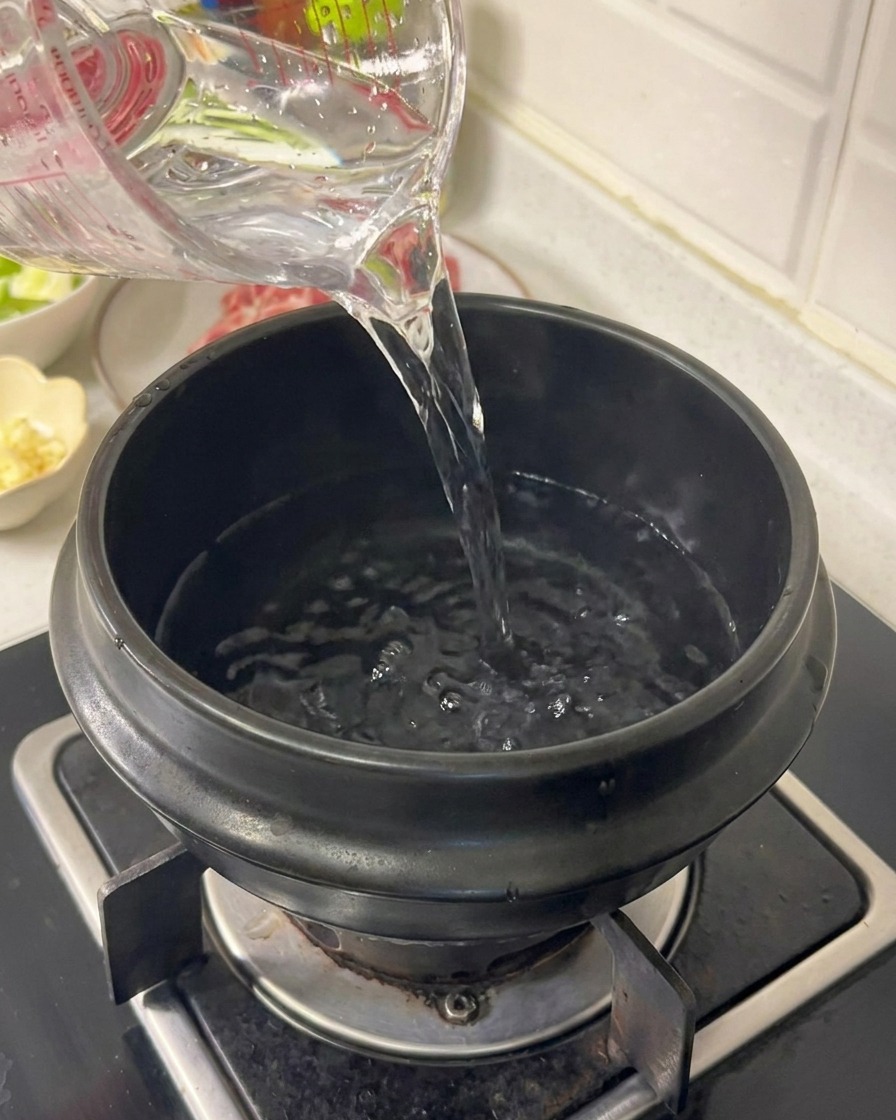
Pour 500 to 700 milliliters of clear water from a measuring cup into a traditional black earthenware pot (ttukbaegi). Place the pot on the stovetop and bring the water to a boil over medium-high heat.
Tip: Using an earthenware pot helps retain heat, keeping the stew bubbling hot even after it is served. - 6Dissolve the soybean paste

Once the 500 to 700 milliliters of water comes to a boil, add two spoons of soybean paste. Use a mesh strainer and a spoon to press the paste into the water, ensuring it dissolves completely for a smooth, rich broth base.
Tip: Using a strainer prevents large soybean chunks from entering the soup, resulting in a cleaner texture. - 7Boil the base vegetables
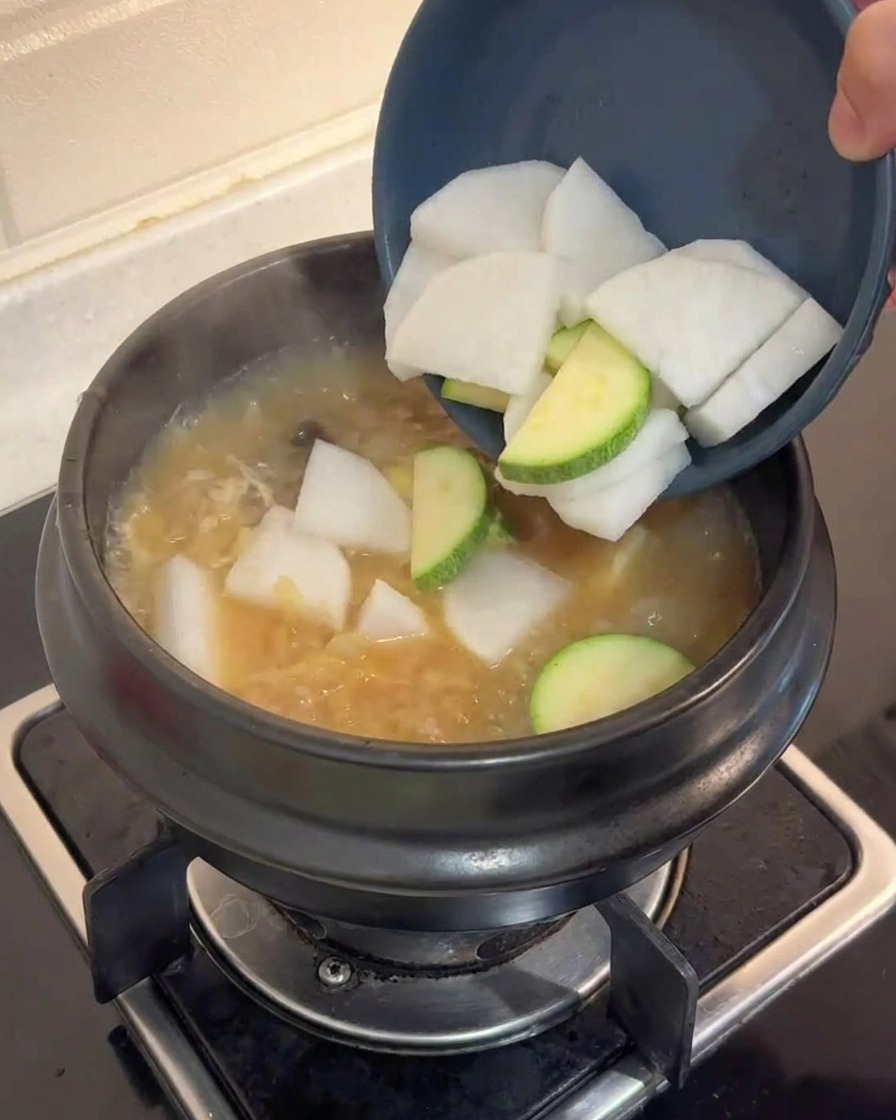
Add the sliced radish and zucchini pieces to the boiling soybean paste broth. Let them boil for about five minutes to soften and release their natural sweetness into the soup base.
Tip: Boiling the radish first ensures it is fully cooked and tender by the time the quicker-cooking ingredients are added. - 8Add aromatics and remaining vegetables
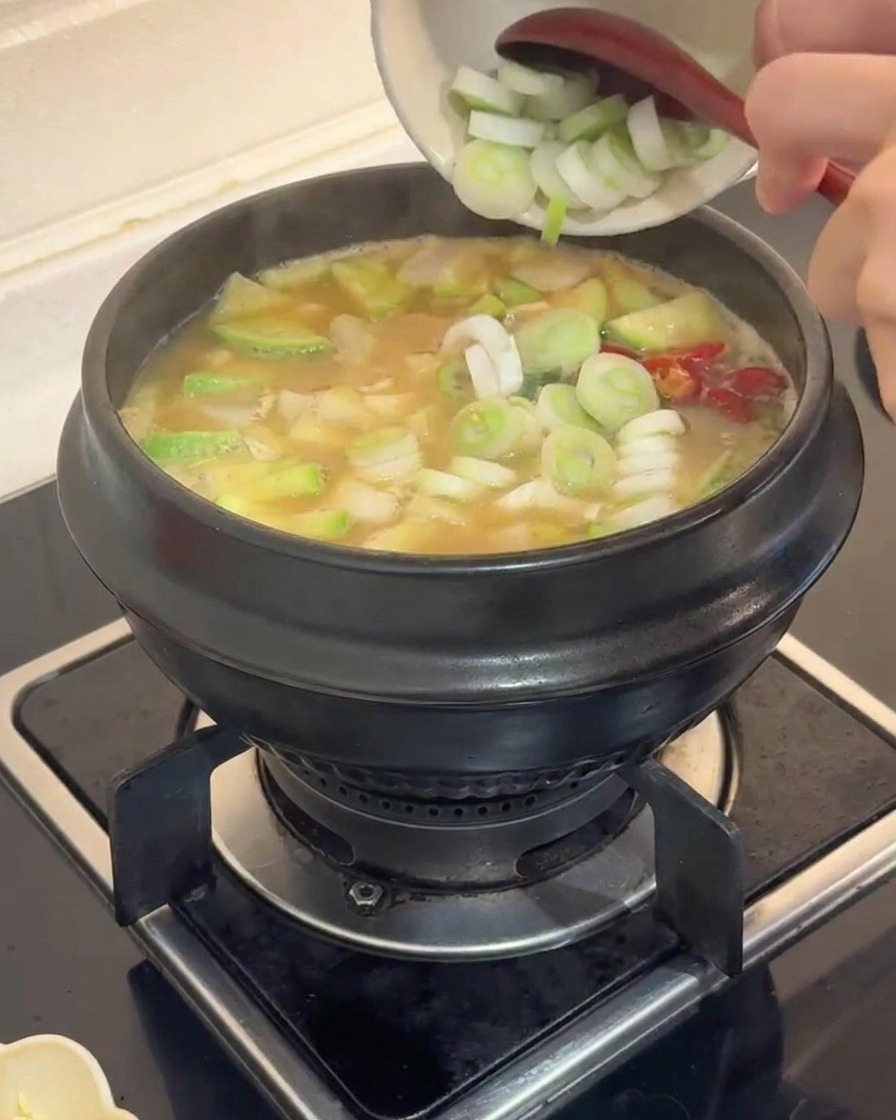
Incorporate the sliced green leeks, onions, and chili peppers into the simmering pot. These aromatic vegetables will add layers of flavor and a hint of spice to the rich broth.
Tip: Adding the leeks and onions towards the end helps preserve their aromatic punch and prevents them from overcooking into the broth. - 9Incorporate the tofu
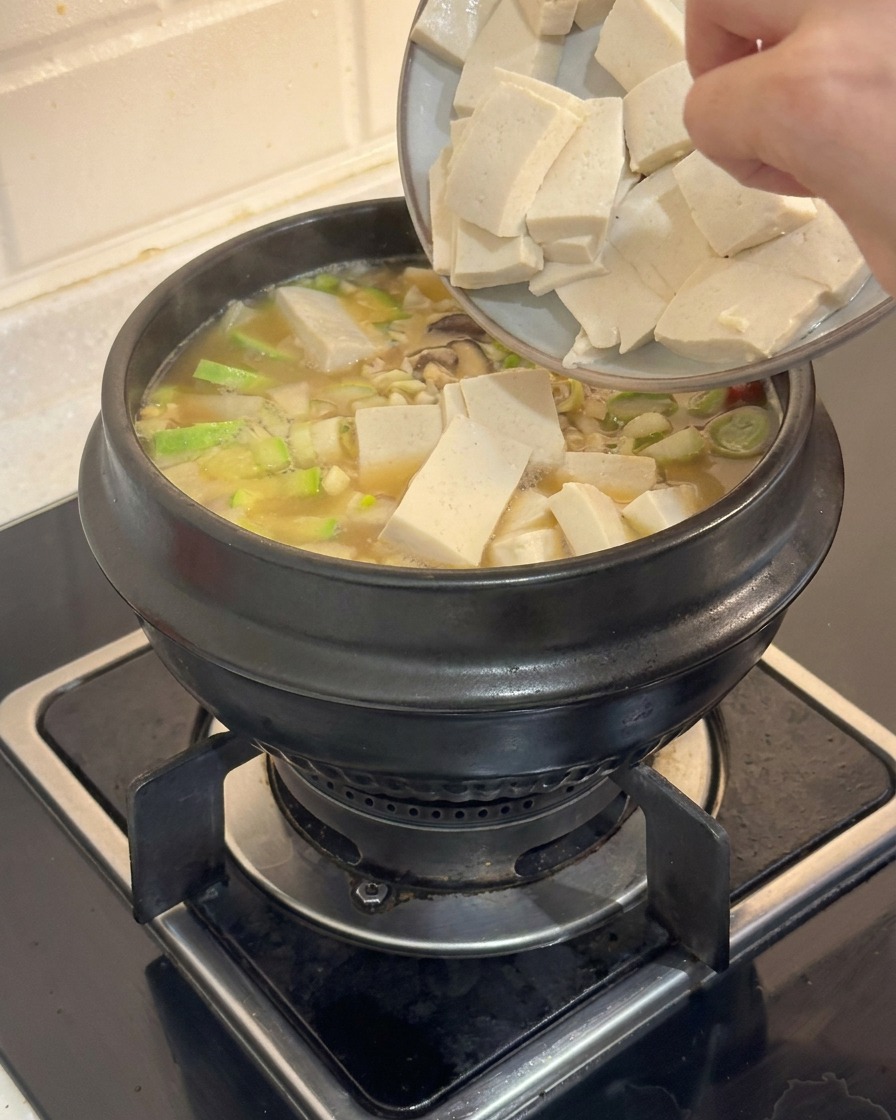
Carefully add the cubes of fresh white tofu into the boiling stew. The tofu will soak up the savory flavors of the soybean paste while providing a soft, silky texture to the dish.
Tip: Avoid stirring too vigorously after adding the tofu to prevent the cubes from breaking apart. - 10Add the fatty beef
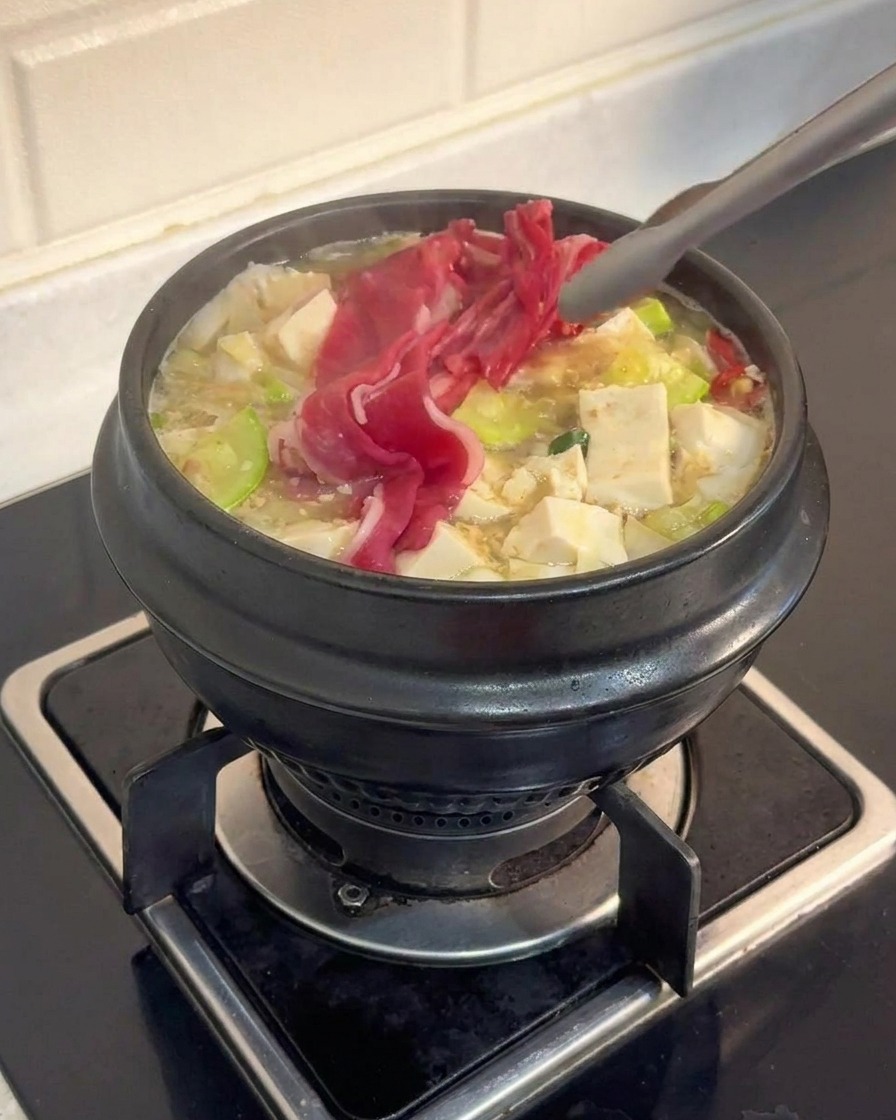
Use tongs to place thin slices of raw fatty beef into the bubbling pot. The beef fat will melt into the broth, creating a rich, savory depth that perfectly complements the fermented soybean paste.
Tip: Fatty beef slices cook very quickly, so add them near the end to keep the meat tender. - 11Add the final spice
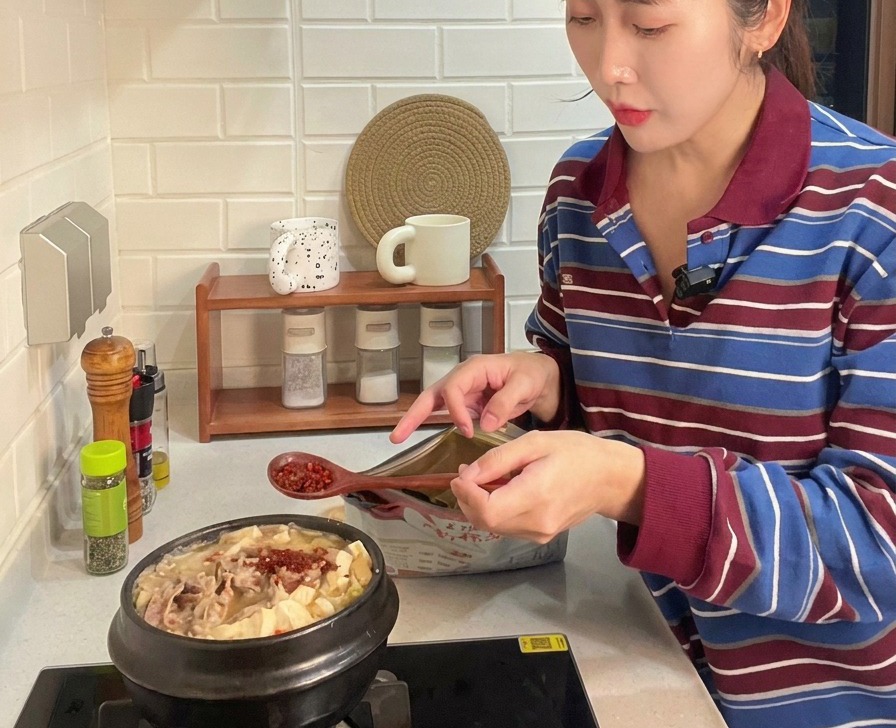
To finish the stew, add two spoons of coarse red chili powder. This step provides the signature vibrant red color and a spicy kick that balances the rich savory flavors of the beef fat and soybean paste.
Tip: Coarse chili powder is preferred over fine powder in this recipe to maintain the rustic texture of the traditional stew.