Hearty Korean Soybean Paste Stew (Doenjang Jjigae)
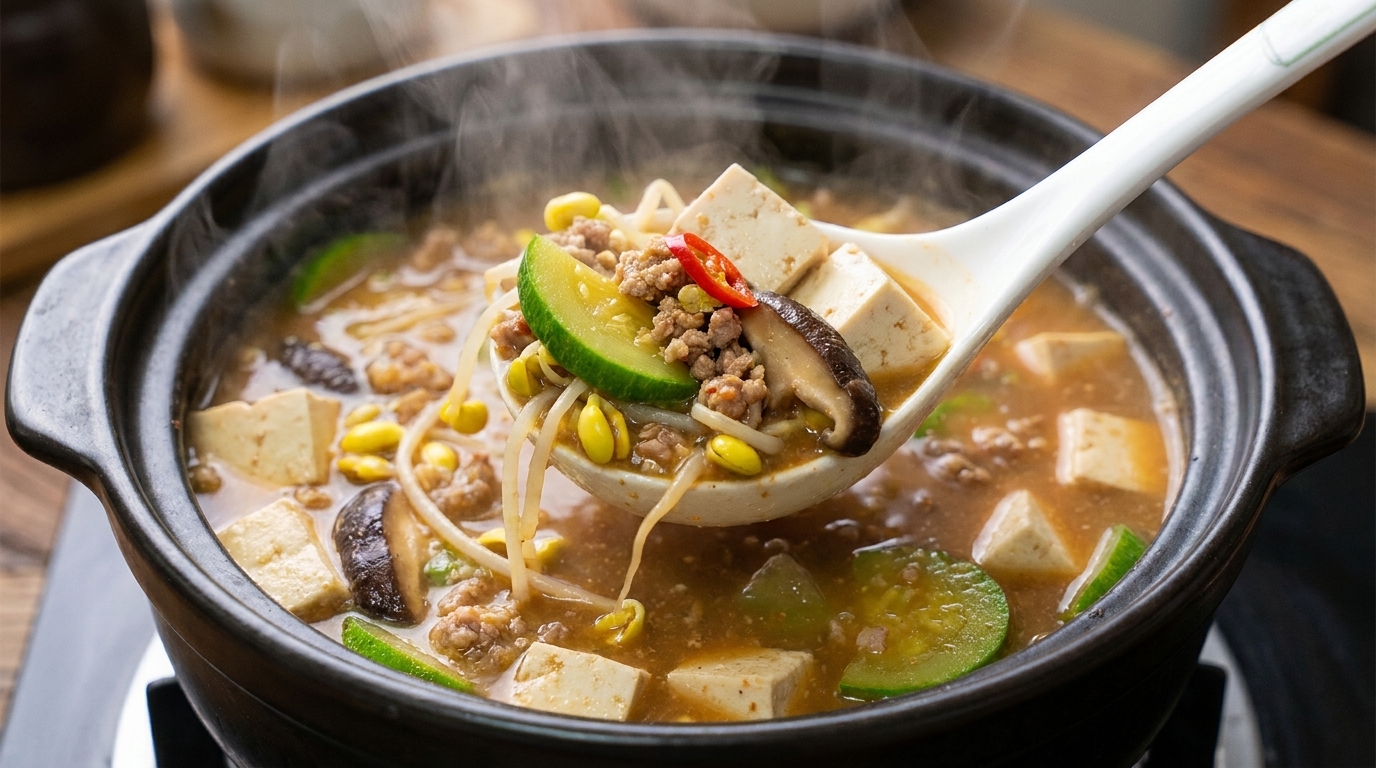
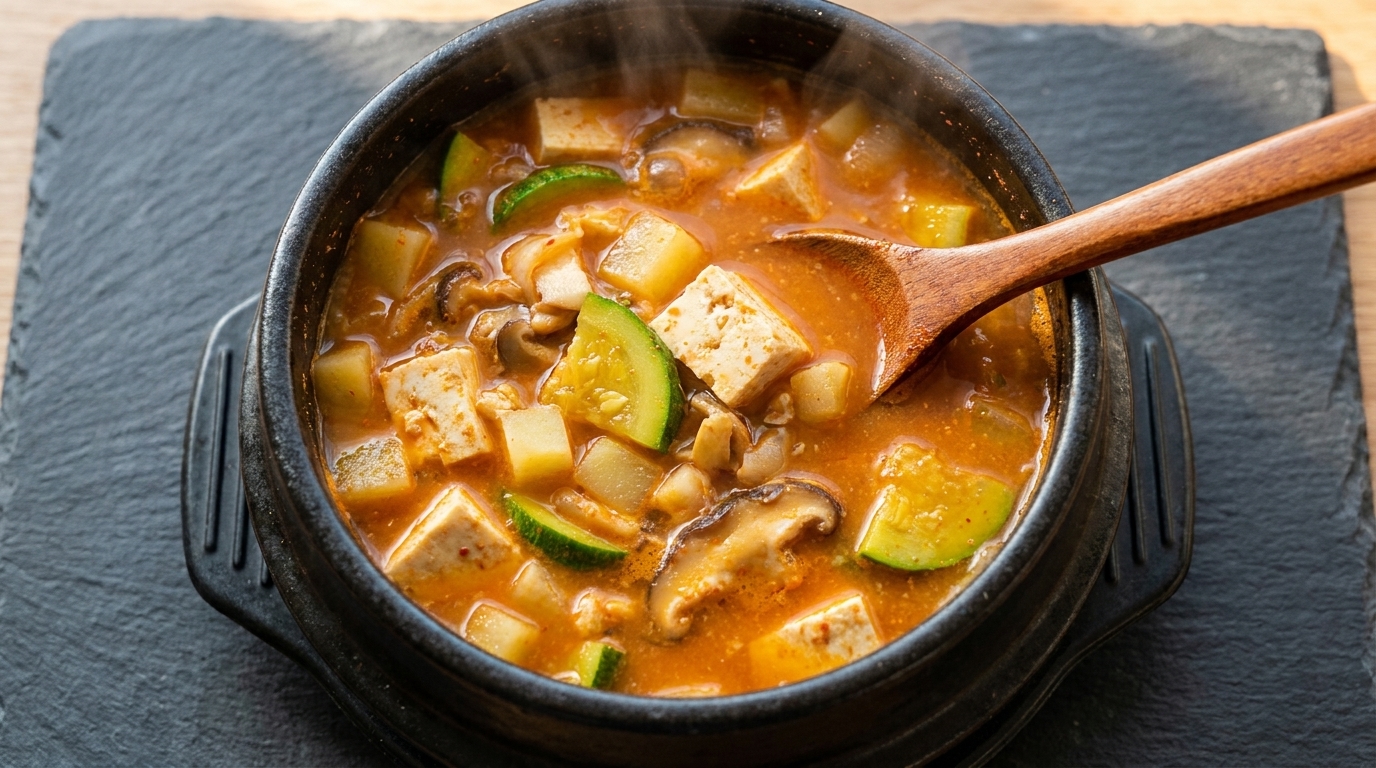
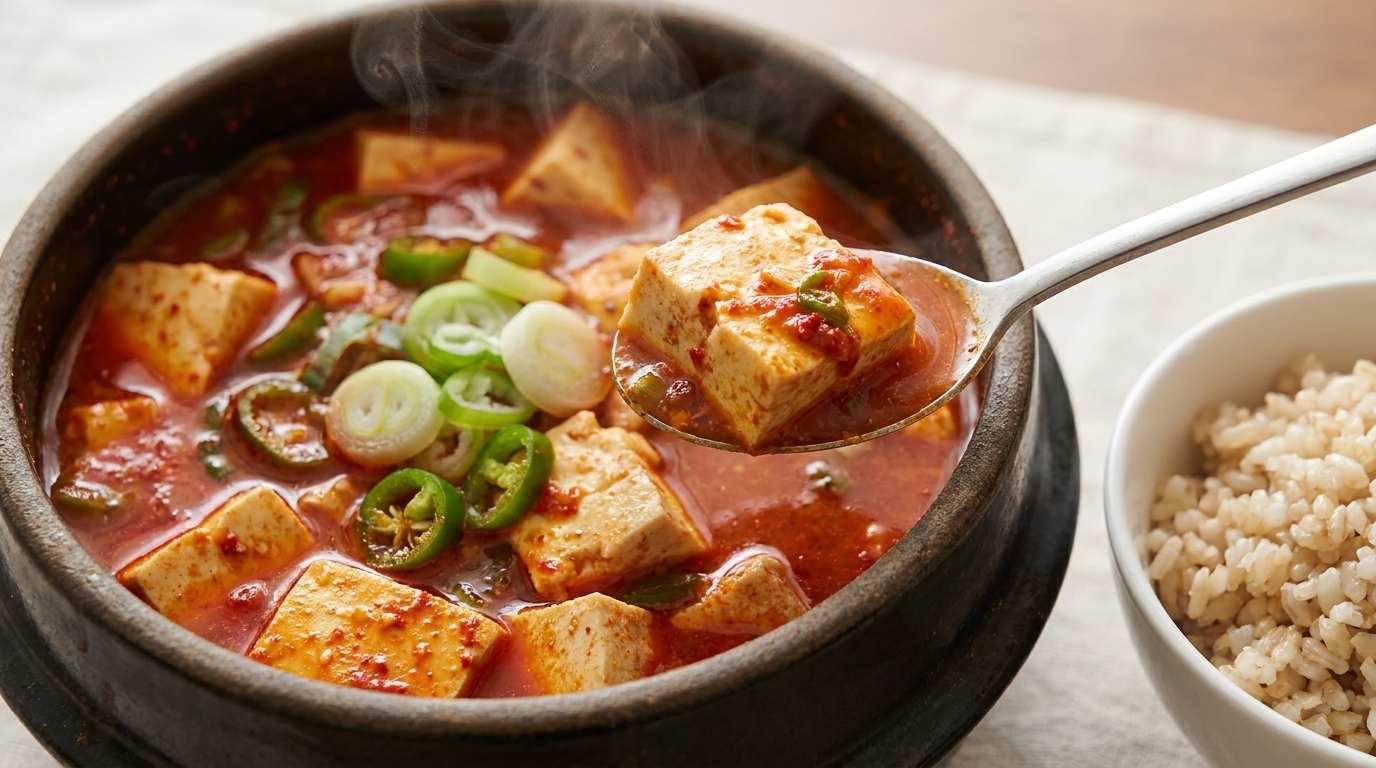
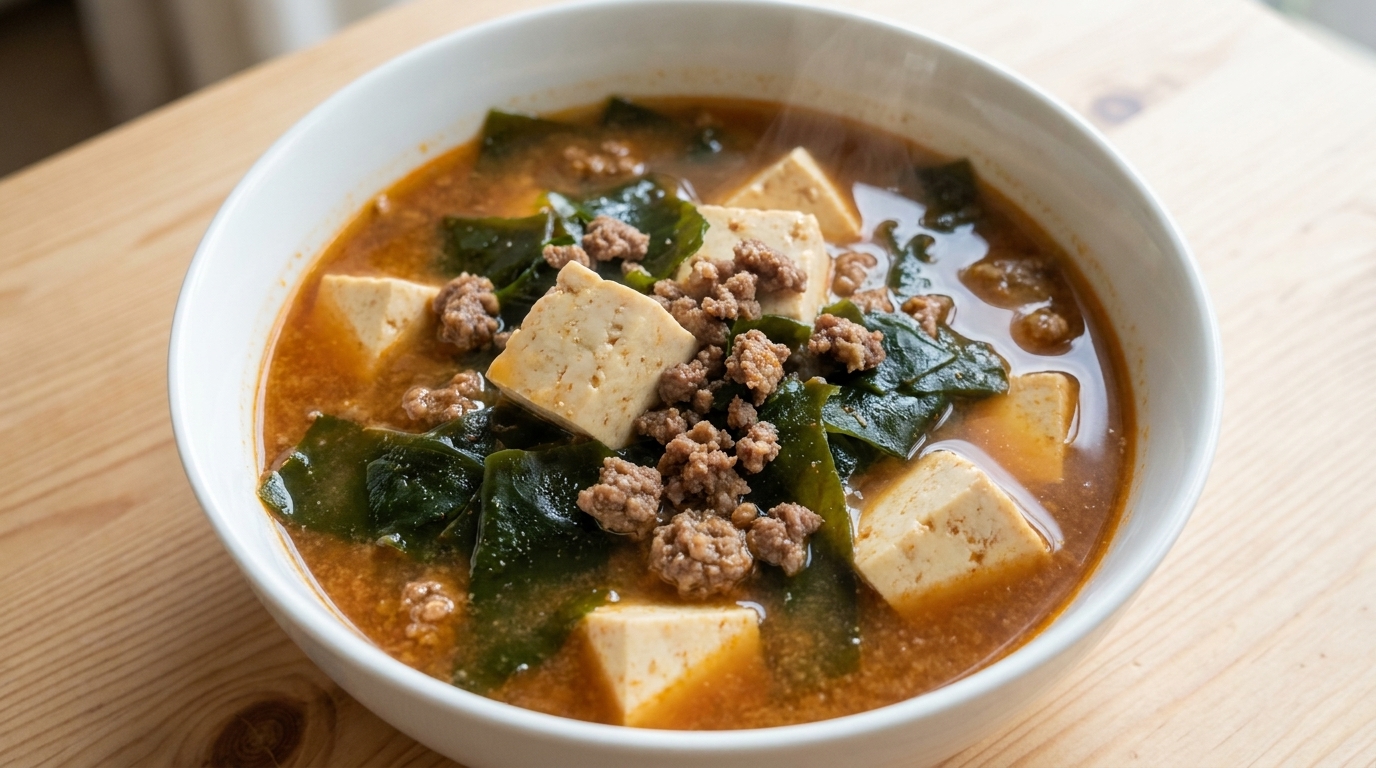
Warm up with this comforting Korean Doenjang Jjigae, a rich and aromatic stew featuring fatty beef, silken tofu, and fresh vegetables simmered in a savory soybean paste broth.
Doenjang Jjigae is a quintessential Korean comfort food, deeply rooted in home cooking traditions. The soul of this dish lies in the Doenjang (fermented soybean paste), which provides a deep, earthy umami flavor that perfectly balances the rich fatty beef and an array of fresh, vibrant vegetables.
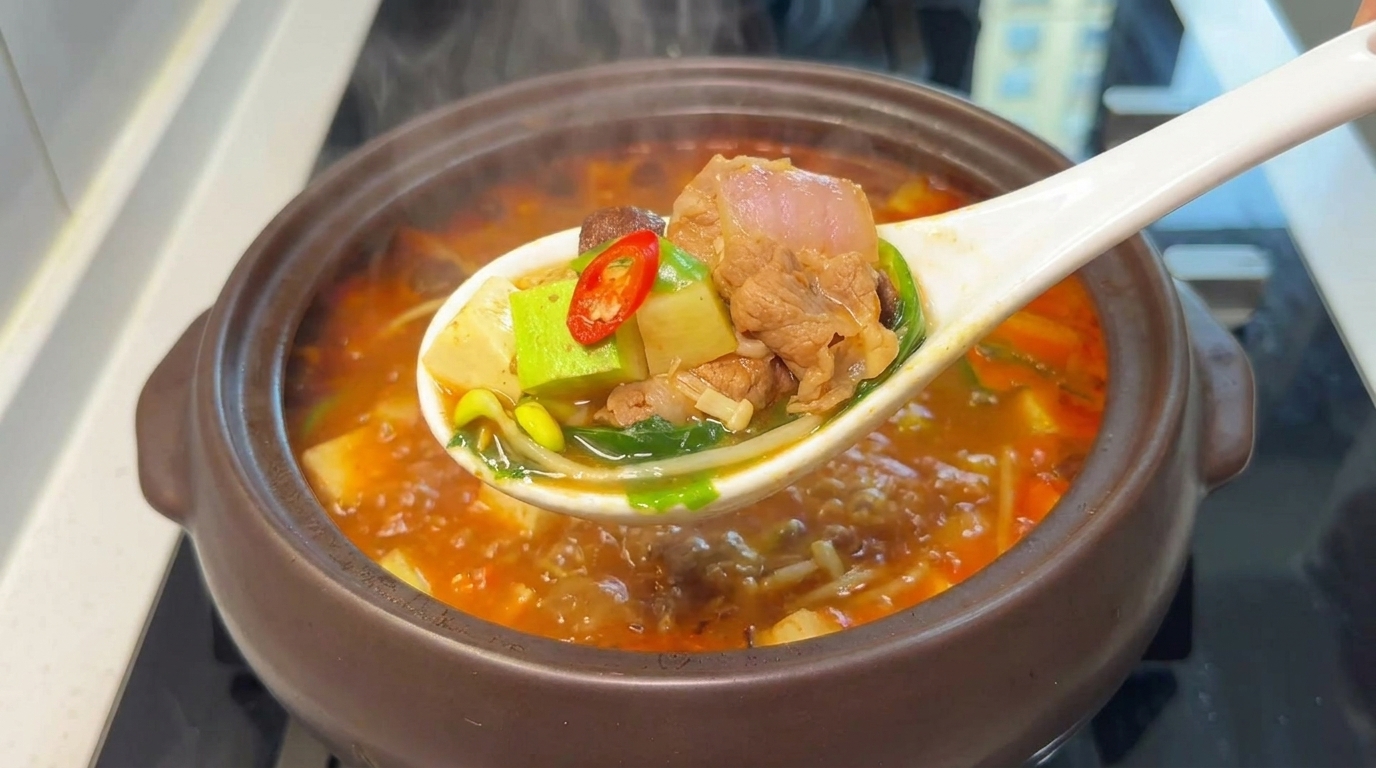
Ingredients
- 1 tbsp Korean soybean paste (Doenjang)
- 1 tbsp Korean chili paste (Gochujang)
- 200 g thinly sliced fatty beef (brisket or plate)
- 1 medium potato, diced
- 1/2 medium red onion, diced
- 1/2 medium zucchini, diced
- 1 block firm or semi-firm tofu, cubed
- 3-4 fresh shiitake mushrooms, diced
- 1 handful leafy greens (e.g., spinach or crown daisy)
- 1 small bundle enoki mushrooms, ends trimmed
- 1 handful fresh soybean sprouts
- 1 tsp seasoning powder (optional)
- 1 green chili pepper, sliced
- 1 red chili pepper, sliced
Instructions
- 1Add Korean soybean paste
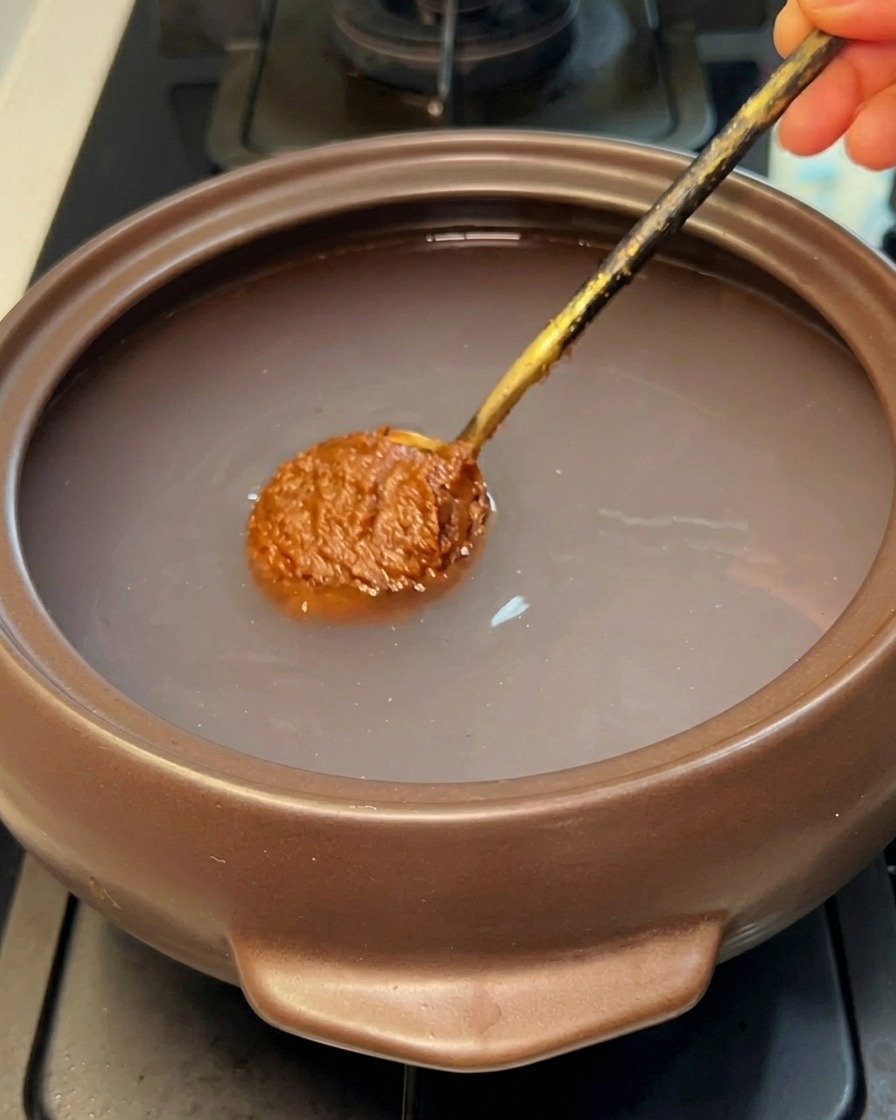
Add one spoonful of Korean soybean paste into the pot of hot water. Stir well to ensure the paste is fully dissolved, creating a flavorful, aromatic base for the stew.
Tip: If the soybean paste is too thick, dissolve it in a separate small bowl with a little hot water before adding it to the pot. - 2Add Korean chili paste
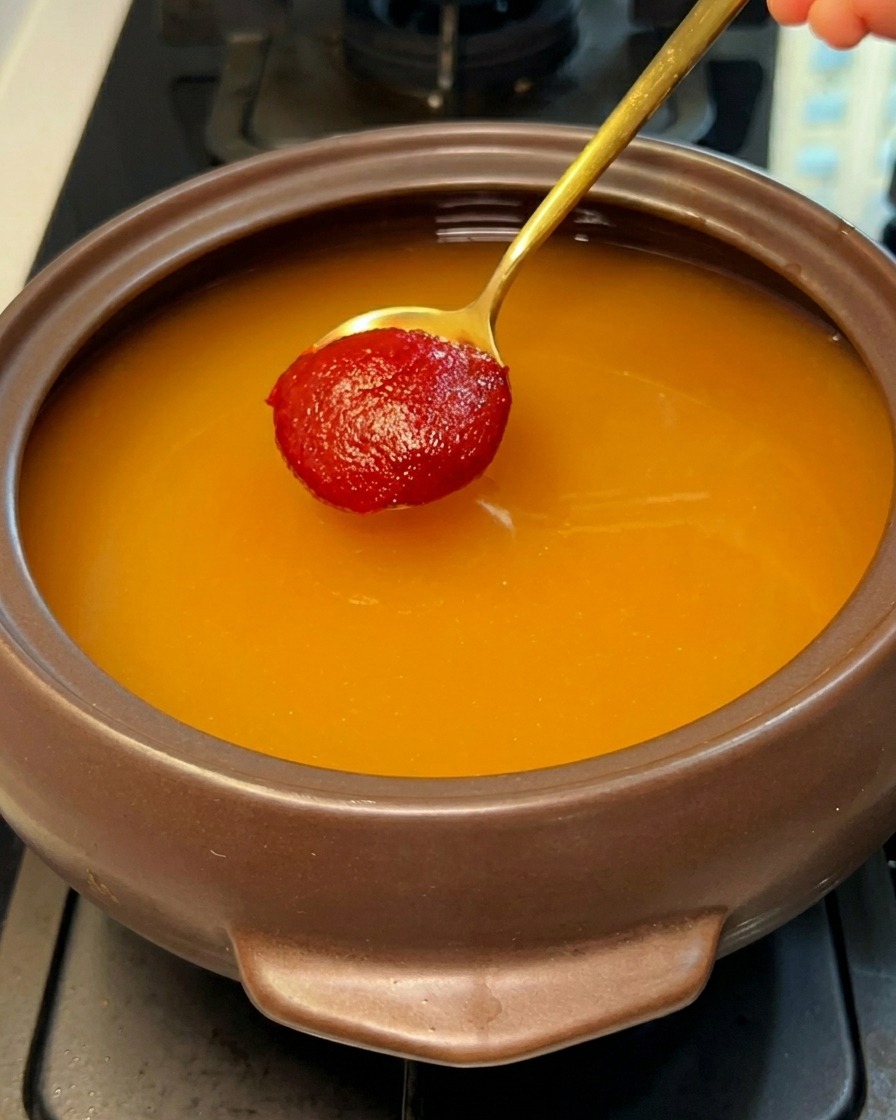
Add one spoonful of Korean chili paste to the pot. Stir the paste into the liquid until it is thoroughly combined and the broth takes on a rich, reddish hue.
Tip: Adjust the amount of chili paste based on your heat preference. - 3Add fatty beef
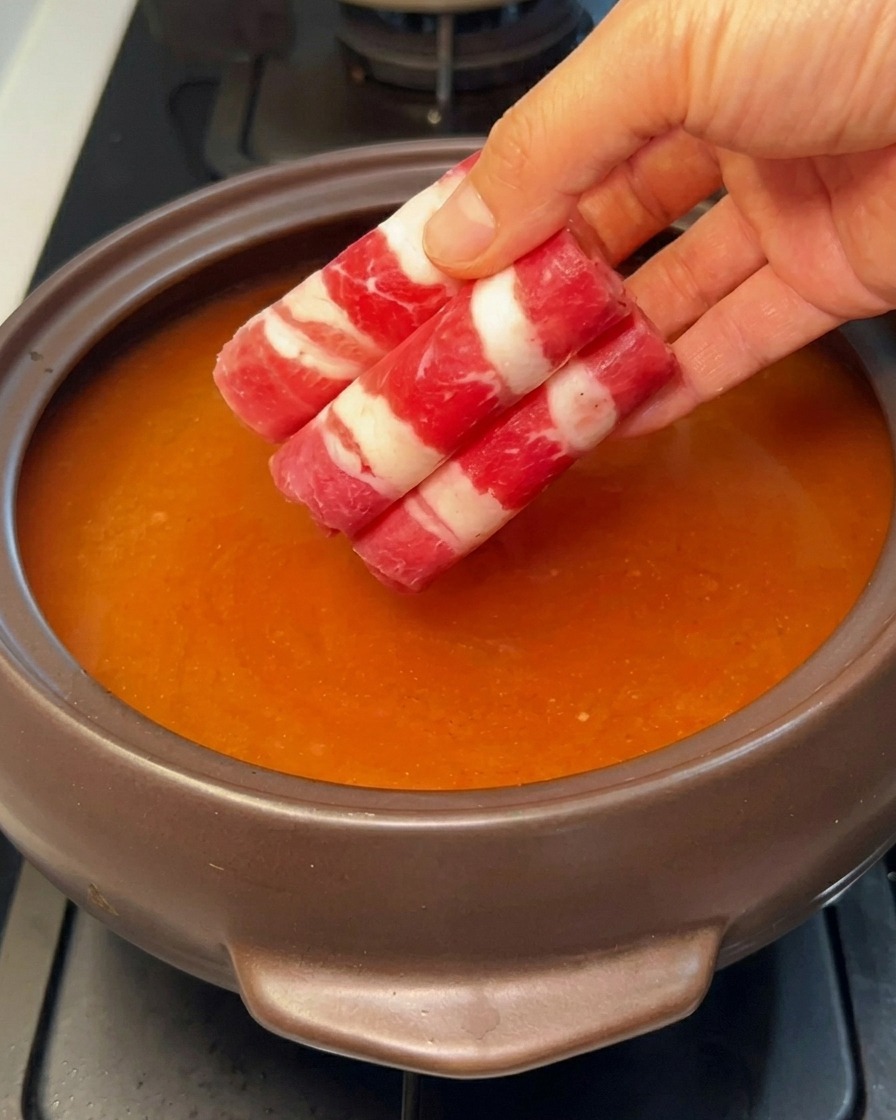
Add the thinly sliced, raw fatty beef rolls to the broth. The beef will cook quickly in the simmering liquid, adding depth and richness to the stew.
Tip: Keep the beef rolls intact when placing them into the pot to maintain their texture. - 4Add potatoes
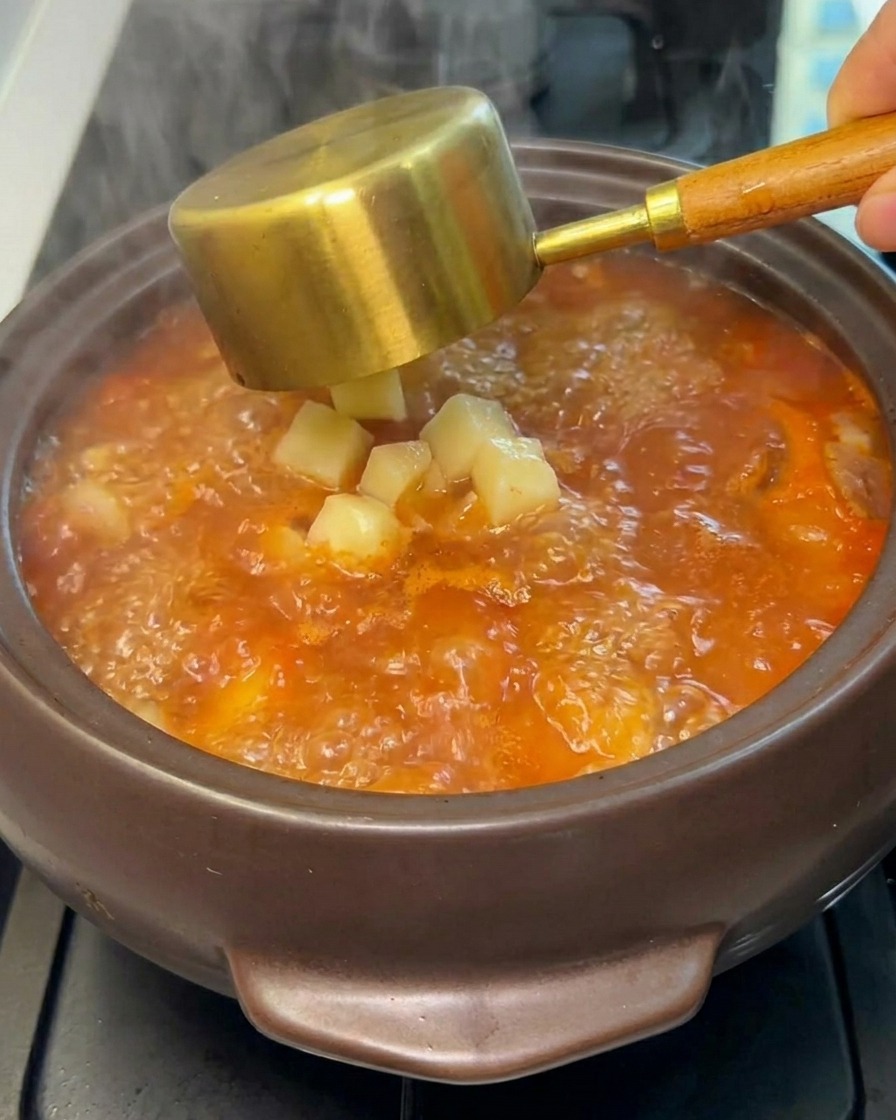
Pour the diced raw potatoes into the boiling stew. The potatoes will soften as they simmer, thickening the broth and providing a hearty texture.
Tip: Cut the potatoes into uniform, bite-sized cubes to ensure they cook at the same rate. - 5Add onions
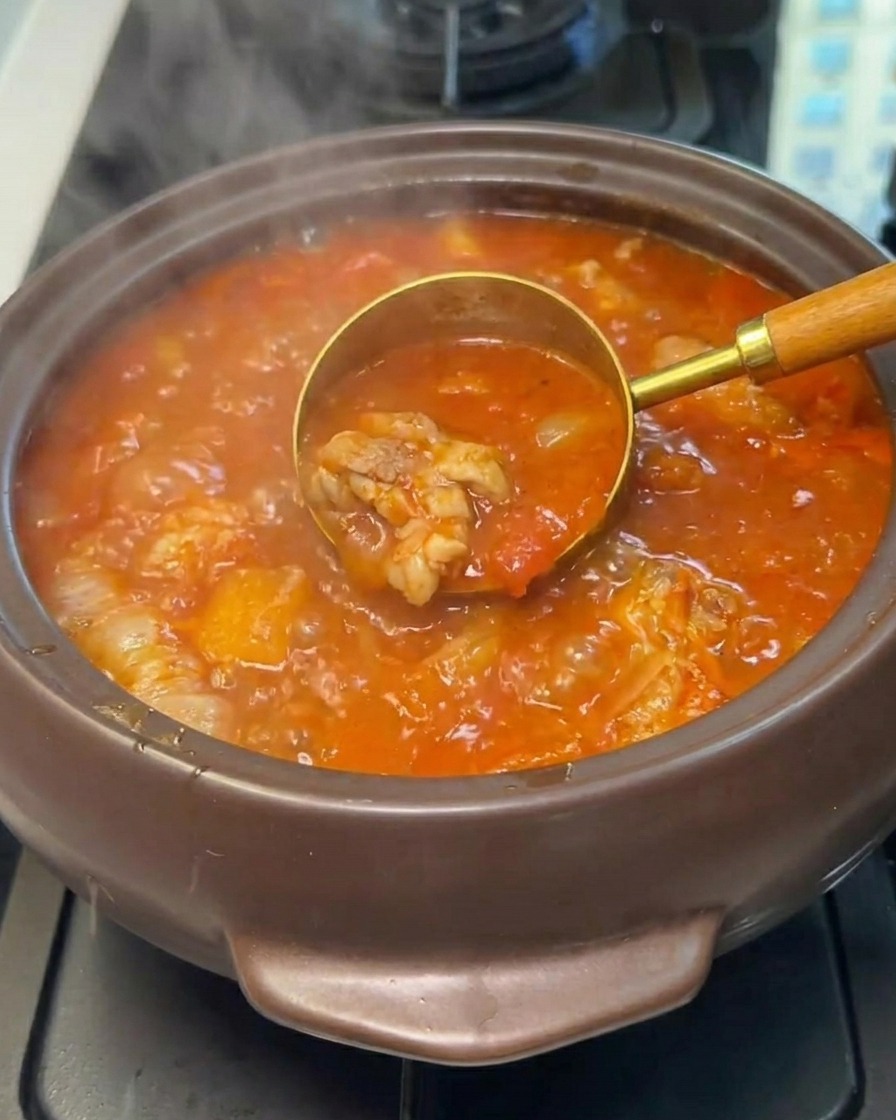
Add the diced onions to the pot. Onions will add sweetness and complexity to the stew as they break down during the cooking process.
Tip: Dice the onions into pieces of similar size to the potatoes for consistent cooking. - 6Add zucchini
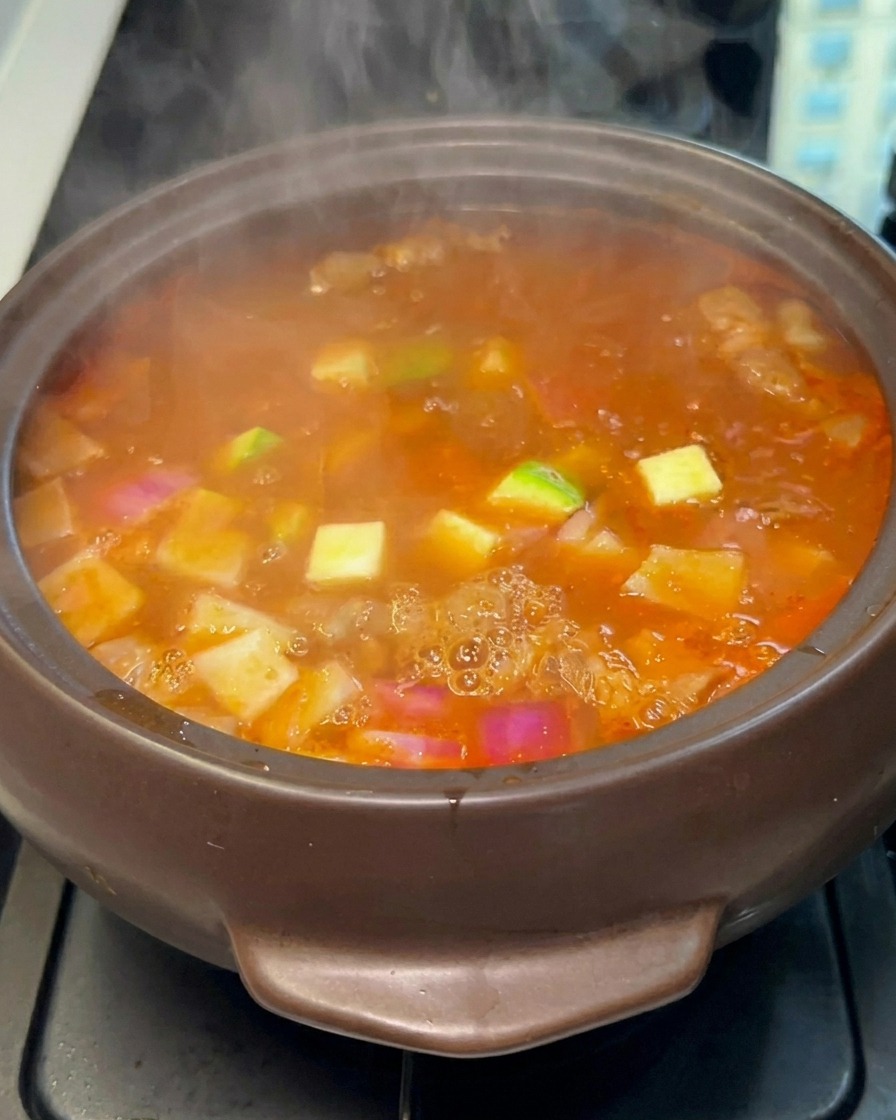
Add the diced fresh zucchini to the simmering stew. Zucchini will absorb the flavors of the broth while maintaining a slightly tender texture.
Tip: Add the zucchini later than the potatoes, as they require less time to cook. - 7Add tofu and mushrooms
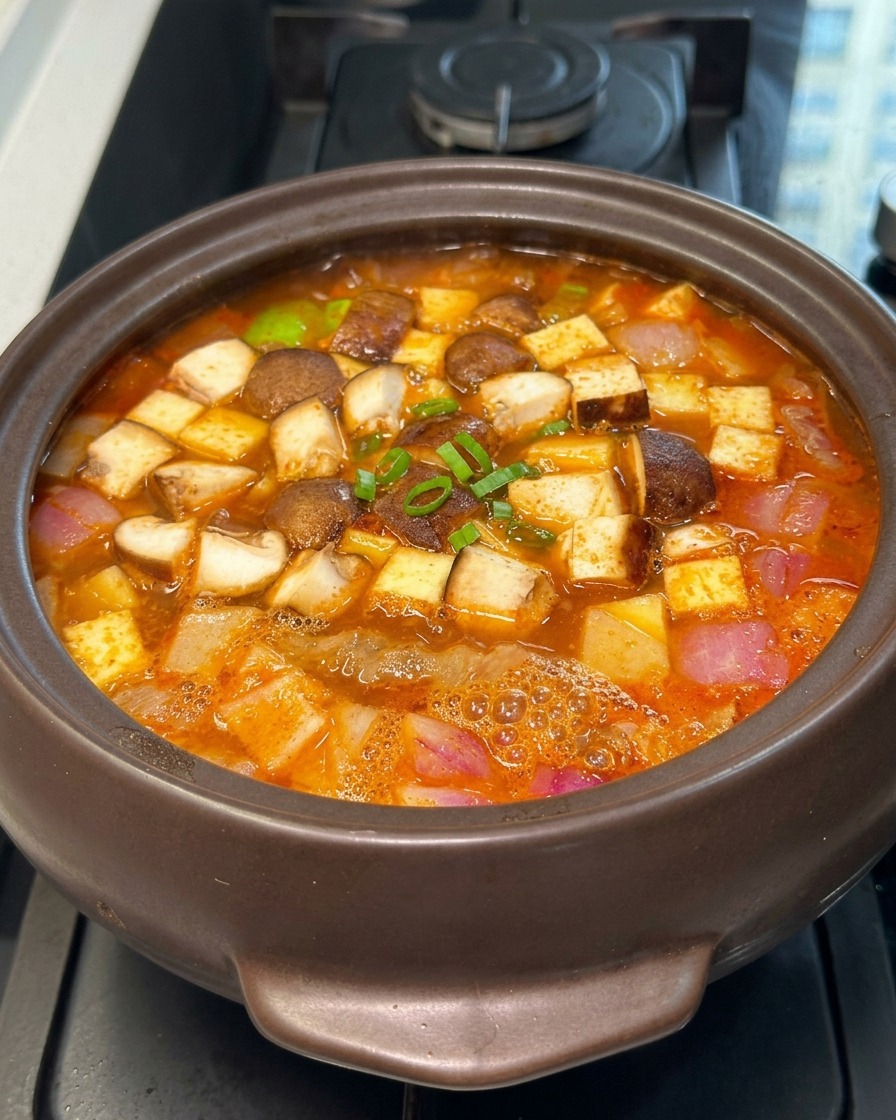
Carefully add the cubed tofu and diced shiitake mushrooms into the boiling stew. Allow the ingredients to simmer together so the tofu absorbs the rich, spicy broth.
Tip: Use firm or semi-firm tofu so it holds its shape during the rapid boil. - 8Add leafy greens
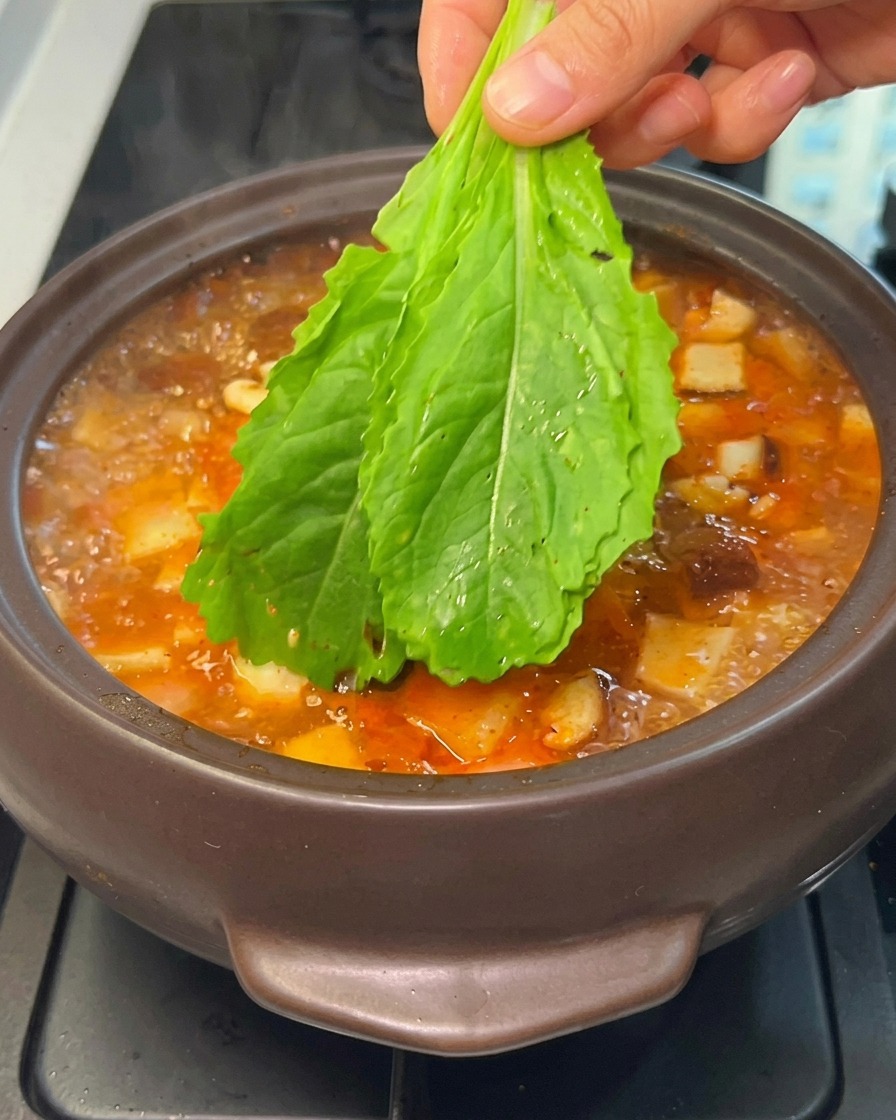
Layer the fresh green leafy vegetables right on top of the simmering ingredients. They will wilt down quickly from the steam and heat of the stew.
Tip: Add the greens towards the end of the cooking process to maintain their vibrant color and slight crunch. - 9Top with enoki mushrooms
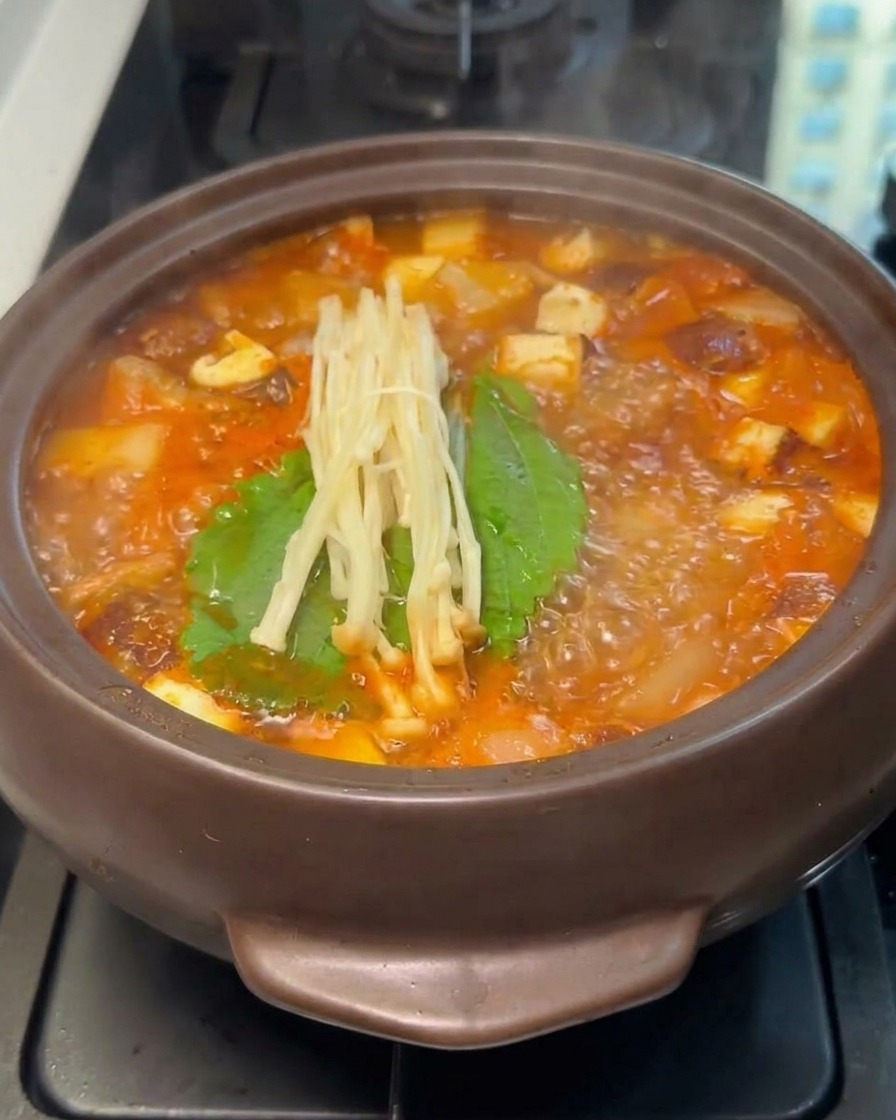
Place a small bundle of enoki mushrooms directly over the leafy greens. These delicate mushrooms cook in minutes and add a wonderful textural contrast to the dish.
Tip: Trim the earthy base off the enoki mushrooms before separating them slightly to ensure they cook evenly. - 10Incorporate soybean sprouts
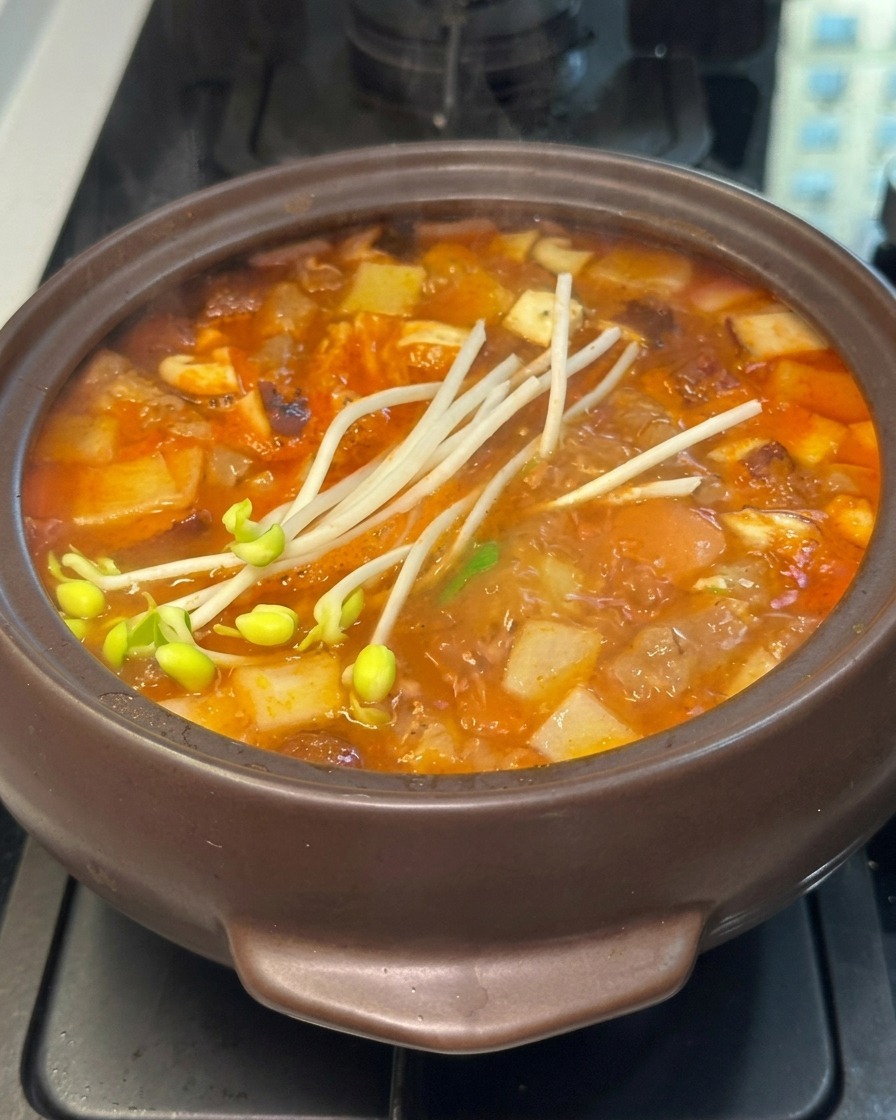
Scatter a handful of fresh soybean sprouts over the boiling stew. The sprouts will lend a subtle nutty flavor and a refreshing crunch to the hearty broth.
Tip: Wash and drain the sprouts thoroughly, discarding any brown or mushy tails before adding them to the pot. - 11Season and add chilies
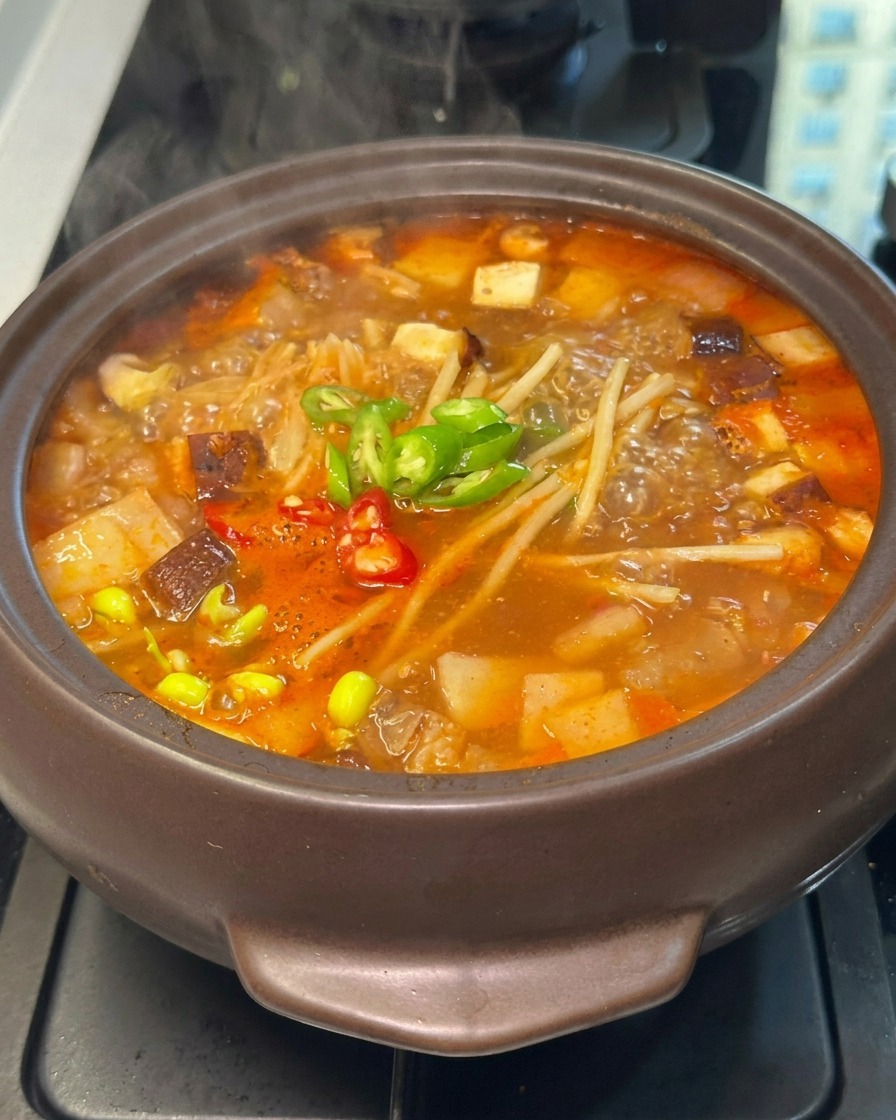
Sprinkle in a dash of your preferred seasoning powder and top the stew with freshly sliced green and red chili peppers. This gives the broth its final fiery kick and brightens the presentation.
Tip: Adjust the amount of chili peppers according to your personal spice tolerance. - 12Cover and simmer
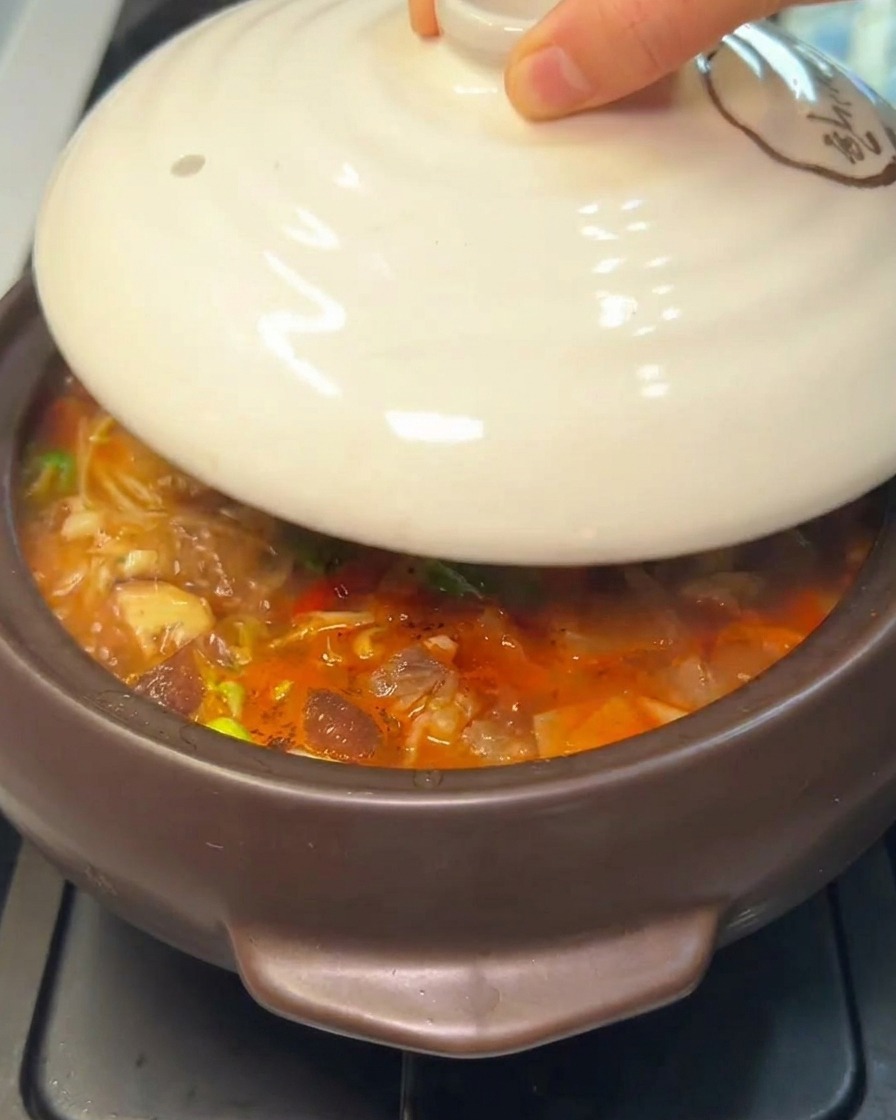
Place the lid tightly onto the stone pot. Let the stew boil vigorously for about ten minutes so all the savory and spicy flavors meld together perfectly.
Tip: Keep an eye on the pot to ensure the rapidly boiling broth doesnt bubble over the edges. - 13Stir the finished stew
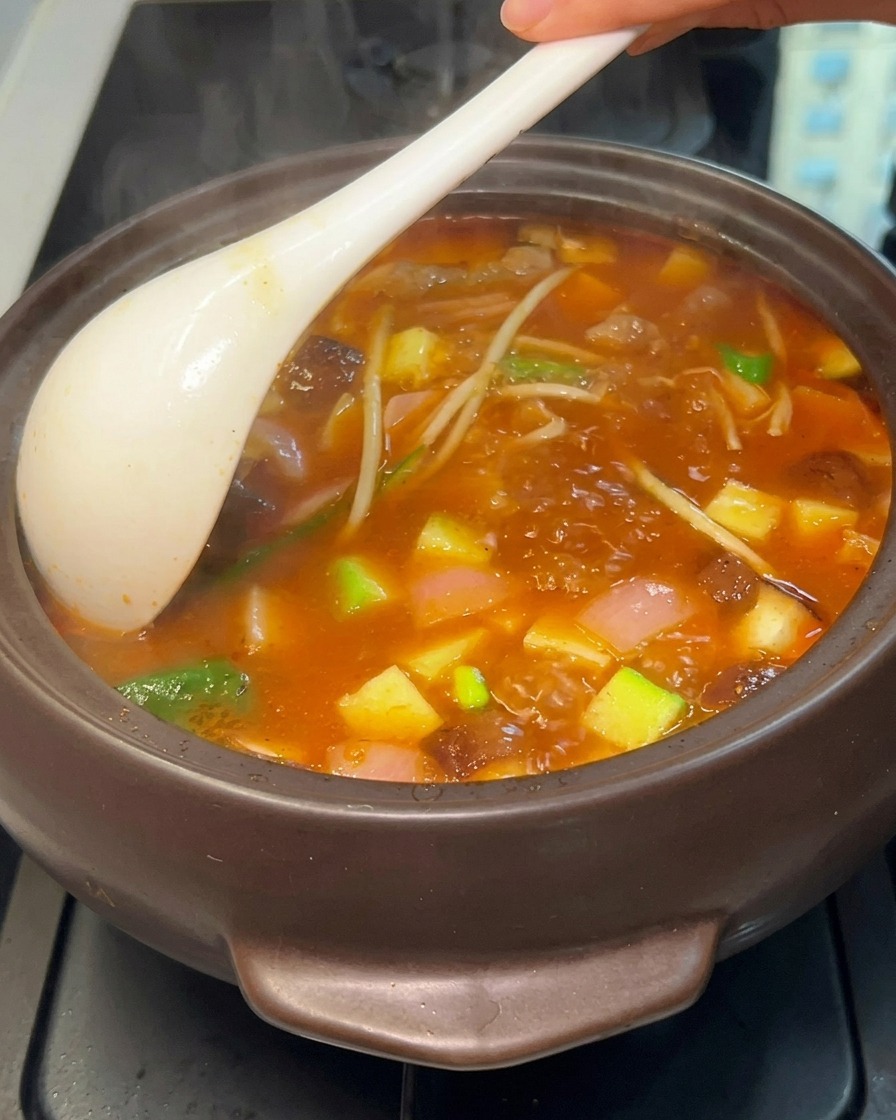
After letting the pot boil for ten minutes, remove the lid and give the stew a gentle stir with a ladle. This ensures all the ingredients, including the cooked fatty beef, tofu, and vegetables, are evenly distributed in the rich, aromatic broth.
Tip: Stir gently from the bottom to ensure the soybean and chili pastes are fully dissolved without breaking apart the soft cubed tofu.