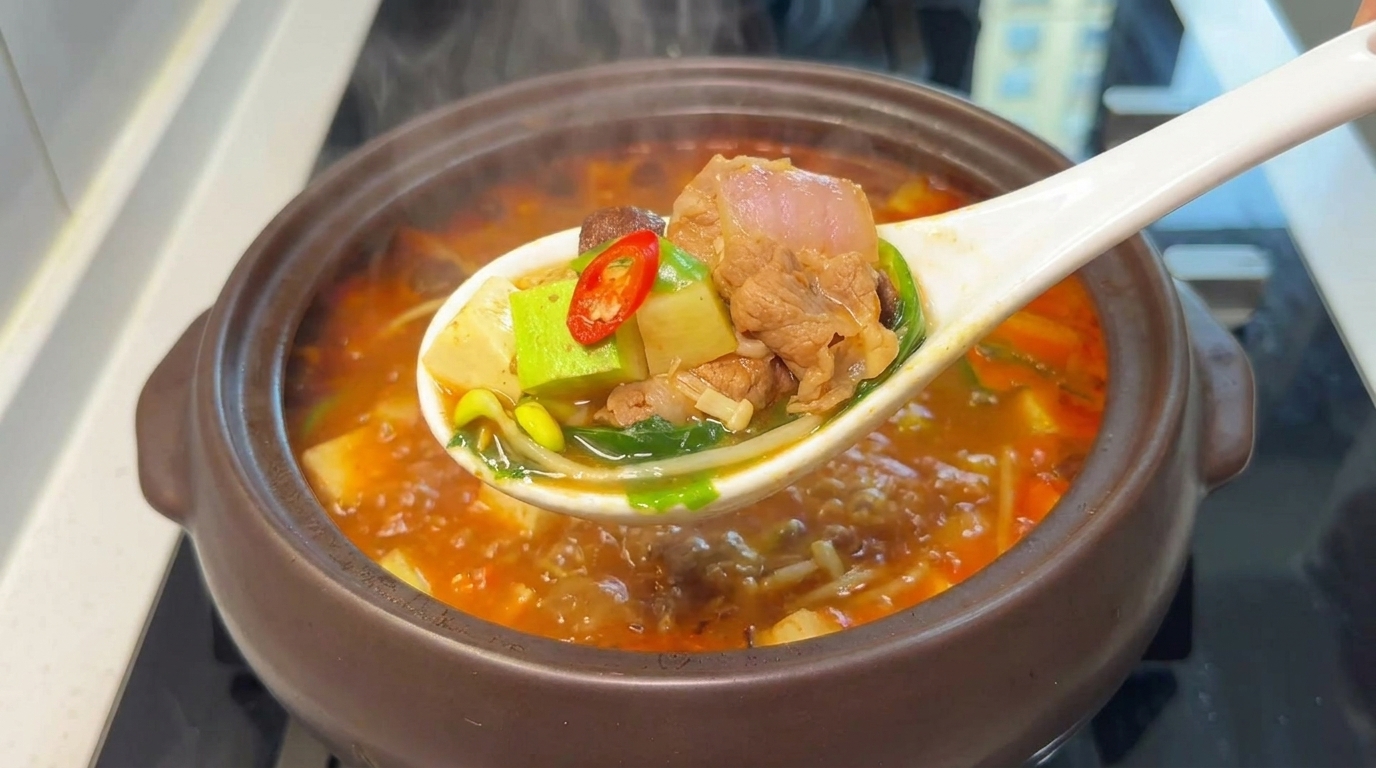
Authentic Korean Soybean Paste Stew (Doenjang Jjigae)
Warm up with this comforting Korean classic. Our Doenjang Jjigae features a rich, savory broth loaded with tender pork belly, fresh vegetables, and silken tofu.
Doenjang Jjigae, or Soybean Paste Stew, is the ultimate comfort food in Korean households. Built on the deeply umami and earthy flavors of fermented soybean paste, this bubbling clay pot stew perfectly cuts through any greasiness and delivers a deeply savory, nourishing experience. It is often enjoyed as an everyday staple alongside a bowl of steamed rice.

Ingredients
- 1 medium zucchini
- 1 medium purple onion
- 4 fresh shiitake mushrooms
- 1 green chili pepper
- 1 block soft white tofu
- 150 g pork belly
- 1 medium yellow potato
- 2-3 tbsp fermented soybean paste (doenjang)
- 1 handful yellow soybean sprouts
- 1 stalk green onion
- 2 cups water
- 1 tbsp cooking oil
Instructions
- 1Slice the zucchini
Take the fresh zucchini and slice it into thick, rustic wedges. Using a sharp cleaver or chefs knife, ensure the pieces are substantial enough to hold their shape during the simmering process.
Tip: Keep the zucchini slices thick so they dont turn mushy in the stew. - 2Chop the onion
Take the purple onion and carefully chop it into large, uniform square pieces. These chunky cuts will add a nice texture and mild sweetness to the soybean paste stew.
Tip: Cut the onion into large pieces to ensure they retain some bite after cooking. - 3Slice the mushrooms
Prepare the shiitake mushrooms by slicing them into thin, even strips. These mushrooms will infuse the stew with a deep, earthy umami flavor as they cook.
Tip: Remove the tough stems from the shiitake mushrooms before slicing. - 4Prepare the green chili
Take the green chili pepper, halve it lengthwise, and remove the seeds to control the heat. Slice the pepper into small, manageable pieces to be added to the stew later.
Tip: Removing the seeds significantly reduces the heat while maintaining the peppers fresh flavor. - 5Cube the tofu
Carefully slice the block of soft white tofu into small, uniform cubes. Use a gentle touch so the delicate tofu does not break apart before it goes into the pot.
Tip: Soft tofu is fragile, so cut it gently to keep the cubes intact. - 6Stir-fry the pork belly
Heat a small amount of oil in a clay pot over medium heat. Add the sliced pork belly and stir-fry using a wooden spatula until the meat is lightly browned and aromatic.
Tip: Searing the pork belly first builds a rich, savory base for the stew broth. - 7Add water to the pot
Pour water into the clay pot containing the stir-fried pork belly to create the base for your stew. This will help extract the savory flavors from the meat into the broth.
Tip: Using a clay pot helps retain heat, making the stew stay hot for longer while serving. - 8Add zucchini and mushrooms
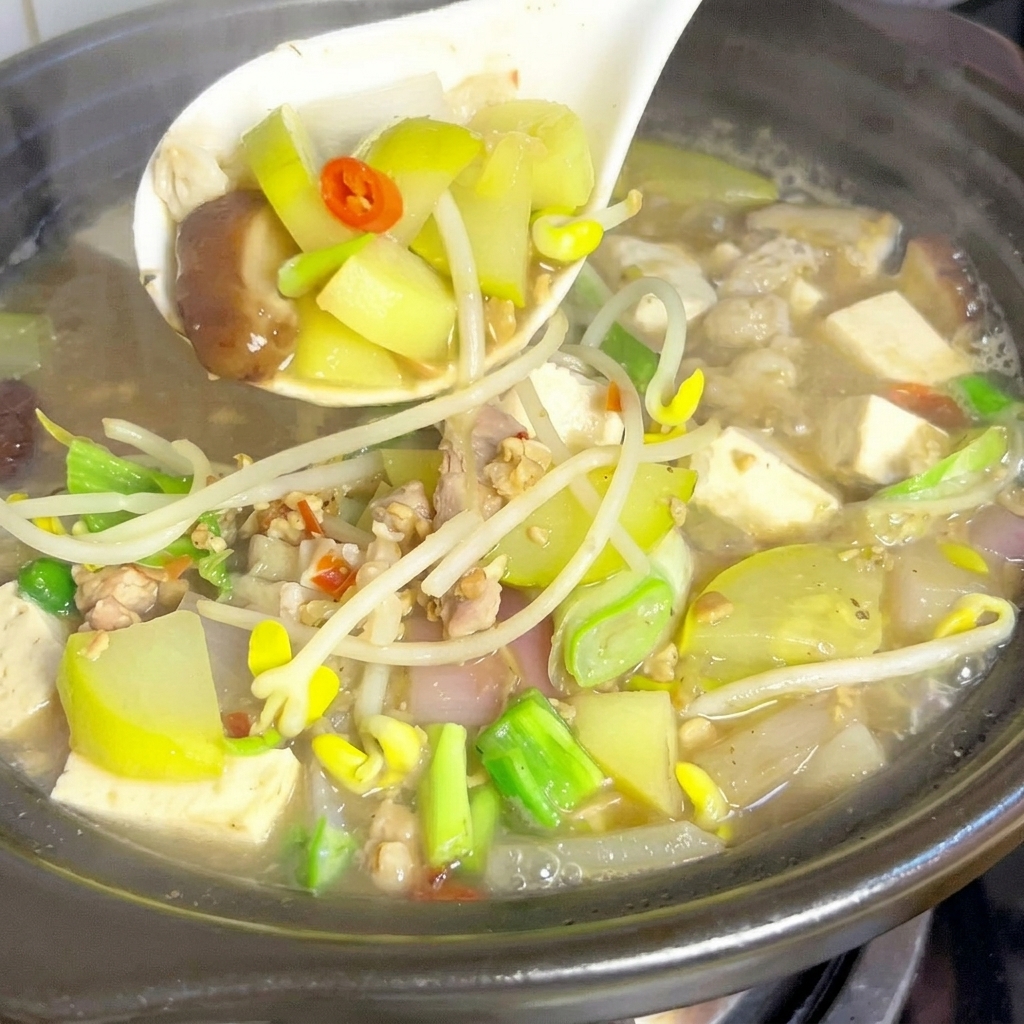
Add the prepared zucchini wedges and sliced shiitake mushrooms into the boiling liquid. These vegetables will soften and infuse the broth with their natural sweetness and earthiness.
Tip: Keep the zucchini wedges thick so they maintain a nice texture and dont turn mushy during the simmering process. - 9Add potatoes
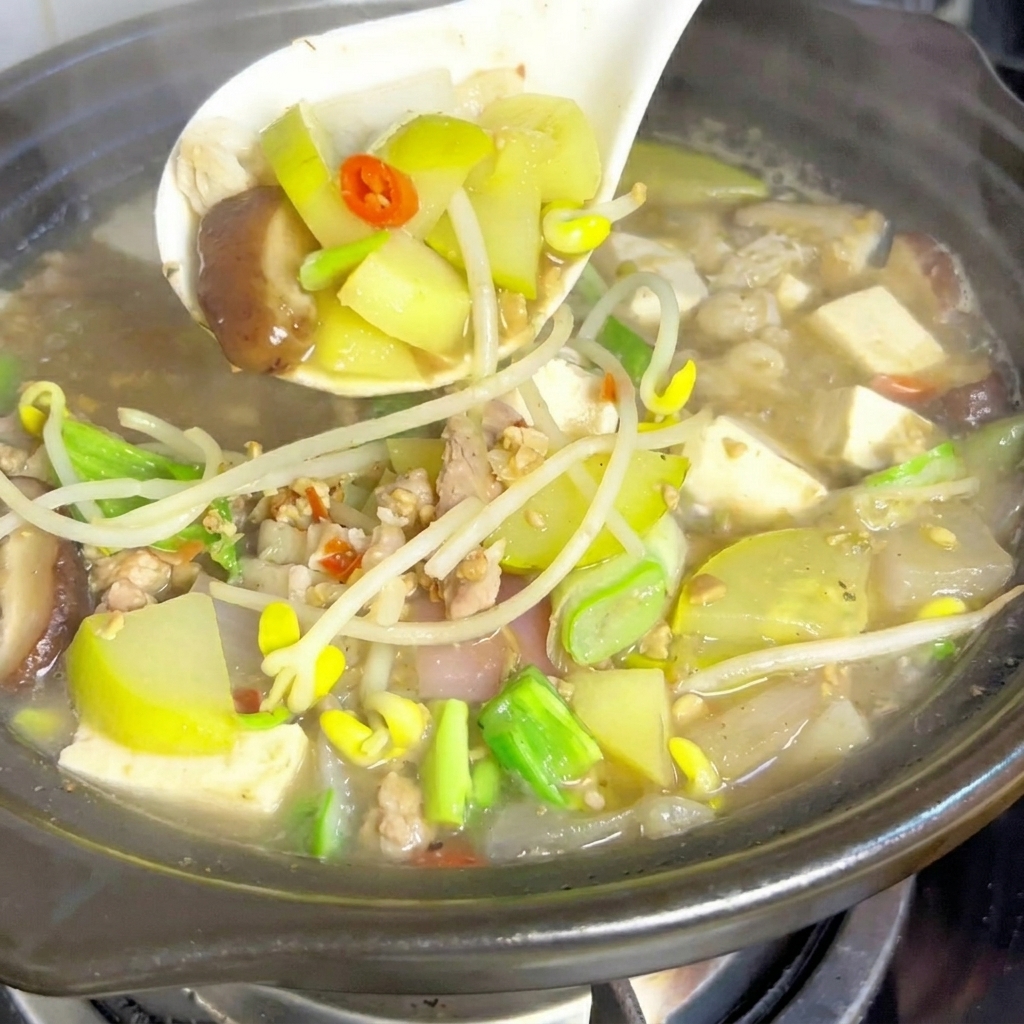
Carefully add the cubed yellow potatoes into the boiling stew. The starch from the potatoes will help thicken the broth slightly and provide a satisfying texture.
Tip: Ensure the potato chunks are uniform in size to allow for even cooking. - 10Add tofu
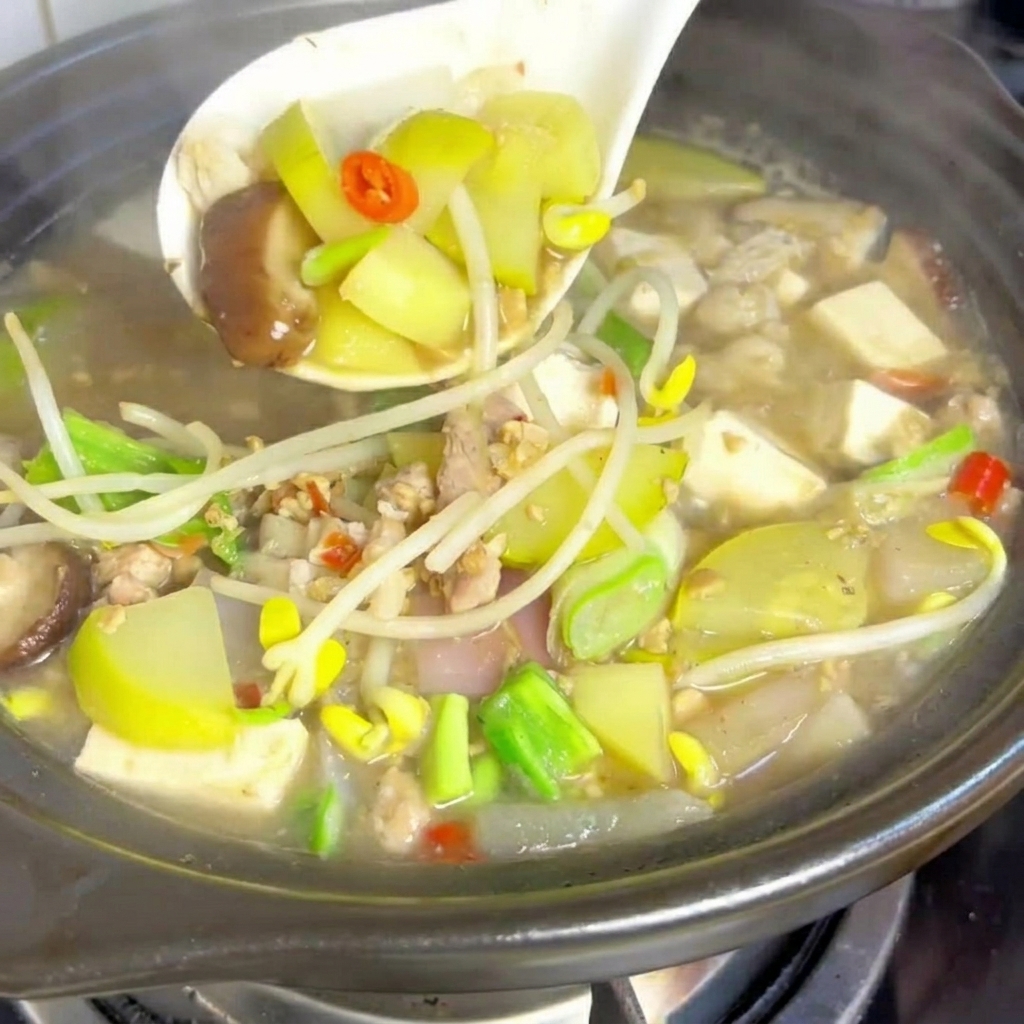
Gently place the cubed soft tofu into the pot. Be careful not to break the cubes, as they are delicate and will absorb the savory flavors of the stew as they cook.
Tip: Adding the tofu gently ensures the cubes stay intact throughout the cooking process. - 11Stir in soybean paste
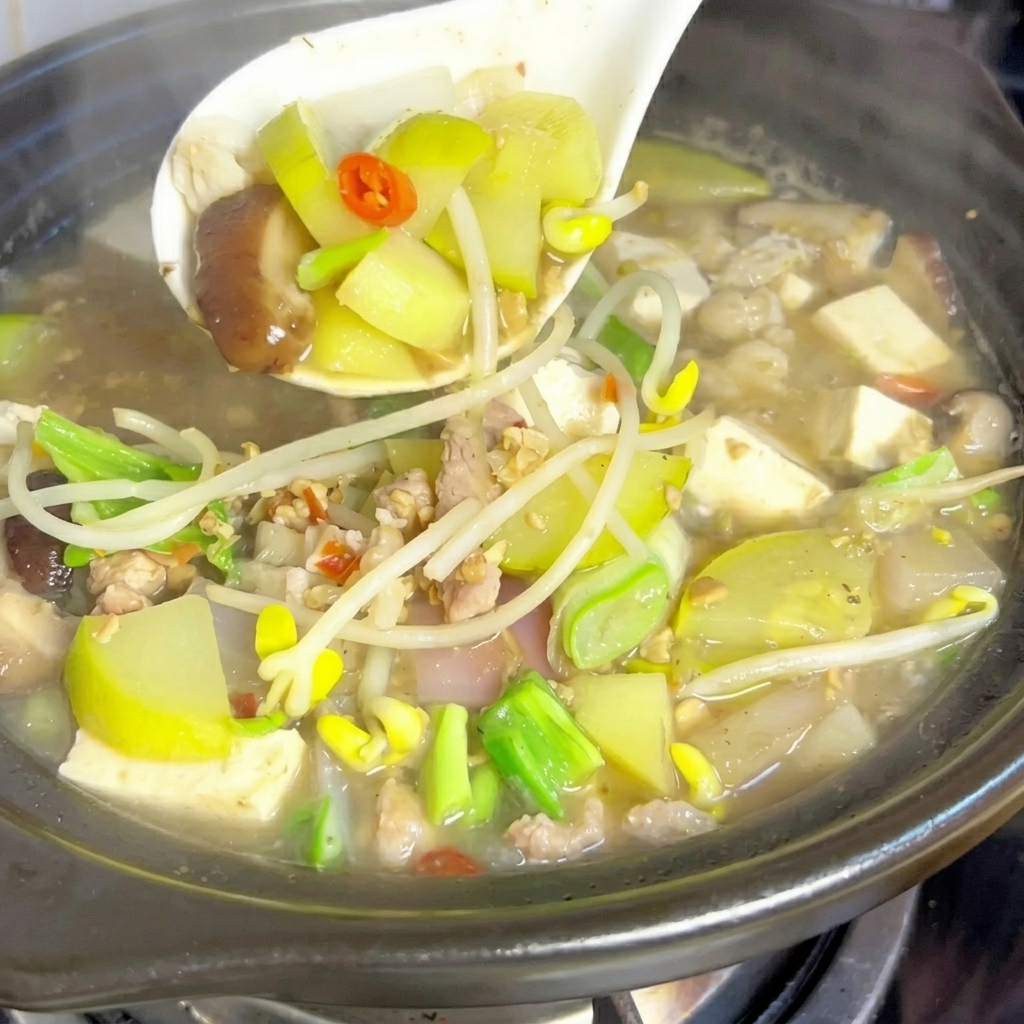
Add a generous dollop of fermented soybean paste into the stew and stir well to dissolve it completely. This is the key ingredient that gives the dish its signature savory and fragrant profile.
Tip: If the paste is very thick, you can dissolve it in a little bit of the hot broth in a separate small bowl before pouring it back into the pot. - 12Add onions
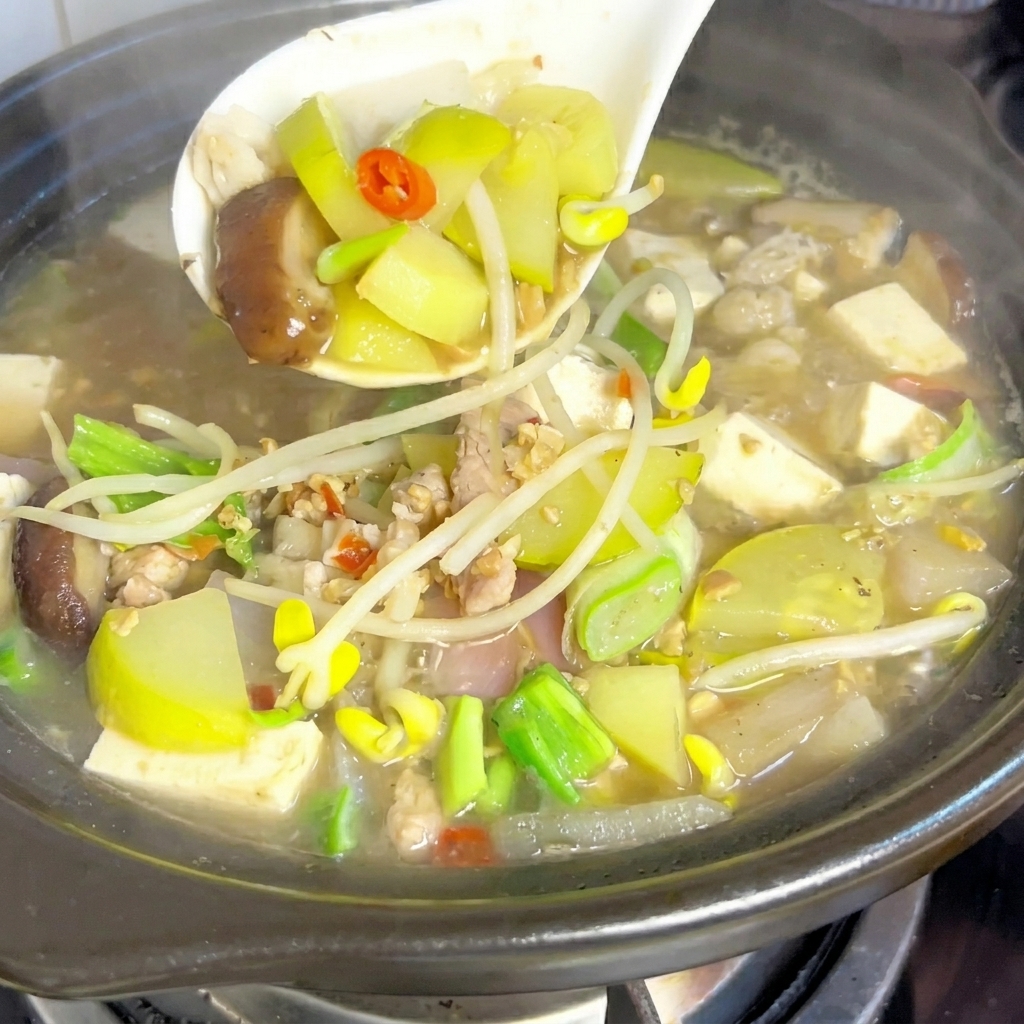
Finally, add the chopped purple onions into the pot. Adding them towards the end of the cooking process helps retain some of their crunch and sweetness.
Tip: Adjust the amount of onion according to your preference for a sweeter or more pungent onion flavor. - 13Add the final toppings
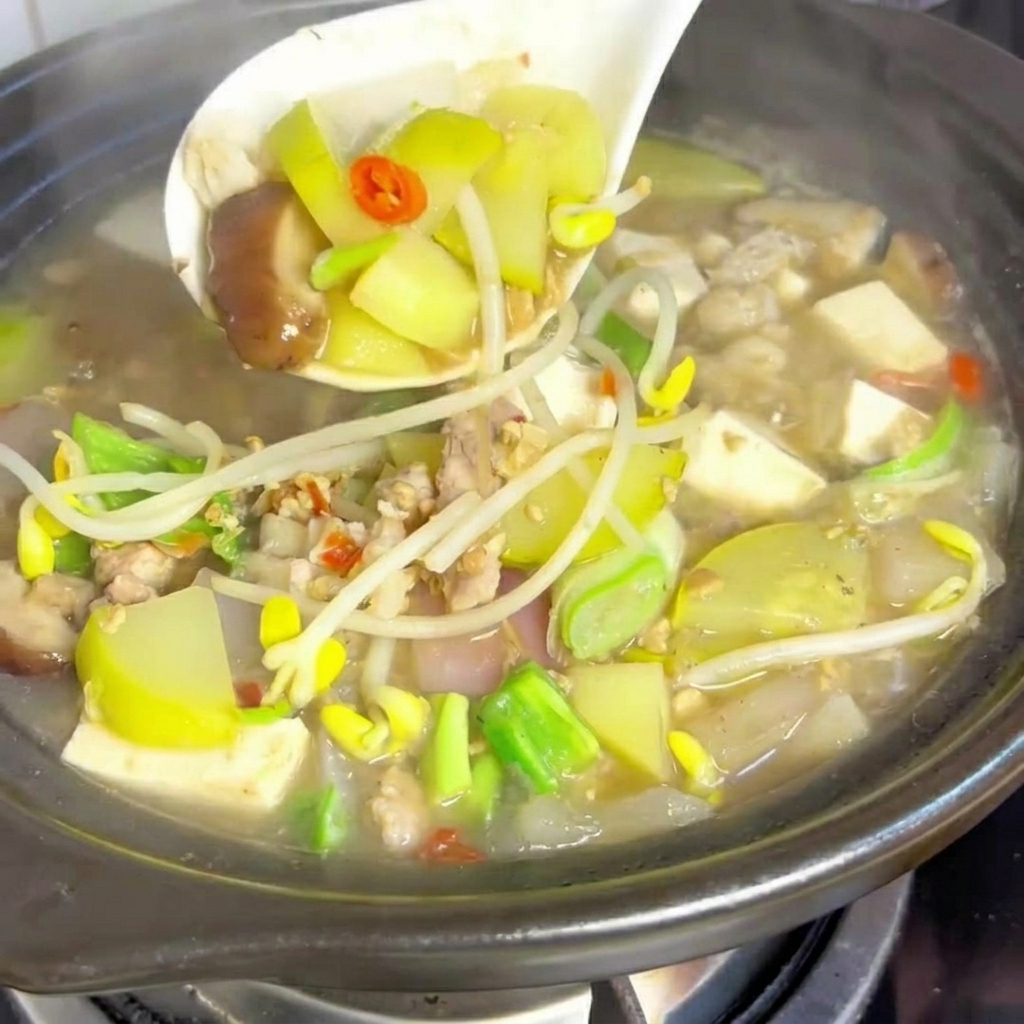
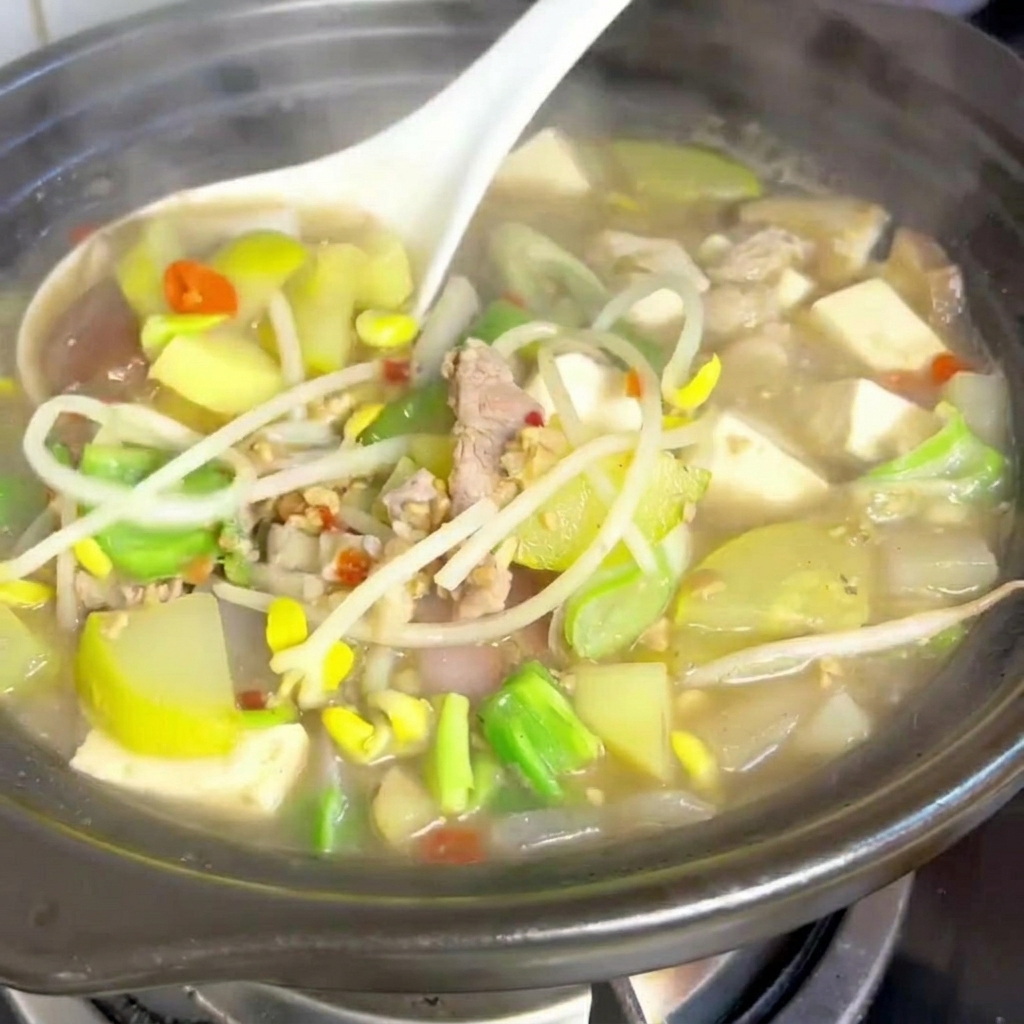
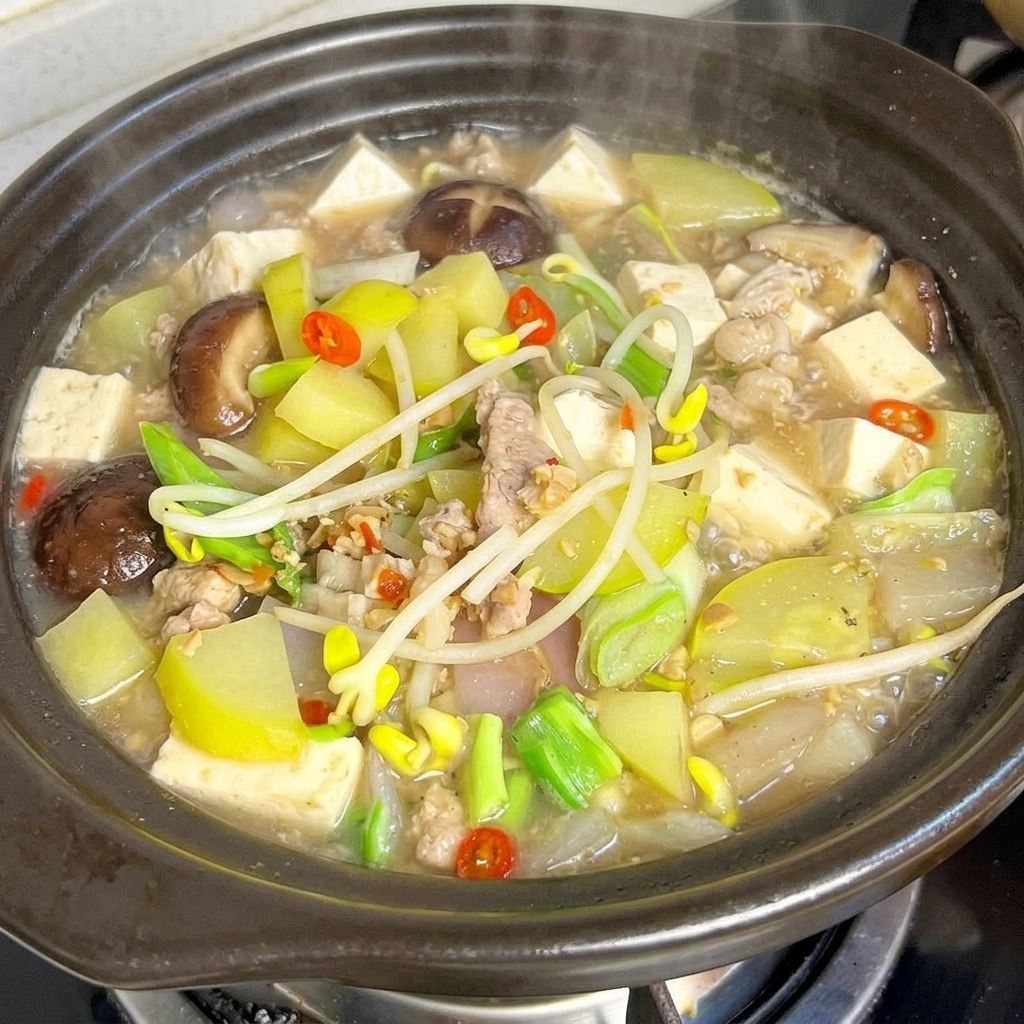
Once the stew is bubbling and the vegetables are tender, add a fresh handful of yellow soybean sprouts, chopped green onions, and sliced green chilies on top. These fresh ingredients add a crisp texture and vibrant flavor to the finished dish.
Tip: Add the sprouts and green onions at the very last minute to keep them crunchy and bright, preventing them from becoming too soft in the hot broth. - 14Stir and serve the stew
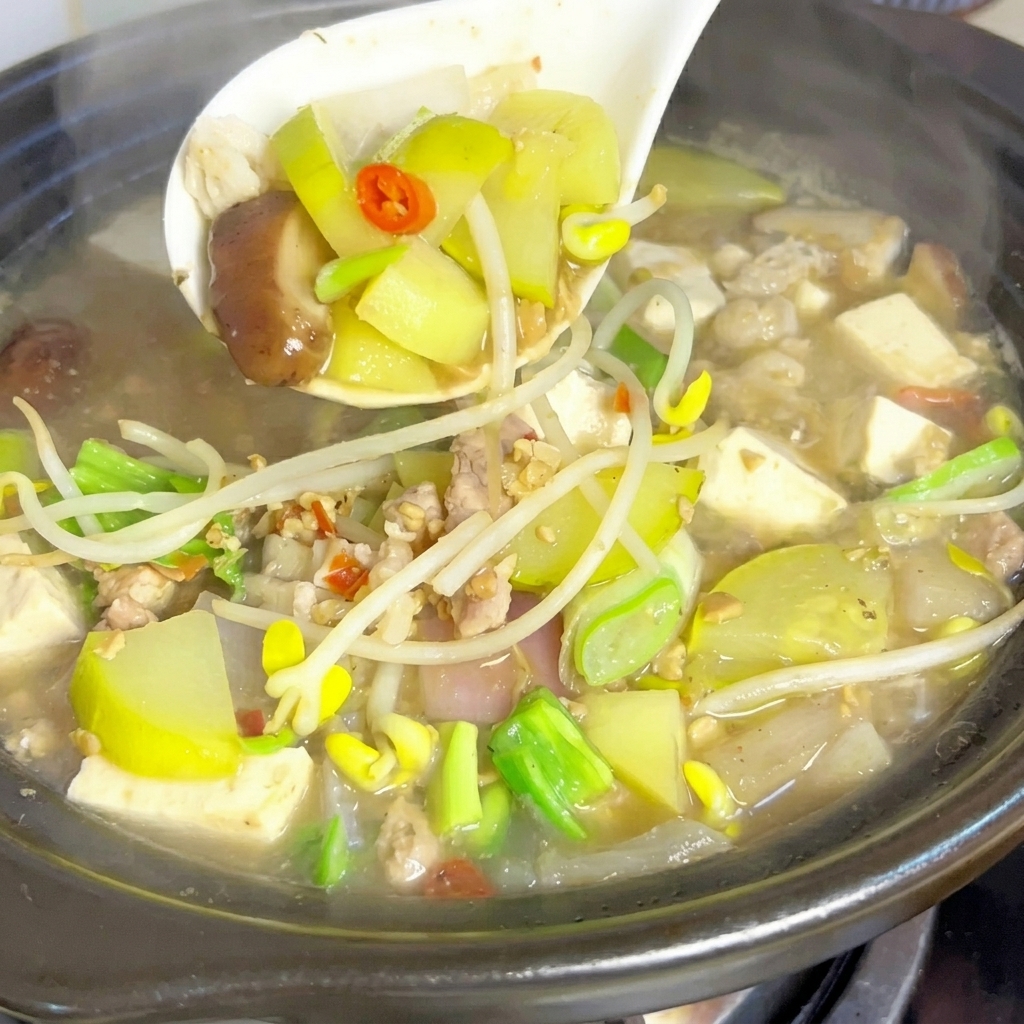
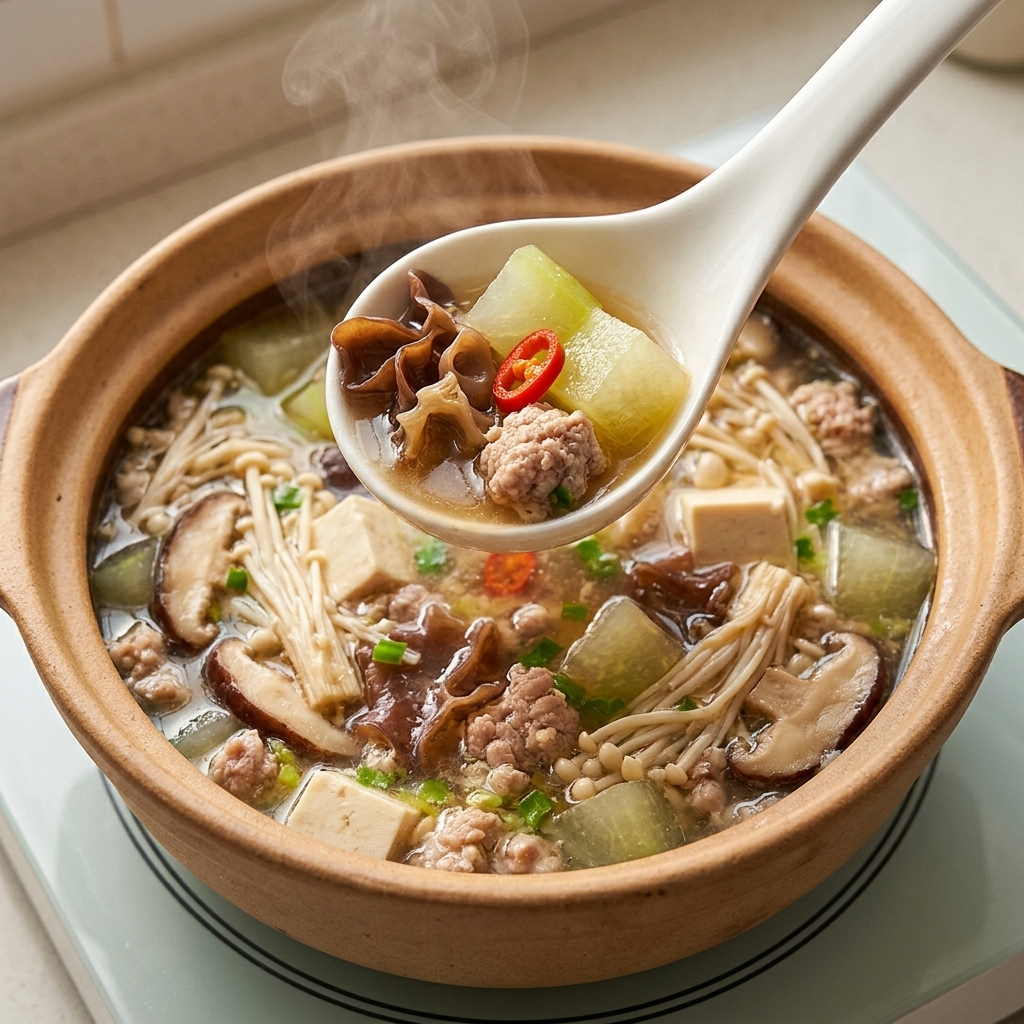
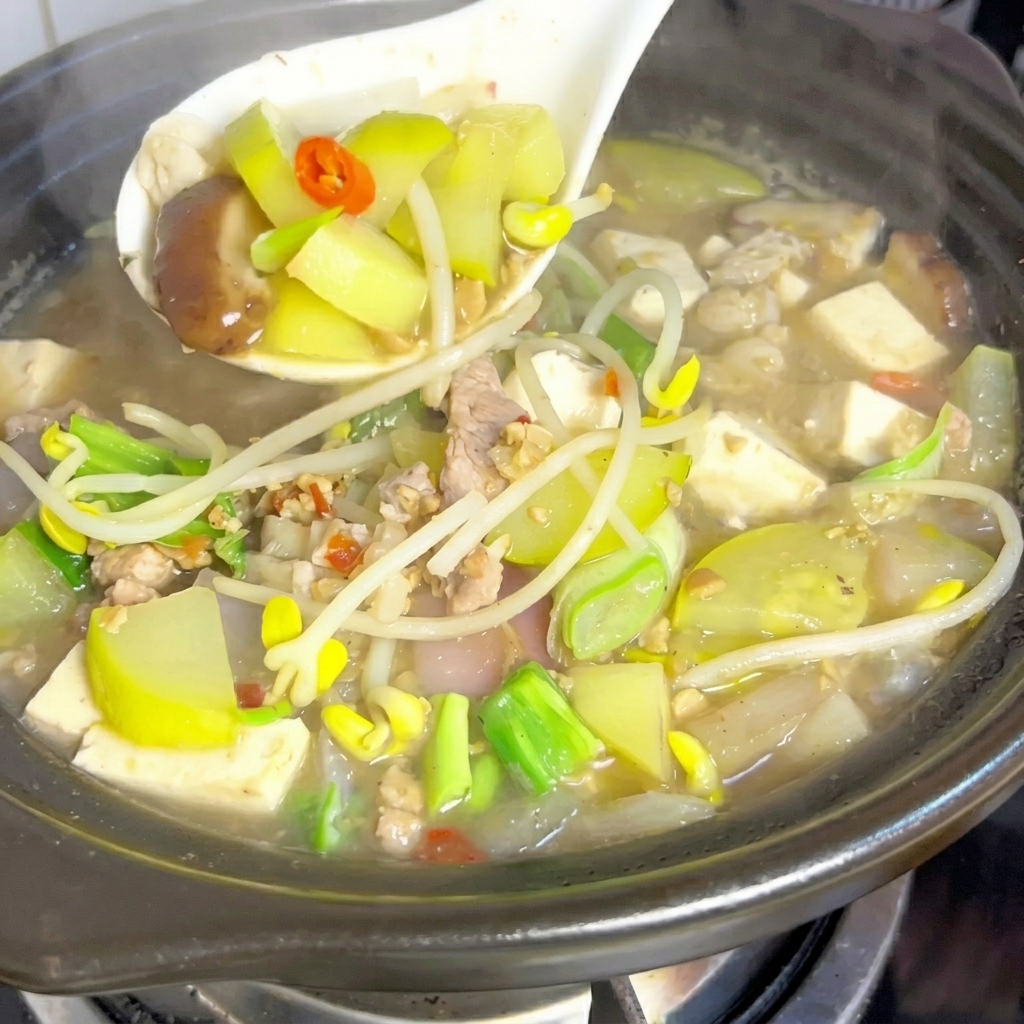
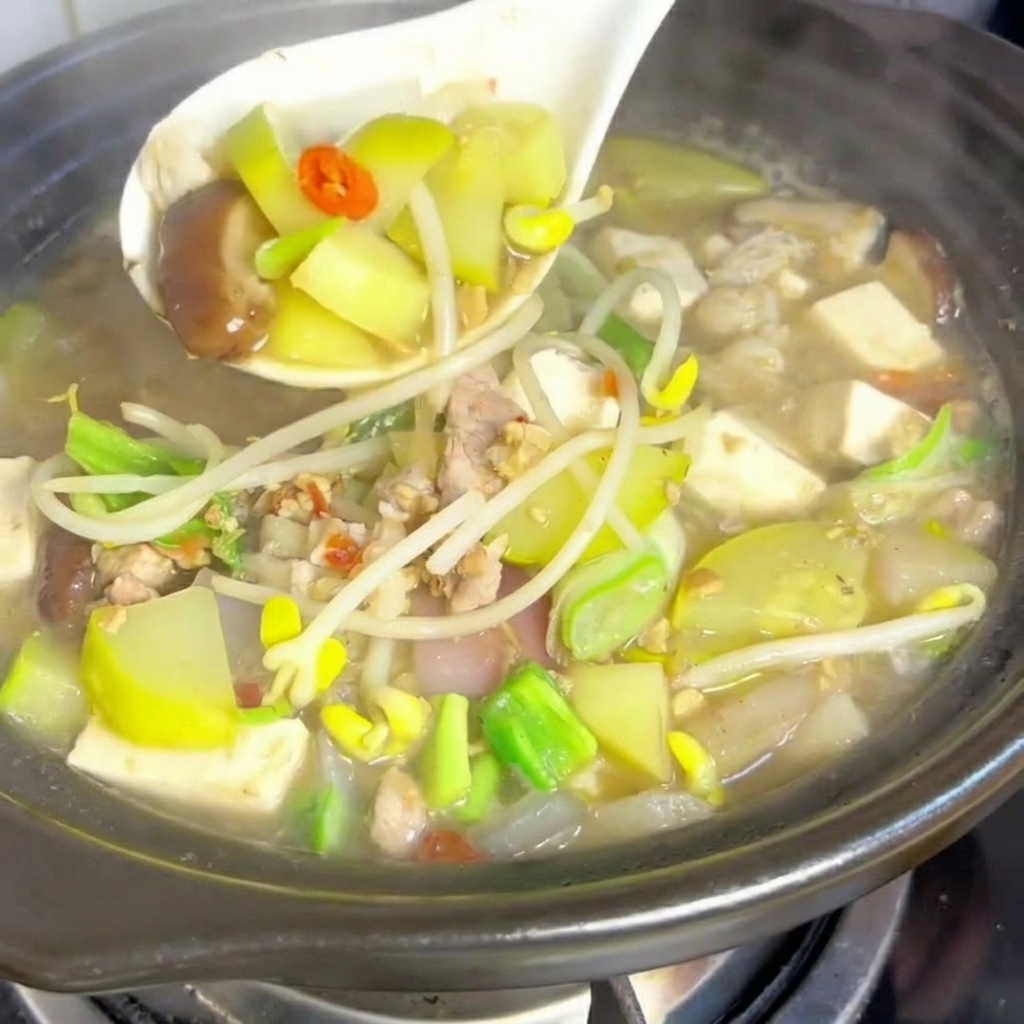
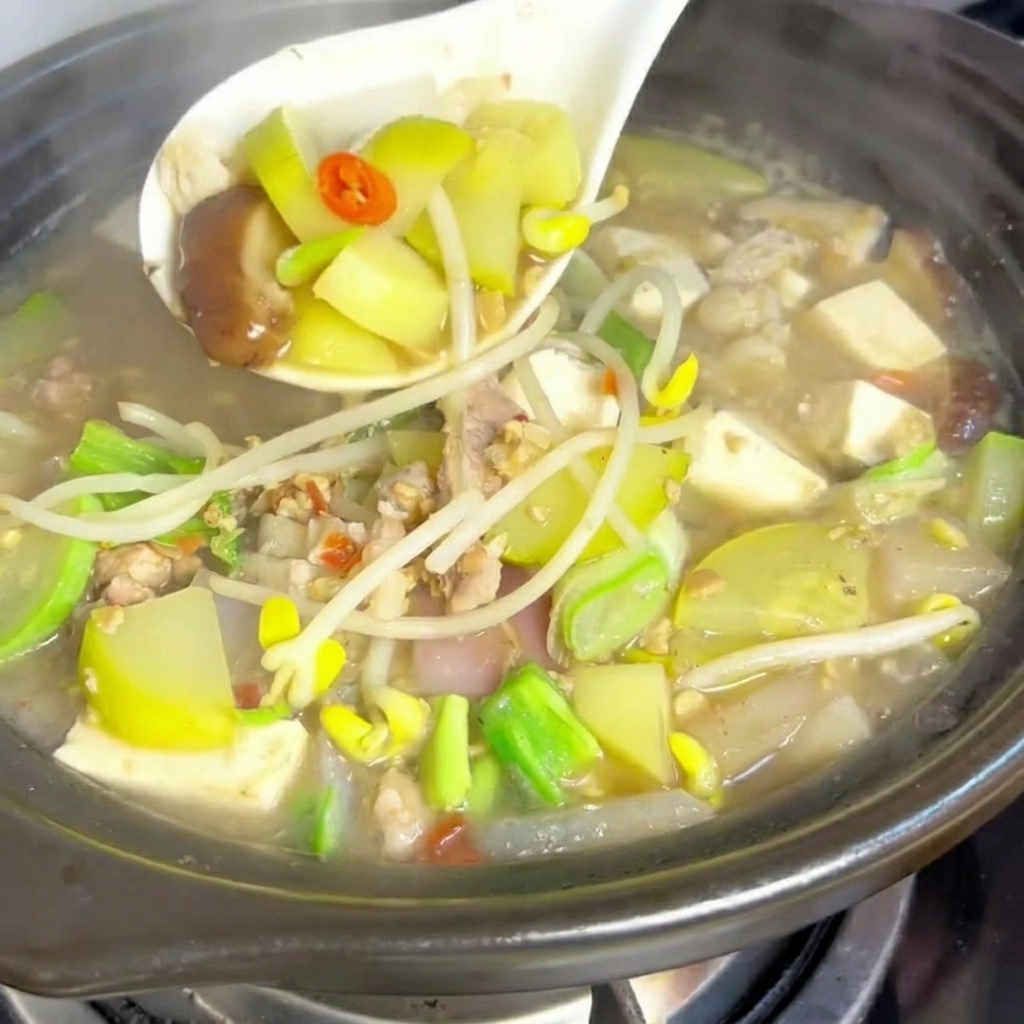
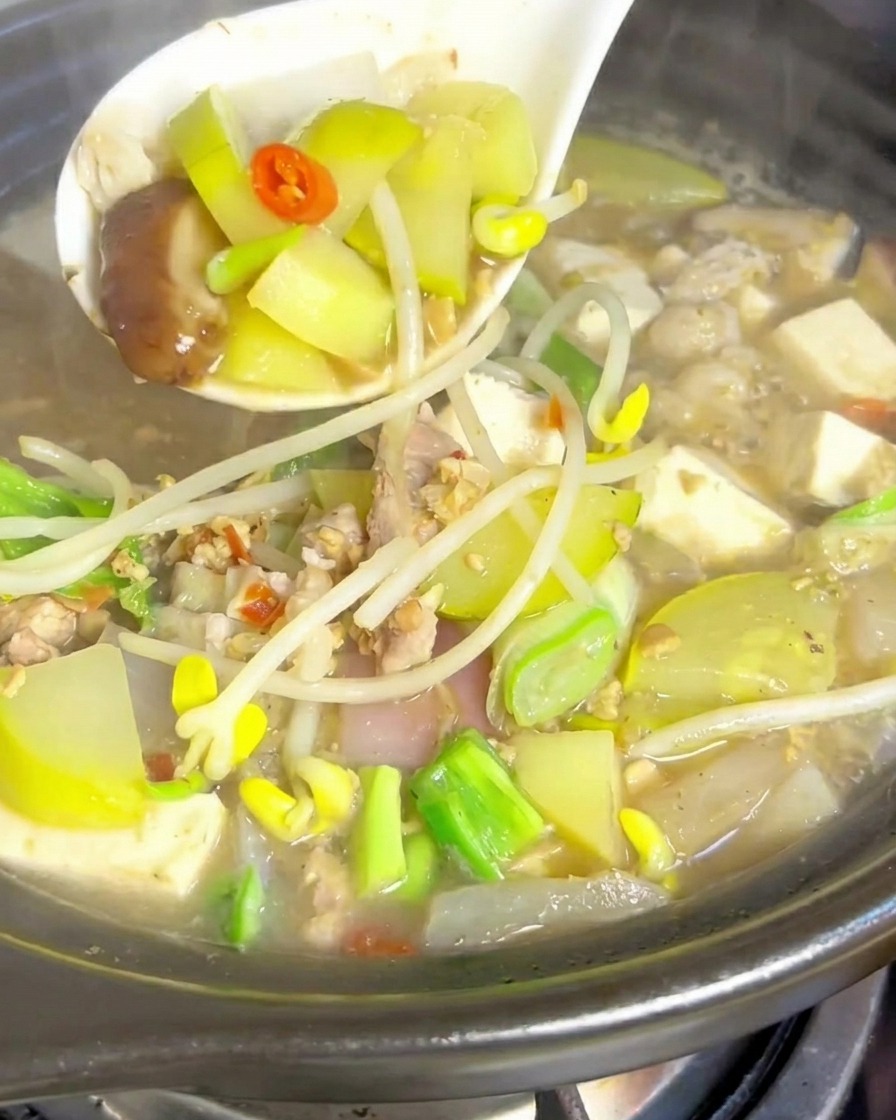
Give the stew a gentle stir with a ladle, lifting the tofu, zucchini, mushrooms, and soybean sprouts to ensure everything is well combined. The hot, bubbling broth will perfectly warm the fresh garnishes on top, releasing their savory aroma before serving.
Tip: Be gentle when stirring the stew to avoid breaking apart the soft tofu cubes.