Classic Doenjang Jjigae (Korean Soybean Paste Stew)
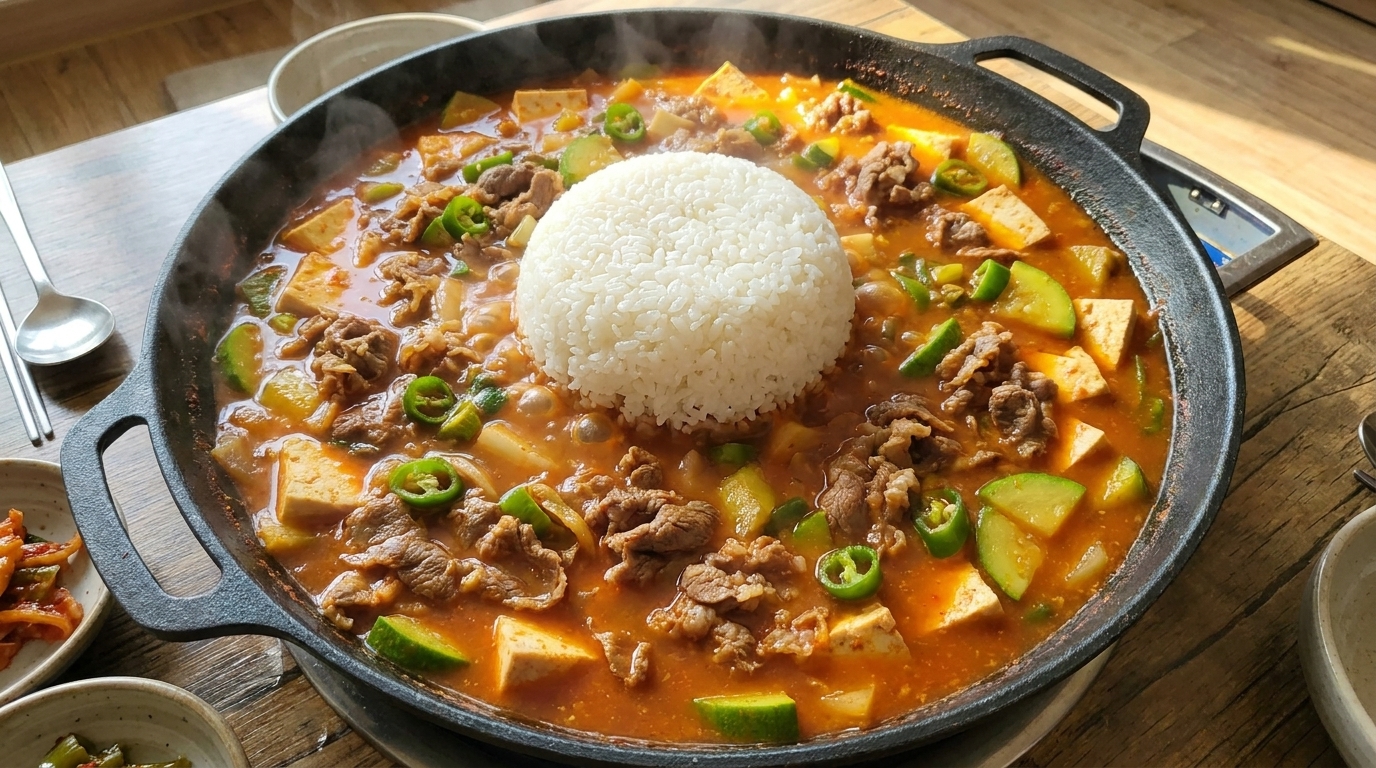
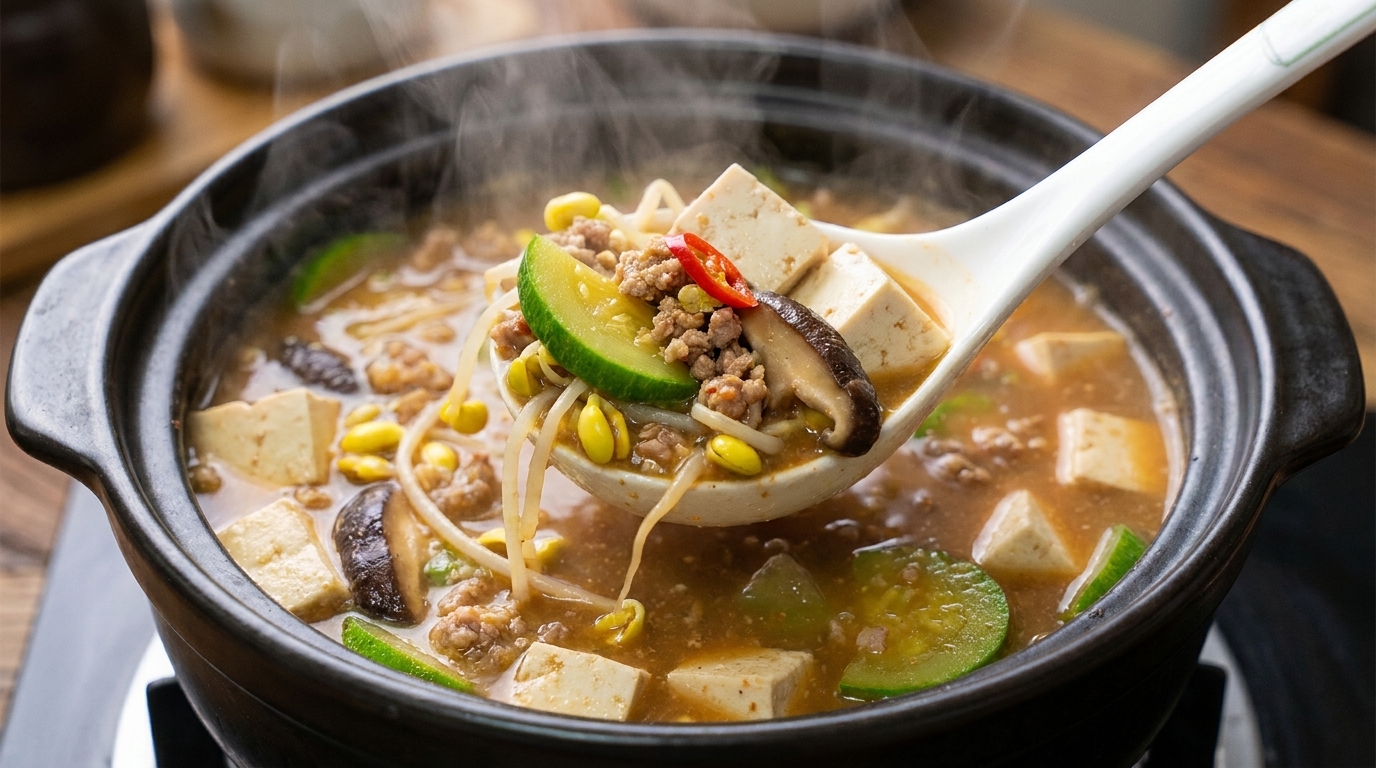
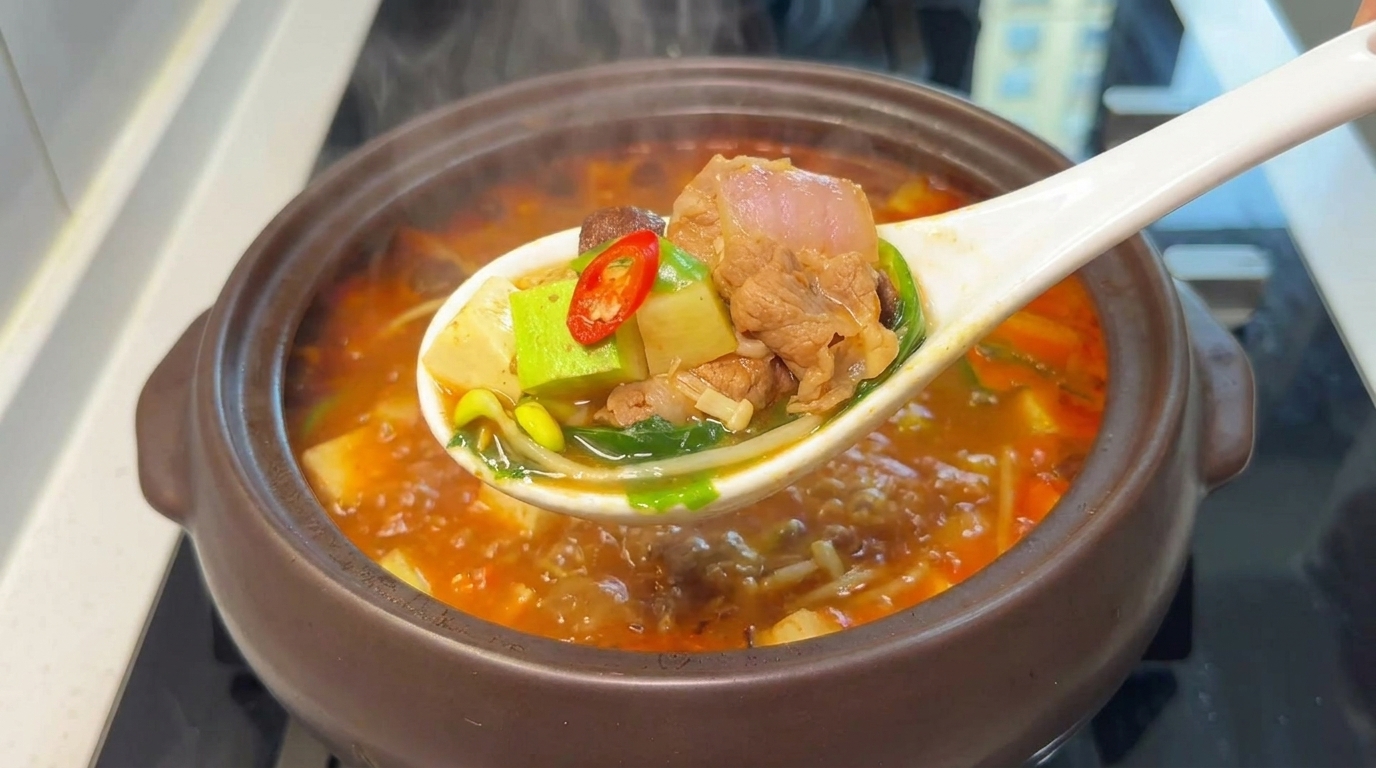
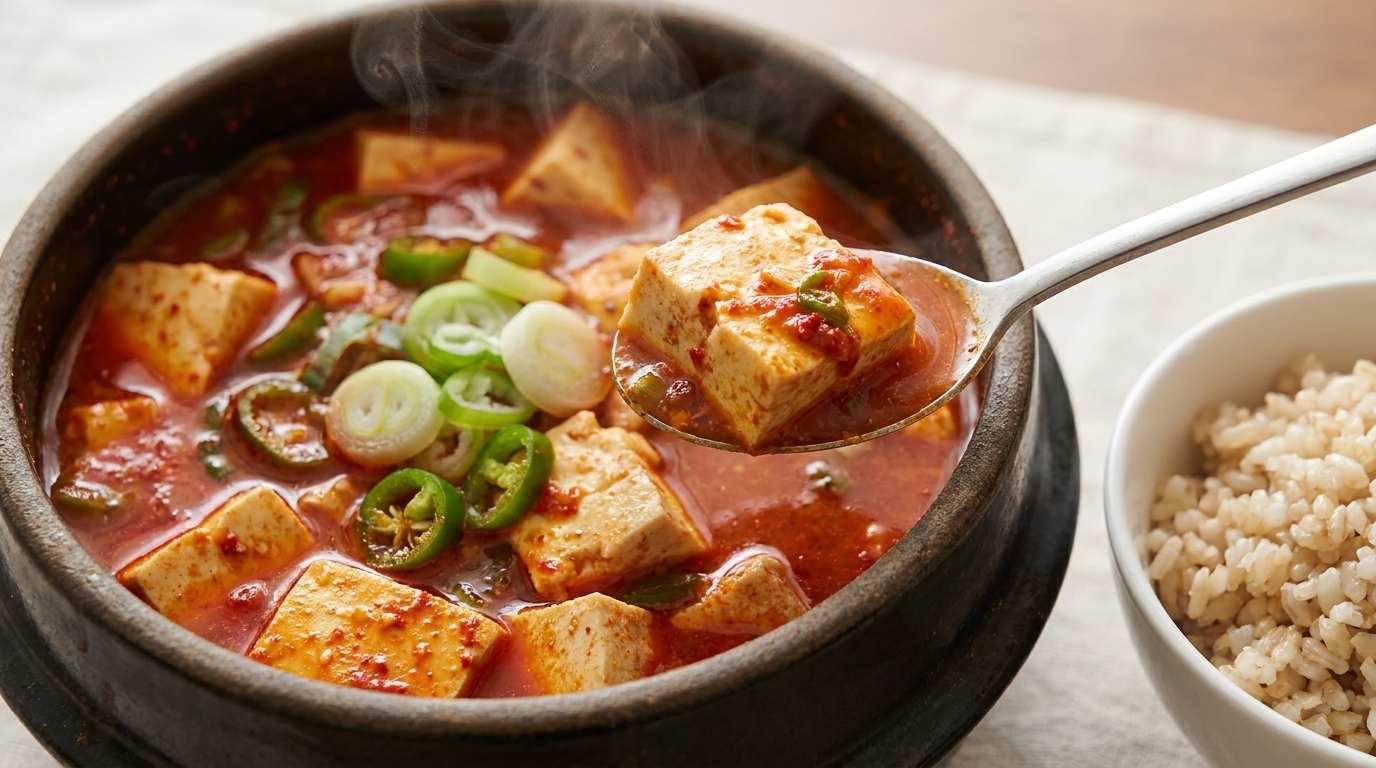
This deeply comforting Doenjang Jjigae combines an umami-rich soybean broth with hearty potatoes, tender zucchini, and soft tofu for an authentic Korean homestyle meal.
Doenjang Jjigae is the quintessential Korean comfort food, cherished in homes across the country. Built on a savory foundation of fermented soybean paste, this stew relies on the natural sweetness of fresh vegetables and the starch from rice water to create its signature rich and hearty texture.
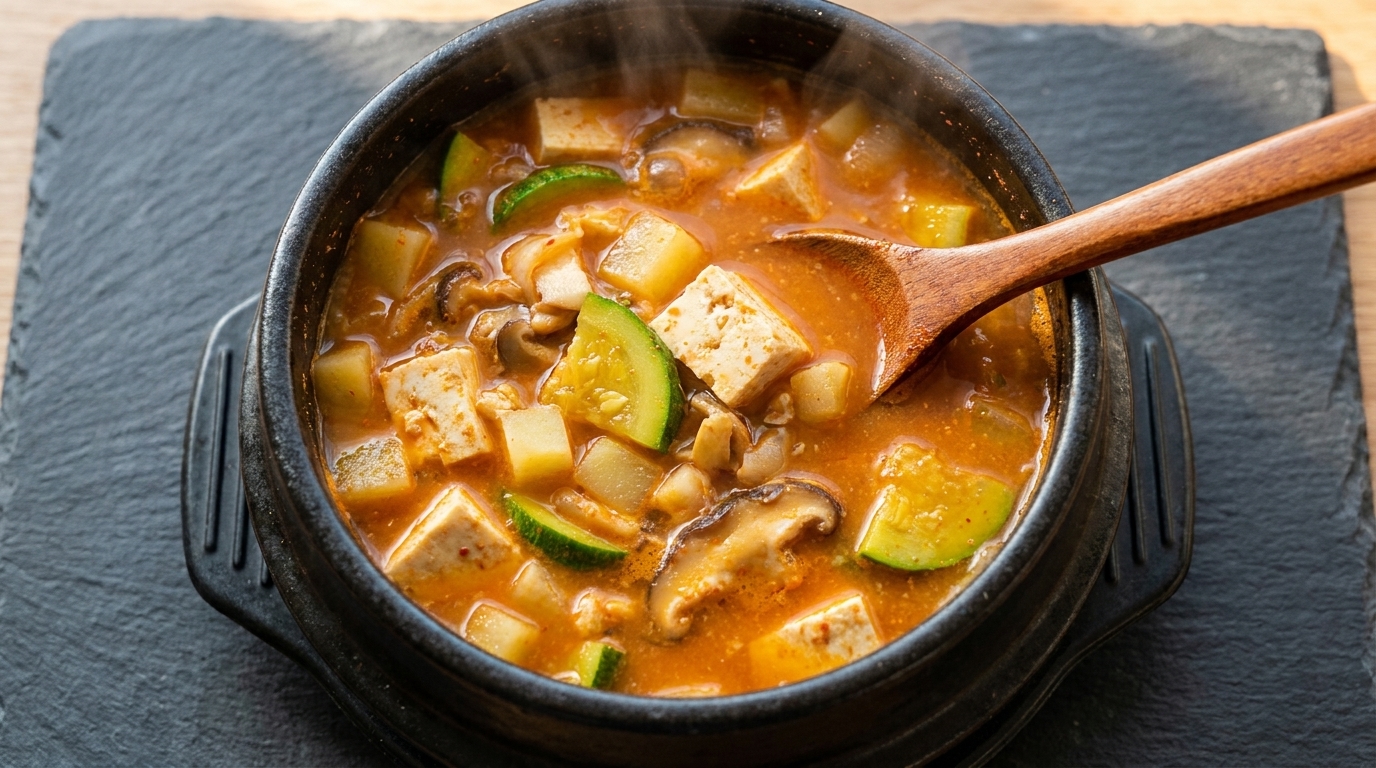
Ingredients
- 2 cups rice water
- 2 tbsp doenjang (Korean soybean paste)
- 1 tbsp gochujang (Korean red chili paste)
- 1 medium potato, diced
- 0.5 medium zucchini, chopped
- 4 shiitake mushrooms, sliced
- 0.5 medium onion, chopped
- 1 block firm tofu, cubed
- 1 tsp gochugaru (Korean red chili powder)
- 1 tbsp minced garlic
- 2 green onions, sliced
- 1-2 fresh green chili peppers, sliced
- optional beef seasoning powder
Instructions
- 1Prepare the broth base
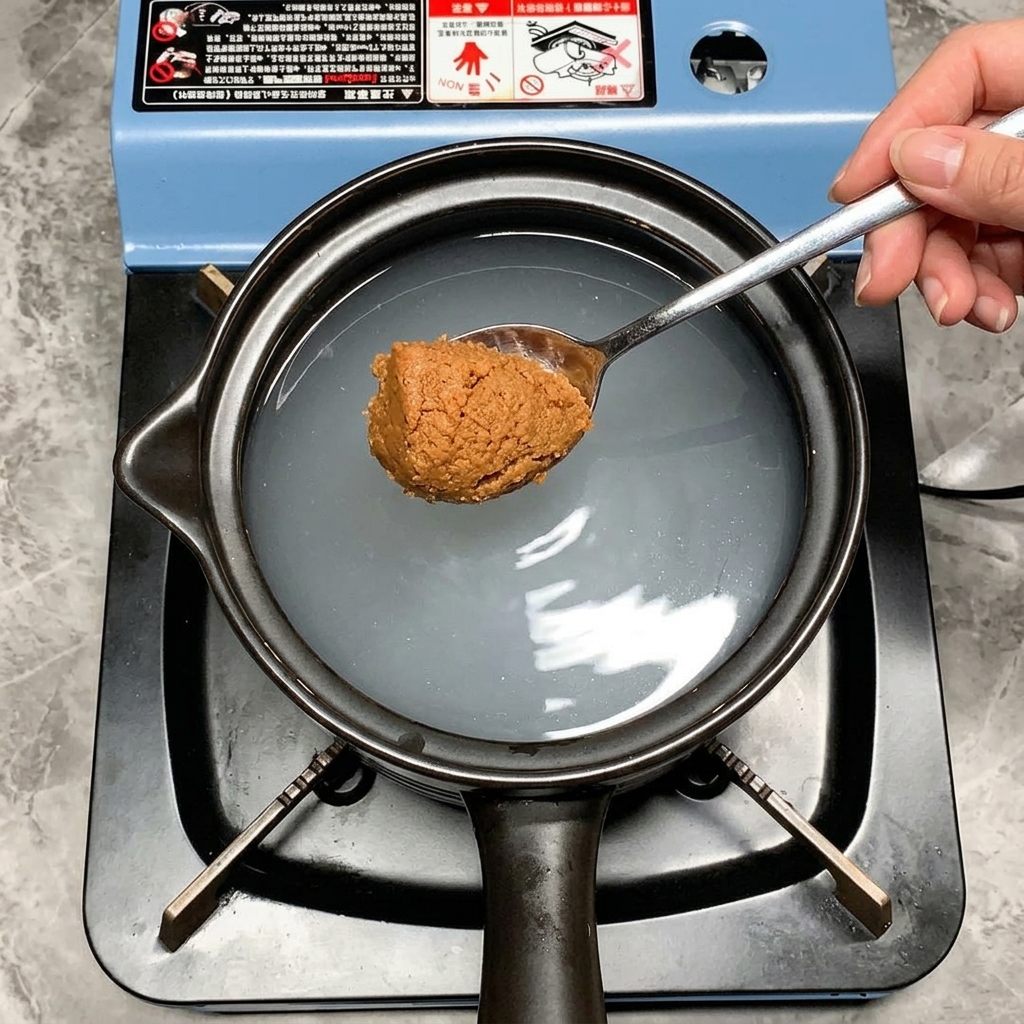
Pour the rice water into a cooking pot and place it over heat. Add two spoonfuls of soybean paste to the liquid and stir well to ensure it dissolves completely into the water, forming the foundation of the stew.
Tip: Using rice water instead of plain water adds a subtle thickness and depth to the stews consistency. - 2Add chili paste
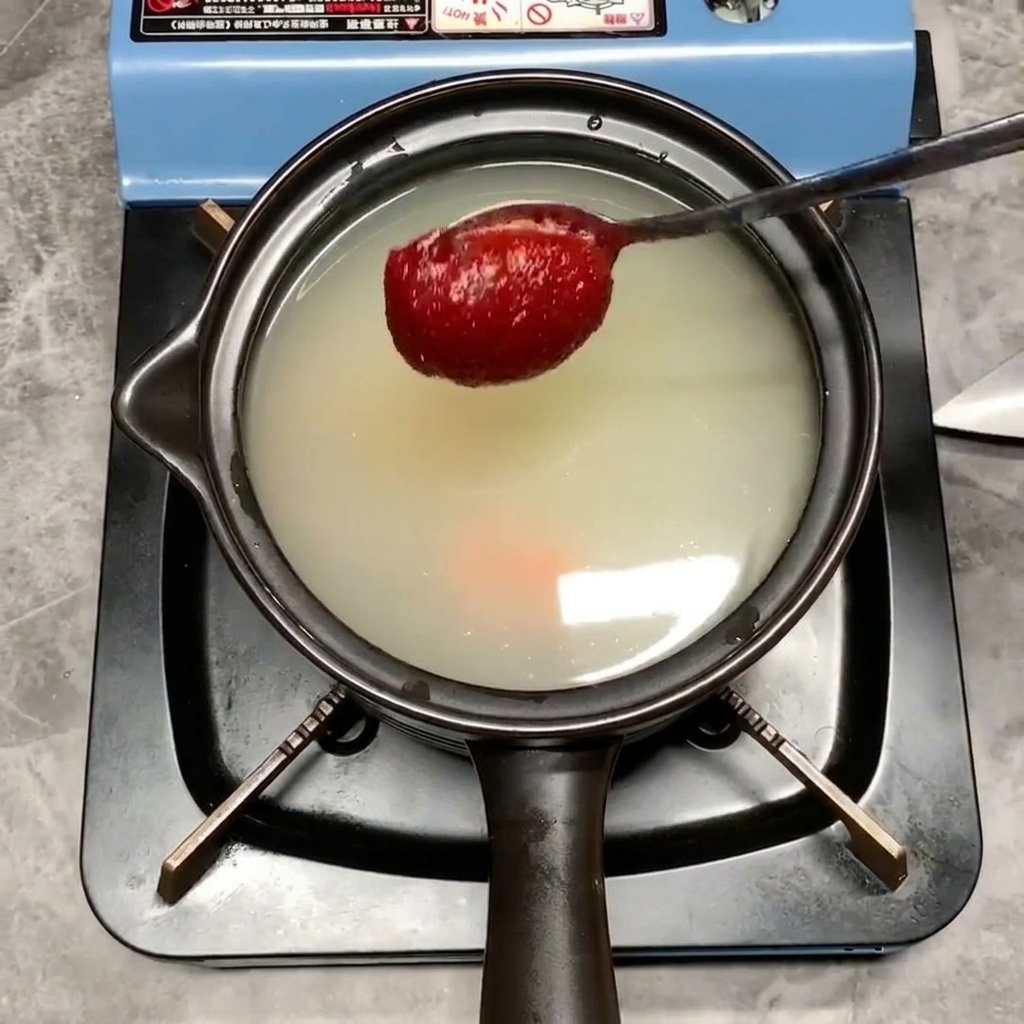
Add one spoonful of red chili paste into the pot. Incorporate it into the broth to introduce a vibrant color and a gentle, spicy kick to the flavor profile.
Tip: Adjust the amount of chili paste based on your preference for heat. - 3Dissolve the pastes
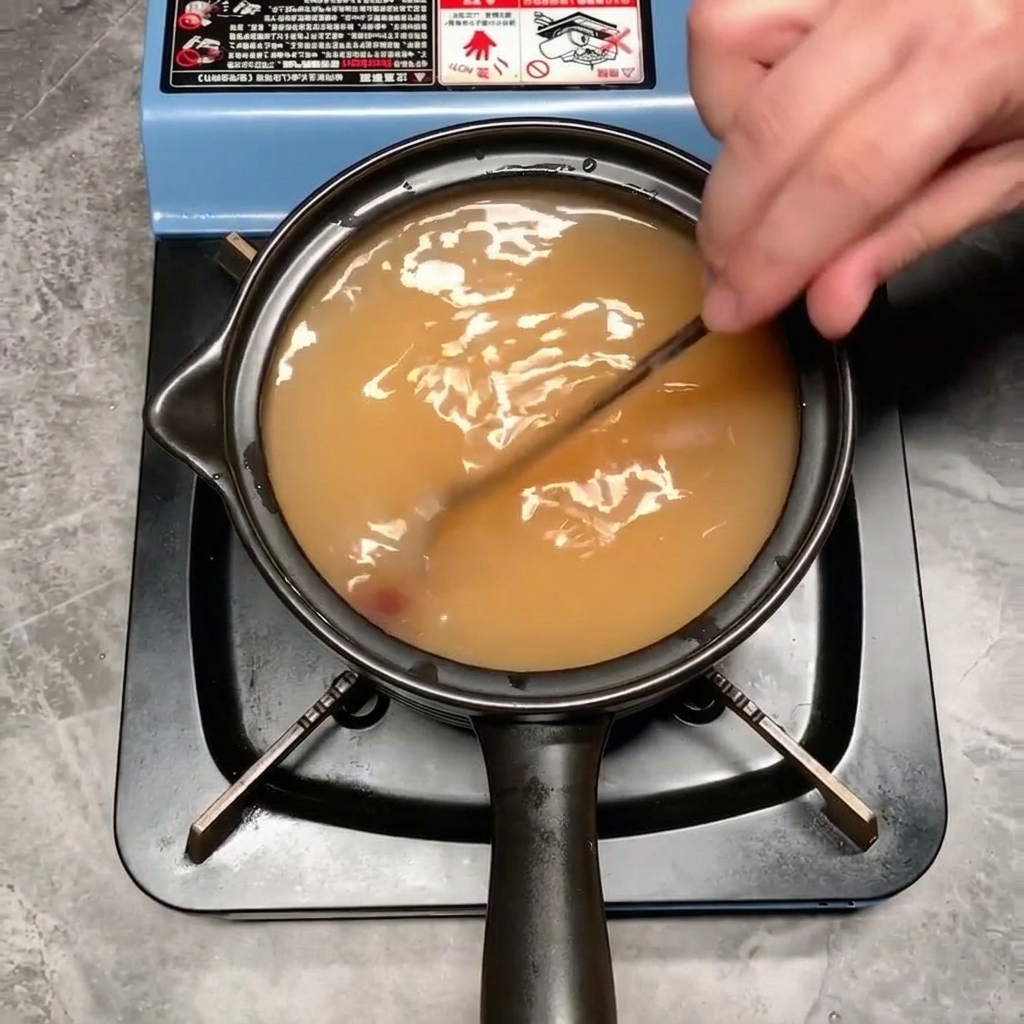
Using a spoon, gently stir the broth to fully dissolve the soybean paste and chili paste. Continue stirring until the color is uniform and the pastes are completely incorporated into the liquid.
Tip: Stir thoroughly to prevent any clumps of paste from settling at the bottom of the pot. - 4Add potatoes
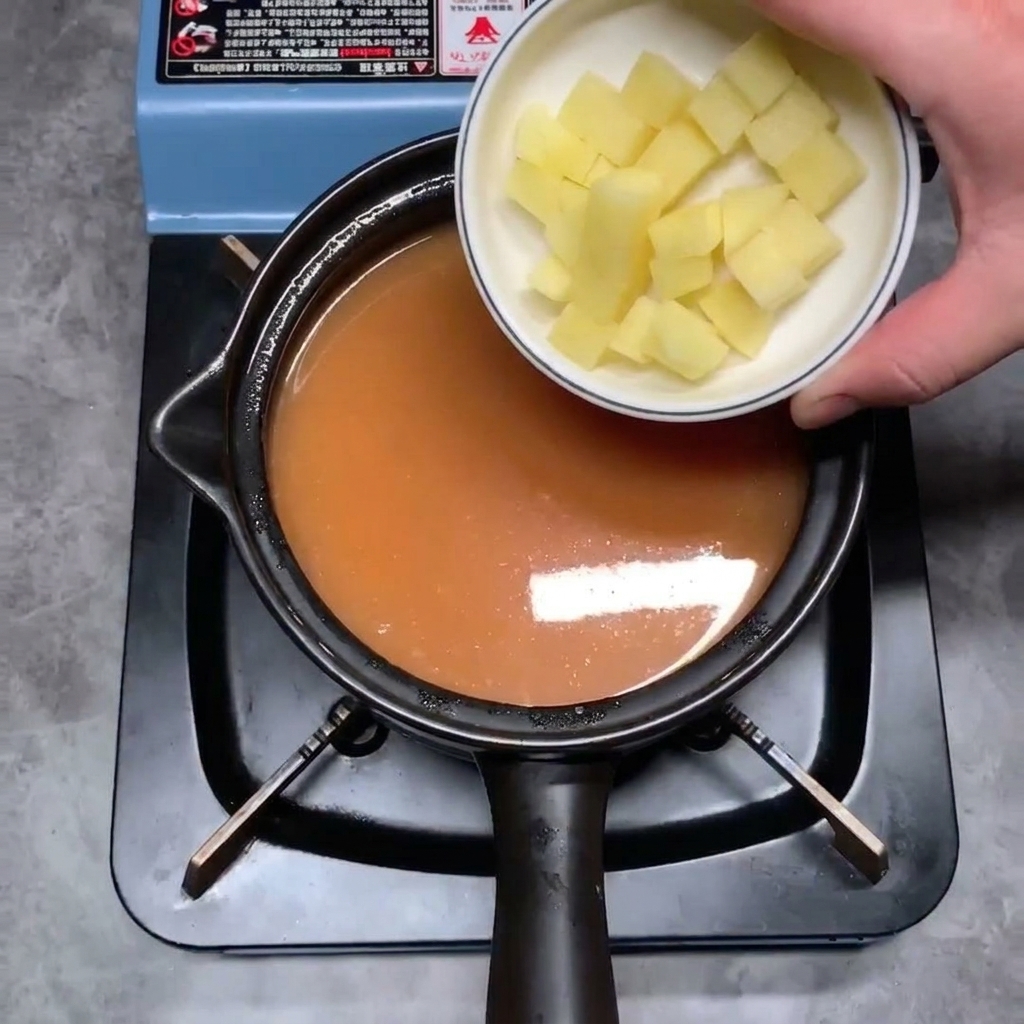
Once the broth begins to boil, carefully add the diced raw potatoes to the pot. Potatoes take the longest to cook, so they are added first to ensure they become tender.
Tip: Cut the potatoes into uniform, bite-sized cubes to ensure they cook at an even rate. - 5Add vegetables
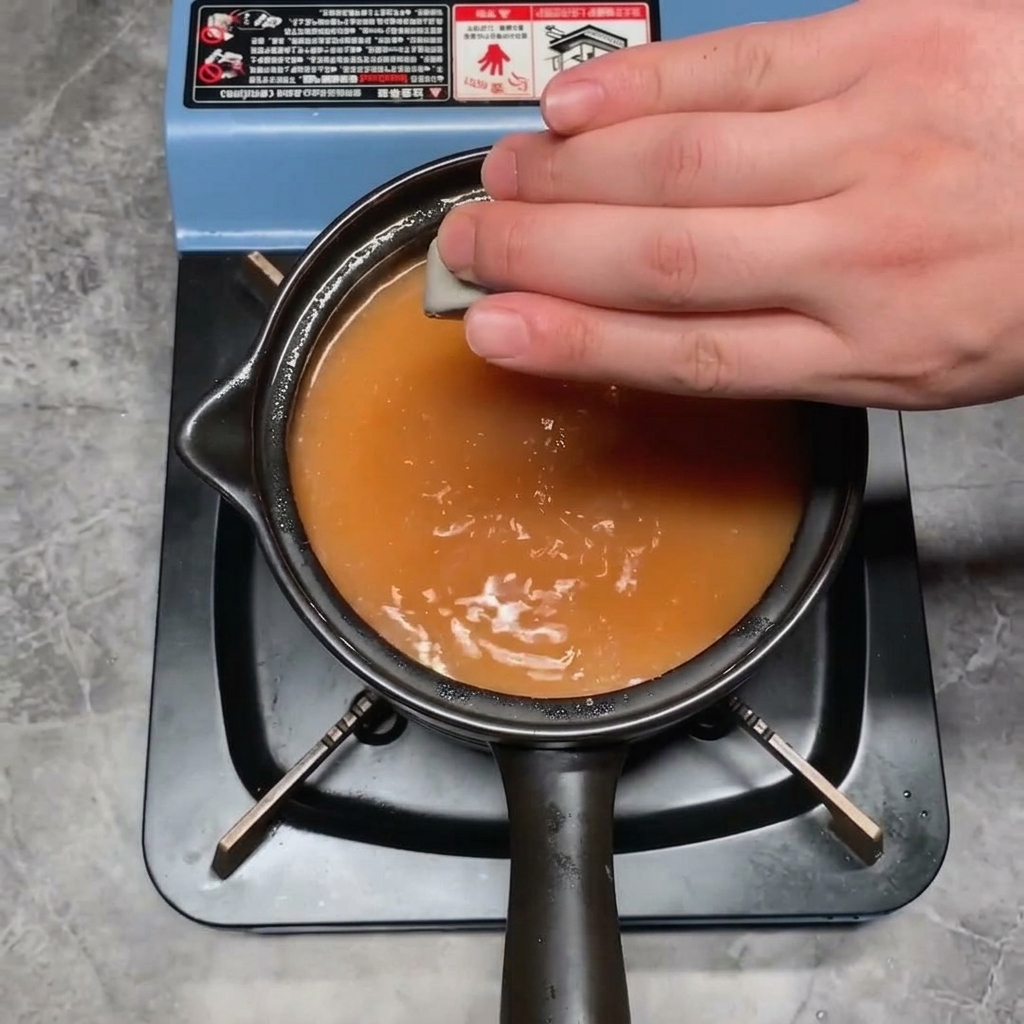
Add the chopped zucchini, mushrooms, and onions into the pot with the potatoes. These vegetables add texture and natural sweetness to the stew.
Tip: Adding the vegetables together allows them to soften and release their flavors into the broth simultaneously. - 6Incorporate tofu
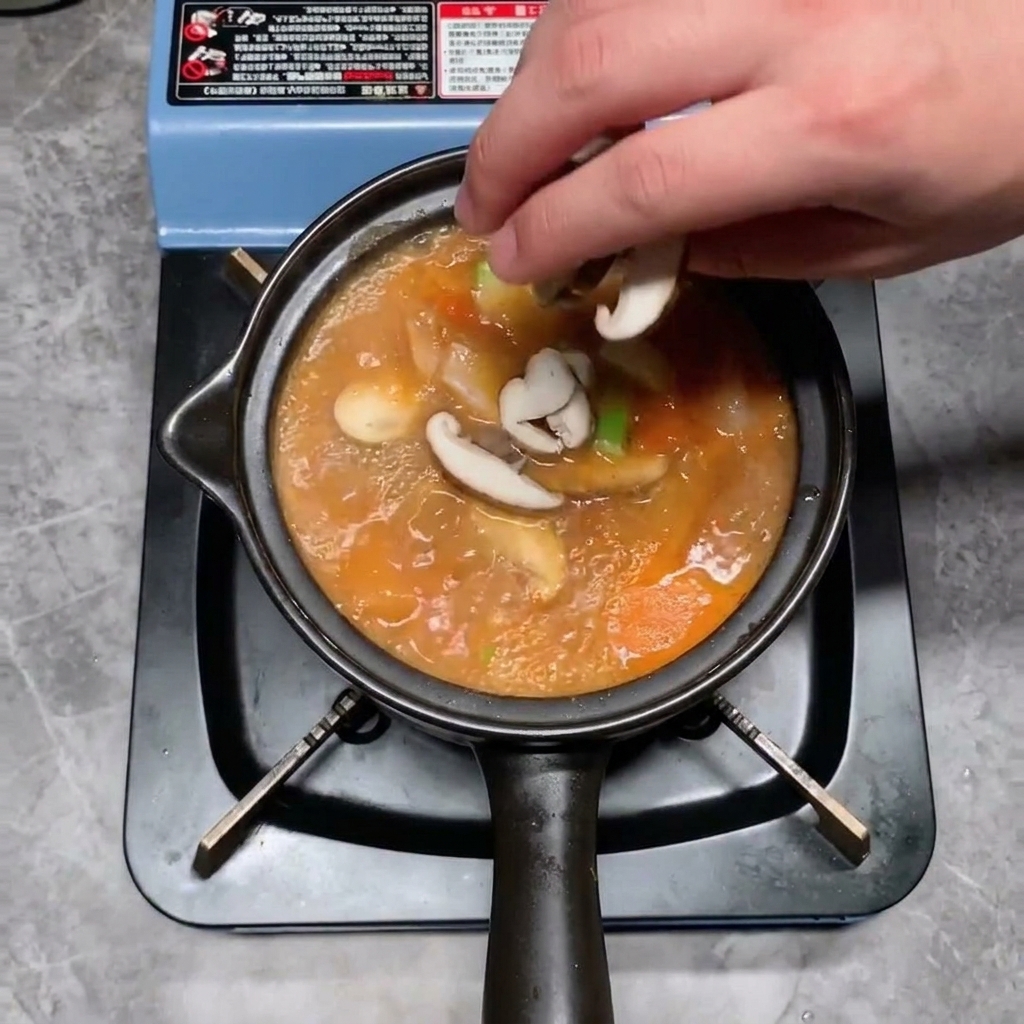
Gently add the cubed white tofu into the simmering stew. Be careful not to break the cubes when stirring so they retain their shape while absorbing the flavors of the broth.
Tip: Firm or extra-firm tofu works best for stews as it holds its shape during the boiling process. - 7Add chili powder
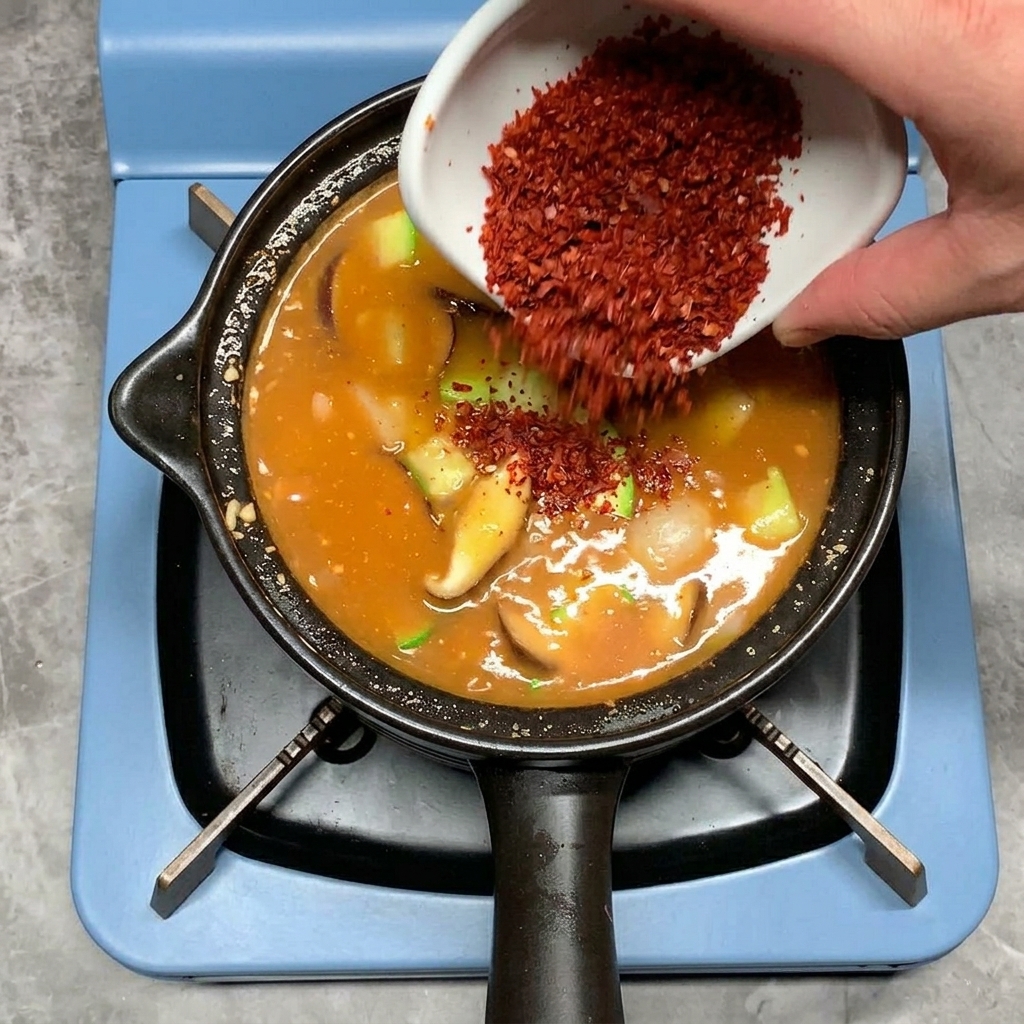
Season the stew by sprinkling red chili powder over the simmering ingredients. This adds a vibrant red hue and the classic spicy kick essential to Korean stews.
Tip: Adjust the amount of chili powder depending on your preferred level of heat. - 8Stir in minced garlic
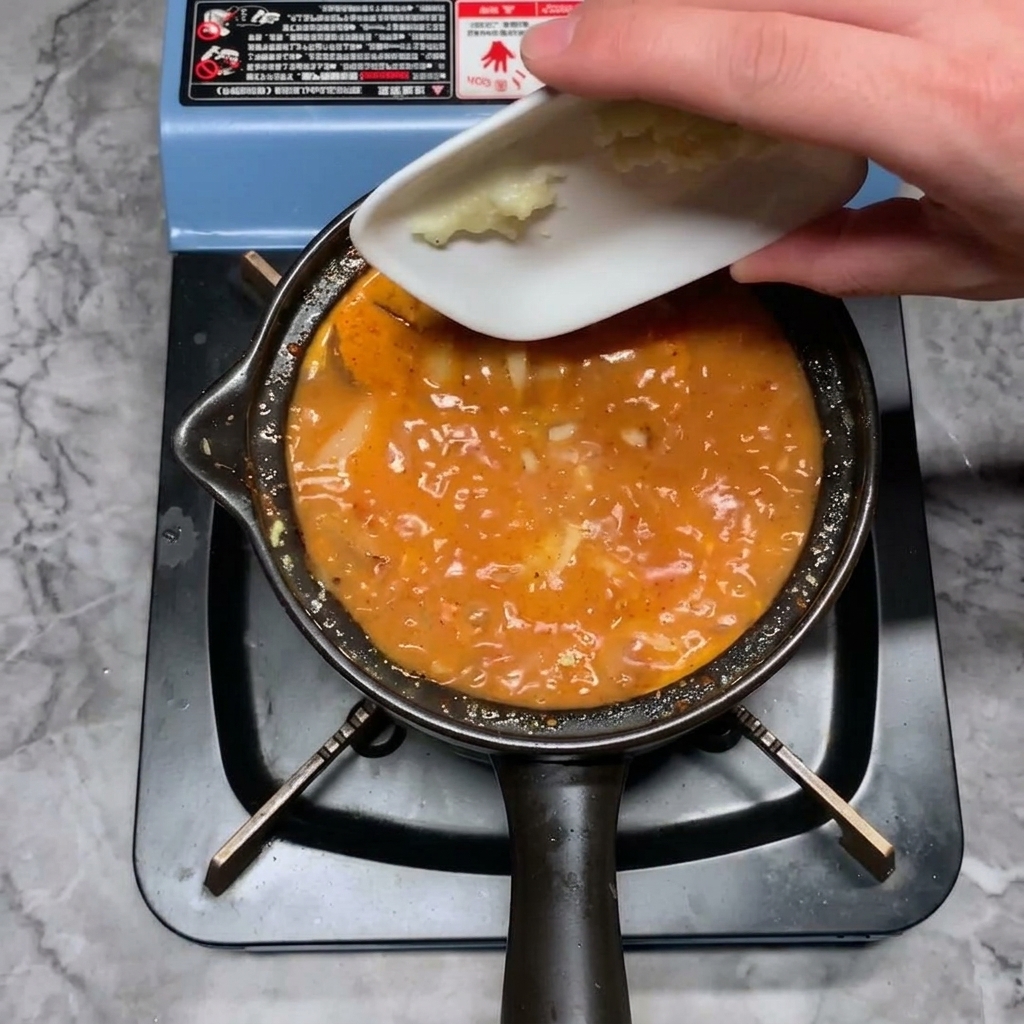
Spoon the minced garlic directly into the bubbling broth. Garlic provides a crucial savory foundation and deep aromatic flavor to the stew.
Tip: Adding garlic towards the end of the cooking process ensures its bold, pungent flavor stands out. - 9Add green onions and chilies
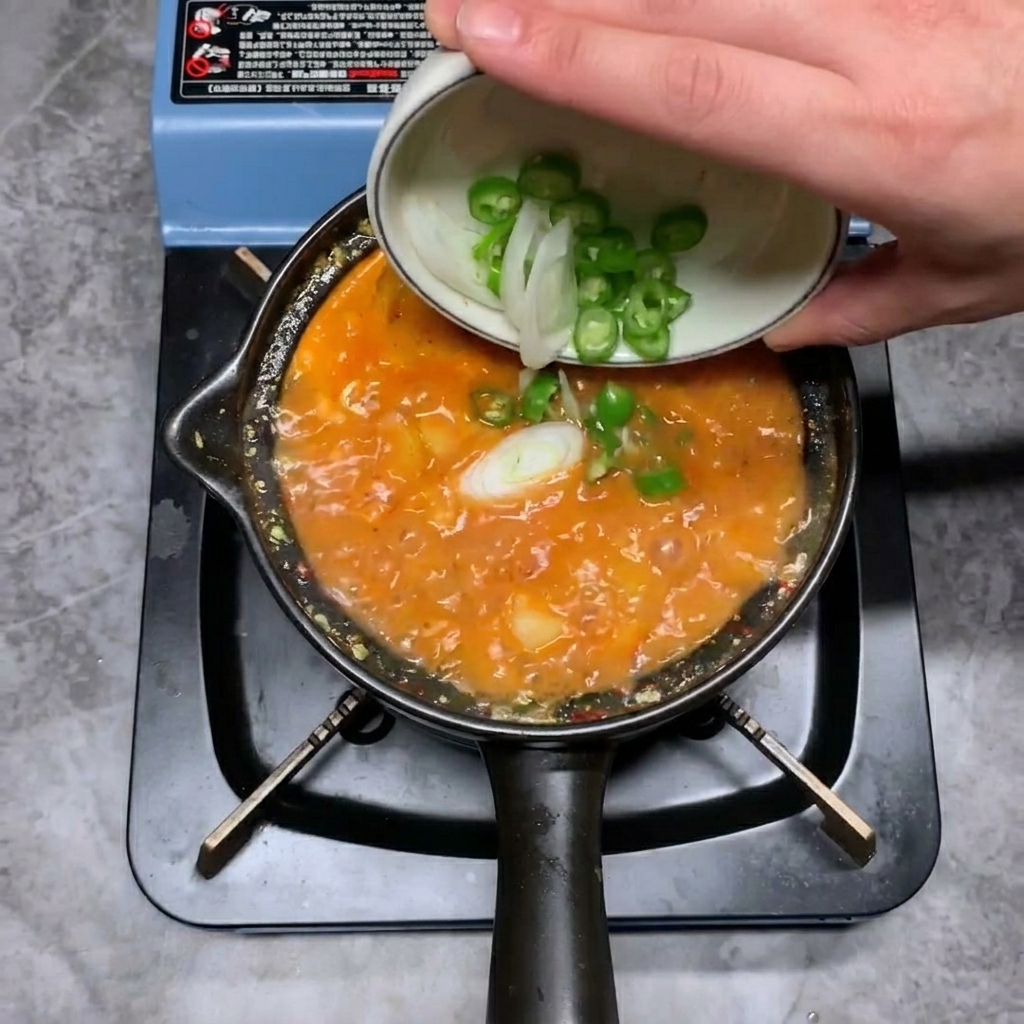
Drop the sliced green onions and fresh green chili peppers into the pot. These fresh aromatics bring a vibrant pop of color, a crisp flavor, and an extra layer of heat to the broth.
Tip: Use Korean green chilies (cheongyang gochu) for an authentic flavor, or substitute with jalapeños if unavailable. - 10Add beef seasoning powder
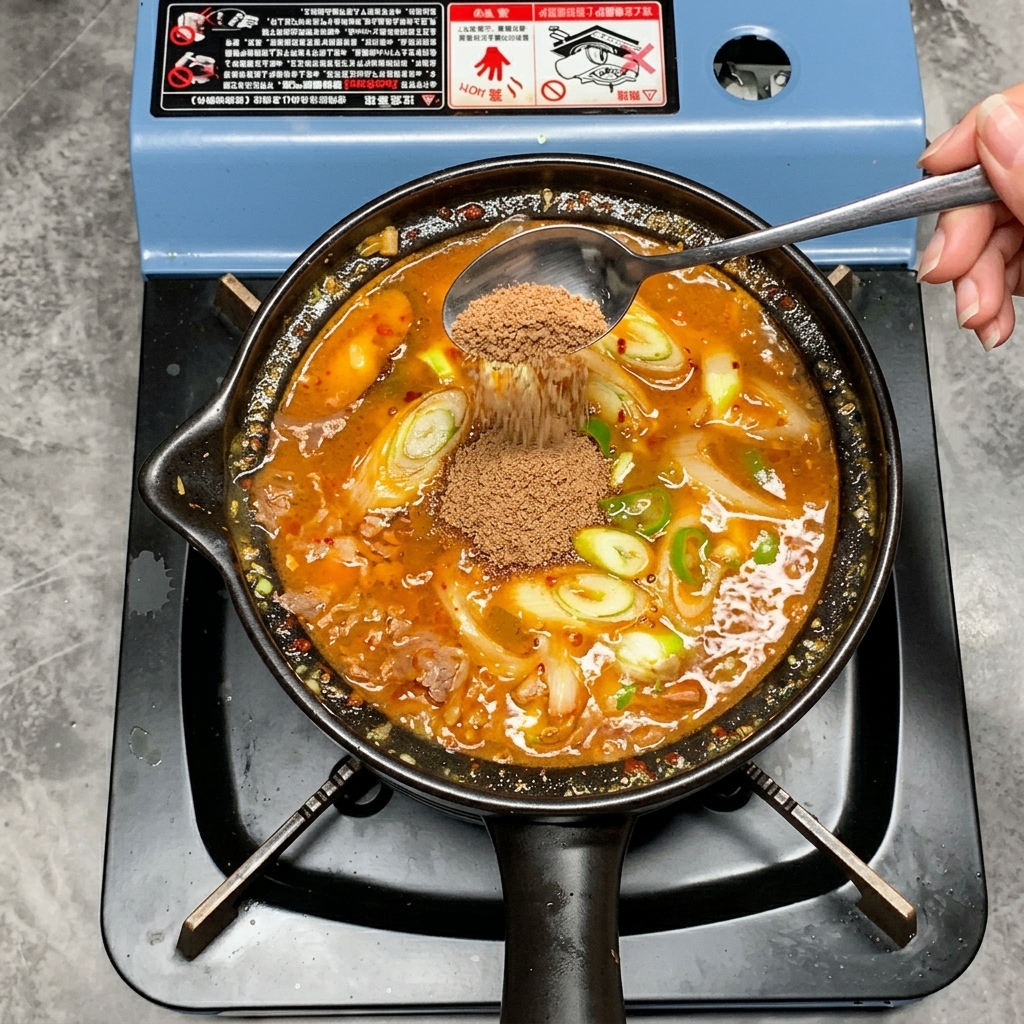
Stir in a bit of beef seasoning powder to enhance the umami and richness of the broth. Let the stew boil vigorously until all the ingredients are fully cooked and the flavors meld together perfectly.
Tip: Beef seasoning powder is a classic shortcut for achieving a deep, savory broth, but you can omit it if you prefer a lighter taste.