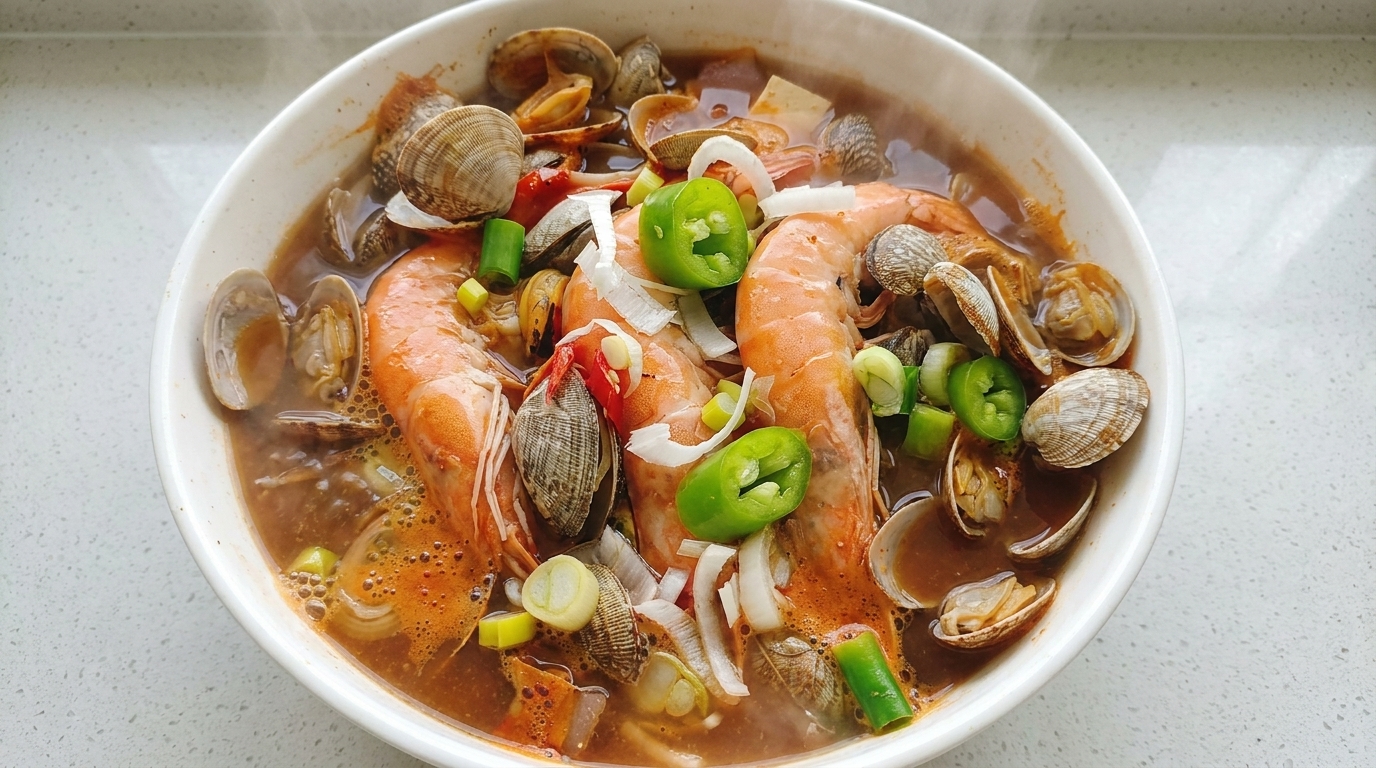
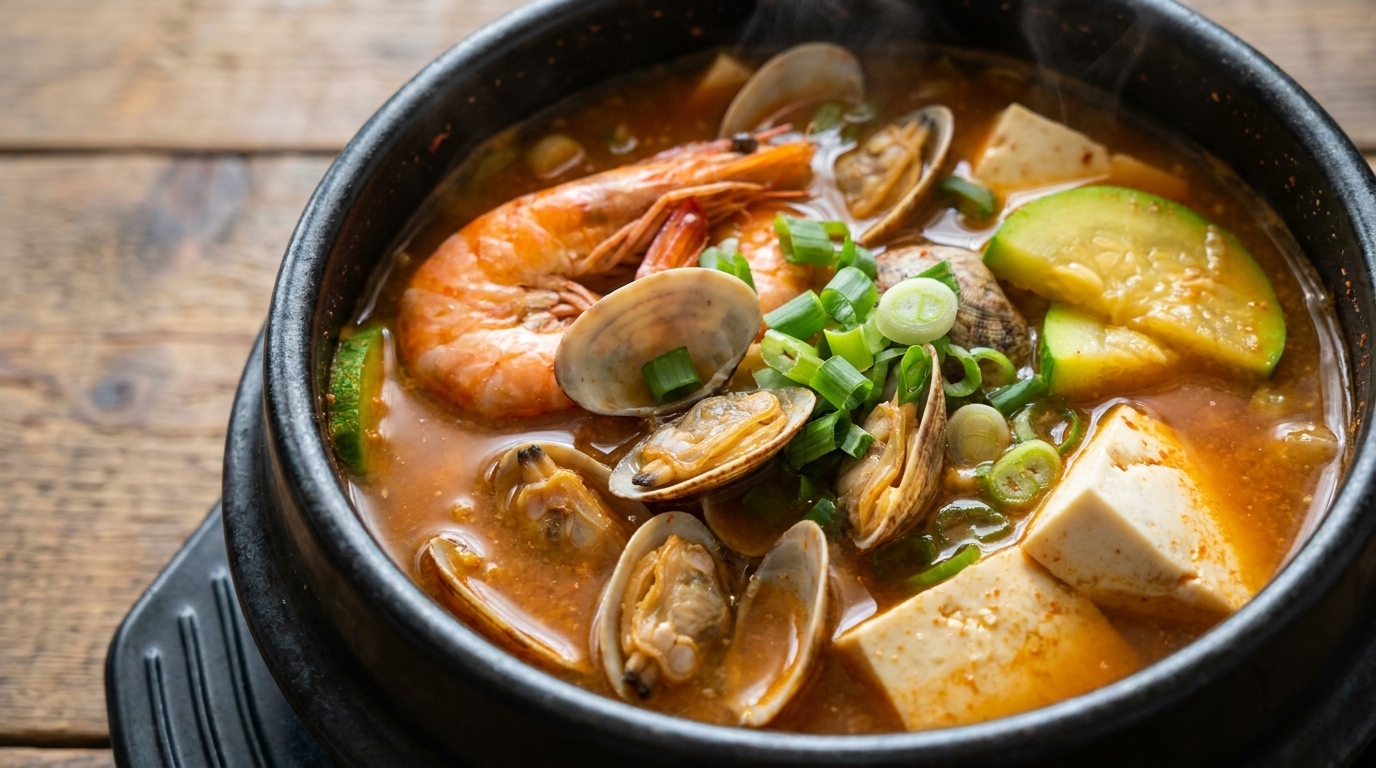
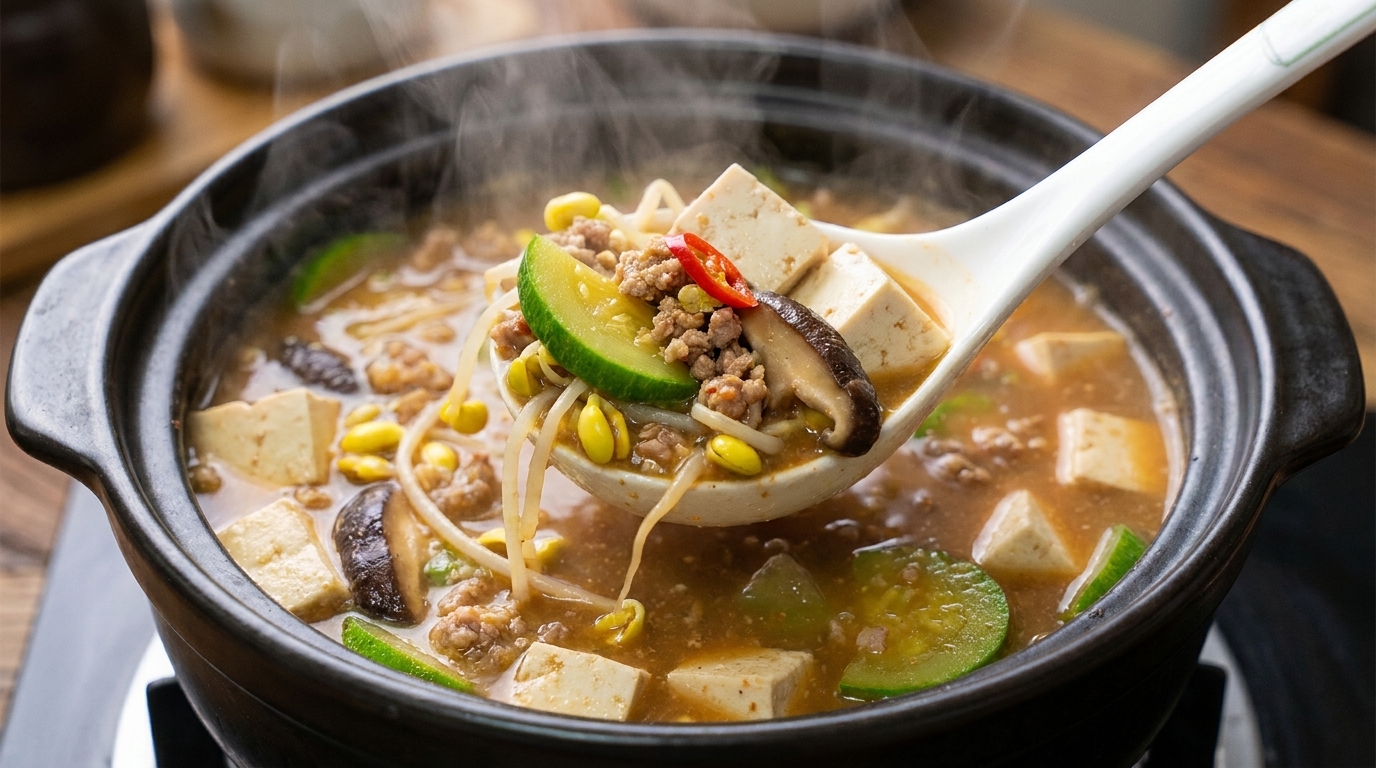
Korean Seafood Soybean Paste Soup (Haemul Doenjang Jjigae)
A soul-warming Korean classic featuring a trio of fresh seafood simmered in a rich, umami-packed fermented soybean broth with silky tofu and tender root vegetables.
Doenjang Jjigae is the quintessential Korean comfort food. This seafood variation, known as Haemul Doenjang Jjigae, elevates the earthy fermented paste with the natural sweetness of clams, shrimp, and octopus for a deeper, more complex ocean flavor.
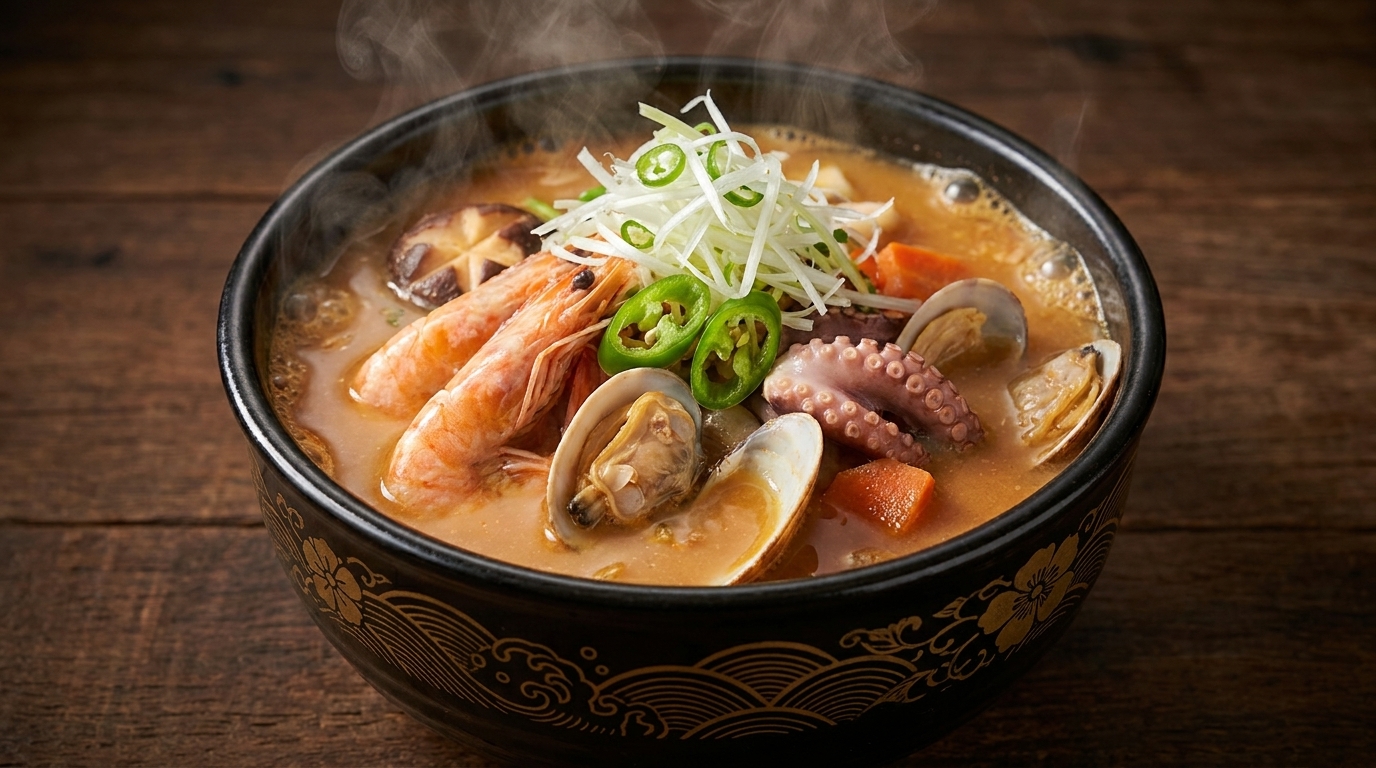
Ingredients
- 1 piece dried kelp (dashima)
- 4 whole large shrimp
- 200 g flower clams
- 150 g octopus tentacles
- 200 g firm tofu
- 100 g white radish
- 50 g carrots
- 3 pieces shiitake mushrooms
- 4 slices fresh ginger
- 3 tbsp Korean soybean paste (doenjang)
- 1 tbsp sake or cooking rice wine
- 12 piece green pepper
- 2 stalks green onions
Instructions
- 1Prepare the kelp stock
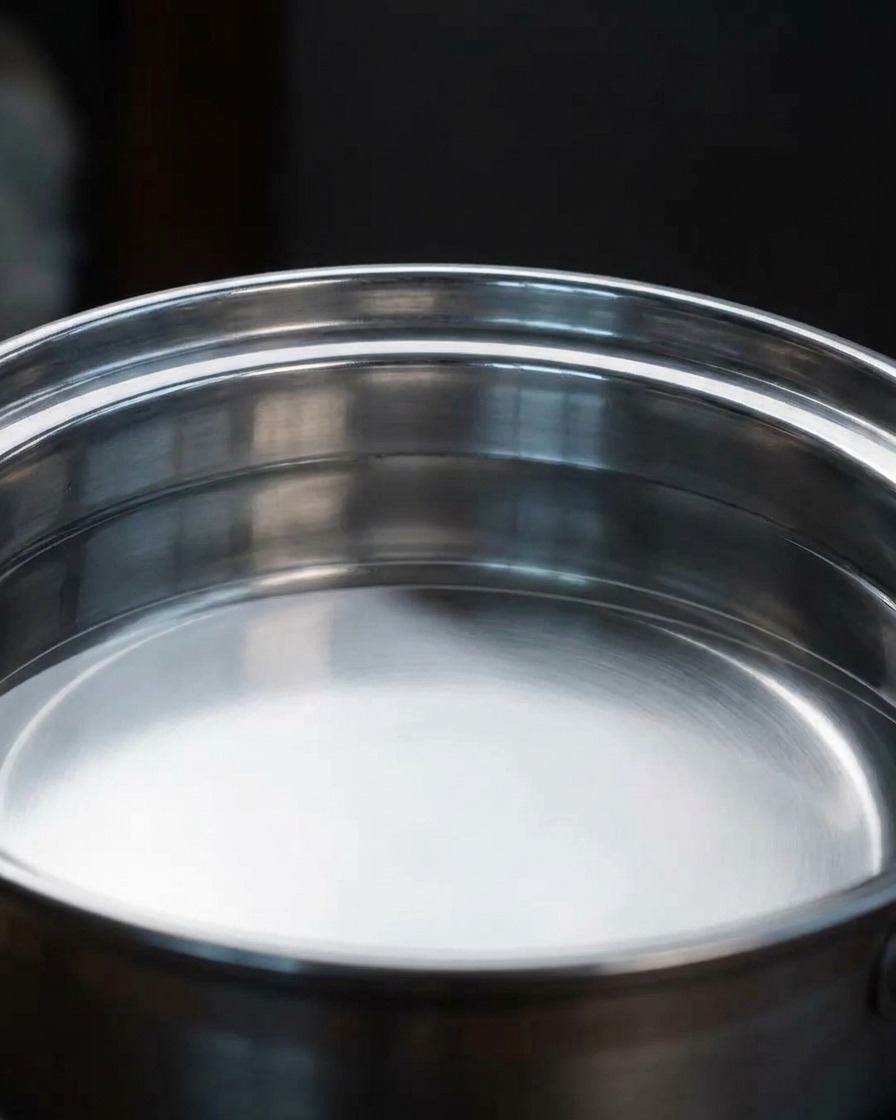
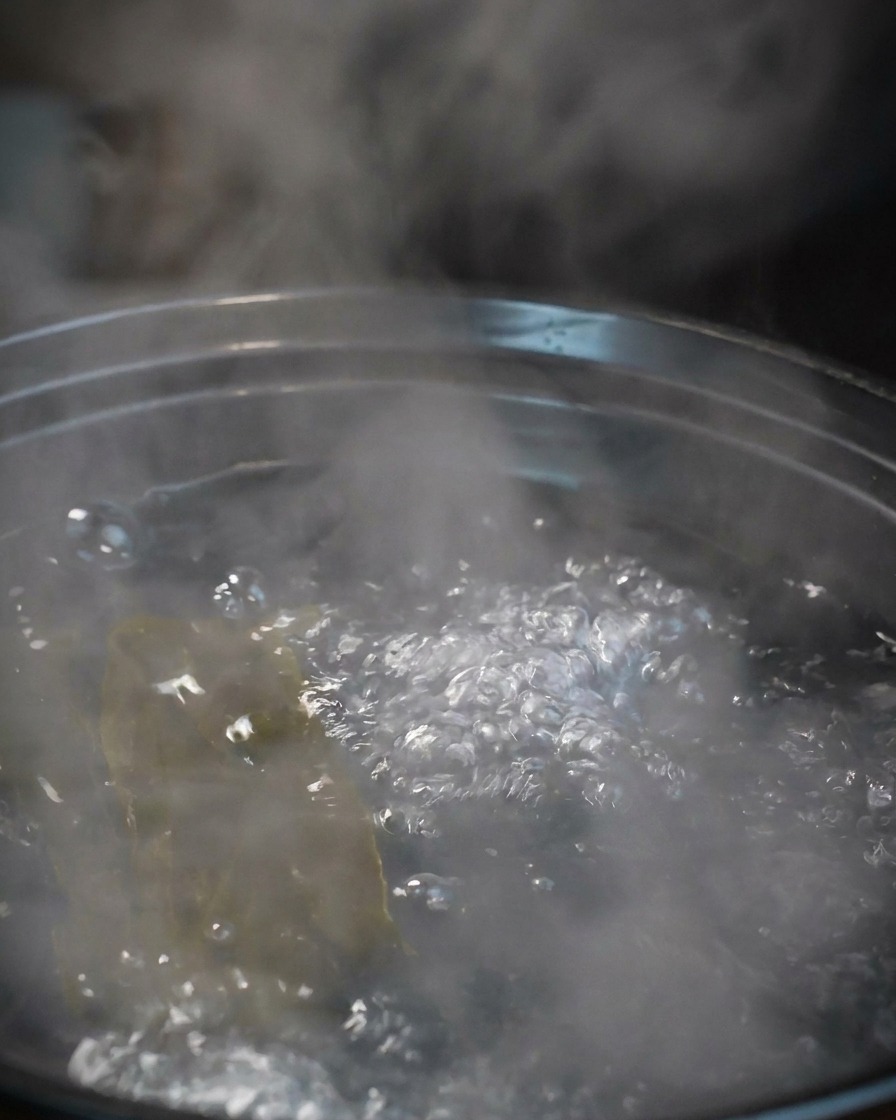
Begin by bringing a pot of water to a boil with a large piece of kelp. This creates a clean, umami-rich base for your seafood soup. Allow the kelp to simmer briefly to release its natural flavor into the stock.
Tip: Dont boil the kelp for too long, as it can sometimes release a bitter taste or slimy texture into the broth. - 2Add the large shrimp
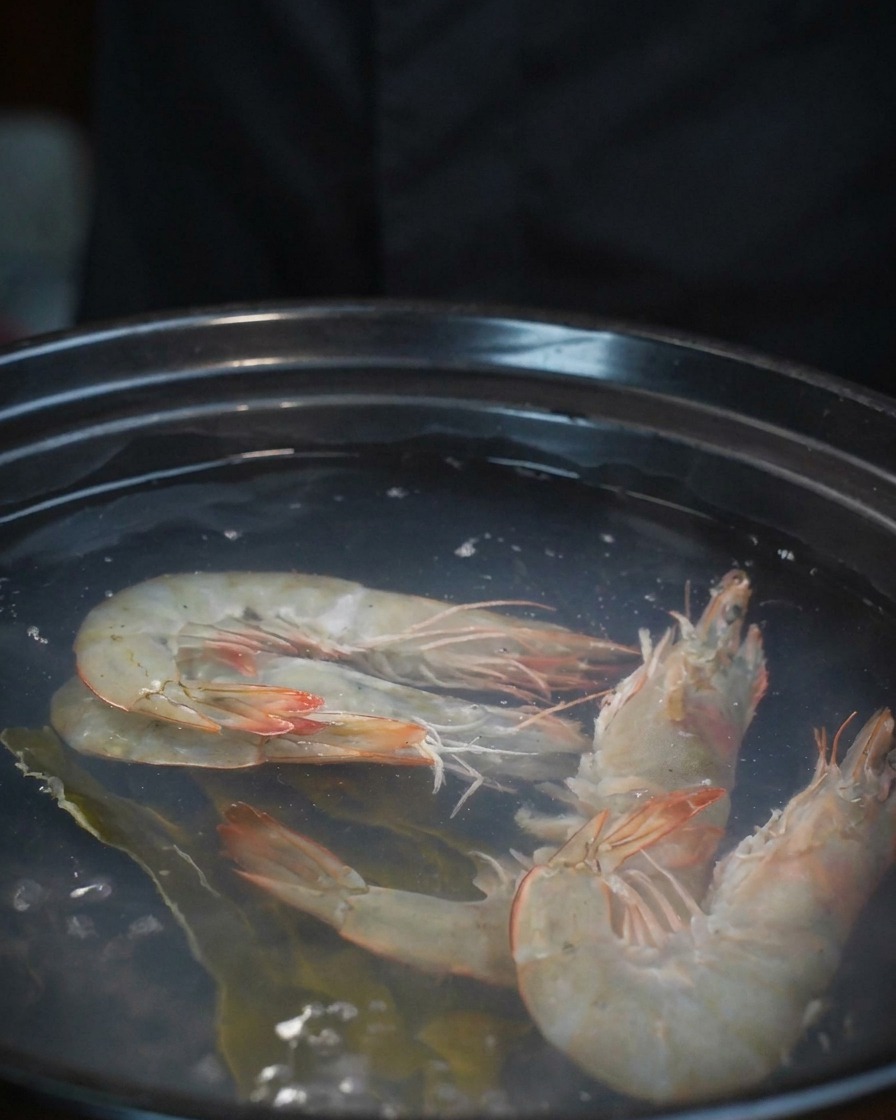
Carefully place the whole raw large shrimp into the boiling kelp stock. The shrimp will begin to turn pink as they cook, contributing a sweet seafood essence to the boiling water.
Tip: Keep the heat steady so the water continues to boil even after adding the cold seafood. - 3Add the flower clams
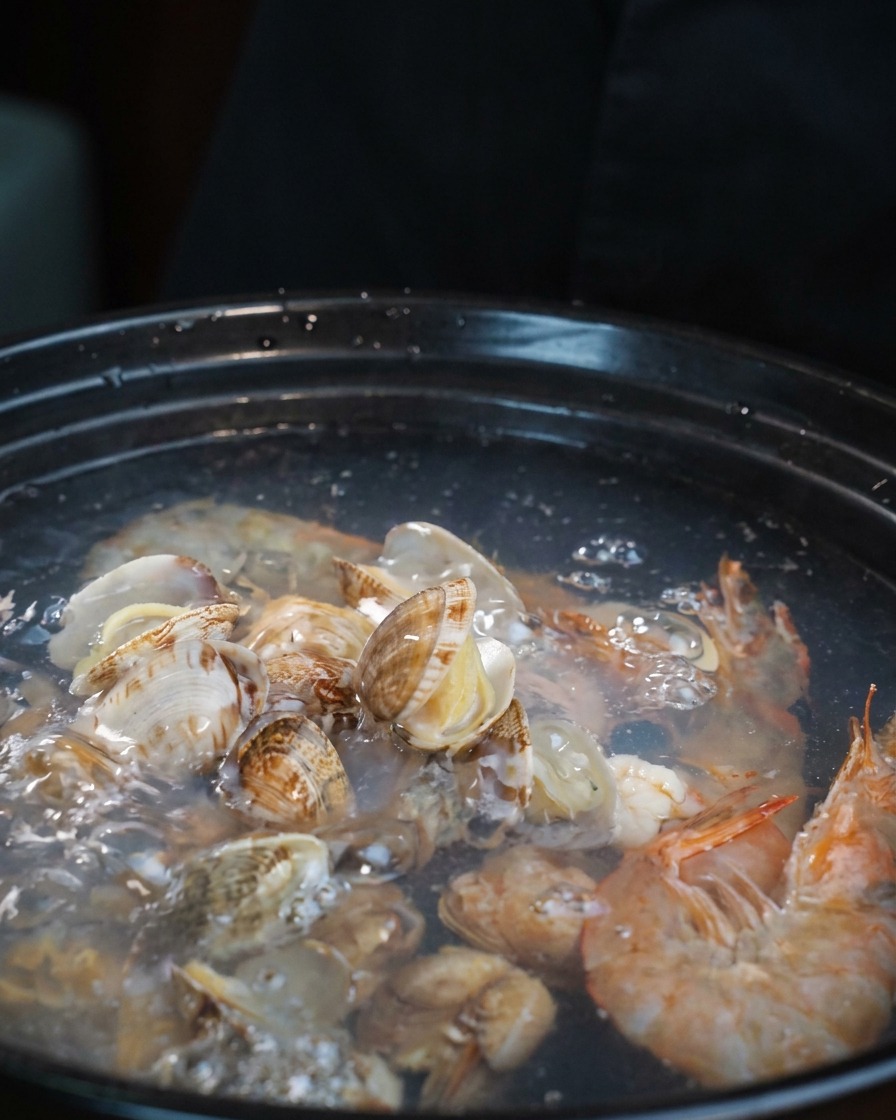
Next, pour a bowl of fresh flower clams into the pot. These clams will open up as they cook, releasing their savory juices directly into the broth to deepen the seafood flavor profile.
Tip: Ensure the clams are well-scrubbed and purged of sand before adding them to the soup. - 4Incorporate the octopus
Add the pieces of raw octopus to the variety of seafood already in the pot. Octopus adds a wonderful chewy texture and rounds out the trio of main seafood ingredients for this dish.
Tip: Cut the octopus into bite-sized pieces so they cook evenly and are easy to eat with the soup. - 5Add the tofu slices
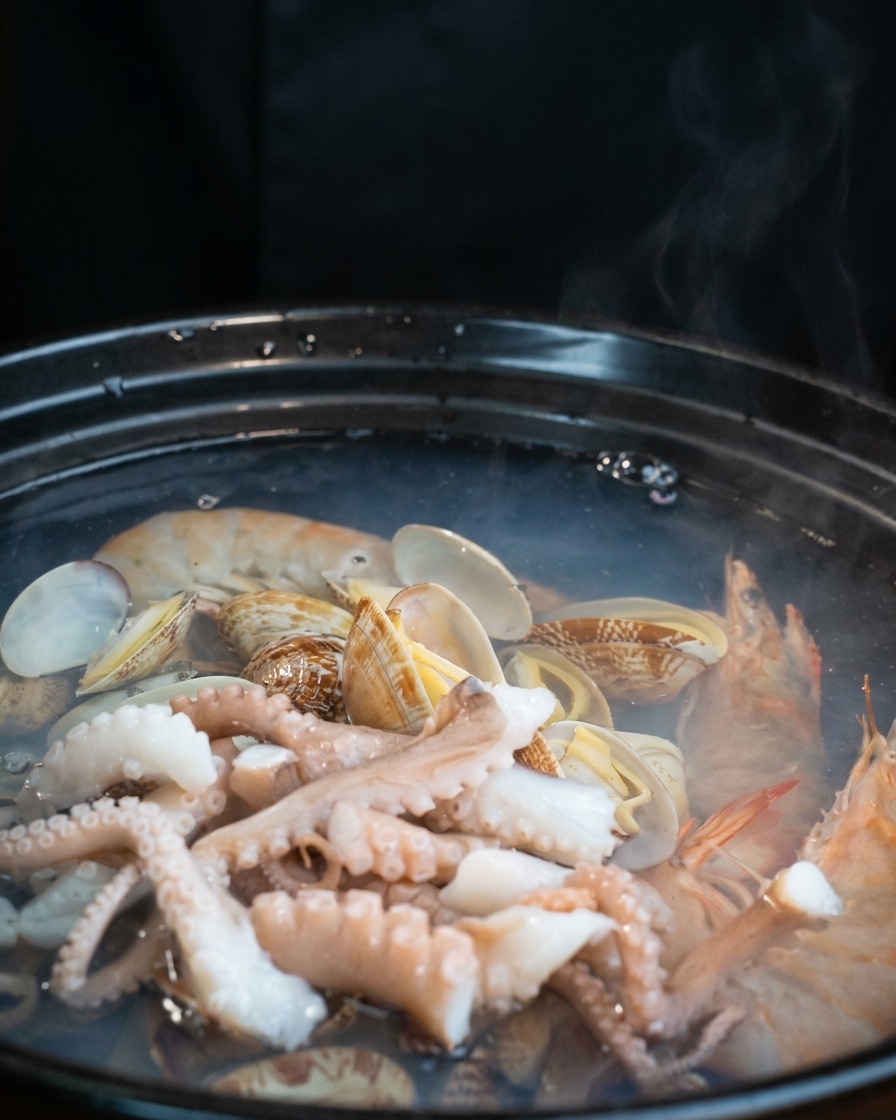
Gently place rectangular slices of white tofu into the boiling seafood soup. Tofu is excellent at absorbing the rich flavors of the broth while providing a soft, silky contrast to the seafood.
Tip: Use firm or extra-firm tofu if you prefer the slices to hold their shape better during the boiling process. - 6Add radish and carrots
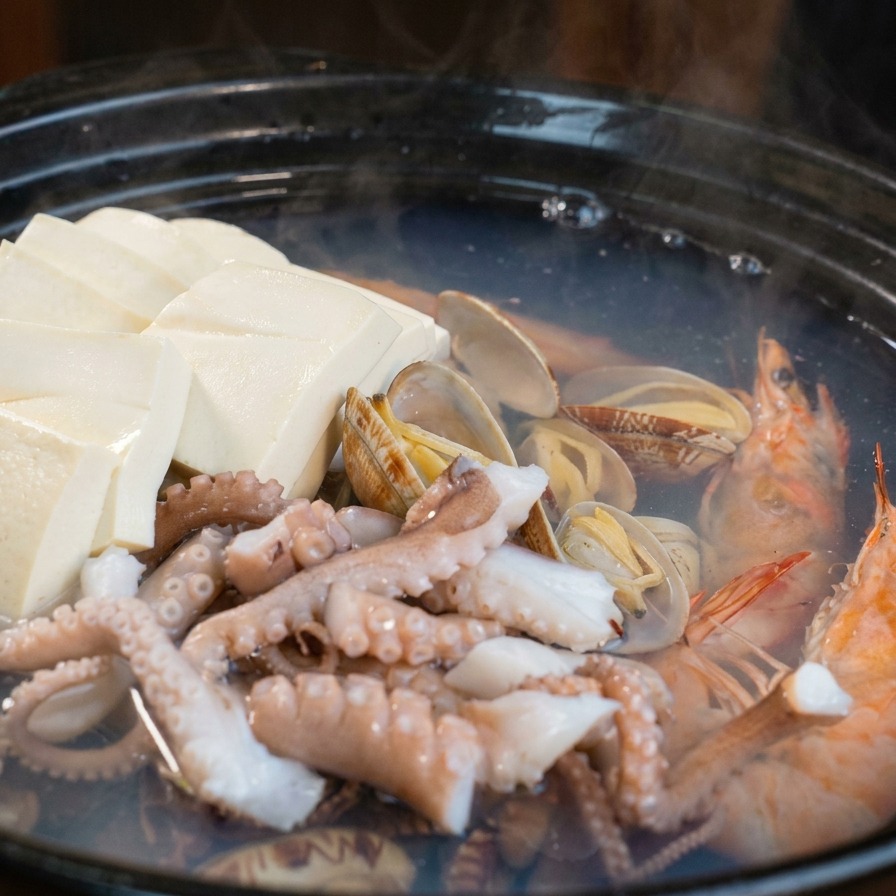
Carefully add the pre-cooked white radish slices and orange carrot slices into the boiling seafood broth. These root vegetables provide a subtle sweetness and contrasting textures that balance the savory depth of the soup.
Tip: Pre-cooking the white radish ensures it is fully tender by the time the seafood is finished, as radish typically requires a longer cooking time than shrimp or clams. - 7Incorporate shiitake mushrooms
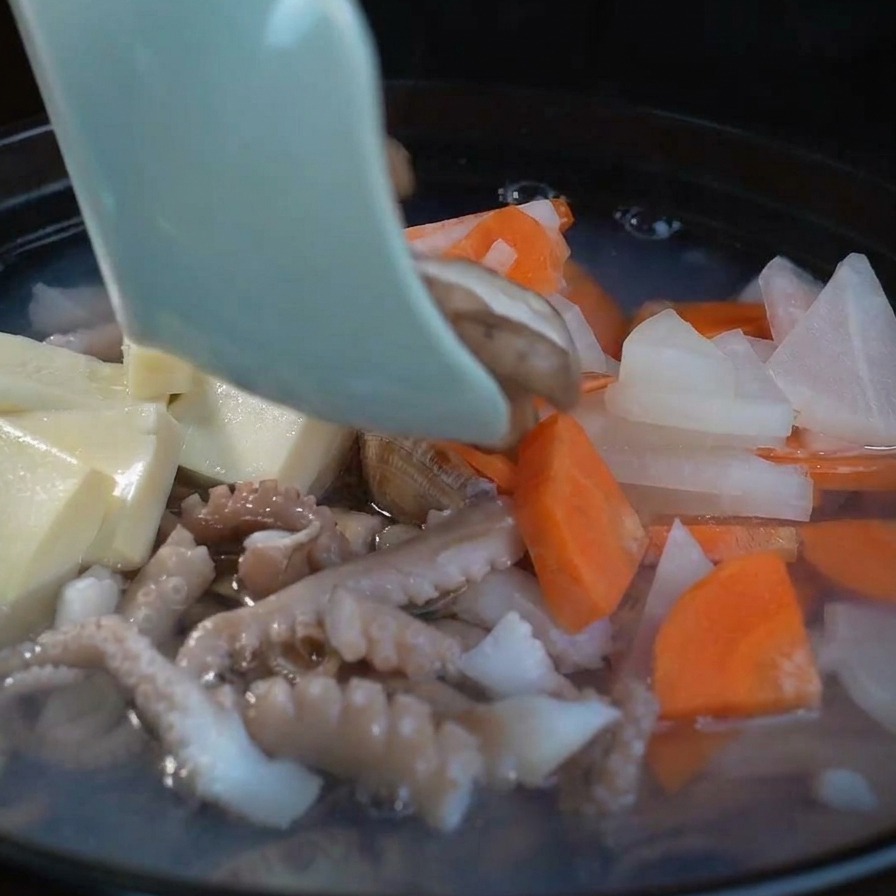
Add the fresh shiitake mushroom slices to the pot. Mushrooms are excellent for absorbing the rich seafood stock while contributing their own earthy umami notes to the flavor profile.
Tip: If fresh shiitake is unavailable, you can use other varieties like enoki or king oyster mushrooms, which also pair beautifully with seafood. - 8Add ginger for aroma
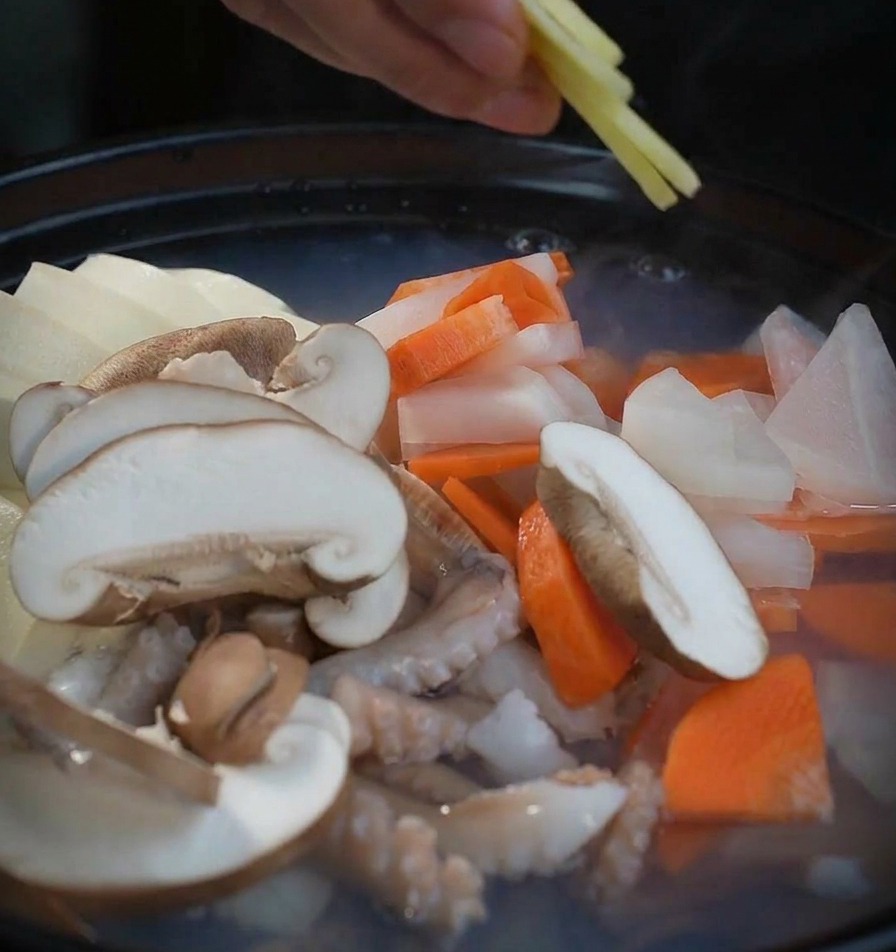
Add four slices of fresh ginger to the pot. The ginger helps to neutralize any strong seafood odors and infuses the broth with a subtle, warming aroma that balances the richness of the soybean paste.
Tip: Cut the ginger slices thinly to ensure they release their flavor quickly into the boiling stock. - 9Simmer the seafood and vegetables
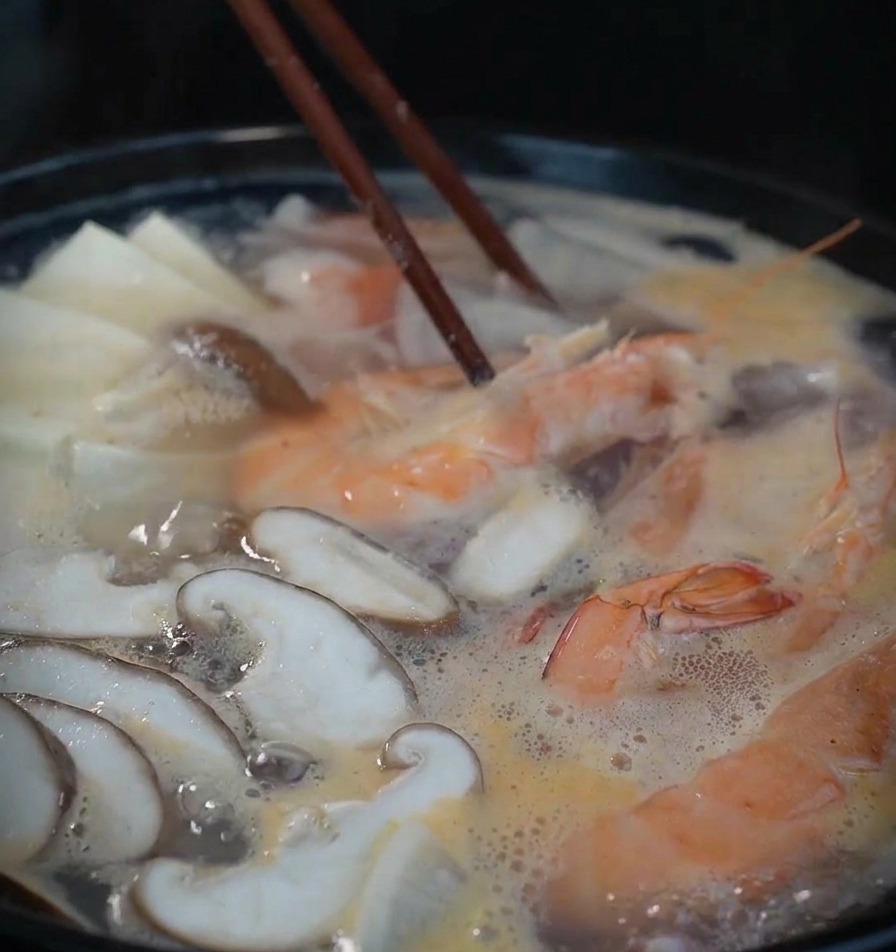
Allow the seafood, tofu, and assorted vegetables to simmer gently in the kelp stock. Use chopsticks to stir the ingredients occasionally, ensuring that the heat is distributed evenly and the flavors from the shrimp, clams, and octopus begin to infuse the broth. Maintain a steady boil to develop the rich base of the soup.
Tip: Stirring with chopsticks is gentler than using a spoon, which helps keep the delicate tofu cubes and tender seafood intact during the simmer. - 10Prepare the soybean paste
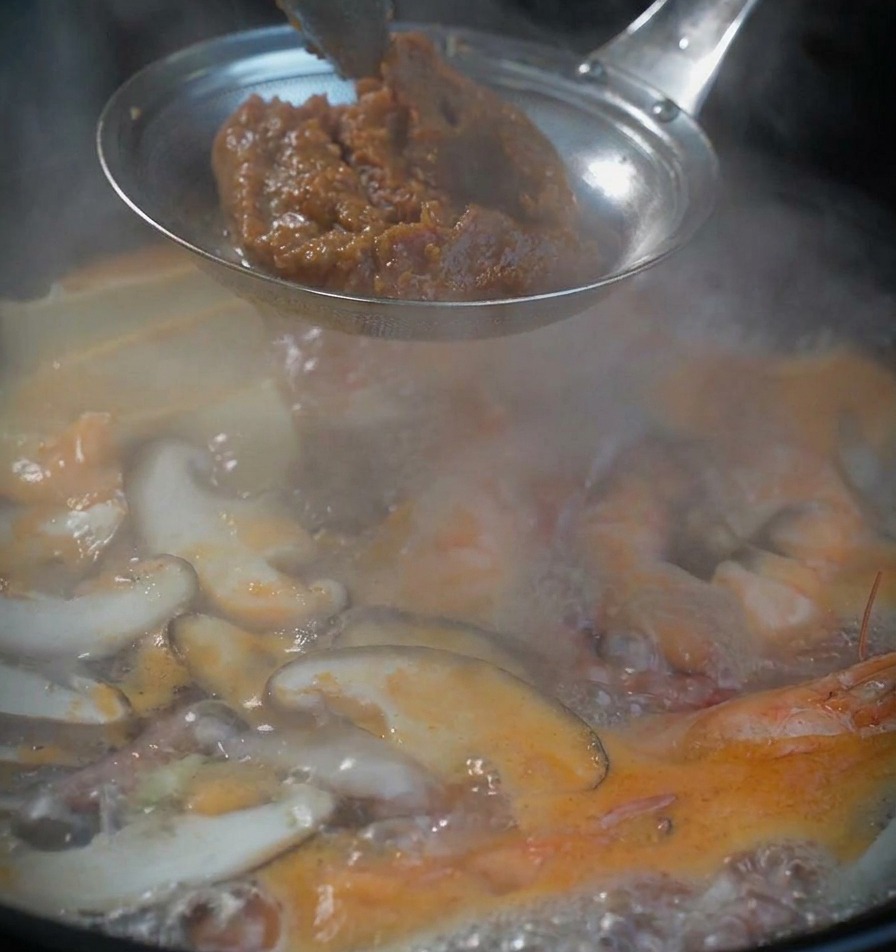
Take a generous scoop of thick brown soybean paste and place it into a fine-mesh metal strainer held directly over the boiling pot. Using a strainer is a professional touch that ensures the essence of the dish, the soybean paste, is integrated perfectly without leaving behind any gritty texture or undissolved clumps.
Tip: For the best results, use a high-quality fermented soybean paste to provide a deep, complex umami flavor that defines the character of the soup. - 11Dissolve the paste into the broth
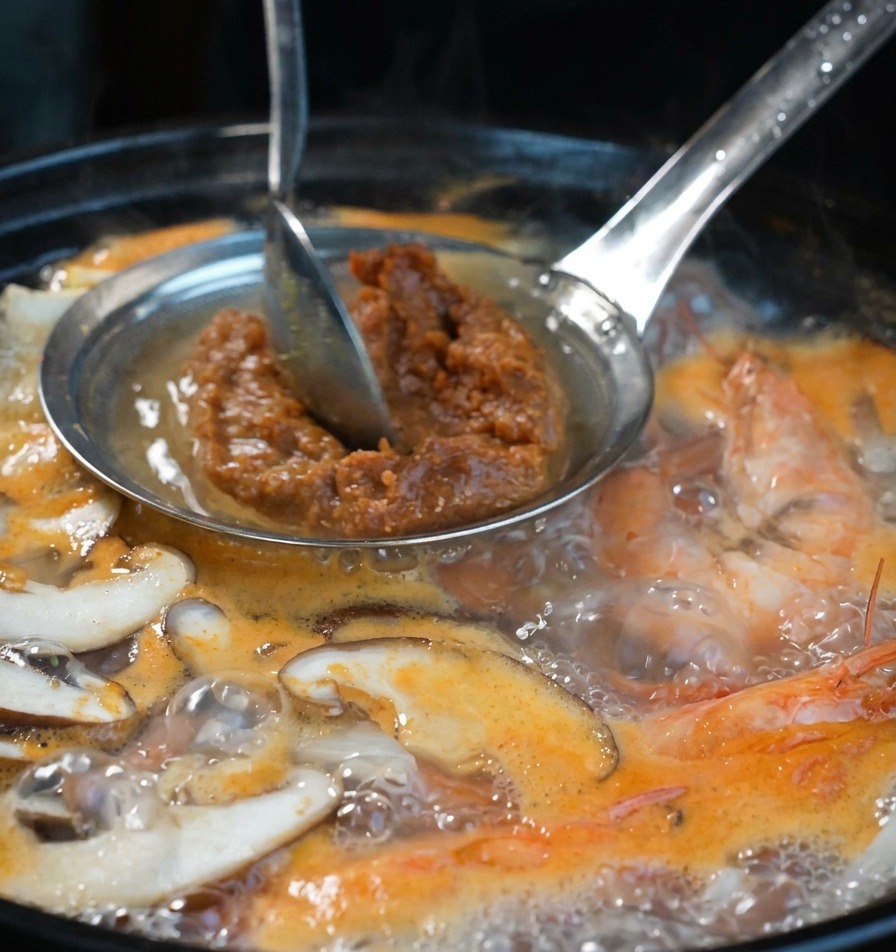
With a spoon, press and stir the soybean paste against the mesh of the strainer to dissolve it into the hot broth. Continue this process until the paste has completely passed through the strainer, leaving a smooth and flavorful soup base. This method guarantees a refined consistency and ensures the savory flavor is evenly distributed.
Tip: Avoid boiling the soup vigorously for a long time after adding the soybean paste, as prolonged high heat can cause the paste to lose its delicate aroma. - 12Season with sake
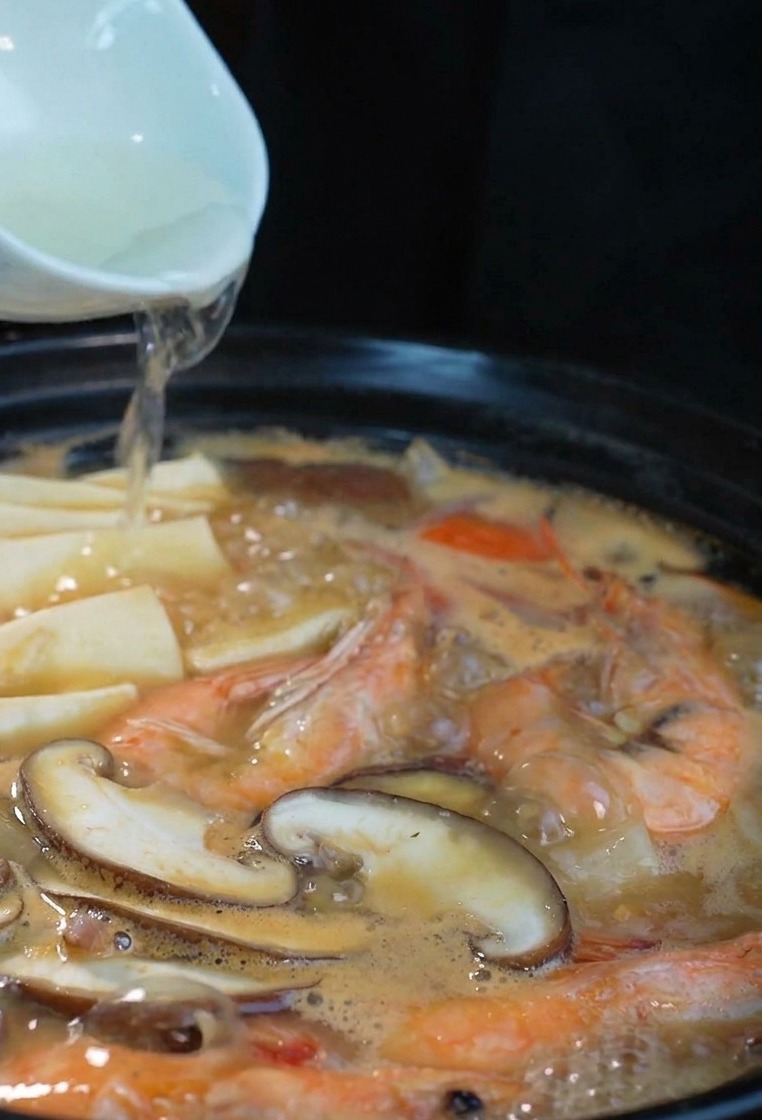
Just before the soup is finished, pour in a splash of sake while the broth is still bubbling. This addition helps to neutralize any remaining fishy notes from the seafood and enhances the overall aroma of the Soybean Paste Soup.
Tip: Add the sake toward the end of the cooking process to preserve its delicate flavor profile without over-boiling it. - 13Add green peppers
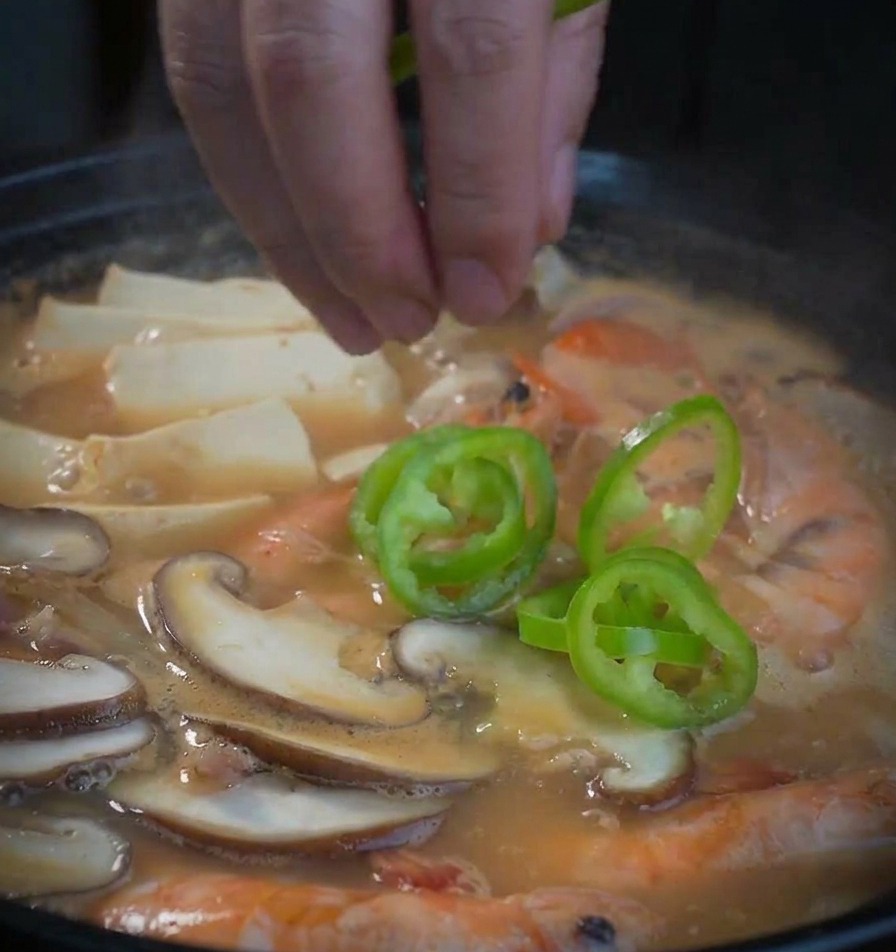
Introduce sliced green pepper rings into the simmering soup. These add a mild heat and a fresh, crisp contrast to the savory seafood and umami-rich broth.
Tip: If you prefer a spicier flavor, you can leave the seeds in the pepper rings or use a hotter variety of chili. - 14Garnish with green onions
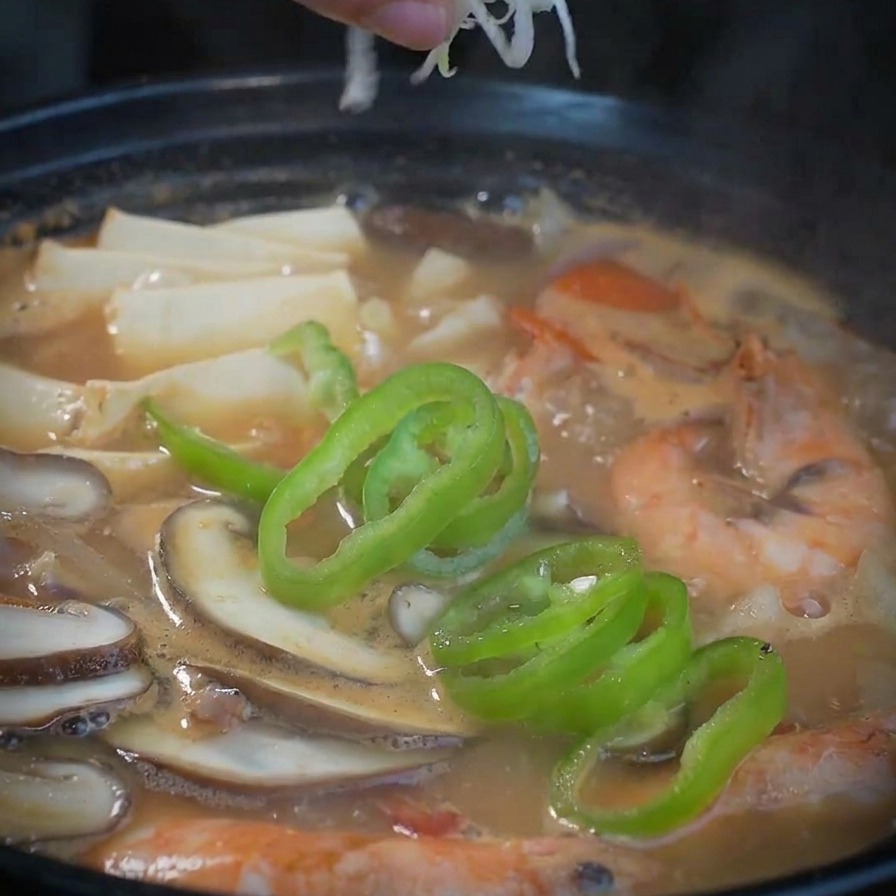
Finish the dish by scattering a generous handful of sliced white and green onions over the surface. This final garnish adds a bright pop of color and a fresh bite that completes the soup.
Tip: Add the onions just seconds before serving to maintain their vibrant color and slight crunch.