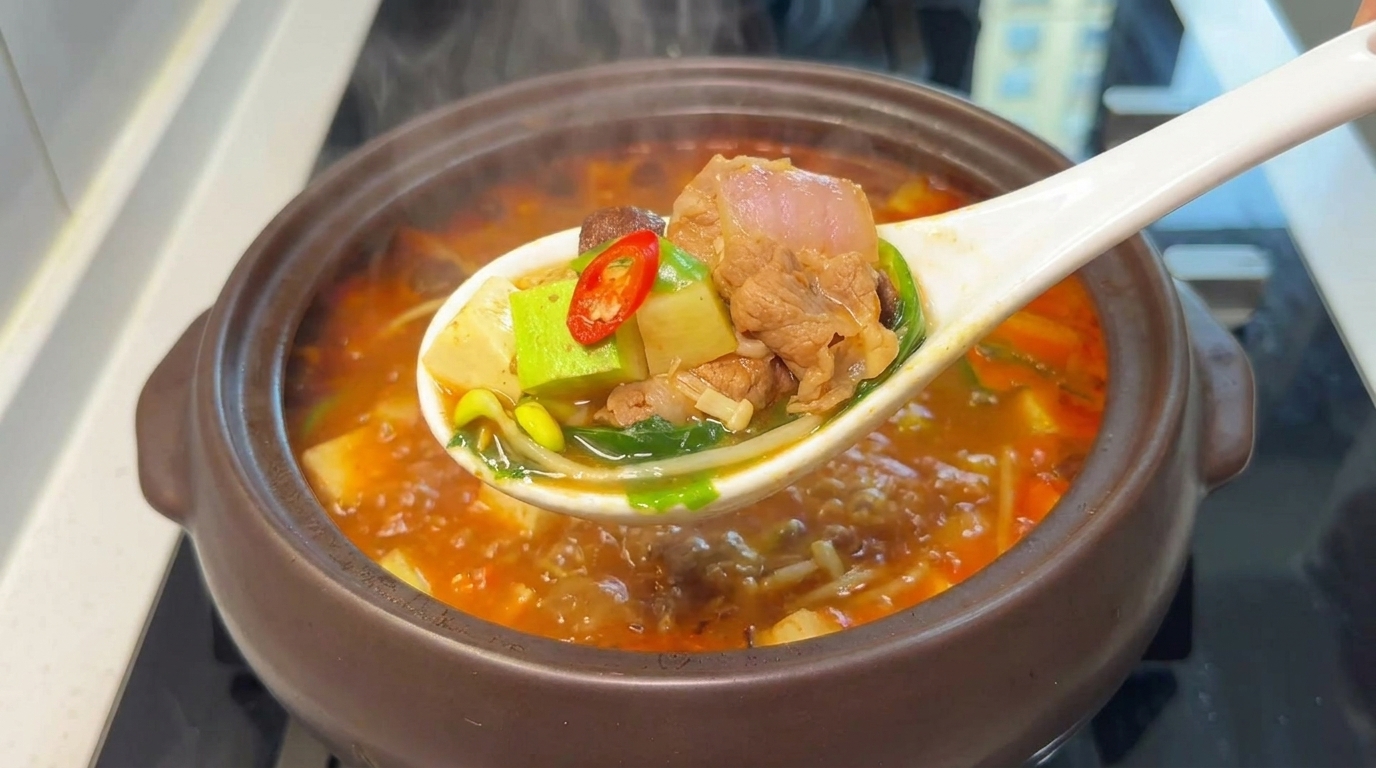
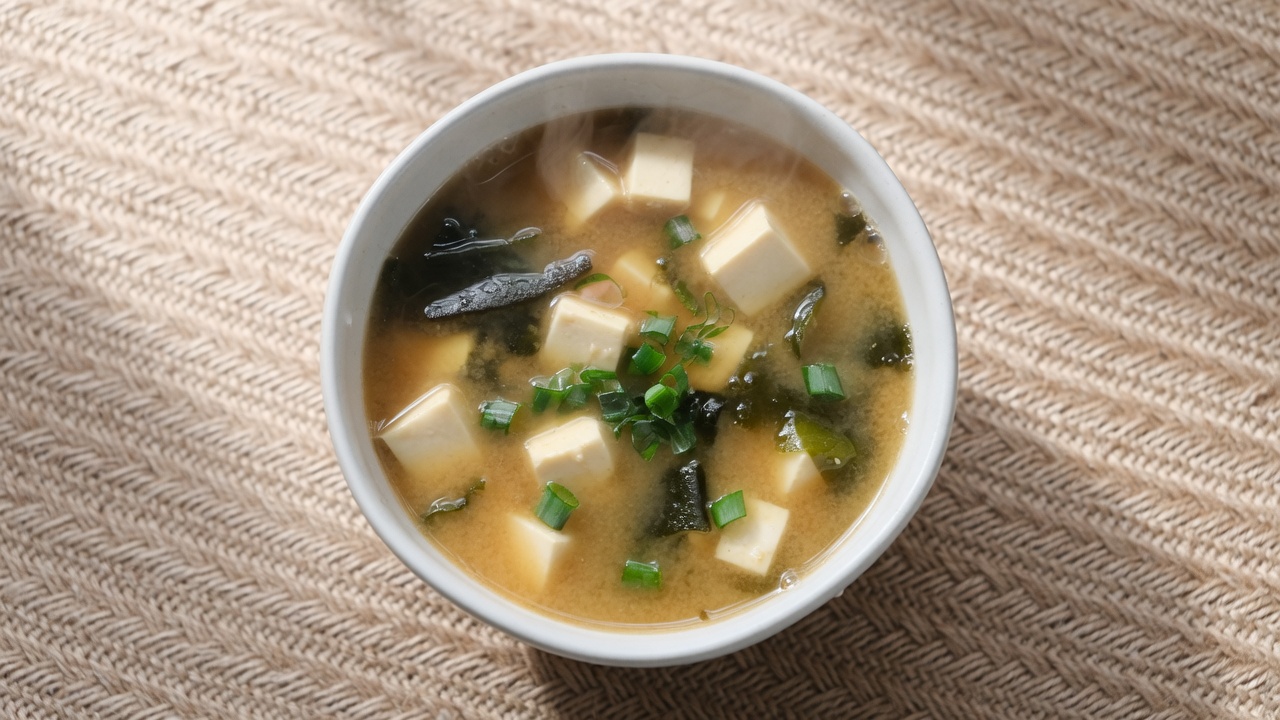
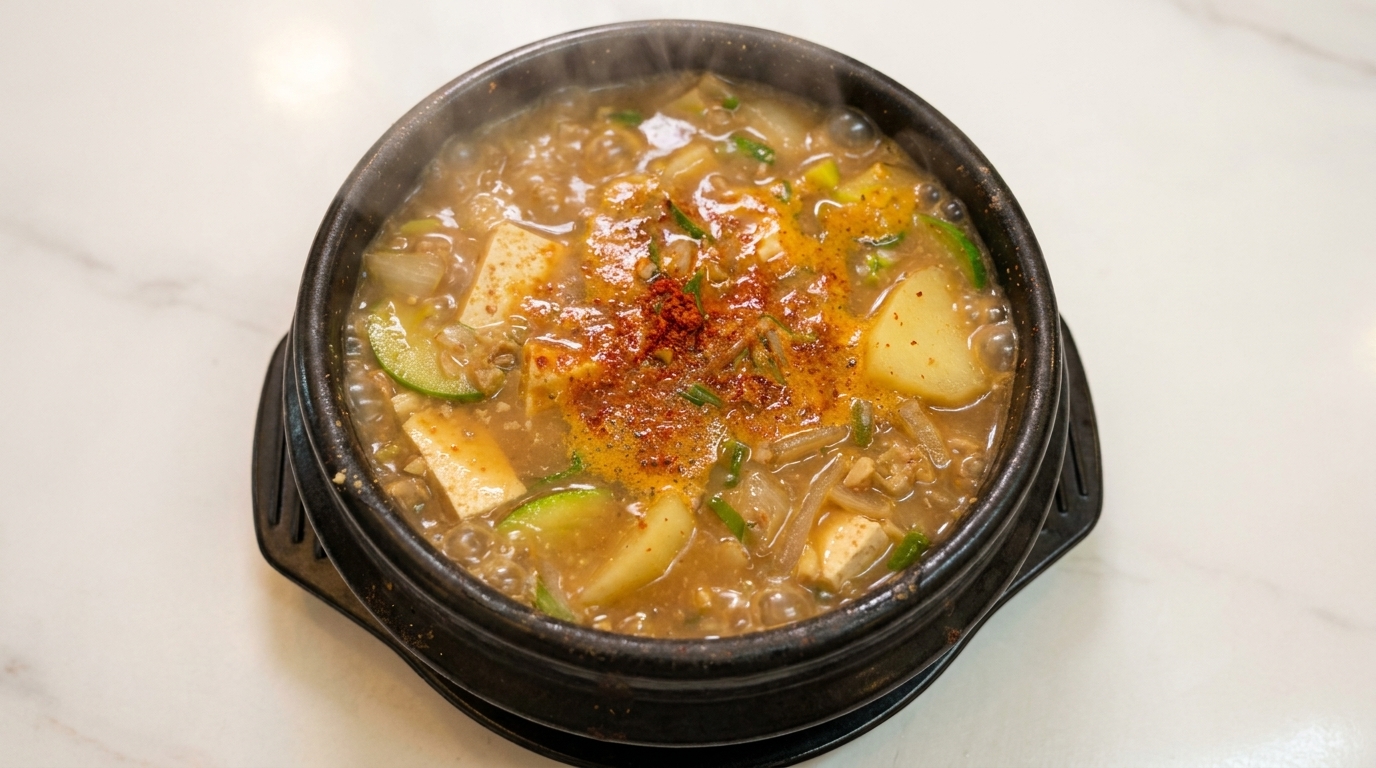
Savory Korean Soybean Paste Soup (Doenjang-guk)
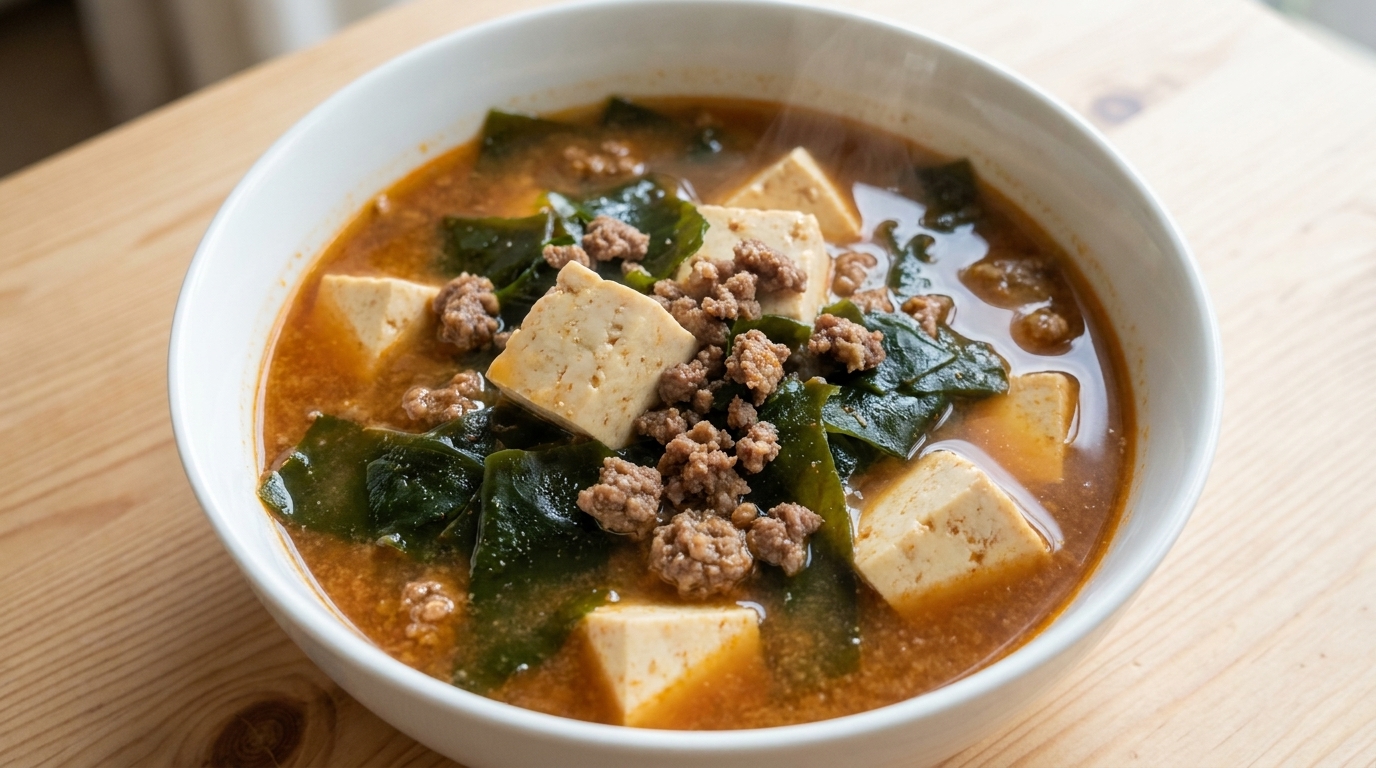
A nourishing and savory Korean classic, this soybean paste soup pairs tender tofu with nutrient-rich seaweed and seasoned ground beef in a deep, umami-rich broth.
Korean soybean paste soup, or doenjang-guk, is a staple of home-cooked Korean meals. It is highly valued for its earthy, fermented depth and ability to bring together simple pantry ingredients into a deeply satisfying, warming bowl. This version incorporates ground beef for a heartier texture, making it a perfect balanced main for any day of the week.
Ingredients
- 150 g ground beef
- 2 tbsp Korean soybean paste (doenjang)
- 100 g firm tofu, cubed
- 15 g dried wakame seaweed
- 1 tbsp minced garlic
- 1 tsp sesame oil
- 800 ml water
- to taste salt
Instructions
- 1Heat the pot with sesame oil
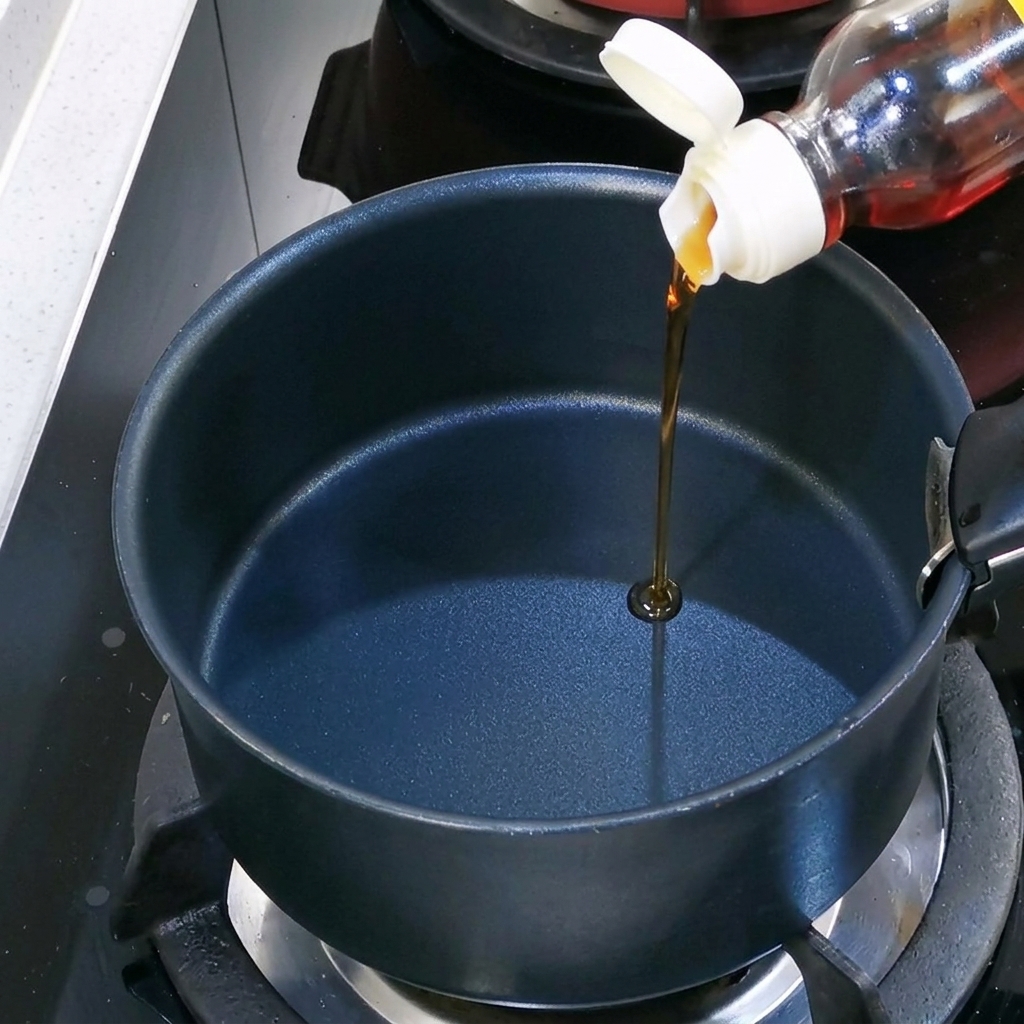
Place a pot on the stove and pour in a small amount of sesame oil to coat the bottom.
Tip: Using a high-quality toasted sesame oil will provide a deeper, nuttier flavor base for the soup. - 2Sauté the garlic
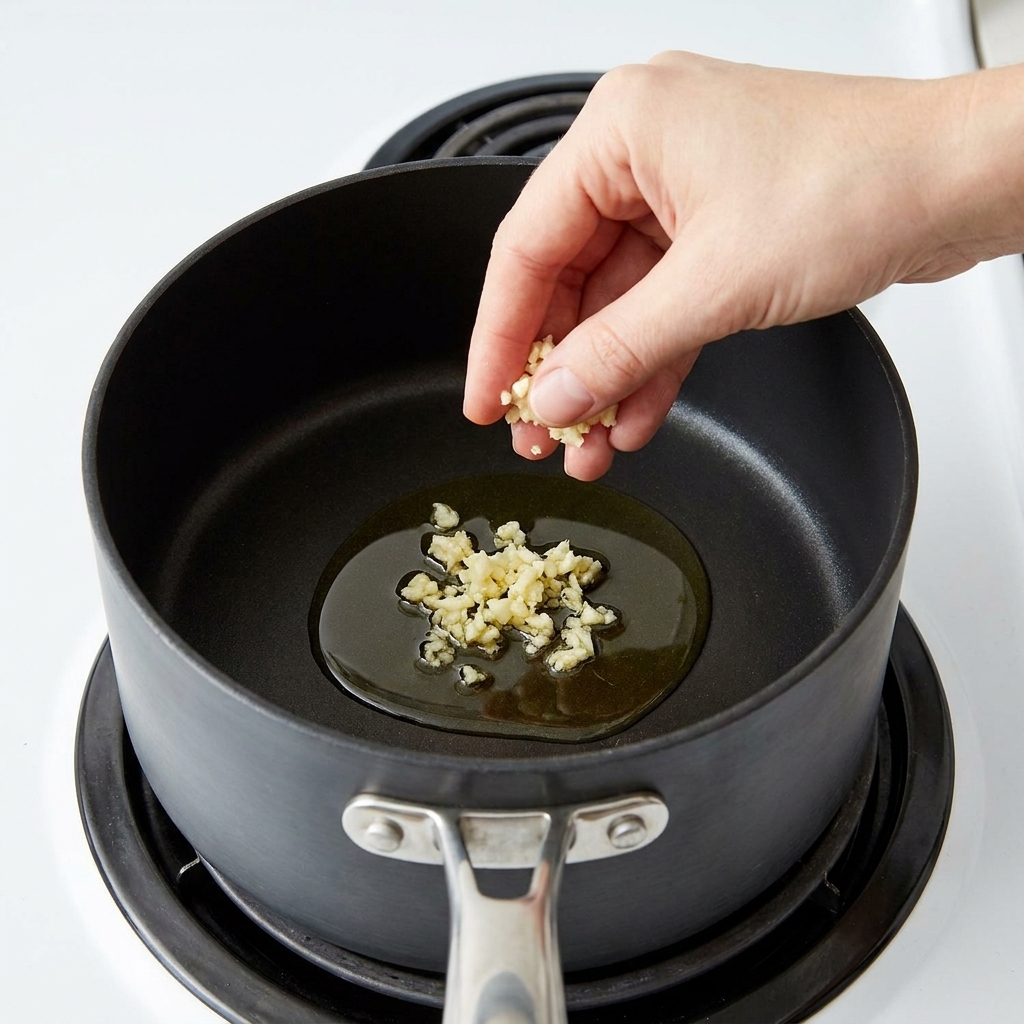
Add minced garlic to the pot with the hot sesame oil. Sauté over medium heat until the garlic becomes fragrant and aromatic.
Tip: Keep the heat moderate to avoid burning the garlic, which can turn bitter. - 3Cook the ground beef
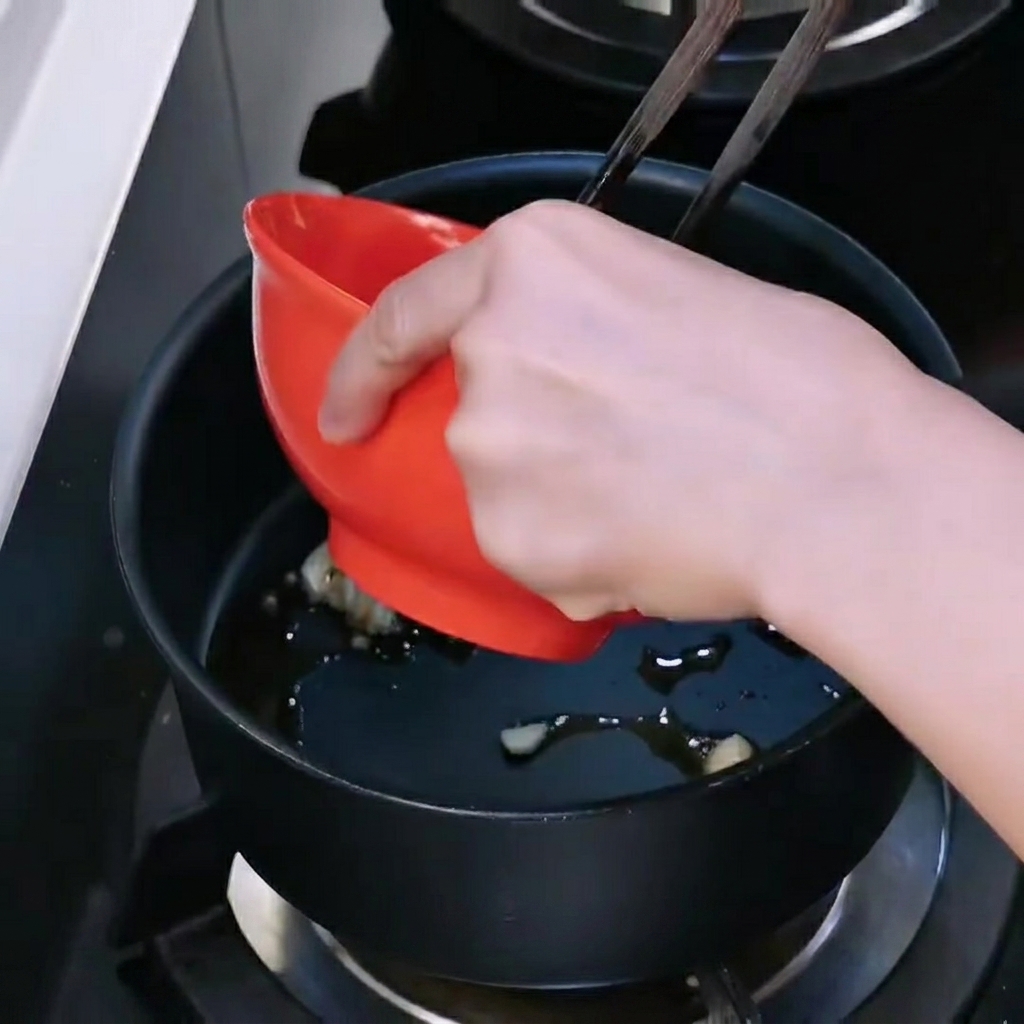
Add the ground beef to the pot with the sautéed garlic. Stir-fry the mixture until the beef is fully browned and cooked through.
Tip: Break the beef into smaller pieces with your chopsticks or a spoon to ensure even cooking. - 4Add the wakame seaweed
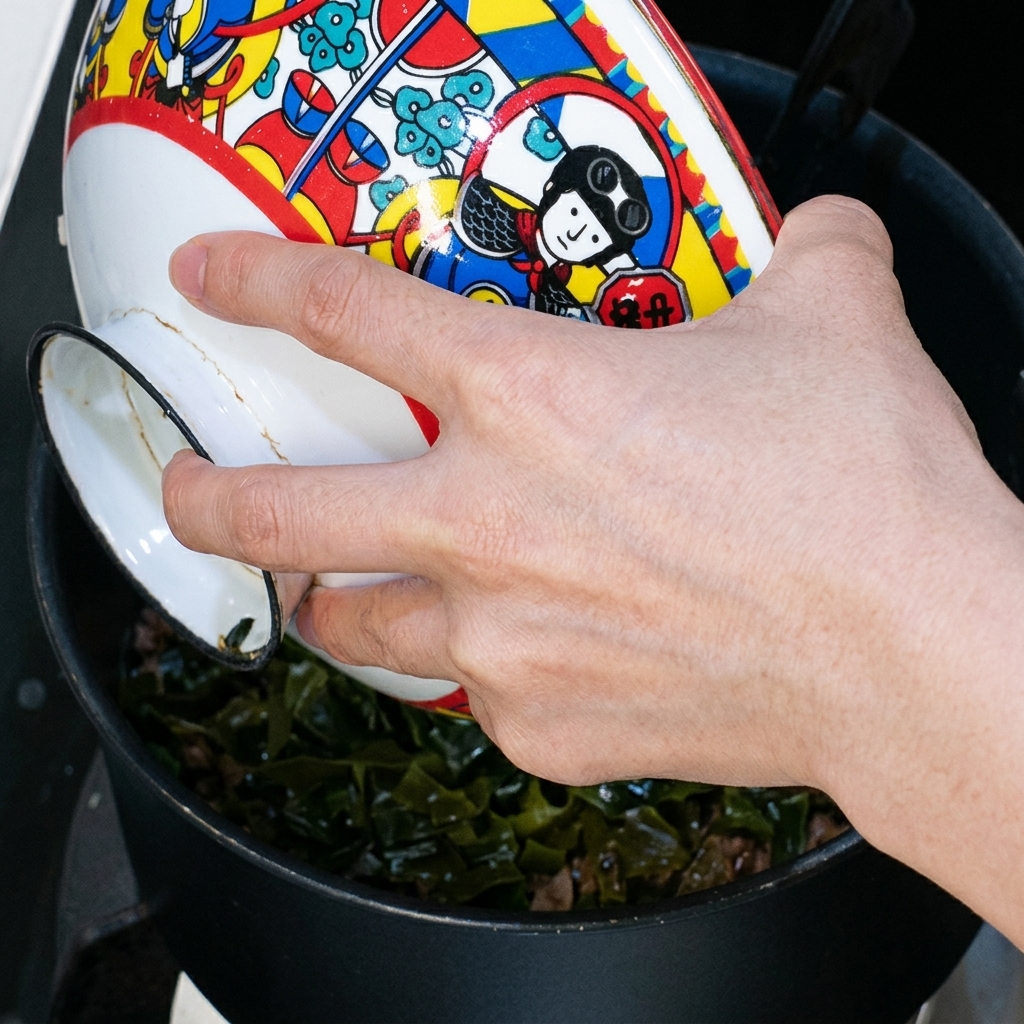
Incorporate the wakame seaweed into the pot with the cooked beef. Stir briefly to combine the flavors.
Tip: Wakame rehydrates quickly, so it only needs a light stir-fry with the beef before adding liquid. - 5Add water
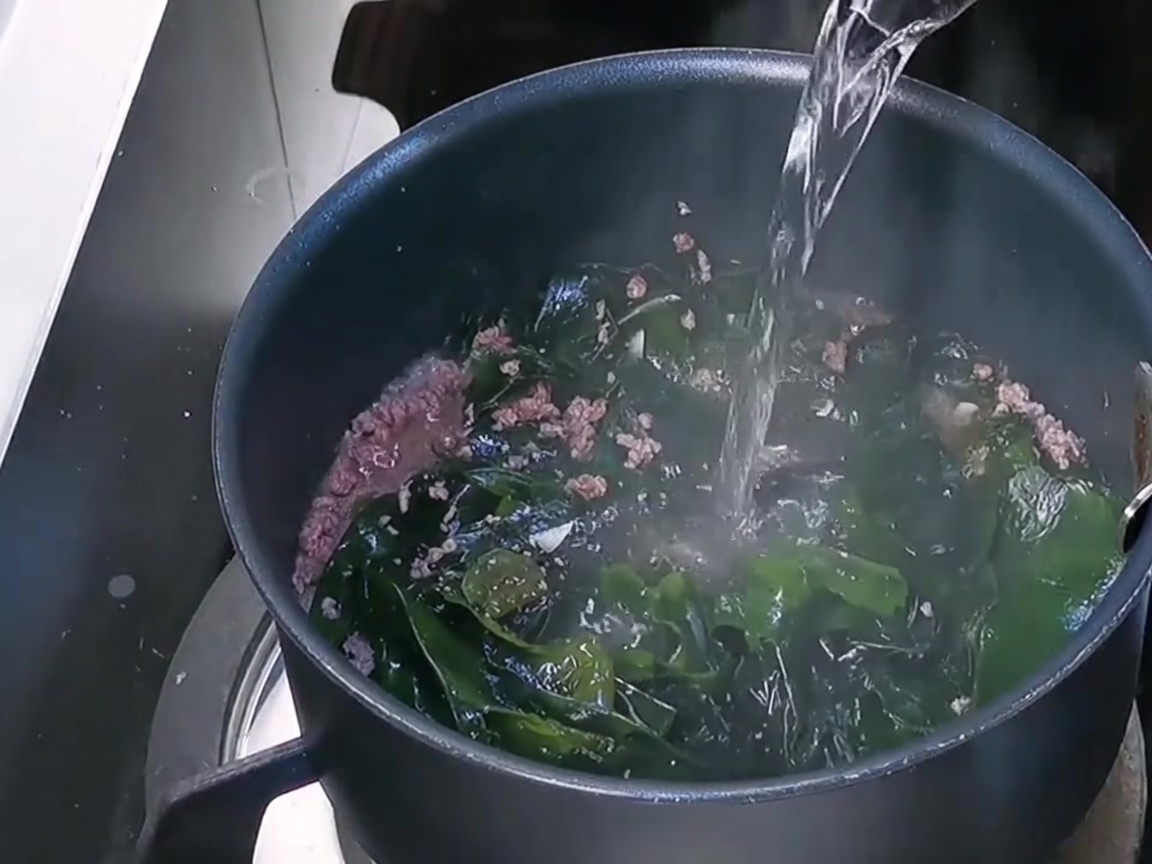
Pour water into the pot over the beef and seaweed mixture. Increase the heat to bring the soup to a boil.
Tip: Using hot water can help speed up the boiling process. - 6Dissolve the soybean paste
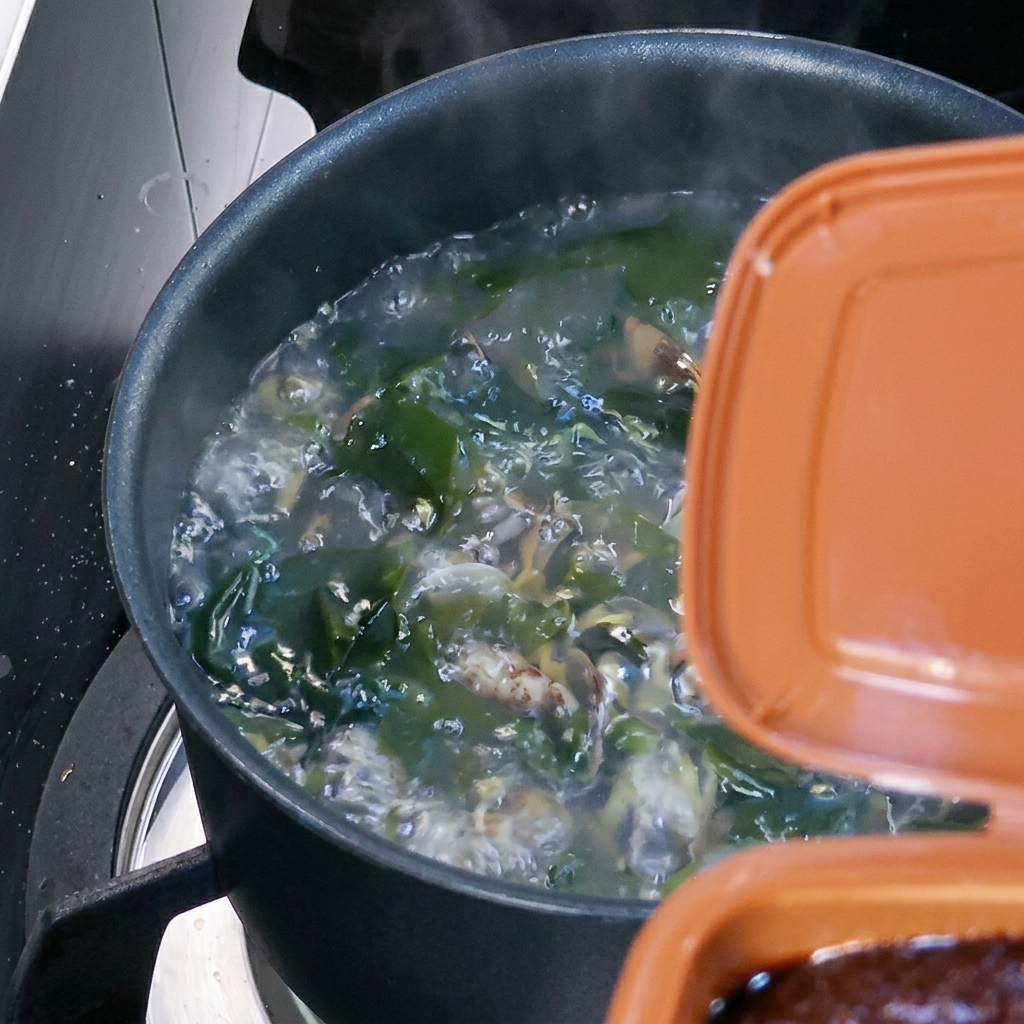
After the soup has been boiling for about five minutes, add a spoonful of Korean soybean paste. Stir thoroughly until the paste is completely dissolved into the broth.
Tip: Ensure the paste is fully incorporated so there are no clumps remaining in the soup. - 7Add the tofu
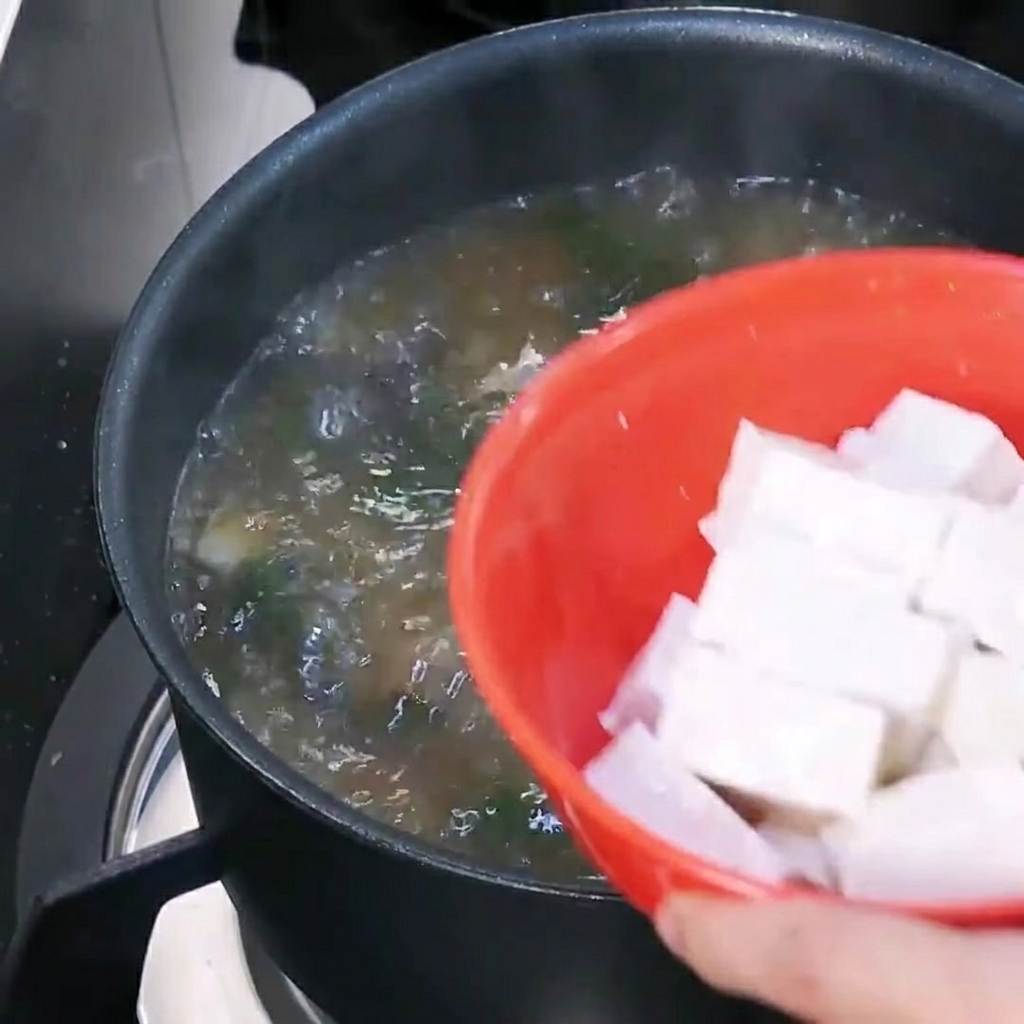
Carefully drop the cubed tofu into the boiling soup. Allow it to simmer for a few minutes so the tofu can absorb the flavors of the soybean paste broth. Adjust seasoning with salt if necessary before serving.
Tip: Be gentle when adding the tofu to prevent the cubes from breaking apart while they heat through.