Easy Rice Cooker Korean Beef Bone Soup
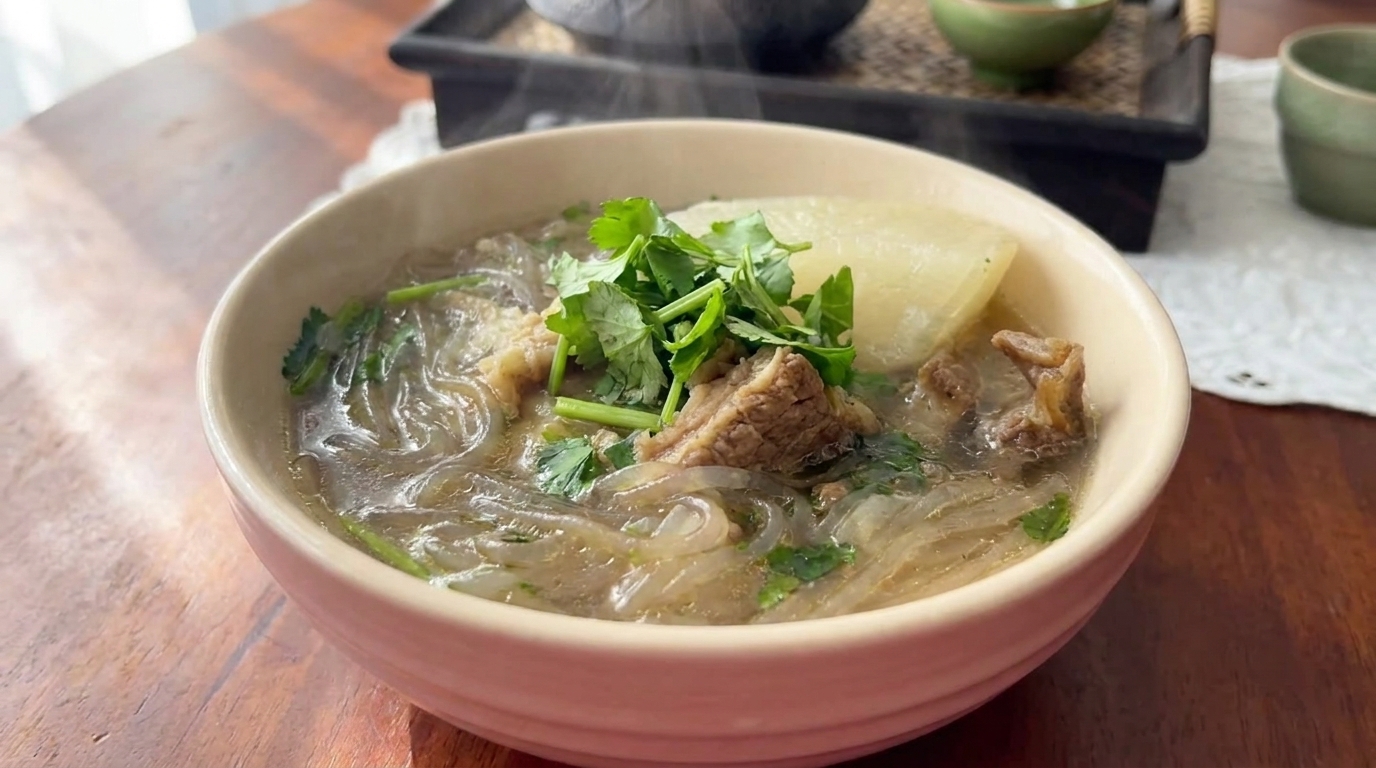
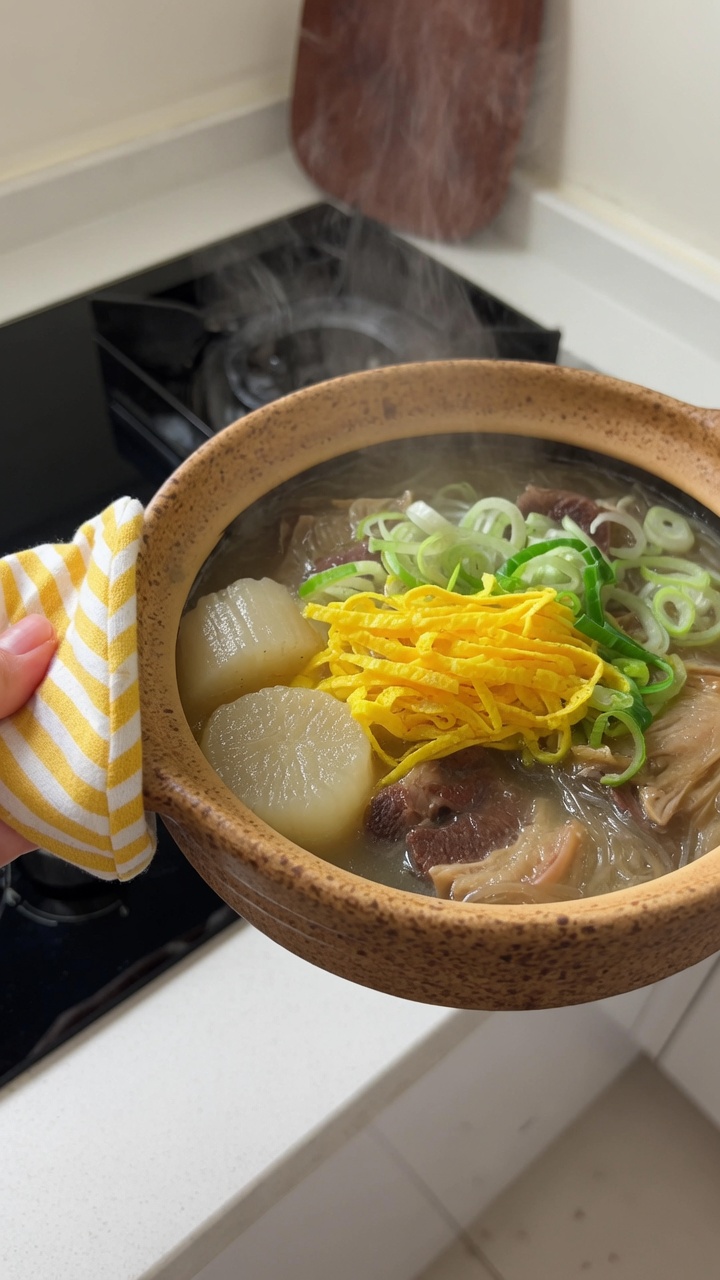
Enjoy a rich, clear Korean beef bone soup with minimal effort. Tender ribs and sweet radish simmered perfectly in a rice cooker for a comforting, flavorful meal.
Korean beef bone soup is a cherished comfort food known for its deep flavor and nourishing qualities. This simplified version uses a rice cooker to achieve that signature clear, rich broth without the need for hours of stovetop monitoring. By blanching the ribs to remove impurities and pairing them with aromatics like ginger, garlic, and radish, you get a restaurant-quality bowl at home with incredible convenience.
Ingredients
- 1 kg beef ribs
- 200 g daikon radish
- 1 whole onion
- 1 bulb garlic
- 30 g ginger
- 2 stalks green onions
- 1 tsp peppercorns
- 100 g glass noodles
- 2 eggs
- to taste salt
- to taste black pepper
Instructions
- 1Soak the beef ribs
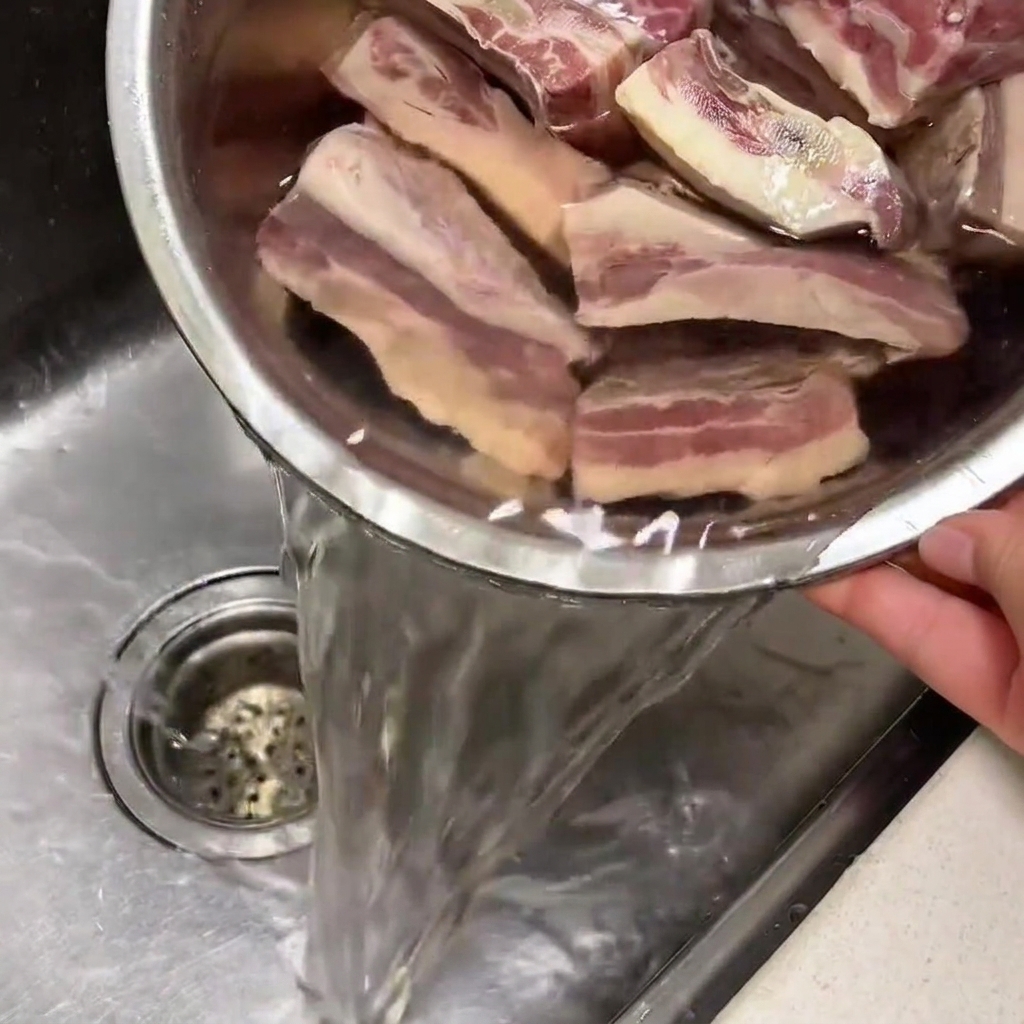
Place the beef ribs in a large bowl and cover with cold water for two hours. Change the water if needed to effectively draw out blood and impurities.
Tip: This soaking process is key to ensuring the final broth is clear and free of any unpleasant odor. - 2Blanch the ribs
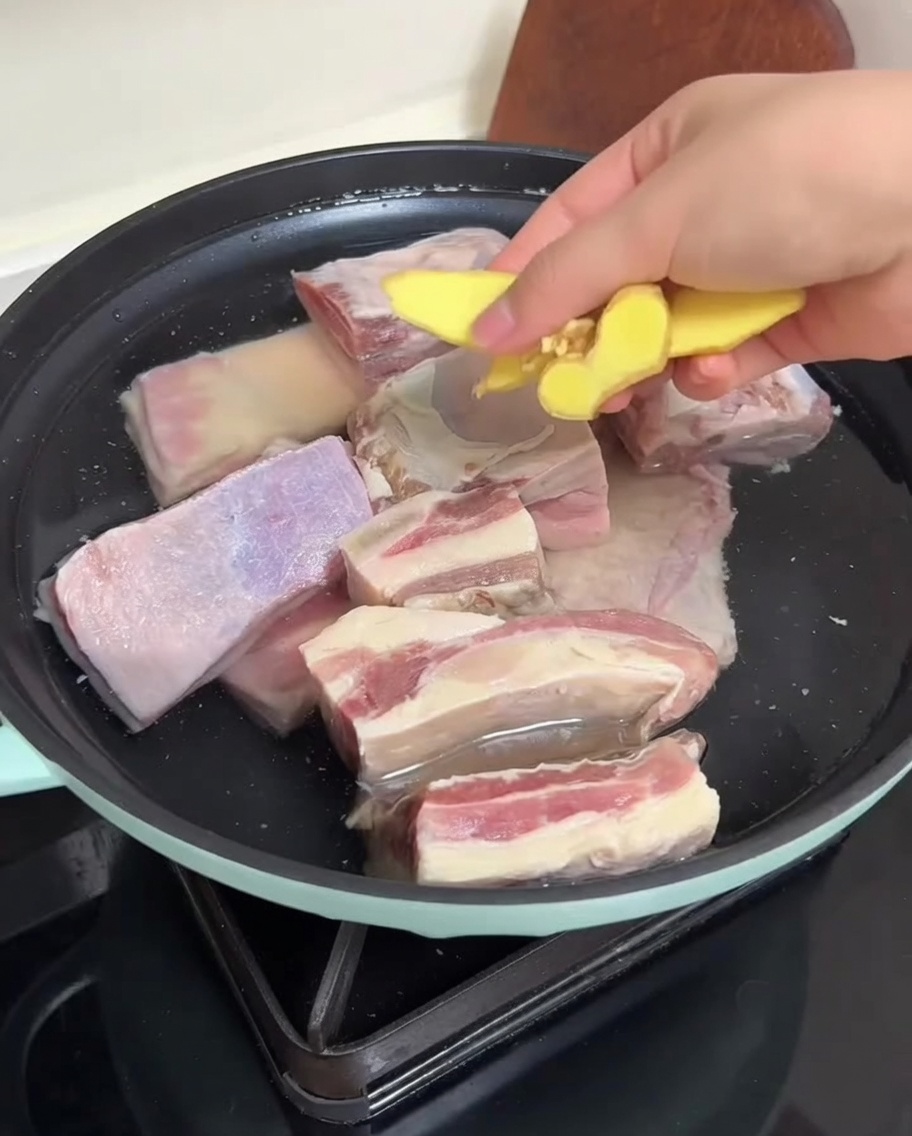
Boil the soaked ribs in a pan with water and ginger slices. Once boiled, remove the ribs and wash them thoroughly with warm water to remove surface impurities.
Tip: Blanching helps to remove excess fat and scum, resulting in a cleaner-tasting soup base. - 3Clean the blanched ribs
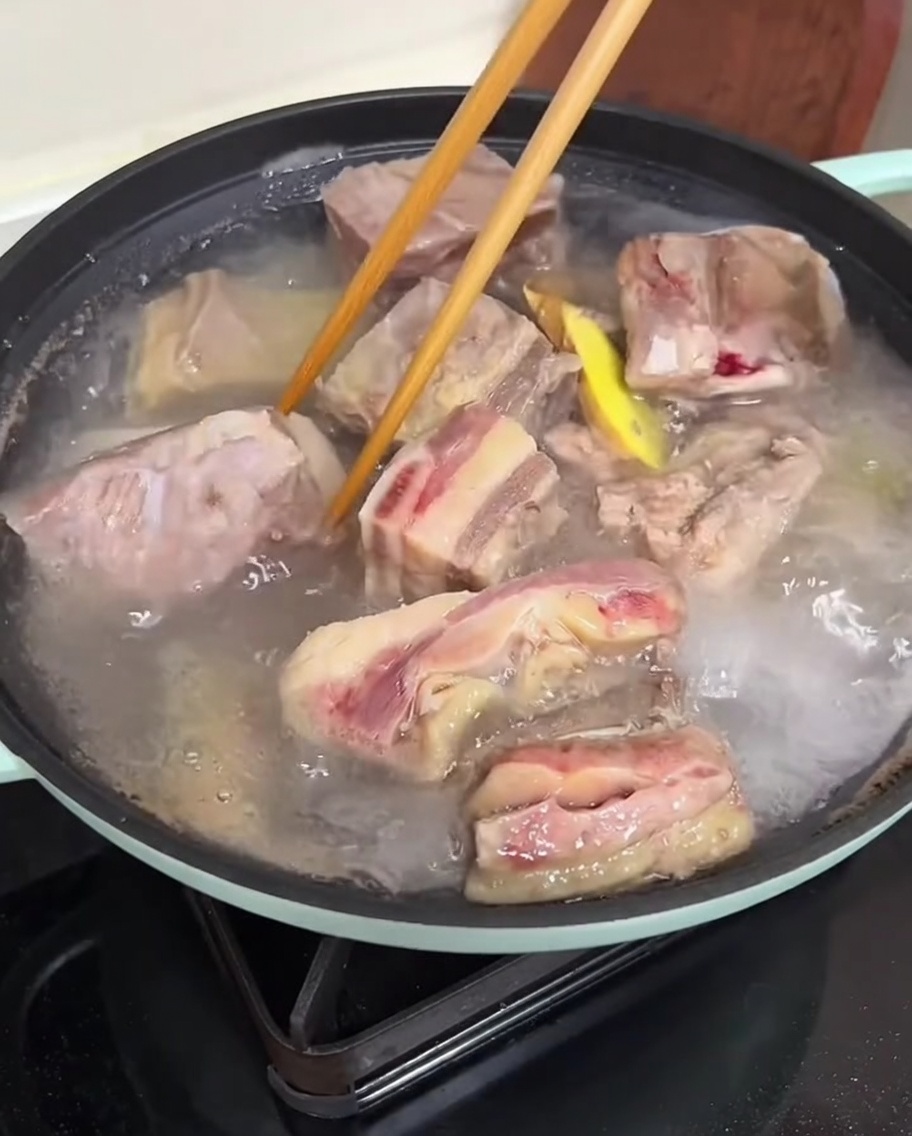
After blanching, carefully wash each beef rib under warm water to remove any coagulated protein or scum that formed during the boiling process.
Tip: Use warm water rather than cold to keep the meat from tightening up too quickly. - 4Assemble ingredients
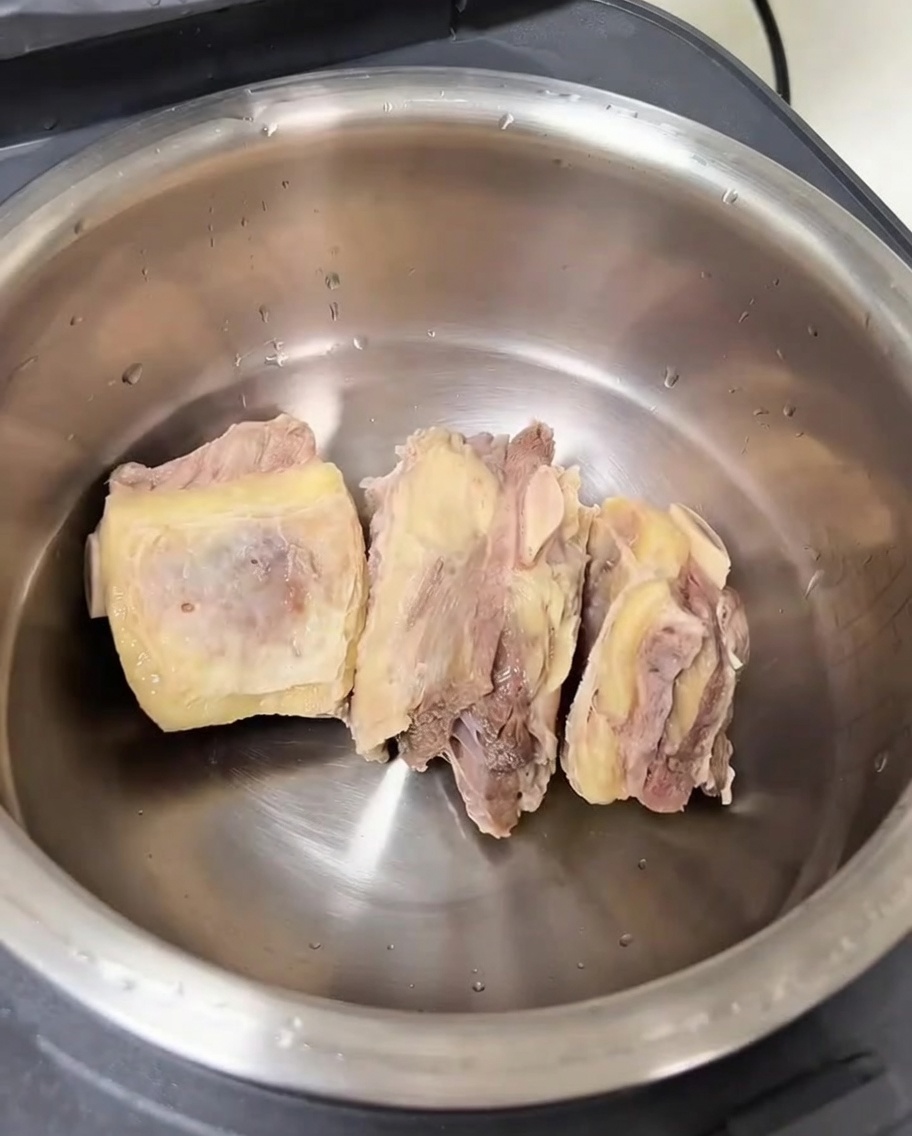
Place the cleaned beef ribs into the rice cooker. Add the aromatics: green onions, onion, ginger, garlic, radish, and peppercorns.
Tip: The radish adds a wonderful natural sweetness to the broth as it cooks. - 5Add hot water and cook
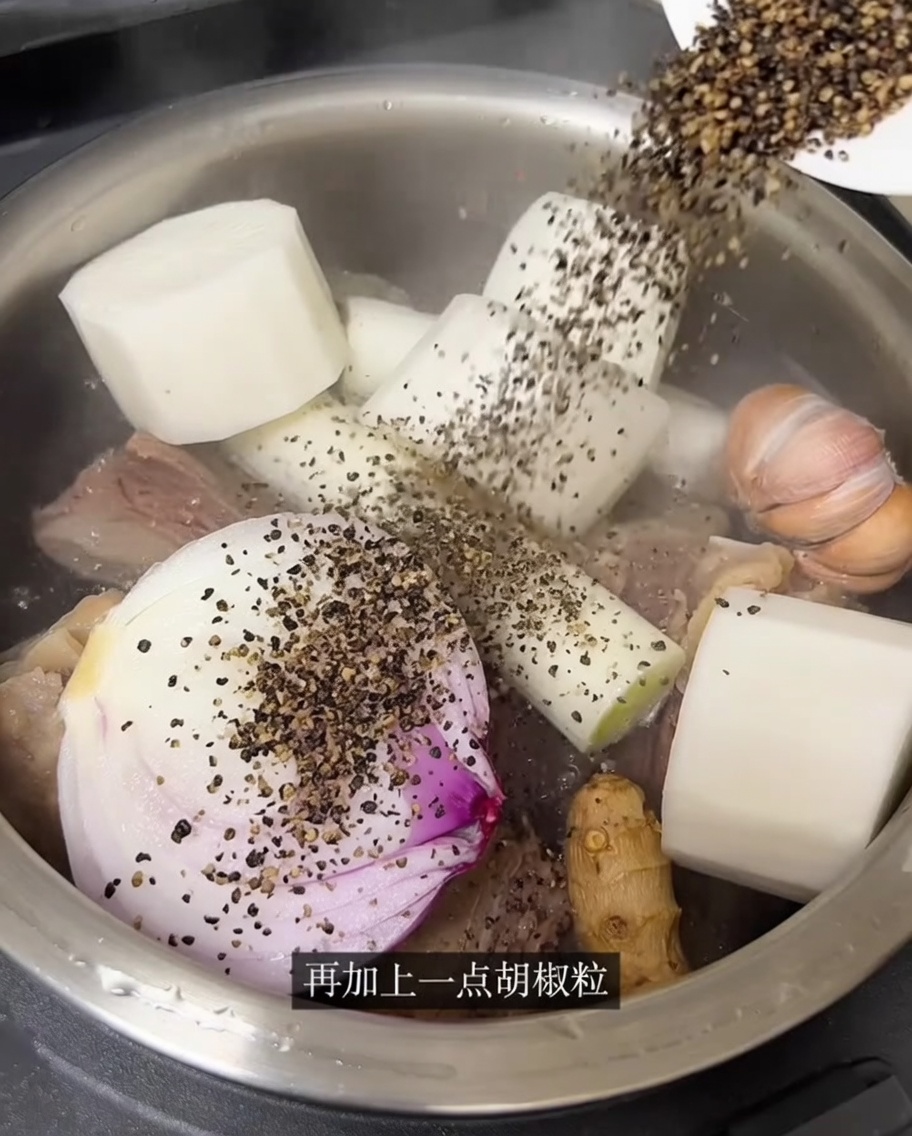
Pour hot water over the ingredients in the rice cooker to help establish a rich soup base immediately. Select the soup function on your rice cooker and start the cycle.
Tip: Using hot water helps the ingredients start cooking faster and produces a more flavorful broth. - 6Prepare the egg garnish

While the soup is cooking, whisk eggs and pour a thin layer into a hot, greased pan to make an egg crepe. Once cooked through, remove it and slice into thin strips to use as a garnish.
Tip: Make sure your pan is well-coated with oil so the delicate egg crepe doesnt stick. - 7Prepare the egg garnish
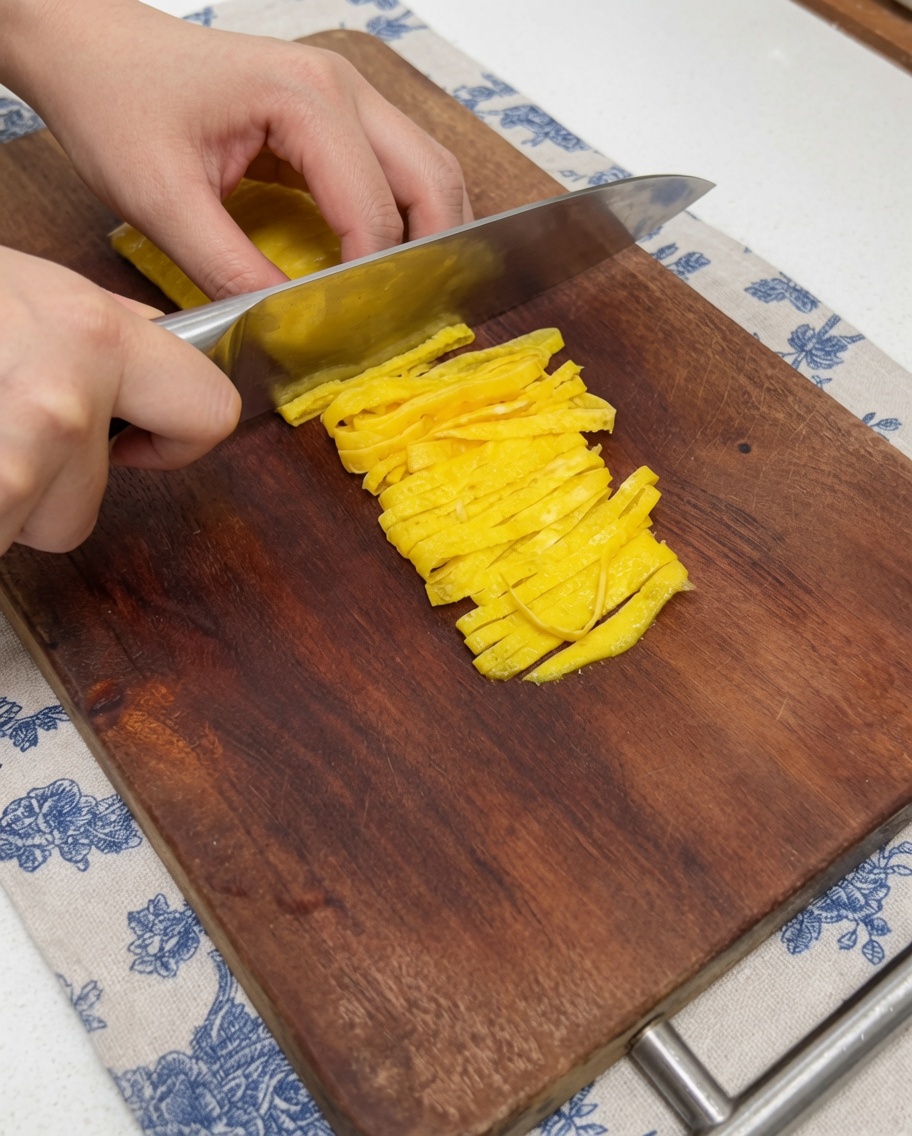
Take the thin egg crepe you cooked in a pan and carefully slice it into uniform, thin strips using a sharp knife on a cutting board.
Tip: Make sure the egg crepe has cooled slightly before slicing to ensure cleaner, more uniform strips that wont tear. - 8Prepare serving pot
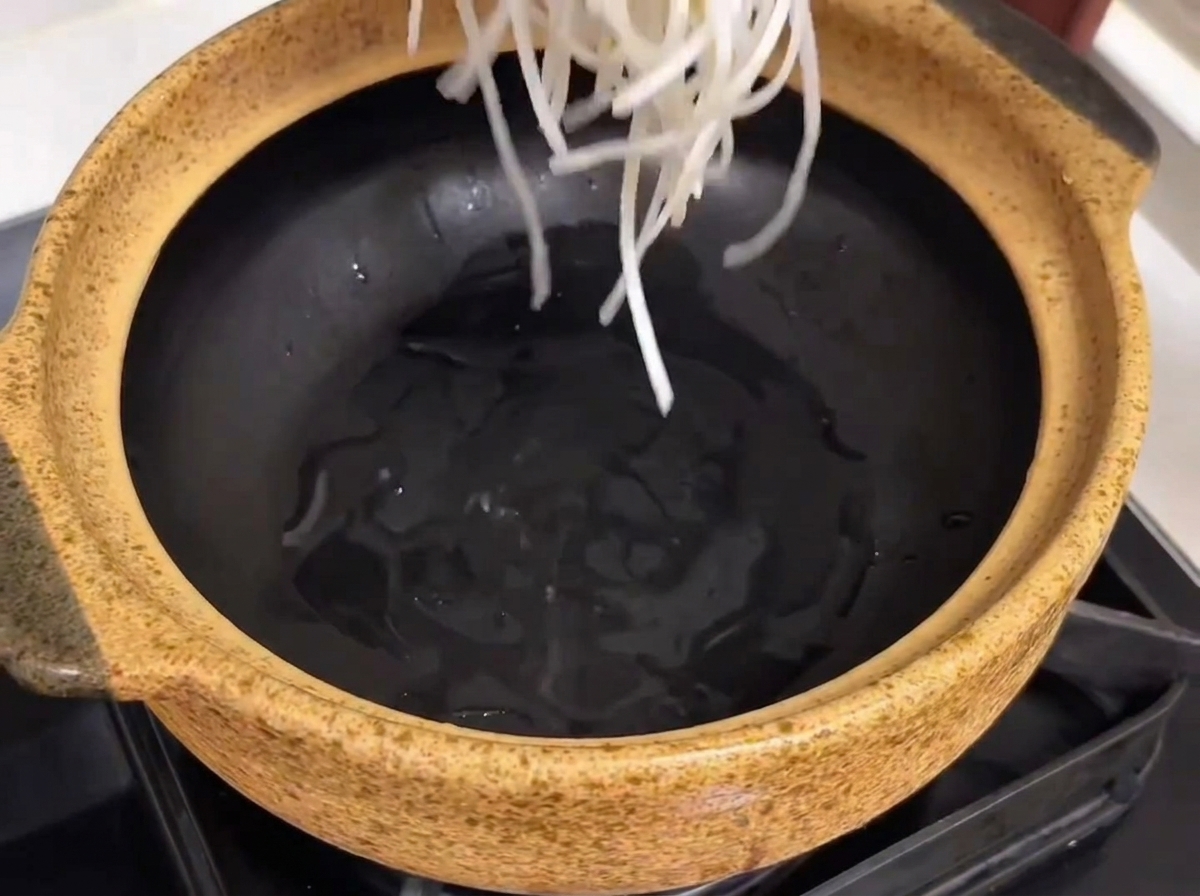
Arrange the glass noodles at the bottom of your serving pot, then layer the tender cooked beef ribs and soft radish pieces on top.
Tip: Place the glass noodles at the bottom so they can absorb the flavorful broth as its poured in. - 9Add the beef broth
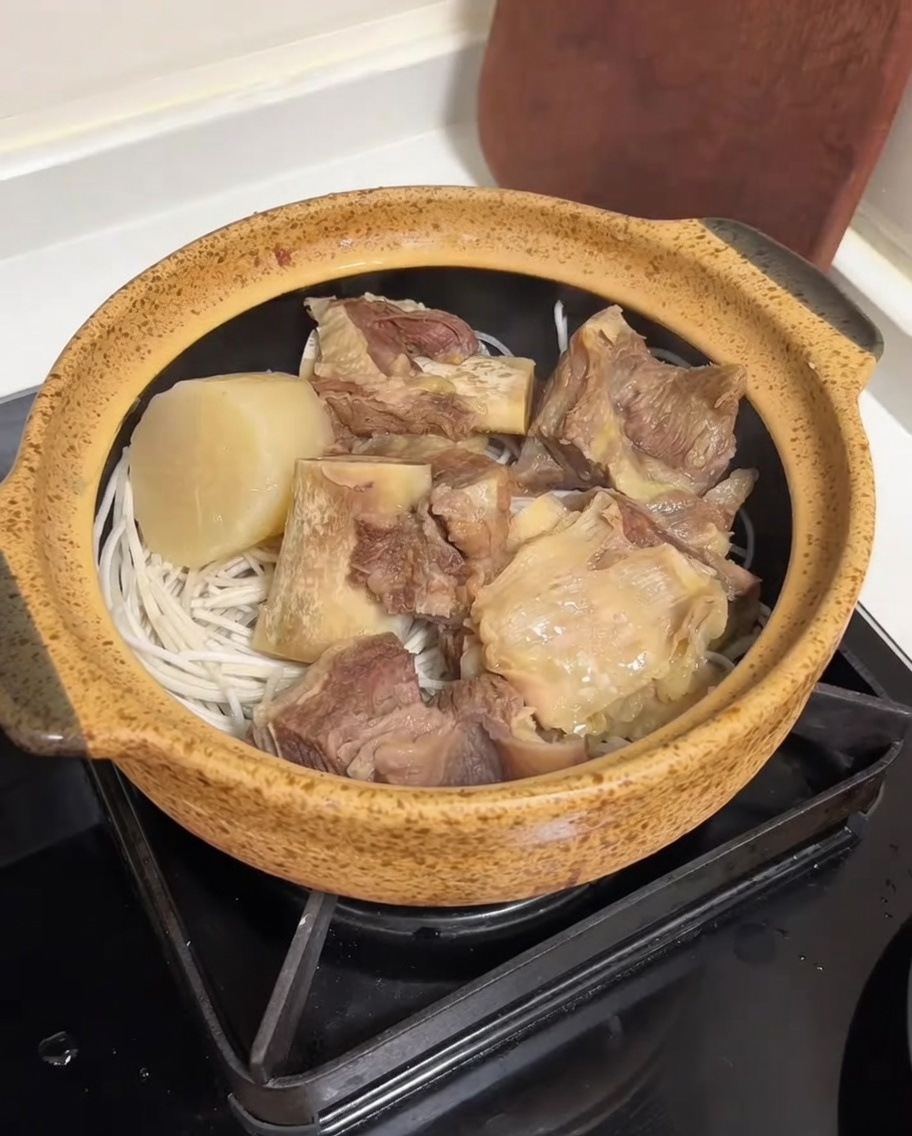
Carefully pour the hot, clear beef bone broth from the rice cooker into the serving pot, ensuring the noodles are fully submerged.
Tip: If the broth seems too fatty, skim the surface before pouring it into the serving pot. - 10Skim the fat
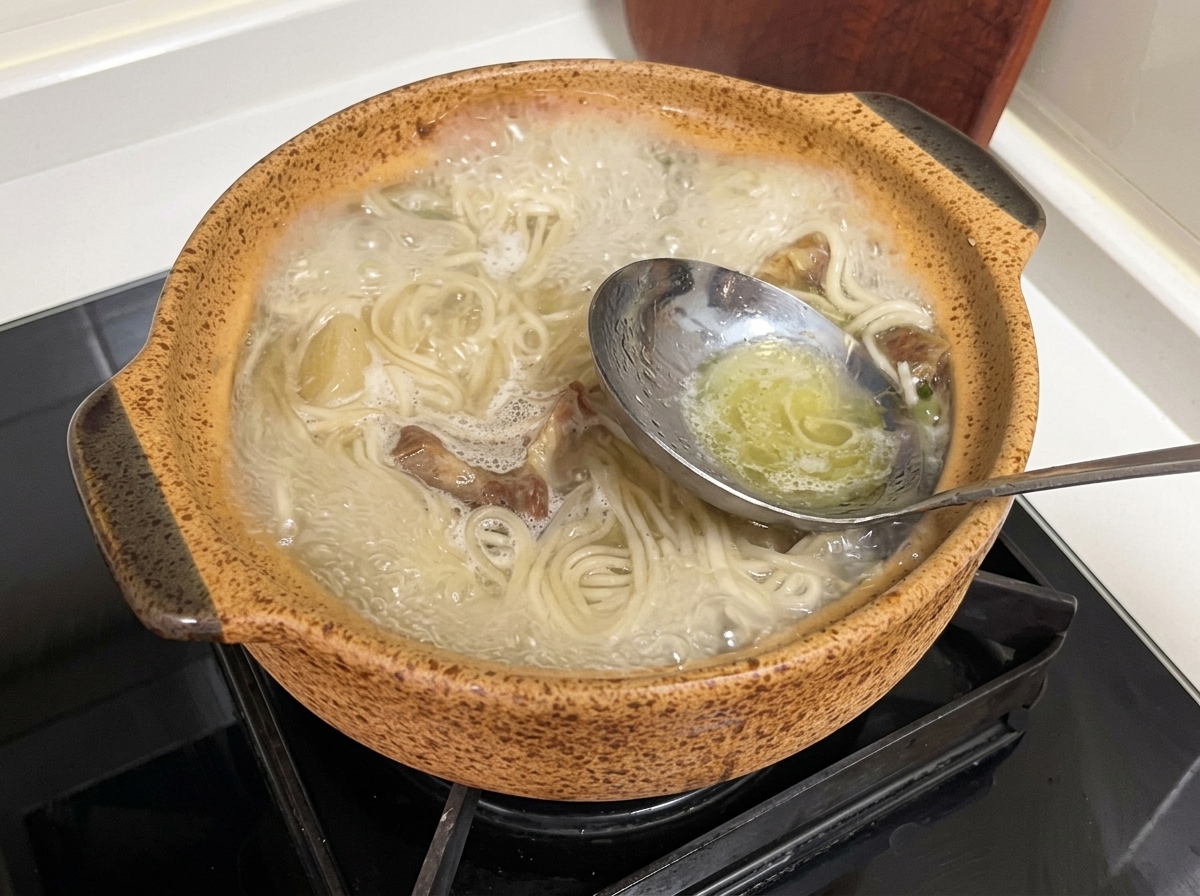
Use a ladle to carefully skim off any excess fat floating on the surface of the simmering soup to ensure a clean, clear, and light broth.
Tip: Do this while the soup is hot for easier removal of the rendered fat. - 11Garnish the soup
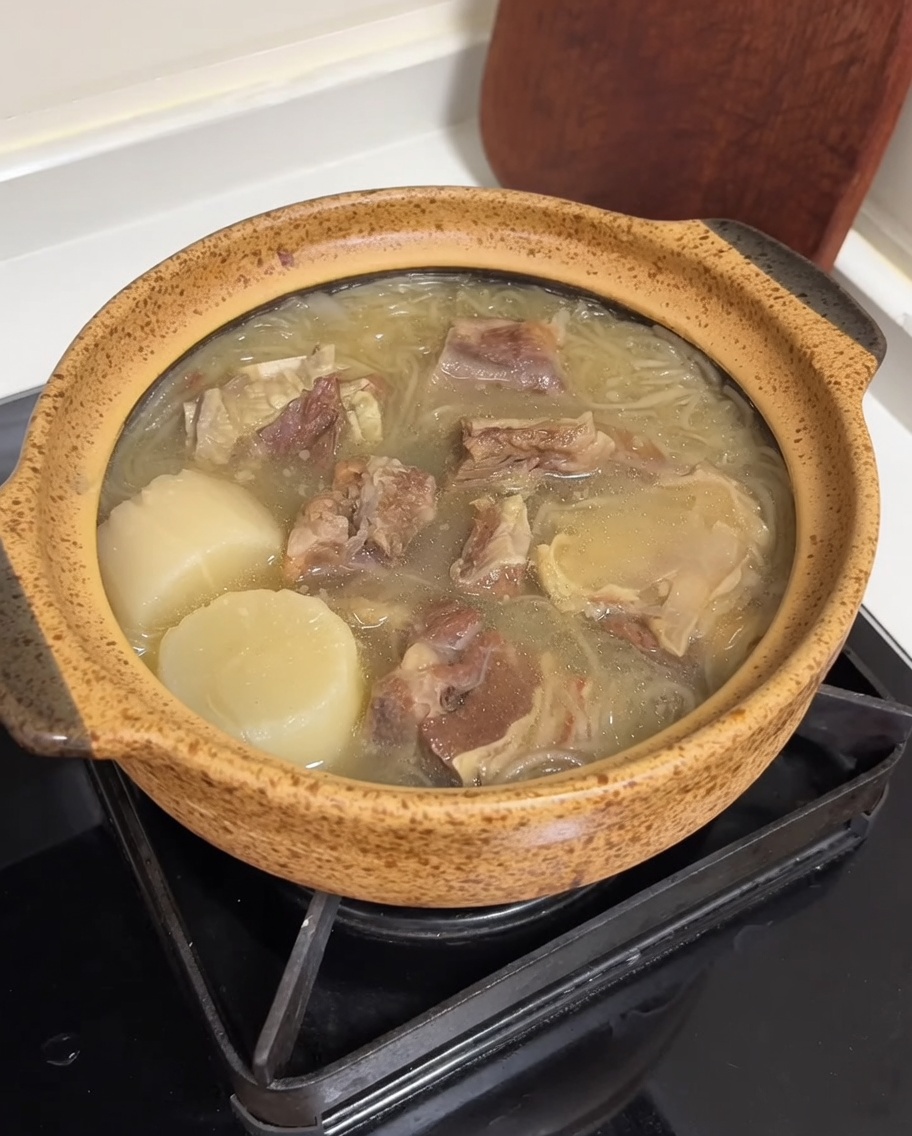
Top the assembled soup with the previously prepared egg strips and a generous handful of fresh, sliced green onions for color and flavor.
Tip: Add these garnishes right before serving to keep the green onions fresh and the egg strips intact. - 12Final seasoning
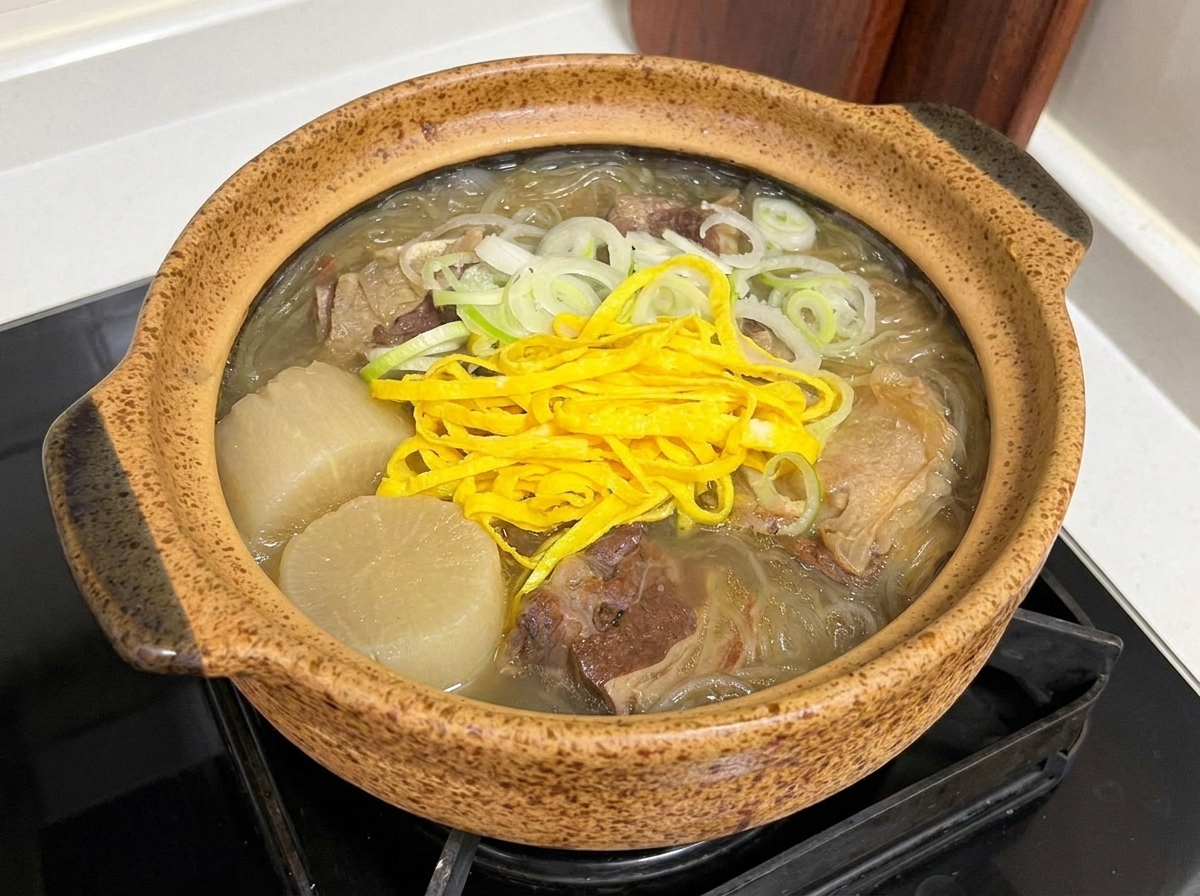
Finish the dish by adding a light sprinkle of salt and freshly ground black pepper to taste, balancing the rich flavors of the beef and radish.
Tip: Season gradually, tasting as you go, as the beef broth already has natural depth from the slow-cooked aromatics.