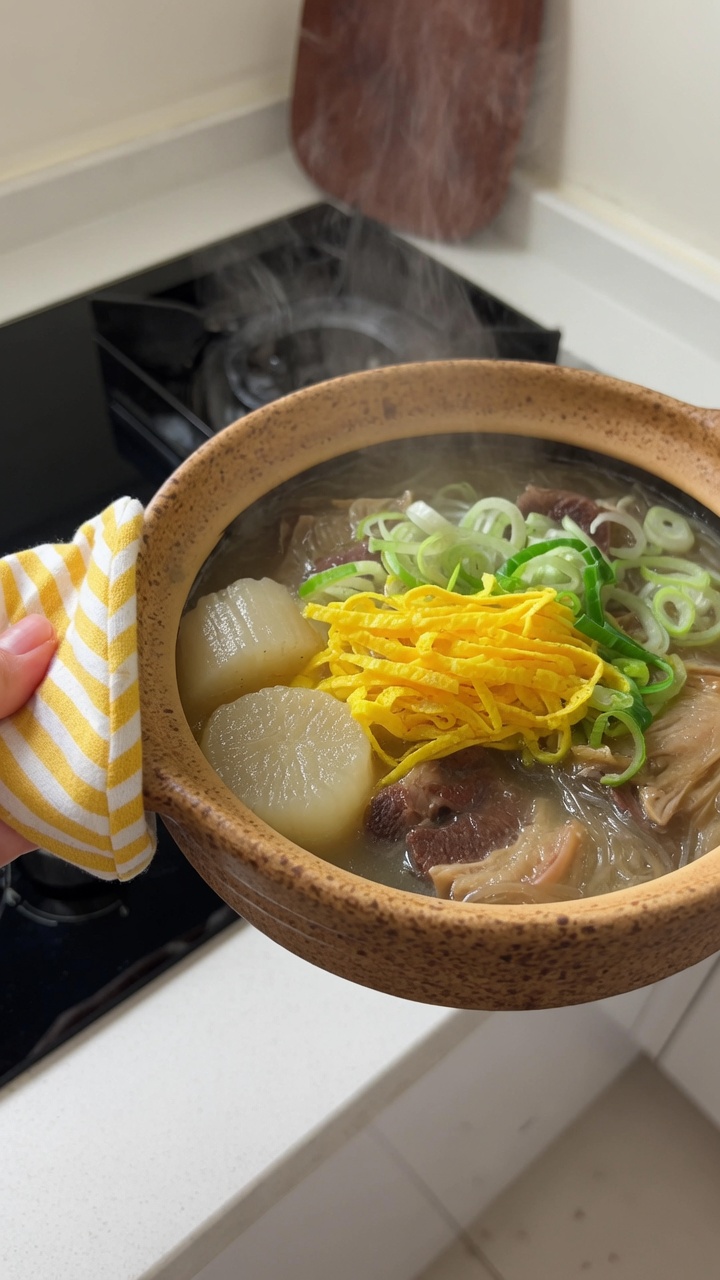
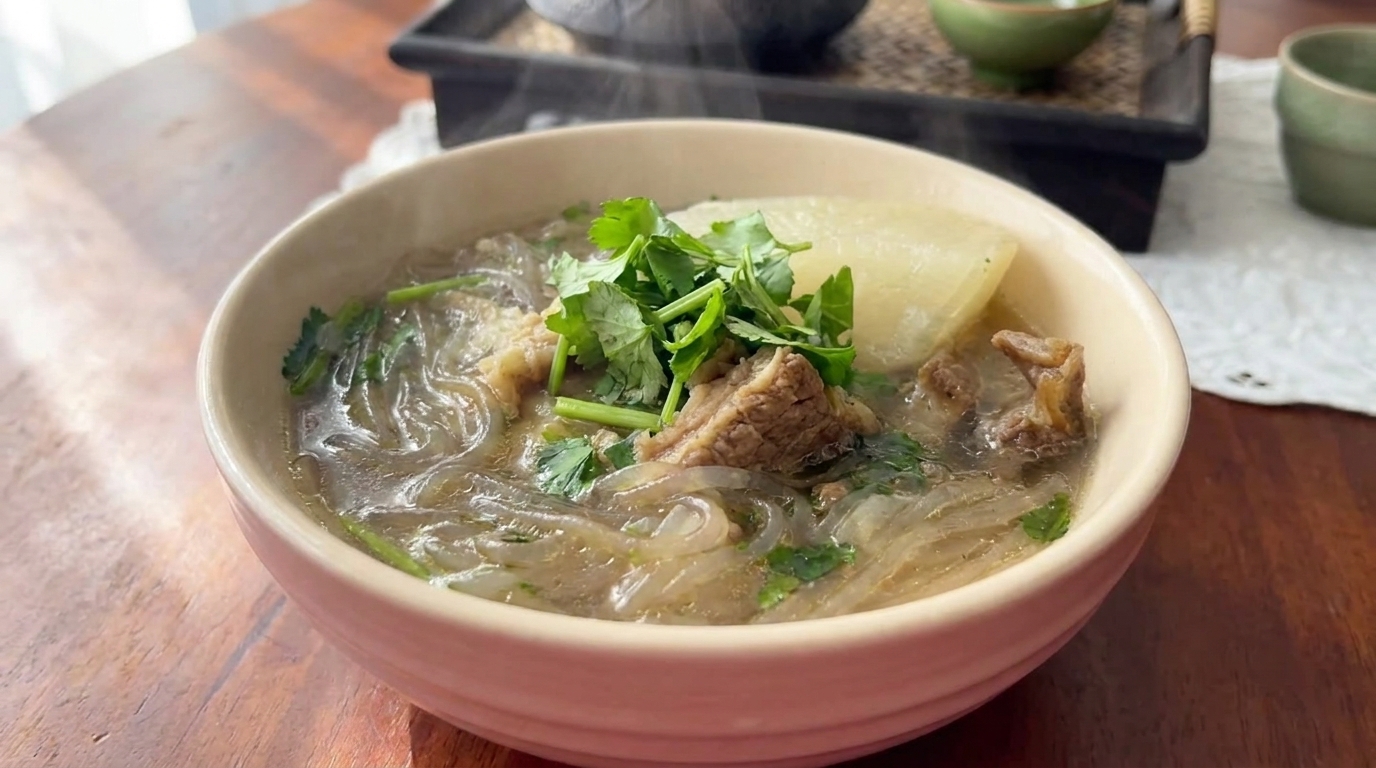
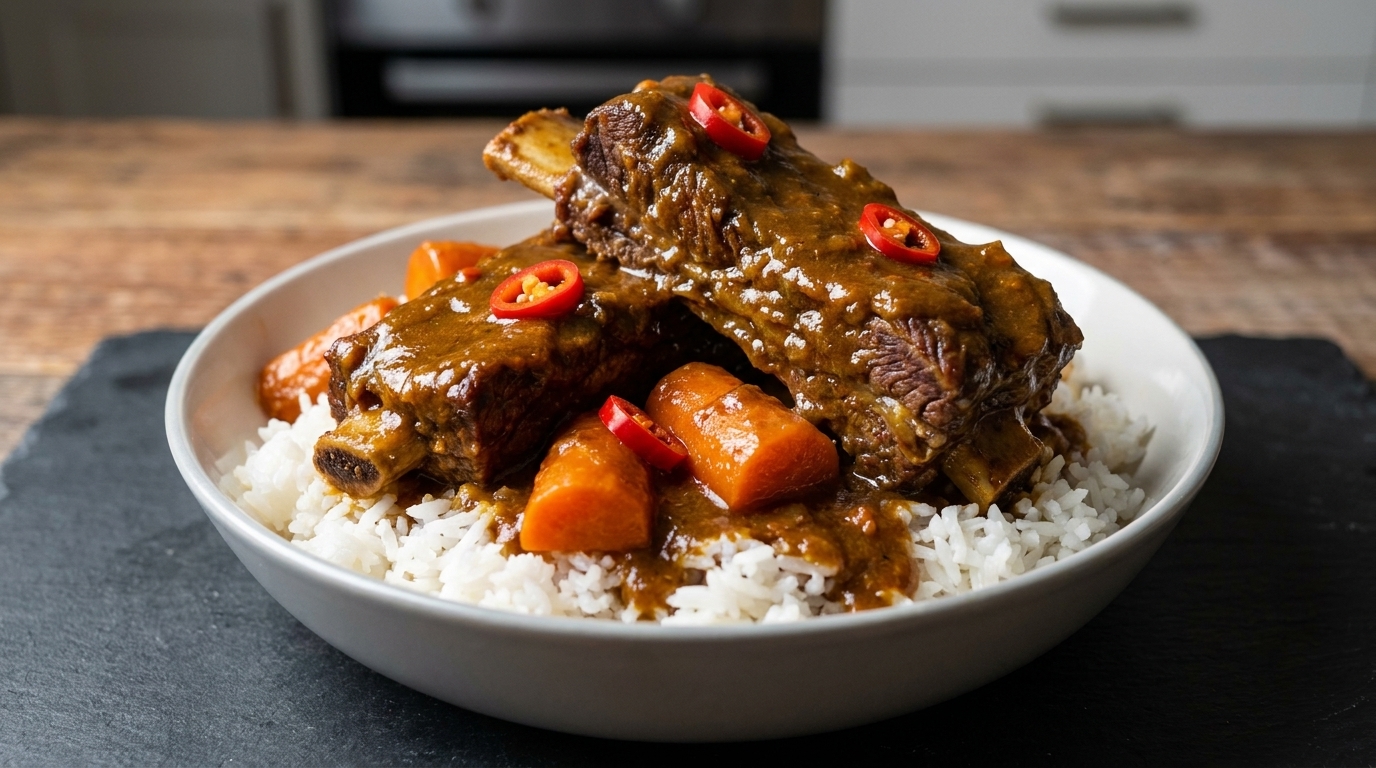
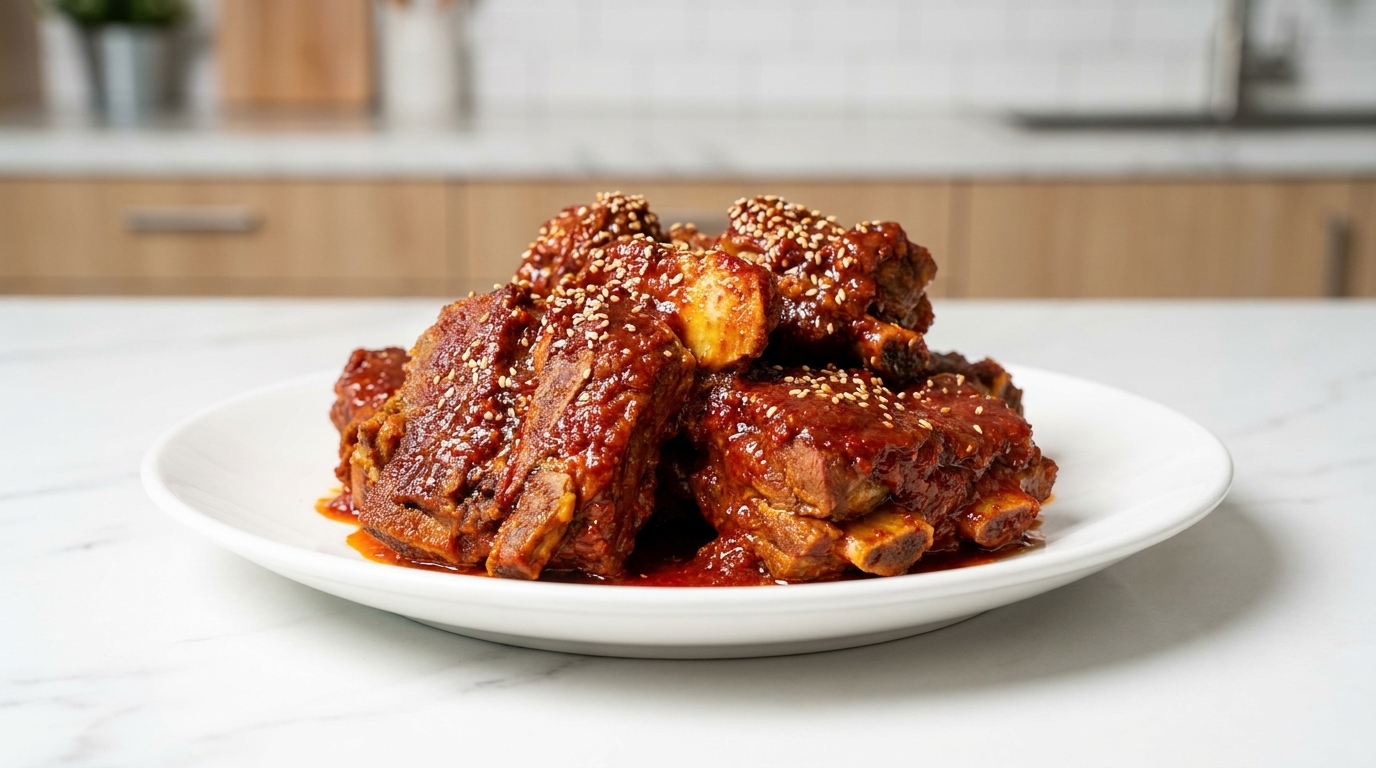
Traditional Korean Braised Pork Ribs (Dwaeji-galbi-jjim)
Enjoy this savory Korean classic featuring tender pork ribs braised in a glossy pear-infused sauce with hearty root vegetables. Every step has a photo.
Dwaeji-galbi-jjim is a beloved comfort dish that showcases the harmony of Korean home cooking. By using fresh pear juice as a natural tenderizer, the pork ribs become succulent and flavorful, absorbing the deep aromatic profile of soy, garlic, and ginger as they simmer to perfection.
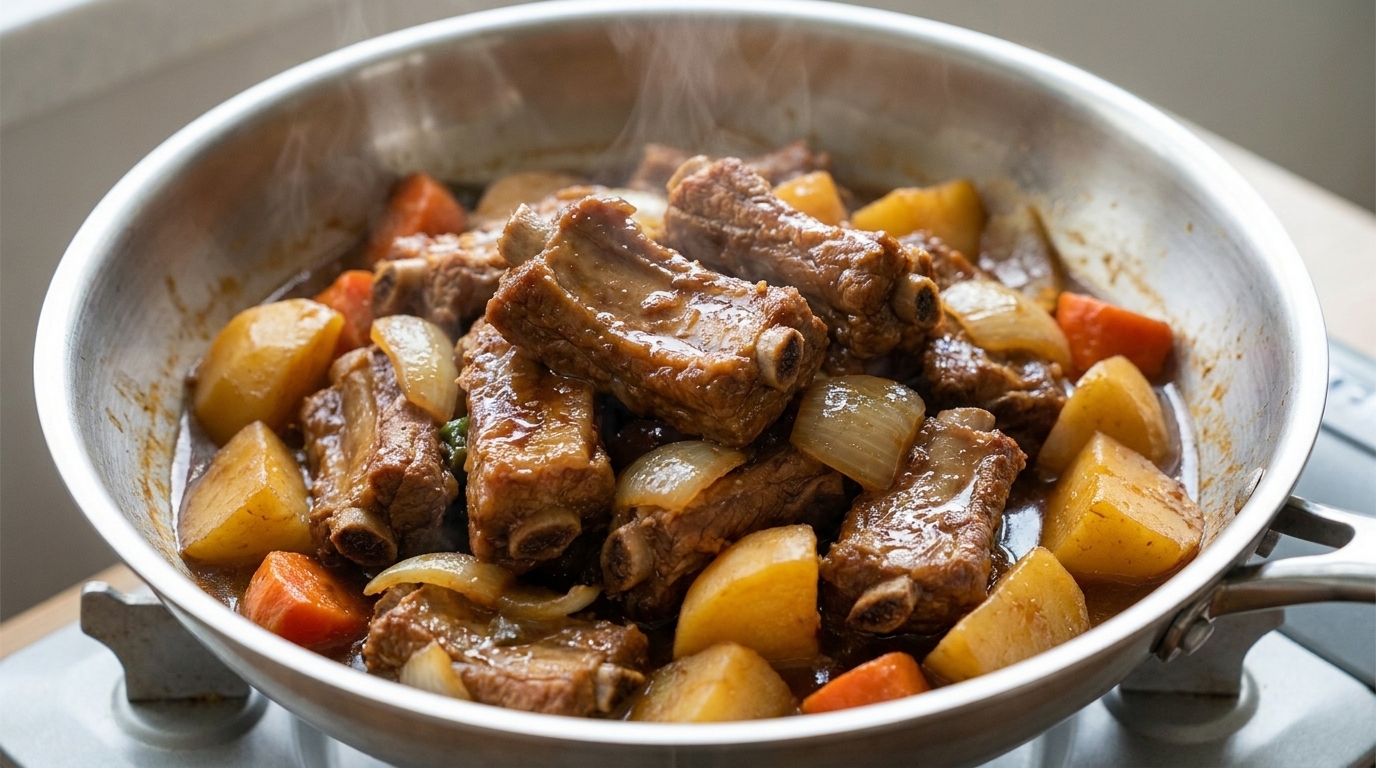
Ingredients
- 1 kg pork ribs
- 1 fresh pear
- 2 tbsp minced garlic
- 1 tbsp minced ginger
- 1 cup soy sauce
- 1 cup cooking wine
- 1 cup dark soy sauce
- 1 tbsp brown sugar
- 1 tbsp pepper powder
- 2 carrots
- 2 potatoes
- 1 onion
- 150 g Korean radish
- 2 green chilies
- 2 stalks scallion
Instructions
- 1Prepare the Vegetables

Cut the carrots, potatoes, radish, and onions into uniform, bite-sized chunks to ensure they cook evenly during the braising process.
Tip: Cut the vegetables into similar sizes so they cook at the same rate during simmering. - 2Prep the Ribs
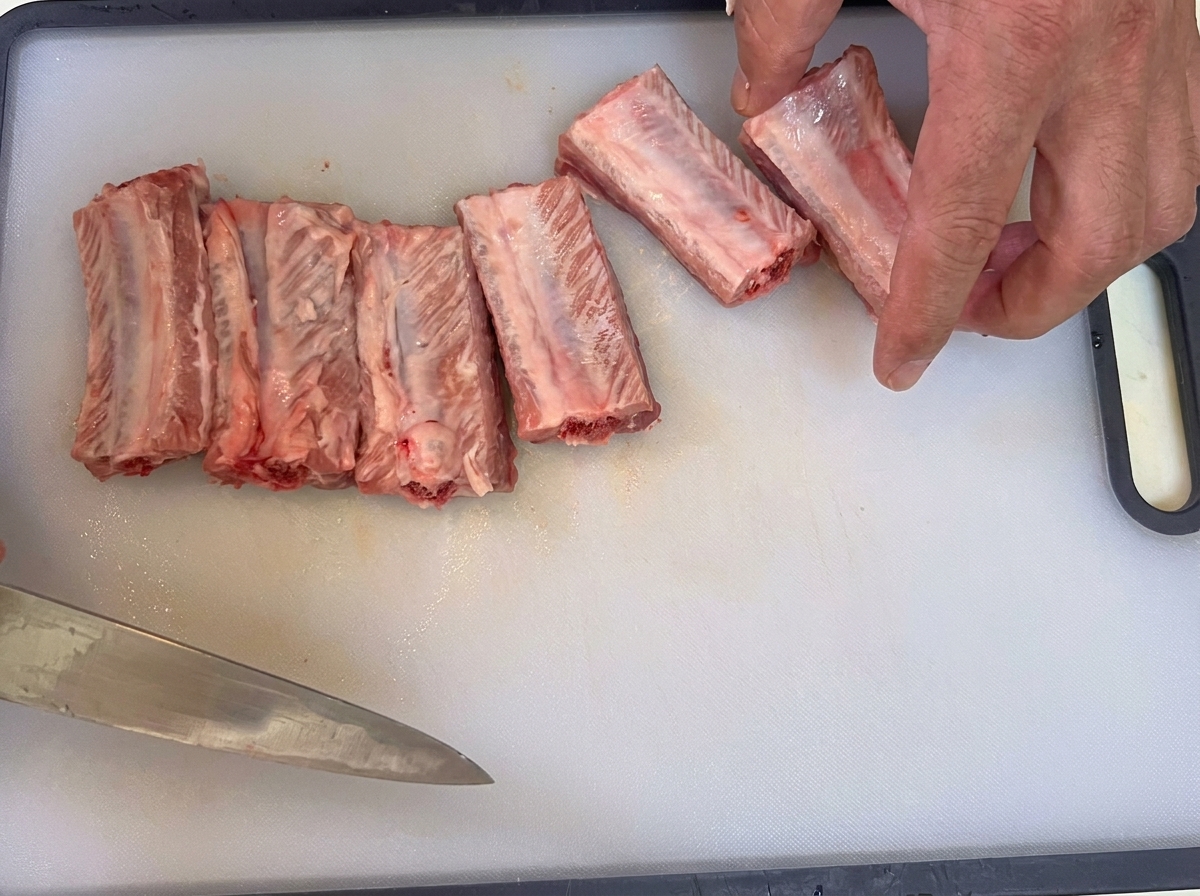
Remove the tough membrane from the inner side of the pork ribs using a sharp knife, then rinse the ribs thoroughly under water.
Tip: Removing this membrane helps tenderize the meat and reduces gamey odors during cooking. - 3Blend the pear juice
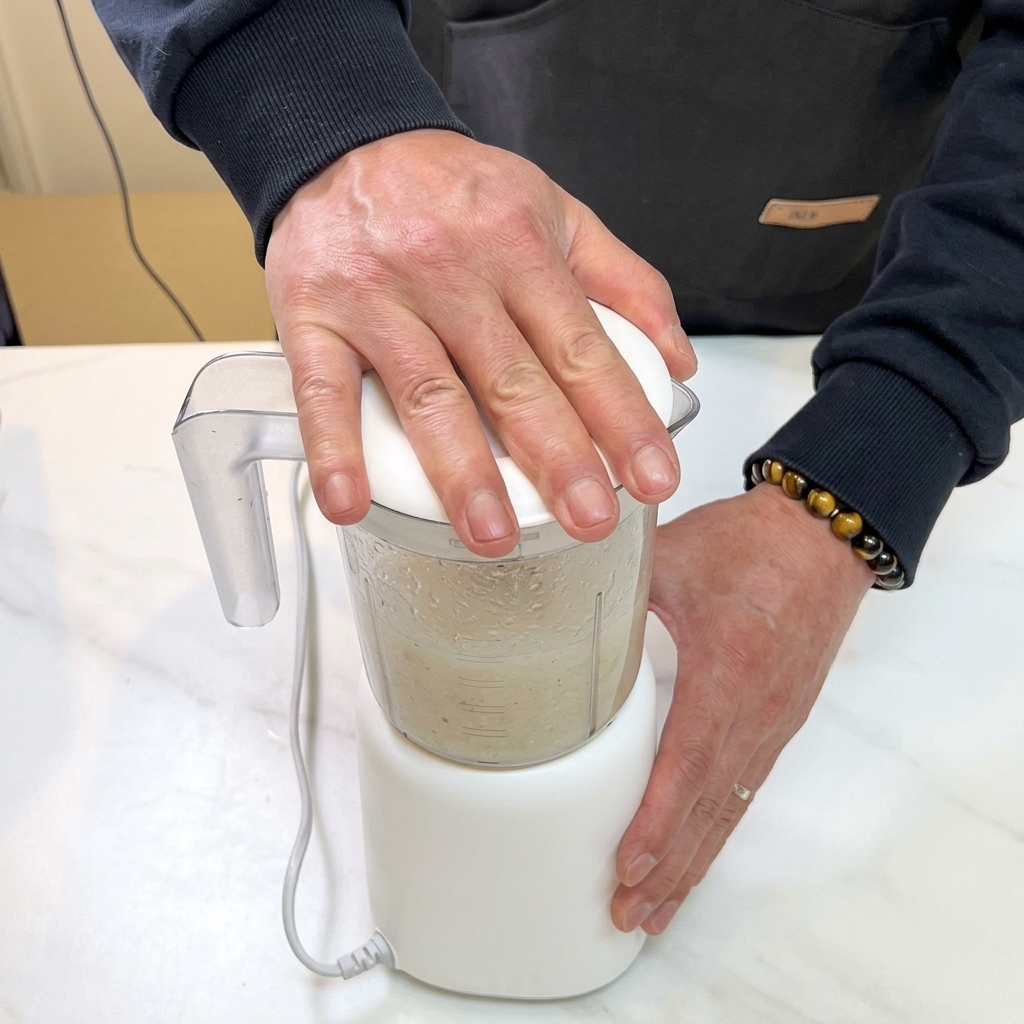
Place sliced fresh pear and a small amount of water into an electric blender, then process until fully liquefied into a smooth pear juice.
Tip: Fresh pear juice acts as a natural tenderizer and adds subtle sweetness to the braising sauce. - 4Blanch the Ribs
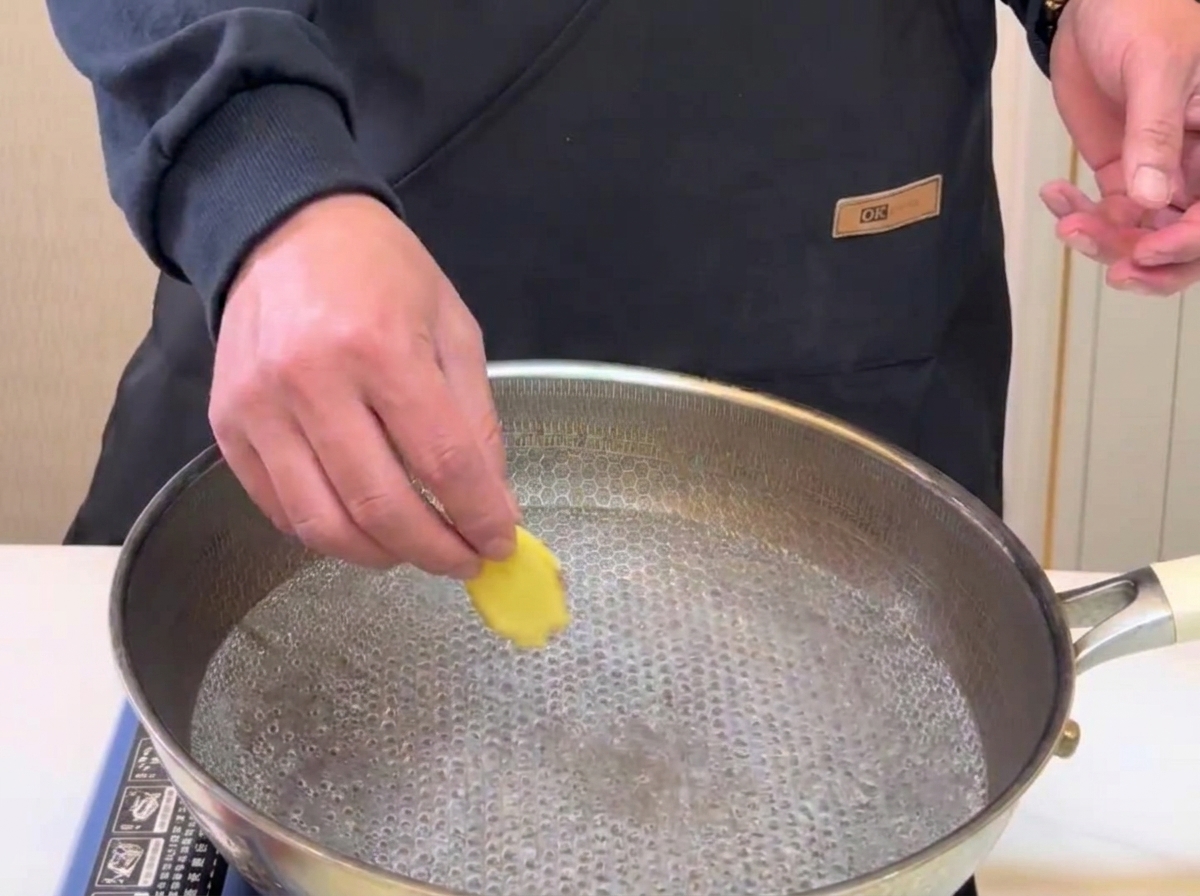
Place the ribs in a pot of boiling water with two slices of ginger. Blanch for five minutes to extract impurities, then drain and rinse well under cold water.
Tip: Blanching removes excess blood and impurities, ensuring a clean and clear braising flavor. - 5Rinse the blanched ribs
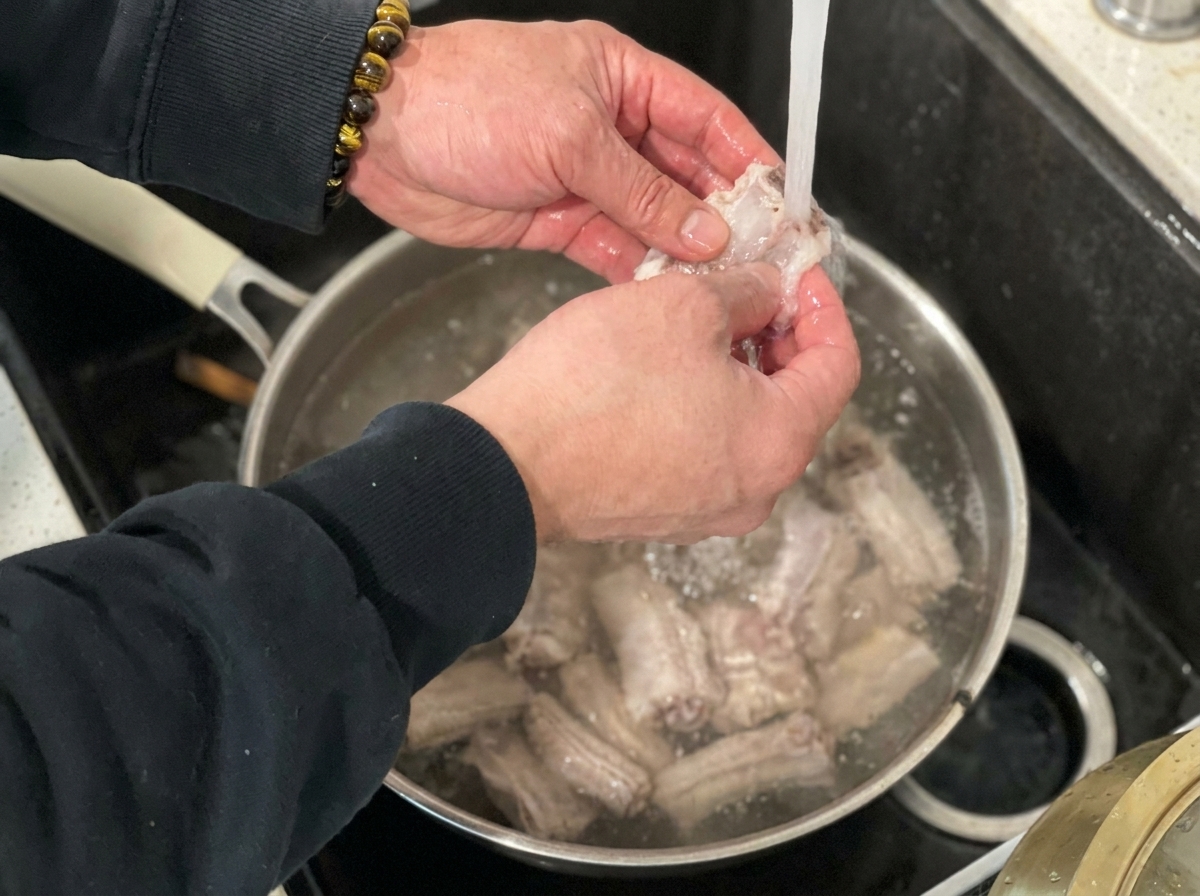
Remove the parboiled ribs from the pot and rinse them thoroughly under cold running water to wash away any remaining scum.
Tip: Rinsing with cold water also tightens the meat texture before it goes into the braising pot. - 6Assemble the Braise
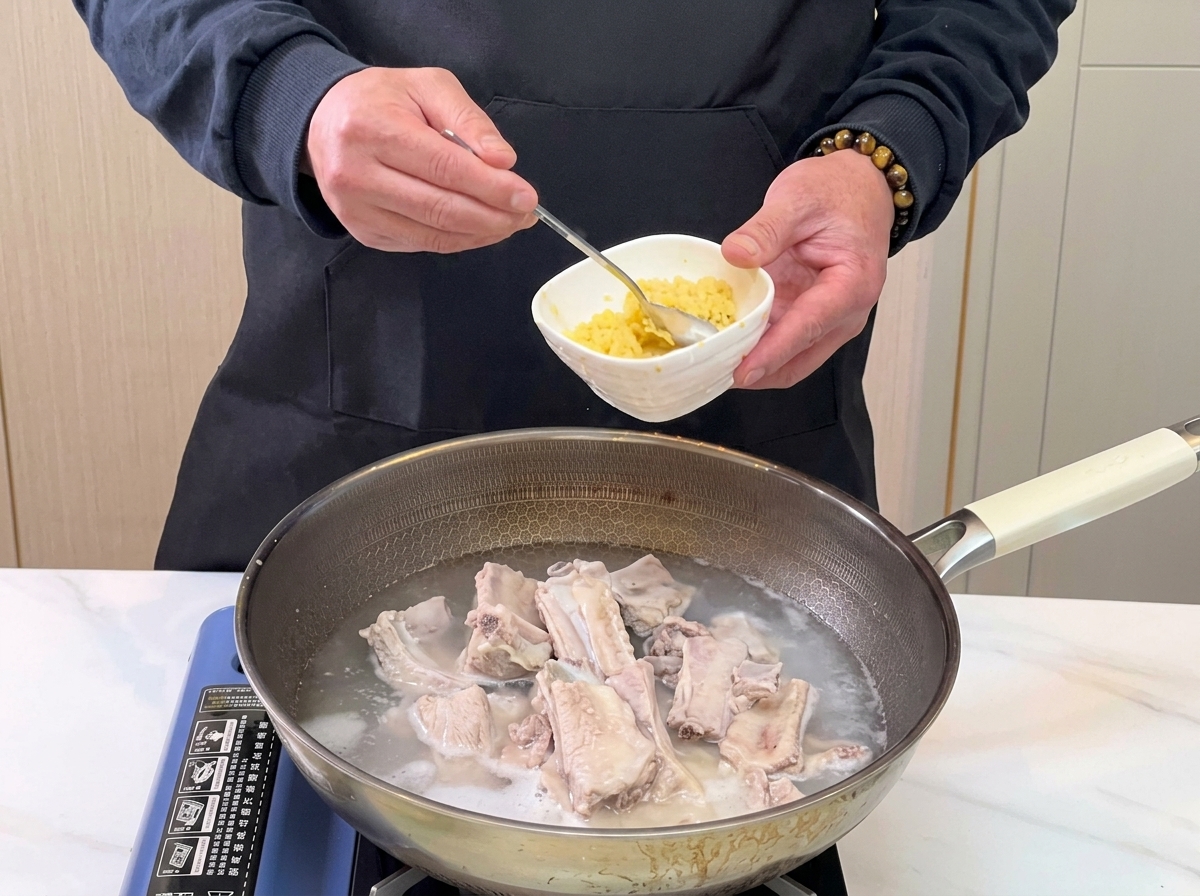
Return the cleaned ribs to the pot. Add water to cover, then stir in the minced garlic, minced ginger, soy sauce, cooking wine, dark soy sauce, brown sugar, pear juice, and pepper powder.
Tip: Garlic and ginger form the aromatic foundation that deepens the savory profile of the broth. - 7Add Pear Juice
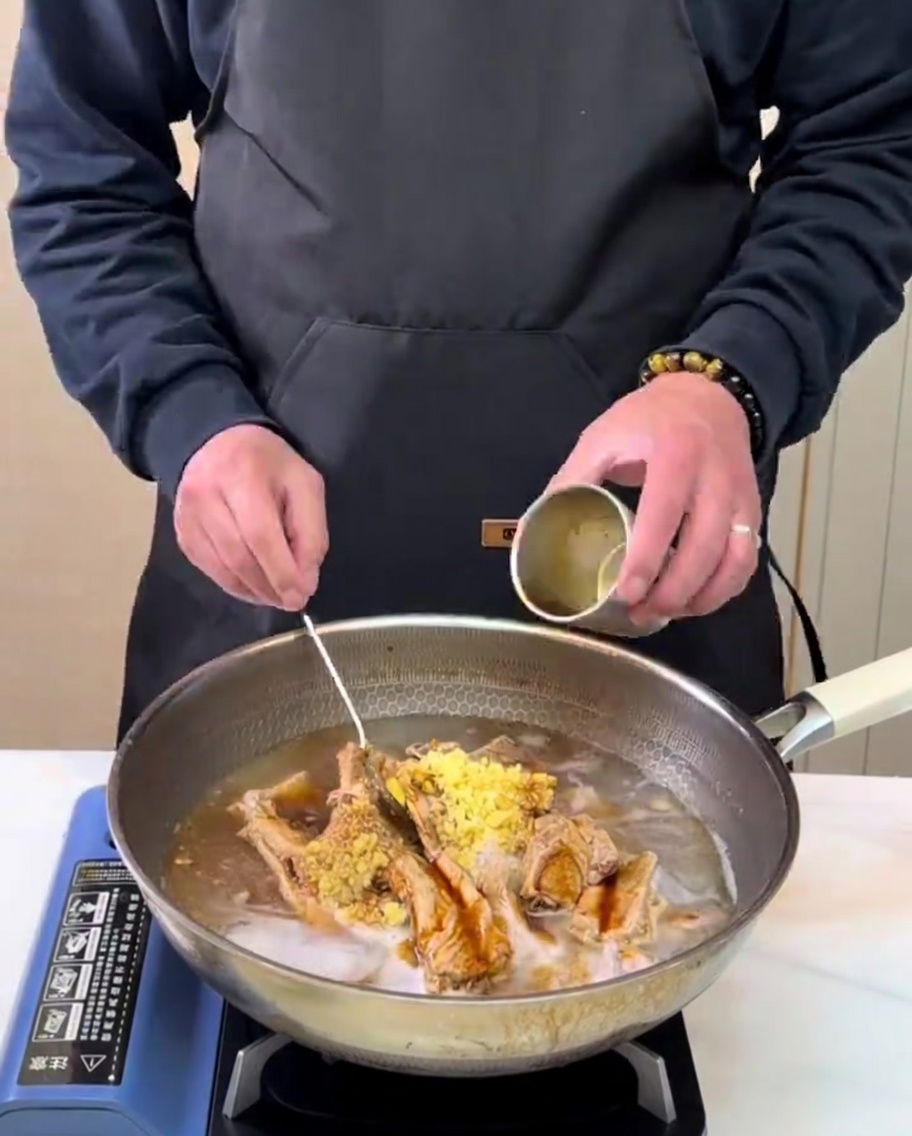
Pour the freshly prepared pear juice from the container into the pot containing the blanched pork ribs and various seasonings. The natural enzymes in the pear juice help tenderize the meat while adding a subtle, pleasant sweetness to the braised dish.
Tip: Fresh pear juice works best as a natural tenderizer; avoid canned pear juice if possible.