Traditional Korean Beef Short Rib Soup (Galbitang)
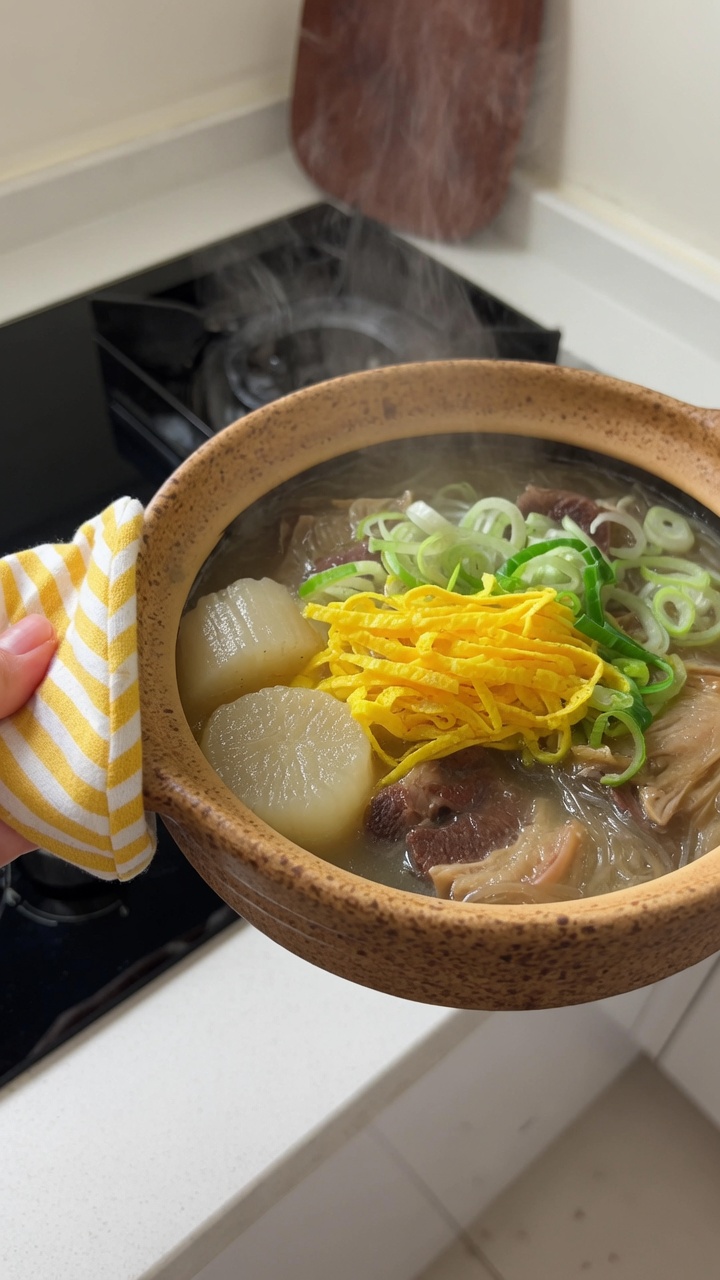
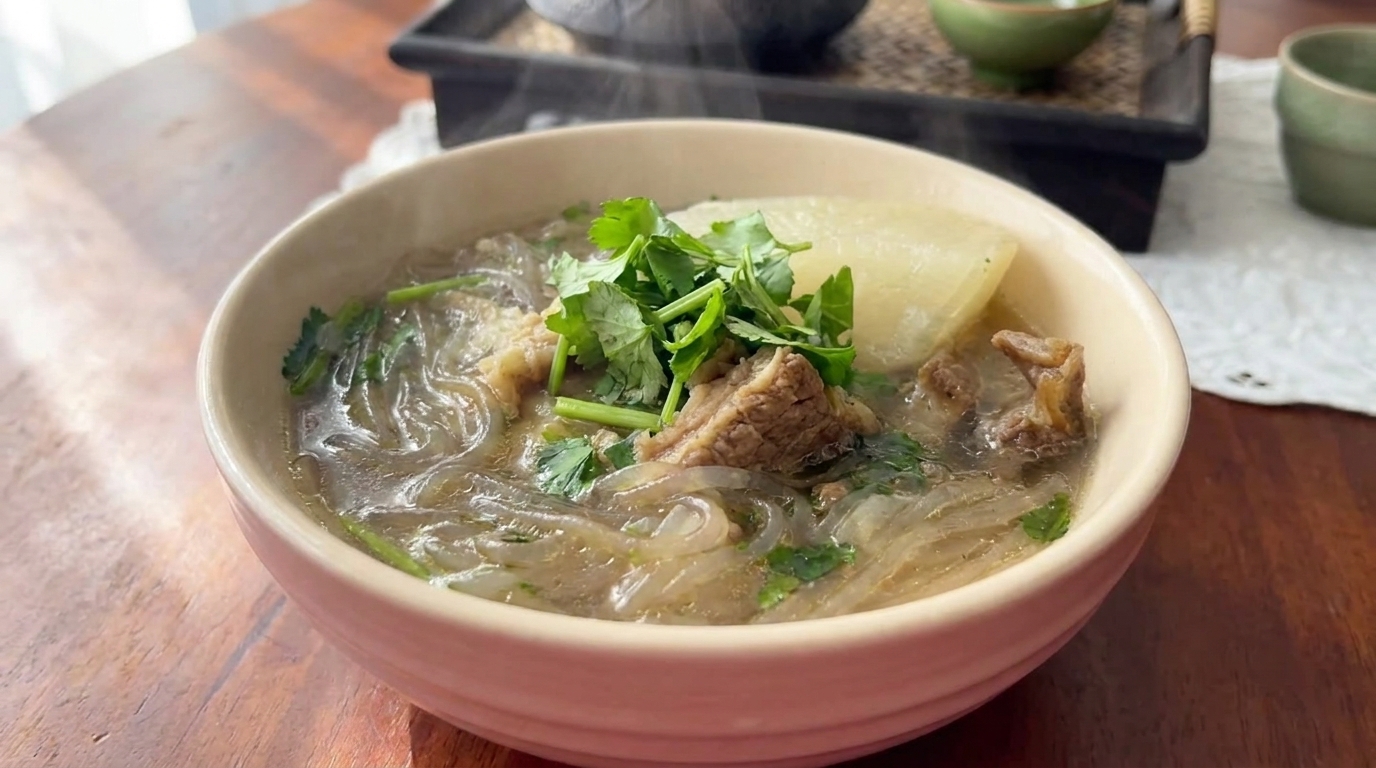
A nourishing and soul-warming Korean classic, Galbitang features tender, slow-simmered beef short ribs, radish, and delicate vermicelli noodles in a crystal-clear, savory broth.
Galbitang is a beloved Korean soup traditionally served during special occasions, prized for its clean, elegant flavor and restorative qualities. The process requires patience, as the beef ribs are slowly simmered to extract deep, savory notes, resulting in a broth that is both light and incredibly satisfying. This version focuses on the classic technique of repeated soaking and careful skimming to achieve that signature clarity.
Ingredients
- 1 kg beef short ribs
- 300 g Korean radish
- 100 g dried vermicelli noodles
- 1 tbsp salt
- to taste fresh cilantro
Instructions
- 1Soak the beef short ribs
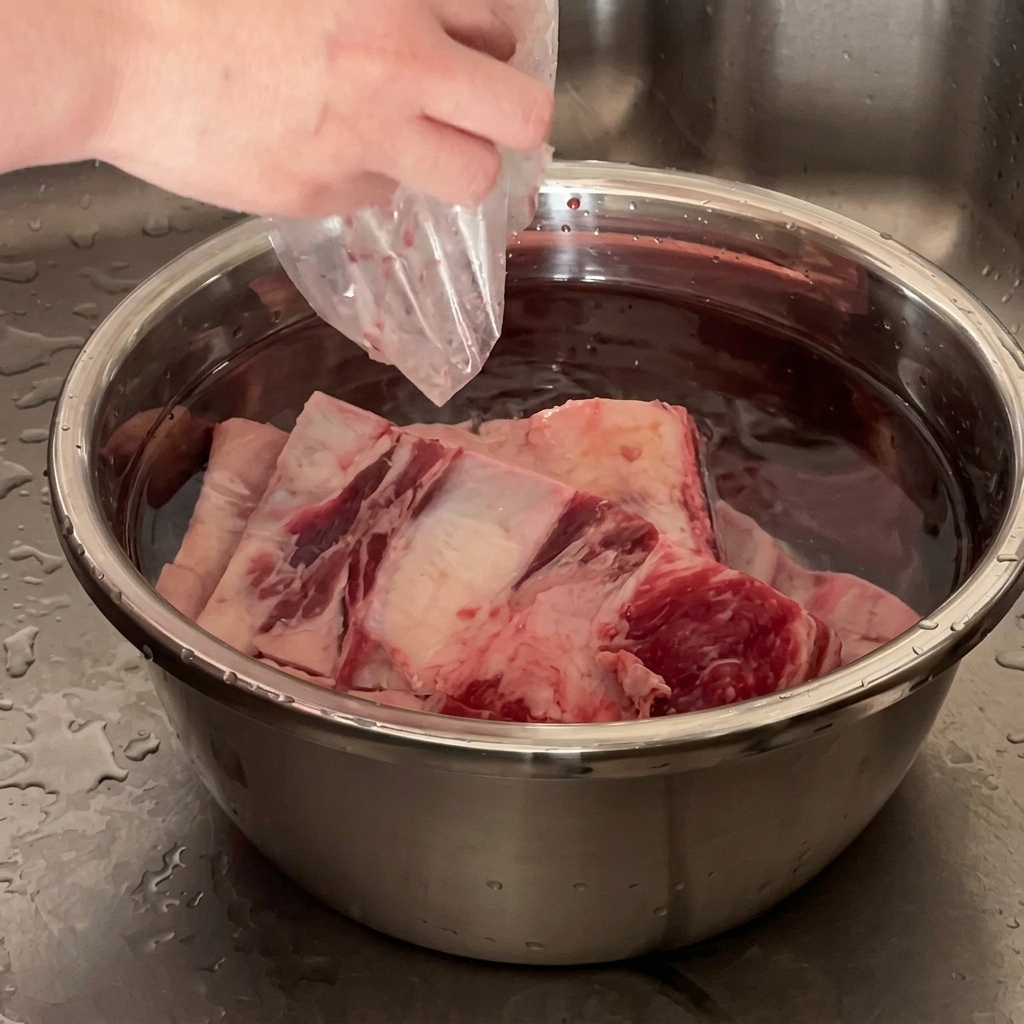
Place the raw beef short ribs into a large metal bowl filled with water. Let them soak to draw out the blood and impurities. Repeat this soaking process, changing the water until it runs clear to ensure a clean base for your broth.
Tip: Keep changing the water until it is clear to prevent a muddy-tasting soup. - 2Cut the ribs
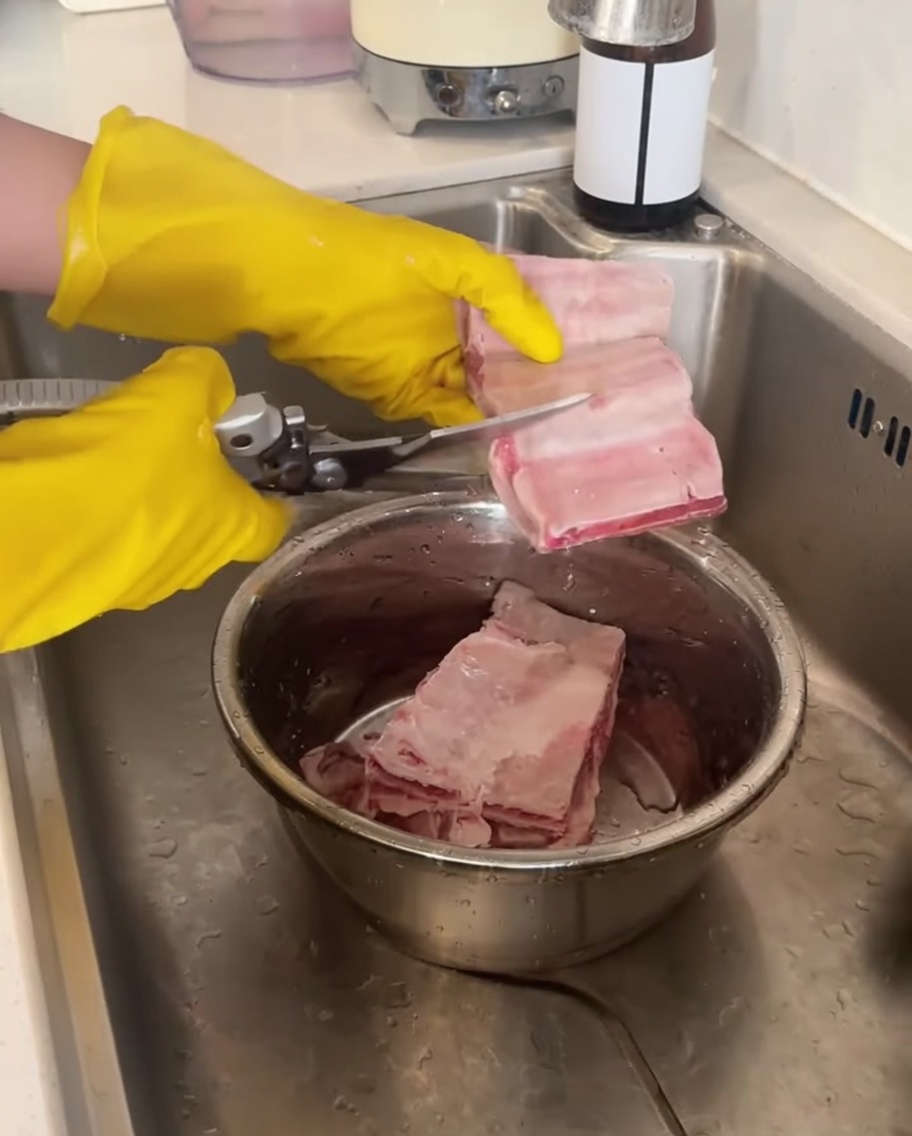
After cleaning, use kitchen shears to cut the beef short ribs into smaller, uniform pieces. This helps them cook more evenly and makes them easier to eat once served in the bowl.
Tip: Use sharp kitchen shears for better control when cutting through the raw ribs. - 3Begin the simmer
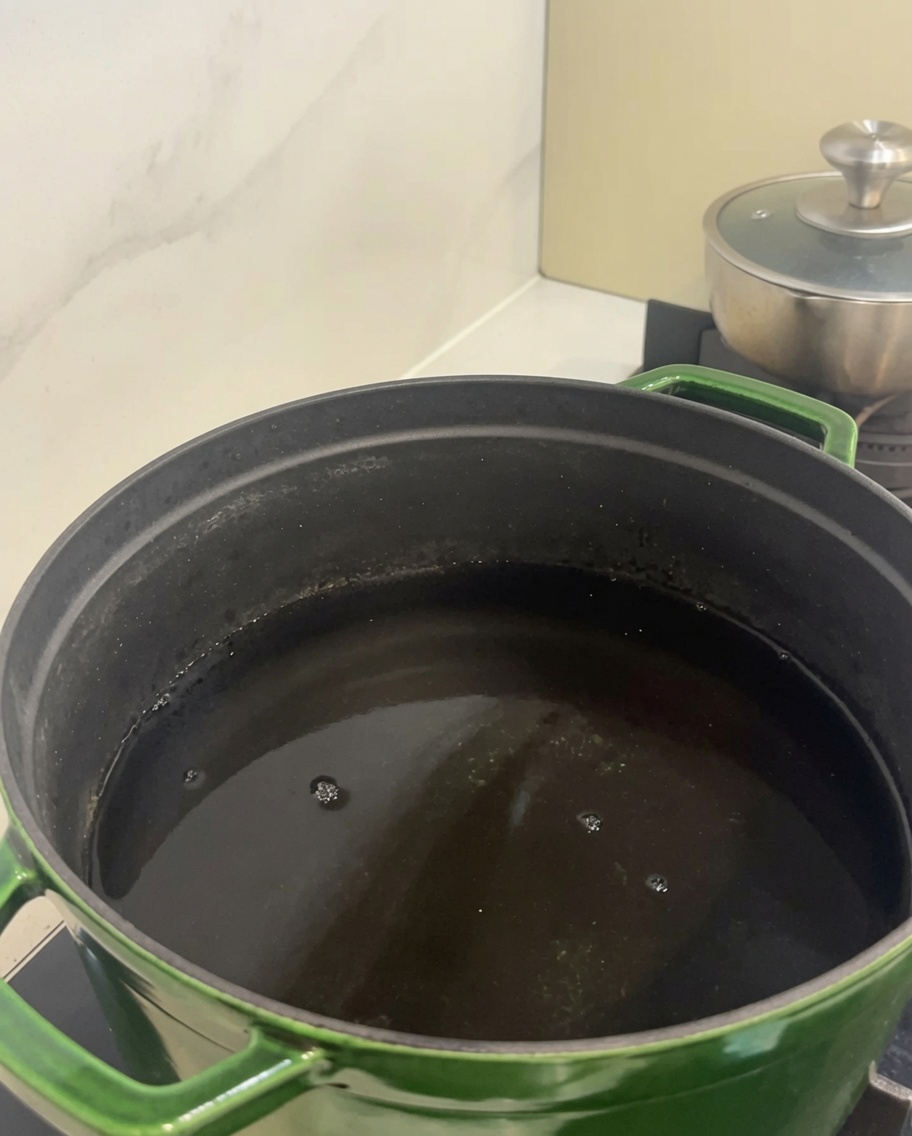
Add the prepared beef short rib pieces into a large pot filled with cold water. Bring the pot to a boil to start the cooking process, which will slowly develop the flavor of the broth.
Tip: Starting with cold water allows the flavors of the meat to infuse into the broth slowly as it heats up. - 4Skim the broth
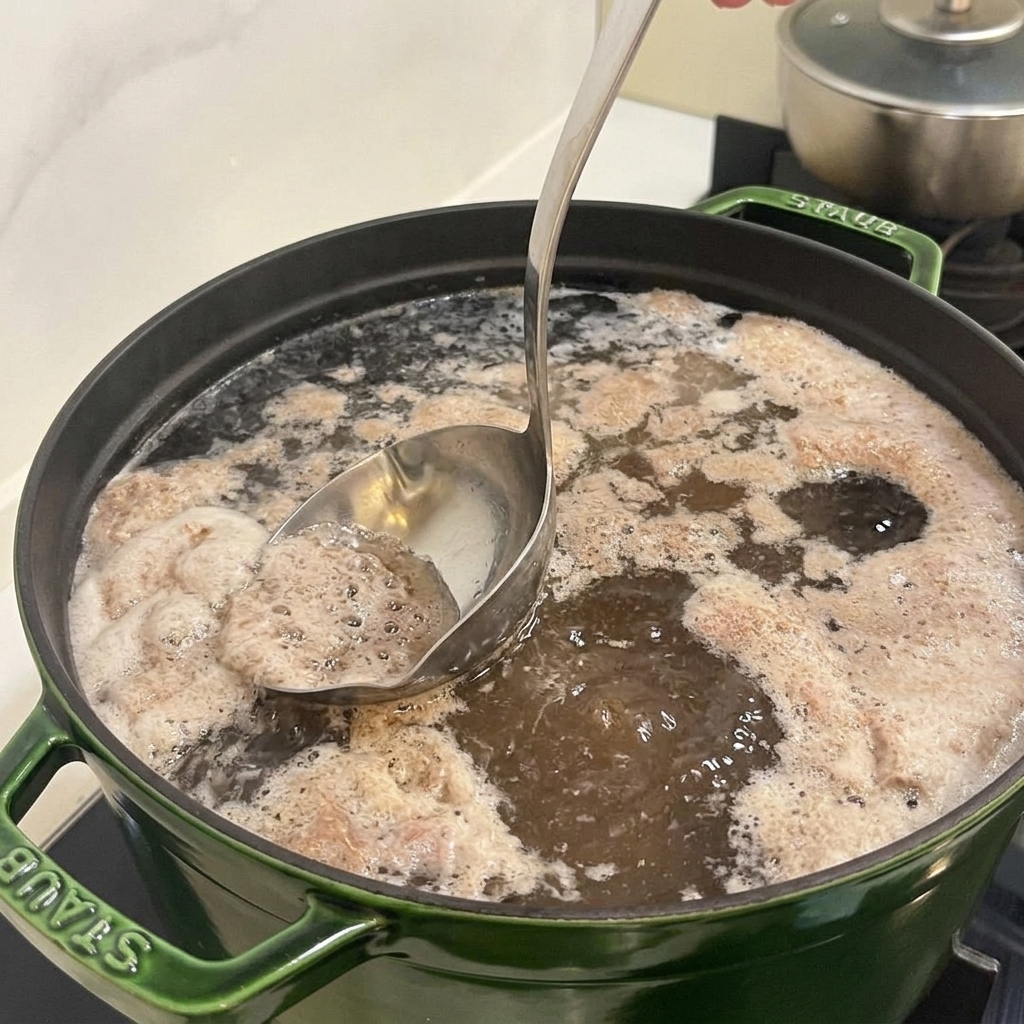
As the water comes to a boil, foam and impurities will rise to the surface. Use a metal ladle to carefully skim this foam off and discard it, ensuring your final soup broth is clear and delicious.
Tip: Skimming regularly during the first boil is essential for a clean, clear soup broth. - 5Add the radish
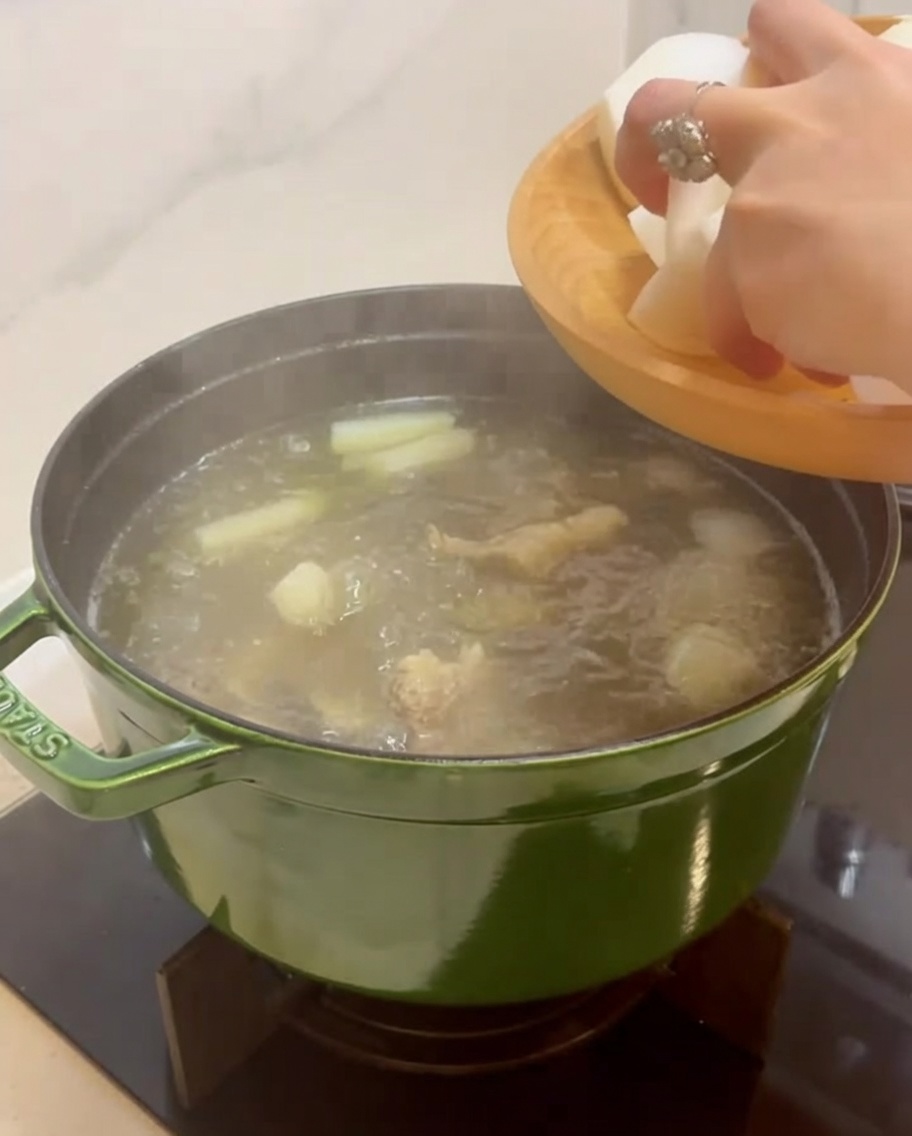
Once the ribs have simmered for one and a half hours, add large chunks of Korean radish to the pot. Cover and continue to simmer for another half hour until the radish becomes tender and absorbs the beef flavor.
Tip: Cut the radish into large, thick chunks so they hold their shape during the long simmer.