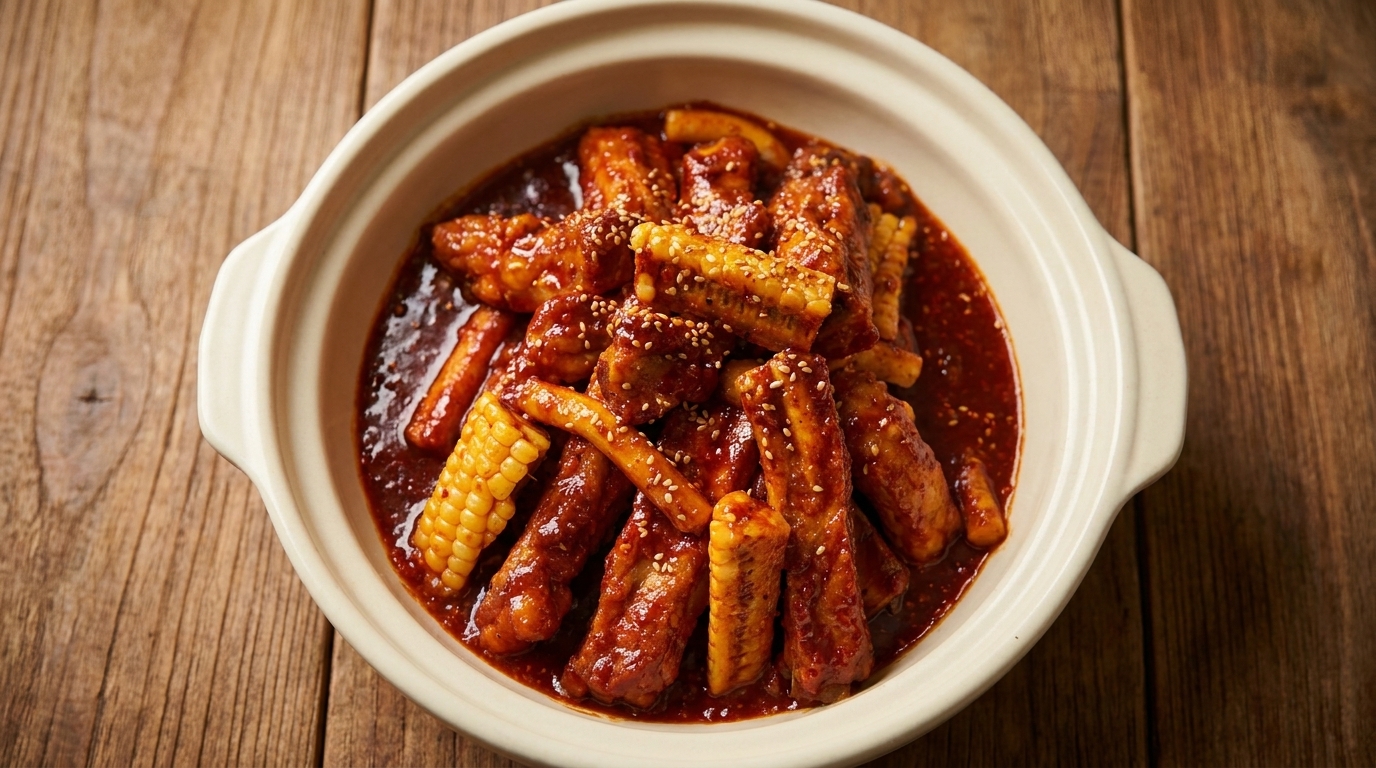
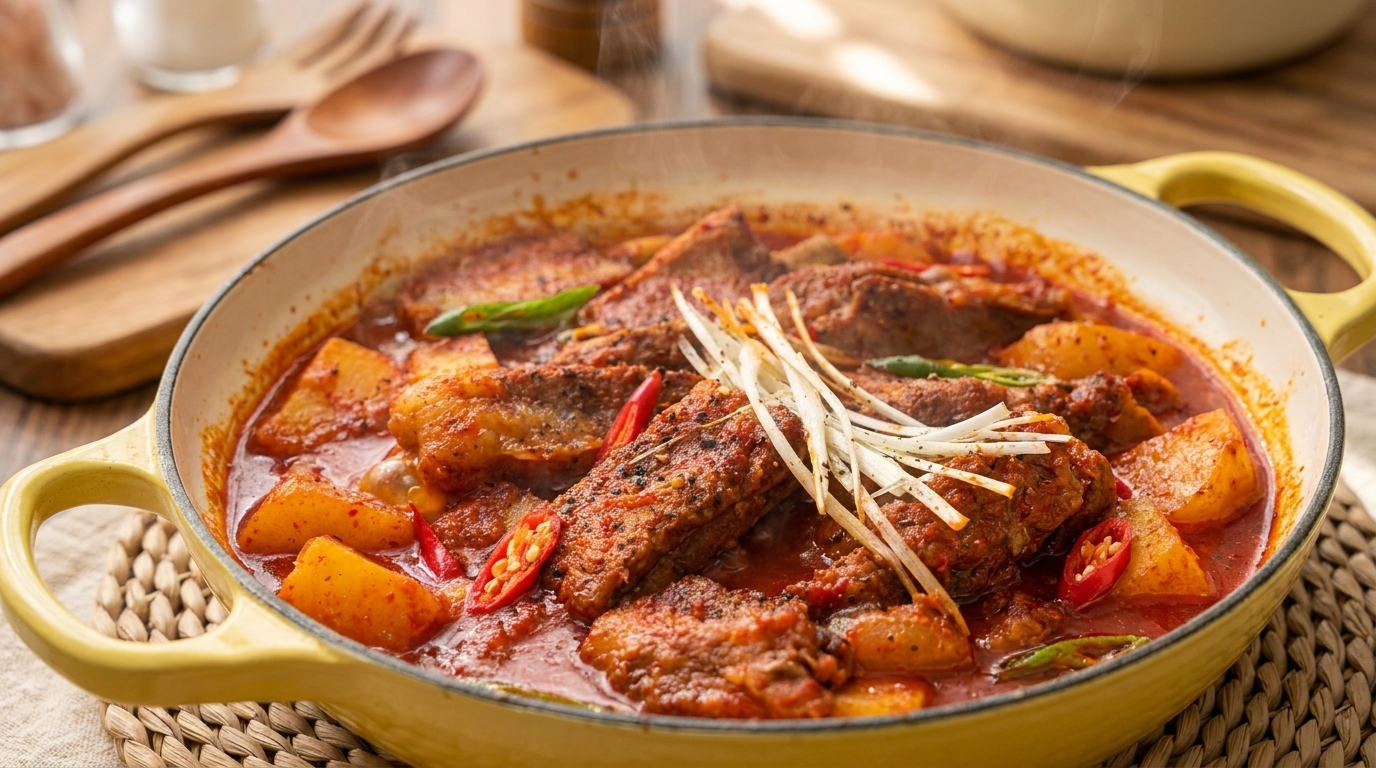
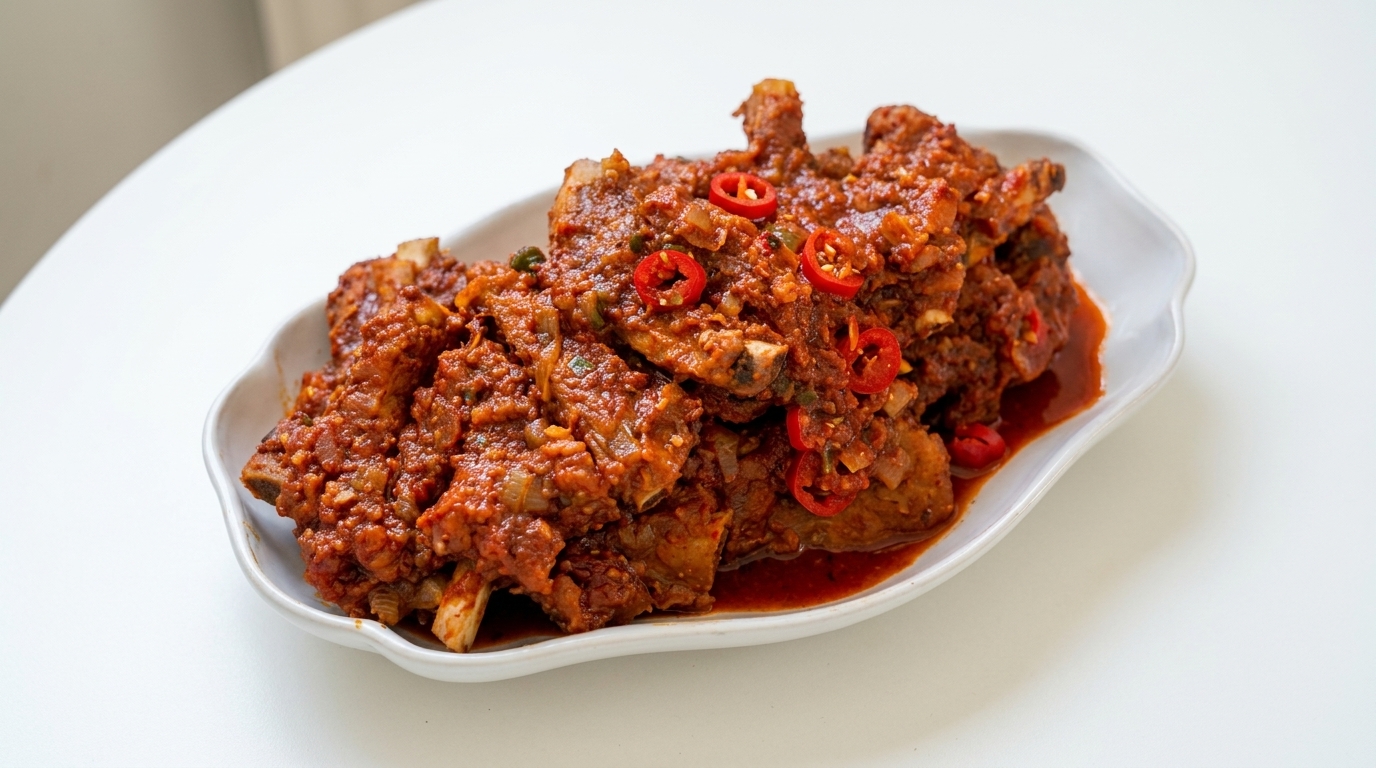
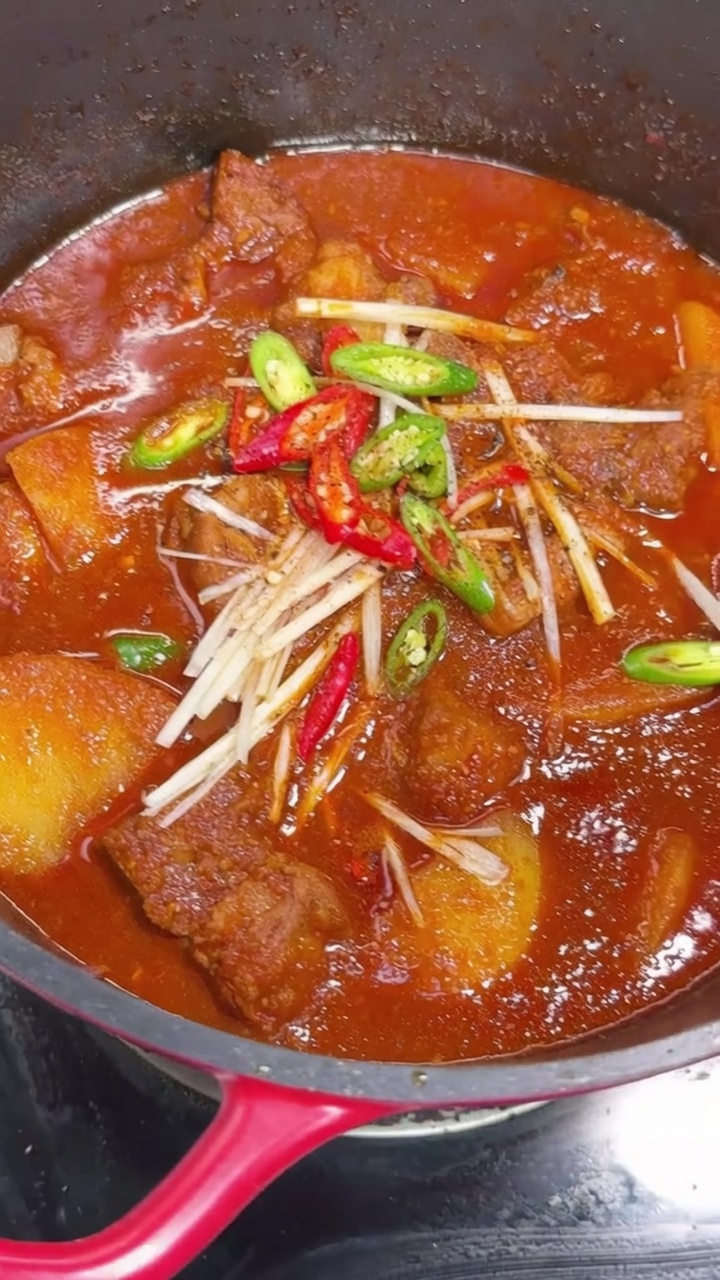
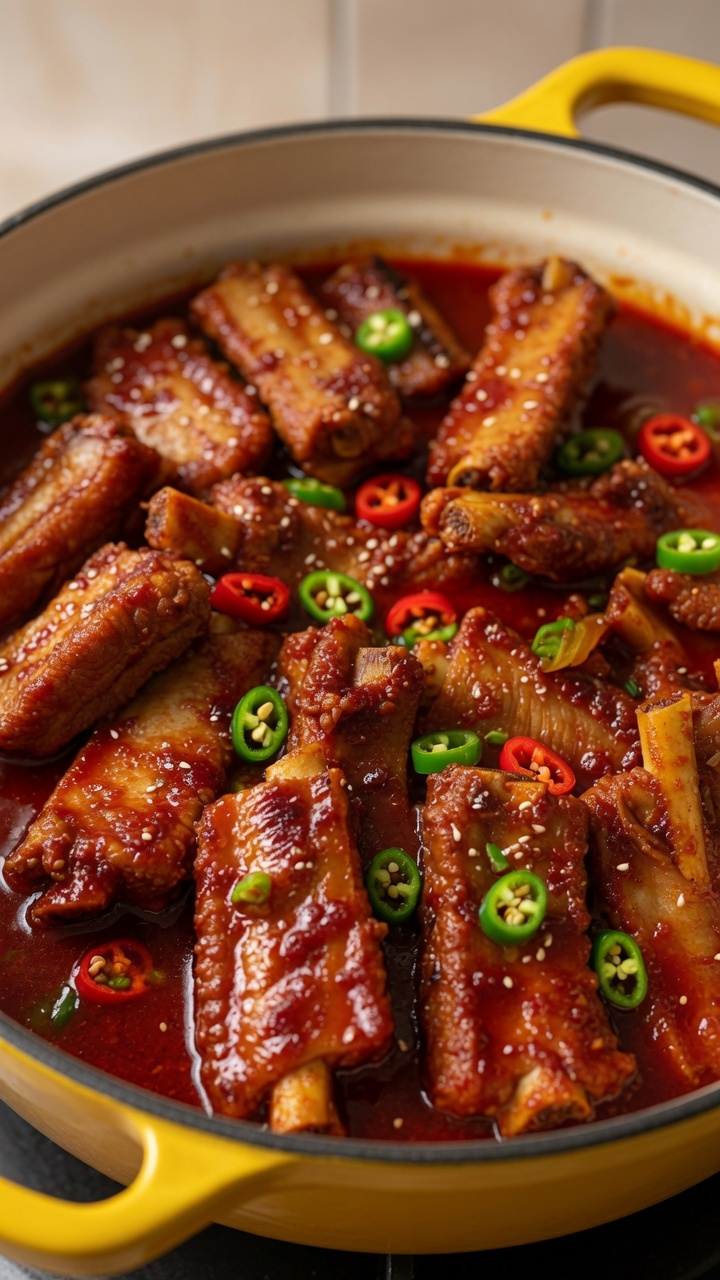
Korean Spicy Braised Pork Ribs (Dwaeji Galbi-jjim)
A tender, fall-off-the-bone Korean classic. These braised pork ribs feature a rich, sweet, and spicy sauce perfect for serving over steamed white rice.
Korean spicy braised pork ribs, or Dwaeji Galbi-jjim, are the ultimate comfort food. This dish strikes a perfect balance between savory soy, fruity sweetness from grated pear and apple, and the bold heat of sun-dried Korean chili powder. The long, slow simmer ensures the ribs become incredibly tender, absorbing the complex, glossy sauce into every bite.
Ingredients
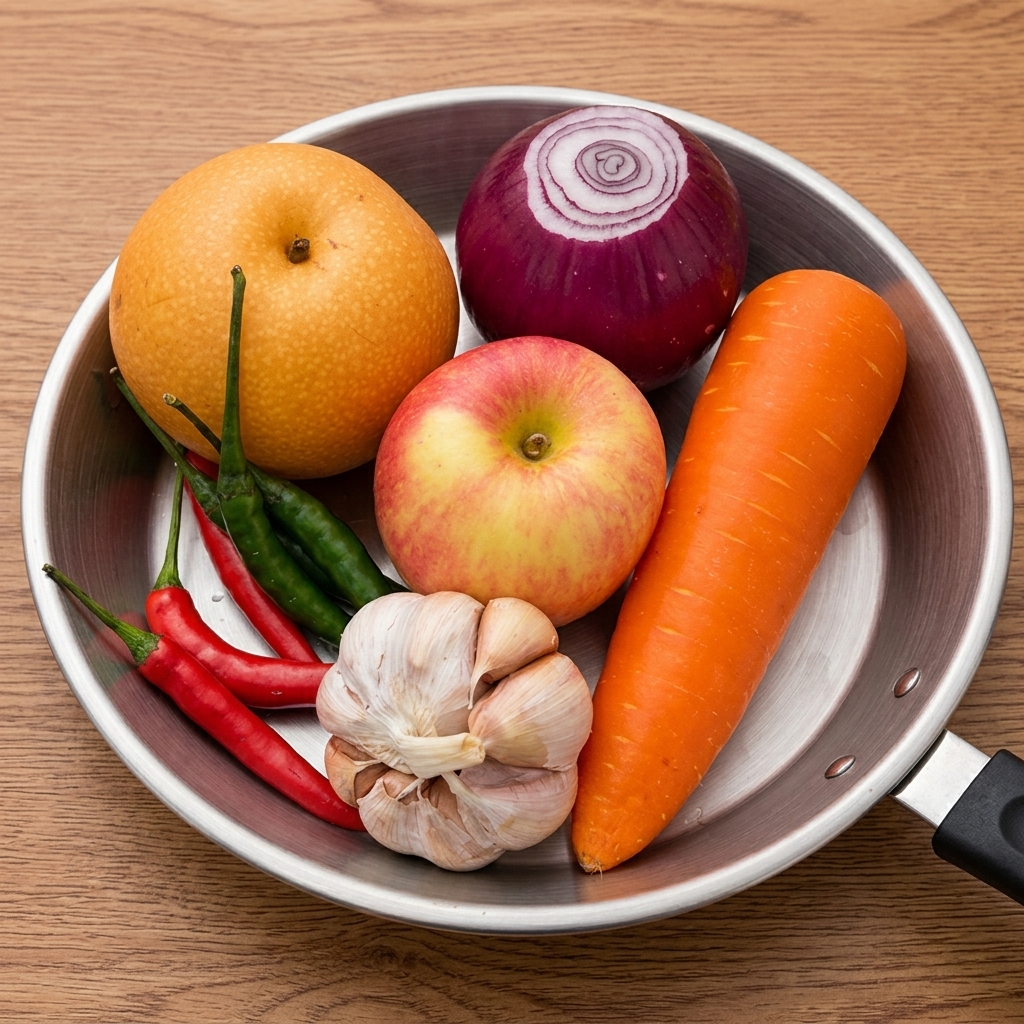
- 1 kg pork ribs
- 1 apple
- 1 pear
- 1 onion
- 1 head garlic
- 2 tbsp light soy sauce
- 1 tbsp dark soy sauce
- 1 tbsp chili powder
- 1 tbsp sugar
- 2 tbsp Korean chili powder
- 1 tbsp Korean chili paste
- 2 tbsp kimchi
- 1 green chili pepper
- 1 red chili pepper
- 1 tsp roasted sesame seeds
Instructions
- 1Prepare the ribs
Chop the pork ribs into small, uniform pieces on a wooden cutting board to ensure they braise evenly.
Tip: Keep the pieces uniform in size so they cook through at the same rate. - 2Blanch the ribs
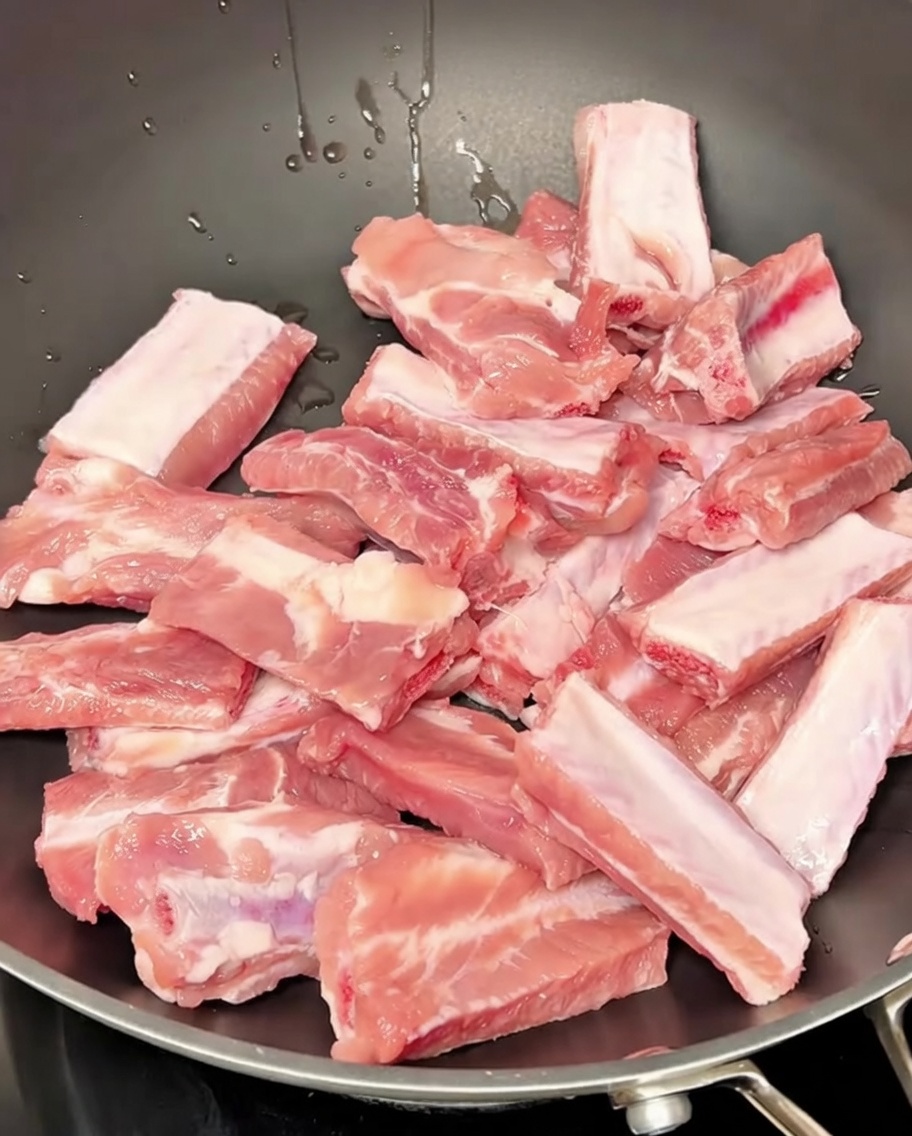
Place the ribs in a pot, cover with water, and simmer for 15 minutes. Skim off any foam that rises to the surface for a clean, non-greasy sauce, then drain and rinse the ribs.
Tip: Skimming the foam is essential for a clean, non-greasy sauce later. - 3Prepare the fruit and onion base
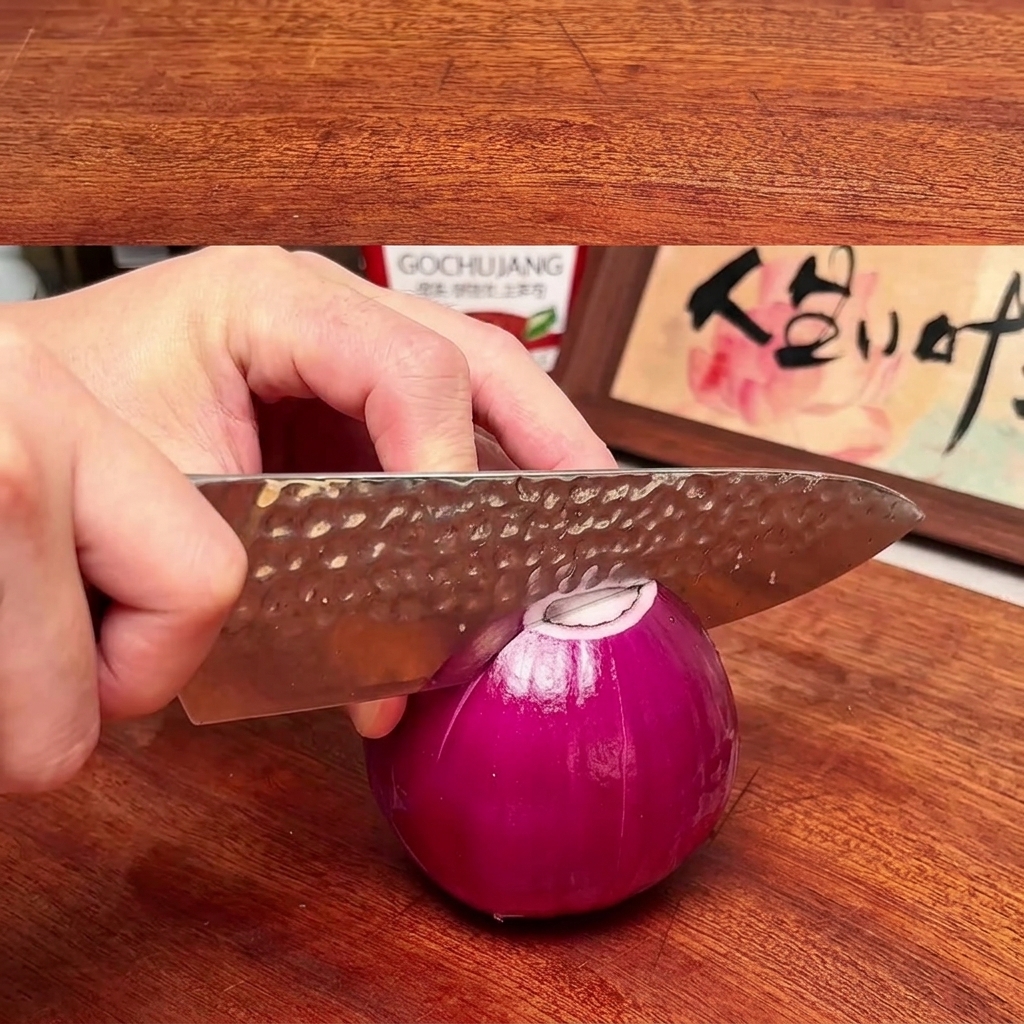
Cut the apple, pear, and onion into chunks to prepare them for the food processor.
Tip: Use a crisp apple and a sweet pear for the best flavor balance. - 4Pulse the aromatics
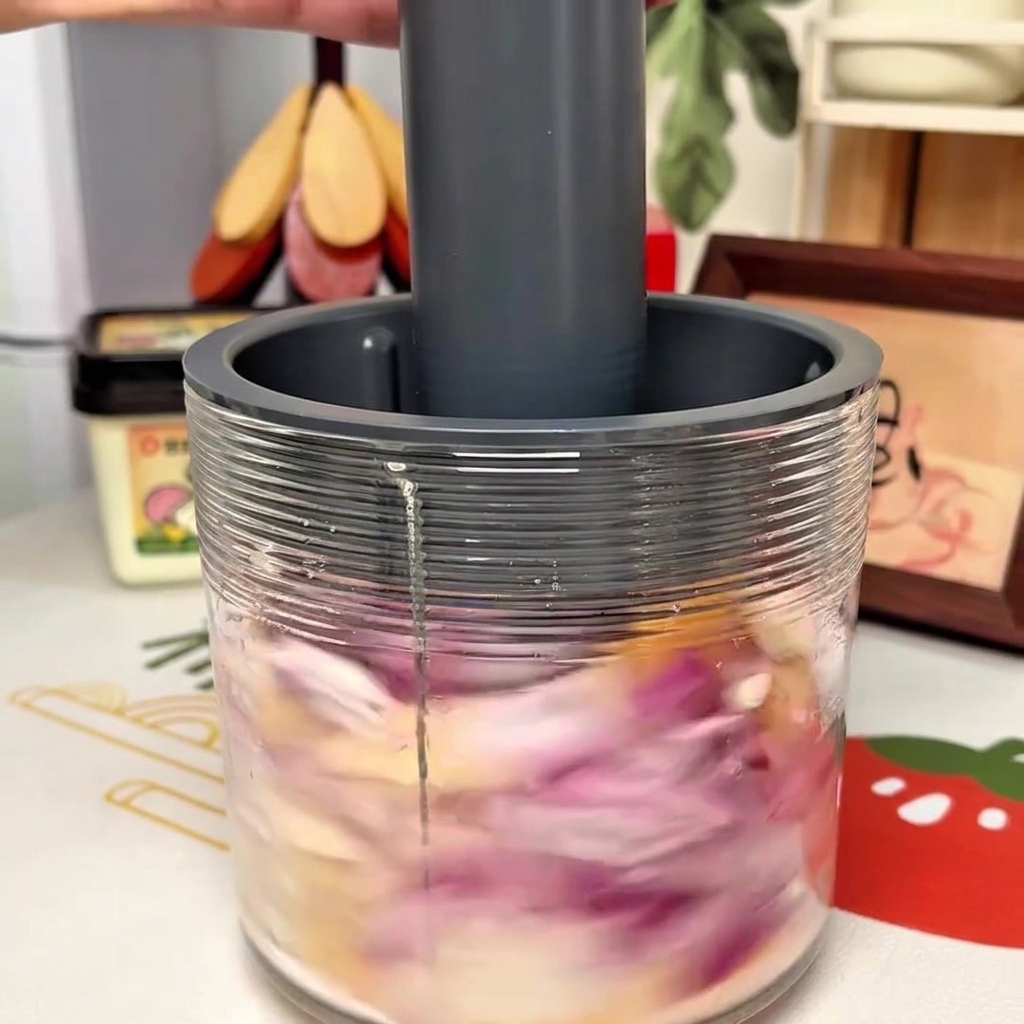
Pulse the fruit and onion chunks in a food processor for a few seconds. Aim for a coarse, rustic texture rather than a smooth puree.
Tip: Short pulses are key; you want a rustic texture, not a smooth paste. - 5Prepare the spicy sauce
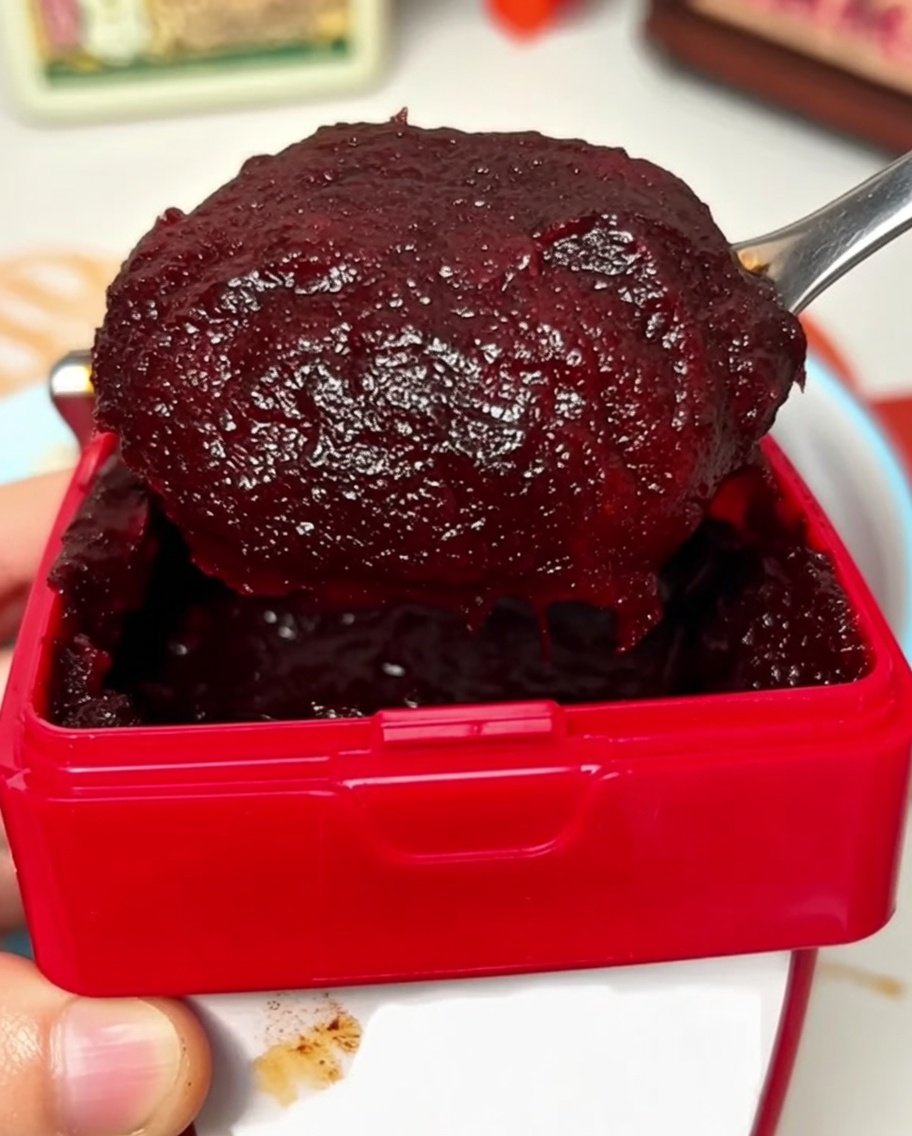
In a bowl, combine the processed fruit and onion mixture with light soy sauce, dark soy sauce, chili powder, sugar, Korean chili powder, and Korean chili paste. Stir until smooth.
Tip: Use 100% sun-dried Korean chili powder for the best quality and color. - 6Sauté aromatics
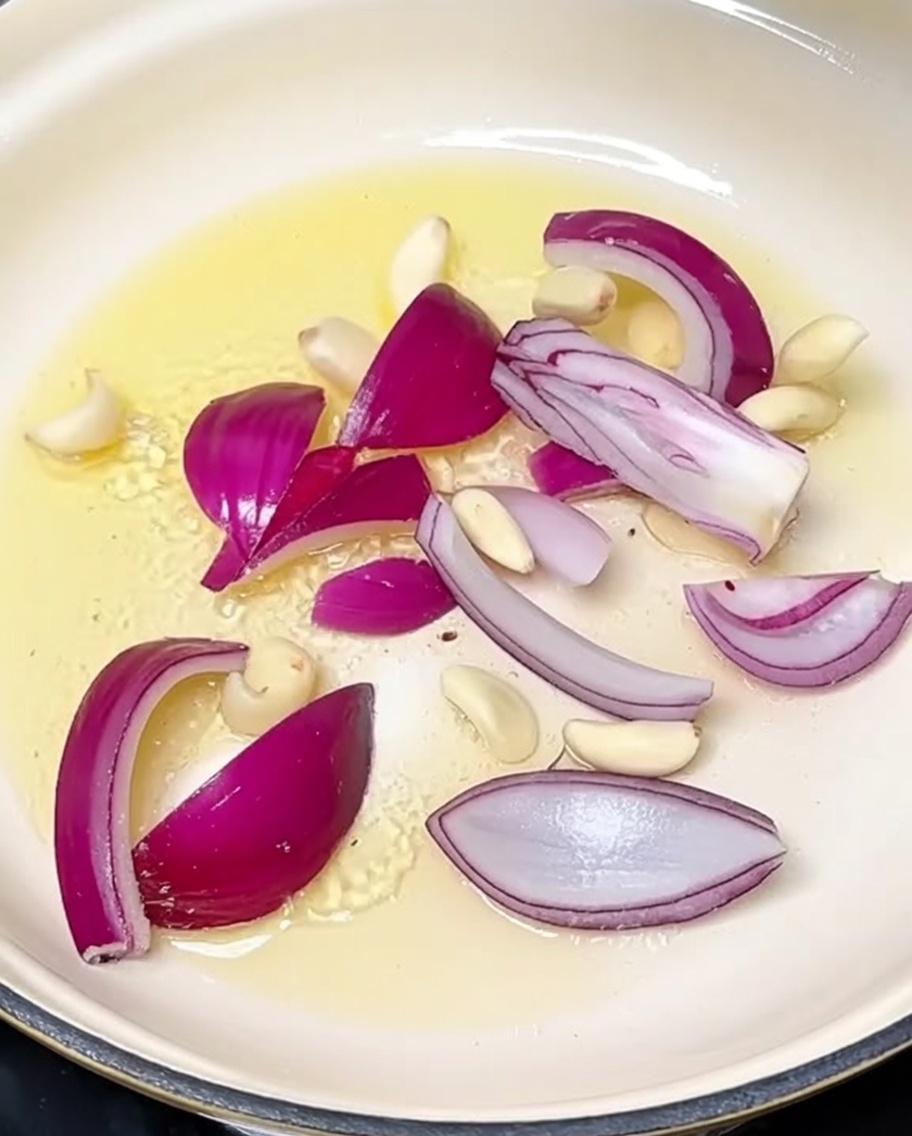
Heat oil in a pot and sauté the sliced onion and garlic until fragrant, taking care not to burn the garlic.
Tip: Sautéing until just fragrant prevents the garlic from turning bitter. - 7Sauté the ribs
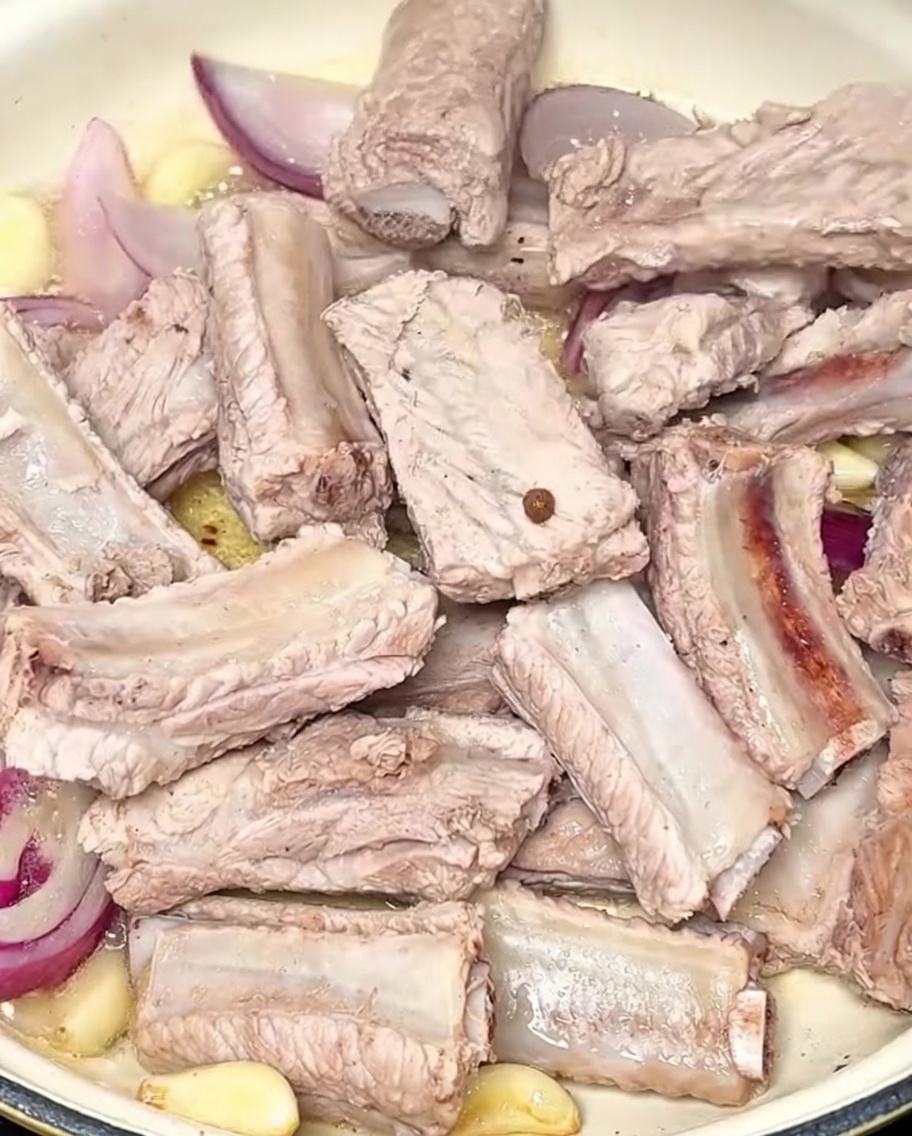
Add the blanched pork ribs to the pot with the sautéed aromatics and stir briefly to combine.
Tip: Ensure the heat is at a medium level so the aromatics dont burn before the ribs are added. - 8Simmer the braise
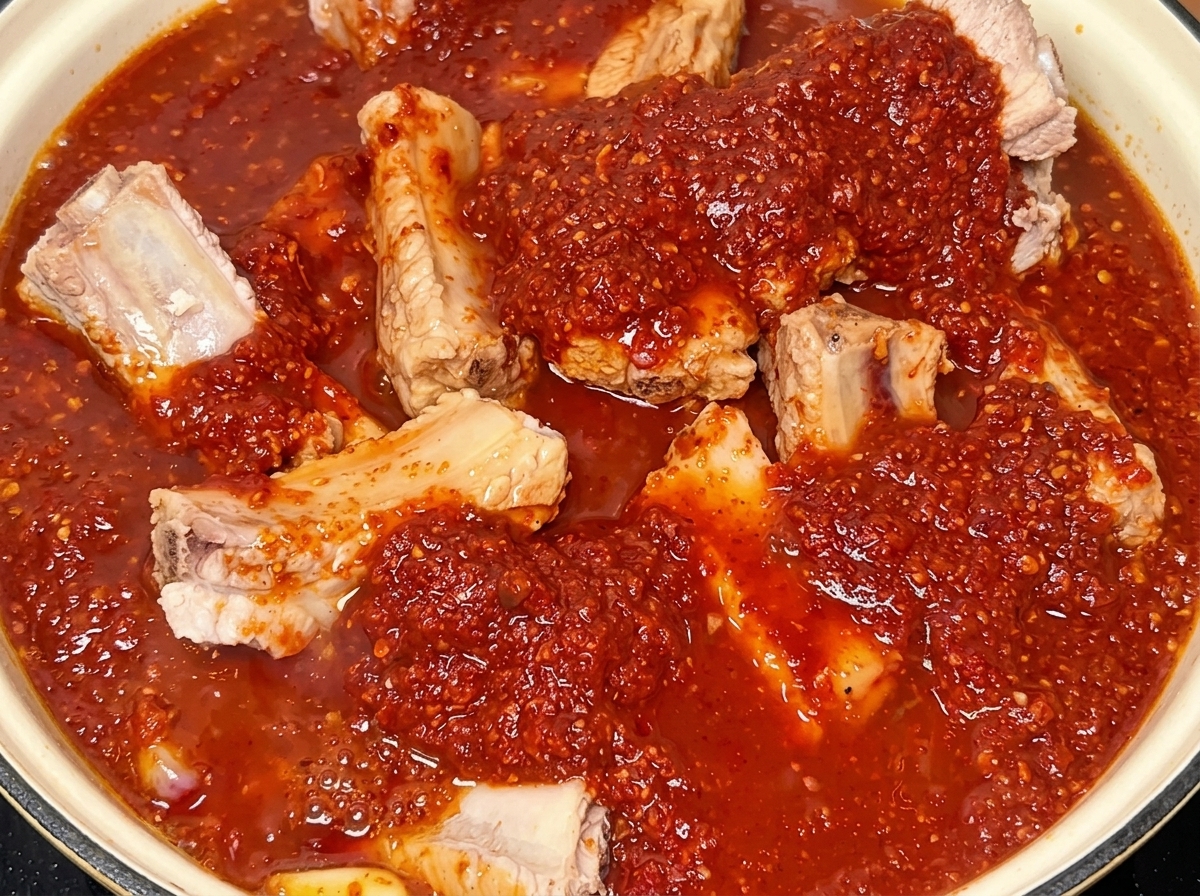
Pour the spicy sauce over the ribs, add enough water to cover, and stir in the kimchi. Cover and simmer over medium-low heat for 50 minutes, stirring occasionally to prevent the sauce from sticking.
Tip: Stirring occasionally is crucial to prevent the rich, sugary sauce from burning at the bottom of the pot.