Korean Spicy Stewed Pork Ribs (Dwaeji Galbi-jjim)
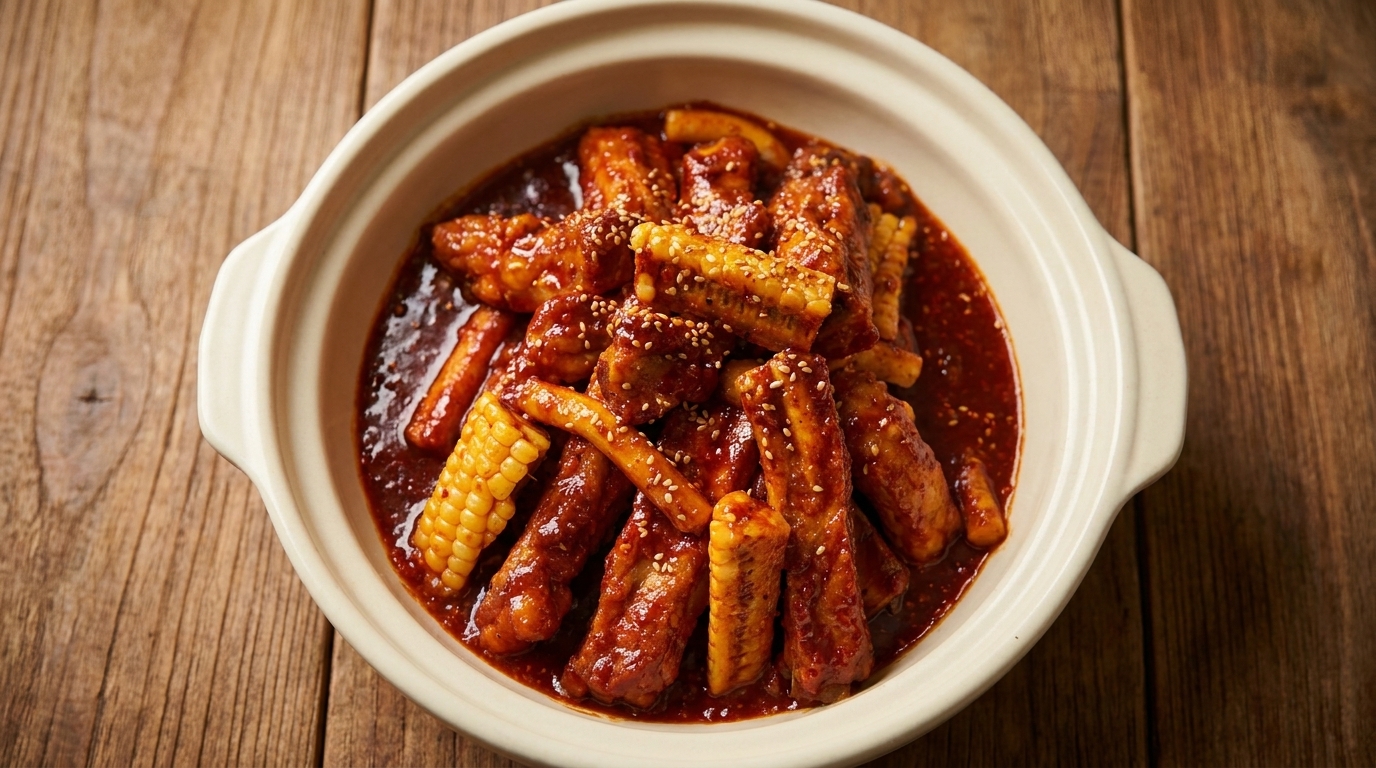
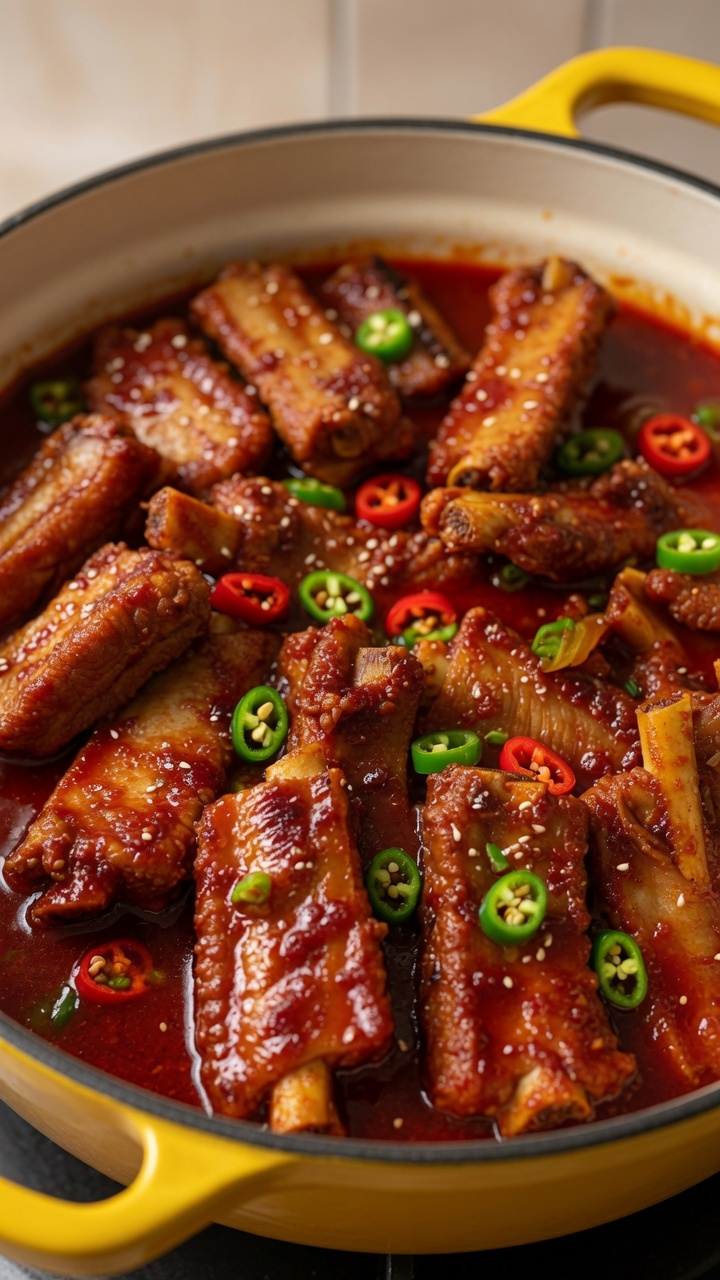
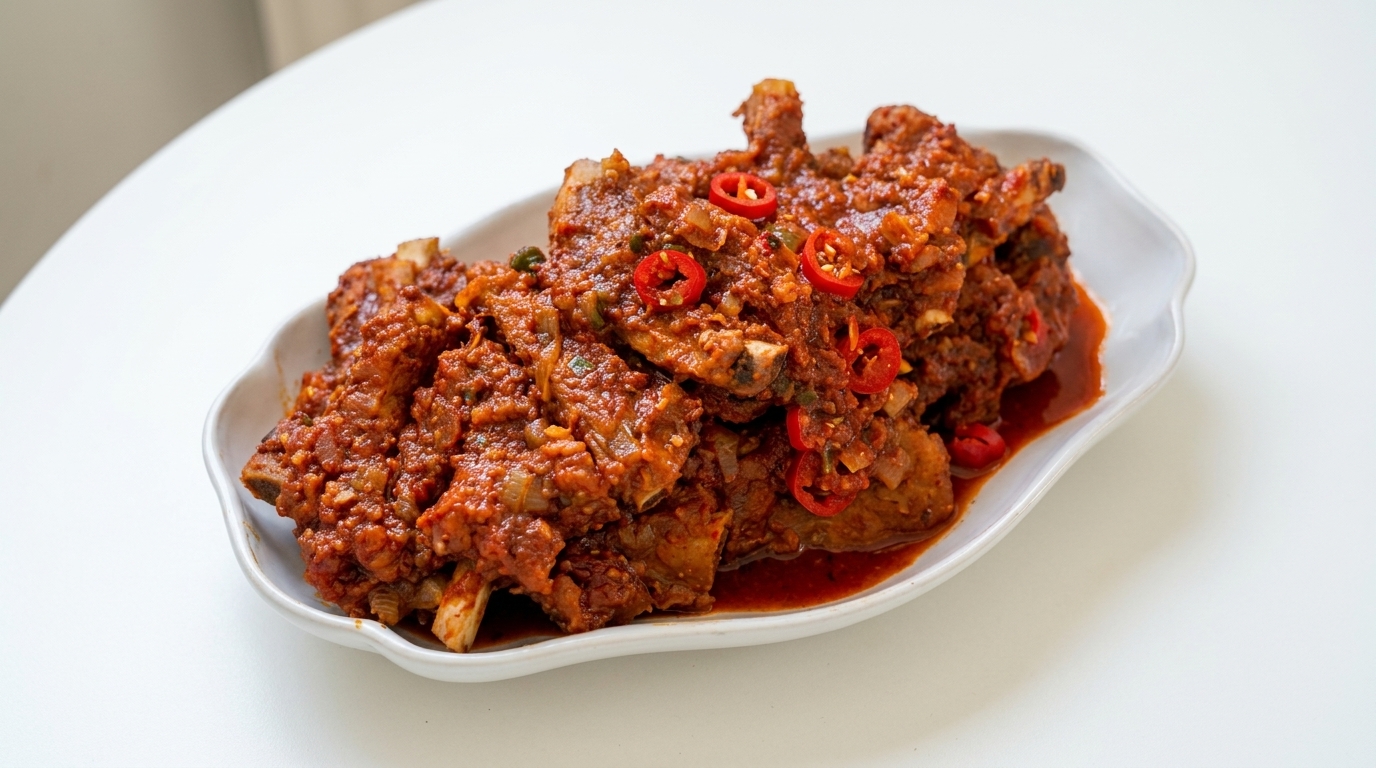
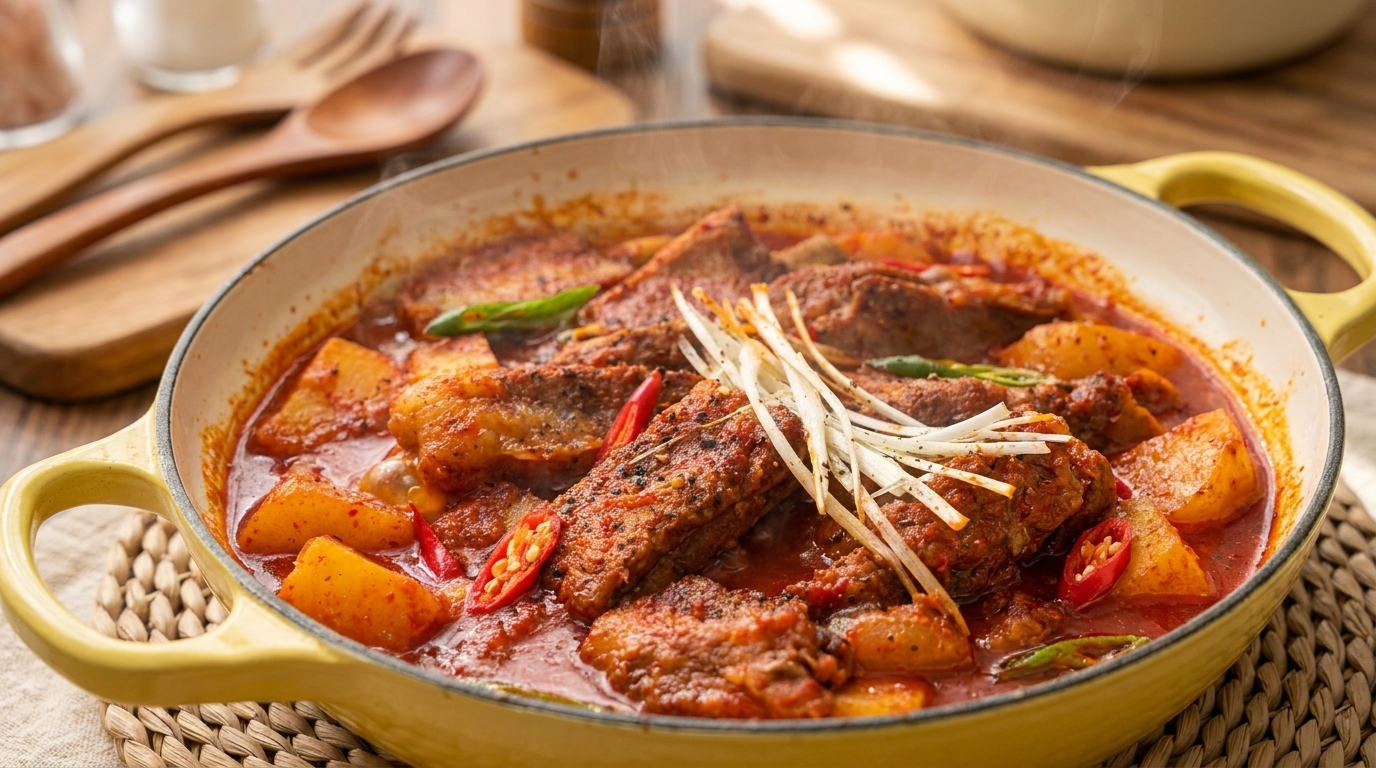
Experience the ultimate comfort food: tender pork ribs stewed in a rich, sweet, and spicy fruit-infused sauce until they effortlessly fall off the bone.
Korean braised pork ribs, or galbi-jjim, are a celebratory dish known for their deep, layered flavors. This version elevates the traditional braise by using a signature blend of apple, pear, and onion to create a naturally sweet and tenderizing base that perfectly balances the heat of the gochujang. It is the ultimate dish for sharing, especially when served over a steaming bowl of rice.
Ingredients
- 1 kg pork ribs
- 1 apple
- 1 pear
- 1 onion
- 4 cloves garlic
- 3 tbsp Korean spicy bean paste (gochujang)
- 2 tbsp chili flakes
- 2 tbsp sugar
- 4 tbsp light soy sauce
- 2 potatoes
- 2 stalks green onions
- 3 slices ginger
- 2 tbsp cooking wine
- to taste fresh chili peppers
Instructions
- 1Cut the pork ribs
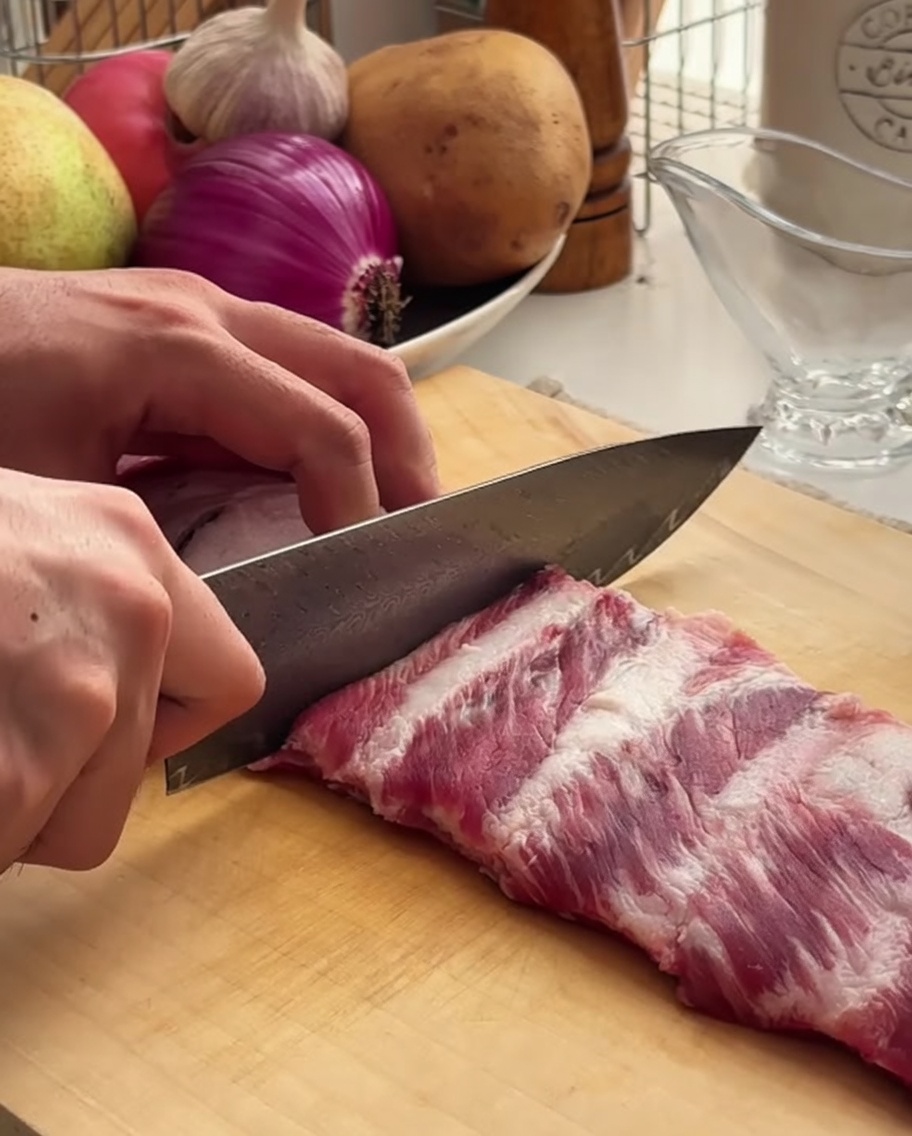
Take a quality rack of pork ribs and cut them into individual pieces using a kitchen knife on a wooden cutting board. Preparing them this way ensures they cook evenly and are easier to serve.
Tip: Ensure your knife is sharp for clean cuts through the bone and meat. - 2Blanch the ribs
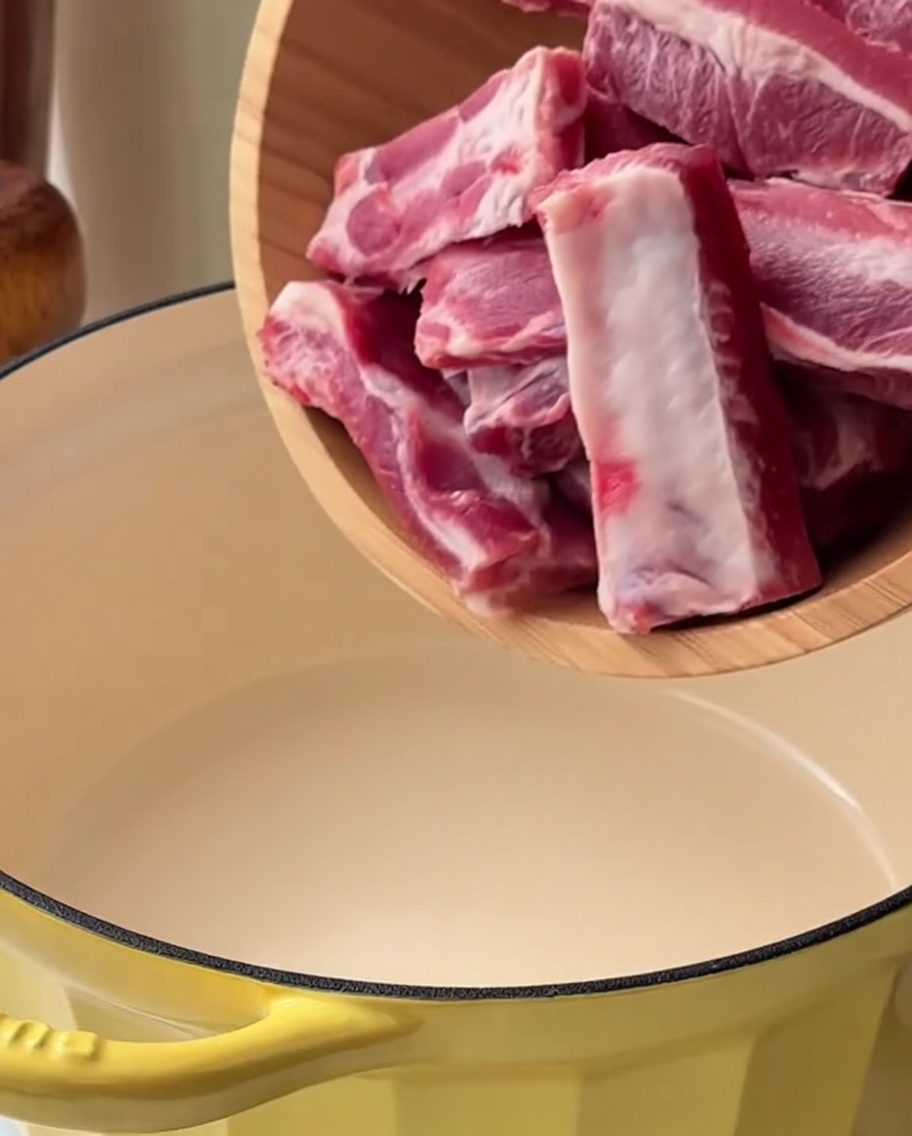
Place the cut pork ribs into a pot, then add water, green onion segments, ginger slices, and a splash of cooking wine. Blanch the ribs to remove impurities and prepare them for the stewing process.
Tip: Blanching is a crucial step to remove any gamey flavor or residue from the meat. - 3Prepare the fruit-based paste

Combine pieces of apple, pear, onion, and garlic cloves in a blender. Process them into a smooth paste, which will add natural sweetness and a subtle texture to the stew base.
Tip: The fruit acts as a natural tenderizer for the pork ribs, making them fall off the bone. - 4Mix the marinade
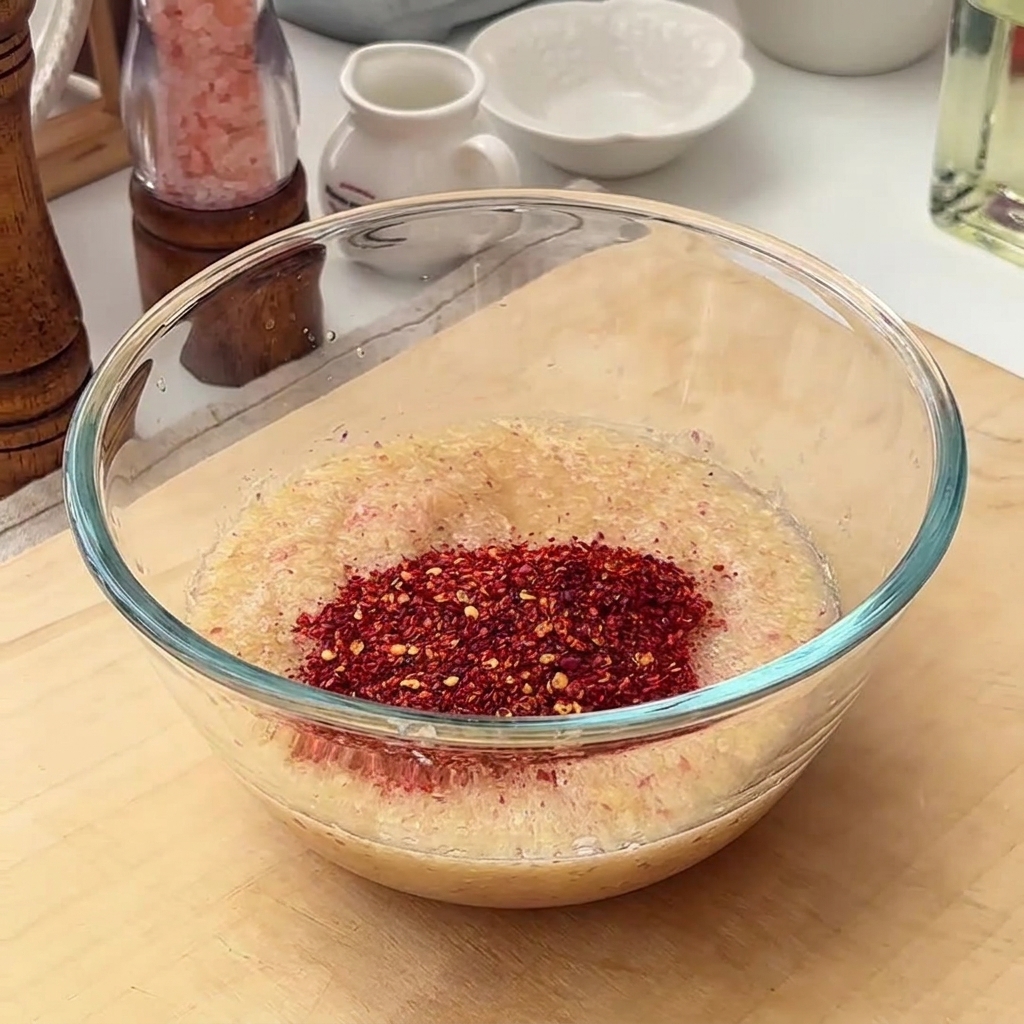
Add chili flakes, sugar, light soy sauce, and Korean spicy bean paste (gochujang) into the bowl with the fruit and vegetable puree. This mixture serves as the spicy, rich marinade for the ribs.
Tip: Adjust the amount of gochujang depending on your preference for heat. - 5Combine the marinade

Use a spoon to mix all the marinade ingredients thoroughly until they are well combined into a uniform, vibrant red sauce.
Tip: Ensure the gochujang is fully dissolved into the mixture for a consistent flavor. - 6Marinate and stew
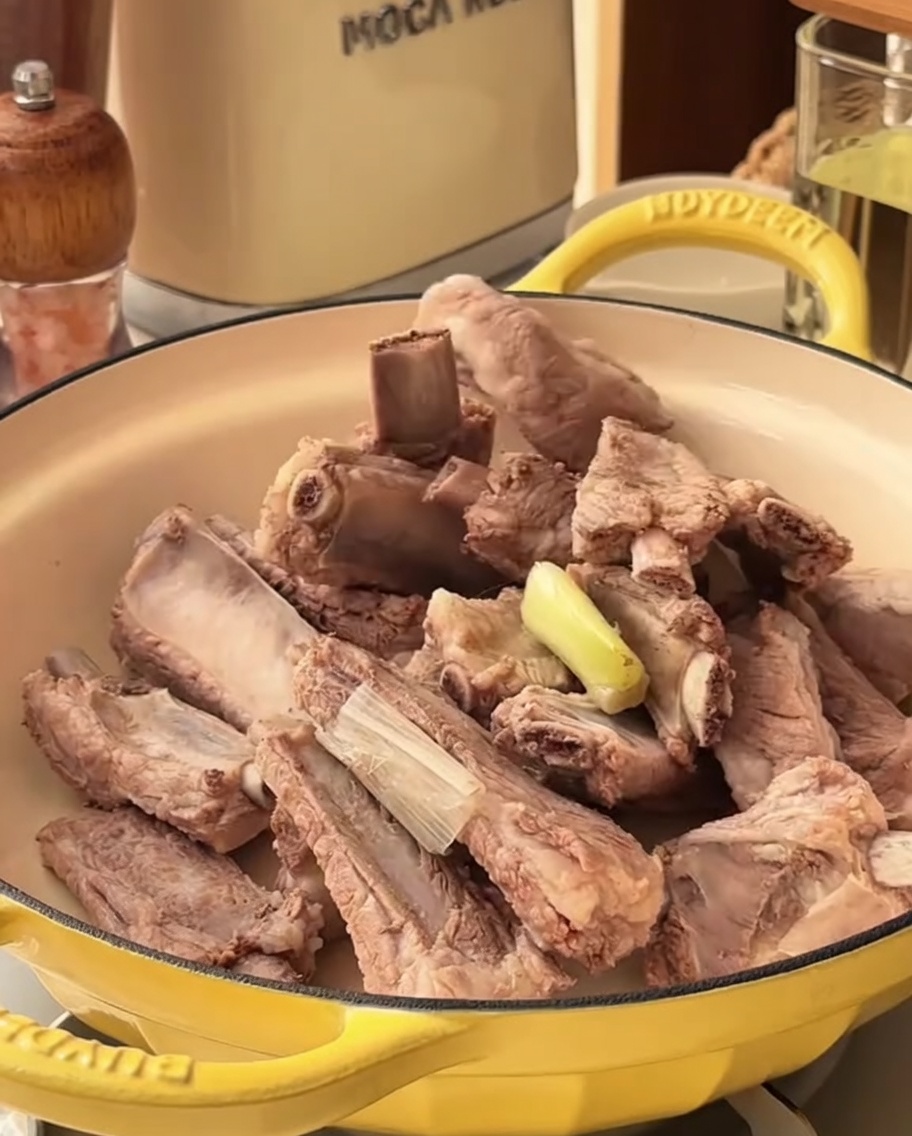
Pour the prepared spicy marinade over the blanched pork ribs in the cooking pot. Add enough water to cover the ribs, then cover the pot and let it simmer for 40 minutes.
Tip: Using a heavy-bottomed pot will help distribute heat evenly during the long simmer. - 7Add potatoes
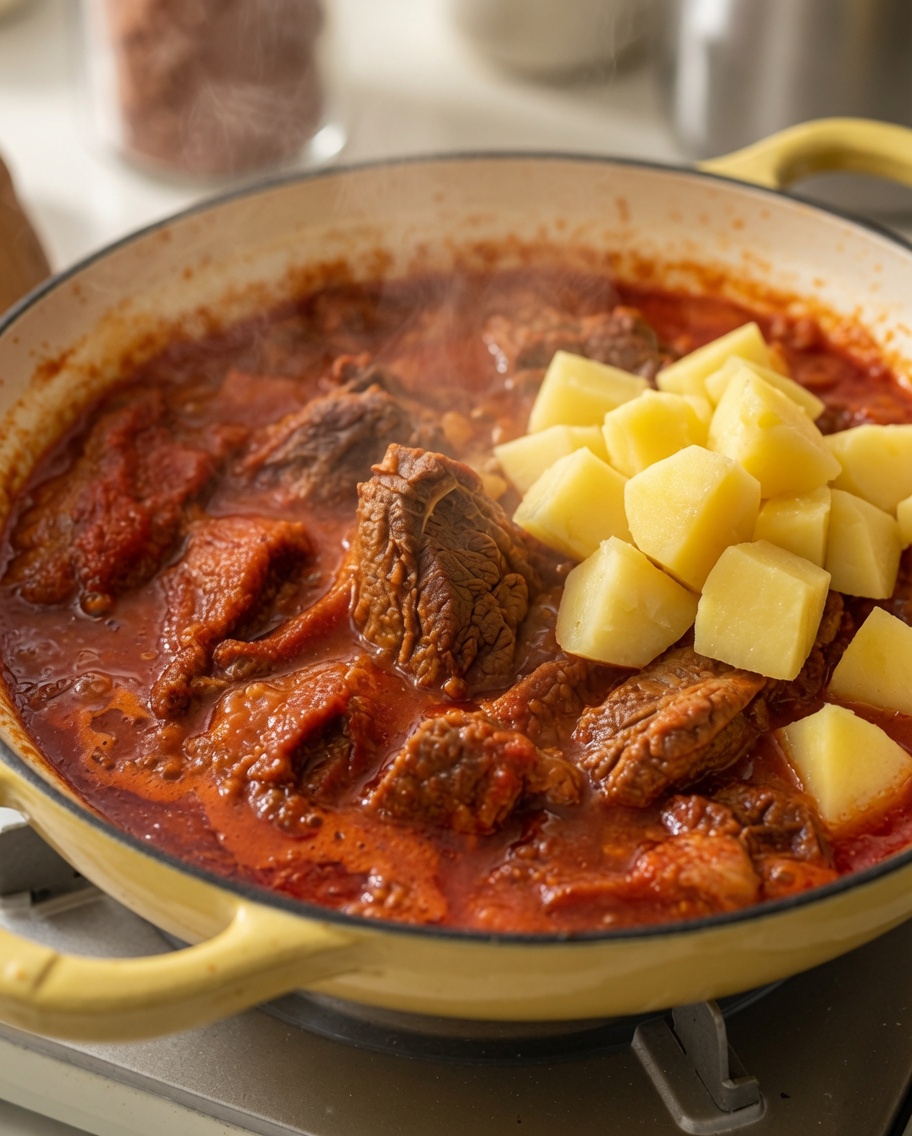
After simmering the ribs for 40 minutes, add the potato chunks into the pot. Ensure they are well-submerged in the spicy sauce and continue to simmer covered for another 15 minutes until the potatoes are tender and fully cooked.
Tip: Cut the potatoes into uniform, bite-sized chunks so they cook evenly without falling apart. - 8Garnish with chilies
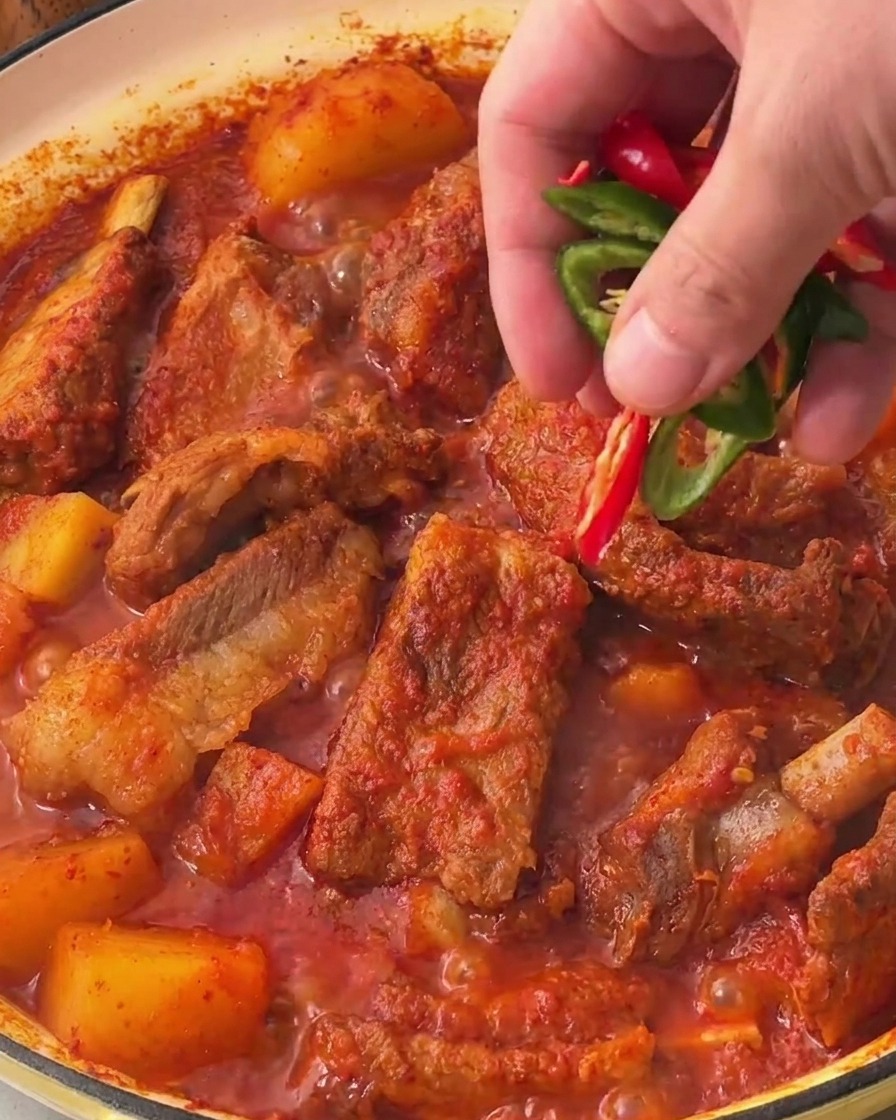
Once the stew is finished and the ribs are tender, turn off the heat. Sprinkle fresh green and red chili pepper slices over the top to add a final touch of color and a burst of fresh, spicy flavor before serving.
Tip: Adding the fresh chili peppers right at the end maintains their vibrant color and crisp texture.