Crispy Pan-Fried Yellow Seabream (Xiānyú)
Discover the secret to perfectly crisp yellow seabream with tender, flaky flesh, seasoned with coarse sea salt and cooked using the classic hot-pan-cold-oil technique.
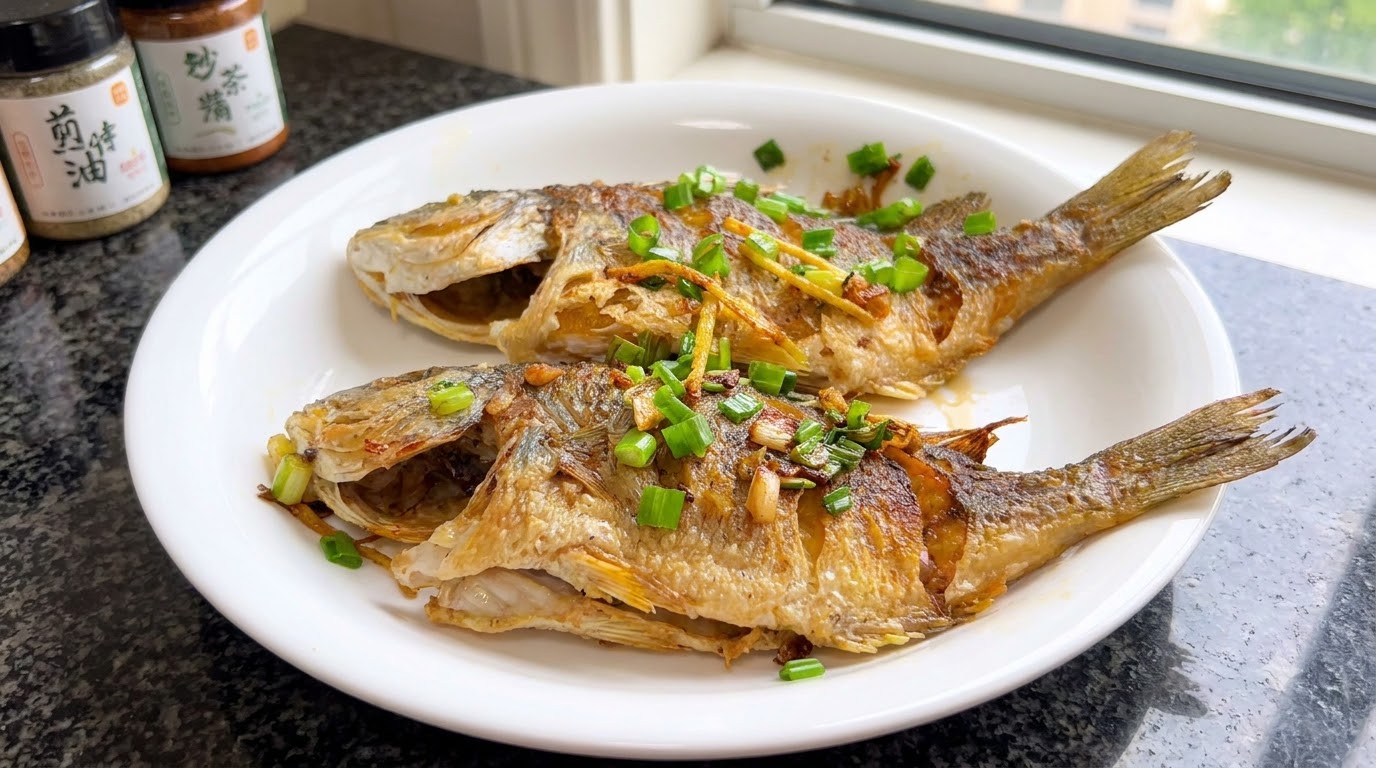
Pan-fried yellow seabream is a beloved homestyle seafood dish known for its contrasting textures of golden crispy skin and savory, firm flesh. Marinating the fish with coarse sea salt draws out excess moisture, allowing it to develop a rich, concentrated flavor while maintaining a chewy, satisfying bite. This foolproof method ensures the skin stays intact without tearing.
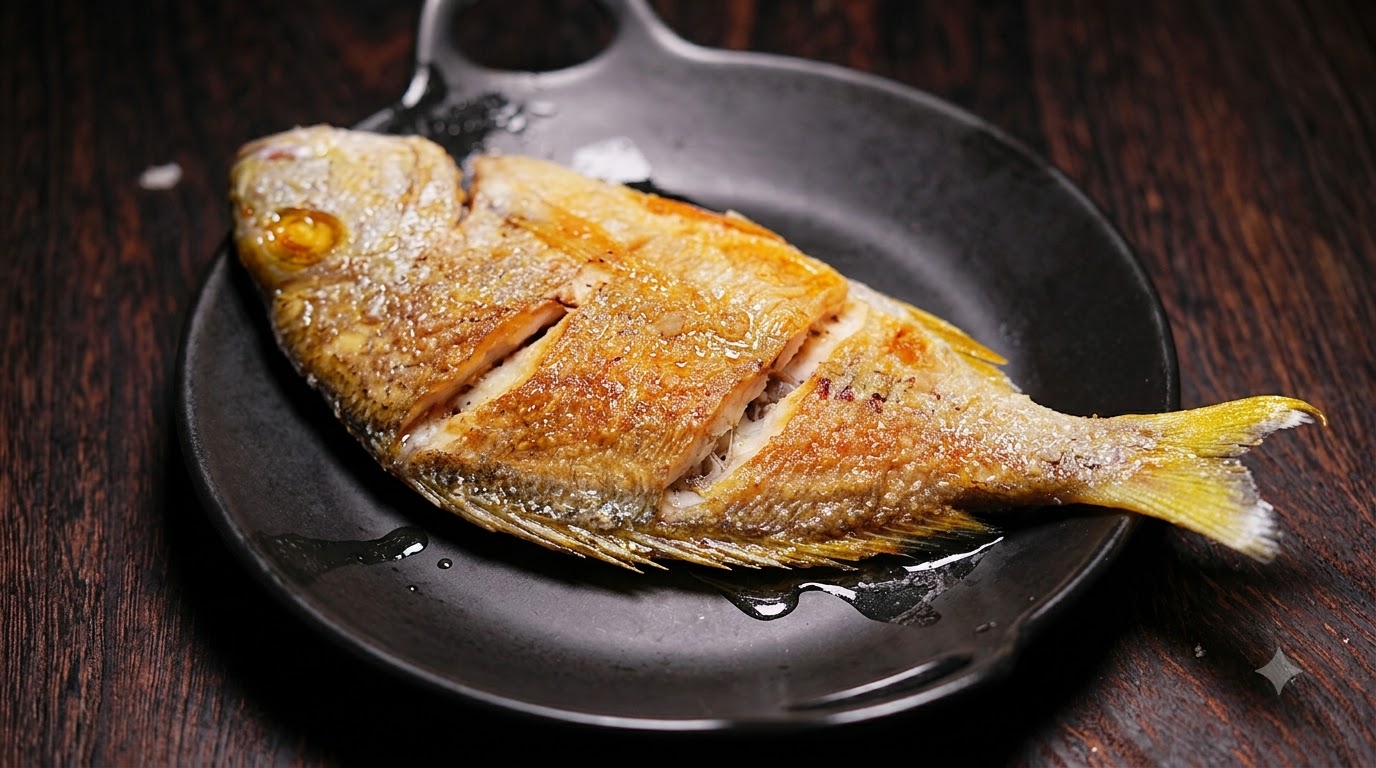
Ingredients
- 2 whole yellow seabream
- 2 tbsp coarse sea salt
- 2 tbsp cooking oil
- optional fresh scallions and ginger for garnish
Instructions
- 1Select fresh yellow seabream
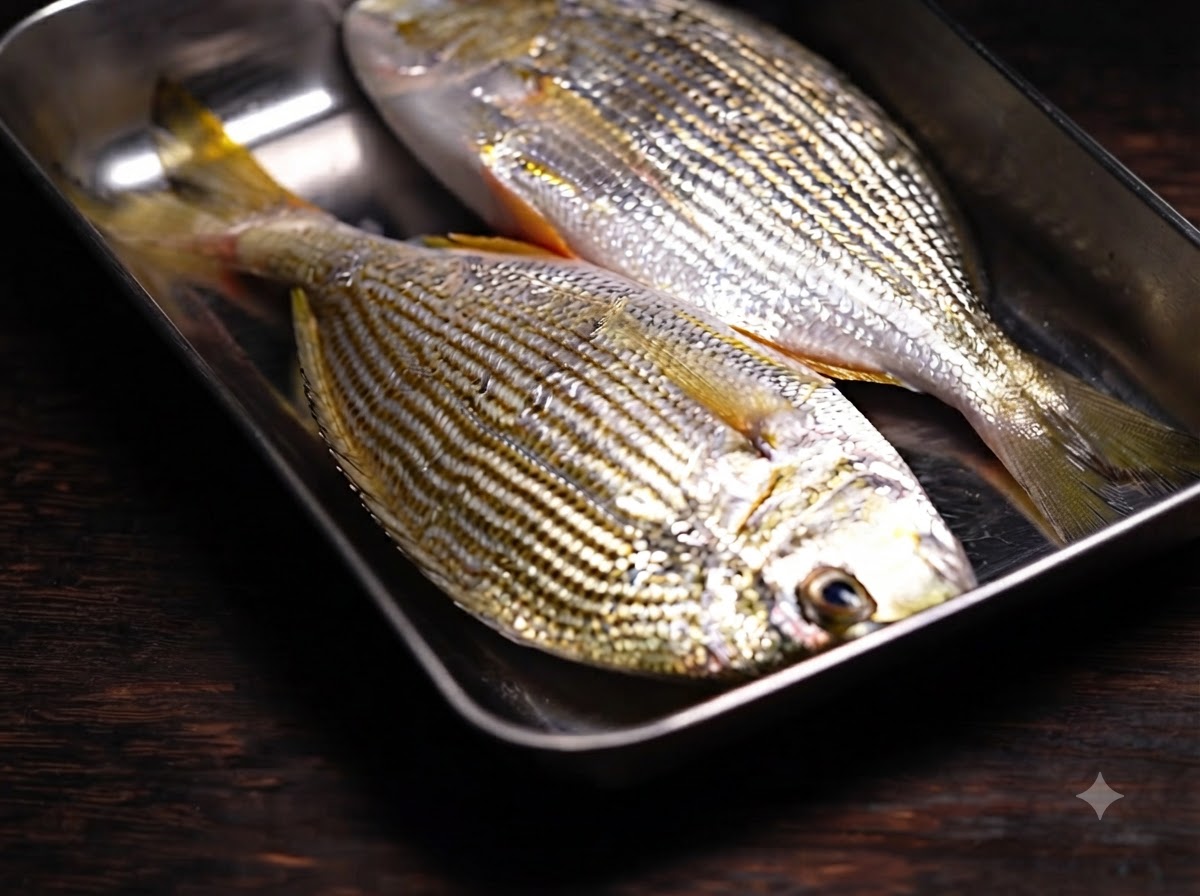
Start by selecting fresh whole yellow seabream, ideally weighing around 250g (five liang) each. Place them in a tray ready for preparation.
Tip: Choosing fish of a similar size ensures they will cook evenly in the pan. - 2Clean the fish
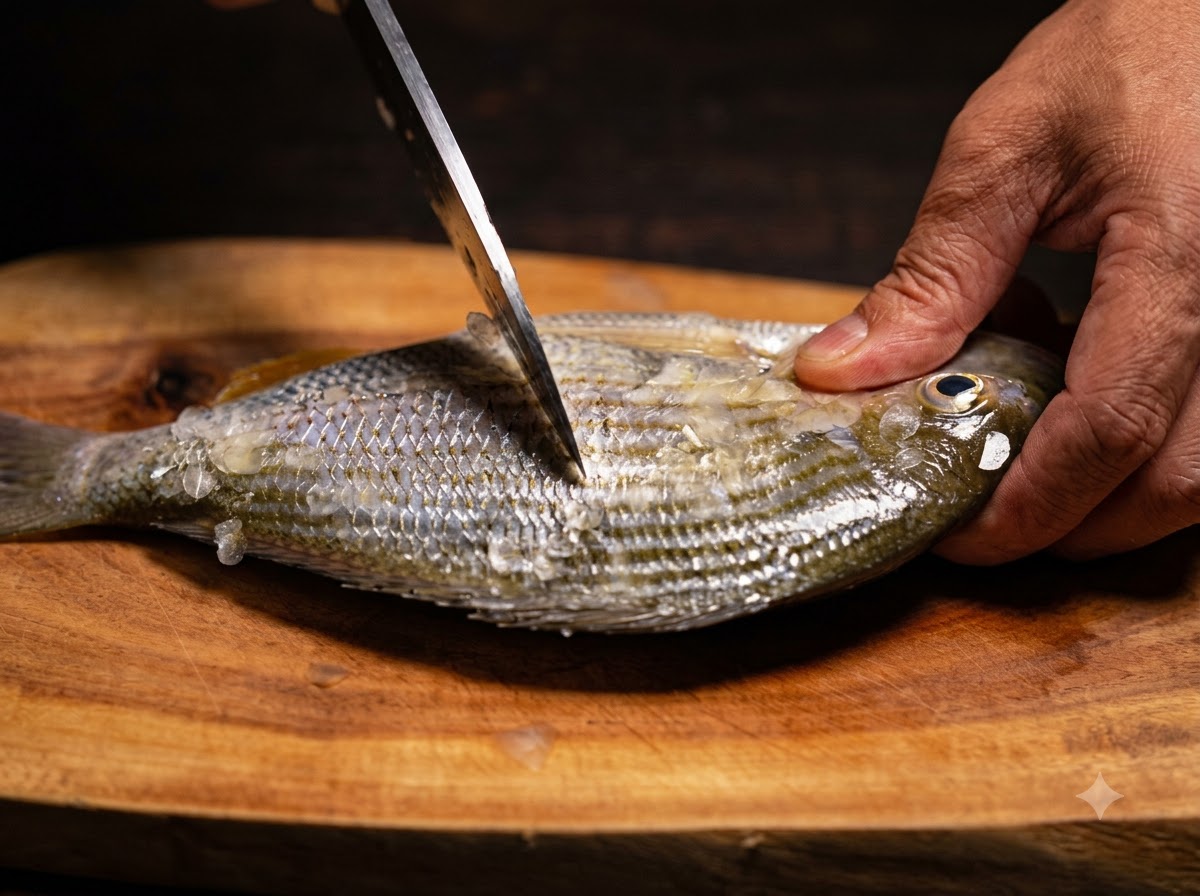
Place the fish on a wooden cutting board. Carefully remove the internal organs and clean the fish thoroughly, scraping off any remaining scales.
Tip: Rinse the fish under cold running water after cleaning to remove any lingering impurities. - 3Score the fish
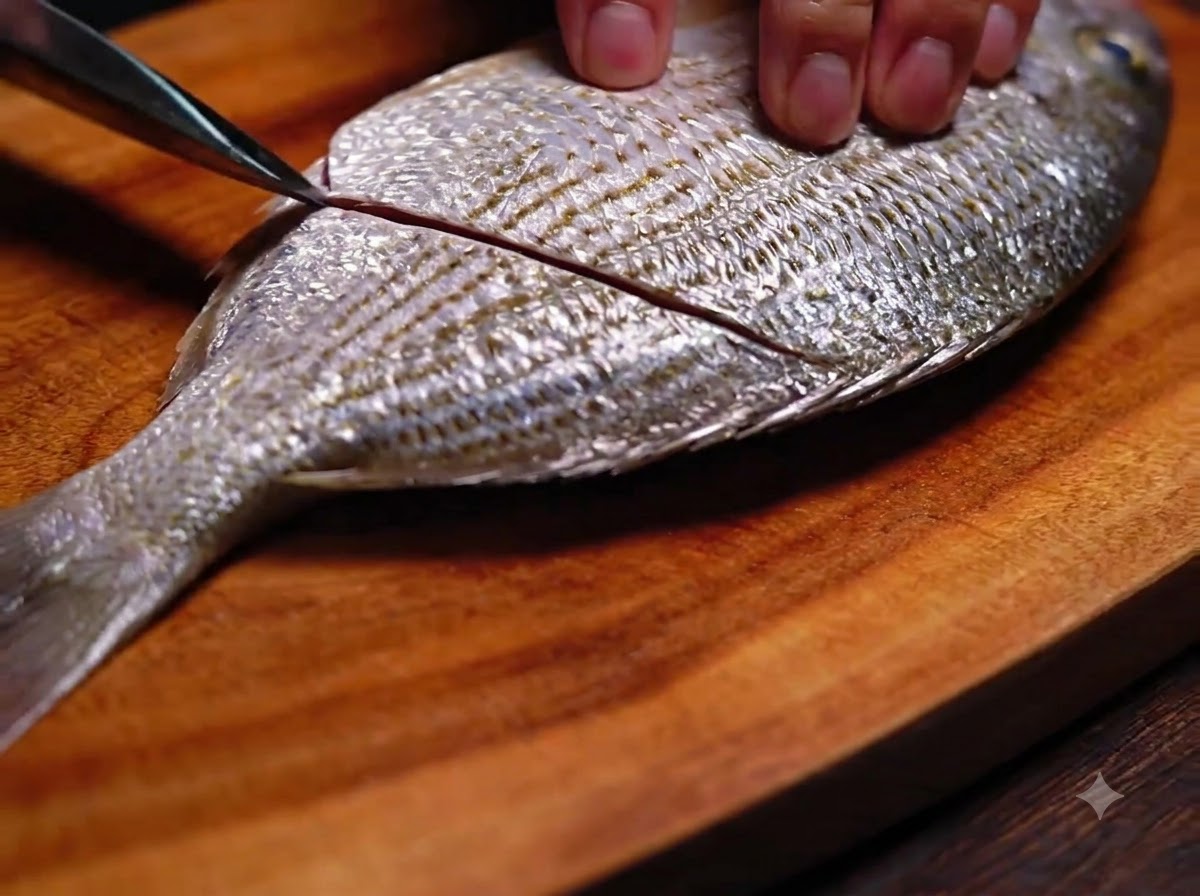
Using a sharp knife, make deep scores along the sides of the fish body. This crucial step allows the salt and flavors to penetrate deep into the flesh.
Tip: Dont cut all the way through to the bone; score just deep enough to open up the flesh. - 4Marinate with sea salt
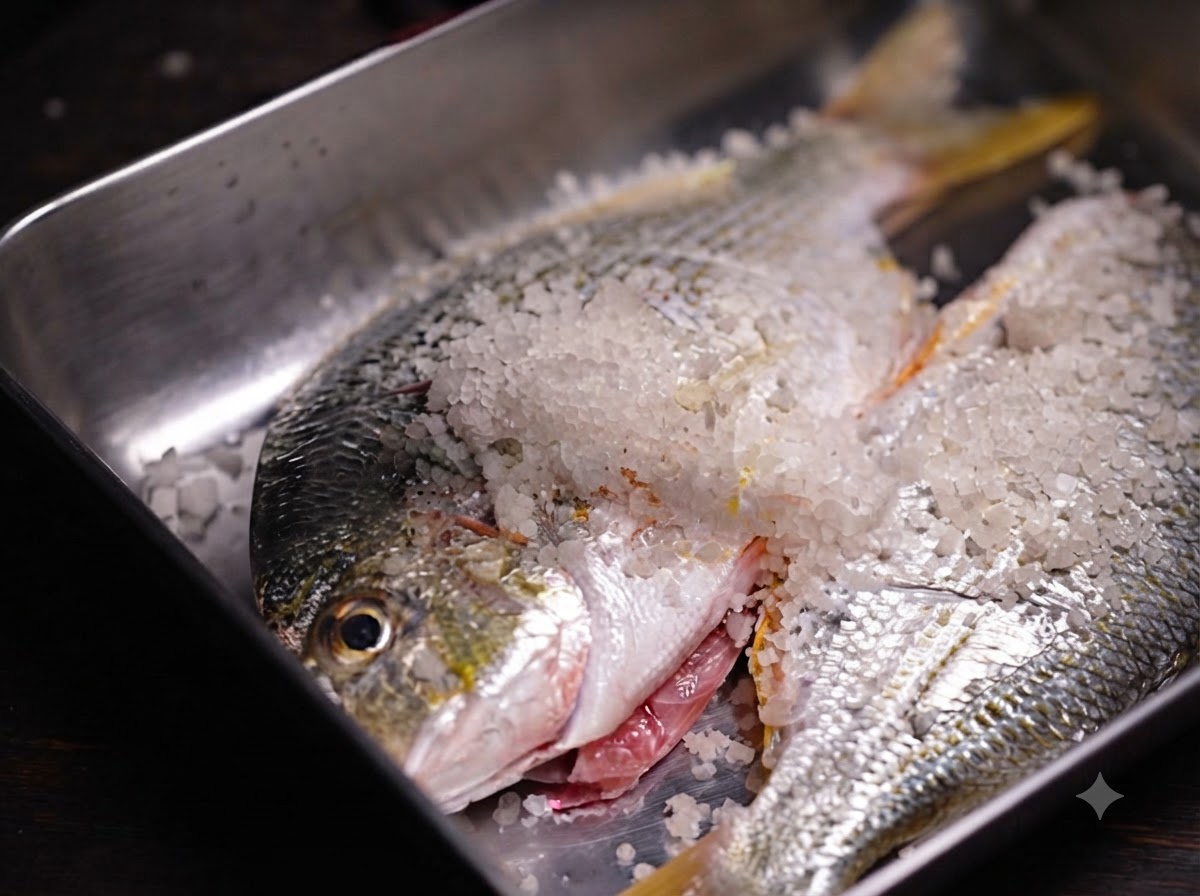
Generously coat the scored fish with coarse sea salt. Let the fish marinate for about an hour so it develops a firm texture and a savory taste.
Tip: Coarse sea salt works best here as it draws out moisture effectively without making the fish overly salty immediately. - 5Prepare the pan
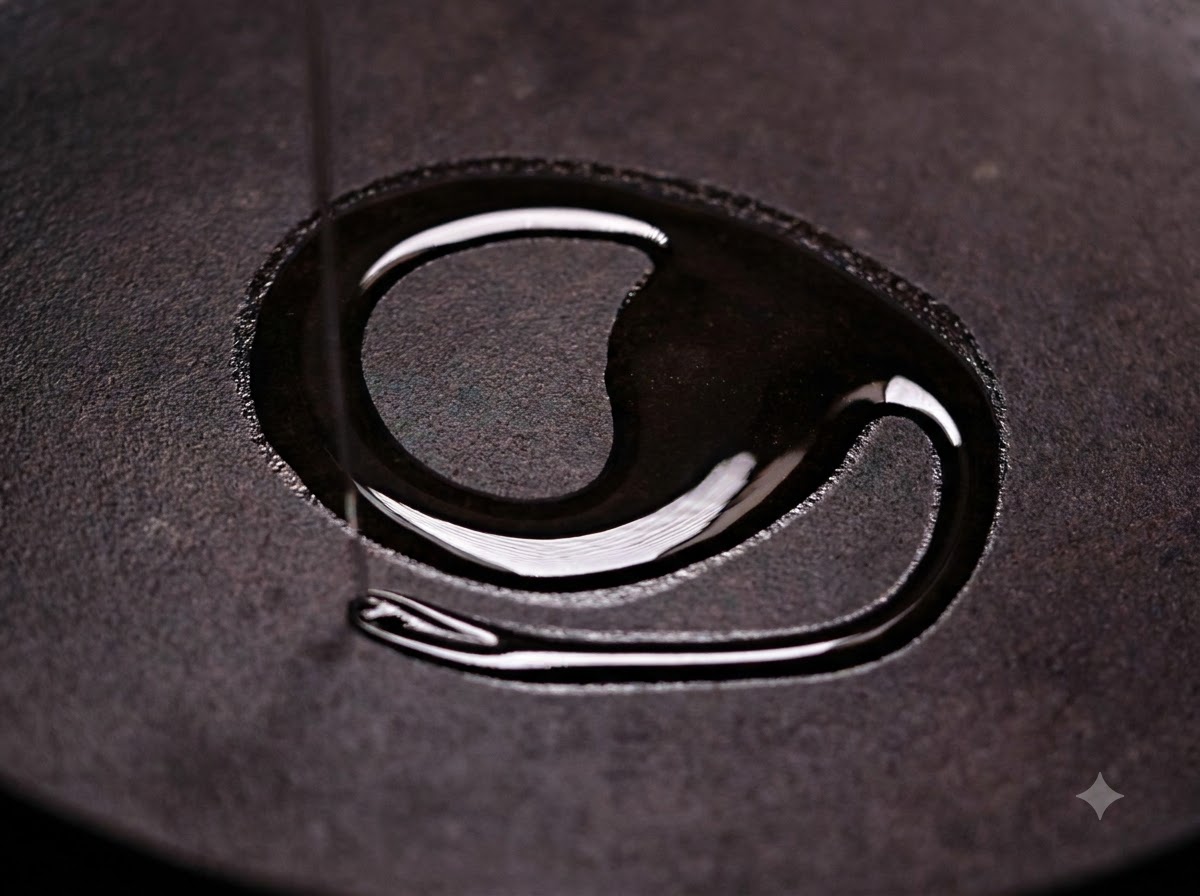
Heat your cast iron skillet until it is hot, then pour in cold cooking oil. Swirl the oil to coat the bottom of the pan evenly.
Tip: The hot pan, cold oil technique creates a non-stick surface, which is essential for frying fish with the skin intact. - 6Pan-fry the seabream
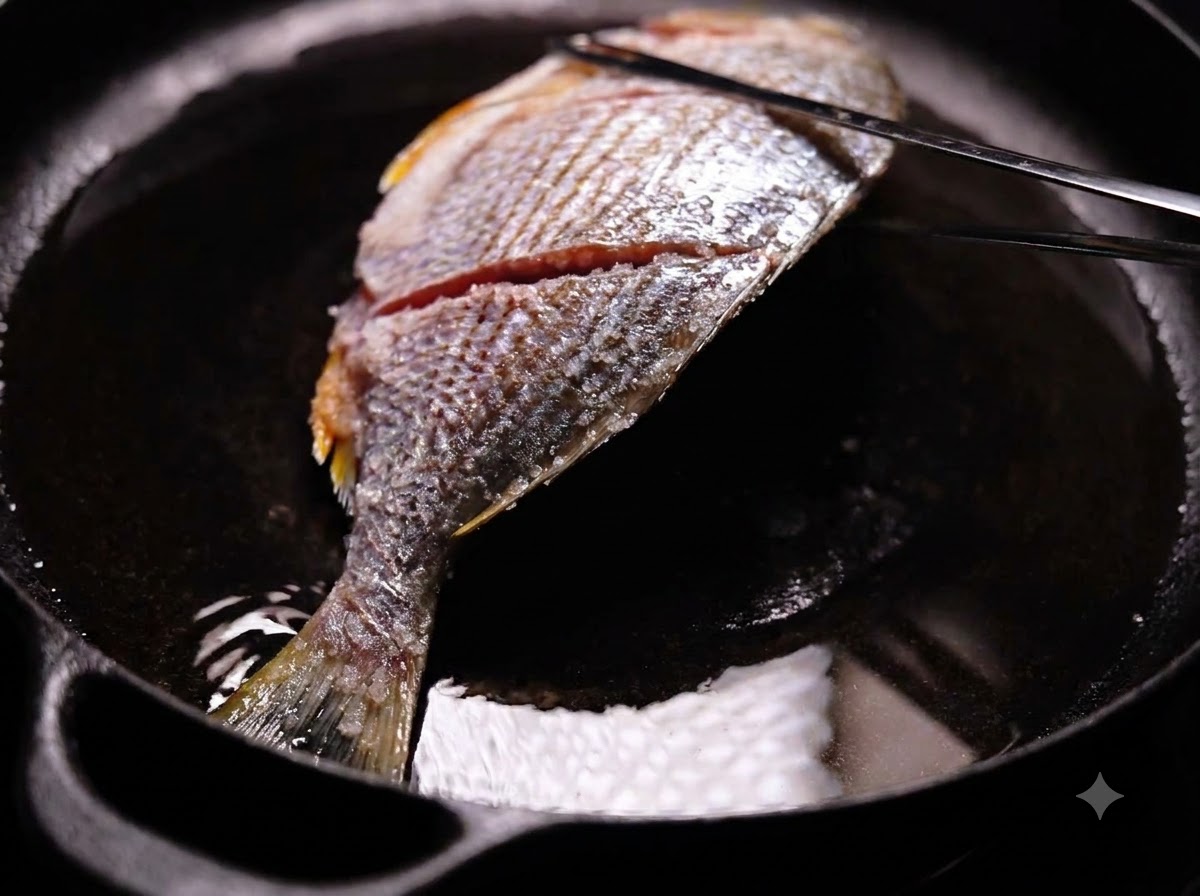
Wipe away any excess coarse salt from the surface of the fish. Carefully lay the seabream into the hot oil and fry over low heat. Leave it completely undisturbed to allow the skin to crisp up without tearing.
Tip: Let the fish fry undisturbed for a few minutes until a crust forms on the bottom before attempting to flip it. - 7Flip the fish
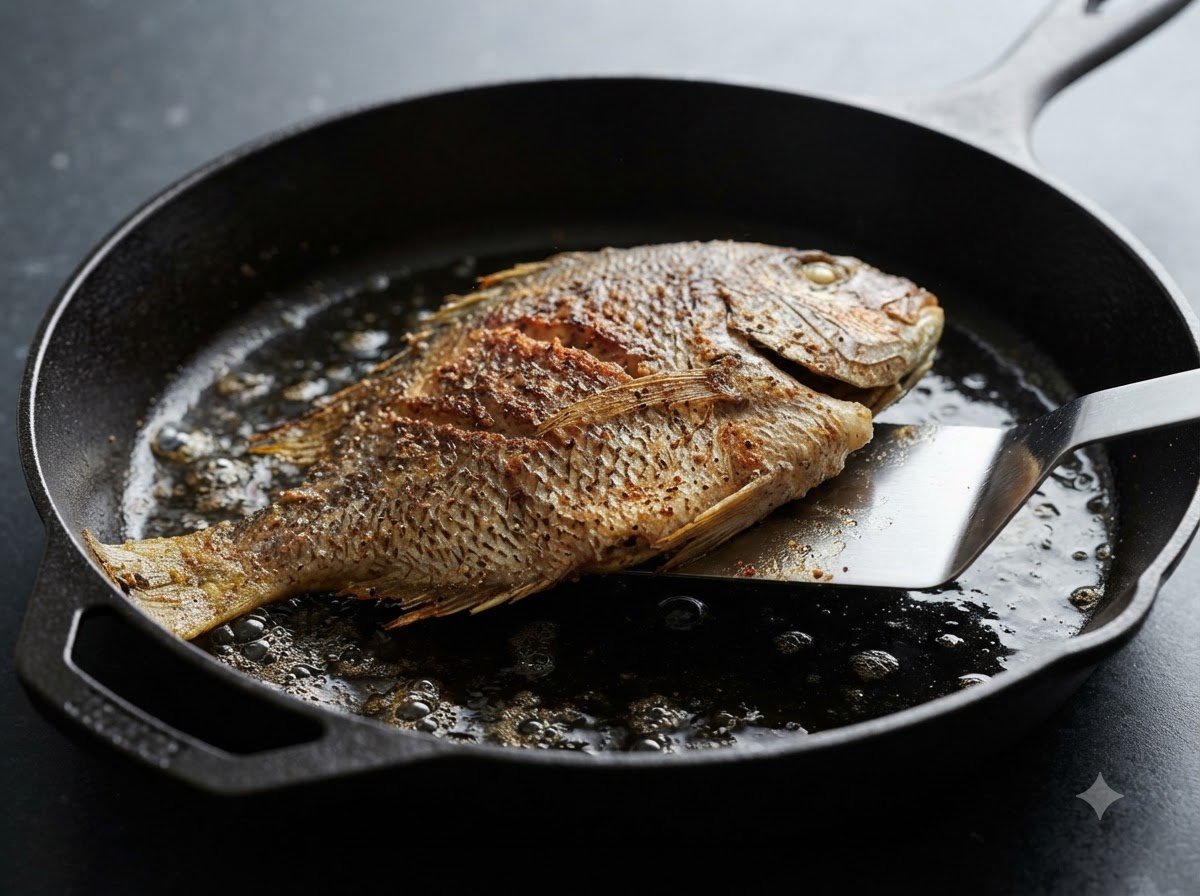
Once a solid crust has formed, use a wide spatula to gently flip the fish. Continue pan-frying over low heat until the second side matches the golden-brown, crispy perfection of the first.
Tip: Do not move the fish too early to prevent the skin from breaking.